
 Ask ChatGPT



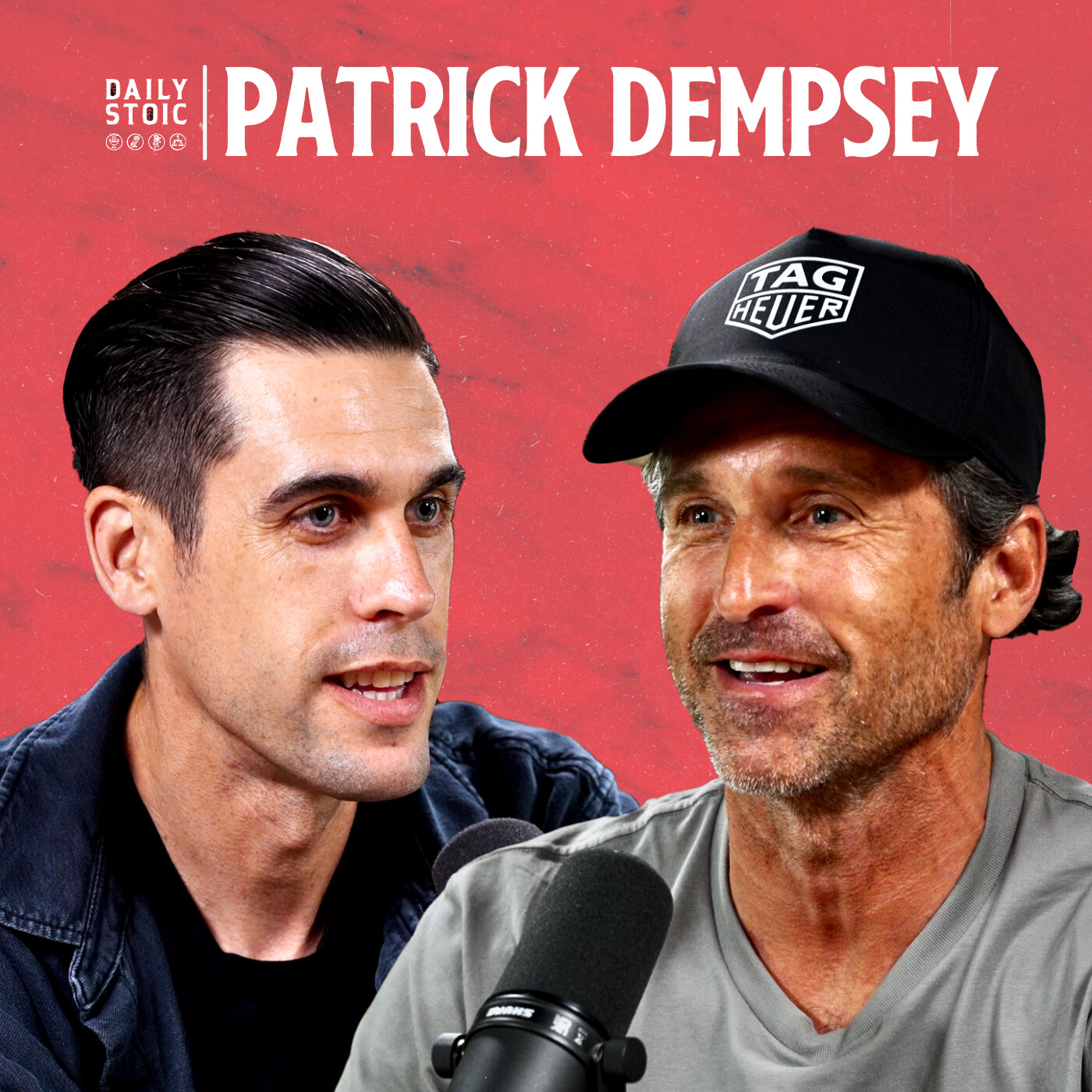
In this episode of The Daily Stoic, Ryan Holiday interviews actor and race car driver Patrick Dempsey, famously known for his role as "McDreamy" in Grey’s Anatomy. Dempsey discusses how he incorporates Stoic principles into his life, particularly in high-pressure situations in both acting and racing. The conversation explores themes of emotional control, adaptability, and resilience, all of which are central to the Stoic philosophy.
Written by AI. May contain mistakes.

Get the gist, explore an idea or ask about something said.
 Claude
On The Daily Stoic, what are the key points of this episode?
Searching your listeningAutomatic transcript. May contain errors.
0:28Why choose a Sleep Number smart bed? Look, ads are annoying. They are to be avoided, if at all possible. I understand as a content creator why they need to exist. That's why I don't begrudge them when they appear on the shows that I listen to. But again, as a person who has to pay a podcast producer and has to pay for equipment and for the studio and the building that the studio is in, it's a lot to keep something like the Daily Stoic going. So if you want to support a show but not listen to ads, well, we have partnered with Supercast to bring you an ad-free version of Daily Stoic. We're calling it Daily Stoic Premium.
1:12And with Premium, you can listen to every episode of the Daily Stoic podcast completely ad-free. No interruptions, just the ideas, just the messages, just the conversations you came here for. and you can also get early access to episodes before they're available to the public. And we're going to have a bunch of exclusive bonus content and extended interviews in there just for Daily Stoic Premium members as well. If you want to remove distractions, go deeper into Stoicism and support the work we do here. Well, it takes less than a minute to sign up for Daily Stoic Premium, and we are offering a limited time discount of 20 % off your first year.
1:49Just go to dailystoic.com slash premium to sign up right now or click the link in the show descriptions to make those ads go away.
2:00Welcome to the weekend edition of The Daily Stoic. Each weekday, we bring you a meditation inspired by the ancient Stoics, something to help you live up to those four Stoic virtues of courage, justice, temperance, and wisdom. And then here on the weekend, we take a deeper dive into those same topics. We interview Stoic philosophers. We explore at length how these Stoic ideas can be applied to our actual lives and the challenging issues of our time. Here on the weekend, when you have a little bit more space, when things have slowed down, be sure to take some time to think, to go for a walk, to sit with your journal, and most importantly, to prepare for what the week ahead may bring.
2:51Hey, it's Ryan Holiday. Welcome to another episode of the Daily Stoic Podcast. I was trying to think back, you know, the pandemic sort of messes up your sense of time. How long have you known someone? When did something happen? So I pulled it up on my email. Here's an email I got on Tuesday, September 8th, 2020. So the depths of the pandemic. And it's from someone, she says, hey, I'm the manager for the actor-producer, race car driver, Patrick Dempsey. He wanted to connect with you? Is there an email address or phone number that I could give him to call you? Or could I set you guys up to chat?
3:25And I said, yeah, of course, here's my phone number, text me. And almost immediately thereafter, he did. And we stayed in touch, chatting. He asked me to do a talk to some of the folks at the nonprofit that he runs. And we've become friends. And obviously, I knew him probably in the way that you know him. He's McDreamy from Grey's Anatomy. He was in Enchanted and Transformers, Dark of the Moon, Ferrari, and like a billion other movies. He's an actor whose face you just immediately know. You've seen him in a million things. I guess I didn't know him as a race car driver, but he is. If you follow him on Instagram, you can see all the cool cars and races he's been in.
4:08And he happened to be in Austin racing at the Circuit of America's track, which is not far from The Painted Porch or from my ranch. And this was our chance to connect. I'm so glad that we did connect. I'm so glad he came out. We were able to have a really awesome conversation because he and I have really similar reading tastes and we've been going back and forth. He actually recommended a bunch of books that I was a big fan of. If you follow the reading list email, I raved about this book, American Bloomsbury, which he recommended. We've been going back and forth on that for quite some time, But it was cool because acting and race car driving are obviously very different than writing.
4:45And yet at the same time, all these kind of elite professions or activities require presence, they require focus, and they require what the Stoics are so good at, the idea of managing your emotions. And he was telling me how he thinks about some of the ideas from The Obstacle as way before he races. and you'll actually, this comes full circle because I talked to him about an acting thing that I put in the new edition of The Obstacle's Way. So anyways, this was an awesome conversation. I think you're really going to like it. He and his team were filming like a documentary or something. So he was out at the painted porch.
5:18He beat me there. I was coming from my house on a Saturday and it was just an awesome experience. When he was there, we were doing the chat. He was in the bookstore, I was just like, this is why I did this. This is like what got me excited about writing books. This is what got me excited about having a bookstore, having a podcast. I was just like, what a great day. I spent the day with my family. Then my wife and I drove out to the bookstore. I did the interview. She was just working on some projects she needed to do at the bookstore. And then we went out to dinner across the street at Storehouse, which is like my favorite little restaurant in Mastrop.
5:53And then we picked up my kids from our in-laws and we went home. It was just like, ah, this is the life. It's a little earlier in the summer, so it wasn't insanely hot. It was just an awesome day with an awesome person. And I think it produced a pretty awesome episode of the Daily Stoic podcast, which I'm very excited to bring to you. And you can find out more about Patrick and his racing in today's show notes. And then, of course, you can check out all his amazing movies and shows and work. And maybe we'll do something together again in the future. I really like this episode, and I think you will too.
6:31I'm heading over to Australia in a couple of weeks. I'm going to be in Sydney on July 31st. I'm going to be in Melbourne on August 1st. Then in November, I'm doing Vancouver and Toronto, London, Dublin, Rotterdam, all awesome cities I'm really excited to go to. If you want to come to those talks, they're open to the public and you can grab those tickets at ryanholiday.net slash tour.
6:58The Stokes don't talk a lot about acting, but there is one acting metaphor from Epictetus. He says we're all actors in a play and that we're not the director, we're just the actor in the play. And that our job is basically just to play that role well. Like we didn't write the lines. We don't control what the audience is doing. We don't control the arc. But our job is to play that well. And I wondered what you thought of that metaphor. Yeah. I think when you're approaching a new role, like I've got a new job that's going to start here in a couple of weeks and I'm trying to look at it more ritualistically and symbolically and sort of a Jungian approach to it and to embody it in a way, and can I do it well enough?
7:41Can I get it deep enough? Sure. And I think in life, yeah, we have these personas and this is sort of Jungian as well, right? You present this thing to the world and then that becomes your identity. And then that can trap you and not allow you to grow. Yeah. So acting is really about just reacting. I think what he's saying a little bit that I've always found it interesting is like, you don't have that much control. Not just like you don't have that much control over like you didn't write the script or the director wants you to play it this way and they're giving the instructions, but also like you don't control if the other actors are that good.
8:13You don't control the marketing budget. You don't control when it comes out. How do you think about this thing where ultimately like the success or failure, like your face is on the poster. So people are, have strong opinions about it, but then you are so relatively powerless about all the things that are going into it and coming out of it. Right. You're, you don't really have control over the culture completely. Yeah. So that comes from the director and the producers. Yeah. And that's really important. Yeah. What's the consciousness of the producer or the director? Sure. You know, that sets the tone.
8:44The lead actor will set the tone on the work ethic. Are you on time? Are you prepared? You know, what are their processes like? and everybody approaches things differently and you have to be able to adapt. And then you have this team of technicians around you as well that you got to unite. Yeah. Which is really quite fascinating. And you don't get a through line to it, right? In a play, you have a beginning, middle and an end. Sure. And it's quite satisfying. Yeah. When you're shooting a show or a movie or a TV show or something like that, it's all broken up. Yeah. So you just have this level of intensity and then you're waiting.
9:18Yes. And the level of concentration goes back and forth, back and forth, back and forth. And you have to be really good for like 14 seconds. Right. And then again, again, again. And God forbid there's no technical problem. And then you got to do it again. And then you got to be able to discover it. Like a play, you're discovering it and you're in the moment, you're flowing and it's going. But when you're breaking it up, we go, okay, stop that thought. And now we're going to move the camera over here. We're going to do the over this and that. And you got to recreate it and get us to keep that spontaneity and truth going.
9:44Is that similar to racing? Because I don't think people tend to think of racing as a team sport. But when you get down on the track, you see the pit, you're like first off all the men and women but a lot of the dudes are enormous because they're actually athletes because five seconds between getting a tire on and off is an enormous amount of time right but then but then there are these intense masters of very specific crafts and that part of like being a successful racer is really has nothing to do with what's happening on race day but getting all those people together and training over and over and over again as part of this cohesive unit.
10:20Right, you have to have complete harmony in all the different departments, right? You have your engineer. Yeah. You gotta have the car, the manufacturer, the motor, all that has to work, that's it. And then you have to make sure you have these pit stops and it's gotta be timed and you gotta train like an athlete. There's special schools and gyms in like I think Indianapolis, there's one where they just train to be strong enough and mentally strong enough under pressure coming in to get the tires on and off. And it's a repetition of that training. Didn't relatively recently, like in NASCAR, they switched from like all the lug bolts to like one?
10:53I don't know about that, but it will drive to survive, which is the Formula One documentary. And the first season, I think, is really the best season. And then the second season, everybody becomes a little bit more self-conscious. But you can see that was just one lug nut that you go on. And boom, boom. In like 2.7 seconds, they've changed four tires. Yeah. And that will make or break your race. Yes. So you have to practice so hard. And the telemetry, right? You have all of that that's going on, the setup of the car, and it is a total team effort. And what's great about, I think, the success of that, it showed the humanity.
11:27Sure. And how many people were behind it. Because the driver's kind of like a CEO of this whole thing, as opposed to the person who's winning. Well, the team principal, because they're always hustling to get money, right? That's true. It's such an expensive sport. You're always working on, the more money you have, the more you can develop, especially in Formula One. And even on our project right now, you know, we've got some sponsors that have come on board, Mobile One, you know, so that, but we're still chasing the money. Yeah. So we can do the testing properly so that we're prepared on race day.
11:59You know, so it never ends. Yes. It's just like the idea of like the winning being actually downstream of all these decisions that you make that don't seem, like I've been saying this recently, like most success is a lagging indicator. of some process or decision way that people don't think would be actually deterministic, but like it was one months or weeks or years ago. Right, and what we kept focusing on today, because it was the first time I was in the car since 2015. Wow. Racing competitively. And we just focused on the process. So for me, the process started a year and a half ago. And then are you training properly, physically?
12:44Yeah. And are you training mentally? Yeah. And then you have to then get to the track and actually do the testing. Yeah. And get your body used to being in the car. You can do all the weightlifting and all the neck training and everything, but until you're out there running laps and getting seat time, and then you're racing, all of these things have to come together. So it's preparation, preparation, preparation. Do you use a simulator? No, because I get really nauseous. Oh. We were doing something the other day for this documentary that we're working on And Patrick Long, who's one of the, probably the greatest American drivers that have driven for a factory Porsche driver, took me to a wonderful place out by the airport in Los Angeles.
13:24And I tried one or two laps and I get really nauseous. Really? And I had all the devices on to try to keep me from getting nauseous, but I would sit back and listen to him and then he could take me through and coach me on, here's the line, here's where you want to put the car, here's how much input you want to have, what gear you want to be in. And then that helps. But you're seeing these kids that are coming out now from all the simulator work that they do and they hit the track and they're spot on. So you don't feel that way when you're racing, but the simulator, it's something we're free. The simulator does, I can't do it.
13:53It's like being on a boat, you know, I get seasick. Yeah. Or if I'm in the back of a car and I'm not paying attention, I'll get car sick. Wow. Yeah. Interesting. Yeah, it really is. It puts me behind a little bit. Yeah, sure. You know, so it's a big disadvantage because I'm not using the technology that can get me up to speed faster. And you're seeing these kids that are coming out that are so young and they're so quick but they don't understand this is real. You can't push reset and the reset button is very expensive. Yes. Yeah. It's more expensive for you to get reps than a person who can work on a simulator, but then perhaps because your reps are more expensive, you take them more seriously and the stakes are higher.
14:30And so what is - Well, the emotional stakes are much higher, right? So then how do you control your emotion? Yes. How do you stay calm? And then what is your ritual, what is your process to get into the car where you're clear and present? And that's the challenge. And I think that's where I think a lot of the work that you do and people that I've worked with and just with technology, like today, I was starting to get really tight. I was like, you know what? I go through my ACT model, which is a breakdown of four or five things that I say that helped get me into place. But it's been almost 10 years since I started using it.
15:05And Jacques Dallaire, this doctor, this sports psychologist coach that I used many years ago, I had to reach out to him and I'm like, do you have a copy of the ACT model? I need to, can you send it to me? So I got it on my phone and I started working that again. And then I was like, ah, I'm still tight. I'm still really tight. And I'm not breathing properly. So I gotta remember to start to breathe and just be present. And then I was like, you know what? I'll use the Calm app. And then I couldn't find the right guided meditation until I got to LeBron James. And there was something about his voice and his conversation about when he was playing high school ball.
15:42And that kind of settled me in and then calmed me down. And then I was like, my body's tight. I'm sort of getting a sense of where am I holding the tension? Yeah. And then I was like, I'm gonna just put my legs up on the side of the hauler. You know, we have this big tractor trailer and we go in there and we change and we get all our data and everything. So I'm there, I've got my headphones on and my feet are up above me and I'm getting there and I'm getting a little sleepy and I'm like, I gotta get some music. So let me try to find some music that's gonna turn me on and then I'm, you know, rediscovering what my process is to be, you know, ready to go.
16:20Thanks to Toyota Trucks for sponsoring this episode. When I bought my ranch in 2015 out here in Bastro County, I drove my car about halfway down the dirt road that we live on, thought this isn't gonna work, stopped, parked it, walked the rest of the way home, borrowed my wife's car, drove into Austin, and bought a truck. What I bought was a Toyota Tacoma. And this truck wasn't just transportation getting me to and from my house. It unlocked a whole different style of living for us, not just on the ranch, but in our little Texas towns. There were places I could go now that I couldn't go before, especially out here in the piney forests, through the fields, and on the unpaved roads like the one that I lived in.
17:05We got to go deep into the hill country's wild beauty. We've driven all the way out to East Texas. We've driven across the country. And by we, I mean not just my wife, but both my kids who I drove home from the hospital in that truck. Toyota trucks are built for those who understand that the best adventures happen when you're willing to veer off course, because you never know when you'll end up on a Toyota adventure detour. And of course, this is stoicism too, because every detour, every obstacle is an opportunity. But it's helpful if you can handle the difficulty inherent in that. If you've got the resilience and the right companion to make it wherever the road takes you, discover your uncharted territory.
17:47Learn more at toyota.com slash trucks slash adventure dash detours.
17:57So how would the Stoics approach something like that? Either going into battle or going into competition in some way? Well, we could imagine that that's what Mark Surillos is doing in meditations, right? What's weird about meditations is that it's not a book for the reader. It's a book for the writer. Like he was writing it. He was getting his thoughts out on paper. Yeah. And we know for a fact that he wrote significant chunks of it while leading the Roman army. So he's, you know, maybe it's the morning before battle, maybe it's the evening afterwards, and he's just sort of sitting in this tent writing things down.
18:34And so I think journaling is a big part. Like, if you can take, you've got these thoughts that are just kind of pinging around in your head, the act of writing them down creates even just a few feet of distance, which is really powerful. So I think journaling would be a way the Stoics would do that. I'm a big believer in walks. Like when I'm sort of feeling that, like I have to walk, like I pace before I give talks. Like when they're like, oh, well, you just sit in the audience and then we'll call you up when it's your turn. I'm like, no, I have to be pacing nervously in the back for like the next 30 minutes.
19:02And I try to listen to music. I have a similar thing to what you're talking about, which are like, what are a few like sort of mantras or just reminders that are really clarifying and sort of get, allow you to lock into the thing in front of you. It's funny to think how timeless that, that I have to go do this thing in public or I have to go do this thing that's dangerous. I have to go do this thing I don't want to do. Right. And how do I calm down this part of my mind that's racing so I can be totally present and clear? And we can imagine, you know, that actor that Epictetus is talking about, some version of that too.
19:38Like, I'd be curious, how different is your getting ready to race sort of protocol to like getting ready to be on camera. Are they similar? Do you have to get in a similar mental headspace? Yeah, you do. It's like, once again, it's preparation, right? If you're coming in and you haven't done the preparation where you know your lines backwards and forwards and there's a lot of noise offset, you'll go up. But if you're prepared, you're just like, oh, okay, I noticed that. I'm in the moment. I'm present. I'm in the flow. And it's the same thing when you're in the car. I think the great thing about the acting that's helped me in the car is I'm really comfortable being private in a public world.
20:13Yeah. Like I know I got a lot of eyes on me. Yeah. I know there's a lot of pressure. So I make one mistake. That's what's going to be televised. You know what's weird though? And I talked to, do you know who Brad Keselowski is? Yeah, of course. He's read some of my stuff. So he invites me. They do the NASCAR one at the track like once a year. So I go down. And what I thought was really weird about how they do it. To me, it felt like it would not be conducive to elite performance, which is they have like the driver meeting. So all the drivers get in, they give a little talk, but the driver meeting is driver meeting slash like sponsor meet and greet right so they're about to go do this incredibly dangerous like elite level performance where they're driving a car hundreds of miles an hour hundreds of miles and before they are able to do that they have to go like press flesh with like the sponsors of red bull and rolex and all this stuff right right and i just wondered how like i was asking him about this like how can you compartmentalize that because for me, like if I'm going to go on stage or I'm going to write, it's this kind of process of working myself into the headspace.
21:15And I try to eliminate as many interruptions or like shape-shifting as possible. Like, you know, like you have to be different places, different things. So I don't, if I have to write in the morning, I don't schedule a breakfast meeting and I don't call my accountant. Like that's not going to get me in the headspace to do this really hard thing. But that's like built into the race pre like a ritual. It's crazy. It's just part of your job, right? So I was racing at Le Mans and it was a lot of media attention and a lot of people wanted to come up, you know, because they know who I am. And my technique was like, you know, the obstacle is the way, right?
21:50So very much the same way. So if someone comes up to me and they say, hi, can you take a picture? And I'm like, yes. And because then it would It forced me to be in the moment. Right. So that's how I would set my whole thing. And if I had to go and take care of say, my sponsors tag Hoyer, they want me to go over and do a press conference or something. Okay, that's what I need to do now. So I need to be aware because situational awareness is so important in racing. Right? Because you've got all this activity going. So I used all of those moments as a preset. And some people weren't, some people would have the headsets on and they would just go for it.
22:22For me, I would take the time to breathe and it would allow me to remember, for, okay, take a breath, look the person in the eye, connect. Because if I didn't connect, I felt really bad. And I was like, I'm thinking about that moment that's just happened. I'm not thinking about what's happening right now. Which ties into all the work that you're talking about, which is what... And I think, was it Seneca about... Your mind is what's gonna... These stories that are in your mind are not necessarily gonna happen. So then you just need to be present and it's the hardest thing to do. So for me, the racing is really the best thing for me.
22:58It's like sort of going to church or temple or wherever you wanna worship because it's the spiritual journey of that. Yeah, you're not, I mean, you're not checking your phone. You're not like thinking, you're locked in to that thing and only that thing for the entirety of your doing. I always think about feeling like, you know, when you would go to the movies and you get in a movie at like four and then you leave two hours later and like it's dark out and you just miss this whole thing. Like you've been so in the zone. Right. That you didn't know, you forgot that the world, like time did not stop while you're doing that thing.
23:26That's a really powerful feeling. And when you can get that, like when you're doing work, that's almost always, I think where the best work comes from. When you, like when you lose track of time, when you forget like that, you're not the only person on the planet, that's all, that's all like, I think an indicator of being in a real flow state. Yes. And then you're present. Yes. And that's what it's all about. Yes. I didn't think about, yeah. So it's like the drivers have to stand there and you have to like Like take pictures with like fan after fan. And it's 90 degrees outside. Like it's 110 here in Texas.
23:56And all these motors are revving and you hear all this noise and it's crazy. And so, yeah, I guess I could see what you're saying. You're like, actually, no, this is forcing me to be present. I'm not gonna just see this as an obligation that I'm getting through. I actually have to be here for it. And that's sort of working my way into the thing. I think it's funny, right? So you develop like rituals or routines that allow you to get into the zone. And mantras too, like you were saying. Yeah, but what can be really hard about that is it can become like a kind of a ritual, almost a compulsion. And so then you're fragile in this.
24:27I think about this where it's like, these are the things I do before I go on stage. Well, I was doing one a couple of years ago. It was in Hawaii. So I brought my family into where I'll hang out in the pool. And because I was supposed to go on at two. So, you know, I was going to start getting ready at 1230, you know, and they call and they go, they totally messed up the time zones. You're on in like 20 minutes, you know? And I'm like, I'm in like kids at the pool mode. not work. And so I had to get ready and show up 10 minutes later or whatever. And so if you're a person who like, this is how I have to do things, you're really vulnerable if life intervenes.
25:03And so can you develop the ability, of course, when you have control over it to do it a certain way, but can you also on a moment's notice, throw all that out and actually just lock into the thing and realize that all those things were helpful, but you're not dependent on them? Yeah, that's the real challenge. Like this morning, for example, qualifying. Yeah. Hurley Hayward, great road racer, gave me some great advice because you get really tense and you get the temperature and everything, your mouth dries out. He goes, you should always chew gum. I used to chew gum all the time. Yeah. I got in the car and I realized - Shit, where's the gum?
25:37I didn't put the gum. I don't have any gum. Yeah. Oh my God, what am I gonna do? I know this is - I'm panicking. And then I'm like, calm down, take a breath. And I go through my act model again. Yeah. And I'm like, okay. So what I'm gonna do is anytime I start to feel like my mouth is getting too dry and I'm distracted, thank God I practiced yesterday, I have hydration in the car. I usually don't drink quite a bit in the sprint races. I just would take a sip. And I was like, okay, that's okay. The obstacle is right there. So he goes back to all the books that you're working about, right? And it's all that stuff you start to kind of, you gotta be able to adapt.
26:11Yeah, I go like, this is practice for me doing it a different way. Right, you gotta practice what you're preaching. Yeah. Well, I'm like, Hey, I like, I always say shave first and then it's like, Oh shit, I can't. And now I'm like, Oh, I'm going to do it. Like I read about this kicker once in the NFL who was like adamant about never listening to any superstitions. Right. Because he's like, if you're like, Oh, these are my lucky socks. Well then what happens when the equipment manager loses the lucky socks and now you're in your, so he was sort of actively is like, anytime he found himself repeating a thing, he was like, nope, not doing that because he didn't want to be susceptible or dependent on the thing.
26:48And so I kind of think about that too. When it gets tossed out or you have to do it differently, I go, this is a chance. I try to shake it up on purpose. So I, cause I think like people go, are you nervous? And I think when you've done the work and you have a sense of your own ability to improvise or be flexible, then you're like, no, because I've been in lots of situations and I always managed to figure it out. And so developing that kind of resiliency where you're like, I know I've done the work and I know I can succeed in any conditions. That's a place where you can be really confident as opposed to, no, no, no, I have to do this thing in this order every time or I'm worthless.
27:30Yeah. I see that trap and I've fallen into that hole a couple of times and then you have to make an adjustment, right? So you make the mistake of like, oh, I didn't do that correctly. And it spun me all out. Now I'm like, okay, I just have to adapt to this. This is just what it is. And I got to be, that's okay. I don't have gum. Yeah. Cause otherwise you're like, Patrick's not racing today. He doesn't have gum. Patrick's not coming out. It's your preparation. As long as you feel like you're prepared, you do your homework and you're there, you can adapt to whatever's thrown at you. But is the fear always there?
28:00Like the anxiety and the fear never leaves you. I mean, I was so nervous and scared and, you know, I'm putting myself back out in harm's way and, you know, you don't want to look at images of old vintage racing and cars and stuff like that. And you're like, okay, so that's coming up. Let me hold it for a minute. Okay. It'd probably be bad if you weren't. Right. Because what it does, it gets you on edge enough. The only problem when you have the... And even going in front of the camera, the first take or you're getting into it and or doing something like this, you know, you always have a little bit of anxiety.
28:33You're meeting new people. You just figure out how to, okay, I'm going to get through this. I've had the experience. I know I'm going to survive this in this part of his teachings as well, you know, and his own struggle with it, Marcus Aurelius. You just go, okay, I got to make sure I'm flowing that it doesn't get blocked. So how do I unblock that energy, that fear? What am I afraid of? What's the worst case scenario? Well, is that happening right now? No. Okay. Let me go. Let go. Let's Go with what happened five minutes ago and be right here and find something to engage you quickly. Yeah. I added an acting thing.
29:08And so I just did a 10-year anniversary edition of The Obstacles Away, which hasn't come out yet. A lot of athletes, I work with the US ski team quite a bit and a lot of the skiers use it or I recommend it to them, you know, because they're always dealing with stuff that's coming up last minute, whether equipment or weather, you know, delays and all that stuff. So a lot of people are using that book. I heard this interview with Kate Winslet and she was saying, she's like, I always look for what I can get for free. And he was like, what does that mean? She's like, so if I'm tired, I go, how do I make this character have some fatigue in them?
29:38Or if I'm feeling afraid, how am I using that in the thing that I'm having to do right now? Which I think is a really interesting way to think about it. So it's like, instead of going, hey, I'm anxious. I'm about to go on stage. I need to stuff that down and pretend it's not there. Or I need to dissect it and make it go away, you're saying, no, how do I sort of ride this energy into what I'm doing or bring it into what I'm doing? Or let's say you could use that, depending on the context, to connect with the audience. You could say, I'm feeling nervous right now for these reasons. And now all of a sudden you've created a moment of vulnerability and connection with someone that had you been ashamed of feeling that emotion, they would still sense something was wrong.
30:19They just wouldn't know why you're being weird. Right, right. Yeah, that's interesting. I never thought about it like that before. That's a good thing to remember. Because sometimes you're 15, 16 hours into a day and you're like, I can't do another scene. We got another scene we're gonna do? Yeah. I'll use that now in the future. Thank you, Kate. To me, that's what the obstacle is the way is. So instead of fighting this thing, you're like, how do I find some advantage? It's not always this transformative, massive advantage, but it's just a little thing. No, it's just little things, it's adjustments.
30:47It's like in the car, every lap, the car is different, right? The tires are gonna be good for a couple laps and they're gonna fall off or the temperatures change or you've got traffic or you missed the apex, you have to adjust. So you're constantly just kind of finessing to keep the speed and being sensitive to where you are. Are you getting through that corner a little bit faster? Okay, so I lost time there. Now, where can I pick it up again? And or if I'm not listening to the actor, I gotta go, okay, really focus on what they're saying right now. Focus on them again. Yeah, what do you get for free?
31:20how do you take something from what you're feeling and use it as a... Because I think people think of stoicism as, by definition, the act of either never having felt the emotion to begin with or stuffing it down and suppressing it. Right. Well, when I first came across the book, I was in Rome. I was doing a movie called Devils, a financial book, and I was walking around and I was like, I hear so much about this meditation, Marcus Aurelius. I'm here in Rome and I'm starting to read it. I'm like, well, I get stoic. You just don't feel anything. You're not supposed to allow any emotion to come up?
31:52And then suddenly you're getting into it and you're like, oh, that's not it at all. I'm totally misunderstood. So I don't think a lot of people understand what stoicism is. And I think that's what's so great about your work is you have distilled it down into a way that is applicable today to using it today.
32:20For the sake of what we're doing, what is Stoicism and what does it really mean? Well, it's a philosophy. It originates in ancient Greece. It makes its way to Rome. And it's this way of sort of living and being. It's not about emotionlessness, I would say, but it is about, I think, being less emotional about things that you don't control. So the idea is like, hey, how do I focus on what I'm going to do about this or how I'm going to respond to this, as opposed to spending a lot of time lamenting that it's not the way that I want it to be. Right. Right. So one of the early passages in Mark Stavros' meditations, the most powerful man in the world, he's writing this, he writes this great little riff on how he's like, the people you meet today are going to be annoying and obnoxious and dishonest and frustrating and all these things.
33:07And he's basically going like, it's on you if this surprises you. And then he's like, your job is to not be implicated in this. Basically, your job is to not let annoying people make you an asshole and that your job is to work with them. And so it's this really interesting way of thinking about philosophy not as like these big abstract texts or these sort of singular books, but instead kind of this process of how we take what we all feel and have always felt and you kind of turn it around and you process it and then you go about your life. Right. And you think about Marcus, he can do whatever he wants, but he realizes like, if I'm not in command of myself, it doesn't matter how powerful I am, this isn't going to go very well.
33:50So that's kind of what, to me, stoicism is, is this command of one's self. That doesn't mean that you're an emotionless robot, but it does mean that you're not ruled by, they would say you're not ruled by your passions, which would mean your urges, jealousy, anger, fear, et cetera. you're a person who's like, do I really want to do that? Am I going to regret doing that? Right. What's the best way to respond to this situation? That's what the philosophy is and it's been for now. Right. Thousands of years. So I'm in Rome. I'm shooting in Italy. Total chaos when you shoot there, right? We're first weekend.
34:24I had a little bit of time and now I'm getting into your books, right? And also I'm dyslexic, right? So reading for me is painful. So all the audio books now are fantastic because if you're jet lagged, I'm going to put it on and I have my storytelling and you start to go, okay, I'm going to digest this. And then I'll go back to the book and then I'll start to go, I want to focus on this chapter and I want to really look at it. I'm going to underline it and do the technique that you have with your cards. So that's reverse engineering. And I'm in this situation on this production and that's driving me crazy.
34:57I'm going, I'm going to lose my temper. I'm like, if you lose your temper, then you lose control and then you lose respect. So I kept returning back to that. And I go, this is gonna be my challenge. This is my obstacle through this entire production is to keep in control of my emotions and to kindly direct the energy and create the culture. And I'd come home and my head would be splitting because I was just holding so much in to stay calm. But as the shoot went on, everything started changing. And vibrationally, probably I started changing too, where I was a lot more cool about it and like, okay, it's all right, we got it.
35:33guys, let's stop the take. You can't talk right now. Okay. I know we're all hungry. I know we're well past lunch, but let's just get this one take and we'll go with it. And then you kind of get back into it. And it was really fascinating to see in Rome of all places, this thing started to come up for me. I think it's fitting. I mean, there's no way that Marcus Aurelius does not have an anger problem. Like he talks about temper and losing your cool and your emotions too much for his private journal, if that's not something he's actively struggling with. Like my reading of it over and over again is like, the reason he doesn't say like, jokes are funny, you know, or sex feels good is he doesn't need a reminder of that.
36:10Like he's got that covered. The book is him really trying to remind himself of what he keeps forgetting. There's an interesting passage where he's talking about, he's like, you know, it's not manly to yell at people. And we can imagine his predecessor, the Emperor Hadrian, once loses his cool at a secretary or scribe, and he picks up a stylus and he stabs it in their eye. And this is something the emperor can get away with, right? They're like, sorry, you know? And maybe Marcus witnesses that or he hears about it, right? Like for him, he has this weird duality where like people will indulge anything from him.
36:48He can do whatever he wants, but he decides that's not who he wants to be. And maybe he had embarrassed himself at some point or maybe it caused problems for him, but it's very clear in meditations that it's something he's working on always. Right. And that he's not perfect at it or it wouldn't come up more than one time. Because he's not saying, hey, this is what I want my son to know, or this is what I want you, the aspiring stoic to know. Right. He's saying, you, Marcus Aurelius, have to stop doing this. Right. And so it's so interesting that it's been this sort of timeless battle. And then what great art is, is usually it's so specific that it becomes general.
37:25And so his specific struggle with this temper thing is 2 ,000 years later in the same city, but in a way he could never have comprehended of value to someone else. Right. And also too, as an actor, you have to generate a certain amount of emotion. Maybe that scene requires you to be angry. Yeah. So I guess it's like what Kate Winslet was saying. It's like, okay, that's the gift, right? How am I going to use this? And it's like, okay, what's pissing me off today? How do I focus in on that and be able to channel that into the scene? Yeah. Where I'm not losing control, but at least I'm fired up. Yes.
37:56And then that's now, I think my job going into this new project is to find those dynamics and be very specific in those scenes. And this is a part of your preparation. So when I say X line or whatever I'm going to say, I know exactly what I'm thinking and where it's coming from so that I can allow it out in a ritualistic way. I'm really interested in people who can use emotion in that way because, I mean, obviously you could also do a great job if you were this live wire who's pissed off all the time. That would have collateral damage, but it might also get captured on the screen well. But it's a costly way of doing it.
38:29So sometimes that's why artists who are crazy or poorly disciplined, they can be great at what they do. They just also tend to blow up their career and relationships, right? And certainly as a younger actor, you do do that. And I definitely did that. I made tremendous mistakes by thinking that was gonna help me as an actor, but it just alienates you from the crew or your cast members. So that's something you develop over time. But it took me some harsh lessons. An athlete has to be passionate. Right. But if you're too passionate, then you can't rein it in and you're going to scream at a ref or the other opponent's going to sense that you're, you've given yourself over to this thing and they're going to needle you in just a way that you're going to cost yourself something.
39:06So like, I love, uh, I love coaches who will like get technicals on purpose. Have you ever seen that? Like we're like, they're upset, but they've decided that, Hey, to rally the team or to send a message to the ref here, like this is the thing they're going to get upset about. And they kind of have this like choreographed tantrum that they're doing right which is so different than a coach who with the game on the line or an athlete with the game on the line gets baited into responding or loses their cool and then gives points to uh the opponent or gets tossed out of the game so it's this like they could appear to the fan to be the same thing uh popovich is screaming at a ref right but whether he's doing it like there was famously a game where he gets thrown out uh because he wants Tim Duncan to finish the game.
39:51And he thinks the players will respond differently to Tim Duncan, who was then an assistant coach. He did it. Actually, Becky Hammond was the first time a female coach finished an NBA game or a coached an NBA game is because Pop got himself thrown out on purpose. That's very different than like Bobby Knight throwing a chair across the court because he's lost his mind. Right. And then you see people coming off the field like Man City and the playoffs. I don't know if you're into that, but a couple of the players were injured and they had to get thrown off. And this is an important game. They got to win this game.
40:22And they're just kicking the chair and just losing it. And, oh, that's not fair. But you have to understand they're coming out of the heat in the moment and they got to get it out, you know, and they want to win. They're so desperate to win. It's like, I kind of forgive them for that, you know, because it shows their level of commitment and how much it means to them. So it's tricky. So it's interesting when you say about him, he's purging his fear of the day or everything to get it out. I imagine sometimes he must have yelled at people, not because he was an asshole, but he's like, well, this is the only way I'm gonna get through to this person.
40:55Like, again, the idea of like that leadership is like, hey, I'd really like you to do this. We're all best friends. Like he's running an enormous empire of 50 million people. And emotion, it has to be a part of it. It's just, are you having the emotion or is the emotion having you? Right. And that's the real discipline is controlling the emotion, right? And especially as a parent with little ones or even teenagers. Yes. And they will not listen. And their brains aren't developing, right? So they're not going to comprehend what you're trying to tell them. And it's like, and you're going to like, okay, I got to go back and work on this.
41:25Yeah. I got to get this figured out. I mean, depending on how you grew up, how you were parented is going to affect how you're going to parent and all of these things. And then you got to go do your work to get better as a person. Then that's the whole, we talk about, okay, started the day. Let me reflect on my behavior today. I read this thing from Cesar Millan once, you know, the dog trainer. and he was saying, you know, your dog runs to the door. And then you're like, hey, shut up. And he's like, you're both barking. You're both barking. And I was like, oh, that's really interesting. And if you think about it that way, we do this to kids, like your kid's throwing a temper tantrum and then you're getting upset and then you throw the adult version of a tantrum and they're like, oh yeah, this is what we do when we lose our temper.
42:06Like you're accidentally reinforcing the exact same thing that you're supposed to be able to calmly parent them out of. Not that you can always do this, but the idea of like, Your teenager's trying to get a reaction from you. Right. So that's what they want. Right. Yeah. I had a moment like that with one of my sons and it was a big coming together. And I remember it was a huge turning point for both of us. Interesting. Yeah. Cause I was just like, I couldn't handle it anymore. And then I realized, I was like, I'm not even me anymore. I'm my mother. And now he is me. And this is my mother chasing me through the cornfield, you know?
42:41Yeah, yeah. Cause I did something really wrong. And I was like, wow, I got to go work on this. And you probably don't even remember what the thing was about or care that much about it. No, I know what it was about. Do you care that much about it? Not anymore because he doesn't either. Exactly. But it was an interesting bonding moment. It was a real wake up call for me to get my work done. Yes. That's the thing. Yeah. We all have this sort of kid in us that can get triggered. Yeah. And I think that's probably what a lot of the sort of protocols, even for pre-performance is about, is about getting, calming that energy and making sure that it's, you're not bringing in the wrong, like, I think in Stillness is the Key, I told a story that I thought was interesting about Judd Apatow.
43:21He was like, it took me many movies to realize that the studio was not my parents. And he was saying, so they were giving him notes and he's like, fuck you, mom. And like, really, this is just an executive saying like, hey, I think that movie's too long. And so that that part in you that's triggered by either the stress or the tone of someone's voice or the violation or whatever the thing is, you know, yes, like you can push back on whether the feedback is right or not, but are you pushing back as an adult professional or are you pushing back as the 16-year-old that feels - The wounded child. Yes, exactly.
43:59Right.
44:05Thanks so much for listening. If you could rate this podcast and leave a review on iTunes, that would mean so much to us and it would really help the show. We appreciate it. And I'll see you next episode.
You may know Patrick Dempsey as “McDreamy” from Grey’s Anatomy or from one of his many leading roles in films like Enchanted, Sweet Home Alabama, Transformers: Dark of the Moon, The Art of Racing in the Rain, Ferrari, and countless others. In addition to being an incredible actor, Patrick is also a competitive race car driver and founder of Dempsey Racing. His first competitive race back on the track since 2015 was actually on the same day he came to the Daily Stoic studio!
Patrick talks to Ryan about how he applies Stoicism for both of his passions, emotional control, being adaptable in high-pressure situations, and more. He shares how he discovered Stoicism, how The Obstacle is the Way has helped him reframe difficult situations, and the mental training that he’s used to build resilience.
Connect with Patrick Dempsey on Instagram & X: @PatrickDempsey
Learn about the Dempsey Center at https://www.dempseycenter.org/
🎟 Ryan Holiday is going on tour! Grab tickets at ryanholiday.net/tour
✉️ Want Stoic wisdom delivered to your inbox daily? Sign up for the FREE Daily Stoic email at https://dailystoic.com/dailyemail
🏛 Get Stoic inspired books, medallions, and prints to remember these lessons at the Daily Stoic Store: https://store.dailystoic.com/
📱 Follow us: Instagram, Twitter, YouTube, TikTok, and Facebook
See Privacy Policy at https://art19.com/privacy and California Privacy Notice at https://art19.com/privacy#do-not-sell-my-info.
