
 Ask ChatGPT


 The Daily Stoic
22 Oct 2025 · 1h 2m
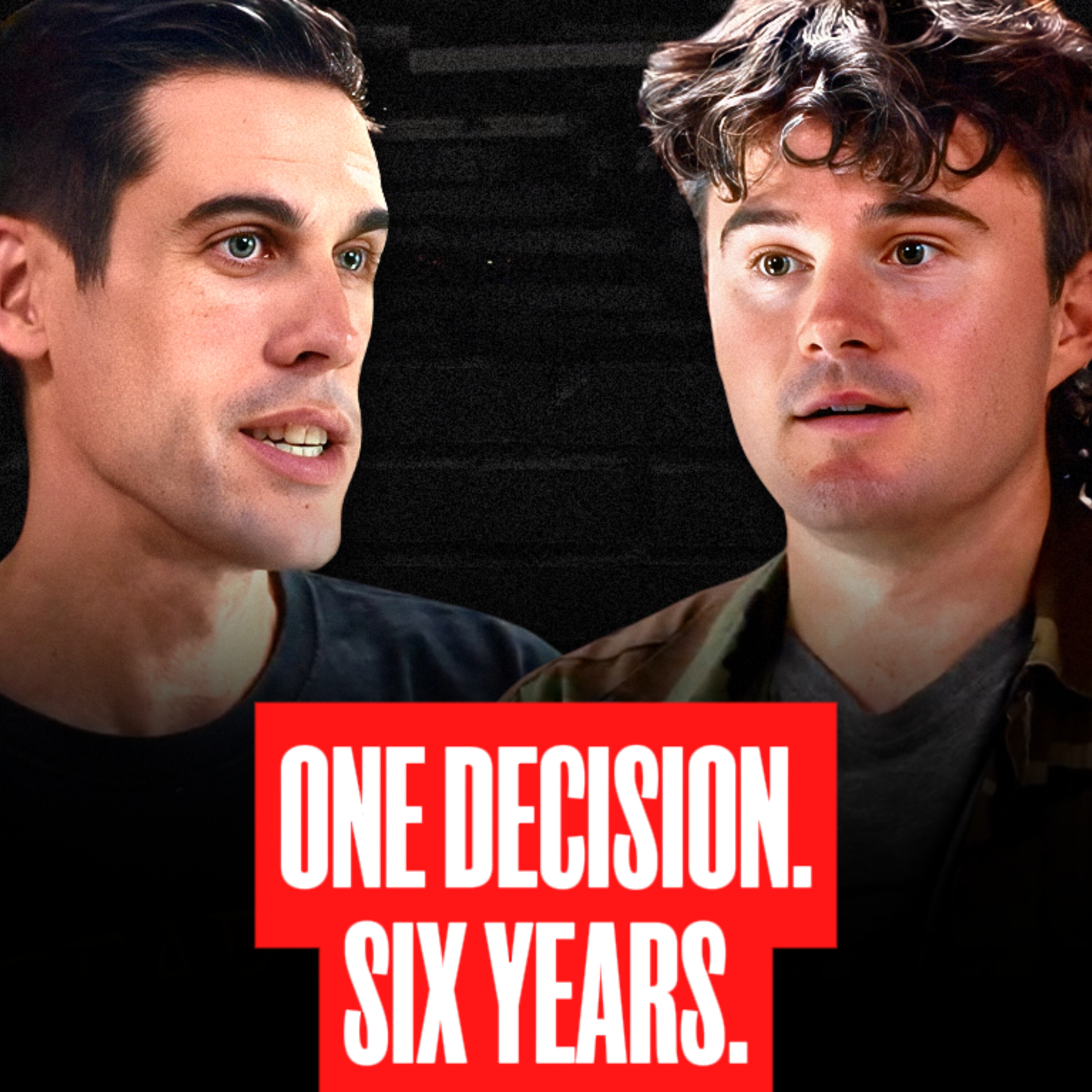
In this episode of The Daily Stoic, host Ryan Holiday engages in a conversation with his long-time research assistant, Billy Oppenheimer. They reflect on the journey of studying and writing about Stoic virtues over the last six years, from the inception of the Stoic Virtues Series to the release of Holiday’s new book, Wisdom Takes Work. The discussion encapsulates themes of personal growth, the integration of Stoic lessons into everyday life, and the unique nature of wisdom that cannot be outsourced.
Written by AI. May contain mistakes.

Get the gist, explore an idea or ask about something said.
 Claude
On The Daily Stoic, what are the key points of this episode?
Searching your listeningAutomatic transcript. May contain errors.
0:00I'm recording this on a Monday, and Monday is our grocery store day in our family. I usually pick my kids up from school and we go over to Whole Foods, get all our groceries for the week. Although here very shortly, we're going to go over there to get our Thanksgiving turkey because they've got a bunch of great options. Turkeys start at$149 a pound if you have Prime with organic birds at$299 a pound. And they only carry no antibiotic ever turkeys that will bring quality to your table at a great price. Whole Foods has great everyday prices on all your Thanksgiving essentials, whether you celebrate with a massive family or just a few close friends.
0:37Everything they sell has high standards to help you shop with confidence. Enjoy so many ways to save on your Thanksgiving spread at Whole Foods Market. Why choose a Sleep Number smart bed? Can I make my sight softer? Can I make my sight firmer? Can we sleep cooler? Sleep Number does that. Cools up to eight times faster and lets you choose your ideal comfort on either side. Your Sleep Number setting. Enjoy personalized comfort for better sleep night after night. It's the final days of our Black Friday sale. Recharge this season with a bundle of cozy, soothing comfort. Now only$17.99 for our C2 mattress and bays, plus free premium delivery.
1:11Prices higher in Alaska and Hawaii. Check it out at a Sleep Number store or sleepnumber.com today. What can 160 years of experience teach you about the future? When it comes to protecting what matters, Pacific Life provides life insurance, retirement income, and employee benefits for people and businesses, building a more confident tomorrow. Strategies rooted in strength and backed by experience. Ask a financial professional how Pacific Life can help you today. Pacific Life Insurance Company, Omaha, Nebraska, and in New York. Pacific Life and Annuity, Phoenix, Arizona.
1:51Welcome to the Daily Stoic Podcast, where each weekday we bring you a meditation inspired by the ancient Stoics, a short passage of ancient wisdom designed to help you find strength and insight here in everyday life. And on Wednesdays, we talk to some of our fellow students of ancient philosophy, well-known and obscure, fascinating and powerful. With them, we discuss the strategies and habits that have helped them become who they are and also to find peace and wisdom in their lives.
2:36Hey, it's Ryan. Welcome to another episode of the Daily Stoic Podcast. I heard you guys. I have heard the overwhelming number one piece of feedback that you have given me on this podcast, at least on the interview episodes, which is that there's too much of the guests and not enough of me. Right. I get it. I don't interrupt them enough. I don't answer my own questions enough. I don't give my point of view enough. I just ask really short, tight questions and then I turn it over to the guest. And that's what I've been doing here on the Daily Stoic Podcast for years and years. And you want to hear more of me, right?
3:15I mean, look, obviously, I know that's not the feedback. I do occasionally see the comments. They trickle back to me in some form or another that I'm not turning it over enough to the guest. I do say, as Tyler Cowen's great line is, that this podcast is the conversation I want to have, not necessarily the conversation you want to have. and that I try to see it less as an interview and more of a discussion. But I am trying to get better. Actually, one of the chapters in Wisdom Takes Work, which is out this week, is all about Zeno's famous dictum about having two ears and one mouth for a reason, that we have to listen much more than we talk.
3:58I do try to practice that restraint. I think I'm getting better at it. So this really drives you nuts. This is probably not the episode for you, but I was excited to do this. And I'm actually excited for you to hear this one because it involves someone whose work I like, who I think is promising and sort of an up and comer. And I'm not talking about myself. I'm talking about the interviewer here because this is a turn the tables interview. Billy Oppenheimer has been my research assistant for many years now. He has done all sorts of great work for The Daily Stoic. He helps me prep my articles. He helps me track down leads or ideas.
4:36I'm really bad at finding out how to get things that are behind various paywalls or out of print. He finds all sorts of obscure stuff for me. He was just helping me out this weekend. I'm going out of town first to Los Angeles to do a week of promo for the book and then to New York for a week of the promo of the book. And he is printing out my big collection of research for the book that I'm working on now. He's amazing at it. He's great. He also, I will say, has a great newsletter that you should subscribe to called The Sunday at Six, which I have seen grow from a tiny little thing. I could take some credit.
5:11I was the one that sort of pushed him to start doing it. And now when podcast guests come into the studio, they go, is Billy here? Because they get his newsletter, which is always delightful to see. But my point is, Billy and I have worked together a long time. None of the books in the Virtue series would have been fully possible without him. where they are good. In many cases, that was a direct contribution from him where they're bad. I'll take the hit for that. But Billy and I sat down and had a long conversation in early October before the media tour really started. So I could kind of work through what I was thinking on the book.
5:45He had some questions for me. We talked about the process and this project we've been working on together. And I think it's a great interview, this question. Is it getting harder for me to be lit up by stories. I like to get excited about stuff. To which my answer is unequivocally no. I fucking love doing this. I love doing this. And I am, as we talked about in the interview, like pumped about what I'm working on now. In fact, the only thing I don't like about tours is that it distracts me from getting to write the next thing. Hopefully you've picked up on this by now. You haven't been listening very closely if you haven't, but the new book, Wisdom Takes Work, Learn, Apply, Repeat, the fourth and final book in the Stoke Virtue series is out.
6:26We've got a bunch of awesome bonuses that we're continuing dailystoic.com slash wisdom. You can get dinner with me to talk about the book. You can get pages from the manuscript, which have my notes on them. Sometimes they have Billy's notes on them and a bunch of other awesome stuff, including some chapters that I've been working on for a long time that I didn't get to put in the book. All of that right now, dailystoic.com slash wisdom. It would mean so much to me if you could pre-order the book. And then I want to get into this episode right here, right now. And I hope you enjoy it. And as I said, sign up for Billy's newsletter.
6:58I get it every Sunday. I'm recording this on a Sunday. It will come two and a half hours from now. And it's always great. And it's always fun for us to talk about that email that he does. I reply most days. Anyways, let's get into it. And I'll bring you part two later in the week.
7:17did you think we'd ever actually get here no because you were at the beginning of the whole series right you started right as i was starting the research for courage yes 2018 you just finished stillness no 2019 stillness finished still came out in 2019 yeah so wait were you so you were there before you even had the idea yes that's actually where i wanted to start oh did i have you fill in some stuff on the proposal? Yes. Really? Yeah. Okay. So that's the summer of 2019. Yes. I remember one of the first articles I worked on when I started working for you was a piece you had, you were writing about having the idea for the series.
8:00Oh, after sort of just of the articles, like you stepped away from working one day to go on a hike with your kids and you had the idea on that hike. Yes. And then I remember a line in that, that piece. I was like, And just like that, my next four years had been laid out in front of me. Wow. And it turned out to be six years. Yes. Well, and there was a pandemic in there and a lot of other stuff. That's really interesting. It was funny because I just went for a run in that park over the weekend. And there's like trees that weren't there before. Because the whole forest burned down in 2011. And then some other parts of it burned in 2015.
8:42So like it was striking to me like how much it is changed. And then I made a joke in the talk that I did in Austin that like I can measure the whole series in inches because my youngest was like a baby when I had the idea. And so he's like this tall. Yeah. He was like in a backpack on the hike. I was thinking about that because I said that to Samantha and he would have been in a front carrier and the oldest would have been in a backpack because he would have been way too. He was born in May. So he would have been too young to put in a backpack. But yeah, I thought that would be four years of work, but I ended up in the middle right after discipline, which discipline came out of the gate much faster than anyone thought.
9:23Like it sold much better than even I thought. And so my publisher said, do you have any other ideas? And I told him I had these other two ideas. But part of the condition of that, those other two was that I would get an extra year off. So I took a year off between discipline and justice, which is actually more like 18 months. So I pushed, I slowed the whole thing down. Yeah. And so it took longer than. Well, you would put the justice book in the metaphorical drawer for a little bit. Which I had talked about in discipline. Yeah. So I also kind of liked following my own advice a little bit. It's crazy that you've been working on the series Jones' whole life, essentially.
10:01Yes. That's what I'm saying. He's like this tall. I mean, he went from not being able to walk to being able to walk to not being able to talk to being able to talk to being able to like read words in the final book. You say in the afterward to justice that that book was a kind of ethical will to your kids. And I wondered if wisdom is sort of like the way you were thinking about. Education? Yes. A little bit. Although, you know, it's funny in the Taylor Branch series on Martin Luther King, at the end of the last one, and these are like, that's like a, if you want to talk about a trilogy, that's like an epic trilogy.
10:37Is it four books? I think it's a trilogy. Anyways, in the acknowledgements at the end of the Taylor Branch book, he talks about how his son, who was born as he was starting the first one, helped with the research of the final book, like his senior year of college or something. And you're like, so you're like, that's like an adult life, like from infant to functioning member of society, like the arc of it. So I remember being struck by that. So this is just a much smaller version of that. But yeah, well, one of the reasons I wanted to save the wisdom book for last in the series is that I just thought who I would be for five years later, I would have more to say about it.
11:19And then I also knew my kids were little. And so some of the thoughts on education and setting up an education would be more relevant to me. It weirdly, it's turned out every book in the Virtue series has been exactly the book that I needed to be thinking about in that moment. So courage during the depths of the pandemic, discipline during the other depths of the pandemic, there's sort of where, you know, you're working from home, reimagining it just like as it had dragged on and then justice in the middle of a sort of social justice awakening and then a political turbulence and turmoil. and then wisdom as my kids are, you know, sort of now fully in school and the mainstream integration of artificial intelligence and also, you know, a time of political misinformation and disinformation and making sense, you know, Orwell talked about how to like see what's right in front of your nose is the hardest thing to do in the world.
12:25That's the wisdom that I was interested in when I was writing the book, not just like knowledge for knowledge sake, but like, how do you make sense of the moment that you were in, which is a, both a timely and a timeless moment. Yeah. If you had started with wisdom, like AI wasn't yet in the conversation the way, and now this book opens with that great story of, of Seneca, which is just like how ancient the desire for shortcuts is. Yes. Yeah. Yeah. He's talking about this guy who hires these slaves to basically be his chat GPT. Yeah. Like to just be the repository of knowledge that he could have at any moment.
13:05And then he could, he could be smart without having to do the work to earn the knowledge that he was throwing around. Yeah. And slave is like an LLM for like, yes, totally. Yes. And, and, you know, Seneca is laughing about how, you know, it's not something anyone can do for you and there's no shortcuts. And he says, you know, no one was ever wise by chance. Like no one's beat the system basically. Yeah. That came very late in the book. I think there was a different intro, which I don't remember what it was built around exactly, but that came later. I remember forwarding you an email. Somebody had sent me and it made me think of the Seneca story.
13:43Oh, is that what happened? And I was like, probably a chapter on this. Yes. And then when I saw the first galleys, it was an intro. Well, credit where credit is due, that was a great find. And there's something, my relationship with the Stoics, having read them many times, is that it's all kind of there. And why you have to reread the Stoics is that the thing you're looking for or that would explain the moment you're in, it kind of pops out at you, right? And so that's why you have to have this kind of ongoing relationship with the text. Because when I first heard that story, however many years ago it was, I didn't go, oh, this will perfectly explain modern America's relationship with technology and wisdom in the year 2025.
14:30Obviously, that's insane. But it makes an impression. And then it comes back to you and you're like, oh, this would work perfectly here. I used to write very intentional intros for my books. Robert Greene is the opposite. Robert Greene, if I remember correctly, does the intro last. And I'm now kind of split the difference. Like I do kind of a light intro or a basic, it's like a warm up. Like the intro is really just warming up the vibe and the tone that I want. And then I understand that almost certainly the ideas that it's going to be built around are going to come later. so that was like oh yeah because i do like i do like it when the intros have a story like discipline i think is mostly built around eisenhower if i'm remembering correctly courage is churchill and justices who's the main person in justice i don't remember florence no no in the intro oh there's there's usually a story in the intros let me see for this is more than you can have in your head.
15:33Oh, Hyman Rickover, do what you think is right. Slam down the phone. What was it like to have it? I mean, you have an actual copy there. Yeah. So this is my experience on all of the books, which is that, you know, I see them in Google Docs as you're working on them. Yes. And then my sort of role, I sort of off ramp and you have a lot more work to do. And then I see the galleys and it's like, right. Cause it leaves, it leaves uh in my process it leaves google at some point and goes into microsoft word yes and then then there's really no sort of research assistant tasks pertaining to the more or less complete manuscript and then and then all the edits and stuff yeah and so when i see when i get the physical book like i don't recognize i don't recognize it's like a new book to me yeah yeah i I did find that on Robert Greene's books.
16:28It was hard because, yeah, I would see all these different things. Or I'd read it as a galley, but then I would never actually sit down and read it as a finished physical book. And there was something sad about that to me that I didn't, like, I love the access and the appreciation, but the cost was that I didn't get to experience it like everyone else. Like, if you work on a movie, you don't get to watch it for the first time in the theater with everyone. that's never going to be your experience and so there's a little bit of that with seeing a book get made yeah but even i mean i sat here in this room to do the audiobook and there was like still changes i was making yeah i also was going through the box of note cards and the section of where you're kind of kicking around different structure ideas and what ultimately became the structure of this book there was like a note card and it was like on bike ride in like 2020 or something really yeah i forget the date but it was like And there was, you know, you had one that was like internal and external.
17:28Yeah. So do you remember like nailing down? Because I know the importance for you of like cracking the structure. Yeah. We should find that note card. That's cool. I forgot about that. Yeah. And I'm trying to do better at saying when I found stuff because like it's cool to me going back to it. It's a lot of it you just forget. But no, I do remember that for the three other books, the three-part structure was obvious and pretty clear. And for this one, it was not. And actually, when I talked to Rick Rubin, I was talking about doing the fourth book. And he was like, have you thought about for the fourth one just like doing something totally different?
18:08Which I liked the idea. That's a very Rick Rubin thing. And I considered it. And there just wasn't anything that like called to me that like really felt like that would be right. And it wouldn't just be like sort of performative weirdness, you know, like there was, I had this fantasy, like, what if I just did it like really short, you know? Yeah. And then that was like one of the lessons, you know, and then I wouldn't have to do a long book. Like, and, and so I thought about a bunch of different ways and there was, it just didn't feel like it would come together. But the idea of like, and that is an idea in the book, it's just like, you respect precedence and tradition, but you question convention.
18:50And so I had done the same style in the same structure for the first three. And then you go to first principles and go, what is actually the best way to organize this book? Putting aside what has been done before, what is the best way to do it? And I think doing it as a three-part structure, I eventually found the things that I wanted to say. And I knew from the outset that I wanted Lincoln to be a main character. Lincoln was originally going to be at the beginning as the self-education person, because that's what he's so famous for. And then I found that actually I wanted to talk about him more in moral terms.
19:29So he became at the end. So then it was who's going to be at the beginning. and that's where Montaigne came in. And then it was sort of who's going to be in the middle. I guess all of which is to say the structure took a lot longer on this book and was a harder puzzle to crack. But the idea of sort of, here's how you inform yourself. Basically, it's like that thing from The Office where Dwight says like, what I figured out is I asked myself, what would a stupid person do? And I don't do that. I wanted to spend a lot of time, not just sort of talking about what wisdom is, but as I did in the ego book, like what is anti-wisdom, like what is the opposite of wisdom and how do we sort of lionize one and then steer clear of the others.
20:10So it took a while. Yeah, that's funny that it came together on a bike ride. Yeah. I wonder when that was.
20:23Thanks to Toyota Trucks for sponsoring this episode. When I bought my ranch in 2015 out here in Bastro County, I drove my car about halfway down the dirt road that we live on, thought this isn't going to work, stopped, parked it, walked the rest of the way home, borrowed my wife's car, drove into Austin and bought a truck. What I bought was a Toyota Tacoma. And this truck wasn't just transportation getting me to and from my house. It unlocked a whole different style of living for us, not just on the ranch, but in our little Texas towns. There were places I could go now that I couldn't go before, especially out here in the piney forests, through the fields, and on the unpaved roads like the one that I lived in.
21:09We got to go deep into the hill country's wild beauty. We've driven all the way out to East Texas. We've driven across the country. And by we, I mean not just my wife, but both my kids who I drove home from the hospital in that truck. Toyota trucks are built for those who understand that the best adventures happen when you're willing to veer off course, because you never know when you'll end up on a Toyota adventure detour. And of course, this is stoicism, too, because every detour, every obstacle is an opportunity. But it's helpful if you can handle the difficulty inherent in that. If you've got the resilience and the right companion to make it wherever the road takes you.
21:48Discover your uncharted territory. Learn more at toyota.com slash trucks slash adventure dash detours. We just took our kids to an outdoor performance at the Nutcracker. They had a snow cone and then they went insane in the car ride home. And one of the things I try to remind myself when that's happening is that I don't control my kids' behavior, especially when they're too far gone like that. But I do control how I respond, right? That's stoicism, but it's also what Dr. Becky talks about. Dr. Becky is a clinical psychologist and a bestselling author, and she founded Good Inside, which is there to give parents practical, actionable tools for handling those everyday challenges with confidence.
22:31My wife introduced me to Dr. Becky's books. I love them. I've recommended them a million times. I've had her on the podcast. And as it happens, Dr. Becky is hosting two live Q &A events for Good Inside members. I am one of them. She signed me up for about a year and a half ago. I've loved it ever since. On December 1st, you can join Dr. Becky for her How Not to Raise Assholes event, which is about avoiding entitlement and raising kind, empathetic kids. And on December 15th, she's hosting her How Not to Lose It over the holidays event, which I'm sure we could all use. As I said, I'm a big fan of Dr.
23:08Becky. She's been a great influence for me as a parent and just as a human being. And Daily Stoic listeners can join for 15 off with code stoic 15 you just gotta head over to good inside.com to catch the events
23:28part one opens with montane yeah a most unusual education yeah um and in some ways it's very relevant to education today like sure his upbringing his dad um instills like a love of learning that almost gets snuffed out in the schooling system. Well, you know what's funny is his dad like travels, he was like a soldier or something. His dad had traveled around Europe and was like fascinated by like these breakthroughs that were happening in education. Like he talked to all these educators. In the 1500s, he talked to these experts on education and then brought home these like cutting edge strategies.
24:10So there's something like kind of timeless and timely about like, well, what the old way is obviously not working. What's the new way? And it's like this new way is 500 years old. But also when you're reading it, it feels radical. And this was actually something that my editor, Adrian, he was asking my wife, Samantha, is asking her about what we were doing for education for our kids. And she was like, well, you know, we've tried this. We're wondering about this. We don't know about this. You know, do you do private? Do you do public? Do you do tutors? What do you do? And he was like, the one thing I know is that there's not anyone of any socioeconomic status, high or low, you know, that is like things that they're like crushing.
24:53Like no one's like, we figured it out. It's perfect. We are totally happy with the option. So I guess the idea is that people have been struggling since there have been people to try to figure out the best way to teach their kids. Yeah. I did. The hard part about writing part one of the book is like, I didn't just want it to be about your kids. And I didn't just want it to be about how your education should have been. I wanted to think about the principles of learning generally, because like the epigraph of the book is like, if you think it's too late, you don't understand what wisdom is. Like it's an ongoing pursuit and it has to be seen as an ongoing pursuit.
25:31But like with learning languages, like younger is better. Yeah. There's a great chapter on finding your classroom, which seems related here. And the emphasis on your classroom. It's relative and it's specific to your interests and inclinations and finding that place being crucial. Yeah. You know, it's funny. I was actually just talking to this parent at my son's school and he was thinking about writing a book. He's a very well-known athlete. And I was thinking about doing a book. And so I sent him the Chris Bosh book that I had worked on. And he said, your name's not in this. Did you work on this?
26:09And I was like, yeah, I was the ghostwriter. And he was like, I don't want to hurt your feelings, but why would you ghostwrite a book? He's like, you could write whatever you want. Why would you work on someone else's book? And I said, well, someone has to pay for my kids to go to this school because it's not cheap. But I was saying that the reason I ghost wrote for a long time was that it was not just free reps, but it was like getting paid to get reps, you know? It was that I was learning the craft, even though obviously I was pretty good or I wouldn't have been being paid to work on someone else's book.
26:41but I've done all the books that I've done that people have seen. And I've also done, you know, a half dozen or more I've consulted and edited many, many others. Like my breadth of experience is wider than just the things that have my name on them. And so my classroom was not just working for Robert Greene. And then, you know, I think I've gotten better at each one of my books, but my classroom was also, you could call this like a sort of publishing one-on-one education where I'm learning the proposal process and I'm learning the writing process and I'm dealing with difficult editors and great editors and what happens when you have too much, like, how do you solve, how do you, how do you work on a project where you have too much material?
27:24And how do you work on a project where you don't have enough material? And how do you work on a project where the person's super engaged and then where they're not engaged? And, you know, how do you work on one for this kind of audience and then an older audience and then a younger audience? And, you know, just like just doing it different ways. My secret in life, I think, has been that I figured out how to get paid to learn a lot of things. And Robert Greene paid me to teach me how to be a researcher. And then I started getting paid to give talks from like the first talk that I ever gave. And so then I spent, you know, probably five or six years getting good at it.
28:06And then the last five or six years, you know, taking that education and, you know, like whenever you can bite off more than you can chew and then have to scramble to learn on the job, that can be a stressful experience, but it's a pretty wonderful experience. And it's like the ultimate sort of career slash life hack. Like I think about it, like I was studying all these sort of military guys and just like the idea of like the Navy or the army or whatever, sending you back to get a degree. It's like you're getting paid to go to school. Not like you're getting your school for free. Like they're getting paid to go to this university.
28:45That's like the dream, I think, right? And so I've always kind of sought those experiences out. Yeah. It makes me think of a footnote. I think it's in the afterword. You also paid to leave school. That is true. Yes. When I dropped out of college, I went into the registrar's office to to leave. And I was like, you know, I'm here to drop out of college. And that's not really a thing, which I was surprised to find out. Like, I would have been nice to know before I told my parents that I was dropping out, you know, like, cause then I could have said, oh, I'm taking a semester off. And, uh, yeah, that would have been a slightly lower stakes confrontation.
29:26But yes, I went through a bunch of papers that I had when we moved from my old office to this office. and I found the form and there was a receipt stapled on it. And it was like$40 to leave UC Riverside. Yeah. The other thing, which I told at the Austin talk that I just gave, which is, you know, as you get older, just certain mortifying things that you did, just like going through your life, you're on a walk, you're falling asleep, you're talking to someone and you just get like viciously attacked by the memory of something stupid that you did when you were younger. And you're just like, oh, no.
30:06Yeah. You know, and I don't remember exactly where I was, but it just, I just recalled one day that I had written my college admissions essays on the difference between schooling and education, which I thought was so clever. I remember thinking it was clever. Yeah. And then when this, I was like, oh, that, that's why I didn't get into the places that I wanted to. You didn't know your audience. Not only did I not even know my audience, it didn't even conceive to me that it hadn't been positively received. I was just thinking like, oh, it must have been my grades or my SATs. And then in retrospect, it was like probably all the essay as a disqualifying.
30:46Like just what a presumptuous, petulant, like conceited, dumbass 17-year-old thing to do. Yeah. And I don't think I thought there was anything trans... Maybe I thought there was something a little transgressive about it, and I thought they would appreciate it. But in retrospect, why would they appreciate it? I was literally saying that I don't think school is important. Please allow me to come to your school. But I ended up... I mean, I went to Ushah Riverside on a scholarship, and I met my wife there. So it worked out. But that was a dumb thing to do. You tell the story of a conversation. I think it was when somebody in Hollywood of like, you can pay to stay in school and learn these things or go get like real world experience.
31:33And that was kind of the. Well, what he said is he said, do you want to. So I was working at this talent agency my summer of my sophomore year. I was about to go back. I put a deposit on the house that I was going to live in. I'd picked it. I'd gone back. Samantha still lived there. So I got back. I picked that apartment. I was excited. I think I'd enrolled in my classes. And he's like, so you're still thinking about going back? And I was like, what do you mean still? Like, that's obviously what I'm doing. And he was like, what if you didn't? And what do you mean? And he said, well, you could work for me as my assistant.
32:06And I was like, you have an assistant. She's sitting right there. And he was like, yeah, she's not going to last very long. I would like you to be my assistant and not go back. And I thought about it and I think I decided not to do it. This could have all been one conversation or a few, But I said, yeah, I think I'm going to go back. He's like, if you want to go back to school and read in the newspaper, this is an example that I guess made more sense at the time. But he's like, do you want to read in the newspaper about stuff you could have been a part of? It's kind of like, you know, the Steve Jobs thing where it's like, you want to go sell sugar water for the rest of your life?
32:42Yeah. You know, he was like, look, do you want to go read about people doing stuff or do you want to do stuff? And I thought that was a pretty, I think it was right. And basically, like a couple of days later, Robert Greene asked if I wanted to be his research assistant. And so my calculation was actually less thinking about the Hollywood thing and more thinking about like, if I wanted to be a writer and I was going to get a minor in creative writing, if the end of this education in politics and creative writing was that I could get a job for someone like Robert Greene, my parents would be like, good job.
33:18Like, that's why you went to school. And I would think the same thing. So I'm going to say no to that, go back, finish the thing, and then hope that the offer's still here or that lightning strikes twice, I get a similar offer. That seems crazy. So I dropped out. I remember being very, very stressed about the$900 deposit that I didn't get back, which in retrospect was just silly, which is actually a great lesson. Because I remember I was just talking to someone. And you knew them. They worked for us for a brief time. They were like making this major life decision about like, they were like, well, I have all my stuff, you know, I can't do this.
33:57I have to put all my stuff. So, and I was like, a storage unit is$80. Like you're going to alter the course of your life because you don't want to put boxes in storage to see where this goes. That seems dumb. Yeah. You know, and$900 is a lot of money to me in 2005 because I'm making nothing. But anyways, the funny thing is I decided to drop out and he was going to let go of his assistant and then tell everyone. And then I went back to college to pack up my stuff to come and blew up my life, basically. And then I came back and that Monday he wasn't there and the assistant was there and everyone was very confused as to why I was there.
34:44and he had checked into rehab over the weekend and was totally unreachable and did not inform that it had not informed anyone and no one knew what his future slash you know what had happened why had happened why it had happened and why i was there and obviously this somewhat perceptive person picked up on the you know and it was you know it was like arrested development i may have made a huge mistake yes when did like your sort of voracious reading i because there's you tell a story of of a teacher catching you reading a louis lemore book right yeah and then i've heard you talk about like later being introduced to like maybe higher books yeah um i mean not that he and actually his memoir education of a wandering man is incredible and it's totally a memoir about self-education and how you can get an untraditional and interesting education that fits you perfectly to do difficult, unusual, interesting, even lucrative thing.
35:45It's one of the great memoirs, actually. If we don't carry it in the bookstore, we should. What's it called? Education. Education of a Wandering Man, I think. It's amazing. You're reading that Eric Hoffer book, right? They're kind of similar. He's reading books in these mining camps and working on dude ranches and stuff. It's really good.
36:16Yeah, in fourth grade, I was reading a Louis L 'Amour book and my fourth grade teacher caught me reading it in class instead of paying attention. And instead of being upset, she was like proud of me. I first didn't believe that I could possibly be reading this book. And that was like the first time anyone sort of took any notice of me. And she put me in some special classes and stuff. But I mostly just read more books like that for like the next 10 years because I don't think my parents had read, not that they're not smart or anything, but I think like if it wasn't like at Costco, it wasn't like the kind of book they were reading.
36:53You're stealing your sister's books. Oh yeah. Like, yeah. I read all the Nancy Drew books and all the babysitters. I would just read whatever was there. The idea that there was like this rabbit hole that you could go down, that you could follow different subjects. You just don't know what you don't know. And my parents didn't know stuff. And then I didn't know that. And I mean, I had the experience of going to the library, but they would be like, come over here to the kids section, you know? And so I read a lot of young adult stuff and some of it was informative. And I read a lot of Westerns. I do remember, so I loved Westerns because I love those Louis L 'Amour books.
37:27We would go to the grocery store and there was always a little book section. And I remember I'd read all the Louis L 'Amour books. So I grabbed this other one. And it was this other series, but it turned out to be like a, like a, a ladies Western. Like it was like a, an erotic book. And that was pretty scarring and weird as I was like waiting for the gunfights. And then there was just like a lot of, just a lot of sex scenes, which was both eyeopening and unnerving as like a fifth grader or whatever. Waiting for the gun scene. Yeah. Yeah. When is it? It was just like, it was like the Westerns, but instead of the gun scenes, there's just a lot of scenes in the bordellos.
38:04and things. But, uh, so yeah, I've read mostly, I wouldn't say trash as that seems to me. And reading is reading, but I read mostly a lot of those kinds of books until, yeah, I just fell down. I started getting exposed to other, other books at some point. Yeah. The reason I was bringing, like when you were talking about getting paid to learn through ghostwriting and real world, like, so I was thinking of the Da Vinci thing in the book of being a disciple of experience and the disciple of received wisdom. So at some point, like the combining the real world experience, but also all this reading you're doing.
38:40Well, one of the things that working for Robert was amazing at is like, first off, he would be like, I need you to go read about this 16th century, you know, um, astronomer or this cleric from this, or read about this. They were just assignments. So it was like being in college, but there was much more unusual. And And then I'd be like, that was really interesting. Is there anything else like that? And he'd be like, well, have you ever read this? And the answer was like, almost always no. And so, you know, there was that. And then obviously when I went to college and then, you know, obviously the Stoics, but, you know, just reading these philosophers and then just being interested.
39:19Oh, let me read the next thing and the next thing and the next thing. there's a scene in one of my favorite stories in the book one of my favorite stories ever is this story about harry belafonte where he's uh in the navy and someone gives him a copy of w.e.b du bois's uh memoir and he's reading it and he gets to the end and he's he's like i gotta read more stuff like this and so he gets the bibliography it just says like i bid i bid i bid i bid i bid a lot and so he's like well i'll just read that you know who's that and he goes to the library and he asks her, give me all the books you have by Ibit.
39:52And she goes, I'm sorry, there's no author like that. And he thinks he's being stonewalled by a racist librarian, which would have been a reasonable interpretation of the events in the 1940s. And I'd never actually, I just, I knew what it was. No one ever told me this either, that it stands for Ibitus or Ibitus. I don't know. I don't even know how to pronounce it. It's a word I've never heard a human being say. I've only seen in the back of books, but that just means like, like the book above or, you know. Yeah. It's like we, we've already used the title as a shorthand for like same book, different page.
40:27Same title. Yeah. Same title, different, different footnote connected. And so he just didn't, he didn't know that. And he'd stormed, he stormed out of the library in anger. And he later tells WVB Du Bois' story. And he said his dying regret was that he never got to meet the librarian again to apologize. But I had that experience of just like reading a book and then being like, I love this scene. And I learned this to do this with Robert too, where you're like, you read something and it's just this section is really interesting to you. And you'll go like, well, where do they get this section? And then you go to the...
41:03Like for many years, I would almost always find my next book from the bibliography of the book that I just finished. And not always the bibliography, sometimes it's just mentioned in the text itself and I would circle it and go back to it. But But once you get connected to a couple good books, you almost don't need anyone else. Yeah. Because you can follow that chain for the rest of your life. Yeah. Well, that made me think of the John Wheeler thing of like, as your shore of knowledge grows, so does... Or island of knowledge. As your island of knowledge grows, so does the shoreline of ignorance.
41:37As the island gets bigger, it touches more shit that you don't know. Yeah. Which is kind of an interesting way. It's an interesting... I think I put this in the bibliography of Ego. Do you know where I heard that quote? No. So again, this is the idea of Tracy's... Okay, I was on a Southwest flight and I was reading the Southwest magazine. Again, this was a long time ago, apparently, because they don't even do that anymore. But I'm reading the Southwest magazine and there is a interview with Neil deGrasse Tyson. And he says, he's like, it's like that famous quote, you know, he mentions it in some way, not directly, but he alludes to it or he riffs on it.
42:14And I was like, I've never heard that before. What is that? And I went and I found like the original source for it. So many of my books come from random one-off encounters. Yeah. Well, another good example of that is the Izzy Rabbi story. Oh, yeah. That was a weird one. Where you first came across it and it was told as if it happened to someone else. Yes. And then you track it down. Yeah, that is true. Yeah, I read it in the Patrick Radden, Cleef, Patrick, whatever. Empire of Pain about the Sackler family. And yeah, what was really interesting about that story is he tells it as if it happened to him in that book.
42:53Arthur Sackler tells that story as if it happens to him, but we traced it. I think Christo did that research on that, right? That's my other research assistant, my first research assistant. And usually what you'll do is you'll find an anecdote or an idea and it's not like the primary source. You got to go back and find more about it. And so we went back and it turns out he'd first told the story like in the 60s or something, but it had been about his friend growing up, a different scientist. And then over time, and this is something that keeps me up at night, over time he told the story so many times that he just made himself the center of it.
43:34And he cut out his friend. And the book I'm doing now, It was interesting. We just found in his oral history, he tells this story about being on the block where this famous person lived. But then we found a letter that he wrote in 1952, where he vividly describes to his parents meeting the person and shaking his hand. so which one do you trust yeah do you trust the memory of the person in their 80s even though in their 80s they're telling the less interesting version of it or do you trust the younger version the contemporaneous version which is more interesting and then you go well which one would they be like you would you'd probably normally defer you'd play it on the safe side but then you're like is that actually the safe side like because like this is a pretty detailed lie if it's a lie yeah so anyways this is all inside baseball of whatever but that one was interesting where it's like that story was really good but the problem with that story is that the sackler family sucks like they're directly responsible for the opioid crisis yeah and although arthur sackler dies before right what's it called oxycontin is invented It's his nephew that does it and his brothers.
44:58But I had a way, if it was him, I was going to circle back to him as an example, as a cautionary example also. So I was going to do positive and negative. But then to find out that actually it's about a different Nobel Prize winning physicist. It was him asking Isidore, why did you become a scientist and not a lawyer? Yeah. And he says, well, my mother every day when I would get home from school would say, you know, did you ace your test or how are your grades? she would say, did you ask a good question today? And I love that story. It's an amazing little anecdote. And then, yeah, all of this, you know, when Hemingway talks about the iceberg, this is all the iceberg part.
45:34Yeah. Like the underwater part, this is all there that the reader doesn't see, but you have to checking and cross-checking and whatever. I think I've gotten better at that. I would say my books are, there's more submerged than was on the earlier ones. What do you mean more submerged? Like I found when I went back to do the obstacle is the way, there were some things in there that I would, I wouldn't have let myself that like, maybe I was right, but I was, I didn't actually have the facts at hand to be that right, to be that certain then, or I wouldn't have written that sentence. I would have needed more information or evidence to support that assertion.
46:17So when I went back and did it, there was just changes that I made that like, just my, I would just say like, I think one of the things that I don't like about this space that I'm in is that a lot of the people who write business books don't hold themselves to any academic or intellectual standards whatsoever. Like if it sounds good, they'll go with it. Yeah. If they heard it somewhere, they'll go. Like I was just reading a book the other day and he was like quoting a Twitter account. Yeah. And I was like, I would never do that. But maybe I would have thought about it a while. You know, I tried to get more stringent.
46:54Yeah. With my standards as I've gone on. Yeah. Well, it's one of my big lessons from your process is just like the rigor of like you see a story in one book and you're like, let's find everywhere this is told yes not only to confirm but like maybe there's a detail that's left out in this book and it's over here yeah and so now my bias is like a reader is to like go find where the story is told and often it's like you can't find it anywhere else yeah sometimes it doesn't exist yeah yeah and you go oh this person just you just like we talk about ai hallucinating stuff yeah you go oh this was hallucinated or this was deliberately manufactured to make a point.
47:38And I don't get it always, right? I mean, we're just going through the bibliography now and we found out that there's a quote that's like not as firm as I thought it was. Yeah. So I'll have to change that in the future editions or whatever. But yeah, Robert was like that. Robert, I would do this whole thing and be like, eh, no, not enough. Not enough. Not good enough. Yeah. I've heard you talk about like being surprised by he just paid me to do all this work and he's not going to use it. Yeah. Right. Like that's the, yes. It's not just because you put in a lot of work that like warrants using it.
48:08No, you got to have really high standards. Yeah. And I, I, I think a lot of people are writing books because they want it to be a business card or they wanted to get speaking gigs. They don't actually care. And so they're just, they're just producing slop before AI slop exists. And that I like books, you know, I like, I, I respect the medium. I was thinking of the story of like another example of triangulating, like the story you tell in the marathon video and article of first coming across like that run in Robert's book, 33 Strategies of War, finding it in like John Green, some other Green. Peter Green?
48:50Yeah, I forget who it was. And it being like a big moment for you as a writer. I mean, that was like the light bulb moment for me. I think that was the first time that I understood how it worked, like how the pieces came together. Because, yeah, I remember I was in a pizza restaurant in Santa Monica. No, no. A pizza restaurant on La Cienega in Beverly Hills. Philly's. What? Philly's Pizza. Yes, Philly's Pizza. Because that's what Philadelphia is known for. This is when I was a research assistant and an assistant at that agency. And, yeah, I read this story about the Battle of Marathon, which, of course, I had never heard of.
49:26and I had not learned about in any class, college or high school. And Robert Green vividly tells the story of the Battle of Marathon. And I just emailed them and I said like, hey, what should I read about this? Like, where did you get this? And that's actually been one of my favorite questions to Robert. It's like, what books did you read when you were working on this? And whenever I go to his house, his books are organized largely by books he wrote. So it'd be like, as he's writing 33 Strategies of War, he would get a bookshelf and then they would all go there. Oh, wow. So like, you know, obviously he has all his books from his whole life, but like you end up reading so many books when you're working on a book that it kind of messes up your whole system.
50:13So he would just be like, this is mostly the stuff from the war book. This is mostly the stuff from the seduction book. And so I would kind of be like, oh, I've never heard of that, you know, and I would read them. But I, and I found so many of my favorite books that way. But yeah, I asked him what book he'd read and he recommended this book by this academic about both the Persian invasions of Greece. And I read it. And then that was the first time that I was able, because the 40 of the Laws of Power had been out for a long time by the time I read it. 10 years. Yeah, about 10 years. And which is crazy, by the way, that would be like, if Obstacle is 10 years old, that would be like you starting working for me now.
50:53That's where Robert was in his... Oh, wow. Because it came out in 98, and this was in 2007 and 2008. But yeah, I read that book, which is obviously about Robert's section on the Battle of Marathon. It's like two pages, three pages, and I'm reading a 300-page book about it. And then I go, oh, this is... Like as I'm reading the whole thing, I'm seeing the little pieces that informed that condensed, you know, synthesized version. And there was one sentence I remember jumping out at me that like Peter Green or whoever the guy's name is wrote it, did it pretty well. And then Robert, you're like, oh, this is why this book sold 800 copies.
51:41And this book sold 800 ,000 copies. Like that's why. Yeah. Because you did it better. Yeah. And you took not just that. And then I went and retro-rotted it. There's obviously other tellings of it, but I was like, oh, this is how the source material gets compressed down to this. Yeah. Like, have you seen that video where Dave Grohl is explaining the drum sound on Smells Like Teen Spirit? Yes. And then Pharrell, like, immediately knows what he's talking about. And you're like, fuck, oh. Like you just realize there's like, oh, there's a lot. You think it was this Sue Generis thing. And then when you're able to see the combined influences, the equation suddenly makes sense.
52:29It doesn't make it less impressive. It makes it more impressive in some ways. Yeah. Because you realize, oh, this person is like a genuine connoisseur of music. And they just happen to be expressing it in this style. Yeah. So it demystified for you. Yeah, I mean, that's, I think working for Robert, what it really showed me is how it worked as a craft. Like, if you are working, like, when I walk by a house that's under construction, that's as mystical to me as, and as much a form of art as writing or music or whatever. But I'm sure if I shadowed a contractor, you'd be like, oh, this is how they start this phase.
53:21I just watched it happen, and then you realize it's a series of discrete tasks and a set of skills. And there's a map, and then there's somebody making the creative decision. And like, that's not to say that it's any easier once you know it, like it's still a shit ton of work, but it is suddenly not magic. Yeah. You know? Yeah. The output's still magic, but you realize, oh, this is a thing that you do. Yeah. I've heard Greta Gerwig tell a similar story of like that moment in her life. And she used the metaphor of just like, it put a mountain in front of me. Yeah. It didn't make it easy to climb the mountain, but it was there.
54:06Whereas before that, it was like she didn't even know where she was going. Brian Koppelman's podcast, I don't know if he still does it. I think he does it sporadically because he doesn't need to. But it's called The Moment. And it's like about those moments. Yeah. And I remember there's one he was interviewing Bill Hader. And Bill Hader was like obsessed with movies. And he's watching some movie. And he, for the first time, understands the shot the director is doing. It's like, oh, the camera is here and it's moving on a track this way while the person... And he was like, oh, a movie is that 900 times or however many shots are in a movie.
54:44Yeah. And yeah, that moment where it gets demystified, that's pretty magical. And I'm not sure if that's wisdom. I was going to think about that as an element of wisdom. And I think I'm going to save it for... I think what that is, is excellence. There's this idea of phronesis, like practical knowledge, but the ability to sort of technically understand how a thing works and the component parts and how they come together. That's a component of wisdom. That's not, I wouldn't exactly call that wisdom the moment like it snaps in where you get it. But like someone's ability to conceive of a path forward or a way to do something where everyone else is either hopeless or can't see it or misdeme.
55:33That's like, that's, I think what you're working towards. Yeah. It's the more specific knowledge, which I mean, Elon Musk is a cautionary tale in this book. We should talk about that in a second, but I do, we talked about that, um, the Pharrell video. I watched another one. I love those videos where it's like shots of musicians in the studio. And it was Billy Joe from Green Day. And he's just fucking around on the guitar as the early chords of Boulevard of Broken Dreams come in and he's fucking around. And then you just watch him figure out the guitar riff. He's obviously done it so many times that at some level you notice that he recognized it, but it's not like a fuck, that's it.
56:16It's like messing around and then not messing around anymore. and then the riff that you've heard on the radio a bunch of times exists those moments are real like you kind of figure it out those are great that's why i love cracking the structure on a book where you're like this is going to be the main character this is going to be the main character this is going to be the main character and then you don't you haven't figured it all out but you've solved suddenly in a moment it's like you're doing a puzzle and you're like and like it now is a rectangle yeah or whatever and you're like okay i now i just got to connect these two these two it's that a bunch of times that still a lot of work and it might take you yeah six months but like you are now at least heading in the right direction yeah that example billy joe is that his name makes me think of discernment like yes him messing around but then having the ear to decide this is let's grab onto this and move more in this direction.
57:16Yeah. These two things go together. Yeah. Usually like on my books, like I, for a while, I'm just generally writing a lot of stuff down on note cards or I'm just reading and thinking. And then there's some moment, usually it's forced where you're like, okay, today I'm going to sit down and think about it and I'm going to start. And then you're like, oh, I started going through the cards and I'm like, these two connect, these two connect and these five connect. Oh, this is obviously a chapter. And you don't get it all at once, but you might get set like on Monday, you just had, you know, 2 ,000 no cards.
57:47And then on Tuesday, you still have 2 ,000 no cards, but 300 of them or 200 of them are in chapters. Yeah. And now you have 10 of the 30 chapters you're doing. And now it exists. It's like you're walking by a construction site and one day it's, you know, flat. flat and then you see them pouring the foundation dig it they're putting in the pipes and then you see the foundation and then you see like a bunch of wood arrive and then you drive by like two days later and the whole thing is scap like a three-story house is suddenly scaffolded up or framed up and you're like oh wow that that went fast yeah that's usually what happens is it getting harder to because you've you've read so much harder to have the experience of being like lit up by a story i mean i'm in the middle of it right now i'm fucking loving this book i'm doing Yeah.
58:38No, I don't think so. I was talking to Rick once about how this happens to musicians, whereas they get more and more technically proficient to stimulate themselves. It gets harder and harder. Oh, sure. And they kind of like make stuff that's way above the heads of audiences. Rush did that. Yeah. There's a documentary about Rush where at one point they all got together and they're like, we took this as far as it's technically possible to go. this can't, this is no longer the, like they're like, the music can't get weirder and harder. It's gotta get, it still has to be challenging and interesting, but we're, this is a dead end.
59:18You know, like we're in a cul-de-sac. Like this is, we're either gonna kill ourselves or it's just gonna stop being interesting. It's just turning into like, you know, theoretical physics or something. Yeah. And so like the music went in a different route. Who is it servicing to make it harder and harder? Harder to play. Yeah. What you're doing is you're thinking about yourself and not the idea that this is to be consumed by anyone. Yeah. Like you might as well be doing like cryptography or something. Yeah. So yeah, I mean, what I'm excited about in the book that I'm doing now is that it's just, it's a different, it's not a different medium, it's just a different style of writing.
59:51Yeah. And so that's challenging and it's all sort of one person. But I guess maybe the fact that I am as surprised at how lit up I am is maybe a sign that I was less lit up the last couple of years. But I'm like really liking it. So it hasn't gone away yet. Yeah. Well, I also mean just like as a reader and I guess an example of like how this doesn't happen is we've been working on the bibliography of like just how many Lincoln books you have read. Oh, that was a total surprise. Yes. Well, especially because I just redone Obstacle and Lincoln is the main character in the third chapter of part three of Obstacle.
1:00:33I think I told myself, and this is when you're running, like the last two miles downhill will be easy. But actually like chances, you don't know that. You're just lying to yourself to like keep you going. So I think I told myself that last part would be pretty easy because I'd already written about a bunch about Lincoln. And then like, I maybe made it like two sentences and I was like, I don't, I don't have it. Yeah. Like, I don't have it in a way that's interesting to me. Like I probably could have done it, but I just didn't, I didn't have what I needed. Was it a block, a writing block? And then?
1:01:06No, I don't believe in writer's block really. Yeah. But I definitely know the feeling of not having the material. Yeah. Like writer's block doesn't exist. You just don't fucking have the material. And when you have the material, the writing comes together. That's not to say it's always easy and fun, but if you have the material. And so like I found this on part two of Discipline. I was going to write about Queen Elizabeth and I'd read one book and I read another book and I started to write. I was like, 900 pages on the Queen seems like enough, you know? Yeah, to write like 20 pages. Yeah. Yeah.
1:01:41And I think I read like 4 ,500 pages on Queen Elizabeth or something. there wasn't one i emailed andrew roberts i was like who the biography i was like what is the best book on the queen and he referred me to one and then that guy had another book coming out so i had to wait for a book to be published also on the queen also on the queen that guy had his so i think i read two books from him that were like eight or nine hundred pages and then i read read a lot and then i'm also reading articles and watching things and but yeah i think i think i I tallied it all up in there about Lincoln, but it's like several thousand pages.
1:02:18They stacked up all the books in the bookstore. They did an Instagram post of like all the books that I read about Lincoln. And it's like this tall. You had something in one of the reading list emails about like every time I think I've read enough on Lincoln. Yeah. You find something you are continually fascinated. Well, if you go to the museum at Ford's Theater, they have it's like three stories or something. and they have this spiral tower made up only of books about Lincoln. Wow. And that's where the ideas for this and for the tower in the bookstore came from. Yeah. It's pretty crazy. Yeah.
1:02:53It's crazy that like every writer that comes along is like, there's not, there's still something to be written about Lincoln. Yeah. I think he's, other than the Bible, he's maybe, this was a long time ago. Oh yeah. Look at this. All Lincoln. Those are all Lincoln. You scroll a couple of ways. Those are all books about Lincoln. So what's the date on the photo? Can you see the top? April 4th, 2017. So that's where the idea for the book tower came from. That's insane. But someone told me once that every sentence or phrase in the Gettysburg Address and maybe the second inaugural are book titles. Like, these honor dead, full measure of devotion, of the people, for the people, by the...
1:03:36Like that every phrase has been turned into a book by someone. Whoa. And I mean, just to think about how, what that says about the caliber of writing, that like multiple sentences could be, or phrases could be broken down to be their own booktiles. So obviously a lot of people write about Lincoln. But yeah, I think every time I read about him, I take something else out. Yeah. So yeah, it's been a lot. It was a lot. But I definitely got lit up. I mean, it wasn't a slog. Yeah. You know, like I had fun. Yeah. And I think it's some of the best writing that I've done in that chapter. I'm pretty proud of it.
1:04:14Yeah. That Tolstoy story is fucking incredible, though. Which? Well, Tolstoy is like visiting this tribe in the Caucasus Mountains. And they're asking him to tell them stories about like the great conquerors from history. And then he finishes and the chief goes, but you haven't told us of the greatest of them all. And he goes, who are you talking about? And this is like 1905 or something, the end of Tolstoy's life. And he's, who's the greatest hero of all? And he says, you know, the man with a voice like thunder and deeds as strong as the rock. And Tolstoy says, who are you talking about? And he says, Abraham Lincoln.
1:04:53And he just goes, the idea that Abraham, they would even know Abraham Lincoln's name. Yeah. And Tolstoy sort of concludes that what separates Lincoln from all the other people that he'd been talking about is that Lincoln, unlike Napoleon, didn't like—I mean, Napoleon is a great man of history and Alexander the Great is a great man of history. But most of their accomplishments were fundamentally selfish. Like, they were impressive. Julius Caesar, who he was and what he did is impressive. But the more you look at it, the more you're like, oh, he's also a war criminal. You know, like all those characters share this ambition.
1:05:31And Lincoln has this great quote about, he says, every man has his peculiar ambition. But he says, mine is to like leave the world better than I found it. Actually, Lincoln has a speech where he talks about these great men of history, like the man on horseback, basically. And he says, some men's ambition will lead them to make slaves of other men. And other men's ambition is to free the slaves or something like that. But you go, oh, Lincoln is great, not because of who he conquered, but is one of the first great heroes of history to become great because of who he freed. Yeah. Wow.
1:06:12Thanks so much for listening. If you could rate this podcast and leave a review on iTunes, that would mean so much to us and it would really help the show. We appreciate it. And I'll see you next episode.
1:06:40Look, ads are annoying. They are to be avoided, if at all possible. I understand as a content creator why they need to exist. That's why I don't begrudge them when they appear on the shows that I listen to. But again, as a person who has to pay a podcast producer and has to pay for equipment and for the studio and the building that the studio is in, it's a lot to keep something like The Daily Stoic going. So if you want to support a show but not listen to ads, well, we have partnered with Supercast to bring you a ad-free version of Daily Stoic. We're calling it Daily Stoic Premium. And with Premium, you can listen to every episode of the Daily Stoic podcast completely ad-free.
1:07:28No interruptions, just the ideas, just the messages, just the conversations you came here for. And you can also get early access to episodes before they're available to the public. And we're going to have a bunch of exclusive bonus content and extended interviews in there just for Daily Stoic Premium members as well. If you want to remove distractions, go deeper into Stoicism and support the work we do here. Well, it takes less than a minute to sign up for Daily Stoic Premium, and we are offering a limited time discount of 20 % off your first year. Just go to dailystoic.com slash premium to sign up right now or click the link in the show descriptions to make those ads go away.
What does six years of studying and writing about the Stoic virtues really teach you? In today’s episode, Ryan sits down with longtime research assistant Billy Oppenheimer to look back on how the Stoic Virtues Series came together, from the first hike where the idea was born to the final chapter of Wisdom Takes Work. They talk about what it means to grow up alongside your own work, how each book became the lesson Ryan needed at that moment, and why wisdom can’t be outsourced.
Billy Oppenheimer is Ryan Holiday’s research assistant and the writer behind the newsletter, Six at 6 on Sunday. To read more of his work, check out his website billyoppenheimer.com.
📖 Wisdom Takes Work by Ryan Holiday is out NOW! Grab a copy here: https://store.dailystoic.com/pages/wisdom-takes-work
👉 Support the podcast and go deeper into Stoicism by subscribing to The Daily Stoic Premium - unlock ad-free listening, early access, and bonus content: https://dailystoic.supercast.com/
🎥 Watch the video episodes on The Daily Stoic YouTube channel: https://www.youtube.com/@DailyStoic/videos
🎙️ Follow The Daily Stoic Podcast on Instagram: https://www.instagram.com/dailystoicpodcast
✉️ Want Stoic wisdom delivered to your inbox daily? Sign up for the FREE Daily Stoic email at https://dailystoic.com/dailyemail
🏛 Get Stoic inspired books, medallions, and prints to remember these lessons at the Daily Stoic Store: https://store.dailystoic.com/
📱 Follow us: Instagram, Twitter, YouTube, TikTok, and Facebook
See Privacy Policy at https://art19.com/privacy and California Privacy Notice at https://art19.com/privacy#do-not-sell-my-info.
