
 Ask ChatGPT


 The Daily Stoic
29 Jul 2026 · 34m · 11 chapters
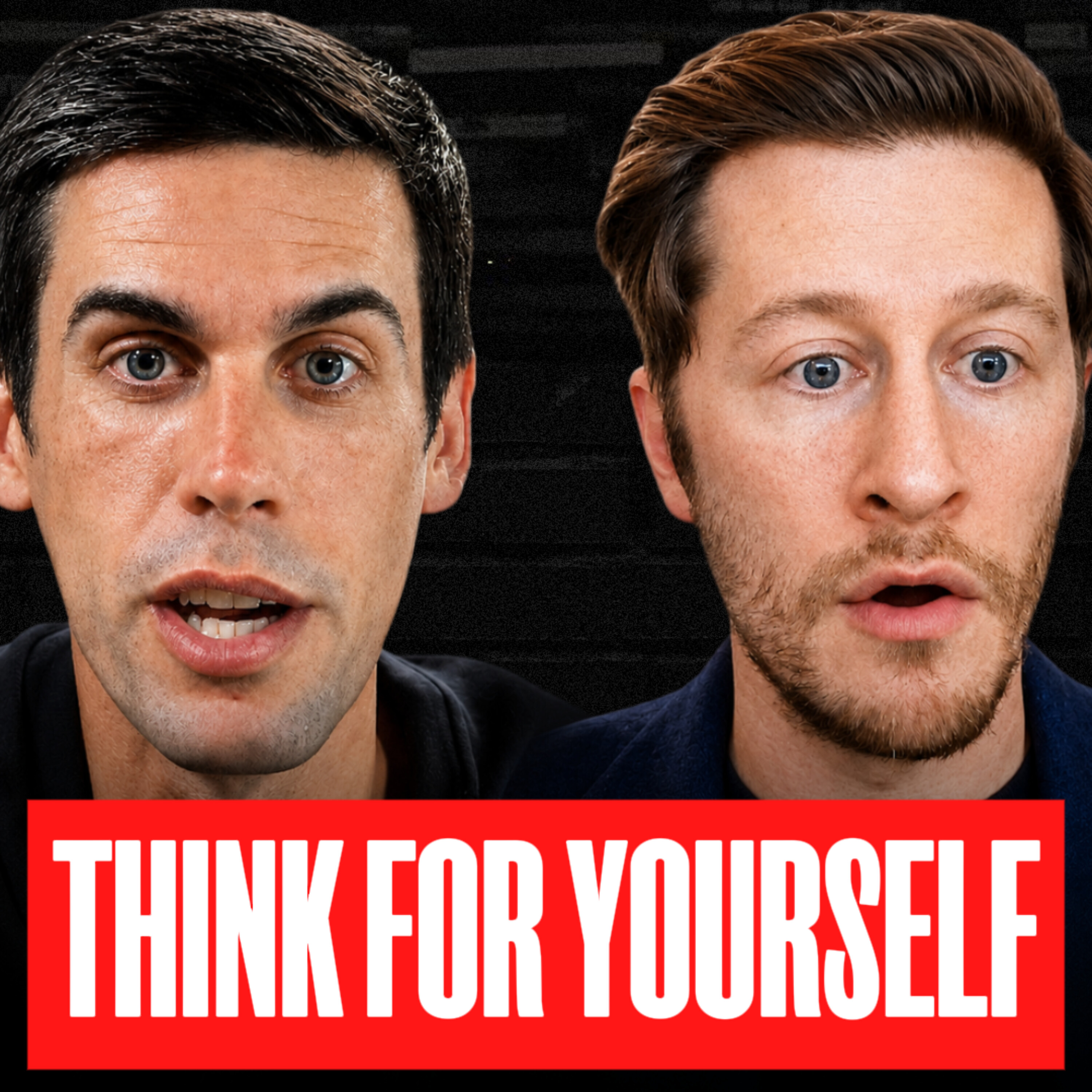
How to think for yourself amid disinformation, pundit spin, algorithmic incentives, and “information diet” problems; using Stoic restraint, skepticism, and “wait before reacting,” plus checking primary sources and incentives (qui bono).
David Pakman is a political commentator and author, host of The David Pakman Show. He wrote The Echo Machine: How Right-Wing Extremism Created a Post-Truth America, focusing on disinformation spread, ideological bubbles, and media literacy.
Media often creates the illusion of being informed; commentary is frequently disguised as news; critical thinking means tracing claims to primary sources, funding, and journalistic standards; campaign surrogates and “spin rooms” train audiences to outsource judgment; audience capture and platform incentives distort creators’ integrity.
Fox-style “breaking news” packaging; C-SPAN call-in pseudonym “John Barron” mistaken as Trump; Westboro Baptist Church funeral protests (debunking vs platforming); discussions of Iran missile claims and the need for legal/authorization context; “let’s wait and see” horse parable for delaying judgment.
Written by AI. May contain mistakes.
Discussion on the necessity of critical thinking in today's media landscape.
“What's the agenda of the person saying this?”
Introduction of guest David Pakman and overview of his work.
“As I said, media literacy, primary sources, It is pundits, first experts, audience capture, and intellectual humility, which is more important than ever.”
Conversation about distinguishing between news and commentary.
“And when you sort of trace things back, you go, oh, okay, in this case, it's really not based on anything at all.”
Exploration of how media can manipulate information and public perception.
“And so, yeah, I think it's not just, hey, people should spend more time reading, but they should probably also spend more time rereading things they've already read and actually engaging very deeply with those ideas.”
Learn how publicists and marketers manipulate narratives in media.
“Like it's this remarkable thing where we've managed to actually create content out of.”
Discover how to process overwhelming information and develop critical thinking.
“this is an administration with a unique relationship to the truth.”
Understand the value of sourcing information directly from primary sources.
“Like I do have other things that I have to do, but I'm not claiming to be the breaking news person who within 15 minutes is necessarily going to immediately give you an opinion.”
Explore the need for intellectual humility in assessing news events.
“you know, and that Congress is supposed to declare war, not the president, et cetera, tend not to end well.”
Examine the challenges of audience capture and its effects on content creation.
“Initially, maybe it was the audience, but eventually it was like money attached to certain political movements.”
Discuss the ethical concerns around platforming controversial individuals in media.
“And I'm like, I'm like, I'm like, I'm like, I'm like, I'm like, I'm like, I'm like, I'm at the time, who's going to remember that I got it wrong in the long term?”
Learn how to approach interviews with controversial figures thoughtfully.
“So the last question I had for you, because I think this goes to the critical thinking thing, because I know you kind of got your start interviewing some controversial people, right?”

Get the gist, explore an idea or ask about something said.
 Claude
On The Daily Stoic, what are the key points of this episode?
Searching your listeningAutomatic transcript. May contain errors.
0:00Ryan Holiday: Welcome to the Daily Stoic Podcast, designed to help bring those four key Stoic virtues, courage, discipline, justice, and wisdom into the real world.
0:14Ryan Holiday: Hey, it's Ryan. Welcome to another episode of the Daily Stoic Podcast. You don't have to be smart to consume information, right? Consuming is passive. Turn on the TV, turn on a podcast, scroll on your phone, you pick up a book or go to a reputable media site. Obviously, these are different levels of media consumption, but at some level, they're all kind of passive. And a lot of people do them. What people do less is step back and go, is this true? Where did it come from? Do I want this to be true? Am I fooling myself? What's the agenda of the person saying this? There's a famous expression attributed to Cicero, qui bono, basically who benefits, right?
0:57Ryan Holiday: The ability to get perspective clarity, to analyze all the things that are the incentives operating on the information that you're about to get, right? To get to the truth of the matter, right? We're talking about critical thinking here. And unfortunately, this is getting rarer, I think, especially with AI. We live in a world where there's a pressure to react instantly, to have opinions about everything. where algorithms tell us what we want to hear and where people are outsourcing their thinking to influencers and pundits and then of course technology itself but as the stoics remind us like that's not wisdom that's not the job right not every impression deserves our assent not every headline deserves our outrage not every headline should be trusted not every thought that enters our mind is worth holding on to.
1:47Ryan Holiday: I talked about that a lot in Wisdom Takes Work. I have a whole chapter on information diet, chapter on thinking from first principles. I talk about how people break their brains. I talk about skepticism. I talk about all the things that go into wisdom of which critical thinking is such an important part, right? Wisdom is that ability to step back, to question your assumptions, to test what you hear, to think things through, to not let other people do your thinking for you. So we talk about how we have the power to hold back our judgment, but that's so hard, right? Especially in this modern media environment, this technological environment that we live in.
2:25Ryan Holiday: As I said in the episode, a lot of media is designed to create the illusion of being informed. And wisdom is actually being informed and actually doing the thinking for you. And so that's what I wanted to talk to today's guest about, David Pakman. David Pakman is a political commentator and author. He's the host of The David Pakman Show. We wrote this book, The Echo Machine, How Right-Wing Extremism Created a Post-Truth America. We bumped into each other in line, the White House. He's got a huge media platform, and he's written a lot about how disinformation spreads, ideological bubbles, and why critical thinking and true media literacy is so rare.
3:04Ryan Holiday: And that's what we talk about. I'm just bringing you a chunk of that conversation now. As I said, media literacy, primary sources, It is pundits, first experts, audience capture, and intellectual humility, which is more important than ever. But you've got to wait before you react. And again, power of critical thinking. If you haven't seen any of David's work, you should check him out on YouTube. You should check out his book, The Echo Machine. You can follow him at David Pakman Show. That's Pakman, P-A-K-M-A-N. He's awesome. And I think you'll like this little conversation. Hey, it's Ryan. I'm on the road right now doing talks all over the country.
3:40Ryan Holiday: I love traveling. I love going to new places. The thing I don't like about it though, is I don't get to sleep in my bed at home, which I like not just because it's home, but because I have an eight sleep on my bed. I've had an eight sleep on my bed, I don't know, five years. I love it. My wife loves it. We love it because it cools the mattress. It heats the mattress. You can have different sides cool at different temperatures. It's even how I wake up in the morning instead of an annoying alarm clock or that horrible sound on your phone. It lightly buzzes you awake. And then when you're up, you want to turn it off, you just tap the mattress.
4:12Ryan Holiday: There's all sorts of awesome features in my Eight Sleep. It was worth every penny. The point is, I love my Eight Sleep and the Eight Sleep keeps getting better. Eight Sleep users report up to 32 % better sleep and up to 34 % better deep sleep. This is all stuff you love, you can use the code dailystoic at eightsleep.com slash dailystoic right now for up to $500 off. And this 4th of July sale ends on July 12th. So don't wait. And if you have an HSA or an FSA, some eight sleep stuff qualifies for that as well through TrueMed and qualified customers save about 30 % on average. Check your eligibility at trumed.com slash eight sleep before you buy.
4:55Ryan Holiday: True Med is for qualified customers. HSA and FSA tax savings may vary. Look, hiring is make or break for a business, especially if you're a small business. You can't just hope that you find the right people. Hope is never a strategy, but when it comes to recruitment, it's not going to work. So when the pressure's on and you need the right hire, this is a job for sponsored jobs. Indeed, sponsored jobs gets you the quality candidates when you need them the most. It's how you get your job seen. And with Indeed Sponsored Jobs, you'll get matched with and hire quality candidates who can drive the results you'll need.
5:31Ryan Holiday: And plus, with Indeed Sponsored Jobs, you only pay for results. People are finding quality hires on Indeed right now. In the minute or so we've been talking here, companies have made dozens of hires on Indeed, according to Indeed data worldwide. So join the 3.3 million employers worldwide that use Indeed to connect with quality talent that fits their needs. and listeners of this show will get a$75 sponsored job credit to help your job get the premium status it deserves at Indeed.com slash podcast. Just go to Indeed.com slash podcast right now and support the show by saying you heard about Indeed on this podcast.
6:07Ryan Holiday: Indeed.com slash podcast. Terms and conditions apply. If you're hiring now, then this is a job for Indeed sponsored jobs. The idea of critical thinking, which is like, okay, what do I believe and why do I believe it? Right? And where is this actually coming from? And when you sort of trace things back, you go, oh, okay, in this case, it's really not based on anything at all. Right? It's based on something that otherwise I would never actually listen to. And so the ability, and to me, this is actually a really important practice in stoic philosophy. The ability to kind of step back and think about your own thinking is like one of the most important skills there is.
6:49Ryan Holiday: And that's not exactly something that gets taught. I mean, I struggle with that. And you know, one of the things I'm actually curious, your take on it. One of the things that often happens to me is I might read your books about stoicism or Viktor Frankl's A Man's Search for Meaning or whatever. In the moment you're reading it, there are things in these books where you go, wow, that thing, if I had the presence of mind to bring that up in these scenarios, it would be so useful to me. And then you're kind of done with the book and you go back to your life. And at the time where it would be super useful, to me, one of two things happened.
7:26I either don't remember it or I do remember it and I go, this situation's too crazy for that to really be useful to me. It doesn't apply to this. This situation is different. kind of thing.
7:36Ryan Holiday: Well, that goes to the idea of like jack of all trades, master of none. If you're trying to understand everything that's happening in the world, what you're actually really getting is kind of a surface level understanding of a bunch of things. And most of those truly powerful lessons, like they're simple, but they're also complicated at the same time. And so you actually just have to spend a lot of time with that thinker or with that idea. And there has to be this interplay of the sort of reading and then the applying and the reading and the applying in this kind of a loop. And so, yeah, I think it's not just, hey, people should spend more time reading, but they should probably also spend more time rereading things they've already read and actually engaging very deeply with those ideas.
8:21Ryan Holiday: And so the decision to be hyper-focused in a handful of key areas is probably just a better recipe both for wisdom and for resilience in a complicated world. I think that's probably true. And if I think about the people I know personally, it's probably 50-50 split between those who are paying attention to nothing and are just too consumed with everything in a way that kind of makes it impossible to really dig in more deeply or to feel like you can maybe act on some of this stuff. I don't know that one is necessarily a bigger problem than the other. I see both. So one of the things you're probably adept at spotting, but I wondered if you had tips for people.
9:07Ryan Holiday: I think I sometimes watch people fall, like confuse or conflate experts and pundits commentary and sort of reporting to go to the idea of like a refraction of a refraction of a fraction. I just noticed people citing people who are not exactly subject matter experts about complex subjects. And so how do you think about recognizing when you're getting information and when you're getting spun or when you're getting commentary on the news and when you're getting actual news? Well, the problem with distinguishing the two, one problem is that a lot of commentary is disguised to look like news. And this was a really big topic.
9:57Fox News was created in 1996. And their programming has evolved over time. But it's all basically packaged the same way, where if you flip by, it kind of all looks like news. There's the Fox logo in, I don't remember what corner it's in. And there's something that says it's breaking news. And the anchors are very well, the anchors or commentators are very well lit. They sound good. They look good, et cetera. But there's really no clear line drawn between the opinion and the commentary. And I think that that's actually by design. And so if there's one principle that I think is useful for people to apply, it's am I looking at a primary source for this information?
10:39And what is the reliability of that primary source? If you turn on a 24-hour cable news show, for example, and they're telling you about a report of something that happened, that's clearly not a primary source. Now, at least, you know, I can go and find what is the underlying or original reporting here. And then you can start to make assessments as to its reliability. You can research how is that source funded, et cetera. So I don't think there's any one principle, but at a starting point, it's understanding, is this even a primary source? Then from there, you do need to apply. I mean, this is why I think that this is the top of that informational pyramid, because the more you've done the work of the scaffolding that holds it up, the more you can immediately recognize whether you are getting spin or reporting.
11:30And this is why, you know, it would be very, you don't see this so much anymore, but there was a period of time where you would turn on cable news and there would be three people. There's an anchor in the middle and there's two people on the sides. and they're arguing about whether there is an influence on the climate from human industrialization. And each person gets 50 % of the time and they both sort of sound credible. So if you don't have that scaffolding, you might come away going, wow, there's a controversy over this. We really don't know what the truth is. If you have the underpinning to understand one of these people represents the scientific consensus, the other represents the views of moneyed special interests that want to keep going the way we're going, that would better allow you to make that distinction.
12:15Yeah.
12:16Ryan Holiday: And realizing that just because you have an opinion about something doesn't change what's actually true or not. Right. And so critical thinking is the ability to spot when somebody has an agenda, when somebody is arguing perhaps the emotional point of view that people would like to be true, but probably isn't. To me, I think the idea of campaign surrogates is such a, it's almost so egregious that it's kind of giving the game away as to just the low quality of the sort of news industrial complex. It's like, no, no, no, we have this person on and their job is to spin as if they were a part of the campaign, but they're not in fact part of the campaign.
13:03Ryan Holiday: We're paying. It's a very surreal kind of form of unreality. You know, it really is. Yeah. And I don't interview surrogates for that reason. I mean, I'll interview candidates and then I'll interview subject matter experts, which may overlap with what the candidates are arguing. But the concept of the campaign surrogate is a strange one. It's bolstered by the need to fill 24 hours of TV. I think that's exactly right. Right. Or the other thing I think it's good to be critical of her to notice is like when when they're like, what will this mean for the campaign? Right. Like not whether the thing is good or bad.
13:38Ryan Holiday: Right. Right or wrong. Whatever. But now they're speculating like what it will mean for the prospects, which, again, is is something that's not quite news. It's like, you know, or how should the campaign respond to this or how should the brand deal with this scandal? It's like you're actively participating in the sort of brainwashing of yourself. Like it's this remarkable thing where we've managed to actually create content out of. And like, look, if you're a publicist or a marketer, this might be relevant to you to watch. But for the vast majority of the of the population, like what you're watching is people openly talking about how they're going to either make this a big deal or not a big deal to manipulate you.
14:31Ryan Holiday: That's right. And, you know, I've been invited to be in a lot of so-called spin rooms, either after debates or after state of the union addresses or whatever the case may be. And I've never done it because, listen, I know that I know what everybody's going to say. If If you're behind one candidate, you're going to say that they did really well. And if you're behind the other candidate, you're going to say they did really well. I mean, I think after the June 27th, 2024 debate between Trump and Biden, I think it maybe would have been more interesting to have been in that room. And there's a lot of reports in books about how it was really strained there.
15:07The attempts to defend Biden's performance that time were quite strained in that Kamala Harris was supposed to be interviewed right away, but she was like missing for a while because they were trying to figure out what do we even say. That might be the exception that kind of proves the rule, which is almost always you're not really getting any value. And part of what it trains you to do is you might have watched the underlying event, the State of the Union address or the debate, and formed an opinion about it. But it's basically a substitute for your own opinion that someone comes in and goes, here's how you should view what just took place.
15:37Ryan Holiday: Yeah, yeah, you're like, tell me what to think about what I just saw, right? And that's actually, yeah, fundamentally not their job. That's your job. Now, it doesn't mean that seeing a focus group after talk about what they saw isn't valuable. I do think that that is interesting, but I think we're talking more about like the position of the professional surrogate. How do you think about this? Like you're one of the people they are trying to spin, right? You think about what a publicist or a flack or yeah, a campaign strategist, like you're part of that ecosystem, right? That they're trying to they're trying to play certain ideas with you.
16:15Ryan Holiday: So then you talk about them and other people pick them up. And like, how do you how do you make sense of what is sort of an overwhelming onslaught of information? I really do not like I unsubscribe from their newsletters and I don't interview them. Now, I don't want to pretend I'm completely impervious to the effect because I'm still consuming media, which has been affected by those surrogates and flax. So the idea that I'm just completely insulated from it. I know that that would be totally naive. But as far as like whether I'm interested in presenting those conversations to my audience, I just don't do it.
16:51Ryan Holiday: No, I just mean generally like information is coming to you and you have to decide what you're going to put out. Like I'm thinking like, okay, we have an administration and I think regardless of where you sit politically, this is an administration with a unique relationship to the truth. Right. This is a relationship that that often tries to will certain facts into existence. And so, I mean, the less charitable and I think accurate way to say it was like this is this is an administration that lies all the time, that lies about things that other administrations and just ordinary people would never even think to lie about because it's so black and white.
17:32Ryan Holiday: You're going to call someone that we have video of, a domestic terrorist. You're going to claim that Iran blew up its own school, even though there's video of what the missile is. How do you make sense of what's being thrown at you? I'm just thinking of the critical thinking skills that go into this and how they might apply to the rest of us. I try to do exactly what I suggested before, which is go to the primary sources myself. Now, sometimes the primary sources, especially early, might get it wrong. But at least those primary sources have some standard where they would issue a correction. I don't know that at least this administration has ever issued what we would call a full correction to something that they have said.
18:17They may have just gone on to a different narrative a few days later. But I do try to really dig for the organizations that have those journalistic standards. And maybe it's wire services like Associated Press and Reuters. Maybe it's investigative outlets that have a record of either the truth or very quickly addressing when they've reported something that is untrue. And just find people whose jobs depend on telling you what took place rather than on convincing you of a particular opinion. I think that that's kind of a good overarching goal.
18:54Ryan Holiday: And it strikes me that there's a stoic virtue here too in the restraint, right? Like the system moves very quickly. And so there are incentives and then certainly temptations and energy that goes towards making up your mind as quickly as possible. and very rarely is your first impression of something the best way to understand a thing. It might not be wrong. Your first impression might not be incorrect, but it's almost certainly not the full picture. I think that's true. And sometimes people will write in and they'll say, David, you're 20 hours behind on this story. ABCD had reported about it within an hour.
19:36And part of that is just, I have kids and I'm not on my computer 24 seven. Like I do have other things that I have to do, but I'm not claiming to be the breaking news person who within 15 minutes is necessarily going to immediately give you an opinion. I think a day, two days, three days, as we build up an understanding of what took place and then I can formulate some analysis that maybe is of some value. That's my lane. There are there is the breaking news lane. It's just I'm not really in that lane.
20:03Ryan Holiday: Yeah, it's not the best lane to be in sort of emotionally or intellectually, I feel like. It's like, you know, there's that Zen story about the man who discovers a horse and everyone says, you're so lucky. And he says, let's wait and see. And then his son, his son breaks his leg riding the horse. And everyone says, you're so unlucky. And he says, let's wait and see. and then a war comes and his son can't be drafted in the war because his leg is broken. And they say, you're so lucky. And he says, you know, let's wait and see. The point being pausing and reflecting before you form your opinion or before you go on the record about what happened or didn't happen.
20:45Ryan Holiday: There is very little I have ever said as an immediate reaction to something that I'm like, yeah, I'm really glad I did that. I'm almost, you're almost always better off waiting, even just a beat. I think that's true. And then the other aspect to this is that sometimes things are more complicated than the ecosystem maybe rewards or optimizes for. I mean, I think what's going on in Iran is in a sense, a good example where there's a lot of like, what is your opinion? Are you for or against the war? Are you for or against the regime? And it's like, listen, my political views are such that I'm against authoritarian, theocratic regimes.
21:27And so, of course, the Iranian regime is not a regime that I said, this is a model that I look up to. I think this is very bad. And in addition to that, there's a question of, well, hold on. They tried to goad President Obama into doing the same thing and he didn't do it. They tried to goad President Biden into doing this and he didn't do it. Is Trump just so smart and alpha that he figured out this was the thing to do? Or is there another layer to whether this is something the United States should be involved in? Was it legal? Was there congressional authorization? That's much more complex, even though I don't claim that it's the most complex thing in the world, then this is a great thing or this is a terrible thing.
22:09Ryan Holiday: That's the wait and see of it again, right? It's like, I don't know whether it's gonna work out or not. Nobody does. I can tell you that generally things that begin with less than forthrightness, that cut corners or violate laws or practices, you know, and that Congress is supposed to declare war, not the president, et cetera, tend not to end well. And also, you know, if you have any sense of the history of that part of the world, you know that it is a graveyard of both well-intentioned and malintentioned individuals and that it tends to surprise people how things go. And so if your reaction, I think the right reaction to something like that is intellectual humility.
22:54Ryan Holiday: It's skepticism. It's concern. And even if it turns out to work out, that doesn't mean that it wasn't an enormous gamble, right? And so, but that's hard to fit into a YouTube thumbnail. Yes, it is. It's very difficult. And it's, you know, listen, there's I also understand the pressure of I'm always somewhere between zero and 24 hours from the next deadline for an episode. I understand that. And that has a real effect. And I'm kind of thinking about and writing about that a lot for my next book, which is that there are these other pressures that do impact the way that information gets out and the expectation of a content stream that must not be interrupted is a big factor in that.
23:43Ryan Holiday: Yes. Yes. And also separating, hey, the demands of the medium from you, the individual, I think is really important. You kind of see people, we call this audience capture and sort of watching how people get, they basically almost get fused into the algorithm and they give up their autonomy, their critical thinking, even I would say their conscience and their sense of right and wrong. and they're just sort of going where the energy is. And that's, I don't think, a good or an ethical place to be. Yeah, I have a whole chapter about audience capture in the Echo Machine. And one of the things I think is interesting about it is that on the one hand, there are so many risks to allowing your content to be guided simply by the kind of the whims of your audience.
24:33And also, if you're being thoughtful, there is also value in the feedback from the audience that you need to kind of understand how to consider in the totality of how it directs the way that you go. And a lot of it has to do with the stuff that's beneath the surface. So like there are content creators who have done near 180s politically and they were because they did become captured. Initially, maybe it was the audience, but eventually it was like money attached to certain political movements. And that often backfires. Like it'll work for a little while, but then over the long term, it rarely really works because political whims change and the money dries up.
25:13And next thing you know, you're in a completely different place than where your heart really, really was. That's bad. At the same time, I do think sometimes by audience capture, what we really mean is I'm getting feedback about what I'm putting out there. And that's also important to consider.
25:26Ryan Holiday: Yeah, it's probably not unlike the dilemma that a politician faces, which is you both have to understand public opinion. But if you are merely a windsock for public opinion, then you're not adding anything to the equation. And then, by the way, it's called leadership for a reason. You're supposed to be leading public opinion, not surfing public opinion. 100%. But yeah, it can be challenging. And especially, I think, again, to go to the critical thinking, understanding the economics of the medium is really important. And when you go, oh, you know, when this was a reporter on television 15 years ago, they were relatively insulated from the economics of the of the industry.
26:12Ryan Holiday: Their producers and the executives at the company weren't, and there might have been some pressure on them. But that's very different than, say, owning a substack. Like if you have a Maha substack, there's things you can't say because it's going to have a financial cost to you. There's orthodoxies in every community, in every group that become difficult to question. And if you're looking at your little Substack dashboard or your number of followers and you're seeing them go up and down based on what you say or don't say, you know, that can be hard to resist for people. I think that that's right.
26:52And there's a couple of recent examples of this. I mean, not that long ago, I don't know if you saw this, but someone called into C-SPAN saying their name is John Barron, which is a pseudonym Trump used decades ago to communicate with the media as his own representative. Yeah. And the person who called in was like sort of was talking like Trump. But it was very obvious that this was not really Trump calling in. It was it was someone pretending to pretend to be Trump, if that makes sense. And there were a bunch of people in my kind of political milieu who immediately took to social media and said, look at what Trump did.
27:27He called into this show. In two seconds, I knew that that's not what had happened. And two days later, I did a story about how a lot of people kind of fell for this. And it made sense to slow down a little bit and think it through. And after I had some conversations with some of the creators who had put out the message like this was Trump and they had just gotten it wrong. And some of them just kind of leveled with me and said, you know, it got me clicks and followers. And I'm like, I'm like, I'm like, I'm like, I'm like, I'm like, I'm like, I'm like, I'm at the time, who's going to remember that I got it wrong in the long term?
27:52Ryan Holiday: Yeah, the suspension of disbelief is actually good for business, right? Because you get to cover the story and then you get to debunk your own story that you were partly responsible for propagating. Exactly right. So the last question I had for you, because I think this goes to the critical thinking thing, because I know you kind of got your start interviewing some controversial people, right? On your show, you would do sort of debates or discussions with, in some cases, some kind of abhorrent people, right? And how do you think about that? Because there is this debate about whether you're platforming or whether you're debunking, right?
28:29Ryan Holiday: Are you putting it up for people to see critically or are you actually putting it up and now more people are seeing it than otherwise? this strikes you as a problem that media has not, does not quite have a good answer for. And audiences don't quite always understand what's happening. The way I thought about it was sort of like three parts. One was, are the vile views being espoused rising to a level of prominence that they would be worth trying to put a stop to? If it's some obscure conspiracy that no one's paying attention to, well, then it doesn't pass the first test and it's not really worth my time.
29:09Second part of it is, do I think that I would be well-equipped to push back against it so I avoid inadvertently kind of providing a platform for the growth of these views? Really, those are the two primary kind of considerations. And three would be like, would there be value in trying to debunk it? So there were people, there was this Westboro Baptist church that used to pick at people's funerals with signs that said horribly homophobic and disgusting things. There was a time where they were getting a lot of attention. They were disrupting prominent funerals. It was before same sex marriage was legal.
29:49And it felt at the time as though they're getting attention. I feel strongly about debunking them and I think I'm well equipped to do it. So I did a few interviews with people of mostly it's a family that was part of this church. I would never consider doing that now because I think we're in a completely different place. No one's paying attention to them. There are additional protections for people in the LGBTQ community, although we still have a ways to go. But at least there has been progress in a lot of different areas. And so it just doesn't feel relevant or salient at this point in time. So I would kind of try to think about it that way.
30:22Ryan Holiday: So to go to number two, being well equipped to push back. What do you think the skills there are? Because I do feel like we're seeing this sort of like platforming, particularly in podcasting as a medium. Yeah. Without that, right, without the pushing back or without the questioning. So you're really just getting the platforming of the controversial person without any of the sort of stack of journalistic techniques or intellectual techniques that would hold them in any way accountable or expose them to any kind of rigor under which some of their more spurious ideas would kind of fall apart. I think it's just about doing the work.
31:05I mean, I remember that there was this Navy chaplain I used to interview who sort of considered himself an amateur biologist who would make all sorts of arguments about, you know, I forget what the Punnett squares or, you know, how traits are passed down. And this, the purpose of this was just to serve a homophobic agenda. That was his whole point. And so I would just do the work to be ready to say, yeah, but like when you say it's not natural, we see homosexuality in 400 or 4 ,000 species. And when you say that, you know, I would just be prepared for the argument and sort of understand it. And it was just my response, essentially just on me to be prepared to do that.
31:42Ryan Holiday: Yeah, it's just it's funny. I think in podcasting, it's it's by its very nature, not a very adversarial medium. And so I do think there's something about podcasting that has been responsible for spreading a lot of stupid ideas, because like you can come off as reasonably informed in a conversation when there isn't that kind of pushback. But if you were if you were on even a cable news show and you were being put, you know, one to two sort of hard questions, you'd have had trouble answering. I think that that's true. And part of it is like you're saying, it's the culture of it where especially when it's these three or four hour episodes.
32:25Yes. Which I don't know how well that serves us just based on people are catching snippets of that. And the totality of the conversation may give a very different impression than a 90 second clip. So I don't know. But that's a different kind of story. I think the idea is like, let's just keep the conversation going. And if it becomes too adversarial, either the guest leaves or they don't come back again. And it just doesn't really help the format. It doesn't help the business model.
32:47Ryan Holiday: There is this, I think, false idea that having conversations with people you disagree with is in and of itself a good thing. I think that's probably true in your personal life, you know, but but just taking a kook and taking them seriously is I'm not sure that's good for anyone. Yeah. I mean, another example, which I think is tangential to this is I've interviewed a bunch of former KKK guys and white nationalists. And I thought it was really interesting to figure out, well, first, how did you get sucked into that? And mostly it was a very similar story for all of them. That's useful information.
33:25And then also, how did you ultimately get out of it? That's also, I think, really useful information. Individually, at some point, they all espoused vile views, of course. But there was sort of like a broader purpose. And I think maybe what you're getting at is that some of these four-hour conversations with people we disagree with, there's really no bigger purpose or momentum towards anything that maybe would be more useful societally.
33:49Ryan Holiday: Well, I think what they're doing is they're going, hey, videos with this person tend to do well. So I'm going to have them on and I'm going to say to myself, what I'm doing is, you know, interrogating them or, you know, questioning what they think. But actually what you're doing is kind of trying to tap into the algorithm. Right. And you're actually somewhat complicit in the platforming of the person, because as you said, ultimately, there's not much in the way of a purpose of what you're trying to get out of it. I think that's all true. And the one thing I would add is I'm also aware that there is a big kind of anti-establishment sentiment right now.
34:29And I see it reflected in my audience in that when I interview like your average member of Congress or your average senator, there are those who are actually more interesting and answer questions in a real way and are interesting to talk to you. But a lot of the times it's just kind of the same non-answers that people have been trained to expect from elected officials. My audience hates that. And so I've gotten away from it because I also don't really see the value in giving five questions to then be given five prepared talking points. And so I understand the desire for people that do speak more authentically.
35:00And in a sense, that's a lot of what Trump actually did correctly, I believe.
35:04Ryan Holiday: No, and this goes to where you and I met. I think the other side has done a really bad job at communicating effectively and then also particularly communicating effectively to young people and through these sort of new tools, right? Which is ironic because, you know, in 2008, that's actually what the left was really good at and the right was really bad at it. And it is so profoundly flipped that I think if you're a 13-year-old or a 17-year-old or even a 25-year-old, like what you're going to be exposed to online is from an information diet perspective, not the healthiest stuff. You're going to get a diet of stuff that seems interesting and cool and exciting to you, but it's actually kind of a gateway for some pretty dark stuff.
35:56Very much so. And my kids are young enough that I haven't had to make any decisions about any of this stuff yet. But I'm seeing, you know, I've heard what Gavin Newsom said. One of his kids got sucked into. I read Cal Newport stuff about this and so many other people. And I think that there are going to be some very difficult decisions facing us as far as my kids are concerned, which I don't really look forward to, but I know they are really important decisions. Yeah.
36:22Ryan Holiday: It's like, I think about where I was when I was 15 on the computer in my room and the communities I was drawn towards actually were sort of pro-critical thinking and it opened my mind in a positive way. And now I could see that same kid in his room getting sucked down a pretty dark rabbit hole and maybe not understanding that's what was happening. Very much so. Yeah, that's my concern as well.
37:03Kitchen and bathroom professionals know what goes behind the tile matters. that's why trade pros trust fiber cement hardy backer board to keep tile firmly in place resist cracking and help block moisture chosen in over 40 million kitchens and bathrooms hardy backer board what the best build on shop now at participating home depot lowe's and floor and decor stores for more information visit jameshardy.com slash hardy backer
When false information spreads faster than the truth, knowing how to think matters more than knowing what to think. In this episode, Ryan talks with David Pakman, host of The David Pakman Show, about how to think for yourself in a world shaped by spin, outrage, algorithms, and misinformation. They discuss how to separate news from commentary, recognize when you are being manipulated, question your first reaction, and get closer to the truth.
David Pakman is a political commentator, author, and host of The David Pakman Show. David has built one of the largest independent political media platforms in the country, reaching millions across radio, podcasting, and YouTube. He is the author of The Echo Machine: How Right-Wing Extremism Created a Post-Truth America and Pay Attention: How the Algorithms and Media Wars Are Suppressing Truth and Rewiring Your Brain.
🎥 Watch The David Pakman Show on YouTube | https://www.youtube.com/@thedavidpakmanshow
📚 Grab a copy of The Echo Machine: How Right-Wing Extremism Created a Post-Truth America at The Painted Porch: https://www.thepaintedporch.com/
👉 Follow David Pakman on Instagram | @davidpakmanshow
🎟️ DAILY STOIC LIVE | Ryan Holiday is coming to a city near you! Grab tickets here | https://www.dailystoiclive.com/
🎙️ AD-FREE | Support the podcast and go deeper into Stoicism by subscribing to The Daily Stoic Premium - unlock ad-free listening, early access, and bonus content: https://dailystoic.supercast.com/
✉️ FREE STOIC WISDOM | Want Stoic wisdom delivered to your inbox daily? Sign up for the FREE Daily Stoic email at https://dailystoic.com/dailyemail
See Privacy Policy at https://art19.com/privacy and California Privacy Notice at https://art19.com/privacy#do-not-sell-my-info.
