
 Ask ChatGPT


 The Daily Stoic
29 Nov 2025 · 45m
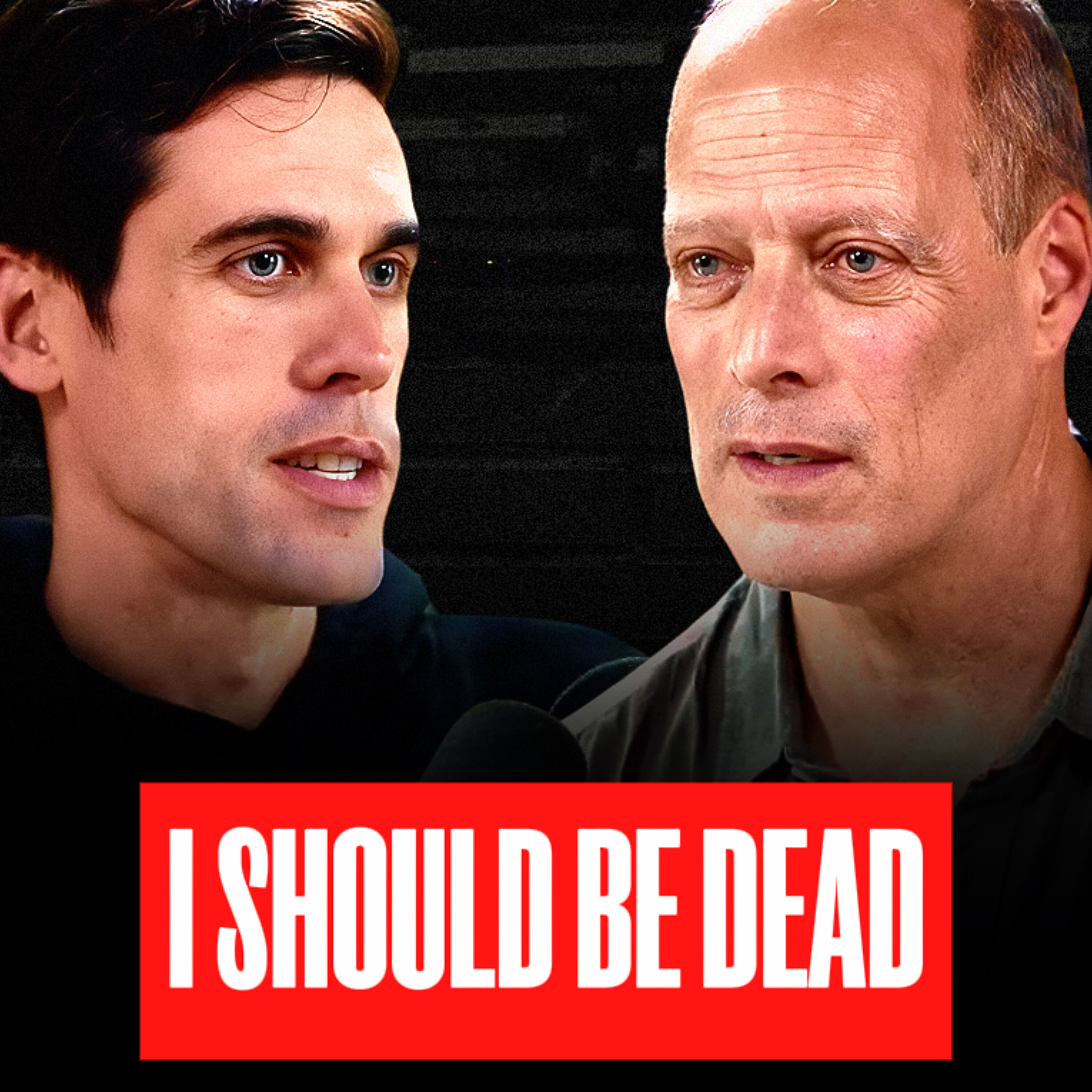
In this episode, Sebastian Junger shares insights from his near-death experience caused by a medical emergency. He discusses how this experience reshaped his perspectives on time, technology, fear, fatherhood, and the essence of what truly matters in life.
Written by AI. May contain mistakes.

Get the gist, explore an idea or ask about something said.
 Claude
On The Daily Stoic, what are the key points of this episode?
Searching your listeningAutomatic transcript. May contain errors.
0:28Why choose a Sleep Number smart bed? This message comes from Capital One. The Capital One VentureX Business Card has no preset spending limit, so the card's purchasing power can adapt to meet business needs. Plus, the card earns unlimited double miles on every purchase, so the more a business spends, the more miles earned. And when traveling, the VentureX Business Card grants access to over a thousand airport lounges. The VentureX Business Card. What's in your wallet? Terms and conditions apply. Find out more at CapitalOne.com slash VentureXBusiness. The wait is over. Dive into Audible's most anticipated collection, The Best of 2025, featuring top audiobooks, podcasts, and originals across all genres.
1:13Our editors have carefully curated this year's must-listens, from brilliant hidden gems to the buzziest new releases. Every title in this collection has earned its spot. This is your go-to for the absolute best in 2025 audio entertainment. Whether you love thrillers, romance, or nonfiction, your next favorite listen awaits. Discover why there's more to imagine when you listen at audible.com slash best of the year.
1:43Welcome to the weekend edition of the Daily Stoic. Each weekday, we bring you a meditation inspired by the ancient Stoics, something to help you live up to those four Stoic virtues of courage, justice, temperance, and wisdom. And then here on the weekend, we take a deeper dive into those same topics. We interview Stoic philosophers. We explore at length how these Stoic ideas can be applied to our actual lives and the challenging issues of our time. Here on the weekend, when you have a little bit more space when things have slowed down, be sure to take some time to think, to go for a walk, to sit with your journal, and most importantly, to prepare for what the week ahead may bring.
2:35Hey, it's Ryan. Welcome to another episode of the Daily Stoic Podcast. I am down with my family near the beach. And when I am down here, there's something I always try to do, which is give blood. It was one of my New Year's resolutions a couple of years ago, and it's something I've been consistently doing. And so when I read Sebastian Younger's book, In My Time of Dying, he actually said something just about this. Let me play this little clip for you. There's three ways to be a meaningful part of the society. None of them are heroic, but if no one does these things, there is no society. First of all, you need to donate blood because if you don't donate blood, you'll get blood if you ever need blood, but you kind of won't deserve it, right?
3:16Like you'll get it, but you kind of don't deserve it. And serve jury duty because if you're ever accused of a crime, whether you're guilty or not, you have the right to a jury trial and you'll get one, but you kind of won't deserve it if you never served, right? And the final one is vote and you don't have to vote, but if you don't vote, you kind of deserve what you get. I think about that all the time. And I was so excited for him to be able to come on the podcast. He's been remote, I think, twice. We recorded twice remotely during the pandemic. I've really enjoyed our conversations. He actually gave me one of my favorite books, this book, Indian Givers by Jack Weatherford, on one of the remote episodes.
3:54He's a fascinating guy. In this episode, Sebastian tells some stories about times he thought he was going to be executed. We talk about memento mori. We talk about, as I played you this little clip, how to be a meaningful member of society. and we also talk some parenting lessons. As I said in the intro to part one, Sebastian Younger is a number one New York Times bestselling author. He wrote famously The Perfect Storm. He wrote Fire, Death in Belmont, War, Tribe, Freedom, and In My Time of Dying. He has won a Peabody and a National Magazine Award. He's been nominated for an Academy Award. He won the Grand Jury Prize at Sundance.
4:33He's just had an incredible life as an artist, a thinker, and activists and a journalist. And you can follow him on Instagram at Sebastian Younger official on Twitter at Sebastian Younger. You can grab signed copies of Sebastian's books, Tribe, Freedom, and In My Time of Dying at the Painted Porch. I was really excited to do this in person. I thought it was great. I think you are really going to like it. And if you didn't catch part one of the podcast, make sure you go back and listen to that. I will also link to our other earlier episodes because they were two of my favorites that we have ever got to do.
5:09In the meantime, let's get into it.
5:15We were out for our walk two nights ago. It's golden hour. My son's riding his bike. We have this new puppy. I'm walking the puppy. He swings around on his bike and he starts asking me, he's eight, there's a weird question. He starts asking me about how getting the rights to things to make movies about them works. He goes, does Godzilla have a license? I'm like, what are you, what? I was like, like a driver's license? He's like, no, like, how do people get the rights? Like, how can you make a movie about Godzilla? And I think he was more thinking about video games. But anyways, I was telling him and I was like, hey, you know that book I have with the red cover?
5:51Like, you know, it got optioned for a movie and I was like walking him through and he's interested in what I do for a change. And, you know, we're on the way back. And again, the light's perfect. And I was just like, This is it, man. You did it. Like you got every, this is the fucking dream. Like enjoy this thing because it's going to go away. Cause you're going to go away. It's going to go away. Cause they get older. It's going to go away. Cause they move out. It's, it's going to go away. Right. And so you can wait for the reward, as you said, of like, I can't wait for their college graduation or some big moment, or you can go, no, this is the reward for all that stuff.
6:27This is it. And by the way, yesterday was too. You got to be able to just, the extraordinariness of ordinary, if you can get there, you can get through a lot. Yeah. I have a friend who had a very, very serious surgery, open heart surgery, and was really struggling to recover from it because it's just a nasty piece of business. And he said, yeah, you know, a friend of his told him he should be grateful. He said, I'm struggling with being grateful. And I said, you know, with or without surgery, I'm guessing that it's impossible to have a happy life that doesn't involve the practice of gratitude.
7:02Yeah. Right. And furthermore, I would say that you don't feel grateful because your life is happy. You get a happy life because you practice gratitude. Yes. Right. In all circumstances. Right. It's not gratitude isn't a function of having a great life and nothing's wrong. And now I'm grateful. That's how you get there. Yeah. Is by practicing gratitude. Yeah, it's like it's easy to feel gratitude and love and and revel in the beauty of life when you're looking at the Grand Canyon. But most of life is not looking at the fucking Grand Canyon. Most of life is like, I'm spending the night in this motel room because my car broke down on this trip.
7:37And then actually, though, you walk out to the parking lot to get something from the car and you're struck by the sunlight and you go, this is the Grand Canyon. This is magic. Why are we here? Why are we here? How are we here? This is insane. And being able to see the poetry and the beauty in the mundane or even the ugly, that's the happy life. Well, I live in New York City in the Lower East Side, and there's a particularly ugly stretch of asphalt in New York called the Cross Bronx Expressway. And when you're stuck in traffic on the Cross Bronx, it is a form of hell, right? I mean, I'm sorry. Particularly on a summer day and your AC is broken, it's just hell, right?
8:13And after I almost died, even that, I would be able to turn it into a sort of like beauty moment, right? And yet I had two thoughts in the sort of apocryphal sort of like stuck in traffic on the cross Bronx on a summer day, right? And one is like, relax, you're trafficked too. Yeah, right. Right? This isn't a conspiracy to keep you from getting to your whatever on time. You're trafficked for the guy behind you. Yeah. So stop acting like it's being done to you. Right. You're part of it. And secondly, you almost died two years ago. Yeah. Right. And you're complaining that you're alive in traffic.
8:52Yeah. Like, grow up. Like, what kind of baby are you? Are you kidding? Like, how self-indulgent are you? Grow up. Mature.
9:03work. We just took our kids to an outdoor performance at the Nutcracker. They had a snow cone, and then they went insane in the car ride home. And one of the things I try to remind myself when that's happening is that I don't control my kids' behavior, especially when they're too far gone like that, but I do control how I respond, right? That's stoicism, but it's also what Dr. Becky talks about. Dr. Becky is a clinical psychologist and a best-selling author, and she founded Good Inside, which is there to give parents practical, actionable tools for handling those everyday challenges with confidence.
9:41My wife introduced me to Dr. Becky's books. I love them. I've recommended them a million times. I've had her on the podcast. And as it happens, Dr. Becky is hosting two live Q &A events for Good Inside members. I am one of them. She signed me up for it about a year and a half ago. I've loved it ever since. On December 1st, you can join Dr. Becky for her How Not to Raise Assholes event, which is about avoiding entitlement and raising kind, empathetic kids. And on December 15th, she's hosting her How Not to Lose It over the holidays event, which I'm sure we could all use. As I said, I'm a big fan of Dr.
10:18Becky. She's been a great influence for me as a parent and just as a human being. And Daily Stoic listeners can join for 15 off with code STOIC15. You just got to head over to goodinside.com to catch the events. Thanks to Toyota Trucks for sponsoring this episode. When I bought my ranch in 2015 out here in Bastro County, I drove my car about halfway down the dirt road that we live on, thought this isn't going to work, stopped, parked it, walked the rest of the way home, borrowed my wife's car, drove into Austin and bought a truck. What I bought was a Toyota Tacoma. And this truck wasn't just transportation getting me to and from my house.
10:59It unlocked a whole different style of living for us, not just on the ranch, but in our little Texas towns. There were places I could go now that I couldn't go before, especially out here in the piney forests, through the fields, and on the unpaved roads like the one that I lived in. We got to go deep into the hill country's wild beauty. We've driven all the way out to East Texas. We've driven across the country. And by we, I mean not just my wife, but both my kids who I drove home from the hospital in that truck. Toyota trucks are built for those who understand that the best adventures happen when you're willing to veer off course.
11:39Because you never know when you'll end up on a Toyota adventure detour. And of course, this is stoicism too, because every detour, every obstacle is an opportunity. But it's helpful if you can handle the difficulty inherent in that. If you've got the resilience and the right companion to make it wherever the road takes you. Discover your uncharted territory. Learn more at toyota.com slash trucks slash adventure dash detours.
12:11I sometimes think, you know, you're in traffic on the 405 or the 110 in LA and it's the worst. and then I go, but every time I see it in a movie, like a drone shot or I see it from an airplane at night, I go, this is gorgeous. Like a Christmas tree. And I was like, why am I seeing it as ugly when in another context I see it as pretty? You know, it's like when I see a nature documentary and I see the water buffalo or whatever, like traveling, they're all running into the stream together and up the stream and they're all part of this enormous river of movement in animals. I go, they're doing what they do, man.
12:49This is, and then I'm in traffic and I'm like, modernity sucks. Humans are awful. And it's like, it's the same thing. We are a migratory species doing what we do. We've just intermediated it with these other things, but it is the same thing. And yeah, and also let's not forget to be grateful for our circumstances, right? So think about the person in the car. If your AC hasn't broken, you're in climate controlled perfection in your own little bubble. Sure. You have music. You're comfortable. You might even have some food and water with you. Like all the basic human needs and then some are being provided to you and you're unhappy.
13:26Like tell that to the Apache. Yes. You know what I mean? Totally. Right. And so that's that's where modern society has deprived us of just sort of a basic valuing of the things that have always made humans feel safe and content and like they're having a meaningful moment. And, you know, again, not to keep circling back to it, but, you know, the sort of smartphones and social media rip us away from that appreciation of what's actually happening. Yeah. I was thinking, you know, you described the scene, it's a summer day or spring day, and then you don't know that you're dying, but you're dying. Because it happened over a period of time, right, that you're slowly basically bleeding to death internally.
14:06Quickly. Well, I had 90 minutes. Yeah, but I'm saying it was happening before you knew it was happening, right? Yes, I just knew I had a great pain in my abdomen and I couldn't stand up. I just mean, in the way that it's true for all of us, the bell was tolling, you just didn't know. I didn't know it. I did not know it. No. But you make this choice, which is like, I'm going to spend the afternoon with my wife as opposed to I'm going to zone out on social media. I'm going to drive to this. Like, I think at the end of the day. You want to ask yourself, hey, if this is one of the last choices that I'm making, is this a choice I'm proud of?
14:43Well, the choice to stay with my wife was what saved my life. Yeah. Like, so that afternoon I was going to go running. I've been a lifelong runner and we were living in a remote house in the woods in Massachusetts. And I would run on these game trails behind the house that go for miles. And had I gone running, aneurysm would have ruptured and I would have died trying to crawl home. Yeah. Right. But instead we had a little bit of babysitting. And I said to my wife, like, look, let's just take a little time. This was during COVID. Yeah. We had a six-month-old and a three-year-old and some teenage girls from up the road.
15:16It was a rural area, and we knew the family, and they sort of offered themselves for a few hours. It was like, great, we pay$1 ,000 an hour. Like, how long do you want to stay? Sure, sure, sure. And we went off into this cabin that I'd built that was completely off the grid. There's no cell phone service anywhere near this home. So we're very unconnected. And the cabin is completely off the grid, deep in the woods. There's no electricity or anything. It's all, you know, oil lamp and et cetera. And that's where we were, where in mid-sentence I suddenly felt this pain in my abdomen. The aneurysm had ruptured and I was losing a pint of blood into my abdomen every 10 or 15 minutes.
15:53Right? And we lived an hour from the hospital. It's a math problem, basically. It's been a math problem. How much blood, how much distance is he going to make it? Yeah. I had 90 minutes. You know, you can lose about six pints of blood before you die. Yeah. And I lived an hour from the hospital. Yeah. Right? And I didn't know I was dying, but, you know, I couldn't walk. I mean, my blood pressure had tanked. I couldn't stand up. I started to go blind. And there's no cell phone service. They can't get the ambulance. And I got to the hospital within, the doctors said probably within 10 minutes of cardiac arrest and death.
16:29I mean, it was really, really close. And those are the 10 kinds of 10 minutes that determine our lives. And and but had I just been my motivated athletic self and gone out for another run in the afternoon, like it would have killed me. Well, I mean, even if the math hadn't worked, you still made the right choice. But you made the right choice because you chose the thing that you would want to spend your last minutes doing. Exactly. That's right. That's right. And connect. You know, basically, we exist to be connected to the people we love. Like that's what we are here for. We're social primates.
17:02that's why we survive that sort of love connection and community affiliation is why we exist and the more you get of that the better your life is and the less you have the more miserable you are you know i mean it's like pretty simple and the the terrible irony of the thing we choose most of the time the thing we prioritize most of the time is the opposite of that thing or it's taking us away from that like you you ask like i think about this as a parent it's like you read these stories you watch succession or whatever it's like having insane amounts of money destroys the family to almost to a rule right and then you ask people like what their fantasy is like i hope my company sells for a billion dollars like you're praying for the thing that you know is going to tear the thing you also say is your most important thing apart right or i think about this just much more practically as a writer like how many people become successful as a writer and then lose the ability the time that is to do the thing that they love doing right because now they're so busy.
17:56And yeah, that can't be, the good life can't be success that takes you away from the things that are good. Right. Right. And you have to understand what truly is good, you know? And if you don't have that right, you'll be like much of modern society, which is discontent and alienated and anxious. My favorite part of the book is the thing at the end, the note about giving blood. Yeah. Because I'd read this article about this, like people that give their kidneys up. Like, you know, where you donate a kidney to a stranger. And I was like, I was talking to my wife. I was like, I want to do that. That sounds like, what an amazing thing to do.
18:29And she was like, you're not going to give your kidney. What are you talking about? Like, she was like, you have kids. Don't, she's like, you've never even donated blood. Why don't you start there? And I was like that, you're totally right. Cause I think sometimes we have these fantasies of like, I hope if I ever see someone drowning someday, I'll, I'll jump in and save them. Or, you know, I want to become a philanthropist and donate money to save people in a hospital. Or I want to be a soldier and win the Medal of Honor. Like, I want to save someone's life. And then actually, there's all these very accessible, easy ways that you could literally be a superhero, and we don't fucking do it.
19:04So I've donated every time I can for the last, this was like two years where I've done it every thing since. And it's like, it's just one of those, not to brag, I'm just saying it's like, oh, yeah, I was indulging in this fantasy of this future difficult thing that I might do. And meanwhile, there's people that die from lack of blood transfusions every day. And you could fix that by going online and typing in your zip code. Yeah. I mean, my life was saved by a great medical team and by my own sort of basic health and vitality and strong heart and 10 units of blood from 10 people that I'll never know.
19:41who donated blood, and that got me donating blood. Sometimes people ask me, because of my book Tribe, like, how can, you know, we live in this big modern society. It's very hard to feel like you're needed, like you're necessary. How can you contribute? Clearly society will just keep rumbling on without us. So how do we, how do you feel meaningful, right? And it's actually pretty, you know, in some ways it's surprisingly easy. I say there's three ways to be a meaningful part of the society. and none of them are heroic, but if no one does these things, there is no society. Sure. Right? I said, first of all, you need to donate blood because if you don't donate blood, you'll get blood if you ever need blood, but you kind of won't deserve it.
20:22Yeah. Right? Like you'll get it, but you kind of don't deserve it. And serve jury duty because if you're ever accused of a crime, whether you're guilty or not, you have the right to a jury trial and you'll get one, but you kind of won't deserve it if you never served. Yes. Right? Sure. And the final one is vote. Yes. And you don't have to vote. But if you don't vote, you kind of deserve what you get. It's early voting here in Texas for this little town. And a friend of mine is up for city council. She's running for re-election. But she lost her first election by two votes. Two votes. You know, and I just think, oh, if my wife and I had been like, eh, that's one person going, eh.
21:02Yeah. Two votes. That's right. And yeah, voting is one. I would say organ donor, another one. It's a box you check on a driver's license. Yes, absolutely. But yeah, there are all these basic civic contributions that I think the whole country is founded on people feeling obligated to do. And you're in really bad shape when not just the obligation fades away, but even the understanding of why it is an obligation. Right. You lose something when you can't even remember why you have the tradition in the first place. And, you know, I mean, people say, okay, well, the only thing, you know, the thing you have to do is pay your taxes.
21:40Yeah. Right? I'm like, no, you don't have to pay your taxes. You can go to jail. Yeah. But you don't have to pay them. It's still your choice. Yes. Right? And one of the things that makes this society different from the sort of like typical small-scale organic hunter-gatherer society or sort of rudimentary agricultural society is the idea that the individual doesn't owe anything. Yes. Right? Right. That's an insane idea for most of human history where you live. You're Apache and you don't think you owe something to the Apache. You know, you're you know, you're you're an ancient Roman. You're whatever.
22:14I mean, pick your flavor. Right. And and for most of human history, your survival depended on being an integral part of a small group that you owed possibly your life to. Right. And they owed you their lives. And that's how it all worked. Right. And now there's this weird illusion that sort of legally the individual doesn't owe the society anything. I mean, that's what sort of, you know, our laws as a democracy prevent the government saying, no, no, no, you know, after we got rid of the draft. Like, no, no, no, you don't owe anything. Right. It's all voluntary, including your taxes, frankly. Right.
22:52It's all voluntary. But what did not step in is the moral obligation. And that to me is the real poverty of this society is that there isn't a common understanding of the moral obligation that comes from being so incredibly fortunate that we live in this society, in this nation, in this democracy, that you aren't dying to contribute. Where is that sort of moral obligation? It's disappeared and I don't understand it and it makes people's lives poorer. Victor Frankl talked about this. I wrote a piece about it for The Economist a couple of years ago. He says it's fantastic that there is the Statue of Liberty in New York Harbor.
23:29But he said that on the West Coast, ideally, I think you should put it on Angel Island because that was our Ellis Island on the West Coast. Right. There should be a statue of responsibility. So you have freedom and responsibility. Yeah, beautiful. And the idea that freedom is the freedom from responsibility is not true. It's that it makes the responsibility more meaningful because you are choosing to do it. You don't have to, but you are choosing to do it. You are assuming the duty. That's what that has to be. And yeah, I think people, Hyman Rickover, to her father in the nuclear Navy, he would say, when people say, I'm not responsible, they usually mean I'm not legally mandated.
24:10and he says but when you say you're not responsible you're right because you are irresponsible yeah you are saying i'm an irresponsible person when you go you can't make me i don't have to says who and it's like says who is not being a shitty person says who right like all there's this scene i talk about in my book right thing right now where where um ralph ellison is speaking at harvard to give some talk and uh he's sort of wandering around after the dinner he's had a little to drink. He's just, and he wanders through this hall and he ends up in this building. And I forget which building it is, but he ends up with this building in Harvard and looks up and he sees all these names written in it.
24:49And he realizes that these are the names of Harvard students who died in the civil war to a man, the union, right? And he realizes that these white men who he didn't know died so that he would one day be free. And he says the debt of that hits him with this beauty and horror at the same time, that we're all indebted. And I think to talk about walking around looking at beauty, you walk around and you go, somebody built this road. Somebody invented this system and they did it through painful trial and error. Somebody invented these norms. They modeled this behavior. They gave up their time. They made this and you live in the bounty of that creation.
25:29It's not perfect, but you were given an incredible gift. And this is true all over the world, some of us more fortunate than others, but the whole world is the product of the things that other people invested in for us. And you can't pay that debt back, but you have to pay it forward. And you know, what's interesting is that people intuitively get that when there's a crisis. Yes. Right. So, you know, Hurricane Sandy hit New York 10 years ago or so. And there was, you know, a lot of older people stuck on the, you know, 16th floor of a building without any power because power went out from 34th Street down, right?
26:03And so there were these cadres of people that were literally carrying drinking water up 16 flights of stairs. Now, that's a workout to bring water to these people until the lights came back on a week later, right? And, you know, every once in a while, someone falls onto the subway tracks where the train comes, and invariably someone else jumps in there to save them, right? And so there is that moral duty is an instinct in all of us, right? And I think one of the things that people miss about catastrophes and crises. And there's actual literature on this, like the people that missed the Blitz in London.
26:37I was in Sarajevo during the Civil War in 1993 during the siege of Sarajevo. People missed the siege of Sarajevo. Can you imagine? They have nostalgia for it. They have nostalgia for it, right? Yeah, exactly. A fifth of the city was killed or wounded, right? And the rest of them starved for four years and they had nostalgia for it, right? And I think what's going on is that, A, it creates a kind of collectivism, which replicates our evolutionary past in very satisfying ways, but also gives us the opportunity to act with sort of like in a kind of sort of moral with a kind of moral bounty. Yeah.
27:14Right. And we want to be the best version of ourselves. And the tragedy of the modern world in affluent Western society is that the best version of ourselves is almost never needed. Yes. That's the problem. Well, and I think there's a special place in hell reserved for the people who in those moments of collectivism or the opportunity for it decide that actually the political power or attention isn't undermining it. You know what I mean? Like, look, COVID was an overreaction in some ways. There was a lot of things that were wrong. Obviously, there's so many ways we should have done it better. But like like the lieutenant governor of Texas, it goes, it only affects old people.
27:51We shouldn't do anything. It's like, what is wrong with you? Like, what is wrong with you that you would think that and also think that that's a thing to say, you know? And like there is just that that's a part of human nature, too. There's kind of the higher self and the lower self. There's a self that says, how do I run away? And then there's a part of it that says, how do I run towards it? And I think you need cultural norms and stories and also individuals with a conscience that want to be the people that go towards. Right. Well, you know, there have been many studies of hunter-gatherer cultures, and there's a certain amount of data from, you know, rock paintings, tens of thousands of years old from Africa and all over the world.
28:35And some of them show executions of individuals. And the theory is that— Deserters? Well, yeah. I mean, there's two ways of betraying your community, right? One is being an abusive leader. Yeah. Right. Right. And another is by being a, you know, sort of a thief. Right. So not a freeloader, right. And those are the two things that typically in hunter gatherer society, which is a marginal business, are penalized even with capital punishment. And there's one sort of famous rock painting from Africa. I think it's, it's 10 men with bows and arrows standing around one body that has 10 arrows sticking out of them.
29:12And it's not a battlefield. They clearly took out an abusive, an abusive leader. and that was the thing that in a small tight-knit group where you can't afford to have is one person with a big narcissistic personality who's using his position of authority to benefit himself. Yeah. I say he because it's invariably as male. That's when people get thrown off of cliffs. Yeah. Yeah, it's like I don't believe that line where it's every billionaire is a policy failure, but some of them are, you know, and you have to create a culture that is okay calling it a spade a spade. You know what I mean? And there's an enforcement mechanism that says, hey, you got that by plunder.
29:52You know, you got that by exploitation. And you might be able to keep it, but you don't get to keep your place in society. Yeah, right. Yeah, I wrote a book, Freedom, which I see over there next to you on the table. And I just couldn't find Tribe. I love Tribe also. Oh, good. Thank you. Thank you. Yeah, so Freedom is an exploration of, you know, why underdog groups prevail. Like, what are the commonalities between successful underdog groups? And I looked at the labor movement 100 years ago in the United States and various insurgencies and, you know, the Apache who, you know, lasted. I mean, the Apache, there were bands of Apache that remained free until almost the 1890s.
30:34Yeah. Right? And so the ultimate sort of very mobile underdog group, right? And so I sort of looked at the common attributes of these successful groups. And one of the most important attributes is self-sacrificing leadership. Yeah. Right? Leaders who are prepared to die for the people they lead. Yes. Right? Leonidas. Yeah. Yeah. I mean, many, many, right, leaders throughout history. And the groups that had self-serving leaders. Yeah. Right, who were using the group to benefit themselves and weren't willing to suffer.
31:15Human, your body has a performance superhighway. 60 ,000 miles of blood vessels that deliver oxygen and nutrients to every cell. This, of course, is your cardiovascular system. It's the foundational system that powers everything we do. Both elite athletes and longevity experts invest directly in the cardiovascular system because supporting healthy blood flow is critical for energy, recovery, mental clarity, and overall performance. That's where human comes in. That's human with two N's. They started out of research at the University of Texas near where I live and have 15 years of experience making award-winning supplements for nitric oxide production and healthy blood flow now used by over 160 pro and college sports teams.
32:03Human Cardiovascular Health Daily is a plant-based and made from clinically studied ingredients like grapeseed and seed kelp extract. It supports nitric oxide production for healthy blood flow and energy while also supporting blood pressure and helping support the delicate interlining of your blood vessels. Just two capsules each morning will power energy and recovery while also playing the long game by supporting long-term vascular health and healthy aging. Human has an exclusive offer for our listeners. You can visit human.com slash stoic for an extra 15 % off your first purchase. That's enter code S-T-O-I-C stoic at checkout.
32:38That's human with two N's dot com slash stoic for an extra 15 % off with code stoic at checkout. What can 160 years of experience teach you about the future? When it comes to protecting what matters, Pacific Life provides life insurance, retirement income, and employee benefits for people and businesses building a more confident tomorrow. Strategies rooted in strength and backed by experience. Ask a financial professional how Pacific Life can help you today. Pacific Life Insurance Company, Omaha, Nebraska and in New York. Pacific Life and Annuity, Phoenix, Arizona.
33:18I'm writing a lot about or reading a lot about Vietnam now because I'm doing this book. And this little line jumped out at me. I'm forgetting whose book it was. But he points out that one South Vietnamese general died in the entire war. I mean, multiple American high-ranking officers did. But like the people who we were ostensibly defending their country, it wasn't a real country. Right. It was this thing we it was it was a colonial remnant that we were propping up and and our inability to see over and over again that we wanted a South Vietnam more than South Vietnam wanted a South Vietnam or certainly that the leaders of South Vietnam wanted more.
33:58And you just go, yeah, if you don't have a cause that people are actually willing to choose over themselves, you almost certainly don't have a cause worth winning. In this case, nuclear weapons is not sufficient to overcome that deficit. Yeah, that's right. Yeah, I looked at the Easter Rising in Ireland in 1916, and, you know, initially it failed. I mean, militarily it was suppressed. But then as it played out a few years later, it ultimately was successful. But the leader of the Easter Rising on the streets of Dublin was a guy whose name I forget, a very brave guy, who commanded the sort of Dublin battalion against the Brits.
34:38And his aides kept sort of dragging him out of the line of fire on the streets because he was trying to get a look around to see what to do tactically. And they kept dragging him out of the line of fire saying, sir, like, we need you alive. Like, you can't get yourself killed. Where are those leaders in America right now? I mean, the political leaders who would do the equivalent act of bravery and sort of rejection of their own sort of personal interests. But it's actually in their financial self-interest to do it. Like you will lose your Congress seat, but then you would become a lobbyist or a lawyer where you would actually make more money and be more admired.
35:13You are worried about being tweeted at. Yeah. Yeah. And this has been going on long before the Internet. Right. So but it's power. It's like they want power. And really, the only reason to want power is, I mean, really, the only moral reason to want power is so that you can even think it's power because at some level, if they had power, they would like I think it's fascinating about the political moment we're in where it's like these people desperately don't want to lose their job in Congress or the Senate as they are actively surrendering the prerogative, the power that congressmen and senators have, which is to pass laws.
35:45they don't do. I think it's even morbid. I think they're just afraid of something other than the status quo. They currently have a job. They know where they go to work. They know people address them as congressmen or congresswoman, and they are afraid on what's on the other side. So if they take a stand and go, hey, I'm going to vote against this thing or I'm going to speak out against this, I will have to figure out what I'm going to do next. Because they're not actually worried about physical safety for the most part. It's actually something more relatable from people go, well, why don't these people risk their job and do, you know, do it?
36:15And it's like, well, have you ever risked your job for anything in your fucking life, even though you hate said job? And so that's a very human thing of just like, I won't do my obligation because I'm worried about losing the status quo. Right. Well, also, I think it's extremely hard and extremely painful to experience peer condemnation. Yeah. To be sent out of the tribe. That's what they're afraid of. So you have the irony of Mitch McConnell. Yeah. So full disclosure, I'm a Democrat. I did not vote for Donald Trump, et cetera. Right. And I think the country keeps waiting for the Republican Congress to, I'm saying this as a Democrat, waiting for the Republican Congress to sort of create some boundaries for Donald Trump to keep, you know, whatever the Democratic order safe.
36:57But so you have the irony of Mitch McConnell saying that Donald Trump is unfit, morally and intellectually unfit to be president. And then he voted for him. And prevented him from being made unfit, ineligible for office. As if there is a, Adam Kinzinger sat in that chair a couple months ago and he said he's the problem is everyone thinks there's a super Congress. Right. And he's like, we're Congress. Like, like Mitch McConnell's like acting like there's some other speaker of the majority leader who's going to do the, make the hard decision. It's like, it's you, it's your responsibility. But even if you don't step up to that, which you should, right?
37:37But even if you don't, what, I was really wondering about this about Mitch, like what went into the decision to voluntarily say, I am going to vote for him? Like what went into that? And I'm guessing what went into it is he spent his entire life in a conservative environment, social environment, right? And saying, I'm not going to vote for him. even if he thinks Trump doesn't deserve the presidency again, saying I'm not going to vote for him, puts him outside of the social world that he's been in his whole life. And that's psychologically unbearable. Totally. And I think the proof of that is now that he's not running for reelection and he's out of it, he voted against the most egregious of the nominees.
38:18So he already knows he's retiring from the trial. So now he's voting what he actually thinks. And And it's like, hey, you know when you should have done that? When we were paying you to do that. Yeah, absolutely. We were paying you to not do what the mob wants. We were paying you to represent their interests, to faithfully execute certain laws. I think going back, there's something, I'm jealous of it, but it's a jealousy we can all address. When someone's like, there is an immense, there's a responsibility, but there's an immense luxury in having a profession where you swear an oath. or you have a set of standards or ethics that are clear, like a doctor or a lawyer.
38:58I remember I read someone in there like, I'm a pilot. So like I can say I can't go out tonight because I'm flying tomorrow. Like the clarity of like, I can't drink the night before I fly. It's against my ethics and the standards of my profession. So professions that have that, there's a clarity to it. Not everyone respects it, but there's a clarity to it. And I do think you can give that to yourself. Like as a writer, you decide, hey, these are, there are obviously some, But we're not all part of an association. There's not a union for most of us. But the decision to go like, here's here's I respect this thing enough not to cheat it.
39:31And and that the meaning that you get from deciding to apprentice yourself and belong to a kind of a guild is, I think, something a lot of people are missing because they go, I'm just an insurance salesman or I'm just a whatever. And then because you've said what you do isn't meaningful and you don't apply constraints and restraints to it, it doesn't feel meaningful. And your life feels empty and sad. Yeah. And, you know, the sort of warrior societies of many hunter-gatherer groups are very powerful examples of that. And, you know, the central ethos of it is you join a warrior society. Your life is ours, right?
40:11Like you owe your life to this group. I looked at, in my book Freedom, I looked at a, you know, speaking of warrior societies, I looked at a gang in Chicago in the 1960s. It was a black gang in a very poor part of Chicago, a very violent part of Chicago. And they reformed to give themselves protection against other gangs that were around them, right? And they were called the vice lords. They were called the vice lords not because they indulged in vices, which of course they did. Why wouldn't they, right? Right. The idea was that once we have once you're part of this group, we have you like a vice like you were part.
40:46And they meant that in a good way, like you are part of something completely solid. And there was one rule. There was only one standard for being in the vice lords. Right. And the standard was if another vice lord is in danger, you run towards him and help. And if you don't, you're not a vice lord. Yeah. This very, very simple standard. Right. You don't matter. What matters is everyone else. And if we all act that way, we're all safer. Yeah. Right. In this super dangerous environment that they were in. And the punishment for cowardice, basically the punishment for cowardice. You know, the British Army was executing people for cowardice through World War One.
41:24So, you know, this is a sort of common practice. Many of the Native American tribes did as well with their own warriors who were cowards. They didn't even commit murder to punish cowardice. They just, okay, you think you're okay on your own? Yeah, enjoy. Yeah, and they put them in a car and they drive them into the center of the territory of the rival gang and they just say, get out. Yeah. You think you're all right on your own? All right, go for it. Right. It's all yours, right? You need that. And if your life feels empty or sad, I would urge you to sort of sit down and like list out your value, like come up with some values or principles, some professional standards that you're going to observe and watch how quickly your life meaning descends from that.
42:08The person who says, here's what I'll do. Here's what I won't do. Here's what I believe. Here's what's important to me. And it's more important to me, by the way, than money or fame, or I don't care if people criticize me for that thing. There's an incredible power and freedom and empowerment in doing that. And I think that's how we create meaning and purpose in life. Well, you know, try to answer these two questions. And they're hard questions to answer. What would I die for? Yeah. Right? And what do I owe my community? Yeah. And my community, it could be the nation. It could be your neighborhood.
42:43Whatever you want it to be. But what do you owe that you don't have to give? Yeah. But you feel morally you owe it and you will give it voluntarily. What is it that you owe? Yeah. Right? And what would you die for? Without second thought, I'd die for my family to protect my family. But what else? Are there more things? You know, and that's a really, you know, I mean, for most of human history, individuals would die for their community because without the community, they died anyway. Right. We now live in a safe enough, affluent enough society that we don't need our communities to survive. So that's that that amazing sense of belonging that comes with the knowledge that you would die for this group to defend this group of people that has disappeared for most people's lives.
43:25You know, like what's an idea if they put you in front of something and said, we need you to disavow this? Would you would you go? No, I won't. Here I stand. I can do no other. Just the incredible meaning and comfort that you get in something like that, even in very scary, destabilizing situations. Right. That's right. Last question, very different direction. The last time we talked, you told me you think strollers and cribs and all these things are a giant scam and that you basically don't have any kid gear. And I'm just curious how that's holding up for you and if you still think that. Oh, no, we don't have anything.
44:02No. I mean, neither did the Kung. Right. I mean, strollers and all that stuff, you know, are really only work when there's pavement, you know, and an even surface to roll along. And really, any healthy adult, and some adults aren't healthy, and that's a different conversation, but any healthy adult should be able to carry a six-month-old or really even a six-year-old. I mean, they're not that heavy, right? You can put them on your shoulders. Yeah, totally, right? And the way I sort of think about it is that the innermost core human bond is parent-child. Yeah. It's not even parent-to-parent, although that's very, very powerful.
44:37Sure. But it's parent-child, mother-child, father-child, particularly mother-child, right, because nursing and all that. and birth of course and so what does you know and i'm all for capitalism right capitalism has brought enormous good to the world right along with a few complications but enormous good right and so i'm all for it but what does capitalism do capitalism needs to monetize things right so what does capitalism do when confronted with this completely self-sufficient core human bond. How do you capitalize, how do you monetize the mother-infant bond, the parent-child bond? How do you monetize?
45:13It doesn't need anything, right? And so the way you do it is you separate the parent and the child at different stages of development, separate the parent and the child. You know, you don't need to nurse, you can give them milk formula, right? You don't, we can, here's a bottle, here's milk formula. You actually don't need, you know, when I was growing up in the sixties, when I was a kid, you know, the idea was that breast milk was actually bad for you. Yeah, right. Insane, right? To be fair, some people can't. Like some couples have trouble or women have trouble. Of course. The invention makes sense.
45:42But yeah, the idea of like, how do we stop you from doing the thing that most people should probably be doing? Right. I'm all for medical solutions to medical problems. Of course, I'm not saying that. But the message was, oh no, this is actually undesirable to breastfeed. You don't want to do this. Margarine is better than butter. Right. You know, how do we create the more complicated solution to a problem that you didn't really have? That's right. And then likewise, you know, the sort of holding, I mean, we're social primates. Every mammal on the planet sleeps with its young. Every single mammal except Americans.
46:14Right? But what do you do? If you don't sleep, they're very, very vulnerable. And of course, they don't know that they're safe because they're in a little crib in a different room. They have no idea that they're safe. All they know is that their safety comes from the proximity of an adult. Yeah. Right? So they cry. So you have to sleep train them, et cetera. So basically, as you separate the parent and the child, the industry can come in and sell you the stuff. The gear. The gear that takes the place of the parent. Yeah. Right? The parent's arms, the family bed, the stroller. I mean, you know, I wore a thing.
46:49It's called a Bjorn, like a child carrier. Wonderful. I mean, one of the great things about it is that the two little beating heart, I mean, my heart and the child's heart. You know, they self-regulate, right? I mean, you start to sort of beat and sink. I think about how lucky we are generationally that men are allowed to do that. Yeah. Like basically every other generation of men up until relatively recently didn't do that. I mean, putting aside, I don't know exactly how Native people said it, but modern Western civilization, they were like, you're not involved. Right. And then thus depriving you of things like that.
47:23And depriving the child. Yeah, of course. I mean, you know, so a three-month-old can't see very far. You put them in a stroller. Yeah. I mean, first of all, their light is a feather. Like, why wouldn't you carry them? But you put them in a stroller. They can't see more than a foot, which is the distance from the eyeball to the nipple, right? And so they don't even know where they are. Yeah. Right? And it's like, why would you pay more money to not do something that's common to all mammals? Yeah. And clearly good for everybody. Like, why would you pay more money to go to that show? Like, sorry.
47:52And, you know, now it's like, oh, so you need a video monitor because they're in another room. Like what society is wealthy enough to have for every child to have its own room? How big does your teepee have to be? Exactly. Right. And so when people I get a lot of pushback from people about this, particularly liberal people who are sort of I feel like in this weird new we were talking about this as a new era of liberal thought is that it's sort of anti evolution and sort of anti nature. And so I get a lot of pushback from my sort of liberal friends about co-sleeping and all this stuff that we did, that we do.
48:27And I said, listen, if you went backpacking with your kids in the Bob Marshall wilderness in Montana to just pick a name out of a hat, right, with your, you know, six-year-old and your four-year-old, I don't think you'd have them in a separate tent. Right. They'd be in your tent. They'd be right next to you because they would be scared and you would be worried. Right. Right. So you wouldn't do it and then set up a baby monitor so you could watch what's happening in that tent. No, right? So why do it in your apartment? Like, I mean, I understand there's reasons not to if you so choose, but don't tell me it's unhealthy.
49:00Right. Right. Sorry, it's not unhealthy. And you would do exactly the same thing if you were in the wilderness, which is essentially a primeval human environment, right? It fills with dangers and it's dark and, you know, et cetera. And, you know, I'm a longtime runner. And there was a movement about 10 years ago, sort of barefoot running, which was a really interesting way of thinking about the human body. And basically the argument was, look, if you take your shoes off and run barefoot across some pavement, you will land on your midfoot. Yeah. You will not land on your heel. Your body just won't do it.
49:29Like it hurts too much. Sure. So that clearly is the natural running gate. And so when you wear shoes that are highly cushioned that allow you to land on the heel, you're actually allowing your body to do something that's bad for it. Yes. Well, likewise, with all the technology we have. So, yes, short. I mean, that was a long answer to your very simple question. No, no, no. I think it's fascinating. We don't have any of that stuff. We never had a stroller. We never had nothing. And, you know, we sleep with the girls, and they have little bunk beds that they use occasionally when they're feeling adventurous, and they'll slowly migrate over there, I suppose.
50:00And it's all very animal and human and connected and physical and lovely. No, it's beautiful. And look, someday soon enough, they'll sleep somewhere else, and you would kill for that to happen again. And you know, when my wife and I get out of bed early, I mean, they go to bed with us at, you know, 9.30 or 10 or whatever, 9 o 'clock. Right, so they don't get up early because they're sleeping normal human hours. My wife and I sort of creep out of bed at 6 a.m. So we sleep on the floor and a pad on the floor, like a big, huge pad on the floor. That's where we all sleep. And so my wife and I will creep out of bed at 6 in the morning.
50:34And the girls, because they, you know, they're just in their sleep, they press up against anything that's human, which means it's either me or my wife, right? And so when we creep out of bed, in their sleep, they sort of migrate towards each other. That's so cute. Yeah, sure. And they wake up, you know, they're getting a bond too. In each other's arms. I mean, literally, they're like holding each other. These are sisters, right? So, I mean, tell me there's something unhealthy there. Like, give me a break. No, it's beautiful. You want to go check out some books? I'd love to, yeah.
51:08thanks so much for listening if you could rate this podcast and leave a review on itunes that would mean so much to us and it would really help the show we appreciate it and i'll see you next episode
51:36Look, ads are annoying. They are to be avoided, if at all possible. I understand as a content creator why they need to exist. That's why I don't begrudge them when they appear on the shows that I listen to. But again, as a person who has to pay a podcast producer and has to pay for equipment and for the studio and the building that the studio is in, it's a lot to keep something like the Daily Stoic going. So if you want to support a show but not listen to ads, well, we have partnered with Supercast to bring you a ad-free version of Daily Stoic. We're calling it Daily Stoic Premium. And with Premium, you can listen to every episode of the Daily Stoic podcast completely ad-free, no interruptions, just the ideas, just the messages, just the conversations you came here for.
52:30And you can also get early access to episodes before they're available to the public. And we're going to have a bunch of exclusive bonus content and extended interviews in there just for Daily Stoic Premium members as well. If you want to remove distractions, go deeper into stoicism and support the work we do here. Well, it takes less than a minute to sign up for Daily Stoic Premium, and we are offering a limited time discount of 20 % off your first year. Just go to dailystoic.com slash premium to sign up right now or click the link in the show descriptions to make those ads go away.
Facing death rewires your view of the world. Today's guest, bestselling author and legendary war reporter Sebastian Junger, can explain how. In this episode, Sebastian opens up to Ryan about the sudden, freak medical emergency that nearly killed him in minutes and how that moment completely rewired the way he thinks about time, technology, fear, fatherhood, and what actually matters.
Sebastian Junger is the #1 New York Times Bestselling author of The Perfect Storm, Fire, A Death In Belmont, War, Tribe, Freedom and In My Time Of Dying. As an award-winning journalist, a contributing editor to Vanity Fair and a special correspondent at ABC News, he has covered major international news stories around the world, and has received both a National Magazine Award and a Peabody Award. Junger is also a documentary filmmaker whose debut film "Restrepo", a feature-length documentary (co-directed with Tim Hetherington), was nominated for an Academy Award and won the Grand Jury Prize at Sundance. He is also the founder and director of Vets Town Hall.
Follow Sebastian on Instagram @SebastianJungerOfficial and on X @SebastianJunger
📚 Grab signed copies of Sebastian’s books Tribe, Freedom and In My Time Of Dying at The Painted Porch | https://www.thepaintedporch.com
🎥 Watch Sebastian Junger's first episode on The Daily Stoic Podcast: https://www.youtube.com/watch?v=kApbOu6bXt0
🎟️ Come see Ryan Holiday LIVE: https://www.dailystoiclive.com/
👉 Support the podcast and go deeper into Stoicism by subscribing to The Daily Stoic Premium - unlock ad-free listening, early access, and bonus content: https://dailystoic.supercast.com/
🎙️ Follow The Daily Stoic Podcast on Instagram: https://www.instagram.com/dailystoicpodcast
✉️ Want Stoic wisdom delivered to your inbox daily? Sign up for the FREE Daily Stoic email at https://dailystoic.com/dailyemail
🏛 Get Stoic inspired books, medallions, and prints to remember these lessons at the Daily Stoic Store: https://store.dailystoic.com/
📱 Follow us: Instagram, Twitter, YouTube, TikTok, and Facebook
See Privacy Policy at https://art19.com/privacy and California Privacy Notice at https://art19.com/privacy#do-not-sell-my-info.
