
 Ask ChatGPT


 The Daily Stoic
7 Jun 2025 · 46m
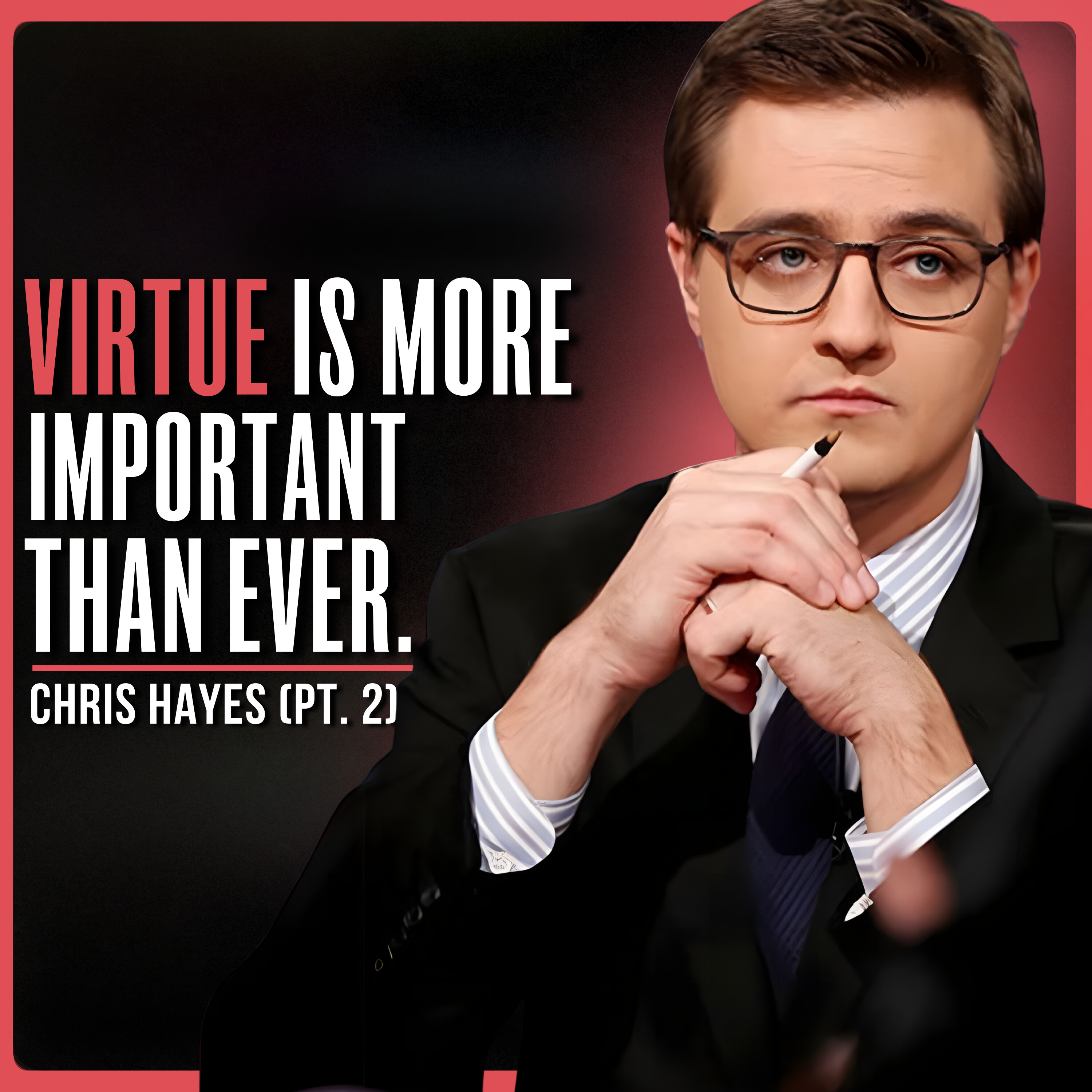
The Daily Stoic podcast, hosted by Ryan Holiday, explores the teachings of Stoicism through daily meditations and interviews with notable figures. This episode is the second part of a discussion with Chris Hayes, focusing on the dynamics of the attention economy and its implications for modern society.
Written by AI. May contain mistakes.

Get the gist, explore an idea or ask about something said.
 Claude
On The Daily Stoic, what are the key points of this episode?
Searching your listeningAutomatic transcript. May contain errors.
0:00I'm recording this on a Monday, and Monday is our grocery store day in our family. I usually pick my kids up from school and we go over to Whole Foods, get all our groceries for the week. Although here very shortly, we're going to go over there to get our Thanksgiving turkey because they've got a bunch of great options. Turkeys start at$1.49 a pound if you have Prime with organic birds at$2.99 a pound. And they only carry no antibiotic ever turkeys that will bring quality to your table at a great price. Whole Foods has great everyday prices on all your Thanksgiving essentials, whether you celebrate with a massive family or just a few close friends.
0:37Everything they sell has high standards to help you shop with confidence. Enjoy so many ways to save on your Thanksgiving spread at Whole Foods Market. Why choose a Sleep Number smart bed? Can I make my sight softer? Can I make my sight firmer? Can we sleep cooler? Sleep Number does that. Cools up to eight times faster and lets you choose your ideal comfort on either side. Your Sleep Number setting. Enjoy personalized comfort for better sleep night after night. It's the final days of our Black Friday sale. Recharge this season with a bundle of cozy, soothing comfort. Now only$17.99 for our C2 mattress and bays, plus free premium delivery.
1:11Prices higher in Alaska and Hawaii. Check it out at a Sleep Number store or sleepnumber.com today. This message comes from Capital One. The Capital One Venture X business card has no preset spending limit, so the card's purchasing power can adapt to meet business needs. Plus, the card earns unlimited double miles on every purchase, so the more a business spends, the more miles earned. And when traveling, the VentureX Business Card grants access to over 1 ,000 airport lounges. The VentureX Business Card. What's in your wallet? Terms and conditions apply. Find out more at CapitalOne.com slash VentureXBusiness.
1:49Welcome to the weekend edition of The Daily Stoic. Each weekday, we bring you a meditation inspired by the ancient Stoics, something to help you live up to those four Stoic virtues of courage, justice, temperance, and wisdom. And then here on the weekend, we take a deeper dive into those same topics. We interview Stoic philosophers. We explore at length how these Stoic ideas can be applied to our actual lives and the challenging issues of our time. Here on the weekend, when you have a little bit more space, when things have slowed down, be sure to take some time to think, to go for a walk, to sit with your journal, and most importantly, to prepare for what the week ahead may bring.
2:40Hey, it's Ryan. Welcome to another episode of the Daily Stoic Podcast. So I always wanted to be a writer. I wanted to be a writer for a long time. I wanted to be an author. I loved books. I met Robert Greene and these other authors. And at some point I said, I think I can do that. I want to do that. I don't want to be this marketer person anymore. I want to write a book. But I knew that people weren't exactly lining up to write publishing contracts and give book advances to 25-year-olds they'd never heard of to write about subjects they were not credentialed experts in. So I said, okay, what should my first book be?
3:16Well, what do I know about? I know about media and I know about marketing. And I knew that I was outraged at the current state of the media system. This was in 2010 and 2011. I knew that my best first book, and in fact, it had to be my first book. I said actually in my proposal that my first book, it wasn't the book I wanted to write, but it was the book I had to write. I was. I was outraged. I was disappointed. I was disillusioned. I was also utterly fascinated with how media worked. I'd been deeply influenced by this book that I read. we still carry in the painted porch today called The Brass Check by Upton Sinclair, which was a sort of survey, a journey to the dark heart of journalism in the early 20th century.
3:58This is what we would call yellow journalism period. People know Upton Sinclair wrote a book about meatpacking and abuses in the food system. They don't know that he wrote this other book, but it's actually, I think, one of his best books. So I decided I wanted to write that book. I wanted to write a book that was like Confessions of an Adman. That's the Ogilvy book. I wanted to write sort of an expose. I called it a how to slash how not to. And I didn't know exactly how it would proceed. I didn't know exactly what it would do. I didn't know if anyone would want it, but I packed up my life. I took basically a leave of absence from American Apparel.
4:31I moved across the country. I moved to New Orleans and I sat down to write this book. And that book became Trust Me, I'm Lying, which went to an auction. There was a bidding war. And my publisher now, Portfolio, is the one who bought it. They would later publish all my books about stoic philosophy, but I think they thought they were buying a marketing book from a future marketing expert. They told me later when I came to them about what became The Obstacles Away, they were like, we just hope you'll get this stoicism thing out of his system and then go back to writing the marketing books. But I wrote, trust me, I'm lying, at the Tulane Library in New Orleans, Louisiana.
5:07I would ride my bike, take a streetcar every day, and I was just writing what I thought was both sort of an expose and then also I wanted to make it exciting and compelling. I did the research and I saw for some reason, almost every book about media gets a lot of attention in the media, but it doesn't sell any copies because your average person doesn't just get up and read criticism in the media system. They're trying to understand how it works or why it works so they can do something with it because they have a cause they want to get out there, reputation they're having to protect, or they're trying to market something or explain something.
5:42They've been savaged or canceled in some way, right? Those are all the reasons. So that's the book that became, trust me, I'm lying. Did I think almost 15 years later that it would still be relevant? No. I mean, I thought when I was writing that book that it was very much of the moment. That's why I thought it had to come first. And, you know, the more I learn, the more I study, the more I live, I realize that this is a timeless thing, which is something I talk about with today's guest. My guest today is no stranger to how the media system works. Chris Hayes has an award-winning, highly rated show on MSNBC called All In with Chris Hayes.
6:16He's also author of a number of bestselling books. And his new book is called The Siren's Call, How Attention Became the World's Most Endangered Resource. After I wrote Trust Me, I'm Lying, I heard someone describe marketers as attention merchants or attention thieves. That's really what people in the media are doing. They're trying to capture this thing that, as Chris Hayes says in his book, is not worth that much in the individual, but in the aggregate is enormously important. And what you realize as you survey media history is that the same problems, the same vices, the same incentive traps that exist now, they existed in the past.
6:53I think it's interesting, as we talk about in part one of this episode, Odysseus trying to resist the siren's call. It's always been this way. We know what's good for us. We know what we should resist. We know how we're being manipulated and misled, told what we want to hear. Then how do we ignore it? How do we stay disciplined? How do we stay focused? How do we find what is true inside it? That is the struggle, the timeless perennial struggle. And we talk a lot about that in today's episode. Chris and I talk a lot in this part two. You can listen to part one, Wednesday's episode. We talk about the evolution of media ethics.
7:29We talk about virtue versus virtue signaling, vice and vice signaling, talk about the impact of negative press and a lot more. I thought this interview was great. I really enjoyed it. I really enjoy talking to him. I'm a big fan. You can follow him on Instagram and Twitter, or as I said, in part one, or maybe don't because it's not that great for you. But he's Chris L. Hayes. You can watch his show all in on MSNBC, which is always good. And I hope you enjoy this chat. Thanks, Chris, for coming on. Check out the siren's call. Check out Trust Me Online. But most of all, understand the forces that are acting on the information that you are consuming.
8:05Pay attention to what you pay attention to. And I'm glad I put that chapter of my life behind. I'm glad I wrote the book. I'm not glad about everything that's in the book. I'm not glad about necessarily who I was when I wrote that book or all of that. But I'm glad that it led to where I am now. And I'm glad you're listening now. I'm honored that you are paying me a little bit of your attention. As I sometimes sign that book, I say, use this for good. I try to use those skills for good these days to be a good steward of stoicism and to bring this philosophy that I think is exciting and fascinating and so important to millions of people.
8:41But also, in order to do that, you've got to fight against the stereotypes, the busyness, the distraction. You have to use this stuff for good. And I think I try to do that. I think Chris uses his show that same way. And I hope you enjoy listening to this episode.
9:19And I think that's all true. And yet it's hard to deny that when you look at the people who believe the craziest ideas or have been most radicalized, they tend to, what they have in common is that they listen to a lot of podcasts. No, I know. This is a great question because it's exactly how I feel. Like Anil Dash, who's a longtime sort of tech writer, had this sub stack where he said, wherever you get your podcast is a radical statement. And he's just talking about your point about RSS. It's an open protocol. It's the last remnant of the open web. Yes. You know, it's not controlled by any corporate platform.
9:54It's not algorithmically derived. I have exactly that same split feeling as you do. Literally exactly. Like, here's this thing that rejects all those attentional incentives. And but also in the aggregate, has it been like, has it been a net benefit? Well, you know what? Maybe it is. It's like, it's your point that attention is the most valuable resource. So even though the medium is all those things and it's positive, you're never going to be able to control for the fact that once it becomes obvious that there's a pool of attention over there. Yeah. Right. Bad actors and then unintentionally destructive.
10:26Exactly. Even good actors. Well, I mean, that's the thing that's so insidious. Right. Like and one of the things I think that's related to the sort of dangers of this is like there's a lot of podcasts like I've listened to Rogan a ton in my life. Like and there's lots of great Rogan. Yeah. There's lots of great Rogan episodes. Right. One of the things I think and this is going to sound really funny I do think the death of the idea of a civic category called the news or journalism is really insidious. Because like, let's say you sit around with your friends. OK, you're in a dorm room and you're just shooting the shit about the Illuminati or maybe the aliens built the pyramids or your political views or your views on gender.
11:07Right. Yeah. Like that's one context. And that's a perfectly fine context. Like people do that all the time. It's perfectly fine. People might say stuff that isn't true, not because they're lying, but because they're not professionals. Now, when you take that same conversation and you broadcast it to 40 million people or however many, all of a sudden you've got like a problem. Yeah. Which is that, you know, I remember when we first started having standards fact check our podcasts. And I had this moment of like, I really had this initial impulse, like, well, it's just a podcast. It's like, well, no, it's not just a podcast.
11:41You're saying things. You're making claims. we have to check in the transcript they're true and i do think that like the idea that there's this category of thing called the news where there's some set of procedures and some ethos often as you've pointed out in your book like you know honored in the breach right there's all sorts of ways in which it falls apart but there's at least an aspiration for something where like we check this out it's true yes and then there's a category of like shooting the shit with your homies, which is totally a great category of life, but it's just a different thing.
12:15And like the conflation of the two, I think is part of the issue here. What I sort of noticed, what I was tracking when I wrote the book is that one of the things that changes in journalism is not so much the incentive structure, but the social incentives inside the profession. So the profession, and this sounds like the profession's self-importance actually helped to become more important and better. They didn't want to be the guy that at the press club, which there's still a couple of them, but you go to the press club in DC or whatever, and you're like, journalists had their own buildings? This is crazy.
12:53But when it became an industry or a group of individuals who had common beliefs, you didn't want to be the one with the lowest standards or the one you wanted to impress your friends. You wanted to take your job and your craft seriously. And I think there's something about as podcasts have become more and more a less a fringe medium and more a dominant medium that what hasn't come along with that is is much in the way of a sense of responsibility about like who you platform and who you don't. And like when Joe had me on his podcast, it's like he just sent me an Instagram DM. Like you're not going to send me an Instagram DM to see if I want to come on your show.
13:33Right. Because like you have a staff that takes care of that. And you might be interested in someone go, hey, check this person out. But multiple levels of other people are going to go, hey, actually, that guy's a wacko. Or like, actually, did you see what she posted last week? I don't think we want to do this. And so there's this levels of filter that come along with the platform and the responsibility. The responsibility, yeah. And like you just saw this with the Barstool thing and McAfee. And like, you know, they had sort of recited this rumor, this gross rumor about this undergraduate to school.
14:06I'm not even going to say where or what. I know what you're talking about. And then there's like a real person on the other end of it. Right. And that person's like, A, this is totally false. And B, like you've ruined my life and my reputation. Then they came out and they apologized. And again, it's one of these things where like you could have just not done that. You could have A, you could have not done that. Or had you done it in a bar with three people. Yes. Like that would have been a little gross as a thing to do, but also not a mortal sin. But there's you broadcast it to millions of people.
14:33And I genuinely think that that distinction actually gets like to your point about the DM. Part of what made the medium so attractive to people, part of why people like it is its casualness, is it sort of sociability, is the fact that it feels like you're sitting in on a conversation that you've had or you've been with your friends in. And that's in direct tension with like, unfortunately, the kind of rigor, care and precision that's necessary to transmute information to millions of people responsibly. Those two things are in a little bit of tension and you've got to figure out a way to deal with it.
15:09But right now, it's not being I mean, unless someone threatens to sue. Right. Yes. No, no. And perhaps sort of obviously it was some legal changes that sort of drove a stake into the heart of Cochran. And maybe that will happen in the podcasting space. But I see this all the time, you know, where people will tweet like big, if true, you know, and it's like, what? Just don't tweet. You're not a journalist. Like you're a VC. No one is asking you for speculative news breaking in the first place. Effectively, what you see people doing is appointing themselves in a role and then abdicating any of the responsibilities typically associated with that role.
15:48and then externalizing the consequences on everyone else. Well, and that's my thing about like, you know, people who say like, we've, you know, we've bypassed the traditional media and you are the media now. You are the media now. And my response to that is like, congratulations, you have reinvented the village rumor. Like we've like, you know, like you were the media during Salem and like, check out her, she's a witch. Yeah, that's like and then someone else told them that and like we've always had the village rumor. Now we've got the village rumor at scale. I can get to get back to that thing we were saying before about that's not new.
16:26People saying false things about other people is as old as human beings. But, you know, we did try through stumbling to develop a specific set of like a specific ethos. I mean, I think that's really clear and really important that like whatever your critiques of the mainstream media or journalism are. And believe me, I've got a ton. You have many. There is an actual ethos there. And that ethos can be shaped and it can be good. It can be bad. It can not be lived up to in the same way that, like, liberalism is often not lived up to. But there's something you're aiming for. And if you get rid of that, you do just get the village rumor at scale.
17:14We just took our kids to an outdoor performance at The Nutcracker. They had a snow cone. And then they went insane in the car ride home. And one of the things I try to remind myself when that's happening is that I don't control my kids' behavior, especially when they're too far gone like that, but I do control how I respond, right? That's stoicism, but it's also what Dr. Becky talks about. Dr. Becky is a clinical psychologist and a best-selling author, and she founded Good Inside, which is there to give parents practical, actionable tools for handling those everyday challenges with confidence.
17:50My wife introduced me to Dr. Becky's books. I love them. I've recommended them a million times. I've had her on the podcast. And as it happens, Dr. Becky is hosting two live Q &A events for good inside members. I am one of them. She signed me up for it about a year and a half ago. I've loved it ever since. On December 1st, you can join Dr. Becky for her How Not to Raise Assholes event, which is about avoiding entitlement and raising kind, empathetic kids. And on December 15th, she's hosting her How Not to Lose It over the holidays event, which I'm sure we could all use. As I said, I'm a big fan of Dr.
18:27Becky. She's been a great influence for me as a parent and just as a human being. And Daily Stoic listeners can join for 15 % off with code STOIC15. You just got to head over to goodinside.com to catch the events. Look, when you're hiring, you don't want just anyone. You need the right person with the right background who can move your business forward. And when I need candidates who match what we're looking for at Daily Stoic for any of my businesses, we trust Indeed Sponsored Jobs. Because when you're hiring, Indeed is all you need. You can give your job the best chance to be seen with Indeed's Sponsored Jobs.
19:09They can help you stand out and hire quality candidates who can drive the results you need. and according to Indeed data-sponsored jobs posted directly on Indeed are 90 % more likely to report a hire than non-sponsored jobs because you reach a bigger pool of quality candidates and you should join the 1.6 million companies that sponsor their jobs with Indeed. People are finding quality hires on Indeed right now. In the minute we've been talking, companies like yours made 27 hires on Indeed. Spend more time interviewing candidates who check all your boxes. less stress, less time, more results now with Indeed Sponsored Jobs.
19:45And listeners of this show will get a$75 sponsored job credit to help you get your job the premium status it deserves at Indeed.com slash Daily Stoic. Just go to Indeed.com slash Daily Stoic right now to support the show by saying you heard about Indeed on this podcast. Indeed.com slash Daily Stoic. Terms and conditions apply. If you're hiring, do it the right way with Indeed.
20:12Yeah, there's a quote I think about all the time. It's something like, tradition is usually the solution to a problem we've forgotten about. Yeah, that's a great, great one. And realizing that a lot of these practices or sort of assumptions were sort of hard won over a long period of time based on, you know, you don't realize that this practice is in place because of how journalists covered the Lindbergh baby. Yeah, exactly. But that's why. Totally, exactly. Because of how the government lied to them in World War I or World War II or or, hey, we saw Walter Winchell spreading, you know, lies about the polio vaccine.
20:51And so we did X, Y and Z, you know, like there's a reason they don't talk about, you know, they don't name sexual assault victims. And there's a reason we sort of develop these things. And some of them can be stodgy. Some of them are antiquated. but the idea that you're just going to, and this is kind of ironically the mindset of like Doge and stuff where it's like, let's just delete everything and see what we need to add back on. It's like, that implies that people aren't on the other side of the consequences of those inadvertent deletions. They are. That's exactly right. And again, you know, as with Doge, right?
21:26If you want to hear a rant about the difficulties of bureaucracy, like go talk to a federal civil servant. I have several in my life, right? Like they'll be the first to be like, take you chapter and verse. These are the things that are super frustrating about how hidebound this institution is and these forms of red tape. So it's not like anyone is naive about any of this, particularly the people closest to it. But also on the other side is like, there's a kind of textural expertise and awareness of why some of those things are there and what happens if you get rid of them. And that's so true in the media right now.
21:58And again, if you want to hear like frustrations with the way the media works. I talk to people in it. Like, believe me, I wrote a whole book, much of which is sort of about my own kind of divided struggles with this, right? Like chasing those incentives of attention and the ways that cable news as a medium specifically sort of gears towards certain things. The sirens call of like, this is easy to fix or like this, you could just do away with all that. That's the really like telling you what you want to hear. It's like, No, the problem is complicated and there actually aren't really any good solution.
22:33And that actually what we have now is usually a stasis having tried a little bit of this and tried a little bit of this. And it's kind of like the safest middle ground. Now, again, sometimes it gets so bad and you do need to blow it up. But usually you want to be much more precise than you do want to be, you know, running around with a chainsaw, literally or figuratively. I mean, I also worry, too, like, you know, your point about like sort of people should be reading more and watching less news. And like, I do worry there's some evidence. OK, and it's not I don't want to put this out as like this is the case.
23:08It is, I would say, provisional. There's some evidence of like to the extent we can like measure cognitive performance across countries and places of like possibly some widespread worldwide cognitive decline in the smartphone era measured. Like, yeah, I do worry a little bit, you know, the big sort of cliche critique about TV, right? The idiot box is making us dumber. I do worry sometimes that like, particularly as we're sort of on the cusp of this AI revolution and whatever that's going to do in terms of people's faculties, right? You write an essay, not necessarily because the essay is the product as much as the thinking that got you to the essay is the product.
23:48And if you take that shortcut, how are you learning to think? I really worry about that. Every parent sees this, right? So you watch a couple videos with your kid of another kid playing video games. And you're like, I'll let you watch unlimited Disney movies. Yeah, right. You know what I mean? Because it's intellectually like not even in the same ballpark.
24:14Strap you into the chair, clockwork, orange style and just binge. it's so much better for what they're thinking about, what the subtext is, what the character development is versus, yeah, some dweeb, you know, ranting at his friends on a bit. And so you go, that can't be good as a whole to be sort of raised on that kind of information. And then, yeah, like you try to sit down and read some sort of story or myth from history. You're like, this isn't doing anything for me because you've been, And your expectation for what a story should be isn't rooted in reality. It's rooted in video heroin. And the video, you know, the video game.
24:57I mean, again, I I'm not a gamer myself. I never really have been. Weirdly, I mean, when I was a kid, I played. But but I also have like weirdly read a few books, really beautiful books about video gaming that have sort of made me see like something deep in it. And there's a social social aspect I think is great for kids. Honestly, like you're playing with your friends. That's great. Right. But but the other thing about video games is like they do like that fundamental thing I talk about in the book of involuntary attention. Right. Like the rustling of the predator in the woods. Someone waiter drops a glass.
25:26It is that over and over. It is pure slot machine. Right. It's like little bits of suspense broken by something that grabs your attention. And that's just that is the heroin. That's the lowest common denominator. That's the most pure way of grabbing that part of the brainstem. So I was thinking about attention in your book the other day, because I had this sort of incident at the Naval Academy where I was supposed to give a talk and then they canceled it because it was. Oh, they canceled you? Yeah, they canceled it. I wrote a New York Times op-ed about it, actually. I was supposed to speak on Monday and they asked me to remove any mentions of the book banning that they'd done.
26:01And they said, you know, you have a choice. You can remove this or you can not talk. And so, yeah, it was crazy. I somehow missed that. Wow. I'll send it to you. But, you know, there's so many there's like this file of like outrageous cancel stories from like Jackie Robinson websites to like names of Jewish people at some armies. Like so the Enola Gay. Yeah, right. Yeah, exactly. But so so as we're having this discussion, you know, they're like, look, we just don't want to wade into the controversy. That's what they said. And I was like, I understand what's happening. But I was like, I think you think that by canceling a scheduled and publicly announced talk, you're going to evade controversy.
26:42You're actually just going to bring about more controversy. That's how this works. I was like, I'm just giving you a chance to wrap. I was like, I'm not threatening you. I'm just trying to give you an explanation of how the media system works. Like, yes, this is how this is going to go. And a much bigger story than if I just mentioned the banned books, which no one's going to write. Totally. That's what I was trying to pass on. But what I realized in that moment was actually in the world that we live in now, in the political environment we live in now, negative press from the New York Times or from your show or whatever is actually kind of baked in or built in.
27:17they're like, they were going to write negative stuff about us anyway. But if we get attention for somehow seeming to flout or undermine the order, if we get in the crosses, if we get negative attention from the powers that be, that is threats of physical violence. That's your pension is in jeopardy. That's your, the, you know, nonstop media attention and realizing, okay, it's not just like, well, I think we've always, we always took the understanding that the media was kind of the fourth estate because it could send negative attention to something and that that was generally a deterrent, right?
27:54People don't like to be embarrassed. They don't like to be criticized. They don't want to be unpopular. But what do you do in a political environment where, yeah, either that fear is gone because there's shamelessness, or as you said, it's actually a feature and not a bug of the kind of anti-elitist, transgressive, rebellious reputation you're trying to have. Yeah. I mean, I think you put your finger on why we are where we are in a lot of ways. I mean, I think, you know, the Jake Paul's got a new show out and like in the trailer that I saw on TV was he is like a five second distillation of my book where he says is America.
28:28He's like the currency isn't being liked. The currency is attention. It's like he says that it's like, yeah, yeah, that's there you go. And, you know, I think you're right also to talk about these different incentives on different sides, because I do think for a long time, like part of the way we thought about an open society and the way that the press functioned in it was that deterrent effect, right? Like, and sunshine is disinfectant. And like, if people are up to stuff that's bad and you expose it, then public turns against them. They're worried about the public because this fits in with elections, right?
29:01Yeah. So then they got to change their behavior. And something is pretty profoundly broken down in that system. Yeah. I think it's fair to say. Yeah, there was a sense they wanted to be in everyone. As much as we disagreed politically, everyone wanted to be in the club. Right. And now some people want to burn the club down. Right. Well, so there's two tracks here, right? Because there's there's elite opinion and mass opinion, and they both were functioning in different ways, I think. Right. So like the kind of idea of like, that's not done. Yeah. Being embarrassed with your peers, status competition.
29:31Like that's one thing driving elite behavior. And then when you're talking about people in the political system were elected, there's also this worry that like, yeah, if they write an expose about how you're inviting people to dine with you who gave you money through your crypto coin. Yeah. That people aren't going to like that. And then it's going to be hard for your party to win elections. Right. Yes. Like both both. There's some kind of elite distaste for that, but also the bottom line of your electoral viability. And I think at both levels, it's kind of broken down. Yeah. You know, so the kind of shamelessness or transgression as its own counter ethos.
30:07So that the way that you earn status points or admiration from peers or fellow elites is to demonstrate your transgressiveness and your rebuking of that and your shamelessness. And then also because of the structural polarization and because the information environment, that feedback mechanism with mass politics, I think, is also broken down a bit. Yeah. It's like, do you want to be a director of Homeland Security and be seen holding a Rolex in front of an El Salvadorian prison? You'd think the answer would be no. Right. You'd think that would be humiliating, embarrassing, contradictory, etc. But what happens when the media environment or the people who are sort of controlling attention decide that actually that's not a problem anymore?
30:54Right. And so all of a sudden, this sort of the final governor on behavior, which is ultimately not wanting to be humiliated or not wanting to be seen as a hypocrite, that goes away. And there's not a lot of checks after that. Right. And also this one thing that I'm really kind of obsessed with right now is the volatility of public opinion has actually diminished over time. And like if you look at presidential approval, it's it's oscillating in a narrower band now than it used to. And like think about 1964 election, huge landslide election, right? 84 landslide re-election, 68 landslide election.
31:35Like we don't have landslides anymore in this country. The polarization means that everyone's kind of operating off this kind of hard 40 % floor and there's a kind of less volatility. So like the idea of someone in public life doing something that sort of flips some sort of real critical mass, right? Like an overwhelming sense of rejection. It just isn't happening at the mass level anymore because of the sort of structural polarization. There's a big conversation about why that's the case. Yeah, it's like, what do you have to do to move the needle or to be, you know, the ancients had this idea of exile.
32:12But what do you have to do to get exile? It's so weird to think about cancel culture. I remember I was watching the Tom Brady roast and, you know, they're cutting to the front row or whatever. And like Dana White's sitting there. yeah and it's like months earlier he's filmed striking his wife and i thought it was striking that not just is he he's still invited right he's still sitting there like no what no one involved in the production no one involved in the event was like hey i'm not gonna do it if this is like no one's drawing this line and then the comedians are making fun of everyone except this person just struck his wife yeah and i don't mean they should be making fun of it i'm just like you're eviscerating people over these scandals and flaws, and then you're not touching this thing because there's this kind of element of like, well, would it make a difference?
33:04No, because in that circle or sphere, they've decided that that's not a cancelable thing.
33:16Thanks to Toyota Trucks for sponsoring this episode. When I bought my ranch in 2015 out here in Bastro County. I drove my car about halfway down the dirt road that we live on, thought this isn't going to work, stopped, parked it, walked the rest of the way home, borrowed my wife's car, drove into Austin and bought a truck. What I bought was a Toyota Tacoma. And this truck wasn't just transportation getting me to and from my house. It unlocked a whole different style of living for us, not just on the ranch, but in our little Texas towns. There were places I could go now that I couldn't go before, especially out here in the piney forests, through the fields, and on the unpaved roads like the one that I lived in.
34:02We got to go deep into the hill country's wild beauty. We've driven all the way out to East Texas. We've driven across the country. And by we, I mean not just my wife, but both my kids who I drove home from the hospital in that truck. Toyota trucks are built for those who understand that the best adventures happen when you're willing to veer off course, because you never know when you'll end up on a Toyota adventure detour. And of course, this is stoicism, too, because every detour, every obstacle is an opportunity. But it's helpful if you can handle the difficulty inherent in that. If you've got the resilience and the right companion to make it wherever the road takes you.
34:41Discover your uncharted territory. Learn more at toyota.com slash trucks slash adventure dash detours.
34:54This gets to something, a topic I'm thinking about all the time, which is virtue. Yes. And the notion of virtue signaling, which has become this shorthand, particularly on the right, for people kind of performatively being good, right? Yeah. Not because they want to be good, because they want to show other people they're good. And the reason that that critique, I think, bites is because there's, of course, an enormous kernel of truth that lots of people and particularly liberals and particularly on the left can be doing stuff that is performatively righteous. And, you know, if you listen to the musical Hair in the first act, she sings a song called How Can People Be So Heartless?
35:32How can people be so cruel, especially people who care about strangers and social injustice? Like there's an old thing going all the way back. Like Rosa Luxemburg talked about this. They talked about the French Revolution, like people who are self-righteous and sanctimonious and leftist and then kind of jerks or doing it performatively. Fine. Fair. But the public embrace of vice is its own. Exactly right. The baby has been thrown out with the bathwater. So like, yes, if you're skewering people's performative virtue in the absence of real virtue, that's one thing. But throwing the whole notion of virtue out instead to embrace vice and essentially vice signaling.
36:09I mean, this to me is really shocking, genuinely. Like, I'll give an example of this, the Andrew Tate situation where the president of the United States mobilized the foreign policy of the United States to free from essentially a kind of house arrest in Romania and import a man and two men accused of really heinous crimes against women. Sex trafficking. Yeah. Sex trafficking. I should say they deny it. They have not been convicted. Like that's important. But they didn't have to do that. I mean, they just let the status quo. This was vice signaling. This was like, no, this is one of our is one of our guys.
36:44And they are admitted pornographers. Right. So just that. Right. Like you could just go. You're not a criminal, but what you do is gross. And things you say are gross. Yeah. I'm not going to expend political capital to bring you into the tank. Exactly. So the way that virtue signaling has morphed into a rejection of virtue as such and an embrace of vice signaling and the suspicion that anyone who's in this almost weird political inversion from my youth of like the sort of hectoring puritanical moral majority on the right and the kind of like Johnny Rotten F.U. punk sensibility on the left. And this weird inversion where like I now am a big believer.
37:25I've always been. I was raised social Catholic in a kind of social justice tradition. Virtue is really important. Yes. And Republican, small are Republican. Public virtue is really important. Democratic virtue. And this was something the founders thought is something that the Reconstruction era radical Republicans thought. It's something Lincoln really thought. I really have become pretty obsessed with this notion of virtue and its central. Like it actually is important to have virtue as an important goal. This is music to my ear. I mean, I've been working for the last five years on a series on the cardinal virtues and I'm about to finish.
37:57And I do think it's so interesting that, yeah, you have this sort of group of people who are ostensibly interested in these kind of throwback virtues and ways of living and structuring society, but don't want to make any hard decisions about sort of who's actually living that or embodying it in any way. and yeah, I grew up Catholic also. And I think that's why when I started, when I came to Stoicism, it was striking. Oh, these are those same virtues they were talking about. And then you see, you're watching, and this is like the first time that there's been any kind of identity politics that I could participate in as like, it's like, hey, I'm Catholic and you're talking about Catholicism stripped of virtue.
38:43J.D. Vance is like, how can I be Catholic but not have to care about anything Jesus talked about? Like, how can I be Catholic and use Catholicism to actually preach the opposite of the story of the Good Samaritan or the opposite of how we treat the meek? It's this fascinating, David Brooks had a column where he called this a moral inversion. And I think that's the perfect term to talk about, to describe what we're sort of seeing happen. And I think, you know, one of the things that we all wrestle with is that when you break this down to the individual level, it is often still there, although not always.
39:19Like, yeah, I think some people have been I think there's some people who are just like kind of nasty people whose politics flow from that. And then I think there are some people who aren't necessarily nasty folks or vicious or wicked, but the politics turns them into that. That's another thing that happens. But then there's a third category, which I think is the most the majority is a lot of people are super wonderful and caring and great. And then when they're outside of that interpersonal role, they like they would. Mike Johnson is not cheating on his wife. He's not calling people mean names.
39:49He's sort of personally doing it. I'm sure he's perfectly personally decent. But I don't even mean at the level of electeds. I just mean the level of individuals. There are plenty of people around this country who are sort of whether what they would say online or how they would interact or what they would celebrate as a kind of vice signaling or viciousness who also would be like if they were in the context to like help someone out. that was in need would do it unthinking, you know, totally instinctively. And so that's a really weird divided reality now, too. And the thing I worry about is that politics continues to cannibalize that personal virtue that people actually get worse.
40:32And look, I've worked for controversial and complicated people, and I know the calculation. You go, oh, I know the good part of them or you've seen what they do. There's all these things you tell themselves. And I think also it's maybe it's like, and liberals sort of led the charge on this of like, well, we don't judge people's personal behavior. We don't jump to conclusions, live and let live. But there has to be some element where as a society, we go, here is the line. And if you're not on this line, it's not that we cancel you. It's just we go, you are now disqualified from doing certain things, Right.
41:09Like, I mean, I think about this in my personal life. If I see someone do something, I go, hey, I'm not going to hire that person to do something where that character that they showed me gives me a glimpse into how they might treat me on something. And we seem to have like divorced politics and public life and even like art and entertainment from from that standard. And I'm not sure why, but I do think it is important. And I would even say like even one step further than that of like the, you know, this idea that, you know, you're disqualified from certain things. Right. You're not like thrown into exile.
41:45You don't go to prison. But like even lighter than that. Right. So one step lighter than that is just expression of social sanction. Yeah. And even that is now getting skipped over. Like there's this this sort of truculent eye rolling you get now. Yeah. Partly because certain prominent figures, particularly Trump, in the sort of context of American politics are so routinely antisocial in their actions and words that because the other people around are constantly being asked, like, do you sanction that? There's this kind of like truculent exhaustion. Yeah. That has then moved into skipping even past the social sanction.
42:23Maybe it comes back to your book, though. Like the reason people are deferential or don't draw the line or don't sanction is like that person still controls attention. They have a lot of followers, a lot of family, have an audience. And that being the rare and scarce thing today, not attention itself because it's everywhere, but but people who have attention have a name. We're like, do we want to do we want to throw that out? It's hard to recreate it. And I also think there is to go back to one of the themes that we talked about, about sort of trying to, you know, not dehistoricize. Like one thing I thought about with with Trump in particular is there is this trope and this character through many different storytelling oral traditions across the world of the trickster.
43:07Yeah. Right. And and people love the trickster. You know, Odysseus is a trickster. In fact, that's that's sort of that's his whole thing. Right. He sort of uses kind of deceit and his wits to kind of like trick people. And there is a certain way in which there are aspects of Trump that really and aspects of these sort of like antihero kind of vice signaling people that does have some of that kind of old mythic connection to the trope of the trickster. You know, they all like all these hoity toity folks tried to stop me and I like outwitted them. Yes. And that I think is elemental and ancient. And the problem is it's also married to genuine cruelty.
43:48And I think that's sort of the thing that is a little hard to disentangle because I think there's people who are not cruel who are attracted to the trickster aspect of the personality. Yeah. And don't see the cruelty aspect of the personality. Yeah. And the cruelty thing to me is so, you know, blocks out everything. Yeah. But even I can appreciate when, particularly with Trump, who's very talented and charismatic in many ways, when his trickster personality comes out and how appealing that is. Yes. Yeah. And you can see probably why there's affinity with like some entertainers, rappers, comedians.
44:27Totally. Like they're not thinking that deeply about it. They're just thinking about, oh, hey, look at like I saw this because I deal with a lot of sports teams and their opinions on Trump were always mixed. Oh, you're actually really good at compartmentalizing people with terrible personalities who are very good at a thing. This is what you have to do every day. And that's partly what you're doing here. I think that's a skill some people have. And maybe it roots back to your, hey, I love my dad, but my dad's also an asshole. You know, totally. And so that that compartmentalization, I think, enables a lot of the rationalization.
45:02Yeah. Of the cruelty. I think that that that compartmentalization, there's a really interesting tension here because part of the project of pluralism and an open liberal society that is multicultural is that we do some compartmentalization. compartmentalization. Sure. Yeah. We meet people in the public sphere and it's like, hey, I know that you think I'm going to hell because I have not found Jesus Christ as my Lord and Savior. And you know that I think that you worship a false God, but we're just going to compartmentalize that and just not deal with it. Totally. So there's a certain part that pluralism demands a certain kind of compartmentalization.
45:41Yes. But and also that has to be balanced with some shared public virtue and shared sort of social consensus. And I think we've gotten super, super out of whack. Yeah. And maybe, you know, attention being a powerful weapon, we overused what should have been, it's like we were using the e-brake to stop the car, you know, when we were like, hey, you used the wrong word or, hey, that's, you know. No, I think some of that's quite true. I agree with that. Yeah. And so we exhausted it and then we're like, hey, you made fun of disabled people in a speech and we don't have the ability to be like, no, that's where we draw a line.
46:21Yes. Right. Yeah, totally. Yes. Or, hey, you cheated on your wife with a porn star, cheated on your taxes. You go down, you go, there's at some level, this is a gross person that we're deciding is disqualified or outside the realm. And we just, we don't have the ability. It's like we overuse the antibiotics and now they're superbugs. Exactly. That's right. I think that there's really something to that. That point you just made that I think is worth also lingering on. Like to me, the one place, there's many places where this kind of puts a fine point on it, but like the sort of normalization of mocking people with disabilities.
46:56Yeah.
47:26And that just as a basic social consensus, like we don't do that because that's that's vicious. And the unraveling of that, I have to say, truly upsets me and and truly kind of knocks me back. It gives you a glimpse. You're like, oh, I didn't know we were all holding our breath about that. Like, I didn't know that I didn't know we felt part of it. Yes. I didn't know we felt constrained by not saying retarded. It's like, oh, OK, so we're not all on the same page about that. And that gives you a glimpse into what some people are thinking about. Yes. That idea, though, that was taking a lot of restraint.
48:02Yes. Is also kind of unnerving. Well, and then and there's kind of a there's this pent up energy waiting. And I guess this goes back to responsibility. It's like maybe there is maybe maybe a more astute understanding of human nature can go, hey, people really don't like that they can't do that. And I do think both political parties and all politicians have always understood there's a dark energy on both sides that is potentially explosive. But they always had the restraint or the decent ones had the restraint to go, hey, there's certain things that we don't rile up in our base or certain aspects of the other side's base that we're not going to go try to bring into our tent because it's radioactive.
48:43Yeah. And then and then whether it's the social media algorithm bringing some of it out and then just certain, you know, politicians going, yeah, I don't have a problem engaging with that. You sort of how do you to go to another ancient myth? How do you put that back in Pandora's box? Yeah, you've opened it. Well, and part of this also relates to something, I think, which is contextual here, which I think is sort of specific to the technological media environment we're in, which is the kind of evisceration of the public-private distinction. Yeah. Which is a really important one in many ways. And so one of the ways I think about this is, you know, I write this in the book that we kind of, you know, we had hundreds if not thousands of years of like Western tradition that like distinguished between the public and the private going back to the, you know, ancient Greeks.
49:31and we've kind of torn it all down in a few years. And part of the reason I think that actually is important is people will be drawn towards the taboo always. And there's always going to be like body jokes and there's going to be words that are, you know, you don't use in polite society, whatever. Having outlets for that that are private is one thing. And whatever people are going to do, again, going back to like the dorm room thing or you're in a bar, like that's one form of it. doing it in public all the time is so totally something different. And part of what I think has enabled this kind of vice signaling is the evisceration of that distinction such that the sort of the human impulse for the taboo or the human impulse to like tell a body joke, which, again, go back literally as long as we have, you know, literary writings, right?
50:23Sure. Do that with your friends. That's fine. Like, it's just like, don't do it like with a mic on as a senator. It seems like perfectly. Yes. And again, the idea of being authentic and, oh, they say what they think. I'm not sure that's a virtue, right? Like, you know, George Washington has a temper, but he's known for his restraint of said temper. Controlling. Yeah. As opposed to, hey, look at George Washington. Everyone's afraid of him because he says what he thinks. exactly he's constantly like screaming at everyone all the time yeah and it's not false to be in command of yourself that is supposed to be that is supposed to be part of of not just virtue but also i think masculinity like just not being at the whim of your emotions and it's like crying is still stigmatized but getting into petty fights with people you don't know on the internet is like why Elon Musk is a badass.
51:19Yeah, it's ridiculous. I think that's a great line. To be in command of yourself is not false, is actually a really useful way to think about it. Yeah, that's the idea. And it's a lot of work and be in command of yourself when it comes to attention, to pull back to the book is part of it. Like, hey, I want to watch this. Sometimes my wife will catch me on social media. I don't have it on my phone. I have it on a different phone. And she's just like, you don't want to be doing this. And you're totally right. Thank you for helping me regain my powerless. I had a powerlessness over myself for this and it would have gone on had someone not helped me interrupt it.
51:51Yeah, totally. Well, this was awesome. I love the book and thank you for writing it. And yeah, it was awesome to chat. Yeah, really, really, really enjoy that a lot, Ryan. Yeah, let's be in touch. Yeah, anytime. All right, good luck. Keep it up.
52:08Thanks so much for listening. If you could rate this podcast and leave a review on iTunes, that would mean so much to us and it would really help the show. We appreciate it and I'll see you next episode.
52:35Look, ads are annoying. They are to be avoided if at all possible. I understand as a content creator, why they need to exist. That's why I don't begrudge them when they appear on the shows that I listen to. But again, as a person who has to pay a podcast producer and has to pay for equipment and for the studio and the building that the studio is in, it's a lot to keep something like The Daily Stoic going. So if you want to support a show but not listen to ads, well, We have partnered with Supercast to bring you a ad-free version of Daily Stoic. We're calling it Daily Stoic Premium. And with Premium, you can listen to every episode of the Daily Stoic podcast completely ad-free.
53:23No interruptions, just the ideas, just the messages, just the conversations you came here for. And you can also get early access to episodes before they're available to the public. And we're going to have a bunch of exclusive bonus content and extended interviews in there. just for Daily Stoic Premium members as well. If you want to remove distractions, go deeper into stoicism and support the work we do here. Well, it takes less than a minute to sign up for Daily Stoic Premium, and we are offering a limited time discount of 20 % off your first year. Just go to dailystoic.com slash premium to sign up right now or click the link in the show descriptions to make those ads go away.
In a world obsessed with attention, are we rewarding the worst in us? In today’s PT. 2 episode, Chris Hayes and Ryan dive deep into how virtue signaling has transformed into full-blown vice signaling in today’s attention economy. They discuss the unraveling of traditional journalism ethics, the decline of shared moral standards, and society’s unsettling attraction to vice.
Chris Hayes is the Emmy Award–winning host of All In with Chris Hayes on MSNBC and the New York Times bestselling author of A Colony in a Nation and Twilight of the Elites. Chris’ latest book is called The Sirens' Call: How Attention Became the World's Most Endangered Resource.
Follow Chris on Instagram and X @ChrisLHayes and watch Chris’ show ALL IN on MSNBC
📚 Books Mentioned:
The Sirens' Call: How Attention Became the World's Most Endangered Resource by Chris Hayes
Trust Me I’m Lying by Ryan Holiday
The Odyssey by Homer (Emily Wilson Translation)
The Brass Check by Upton Sinclair
🎙️ Follow The Daily Stoic Podcast on Instagram: https://www.instagram.com/dailystoicpodcast
🎥 Watch top moments from The Daily Stoic Podcast on YouTube: https://www.youtube.com/@dailystoicpodcast
✉️ Want Stoic wisdom delivered to your inbox daily? Sign up for the FREE Daily Stoic email at https://dailystoic.com/dailyemail
🏛 Get Stoic inspired books, medallions, and prints to remember these lessons at the Daily Stoic Store: https://store.dailystoic.com/
📱 Follow us: Instagram, Twitter, YouTube, TikTok, and Facebook
See Privacy Policy at https://art19.com/privacy and California Privacy Notice at https://art19.com/privacy#do-not-sell-my-info.
