
 Ask ChatGPT


 The Daily Stoic
4 Jun 2025 · 39m
Written by AI. May contain mistakes.

Get the gist, explore an idea or ask about something said.
 Claude
On The Daily Stoic, what are the key points of this episode?
Searching your listeningAutomatic transcript. May contain errors.
0:00I'm recording this on a Monday, and Monday is our grocery store day in our family. I usually pick my kids up from school and we go over to Whole Foods, get all our groceries for the week. Although here very shortly, we're going to go over there to get our Thanksgiving turkey because they've got a bunch of great options. Turkeys start at$149 a pound if you have Prime with organic birds at$299 a pound. And they only carry no antibiotic ever turkeys that will bring quality to your table at a great price. Whole Foods has great everyday prices on all your Thanksgiving essentials, whether you celebrate with a massive family or just a few close friends.
0:37Everything they sell has high standards to help you shop with confidence. Enjoy so many ways to save on your Thanksgiving spread at Whole Foods Market. Why choose a Sleep Number smart bed? Can I make my sight softer? Can I make my sight firmer? Can we sleep cooler? Sleep Number does that. Cools up to eight times faster and lets you choose your ideal comfort on either side. Your Sleep Number setting. Enjoy personalized comfort for better sleep night after night. It's the final days of our Black Friday sale. Recharge this season with a bundle of cozy, soothing comfort. Now only$17.99 for our C2 mattress and bays, plus free premium delivery.
1:11Prices higher in Alaska and Hawaii. Check it out at a Sleep Number store or sleepnumber.com today.
1:22Welcome to the Daily Stoic Podcast, where each weekday we bring you a meditation inspired by the ancient Stoics, a short passage of ancient wisdom designed to help you find strength and insight here in everyday life. And on Wednesdays, we talk to some of our fellow students of ancient philosophy, well-known and obscure, fascinating and powerful. With them, we discuss the strategies and habits that have helped them become who they are and also to find peace and wisdom in their lives.
2:07Hey, it's Ryan. Welcome to another episode of The Daily Stoic Pockets. About a month or so ago, I was in New York City. I was in 30 Rockefeller Center. That's where Saturday Night Live is filmed. It's where The Tonight Show is filmed. It's where most of the big NBC shows are filmed. I was there to shoot Stephanie Ruhl's show. She was nice enough to have me on. She was interviewing me about stoicism and the sort of everything that's happening in the world. Some of those clips, you might have seen them. They went viral. I was in the green room before the show, and I'm watching Chris Hayes' show, All In with Chris Hayes.
2:45And he starts talking about something that's very near and dear to my heart, History Day. The very first thing I ever did that got any attention that showed me maybe that history wasn't just this thing that you read about, it was something you could participate in. It was a conversation you could have. They were doing a segment on how Doge and everything, what it was cutting. And one of the things it was cutting was the grants to the History Day Foundation. And I was just extremely frustrated by this because History Day, as I said, it changed my life. you wouldn't be listening to this podcast had History Day not shaped me the way that it did.
3:20I did a 10-minute documentary about World War II and about the landing of Normandy, and it was an excuse. I got to interview my grandfather, someone I loved very dearly, who supported me and believed in me and was just someone I looked up to a great deal. And I got to interview him for this. My mom actually sent me a DVD of the video not that long ago. I have it now on my Dropbox, so I'll never lose it. But that was, you know, frustrating to say the least. Disappointing. But History Day shaped me. And so I was watching that. And I think that's what great, you know, news broadcasts do is they tell us about things that people in power would rather us not know about, that they were trying to sweep under the rug, that they were trying to get away with.
4:01How is the richest man in the world at this time, Elon Musk, how is he totally unelected, deciding that money that Congress apportioned is going to be eliminated. I don't know. It's just absolutely crazy. I don't want to get into that. I do want to get into today's guest, someone I was really excited to talk to, someone who, as I watch this, I'm frustrated. I go, you know what? I need to walk this off a little bit. I start walking up and down the halls. I go to the bathroom. I come back. The show is finished, and Chris Hayes is standing there. And I could see he just finished his show. I know that feeling.
4:34He did not want anyone to come up to him. He was debriefing. with his staff, I said, you know what, I'm going to talk to him soon enough anyway. And that's actually what we're going to do in today's episode. But before we get into today's episode, I want to read you something. Let us begin with a story from Odysseus's journey. In book 12 of the Odyssey, our hero is about to depart from the island of the goddess Circe, which gives him some crucial advice about how to navigate the perils of the next leg of his voyage. Pay attention, she instructs him sternly. First you will come to the sirens who enchant all who come near them.
5:13If anyone unwarily draws in too close and hears the singing of the sirens, his wife and children will never welcome him home again. For they sit in a green field and warble him to death with the sweetness of their song. There is a great heap of dead man's bones lying all around, with the flesh still rotting off them. Odysseus listens to Circe as she provides him with a plan. Stuff wax in your ears of your crew, she says, so they cannot hear the sirens, and have them bind you to the mast of the ship, so you've sailed safely past. Odysseus follows the plan to a T. Sure enough, when the siren's song hits his ears, he motions to his men to loosen him so that he can follow it.
5:58But as instructed, his crew ignores him until the ship is out of earshot. This image is one of the most potent in the Western canon. Odysseus lashed to the mast, struggling against the bonds that he himself submitted to, knowing this was all in store. It has come down to us through the centuries as a metaphor for many things, sin and virtue, the temptations of the flesh and the willpower to resist them, the addict who throws his pills down the toilet in preparation for the cravings to come, then begs for more drugs. It is an image that illustrates the Freudian struggle between the ego and the id, what we want and what we know we should not, cannot have.
6:42This is not from the Greeking Out podcast, which I have listened to hundreds and hundreds of times with my youngest. There's actually a new season of it. We had Kenny Curtis, the host of Greeking Out on the podcast not too recently. And there's a new season, season 11. We're in the middle of it. This is also not from the Emily Wilson translation of The Odyssey, which, of course, I loved and have raved about. This is from today's guest's book. And it's actually not about Greek history at all. It's about attention. Chris Hayes is an Emmy Award winning host of All In with Chris Hayes on MSNBC. He's written a number of great books.
7:18You've probably heard of him. Well, his new book is called The Siren's Call, How Attention Becomes the World's Most Endangered Resource. It's obviously something I think a lot about and used to think a lot more about, having written quite a bit about media and how the way that the incentives of the media system inform what we consume and how marketers, people like me in my old life, spent a lot of time trying to manipulate and wield those levers for the benefits of their client. Chris's new book is great. It's about something, obviously, I've talked about in my books that I think is more essential than ever.
7:56We are in a street fight for attention. People are fighting for our attention. People are trying to manipulate our attention. And if you don't understand those forces, if you can't be in command of yourself, if you don't know how to focus, if you don't know how to tie yourself to the mast, as Odysseus did, you're going to be in a lot of trouble. That's what we talk about in today's episode, sirens, history, misinformation, media responsibility, and of course, self-discipline. As I said, Chris Hayes is the Emmy award-winning host of All In with Chris Hayes on MSNBC, the New York Times bestselling author of A Colony in a Nation and Twilight of the Elites.
8:32His new book, The Sirens Call, How Attention Became the World's Most Endangered Resource, is fantastic. You can follow him on Instagram and on Twitter, although maybe don't go on those sites, but he's Chris L. Hayes. That's Hayes with an E. And you can watch his show all in on MSNBC. Thanks to Chris for having him on. And thanks for giving me a little bit of your attention in today's episode. Enjoy.
8:58We were like 10 feet from each other like last week. I was in the MSNBC studios. I did Stephanie's show and we walked by each other as you were exiting your show. I didn't realize that, but I did see afterwards that you posted about the National History Day thing. I know. I was quite upset watching that in the green room. Pretty upsetting. It's insane. The funniest part of it, I mean, funniest or darkly comedic, is that the amount of money is like$266 ,000 total. Yes. What are we doing here? Yeah, of a multi-trillion dollar budget. Yeah, congratulations. And of all the things that you would, it seems pretty non-controversial to me, but somehow that gets on the chopping block.
9:42I don't understand it at all. Yeah, it must be hard as a news host to watch things and be able to put them in perspective, not to just be continually outraged. I mean, I'm pretty much right now continually outraged, but yes, modulation is key and sort of a key part of the job. Yeah, that would be tough. I was thinking about this with the title of your book, The Idea of the Sirens. It's fascinating to me because my eight-year-old is obsessed with the Odyssey. Just how timeless that metaphor is, right? And that what I was fascinated to learn about the sirens, I don't know, I guess I just, I knew they said seductive things.
10:24But like when you actually read the Odyssey, they would often just tell people what they wanted to hear. They told stories about when you were going to go home or how you were going to go home. It wasn't just that they were these beautiful, seductive or talented singers. It's actually what they were saying that drew people to the rocks. Yeah. And that it's different for everyone what pulls you in. Yes. And what compels you to your, speeds you to your death, you know? Well, yeah, because, you know, we often think of misinformation as this thing that sort of plants ideas in people's head or propaganda is planting ideas in people's head.
11:06But actually, it's much more insidious in that it usually tells you something that you want on some level to be true. Yeah. And it's that part of what's so crazy about the landscape that we occupy now is how individuated it all is. Right. That your specific predilections, the things you want to be true, can be found pretty quickly with the algorithm and, you know, through this sort of sorting mechanism to lull you, to get you to, you know, to compel your attention. Yes. And that it really can create in the way that the sirens could individualize the message to be as seductive as possible. That is technologically feasible in a way that never was before in a sort of previous mass media environment.
11:51Exactly. And that part of it, like that part of the weirdness of it, which is that there is a kind of godlike power. You know, for years you had even me. Right. So I decide every day, like what to put in the show. Yeah. And that's we're exercising a set of judgments, editorial judgments, attentional judgments. Right. Like what we think is important, what we think people will pay attention to, etc. And that's like every studio executive, everyone, everyone is making work. Sure. But like the platforms don't do that. Like the thing, this, this, the judgment is gone. It's just the machine learning, you just put stuff up and the machine learning is doing it.
12:30And that ability to sort of zero in without that sort of judgment beforehand, both creates sort of cool stuff. Like there's all kinds of things that people, it turns out people want to watch. You wouldn't have guessed, but also is a kind of power that does feel unnerving. Yeah, even the shift from the social graph, social networks to the purely algorithmic social networks, it doesn't seem like a big leap. But there is an editorial assumption based in the early sort of version of Facebook and these other networks that you like things that you like what your friends like. And also that you like what you told us you liked, right?
13:09Like my Facebook account is partly still driven by things that I uploaded in college that I said, music I like, bands I liked. It was a whole thing you would type in and be, oh, I'm the first person to ever say I like this band or, you know, I just bought this album. And so part of it is still built around the assumption that you know what you like and it knows what you like. And now it's it's like, actually, you only like what other people like. And here it is. And and that sense of alienation from ourself and the sense of different selves. I mean, this to me is sort of a core part of the book and a core part of the weirdness of the life we live in, which is we do have different selves.
13:54And those selves that we contain, the multitudes we contain, do have different desires, likes and predilections and different parts of ourselves are activated by different forms of exposure and different forms of technology. Right. And so there's some sense in which, like, I think the the operative idea, you know, if you're an engineer, the algorithm is like we've found the true self. The true self wants to look at like whatever bikini videos or whatever, whatever sort of lowest common denominator. But one of the points that I'm trying to make, particularly with the Odysseus metaphor at the top, right, is that like we are divided against ourselves always.
14:34And we're always coming up with ways to fortify one part of the self and try to contain another part of the self. Yeah, there's a battle between sort of the higher self and the lower self in all people at all times. And I think typically the job of an artist or someone with some sort of editorial judgment, even when you're giving people what you want, there's some aspirational element in trying to reach the higher self. Like people need this, people will like this, this is good, this will stir something in them. And then when you remove that, what do you get? Yeah, I think that's exactly right.
15:11And that that sort of human aspiration that I think people making stuff and even people making stuff, we should be clear for the algorithm. Like, you know, I don't want to be one of these sort of fuddy duddies like, oh, everything that people are like, there's tons of great stuff. People are making really cool stuff. I learn things, you know, every day I learn things from history. I first encountered your work basically algorithmically and really learned and enjoyed stuff from you. So the individuals who are making this stuff, I think, still have that aspiration because they're humans. Yes. But the sort of aggregate emergent product of the technology, which is inhuman, is blind to those aspirations.
15:58Thanks to Toyota Trucks for sponsoring this episode. When I bought my ranch in 2015 out here in Bastro County, I drove my car about halfway down the dirt road that we live on, thought this isn't going to work, stopped, parked it, walked the rest of the way home, borrowed my wife's car, drove into Austin and bought a truck. What I bought was a Toyota Tacoma. And this truck wasn't just transportation getting me to and from my house. It unlocked a whole different style of living for us, not just on the ranch, but in our little Texas towns. There were places I could go now that I couldn't go before, especially out here in the piney forests, through the fields, and on the unpaved roads like the one that I lived in.
16:43We got to go deep into the hill country's wild beauty. We've driven all the way out to East Texas. We've driven across the country. And by we, I mean not just my wife, but both my kids who I drove home from the hospital in that truck. Toyota trucks are built for those who understand that the best adventures happen when you're willing to veer off course, because you never know when you'll end up on a Toyota adventure detour. And of course, this is stoicism, too, because every detour, every obstacle is an opportunity. But it's helpful if you can handle the difficulty inherent in that. If you've got the resilience and the right companion to make it wherever the road takes you.
17:23Discover your uncharted territory. Learn more at toyota.com slash trucks slash adventure dash detours. We just took our kids to an outdoor performance at the Nutcracker. They had a snow cone and then they went insane in the car ride home. And one of the things I try to remind myself when that's happening is that I don't control my kids' behavior, especially when they're too far gone like that. But I do control how I respond, right? That's stoicism, but it's also what Dr. Becky talks about. Dr. Becky is a clinical psychologist and a best-selling author, and she founded Good Inside, which is there to give parents practical, actionable tools for handling those everyday challenges with confidence.
18:06My wife introduced me to Dr. Becky's books. I love them. I've recommended them a million times. I've had her on the podcast. And as it happens, Dr. Becky is hosting two live Q &A events for Good Inside members. I am one of them. She signed me up for it about a year and a half ago. I've loved it ever since. On December 1st, you can join Dr. Becky for her How Not to Raise Assholes event, which is about avoiding entitlement and raising kind, empathetic kids. And on December 15th, she's hosting her How Not to Lose It Over the Holidays event, which I'm sure we could all use. As I said, I'm a big fan of Dr.
18:43Becky. She's been a great influence for me as a parent and just as a human being. And Daily Stoic listeners can join for 15 % off with code STOIC15. You just got to head over to goodinside.com to catch the events.
19:03I do find it so fascinating though. So we're talking about obviously something that's brought on by very modern technology. And then the discussion is rooted in the sirens. And then you open the book with Socrates and Plato, just sort of how, not just how timeless the debate is, But there's also something interesting, I think, where in order to be able to understand modern things, you do have to be rooted in a sense of the historical precedent. And if you don't get that, I think you very much are at the mercy of the inventions and all of the downsides. because you're not aware that, hey, people have been having this debate for a long time.
19:41That's one of the things you talk about. It's like, oh, hey, people talked about this with comic books. And I know Nir pretty well, we were talking about it's comic books. It was radio. It was newspapers. It was every medium has brought this debate. But also just that human beings, I think, to go to our point, human beings have been wrestling with the lower self and the higher self for a long time. And there's something about having that familiarity that I do think protects you a little bit. So, yeah, I think both protects you in your life and your practice of your life. Yeah. I think also intellectually is really important, too, because it's very easy to sort of a historicize all this stuff.
20:20And, you know, if you're not aware of sort of the notion of moral panic or the fact that people freaked out about comic books, like I do think there's a little inoculation that's necessary. and try to be really sort of rigorous about what's new, what's not, what's new, what's not. And the sort of what's not part of it and part of the thing I enjoyed the most about writing the book was just, you know, I was a philosophy major in college. I got a chance, you know, it's like reading Pascal or Kierkegaard or the Stoics or Buddha, right? About these fundamental problems, right? Like I sit alone in my mind.
20:52I can't escape it. Sometimes it's hell. Sometimes there's nothing to think about. I feel desire for things that I don't want to feel desire for. all these things that are just core to the human condition, it's sort of beautiful in that way, because you're connected to something so deep there, you know, when you're having those experiences. Yeah, because I think it's easy to go, hey, if the technology went away, if the algorithm was changed, we'd be fine. And then you go, wait, wait, in the 1500s, Blaise Pascal was lamenting our inability to sit quietly in a room alone. And so it's like, oh, yeah, actually, it just helps to realize, okay, yeah, the technology is exacerbating the problem, but ultimately the common variable in every one of these problems has been human beings and our endless desire to be stimulated, to hear what we want to hear, you know, to be distracted and whatever.
21:44And so ultimately you have to win that battle yourself, whatever media or technological environment you happen to be in. Totally. And I think that's true personally. I also think the flip side though is on the flip side of the sort of moral panic critique is like the printing press like really did completely alter in life and plunged Europe into hundreds of years of sectarian bloodshed. I mean, so like there are certain stuff that does, you know, really alter, particularly, I think, on our sociality. I mean, I think that's the place where the way we live inside our own heads, there's something profoundly consistent about that struggle that reaches so far back.
22:26The way we socialize with each other, the institutions that mediate it and the forms in which we encounter each other do change profoundly in all kinds of ways. Because the medium changes or the economics change and then what kinds or types of information flows through that changes, how we see each other, how we see ourselves makes it easier to be more divided as opposed to more united, adds sort of rocket fuel to other timeless human problems. Yeah, and one of the things I think about, which is sort of adjacent to the things I discuss in the book, something I think about a lot is, it's also useful to remember how contingent those divisions can be.
23:03So to go back to the point I just made about the printing press, like, you know, there was a time not that long ago, like I heard my grandmother tell stories about like the scandal when so-and-so married an Episcopalian. Yes. Or like someone got ran off with a Baptist. Right. And like the idea that sectarian divisions within Christianity. Yes. Within Protestantism would be like enormously consequential to your social life to like is just preposterous to us now. That is so far removed, which isn't to say there aren't still corners of American society. That might be the truth. But this was a huge deal for a very long time.
23:43And now it's like, so those divisions, it's so funny because they could be so present. They could draw blood and then they can also go away, which in that part of it to me is kind of the hopeful part of that story about that contingency. Yeah. I mean, I write a lot about Montaigne in the book that I'm doing now. And this guy is basically driven to retreat from the world because the Reformation is raging all around him from things like the printing press. And there's this kind of what the printing press does is take these divisions that I'm sure were already there, but allows allows people's certainty about them to explode and then attack and antagonize.
24:20And it just sort of goes back and forth and escalates and escalates into ultimately violence. Yeah. And I think that one of the things that we see now and one of the things that I think is precious to kind of contemplate is when you're sort of thinking in these two modes of sort of these sort of enduring parts of human struggle and the pitfalls of human sociality and violence and cruelty. and then the contingency of historical and technological social developments that change the way people relate to each other is not to is sort of to remember the thing on the other side of doom, which is like people do find ways out, which sometimes in moments, frankly, within for me for the last little bit has been a little tough to remind myself.
25:02When people talk to me about their information diet, I always say something like you should probably consume a lot less news and read a lot more books. And I think that goes to your point about doom because journalism and news, by definition, is what's happening now or happened recently. So it's almost never about the way out or never about the solution because it's about the problem by definition. Whereas a book is a bad medium to talk about what's happening in the moment because it takes so long to produce and you expect someone to consume it at a later date. And so in reading history, you can often learn the way out in analog situations that then helps you understand the news.
25:50So I'm not saying don't watch the news, don't consume any of it, but if you haven't rooted yourself in history, you're gonna feel like, or philosophy or whatever, you're gonna feel like this is unprecedented. It's never happened before. It's incredibly dangerous and there's no way out. And it could be a version of all those things, but there's probably been very similar things to this before. And that can help see it in perspective. Yeah. And I think there's a tendency to kind of overdose on despair. And from the attentional standpoint, like, you know, negative, this sort of if it bleeds, it leads.
26:23You know, the same thing we say in newsrooms, we don't cover the planes that land, right? Yes. Human flight is like one of the most incredible marvels ever created. And they just go up and then they come down and it happens like millions of times. And wow, you know, but the other the other part of it for me in balancing that, which, again, the book was really good for is even in the darkest moments, there's something to learn. Like I've been, you know, even if you go back and you read sort of run up to Nazi Germany, World War Two, the darkest, darkest stuff, which sometimes really will freak you out.
26:56Yeah. Some of the, you know, history doesn't always make you feel better. I said it puts it in perspective, but it doesn't like it also gives you a sense of how fucking bad it can get. Yes, exactly. But even just like, you know, there's that great, you know, the Anne Frank line where she says, I think people really are good. You know, that is a very, very wistful and touching sentiment from someone about to be, you know, murdered. There's a Sartre quote that I keep coming back to where he says we were never more free than under German occupation. and what he means by it. And then he says, basically, because even just to read the truth, to say the truth, to be true to yourself in every moment was an act of liberation because the forces against us were so profound that we truly had to choose to be liberated in every moment we did, in everything we think that when you're being, when your whole life is being controlled, and you can't say what you think, you can't read what you want, that you had to choose a kind of liberation on everyone.
28:02I think about that quote all the time, how profound it is. Yeah, I mean, there's this interesting dichotomy in Stoicism because like you have Marcus Aurelius on the one end, then you have Seneca on the other, and then you have Epictetus. So you have this kind of spectrum of like absolute power, then you have sort of fame and wealth, and then you have literal slavery. And it's interesting when you read their writings, you kind of get the sense that Epictetus was the freest of them because he was the most self-contained and because everything had been taken from him, he sort of had this sense of like what truly did constitute freedom that it wasn't, Hey, I can send an army over here or there, or Hey, I can buy whatever I want.
28:42It's like, I know who I am. I know what this moment represents. I know what I'm not going to allow them to take from me. And, and yeah, there is something profound about what sort of actual freedom is and not this sort of license that we often mistake it for being. Yes. And I find that that kind of mode of thinking for me, almost at a therapeutic level. Yeah. When things are bad is a real comfort. Yeah. Like just almost like emotionally, therapeutically, it's like self-soothing almost to just emanate out a little bit and look back and try to get a little bit of that philosophical distance. if I'm really in that kind of deep somatic place, fight or flight, anxiety, doom, that that is really the thing for me as a both emotional, intellectually, almost spiritual project is the thing that kind of gives me sucker.
29:44This message comes from Capital One. The Capital One Venture X business card has no preset spending limit, so the card's purchasing power can adapt to meet business needs. Plus, the card earns unlimited double miles on every purchase, so the more a business spends, the more miles earned. And when traveling, the VentureX Business Card grants access to over 1 ,000 airport lounges. The VentureX Business Card, what's in your wallet? Terms and conditions apply. Find out more at CapitalOne.com slash VentureXBusiness.
30:18Yeah, there's a, I've quoted this before, but there's a letter that Churchill writes to his editor or something, right? As sort of before he, before he comes back to power, but as the sort of the, all his predictions about Germany are coming true. And he's working on this book. I think it's a history of the English speaking peoples or something. And he says, you know, I'm putting a thousand years between me and the present moment for a little bit. And there, I think there's something about what's happening now that can feel very overwhelming and hopeless and confusing. And you go, hey, I'm going to study human beings in similar situations.
30:54And you go, okay, it can get really fucking bad. So I'm not going to be a blasé about this. But at the same time, when all this sort of the R and the D next to people's name gets stripped away, when even even being familiar with the people falls away. You're just sort of left. It cancels out all the extraneous variables and you kind of see what philosophically and morally and what matters on a more profound level. And then you bring that back to how you're going to act in the present. It's not like, oh, I'm going to escape into my books and pretend this isn't happening, but it's I'm going to understand what's really happening by familiarizing myself with things that have already happened.
31:37Yeah, I found that in a really important through line recently. You talk a lot about the different media critics in the book. And that's the other thing that sort of calms you down and also makes maybe you a little hopeless, I guess, which is like how timeless media criticism is, even though all the mediums change and so much time has passed. Like, I don't know if you read for, did you read Upton Sinclair's book, The Brass Check? No, I've never read The Brass Check. So after he writes The Jungle, He writes basically because he becomes this famous guy. Right. It was controversial because he's a socialist.
32:11But he writes this book called The Brass Check, which is basically an expose of the media system, the same way that he did the meatpacking industry. And you're like, you could just change, you know, newspapers and wire services to like blogs and social media. And this book is reads like it was published this week. Yes. Well, and part of that has to do, I think, with some of the the attentional incentives that don't change about people. Right. So so part of that has, you know, some so much of, you know, if you go back to Benjamin Day and the Penny Press and the New York Sun, like, you know, lurid, prurient.
32:44They had the first reporter that went to the courthouse and talked about, you know, murder and sexual assault and these and also made stuff up. Like, you know, he's got a week of exposés on like life on the moon because it sells because, you know, things that sort of stimulate our faculty for involuntary attention, which is like the part of us, the deepest part of our attentional faculties. You're about to get hit by a car. Predator is going to get you. You're in danger. Like all that stuff endures age to age to age. And those incentives endure age to age to age. And they're chased in different ways, but are tend to be the recurring source of the critiques that also endure.
33:27Yeah. Or they were beginning an economic set of incentives that we have turned up to a thousand now. But yeah, I remember when I was writing, trust me, I'm lying. It's like this breakthrough of like, no, no, you're buying the newspaper on the way to work and you're listening to competing newsboys shout the headlines. You're only going to pick one, but that is exactly the same dynamic as you pull up Google News and there's 50 links, which one are you going to click? And you pull up your Twitter feed or your TikTok and which one are you going to stop on? It's the same thing, just they're wearing a newsboy cap and they're an orphan.
34:06One of the things that you write about in that book and the era that you're sort of capturing in that book, which I think is actually a really interesting and somewhat counterintuitive point, is that maximally competitive environments tend to bring out the worst. Yes. So if you think about what's a place where there's the most competition for your attention, and it's a casino, Times Square, the Supermart checkout counter. Grand Central Station for a newsboy. Grand Central Station, that period of time of the internet, the sort of digital publishing Wild West, the competing newspapers when there's 15 newspapers.
34:41And so what happens in those environments, right? What happens in really competitive attentional environments is the newsboy drive to the lowest common denominator. How can you best get people's attention? Yeah. And it's a finite game versus an infinite game. When you're buying what's most interesting or you're clicking what's most provocative and there's not recourse when you are misled or when they get you, that is the same part of it too. When you're not paying, you're much more susceptible. And yeah, I think sometimes we lament the elitism and the out-of-touchness and the sort of multi-generationalness of like the New York Times and these sort of family owners.
35:26But that's actually kind of an important governor on that extreme. Oh, absolutely. Yes. Them wanting to fit in polite society is actually acting as a curb against some of the worst impulses on the medium. And broadly, I think subscription models is one way to think about it, right? Like if you have an iterative relationship with someone. Now, again, there's stuff on the other side of that, which is like you can get sort of audience capture in those circumstances. And there's a whole set of incentives in ways that can go wrong. But if you're just doing these one, these hit and runs, right? You like you swoop in, you give someone content and you swoop away.
36:01Right. Yeah. Now, if you were lied to in that one moment, like they're gone. There's no recourse. Right. If you're if you're playing an iterative game here where you've got to come back tomorrow and be like, wait a second, you lied to me yesterday. day, like that changes things. One of the things that's so wild about talking about turning us into a thousand is the sort of algorithmic universe, right? Is some piece of content just, it comes out of nowhere. It's totally identified its origin, the reputation of the person that posted it. And then you see it and then it goes back out. It's like the ultimate version of this.
36:33You talk about this in the book. It's like, by the time you realize you've been had or that But there's more to this story or whatever. They've already monetized that attention in a real-time auction and moved on. Like they got, before you even read the rest of the headline, they got paid and moved on. Dude, I had the craziest example of this happen the other day. I was scrolling on TikTok and there was a news story that looked, it looked like a local news story. Okay. And it looked like a clip from local news. And it was a local news story about how in Chicago, the homeless are now putting tents on top of city buses.
37:12And it was images of tents pitched on city buses. And it had the detail that there were little bricks and heavy things weighing down the tents. It was obviously, to my mind, it was obviously AI generated. It was total AI fabrication. But it looked unnervingly like a real story. And I just thought, well, I see this for what it is. But like, who made this and why and where is this going to go? And I was just like, I was looking into a very dark future. Totally. When I saw it, I was like, whoa. I think what the competition does to the consumer is one thing. What it does to the creator is also interesting.
37:54Like, I wrote this book about Gawker a few years ago, and I was fascinated by like, what happens to people when you put them in a room and then you put up a big screen and you say, hey, the person who is at the top of this leaderboard gets the most money, right? It turns the reporting of the news into a video game and then naturally desensitizes them to the idea that they're writing about real people in the real world that have real feelings. And I think even Nick Denton has started to talk about some of his regrets about that and we saw where that ended. But what I thought was so interesting, because the book was largely about Peter Thiel sort of lashing back against that, is how it's fascinating to me that is what happens to sort of right wing media culture, particularly on Twitter and X.
38:43Like it's become about engagement. And you see them post the graphs of how much their engagement goes up or down. They're not like, hey, am I providing a service? Hey, am I saying things that are true? they've really taken in the way that gossip took Gawker to gossip and, you know, turn it into this video game. They've kind of took the American political narrative and our shared sort of values and turned that into a game. And it's obviously made many of them quite monstrous. Yeah. And, you know, I write in the book about Willie Loman and death of the salesman and why he's this sort of enduring figure.
39:19Right. And he's, you know, he can't get people to pay attention to him and his wife, you know, sternly tells his sons, like, attention must be paid as a human being. Yeah. And that, you know, in some ways, and I, you know, I say this, you, you, you make content, I make content, you know, like, like, it makes Willy Lomans of us all. And you see, I mean, you know, not just at the lowest level of the kind of churn of like trolls on Twitter, but I mean, up to literally the most powerful people in the world, no exaggeration. Elon Musk and the president of the United States are both people who are clearly deeply in the grips of the incentive structure of going through life seeking attention.
40:00Like they have billions of dollars in nuclear weapons. And just like a regular person, they're like, hey, how did that tweet do? Exactly right. I mean, it's truly I mean, there's something so wild about it. But yes, that and and that that point you make like, Like, yes, it does something to the audience and the consumer. It does something to the creator. And that's why, you know, all incentives like the opposite of that world, right, which is like tenured professor where your sort of compensation is guaranteed basically for the rest of your life and relies not at all on attention. Yeah. If five people, you know, read it, that's fine.
40:37Yeah. And they have their own attention markets, obviously, in academia. But it's like one of the things I think about a lot is like any institutional setting is going to have some set of incentives that can become perverse. Yes. And kind of what you need is you don't want monoculture. You want ecosystems, right, for intellectual life, for creative life. Like you want different forms of these institutions and incentives producing different kinds of creation. Yes. Some of which might be like it might be good to have some people who are like chasing those short term clicks and some people who like don't care.
41:08You know, that's really the key to me to like something that seems remotely healthy. Well, I think about this as a creator, right? Like I primarily identify as a writer of books, so an author. So I sit down and I think about something for many years. I work on it. It's long form and it comes out all at once. And, you know, it has to be good enough that people would pay for it. And at the same time, you know, you make content and you go, okay, we've got to make this video about this thing. And by the way, if they're not hooked in the first one second, they're not going to watch it. And in some way, those are mutually exclusive ways of creating and thinking.
41:43On the other, they can make you better at both, right? Totally. Yes. Because a lot of authors are fucking boring and entitled and they just assume they have unlimited time and space. And then they're hurt that no one's interested. And it's like, you didn't do the work. You're competing with not just television and other forms of entertainment, but you're just competing with the fact that people are busy and they don't think that they're interested in ancient philosophy. And if you want them to be, you have to make them interesting. And then also like, hey, how do you use these algorithms and not let it melt your brain and make terrible stuff?
42:18How do you use it to put good things through it? So I do think it can't, you're right. If there's a diversity of it, it can make everything better. But if a set of incentives or a set of norms takes over, then you're kind of captured and all you get is whatever that set of incentives optimizes for. Yeah. You get this kind of invasive species, you know, strangling of the ecosystem, which I think we all feel in different ways. And I completely agree with that. You know, I say in the book, you know, I have a daily cable news show. It's one set of incentives. I have a weekly podcast and I write books.
42:53Like they're all different. And I do, there are different faculties that are engaged and different skills I've learned. And I agree with you that like, yeah, the opposite end of caring about attention too much is not caring at all and making stuff that's precious and self-contained and doesn't grab people and doesn't try to reach out to them. You know, like none of this stuff in any extreme version as the sole incentive structure for making stuff is the best. What you want is a healthy balance. And it does feel like we're constantly dealing with the fact that things get very quickly out of balance in the discourse that we inhabit.
43:34Thanks so much for listening. If you could rate this podcast and leave a review on iTunes, that would mean so much to us and it would really help the show. We appreciate it. And I'll see you next episode.
44:02Look, ads are annoying. They are to be avoided, if at all possible. I understand as a content creator why they need to exist. That's why I don't begrudge them when they appear on the shows that I listen to. But again, as a person who has to pay a podcast producer and has to pay for equipment and for the studio and the building that the studio is in. It's a lot to keep something like the Daily Stoic going. So if you want to support a show but not listen to ads, well, we have partnered with Supercast to bring you a ad-free version of Daily Stoic. We're calling it Daily Stoic Premium. And with Premium, you can listen to every episode of the Daily Stoic podcast completely ad-free.
44:49no interruptions, just the ideas, just the messages, just the conversations you came here for. And you can also get early access to episodes before they're available to the public. And we're going to have a bunch of exclusive bonus content and extended interviews in there just for Daily Stoic Premium members as well. If you want to remove distractions, go deeper into Stoicism and support the work we do here. Well, it takes less than a minute to sign up for Daily Stoic Premium, and we are offering a limited time discount of 20 % off your first year. Just go to dailystoic.com slash premium to sign up right now or click the link in the show descriptions to make those ads go away.
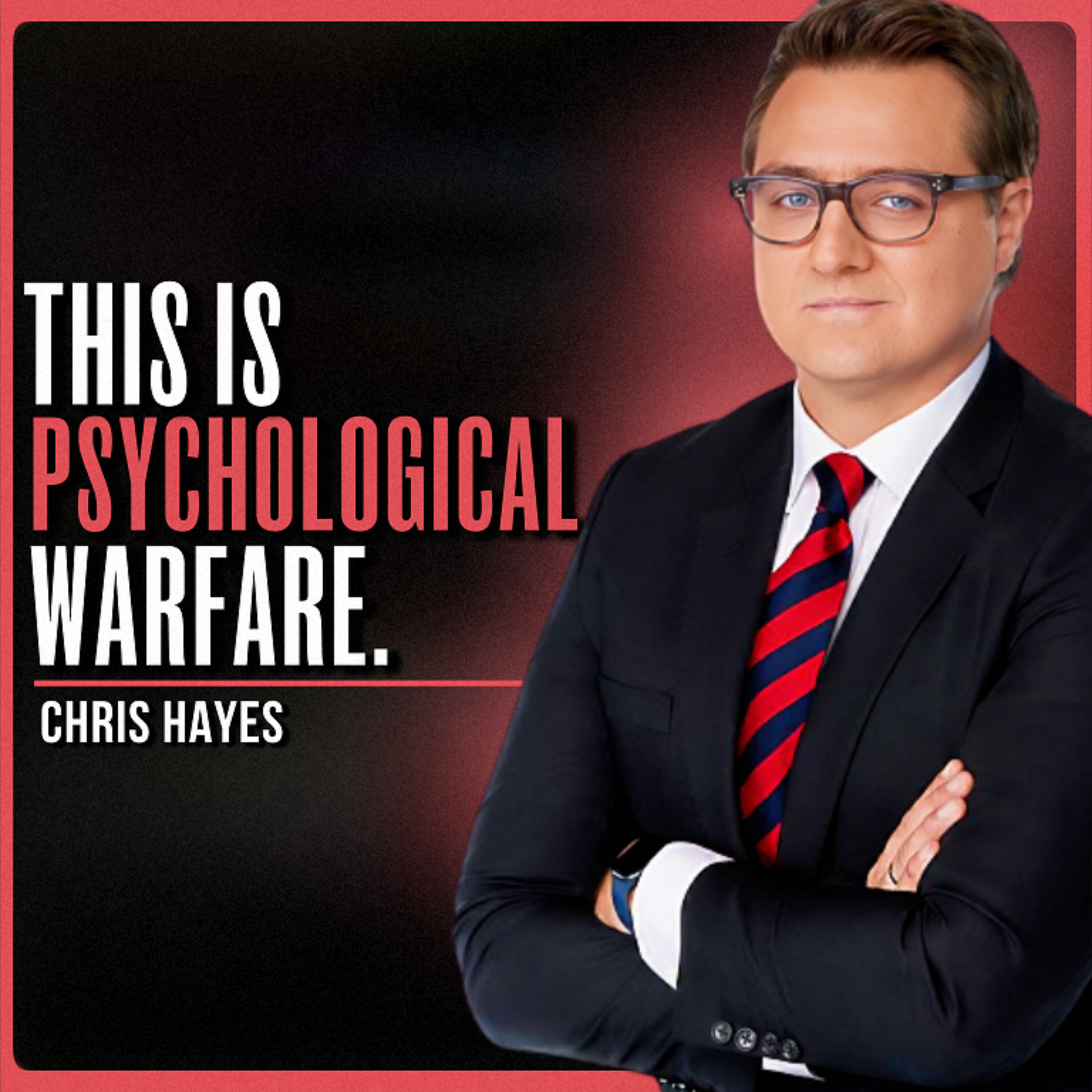
What if the real problem isn’t politics, the economy, or technology, but where you’re directing your attention? Emmy-winning journalist Chris Hayes joins Ryan to reveal the sinister mechanics of modern media, explore how the digital age fractures our sense of self, and explain why misinformation is most dangerous when it tells us exactly what we want to hear.
Chris Hayes is the Emmy Award–winning host of All In with Chris Hayes on MSNBC and the New York Times bestselling author of A Colony in a Nation and Twilight of the Elites. Chris’ latest book is The Sirens' Call: How Attention Became the World's Most Endangered Resource.
Follow Chris on Instagram and X @ChrisLHayes and watch Chris’ show ALL IN on MSNBC
📚 Books Mentioned:
The Sirens' Call: How Attention Became the World's Most Endangered Resource by Chris Hayes
Trust Me, I’m Lying by Ryan Holiday
The Odyssey by Homer (Emily Wilson Translation)
The Brass Check by Upton Sinclair
🎙️ Follow The Daily Stoic Podcast on Instagram: https://www.instagram.com/dailystoicpodcast
🎥 Watch top moments from The Daily Stoic Podcast on YouTube: https://www.youtube.com/@dailystoicpodcast
✉️ Want Stoic wisdom delivered to your inbox daily? Sign up for the FREE Daily Stoic email at https://dailystoic.com/dailyemail
🏛 Get Stoic inspired books, medallions, and prints to remember these lessons at the Daily Stoic Store: https://store.dailystoic.com/
📱 Follow us: Instagram, Twitter, YouTube, TikTok, and Facebook
See Privacy Policy at https://art19.com/privacy and California Privacy Notice at https://art19.com/privacy#do-not-sell-my-info.
