
 Ask ChatGPT


- Podcasts
- The Daily Stoic
- Jet Li on Inner Peace, Ego, and What True Strength Looks Like
The Daily Stoic29 Aug 2026 · 1h 1m · 35 chapters
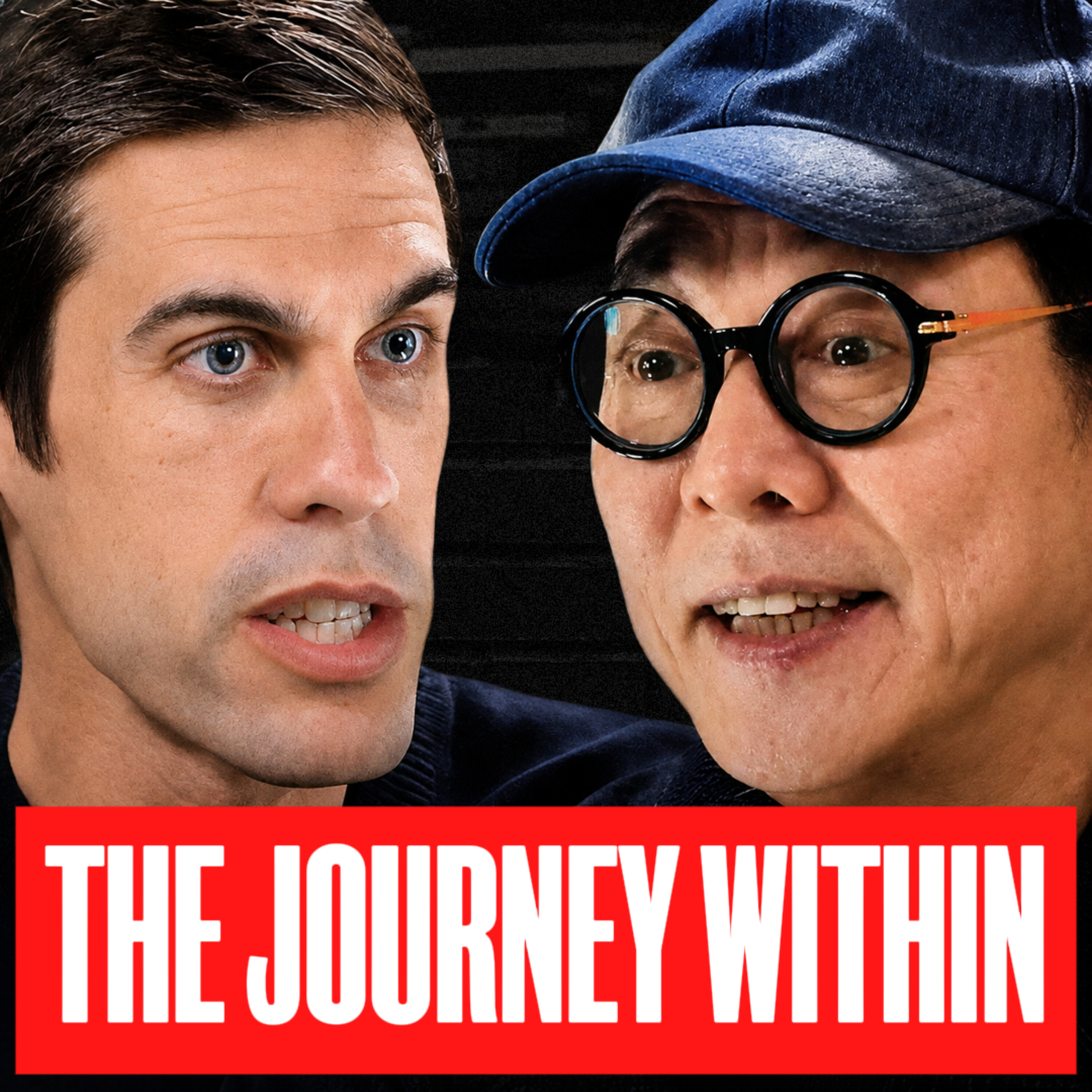
Jet Li on Inner Peace, Ego, and What True Strength Looks Like
In short
Jet Li explains martial arts as mind training and a metaphor for Stoic-like self-mastery: inner peace, ego reduction, detachment from results, and “true freedom” as “zizai” (everything okay). He argues anger and ego intensify suffering, while calm, presence, and wisdom help people avoid violence and handle life’s uncertainty.
Guest backgrounds
Jet Li is an iconic Chinese martial artist and film star (Shaolin Temple, Once Upon a Time in China, Romeo Must Die, The Expendables, Disney’s live-action Mulan). He was a national martial arts champion in China at about age 12. He studied Buddhism for over 30 years and later founded the One Foundation.
Key claims
Martial arts is not about dominance or hurting others; it’s about controlling body and mind, then using strength to prevent harm. True goals are “do your best” rather than outcome-dependent. Ego must be continually “trimmed,” not eliminated once. Mental training is essential as technology and longevity increase.
Notable examples
Nixon jokingly suggested Jet Li become his bodyguard; Jet Li’s 2004 Indian Ocean tsunami experience led to charity and One Foundation support for millions. He describes “actors in a play” (Epictetus) and meditation as goal-dependent.
Written by AI. May contain mistakes.
Chapters
0:45
Martial Arts Beyond Fighting
Discussion on the deeper philosophical aspects of martial arts beyond combat.
“This goes back to the martial artists and samurai who wrote haikus and made watercolors.”
3:30
Introduction to Jet Li
Introduction of Jet Li and his significance in martial arts and film.
“You can follow him on Instagram at Jet Lee.”
3:41
A Family Trip to Italy
Hosts share their recent family vacation in Italy and experiences with Airbnb.
“And by listing their place on Airbnb, they get to share this amazing experience with people from all over the world and get funds to put towards upkeeping and restoring their place.”
6:07
Jet Li's Early Life and Challenges
Jet Li reflects on his challenging childhood and early martial arts training.
“It feels like there was basically pressure on you from day one.”
8:06
Meeting President Nixon
Jet Li recounts his memorable encounter with President Nixon at the White House.
“he said, wow, your Kung Fu is pretty good.”
8:23
The Philosophy of Martial Arts
Jet Li discusses the philosophical aspects of martial arts and his journey.
“Like, did you love doing it or was it the pressure that's putting you there?”
10:46
Reincarnation and Martial Arts
Jet Li explores the concept of reincarnation and its ties to martial arts training.
“They thought I have that quite special with same age.”
14:01
Jet Li's Journey to Buddhism
Jet Li shares his journey of injury, self-reflection, and discovering Buddhism.
“Each movie I make it, I broke my arm, broke my leg, you know.”
15:12
Philosophy in Martial Arts
Exploring the philosophical aspects of martial arts compared to Western sports.
“But in the beginning, because I'm learning martial arts, I also very like Taoism.”
16:10
Meditative Aspects of Martial Arts
Discussion on the meditative elements and philosophy behind martial arts.
“Because at our school, there are different kinds of sports, right?”
Show all 35 chapters
16:54
Understanding Freedom and Happiness
Jet Li discusses the concepts of freedom, desire, and understanding true happiness.
“If there's something meditative about martial arts, I feel like that's maybe different than golf or.”
19:47
The Role of Acceptance in Life
The importance of accepting outcomes and understanding one's role in life.
“leave them to the world left to the next generation yeah so they're not a white not a black so they have a something made of words because the words is too limited too limited cannot describe.”
23:20
Mental and Physical Health Balance
Exploring the balance between mental training and physical health.
“Everything you can, you understand than just acting, you know, you try to, what I learned is training the mind is important.”
26:19
Lessons from History and Technology
Discussing the importance of mental resilience in a changing technological landscape.
“A lot of things, even we don't like it, they're coming.”
28:00
The Shift from Material to Mental Importance
Explore how emotional and mental needs become more significant as society advances.
“Before you ran the horse, later on you have a car.”
29:08
The Future of Mental Health
Discuss the rising importance of mental health and its future statistics.
“And you think about it, I think 15 years ago, I worked with UN Health two terms.”
30:01
Training the Mind: Jet Li's Journey
Jet Li shares his insights on mental training and self-awareness through life experiences.
“Then I want to share, say, wow, what about three minutes to take care of your mental training?”
31:59
Stoicism and Perception of Upsets
Delve into how our opinions shape our emotional responses according to Stoic philosophy.
“Seven is your opinion, different with the others.”
33:19
Overcoming Nature's Challenges
Jet Li recounts his near-death experience in the 2004 tsunami and its impact on his outlook.
“And so the analogy, I guess, for fighting is you want to think, well, they could hit me from this side.”
34:27
The Birth of Humanitarian Efforts
Learn about Jet Li's humanitarian foundation and its impact since the tsunami incident.
“My Jada, my little girl, one year old, take the bad water.”
35:38
Ego and Self-Understanding
Jet Li discusses the role of ego in personal suffering and the journey toward self-understanding.
“Even they say, I not work for Jet Li, not work for me, but you're doing the same thing.”
36:43
Meditation: Beyond the Basics
Discover the various forms and purposes of meditation as shared by Jet Li.
“Meditation is the one kind of skill, but meditation is not a goal.”
37:53
Martial Arts and Inner Peace
Explore the intersection of martial arts and meditative practices in achieving inner calm.
“it's big and tough, you know, the athletes.”
39:48
The Journey of Understanding Wants vs. Needs
Jet Li reflects on personal growth and the clarity of distinguishing wants from needs.
“So it's like, you know you can, and then you realize you don't need to and then you realize that actually your highest use is of service.”
42:00
Understanding Happiness and Suffering
Explore the importance of perspective in achieving happiness and alleviating suffering.
“You shouldn't have to conquer the entire world to know that it's not that important.”
44:40
Ego and Continuous Self-Improvement
Learn about the concept of ego and the ongoing effort required for self-improvement.
“And a friend of mine who trains in martial arts was saying something that I thought you might like.”
46:24
The Nature of Existence and Self
Delve into philosophical discussions on the nature of existence and understanding oneself.
“Want to slightly Step by step What quickly wins Where do you come down?”
48:35
The Dangers of Anger and Stress Management
Discuss the negative impacts of anger and the importance of maintaining calm in stressful situations.
“You need wisdom because no one can help the world.”
51:15
The Dangers of Anger and Stress Management
Discuss the negative impacts of anger and the importance of maintaining calm in stressful situations.
“I think sometimes people think anger is like a good fuel, especially in combat sports or in fighting.”
53:53
Parenting Lessons and Personal Growth
Reflect on parenting challenges and the lessons learned from mistakes.
“Recently, the work, you know, work 24 hours or 18 hours, a lot of work.”
56:06
Navigating Parental Challenges
Jet Li discusses his journey of understanding and supporting his daughter's mental health issues.
“Then go, you know, I just threw that journey until one day I realized I have a lot of problem.”
57:29
Lessons from Daughters
Jet Li reflects on how his daughters became teachers in his life, challenging his ego and self-centeredness.
“Yeah Become their roommate Become their friend And talk to them They teach me a lot You know How to be parents How to be shared They want to say something I Sometimes Sometimes I need to learn to hear.”
59:29
The Impact of Childhood Experiences
Jet Li shares how his upbringing and lack of parental guidance shaped his views on parenting.
“Because they become my teacher, my buddy, my roommate.”
1:01:22
Balancing Enlightenment and Responsibility
Jet Li discusses the balance between seeking personal enlightenment and fulfilling family obligations.
“that you know when I was 11 I get my injured in the sports class and I go back I'm so hurt you tell me They say, no problem.”
1:04:09
Real-Life Lessons vs. Theoretical Knowledge
Jet Li emphasizes the importance of practical experiences and learning from family over traditional teachings.
“Even masters say, go back, continue, make a hero.”

Ask about this episode
Get the gist, explore an idea or ask about something said.
 Claude
On The Daily Stoic, what are the key points of this episode?
Searching your listeningTranscript
Automatic transcript. May contain errors.
0:00Ryan Holiday: Welcome to the Daily Stoic Podcast, designed to help bring those four key Stoic virtues, courage, discipline, justice, and wisdom, into the real world.
0:14Ryan Holiday: One of the great misunderstandings of martial arts is that it's about fighting, that it's about speed and power and dominance and the infliction of pain, that it's ultimately about winning, about destroying or incapacitating someone else. But the deeper tradition has always been, well, something deeper. Not just self-mastery and discipline, control, self-control, but also stillness, wisdom, peace, tranquility. This goes back to Musashi. This goes back to the martial artists and samurai who wrote haikus and made watercolors. They understood that martial arts was something physical, but it was also primarily about the mind, that it was also a metaphor.
1:05Ryan Holiday: I think the Stoics would have understood this. Certainly the Stoics wrestled and boxed and fought. This is why we see these metaphors pop up in Epictetus and Marcus Aurelius. Marcus Aurelius says, you know, life is not a dance. It is more akin to the role of the wrestler. You have to be dug in and ready for sudden attacks. And that's why I was really excited to talk to today's guest, the great Jet Li, one of the most iconic martial artists and film stars in the world. Shaolin Temple, Once Upon a Time in China, a hero, fearless Romeo must die, lethal weapon for. He was also in The Expendables and Disney's live action version of Mulan.
1:47Ryan Holiday: He was a national martial arts champion in China at like 12 years old. He helped bring Chinese martial arts cinema to the world. And he's spent decades talking about this deeper connection between martial arts, between philosophy, between Buddhism and training the mind. And that's what we talk about in today's episode, his childhood, what it was like to be great so young, how he met President Richard Nixon, who asked him to be his bodyguard or at least joked about it. And I wanted to know whether this martial arts thing was something he loved or he was pushed into. And in fact, Jet spent more than 30 years studying Buddhism.
2:26Ryan Holiday: And one of the big sort of pivot points in his life was the 2004 Indian Ocean tsunami, which sort of drove him not just to a reckoning about his mortality, but to be more charitable. He built this great organization called the One Foundation. I think this also ties into the title of the book, Beyond Life and Death. The Way of True Freedom is a lot about him and his daughter who was there. She helped do some of the translating and they had a lovely relationship. And clearly she helps him sort of navigate not just the language barrier, but the culture barrier and make his way in the world. It was very sweet.
3:03Ryan Holiday: She sort of hung out in the studio with us when we did it. I thought the new book was great. That was really good. I've worked with his agent before, so when he suggested that I might like to talk with Jet Li, I was like, are you serious? Of course. So this is a convo where the martial arts and stoicism meet, ultimately centering around this very stoic idea that freedom is in the only place that it really can exist, which is within. Thanks to Jet for coming out. You can follow him on Instagram at Jet Lee. And we've got some signed copies of Beyond Life and Death at The Painted Porch, which you can grab.
3:38Ryan Holiday: I'll link to that in today's show notes. Let's just get into it. we just got back from an amazing vacation in italy i'll bring you some some clips from it over the next couple weeks i recorded a bunch of stuff while while we were there although it was as hot as it has literally ever been it's one of the best family trips we've ever had and we stayed in this amazing palazzo that we booked on airbnb it was like 500 years old it had all these roman funerary headstones in it, which is this crazy Memento Mori thing. It was like staying in a museum. The hosts were incredible. They lovingly restored this place.
4:17Ryan Holiday: They took amazing care of it. And by listing their place on Airbnb, they get to share this amazing experience with people from all over the world and get funds to put towards upkeeping and restoring their place. If you're planning a trip this summer, it's worth considering listing your place on Airbnb. It can be a great way to help offset the cost of your vacation and earn a little extra money to put towards your next adventure. Your place might be worth more than you think. And all you got to do is go to airbnb.com slash host to find out more. One of the things I think the internet has shown us is that you got to directly connect with the people that you're trying to reach.
4:52Ryan Holiday: You want as few intermediaries and as few sort of artificial blocks between you and what you're trying to do or what you're trying to say or who you're trying to reach as possible, right? You want those one-on-one interactions. And I don't know if you've seen this app, whatnot, but it's live shopping. So sellers have direct access to their customers in real time, where people are seeing your face and not a website, not a logo. Whatnot is the largest dedicated live shopping platform, beauty, collectibles, electronics, luxury, fashion, even cookies. People who sell those things are building real thriving businesses on whatnot.
5:34Ryan Holiday: Anyone can sell whether your business is big or small, just starting. And people selling on whatnot sell 10 times more than on other major marketplaces, because you're not just listing products, you're building a real direct connection with buyers. Across whatnot, the number of sellers making over$1 million a year has doubled. That means it's not just a side hustle, but a real path to building something that lasts. Just search whatnot, W-H-A-T-N-O, O-T. In the App Store, download it, and you can start selling and buying right away. I thought the book was really good. Thank you. I was reading about your boyhood.
6:12Ryan Holiday: It feels like there was basically pressure on you from day one. Yes. Yes. How did that feel? Was it heavy or did you get used to it? I used to it because when I was a little boy, I don't know anything about, you know, I was two years old, my daddy passed away. So family very poor. My mom only 34 years old. To rethink my two older sister, two older brother, me, five children, you know. So very heavy. Yeah. The family. Then from I remember, already say I need to try my best to helping my mom. Helping my mom, you know, that's why I quite naughty, you know. I have little visits. And then eight years old, I started learning martial arts.
7:02Then I tried my best. And then you got a little money. Yeah. Then you can help mom. It's very important. Very important. Then I know if I can get a champion, I can get more money to take care of the family. I tried so hard in the 1970s. I got a five-year champion martial arts in mainland China. And also, it's nice things if I'm doing a good job and I can represent mainland China to travel around the world. In 1974, I come to the States the first time. I did a Kung Fu demonstration in Bini City, include the White House doing the Kung Fu for President Nixon. And each time you represent China people, now you've got more money, a lot of money.
7:55Ryan Holiday: I heard Nixon asked you to be his bodyguard. Yes. When I was 11, he said, in the White House, Rose Garden, I think. Yeah. It's not there anymore. Yeah, I did. Kung Fu Demand, you know, after I showed the Kung Fu, he said, wow, your Kung Fu is pretty good. You grew up, you can become my bodyguard. Of course, they translate to me. And I said, no, I want to protect a billion people, not one. That's the case, just thinking that way. Yeah. Did you love martial arts or was it for you like a way out, a means to an end? Like, did you love doing it or was it the pressure that's putting you there? In the beginning, I don't know anything about martial arts.
8:38I don't love it. I don't know. Just the first degree in the summertime, you know, send all the children. They go to sports school. And if you're tall enough, you can play basketball. You know, volleyball. Some people are running so fast. Now you go to there. I'm quite short. They say, oh, this group of people learning much more. Okay.
9:02Ryan Holiday: So you're getting funneled into different sports based on how old were you? Eight years old. And they're deciding your future at eight years old, basically. Yes. But my master tell me later on, he says, my normal school teacher already said they have one boy. He's a good look in the physical. very good control and he must learn martial art. It's good. So after one month, summer school, so they have a thousand students. So my coach only pitched me keep in the martial art team. Wow. And then, you know, after a year, I got a quite good, then I slightly, slightly love martial arts because they have a very strong philosophy.
9:48Ryan Holiday: Well, that's what I was going to ask. Do you think the coach saw your physical potential? Or do you think he saw something in you mentally and spiritually? Like, what do you think he saw in you that made him think, this is the kid you got to train? I think both ways. One is you control your body, you know. Also, they look at you, you're thinking. I'm the case like independent thinking a lot. not only you tell me do thousand times thousand times I just follow the rule I don't want to say why I just do 700 better than thousand what's the key words I'm always thinking always thinking then also you know learning martial arts they have three key words how to say just like you have energy you can calm down concentrate then you use internal energy show your physical.
10:50I have a special three words.
10:52Ryan Holiday: Yeah. They thought I have that quite special with same age. Yeah. All the children. Where do you think that came from? Is it biological? Like, is it genetic? Or is it something you were taught as a kid? Like, where do you think it came from? At that point, when I was young, I don't know. But later on, when I studied, you know, especially, I'm special. study Buddhism, then there, I believe, there must be something in the past. That's why you learn everything faster than normal age people. Right. And you have a very familiar, controlled body to show different way. Yeah. And I think, I believe so.
11:36Ryan Holiday: Do you know who Patton was, the American general? There's a famous movie Patton about him. He's a famous World War II general. But he wrote this poem where he believed he fought in World War II and World War I. But he wrote this poem where he believed that he was the reincarnated spirit of every generation of warriors. There's a famous scene in the movie, but it did happen in real life where he was at a—in real life, he's at a Civil War battlefield. And he's describing it to the historian. And the historian's like, no, that's not how it went. And he says, no, no, I was here as a boy, which he wasn't, but he felt that he was.
12:16Ryan Holiday: And then an actual Civil War veteran comes to the scene and he says, no, no, he's right. That's how it went. He had this sense that there was generations of sort of past fighters in him. Do you feel like you have some? Yes, I think so. Because in mainland China, martial arts is Chinese tradition. Yeah. I think last year they calculated again is almost 80 million people learning. Wow. Still there. Yeah. When I was little, you still tell them 80 million were 100 million people learning martial arts. How can you're so young boy? You have a special and you're doing the same movement, same coach. Yeah.
13:02But you. You learn it faster. You're faster. You're different style. Everybody saw you. Then they said, wow, this guy must have a talent.
13:11Ryan Holiday: Yeah. They only use that word. Oh, maybe he's too talented. Yeah. So they're not learning. And also, you know, later on, I learned Tibetan Buddhism or Buddhism. You know, I figured out why I'm so special. Why people like me in the movement? On the screen, on the reel, you know, fighting, different style. Maybe, you know, the people like me, maybe in the past I helped more people. I helped a lot of people. Using martial arts. Yeah. Helping people. But maybe I did some mistake. Hurt the wrong people. That's why I got a lot injured. You know? Yeah. You take the good, you take the bad in the reincarnation.
13:51That's why I didn't complain a lot right now. But in the 30s, I always think, why am I so unlucky? Each movie I make it, I broke my arm, broke my leg, you know. Why nobody like me, you know, always get injured. Then when I was more than 35, I learned Buddhism. Then I said, hmm, maybe I help a lot of people. That's why people love me. Maybe I did something wrong. In a past life, you also committed some crimes. I've heard of some people. That's okay. If I have energy I can control, I can pay it back. It's good.
14:33Ryan Holiday: So the study of Buddhism came later for you? Yeah. When I was 34, I studied, become really Buddhist. Really? But at the beginning, I made my first movie called the Shaolin Temple. Yeah. That is a big hit in mainland China, in the whole Asia. Make me career changed. become an actor. But when I went to the temple, I just felt very peaceful, very happy. Yeah. Just something, yeah, I come before, you know, familiar, this, this, this. Yeah. There was something about it that spoke to you. Yeah. But how long between that movie and your study? Many years? 17 years later, I become Buddhist. Yeah. But in the beginning, because I'm learning martial arts, I also very like Taoism.
15:21Yes. Because they call yin and yang, you know, your tech, your protect, you know. So that philosophy makes me independent thinking more and more. Because, you know, different age, different area in the world, people have a different kind of thought. So that's why you think, oh, maybe I'm think black or white, you know, different way. Maybe I like cold water, people like hot water. That's why this is different. So you need to understand nothing 100 % equal or something there.
15:59Ryan Holiday: I feel like in the modern West, there's kind of a distinction between philosophy and, say, martial arts or sports, right? Like there's brain and brawn, as they said. You know, like, but it seems like in the East, historically and in a more modern sense, the philosophy and the martial arts are more intertwined. Yes, much deeper. Because at our school, there are different kinds of sports, right? The people, if they learn basketball, you know, volleyball, whatever, they just physical control, concentrate only. But martial art, we need to learn why you attack this way, why you attack that way, how to protect yourself, how to revenge something like this.
16:44Of course, later on, you know, I started to become an actor. martial art movie, always there have some more strong philosophy. Yeah.
16:54Ryan Holiday: You know. If there's something meditative about martial arts, I feel like that's maybe different than golf or. More philosophy, more thinking, because they use not the external physical part. You need the internal, they call the chi, you know, how to use, how to sharp, how to concentrate. also they believe not just you can really easily to beat up someone but you never change their mind so how do you convince them stop them violent and change become good person you know yeah that is interesting if only the support you just beat them up you win your team champion that's good enough but martial art is always isn't it?
17:46Not that simple.
17:48Ryan Holiday: Yes. Yeah. What's that? You use a word in the beginning of the book. I thought it was interesting. Zizai? Zizai. What does that mean? On the philosophy part, I think everything we describe is yin and yang. Yeah. Like a coat, hat, this and this. So when I talk about the freedom, that means something costs not freedom. Sure. You think, I need freedom because I'm not freedom. That means at the same time. Yes. I want this because you don't have it. That's why you want it. Yeah. So you think you get this, you will be happier. Yeah. More freedom, I'm happier. More power, more money, I'm doing this. But it's really the next way.
18:33That sample is much easier. But then when I grew up, you see a lot of people, maybe they're more power, more stronger, more money. But they have their problem They have their suffering So If you have a goal You always Have a problem
18:55Ryan Holiday: There's something you don't have that you want Yeah So that's why I think Talk about What we need And what we want Is two things Everybody Afraid about life And young and old Even deaf So everybody Tried to secure it They wanted more But they only need That much They want that much Even me Confused What I want What I need Always mess up So later on If you truly understand life then you will know what do you need that's very important yeah after that just what you want doesn't mean anything because the end of the day you cannot keep them go yeah you need to leave them to the world left to the next generation yeah so they're not a white not a black so they have a something made of words because the words is too limited too limited cannot describe.
20:08Because if I say I have more freedom, that means before you're less freedom. Zizi zai is everything okay. Okay is okay. Not okay is also okay. The result you see, everything results, you respect.
20:23Ryan Holiday: And I think you said it's connected to the idea of presence, which is just being in the moment that you're in, not wanting or regretting or worrying or... Yeah, like a so be it. That's why my daughter and I So be it So be it Just come out Sure Okay Okay Everything okay Yeah Because people Just like I'm making movie in the past You always think You try your best Then the result must be best Oh yeah Especially with movies Yeah You try your best Sometimes work Sometimes so Well that would be interesting right Because yeah You're the actor in a movie So you could do a great job Yeah But you don't control the other actors You don't control the director You don't control the marketing.
21:07Ryan Holiday: Also, you cannot control the audience. Right. Yeah, exactly. Somebody like it, this part. Sure. Somebody like that part. Sure. So that's why I think the result, probably three things can describe good, bad, so-so. If I respect three things, no problem at all. Sure. But the problem is I only care about the good. You want one, which means that if the other two happen, then you're upset or disappointed or angry. Yes. Or someone can take good from you by ruining it. Yeah. And you're vulnerable. This is natural. If you have this, probably people have this idea, you know, just a percentage. Maybe this more than 50 % is good.
21:51Ryan Holiday: Yeah. You cannot ask people 100 % like you. No one in the world, 100 % people support you. So when you understand more things than just so be it, you hate me, I understand your angle, you like me, I appreciate, I understand your level, you know, your thinking. In the middle, say so-so also, I understand. So if you open your heart, you respect everything, you don't complain, you know, it's okay. So one of the Stoic philosophers, his name is Epictetus, who I write quite a bit about, he would talk about how we're all actors in a play. Yes. Right. We don't get to choose the role that we're cast in.
22:31Ryan Holiday: We're cast in a role. And then we have to act that part as well as possible. We don't control if it has a lot of speaking parts or only a few speaking parts, if it's the villain or if it's the celebrated laugh line. Like, all we can do is play our role as best we can. And we have to detach from the results a little bit because sometimes the audience loves you and sometimes they don't. Yeah. From my understanding right now is not just making a movie. The life is a big movie. Yes. You're an actor. You're the writer. Right, right. You're the, you know, performance. You can direct everything because the result only you will take it in the future.
23:12Ryan Holiday: And look, sometimes you can be a good actor in a bad movie. Yes. And what you don't want to be is a bad actor in a good movie. Yes. Everything you can, you understand than just acting, you know, you try to, what I learned is training the mind is important. You need to help more people understand them. Yeah. So then you open it. So be it. Everything. Okay. I understand. Yeah. I hope you're happy. I hope you're healthy. That's the way. Well, and how can you make sure that the goal that you have when you go into a project is something that Stokes talked about, too. He says the other metaphor he uses, he says, if you only run races where winning is up to you, you will always win.
23:57Ryan Holiday: And so his point is, like, if you go into a movie and the goal is this has to make a certain amount of money, well, that might not happen. Right. Other things impact whether that happens. But if you go into a movie or a project or a conversation and you say, I want to do my best, I want to have fun, I want to learn something, you know, these are all things that you get to decide whether they happen or not. Yes. And so deciding what the goal is and trying to root that goal into something that's not based on other people as much as possible. Yeah. You know, they have a different age, the audience, different age, different languages, maybe religion.
24:38And so they like something, they don't like something, just like all the material put on the table. So here's the coffee, here's the water, there's a wine, take it what you like. Doesn't mean this is right, this is wrong, this is right. So then I think most important for me is I training martial arts through my almost the whole life. Control the body, move the body. That's I call it's a healthy part. Healthy. I thought Western, a lot of people learning how to keep their body running, you know, fit, look good. But I think mentally training is also very important.
25:18Ryan Holiday: It's the part of life. Happy is the mental. Yes. Healthy is the physical. Healthy, I think, is more important. That's why I want to share. I read a Chinese book. This is the first English book. And I try to share how to train. Well, yeah, a lot of people go to the gym. they run on the treadmill, they lift weights, but they do no mental training whatsoever. But if we don't do the mental training, you don't know how to control the happy, who causes you or not happy. Sure. If you know why it causes you unhappy, then you solve that. Sure. Then you can become more happy. Also, because technology improves a lot.
25:55In the near future, maybe 5, 10, 20 years, healthy is not a big problem. Maybe people can go 200 years old. Sure. But if mental not strong enough, you lose balance. You put your mind in the 200 years, then you say, wow, I need a lot of moving to make it, a lot of working to do it. What happens? Sure.
26:18Ryan Holiday: Yeah, if suddenly everyone lived to be 100, but we didn't make any improvements as far as the mental side of things, that just means you're unhappy for longer. Yes. That's worse. Yes. Yeah. A lot of things, even we don't like it, they're coming. You know, the machine, everything, you know, take AI, everything, take your job, take your... How to handle this? If you're an anxious person, that's 30 more years of anxiety. If you're a fragile person, that's 30 more years of having your heart broken or, you know, getting stressed out all the time. So, yeah, the idea of health being fixed is really only part of the equation if you're out of balance with the mental, if you don't have resiliency and, you know, all the things that you train the mental side for.
27:10Yes, because I'm learning martial arts. That's why I'm always thinking, especially in China, we say 5 ,000 years history. What you learned is you don't make the same mistake in your 100 years life. But you never know the future so long. A lot of things happen. You didn't prepare that you will easily get something in the future. Yeah.
27:36Ryan Holiday: There's a line from an American president that I like. He says, the only thing new is the history you don't know. Yeah. And so, yeah, when you look at 5 ,000 years of tradition, sure, there's some technological advances, but basically people have been struggling with the same things for 5 ,000 years. Yes. The emotion part. Yes. Mental part, same thing. Yeah. Love, family, children, husband, you know, wife, you know, how to work. Hire, hungry, cold, wet. Yeah, have a tear, sick, die. But the material may have changed. Before you ran the horse, later on you have a car. Now you have a different kind of car.
28:13You don't need to drive. In the future, maybe you have clothes, everything, you go to New York easily. So the material change, the mental is similar. Love story, family, take care. This emotion didn't change a lot. That's why we need, I think in the near future, mind is more important than this part. This part, technology, a lot of company, a lot of people already doing it. Yeah.
28:43Ryan Holiday: Well, and as society becomes more prosperous and you're not a subsistence level farmer, actually the emotional stuff becomes more important because there's more room for it. If you're spending 14 hours a day in the field, you don't have a lot of time to stress about some of these emotional and mental things. But as that takes up less and less time, in a weird way, the other stuff takes up more space. Yes. And you think about it, I think 15 years ago, I worked with UN Health two terms. Each term, two years, ambassador, you know, trying to promote things. Then that time they already tell me, you know, the heart attack that cause human death is the number one.
29:29and cancer number two. Mentally, maybe number three. But they say 10 years later, future mental will be number one.
29:38Ryan Holiday: Sure, because you can cure the other things. Yes, the heart, you know, technology, AI. They can, maybe in the next 10, 20, 30 years, cancer maybe can cure, you know, a lot of things. The mental is very important. So people right now, I think a lot of people, especially CT, a lot of young people take maybe 30 minutes. everyday training in their body. Then I want to share, say, wow, what about three minutes to take care of your mental training? Every day from the little, little, little, you know, concentrate, you know the mind is training. What does your mental training look like? What do you do?
30:16When I was a little boy, you know, just like an athlete. You need to focus, you know, you go outside to performers, people like you, you don't. How do you tune it out? You don't think about it.
30:27Ryan Holiday: Yeah. If you're yelling at you, you know, through something, you know, you need to do your best. Yeah. If it's too hard, you need to try harder, harder, harder. Also, it's very simple training. But, you know, later on, you know, making movies, you have philosophy training. And especially I become Buddhist, then training you, then you will understand more what causes you not happy. Yeah. What causes you suffering. Right. And it's us. We're the cause. It's never out here. Then you need to understand that people say something, they like you, where they don't like you. Why you be happy? Why you angry?
31:07The sound, where it come from? How to work inside? You look something, you're happy. Why you look at something happy? The flexion change your mind. How do you end happy? If you can find all the problems, how can cost? Then you can solve them. You can clear it.
31:25Ryan Holiday: One of the ideas from the Stoics, I'd be curious what you think. This also comes from Epictetus. He says, it's not things that upset us. It's our opinion about things. Yes. Right? It's out there, but it's when it comes through and we process it through here. That's where the, that was offensive. That was mean. That was hurtful. Yes. That was amazing. You said I was, all that's our interpretation. Yeah. Then your deep training, because they have a sixth sense, how to communicate with the outside, what you hear, what you smell, what you think. And the Buddhists, they have seven and eight involved.
32:03Seven is your opinion, different with the others. Everybody's seven is different. Eight is maybe learn something, put there. So I am familiar or something, you know, reincarnation. Oh, sure. Usually I saw that, you know, you have a cell phone. Yeah. Just like your body. You change all your cell phone every two years, three years.
32:26Ryan Holiday: But the data is still there. Right. Who's your friend? Who's the same thing? Yes. That's the software. So that's why I say both sides, we need to understand how to work. Yeah. And make you understand. When you see everything is possible, then you're not disappointed. Because you respect already. And you're not surprised. Not surprised. Because you knew that was one of the outcomes. Yeah. The people, sometimes you grow up, you only see these things. After this, too bad, you cannot say, wow, I'm like, oh, too special. You want to open it and see everything. It's okay. Seneca, who's another one of the Stoics, he said, the reason you want to think about all the things that could happen, so you're not surprised.
33:11Ryan Holiday: He says the analogy is that the unexpected punch hurts more. That the unexpected blow lands heaviest. Yes. And so the analogy, I guess, for fighting is you want to think, well, they could hit me from this side. They could come from over here. Yeah, yes. Right? And it's not to make you paranoid, but it's so you don't get caught off guard. It's when we're surprised, when we didn't even conceive of someone not appreciating what we're doing or that they could laugh at us or whatever. Then when it happens, we're devastated. Yeah. That's why in the book, I write down my English not good enough. I try to explain, you know, there have a small jet lead in the beginning, just like everybody work myself, like a center.
33:53I do martial art, make money, take care of my family. I do something. I'm special. Everything is me, me, me, me, me. It's a lot of suffering, a lot of struggling and pressure. And I hit a tsunami in 2004 with my whole family, you know, almost died. Maldives, 2004.
34:11Ryan Holiday: Oh, okay. Asian. That's a big one, right? Yeah, the bigger one. Yeah, yeah. You were there? You were on the beach? I'm in the Maldives. More than 800 miles there. But one hour later, we get hit. So the water is here. My Jada, my little girl, one year old, take the bad water. I hold my older, four-year-old sister. Nothing to do. Even people think, you're the martial art guy. You know the physical. But in the nature, when they come... You can't fight a wave. You cannot. You cannot fight. So since then, I changed, say, I need to do something helping the society. People like me, give me the big name.
34:52I want to help them. So I started a foundation in China to help more people in the disaster. So I asked everybody to donate WEN YUN per month, like$12 per month, put it together. So after 18 years, we helped 62 million people.
35:11Ryan Holiday: Wow. We raising fund is almost 5 billion RMB, 5 billion. So help more people. Just everybody a little bit, a little bit, a little bit together. Then it changed. But through that journey, I'm so happy, but also more painful, more suffering. Yeah. Because you have a goal. Yeah. You help a million. You want to help two million. Sure. You do the same thing. Same thing. Yes. Even they say, I not work for Jet Li, not work for me, but you're doing the same thing. You're competing with other people. Competing on the other foundation, the other things. So it's something. That's big jelly also suffering.
35:50So that's why end of the day, in past maybe 10 years, I studied strongly, studied Buddhism, Buddhism, and then tried to figure out, know me. Know me. To take your ego out. Know me. If you know me, everything is zizai. Yeah. That's come from. It's okay. That's okay. They don't like jelly. They like jelly. They put a stone in the water. There's ripples. Yeah. You can feel it. You're angry, but you don't want revenge. But later on, now I try to learn is you threw the stone in the air. The air doesn't matter who.
36:26Ryan Holiday: Yeah. Be careful. Hurt that people. Be careful the stone back hurt you because there are no point. Yeah. Then just less happy, less suffering, less everything. Both sides. then that's called the zizai. And do you have a meditation practice? Do you meditate? Yes. 30 years. Meditation is the one kind of skill, but meditation is not a goal. Right. Goal is if you're in the learning beginning, you have a different kind of meditation, different kind of class. People, normally people think of meditation, just do nothing. Do thinking. They have a lot of things to do. Yeah. You know, step, step. There's a lot of stuff you've got to clear out first.
37:10Yeah, clear, clear, clear. Because until later on, it's a different kind of meditation can help you, a different kind of goal.
37:20Ryan Holiday: Yeah. Really depends on the goal. Where you want to go, then you'll learn what kind of meditation. Then there have many, many skills. I call it many, many tools. Yeah. You can use ear to meditate, listen. You can look in meditation. Just walking meditation. Walking meditation. Drinking meditation. Many, many ways. Yeah. Then that is the sample. Easy to understand and using for daily life. Yeah. Yeah. And I feel like more in the martial arts world, like, again, in America, it's like, it's big and tough, you know, the athletes. But like, you know, there were samurai warriors that liked to do the little, the gardening or the painting or the tea ceremony.
38:08Ryan Holiday: There's something kind of slow and meditative about it traditionally that is very beautiful, which is a meditative experience, right? The trimming of the bonsai tree or the haikus, you know, the different kinds of sort of artistic means of getting to that quieter, calmer place. For I learning martial arts and the first step is a physical skill. Yeah. Your internal, external, angry, everything, revenge, whatever you want to get a goal. Yeah. You need a physical become very high level. Yeah. Sometimes we talk about your sore. You're holding the sore. Sore is your body. Yes. Sore and you in the together.
38:56Ryan Holiday: Yeah. Mazing together. To become one. Become one. That next level, you don't need a sword. Yeah. You need a physical, very strong. And before fighting, you try to stop them. Yeah. Don't fight me. Yeah. Don't fight me. I will get you. Yeah. I will get you. I will hurt you. So that level, that level better than hurt people. Yeah. The second level is heart. You'll still have a sword in the heart, but not physical. Yeah. Sword. In the third level, you don't have a sore inside. In the heart, you don't have a sense. You try to help more people. You try to convince this way, keep balance. Everybody be friends.
39:36Everybody, you know, this way. It's quite close to highest philosophy or religion. So helping each other. We're not easy. Living in the earth, helping other sisters. Don't fight.
39:47Ryan Holiday: Do you think some of that comes from confidence, right? So it's like, you know you can, and then you realize you don't need to and then you realize that actually your highest use is of service. Yeah, of course. Also, different age. Young, have a lot of energy. Hard to do that at 20. You really want to get this. I try to prove difference. I am so strong. Yeah. I want to get something. Yeah. Then you get more confidence, more understanding life, 30s. You think about it. Wow, they have a reason. You have a reason. Yeah. Until later on, you think, wow, I don't need that much. You know, three meals a day, went bad, could cover, raining, good enough.
40:32I don't need that much. Don't put a want to become need. Right. A lot of people still confuse want and need.
40:40Ryan Holiday: And it's also, I think it's easier to have that clarity when you've gotten a lot of the things that you've wanted, because then you realize it wasn't that great. And you also, I think you have the confidence that you're like, I did it. You know, like there's something about like if you were 20 and you were like, I don't need anything. You're not actually saying that from a place of knowing. There's like, you know, the story about sour grapes, like where you're like, oh, I didn't want it anyway. There's something like until you've had it or you've gotten up close to it, you can't really know that you don't need it.
41:15Ryan Holiday: Yes. Because it's not based on experience. Something, yes, something maybe not. Yeah. Because I'm 34, I'm quite okay in Asia. Mm-hmm. You know, actor, famous action actor. You got something you want. Yeah. But you look up American Hollywood. There's always another level. There are many, many levels to go. Mm-hmm. So after entertainment actor, I have a lot of businessmen, sell market, a lot of rich people. You never go that high. Yeah. So, doesn't mean you need to go that high you understand. There, you need to think about, wow, what do I need? What do I want? If I don't understand, then end of the day, 70 years old, I'm still saying I want more.
42:00Ryan Holiday: You shouldn't have to conquer the entire world to know that it's not that important. Yes. I think your point is right. Also right. It's secure. What do you need? Yeah. That's very important. Secure. Say, wow, that's what I need. I need this after that you need to think big picture if you don't understand if you are a billionaire billionaire you still think I want more I want more I'm struggling right it's still there that's why I think you need to understand where living on earth that's maybe three dimension and good and bad in philosophy and in meditation often times if you're an ambitious person a lot of what you're wrestling with there is how to turn that volume down not off but down a little bit yes maybe just sometime you kick back your reincarnation the thinking come back yeah look at it yeah yeah yeah if you go that journey end of day you're still suffering you need to understand that you think about that you'll find a different you yeah the book can help you some maybe movie some something you got it more information more book to understand living and death yeah what's the end where did it come from where it goes how to solve these lifetimes while you're through that journey until one day you want to say wow i hope more people understand earlier like my daughter you should understand than earlier and less suffering in life, right?
43:37Be happy, understand. That's why we share, we want to share. Sure. Then we don't know really can help more people or not. Doesn't matter. I think, unless I say to my teachers, if the book can help one person, two, three, I'm so happy. Even more, I'm also happy. Yes. I don't need a goal. Right. If I had a goal, go back to the beginning.
44:01Ryan Holiday: Yeah, more than zero, but it doesn't have to be a certain number. Yeah, I'm not a good teacher. I don't want to teach people. I just say I'm like you normal boy. I threw my life journey learning the physical part, mental part. I want to share my experiences to everybody. If you like it, take it free. If you don't like it, it's okay. There's a different will to see our life and include future. The technology will hit us. very quickly. Yeah. I did this book a couple of years ago about ego. And a friend of mine who trains in martial arts was saying something that I thought you might like. He was saying that ego is like a floor.
44:49Ryan Holiday: You sweep the floor, you get it clean, as we're always trying to push ego away. And then a week later, it's dirty again. You have to always be sweeping the floor. You have to always be sort of doing the spiritual practice to get the, as you were saying, to take the me out of it. It's not something you do once. You don't meditate once and go, hey, I don't need to be the center of the universe. It doesn't last. It's a constant process. From my learning, that's one kind of philosophy. Yeah. Even Buddhists have that kind. Just say you need all the time, always clean. Yes. You know, just like a big tree, you have too much.
45:29Ryan Holiday: To trim the branches. You need to always, you know, every season you need to change, fix it, keep them healthy and good. That's one way. Also have the other way. Say, to figure out, cut a tree. Sure. Even no tree. Yeah. Why are you careful? Every season, you cut it loose. Sure, sure. So those are two different ways. This is slightly, slightly, slightly to understand relative truth and what universal something more. When it's direct, go to the end. They'll have a mirror. You need a clean mirror every day. If you're dirty, you cannot see your face. Then the other master saying, where is the mirror?
46:16If no mirror, why you care about the clean one? There's two kinds of ways to learn. Really depends The person Want to slightly Step by step What quickly wins Where do you come down? I learn both I learn both This is safe Yes
46:34Ryan Holiday: Everything clean Is safe Yeah But that way I also learn But that means On the other Maybe Talk about the reincarnation Yeah You never know How many times You already learned Sure Maybe this is the last time Yeah That's why you quick use the no mirror no tree how do you know you're 100 or your 50s yeah so if 50s you better use this way if you already likening on that way this work also if the tree is ego and you think you've cut it down and you have no ego that's kind of egotistical yeah but no not a tree tree is explain ego where is ego yeah in in our body where is the ego sometimes meditate you know just put your hands here.
47:22That's jelly? No, that's a hand. Put all the pieces. Yes. Where is jelly? Who's suffering? Which part? Yeah. Then you change, change. Then until you cannot find that really, really have jelly. You need to put everything together and then you have jelly. Yes. Now use the same philosophy. We talk about a car. There's a car. Really car? We put all the pieces. Say there's a wheel, this, this, this, this. We cannot find the car. Yeah. If you slow down, slow down, I don't know the... 量子力学 ,物理 Yeah, you're kind of smaller, smaller, smaller Even their 原子 To the atoms The atoms, then smaller the atoms, smaller atoms Everything become the same Right Then where's you?
48:09Where's me? That level So my English is not good enough to explain that Chinese, I can explain If that's the way you cannot find you, then I'll say no trait, I'll say nothing. So what I learned is very good. And from all the masters, they teach me compassion. Yeah. And also they teach me wisdom.
48:34Ryan Holiday: Yes. They say if you do only compassion, you help a lot of people, that's why you suffer. You need wisdom because no one can help the world. Everybody, every corner. Yeah. You need the perspective. Yeah, you need respect. A lot of things there. Use wisdom. Try your best to help whatever you can. I know I got a bunch of talks coming up. I got a bunch of travel coming up. I got a bunch of videos I'm going to do. So I was starting to think about what I'm going to wear. And so I was shopping for some basics from Quince. I've been wearing a bunch. You've almost certainly seen me in their stuff. Their clothes are built to last, made with premium materials.
49:13Ryan Holiday: and they're the kind of stuff you reach for every day. Quince specializes in everyday staples that work harder. Ultra soft organic cotton teas, Mongolian cashmere sweaters, everything in between. Everything that Quince has is priced 50 to 80 % less than what you'd find from similar brands. Quince works directly with ethical factories, cuts out the middlemen, so you're getting premium materials without the markup. If you're still hanging on to the same worn out basics, Quince makes it easy to upgrade. And if you want to upgrade your everyday, download the Quince app for app-exclusive offers or go to quince.com slash stoic to get free shipping on your order and 365-day returns.
49:53Ryan Holiday: Now available in Canada and the UK. That's quince.com slash stoic. Over 70 % of Americans are chronically dehydrated and 90 % don't get enough potassium, a key electrolyte responsible for energy, muscle function, and clear thinking. That's why so many people are tired, foggy, crampy, or even off, even though they're drinking tons of water. I'm down at the beach with my family in Florida. I've been running in the morning, walking the dog, going to the beach. I just can't get hydrated. I just can't. It's just so hot. I'm doing so much. I can't get hydrated on water alone. And that's where instant hydration comes in.
50:33Ryan Holiday: It is a premium electrolyte drink mix designed to support hydration, energy, recovery, focus, and overall performance without sugar or unnecessary additives. I've been drinking the strawberry lemon one, just putting in my water bottle, taking it with me, sipping on it throughout the day. It's not super sweet or salty. It's just easy to drink. Instant hydration is made to be an electrolyte drink you can enjoy every day, not just after intense exercise. For a better way to stay hydrated, go to instanthydration.com slash stoic and use promo code stoic for over 40 % then off your first subscription order.
51:07Ryan Holiday: It's Instant Hydration's best offer available. That's instanthydration.com slash stoic, promo code stoic. Talk to me about anger. I think sometimes people think anger is like a good fuel, especially in combat sports or in fighting. Like anger is tough, but you sort of make the opposite argument in the book, that it's dangerous. Yes. You're angry, you want to do something, and the result maybe make you more angry, right? Yeah. Then you cannot solve outside the problem. You hurt your inside. So you changed. You feel less angry. If angry can solve all the problems, then I say everybody angry. But angry cannot solve all the problems.
51:53Then you angry that the other people also angry. So both angry are more and more and more convinced. Maybe a thousand years still, they hate each other.
52:01Ryan Holiday: Also, it's like you see in sports, why do people talk trash in sports? Like, why do people try to get inside the other person's head? Because they know if they insult you or hurt your feelings and you get angry, you'll make mistakes. You'll hurt yourself. Yes. Then we're like, no, but my anger is good. No, you see it in someone else, you see the damage it causes. You should be very nervous about it in your own self. Yeah. So if you don't angry, you understand where the angry come from. You still solve the angry, then you become stronger. Yes. I'm standing there and I say, hey, Jack, your book is shit.
52:40Sucks. You're something. You're stupid. I'm just yelling. Okay. Because I train you. It's okay. Respect. Thank you. Your opinion. Thank you. Thank you. That make you angry. So maybe you try to find other words to make me frustrated. But if I'm okay, everything okay, then you don't need revenge. You just open it.
53:04Ryan Holiday: Yeah. It's a form of strength to not be triggered. Yeah. Or if people can't upset you, then you have strength. Yeah. Then you understand everything because they want something. Yes. They use that word, want to get some respect. Yeah. People like you, they want to respect something. So it's open. So angry hurt yourself. That's why I say don't hangry, you know. Yeah. If angry can help, then we can't. You know, don't help. Then just keep. Yes. You can change yourself. Then you see the world totally different. That's what I learned. Yeah. And it's almost like the more stressful or frustrating or difficult the experience, the more you need to bring calm to it.
53:49Ryan Holiday: Yeah. Because it's complicated. Yes. A lot of people I heard, you know, people say, wow, I was so tired. Recently, the work, you know, work 24 hours or 18 hours, a lot of work. I complain, complain. I say, listen, why we need to work? Work just solve problems. If no problem, we don't need to work. Right? Everybody working just solve problems. If it's like the company, perfect company, no problem. Why they need you? They need a lot of machines. It's good enough. So working, we need to appreciate it. So wow. Yes. A lot of things I need to do today because a lot of problems. Machine cannot solve.
54:31I need to solve. So it still works. Yeah. It's still eight hours. Really depends on how you're thinking. You can enjoy this whole day, eight hours. Well, you can angry eight hours. So which way? Better for you.
54:44Ryan Holiday: Yeah. You can laugh or you can cry about it. Yes. And also forgive yourself. Yes. In the past, I tried so hard. I never give myself, made the mistake. I can angry myself, you know, something. Then you look back, just say, hey, 5 ,000 years, a lot of people made the mistake. Everybody made a mistake. Forgive them. You are not the perfect guy. Sure. You need to say good and bad mistake also your life experiences. Yeah. All the experiences make your life. Yeah. That's why I need to appreciate it. Appreciate a mistake. If you don't have a mistake, you don't know success. You can't learn. You success every day, the whole life.
55:30Now you thought it was boring.
55:33Ryan Holiday: Some of the mistakes you talk about in the book, you talk about growing as a parent. Some of the mistakes you made as a parent. That must have been fun to write about. Yes. Because, you know, I'm traditional Chinese people. I don't have experience how to be father because I don't have father, have idol to see that you should do that. Also, traditional Chinese people just think, you know, you work hard, make a lot of money. Then give them good education and teacher helping good money go to the hospital. You know, take care of healthy, take care of students. That's good enough. Then go, you know, I just threw that journey until one day I realized I have a lot of problem.
56:19The money cannot solve all. And they can solve some problem, but not all problem. That's why maybe my daughter, they need something. I forgot. So the first trick is my daughter. She got some mental problem. I just do nothing. I don't understand that kind of what caused that sickness. You didn't know how to help. I don't know how to help. Then I saw, oh, you're Jali, you're learning Buddhism, you know, a lot of mental training. But now they close the door, they don't want to talk to me. So how am I doing it? Suddenly I think I need to learn, I need to recover everything. So I turned on a lot of work.
57:00And then through this journey, try to do everything I can with my daughter, become listener, become their friend, roommate. Because usually I don't know American culture The parents always Still say Oh you should do this Authority Yeah You're the general They're the soldier Like that way Yeah But I I thought it doesn't work So I slightly Slightly Need to change Change Change Become their buddy Yeah Become their roommate Become their friend And talk to them They teach me a lot You know How to be parents How to be shared They want to say something I Sometimes Sometimes I need to learn to hear. Don't give opinion.
57:43Just hear. So I learned a lot journey. And of course, learning this can help me. Ego, heck, less and less. Self-centered and less and less. They become my teacher also.
57:58Ryan Holiday: It's like wherever you need to be challenged the most, that's where your kids end up needing. Do you know what I mean? I feel like with my kids, It's like, it's all the things that I struggle with the most that they are perfectly lined up to like put the most pressure on. Yeah. I still remember one day, four years ago, maybe one day, my two daughters come to, you know, we're met in Los Angeles. I thought I'm a goodest. Training my mind. Very calm. Very dumb. Very good. So you have something, you know, you don't like me, some part, talk about it. Then they say, wow, you're self-centered. You're an ego head.
58:41I heard ego is become evil. I say, I'm not evil. I try to work so hard in my life to protect you girls. I can bring my heart, give to you everything. Why I'm ego? Wow, I'm so hungry. So they're really struggling. Then they say, see, see, see, you learn no self. This is a big ego. I really think, wow, it's... I'm not good enough. So I learn and learn. Next day, next day, two days, maybe take me two days. I say, sorry, I'm not good enough. I need to learn. So two years later, they say the same thing. I just smile. I say, okay. Even I'm unhappy, I smile. But four years later, they say something. I say, wow, good.
59:25What are you talking? Ooh, yeah. That guy, Jenny, Jenny is selfish. Jenny is self-centered. It's good. You can see. Growth. Yeah. Also grow. Yeah. Because they become my teacher, my buddy, my roommate. I'm so happy I have two daughters, four daughters. Yeah. But these two, they have a little bit, especially Jada study Buddhist also, we have the same conversation.
59:52Ryan Holiday: Well, each one of your kids has a different parent, right? Because you're growing, like they, like especially the older one, you're the least experienced with the oldest. Yeah. You're a little more experienced with the next one and a little more. So like just as we're growing and changing, our kids are getting different versions of us because we're in different places on our journey. Yes. Yeah. Yeah. Same. I'm a normal guy, normal person. Yes. With the same. Yes. Well, yeah, you talked about in the book that like you thought it was like, hey, I'll check in when you're 18. Yeah. But a lot was missed.
1:00:23Yes. Because I'm working, you know, during the 30 years, 40 years, I'm working a lot. My wife take care of them and say I work for them. You know, you go to work. After 18, you take care.
1:00:35Ryan Holiday: Yeah. Before 18, I already have a big problem. I try to work together. Yes. Later on, later on. Now it's... And is that kind of how it was when you were growing up? I mean, obviously, I know you lost your father early, but it can be hard when you're like, well, this is how it was when I was a kid. I don't have father passed away. You know, mother didn't take care because I'm living in the school. Yes. So you didn't really have either parent. No. You were in the system. Yeah, the school. only have the coach the coach like how to use the bad words you know just punish punish doing it doing it harder harder doing it right so then you think your life is just doing it doing it then before you know there later on we become friends they talk about it so that you know when I was 11 I get my injured in the sports class and I go back I'm so hurt you tell me They say, no problem.
1:01:32I hurt a lot more than you. Do it. Stronger. Next day, you know, months later, you'll become strong again. I just say, father, family, come back. Finally, come back. You need to say, oh, sorry, doctor. You will better. You tell me like tough, tough. You're training. I said, wow, that's what I learned from my master.
1:01:54Ryan Holiday: It's hard to give what you didn't get. Yeah. I didn't have that. I didn't have that. Experiences. So that's why I'm not good enough. I learn. I still learn. Yeah. Right now, right now, I'm learning every day. Yeah. You see? You see? No, it's better. Well, look, I have a book in there I want to give you. I think that's the interesting, like, there's something even about Buddha. Like, Buddha has a kid. Yeah. And he leaves to go get enlightenment. Yes. And I don't think anyone, I mean, maybe that was okay 5 ,000 years ago or whatever. Yeah. But I think if that's what enlightenment takes, it's not, I don't like it.
1:02:30That is not the only way. For sure, it's the one way. The whole country is his. You know, everything. You got all the human wants. Get everything. You say that cannot help. Sickness, younger, it cannot help. Even if you have power, money cannot help that. So he tried to find another solution. Finally, he likening, helping a lot of people. But today, you know, yeah, it was 35, 30, 40, around there. I want to study, become really, really life-likening. And when I tell my master, I want to go to the mountain, retreat, you know, something. Then, fail master. Say, get out of here. Go back. You doing this way, you will destroy Buddhism.
1:03:19I said, how can? You need good students. I'm so good. I can train in three years, you know, five years until I'm lightning. He said, good, good, good, good, good. Get out. I said, why? You see, look at modern days. People look at you like an idol, good guy. And you have a wonderful wife, daughter, you know, pretty good life. You help the society. Suddenly, you're through. You don't care about your daughter and wife. You go to the mountains to study. A lot of parents will say, that guy, mental problem. Jelly mental problem. You know, he don't care to take care of wife, children. They go there to learning some strange stuff.
1:04:01Don't learn in that. Whatever he learned, you don't need to learn.
1:04:03Ryan Holiday: If it involves forsaking your obligations and your loved ones, what kind of enlightenment is that? Yeah, it doesn't mean anything. So then they say, you go back. You need to continue. Even masters say, go back, continue, make a hero. I say, I don't want to hurt people. Even I'm working on the side. I'm struggling. Why beat him? You know, why beat him? Say, don't put your likening Buddha. You're just a human. Beat up them. Become a hero. Then in a normal day, you show your compassion. You show your stuff to people. They have meaning. You're a real person. You have meaning. If you're too far away, people say, get out of here.
1:04:44Ryan Holiday: You thought you needed to go to a temple and learn from a teacher, but actually she was your teacher. Yes, yes. That's fantastic. I mean, the mountain, never learning that. Yeah. Never learning. Every day you go out. Even recently I read a Chinese book. Then still there have some people like the book. A lot of people say help. Some people say it's a mental problem. Why just continue to make a movie? Make a movie, make money, make something. Why are you learning this? Yeah, you need to understand. It's respect their thinking. Can I show you the bookstore? Yeah, yeah, yeah. Let's do it. Good. Thank you.
1:05:26Thank you.
From the publisher
Behind Jet Li’s martial arts mastery and international fame is a deeply personal journey to understand purpose, ego, and freedom. In today’s episode, he sits down with Ryan to discuss the three levels of martial arts, how surviving the 2004 tsunami changed his life, and what he believes is the highest form of strength.
Jet Li is a martial artist, actor, philanthropist, film producer, and author. He became the youngest national martial arts champion in Chinese history at twelve years old and went on to become one of the most internationally recognized Chinese film stars of all time, with roles in Shaolin Temple, Once Upon a Time in China, Fist of Legend, Hero, Fearless, Romeo Must Die, Lethal Weapon 4, The Expendables, and Disney’s live-action Mulan.
Beyond film, Jet has spent more than thirty years studying Buddhism and has devoted much of his life to philanthropy. After surviving the 2004 Indian Ocean tsunami with his family, he founded One Foundation, a charitable organization focused on disaster relief, mental health, and grassroots giving. His new book is Beyond Life and Death: The Way of True Freedom.
Follow Jet Li on Instagram | @jetli
📚 Grab signed copies of Beyond Life and Death by Jet Li at The Painted Porch | https://www.thepaintedporch.com/
🎟️ DAILY STOIC LIVE | Ryan Holiday is coming to a city near you! Grab tickets here | https://www.dailystoiclive.com/
🎙️ AD-FREE | Support the podcast and go deeper into Stoicism by subscribing to The Daily Stoic Premium - unlock ad-free listening, early access, and bonus content: https://dailystoic.supercast.com/
🎥 VIDEO EPISODES| Watch the video episodes on The Daily Stoic YouTube channel: https://www.youtube.com/@DailyStoic/videos
✉️ FREE STOIC WISDOM | Want Stoic wisdom delivered to your inbox daily? Sign up for the FREE Daily Stoic email at https://dailystoic.com/dailyemail
--
Stop online threats before they become real-world attacks. Visit ironwall.com/DAILYSTOIC and request a free Risk Assessment to see exactly how exposed your executives are.
See Privacy Policy at https://art19.com/privacy and California Privacy Notice at https://art19.com/privacy#do-not-sell-my-info.
More from The Daily Stoic
All episodes
We use cookies.They keep VO running smoothly and help us improve it. Privacy policy