
 Ask ChatGPT


 The Daily Stoic
4 Mar 2026 · 40m · 21 chapters
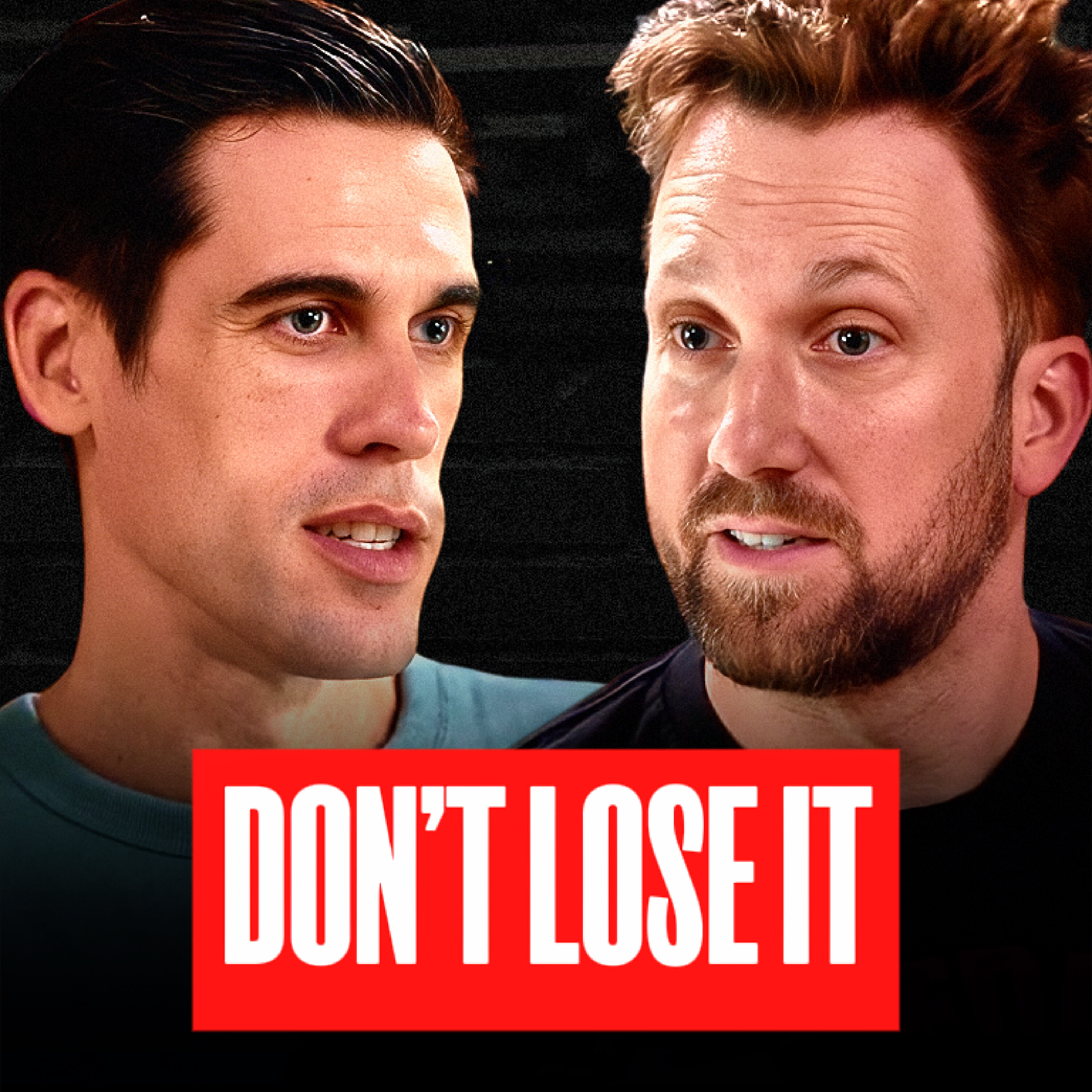
Jordan Klepper: How to Talk to People You Disagree With (Without Losing It) | PT. 1
In this episode, Ryan Holiday speaks with Jordan Klepper, a correspondent and host from The Daily Show. The discussion centers around effective communication with individuals holding opposing viewpoints, emphasizing the importance of restraint, understanding, and the often misunderstood beliefs that drive people's opinions.
Written by AI. May contain mistakes.
Discussion about Socrates' method of engaging with others and the importance of restraint.
“I think culturally we pay some lip service to the idea of like talking to people we disagree with, getting viewpoints from people maybe you don't know or maybe you even don't like.”
Ryan introduces Jordan Klepper and discusses his unique approach to political interviews.
“If you've watched The Daily Show anytime in basically the last decade or so, you've probably seen Jordan Klepper.”
Discussion about the stresses and experiences of being a traveling comedian.
“You work a full week and then you're like, the weekend is actually the more stressful time for you?”
Jordan discusses using improv skills to navigate challenging interviews.
“Yeah, all I was thinking about, because I flew out early yesterday morning and then flew out late last night.”
Learn why reflecting on thoughts is crucial for understanding and growth.
“them to put it into words and then it falls apart, which is by the way, like why you're supposed to be reflective in your life.”
Discover how echo chambers affect our beliefs and understanding of issues.
“oh, somebody came up with that phrase and distributed it, and then people got it, and it felt true, but it falls apart if you subject it to the slightest bit of scrutiny.”
Explore the differences in media perception across generations and its implications.
“If you're used to like a Bill O 'Reilly history book, you know, you're not that's not subjected to the same standards that a normal history book is.”
Examine how conspiracy theories have become a hobby for some, especially the elderly.
“the people who are most vulnerable to it.”
Understand how entertainment has replaced traditional community bonding and its consequences.
“And you go, oh, this is, you're bored, you know.”
Learn how sports provide a low-stakes escape from the complexities of life and politics.
“in the community that something like sports brings.”
Discover how the media cycle mirrors sports commentary and affects public perception.
“the debate about it on Monday and Tuesday and Wednesday and Thursday and Friday has no bearing on whether it's on what's going to happen.”
Explore how journalism and sports coverage are intertwined and often sensationalized.
“And you can kind of see that more clearly in sports that like, oh, they're trolling you.”
Discuss the misconception of being informed through constant news consumption.
“Well, I mean, the way out of it is to like watch football on Sunday.”
Delve into the importance of reflection over passive information consumption.
“It's that what we've replaced reflection with like constant attention.”
Understand the significance of consuming quality information through books over other media.
“And why are you going to ruin your day before it's started?”
Explore strategies for engaging with current events without succumbing to real-time speculation.
“And you realize, oh, OK, this is just not where I'm going to get good information.”
Discuss the pitfalls of consuming real-time news and its effects on public perception and decision-making.
“In regards to current events, how does that drip come to you?”
Reflect on the relationship between leaders and media consumption, advocating for a more thoughtful approach.
“You should understand people, you know, or or art historically.”
Learn how a creative process can thrive amid the chaos of the news cycle.
“There's an argument, I think, to be said for them consuming the least amount.”
Explore the unique state of engagement performers experience during shows.
“But it gives us that space, which is so crucial.”
Understand the importance of genuine listening in conversations and performances.
“I mean, in the performative world, it's such a nice thing, but it does feel like such a rarity.”

Get the gist, explore an idea or ask about something said.
 Claude
On The Daily Stoic, what are the key points of this episode?
Searching your listeningAutomatic transcript. May contain errors.
0:00Ryan Holiday: Welcome to the Daily Stoic Podcast, designed to help bring those four key Stoic virtues, courage, discipline, justice, and wisdom into the real world.
0:14Ryan Holiday: Hey, it's Ryan. Welcome to another episode of the Daily Stoic Podcast. Think about Socrates going around in ancient Athens. He was pretty smart, although he sort of played the humble fool, he was pretty smart. And most of the time he knew that people were wrong and he knew that what they were saying was laughable. So his curiosity, his questioning, his restraint, right? He's restraining himself from dunking on these other people. He's letting them work through the solution themselves or asking them to really explain what they think so he can learn from it. That's not an easy thing to do. I think culturally we pay some lip service to the idea of like talking to people we disagree with, getting viewpoints from people maybe you don't know or maybe you even don't like.
1:07Ryan Holiday: But like we're sort of glossing over how difficult that is. Like I don't just mean like it's difficult to get out of your information budget. But like if stoicism is the idea of controlling your emotions, not immediately reacting, it's actually super important because when you're hearing nonsense from another person, when you're hearing something offensive from another person, when you're hearing something from someone that you know a lot about and you know that they're wrong, all this requires a lot of restraint. So that's why I was really excited to talk to today's guest because he's one of the best people in the world at this.
1:44Ryan Holiday: If you've watched The Daily Show anytime in basically the last decade or so, you've probably seen Jordan Klepper. You've either seen him as a correspondent or you've seen him more recently as a host where he is absolutely crushing it. You've definitely seen his viral interviews at political rallies and protests. Here's a little jump cut of him being very good at what he does.
2:05Jordan Klepper: Barack Obama had a big part of 9-11. Which part? Not being around, always on vacation, never in the office. Why do you think Barack Obama wasn't in the Oval Office on 9-11? That I don't know. We'd like to get to the bottom of that. We don't even know if he's a citizen. Yeah, if you don't look at the birth certificate, there's almost no evidence there. Exactly. So there's nothing Barack Obama could do to prove that he was born here? If there was maybe witnesses that were attendants at his birth. Like his mother? Do you listen to his mother? No, no. She has motivation to lie. So you don't trust Donald Trump's birth certificate either?
2:41Jordan Klepper: Yeah, because he's been here forever. How do you know? What's your proof?
2:45Ryan Holiday: Well, his parents and—
2:47Jordan Klepper: No, but they're biased. I'm talking about people who could be in the room. Why would they be biased? Well, I'm just using your logic against you.
2:54Ryan Holiday: He was in Austin for a live show a couple of months ago. And so I asked him if he wanted to swing by the bookstore, which he did. And I wanted to talk to him about that. Like, how does he have that ability to stay calm, to stay curious, to stay funny? I think a lot of it comes from the improv training, which maybe there's something that he can teach us in this polarized world because he's able to not just talk to people he disagrees with, but oftentimes get them to make the strongest argument against their own point by not jumping in, by giving them just enough rope to hang themselves. And I'm not saying that's what we should do.
3:34Ryan Holiday: We should go around, you know, making people look foolish. I'm just saying there's something there. And it's something I wanted to ask him about. And I think you're really going to like this conversation. Because we talk about keeping our cool. We talk about conspiracy theories, talking about the way that conspiracy theories have become kind of a hobby for some people. Bad media diets, good media diets, and much more. I'm really excited to bring you this. Jordan is a writer, a comedian, a correspondent for The Daily Show. You can follow him on Instagram at Jordan Klepper. You can check out his upcoming live show dates.
4:02Ryan Holiday: He is amazing. Very, very funny at officialjordanklepper.com.
4:14Ryan Holiday: So I am recording this in an Airbnb. I'm out doing a little speaking gig and didn't stay in a hotel, stayed in an Airbnb. And let me say, this place is pretty dated. I'm sure it was fancy and cool when it came out, but it's got a lot of old wood stuff. It needs a refresh and maybe your house needs a little refresh. If you want to upgrade your space with quality pieces that work within your budget, plus enjoy fast shipping and easy assembly options, well, you should check out Wayfair because Wayfair makes it easy to find exactly what fits your style and needs. Wayfair makes it simple to narrow down to exactly what works with your style and budget.
4:53Ryan Holiday: They've got filters on the site to narrow down the search to the size and the material, and they've got thousands of five-star reviews to help you shop with confidence. I've always had a great experience with Wayfair. We just decorated our house and part of our office with some stuff from Wayfair. Items big and small are shipped right to your door with installation and assembly services available. You can find furniture, decor, and essentials that fit your unique style and budget if you head to Wayfair.com right now to shop all things home. That's W-A-Y-F-A-I-R.com. Wayfair. Every style, every home.
5:26Ryan Holiday: Look, I like home-cooked meals. I just don't like the process of getting all the stuff to then cook at home. I don't like having to think about dinner. And I'm like, when it's time for dinner, I want the dinner, like, pretty fast. But then I also want to eat well, and I like stuff that tastes good. That's like a pretty complicated set of needs there. And it actually fits perfectly with today's sponsor, and it's why we love HelloFresh. They take the mental load of what's for dinner off your to-do list. HelloFresh makes it easy to do more home cooking with recipes that feel good and taste delicious night after night.
6:02Ryan Holiday: They have more than 100 recipes every week. It doesn't matter what your allergies or preferences are. You can make something work. They've got three times the seafood with no upcharge. And you can even have guests over, make them grass-fed steak ribeyes, or serve seasonal produce like pears and apples and asparagus. We love HelloFresh, and I think you'll love it too. Just go to HelloFresh.com slash stoic10FM to get 10 free meals and a free Zwilling knife, which is$145 value on your third box. Offer is valid while supplies last. Free meals are applied as a discount on FirstBox. New subscribers only varies by plan.
6:43Ryan Holiday: You work a full week and then you're like, the weekend is actually the more stressful time for you?
6:49Jordan Klepper: Yeah, I think during doing these stand-up shows, for sure. I mean, my schedule is strange in that host week is a chaotic week and there's no space and time. Non-host weeks, I'm in the office working kind of on-call and also prepping for other stuff. And so that was what this week was. And then, yes, knowing that, like, oh, I'm going to jump on the road and do a couple shows. And then also we have a field shoot that's happening on Sunday. And that's based around the news, which is always changing. So we're going to Portland and we're watching the news out of Portland and whether or not federal troops are coming in or out.
7:22Jordan Klepper: We're watching Chicago to see if I'm going to Chicago. So suddenly the week was fine. The weekend is just a bunch of things up in the air that I just kind of get on a plane, pack some books, And they're like, all right, I'm going to go. I don't exactly know if I have all the flights to get home, but I know I'm going out and I'm doing these things here.
7:39Ryan Holiday: And that's not even thinking about the fact that, and maybe it's helpful, that you're not, you have to do the performance each time. Yes. Right. That's just like the logistical stress of being at the place that your name on the marquee says you're going to be there.
7:55Jordan Klepper: Well, I have to remind myself. And luckily, I mean, the ego tested me. You walk into a space that has your name on a theater. It's an easy reminder. Sure, sure. But it is a reminder. You're like, oh, the thing I've been stressing about or anxious about is actually the thing I like to do and the thing I'm excited about doing. As long as I've planned some space internally to realize that, that I'm great. And frankly, that's what happens with these shows. You show up and you have to show up early to do a tech. And my show has some technical elements to it all. And after you finish that tech, you got an hour and a half to just realize what you're there for.
8:29Jordan Klepper: Yeah, to do the thing. To do the thing and then be ready for the thing.
8:33Ryan Holiday: Yeah. And that is, you can end up spending, I try to remind myself, it's like, I'm spending all this time worried about whether I'm going to make the thing or whatever, but I'm not, I could just be putting that energy into like the thing. Like, well, like I'm not, I'm spending the time thinking about checking flight aware or whatever, not, I could just be working on what I'm going to do when I'm there, if I'm lucky enough to get there.
8:59Jordan Klepper: And I mean, I think you get good enough at, you know, I've been doing versions of this for a decade plus. And you also realize that some of your most relaxing times take place on that flight. Some of your best reading takes place on that flight. Some of the only time you have to yourself and not have the responsibilities of being a parent happens in the hotel for the 40 minutes right there. And so I have to keep teaching myself, but I have gotten better at realizing like you're getting little buckets of time that have stress all around them and all the edges, but enjoy those spaces and remember to take advantage of it.
9:35Jordan Klepper: And I think I'm better at that now. So even if I'm thrown into a chaotic three days, I understand that in those spaces, how not to go completely crazy.
9:44Ryan Holiday: Yeah, all I was thinking about, because I flew out early yesterday morning and then flew out late last night. All I was thinking is like, I'm going to take two naps in the same day.
9:58Ryan Holiday: That is, that's a dream. Yeah. I think at first my wife was like sympathetic. And then I think she realized, she's like, no, no, no, you're taking two naps.
10:10Jordan Klepper: That's the tough part is you have to be, I'm all for communication within a relationship. but yeah sometimes you complain about life on the road and then you articulate life on the road to somebody who's not on the road and they're like oh you got two naps today yeah oh and all and you just you ate tacos all day oh a crowd of hundreds of people clap for the things that you said oh that was that must be so tough oh were you sleepy yeah you're calling and you're like i i don't know
10:33Ryan Holiday: if i should get room service or i should walk down the road to get something to eat and then And she's like, I've eaten nothing but beef jerky today.
10:41Jordan Klepper: I also like, I can't not talk about like any media that I've ingested over the few days I'm gone. So when I go home to see my wife, if I watch like any movies at the hotel, any movies on the flight. That's cheating. Yeah. Yes. Well, then I break down and give her, I hold on to it. I'm like, should I tell her my opinions on these four films that I saw? I'm like, no, that's just going to make her upset. And then 20 seconds later, I'm like, I need to tell you about this romantic comedy that I watched for the third time. You want to hear my opinion on it? She's like, no, but I do it and I lose a little bit of credibility because of it.
11:11Ryan Holiday: Yeah, yeah, right. You have it so hard. You watched three movies over the weekend.
11:17Jordan Klepper: I was like, I watched Goodfellas again and I got, you know, I saw it in a whole new light. Do you want to talk about that? No, she doesn't. Oh, man.
11:25Ryan Holiday: So I was thinking about the kind of comedy you do when you're at these rallies and stuff. How do you not lose it? I guess this is basic improv, but it seems like it would require a lot of restraint to let someone hang themselves the way that you often do. Yeah.
11:43Jordan Klepper: I mean, I think the job is not to lose it. Yeah. Step one. Sure. Step two is like the gold is on the other end of that awkwardness.
11:55Ryan Holiday: Yeah.
11:55Jordan Klepper: One of the first things I learned at The Daily Show, I did one of these sit-down interviews. And especially when you're doing a sit-down interview, a more traditional one with somebody who you might not agree with, it gets awkward.
12:06Ryan Holiday: Yeah.
12:06Jordan Klepper: And as somebody who comes from an improv background and also a Midwestern niceness, like the silence in conversations is death and rings and hurts. Yeah. And so I usually want to talk through those, give people space to clamp onto something and yes and their ideas. And I was told by, I think, Jason Jones, like my first week at The Daily Show, was like, shut up and let them talk. Sit in that space. And so that was like, it had to unlock something for me. But it was like, oh, remember, your job out there is to create enough space, enough comfort for people to reveal themselves. Sometimes by over-talking, sometimes by over-thinking.
12:47Jordan Klepper: But let that be. Yeah. So that's my mindset going in. And then beyond that, I do think I have legitimate curiosity about these things. And I also understand the mechanism. Sometimes there's hateful, terrible things that are said that make me upset. More often than not, that doesn't make the final edit. I'm not perfect out there. I've gotten into heated arguments over things that don't make good TV or stuff we don't want to put on TV because there's hateful rhetoric that we're not going to amplify. but more often than not what I see is people working through a narrative they haven't articulated yet because they've just read it or they've heard the president say it and they're articulating that in real time and I also see them performing for the cameras because they feel a need to be more certain than they normally are and I think I have empathy for that moment and so as much as I'd like to be like, how can you believe that?
13:42Jordan Klepper: I think I know how you can believe it. So I'm not surprised by how they could believe it. I'm just surprised by what they're articulating.
13:49Ryan Holiday: Well, they don't really believe it. They're saying it out loud for the first, like - They're performing it. Yeah. Or they have this kind of gut instinct. And then it seems like sometimes your job is to get them to put it into words and then it falls apart, which is by the way, like why you're supposed to be reflective in your life. You're supposed to journal and talk to people about things because you realize that some of the things you think are nonsense. Yes. But not everyone's doing that.
14:20Jordan Klepper: That is I think that's spot on. This is for the most part, it's people who have only heard this talking point echoed from their friends. Yeah. They're not talking to other people who are challenging them.
14:31Ryan Holiday: Yeah.
14:32Jordan Klepper: And they hear a president who's often not challenged by the media in a way that they have to articulate a point of view. And so they just assume this thing that they're saying right now is just settled law. They haven't had to agree upon how they got there. They just agree upon it because it's been told to them over and over again. Repetition is their certainty.
14:50Ryan Holiday: Well, that's the thing that The Daily Show pioneered that like sort of jump cut of the talking point across 50 different shows, local, national, different. And you're just like, oh, oh, somebody came up with that phrase and distributed it, and then people got it, and it felt true, but it falls apart if you subject it to the slightest bit of scrutiny. Yeah.
15:16Jordan Klepper: More often than not, I feel like I'm running a propaganda focus group where it's as if I go out there, like, I know what these talking points are. Let's see how they bubble up, how deep they've gotten. And sometimes they don't get as deep as you think they will. Sometimes there's conspiracies that the news talks about that doesn't grab hold anywhere else. But you also realize a lot of this stuff does grab hold sometimes because it answers some question people have. But more often than not, it's just the language, the words now that they can use to be a part of the conversation. I think that's where some of it is where I get upset.
15:49Jordan Klepper: I don't want to paint a picture like I don't. But where I have that empathy is that I don't think you believe all of these things. This is just the admission of entry is that you talk about these things now. This isn't who you are. You just like being here. You like feeling like you're a part of something. You like cheering for this guy. And all of your neighbors are doing that too. And now we're going to talk about, okay, now let's talk about inflation. You don't want to talk about inflation. You want to get a corndog. You want to feel good. You want to watch the parade. And now some asshole from New York wants to talk to you about inflation.
16:19Jordan Klepper: And so you're grabbing from the things you've heard about inflation. and you have to pretend because there's a camera there that there's a certainty you have about this and this is who you are. But who you are is really somebody who wants to be a part of a group, wants to cheer on that famous person who's right there and wants to not feel left out of the conversation.
16:36Ryan Holiday: Yeah, that's interesting. Yeah, you realize that the stuff trickled down from somewhere and like one of the things, this metaphor I love from Epictetus, he was talking about how a really good money changer in the ancient world could take a coin and by banging it on the table, tell if it was counterfeit or not. They knew the sound of the metal that had been diluted versus the one that hadn't. And you realize like some people are not good at that. And they or they only get if you've only experienced counterfeit information, then it seems real because that's the standard by which you get like one guy saying something is to you sufficient.
17:19Ryan Holiday: Yes. And if you haven't sort of learned sort of the basic academic or intellectual rigor that we tend to apply to things. If you're used to like a Bill O 'Reilly history book, you know, you're not that's not subjected to the same standards that a normal history book is. Yeah. And so it can ring true, but it's just woefully insufficient or it's very diluted.
17:45Jordan Klepper: I also feel like we are I mean, I know I'm 46. it's i feel like i grew up believing that anything i saw published written down or on television was most likely true that that that that's where official words got distributed and so you know i've i think i understand the digital age somewhat but i still feel like i look at people who are specifically older than me who believe that even more than i do and and something that they read online in any kind of format to them is truth. That's sort of how it has always been, or at least how they've always understood it. And I think about places like Facebook, where again, the admission for entry for Facebook is that it's not that you sign up, it's that you publish.
18:31Jordan Klepper: And so these are not people who are communicating on Facebook. They're publishers. Your neighbor's a publisher. That person's a publisher. And you approach that information with the same veracity as you would - Your neighbor's an idiot. Yes, the dumbest person you know, the only way they can talk to you is by publishing information to you, at you.
18:49Ryan Holiday: It's weird because I remember we talked about this when I was on your show. I remember the things my parents warned me about on the Internet and the irony of that basically happening to them and their generation. I remember I was talking to my dad one time and he was telling me this thing that just from him telling it to me, I could tell was from the onion, you know, and you go, oh, OK, there really is kind of just a media literacy issue here or just a set of assumptions that don't work in the media environment that we currently live in.
19:27Jordan Klepper: They were afraid we would look at boobs. Yes. And they ended up listening to boobs. Now here we are.
20:02Ryan Holiday: the people who are most vulnerable to it.
20:05Jordan Klepper: I ran into some lovely older ladies in Wisconsin and was there to do a rally. And again, had an expectation at this rally that it was, actually it was just after Roe v. Wade was being overturned. I thought people were going to be really adamant to talk about that. And I show up in the Midwest. I'm from the Midwest, show up in Wisconsin and we see these sweet older women. I'm like, oh, these are just sweet old ladies. I wonder what they're going to want to talk about. probably Roe v. Wade, women's rights to some degree, and they immediately jump into conspiracies, conspiracies about who's alive, who's dead, JFK Jr., some wild, far-fetched, like, hologram death stuff.
20:44Jordan Klepper: And those are the things you don't prep for back in New York. You get out there, you're like, oh, wow, I had no idea. And in talking to him about it, you're like, oh, this is your hobby. It's not knitting. It's not doing crochet. You guys are retired. You've gotten on the internet, and it's fun. And it is fun. Going down rabbit holes like that, You're discovering something. You have your own little mysteries. You talk to your friends about it. And this has suddenly become your hobby. You take it to a place where you suddenly become a publisher to all of your other friends. And then you become an influencer to people at a political event.
21:12Jordan Klepper: And you have the best hobby a 65 year old woman in the Midwest can have.
21:16Ryan Holiday: Yeah, there's not a lot to, I mean, my grandmother would just watch church, you know, just a lot. And you go, oh, this is, you're bored, you know. And it's this sort of intersection of the collapse of community and the rise of these sort of forms of entertainment. And you just become vulnerable to it.
21:40Jordan Klepper: and it's i mean then it all becomes entertainment yeah and they're like oh of course well that's we have nothing but access to this entertainment the news has become entertainment it becomes the only monoculture there is right now yeah this big story of this big orange man who's affecting
21:54Ryan Holiday: the world around you politics and taylor swift are the two things that everyone knows about
21:59Jordan Klepper: it really it really is everything else is niche yes we could talk trump or taylor and and people
22:05Ryan Holiday: have an opinion on that and football yes those are our own and you do realize oh these things are actually very you need things like that and what happens when everyone is in their own little world and we don't have things that we can and i think you know this this is also like the monoculture used to be literature like and then for instance for a while it was music but like it it was at least a form of art and politics is important but it's not art right it is people's lives it should
22:39Jordan Klepper: be roads bridges things like that that are important i think there's also a misunderstanding as to what government is when you when you suddenly gamify it you are so devoid of or so
22:49Ryan Holiday: far away from that that original intent but if it was supposed to be literature then we're and then where even movies, right, are at least it's art. So it's designed to teach and explain and put things up for everyone to think about. And then you have this kind of common culture that you can reference. And then when a huge movie is only seen by like a small fraction of the population, then you lack the ability to make these kind of references or have these stories that like bind you together.
23:21Jordan Klepper: Yeah, you need that coffee, you need that water cooler talk. I've actually, I've refound sports. I mean, I was a sports kid. I was a fan, a Michigan kid and played sports, loved sports. And as I got maybe deeper into the arts and moving away, I felt less of a need to follow sports. I became somewhat cynical about sports and about the fandom around all of that. And then I realized I lack in my life that community, that driving force, also that escapism. Yeah. And, and I've, I've re-found that, especially in the last like year and a half, when I don't want to engage in the, the monoculture of the news.
24:01Jordan Klepper: And I want to just like, I want to feel something. I want to emote that has very little consequences about what I root for, what I yell for, that can put me a part of a team and connect me on a way that is really like low stakes, but high emotion. And, and I, I, I, I hadn't realized how much I was missing in the community that something like sports brings. Like we, we want to, we want to cheer. We want to be a part of something. We want to feel like we've won. We have crafted these safe spaces where you can do that and then you can walk away and it isn't your entire identity. Right. And that has felt like, oh, for so many people and for me as well, like sports or politics has become that.
24:39Jordan Klepper: And it's such a dangerous space to be in.
24:41Ryan Holiday: Yeah.
24:42Jordan Klepper: Although and you could also dangerous to be a New York Knicks fan, too. So there's problems there. You're going to be let down.
24:48Ryan Holiday: Yeah. And then I think you're also seeing some of the forces that tore apart these other industries happening in sports too, where it's like, who can afford to go to an NFL game? It's crazy. I mean, even just League Pass is like 500, or not League Pass, what is it? Sunday tickets, like 500 bucks a year or something. And it's like, I got to have another streaming service just to watch football. It's crazy. It's nuts.
25:12Jordan Klepper: You can't afford to go in and watch it. And then also the politics that is in there. I feel like I've also shifted my opinion on that of I want some of these people I root for to have opinions that perhaps reflect my morals and the way I see the world. Although living that is so gosh darn exhausting. I definitely have gotten to the point where I just want to see somebody who's really good playing basketball. You can say whatever you want. No judgment on what you have to say. But I'm not going to hold you to the standards that I'm holding my politicians to. I want to see you excel at this thing that other people cannot do.
25:43Ryan Holiday: Yeah, I was just thinking, it's like, it used to be free. It was free to watch football. And now it's$500 a year. Like, I mean, I'm watching more games, but it is weird to think. Like, it used to be free. And then it's like, no, League Pass is this. Then you're going to have Prime on Thursdays. And then you got to, it's crazy how, because what they've figured out that if you break stuff apart then everyone can get a little piece and you have to have all this stuff but it used to have antennas on your tv and you could watch it for free and the process of it used to be more
26:17Jordan Klepper: manageable like you used to watch nfl on sunday and college on saturday and that's it yeah monday night football was a wild thing now i'm literally coming here today i'm seeing clips from i was like oh is there a thursday night game on last night okay right now they have like two monday night Like what they've done with all, with news, what used to be nice in high school and college to read the paper, finish the paper. And it wasn't mostly college. I started to read the paper, finish the paper. And then I had the news for the day. I never thought, I didn't have to think about getting news for another 24-hour cycle.
26:47Jordan Klepper: Like now I can't stop looking at the news in the same way that sports, instead of just like, oh, let me engage with the NFL for one day a week. Understand the narrative of it all. And then step away to other things. But they get your eyeballs. They want your attention. They want 24-7 attention.
27:02Ryan Holiday: Yeah. I mean, I think sometimes watching sports, it helps me understand the media cycle. So you're like, when I turn on Stephen A. Smith and he's manufactured a thing to have an argument about, and then you go, oh, this is also what they're doing on Fox right now and MSNBC. And it's obvious with sports, you're like, wait, why? I like watching football on Sunday. the debate about it on Monday and Tuesday and Wednesday and Thursday and Friday has no bearing on whether it's on what's going to happen. Should the Raiders do this? You know, is so-and-so the blank or is this the blank? You realize they're just creating ways to discuss a thing or speculate about a thing that's not changing the actual thing.
27:53Ryan Holiday: The game is at noon and it will be three hours and no amount of talking beforehand or after changes what happens. And you can kind of see that more clearly in sports that like, oh, they're trolling you. And then you go, but but insert journalist I like would never do that to me over the shutdown coverage or whatever. You know, and it's but it's the same hustle.
28:16Jordan Klepper: Oh, it's exactly the same hustle. And then insert journalists you like, who's struggling to make ends meet. And then journalist boss is like, well, the only way to do this is you also have to have a persona. So you need to go on these television shows at night. And so journalist has to buy new cool outfit. And then it's like, all right, I want to go on here. Here's an eight minute chunk. You're going to talk for three minutes. And if you're not as exciting as you need to be, you're not going to sell the commercials after the eight minutes. So be exciting. And then journalist hedges, gets slightly more hyperbolic.
28:49Jordan Klepper: And you just feel that and you see it. And the systems in and of itself that we are getting all this information in the sports, they just feel so inherently broken. I don't see a way out of all of these things getting so warped.
29:01Ryan Holiday: Well, I mean, the way out of it is to like watch football on Sunday. Yes. Right. Or to like read a book about something or to watch some kind of thing that is a summary or an encapsulation. But like, I remember growing up, I think about this all the time. My friend's family, they watched Fox News so much, it was burned into the corner of the TV. Like when you would change to watch something else, you could still see the logo on the corner. Like no one, not even someone who is currently in elected office should be watching that much news. Right. Yes. You don't need to be doing that. And that, I think we have conflated that with being informed.
29:43Ryan Holiday: but in a way that might be the most uninformed person.
29:54Ryan Holiday: We all experience injuries, pain. There's physical obstacles, things we can't do that hold us back. That is a part of life. But what we have ultimately is a choice about how we respond to those setbacks. And Built from Broken is an award-winning book from a corrective exercise specialist named Scott Hogan that helps you heal painful joints and rebuild your body stronger. Built from Broken arms you with knowledge and gives you practical recommendations for rebuilding your joints. One of the things they talk about in the book is how important movement variety is. It's one of the most critical aspects of healthy aging that just not enough people talk about, let alone implement.
30:33Ryan Holiday: And just by varying what you do, you can create healthy stressors that reinforce your joint integrity rather than eroding it. And to celebrate the launch of Built from Broken in stores nationwide, listeners get access to a couple of exclusive offers. If you visit saltwrap.com slash daily stoic to get your copy and download the full exercise video library for free. And you'll also get free access to the Built from Broken Guide to Regenerative Therapies that Scott wrote in partnership with a clinical advisory board of physical therapists and regenerative medicine practitioners. Second, use the code Daily Stoke at saltwrap.com to save 20 % off your first order of therapeutic nutrition formulas.
31:13Ryan Holiday: This book and these tools are references that you can turn to for the rest of your life to make your setbacks into comebacks. We've got an employee here at Daily Stoke. I won't say who because it's kind of private, but they've been using Monarch, today's sponsor, to track their progress as they try to pay off their student loan debts. I'm a college dropout, so I don't have any debt, thankfully, but I can only imagine how overwhelming it would be to have this thing hanging over you. And she's been using the app to budget and save, and it's bringing her a little bit closer every day to being debt-free, which I can only imagine would be a huge relief.
31:49Ryan Holiday: Monarch shows you exactly where your money is going. It helps you redirect it towards what matters. With automated tracking and clear projections, you can actually see yourself getting closer to being debt-free or hitting your savings milestone instead of just hoping it happens. Unlike most other personal finance apps, Monarch is built to help make you proactive and not just reactive. And Monarch helps users save over$200 per month on average after joining. You can set yourself up for financial success in 2026 with Monarch, the all-in-one tool that makes proactive money management simple all year long.
32:24Ryan Holiday: And you can use code stoic at monarch.com for half off your first year. That's 50 % off your first year at monarch.com code stoic.
32:38Jordan Klepper: You mentioned it earlier. It's that what we've replaced reflection with like constant attention. And so, yeah, because attention felt, reflection felt passive, or at least to me can sometimes feel passive. I think back to like my college mentality when I was first interested in the world around me and getting information. And the idea of watching the news in and of itself felt like eating vegetables. But in a way that was like, oh, the more that I do, probably the more in tune I will be. If I watch the Sunday shows now, well, now I'm more involved with the world around me. Smart people do this.
33:10Jordan Klepper: Smart people do this thing. I will engage in the thing that smart people do. And I can do it full time. And now it gives me this, this juzh and this energy. And now I'm part of the conversation. But we do, we do miss that. I watch it on Sunday. I understand it on Sunday. And I think about it for a few days. And I have my own opinions about it. That was, that was actually the thing that I, I gave myself as a, an assignment when I was, when I had my own show, where I was waking up every single morning, have to sort of craft what the show and the narrative was going to be. I was exhausted by the news cycle and i just realized i would wake up so early and the first thing i do is grab my phone and i just start looking at the news and start reading and i was like i i had to put it down and say like my first thought every morning was like maggie haberman's thought yes yeah i was like this isn't my thought this i'm reading an opinion on what happened yeah i i have zero opinions on what happened this day i need to i need to at least give myself an hour to take a freaking shower yeah think about something and reflect and give yourself space to have your own opinion before it gets filtered in by somebody else's.
34:10Jordan Klepper: And why are you going to ruin your day before it's started? I know. But still that college mentality of like, well, if I don't have all the information, I can't be articulate about what's going on.
34:20Ryan Holiday: Yeah. And the idea is like the information is out there. What actually we need more of is more sort of insight or understanding about what it means. And most people are not cultivating the habits or the practices or the wisdom that will allow them to do anything about it or understand it or put it in its larger context. Like, yeah, how many people even know how the system works, but then are watching the negotiations happen in real time? Right. What do you do?
35:00Jordan Klepper: How do you differentiate? Well, How do you find space to reflect that information?
35:05Ryan Holiday: I try to read mostly books. Like, I try not to watch any television news. Yeah, I think, have you read Amusing Ourselves to Death? No, I mean. The reason The Daily Show is great is because it is designed to be entertainment. It's an embracing entertainment. But his point that basically television is not a medium by which you can communicate intelligent thought is really as spot on as it can get.
35:33Jordan Klepper: I think that book holds up as that articulates our day and age as completely as you can.
35:38Ryan Holiday: Yeah. And you realize, oh, OK, this is just not where I'm going to get good information. Right. And so I just try to think about where is good information going to be found? It's probably obviously I'm biased as an author, but like in a book, I'm having to work for a long time on something that I need to hold up, you know, because it's not going to come out for a year. So I've already, I'm already having to say this information has to have a shelf life of more than one year. Then it has to be worth paying for, right? It was not free. And then it has to be worth the amount of hours that it takes the person to consume.
36:22Ryan Holiday: And I think writing is a pretty unforgiving medium in that you have to spend a lot of time getting it all right. So I have to spend a lot of time thinking. So I just think about that as being the medium by which you're going to get the least sort of sensational and the most thoughtful and then the longest lasting information. So I try to, when I'm trying to understand stuff that's happening, I want to read about times where this has happened before or the underlying sort of influences of this thing so I can consume it and understand the basics of it in as least sort of partisan or incendiary or contemporary way as possible.
37:08Jordan Klepper: In regards to current events, how does that drip come to you? For instance, we have a peace plan that is being worked out as we speak right now with Israel and Hamas. There's a lot going on. People are talking about it. Are you going to places to find out about that? Are you curious about that? Are you blocking yourself off from that?
37:30Ryan Holiday: Well, I think it's interesting, right? It's like they first started talking about it like three or four days ago. And then this goes to the sports thing. At some point, the deal will happen. But in the interim five days are the worst days to find out what's happening. Right. Right. Because like it's changing. It's coming into existence. It's like I'll meet your baby after it's born. I don't need to be in the delivery room. I want to, I obviously wanted to be there when my kids were being born, but like the process was horrendous. I don't, I don't.
38:05Jordan Klepper: I don't know. You could be a bad friend. You could use that logic. I'll meet him when he's three. All right. After when he can walk, I'll get a coffee with him when he can walk and drink caffeine.
38:13Ryan Holiday: I actually, I need to meet fewer babies and more older children. That's fair. But, but you know what I mean? Like I don't, the messy part is now I'm having to follow it like five or six times. Right. Like, I remember, I think I wrote about this in my media book where I was saying, like, you know, people are like, the great thing about Wikipedia is it's always being updated. And it's like, yeah, but I'm not reading it as it's being updated. I'm only reading it now. So if it's wrong now, I'm wrong. Like, I don't.
38:43Jordan Klepper: I'm not going back to see what people think about Sandy Koufax again and again and again.
38:47Ryan Holiday: Yeah, I'm not checking in on this Wikipedia page as it's getting better. Like, it's got to do the job now. And so so I just think like unless you run a hedge fund and your job is to speculate on news or you are, in fact, a politician who's in the mix on the thing. Although I do think it's interesting, like whatever, you should be consuming as little real time information as as humanly possible because it is of almost no value to you. You should find out what happened after it has happened, not as it's happened. Right.
39:24Jordan Klepper: You don't need to fill up the hours of your day with speculation. Yes. And you can wait for information.
39:28Ryan Holiday: There's a great Chuck Klosterman piece about sports where he is visiting a bunch of teams during training camp. And he was amazed that they were watching ESPN, like that they had. He was like, you think they have better information, but they don't. And there is something uniquely terrifying about Trump's media diet, like that he watches a lot of news. The CIA put out this book during the first Trump presidency that was a history of how the different presidents have taken the presidential daily briefing. Yeah. Which is like the greatest collection of intelligence in the world. And every president has had a different relationship with it.
40:08Ryan Holiday: But it's like he prefers Fox and Friends to the presidential daily briefing. And that is terrifying because they are so far downstream from what is what we know, what is known by the smartest people. So like this is intelligence paid for and blood and treasure. And he's like, but what is Pete Hegseth's replacement thing? And so I just think most people should not be consuming speculation about what's happening. We should wait until it's been figured out.
40:40Jordan Klepper: Especially if you're the commander in chief. I mean, I do think that's what's happening in Portland right now, sending troops because of the things that he was watching, which was video from five years ago. I was curious about even hearing that Klosterman detail. It's what I imagine. And knowing politicians who are obsessed with being on television and watching television, like I think they will tell you the story that they're they're trying to stay updated on the conversation, that they're watching information. And I'm sure that's what some of the sports stars might say is like, well, that's what I want to know.
41:07Jordan Klepper: I want to know this prognostication. But I think they're watching it for vanity. They want to see themselves on television. Yeah. They want to be a part of that conversation. That still there's this utter need for fame and to be reflected on TV. And that is, I mean, clearly that's Trump wants to see people talk about him. He doesn't care about the information that's there as long as it's about him positively. It's not the information outside of it.
41:28Ryan Holiday: Totally. The job of the leader is to be making big picture, long term decisions. So in a sense, they should actually be as removed from the conversation as possible. Like, like if you're going to make great art, you shouldn't listen to what's popular right now. You should understand people, you know, or or art historically. Otherwise, what you're going to make is derivative and reactive. And it's like weirdly journalists and politicians should be are the people who consume the most news. And they should. There's an argument, I think, to be said for them consuming the least amount.
42:06Jordan Klepper: I think you're right. It's going to be a tough sell for those guys. But I don't think you're wrong. Put them in padded rooms. Have them just think about stuff working together.
42:16Ryan Holiday: Which is, it requires a certain discipline because it's so easy to default to it. And you have to go wait in an eye. You need to know its background noise. Like you're aware that it's happening. But it can't be driving your day-to-day understanding of things because it's, yeah, that's the tail wagging the dog.
42:34Jordan Klepper: Yes. We have a, it's functionally at the daily show. One of the most comforting things is once you get into writing the show is that you aren't aware of what is happening during the day. And again, we have to, we have to be, you know, immersed in the news cycle day in and day out and what's happening, but also how it's being told, which is overwhelming. And sometimes, especially when I did my first show, I found it very overwhelming because I had this idea that I need to know everything and which left no space for any kind of creative take on it. but you reach a point and it's very early on where we make some early decisions about what we think is important and then you just become a creative space and there are people who are aware of what the conversation is but they don't need to update you on everything that happened they update you on things that happen that are of import and then so that that seven hour space where you're like oh i we are just being creative about the things that we know is the most fruitful space that we have and if somebody comes in the door and says i mean for for a learned person it would be something important that happened for the daily show it's like donald trump's penis fell out We have to talk about this.
43:31Jordan Klepper: And so it's like, stop the presses. There's a penis on TV. We must rewrite the show. So that's sort of our breaking news. But it gives us that space, which is so crucial.
43:40Ryan Holiday: I bet the time you're doing the show itself is probably some of the most present. It's like, you know, when you come out of a movie theater and it's gone from like daytime to nighttime and you're like, whoa, you know, because you were like fully engaged in a thing. when that's that's probably your ironically your least connected and most connected time because you just spent it with this group of people doing this thing channeling your emotions and feeling into the performance not being like well what are other people doing yeah and and literally the fact
44:16Jordan Klepper: that they're like put your phones away yeah so the 200 people we're here for 40 minutes no phones we're going to do a thing. I mean, it's remarkable.
44:25Ryan Holiday: Yeah.
44:26Jordan Klepper: Rare. I mean, in the performative world, it's such a nice thing, but it does feel like such a rarity. I mean, even in basic conversation with people and what have you, you rarely get the luxury of a handful of people in a room where they're all actually listening to what's happening.
44:44Ryan Holiday: Thanks so much for listening. If you could rate this podcast and leave a review on iTunes, that would mean so much to us and it would really help the show. We appreciate it, and I'll see you next episode.
What do you do when someone says something you completely disagree with or something that sounds totally detached from reality? Jordan Klepper, correspondent and host at The Daily Show, is known for walking into political rallies and calmly interviewing the most passionate people in the crowd. In this episode, he sits down with Ryan to explain why arguing almost never works, how silence can be more powerful than a comeback, and what most of us misunderstand about why people believe what they believe.
Jordan Klepper is a comedian, writer, and correspondent on The Daily Show. You can follow him on Instagram @JordanKlepper and check out his upcoming live show dates on his website https://www.officialjordanklepper.com/
💡 Go to dailystoic.com/spring and enter code DSPOD20 at checkout to get 20% off the Spring Forward Challenge! Challenge yourself to spring forward and become the person you aspire to be. The Spring Forward Challenge starts March 20, 2026.
👉 Support the podcast and go deeper into Stoicism by subscribing to The Daily Stoic Premium - unlock ad-free listening, early access, and bonus content: https://dailystoic.supercast.com/
🎥 Watch the video episodes on The Daily Stoic YouTube channel: https://www.youtube.com/@DailyStoic/videos
🎙️ Follow The Daily Stoic Podcast on Instagram: https://www.instagram.com/dailystoicpodcast
✉️ Want Stoic wisdom delivered to your inbox daily? Sign up for the FREE Daily Stoic email at https://dailystoic.com/dailyemail
🏛 Get Stoic inspired books, medallions, and prints to remember these lessons at the Daily Stoic Store: https://store.dailystoic.com/
📱 Follow us: Instagram, Twitter, YouTube, TikTok, and Facebook
See Privacy Policy at https://art19.com/privacy and California Privacy Notice at https://art19.com/privacy#do-not-sell-my-info.
