
 Ask ChatGPT


 The Daily Stoic
13 Jan 2024 · 1h 12m
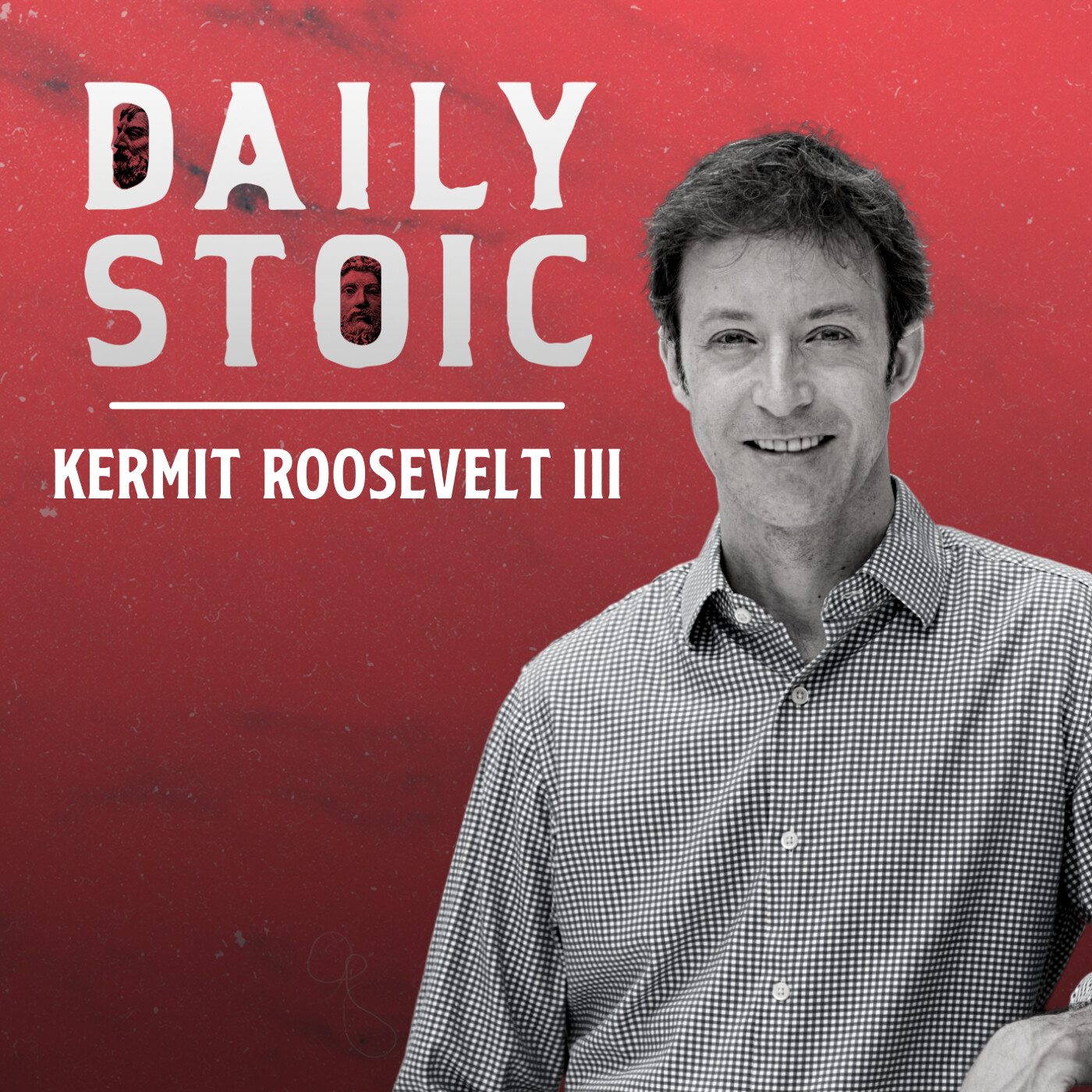
In this episode of The Daily Stoic Podcast, Ryan Holiday interviews Kermit Roosevelt III, an American author and legal scholar, who discusses various themes surrounding honor, values, and cultural movements. Kermit Roosevelt is a descendant of President Theodore Roosevelt and shares insights drawn from his family heritage and personal experiences.
Written by AI. May contain mistakes.

Get the gist, explore an idea or ask about something said.
 Claude
On The Daily Stoic, what are the key points of this episode?
Searching your listeningAutomatic transcript. May contain errors.
0:00You probably heard the headlines about all the different cuts to foreign aid and food benefits. This is having a profound impact on the world's poorest people and the world's poorest communities. But, you know, just hearing about that, that's not what stoicism is about. Stoicism is, to me, what you're going to do about it. And that's where GiveWell comes in. GiveWell is trusted by tens of thousands of donors each year because they provide free and independent research that helps you understand how to have a big impact. GiveWell has spent the last 18 years researching global health and poverty alleviation, and they direct funding to the highest impact opportunities.
0:39Over 150 ,000 donors have already trusted GiveWell to give more than$2.5 billion over the last several years, and research suggests that these donations will save over 300 ,000 lives. I myself am one of those donors. I donate to GiveWell every year. It means a lot to me. And you can find all their research and recommendations on their site for free. And thanks to the donors that sponsor this research, GiveWell doesn't take a cut from your tax-deductible donation to their recommended funds. And if this is your first gift through GiveWell, you can have your donation matched up to$100 before the end of the year or as long as matching funds last.
1:13To claim your match, go to GiveWell.org and pick Daily Stoic from the drop-down menu under podcast. That's how they know that you heard about GiveWell from the Daily Stoic and you'll get your donation matched. That's GiveWell.org, code the Daily Stoic to donate or find out more. I'm picking my kids up from school today and then doing our weekly routine, which is I take them over to Whole Foods. We get all our groceries for the week. Then we have dinner. It's one of their favorite things to do. It's one of my favorite things to do. And then my wife loves it because she doesn't have to take care of it.
1:43This holiday season, whether you're a guest or hosting the big dinner Whole Foods Market, has what you need to delight everyone at your table. They even have heat and eat sides from the prepared foods department. You can make Whole Foods your one-stop shop. Everything follows Whole Foods Market's strict ingredients standards so you know it'll be delicious and good for you. You can also order online for pickup and even delivery in select zip codes to skip the crowds. Shop everything you need at Whole Foods Market, your holiday headquarters.
2:15Welcome to the weekend edition of the Daily Stoic. Each weekday we bring you a meditation inspired by the ancient Stoics, something to help you live up to those four Stoic virtues of courage, justice, temperance, and wisdom. And then here on the weekend, we take a deeper dive into those same topics. We interview Stoic philosophers. We explore at length how these Stoic ideas can be applied to our actual lives and the challenging issues of our time. Here on the weekend, when you have a little bit more space when things have slowed down. Be sure to take some time to think, to go for a walk, to sit with your journal, and most importantly, to prepare for what the week ahead may bring.
3:08Hey, it's Ryan. Welcome to another episode of The Daily Stoic Podcast. I don't know when you'll be listening to this. I'm in a little bit of a limbo myself as I'm recording it. Found out my in-laws have COVID last night. So it's still there and out there, people. So I hope you're being careful as you're traveling for the holidays. But it's this opportunity to practice a little stoic practice, which is you have the exposure. Our travel plans loom in the future. And it's out of my control whether it's going to affect things or not, whether the virus is in me right now or not. All I can do is one, take precautions, not expose other people to it.
3:48and then not get in my own head about it, not drive myself nuts about it, not let it cost me anything on top, right? Which is, can I be productive in this time? Can I be happy in this time, right? Can I just be present in this time and not ruminate or worry or bite my nails over something that's not in my control? And that's why I am recording this intro right now, which is part two of the episode I brought you earlier in the week, my interview with Kermit Roosevelt III. Third, he has an awesome book that I will recommend, The Nation That Never Was. He's an expert on reconstruction. He's a legal scholar.
4:24And he is the great grandson of President Theodore Roosevelt, distant cousin of Franklin Roosevelt. Comes from one of the great American dynasties. And he's a fascinating guy. We had a great conversation. I'm really glad he came out all the way to the studio. And I think you're really gonna like this interview. We talk about one of my favorite heroes, a stoic hero of mine. Theodore Roosevelt. We talk about a bunch of different topics. I think you're really going to like this interview. And you can follow him on Twitter at kroosevelt93. And you can check out The Nation That Never Was. And he's also got a number of, he's got two novels in The Shadow of the Law, a novel, Allegiance, a novel.
5:07And he's also got a book on judicial activism. He's a legal and constitutional scholar, a fascinating guy. I hope you listen.
5:23So what was growing up in that tradition like? Was it something talked about? Is it a set of values or stories that's passed down? Or is it just totally normal in the way that I don't really think of my great-great-grandfather very much? I guess on the whole, I would say it was pretty normal. um we didn't talk about it in my family really we did have a bunch of books about Theodore Roosevelt lying around probably more than the ordinary family did and so I read those because I just read every book in the house when I was growing up that's kind of a Roosevelt tradition yeah I guess so um and then like I don't know my classmates teased me some and when I was in fourth grade they elected me president of the class because they were like President Roosevelt That makes sense.
6:12But then I like to think I did a good job anyway. Sure. Sure. Yeah. I mean, one of my favorite quotes from Seneca, he says, we can't choose our parents, but we can choose whose children we would like to be. And I like this idea that like the sort of family you're born into is not something you control, but you decide whether you follow the tradition or not, or whether you seek out a new, what what parts of your family tree are you going to choose to come from like even the roosevelt family right there's the there's the good side and then there's also what the alcoholism side and the philandering side and you know like the the racism side i mean there's i guess there's a there's a bunch of branches on that family tree and you you ultimately decide as an individual which ones you're going to come from.
7:09Yeah. And, you know, I think you can find people that you like and want to emulate and want to learn from, and you can model yourself after them even if they're not biologically connected to you. Well, that was the Roman tradition that I didn't really understand much until later. But, like, a family that didn't have a male son would often adopt a prominent man, sometimes well into adulthood, to sort of carry on the family tradition. So Seneca's brother, for instance, the reason that most people wouldn't identify him as a Seneca is, even though he's arguably more famous than Seneca, is because after he's adopted, he changes his name to Gaio and he ends up in the Bible.
8:05Oh, I had no idea. Yeah. So he's adopted like that. That was a tradition, a famous tradition. You would adopt people. And so there was this idea that you would sort of identify with or be associated with different,
8:23you know, groups or clans and sort of become part of it. And so I do like that idea that, you know, people go, this person was my mentor. And we assume that they mean, oh, you had a lot of direct conversations with that person. But I also feel like you can be mentored by or sort of in the tradition of someone that you've never met. You've just read them and studied them very deeply. Yeah, I think absolutely. I mean, I would say that people have had very strong influences on me without me ever meeting them. Yes. Just reading them a lot. Yeah. and uh the famous stoic one similar to yours is cato the younger is actually the great great grandson of cato the elder so that you think it's like a father and son situation but they're separated by a very long period of history so much so that when stoicism comes to rome from greece Cato the Elder's like wants to ban the philosophers altogether.
9:26He thinks like this philosophy is like rock music or some sort of like corrupting tradition and then by the time his great great grandson gets it it's like the highest form of moral and civic excellence. Like Taylor Swift. Yes exactly. So it's funny how that works out but there's this tradition that they're following in, even though they would have disagreed severely on certain issues. He's still modeling himself after his great-grandfather, great-great-grandfather. And then the subsequent Stoics sort of choose Cato as their grandfather. You know, Seneca says you have to choose yourself a Cato.
10:12Like, who's your ancestor that you're trying to continue their example or not let them down or follow in their footsteps? I think we have to do that. Yeah. I think Theodore Roosevelt did that. I think that I felt that way growing up to some extent. Because we did, like, we had a lot of old books lying around. Yeah. So I read a fair amount of history and sort of classics. And yeah, I was kind of always looking for role models. Was it, I mean, and then you kind of, the family kind of seemed like it would go to the same schools. I'm sure there are sort of traditions or like things that felt like they tied you to that family lineage, right?
11:06Schools, yeah, like college, definitely. Yeah, because you're like, he went here. Yeah.
11:16And there's a moose that he shot on the wall here. Yes. At the freshman dining hall. Yeah. Although, you know, I was also thinking it was very different back then. So he did go here like he walked along these streets, but it was a very different world also. Yeah. Well, I'm sure Harvard costs like$40. Yes. And it was a very different institution also, right? Well, they really learned classics. That's true. And they boxed. He did a lot more boxing than I did. No boxing for you? No boxing. I did take some Krav Maga more recently with my son. That's a tradition that's coming back. I feel like my six-year-old does Brazilian jiu-jitsu.
11:59Yeah. Krav Maga is probably the worst martial art to teach a young child. Why is that? Well, because it's about inflicting maximum damage in minimum time. So it's the worst thing for them to like pull out in a playground scuffle. It's all like tiger claw, eye gouge, you know, bite. My four-year-old jumped on me and did a jujitsu choke on me while I was in bed yesterday. And I was like, you don't even take jujitsu. You learn this from your brother. And then you're like, which is a move he's not even supposed to be learning yet. And somehow I'm getting choked out in my bed while I'm sleeping. What's going on?
12:35But yeah. Well, yeah. So my son is 11 now and it was great up until like six because I let him attack me and he couldn't hurt me and I felt like invulnerable. And then when he got to like eight, I was like, wait, that's starting to hurt. And now I have to be like, don't hit me. Don't hit me. Yeah, it's funny. But again, that's, I think, kind of an ancient tradition of like the sort of brood of feral children all trained in martial arts of some kind. And there's something lovely. I got this from what I've read about the Theodore branch of the Roosevelt's, that it was a very loud house. Yeah, absolutely.
13:18With a lot of mischief and a lot of animals and other forms of craziness. Animals in the White House. Yes. Horses in the elevator. Yeah. and uh how have you thought about that tradition with your own kids like i i i'm just like a i feel like not that it matters but most of us are just like regular people right there's not any like there's not a particularly well-known lineage to explain or you know here's your grandpa he worked at a factory, right? Like, you know, or grandma was a school teacher, right? There's not the more sort of historical story to go along. How was that passed on to you? And then how have you thought about passing it on?
14:09Well, I just, again, like I mostly got it from books. You know, my parents didn't talk to me about it that much, but I did read about it and I was like, wow, that sounds cool. That sounds like a lot of fun playing point to point. Um, was it deliberate? You think that they didn't talk to you about it or like a reaction to how it had been talked? Honestly? Yeah. I don't know. Um, and then like, I don't talk to my kids about it that much either. I mostly like let other people bring that up if they want to. Don't you bring that up yourself? Yeah. Um, but it does seem like, I don't know it would have been a lot of fun to be a kid in that house and I sort of aspire to make my family life kind of like that like fun a little crazy yeah you would take him on these like walks I've read so they'd go on these long walks and he would try to like walk them through a Russian river or over like a pile of rock it was it was about these dear Roosevelt would do these kind of like nature walks slash, you know, American Ninja Warrior practice to make like tough, resilient, active kids.
15:22Yeah. Which I think is like the best way to do it. I mean, you can learn a lot of virtues, I think, through physical activity and physical challenge. Yes. and certainly not learn some things by not doing, like, or learn the wrong lessons by not experiencing challenges or shying away from challenges or having things come easily or without struggle. Yeah. I think that the experience of struggling and achieving something is really great. And the experience of struggling and failing and realizing that that doesn't destroy you is equally important. And I imagine in Deidre Roosevelt's time with his family, with his parents, they were probably quite concerned about raising indolent, spoiled, fragile children because didn't have to work, had immense resources.
16:21You know what I mean? Like, like, I, I mean, there's the famous story, right? Like he has asthma and he's sort of weak. and his father says you're smart but like you have a weak body and you got to make your body and you can see the gym that uh at the the house on was it 21st street 19th street yeah um like the the strenuous life that deeter roosevelt sort of introduced to is a reaction deliberately so i think from his parents to the comfort and the potential entitlement that could come from that comfort. Yeah, which I think was exactly the right thing to do. Yeah. So you studied philosophy, right?
17:04You were going to be a philosopher? Is that what you wanted to do? Well, I wanted to be a novelist, but I thought that teaching would be a good way to do that with a little bit more security. Yeah. So I wanted to teach, and I was trying to decide between law school and graduate school in philosophy. And my parents basically talked me into law school. because it's it's the it's more practical yeah what they said was it's actually easier to get a law teaching job than a philosophy teaching job which is true there's very few philosophy slots that open up and if you do get a teaching job you'll be working on things that matter to people which at the time I didn't really care about as much I was like wow but philosophy is so interesting.
17:48And philosophy can actually transform people's lives, of course. But professional philosophers tend to write on topics that are pretty narrow and inaccessible. So they were right about that. And then they also said, and if you don't get a teaching job, your law degree is worth something, whereas your philosophy PhD is not going to do much for you if you're not teaching philosophy. So all of that made sense. And I went to law school. And I'm really happy with the way it worked out, actually, because now I do feel like I'm working on topics that matter and I'm trying to say things that could have some impact.
18:24It's kind of an indictment of what philosophy is, both academically and culturally, though. Like the idea is like you would study philosophy if you just want to live in a world of ideas. But you study the law if you want to participate in society, you want to make a difference, you want to help people. the Greeks or the Romans would have found that to be a strange state of affairs, I feel like. Right. Well, so I think, you know, what people would say about that is philosophy doesn't touch people's everyday lives, but you're always being affected by the law, right? And then the answer to that is, well, philosophy is touching your life.
19:03You just don't realize it because you haven't been sensitized to the role that philosophy plays. And I think actually Stanley Cavell, a Harvard philosopher wrote something very much like that in The Claim of Reason. But I don't think that it went that far outside academic circles is the thing. I mean, professional academic philosophy is kind of insular. Yeah. I mean, in the ancient world, philosophy was about sort of practical questions and about how you lived. It was closer to a system of ethics and a kind of civic religion. and then as it becomes more abstract, theoretical and academic, it becomes about these questions that feel like they don't pertain to everyday life.
19:51And it's true, a lot of them don't. But then it's sort of like, well, what is helping people answer those questions? It's nothing. Do you know what I mean? Yeah. Well, like, so I'm doing this series of books now on the cardinal virtues. So I did Courage. Courage is kind of straight down the middle. Everyone knows why courage is important. I did discipline. Everyone wishes they had more discipline. They understand what discipline does. And then as I started to write about justice, you bump into this thing, which is it's not just that justice to people feels like the legal system or politics, but it's almost like if you call someone a social justice warrior, that's like an insult.
20:33Like, what does that say about where we are as a society that we, that justice not only feels kind of like this one partial domain of life, like justice only comes into play when you commit a crime or break a law or you get a letter from a lawyer as opposed to justice. and I think by extension philosophy as a whole, that it's this thing that pertains to all the decisions you make. What kind of car you drive or how you treat people or what business you enter. Actually, it's supposed to help us with all these questions. It's supposed to help us derive not just knowledge, but also values. Right. But how can we get a broader engagement with that?
21:21I'm trying, man. I'm trying. That's what I do. That is great. No, that's great. Yeah, no, it's... I love what you do, actually. I hadn't known that much about it, but everyone I talked to was like, oh my God, The Daily Stoic, that's amazing. And I was like, wow, really? It's funny because that's certainly not what the reaction from my publisher was when I was like, I want to do this book on stoicism. They were like, but you write marketing books. Isn't that what you should keep doing? And it turns out that I think people are well aware that this is a part of society and ourselves that is neglected.
22:05You know, like the sort of answers to the big questions as well as guidance in the practical matters, which I think is that's the philosophy that I think people get excited about. I mean, like, there are interesting questions, the trolley problem and, you know, how do we know we're not living in a computer simulation? But, like, philosophy also helps us with some slightly more practical matters, as well as just things like, you're going to die. What does that mean? Yeah. Yeah, the philosophy that I was studying in college was not that practical. Yeah. I think it was, like, philosophy of language, philosophy of mind.
22:45Yes. A lot of German names that are hard to pronounce. Wittgenstein. yes yeah frega yeah um and the are we brains in a vat which is basically the are we in a computer simulation yeah yeah and what am i supposed to let's say you told me yes or no what am i supposed to do with this information like how how does that help me with uh anything right i'm not sure that it does it's interesting but it kind of yeah it's like how many angels could fit on the head of a pin. Yeah. And I think maybe part of it also is that religion answers those questions for a lot of people. And religion has, for the most part, done a pretty good job of selling itself as the answer to those questions.
23:28Yeah, religion's done a very good job of selling itself. It stepped in and it filled the void. Well, also religion, I think, to go back to something that I was saying earlier, religion fits into this agency detector slot that people have in their minds where you're like, there are these patterns in the world, something's causing it. It's a supernatural religious entity. So it naturally appeals to people. How did we get here? Someone or something must have put us here. Right. Yeah. Although there's something strange about how willing people are to accept that. They're like, I must have come from somewhere.
24:08The answer is God. But then like, where did God come from? Right. Well, God is the first cause, right? The unmoved mover. But why does that seem like an answer? I don't know. Yeah. Pete Holmes was the comedian had this joke in his most recent special about how atheists and religious people essentially come to the same conclusion, which is an atheist is saying like we come from nothing and then a religious person saying that god is everything and also nothing and so same thing right uh i thought that was interesting but um yeah it is weird about philosophy and and it's just not it's not maybe i think i actually have this i've been working on this idea that i think a big part of it is that people used to learn greek and latin right which I nobody taught me.
24:59And when they teach you Greek and Latin, one of the only ways to do that for most of human history was to have you read the people who wrote in Greek and Latin, which were the philosophers. Right. So so you're you're like when I learned Spanish, it's like Paul goes to his house or, you know, like I have pants. You know, it's like these not super interesting, basic rudimentary ways of stringing a question together. But the way Latin and Greek were taught were like, memorize this passage from Cicero, or here's an epigram from Seneca, right? And so you're being forcibly introduced to some actually pretty intriguing or interesting ideas that are loaded with a lot of the bedrock assumptions of Western civilization.
25:52And when that slowly goes away, there's sort of a void left behind. Yeah. You know, I only took two years of Latin. But my Latin teacher did, in fact, give me little epigrams to translate as like extra credit exercises sometimes. And I remember like, carry on and be strong. This pain will be useful to you. I actually used to repeat that to myself. And that's how like Julius Caesar would have been taught Latin. Yeah. You know, like that's a pretty ancient, not particularly innovative, but continuous tradition that went on for like 2 ,000 plus years. That just kind of disappeared sometime in like, what, the mid 20th century permanently?
26:43Yeah. Yeah. People still take Greek and Latin. They still have Latin day at my kid's school. But a very small minority. Yeah. It's definitely shrunk. Like, I mean, when you see these, like, Latin expressions on the, you know, the classical buildings and stuff, like, in America, they would have expected that people could read those or know what was happening. Or like even, even I always think it's interesting when you're reading some like Penguin Classics thing and they'll just be like untranslated chunks of, you know, some poem in Greek or Latin. And, you know, Montaigne is assuming that you, not only that you can translate this, but that you recognize it's Virgil.
27:28and not only do we not recognize the language but we definitely don't recognize what work it's from because we weren't taught it that same way but if you quoted Scarface maybe a teenager would recognize it well maybe but now I think less and less it used to be at least people would know Shakespeare and now it's all STEM now we don't have English majors anymore which I think is a real loss
27:57look if you're listening to this podcast you've probably heard of hello fresh right they're the number one meal kit in america they make home cooking easier with chef crafted recipes and fresh ingredients delivered straight to your door this fall they're serving up even more to love it's not the hello fresh you remember it's even better hello fresh is bigger they've doubled their menu. You can choose up to 100 options each week. It's healthier. You can choose from 15 plus high protein recipes. And they now help you eat greener with veggie packed recipes that have two or more veggies per week. And it's tastier.
28:33You can get steak and seafood recipes delivered every week for no extra cost. They have three times the seafood options. They also have hearty fall recipes like classic beef chili or honey glazed pork tenderloin. We just got home from a week away. we're trying to think about what we're going to eat this week. It was such a relief to see that HelloFresh box sitting on our doorstep when we got home. They've got everything you need for the recipe that they pick out. There's no last minute trips to the store. Plus, the meals are delicious and easy to make. The best way to cook just got better. Go to HelloFresh.com slash stoic10fm to get 10 free meals plus free breakfast for life.
29:10One box with active subscription. Free meals applied as a discount on the first box. New subscribers only varies by plan. That's HelloFresh.com, Stoic 10 FM, to get 10 free meals plus free breakfast for life. Thanks to Toyota Trucks for sponsoring this episode. When I bought my ranch in 2015 out here in Vastro County, I drove my car about halfway down the dirt road that we live on, thought, this isn't going to work, stopped, parked it, walked the rest of the way home, borrowed my wife's car, drove into Austin, and bought a truck. What I bought was a Toyota Tacoma. And this truck wasn't just transportation getting me to and from my house.
29:49It unlocked a whole different style of living for us, not just on the ranch, but in our little Texas towns. There were places I could go now that I couldn't go before, especially out here in the piney forests, through the fields, and on the unpaved roads like the one that I lived in. We got to go deep into the hill country's wild beauty. We've driven all the way out to East Texas. We've driven across the country. And by we, I mean not just my wife, but both my kids who I drove home from the hospital in that truck. Toyota trucks are built for those who understand that the best adventures happen when you're willing to veer off course.
30:29Because you never know when you'll end up on a Toyota adventure detour. And of course, this is stoicism too, because every detour, every obstacle is an opportunity. But it's helpful if you can handle the difficulty inherent in that. If you've got the resilience and the right companion to make it wherever the road takes you. Discover your uncharted territory. Learn more at toyota.com slash trucks slash adventure dash detours.
31:00I was talking to my wife about that, you know, like Taylor Swift is the biggest thing in the world, right? Yeah. But that's how society is supposed to be. Like in the sense that there's supposed to be forms of art or artists or plays or works that everyone knows. Right. And that that's where culture is derived from is the ability to make the like Lincoln. He he'd made quotes sometimes, but like you look at his his addresses and huge chunks of them are illusions riffing on the Bible, classical works. But these are unattributed illusions. You know, the mystic chords of memory or better angels of our nature.
31:43Judge not lest you be judged. People know what he's doing there because they're all sharing this common culture. it's not that we should have some sort of forced common culture but it's the i i guess what i'm saying is is that this is not even an academic or a school criticism it's that as culture has fragmented because there's an unlimited amount of options even the stuff that's really popular is capturing only a small percentage of the population at any given time and so you don't have the ability to create reference points or allude to ideas that everyone intuitively gets. Yeah, exactly. So I teach a creative writing seminar at the law school.
32:32And very often I'm trying to talk about a particular technique, like, you know, where you build up this backstory and then you reveal that this backstory was actually a lie and there's this underlying world. And so I find something that everyone in the class knows. Like I can get like three people with Star Wars and I can get four other people with Twilight or something like that. But there just isn't this common set of works that we can refer to and sort of build on in our discussions. Right. Yeah. Like I was, I've been telling this story, but I, my, one of my sons got very into, he's gotten into greek mythology so he's like uh he was like the odyssey and there's something remarkable about the fact that i could tell him the story of the odyssey basically from memory having learned it but that that is that is a very old i mean for thousands of years that's true but there you could count on your hand you know the other works that you could do that for right where um where everyone knows right and that everyone has been doing it generation after generation and it it compounds and compounds and compounds the more people know and reference the same stuff you know like harry potter is maybe one of the recent additions to like the children's canon and it's not the same it's not the same level right but but that the idea of like having these sort of cultural reference points that everyone knows and like i think about it like how many people know about the stoics or when i talk about marcus realist they just know that because the movie gladiator was famous 20 years ago and then i remember i was talking to this this uh guy's a football player and he goes hey like i love this stuff in the stoics like are there any movies about the stoics and i go well there is this movie gladiator and he was like oh i have to check that out yeah and i go what you know what do you mean and then i realized it came out when he was one years old.
34:37Right. Yeah. No, with my students, part of it is that I'm just aging out of their demographics. Yes. But also they don't seem to share it with each other. So it's not like there's something that they all know that I don't. Yes. They just don't have anything in common. Right. Except Taylor Swift. Yes. Well, I'm a Swifty too. Like everyone, yeah. Everyone loves Taylor Swift. But there's something magical about that. Like there's something magical about 60 ,000 people attending the same thing, right? And the one tour being the thing that everyone's talking about. And the movie that you can all see.
35:11Because this is part of the problem that we have politically. I think that everyone is getting different information from different information sources. Well, one argument I heard that I thought was interesting is understanding Trump as a phenomenon like that. So there aren't many mass cultural events anymore. Taylor Swift being a good example of a recent one, or the Barbie movie being a recent one. But again, these are exceptions that prove the rule, right? But Trump is a national slash international phenomenon that people are liking the community of. Put aside the repugnant political beliefs.
35:47Going to a rally with 50 ,000 people, what other rallies have 50 ,000 people? Put aside politics. and there's not even like big revival movements. Like you think about the Great Awakening in the American history. There were these events where things like that happened where people would go do these things. You know, you look at baseball stadiums when the games are televised and there's like 10 ,000 people in a 40 ,000 seat stadium, right? Like even - Oh, that's sad. These pastimes are not what they were. So they're not shared, right? Like, you know, I read someone like the single best time to have a heart attack in New York City was while the finale of Seinfeld was being aired.
36:31Because no traffic. No traffic. Yeah. But like no other show since has wrapped up in such a big way. Matthew Perry died. There's not going to be actors like that anymore in the sense of a show where a regular episode is being watched by tens of millions of people. so you lack the ability to create or draw on shared frames of reference because you don't have a mass culture so trump is a forum is a is one of the few mass cultural events like that's why i think that's why people have the flags even like you think like i was talking to someone how yeah when did flags become a form of political expression again right like it's strange but But then you realize, oh, no, that's a way of saying, like, I belong to this group, even though that group is repugnant in my view.
37:26People are saying, like, I want to be a part of something. And they know that you know what the flag means. Well, yeah. Do you mean the Trump flags or the American flag? I mean the Trump flag. But. Yeah. The Trump flag is terrible. That's like the most un-American thing imaginable. It's like putting a person's name on the flag because we're not supposed to be loyal to people. But have you also noticed that as they made the Confederate flag more and more sort of politically incorrect, some of those same people just wave the regular flag now, the regular flag? Yeah. But with the same kind of menacing intent?
38:01That's odd. Well, I mean, one of the things that saddens me so much is the changing meaning of the American flag. you know and so to some extent people were doing this with the Betsy Ross flag and I'm like you know legitimately I have some reservations about the Betsy Ross flag right 13 stars in a circle every star represents a slave state that's the first flag of the confederacy too it looks almost the same yeah but the idea that the American flag is like a divisive flag for Americans is very sad to me but like that's how it's being used it's like this like I live out in the country my neighbor has this big ass truck and on the weekends he puts an american flag and a special flag holder in the back sometimes a trump flag and he just drives around with it and you're like what is what is that that what is he trying to what's going on there right like what is that what is it doing for him and it's it's belonging to something but it's it's about drawing on and expressing oneself through a symbol and symbols are very very powerful and i think the quote unquote, good guys don't have that many symbols and aren't very adept at speaking through and creating symbols.
39:17Yeah, well, we need a better flag. How so? Well, I'm trying to think of a flag that would be inclusive rather than divisive and threatening, Because I think like a lot of people, I feel sort of like the really assertive American flag waving people. I find that kind of menacing because it's aggressive. Yeah, you know. It's like we're the in group and you're the out group. Right. Yeah. Yeah. Yeah. And then people don't like the pride flag. Right. Exactly. So then like there's the pride flag and then the pride flag gets you attacked. Yeah. But I think symbols are, I think Theodore Roosevelt was good at understanding symbols, right?
40:02Or finding things that bind people together. National parks being a good example, right? Like finding the ability to speak. Yeah, the national parks are the perfect example because that's inclusive. Yes. The whole idea there is this is something that is for everyone. This is something that we have in common. Except for the Native Americans that it was stolen from, but. Yeah. a lot of times like I think I've come up with some great story about America and then people are like and what about the Native Americans and I'm like yeah that was bad yeah yeah well you guys I thought that a little bit during um during the Maui wildfires you know yeah people are obviously the Native people there are sort of upset with what's happening they're talking about and and then people here sort of repeating what they're saying and it's like you know what happened there isn't that different than what happened here too it's just slightly more recent like um so it's it yeah the more you dig into it's so uh you know that you know this idea of negative capability um keats talks about it fitzgerald talks about it basically it's the hold contradictory ideas in your head at the same time.
41:18Yeah. You can't understand, you can't survive slash understand slash be good in American life without the ability to hold these wildly contradictory notions in your head. Like you're talking about stories in your book. You really have to be able to understand multiple simultaneous stories because different people were having very different experiences and different things meant different things to different people. Yeah. Well, and I think it's easier a lot of times just to forget some of them. And we just, we suppress them. Well, and then certain people's thought, certain people's viewpoint is we can't talk about these things.
42:02And by you repeatedly bringing them up, you're making things hard on me or them or whatever. So stop. Like, let's just all agree on a simple, unpleasant version of the story and then ignore the other stuff. Right. Well, it is hard on them. I mean, I think it's hard to try to hold these contradictory ideas in your mind because there is a sort of natural tendency to try to make things coherent and have a worldview that makes sense. And so you kind of squeeze out the inconvenient splinter, even if it's a splinter of truth yeah cognitive dissonance is is the thing we're always fighting always yeah and yeah it's tough it's really tough um but you have to sort of swim against that tide like i i heard someone say once like if it's pleasant it's probably not history like if the narrative is reassuring or clarifying to you, you're probably not anywhere near history.
43:09You're somewhere in the realm of propaganda or fiction or story. Yeah, I think that's true. I mean, on the other hand, I think that stories are very valuable and helpful, you know, even though they're not completely true and they do have an ideological angle. Well, because if you don't have them, what do you have? Right. This is what brings us together. Yeah. And the stories teach you virtue. You know, we have these ideas about what it means to be a good American. Or a good person. Or a good person. Yeah. There's the line from one of Roosevelt's early biographers. He said, he grew up reading about great men and decided to be just like them.
43:59And a child needs that. I mean, people need that. A country needs that. A team needs that. Like, if you don't have the sense of what you're aspiring to be, what do you have? You have sort of cynicism and nihilism. You have nothing. and so you need these stories to inspire you to show you what's possible to measure yourself against the problem is if you're intellectually honest or have any kind of self-awareness the kind of the closer you get to the story the more you explore them they they crumble a little better they show themselves to be more complicated right theodore roosevelt himself being a great example if you just look at him as the strenuous life great american president you know it's it's So there's a lot to like, but then you kind of dig in more and there's a lot not to like.
44:45And then you dig in more and then you find other stuff you like that you didn't know you would like. Yeah. I mean, there are different angles. Theodore Roosevelt contained multitudes. And I think, you know, we can learn from his mistakes too. We can learn from his weaknesses because it shows us that no one's perfect. and that people have particular kinds of blind spots and sometimes their strengths turn into weaknesses in some ways. And all of that, I think, is good perspective. I mean, it does complicate it. You don't necessarily want that all at once. I think maybe your first exposure to Theodore Roosevelt when your child could be like the teddy bear story.
45:24Yes. That's a good one. Yeah, I mean, even, you know, he's hunting with Leroy Percy, who's, you know, an avowed segregationist. And also, yeah, they're just hunting a bear, you know, which was quickly thereafter hunted nearly to extinction. You know, so even just like you're poking around in that story, it's a little strange. Oh, yeah, no. So if you poke around in that story, it turns out to be not very accurate the way that it's traditionally told because he did refuse to shoot the bear, but then they killed the bear anyway and they ate it. Somebody else just shot it. Yeah. It's just the kind of like, I'm not personally going to do it.
46:06Yeah. I won't get my hands dirty, but I will eat it. You know, I'm not the kind of person who would do that thing. Yes. But someone else can. Yes. I do parkour with my kids. Really? Yes. My coach Patrick is a fan of this podcast. Oh, that's so cool. Yeah. And we started out and we were at this gym and they're like, the first thing we teach you is how to fail. And I was like, that's really good. learn how to fail safely, right? And then you fail safely, you build on that. Like how to not hurt yourself falling? Yeah. Like the first thing you do before you try to actually land the move is you think about, I'm going to do this.
46:41I'm not going to make it what happens next. And then how can I do that safely? And parkour, I mean, the thing that impresses me the most about it is it always shows me that I'm capable of more than I thought. So usually like each class, there's some thing that we're building up to. And, you know, you practice the different components and then you try to put them all together. And it's a lot harder to put it all together than do them individually. But I almost always end up doing things where at the beginning of the class, I was like, there's no way I can do that. It's also an interesting hobby or sport, I guess, in the sense that, I mean, it's you against yourself or it's you against your physical limitations, but primarily you against your sense of what you're against you, against your fears.
47:27It's primarily mental. Yeah. Yeah. So I'm more scared than I need to be is the thing that I learned from a lot of it. And the muscle. Occasionally I've hurt myself, but never that badly. But building the muscle of being able to do something that you're afraid to do is pretty. great. Yeah. Yeah. I think it's really useful. And also it feels incredible. You're like, wow, I didn't believe I could do that, but then I did. Well, that's the letter I was telling you about why I was so struck by it. I wrote about it in my Courage book is basically he thinks he's going to, he wants to meet Booker T. Washington.
48:03Theore also wants to meet Booker T. Washington. And he's like, I'll invite him to the White House. And and for this split second, he thinks about what a shitstorm is going to result from from doing that. And and then he decides to do it because of that feeling. And that can't be the first time that he did that. Right. That's a muscle. Like the first time you do that is not when you are president touching the third rail of American politics at that time, which is race. Right. That is the hunting trips and the boxing and the explorations and the mountain climbing and the publishing. You know, his whole life was leading up to doing, as Emerson said, do the thing you're afraid to do.
48:49Yeah. You have to build. That's a muscle. Yeah, totally. And cultivating it, doing parkour, helps you when you're going to write a novel, which could feel like, I don't know about you. but when you put like some artistic thing out in the world, there's that, like, is this cringe? Is this weird? Yeah, it's scary. Oh, it's definitely, yeah. Are people going to laugh at me? Yeah, and like when you're writing, there are different choices you can make and there's like the riskier one and the safer one and the one that sounds like everything else. Yeah. Yeah, and sometimes you do wonder if your vampire novel is going to make you look ridiculous.
49:24Yes. And I tell people about it and they sort of laugh, but I'm really going to do it. Well, one of the things I do is I don't tell people about creative things I'm considering. because like when I tell you about the book idea that I have, it's obviously not the best explanation of that idea because I haven't done it yet, right? Like at the end, I can tell you exactly what the book is, but as it's still a thing I'm figuring out, by definition, I'm not going to give a great explanation, right? It's like you can give the elevator pitch for Google after it's Google easier than you can when you're thinking about what Google is going to be.
50:01And so I would find that as I would tell people, hey, I'm thinking about quitting my job to write a book. Oh, really? What's the book about? There's no explanation I can give you of the book that's going to make you tell me that it sounds like I should definitely do that. Right? You're going to be like, oh, good for you. I hope it works out. And I'm going to pick up on your skepticism and it's going to make me self-conscious. So I basically don't tell people about stuff I'm working on until I'm basically done. Yeah, I think that's a good idea. Yeah. And actually like, that's usually what I do.
50:32Yeah. It's been so long with the vampire novel. I kind of plotted it out mostly that I was telling people about it, but usually, yeah, I find that like the feedback I get when I'm in the early stages of a product, a project tends to make me less confident about it. So I might kind of float the, I might float it around, but not tell you, or, you know, like I might talk about the ideas, but not be like, I think I'm going to write a book about it. But the awkwardness of the half-baked idea, a lot of things can get killed there. And you've got to have good people around you who are not that. Spouses can be great at this, right?
51:10Yeah. Oh, sounds amazing. You know, it didn't. But they told you that because you needed to hear that. You know what I mean? I guess that's another tradition you've continued, the sort of writer, scholar, lawyer. Yeah. Well, I always wanted to write fiction. And then I got sort of more interested in nonfiction and politics and social issues. Just sort of through the practice of teaching constitutional law, I guess, because it made me pay more attention to what was going on. And then I thought in order to understand what's going on now, I need to understand where it came from. So I started trying to learn more history.
51:50But I love writing. I mean, I love pretty much every aspect of my job. Yeah. I sort of go back and forth between whether the writing is my favorite or the teaching is my favorite. It's really sort of whatever I'm doing at the time.
52:05And you've done, what, three books? You've done two novels, one nonfiction? And also there's a book called The Myth of Judicial Activism, which is about Supreme Court decisions, sort of trying to decide whether the Supreme Court is abusing its power. So I wrote that in like 2005, back when the criticisms of the court were coming from the right. And people were like, this liberal activist court is doing these terrible things. And so I tried to come up with a perspective that would let you say something about whether the court was behaving appropriately, sort of what we want a Supreme Court in a constitutional democracy to do.
52:44Yeah. And so then like the test for that is now that the criticisms of the court are coming more from the left, does what I said still make sense? And I think it does. I mean, I think it works out pretty well. Because my basic idea there was the court is one actor in our system of constitutional democracy, and other people are supposed to interpret the constitution too. And sometimes maybe what they think is worthy of respect from the court. So other institutional actors like Congress can decide whether what they're doing is necessary to protect interstate commerce better than the court can. Sure.
53:22Probably. And often they can decide whether some group of people is being treated appropriately or not better than the court can because it's just nine people in Washington who are often out of touch. So there are some constitutional issues where it makes sense to defer to representative legislatures and so on. And then there are some where it doesn't and you can sort of look at what's been going on historically and how good different institutional actors are at making certain kinds of decisions and whether there are like defects in the political process that would make you not trust what's going on depending on you know who wins and who loses with a particular law or something and it all kind of works pretty well I think to figure out like when the court should be asserting itself and stepping up and saying we're going to decide this and when they should be holding back and saying we're going to leave this to ordinary politics.
54:14The world is full of tours. But you don't choose a Toyota truck to follow the beaten path. You choose it to find the places in between. The detours, where each adventure pulls you toward the next. And wrong turns turn out right. So why would you ever take a tour when you could take a detour? Toyota trucks. Well, it's almost here. Christmas is just a couple of days away and maybe you're scrambling. You're like, what should I get my dad? What should I get my mom? I gotta get something to my sister. People love showing off pictures of their kids and that's where today's sponsor comes in. I've gotten one as a gift.
55:01I've given it as a gift. The Aura Digital Picture Frame. It's easy to use. It never gets old. You're constantly updating it with new pictures. Aura Digital Picture Frames are so much better than any digital picture frame I've ever seen. It's got a high resolution. It's got a color calibrated display. You can add video. You can have two pictures come up at the same time, picture and a video. It'll pair photos together for you, like two pictures of the same person or from the same day. It's really easy to set up. You just download the app, connect the frame, and then you can pick photos and videos right from your phone from anywhere in the world.
55:33And there's a reason Oprah added it to her favorite things three different times. For a limited time, save on the perfect gift by visiting AuraFrames.com to get$35 off Aura's best-selling Carver Matt Frames, named number one by Wirecutter, by using promo code STOIC at checkout. That's A-U-R-A frames dot com, promo code STOIC. This deal is exclusive to listeners, and frames sell out fast, so order yours now to get it in time for the holidays. Support the show by mentioning us at checkout. Terms and conditions apply.
56:07We were talking earlier about this idea of duty, like, this is my role, this is my job, I'm going to do that job, come hell and high water. I think one of the things we're missing, there's a great Pericles quote where he goes like, a person can't abdicate their responsibility or their engagement without forcing the engagement upon someone else, right? And I feel like a good chunk of the American problem, but maybe you could argue this sort of globally, is that when people who are in positions of leadership or something falls in their realm of responsibility, when they don't step up and do that job, it just defers it onto someone else.
56:49So the court has been forced to adjudicate a whole bunch of issues and also, So not a judicious, that is their job. The court has been forced to decide a bunch of major political questions in the absence of a functioning Congress, right? Or a functioning legislative branch. And because people aren't in the same way that the president is getting stuck with the responsibility for what's happening at the border, as although that's not a legislative issue. Right. So so or or the the border agencies are being forced to deal with what's happening on the border because they're not giving good instructions from both the court and the president and Congress.
57:40So when one society or one institution doesn't do their job, it forces—that pressure finds a different way to go. And that pressure is often not—that pressure breaks the institution that it's being redirected towards because it's not made for that pressure either. Yeah, the institution's not made to do. Yes. Right. So, you know, the president's not supposed to be making laws. Yes. But when Congress doesn't act, the president does what he can through executive orders. Yes. And yeah, like same thing with the Supreme Court, I think. One of the things that people have complained about with some Supreme Court decisions is, oh, it looks like legislation.
58:20Yeah. Because you're setting out this detailed code. That was one of the things that people objected to with Roe v. Wade. And it's true. you know, if Congress did more or if the political branches resolved conflict better, maybe we wouldn't be punting so many things to the court. Yeah. Like, I think it's funny you have these certain congressmen and senators who are mad about woke businesses. Like, why are these businesses getting political? And it's like, to me, it's very obvious. It's because those businesses, which are made up of people, feel like the government is not being responsive to the problems that they have brought to their attention.
58:57That actually there's a broad consensus around a number of pressing issues, right? But because of our sort of janky system, you don't actually get any satisfying legislative or governmental solutions to those problems. So people go, if I can't get my congressperson, like this is one of the most gerrymandered districts in the entire country right here, right? And so because I have no hope of reaching my congressman about anything, I might talk to my book publisher about something or my boss about something, right? I might, where I have leverage as a person, I'm going to try to use that leverage because everyone wants the world to be the way that they think it should be, or let's just be more generous.
59:42Everyone wants the world to be better. If they cannot bring about political change through the system as it's intended to go, they go, I'm an employee at Facebook. Mark Zuckerberg, you're my boss. I'm going to quit if you don't do something about it. Right. And so it creates that it's directing that pressure into institutions that are not designed for that pressure and are not particularly able to express political viewpoints very effectively. And so it's by someone not doing their job, which is politicians, other people are doing double or triple duty or stepping into things that are like because we had such a woeful pandemic response, social networking companies found themselves having to make public health decisions.
1:00:34and now we're mad at them for making these public health decisions. It's like they were under a lot of pressure from customers, from employees, you know, and ironically from government as if government didn't have their own solutions to this problem. Yeah. I mean, sometimes I think it's not so bad. You see this with climate change where, you know, if you can't get the action that you want from the government, maybe you can pressure businesses into doing the right thing. So sometimes it works. But when people are like, why are these companies being so political? It's because politics isn't working.
1:01:10Yeah. Yeah, well, I do think our political system, Congress in particular, is broken. Yes. Well, why do we have the same number of representatives that we've had for so long? Oh, we should definitely have more representatives. Yeah. We should have more states. Of course. We should have small blue states so that Senate malapportionment doesn't have a partisan tilt. because it really shouldn't have a partisan tilt. That's the problem. We should have ranked choice voting. Final five voting would be a great idea. So this idea is you have an open primary and then the top five vote getters go on to the general election and you have ranked choice voting with instant runoffs.
1:01:49Yeah. Because one of the reasons, maybe like the main reason that the political system works so badly is it's basically primary voters who determine the outcome because you've got all of these safe districts. and the people who vote in the primary are the most intense partisans and very often they're motivated by negative partisanship, which is they just think the other side is the enemy and wants to destroy me. So they elect this person and then if that person's like, I'm gonna reach across the aisle and work with the other party, they're like, you're a traitor. And they get rid of them. So obviously like you're electing people and then you're punishing them for actually doing something.
1:02:25So you end up with this negative polarization in the government too, where people are really afraid to work with the other side. Well, I think if you ask someone like Theodore Roosevelt, obviously he had his imperial streak. So he would have thought this for slightly different reasons. But I bet he would have been surprised at how little growth there has been in some of these institutions, in the sense that there are only marginally more states than when he was president, right? that there haven't been some of those changes. I think the idea was never that you get to a point and then you cease to grow and then everyone just fights over the same number of seats.
1:03:14Like a dynamic system is growing and expanding and changing. And improve them. Yeah, right. Otherwise you get bogged down in some form of kind of trench warfare where it's only with really big mistakes or really big buildups that you get kind of a breakthrough. But yeah, if Puerto Rico was a state, it would force both conservatives and Democrats to adjust to win those. Puerto Rico would be an interesting state. Of course. Because it would be kind of up in the air. Yes. District of Columbia, that would also be a good state. Yes. I think. I mean, that's like taxation without representation. Of course.
1:03:53And it would, but it would, instead of everything, all the lines being very established and only something like COVID shaking things a little bit, you would be having new changes that are happening all the time. I'm not saying you should be capturing Pacific Islands and making them into states, right? But like if California was suddenly four states. Yes. If we've got two Dakotas, we should have four Californias. Yes. I usually say three, but I'd go for four too. Yeah. And we should have a national popular vote because that makes California matter, right? There's 3 million Republican votes in California and they count for nothing with the electoral college and the winner-take-all system.
1:04:34And no one cares about California. You know, it's all about Pennsylvania, Ohio, Wisconsin, North Carolina. But if you have a national popular vote system, then every vote actually matters. And if you change someone's mind, that helps you, even if it's in New York or Texas or California. Right. And you don't get the obsessive focus on changing people's minds in Pennsylvania. Yeah. It's like, I grew up in California. I live in Texas. In both states, my vote doesn't matter. Yeah. Because they're just, it's already decided. Right. It's effectively already decided. Yeah. And the vote of someone in Wyoming counts like three times as much as yours.
1:05:17which is an offense against our basic principle of political equality. I mean, if there is a founding American principle, I mean, there are a couple probably. One I said before is loyalty not to a person, but to an idea, loyalty to the Constitution, which is why the Trump flag is so bad. But political equality of citizens. So at the founding, they're very big on this idea. There's no kings, there's no aristocracy. There are no superior insiders. They're okay with the inferior outsiders, which is the enslaved people. Yeah. But there is this idea that Americans, no American is better than any other American.
1:05:53Sure. And it's just wrong for some Americans' votes to count more because that's basically an aristocracy. So right now we've got like this rural, low population aristocracy and you get minority rule from that. But don't you think also the meta sort of lesson of America or meta story of America is also that change is possible? So America founded by change, right? It's like break off. And then you have this revolution. You have this new system of government that's never existed. And then you have the Articles of Confederation, which are a disaster. And they go, this is a disaster. Let's change it.
1:06:31They change it and then go, oh, shit, we missed a bunch of important things. We're going to amend it with 10 amendments, the Bill of Rights. And then, by the way, we're going to continue to add to the Bill of Rights. We're going to make alcohol illegal. And then we're going to realize that was a huge mistake. And just a couple amendments later, change it. And then at some point, like what, like 1970, we were like, no more. Everything is, nothing changes. Same number of representatives effectively. Right. Same, like, no, it's impossible to add to the Constitution. And now everything's the same.
1:07:06So you get bogged down. And so I think there is this sense for now more than a generation where we don't have agency over the governmental system, that it simply is what it is. You can't change it. It won't be radically different in your children's lifetime than it was in your lifetime. And there's something very sad about that. Yeah. And the end of the amendments is just about the rise of originalism. It's like the same time period. And we were talking about this before. And I think there's actually something to that because it's the rise of originalism that makes us think of the founding moment as a concrete moment when everything is fixed.
1:07:48And all of the answers are there. And then we're sort of building out and trying to live up to the ideals and more fully realize them and so on. But it's all there at the founding. Right. And in fact, the historical understanding at the time was it was fluid. Yeah. Things were changing. And maybe the biggest lie that we tell ourselves about the American story, I think, is that it's this sort of steady progress of fuller realization of founding ideals, that the essence of America is there in 1776. Whereas really, like the story that you were telling is it's failure and reinvention. And we work within the system that we have for as long as we can, as long as we think it's going to get us where we need to go.
1:08:29And then at a certain point, again and again, we realize this isn't going to take us where we need to go. We have to break it and start something new. And that's like the story of the revolution. And it's the story of the failure of the articles of confederation. And it's the story of the civil war and reconstruction too. I mean, first the South is like, the system's not working anymore. We're leaving. And then the rest of the country is like, no, you're not. Yeah. We pay for all that stuff. Yeah. Right. Give us back our forts. Yeah. But then like reconstruction, they're trying to work within the system.
1:09:00And the 13th amendment is enacted through the normal process, and then they can't get the 14th Amendment ratified. And that's when the Reconstruction Congress is like, okay, we're destroying the original states. We're going to break this and move forward. So we get these moments of radical reinvention, and those are really often the moments of progress. So like one of the lessons that I think we should take from American history that we downplay is that very often it's conflict that leads to progress. And maybe one thing I would add to that that I think is both hopeful and then maybe something that's missed in is that that work was primarily done by young people.
1:09:40The founders are remarkably young. You know, they're all kind of under 40 for the most part. Benjamin Franklin's like the lone old guy. Obviously, the civil rights movement. We see it as Martin Luther King and Rosa Parks, both of whom were essential. but we forget that it's really the students in Nashville and the sit-in movement, the kids who are putting their bodies on the line that actually transform it into this. You know, it's the freedom riders that make it from an issue that's affecting the people in Montgomery to a federal issue that draws the North in and really brings about the change.
1:10:17And so, you know, the idea that this isn't like old people kind of fiddling around with things at the margins, but it's also young generations going, hey, you guys have screwed it up in some cases, or you guys have taken this as far as you're willing to take it. And we're going to pick up the torch now. I'm writing about this, and I think this is historically true. I write about Thomas Clarkson, the British abolitionist. he writes a college essay about this question of whether it's wrong or right to own a human being and he wins this prize and he's walking riding his horse away from Oxford and he's won the essay but he was just writing what he thought they wanted to hear to win like he's just writing he wrote not even what they wanted to hear he tried to write what he didn't think anyone else would write and that's what wins he writes that no you can't own a human being and as he's riding away Adam Hothchild writes about this in Bury the Chains, but he has this sort of road to Damascus moment.
1:11:22He's on the road and he goes, if I'm right, someone should do something about this. And then he goes, that person could be me. And one man eliminates essentially the oldest institution in human history from a college essay. And that is a remarkable but then timeless thing right there. That's what those college students, those vets who came home from World War II were like, I don't want to ride on the back of the bus. I don't want to be pushed around. Like, I want to go eat a sandwich with my friends and I'm going to do something about it. You know, the idea that young people can demand that the system change and then remake the system in their image kind of stopped with the baby boomers.
1:12:09yeah i mean you do see young people doing that now like organizing around climate change organizing around gun violence um i hope it's gonna work i hope so i hope it's not too late yeah yeah um yeah yeah it's um but there this generation is up against so much entrenched sort of, there's not room because a lot of the offices haven't been vacated. Yeah. I think that's a big part of it. I don't think the lifetime appointments idea ever anticipated people living to be 100 years old. No, it also didn't anticipate the party system. So if we're talking about lifetime appointments for federal judges and the Supreme Court in particular, that's terrible.
1:13:02That's completely broken. it's completely messing up our system of governance now because the way things are now, justices retire strategically so that the president who appoints their successor is going to appoint someone like them. They're sort of replacing themselves. And what that means is the current composition of the Supreme Court can persist pretty much indefinitely as long as the Republicans win one out of three or one out of four elections because, you know, you wait 12 years, then four justices retire, you replace them with young people, you keep that majority forever. And that's not the way it was supposed to work.
1:13:43Yeah, stasis is not natural. It's supposed to be change and dynamism. Yeah. I mean, more generally, I think we're seeing some problems with how old some of our political leaders are, and it would be better if we had younger political leaders. Yeah. But But life tenure on the Supreme Court is like a particular structural problem. It could be fixed. The proposals are out there, like 18-year term limits. Let each president appoint two justices per four-year term. We could really do that. We could do that. We could do that, yes. I do like to see more action on it. I don't even think there's the belief that we could do that.
1:14:21Well, it's weird. It's weird because it seems like political actors don't think that we can, even though there's broad bipartisan popular support for it. And yet people are acting like, no, it's not possible. We can't do that. Yeah. I don't know why not. Yeah. It's, yeah, as if it was supposed to stay the same forever. Yeah. Well, so there's this idea that changing the Constitution is like unwise or unpatriotic or something like that, which is crazy because one, like the Constitution provides for a method of amendment. And then two, like the things that we like the best about the constitution are basically the amendments, right?
1:15:03No one's like, I feel a swell of American pride when I recall that the president has to be a natural born citizen. They're like, I feel a swell of pride when I think about life, liberty, and property being protected by the due process clause, which is the fifth amendment or the 14th amendment. You know, I think that our protection of free speech is so great, which maybe it is maybe it isn't like it's kind of been applied in a funny way sometimes but that's an amendment like we love the amendments well last question actually because you as you which you would be as a constitutional scholar you'd be you'd be the expert there was this sense right uh franklin roosevelt tries to propose his pack in the court and there's this sort of rebellion against it, right?
1:15:48Like the story we tell ourselves is like the people and Congress were horrified and he backs off. As I understand it, it's like his vice president was very opposed, a Southerner. How much of it was actually an understanding in the Democratic coalition, which at that point included all the Southern Democrats, that if he fucks with the composition of the court, our tenuous holds on the levers of power, that's like FDR's mistake was thinking, hey, I'm going to pack the court so I can get some of these social safety net programs through. And the actual reaction was you're threatening this whole segregation thing.
1:16:43I don't know, actually. I haven't really heard that. I just made it up. It's possible. But do you know what I mean? I was thinking, why does— But the other thing about the court packing plan is, no, he didn't end up packing the court, but also the court kind of changed its tack. Yes, yes. So, you know, it's not entirely clear that he didn't get most of what he wanted. Right. But there was this kind of arrangement in the Democratic Party that like, I mean, Kennedy ironically puts in a bunch of the justices, not justices, judges who are most resistant to his civil rights program because he's rewarding its political patronage.
1:17:27He's like, I'll give you the judges you want. So there was this kind of schizophrenic, you know, division in the party where, yeah, sure, we all agree we should have these social safety net things. But if you put a bunch of Northerners on the Supreme Court or a bunch of more modern liberals on the Supreme Court, how long is our ability to continue to interpret the 13th, 14th, 15th Amendment the way we are, how long is that going to last? And does suddenly the whole legal edifice of the South become vulnerable? Maybe. Yeah. I don't know. I mean, the thing that did happen was you got the social programs and the social safety nets, and then they were applied in a racially discriminatory way.
1:18:16Compromise. It is a compromise. Yeah. Like people are against redistribution, but it's okay if it ends up really only going to white people. Sure. It's like redistribution that increases racial equality. That's like the third rail. Well, this was awesome. Thank you. Yeah, thank you. Really interesting.
1:18:43Thanks so much for listening. If you could rate this podcast and leave a review on iTunes, That would mean so much to us and it would really help the show. We appreciate it. I'll see you next episode.
1:19:04My family owns a 2023 Toyota four runner. And honestly, it's my favorite vehicle that I've ever owned around town. It's smooth and reliable, but where it really shines is on our trips into the back country. We've taken it on backpacking adventures to Colorado and New Mexico, loaded it up with gear, and never had to think twice about whether it could handle the terrain. That's what Toyota Trucks are built for. Off-road confidence, rugged durability, and the freedom to explore. Toyota has a long history with the outdoor community, and they're committed to helping more people get out there and experience what nature has to offer.
1:19:34From remote trails to scenic byways, Toyota Trucks empowers you to take the detour, roam freely, and discover places that still feel wild and untouched. And they're not just making great trucks. They're working to expand access to adventure so more people can connect with the outdoors and pass that passion on to the next generation. Discover your uncharted territory. Learn more at toyota.com slash trucks slash adventure dash detours. That's toyota.com slash trucks slash adventure dash detours. Look, ads are annoying. They are to be avoided if at all possible. I understand as a content creator why they need to exist.
1:20:10That's why I don't begrudge them when they appear on the shows that I listen to. But again, as a person who has to pay a podcast producer and has to pay for equipment and for the studio and the building that the studio is in, it's a lot to keep something like the Daily Stoic going. So if you want to support a show but not listen to ads, well, we have partnered with Supercast to bring you a ad free version of Daily Stoic. We're calling it Daily Stoic Premium. And with Premium, you can listen to every episode of the Daily Stoic podcast completely ad free, no interruptions, just the ideas, just the messages, just the conversations you came here for.
1:20:54And you can also get early access to episodes before they're available to the public. And we're going to have a bunch of exclusive bonus content and extended interviews in there just for Daily Stoic Premium members as well. If you want to remove distractions, go deeper into stoicism and support the work we do here. Well, it takes less than a minute to sign up for Daily Stoic Premium, and we are offering a limited time discount of 20 % off your first year. Just go to dailystoic.com slash premium to sign up right now or click the link in the show descriptions to make those ads go away.
On this episode of the Daily Stoic Podcast, Ryan talks with American author, lawyer, and legal scholar Kermit Roosevelt III on Honoring and doing what is right, Why peoples values and sense of honor are collapsing, How many people know who Marcus Aurelius is because of Gladiator, and his book The Nation That Never Was.
Kermit is an American author, lawyer, and legal scholar. He is a law professor at the University of Pennsylvania. He is a great-great-grandson of United States President Theodore Roosevelt and a distant cousin of President Franklin D. Roosevelt. Roosevelt worked as a lawyer with Mayer Brown in Chicago from 2000 to 2002 before joining the Penn Law faculty in 2002. Roosevelt's areas of academic interest include conflicts of law and constitutional law. He has published in the Virginia Law Review, the Michigan Law Review, and the Columbia Law Review, among others, and his articles have been cited twice by the United States Supreme Court and numerous times by state and lower federal courts.
✉️ Sign up for the Daily Stoic email: https://dailystoic.com/dailyemail
🏛 Check out the Daily Stoic Store for Stoic inspired products, signed books, and more.
📱 Follow us: Instagram, Twitter, YouTube, TikTok, Facebook
See Privacy Policy at https://art19.com/privacy and California Privacy Notice at https://art19.com/privacy#do-not-sell-my-info.
