
 Ask ChatGPT


 The Daily Stoic
10 Jan 2024 · 1h 7m
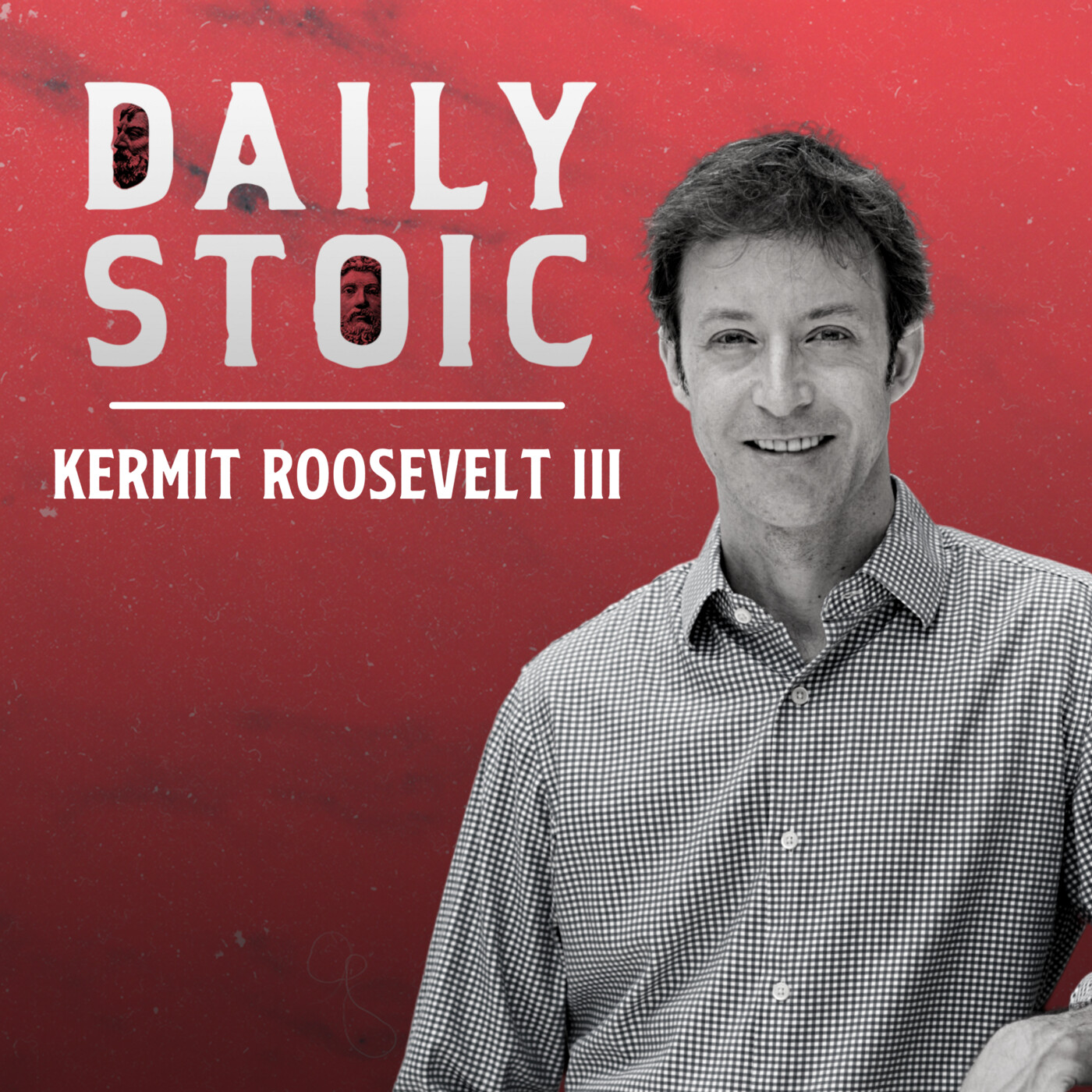
In this episode of The Daily Stoic, Ryan Holiday engages in a conversation with Kermit Roosevelt III, an American author and legal scholar, about themes of honor, values, and historical perspectives influenced by Stoicism and the life of Theodore Roosevelt.
Written by AI. May contain mistakes.

Get the gist, explore an idea or ask about something said.
 Claude
On The Daily Stoic, what are the key points of this episode?
Searching your listeningAutomatic transcript. May contain errors.
0:00My family owns a 2023 Toyota 4Runner and honestly it's my favorite vehicle I've ever owned. Around town, it's smooth and reliable, but where it really shines is on our trips into the backcountry. We've taken it on backpacking adventures to Colorado and New Mexico, loaded it up with gear, and never had to think twice about whether it could handle the terrain. That's what Toyota trucks are built for. Off-road confidence, rugged durability, and the freedom to explore. Toyota has a long history with the outdoor community, and they're committed to helping more people get out there and experience what nature has to offer.
0:29From remote trails to scenic byways, Toyota Trucks empowers you to take the detour, roam freely, and discover places that still feel wild and untouched. And they're not just making great trucks, they're working to expand access to adventure so more people can connect with the outdoors and pass that passion on to the next generation. Discover your uncharted territory. Learn more at toyota.com slash trucks slash adventure dash detours. That's toyota.com slash trucks slash adventure dash detours. Look, if you're listening to this podcast, you've probably heard of HelloFresh, right? They're the number one meal kit in America.
1:03They make home cooking easier with chef crafted recipes and fresh ingredients delivered straight to your door. This fall, they're serving up even more to love. It's not the HelloFresh you remember. It's even better. HelloFresh is bigger. They've doubled their menu. You can choose up to 100 options each week. It's healthier. You can choose from 15 plus high protein recipes, and they now help you eat greener with veggie packed recipes that have two or more veggies per week. And it's tastier. You can get steak and seafood recipes delivered every week for no extra cost. They have three times the seafood options.
1:37They also have hearty fall recipes like classic beef chili or honey glazed pork tenderloin. We just got home from a week away. We're trying to think about what we're going to eat this week. It was such a relief to see that HelloFresh box sitting on our doorstep when we got home. They've got everything you need for the recipe that they pick out. There's no last minute trips to the store. Plus, the meals are delicious and easy to make. The best way to cook just got better. Go to HelloFresh.com slash stoic10fm to get 10 free meals plus free breakfast for life. One box with active subscription. Free meals applied as a discount on the first box.
2:13New subscribers only varies by plan. That's HelloFresh.com, Stoic 10 FM, to get 10 free meals plus free breakfast for life.
2:26Welcome to the Daily Stoic Podcast, where each weekday we bring you a meditation inspired by the ancient Stoics, a short passage of ancient wisdom designed to help you find strength and insight here in everyday life. And on Wednesdays, we talk to some of our fellow students of ancient philosophy, well-known and obscure, fascinating and powerful. With them, we discuss the strategies and habits that have helped them become who they are and also to find peace and wisdom in their actual lives. But first, we've got a quick message from one of our sponsors.
3:16Hey, it's Ryan Holiday. Welcome to another episode of the Daily Stoic Podcast. I'm going to take you way back to the Ryan Holiday who had never read Mark Surrealist's Meditations. I've told you this story. I'm at a conference. I'm in college. And I go up to Dr. Drew, if you remember him from MTV and Loveline. And he was speaking at the conference and I asked him for a book recommendation. So he recommends The Stoics. He recommended Epictetus specifically. But I went back to my hotel room and I bought that book and another one that he recommended. And you know what that book was? It was a book by Edmund Morris called The Rise of Theodore Roosevelt.
3:52It's a three-part series of biographies on Theodore Roosevelt. And they're incredible. That was an amazing book. Totally opened up. I'd never read a biography like that. I don't know if I'd read any books like that. And actually the story of young Theodore Roosevelt, which he tells so brilliantly in that book, is the story that I tell in part three, the inner Citadel chapter of The Obstacle is the Way. And it's a book I think about to this day. It's a person I've read about many, many times. And so I don't know how I first heard about today's guest, Kermit Roosevelt III, another amazing book where I first heard of Kermit Roosevelt.
4:32It's one we carry in the painted porch. I've raved about many times, The River of Doubt, about Theodore Roosevelt's trip down a river in the Amazon where he very nearly died. And as I was talking to Kermit Roosevelt III, who is Theodore Roosevelt's great, great grandson, he read that book and loved it. And Kermit Roosevelt accompanies Roosevelt on that journey. And he was like, is he gonna make it? Like literally him making it, if he hadn't made it, Kermit Roosevelt III would not exist. But the point is, even he liked that book. So when I first heard about Kermit Roosevelt III, I think I read an article that he'd read because he happens to be a legal scholar.
5:14He's a law professor at the University of Pennsylvania. And he's an expert on reconstruction specifically, which is a topic I'm fascinated with. And he's not some minor lawyer either. He is an expert on constitutional law. He's been published in many different law reviews. His articles have been cited twice by the United States Supreme Court, numerous times by state and lower federal courts. He was a lawyer with Mayor Brown, and he joined the Penn Law faculty in 2002. He's written a bunch of really interesting books, including a number of novels, but he came out to the Daily Stoic studio here in Bastrop, Texas, and did an amazing interview.
5:51I was so excited to talk to him, and I can't wait for you to listen to that interview now.
6:05so john tyler still has grandchildren who are alive which seems unreal to me yeah and then i met a guy he was born in bastrop county he lived in austin his name was richard overton he died maybe three or four years ago but he was born during theodore roosevelt's presidency he was the oldest man in the world when he died oh wow so like it feels you know what i mean like it Great, great, great. Seems like it would make sense. And then also, so history feels, I guess what I'm saying is history feels like very far away. And then it's also sometimes like one life or two life to go back to it. Yeah, there are people who've lived through things that seem like incredibly remote.
6:42Yes. Looking back on that. Well, I heard this other weird one. This is me just nerding out a little bit. Okay, so Jimmy Buffett wrote Margaritaville in Austin. He ate at this Mexican restaurant in Austin that was the first or second place to have a margarita machine. And that's not what's weird about this story. What blew my mind is it was owned by the grandson of this guy named Joe. And Joe had come to America from China to build the railroads in the 1870s. So you go Margaritaville, which feels like this modern beach song, is like two handshakes away from importing immigrant labor to build the railroads in this country.
7:24Yeah. Well, we're a pretty young country. Yes. When you think about it. Yeah. I mean, even the Roosevelt name goes back basically before the U.S., right? Oh, yeah. Like, pretty quickly. Yeah. And, yeah, we tend, like, that was, so it was weird to meet Richard and go, okay, this guy goes, like, he was the oldest living veteran when he died in the United States. And I was like, well, who was the oldest living veteran when he was born? and it was like a guy in the Black Hawk War. Yeah. Which Lincoln fought in. Yeah. And so like, yeah, you think it's all very distant and then it's actually not that distant.
8:08And then that ties into the ideas in your book, which is like this story is not this thing that's been written. It's not like the Odyssey that was written like thousands of years ago and is passed down to us. It's like still being written. And some of the people who wrote good, big chunks of it, not good chunks, but big chunks of it, are like still here. And you realize like they were just making it up. Yeah. Well, I think about that too when I think about historical moments that I lived through that now seem so distant to my students. You know, and I'm like the 80s when I was a kid are now as far away from us as the 40s were when I was growing up, which just doesn't seem possible.
8:47Well, I get that we have some like high school kids that work in the bookstore and realizing like to them, clothes from the 90s are retro and cool again. And to them, those clothes are as distant to them as hippie clothes were to me in the 90s. Yeah. I feel like it's different somehow, though. The time is sped up? 30 years doesn't mean as much as it used to. Because the year 2000, I feel like that's still sort of the modern world. Sure. Whereas when I was young, like the 60s, I was like, oh, that's so old. But don't you think that's actually something that we forget about the past, which is like how things that had finished were or were in the past were in distant memory to those people?
9:38So like we go, OK, this is 30 years ago or 40 years ago. And then so you go, yeah, in the 1840s or, you know, as they're, let's say, in the lead up to the Civil War, as they're sort of hammering these things out. like the founding of the country itself is not this far off, like ossified permanent thing. Yeah. But like a thing that their parents did or their parents' parents did and therefore isn't really as set in stone as it feels like to us. Yeah, no, absolutely. So in the antebellum period, it's like 50 years ago. It's, you know, definitely their grandparents were there. And then the other thing is that they had a just really different conception of the founding, I think, than we do now, which is exactly what you were saying, which is it's this dynamic moment when there are lots of different understandings of how society should be organized and what political concepts mean out there.
10:34And it's not like this single moment that we can look back at and find the one objective true meaning of things. But it is interesting how much change or not change a human life can progressed through. Like I was just reading about this guy. You might have heard of him. Do you know who Thomas Wentworth Higginson is? He was a Harvard grad. He's kind of this underrated historical figure. So he comes from this wealthy Boston family or Cambridge family. And he's a translator of Epictetus. And he becomes pen pals with this lady named Emily Dickinson. He leads a black regiment of troops in the U.S. Civil War.
11:16And so he signs one of the first calls for a national women's convention for women's rights. Again, like women's rights abolition, we don't see as happening at roughly the same time, but they do. Right. And then I was reading about him. So I was like, wow, this is incredible life. There's this philosopher who's also engaged in the main issues of the day. And then I go, well, when did he die? And then I'm reading this thing and he is like, he was part of a literary conference with Jack London and Upton Sinclair before he died in 1911. And so the idea that he's stretching from like before the civil war, when they're deciding, you know, when they're, when it's an actual discussion about whether black people should have rights or whether women should have rights and then flash forward to the early to mid 19, you know, like the, the, the, the early 1900s when like there's machines and like these modern figures are also around.
12:21It just kind of blows your mind how, how much happened in that period and how much these questions were being still debate it. Yeah. And the same questions keep being debated. Of course. That's the other thing. Like one thing about the book is how much our understandings of certain things like the Declaration of Independence change. And then the other thing that I was really struck by writing it was how much sort of echo there is. And it is almost, so like fashion sort of moves in 30-year cycles. American history kind of moves in 100-year cycles. Okay. It looks like, and we've had like three of them?
12:56Yeah. Here, I have a Theodore Roosevelt quote you might like that I thought of when I was reading the book, which I like to post every 4th of July. He said, in name we had the Declaration of Independence in 1776, but we gave lie by our acts to the words of the Declaration of Independence until 1865, and words count for nothing insofar as they represent acts. That's very stoic. Isn't that interesting? Yeah, acta non verba, deeds, not words. And so, yeah, we had this sort of story and actually the ongoing debate is like, we've always had this story. We've always had these ideals. And then it's this sort of generational conflict or argument about whether we're going to live up to them or not, or how they apply or not.
13:41Like, I thought that's one of the interesting things in the book that like, that all men are created equal. You have a good chunk of the United States in the early days who believe that that means that slave owners should not be discriminated against. Yeah. Right. So the principle of equality can mean lots of different things to different people. And like, that's one of the concepts that you see sort of floating around in this indeterminate way at the founding. And then it's just fought over. You know, people just argue for their perspective and actually eventually it does come to military force.
14:14Yes. Well, and then even in the Roosevelt era, there's like these sort of Supreme Court arguments where like basically the 13th, 14th and 15th amendments, which seem like they're pretty fucking clear, are being used actually for the opposite of what they're intended to mean. That basically it's sort of protecting sort of moneyed interests and protecting basically everyone but the individuals from exercising those equal rights and access to things, which isn't sort of, you'd think like, that's just obviously not what they're intended to mean. And yet when it makes its way into the courtroom, so kind of like what's up is down and down is up.
15:03And somehow they managed to make successful in the sense that they work successful arguments that actually, no, it wasn't intended to do this thing that it was obviously intended to do. Yeah. And actually, that's something that you see with a lot of different constitutional provisions. And it was sort of amazing to me teaching constitutional law year after year, where I would get to these cases and I'm like, geez, that's really not what this was supposed to be doing. The First Amendment is not supposed to protect the rights of corporations to drown out the individual speaker. That seems kind of contrary to the purpose.
15:36The 14th Amendment is not supposed to prevent the government from trying to increase racial equality. That's kind of the opposite. But the explanation for all of that is pretty simple, which is that like power takes over. And so you put in constitutional provisions that are supposed to protect politically weak groups and the powerful capture them and use them for their own purposes. And it's just sort of a phenomenon about how power operates in society, I think. I think that's an underrated or an under an under understood part of American history or the story I've come to understand about American history is that we sort of get these democratic institutions, we get this system.
16:16And then basically what happens through some stuff that was very clearly spelled out at the beginning, whether we're talking about the three fifths clause, whatever, is it's basically captured by this sort of slaveholding aristocracy or oligarchy that basically just controls the lever of power for the government for most of American history. And it's only been kind of in these punctuated periods where that hold is lessened that you get some of the breakthroughs, but that's basically how it's worked. Yeah. And what I would say, what I would add to that is, I think that's by design. So, you know, what is the point of the three-fifths compromise?
16:56What does it do? What does everyone understand at the time it's going to do? It tilts the whole national government in favor of slavery. Yeah. Because you've got the House of Representatives, obviously the three-fifths compromise gives the slave states more representatives. And then because a state's number of electors is determined in part by its number of representatives, they get more voice in picking the president. And then because the president nominates judges, they get more voice in the composition of the judiciary. And that's why for the first 70 or 80 years of its existence, America is controlled by the slave power, basically.
17:31Right. Yeah. Interesting. And, and then that, that sort of changed my understanding of Jim Crow too, which is like, it's not that they just invent this idea of segregation, even, even like, obviously it's racially motivated. Obviously it's a sort of a status quo. Blacks and whites are supposed to be separate. Don't want mixing with the race, et cetera. But that if you understand that at a deeper level, it's just a reversion to the status quo that was the three-fifths compromise. It makes a lot of sense. Like basically the Civil War blows apart the hold, the illegitimate hold that these people have in the levers of power.
18:11Because they're, for the first time, you have an actual form of representative government, right? where it's not artificially skewed by not counting certain populations. Now they're like, well, we'll count these populations again, but we just won't let them vote through fear of intimidation and reprisals and poll taxes and all these other complicated things. It's just this sort of stat. It's trying to get back to this thing that I guess goes back to the very founding, which is you have a good chunk of the colonies who are like, we don't want to be a part of it unless we get to do it our way. And almost like in a lopsided marriage where you just have to sort of accept this fundamentally unfair status quo or the other person leaves.
19:06Yeah. So the Civil War and Reconstruction are this incredible break in American history that I think we just, we downplay. Yeah. And we downplay it in part because we gave up. So with the Civil War, there's like the military defeat of the South. With Reconstruction, there's a fundamental restructuring of the American constitutional order because all of a sudden the federal government is the good guys. Yeah. Right. At the founding, the founders are thinking about the state militias fighting off the redcoats. They're thinking the national government is dangerous. The states are the protectors of liberty.
19:37And Reconstruction basically turns that upside down because the national government is the force for liberty. The states are the bad guys. And politically, they change it too because the Three-Fifths Compromise has been superseded. And now you've got the former Confederates being barred from office with Section 3 of the 14th Amendment. And Congress actually during Reconstruction, they send out the 14th Amendment to be ratified. And this is something that people – I was never taught this in school. I don't know how it's taught now. But they send out the 14th Amendment to be ratified and it gets rejected.
20:12Oh. 10 of the 11 former Confederate states reject it. Tennessee ratifies. And then also like Maryland, Delaware, Kentucky. So if you think of sort of founding America, they reject the 14th Amendment and Congress then annihilates 10 of the former Confederate states, the ones that said no. Congress says your governments are dissolved. No governments exist in these states. and then they basically make new states. So they say, here's who your political community is, right? You don't get to define yourself the way the Declaration of Independence talks about as like one people wanting to govern themselves.
20:48We're going to tell you the formerly enslaved are citizens and we're going to tell you who gets to vote too because now you're going to have constitutional conventions, you're going to write new constitutions. The formerly enslaved get to participate in those. The former Confederates don't. So Congress is basically making new states and it's the new states that ratify the 14th Amendment, that gives us, in my view, like basically a new American nation. Very different founding principles. But the problem is the former Confederates don't accept that. So the U.S. Army has to fight basically a counterinsurgency war to support the racially integrated Reconstruction governments.
21:26And eventually the will of white America to maintain this counterinsurgency campaign fades away. And that's when the federal troops withdraw and that's when reconstruction is overthrown. And again, we don't teach this very well, I think, but it's just, it's by violence. Have you read, it's a novel from around that period. It's called The Fool's Errand. No, I haven't. It was written by Albion Torje. Torje? I don't know. He's one of Theodore Roosevelt's friends. He's the, you know, I write about this in Courageous Calling, but there's this famous letter between him and Theodore Roosevelt, where Theodore Roosevelt is explaining why he invited Booker T.
22:02Washington to dine with him at the White House. And he says, I know it's going to kill me in the Southern states, but the fact that I considered that it would kill me in the Southern states is why I did it. Like, he's like, I didn't want to be the person that didn't want to do what's obviously the right thing for political reasons. But he writes this novel called The Fool's Errand, which is loosely based on his experience in that he's a officer in the union. The war goes well, but he fights in the South. He kind of falls in love with it. And he moves to Alabama or some of the plot of the novels, he moves to Alabama and he's just going to be an American in Alabama because this is all the United States.
22:38And he sort of quickly discovers that that's not how it is. And that the people who just waged this horrendous war, their minds didn't change because they were beaten on the battlefield. And he sort of discovers that also it wasn't even that they'd sort of rationally gotten to think what they had thought, but that there was this whole reinforcing structure that had existed that made it impossible to question. Like that there are all these laws in place and a culture of intimidation that said, hey, if you question any of these institutions, we'll lynch you, we'll intimidate you, we'll destroy everything you have.
23:17And so he describes it as this fool's errand thinking that you could go into the South during Reconstruction and reconstruct it, right? He basically bumps into the unreconstructed South for which his basic conclusion was like, there isn't an army big enough in the world to sort of occupy and change these people's minds. I found it to be a very interesting sort of contemporaneous documentation of what must have been a lot of the feelings that led into the abandonment of Reconstruction. And the way that like an equivalent today might be like, you and I don't feel as strongly about vaccines as the people who are anti-vaccine.
24:06And so at a certain point where it was like, let's just go on and live our lives. Do you know what I mean? Yeah. Like when you bump up into something that is so fundamentally irrational and deeply held and based on all these different factors, I think you do notice that sort of collapse in collective. It's hard for a big tent of people to get together and stay activated around an issue for a long period of time when you're coming up against a deeply entrenched sort of minority. but what would you call it? Like a sort of veto style power. Do you know what I mean? Yeah, well, so this is another one of the problems with the democratic system is that like the passionate minority tends to get its way.
24:54Yeah, because you can just hold out until eventually the other side gives up or compromises to some degree. Yeah, and also because in a lot of these situations, the passionate minority is willing to wreck everything if they don't get their way. So there are several moments in American history where some Americans are like, we must all come together or the nation will be destroyed. The nation will fail. So the revolution is a moment like that. The constitution is a moment like that. And then there are some people who are like, fine, but if we don't get what we want, then there will be no America.
25:35And historically, that's the slave owners. Yes. And they're demanding concessions to slavery. And basically, they get them every time. Right. To go back to that divorce analogy, because you're like, well, I don't want to break up. And you are willing to break up. And so you have all the power. Yeah. And then that's what happens exactly like with the end of Reconstruction. Yes. Because the white Americans in the North are not willing to keep fighting. And the white Americans in the South are willing to keep fighting. Yes. So eventually you get the compromise, the compromise of 1877. And isn't this also like understanding that has helped me understand the playbook of the civil rights movement in that the South was like, well, let's just try that again.
26:20Right. So the North, the North basically leaves the South alone for like 80 or 100 years. And, you know, this whole sort of reversion to the old mean comes about and different name, different practices. But the South still essentially has the same power, the same veto power over any kind of change that would disrupt the status quo. They sort of have they have the representation as if their population was X, but they only have to speak for, you know, 50 percent of X. Right. And so when the North gets nosy again and says, hey, we don't really like that you can't do this. and we're going to send people on buses from the North to the South.
27:05And we're going to say, you know, schools have to be desegregated. We're going to mandate on a federal level just certain ideas of equality and justice. The South says to itself and then also to the North, what if we just make that so difficult again that your will collapses? And it almost, I mean, it very well could have happened that way. Like, it seems, it seems, um, because it didn't go that way. It seems like they were all, they were sort of fighting against the inevitable tide of history. But it had worked literally every time up until that point. Yeah. And I mean, it did and it didn't work that time.
27:48Um, because yes, you know, we get the Voting Rights Act, we get integration, we get the 101st Airborne in Little Rock enforcing the desegregation decree. But, you know, we had all that in Reconstruction, right? We had the U.S. Army there enforcing people's civil rights. We had racially integrated governments. We had racially integrated schools and police forces. We had real multiracial democracy in the South, and then we lost it. And we had the second Reconstruction, right? That's what people called the civil rights movement. And we had integration, and we had the Voting Rights Act. and then there was opposition to it.
28:28And Ronald Reagan in 1980, starting his campaign, says that he believes in states' rights and he's going to appoint Supreme Court justices who will follow the original understanding. And if you're thinking, okay, states' rights, original understanding, where is he giving that speech, Philadelphia? You're like, okay, it's about the founding. But he's talking to Philadelphia, Mississippi, not Philadelphia, Pennsylvania. Sure, sure. States' rights has a slightly different flavor there. So what you get with the Reagan Revolution and the idea of originalism and the new federalism, which is about states' rights, is presented as sort of a return to founding principles.
29:08And I was like, oh, that's not bad because we all love the founding. 1776 is great. But what it's doing is rolling back the second reconstruction, really. And the point of rolling back the first Reconstruction wasn't really to go back to the founding. It was to go back to the Confederacy. Yes. So the really important question, I think, is when we're looking at the values that are being put forward in the name of the founding, are we actually really getting neo-Confederate values? And with the Reagan Revolution, I think that's kind of the direction that we were moving in. And now, like, if you look at what the Supreme Court has done recently, Shelby County gutting the Voting Rights Act, that's very much the redemption playbook, right?
29:50That's the undoing of reconstruction. That's the undoing of multiracial democracy.
29:58Well, it's almost here. Christmas is just a couple of days away. And maybe you're scrambling. You're like, what should I get my dad? What should I get my mom? I got to get something to my sister. People love showing off pictures of their kids. And that's where today's sponsor comes in. I've gotten one as a gift. I've given it as a gift. The Aura Digital Picture Frame. It's easy to use. It never gets old. You're constantly updating it with new pictures. Aura Digital Picture Frames are so much better than any digital picture frame I've ever seen. It's got a high resolution. It's got a color calibrated display.
30:30You can add video. You can have two pictures come up at the same time. Picture and a video. It'll pair photos together for you. like two pictures of the same person or from the same day. It's really easy to set up. You just download the app, connect the frame, and then you can pick photos and videos right from your phone from anywhere in the world. And there's a reason Oprah added it to her favorite things three different times. For a limited time, save on the perfect gift by visiting AuraFrames.com to get$35 off Aura's best-selling Carver Matte Frames, named number one by Wirecutter, by using promo code STOIC at checkout.
31:03That's A-U-R-A frames dot com promo code stoic. This deal is exclusive to listeners and frames sell out fast. So order yours now to get it in time for the holidays. Support the show by mentioning us at checkout. Terms and conditions apply. I'm picking my kids up from school today and then doing our weekly routine, which is I take them over to Whole Foods and we get all our groceries for the week. Then we have dinner. It's one of their favorite things to do. It's one of my favorite things to do. And then my wife loves it because she doesn't have to take care of it. this holiday season whether you're a guest or hosting the big dinner whole foods market has what you need to delight everyone at your table they even have heat and eat sides from the prepared foods department you can make whole foods your one-stop shop everything follows whole foods markets strict ingredients standards so you know it'll be delicious and good for you you can also order online for pickup and even delivery in select zip codes to skip the crowds shop everything you need at Whole Foods Market, your holiday headquarters.
32:04So I've kind of been working on this theory, which is there's this kind of like dark matter inside the human race, this sort of dark energy that it seems like we sort of slay, whether it's with the founding, whether it's with these compromises, whether it's with the Civil War, whether it's with the civil rights movement. And then there does this idea of trying to revert, trying to go back to redeem seems to be it's this sort of yin and yang, right? What is the motivating factor of it, right? Like the slave power ceases to be the slave power exactly, right? It morphs into a different set of policy.
32:45And you could argue they're kind of weakening a little bit, right? Because we don't literally want to abandon them, but we do want to keep them as a cheap source of labor. Or, you know, it's right. It's not, you know, there isn't DeSantis, isn't George Wallace. Right. But there is this kind of energy that doesn't seem to go anywhere, but that people know is there. and certain politicians, certain interests, certain writers, certain filmmakers, right? If you're talking about Birth of a Needs, like there's always this sense that it's there and it's very powerful, very volatile, but you can tap into it if you want.
33:28What is that? I don't know. I mean, I think that's like, that's a psychological question. Where does that come from? I think that - And why is it so persistent? Well, it's got to have some sort of hardwired basis in the human brain, I would think. So people do understand in-group and out-group pretty easily. And you can make them fear people that you designate as the out-group. Sure. So, you know, a lot of politics works that way. Yeah. Where they're saying, if you don't vote for me, these other people are going to come and get you. Yeah. Right? They're going to take your job or they're going to kill you.
34:12Somebody has to be the person getting fucked, basically. Is the primal belief and someone saying, I'll fuck those people so they don't fuck you. And you better make sure it's not you. Yeah, yeah. Yeah. Because if you look at American history, like equality, which we like to think of as this unifying American value, equality is the really divisive thing. Yeah. Because equality typically requires the dismantling of hierarchy. And people don't like that. Right. So they resist it. Right. If the society is like this, you would think, well, who would mind this? Right. But it's actually more like this.
34:49And so a lot of people are opposed to it. Yeah. A lot of people are opposed to it. A lot of people are told that they should fear it also. You know, if you give these people power, they're going to do terrible things to you. Right. Right. The only other kind of similar dark matter, like if you, anti-Semitism seems to be an equally persistent, probably longer, like more global phenomenon where it's like there are periods where we're not doing it. And then somebody is like, you know what? We haven't dusted off in a while, but can really get the people going. And then it kind of starts with these illusions and then it gets more and more overt until, you know, it gets so intolerable that you get a broad enough coalition to do something about fighting it.
35:40Yeah. You know what I mean? Right. Well, so anti-Semitism, I think there is kind of a psychological explanation for that that makes sense because it's the kind of thing that people tend to believe. Yeah. So it's useful from an evolutionary perspective to like see patterns because if you can put things together, you can figure out, you know, what the Russell and the Bushes means or you can figure out what someone else is trying to do and what their plans are. So people have this agency detector that like looks at a pattern of events and it's like something is behind that. Something's making that happen.
36:15Yeah. Because if you're right about that, then you've figured out something useful. But it's a little bit overactive maybe. And it makes people see patterns where they aren't actually there. And it makes them attribute agency to things that are just sort of random. and so people are very willing to believe that there's some group out there causing all these things there's some group out there pulling the strings sure and that's kind of the form that anti-semitism takes so it fits very naturally into people's minds yeah i think you know not that it's necessarily the jews but that there's some group there it's the illuminati freemasons and anti-semitism just fits into that slot and i think it's a way that people naturally think And don't you think it's also, going back to the Greeks and Romans, the demagogue figure, the sort of populist speaker, the one who needs to come to power, but is sort of not part of, I don't want to call it the elites, but is not sort of ordinarily endowed.
37:18out, they're needing to create a new constituency to control power, they tend to rely on those tricks. It's a very activating sort of persuasive tool that people have been doing for thousands of years. Whether talking about antisemitism or racism in the United States, it's this way to get power. Like I'm rereading Robert Penn Warren's Kingfish right now. Oh yeah, All the Kingsmen. All the Kingsmen. And obviously I read it maybe 10 years ago when I lived in New Orleans and I'm reading it now and it's just like, it's remarkable how, oh, this is just politics today. Like he's talking about newspapers and rallies.
38:07And today we're talking about social media and rallies, but it's the same thing. Yeah. And it puts me very strongly in mind of Trump, actually, when Trump is like, I am your vengeance. Yes. And in All the King's Man, he's like, give me that meat axe and I will swing it for you. Yeah. It's sort of a terrifying moment, I think. And not wrong. I mean, there's this line in the book where Jack, who's this sort of person who should know better, the enabler, political advisor, he's like sort of talking to all his rich friends from back home and he says something like how could you do this blah blah and he's like it's just a job but he's like but don't you think if our government had been serving the people instead of its own interests for basically the entire u.s history there would not be an opportunity for a person like this and you go that's true right like Like that is true.
39:06And there is an argument you can make as you're trying to understand how someone like Trump is possible. It explains it. And then at the same time, you realize that that's the rationalization that people who want to ride that rocket ship tell themselves, even though they should know better. Yeah, I mean, people are always willing to hear that they're being lied to and they're being ripped off and they deserve better. And really, they should be better off than they are. And sometimes it's true, but, you know, you're not going to have a perfect government. People are always going to be dissatisfied.
39:45And then, you know, weaponizing that dissatisfaction and then particularly turning it on scapegoats and vulnerable groups, like that's a really bad thing. Of course. But it's always possible. And there's not really anything in the system that prevents people from doing that. So that's kind of the other big hole in our system, which is basically the founders, maybe they were too reliant on the idea of classical virtue. It's this sort of idea that like, well, and we'll just hope or expect. I mean, there is the idea that ambition checks ambition. But there was this sense that there was things you could do, but a man or woman of honor simply would not do.
40:30And I think one of the things that we've learned over the last couple hundred years is like, no, they'll definitely do it. Someone will do it. Yeah. Yeah. That's why the framers were so wary of democracy. You know, in the 1787 Constitution, it's really not that democratic. It's sort of as democratic as the states want to be to some extent. in the election of representatives. You can vote for a federal representative if you're allowed to vote for the most numerous house of the state legislature. Otherwise, people get no direct voice under the 1787 constitution. And you can look at like the Federalist Papers and what they say about the presidency and the electoral college because there they are concerned about what if a demagogue becomes president?
41:16Sure, a Catalan. Chief Executive Office who's going to have a lot of power. it would be terrible if a bad person got into that position. And that's what the electoral college is supposed to prevent. And you can, you know, you can read all of the things that Hamilton is saying in the Federalist Papers about how it's impossible that we'll ever get a bad president because the electors will be so wise and virtuous and they'll exercise their discretion. And a demagogue could maybe fool the people of one state, but never a broad enough swath of the country to gain power. I don't know. It's all just sort of sad looking back how naive it was.
41:53Yes, it was. Right. There was this sense, I think, that the final check in all these different things was a person's personal sense of honor or reputation, right? And like pretty early on, they had a sense that that wasn't going to work when you look at like an Aaron Burr-like figure. Yeah, Burr, exactly. But yeah, it was remarkably vulnerable to just someone without a sense of shame. Yeah, and I think there was a kind of classism in that also. Sure. And that they thought, you know, the common people might be fooled, the common people might not be virtuous, but we've got some sort of elite buffer, right?
42:36That's what the Electoral College was supposed to be, that the elites will protect us because they have discernment and good values. Yeah, and that they'd all read the same books and believed the same things and had the same values. And as the country grew and grew and grew, it's no longer like 20 people. You know what I mean? Like it becomes so much more vulnerable to individuals. Like, I mean, I think when you look at 2020, it's not just that it comes down to like a handful of votes in some key states, but that beyond that, when someone decides not to accept those results, it comes down to like three or four people who decide not to go along with it.
43:22You know, whether it's, you know, a secretary, a secretary of state in one state or, you know, like just certain people, just one or two people who are like, you know, it's like someone in Michigan on some elections board doesn't doesn't vote the way that they think he's going to vote. and someone in George, it's like, it's just a handful of consciences, not this incredibly robust, you know, series of interlocking checks and balances, but like more like exceptions than the rules. Yeah, no, I think that's true. So when we look back on that and we're like, oh, the system held, democracy survived, it is true.
44:03It was really close. Yeah. And one of the things that people are doing in reaction to that is they were purging election officials who they thought wouldn't go along with it in 2024. And some of that was stopped in the 2022 elections because the Trump-supported candidates didn't do as well as people thought they would. But you don't have to replace a lot of people for it to work. Yes. Yeah, there's this quote. I'm forgetting who it's from, but he says something like, the duty of a person is to act as if the fate of the world is on their shoulders, right? Which is this kind of ancient, it's somewhat grandiose, but it's also this kind of ancient idea that like, who you are matters, your sort of personal sense of honor and duty, your job, these things really matter.
44:53And you can see where people who are acting that way end up stopping terrible things from happening. And then you see the converse being true also where the person who says, well, I should just do what's in my interest here, or I don't want to be the one that takes the heat. You can see how people making individual decisions to just go along with what they're being asked to do sort of has the effect of putting the responsibility onto someone else and not themselves. Does that make sense? Like this idea that you enter politics or you enter public life or you enter a profession, whether it's the law or medicine or journalism, because you have this code that you live by or you operate in business as though you are a fiduciary.
45:48These are like kind of principles that really, they seem antiquated until you get in these sort of high stakes, you know, situations where a person not acting that way shows you why you really need people to be steeped in those ideas from an early age. Yeah. And this is something that the legal profession has been asking itself. Yes. I think, you know, because you sort of expect politicians to behave in a self-interested way, and politicians don't necessarily have a loyalty to some external code. But the lawyers are supposed to. So, you know, you look at Trump's adventures through the legal system in challenging the 2020 election, and mostly the judges did a pretty good job.
46:35You know, so we feel like the judges have been socialized appropriately. You know, I don't think that the Supreme Court justices that Trump appointed feel a personal loyalty to him. I think, you know, They're pretty mainstream conservative rule of law kind of people. But there were a lot of lawyers who went along with Trump. There were a lot of lawyers who were trying to help him, and pretty high prestige lawyers. So something went wrong with the legal profession there. There were people who were willing to abandon the rule of law and truth and democracy for something. What is that? Because I think it's a societal issue.
47:14I don't think it's just a political Trump issue. It's a sort of collapse of a sense of, I got into this for a reason. These are the, you know, that I can't, there's not many lines of work left where someone would say, I swore an oath unironically, and it would mean something. Do you know what I mean? Yeah. Well, you know, that's what the whole section three of the 14th Amendment litigation is about now. Like you took an oath to support the Constitution and then you engaged in insurrection. Yes. And that should have consequences. Yeah. Yeah. So, you know, I used to tell my law students that one way of understanding what my whole constitutional law course was about was when you're sworn into the bar, you're going to take this oath to support the Constitution.
48:08What does that mean? Yeah. What are you pledging your support to? Yes. And what does it mean to support it? Yeah. And maybe it's partly a collapse of religion. Like even the swearing of an oath on a Bible had some sort of significance to people that maybe is slightly lessened. But it does, there's almost like, it feels like to go like, I swore an oath. I said I was going to do this thing or not do this thing. and therefore to do it and blow up my career seems silly or immature. Or do you know what I mean? Like there's, it almost seems more than old fashioned. It seems immature or silly. This idea of like, this is my code and I have to follow it.
49:02Come hell or high water. Yeah, I think it's sort of related to the death of expertise, maybe. There's a collapse in the whole idea of things external to people that are real and matter and things that can provide a scaffolding or a framework or a guide for your life in a meaningful way. Yeah, it's like identifying with your profession as something that matters, right? Like whether you're like, I'm a bricklayer and this is how a bricklayer operates And this is what a bricklayer's worksite looks like. And these are the standards that I hold myself to all the way up to, yeah, I'm the president and I swore an oath.
49:49The idea of like taking that seriously and not cutting corners or making, accepting expediencies or the logic of expediency. maybe I'm making up that it previously meant more, but it seems like it did. Well, I think it did mean more. I mean, the problem that I have with this is that whenever you go back to the idealized past, you often find that it's based on hierarchy and oppression. Yes. Or applied inconsistently. Yeah. But I think it is true that a sort of professional pride or professional creed, you know, or belief that there's a right way to do things and it's important to do them the right way would actually be really helpful.
50:44Yeah. There's a story of Theodore Roosevelt I like. Like it was when he was in his sort of cowboy days, he's managing this herd and these two cowboys come to him and they've rounded up a couple cows that are clearly not his. And he tells them to let them loose and then fires them. They go, why are you firing us? We were going to give you like these free cows. And he says, you know, if you steal from someone else, you'll steal from me, right? This sort of sense of like, not only am I not going to benefit from it, but I'm not going to let you poison like the whole system, like this whole thing operates on kind of an honor code.
51:21And that idea feels antiquated. I don't know. I don't know who's teaching that idea and then who's enforcing it to the point where, or enforcing it early enough to the point where it becomes kind of a second nature. It becomes part of a person's identity. I don't think that people are really. I mean, And when I think about it, I had teachers, I had coaches growing up who did take that kind of attitude and tried to instill that set of values. And I don't see that as much in schools now. Well, don't colleges have a huge problem with sort of academic honesty and cheating? Oh, yeah. I don't know how it compares to the past, but it's sort of routine now that you can't give students any opportunity to cheat because you know that some significant number will.
52:19So the system has to be sort of impossible to cheat. You can't rely on the honor of the students.
52:30I got an amazing night's sleep last night. One, because my six-year-old fell asleep in the car at like six o 'clock and he transferred him from the car seat to the bed and it stuck, which is just magic. So he's in bed way earlier than normal. But I sleep really well every night because I have a 8 Sleep Pod 5 Ultra, which is 8 Sleep's best product. I've used 8 Sleep for many years now. And it's just totally transformed how I sleep, made me sleep better, made my wife sleep better. It's amazing. So basically, Eight Sleep is this topper that goes over your mattress. It can heat and cool both sides separately.
53:09It can raise and lower each side separately. So it helps you fall asleep faster, stay asleep, and then wake up better. Eight Sleep buzzes me to wake gently every morning as opposed to some loud blaring alarm. And then I can check the app and it tells me my sleep score. It even helps me optimize my day based on how I slept. If you want to survive the holidays like a pro and just generally sleep better, head over to 8sleep.com slash Daily Stoic and use code Daily Stoic to get$350 off your very own Pod 5 Ultra. The best part is you still get 30 days to try it at home and return it if you don't like it.
53:49But I know you will. Trust me, your body will thank you for this investment in better sleep, shipping to many countries worldwide. See details at 8sleep.com slash Daily Stoic. The world is full of tours. But you don't choose a Toyota truck to follow the beaten path. You choose it to find the places in between. The detours, where each adventure pulls you toward the next. And wrong turns turn out right. So why would you ever take a tour when you could take a detour? Toyota Trucks.
54:32Yeah, that's sad. And then also, it creates a system where the response is you make the system harder and harder to cheat, as opposed to addressing it from the other end of the problem, which is raising or teaching people who don't cheat, even when there's opportunities to cheat. Right? Right.
54:58But at a certain point, by the time it gets to the teacher or the professor or the dean, that pie is baked. Yeah. By the time they're in college, it's too late. Yeah. But it's hard, you know, it's hard. It's hard even to, obviously, this is what everyone tells themselves when they're cheating. But when the whole system seems rigged and corrupt and not exactly set up around virtue or values to begin with, this is where the human mind gets very good at saying, well, why shouldn't I get mine? Right. And now we have lots of people telling us that the system is not fair. But the truth is it's not, right?
55:43And it never was. Yes. So, again, it's sort of going back to the idea that there was a time when there was a certain privileged class for whom things seemed sort of fair and it would work out if you play by the rules. And that probably did rely on the exploitation of other people. Yes. And so, in some ways, it's good that people lose faith in the system. But I don't know, I'm sort of going in circles here because, gosh, it would be great if everyone had these virtues and values that would get them to do the right thing independent of some external enforcement mechanism. But on the other hand, that usually relies on a hierarchical society and that's why there isn't conflict.
56:25That's why there is stability because you've got this stable hierarchy. And, you know, so in some ways I think it's good for people to question authority and distrust the system. Yeah, I heard an interesting take on the marshmallow test, right, which is supposed to test your ability to delay gratification and is a sign of your, you know, oftentimes your likelihood of success, right? So they give it to kids, they go, you want one marshmallow now or you want two marshmallows later. And, you know, the kids that delay the gratification tend to go on to be more successful. But they also found something common between the kids that didn't delay the gratification and is that they came from different environments, right?
57:09An environment where they don't trust you. When you say, they don't trust adults or authority figures that say, if you do this, you'll get this payoff. And so you understand, like you take that to understand, like the whole school system is made up nonsense, right? It's like, hey, if you study and work hard, you'll get these grades, which don't mean anything, but actually they do mean things. Then you'll get into a different school where you play this game again. Then you get into a different school where you play this game again. And eventually you'll get better preferential access to jobs and all the things that America promises.
57:41But only if you accept this made-up construct as being legitimate and you not only accept it as legitimate, you act as if it's legitimate and you trust it, right? And so if you have been repeatedly lied, if you look around you and you see the wrong side of America, you quote that great Langston Hughes poem, like, if you have a different view of what America is, you're like, why would I do my homework? Why would I want to graduate with good grades? Why would I trust that if I finish high school and then mortgage my future to go to college, it'll all work out for me? Everything else you've told me has been a lie or has been an illusion.
58:27And so you get that cynicism and that disinterest in following the laws or trusting it. And then we blame it on the person and say, oh, they're lacking in virtue or self-control or ambition or, you know, initiative or whatever. But really they're responding quite rationally to the truth of what the system is. And we have just been given a privileged, unrepresentative version of that same system. Yeah, I think that's exactly right. That makes a lot of sense. I think I have read that about the marshmallow test that actually, you know, if you don't believe the person who says you're going to get two marshmallows, then the rational thing to do is to grab what you can.
59:16And yeah, like that's the short term gratification, utility maximization that is rational, but it also leads to all the collective action problems and then society falls apart. Yes. But the point that this is not a failure of will on the part of the individual, but a rational reaction to what society has taught them is very powerful. Yeah. I mean, I find that even with some of the discussions about, you know, 1619 project or critical race theory, some of these sort of views of history, you know, your whole book is about the stories we tell ourselves. And you look at some of these stories and you go, you're ripping out the hope.
59:58You're ripping out the good things. You're showing only the bad things. It's a sort of a jaundice or a cynical view. You're tearing things down. And yet it's also not untrue, right? Like the more you study history and you dive deeper into this stuff, sometimes I go, actually, I'm not sure they're going far enough. Like, I think it's worse. You know what I mean? Like, when you look at what Reconstruction could have been and then how it ended, when you look at how, like, segregation wasn't you drink at this water fountain and I drink at this water fountain. It was, if you even look at my water fountain, I will kill your entire family.
1:00:46I will cut off your genitals and stuff them in your mouth and then I will kill you. And then you will try to file charges and I will show you that I also control the local and the federal legal system. You know, it's so bad that it's hard to look at it and not lose any of the high-minded stuff at all. Yeah. Right. It's hard to look at it and not sort of feel like you're being a fool. Yes. That's why I think he called it like a fool's errand. Like it's, yeah, you think back to what the legal system was. like for like you think about what the legal system was you fight in world war two you leave the segregated south you fight in world war two you come home and like some local sheriff just pokes out both of your eyes or you know and and then gets off like that was the american legal system like when my grandfather was alive Right.
1:02:04Not like an isolated incident either, but like very common. Yeah. No, very common in reaction to black military service, because that's the promise of equality. Like that's the path to full citizenship. So that was actually something that was very triggering. Yes. No, you talked about that in the book, that basically black veterans are not just triggering in the sense that there's this kind of overreaction in the South, but that it's also what those overreactions prompt the Northern overreaction, like even in someone like Harry Truman. Like Harry Truman is a racist raised by racists, right? Like his mother won't stay in the Lincoln bedroom when he's president.
1:02:44And so he obviously knew what the South was. He knew that what sort of day-to-day white supremacy the status quo was. And he wasn't super bothered by it. Like he seemed like a decent person, but he wasn't super bothered by it. But it wasn't until a handful of veterans, black and then also some Native Americans who are so mistreated by the system that he goes, OK, that's enough. Right. Like you've overdone it. And that's when he gets involved. And so they really do spur kind of this, maybe you'd call it a third founding of America, which is what the civil rights movement is to me. Yeah. I mean, I call it the second reconstruction.
1:03:29I think of this as like cycles. Yeah. There are these two different ideologies basically in America and they rotate. And we have sort of brief moments when we move towards equality and then there's a backlash that always lasts a lot longer. So I think of like the civil rights movement as the second reconstruction. I think of the period following that, starting in about 1980 with the election of Ronald Reagan, as the second redemption. So redemption is what we call the overthrow of reconstruction. And I think like that's the moment that we're in now. And that explains what the Supreme Court is doing in the Voting Rights Act.
1:04:07And that explains Supreme Court decisions against affirmative action. It's a rollback of the gains of the civil rights movement. And you're starting to see the outcroppings of people reacting to the reaction. This is what the protests after George Floyd. This is what black lives. This is people starting to develop a coalition again to say, are we going to do this? Like, are we going to do something about this? Or are we going to cede the fields to the people who seem like they care a lot more than we do? Right. So maybe it's the beginning of the third reconstruction. I mean, historically, if it's 100-year cycles, we're a little early.
1:04:45We're going to have to wait like another 20 years. But who knows? Yes. Maybe we can go faster this time. Maybe. Hopefully. But also, I think what's interesting, I was going to ask you about that. It is remarkable that the lost cause mythology and that school of history, which down even to my generation, a lot of what we learn is the descendants of that. How much that comes from the North, from the Northern institutions. Like at one point, when Kennedy is fighting against these recalcitrant Southern governors, he basically goes, maybe my Harvard professors didn't explain the Civil War properly to me.
1:05:32Because all those guys, Those were the guys that were writing biographies of Lee. And, you know, like they if you think about when Kennedy went to school, like that that idea had captured. We talk about how now the conservative trope is that these sort of higher ed has been captured by the certain ideology. Actually, historically, those institutions were captured by a very different ideology for a good chunk of American history. but how it is strange how pervasive those ideas came from sort of northern elite institutions. You know what I mean? It's not like the South was churning out these thinkers necessarily.
1:06:17Yeah, well, I mean, so some of them were from the South, but definitely the North was willing to go along with that in the name of unity. Yeah. Because the whole task, I think, that intellectuals have felt they're faced with is finding a story that will bring Americans together. And so the idea, it just sort of depends on which Americans you're trying to bring together. But so the idea, like America is founded in 1776 and everyone's great, and then we split apart into the North and South. And when you say it that way, the North and the South, it sounds like those are two equally legitimate parts.
1:06:52Yes. If you say we split apart into the United States and traitors, then it sounds a bit different. But so we say North and South, the North and South split apart, and then they reconcile. And basically they reconcile with the overthrow of Reconstruction because that's what happens. And so that's the story that we tell, like the birth of America, the birth of our modern America is like 1876. And there's that painting, The Spirit of 1776. The Spirit of 76, it's painted in 1876. It goes around the country as a way to unite Americans in the name of the founding. But what's really being restored is the racial hierarchy.
1:07:29And so we go along with that. Like we have this idea that telling a story where reconstruction was a mistake and its overthrow restored the natural order of things, that will bring Americans together and we can move forward. And that's what we do up until like the 1950s. And it does produce a stable society. with a relative absence of conflict, but it's built on, as you said, racial violence and lynching. And the stability is just that dissent is suppressed in this hierarchical society. And then you get the civil rights movement and the story is sort of disrupted and people are like, well, this isn't really working.
1:08:09We can't focus on 1876 as our unifying moment. That's, I think, when we start looking back to 1776 and we're like, you know, we have to accept the values of reconstruction. We do believe in equality. We're going to say we believe in equality. But we don't want to say the 14th Amendment and the Gettysburg Address because that upsets people in the South. So we're going to say 1776 and the Declaration of Independence. Yeah. At one point, one of the sort of peace offerings from the South, I think it's Alexander Stevens maybe, they go to Lincoln. Hey, I know we're fighting this like terrible war. What if we hit pause on it and we invade Mexico instead, right?
1:08:52They were proposing a war because the French are then fucking around in Mexico, right? Emperor Maximilian or whatever. So they go, what if we reunite and we wage war on someone else? And that seems like insane, obviously, right? And effectively, though, like you're dating this sort of reconciliation of America to Reconstruction. You could also go, it's just a little while later during Theodore Roosevelt's time when we attack Spain. That's what brings us together. We fight this war and there's war heroes from the north and the south. We're sort of, we focus, we just look towards the ocean, right?
1:09:35And then that's also what makes us an empire. And then shortly thereafter, we have this sort of colonial war in the Philippines. we're sort of bound together by the fact that we've got all these external, we've got the problems of empire, which is also a really ancient kind of historical idea, right? The emperor would go, hey, things are going so well in Rome, let's go over here, right? And so, you know, we fancy ourselves so different, but it is kind of strange how you can cross your eyes just a little bit and see that that's how it went. It's the same, it's the same moves over and over again.
1:10:13Like the external enemy brings us together. Yeah. Blood and circuses. Yeah. Just like, let's get distracted by something. And yeah, that that's what happened. You know, it almost doesn't feel like that. Like you go, oh, did they think that would work? And then that is what happened, right? Like, no, the, the North held out. They understood they, they had better resources and, you know, their strategy was more sound. They held out, but they won the other part of the war the other way. Yeah, they won the battle for historical memory. Yeah. It is crazy. I was going to tell you another thing I was thinking of.
1:10:56I wrote this down, but we were talking about generations. I saw this meme actually last night and it was apparently Ulysses S. Grant, his great-grandson, is an author. And his great-great-grandson is an author also. And the joke was, I will study war so my son can study the law, so my son can study art, so his son can write gay vampire novels, which is what he writes about. Oh, really? Yeah. And I just thought it was like so perfect, just the arc of the generations and it is interesting how the stakes of the stuff kind of get lower, like they become less existential. Yeah. But then also like that's the arc of one historic family.
1:11:43Yeah. No, I think that's great. Well, I want to write a vampire novel. You should. The next novel I write, as soon as I have time, it's going to be vampires. Really? Not gay vampires. See? Or maybe gay vampires. I haven't committed on that. I think if you live forever, you just end up trying everything. Yeah. Right. So you studied philosophy, right? You were going to be a philosopher? Is that what you wanted to do? Well, I wanted to be a novelist, but I thought that teaching would be a good way to do that with a little bit more security. Yeah. So I wanted to teach, and I was trying to decide between law school and graduate school in philosophy.
1:12:17And my parents basically talked me into law school. Because it's more practical? Yeah. What they said was it's actually easier to get a law teaching job than a philosophy teaching job, which is true. There's very few philosophy slots that open up. And if you do get a teaching job, you'll be working on things that matter to people, which at the time I didn't really care about as much. I was like, wow, but philosophy is so interesting. Yeah. And philosophy can actually transform people's lives, of course. But professional philosophers tend to write on topics that are pretty narrow and inaccessible.
1:12:56so they were right about that. And then they also said, and if you don't get a teaching job, your law degree is worth something, whereas your philosophy PhD is not going to do much for you if you're not teaching philosophy. So all of that made sense. And I went to law school. And I'm really happy with the way it worked out, actually, because now I do feel like I'm working on topics that matter and I'm trying to say things that could have some impact.
1:13:27Thanks so much for listening. If you could rate this podcast and leave a review on iTunes, that would mean so much to us and it would really help the show. We appreciate it. I'll see you next episode.
1:13:48Look, ads are annoying. They are to be avoided, if at all possible. I understand as a content creator why they need to exist. That's why I don't begrudge them when they appear on the shows that I listen to. But again, as a person who has to pay a podcast producer and has to pay for equipment and for the studio and the building that the studio is in, it's a lot to keep something like the Daily Stoic going. So if you want to support a show but not listen to ads, well, we have partnered with Super overcast to bring you a ad free version of Daily Stoic. We're calling it Daily Stoic Premium. And with Premium, you can listen to every episode of the Daily Stoic podcast completely ad free, no interruptions, just the ideas, just the messages, just the conversations you came here for.
1:14:43And you can also get early access to episodes before they're available to the public. And we're going to have a bunch of exclusive bonus content and extended interviews in there just for Daily Stoic Premium members as well. If you want to remove distractions, go deeper into stoicism and support the work we do here. Well, it takes less than a minute to sign up for Daily Stoic Premium, and we are offering a limited time discount of 20 % off your first year. Just go to dailystoic.com slash premium to sign up right now or click the link in the show descriptions to make those ads go away.
On this episode of the Daily Stoic Podcast, Ryan talks with American author, lawyer, and legal scholar Kermit Roosevelt III on Honoring and doing what is right, Why peoples values and sense of honor are collapsing, How many people know who Marcus Aurelius is because of Gladiator, and his book The Nation That Never Was.
Kermit is an American author, lawyer, and legal scholar. He is a law professor at the University of Pennsylvania. He is a great-great-grandson of United States President Theodore Roosevelt and a distant cousin of President Franklin D. Roosevelt. Roosevelt worked as a lawyer with Mayer Brown in Chicago from 2000 to 2002 before joining the Penn Law faculty in 2002. Roosevelt's areas of academic interest include conflicts of law and constitutional law. He has published in the Virginia Law Review, the Michigan Law Review, and the Columbia Law Review, among others, and his articles have been cited twice by the United States Supreme Court and numerous times by state and lower federal courts.
✉️ Sign up for the Daily Stoic email: https://dailystoic.com/dailyemail
🏛 Check out the Daily Stoic Store for Stoic inspired products, signed books, and more.
📱 Follow us: Instagram, Twitter, YouTube, TikTok, Facebook
See Privacy Policy at https://art19.com/privacy and California Privacy Notice at https://art19.com/privacy#do-not-sell-my-info.
