
 Ask ChatGPT


- Podcasts
- The Daily Stoic
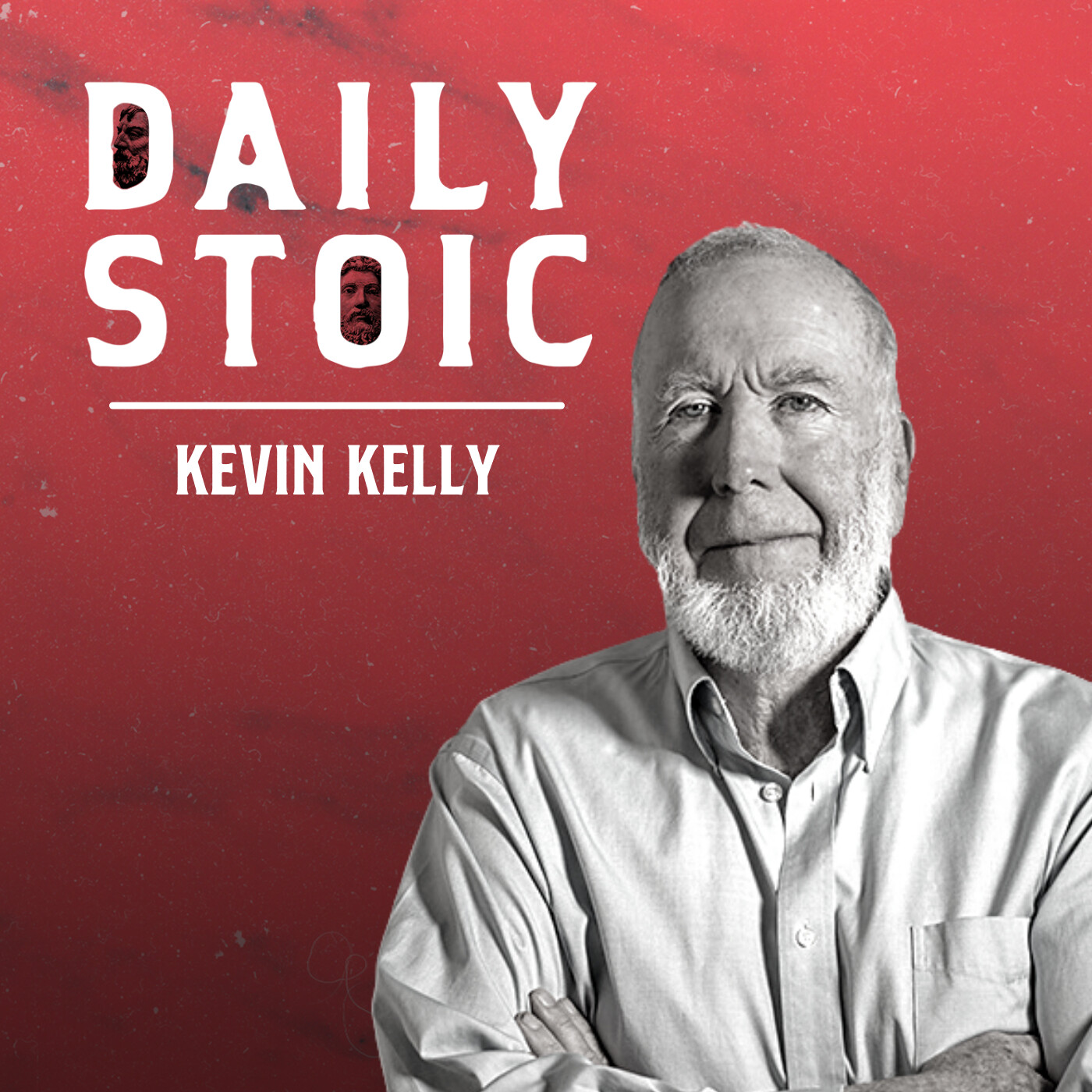
- Kevin Kelly On The Courage It Takes To Live Your Own Life
In short
In this episode, host Ryan Holiday interviews Kevin Kelly, a prominent writer and thinker, about his new book, Excellent Advice for Living: Wisdom I Wish I'd Known Earlier. Their conversation delves into themes of individuality, the importance of making mistakes, the lessons to pass down to future generations, and the fluidity of life.
Written by AI. May contain mistakes.

Ask about this episode
Get the gist, explore an idea or ask about something said.
 Claude
On The Daily Stoic, what are the key points of this episode?
Searching your listeningTranscript
Automatic transcript. May contain errors.
0:00My family owns a 2023 Toyota 4Runner and honestly it's my favorite vehicle I've ever owned. Around town, it's smooth and reliable, but where it really shines is on our trips into the backcountry. We've taken it on backpacking adventures to Colorado and New Mexico, loaded it up with gear, and never had to think twice about whether it could handle the terrain. That's what Toyota Trucks are built for. Off-road confidence, rugged durability, and the freedom to explore. Toyota has a long history with the outdoor community, and they're committed to helping more people get out there and experience what nature has to offer.
0:29From remote trails to scenic byways, Toyota Trucks empowers you to take the detour, roam freely, and discover places that still feel wild and untouched. And they're not just making great trucks, they're working to expand access to adventure so more people can connect with the outdoors and pass that passion on to the next generation. Discover your uncharted territory. Learn more at toyota.com slash trucks slash adventure dash detours. That's toyota.com slash trucks slash adventure dash detours. You hear that? That's not just a Toyota truck. That's the sound of no crowds. No alerts. No distractions.
1:11And no telling what you'll find next. You know, like a detour. So why would you ever take a tour when you could take a detour? Toyota trucks.
1:30Welcome to the weekend edition of The Daily Stoic. Each weekday, we bring you a meditation inspired by the ancient Stoics, something to help you live up to those four Stoic virtues of courage, justice, temperance, and wisdom. And then here on the weekend, we take a deeper dive into those same topics. We interview Stoic philosophers. We explore at length how these stoic ideas can be applied to our actual lives and the challenging issues of our time. Here on the weekend, when you have a little bit more space, when things have slowed down, be sure to take some time to think, to go for a walk, to sit with your journal, and most importantly, to prepare for what the week ahead may bring.
2:24Hey, it's Ryan Holiday. Welcome to another episode of the Daily Stoic Podcast. If you haven't ever read the 1 ,000 true fans essay, it's one of the most important things that I've ever read as a creator. I don't think this podcast, the Daily Stoic email, I don't even know if half my books would even exist if it wasn't for the great Kevin Kelly, who was the founding executive editor of Wired Magazine, but really one of the pioneering bloggers and thinkers about the internet as we understand it today. And he's just overall a fascinating guy, one of those most interesting men in the world type. Instead of going to college, He went to Asia as a poor solo photographer, and he went through villages in Asia and Iran and Japan, and took tens of thousands of photos.
3:26He sent me this beautiful coffee book a couple years ago that's on my coffee table, actually, called Vanishing Asia. He has a great chapter in Tim Ferriss' book, Tools of Titans. He's written a bunch of fascinating books, What Technology Wants, Out of Control, New Rules for the New Economy, The Inevitable. But his new book, I think, is actually the most well-suited to the Daily Stoic and for Daily Dad. His new book is called Excellent Advice for Living, and it's advice and experiences that he wants to pass down to his kids and his grandchildren. and he came out during South by Southwest, one of the first guests in the New Daily Stoic podcast studio.
4:10And we just had an amazing conversation that I was super inspired by. And it was definitely like a full circle moment for me because I remember I did a post about building my library like 15 years ago, one of the first blog posts that I ever wrote. And Kevin linked to it. And that was one of the first bits of validation that I ever got as a writer. Someone that I admired was linking to my stuff. and so it's very cool for me to get to interview him and talk to him about his new book especially a book about advice because he's given me so much advice over the years and if you want to talk about libraries this dude has one of the coolest libraries you have ever seen in your life you should definitely check it out but maybe start by adding his new book to your library excellent advice for living is out on may 2nd and you can go to kk.org That's his website.
5:02You can follow him on Instagram and Twitter at Kevin2Kelly and on YouTube at Kevin Kelly. Thanks so much to the one and only Kevin Kelly for trekking out and for this amazing interview, which I'm sure you are all going to love.
5:19Introducing your new Dell PC powered by the Intel Core Ultra Processor. It helps you handle a lot, even when your holiday to-do list gets to be a lot. Because it's built with all-day battery, plus powerful AI features that help you do it all with ease. From editing images, to drafting emails, to summarizing large documents, to multitasking. So you can organize your holiday shopping, and make custom holiday decor, and search for great holiday deals, and respond to holiday requests, and customer questions, and customers requesting custom things, and plan the perfect holiday dinner for vegans, vegetarians, pescatarians, and Uncle Mike's carnivore diet.
5:57Luckily, you can get a PC that helps you do it all faster, so you can get it all done. That's the power of a Dell PC with Intel inside, backed by Dell's price match guarantee. Get yours before the holidays at dell.com slash deals. Terms and conditions apply. See dell.com for details. I'm picking my kids up from school today and then doing our weekly routine, which is I take them over to Whole Foods. We get all our groceries for the week. Then we have dinner. It's one of their favorite things to do. It's one of my favorite things to do. And then my wife loves it because she doesn't have to take care of it.
6:33This holiday season, whether you're a guest or hosting the big dinner Whole Foods Market, has what you need to delight everyone at your table. They even have heat and eat sides from the prepared foods department. you can make Whole Foods your one-stop shop. Everything follows Whole Foods Market's strict ingredients standards so you know it'll be delicious and good for you. You can also order online for pickup and even delivery in select zip codes to skip the crowds. Shop everything you need at Whole Foods Market, your holiday headquarters.
7:06Well, I had one job before I came, which was to bring the Vanishing China books, which are on the coffee table at my house. And I went all the way there and I forgot to bring them back. But I actually think it's for the best because I'm not sure the table can handle them. You're right. It's a beautiful book though. Well, thank you. Incredible. I was actually reading them with my three-year-old who obviously can't read. And he was just like enthralled. Just the pictures are incredible. And you would not believe they're that old. You know what I mean? Did you have to do a lot of restoration to get the photos?
7:42No. First of all, they spanned 50 years. Some of them are only a couple years old. Right. Some of them are 50 years old. Yeah. And no, I did very little. I did the minimal amount of Photoshopping or retouching as I could just because of the volume. I have nothing against Photoshopping, but just like 9 ,000 to work on. So yeah, I mean, to the practice side, some people can tell, well, that's film and others is digital. But the other important thing is I'd never used a professional camera for the entire thing. So these were – some were point and shoots and others were just – I used a Lumix Super Zoom and I had Necromats instead of Nikons.
8:27So, yeah. So the quality varies, but it's – you don't pay attention. It's kind of like audio. Yeah. You're listening to the melody. Once you get into it, you don't stop carrying. Right, right, right, right. No, there was something, I read this article once, they were talking about the white rhino, you know, there's like one of them left and eventually they'll die. And so someone was saying like, at some point, this will be the last photo of the last rhino, right? And there's something kind of beautiful and terrifying and humbling about the idea. I mean, the book's called Vanish in China, but like a lot of the stuff you took pictures of, it doesn't exist.
9:02Those people are no longer alive. That way of life no longer exists. and there's something very ephemeral but also permanent about photography in that sense. It is. It's a document and even the people in those countries, even at that time, were not really aware of that because it's very regional and it was medieval and now, of course, they're amazed at what their own country and region had and they didn't see that themselves And so there is a joy in kind of bringing that back. And for me, of course, it's a time machine. Yeah. It's really – I had the privilege of being in a time machine and living in medieval times.
9:49Well, we think the past was this thing that happened a long time ago. But in fact, like not only is it often not that long ago as not even dead as Faulkner said. But that there are people for whom it was not the past, but it was their life. Like I was thinking about Jimmy Carter, who will probably leave us sometime in the next few months. And I've read a bunch of memoirs about his boyhood. And you go, this is a guy that grew up barefoot in a house without electricity or running water, ends up as the president, lives all the way into this age. I mean, you know, works on nuclear submarines. Right, right, right.
10:29But like that is the span of a single human life. And you think about the lives that were there when he – Right, right, right. What one human life intersecting at the beginning of his life was, it gets humbling and very distant very quickly. You could argue that he's seen more change in his life than you will see in your life. Probably. I mean going from – You know. The future got to be pretty good or pretty bad. I mean, that is an incredible leap from no plumbing, no electricity, no schooling, whatever that situation was, till now. That's a huge change. I don't think, here's what it is. I think materially, we're not going to see the same kind of change.
11:18Most of the change we're seeing is much more conceptual and intangible. Yes. The material world is not going to change as much as he saw. Well, Winston Churchill was personally there for the last cavalry charge of the British Empire and then lives to see the Beatles. Right. And, you know, like there are lives like that. Right, right, right, right. That have that sort of connection to the past. I knew this guy here in Austin. He died three or four years ago. His name was Richard Overton. And when he died, he was the oldest man in the world. He was 112. And I was thinking, so I took my oldest. this, he was like two then to meet him.
11:56And I, one thing I think about is like, my son will never meet anyone born earlier than that. Right. So like my son, however old he lives, he touches a person born in 1905 or 1906. But then, yeah, you think about who was the oldest living person when that person was born. Right, right, right. Yeah. I, yeah, I did this idea that I think Tim Urban did even better, of doing generations. And I would say, like, if you could touch somebody who was living and someone who was about to die, and that the number of generations between that to, like, back to Jesus or somebody, it's like only, you know, it's not that many.
12:36It's like, what is it, a couple hundred? Somebody told me it was six handshakes, like demonstrable people who knew each other, who touched, Queen Elizabeth arcing a huge punch. Right, exactly. Right, right. But to go from Obama to George Washington. Right, right. Yeah, like 13 generations or something. It's not very far. So you can actually imagine passing something verbally in that span. Like when we think of oral traditions. Exactly, right, right. Not that many people. So that's one of the things that we're trying to do at the Long Now Foundation is to encourage thinking in terms of generations rather than, say, years or days.
13:10Yeah. And with the idea that if you had a better sense of both your past, you would be a better ancestor into the future so that's our goal well i um i found this last night actually i saw it on reddit but it was i guess thomas edison did a bunch of recordings he had that wax cylinder thing that could exactly and so he went and he he went and recorded a bunch of the imminent oldest people alive right and i guess in 2012 a bunch of them were lost they rediscovered one in 2012 and it's some french general reciting some lines from shakespeare I'm forgetting his name, but he was born in the 1700s.
13:46And that is the oldest recording of it. There's a photograph of someone from the 1700s, but this is a voice of someone born roughly before America was America or around the time America was America. It is amazing. But that's also, there's another lesson in that, those wax cylinders with Edison, which is that one of the things I talk about in technology a lot, which is that the inventors of technologies very rarely have any graph of what it's actually going to be used for. Because Edison made a list after he did the phonograph of what he thought it was going to be used for. And number one was preserving the last words of the dying like he did to be transmitted.
14:27He thought that was the number one use. And that he had nine, 10, and then like 11 and 12 was like, maybe you could do music. So he was clueless. And that's true now with AI and other things is that people inventing it don't really know what it's going to be used for. We only figure out by using it. And so I'm always amused that Edison would have been shocked by what we actually used his invention for. No, and this sort of publicity stunt he was doing with the device has these major historical implications. Exactly. I wrote about Florence Nightingale in my book on courage. And, you know, I'm just checking some facts and I pull up her Wikipedia page and it's like, lo and behold, there's a voice recording of her and she's giving advice, you know, in the thing.
15:18And you're just like, you know, I thought this was this historical figure that was, you know, although you could read and study that there was some uncrossable chasm between. And then you're listening to their voice. And suddenly you realize that these people were people and the distance between us and the past evaporates very quickly. Yeah, yeah, yeah. No, and it's true. I mean, I got some cheap Roman coins. And to hold Roman coins in your hand and to realize that people 2 ,000 years ago were holding these, there's something weird. buying bread. And, and, you know, and they either lost them or they stored them somewhere to be found.
16:13And that's just, I don't know, that connection is just amazing. I have a signet ring, not, not this one that I don't wear for this reason, but it's a Roman signet ring. Like you can just slide on a piece of jewelry. This it's from like 300 AD. So late in the empire, but you're just like a ring is a ring the same type of jewelry still exists fingers are roughly the same size and you're wearing this thing that a human being hey should i wear the ring today or my uh i've i've a bit swollen and the ring is tight today just like people are people and And as much as technology changes, life doesn't change that much.
17:01Right. That's Jeff Bezos's little secret. He said he wanted to build a business around what doesn't change. I love that. And he said what doesn't change is people always want better selection for cheaper. So, okay, I can build a business on that. Well, I mean, I think this is why people go, how did the Stoics last? You know, how do they endure? And it's like they're giving really practical advice. about dealing with the things that are outside of our control, which fundamentally remain unchanged. And this is what I love about your new book, advice is advice. And people are people. And a lot of stuff changes, but a lot of stuff, more stuff doesn't change than changes.
17:42Right. And that's true, by the way, for technology. Most of the technology in the world that we encounter is old stuff. Yes. Wooden tables, pipes, electricity, plumbing. And that's the majority of stuff. Yes. And that's like Alan Kay's definition of technology was anything that was invented after you were born. That's what we tend to think of it. Yes. And Danny Helles modified that even further, saying technology is anything that doesn't quite work yet, which is an even better version of it. But really, most of the technology is old, old stuff that has been around. Well, I've talked to people a lot about this, people who love audiobooks, people who like e-books.
18:22I go, this is also a piece of technology. Oh, absolutely. And it's really good. I wouldn't say it's a flawless piece of technology, but it's a pretty good one. And it solves most of the problems of reading. Not all, like the problem of, I want to read lots of books and carry them with me. It doesn't solve that very well. But like, as far as I'm sitting down to consume one piece of long form literature, the book does an amazing job. And I liken it to, you know, like in every sci-fi movie, like it's like the door is like. Yeah. And then here we are living in the future and we're still using wooden doors with knobs.
19:02Right, right. Because it mostly solves the problem. Right? Like it doesn't need to be that fancy for most of what we use it for. Except in a hotel or somewhere where there's lots of people and. And it's still a door. Right, right, right. I mean, you know, it's not some massive electronic force field door. Right, right. And, you know, books do a good job. Right. And we're surrounded in the studio full of books. But what was interesting was that books did lots of jobs. And they began to shed some of those jobs, realizing that it was not the best for them. So a telephone directory was like in a book form.
19:37It was like, I don't really, the book saying, you know, I really didn't want to have that job of being a telephone director. I'll shed that one. Sure. You know, and so there were - Reference books. Reference books. It's like, no, that's not really the best thing for a book. So we're going to give that job to somebody else. And I think that, yeah, you're right. The idea of having a bound sheaf of things is good. And I think we're going to come to the e-book version of this, what I'm hoping for, a leather-bound, 100-page, flexible thing that is readable like this with ambient light. But click it twice, and it's a different book inside.
20:15But I have a really good one. I love the feel of it. It's really well-worn. It's just the size and the format that I want. And I'll have a couple of them. I'll have different sizes and brands, whatever. And that form factor is just luscious. But there is something marvelous about this permanence of books. And we at Long Now did a whole investigation about long-term digital storage, which is hugely problematic because there's long-term digital moveage. I call it moveage. The only way is you have to keep moving it, migrating it from one platform to another because the platforms go away and they're not very stable.
21:03So if you are thinking about long-term storage of information, actually paper is very, very good as long as you keep it dry. Well, and the funny thing is also, I end up reading a lot of older books, books that are out of print. So I go on Amazon or get some book. It's either$200 or it's two cents, right? Because either nobody wants it and there's a lot of them or everyone wants it and there's not a lot of them. But like, I'll get these books and I go, oh, the technology was actually better before. The book had lay flat binding. It was not meant, it wasn't printed overseas. It wasn't meant to be disposable.
21:41You were meant to have this book in your family for a generation. Right, right.
22:16years ago or something, I actually thought about deaccessing, getting rid of most of the books, moving to digital. But I changed my mind. I went to a library run by Rick Prelegger, which is, I walked in, it was like, it was something felt like I was in, there was like a beam of light going into the universe. It was this sense of power. This was the PowerPoint, almost like a sacred PowerPoint of the world, because he was collecting weird, ephemera stuff, like telephone books. Yeah. Huh. Things that people would normally throw away, zines, all kinds of stuff. And so I realized that actually we're at like peak book right now.
22:58Books will never be as inexpensive as they are right now because we'll stop printing them over time. There'll be fewer printed. There's already fewer printers. Exactly, right. And the ones that are around will become scarcer over time. And so books have never been as expensive or cheap as they are now, and they will not ever be again. And so I decided to keep my library because I think over the long term, they're going to become a little scarcer. The paper books. Books are kind of in, you could say, like in a state of managed decline. Right. And every once in a while, like during the pandemic, when books became popular or when like the Obamas publish a book and they're like, they sell suddenly like 5 million copies of something that, you know, it actually, it clogs up the printers because there's only a couple of them.
23:52Exactly. And there's only a few major publishing houses. Right. And like, I have a book coming out in May and then I have a book coming out the following May, the Daily Dad book, and then this will be the third in my Virtue series. but like the publisher's already like, we have to lock in a date for you want a slot from the printers because consolidation and then also like elimination has meant that there's fewer and fewer printers. And so while, yes, we're at this weird convergence of people still read quite a bit, the trending signs are not in the right direction. And so, you know, as they try to get as much in real time inventory as possible, um, They're reducing the capacity to make new books.
24:37Right. So let's talk about your new book. What is the difference between feedback and advice? Because you talk about as one gets advice, how one asks for it can determine whether you're getting feedback or advice. Feedback will often include criticism and complaint. advice tends to be a little bit more positive and forward-looking um and because someone's giving you advice it's usually not about like something you did wrong in the past it's usually about next time you do this or it's it's here's what i would do it's forward bent a little bit more and therefore it's it's um i find it's more actionable so yeah i think that's a good point because people go, oh, I'm going to go get some advice or they – For feedback.
25:33So it's like if you put up a request to give you feedback on the book that you just published or article you wrote, that's likely to include a lot of criticism or things that people didn't like, which is a good signal. But if you asked for advice about the article you just wrote, I think the other thing too, this is – I had not thought about this. I think there is more of a sense of trying to be more empathetic because they're maybe trying to put themselves more in your position or more thinking of you as they're giving it more than you would do if you ask for feedback. Well, I think what I take from that is how you ask for advice, who you ask advice for, how you frame what you're looking for determines the quality of what you're going to get.
26:23Fair enough. So like when I – I'll give you an example. When I was thinking of opening the bookstore, I had a bunch of people who were like, oh, it's very awesome. You should definitely do it. It's exciting. And I obviously thought it was a good idea. Right, right. So I said, I need to get some advice or feedback from someone who's going to give it to me straight. Right. And so I called Tim Ferriss, who I thought would actually tell me – I basically called Tim and I was like, tell me why I shouldn't do this. of all the people who tries to eliminate hassle, you know, expense, imposition. Outsource stuff.
26:58Yeah, who thinks efficiency and also just approaches it from an unusual angle. Right, right. I was like, this is a person I want to get advice and feedback from. And so I basically said, you know, why should I not do it? Right. Because so many people had said I should do it. Sure. I might've gone to Tim for the exact opposite reason. Also, if everyone said it was a bad idea, why would you think it was a good idea? But Tim actually gave me great advice. He basically said, what I would do is whatever you decide, think of it as an experiment. So don't, I'm opening a bookstore forever. He said, think about it as I'm opening a bookstore for two years.
27:31Sure, sure. Which is also the advice he gives people who are thinking about starting a podcast. He says, say I'm going to do six or 10 episodes. Sure, sure. Don't extrapolate out what the burden of doing it is going to be forever. And then also don't just do one. And if it doesn't work, write it off. But I think deciding whether you're trying to get confirmation or disconfirmation, do you want what that person would do or do you want them to think about what you should do? And so all advice is not created equal. How you get it and who you get it from is really important. Well, what you're suggesting, and I totally agree, is that there's a skill in asking for advice.
28:07Yes. Not just giving advice and skill, but there's a skill for asking and receiving advice, which is absolutely true. And I think that, yeah, it's like lots of things you can get better at it. Yes. Well, and first off, the idea that advice is really important. Because I think a lot of people go, I'm going to figure it out on myself. I'm autodidactic or whatever. Or they don't like, they just, I march to the beat of my own drummer. There's a line from Bismarck I love where he says, any fool can learn by experience. I prefer to learn by the experience of others. To me, advice is how you save yourself painful bumps on the head, right?
28:50Like, Hey, there's a beam, be careful, you know? Um, and so I think advice is critical and yet probably weirdly undervalued and underrated because people prefer to learn it by painful and error, sorry, by painful trial and error. Right, yeah, exactly. And that's sort of why I began jotting down little bits of advice, and my assignment was to reduce it to a sentence, to take a whole book. An epigram. Right, and make it into a little proverb, a little axiom, a little thing that I could remember, that I could repeat to myself as a reminder to change my behavior. Sure. So I remember at Holworth, there was this thing Ann Herbert, I think, first told me, which is, oh, oh, oh, like when you're invited, when I get invited to do a talk, to go somewhere, to have coffee with someone, to meet whatever it is, ask yourself, would I do this tomorrow morning?
29:47Yes. That was like, aha. Because most of the time it's like, no, I don't want to do it tomorrow morning. So those that can pass that kind of immediacy test, you're golden. And so when I get the invite, I repeat that all the time. That's really interesting. Would I want to do that if it was tomorrow morning? I don't think so. So that's the kind of thing that I was trying to do was to make it into – put a little handle on it by making it memorable and something I could repeat to myself. It's also transmittable like a tweet. very nice but it was actually originally thinking of it just as a container for me to hold it and grab it the best version of that i've heard is um hell yes or no right right like either you really want to do it yes yeah yes yeah and uh that's that that's very that's very equivalent yes um and and and all these have ancient sources and ancient heritages a lot of them i mean i don't I made up some of them, but I'm sure deep down, maybe I heard it.
30:56I don't know. But that's the whole thing about influences. They can't be unraveled. Or someone, yeah, independently, like convergent evolution. Multiple people came up with the same concept. Right. So my study of science is that the norm for all invention, all creation, is simultaneously independent. That is the norm. Yes. Not just in science, but also in the arts. And so, yes. So I tend to think that things are created in the commons. We can give a little bit of a tiny, short monopoly to encourage people to make them real. And they should go back to the commons as soon as possible. And I think, obviously, not just seeking out advice from people.
31:34And I want to get into some of the specific advice. But to me, reading is the great—we're talking about books. Reading is the way to not have to learn everything by trial and error. Right, right, right. General Mattis has talked about, he basically says, people have been fighting wars for 5 or 10 ,000 years. They've been writing books about it for about 5 or 10 ,000 years. And he goes, if you're a leader of troops in battle, he says, it's unconscionable for you to try to learn lessons by experience. Right. Because that experience is paid for in the blood of other people, maybe even yourself, when someone else has been in more or less the same situation, not only learned a lesson, but then wrote a book about it.
32:21Right. Or someone wrote a book about that experience. And so, you know, advice isn't just a nice to have thing. it is there's there's almost something selfish and reckless about not availing yourself of the fact that somebody i like to say somebody either smarter than you or much dumber than you has been in the same situation and you should benefit from right what either of them did or but what both of them did exactly yes i i think you're 100 and then there's just in terms of not advice but reading one of my bits of advice is that the best schooling you can give your kids is to read to them by far it'll be more impact than anything else that happens in their lives if you read to them and um it's so easy to do
33:16you hear that that's not just a toyota truck that's the sound of no crowds no alerts, no distractions, and no telling what you'll find next. You know, like a detour. So why would you ever take a tour when you could take a detour? Toyota Trucks. Thanks to Toyota Trucks for sponsoring this episode. When I bought my ranch in 2015 out here in Bastro County. I drove my car about halfway down the dirt road that we live on, thought this isn't going to work, stopped, parked it, walked the rest of the way home, borrowed my wife's car, drove into Austin and bought a truck. What I bought was a Toyota Tacoma.
34:04And this truck wasn't just transportation getting me to and from my house. It unlocked a whole different style of living for us, not just on the ranch, but in our little Texas towns. There were places I could go now that I couldn't go before, especially out here in the piney forests, through the fields, and on the unpaved roads like the one that I lived in. We got to go deep into the hill country's wild beauty. We've driven all the way out to East Texas. We've driven across the country. And by we, I mean not just my wife, but both my kids who I drove home from the hospital in that truck. Toyota trucks are built for those who understand that the best adventures happen when you're willing to veer off course, because you never know when you'll end up on a Toyota adventure detour.
34:54And of course, this is stoicism, too, because every detour, every obstacle is an opportunity. But it's helpful if you can handle the difficulty inherent in that. If you've got the resilience and the right companion to make it wherever the road takes you. Discover your uncharted territory. Learn more at toyota.com slash trucks slash adventure dash detours.
35:21So one of the pieces of advice I liked in the book, you say, don't try to be the best, try to be the only. What does it mean? Don't aim to be the best, aim to be the only.
35:35There's a lot there. So the, I mean, there's a natural drive for us all to be excellent, to push towards becoming the best in things. And indeed, elsewhere I talk about trying to become master of a skill, and that's actually a better way than trying to find your passion in the beginning. Sure. So this idea of kind of mastering and become the better and best is a natural thing. But the idea is that it's not far enough. Sure. And, you know, the kind of holy trinity of anybody's career is to work on something that you love, to work on something that you're good at, and then to work on something that's well paid.
36:20Yeah. Right? And if you can have that little overlapping Venn diagram, like you're golden. But there's another level beyond that. And that other level is being the only person to do something or doing it in your own way that no one else can do or to do something that nobody else can do. And that is where at that point your true genius is because everybody has a different face and a different combination of talents. And there'll be some combination of talents that each person is capable of and I truly, truly, truly believe is unique and different. and we should enjoy, and we should be sharing it.
37:02There's kind of a, you need to do your art, because otherwise you're selfish, and you're keeping it from us. And so there is a sense in which aiming for that position where you are the only person doing this, or you're doing it in a way that only you can do, is, one, good for society, we're not replicating, and good for you, because you are now in a position where you don't have competitors. You don't need a resume, right? And so the thing about that that I want to emphasize is that that's a very high bar. Knowing that, coming to understand what it is that you can do different or better about something, for many people like myself, takes almost a whole life to get to.
37:46You can be going in that direction, but to actually come at your cost, you're actually never even done. You're always figuring out. And I've had the honor and the luck to be around very remarkable people, some of them very famous, billionaires. And they're still working on it. Having a million dollars doesn't answer that question of what it is. There's a whole list of billionaires. Exactly. And so this aim, to aim to be the only, and it's related in some ways to another piece of advice in the book that's maybe career-ish, which is that if at all possible, you want to work on something that nobody has a name for what it is that you're doing.
38:28Sure. That kind of takes a long time to explain to your mother what it is. And that means that you're kind of working at this. There's a greater chance that this is going to be something about you and your only skills. But for sure, you'll probably won't have that much competition. and it's much more likely that that is the place where a breakthrough will happen or the frontier because those usually happen out in front of language. I do agree. It's the work of one's life to sort of do the thing that only you can do to sort of carve out your niche, to have the field totally yourself. But there's also something actually very attainable and accessible about it.
39:07If you think about it, it's like each of us have a totally unique sort of set of DNA that's never existed before, will never exist again. We have a totally unique set of experiences. We exist in a moment in time that will never exist again. And so it's almost strange if you think about it, that we're all the same, that we all work on the same things. Like it's almost as if we are working to deny our own unique and inherent God-given monopoly. Exactly. It's somehow we're going the opposite of the direction that we should go. A hundred percent. You want to be in your own movie. You don't want to be an extra in someone else's movie, and that's often where we are.
39:49But the thing about it is, you're right. In some ways, when you were there, it seems inevitable and obvious, and it's the easiest thing to do because it fits all your natural abilities. But the difficulty is not actually being there or getting there. It's the fact that we are seduced and distracted and, in some ways, following these other examples of how people become successful. So all these other examples, like, well, success is being a basketball star. Well, that's a very limited amount of people or success is being a movie star or YouTube star, whatever it is. When to figure out an alternative form of it, if you could get there, it'd be totally natural and it'd seem really inevitable.
40:37But finding that means that you're going to have a path that probably will have detours, sidetracks, turnarounds, setbacks, which every single remarkable person I know, that is the course of their life. They didn't get to it straight away. Well, it takes courage to sit alone, to stand apart, right? There's weirdly, although you would think you would want the field all to yourself, there's a certain amount of comfort and safety in the competition or the crowded area. And this is why - It's confirmation. It's kind of like you're confirming. Yeah, right. When I went to my publisher and I said, hey, I want to write this book about an obscure school of ancient philosophy.
41:22They were not like, cha-ching. You know, like it seemed like a crazy idea. Yeah, yeah, yeah. I took half for that book that I took for the last one. Now, tons of people write books about socials because it was popular. And so like the loneliness of doing a thing that either no one is doing or very few people are doing or no one in your area is doing. That is, obviously, courage is charging lonely, the sole person into the field of battle and running into a burning building, all of that. But there's also just the courage of like, I'm going to be myself, even though that's weird, even though the odds are stacked against that, even though people are telling me it's a bad idea.
42:03You have to be comfortable being the only one doing the thing, which is weirdly the scary part. And it is. It's not often comfortable, particularly when you're starting out and young and you haven't had any successes. You will certainly question yourself all the time. Am I totally crazy? Is this stupid? And by the way. It may be. It may be. Could be a terrible idea. And that's the thing. And this is the weird thing is that you're kind of navigating the thing where sometimes you actually do want to be listening to what people say around you because here's the thing. You cannot do this on your own.
42:36You cannot find your place and who you should be by yourself. We are just too opaque. You need your family, your friends, your clients, your customers. You need everybody around you to help you find it because— I still had to have an editor on that book. Exactly. I had to find an audience. Right. You're not doing it for an audience of one, or it's probably not too commercially viable. Right. You can do things for audience, but in terms of helping you find out what it is, you need that feedback from outside because not only are we opaque to each other, we're opaque to ourselves. And I know this from my work with the quantified self and other stuff.
43:15It's just like we just don't have an easy access to even how we make our own decisions, how we proceed. And so we need these outside signals to help us make those choices that we go through. And so if you are really, I mean, doing it by yourself or on your own, you want to be careful about that. You want to do it in the right way. I think solitude is absolutely necessary to be creative, but being lonely is not. There's a difference between solitude and loneliness. Well, and there's a problem I find with a lot of creative people. They go off in their cave to make their thing because that's their image of the artist.
43:56and then they make a thing that's only relevant or interesting to the people in that cave which is one person right you you have to have a relationship with the audience a connection to the audience uh a back and forth with the audience if you want this thing to matter to other people now it could just be this is solely a cathartic creative experience but if you're trying to make something that that helps or works for other people you can't you have other people involved yes exactly right yeah if an audience of one and i do art for the audience of one and by the way most of the 30 million ai generated images created each day have an audience of one sure you ask the computer it's just a pure pleasure of seeing it's like going out into a meadow doing a hike coming up lights perfectly against the the blooms at that day for that hour and no one ever see it again but you were there and you enjoyed it so audience of ones is fine but if you were doing something where other people are going to be valuing you then you have to involve them in the process right yeah i heard peter teal say one time uh competition is for losers which i love because talking about courage it's it's harder to run a race against yourself right it is it's harder when there aren't people keeping score telling you you succeeded you didn't succeed.
45:21You're a winner. You're a loser. To race against yourself, to hold your own standards, to do a thing where you're the only one doing it, that takes a kind of a fortitude, a strength, a self-awareness, a self-containment that people who just want to do what's popular or easy just don't really fully understand. Yeah. It's tough. So you, yeah, you have this paradox or dilemma, these cross tensions of being smart enough to ignore other people when you need it and smart enough to pay attention and quit when it's not working. So this idea of, you know, the virtues of quitting are part of this process.
46:08And, you know, you were talking before about these iterations. That's another piece of advice is that you want to prototype your life instead of making grand plans. Yes. This idea you're kind of iterating towards things. Instead of making, oh, I'm going to make a bookstore and I'm going to move there and it's going to be forever. No, no, no. It's like it's a trial. It's an experiment. It's a prototype. We try something. If that works, we go forward. And that idea of prototyping was absolutely something I wish I'd known when I was younger. Because I've been a maker all my life, but I didn't know about prototyping.
46:43I didn't know about this iterative process, even in writing. I thought that if you made something, went all the way to the end, and it didn't work or whatever, that was kind of like a failure. The new model is you build one to throw away. You write a first draft to throw away. Sure. You evolve and iterate towards it. And that's been transformative. And I really wished I knew that when I was younger. Yeah, I think if you have more of a vague idea of where you want to end up and you're open, it makes it easier for you to admit error, makes it easier for you to acknowledge and learn from mistakes, and it also makes it easier for you to course correct.
47:24Right. Whereas if, like Paul Graham says, keep your identity small. If you identify with everything you're doing, if there's a very specific outcome that you have said, this is success, anything short of this or different than this is not success, it makes it hard for you to go, I really hate being a lawyer. Like, I probably shouldn't have gone to law school. You know, but the ability to be like, no, actually, here's what I want my days to look like. Or here's when I really feel fulfilled. Or, you know, there's actually seasons for things in my life. If you think about it that way, I think you have the ability to adjust and you're flexible.
48:03Whereas, you know, if you're identifying with any one thing too strongly, you're sort of blinding yourself and then you can get stuck really easily. Well, that also extends to beliefs and positions. So the danger of having your identity around certain axioms or conditions or doctrines is that you can't change your mind. Yeah. Because then you have to change your identity. Yes. You want to have your identity revolved around your character or values. Yes. That aren't going to change. And focus on the things that don't change. Exactly right. And so the other thing, too, I would say in the same kind of vein is that if you should be really careful if your positions on one situation or one question can be determined by your position on others, you are likely to be in a grip of an idol.
49:00Yes. Right? Sure. Or a tribe. Real people with complex personalities in many dimensions to them are going to be slightly unpredictable because they're thinking for themselves and they're having decided, and they're not going to be consistent. And also, by the way, if you're too predictable, it's too easy to be replaced by AI. Sure. One of the reasons in the modern world that you're going to want to have a sense of not being that predictable by your things is because you'll be more you. And so there'll be less likely that you could be imitated. Yeah, I think about this in terms of what you're reading.
49:48Like how often do you read things that you disagree with? How often do you change your mind? How often do you find that you agree with this person, this school of thought on most things, but not these three or four things? And that's a sign of intellectual independence. It's a sign of thinking for oneself. And it's also, I think, a sign that you're being active as opposed to you've solidified and this is just simply who you are. Now you can get into trouble, right? Because I think to me, actually, one of the dangers of our time is not just groupthink or misinformation or disinformation. And I think you see this most in Silicon Valley is this kind of contrarian thinking, which can serve one really well.
50:39But if your thing, like Mark Twain says, whenever you find yourself on the side of the majority, pause and reflect. Right. He doesn't mean as a knee jerk reaction, think the opposite of the crowd at all times. He's saying pause and reflect. Right. Most of the time you actually probably should end up on the side of the majority. You should have a couple things that you're contrarian about, but it's not just I do the opposite of what most people do. That's actually less independent thinking because you're almost being wrong on purpose. Right. We actually, I mean, we were talking about how most of the technology in the world is old.
51:15Most of the things everybody knows are true. Yes. Everybody knows, most of the things everybody knows are true. And as Carl Sagan said, you know, they laughed at Galileo, they laughed at Einstein, and they laughed at Bozo the Clown. Yes. Okay, so. They laughed at a lot of people who were totally wrong. Totally wrong. And so, yeah, so yeah, being contrarian. About everything is as ideologically dogmatic as anything else. I think it's interesting in real time to watch Elon Musk sort of do this on Twitter, where you're just like, that can't possibly be a position that you thought yourself into. I think that's a position of you taking the opposite of the position of someone you don't like, or trying to be someone that other people don't like, right?
52:07And that sometimes can work, and sometimes it can work in a huge way. It's almost a dangerous lesson for a maverick thinker, and I know you're sometimes identified as a maverick, is like the thing that got you there, it's like you can only be a maverick about a couple big things. Right. Or you end up being a crazy person because you've rejected all the foundational tenets of society. Like Diogenes the Cynic is fascinating, right? The philosopher who lives in a barrel, he questions. It's like, yeah, he was right about some things, but he also lived in a barrel, you know? Like you end up becoming the person talking to themselves on the street.
52:55You can outsmart yourself, essentially. Yeah, yeah. So the ability to change your mind, my little saying, is that you're only as young as the last time you changed your mind. And you do want to be able to change your mind. But as you said, you have – you can only be a heretic to some degree. You have to have some orthodoxy to function because most of the things everybody knows are true. And if you're questioning everything, that's wasted effort. It's unproductive. And so that kind of light touch, that stance of getting into this, all the things we've talked about, there are tensions. There's an art to this.
53:43It's not a rule-bound thing. There's trade-offs involved. So it costs you something to be contrarian. So you kind of have a limited budget, a microdurian budget. Where am I going to spend it on? And, you know, I have this idea, my definition of heresies are things that you believe that the people that you most respect do not believe. And you probably have a contrarian heresy budget to spend on. And so where is it worth taking a stand and kind of investigating and putting your energy in? Because it will cost you something to do that. Yeah, I was talking to a friend who's sort of always questioning stuff.
54:26Right, right. Do you have to do it that way? What about this way? Someone was saying that he was very Socratic. And I agreed. And I said, I just think it's worth pointing out, or as a reminder, they did kill Socrates. You know, like, you have a limited budget. You know, you're only going to be put up with for so long. And you got to figure out how to choose your battles. Exactly right. And it's not so much the questioning. It's like, again, if that's the only thing you can do. So, I mean, the great people to work with are people who do maybe question a lot. But then I think what they call it, there was something like open debate and then high commitment.
55:08And this is what we tried to practice at Wired. Lose opinions strongly held. Well, loose opinions strongly held is one of them. But there's another sense of it within a group, which is that we're going to kind of question everything. But once we decide what we're going to do, there's no questioning anymore. Yes. And that's sort of what I have found in working. where, yes, there's this period of time we'll question everything, but once we decide there's no more questioning, we're going to go forward. Because what's obnoxious is always questioning, always questioning, always questioning, and then not standing for anything.
55:34There's no there, there. And so it's almost, in a way, the easiest thing to do is, what about this? What about this? You can't do that. That's not going to work where it is. So yeah, no, so it's like, let's question everything. And there's this, and it's very much like the difference between the creativity, creative, and the editing functions. that you do, there's a moment where everything's up for grab, it's blue sky, no judgment, it's going to question everything. And then in the second phase, it's like, no, this is going to hammer down, no dissent, we're moving forward, we're going to optimize.
56:07And then you go to the next period, we're at the next level, and it's, okay, now we're open up again for mistakes, whatever else. And so I think you do have to divorce those two functions almost.
56:21You've probably heard the headlines about all the different cuts to foreign aid and food benefits. This is having a profound impact on the world's poorest people and the world's poorest communities. But, you know, just hearing about that, that's not what stoicism is about. Stoicism is, to me, what you're going to do about it. And that's where GiveWell comes in. GiveWell is trusted by tens of thousands of donors each year because they provide free and independent research that helps you understand how to have a big impact. GiveWell has spent the last 18 years researching global health and poverty alleviation, and they direct funding to the highest impact opportunities.
57:01Over 150 ,000 donors have already trusted GiveWell to give more than$2.5 billion over the last several years, and research suggests that these donations will save over 300 ,000 lives. I myself am one of those donors. I donate to GiveWell every year. It means a lot to me. And you can find all their research and recommendations on their site for free. And thanks to the donors that sponsor this research, GiveWell doesn't take a cut from your tax-deductible donation to their recommended funds. And if this is your first gift through GiveWell, you can have your donation matched up to$100 before the end of the year, or as long as matching funds last.
57:35To claim your match, go to GiveWell.org and pick Daily Stoic from the drop-down menu under Podcast. That's how they know that you heard about GiveWell from The Daily Stoic, and you'll get your donation matched. That's givewell.org, code The Daily Stoic to donate or find out more. I got an amazing night's sleep last night. One, because my six-year-old fell asleep in the car at like six o 'clock, and he transferred him from the car seat to the bed, and it stuck, which is just magic. So he's in bed way earlier than normal. But I sleep really well every night because I have a 8sleep Pod 5 Ultra, which is 8sleep's best product.
58:14I've used 8sleep for many years now, and it's just totally transformed how I sleep, made me sleep better, made my wife sleep better. It's amazing. So basically, 8sleep is this topper that goes over your mattress. It can heat and cool both sides separately. It can raise and lower each side separately. So it helps you fall asleep faster, stay asleep, and then wake up better. Eight Sleep buzzes me to wake gently every morning as opposed to some loud blaring alarm. And then I can check the app and it tells me my sleep score. It even helps me optimize my day based on how I slept. If you want to survive the holidays like a pro and just generally sleep better, Head over to 8sleep.com slash Daily Stoic and use code Daily Stoic to get$350 off your very own Pod 5 Ultra.
59:05The best part is you still get 30 days to try it at home and return it if you don't like it. But I know you will. Trust me, your body will thank you for this investment in better sleep, shipping to many countries worldwide. See details at 8sleep.com slash Daily Stoic.
59:22What advice do you have for making better decisions? Or big, let's say big decisions. Yeah, well, so that's a good question.
59:36the biggest decision I made early in my life that I could have used more advice on was the decision you also made the decision to drop out of college. And I realized that there wasn't anyone who could really give me good advice on this thing. Sure, sure, sure. I think we kind of touched on this. It's like an experiment. So you want to make it, you want to do it so that you keep your options open. You don't want to burn bridges behind you. You don't want to step into something where you reduce your options. Sure. So like for college these days, taking a gap year is one way to kind of try out this idea of maybe I shouldn't be here at all.
1:00:14Let me see what it looks like if I don't have, can I keep myself busy and moving forward? So gap year would be one way to drop out of college without burning, you know, leaving options open. Getting married, people, you know, they live together. They have all kinds of ways in which you're going to try that out. So I think that I would emphasize this idea of prototyping your life rather than making grand decisions. make iterative decisions that you could reverse. And most decisions, except for, I don't know, getting a leg amputated, are pretty reversible. I think understanding that things are reversible is really freeing and probably a good piece of advice unto itself, right?
1:00:56Because like when I was dropping out of college, like I remember I went to the registrar's office and I said, I'm here to drop out of college. And they were like, that's not a thing. They were like, you can fill out this form. And I actually just found it. They were like, it's$60 to pause your classes. And then they were like, you can come back literally whenever you want for the next 10 years. And I remember thinking, well, I wish someone would have told me this. Sometime during the last week when I was torturing myself. And then sometime when I went to my parents and they more or less disowned me for this life-changing decision, which was actually just a one semester break on auto renew, right?
1:01:44And so we tend to think, oh, if I do this or that, that's me forever. Forever, right. And it can never be undone. Right. And when you talk to people that – I remember when I was thinking about dropping out of college, I talked to someone who was like, they were like, I got mono in college and I had to spend a year in the hospital or something like that. Maybe it wasn't mono. But they were like, I spent a year in the hospital when I was in college. So I graduated in five years. And he was like, do you know how often this has come up in my life? Never, right? And realizing that, oh, even if it took me 11 months to figure out this was not the right decision, it would be a blip.
1:02:27Right, right, right. And so when you understand, hey, I'm quitting my job to start a company, it feels like the craziest thing in the world to do. And then you talk to a million people who've done that exact thing. For some of them, it worked out. For other ones, it didn't work out. You realize, oh, the stakes on this are actually lower than I thought. Right. So I'm trying to think of how – this is my little assignment to myself is how I reduce this all to this little tiny phrase. And it's sort of like the best way to make big decisions is to not make them big. Yes, to make the littlest decisions.
1:03:04Yeah, to reduce all your decisions to a series of little decisions. And I think that's what you're doing with the prototyping. You're trying not to have big decisions by making a bunch of little decisions. That's right. How do you lower the stakes? Right. So then you can actually be more rational. Right. Because you're not thinking, well, is this worth my entire future? Your entire future is not actually on the table here. Right, exactly. The next six months are on the table here. And if something outside of your control disrupted the next six months of your life, you go, okay, right? Like I thought about that during the pandemic.
1:03:45It's like, hey, like, yeah, if I got sick for a year or if we took a year off and traveled, we'd go, what an amazing adventure, right? This is so cool. Yeah, yeah. Or, hey, I'm so glad I survived. Right, right, right. I wouldn't be going, the lost year of my life, I'll never get that back. I wouldn't be angry, right? Sure, sure. I would, you know, and so finding another, the other thing I think, what's another way to phrase this? What's another angle to look at this, not the one that's intimidating you or scaring you or whatever? That's one of my pieces of advice for young people, again, is to spend a year or something like that living as cheaply, as simply as you possibly can.
1:04:27I mean, like living in a tent, like almost like a homeless person, living in a tent, a cabin, whatever, eating beans and rice, spending almost nothing. Use a local library, whatever it is. Just like see how little you can get away with because that will be your worst case scenario. And you will have lived through that. And when you have to make a decision about, well, what if all fails and I don't have any money or income, it's like you've already practiced that. And it won't be scary. You'll be empowered. It will be an adventure at that point. And so that's another way to kind of take the wind out of these big decisions is to rehearse what the down view, the less optimal scenario, what that would look like.
1:05:10And you'll discover that it ain't so bad. Seneca says we should actually do that one day a month. He says one day a month you should wear your worst clothes. You should eat the worst food. You should sleep on the floor. You should, he says, practice like, you know, basically the life of most of the people on the planet. And then he says when you get through it, you can go, this is what I was so afraid of. And I think that is really important. When I think back to, you know, when I'm sleeping on a futon on the floor and making no money, and it wasn't just not that bad. I loved it. Like, I think back to those as the good old days, right?
1:05:56And then you go, oh, actually, if there was a lean year or a disrupted year, 20 years from then, I wouldn't, again, be thinking, what a tragedy. I would be going, that was an experience. Exactly. And kind of aligned with that is another piece of advice in the book, which is that if you can, while you're young, spend a bunch of time doing things that don't look anything like success, that are crazy, demented, unhinged, completely unprofitable, out of the ordinary, uncommon, dumb. a waste of time, all these things, the further they look like success, the better, because as you go on, that experience will become your touchstone and the thing that you will return to and oftentimes some basis for your later success.
1:07:06Speaking of parents, my next book is The Daily Dots. It's one piece of parenting advice. every single day. All right. What advice would you specifically give parents? Sure, sure, sure. You're a parent. I have three kids. So there are some parenting advice in the book. One of the ones that was sort of surprising to me is when we were kind of disciplining, setting up household rules, we let the kids choose the punishment for the thing. And they were much harsher than we would. It's like, okay, here's what it is. It's like, what do you think should be the consequences of if you were to break that rule?
1:07:47Yeah. And how should we do it? And they're kind of like, they're going through it and they're saying, oh, I wish you'd have candy or no dessert or whatever it is. And when you have them participating in that, it's very powerful. There's buy-in. There's buy-in, right. Great. Another bit of advice, again, something I wish I'd known earlier, I almost have a regret about it, but it was to manufacture, to invent as many rituals as you possibly can. Traditions. Traditions, rituals, and stuff. And a ritual is almost defined as if you do it three times in a row. It's a ritual. And it doesn't matter whether it's deeply symbolic or religiously significant, It's just something you're doing.
1:08:30And the key thing is there has to be anticipation. On Christmas morning, this is what we do. Well, yeah. Or on Sunday morning, for 20 years, every Sunday morning, I made pancakes. That was something. And there was something comforting, grounding, incredibly anchoring about something as simple as that. That on Sunday morning, there will be pancakes. I'll be making pancakes. And so there's Austin Kleon does the pizza night on Friday night without fail. There's something about that. There are even things like that. Or there's seasonal things you do. Or there's annual things. Or things that you do at a birthday.
1:09:10Or there's things that you do to evoke, start the games. We say a grace before every meal at dinner. That's our ritual. and everybody's ready for it, everybody participates, and that's what our family does. And so you want to have things, and the related bit of advice for parenting is that if thinking of the family as a unit and trying to develop an identity to the family that the kids can join so that it becomes their identity, so that their identity is widened to include the family. And that, again, is very anchoring so that our family does X or our family does not do X. And being able to actually articulate that so that that's what our family is and does.
1:10:07And that's, as they get older, becomes more and more, again, of an anchor in their own identity is part of, I'm part of a family and our family does this or not that. There's one I have, I actually have a coin on my desk, so I look at it all the time. and it just says all time is quality time. Yes. Or it's all quality time. Jerry Seinfeld. Yes. I don't know if you heard his rant on that. Yeah, he said garbage time versus quality time. He says, forget the quality time. Give me the garbage time. And so I shortened that for me is that it's all quality time. Right. That being stuck in traffic is quality time.
1:10:43Sitting on the couch is quality time. You know, going to school is quality time. At any time. Because you think about it with a parent. You're like, we're going to take them on this big trip. Yeah. Like, we're going on vacation. And then you forget that driving to the airport is part of the trip. Sure. And being stuck at the airport is part of the trip. And waiting for your bags is part of the trip. There's no moment when the quality time begins or ends. It's all quality time. If you choose to, one, be present for it, not be an anxious, nervous, stressed out mess, which I find myself falling into all the time.
1:11:22And if you're not in some anticipation mode of, I can't wait till we get there. Right. Because you don't know if you're going to get there, but you know you're all in the car, strapped in right now. Right, right, right. Let's enjoy that. Yeah, I think so.
1:11:40I was just going to say something, But it's that idea of the way I would say it in my book is that you should spend half as much money on your child and twice as much time as you think. Time is children are just not at all generally sensitive about lack of money or how much money you have. It just doesn't register. What they are paying attention to is how much time you're giving them, which are very sensitive to. I saw a thing. It was like, what was a rich kid growing up? And it was like a kid whose parents picked them up from school. Right? Because they had time. Right, right, right. They had freedom.
1:12:25Right, right. It might actually be, those might be the parents that actually didn't have any money because they weren't sending a nanny or something to do it. But it was like, I love that in two senses. One, it was time. But two, rich was like, you got time with your parents. Well, so I actually have a different definition. I think the rich have money and the wealthy have time. It's much easier to be wealthy than rich. And by that definition, I am the wealthiest person that I know because I have had a life where I have constructed my life to have total control of my time. Yes. And that has made me wealthy beyond belief.
1:13:03I was with a bunch of billionaires doing a walk, and I was boasting to them that I was the wealthiest among them because they were all bound by their billions. Yeah. You go, what are you doing after this? Oh, I'm getting in my private jet to fly to this other thing, to fly to this other thing. Right. And you go, when are you seeing your kids? Yeah. No, I can very safely tell every single one of your listeners that do not get a billion dollars. Do not. Yeah. Try your hardest not to have a billion dollars because that is such a burden and a burden on your family. And it does not answer the questions of what you can do that nobody else can do.
1:13:47Well, I was actually just writing about this for the Daily Dad email recently. I was, it's like, we all know that getting a billion dollars or having generational wealth tends to wreak havoc on the family. The kids fight about it in the will. They get a cocaine addiction. Right, right, right. They drop out of private school. We think about that. And we know that it's like, we know that, hey, there's rapids ahead or dangerous waterfall ahead. And yet, what are we doing? We're paddling as fast as we can towards that exact outcome. Like, you go, what are you doing? I'm trying to make more money. We all want to hit strike it.
1:14:21And even though there's another part of us that deep down knows that might well be the worst thing that could possibly happen to your family. Yeah. I was just trying to find in my little book about my advice about this, but here it is. Aim to die broke. Give to your beneficiaries before you die. Yeah. It's more fun and more useful to them. Spend it all. Your last check should go to the funeral home and it should bounce. So, yes. Yeah. It's like you don't burden your kids. I like Warren Buffett's bit of advice, which is I'm going to give my kids enough money that they can do what they want to do, but not too much that they can't do anything or don't do anything.
1:15:06I have two maybe rules. You could tell me how you think about them as sort of epigrams or rules for parenting. Number one is – number one, I got it from Bruce Springsteen. He said we can choose to be an ancestor to our children or a ghost. Right? Do we haunt them or do we guide and inspire them? And so I think about it like, am I - You mean while you're living, you mean while you're a parent? Living and after we're gone. But like, so what are the decisions you're making today or tomorrow or after you're gone? Are you a thing that haunts your children or a thing that inspires and guides and supports them?
1:15:48Sure, sure. Right? It's like, you're going to be the voice in your child's head. Yeah. Right? You think about where the voice in your head came from. it's eerily similar to your mom's voice or your dad's voice and is that a positive voice or a negative okay all right good what do you think of that yeah i i think it's true um i'm thinking of my own parents right now um my parents one thing i did learn from them was uh i paid much more attention to what they did than what they said and that's how we raise our kids and the interesting thing about this book is i didn't get we didn't give any this advice to our kids at all.
1:16:24We never said any of this. You tried to live it. We tried to live it. And it worked. You struggled with it. You showed them that you were struggling with it. And actually, people have asked, because I wrote this kind of originally for my children as adults, trying to put it down, the question was, well, what do they think of this? And so I sent it, the gallery, to my son. I said, people want to know what you think of this. He's 26. He said, well, you know, No prompting at all. He said, I never heard you say this, but you actually were trying to teach us that. Yes. And I thought, oh, wow, okay, that worked.
1:16:58That really worked. The Stoics would say, don't talk about your philosophy, embody it. Yeah, exactly. And that's really, really true. They're going to pay much more attention to what you do than to what you say. And so you want to embody it. And that's really good. There's also, maybe this is your next book, there's grandparent advice. Yes. grandparenting and here's my little i've now a new grandparent and i've been around my mother-in-law lived with us for years and so we've seen grandparents in action here's the thing that i say about grandparents which is um um when you're doing grandparenting is not parenting it's grandparenting and that when you at parents house parents rules grandparents house grandparents rules.
1:17:48So one of the things is that you, we can have different rules than our kids do for theirs, but when they're around us, they're going to follow our rules and we know, whatever it is, there are tendencies. And so that's another level of how do you be a good grandparent? I have thought about why do some, why do one, why do kids seem to like grandparents sometimes more than their parents. And why do parents who struggled end up sometimes being great grandparents? I think suddenly they've stopped caring so much about things that never mattered. You know? And I think that's a lesson of how often, like as a grandparent, you're not, if you're doing it right, you're not sweating what they're wearing.
1:18:31You're not sweating this or this or this or that. And you're much more accepting and your love is much more unconditional, which it should have been all along. Yeah, I think, now that you said it, we've always been grandparenting our kids. Yeah. That's what an ancestor too, is there more as an example, a moral force and not a strict disciplinarian or a tyrant. Yeah, we didn't parent our kids. We just grandparented them. Oh, that's great. That's great. I'm gonna write about that. The other one, there's a song by the highway women and they talk about the crowded table. and I've taken that to be like, what is success as a parent?
1:19:10It's hard to define what success is, right? And so I think a lot of people default to, as they do in life, we're talking about, how much money does my kid make? How many grandkids do I have, let's say, or did they marry the right kind of people? Do they marry up or down? Are they in a prestigious profession or no? And to me, success, when you're older, if you're still lucky enough to be here, Success is going to be your kids are around. They want to be around you. Like they could live all over the world, but do you have to call and hound them to come home for Christmas? Are they secretly miserable the whole time they're visiting?
1:19:48Or do you have people around you? There was a writer I was talking – I was reading about once. He was talking about how his kids were all home for something. He and his wife went to bed early. and they could hear their kids talking in the living room for hours. And he wrote, it was a poet, William Stafford. And he was saying, he turned to his wife and he said, this is the eulogy that we get to hear. His kids having fun together in their house after they'd grown up and moved away. And so I kind of, that's what I think about the decision when I think about who I want to be and how I want to parent, especially when they're a little bit older and I'm less in charge, is I want to, it's not that I want to be their best friend, but I want to sweat the right things so that when they have choice, they choose to be around.
1:20:41Right, exactly. You're 100 % correct. And that's our experience as well. And I also think that going back to the crowded table, there's one of the affordances that if you are lucky to afford, is to have the extended family, cousins, grandma, to have them around. There is nothing that I think helps that towards that kind of a success because that's part of what we found. We had a large extended family. My nephews and niece lived with us at different times. And so even though we had only three kids, they were part of a larger group of siblings. And that is some of that also, again, going back to your role, it kind of eases your role as a parent because you have these other people co-parodied.
1:21:37Basically, it's not just you parenting them, it's the other adults in their lives, which are really essential. And I love the picture of that as a success state, a victory state, is to have your kids, which our kids do. They want to travel with us. They want to go with us when we're going somewhere. Why can't we come? They're adults, right? Right, they call you to tell them what's going on, ask for advice. Exactly, everything like that. And so, yeah, I think that is a good thing to aim for. And if I may offer some unsolicited advice to parents, have as many kids as you possibly can have. You will never, ever regret it, those additional ones.
1:22:19Absolutely, and there is no population, overpopulation problem. Sure. It isn't there, and it's certainly not in this country. Have as many kids as you possibly can, and everybody's situation is different, but you will not regret that. And the kids love it. They just – our young son was asking us for a little brother all the time because it was so much fun. So as we wrap up, you've written many books. This is a book sort of advice. I imagine you're starting to think about legacy. How do you think about, and we talked about vanishing China at the beginning, like nothing is here forever. How do you think about the ephemerality of life?
1:23:04Obviously, I think one of the most interesting things about the Stokes is, you know, the idea of momentum, Tempus Fugit. How do you think about that? I've been thinking about my own mortality since I was very, very young. And I've always been aware of it. I had a religious conversion when I was 29, and I had the assignment to live as if I was going to die in six months, which I did. And that book of The Bicycle Across is actually my journal of coming to my last days. What changed for you thinking in terms of a six-month time span? Well, the thing I realized as I literally did everything to prepare for that is that there is this, the future is taken away one day at a time.
1:23:45Yeah. It's like, you're going to not be here. you don't think about the future and i realized how vital it is to have a future it was really very very um um what was the word sobering despairing not to have a future and so um so i became much more interested in the future after that after that rebirth when i regained my time and um but so that so i feel i have completely rehearsed already when i was very young i rehearsed like being prepared saying no i mean i am ready i don't want to go but i am prepared to go and so i have a countdown clock which i have been running i started i don't know 15 years ago or so And it took the actuarial table of my average lifespan for someone born was taking that date and turning it into days left that I have.
1:24:45And on my computer, it counts down each day how many days I have on average, you know, a typical thing. and um it's very very sobering and very very motivating with 5 ,082 days or something all the stuff that i need to do so much to do so um so that i find that that kind of focus and and and there are two kinds of death there is the death where you kind of expire you're gone but more tragically, I guess, is the idea that at the best, maybe three generations of people might remember who you are, but very, very unlikely that generations beyond that. When the Stoics would say, you're not going to know whether it's three generations or 50 generations, like their posthumous fame is not a thing.
1:25:45Legacy is not for you. Statistically, I'm saying, yes, there could be somebody, you might do something amazing, but statistically, you're not going to be remembered beyond authority. But I'm saying that even if you are, it's not for you. And so for that to be the thing that you spend your life trying to, if you spend your life trying to beat that statistical average, that is a waste of your life. Right. So, yeah, so I think about that a lot. And what it drives me to is just I take not a single day for granted. I try to really think about is this what I want to do today because I have that choice.
1:26:25I'm lucky enough to have that decide what it is I want to do with my time. And so I'm very, very aware of it. And I also, a number of years ago, did a very large, oversized graphic novel called The Silver Cord, which was kick-started and successful at one level. And that was about robots and angels. And the idea was that there was this other realm of intangible beings, we can call them kind of souls, that would ensoul each human being born. So the souls came from these angelic beings. And the angelic beings were all, they spent all their time, they were completely obsessed and craving embodiment.
1:27:09Because when you had embodies, when you had the sensual thing of enjoying mangoes and bare feet and the grass and the whole thing, and they were just like, oh my gosh. But more importantly, when you're embodied, you have impact. You can affect things. You can hit somebody, you can influence them. You can't do that when you're all disembodied light and stuff. And so they were just weeping at the fact that we were squandering our ride here. They were just like, oh my gosh, if I had a body, this is what I would be doing. And you guys are complaining about whatever it is on Twitter. It's like, come on.
1:27:50Right, right. You have the thing everyone, every other animal on the planet would kill that. Every angel in the heavens is dreaming of. And so I'm very aware of this sort of the shortness of a ride, the fact that this is the most incredible ride that we'll ever have, and trying to, you know, optimize, maximize that for that time that we're here. And so that's what I think about. No, that's beautifully said. And I imagine at the end of that six-month exercise, six months in one day, that was an incredible day. That day when the end that you'd imagined, when you got the future that you had written off, like Seneca says, if you go to bed each night going, that's the end.
1:28:38I've lived my whole life. You wake up the next day and it doesn't matter how bad the weather is or how bad the traffic is. You're like, this is wonderful. No, it was a total rebirth. rebirth you hear the christians talk about that's what it was again i was born again i literally went to bed and when i woke up i remember opening my eyes and i suddenly was like being born and i had the rebirth experience that i did not have when when i converted and so um and so i yeah so that kind of looking forward and i know that you know sometime i'm not gonna to wake up and there will be the end but um i feel as if um i'm not afraid of that i don't welcome it but um that's not distorting my time here well it sounds like you've got a great memento mori practice but i thought you might like this this is a coin i challenge coin a challenge coin but it says memento mori and then on the back has a quote from marcus realis he says you could leave life right now he says let that determine what you do and say wow well thank you this is really really great the way seneca talks about it which was life-changing for me a piece of advice he says um says um don't think of death as something that happens in the future he says think of death as something that's happening right now yes it's because the time that passes belongs to death yeah and so actually we're dying every minute we're dying every day death isn't a thing you do one time it's a thing you do literally every second that you're alive right right and that changes your relationship to time right and locks you into the present right right so let me read the penultimate penultimate little um bit of advice let's do it your goal in life is to be able to say on the day before you die that you fully become yourself that's that's perfect that That is success that very few billionaires have probably been able to say.
1:30:40And yet anyone, no matter what their circumstances, disadvantages, era, religion, that it's equally accessible to all people. It's not to mean it's easy, but it's accessible to all people and probably has more of an impact on the world than some great fortune or invention. Absolutely. Thank you. Kevin, thank you so much. Thank you, Ryan.
1:31:07Thanks so much for listening. If you could rate this podcast and leave a review on iTunes, that would mean so much to us and it would really help the show. We appreciate it. And I'll see you next episode.
1:31:36Look, ads are annoying. They are to be avoided, if at all possible. I understand as a content creator why they need to exist. That's why I don't begrudge them when they appear on the shows that I listen to. But again, as a person who has to pay a podcast producer and has to pay for equipment and for the studio and the building that the studio is in, it's a lot to keep something like the Daily Stoic going. So if you want to support a show but not listen to ads, well, we have partnered with Supercast to bring you a ad-free version of Daily Stoic. We're calling it Daily Stoic Premium. And with Premium, you can listen to every episode of the Daily Stoic podcast completely ad-free, no interruptions, just the ideas, just the messages, just the conversations you came here for.
1:32:30And you can also get early access to episodes before they're available to the public. And we're going to have a bunch of exclusive bonus content and extended interviews in there just for Daily Stoic Premium members as well. If you want to remove distractions, go deeper into stoicism and support the work we do here. Well, it takes less than a minute to sign up for Daily Stoic Premium, and we are offering a limited time discount of 20 % off your first year. Just go to dailystoic.com slash premium to sign up right now or click the link in the show descriptions to make those ads go away.
From the publisher
Ryan speaks with Kevin Kelly about his new book Excellent Advice for Living: Wisdom I Wish I'd Known Earlier, how his remarkable life and career is shaped by his quest to do things his own way, understanding that life is fluid and mistakes are important to development, the best lessons that we can pass onto our children, and more.
Kevin Kelly is a writer, photographer, painter, lecturer, conservationist, student of Asian and digital culture, and the founding executive editor of Wired magazine, and editor/publisher of the Whole Earth Review. His work focuses on digital trends, futurism, the exploration of the natural world, and the convergence of nature and technology. While he is most known for his hugely influential essay 1000 True Fans, Kevin has written five books and published three volumes of art and photography, including Asia Grace, a collection of over 600 photographs that Kevin took throughout 30 years of exploring rural Asia. His work can be found on his website kk.org, and on Twitter @kevin2kelly.
✉️ Sign up for the Daily Stoic email: https://dailystoic.com/dailyemail
🏛 Check out the Daily Stoic Store for Stoic inspired products, signed books, and more.
📱 Follow us: Instagram, Twitter, YouTube, TikTok, Facebook
See Privacy Policy at https://art19.com/privacy and California Privacy Notice at https://art19.com/privacy#do-not-sell-my-info.
More from The Daily Stoic
All episodes
We use cookies.They keep VO running smoothly and help us improve it. Privacy policy