
 Ask ChatGPT


- Podcasts
- The Daily Stoic
- Let Them Talk
In short
The episode argues that Stoic discipline is self-command: staying on the path, not being provoked, and enforcing your own standards when you’re your own boss. It connects discipline to entrepreneurship—business is built through consistency and “boring” work, plus restraint (saying no to distractions like extra locations, conferences, or publicity pitches). Key claims include: criticism shouldn’t control you; if people knew you better, they’d say worse; discipline is both drive and limits; entrepreneurs need boundaries and disciplined teams, not solo myths.
Notable examples
Epictetus’ advice about ill speech; the hosts’ business openings during March 2020 and later “ditch” recovery; Elon Musk’s factory-floor grind as a debated example.
Guests
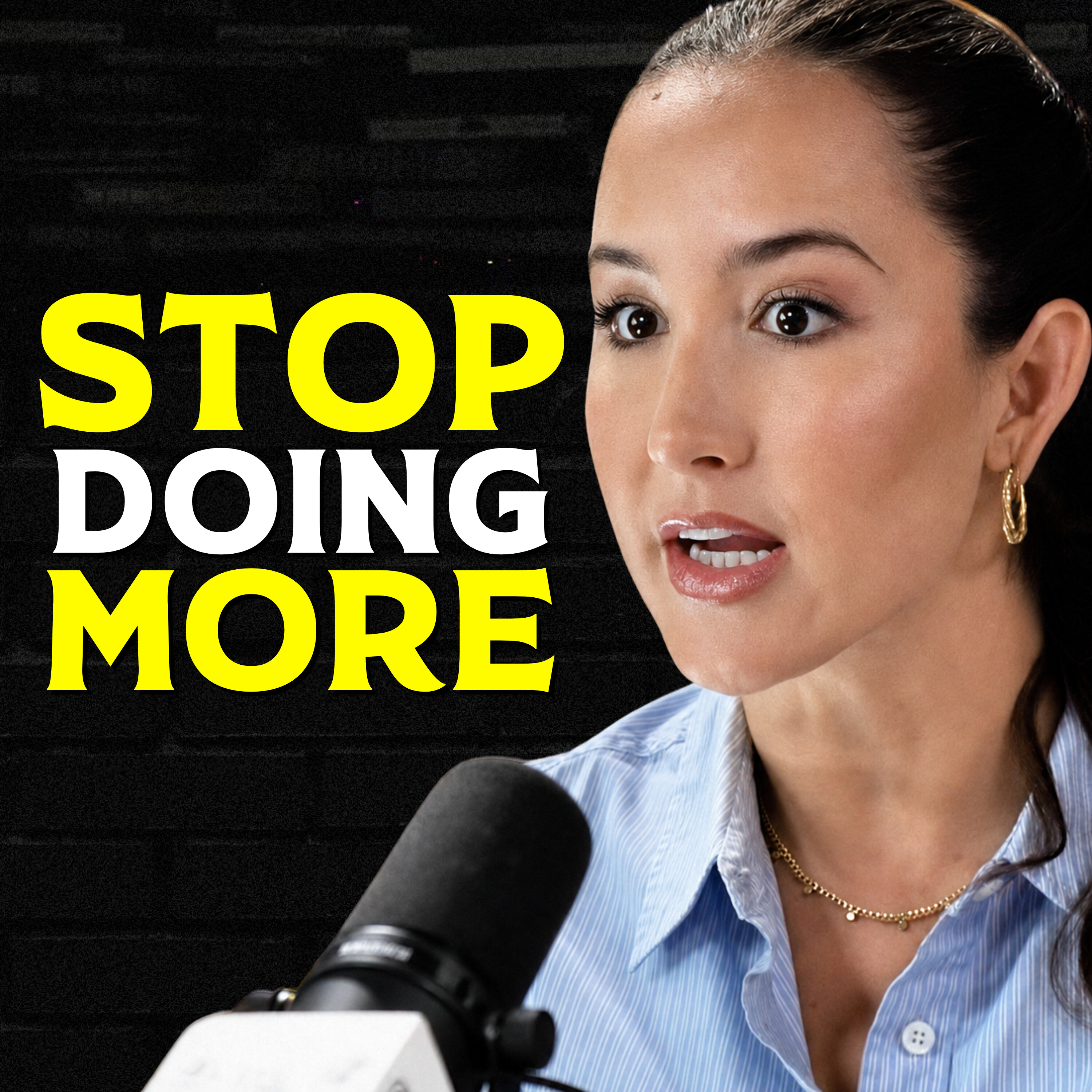
Cody Sanchez, entrepreneur and investor; author of Main Street Millionaire; builds portfolios of small “Main Street” businesses.
Written by AI. May contain mistakes.
Chapters
0:15
Handling Criticism
Learning to deal with criticism and focusing on self-improvement.
“Somebody at work is talking behind your back.”
5:08
The Importance of Discipline
Exploring the role of discipline in personal and business success.
“Welcome to another episode of the Daily Stoic Podcast.”
8:30
Entrepreneurship and Self-Discipline
Discussion on the realities of entrepreneurship and the necessity of self-discipline.
“You've probably seen her YouTube videos, Cody Sanchez CT, maybe on TikTok, Cody underscore Sanchez, or on Instagram at Cody Sanchez.”
14:01
The Misconception of Entrepreneurial Struggle
Explore the idea that entrepreneurship doesn't have to be miserable and can allow for a balanced life.
“And you can see what you're actually made of.”
15:17
Two Sides of Discipline
Understand the dual nature of discipline in business: ambition and restraint.
“So discipline isn't just I work harder, I sleep less, I push my boundaries more.”
18:09
The Role of Partnership in Success
Learn why having a supportive partner can enhance your ability to enjoy life and succeed.
“I mean, the idea that doing more is going to make you win is I think why so many entrepreneurs are miserable.”
21:09
The Importance of a Support System
Discover the need for a boardroom of peers and advisors to prevent poor decisions and foster growth.
“But that is sort of the advice, I think, by and large these days, is that your person should agree with everything you do politically.”

Ask about this episode
Get the gist, explore an idea or ask about something said.
 Claude
On The Daily Stoic, what are the key points of this episode?
Searching your listeningTranscript
Automatic transcript. May contain errors.
0:00Ryan Holiday: Welcome to the Daily Stoic Podcast, designed to help bring those four key Stoic virtues, courage, discipline, justice, and wisdom into the real world.
0:14Ryan Holiday: Let them talk. You have work to do. Somebody at work is talking behind your back. Your cousin made a comment about your parenting. A critic writes something negative about your business. This hurts. It feels unfair. It can have real consequences. But you know what? According to Epictetus, you got off easy. If anyone tells you that someone is speaking ill of you, he writes, tell yourself, if they really knew me, they'd have said something even worse. By the way, we're doing a deep dive in Epictetus this month. We'd love to have you join us. We're doing this awesome course. You can get a copy of Epictetus' work and take this module, and then we're going to be doing a live session at the end of it.
0:58Ryan Holiday: I'd love to see you in there. I'll link to it in show notes. But the point is, we all have flaws. There are things we could do better. And if anything, a real critic would be harsher. If our boss saw everything we did while we were clocked in, if people saw us when we lost it on our kids, they'd really have something to talk about. If there's a point to the criticism, let's learn from it. If it's off base, then what do we care? It's not in our control what other people say. It doesn't affect us. Either way, we don't have to take the bait. We don't have to stew. Let them talk. We have work to do.
1:36Ryan Holiday: It would be wonderful if Epictetus was as popular as Marx Realists, but he simply is not. And he's intimidating to people and therefore a little bit more obscure. Well, we wanted to solve that. And that's what we're doing with our How to Read Epictetus, a daily Stoic digital guide. We're diving all into it, and we're going to be doing a live Q &A call about it with thousands of other Stoics all over the world. I'd love to see you in there on August 27th, but that means you've got to sign up by the 26th. You can get a copy of Discourses for 50 % off. As I said, his work changed my life. I think it'll change your life.
2:14Ryan Holiday: I can't wait to see you in there. Just go to dailystoic.com slash epictetus to find out more. And we'll get into it. Talk soon.
2:32Ryan Holiday: Today's executives are more threatened, more exposed, and more vulnerable than ever before. Corporations spend billions on workplace security, but what happens when a threat finds your executives outside the office? Here's why that matters. 70 % of attacks on executives happen at home or away from the office. And Ironwall understands that terrifying reality. If someone has a grievance against your company, the first place they're going to turn is Google. And it can take about five minutes to find one of your executives' home addresses online. If that personal information is sitting on the open web, they are too easy to find.
3:07Ryan Holiday: And they are unprotected. The team at Ironwall knows this better than anyone. They've protected some of the most targeted executives and individuals on the planet for almost two decades. And as a white glove enterprise security service, they protect your people with continuous personal data removal, proactive prevention tools, and emergency support. So when someone goes looking for your executives, Ironwall ensures that they hit a dead end. So here's what to do. Go to ironwall.com slash Daily Stoic, fill out the form, request a free risk assessment, and their team will show you just how exposed your executives are, how to lock it down before a threat reaches their front door.
3:44Ryan Holiday: That's ironwall.com slash daily stoic. Stop online threats before they become real world attacks. And there's a link in the show notes. Over 70 % of Americans are chronically dehydrated and 90 % don't get enough potassium, a key electrolyte responsible for energy, muscle function, and clear thinking. That's why so many people are tired, foggy, crampy, or even off, even though they're drinking tons of water. I'm down at the beach with my family in Florida. I've been running in the morning, walking the dog, going to the beach, I just can't get hydrated. I just can't. It's just so hot. I'm doing so much.
4:21Ryan Holiday: I can't get hydrated on water alone. And that's where instant hydration comes in. It is a premium electrolyte drink mix designed to support hydration, energy, recovery, focus, and overall performance without sugar or unnecessary additives. I've been drinking the strawberry lemon one, just putting in my water bottle, taking it with me, sipping on it throughout the day. It's not super sweet or salty. It's just easy to drink. Instant Hydration is made to be an electrolyte drink you can enjoy every day, not just after intense exercise. For a better way to stay hydrated, go to instanthydration.com slash stoic and use promo code stoic for over 40 % off your first subscription order.
5:01Ryan Holiday: It's Instant Hydration's best offer available. That's instanthydration.com slash stoic, promo code stoic.
5:11Ryan Holiday: Hey, it's Ryan. Welcome to another episode of the Daily Stoic Podcast. I think it's hard to find a domain, a practice, a craft, an industry, a job where discipline isn't important. You need it on the way up. You need it when things are good. You need it when things are hard. You need it when things are going real fast. And you need it when things are going real slow. So it's not just working hard. It's not just abstaining. It's staying on the path that you're supposed to be on. It's not being distracted. It's not being provoked. It's keeping your expenses, your needs in line. It's all that, right?
5:59Ryan Holiday: And sure, a lot of things require discipline, but oftentimes that discipline is enforced on you, right? You know, the drill sergeant yelling at you, the coach or the boss telling you what to do. But when you work for yourself, you are your own boss. No one is enforcing that discipline on you. You have to enforce it on yourself. And that's really the virtue as it pertains to stoicism. We're talking about self-discipline. And so I wanted to talk about discipline today, and I wanted to talk about its connection to the business world. entrepreneurship. And I think it's essential in business because a business isn't built in bursts of enthusiasm or motivation.
6:37Ryan Holiday: It's, I think, largely built on consistency. It's doing the boring things well. It's about staying locked in. It's about hanging in there for the long haul. It's also about modeling this discipline for the other people in the team. A couple of months ago, I had Cody Sanchez out. She's an entrepreneur and an investor. She wrote a book called Main Street Millionaire. And she built this really interesting career and platform around buying businesses, usually kind of like small businesses, Main Street businesses, not like private equity in the, let's buy a big company and sell it for parts, but actually let's buy a bunch of little businesses in a town and turn them into something and build a portfolio of businesses that do real things for real people.
7:24Ryan Holiday: And so we wanted to talk about the discipline required to be successful at whatever it is that you are doing. I've talked about this before, like when we opened the painted porch or we started opening the porch, we started construction in March of 2020. So we needed a lot of discipline. We needed a lot of perseverance because it got much harder than we thought it was going to be very quickly. But then as it succeeded, it's required different kind of discipline, a different kind of hanging in there, not hanging on for dear life, but hey, what do we want to do more of? What do we want to do less of?
8:02Ryan Holiday: What's moving the needle? What's draining us? You know, people come in, hey, you should open a second location. Nope, we're not going to do that, right? This is, I think, another side of discipline that people don't talk enough about. And it's what Cody and I are talking about in today's episode. and I think you'll really like it. As I said, you can check out her book, Main Street Millionaire. We have the same publisher. It's a great little book. She signed copies while she was here at the Painted Porch. You've probably seen her YouTube videos, Cody Sanchez CT, maybe on TikTok, Cody underscore Sanchez, or on Instagram at Cody Sanchez.
8:39Ryan Holiday: And let's get into it. The next virtue for the Stoics is this idea, sometimes it's rendered as temperance, which is moderation. I prefer to see it as self-discipline or self sort of ownership in the sense of being in command of your emotions, your desires, your urges, your envy, all of these things. So talk to me about why that's an important skill as a business owner. Well, the business will fall to your level of activity, not your level of desire. And so, you know, you have to be the ultimate standard in your business. And your team, like children, will not listen to what you say. They will watch what you do and then do a little bit less than that.
9:19And so that is the hard truth. And so if you want to win in business, you have to be unreasonable in your level of activity, at least for quite a while, so that your team aspires to a level that is less than that. And that is, by the way, very reasonable for them because they don't have all the upside that you do. So you're always going to work harder and care more than most of your employees. Now, the great employees, the ones that I turn into partners over time, are the ones that care just as much as I do. And then I want to travel through time with them. But I find that a lot of people want to get into business or want to be really successful with money.
9:53But they aren't willing to do the absolute boring, mundane work that is the game of business. Business to me, more than anything else in life, is who can handle doing the most monotonous, boring things for the longest period of time, far past when is reasonable or when you could at all want to. And if you can do that, you'll actually be really, really successful because it's not the really bright moments. It is the moment again and again and again where, you know, I go to like some of the people that I admire a lot in business at least, which would be like an Elon Musk, who's like, I'm just going to sleep on the factory floor until I get this rocket built.
10:30And I'm going to work right alongside you. And we're going to stay in this misery. And it's not my desired state to sleep on a factory floor. I would disagree.
10:39Ryan Holiday: I think he creates a lot of the misery by being impulsive and emotional and by making somewhat irresponsible decisions, which he then has to... I think he sometimes glamorizes the life or the grind. He calls it like demon mode or whatever. Whereas someone with more of a plan or more of a corporate structure around them or could delegate better, wouldn't have to do that. Yeah. But I get your point, which is like, you got to do the work. I think it comes down to what do you want to build? Yeah. You cannot be corporate and take society to the moon and to Mars faster than the government and all corporate institutions and even beat Jeff Bezos.
11:22Right. Like Jeff Bezos, to me.
11:23Ryan Holiday: Also pretty driven. Yeah. Is very driven, but probably much more corporate, reasonable, time-bound, decision-based. hyper successful. Elon is in many ways not, in my opinion, as much of a business builder as he is a mission-driven leader. So it is emotional and it is chaotic because nothing like that has ever been done before in history. But do I think you have to be Elon? No. In fact, I think it would be miserable to be him. I couldn't even imagine. And you said it's pretty miserable to be him. Right. So I don't think you have to be that. In fact, I think you should love the business that you built.
11:55Right. And because most people don't want to be him. Right. Most people don't want to build billion-dollar businesses. Building a billion-dollar business is miserable. I mean, we're on the path and, you know, our business is worth a couple nine figures and we do a lot of revenue a year. And there are many days where it's miserable. But the one benefit, I think, to the way we run businesses, at least, is because we are so systems-oriented, you have what you just talked about, which is we just kind of know every single day what foot to put in front of the other, how to hire, how to train people, and how to processize it, where our self-discipline clones in the organization.
12:30Ryan Holiday: I just know it's like you crash the car in a ditch and then you rally the troops to pull it out of the ditch. I don't think you get credit for the long hours. Like, I just spent Christmas pulling the car out of the ditch. It's like, okay, but you were drunk when you drove it in there and that's on you. I do think there's this idea people want to be their own boss. They want to be in charge. They want to control their own destiny. And I think they think that that somehow exempts them from like anyone getting to tell them what to do. And that's like, there's this line from Seneca where he says, no one is fit to rule who is not first ruler of themselves.
13:04Ryan Holiday: And so they think like, I think they think that being in charge, running a big business, it's like, it's awesome because nobody's bossing you around. But it's actually, no, you have to be the boss of yourself. You have to boss yourself around and you don't have the benefit of anyone checking in with you and going like, hey, did you make sure to do that thing? Like, hey, did you get up early? Did you stay up late? Did you work harder than you want to work? And so there is this, I think, glamorization of working for yourself, being the boss, being the leader. And what people are forgetting is it's actually forcing you to do the job you were doing before and your boss's job, but just of yourself.
13:44Oh, yeah. I mean, I have two sides of the coin on this. I've really been thinking about it a lot lately. One side is if you want to be in charge, you are going to have to work harder than anybody else in your company for longer than anybody else. And there is no other way around it. You can also make more money than anybody else. You can probably have a bigger impact than anybody else. And you can see what you're actually made of. You can see what you're capable of. It's incredible. On the other hand, I think that we have really started to obsess on this trauma bonding around being an entrepreneur.
14:16And it's almost like it's so miserable and hard. And if you don't think it's miserable, you're lying and you're not in the game. And I'm a little bit lately like, my life's pretty fucking rad. And do I just have a baseline level of kind of happiness? Yeah. But also it's really sweet to be an owner of business and not in like hustle, you know, Lamborghini, Ferrari, private plane type. But in that you do get to be your own architect. And so, I don't know, I'm going back and forth with this real pushback to can't you be really quite successful running a business that does a couple million dollars a year, doing it your way.
14:55Maybe it's in a small town. Maybe it's with a small team. But you are in charge and the CEO is on the door and that's your name. But you simultaneously still get to go to the kids events and you still get to have your activities. And I think that is totally doable. And we don't have to have this hustle porn misery addiction to trauma bonding over being an entrepreneur.
15:17Ryan Holiday: There's two sides of the idea of discipline. So discipline isn't just I work harder, I sleep less, I push my boundaries more. It's also the restraint to go, this is what we're doing this year. Yeah. No more and no less. Yeah. Right. Or these are the hours that I operate in. These are my priorities. these, one of the things you find when you have, like, we opened this bookstore a couple years ago, the first thing people do is like, are you going to open another one? No. The discipline to say the project was to do one thing and that this is what success on that thing is like. Now, it's not the end of my ambition.
15:52Ryan Holiday: There's other things I want to do, but that's the culmination of that particular ambition. And that reminding myself that my dream was not to have a chain of bookstores, which would be a distraction both from what I actually want to be doing and what I want my life to look like. And so you have to have the restraint to go, hey, I'm going to keep my head down. I'm going to do what I'm supposed to do. I'm not going to go to every conference that invites me. I'm not going to jump on every problem that comes up. I'm not going to do every interview that comes up. That was one thing that happens if you're a public facing person is you go, hey, I got here.
16:26Ryan Holiday: I built this brand by jumping on every publicity opportunity, by doing every project and then go, I don't like that pitch. I'm going to let that pitch go by and I'm going to wait until there's one I can really get behind. And that requires restraint. It's this two sides of like drive and ambition, then also restraint and a sense of what your limits are. Yeah, it's a great point. And also the discipline, like if you want to be successful long term, I'm pretty sure you can't do it by yourself. I know that now lots of people will say, well, there's a billion dollar business built with one person and that's going to happen.
16:59I think that that is fake. And I do not believe that. And I do not think that will ever be true.
17:05Ryan Holiday: That's what you would tell a New York Times reporter because you want them to write a story about you. 100%. Yeah. And we would both know because we've written titles before. That's just not reasonable. So like what you actually have to do is one, you have to hold your own boundaries. And then two, you've got to bring along other people who are super disciplined. You are disciples in your same discipline. And so, you know, this idea, and you talk about it all the time with the Stoics, but of the great leaders of men. And so your best discipline, I always believe, is really pouring into your team and getting them to be these disciples that go out and do the things for you.
17:36So theoretically, if you actually wanted to, you could have a chain of 100 bookstores, but you'd have to have an incredible team to make sure that Ryan could still write the books that tens of millions of people read as opposed to spending time on the invoices of the books in the stores. Right. And so I do.
17:52Ryan Holiday: And the discipline to bring people on is like so sharing. And like if you're like, no, this is all for me. It's all about me. It's like the discipline even to like let go of some of the control. These are all we tend to think of discipline as just working harder and doing more. Yeah. And it's much more subtle than that. Oh, no. I mean, God, if you want to win, you have to say no to so much. It feels uncomfortable. Yes. And I do it nonstop. I mean, the idea that doing more is going to make you win is I think why so many entrepreneurs are miserable. Yeah. Because they have bought into the idea, if I just do one more, I will become better, bigger, richer, etc.
18:27And in fact, it's usually what are the 10 things you need to stop doing right now that are burning up time that you can't even picture? And what are the two things that if you did them would make everything else meaningless? And if you find those, then you really win.
18:41Ryan Holiday: Yeah, and the discipline to understand there's an infinite amount of money in the world and a finite amount of time. And which do you value more? What is the point of being successful if you can't use it to buy time and you can't use it to live the actual life that you want? There is this kind of insane delay. Like to be an entrepreneur, you have to have a good sense of delayed gratification. But you'll end up missing the whole point if you endlessly delay gratification. Right. Like if you never get to enjoy it, if you're sort of in harness your whole life or if you're like, yes, it's miserable.
19:17Ryan Holiday: boy, I hate this thing, but at some point I'll sell it and then I'll be happy. You don't know that that's true. And you might not get to that point. It's actually a good frame, that idea of are you in harness or are you out? Are you free in the field or are you under plow? And I think, you know, if you're an entrepreneur and you're thinking about that, it's like, how much time do you actually spend under detention, you know, in that harness? And then how much time do you spend on long walks, on vacation. One of the most useful things I ever did to have better discipline about enjoying life, because that's not my natural state, is getting married.
19:53And I think partnership and marriage is one of the best ways possible to offset - Because you're balanced out by another person. Exactly.
19:59Ryan Holiday: They're like, what are you doing? Exactly. Yeah, this is crazy. Yeah. And everybody talks about, oh, the old ball and chain, or they hold me back, or they don't. I go, that's the point. No, they also tether you to reality. A hundred percent. Because you're sounding like an insane person right now. Yeah, yeah. And then they're also saying, well, what about me? You know, what about when are we going to live this life that you promised? Yeah. And so I actually think I know that a lot of people today are like, well, you know, the best partner is the one that supports everything you do unequivocally all the time.
20:28And being married to an entrepreneur is such a blessing. No, it's not. Being married to an entrepreneur can be extremely miserable and extremely self-focused. and the spouses that sign up for that, like they need a medal too. And so, and you know, my husband is in the game with me, but he is also the very first one to say, life is way bigger than this. And he has actually seen life or death and to pull you out of the moment where you're obsessed about something like a P &L or a spreadsheet that you're not going to remember in 50 years.
20:58Ryan Holiday: Chances are, if you are driven, if you're talented, if you're successful, if you've built something, chances are you need more of a check than you do an enabler. It's so true. That's a good point, actually. You don't need encouragement. You have plenty of that. Yeah. But that is sort of the advice, I think, by and large these days, is that your person should agree with everything you do politically. They should agree to everything you do work-wise. They should support both unequivocally. And if they don't do that, then they're holding you back. They can't see your vision. You know, they're not a real partner.
21:32And I think we have to kind of question that and go, is that true? Right. Or is this person actually the person who's going to allow you? I mean, things go a lot faster. We call them the two oars at my company. But if all you do is row a left oar on a boat, you go in a circle. You have to row left and then right and then left and then right. And that is the beauty of partnership.
21:49Ryan Holiday: People think you want a board of directors that lets you do whatever you want. You think you want complete corporate control. And that tends historically not to go well. That's actually not the role of the board of the directors. The board of directors, yes, it's a committee and committees can be short-sighted. But committees do tend to prevent you from driving off of a cliff or burning yourself out or doing something that is illegal or, you know, very irresponsible. Their job is to be like, that's not a good idea. You know, it's so funny. We actually we created something called The Boardroom at Contrarian Thinking.
22:20And the reason why is because I needed in my business a group of people around a boardroom who would help me make non-stupid decisions and talk me out of the singular focus I can have when I am driven. and we started it because I didn't want to give away equity in the company. I didn't want a real board, and I was scared of the downside of boards, which is that they can be non-incentive, alive, conservative, blah, blah, blah. So I wanted somebody who I could listen to but couldn't run everything for me. Like, I was the skin in the game because I realized most entrepreneurs, they don't have that.
22:54I mean, your friends are often your competitors, so you have to be a little careful of that. You know, your family is sometimes a little tired of hearing from it. Your employees are going to tell you what you want to hear, or they're going to tell you what is the least amount of work for them. And so you need this group of peers around you. Sometimes I really think you need three. You need you need peers, you need advisors, and then you need people that are like 10 or 20 years ahead of you. And and with those three things, you can just move faster because you can steal people's 10 ,000 hours.
From the publisher
If there is a point to the criticism, let’s learn from it. If it’s off base, then what do we care?
--
Codie Sanchez is an entrepreneur, investor, and founder of Contrarian Thinking, where she teaches people how to build wealth through business ownership. After starting her career in journalism and later working in finance at firms like Goldman Sachs and Vanguard, Codie went on to buy, build, and invest in Main Street businesses.
Listen to the full episode with Codie Sanchez: Apple Podcasts, Spotify, or watch on YouTube
Follow Codie Sanchez on Instagram @codiesanchez, on TikTok @Codie_Sanchez, and on YouTube @CodieSanchezCT
Grab signed copies of Main Street Millionaire by Codie Sanchez at The Painted Porch | https://www.thepaintedporch.com/
Check out Ryan’s episode on BigDeal by Codie Sanchez: Apple Podcasts, Spotify, YouTube
💡 We designed our How To Read Epictetus (A Daily Stoic Guide) as a personal field guide —part book club, part masterclass, part daily practice. It’s designed to help you not just read the words of Epictetus, but live them—to turn his timeless wisdom into real change in your own life and the lives of those around you.
And if you get the guide before August 27th, you’ll receive a private invitation to an exclusive LIVE Q&A with Ryan Holiday, where he’ll go deep on all things Epictetus, Stoicism, and how to apply these ideas right now, in today’s world. Head to dailystoic.com/epictetuscourse to learn more and get your book, guide, and bundle today!
👉 Get How To Read Epictetus (A Daily Stoic Guide) & all other Daily Stoic courses for FREE when you join Daily Stoic Life | dailystoic.com/life
🎟️ DAILY STOIC LIVE | Ryan Holiday is coming to a city near you! Grab tickets here | https://www.dailystoiclive.com/
🎙️ AD-FREE | Support the podcast and go deeper into Stoicism by subscribing to The Daily Stoic Premium - unlock ad-free listening, early access, and bonus content: https://dailystoic.supercast.com/
✉️ FREE STOIC WISDOM | Want Stoic wisdom delivered to your inbox daily? Sign up for the FREE Daily Stoic email at https://dailystoic.com/dailyemail
See Privacy Policy at https://art19.com/privacy and California Privacy Notice at https://art19.com/privacy#do-not-sell-my-info.
More from The Daily Stoic
All episodes
We use cookies.They keep VO running smoothly and help us improve it. Privacy policy