
 Ask ChatGPT


 The Daily Stoic
23 Jul 2025 · 30m
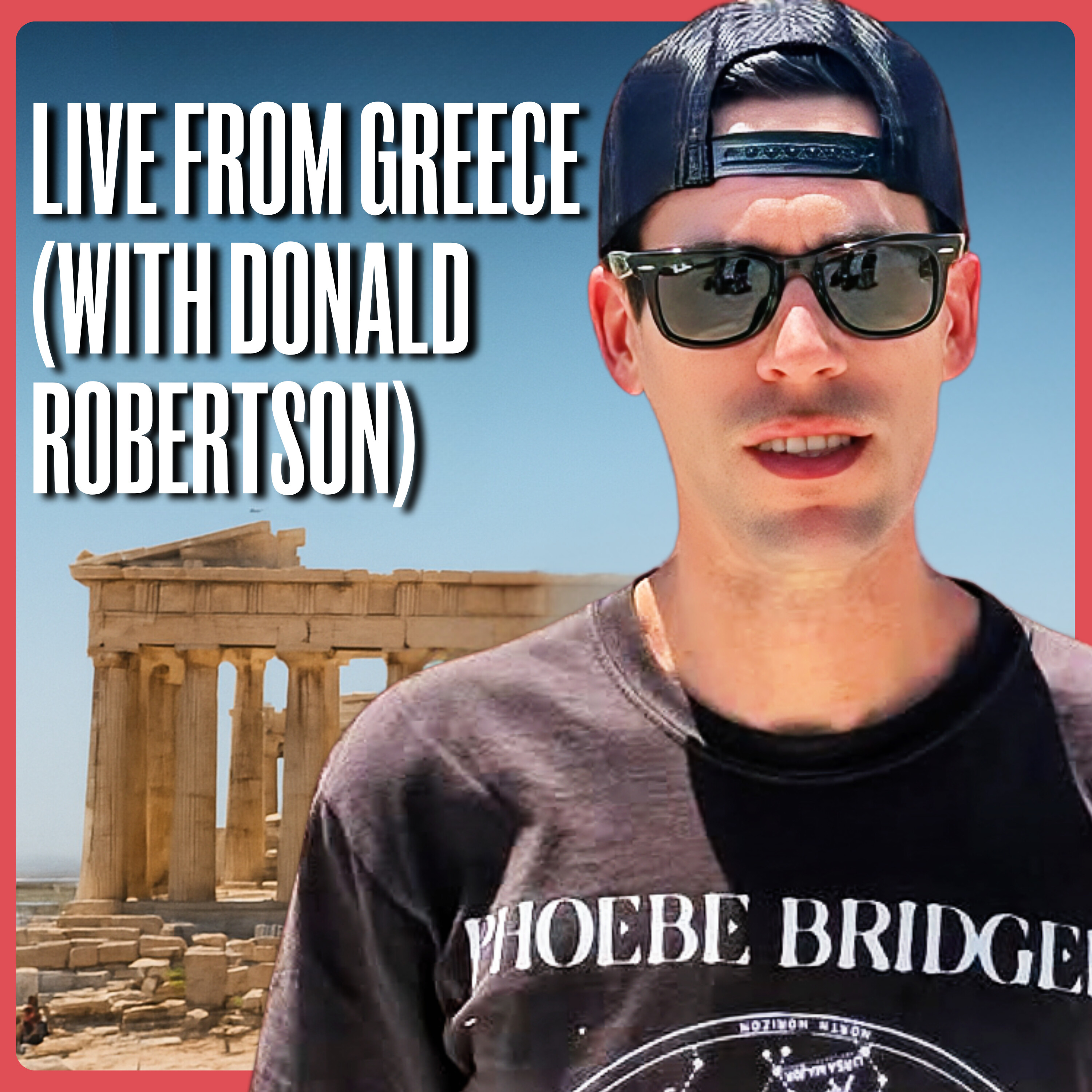
In this episode of The Daily Stoic, host Ryan Holiday records a special podcast live from Athens, Greece, the birthplace of Stoicism. Joined by Donald Robertson, a writer and cognitive-behavioral psychotherapist, they explore the historical and philosophical roots of Stoicism while sharing personal experiences from their visit.
Written by AI. May contain mistakes.

Get the gist, explore an idea or ask about something said.
 Claude
On The Daily Stoic, what are the key points of this episode?
Searching your listeningAutomatic transcript. May contain errors.
0:00I'm recording this on a Monday, and Monday is our grocery store day in our family. I usually pick my kids up from school and we go over to Whole Foods, get all our groceries for the week. Although here very shortly, we're going to go over there to get our Thanksgiving turkey because they've got a bunch of great options. Turkeys start at$1.49 a pound if you have Prime with organic birds at$2.99 a pound. And they only carry no antibiotic ever turkeys that will bring quality to your table at a great price. Whole Foods has great everyday prices on all your Thanksgiving essentials, whether you celebrate with a massive family or just a few close friends.
0:37Everything they sell has high standards to help you shop with confidence. Enjoy so many ways to save on your Thanksgiving spread at Whole Foods Market. Why choose a Sleep Number smart bed? Can I make my sight softer? Can I make my sight firmer? Can we sleep cooler? Sleep Number does that. Cools up to eight times faster and lets you choose your ideal comfort on either side. Your Sleep Number setting. Enjoy personalized comfort for better sleep night after night. It's the final days of our Black Friday sale. Recharge this season with a bundle of cozy, soothing comfort. Now only$17.99 for our C2 mattress and bays, plus free premium delivery.
1:11Prices higher in Alaska and Hawaii. Check it out at a Sleep Number store or sleepnumber.com today. What can 160 years of experience teach you about the future? When it comes to protecting what matters, Pacific Life provides life insurance, retirement income, and employee benefits for people and businesses, building a more confident tomorrow. Strategies rooted in strength and backed by experience. Ask a financial professional how Pacific Life can help you today. Pacific Life Insurance Company, Omaha, Nebraska, and in New York. Pacific Life and Annuity, Phoenix, Arizona.
1:51Welcome to the Daily Stoic Podcast, where each weekday we bring you a meditation inspired by the ancient Stoics, a short passage of ancient wisdom designed to help you find strength and insight here in everyday life. And on Wednesdays, we talk to some of our fellow students of ancient philosophy, well-known and obscure, fascinating and powerful. With them, we discuss the strategies and habits that have helped them become who they are and also to find peace and wisdom in their lives.
2:36Hey, it's Ryan. Welcome to another episode of the Daily Stoic Podcast. I am recording outside on a roof just under the shadow of the Acropolis, which is beautifully lit up behind me because I made it. I did it. I had to finish what are called the second past pages. That's more or less the last time I will see Wisdom Takes Work. That's the new book, the fourth book in the Wisdom series before. It goes to the printers. I finished it literally as we were taxiing on our plane out of Austin. I finished up doing my last edits to the afterward of that book. I might have a few things here, there that I get to tweak.
3:23And then when I sit down and record the audio book, I might do some stuff. But that probably won't even make it into the first printing because that series, which I've been working on for the last six years, is almost finally done. I am almost seeing the light at the end of the tunnel. By the way, if you want those pages that I was editing, you can get them if you preorder. I think it's five copies of Wisdom Takes Work. So if you wanted to give them out to people in your office, it's a cool little thing. You can grab all that at dailystoic.com slash preorder. We will almost certainly run out of those pages and almost certainly run out of signed numbered first editions.
3:58And you can do all that at dailystoic.com slash preorder. But my point was I had to finish those so I could do this family trip. My son is obsessed with Greek history, as I've talked about, and Greek myths. And so we flew to Athens. We just arrived. And we're staying in a beautiful Airbnb, as I said, right at the foot of the Acropolis. And we've been going around. We went to the Acropolis yesterday. We did a nighttime tour of the Acropolis tonight, watched the sunset over it. And then I walked over to the painted porch today. That's the foundation of Stoson. That's where it started. That's where Zeno, who comes up with the four virtues, courage, discipline, justice, and wisdom.
4:37This is where it happened. And you know who I bumped into there? Well, not bumped into because we scheduled it. I said, hey, I know you're in town. Do you want to get together? And he said, yeah, I do. Donald Robertson is here. He spends a good chunk of his time in Athens during the year. Usually he spends the winters here, he said, because he lives in Quebec and it's a smidge cold. But he is here. And so we linked up and it was just incredible. He and I sort of looking out at the painted porch. You'll hear some of this at the beginning. I just pulled out my phone and hit record on voicemail because I didn't want to miss it.
5:08So it's not the greatest of quality, but I think it's a really good conversation. They're actually digging today at the painted porch. right? They were excavating there. He told me just a couple of years ago, shops were built out over it and American University bought the shops, destroyed them, and has been digging down. And he pointed out what he thinks are the steps, the steps that Zeno himself would have walked up. Coincidentally, there is a bookstore on the other side of the square. It's just a lovely experience. We had a nice lunch, chatted, talked stoicism, talked books, talked Athens, talked publishing, and talked life, a bunch of amazing things.
5:44And then he went his way. My wife texted me and said, hey, the kids are having a meltdown. They were in the National Botanical Gardens. They wanted to see the turtles again. And then lost it on the way back. So I had to go link up with them and we got some food in them. Then tonight, as I was saying, we went back up to the Acropolis and I was telling my son, we're standing up at the top of the Acropolis and I show him, hey, look, way down there. That's the painted porch. And St. Paul, the Christian saints, he comes and visits Athens. And he links up with the Stoics at the Stoa, at the painted porch.
6:24And then they take him up to this rock, which we then came down and watched the sunset at. And St. Paul gave one of his most famous sermons there. And then later, as I've told this story before, it's Seneca's brother who lets him go when he's arrested by the Romans. Like, all this stuff happened here. All this stuff happened here. It's been an amazing trip. And I wasn't planning on recording or doing any of that kind of stuff while I'm here. This just happened. That's why I was frantically trying to finish those passes, is I was going to take some time off. Well, I feel like I'm honoring that.
7:01I just got to have lunch with an awesome person. And if you ever wanted to have lunch with me and talk philosophy, well, this is a way for you to be a fly on the wall for that. Donald's books are amazing. If you haven't read How to Think Like a Roman Emperor or How to Think Like Socrates or his book, Mark Sturrilis, The Stoic Emperor and his biography of Mark Sturrilis. Those are all three absolutely incredible books. We have the same agent, Steve Hanselman. I am a big fan of Donald Robertson. He's a great guy, a great steward of Stoicism. He told me he's taking some students out to see Plato's Academy tomorrow.
7:39So that's pretty cool. I really enjoyed this conversation. It was a treat. One of the things I love when you have friends all over the world is that when you travel, you get to, hey, who do I know in this city? Who can I link up with? And so this was an unexpected little treat that I now get to bring you. I'm going to split this up into two parts because it was a pretty long lunch. And I have some more to say about this trip. But in the meantime, here is me talking with the one and only Donald Robertson. Again, apologies for some of the audio, but I think it's good enough. Anyways, follow Donald, listen to this episode.
8:13I'll talk to you soon for part two.
8:18So we think that's the left-hand side of the Stoa Poikoli. And see how it would extend that, see that little ridge with the bushes of it and stuff. So it's just the end of it that's exposed at the moment. It is crazy to walk through, like, the sort of modern Agora. It reminds me of, like, people, like, whatever your, whenever you visited Times Square as a kid, that's your version of it. And anything newer is trashy, but it was always trashy. Do you know what I mean? And so it's like, like, you're walking through and it's souvenir shops and chachis and whatever. You know, they didn't, people just built shops and stuff because they never even thought the ruins were that much.
8:53Right, right, right. You may notice, like, they built in, like, 1870 or something? They built this railway track through the middle of the... Yeah, what they must have had to destroy. Because they think of that as the Agora archaeological site, but the railway line actually cuts through the middle of the ancient Agora. Imagine that. Imagine going, let's just build a railway line here. No one cares. Think of this stuff they had to toss aside that was getting in their way as they were doing it. I'm not sure why they couldn't have just built it a little bit over. I know It seems really weird When Antoninus restored it somewhat, right?
9:29I was reading a plaque over there Yeah Maybe The Agora? Oh yeah, possibly I didn't know about that But he possibly did I mean, you'll see Hadrian's name everywhere Right Here's the train just running through Yeah, going through the middle of it And there's probably still stuff under it Yeah Oh yeah, and well I mean, everywhere in Athens Pretty much there's stuff under houses Right In buildings and the worst thing they were telling me when they built these houses they just poured concrete into the ruins so a lot of the archaeological relics are encased in concrete and they have to the biggest problem is just chipping all the concrete off it.
10:04They're totally unnecessarily kind of just poured into the ruins. Have they found anything interesting yet? Do you know? I don't know. They may have. I mean if you were here maybe another time if you come I can hook you up with the manager of the American school and he took me down once. and she made her the laboratory where they did research on the things that they found. So, I mean, when you speak to Greek academics and people that work in the institutions here, they really give you the scoop on stuff like that. Like, you wouldn't even be reading about in journals and things like that yet. But, yeah, they would probably know that.
10:41I don't know of anything specific that they found. I thought it was funny. I ran this morning down to where Plato's Academy was. And, like, so... Oh, did you? Did you go through some sketchy areas? Yeah, a little bit. But it was interesting. They just put up a sign near my house commemorating the house of Texas's first female engineer. Right. And it's a huge sign. And you're like, okay, so obviously this lady broke through some glass ceilings to become a first female engineer. She's from Plato. It's much bigger than the sign for Plato's Academy, which isn't even like an archaeological site. Like just the blasé-ness of it made me just like, yeah, this is where it was.
11:19When I first came here, it kind of really amazed me. Well, when I first came, we were running, we ran a Stokholm conference here. And I was kind of organizing other events and stuff. And I thought, wow. The first thought that came into my mind is it'd be cool to run a conference here. So then I started looking into it and I was like, there's nowhere that you could do it. There are no hotels here. There's no infrastructure. There's no event space. And I'm like, I can't be the only person that thinks it would be really cool to attend a conference at the original location of Plato's Academy. That seems like a no-brainer.
11:50you'd be able to market it internationally and everybody wants to come to Greece they didn't even have a picture of here's what it looked like they model it out it was just like oh yeah we think it was here it's kind of like this it's a little bit of a Greek thing you'll find a lot there are reasons in every country why things happen the way they do long story short it becomes a little bit of a political football and then it kind of ends up just a nimble. Yeah. Basically, that's a short route. And it's also probably a surplus of riches where it's like you got to pick what you're vicious too much.
12:27There are too many ruins.
12:36Thanks to Toyota Trucks for sponsoring this episode. When I bought my ranch in 2015 out here in Bastro County, I drove my car about halfway down the dirt road that we live on, thought this isn't going to work, stopped, parked it, walked the rest of the way home, borrowed my wife's car, drove into Austin and bought a truck. What I bought was a Toyota Tacoma. And this truck wasn't just transportation getting me to and from my house. It unlocked a whole different style of living for us, not just on the ranch, but in our little Texas towns. There were places I could go now that I couldn't go before, especially out here in the piney forests, through the fields.
13:15and on the unpaved roads like the one that I lived in. We got to go deep into the hill country's wild beauty. We've driven all the way out to East Texas. We've driven across the country. And by we, I mean not just my wife, but both my kids who I drove home from the hospital in that truck. Toyota trucks are built for those who understand that the best adventures happen when you're willing to veer off course because you never know when you'll end up on a Toyota adventure detour. And of course, this is stoicism, too, because every detour, every obstacle is an opportunity. But it's helpful if you can handle the difficulty inherent in that.
13:56If you've got the resilience and the right companion to make it wherever the road takes you, discover your uncharted territory. Learn more at toyota.com slash trucks slash adventure dash detours. We just took our kids to an outdoor performance at the Nutcracker. They had a snow cone and then they went insane in the car ride home. And one of the things I try to remind myself when that's happening is that I don't control my kids' behavior, especially when they're too far gone like that, but I do control how I respond, right? That's stoicism, but it's also what Dr. Becky talks about. Dr. Becky is a clinical psychologist and a bestselling author, and she founded Good Inside, which is there to give parents practical, actionable tools for handling those everyday challenges with confidence.
14:44My wife introduced me to Dr. Becky's books. I love them. I've recommended them a million times. I've had her on the podcast. And as it happens, Dr. Becky is hosting two live Q &A events for Good Inside members. I am one of them. She signed me up for about a year and a half ago. I've loved it ever since. On December 1st, you can join Dr. Becky for her How Not to Raise Assholes event, which is about avoiding entitlement and raising kind, empathetic kids. And on December 15th, she's hosting her How Not to Lose It over the holidays event, which I'm sure we could all use. As I said, I'm a big fan of Dr.
15:21Becky. She's been a great influence for me as a parent and just as a human being. And Daily Stoic listeners can join for 15 percent off with code STOIC15. You just got to head over to goodinside.com to catch the events.
15:40So you maybe notice that some of the ruins are just completely exposed. Yeah. And people even graffiti them or just sit on them and crack a beer open. Yeah. Which would be unthinkable in other countries. Right. Because it would be their only thing. Yeah. Paul gave a sermon up there. Yeah, but he spoke to some Stoics. Yeah, well, there's a sign over there that says that St. Paul may have spoken at the painted porch. I emailed Steve about it. He said it's not confirmed. There's kind of a lot of things that go under the radar a bit because most tourists aren't interested in it, so they don't really isolate it.
16:13Yeah, it said their discussions likely took place around the Stoic Poculiae or the Painted Colonnade as the seat of Stoicism. In fact, it was the Stoic philosophers who led him up there to where he gave his famous speech. Or do you think the Stoics led him from the Stoapoi Kalei up to the Aris? Yeah. Okay. It doesn't say that in the Bible. It just says that he... I mean, that makes sense that he would have met them at their school, right? We're also told things that make it sound like Aristotle had loads of followers and Cleantries didn't have very many. Right. So at one point, the majority of Stoics were following this kind of renegade.
16:47Yeah. Right. Braintory school. Yeah, it's fascinating. I talk about him in the new book a little bit, because he's like, he's the antithesis of Zeno's idea of listening more than you talk. Like, I think there's this interesting, it's like, Cleanthes is the, it's a tortoise and hare situation, you know? One is flashy and brilliant, but obnoxious. The other is quiet and plodding and not that interesting. But it's ultimately Cleanthes who takes it over and who knows where it would have ended up had it gone the other way. So do you think they owned the porch? Like, how does real estate work? or they're just gathering there.
17:23They just gathered. There was a public building. Right. But they just hung out. There would have been maybe even vendors on it. There was a shrine beside it. It's kind of hard to wrap your head around like, yeah, they're just kind of hanging around in this public building. But then you get around to the time of the Roman Stoics and the amount of wealth that these guys have is staggering. Yeah. Like we're going to see a concert tomorrow night at the Herodian. You know the Foo Fighters played there? I did. But the idea that Marcus's rhetoric teacher just built that. Yeah. And it's still here 2 ,000 years later.
17:56You could still take, like, just one person. I mean, it'd be like, if you're like, oh, yeah, he built the Superdome. You know what it's like? How does one person just building a theater that seats thousands of people? He meets this super rich of his day. And the Athenians kind of hated him. Yeah, right. But, yeah, he definitely left his mark on a bunch of things. he's kind of the most famous Athenian Roman right? yeah he's like he was the greatest or maybe the second greatest sophist of the Roman imperial period basically he's like a really unlikely friend for Marcus to have but you notice he doesn't mention him in the beginning of the meditation but what's kind of interesting as well is he says he learned a lot from childhood who's a tutor who's probably a slave.
18:48He doesn't mention his name. So some kind of slave tutor whose name he doesn't know taught him a lot about morality. It didn't take anything from the road he's asking. That would have been really scathing and Romanized if people had read that. It is interesting to think with that. It's like, you know when you read the acknowledgments on a book? Yeah. You're only seeing the people that they're thanking. People that they don't thank. But unless you really know them in the behind the scenes of how the things you're not seeing like okay they didn't mention their publicist here yeah or they they mentioned one of the editors of the book but not the editors bought like like the there's all these politics involved like yeah they think their third grade teacher they think all their teachers except their fourth grade teacher so unless you know what you can't notice what's not there yeah and so it is yeah interesting to think romans are more sensitive to that actually like than we are.
19:41Like, they would pick up on that more. Sure. But the other one that's not in it, the two main ones that aren't in there are Hadrian. You pointed out to me how conspicuous the Hadrian thing is in there. In fact, he appears basically nowhere in meditations. I think he mentions them very briefly, but only as, like, an example of somebody who is very powerful and is now dead. Yes. So he doesn't have anything much to say about it. And he said, oh, yeah, like, he's... But it is weird. On the stone over there, they have an Antoninus statue and a Hadrian statue. and you just think like how remarkable it is that this guy chooses this guy, chooses this guy, just how strange that is.
20:17And that shapes everything. Totally. So why do you live here? Or you live here part of the year? What do you do? I stayed here during the pandemic for about a year. And I got my residence card for Greece. Yeah. And then I came back. I was planning on spending about three or four months each year. But then we had a baby. Oh, congrats. No, thanks. How old? He's one and a half now. Oh, wow. Yeah. so born where he was born in quebec okay in montreal guess he's gonna have to speak french and we don't so we might have to learn french to speak to him there's a nate bargetsy joke where he talks about how he and his wife lived in new york but they went home to nashville to have their baby because they didn't want the kid to grow up thinking he was better than them right and how much time do you spend here i know it kind of varies but like last year i was here for like probably three or four months.
21:06I came twice. It seems to be getting a bit more expensive for the flights and stuff. I guess it depends what time the year end I'm coming. But ideally, the plan would be that we come here in the winter to avoid being in Quebec in the winter. Yes. Because it's pretty brutal. What are the winters like in Greece? Like autumn, like pretty. It snows once every five or ten years or something. Like if they have snow in the Acropolis, it's like a big, big event. Yeah, sure. I mean, I bet it's gorgeous. It's like once a decade or something. You have snow. So it really just feels like you can walk around.
21:40I remember one winter, I was like, I'm just walking around without a jacket or anything, really. Yeah. Well, there's that story about clientes that he's walking around and then the wind blows open his cloak. Yeah. And he has nothing on underneath it. And people are clapping at his display of strength. But then when you actually kind of look at the weather, it's not that impressive. It's like, it's not like in Quebec or something. the sad thing about Diogenes embracing a stature in the winter as well unless it was unusually cold I know right you decide to get rid of all your possessions and I'm going to live on the street or whatever but then you choose Santa Monica California it's not quite the same as you know Boston yeah I definitely it's a lot better from being home what's in the ancient East Berlin well also So, yeah, also thinking, like, what is the palace of the richest Greek look like?
22:37Their mattress is probably not that comfortable. Obviously, some of them, there were all sorts of wonderful luxuries. But at the same time, as technology and culture has evolved, the differences between the comforts of the lowest and the highest, the gulf widens. Yeah, and most people would have slighted and pretty basic houses. There wouldn't have been that much difference. That's what I mean. like the difference between you know private jet and walking is enormous the difference between walking and riding in a wagon or a litter is not that much not that much difference it's nice to come here you know a lot of processes to spend the entire life writing about each piece and never actually come here yeah i this is my first time i've been to rome and all over italy but i've never actually been here well there's a funny thing what's the guy's name oh you know victor davis hansen he's a military scholar his political views are nonsense and he's he's more of a pundit than a historian but he he wrote this book on the called the western way of war which is about sort of a lot of our theories of greek history and stuff and he he sort of he goes to one museum and he has them put on a he puts on a helmet right and then he realizes there's no ear holes in the helmet and it changed and so one of his things is like our understanding of these speeches that the generals gave but he says just think about thousands of people with shields and swords like just he's like just think of the the the clatter and the noise you wouldn't have been able to hear anything so these speeches either had to be written down and passed out or there was one speech that he gave to 10 lieutenants who maybe gave the the the rest of it so so that one was interesting and then the other one he talks about in the peloponnesian war you know it's like the spartans laid waste to the olive fields or whatever and he's like he goes and he's like i'm gonna destroy one olive tree and he goes and he tries it's like impossible to uproot one of these like because it's not like they would have had tanks and you can't light them on fire very easily the point is he just actually went yes and so you think about how this myth has been passed down for generations when was the last time somebody had any direct knowledge of how hard it would have been to do one of those things and it's a really interesting sort of it does change because it's also like the athenians seem quite tolerant of the fact it's like they've got mixed feelings about it but it may be that you know like they weren't doing as much damage yes his point is that it's much more kind of a show of force like we come over here and do this you come over here and do this.
25:15The other thing I learned is they've got a replica tyrant here. Oh. Like, you can actually go on it. Where? Like, the Greek Navy own it. Oh. And you can kind of, like, book it for events and stuff like that. They have it down at Piraeus at the harbour. And we went and we walked up and down the deck. They said it was too windy to kind of go out the harbour on it. And they were telling us like, you can't see anything unless you're standing, like a handful of guys on the deck, but most of them are rowing underneath. If you're rowing, you can't see anything. yeah so like you'd be in a battle maybe with 150 200 triremes yeah on the ocean and all these guys are like i've no idea what's going on around me yeah i'm just hearing what i'm shouting yeah the terror and the lack of visibility and you're just getting hit and then there's smoke and blood and yeah oh we saw that medea play on the rooftop over here it's over here like webster university owns a building and they do a play on the roof so we took my son to see they did like some chunks of the odyssey and it was it was cool but they they did it in the traditional greek masks and they were explaining that the reason that they do it in the masks is that like some of these theaters fit like 15 000 people so you're like oh okay like you couldn't have seen the faces yeah so so the mask was a way so you knew who the characters were and and and you go oh yeah these are like technical problems that they're having to solve and the solutions are pretty good and then you see these men playing an old lady like because they did part of uh the women and it's a big beefy dude it's obviously a dude but the mask is so striking how quickly you can suspend disbelief but anyways it's just thinking it's like we're doing the same play now but it's about the actor in the face because the camera makes the the face an important part of it instead it was like let me just show you who i am and then so you realize what what a stronger emphasis it puts on the dialogue yeah and then i guess the mass also help amplify the voice yeah yeah everything suddenly makes more sense yes like and then there's so many things where like even stable like we don't know why they did things in this weird way but there was probably a reason for like yes well have you ever heard that expression that um tradition is usually a solution to a problem we've forgotten about.
27:33And yeah, there's all these, these traditions, you don't actually understand how or why they did it a certain way, but it traces back. It's like 2000 years from now, they're like, you know, why is, uh, why is a TV show 23 minutes? And it's like, well, they split it up into half hours and then they needed seven minutes for commercials. You know, like there's just all these things that you can, you can use totally, even with books, It's like they like them a certain length because that's what they feel like they can charge for them.
28:14Have you read Irene Vallejo's book, Papyrus? Oh, you gave me a copy of it? Yes. I'm ready. Incredible. One of the things she's saying is that, so the boxes they would store the scrolls in, you could store like seven scrolls in. Right. And she's like, it's probably not a coincidence that a lot of the authors we have seven books from. And so she's like, what are the chances that they only wrote the number that fit in the box? There's probably more. Just one of the boxes was just like there was maybe it was 10 books, but the half box got destroyed. Do you know why Los Angeles, like Athens, Los Angeles is a big port city, but it's nowhere near the port.
28:56Do you know why that is? Why? So the Spanish, which settled Los Angeles, were tired of being raided by the English and pirates in the Caribbean. So the Spanish had a law that said all new settlements had to be at least 15 miles from the coast. And so the city of Los Angeles is not near the ocean for that reason. And so, you know, you're kind of like, wait, why is why is L.A. so far from the beach? or why is it so far from Long Beach which is a big great port and it's like oh it's because pirates in some other part of the Spanish Empire were a problem and that settles down to this western American settlement and you just don't think about it that way.
29:43Yeah often things are shaped in weird ways like that definitely. So what's the next book? I want to write one about anger because I felt like I was turning into something like um yale wanted me to write another biography and i kind of thought not really a biographer though or a classicist you know i kind of stumbled into doing that a bit i thought do you think it's more about psychotherapy like that's my original thingy more um personal development than uh than history yeah more about psychology and stuff really right i mean i can draw on the classics but i kind of wanted to kind of drag it a little back a bit more back in that direction.
30:23And for a long time, I felt like anger is somewhat neglected. Psychological, there's tons of research on anything like that. There's loads of research on anger. But it's not really disseminated. It's also the problem, like, it's one of the most common problems that people have. Nobody's like, I wish I was angrier. Yeah, it affects us through social media and politics. You know, in a sense, politics is all about manipulating anger and exploiting it. And yet we know... That's what demagogues do. Yeah. Here or in America 2 ,500 years later. There's so much that we know about it from psychological research that should influence the way that we think about what's going on in politics and the media, but we don't.
31:08I'll tell you my favourite example is whenever, just by chance, because I've spoken about this a lot, whenever I talk to dudes that are in special forces and I mention anger, they always say they think anger is a good thing. Yes. And it's good to be able to channel it. And that doesn't make that much sense from a psychological perspective because even if you channel anger, you're still going to have the cognitive biases and stuff that go along with it. So I'll usually have a bit of a back and forth with them and say, but there's some problems with anger. But then they'll go, no, no, no. They'll take that of you all in and say, you know, it's really important to be anger.
31:39It can save your life in a different situation, blah, blah, blah, blah, blah. And then I'll say, do you know, there's a ton of research that shows even low-intensity anger causes people to underestimate risk. And it's well established that people that underestimate risk and are angry behave more recklessly, like injure themselves more often, expose themselves to more danger and other people around them. And when you frame it like that, you can see the kind of cogs turning. And they're like, oh yeah, if the guys fighting alongside me were exposing me to danger because they were angry, that would be like a bad thing.
32:09But they've never thought about it from that perspective. Well, I was talking to Brad Stevens. He was the coach of the Boston Celtics. Now he's the GM. And I was talking to him about anger because I was like, you know, you often see the anger, like the image of the coach getting really upset over a bad call. And I was like, you know, you're rallying the troops. You know, you're getting people excited. You're sending a message to the ref. And he's like, the reason I don't do that is you said I'm not really that into the business of giving points to my opponent. Yeah. The point being that a technical foul of basketball costs you a point, right?
32:41So when you sort of think about, it is interesting, it's like, if you were trying to screw up your opponent, if anger was a good motivator, you would spend a lot of time trying not to make the athlete you were against angry. Just calm them down. Yes. Calm down your opponents and reassure them. In fact, you know that getting inside your opponent's head and getting them angry makes them worse. And then we fool ourselves and go, oh, but when I'm angry, it's a good motivator. Yeah, there's definitely a bias in that regard. like nobody thinks that other people's anger is like yeah it's unhealthy same thing with ego we can see we can see how ego holds other people back very clearly and then with us it's not there i think that's a good call for you because i think some people made this mistake writing about stoicism obviously the people who want to read biographies about the stoics and are really into stoicism itself it's a big group your books have sold really well but there are way more people that have an anger problem than people who are into stoicism and want to know what the stoics have to say about anger and so like i went when i was going to do the daily data the publisher was like i think it should be called the stoic parent and it was like okay here's the circle of all the people who are parents and then here's the much smaller circle of people who are parents and interested in stoicism and so i that's how i thought with my books is that my books are influenced by stoicism and have stoicism in them, with the exception of the Daily Stoic, but that's a slightly different story, is here's what the stoics can teach you about solutions to this problem, but they're precisely, they're fundamentally about this problem or this thing that people are struggling with, whether it's overcoming obstacles or ego or stillness or whatever.
34:19It's about the thing not stoicism on the thing. Yeah, I find it strange that they think we should be reaching a wider audience and then introducing stoicism to them, not just focusing the people that are already into stoicism. Yes. Thanks so much for listening. If you could rate this podcast and leave a review on iTunes, that would mean so much to us and it would really help the show. We appreciate it. And I'll see you next episode.
35:28We'll see you next time. your local community. Choosing American Giant means taking a stand for American manufacturing and hardworking Americans, something other megacorporations don't care about. From fleece to knit, all in a range of colors for versatile daily wear, American Giant delivers everyday pieces designed for everyday life. Feel the difference of quality made to last clothes from American Giant. Get 20 % off your first order with code STAPLE20 at American-Giant.com. That's 20 % off your first order at American-Giant.com with code STAPLE20. Look, ads are annoying. They are to be avoided, if at all possible.
36:08I understand as a content creator why they need to exist. That's why I don't begrudge them when they appear on the shows that I listen to. But again, as a person who has to pay a podcast producer and has to pay for equipment and for the studio and the building that the studio is in. It's a lot to keep something like the Daily Stoic going. So if you want to support a show but not listen to ads, well, we have partnered with Supercast to bring you a ad-free version of Daily Stoic. We're calling it Daily Stoic Premium. And with Premium, you can listen to every episode of the Daily Stoic podcast completely ad-free, no interruptions, just the ideas, just the messages, just the conversations you came here for.
36:57And you can also get early access to episodes before they're available to the public. And we're going to have a bunch of exclusive bonus content and extended interviews in there just for Daily Stoic Premium members as well. If you want to remove distractions, go deeper into Stoicism and support the work we do here. Well, it takes less than a minute to sign up for Daily Stoic Premium, and we are offering a limited time discount of 20 % off your first year. Just go to dailystoic.com slash premium to sign up right now or click the link in the show descriptions to make those ads go away.
Follow along as Ryan visits the birthplace of Stoicism in Athens—where Zeno once taught beneath the legendary Stoa Poikile. Joined by writer and cognitive-behavioral psychotherapist Donald Robertson, the two tour the ancient ruins, explore the deep roots of Stoic philosophy, talk about the surreal experience of standing where it all began, and share updates on their latest writing projects.
Donald is a writer, cognitive-behavioral psychotherapist and trainer. He is a Fellow of the Royal Society for Public Health (RSPH). Donald specializes in teaching evidence-based psychological skills, and is known as an expert on the relationship between modern psychotherapy (CBT) and classical Greek and Roman philosophy.
📚 Grab copies of Donald’s books, How to Think Like Socrates: Ancient Philosophy as a Way of Life in the Modern World, Marcus Aurelius: The Stoic Emperor and How To Think Like A Roman Emperor: The Stoic Philosophy of Marcus Aurelius from The Painted Porch | https://www.thepaintedporch.com/
🎥 Watch Donald Robertson’s last time on The Daily Stoic Podcast: https://www.youtube.com/watch?v=Axnl-E1zc5U&pp=0gcJCfwAo7VqN5tD
📖 Preorder the final book in Ryan Holiday's The Stoic Virtues Series: "Wisdom Takes Work": https://store.dailystoic.com/pages/wisdom-takes-work
🎙️ Follow The Daily Stoic Podcast on Instagram: https://www.instagram.com/dailystoicpodcast
🎥 Watch top moments from The Daily Stoic Podcast on YouTube: https://www.youtube.com/@dailystoicpodcast
✉️ Want Stoic wisdom delivered to your inbox daily? Sign up for the FREE Daily Stoic email at https://dailystoic.com/dailyemail
🏛 Get Stoic inspired books, medallions, and prints to remember these lessons at the Daily Stoic Store: https://store.dailystoic.com/
📱 Follow us: Instagram, Twitter, YouTube, TikTok, and Facebook
See Privacy Policy at https://art19.com/privacy and California Privacy Notice at https://art19.com/privacy#do-not-sell-my-info.
