
 Ask ChatGPT



Description: A daily podcast where Ryan Holiday shares lessons from Stoic philosophy to help listeners navigate life's challenges, featuring insights from notable figures and audience Q&A.
Discussion on justice and integrity inspired by Holiday's new book, Right Thing, Right Now, and Guidara's experiences in hospitality.
Written by AI. May contain mistakes.

Get the gist, explore an idea or ask about something said.
 Claude
On The Daily Stoic, what are the key points of this episode?
Searching your listeningAutomatic transcript. May contain errors.
0:00The world is full of tours. But you don't choose a Toyota truck to follow the beaten path. You choose it to find the places in between. The detours, where each adventure pulls you toward the next. And wrong turns turn out right. So why would you ever take a tour when you could take a detour? Toyota Trucks. This message comes from Capital One. With the Spark Cash Plus card from Capital One, you earn unlimited 2 % cash back on every purchase and get big purchasing power so your business can spend more and earn more. Steven, Brandon, and Bruno, the business owners of SandCloud, reinvested their 2 % cash back to help build the company's retail presence.
0:53Capital One, what's in your wallet? Find out more at CapitalOne.com slash Spark Cash Plus Terms Apply.
1:03Welcome to the weekend edition of The Daily Stoic. Each weekday, we bring you a meditation inspired by the ancient Stoics, something to help you live up to those four Stoic virtues of courage, justice, temperance, and wisdom. And then here on the weekend, we take a deeper dive into those same topics. We interview Stoic philosophers. We explore at length how these Stoic ideas can be applied to our actual lives and the challenging issues of our time. Here on the weekend, when you have a little bit more space, when things have slowed down, be sure to take some time to think, to go for a walk, to sit with your journal, and most importantly, to prepare for what the week ahead may bring.
1:56Hey, it's Ryan. Welcome to another episode of the Daily Stoic Podcast. So when you do like a book tour, when you do nonfiction, you don't really do like readings from a book because it's weird, I guess. No one's ever asked me to. You're expected, like if you do an event at the Strand or at Barnes and Noble or Book Soup, you're usually expected to have someone interview you, which is weird. So it's like, You're like, this is my day. This is the thing I did. And then you have to ask someone to interview you. And for this book, for the dress book, I really, I didn't know who I wanted to do it. But I basically asked my publisher, I was like, guys, I've already called in so many favors.
2:39Could you think of someone? And when I did Daily Dad in New York City, I had Casey Neistat interview me, who had been sort of an inspiration to me. He had kids before I did. And that was great when I did it in Austin. Austin Kleon did it. So I've had different people do it over the years. Chase Jarvis has done it before. Kevin Rose has done it for me before. So I left it to the publisher. I said, hey, you decide. And they came back and they asked if I was open to the idea of Will Gadara. And I know Will indirectly because we have the same speaking agent and we happen to have the same publisher.
3:14And I'm a fan of his awesome book, Unreasonable Hospitality. And it was also fitting because we were going to do this talk at the Barnes and Noble in Union Square, which is right across the street from Union Square Cafe, which is usually where I tend to eat to celebrate stuff in publishing, just a place people end up going. And Will was at Danny Meyer's Union Square Hospitality Group. He talks a lot about this in his book. He would go on to actually purchase and run 11 Madison Park. So anyways, he is awesome. And I was really looking forward to doing it. And I didn't want to have like a politician do.
3:51I don't know. I just, I thought it would make an awesome conversation. And I think one of the things he and I talked about before we did the interview was like, hospitality, being a host is an interesting way to think about this virtue of justice, right? Because it's not what happens in a law court necessarily. It's not this legal thing. It's how we treat people. It's the standards we hold ourselves to in terms of that treatment. And so Will was gracious enough to be my host, to let me have the spotlight. I got some questions in for him, too. It's a conversation. It was just really awesome. His book, Unreasonable Hospitality, is selling like crazy.
4:28It's awesome. He's speaking all over the world about it. It was even featured in an episode of The Bear, that awesome TV show. And it was great to talk to Will. The crowd that came out was awesome. We talked about how we apply these stoic virtues in our actions, in our businesses, in our life. And he asked some questions about the writing process for Right Thing right now. And then I nerded out about Jimmy Carter a lot. I'll warn you about that up front. This is going to set up some other episodes we got coming down the road. So this is me and Will Gadara at Barnes & Noble Union Square. And I have a long history with that bookshop, as I think I talk about in the episode.
5:06I remember coming there. It's where I got one of my first Robert Greene books. I've been going to that bookstore for almost 15 years. I went there while I was writing The Obstacle is the Way. It was a dream of mine to do an event there. And now it's my pleasure to bring you that conversation. Here's me and Will Gadara talking hospitality, justice, how we treat people. And I think you're really going to like this episode. If you haven't read Right Thing right now, you can grab that. We've got signed copies at store.dailystoic.com, and you can grab it at The Painted Porch or anywhere books are sold.
5:49Barnes & Noble Union Square, please give a warm welcome to New York Times bestselling authors, Ryan Holiday and Willa Gadara.
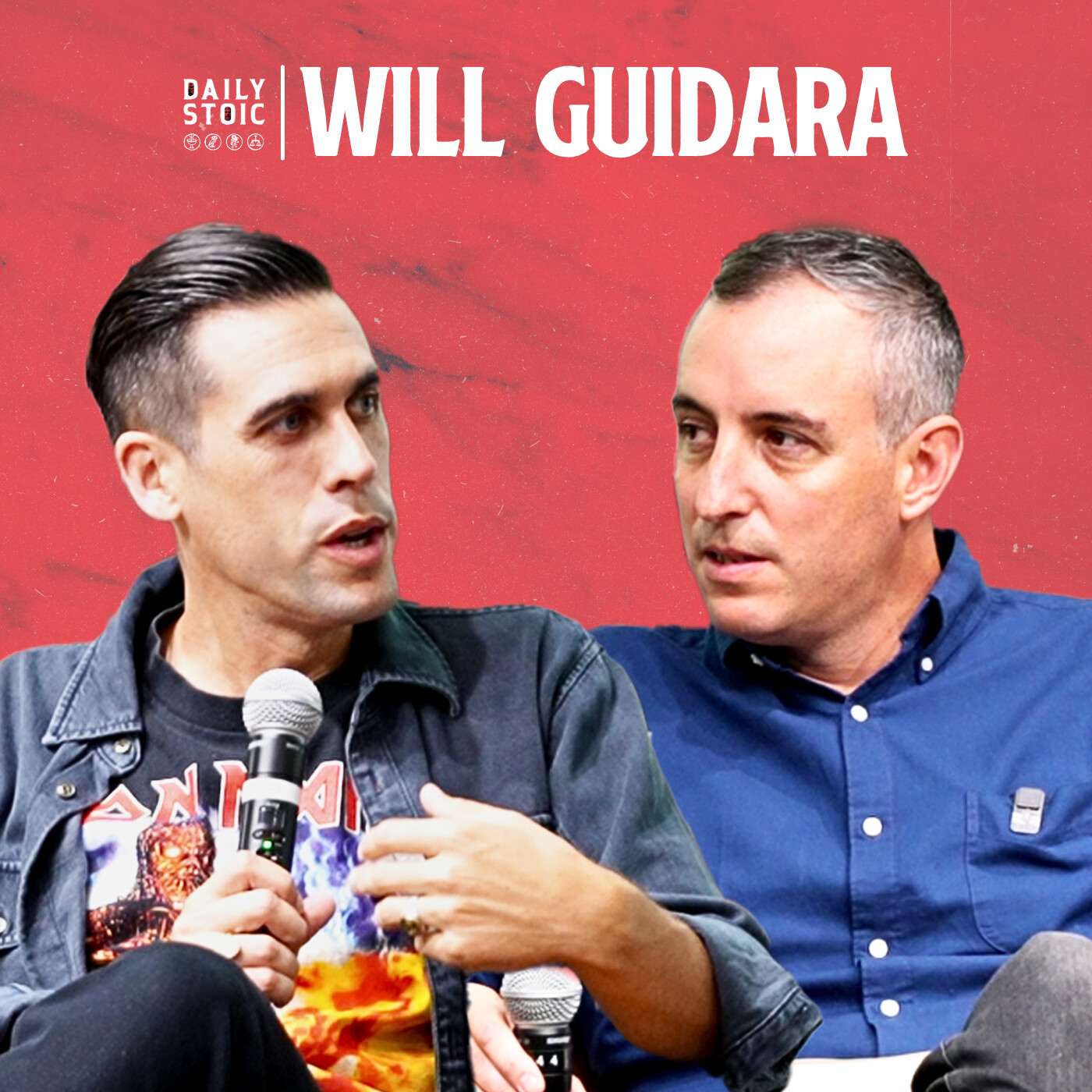
6:10Good evening. So I'm the guy not photographed up here. My name is Will Gadara. I wrote another book called Unreasonable Hospitality, and I am super excited to spend some time with him talking about this amazing new book, which I've already had a chance to read. Before we kick it off, I want to tell a quick story because it bears a lot of relevance to this and why this was so impactful for me. Okay. I ran a restaurant company for years in 2019. My best friend, who is also my business partner, and I fell out of love. I've done that myself. There you go. And we had restaurants in New York and L.A.
6:46and the Hamptons and London. And what commenced was the process of us basically fighting to see who could hold on to what. Yeah. And I called my dad in the beginning of it because he was a very close friend. and I was kind of overwhelmed and just destroyed by the whole thing. And he said, hey, this is going to be one of the hardest seasons of your life. At every crossroads, I want you to ask yourself what right looks like and do that. And he went on to say that if I always did what right looked like, I would probably walk away with less money, less of the things that I loved, but I could look back on that season and always know that I held on to my integrity.
7:27in the season since then that has been my guiding light and then guys i read this book and i'm someone that's always tried to live with integrity this is a book that challenged me to want to live with profound integrity and so i'm so excited that you wrote it my first question for you is when you're writing it how did it change you well i went through a couple similar experiences like that and some other things and you know you want to win you know you want to get justice in the the sense of like what is right from the world or what would be fair and then you sort of find that's very different than what's right for you to do and then also what's better for your family for your life for the stoats are always reminding us how little time So that was something I was thinking about when I was going through that.
8:24It's like, okay, there's one version of this that drags on forever and ever and maybe I win. There's a version of it where I give up everything and who is that fair to? And how do you sort of wrap it up quickly and fairly and as you're saying, do the right thing? And what I really came to understand writing the book and what I've tried to apply in my life is that we think of justice as this sort of big abstract thing. It's like it's something we get or it's something that they do in Washington or Brussels or a court of law. Right. It's got a judge and a jury. But actually, no, it's how we comport ourselves in the situations that we find ourselves in, some of which are very big, some of which are very small, depending on who we are, what we do.
9:09But that the sense of justice that we have colors how we interact in these situations. And cumulatively, that's who we are. And so what I've loved about this series, I did a courage one first and the discipline one. And then this one is that each one has allowed me for the period of time that I was writing it, whether it was a year or this one was two years, was to like live with these amazing people. Sometimes awful people, but you're like, they're the bad guys and you're like, you know. But to live with these just wonderful people who seem to have a code of ethics or a sense of honor or just this kind of commitment to integrity that you're just like, wow, that's what I want to be like.
9:54And a lot of the characters in my books previous were really awe-inspiring in terms of the immensity of what they accomplished. They were just very, very successful. and what I think was different about this book and what was so wonderful about living with them is like these characters were really awe-inspiring in these sort of sometimes very big things that they did but often just very personal choices that they made about whether they went this way or that way, whether they treated this person this way or that way and when you sort of steep yourself in this, hopefully it rubs off, you know, hopefully it rubs off and I think that should be the point of these kinds of stories.
10:34Well, that's what I want to get at. And guys, I can't wait for you to read it because we live with integrity. If you're a good person, you try to live with integrity. This inspires you. I don't think it challenges you. It didn't challenge you. It inspired me to look at a lot of the decisions I'm making and try to figure out whether I'm living with profound integrity. And so I'm just curious whether you've made changes in the way that you've approached your life as you've written it in the same way that many will when they read it. Yeah, I talk about this a lot in the afterword. or again, it's one thing to sort of talk about these ideas abstractly.
11:03One of the wonderful things about sort of owning a business or working for yourself, and then one of the benefits of all these cool tools that are out there that have really empowered individuals to do things that previously only countries could do or big corporations could do, is that suddenly these ethical decisions are not things that other people are making or that exist only on some incomprehensible scale, but like you have to choose yeah like you have to choose what you pay people that work for you or you have to choose whether you use a supplier in this country or this that country you have to decide like with this book you know uh it's cheaper to mail things in plastic and it's more expensive to use something that's like environmentally sustainable and then you you go okay should other people not use plastic and use something that's biodegradable?
12:00Yes. But that tends to be how we think about these things. We're like, what people should do is this. And what being an entrepreneur does is suddenly like, you're one of those people, whether it's on like some mom and pop scale, or you have the ability now to do it on a global scale, you could ship things all over the world in a way that, again, previously only some international conglomerate was doing. And so you have to make these choices. And so I've always tried to think about those things. But as I'm writing the book and then working on it, I was like, okay, yeah, we had a supplier in Belarus that makes this edition of The Daily Stoic that I saw.
12:42And we go, hey, I don't know if that's a part of the world we want to be manufacturing and stuff in right now, both for logistics reasons and moral reasons. And then you go, okay, well, let's find someone else. Well, I'm sure it's the same price somewhere else. And it's not the same price somewhere else. And it's not 10 % more somewhere else. It's like 400 % more somewhere else. And now all of a sudden, this decision that was very clean on paper has a balance sheet implications. And so I've tried to get better over the years at making those expensive decisions. And then what you learn when you make the expensive decisions is how hard it is.
13:25And it does also give you some empathy and understanding for people who are, you're like, okay, you're making a few thousand dollar decision and someone else is making a hundred thousand dollar decision. And then someone is making a hundred billion dollar decision. and how if you don't have a strong set of values or a moral compass, if you haven't built that muscle, the chance that you're going to be able to withstand that pressure is like next to impossible. And so how do you cultivate that? And then again, instead of thinking so much about what other people should do, which is fundamentally not in your control, how do you just do the things that you think you should do and then be satisfied and proud of like the small impact that that has?
14:08Yeah, because raindrops make oceans. And people doing the little things can be transformational. Yeah, there's this story I tell in the book. It's this old story. It's a cliche at this point. But this boy walks up to the beach, and there's all these starfish that have washed up on the beach. And he starts to throw them back in the ocean. And this sort of cynical adult comes and says, why? You know, it can't possibly make a difference. It doesn't matter. And as he throws one back in, he says, it matters to this starfish. And so it's, yeah, it's not just that like raindrops make an ocean, like little things do add up, but they also matter to the specific person that you're doing it to.
14:45Right. So, yes, hey, if we all make these small contributions, you know, maybe it sets in motion a trend or it has cumulative impact, but it also has individual impact to the people or the places that you're doing the thing. And that is significant. And you're saying the raindrop also matters. Yes, yes, yes. The starfish, I think, proves the story better because it's a sentient being, or I don't know if they're sentient, but it is a living being. And so it matters to that. And so how you think about it on this small scale is actually really empowering. And then it becomes a feedback loop because it feels good, you see good, and then you hopefully, hopefully you do succeed and you can have impact on a bigger level but it starts there.
15:41You hear that? That's not just a Toyota truck. That's the sound of no crowds, no alerts, no distractions and no telling what you'll find next you know like a detour so why would you ever take a tour when you could take a detour toyota trucks human your body has a performance super highway 60 000 miles of blood vessels that deliver oxygen and nutrients to every cell This, of course, is your cardiovascular system. It's the foundational system that powers everything we do. Both elite athletes and longevity experts invest directly in the cardiovascular system because supporting healthy blood flow is critical for energy, recovery, mental clarity, and overall performance.
16:38That's where human comes in. That's human with two Ns. They started out of research at the University of Texas, near where I live, and have 15 years of experience making award-winning supplements for nitric oxide production and healthy blood flow, now used by over 160 pro and college sports teams. Human Cardiovascular Health Daily is a plant-based and made from clinically studied ingredients like grapeseed and seed kelp extract. It supports nitric oxide production for healthy blood flow and energy while also supporting blood pressure and helping support the delicate interlining of your blood vessels.
17:13Just two capsules each morning will power energy and recovery while also playing the long game by supporting long-term vascular health and healthy aging. Human has an exclusive offer for our listeners. You can visit human.com slash stoic for an extra 15 % off your first purchase. That's enter code S-T-O-I-C. Stoic at checkout. That's human with two N's dot com slash stoic for an extra 15 % off with code stoic at checkout.
17:42One of the first lines that kind of like shook me was justice is not a noun. It's a verb. Yeah. Can you just unpack that a little bit for a while? I think it's worth saying that all the like virtue is a verb and not a noun. It just goes back to Aristotle. He's like, you become courageous the same way you become a carpenter by building things, like by doing the thing. It's not you either are it or you're not. It's not an end state that you arrive at. It is a process that you are participating in. Writing is the same way. Like you are a writer and the byproduct of that is books, you know? And so often we are very outcome oriented or we're very identity oriented.
18:33So like, when can I call myself a writer? When do I qualify as an entrepreneur or a professional or a celebrity? Whatever, like the thing. And instead of seeing it as this incidental byproduct of doing the thing And my friend Austin Kleon says this is like, more people want to be the noun than do the verb. And I think when I heard that for the first time, it changed my life in so many different capacities. But I think justice is it much more than the other virtues. Because, again, we think of justice as something that, like, is handed down to you by a court of law. or it's something you bring into the world by the triumph of some cause or a campaign, which it certainly can be, but justice is also a standard that we have to hold ourselves to as people.
19:25Is this right? Is this fair? What would the world look like if everyone did this? And so that's why I really, I think the important part in the book for me was part one, which is justice as the individual? Because that's the part of it that's the most in our control. Just what are the standards of behaviors and rules that you hold yourself to as a person? And I think we live in a world where, you know, you get into arguments with people about whether something is illegal or not, or legal or not, or standard practice or not, or whether everyone does it or not, which strikes me as somewhat irrelevant compared to whether it is something that you should do or not.
20:08I had that conversation with a friend earlier today that if you were deciding whether or not you should do something based on whether it's legal or not, you probably shouldn't be doing it. Like the fact that you're asking that question. Well, yeah, there's a story in the book I have about the golfer, Patrick Reed, where he's accused of cheating and he starts making this argument that like cheating is only when you break a rule to get an intentional advantage. It's like a rules infraction is when it happens. And it's like when you're making a distinction between cheating and a rules infraction, you're pretty far from where you should be going.
20:45Okay. So just to make sure everyone's caught up here, what are the virtues? Yes. So it's like a little primer here. And then the next question of that is in here, you kind of say that this perhaps is the most important virtue. I think so. So the cardinal virtues of Stoicism, which is the series I've been doing, is courage, discipline, justice, and wisdom. I guess you can put them in any order you want. That's the order I'm doing. But courage, temperance, justice, wisdom. The idea for the Stoics is that, this goes back to my first book on Stoicism, when the Stoics say the obstacle is the way, what they're saying is that every situation is an opportunity to practice one of the virtues.
21:25So you might have been trying to do one thing, life intervenes, things go sideways. It's still a chance. Nothing can stop you from practicing one or more or all of those virtues. So courage, discipline, justice, wisdom, everything in life is demanding one of these situations from us. And ultimately, you know, there's a lot of great quotes out there about, you know, courage is the mother of all the other virtues. Everyone's always making the argument, and which of the virtues is the most important. But I think you can make a strong case that justice is the most essential of the virtues because of what happens when you isolate it from the other virtues.
22:05So if someone takes a courageous stand, they speak out some unpopular opinion, the opinion is unpopular because it's dumb. It's just fundamentally wrong, just ill-informed. They just don't know the facts. or unjust. Well, I'm just saying just nonsense. Do we count that as courageous? Like there's silly things you could say, you know, like if you're the person who courageously stands up and goes, the earth is flat, you know, it's not courageous. You could lose your, you could lose people's respect because of it. People could laugh at you because you're standing alone because of it, but that's just because it's silly, right?
22:46Discipline in pursuit of the wrong thing. you know what does this get us and then yeah most importantly I think courage in pursuit of something that is morally unjust or fundamentally you know evil I think we would go that might be a brave thing to do but is it a virtue is it the virtue of courage obviously not and so when you subtract the other virtues you start to see it as what it is and Marcus Rios talks about this in meditations, he's like, some of the virtues have things that balance them out. You know, there's pleasure and discipline are counterbalances to each other. But he's like, there is no positive counterbalance to justice.
23:30The opposite of justice is injustice. We know that that's wrong. And so I think ultimately justice or the right thing has to be the North Star, has to be what the other virtues are pointed towards, or the other virtues are trying to help us get there. So they are related and inseparable, and yet what you see if you try to separate justice from them is you get somewhere that's not worth going. So I know enough about you to know that you're intentional. So why this one third? Oh, that's not a super exciting answer. Courage was the most exciting, I think, and most inspiring. Discipline seemed like the most straight down the middle.
24:19Wisdom seemed the hardest and the one that I needed to think about the most. And so that left Justice third. You share so many stories from so many people. Some people that I think we maybe even consider to be villainous. How could? Well, not like widely, but like you hear about Truman or something, and there's a lot of noise around that. But you learn about him and you unpack him, and you gain new respect and admiration for someone who maybe history didn't look back on as positively as it should have. And I guess, like, what are, just a story for people that a person, what's one of them that you really were struck by when you?
25:04Oh, yeah, I mean, that's my favorite thing. when I discover a person that I thought I knew about or I knew nothing about, and I go, oh, there is, like, I want to go so deep on this person. Like, I probably read 5 ,000 or 6 ,000 pages on Truman. Guys, he delivers it to you in, like, 12, so it's actually really helpful. He did the work, so you don't have to. On each of the books, I tend to really fall for, like, one person that I didn't know about. So this one, yeah, Harry Truman or maybe Jimmy Carter, those were the two I was like I just didn't know anything about this and I I loved that for the discipline book it was Queen Elizabeth for the courage book it was probably Florence Nightingale you know you just you just didn't know about someone and then you you go this person is Shakespearean in so many ways and they have so much that you didn't know about them they have so there's these stories like I'm also fascinated when you do vaguely know about someone historically And then you're like, no, these are the kinds of things that we should be talking about in school.
26:07So Truman was a big one. Jimmy Carter was fascinating. I remember I was getting my hair cut in New Orleans when I lived there. I was writing my first book. And I was getting my hair cut in this old-timey barbershop in the French Quarter. And it was like it was kind of a challenge. I'm laughing because your hair looks like it was just cut in an old-timey barbershop in New Orleans. So I'm sitting in this barbershop, and I look, and I go, hey, you're the only barber in here. There's like three chairs. So I was like, what is this? I was like, where are the other barbers? And he said, you know, I used to have these other barbers in here, but we kept arguing about politics, so I let them all go.
26:42And I said, oh, you know, what? What do you mean? And he's like, well, they kept bad-mouthing the president. And I hadn't lived in the South very long, and so I probably shouldn't have asked. But I said, oh, what president? and there is no universe in which I thought the next words out of his mouth were, they kept bad-mouthing Jimmy Carter. Oh. And first off, because this was, like, not that long ago, so this is a long time to hold your shop bacon. It's just decades that he has been the sole barber in the shop. And I just remember thinking, he thinks Jimmy Carter is a great man. And I was like, it's not that I don't think that, It's that I just never think about him at all.
27:25I just, I don't know anything about him. And so I was like, I'll read about this person. And I started to read about him and I was amazed. And so he's one of the characters in the book. The funny thing is I was, Will and I have the same speaking agent. And so I was doing a talk in New Orleans on Canal Street. And I walked down to the barbershop after I, for my flight, I was like, I'll just, I'll go back to this barbershop and get a haircut. And so I get in there and I love that story so much because it means something to me and I think it's funny. But there was this part of me that was like, maybe I'm not remembering this right.
27:59Like, again, it seems absurd, you know? And I was like, I didn't want to ruin it. Like, I didn't want to ruin the memory of it. So I was reluctant to just ask him, like, hey, are you like a big Jimmy Carter fan? And so I'm in there and he's talking. And so I just thought I'd just do it again. I was like, hey, I noticed you don't have any other barbers. He is Randy. the exact same script. And he goes, yeah, I kept arguing over politics with them. And I said, really? And he said, yeah. He's like, they kept bad-mouthing Jimmy Carter. And I was like, I know. And I was like, that's so weird, because he's actually a great president, because I've read all these books.
28:34Did you just start quoting all this stuff you'd recently learned? He goes, Jimmy Carter is one of the finest men who ever walked this earth. And then we just nerded out about Jimmy Carter for an hour. And then it was also funny, because this guy came in to get his haircut, and he's sitting there, and this barber and this guy are talking about Jimmy Carter. And he's like, starts to act weird, and I start to say, and he's like, are you Ryan Holiday? And he recognized, he'd read all the books, and then he was from out of town, too. It was this, like, hilarious occurrence all about the barber. Are you just using me for your book right now?
29:11One of my favorite presidents. And then I went, like, a week after that, I gave a talk at the Naval Academy, and I gave this speech about Jimmy Carter, who graduated from the Naval Academy. And if you want to get a sense of some of the ideas I'm talking about in the book, just an idea. Jimmy Carter goes to the Naval Academy. He's class of 46. He's the only president to ever graduate from the Naval Academy. They named a building after him last year because the naming commission said they couldn't have any named after Confederate generals, and so, or Confederate admirals. So Jimmy Carter, who is one of the greatest people to ever live, is snubbed by his alma mater for decades, but we, at the same time, this place that's inculcating and generating the next generation of American military leaders is walking into class every day for a Confederate named building.
30:05So I think it's important, there's this line from Mark Cirilli, I'll tie all this together, sorry, I'm too excited, But Mark Sreya says the perks of being an emperor is to earn a bad reputation by good deeds. And Judy Carter embodies that in many ways. He made all sorts of decisions that a president should not make in their first term because it decreases their chances of reelection. And that's what made him a great president, but in many ways also a somewhat ineffectual politician. And, you know, his reputation suffers for it. So when we say like right thing right now, we're talking about virtue.
30:44I think it's probably worth the sombering note of like, no one throws you a parade. And in fact, a lot of times, as you said with your story, you do the right thing. And what it's actually doing is costing you every step of the way. And if you look around and you go, I might be better off if I was more of a dick or if I fought more for my stuff, but then also you'd have to be that person. And so that's, to me, the tension of the book. I mean, I guarantee you, when you read this, it's going to challenge the way you make decisions, because you will be deciding against your own immediate self-interest if you're inspired as much as I was by what it compels you to want to become.
31:28I mean that really sincerely. Thank you. insurance company, Omaha, Nebraska, and in New York. Pacific Life and Annuity, Phoenix, Arizona. This season, let your shoes do the talking. Designer Shoe Warehouse is packed with fresh styles that speak to your whole vibe without saying a word. From cool sneakers that look good with everything, the easy sandals you'll want to wear on repeat, ESW has you covered. Find a shoe for every heel from the brands you love, like Birkenstock, Nike, Adidas, new balance, and more. Head to your DSW store or visit dsw.com today.
32:41It's kind of fun when you're reading a book and the next week you're having a conversation with the author. But, okay, justice, you define it like a million different ways. Accountability, honesty, responsibility, decency, loyalty. And it feels to me, and I'm not sure whether I'm doing in that thing where the past is better than the present. You look at politics and a lot of people complain that there's a lack of honesty. You look at how we're increasingly inclined to ghost other people and people complain that it's a lack of responsibility. You look at internet trolls and comments and people complain it's a lack of decency.
33:14You look at just the selfishness of people generally and it feels like people are complaining that there's a lack of loyalty. Do you think this is, is it really bad right now? I don't know if you could find, if you could go back historically and find an era where you're like, you know what was wonderful about that time? We treated everyone great. You know, it's never been true. We've always been selfish. We've always discriminated. We've always abused. We've always ignored. We've always pulled one over on people if we thought we could get away with it. That's what humans do. but then there's also been people inside those moments that sort of resisted that temptation or that urge and so when you go back to Turkey you find wonderful examples or counter examples but I think for the most part this has been a timeless struggle it's why the Stoics were laying this out as a virtue we're striving for 2 ,000 years ago but yeah I do think there you could argue some of the trends of the moment and accelerate these things.
34:20And I would say that our lack of consensus about history or our inability to pick models and celebrate them and hold them up makes it hard for us to have a common ideal that we're aspiring towards. Right. Like like who are the heroes that we hold up and go, we need to be more like that. I think I think it's funny. It's like I remember as a kid learning not that George Washington chopped down the cherry tree. I remember learning that George Washington did not chop down a cherry tree and that that story is not true. Yes. You know, but I don't think anyone thought this. When you go back and you read some of these old readers from the 17 and 18, I guess mostly the 1800s, I'm not sure how true anyone thought it was, but that wasn't the point of teaching the story to children.
35:23Like, we have this sort of sense of, it's good that we poke holes in myths and legends and we don't whitewash the past. But the purpose of history was largely moral instruction. So Plutarch, the great biographer of history, would say that it doesn't really matter what time it happened or place it happened or how many soldiers were at this. He was like, history is the sort of anecdotes and moments that reveal character, the essence of the person. And I would say that one of the big voids in the world today is those stories or exemplars of what we want to be and what we want our children to be. We're really good at tearing them down and poking holes in them and pointing out the contradictions in them.
36:19But if you don't replace it with anything, you're left with this vacuum. And in that vacuum, people who have no moral compass whatsoever do what they want. And then also people are uncertain and they're not called to and inspired to be what they're capable of being, I think. But you're like a hopeful person. Yeah, I think I have a line in the Courage book from General James Mattis. He says, cynicism is cowardice. And I think that's true. The idea of earnestness, like actually caring and actually trying, is probably the theme that appears the most in all of the books. There's a wonderful Jimmy Carter story that I love.
37:07It's in the discipline book. This is all about Jimmy Carter. But he graduates from the Naval Academy. He's interviewing for a job in the submarine service. Admiral Hyman Rickover is interviewing him. Rickover asks, you know, how did you do in your class at the Naval Academy? He's like, you know, I was 55th out of 800. And he's talking about all this. And then Rickover says, but did you always do your best? And Carter wants to say yes. but he realizes it's not true and he says no he said no I didn't always do my best and Rick overlooks him and he says why not and then he gets up and he leaves the room and Carter would write later that he's been struggling to answer that question his entire life why didn't I give my best why am I not giving my best and then there's like there's an earnestness to that and a sincerity to that.
38:05And I think the idea of individuals trying to become what they're capable of becoming and to do their best is, to me, the antidote to the cynicism or the hopelessness that's there. The idea that, hey, just because things are the way that they are doesn't mean that they have to be that way. and an individual can change. I mean, I think this stoicism has this reputation about being resigned and accepted. And there's part of that to it. But the stoics were also people who ran for public office, who fought for causes, who fought for losing, like, what would almost certainly be losing causes in some cases.
38:49But they did it anyway. I think, to me, you know, there's this idea that Marx-Rose's Meditations is depressing because he talks about some dark themes. Yes. But when you look at this guy's life, he buries six children. He's betrayed in a coup. He suffers crippling health issues. He lives through a plague and floods and wars. Basically, everything that could go wrong goes wrong in his life. Getting out of bed every day was an act of incredible hope and determination and optimism. like that he wrote meditations was proof that stoicism is not a hopeless depressing philosophy he clearly believed in something and he believed that things mattered and he really cared and that to me is the sort of the hope that runs through the books yeah what gets talked about is ultimately what gets thought about right he was doing that through those books yeah Okay.
39:48Are you hopeful or are you not? I'm a relentless optimist. Good. I think sometimes I'm also pragmatic. And so when I'm optimistic and hopeful about the world, I look for things to grab onto. Sure. Right? And you're talking about people or figures that haven't been torn down because we're so quick to tear everything down. I mean, maybe The Rock? I mean, I'm serious. It's like when people look for people that we can all rally around to like say, like, this is someone who represents the world that I want to live in. It's harder and harder to find those people, not due to people's individual contributions or personalities, but just that we're quick to tear everyone down.
40:29And because information is so easy to circulate, I'm sure everyone was always talking smack about everyone, but it wasn't this easy to communicate it to the world. Sure. OK, we're going to wrap up and go to questions for all of you in a moment. I think that when you read this, you try to imagine the person that you could be. Yeah. And I think a lot of people are going to start from here and aspire to be a little bit better. If you're reading this and you have just been living in the complete absence of integrity, that's a real question. Okay. Is it too late? Can someone change late in life? And for lack of a better word, and I'm saying this in a very secular way, be redeemed?
41:14I mean, the hopeful answer is, of course, yes, that it's not too late for anyone. I think that, so the Greeks had this expression that character is fate. So your values determine who you are, what you're going to become. And so we have that idea, which I think is true, you know, when people show you who they are, believe them, when it's always going to go the way that it was going to go. They were never going to magically surprise you at the end. And so the truth of that, I think, is important. And then at the same time, can character be changed or shaped or improved? The answer also obviously has to be yes.
41:57Or what is Marcus doing in meditation? What is the point of philosophy? If we're all just, you know, baked cakes, what's happening? So I was talking to my friend Tim Urban the other day. and he was, I said this thing that he didn't work at, and then, but I'm still working, I'm workshopping, I like it, I said, we're broken, but we're not fixed. The idea of, like, we're broken, we're all flawed with all the problems, but we're not fixed, like, in the sense of growth versus fixed. And so, the idea is, yeah, we all have these problems, we all have these flaws, we all have these tendencies, but we have, I do believe, the ability to decide to do things differently, differently and that and that if we are what we do then we do have the ability to change and become something else so so if you're either if we see it as you're either a person of integrity or you're a person without integrity if you're a liar you're the way you turn that around is by doing the thing you become a writer when you start writing yes yeah and and yeah you stop becoming a writer when to stop writing.
43:02You have the ability always to just start doing it again. And so that's kind of how I think about it. And I mean, I certainly, I'm not trying to give myself credit here, but I feel like who I was at the beginning of the book is different than who I am at the end of it. That was one of the wonderful parts about writing it. And in that way, to me, it's a success, whether it's one copy or lots of copies, like it affected this person. And that is what I control. And that's great but i also go like what i i think about what initially attracted me to stoicism and philosophy it was none of this like this wasn't what got me excited this wasn't what i wrote about you know um it what got me excited was the much more self-interested parts that stoicism has self-help meaning selfish yeah and i think i have expanded over time i feel like it was working on me as I was working on it.
43:59And so I know my character has changed. I mean, I would leave it to other people to say what it is, but like I can feel in my life the ability to make decisions and the feeling of, and that I care about things that previously were just outside what was my concern, you know? So I don't know if that answers your question. No, it does. And I mean, I think if you're either here or you're listening to this, wherever this ends up existing. If you're someone that, it's like, it's a practice, right? Like any practice, it's hard to take that first step. And if this is something that you want more of in life and you're trying to find a way to either retrain your brain or just inspire you to pursue it, I'm only halfway through this book and I feel like I'm a slightly better version of myself than I was when I started it.
44:45And I'm almost certain the same will be true for anyone who picks it up. So I'm grateful that you wrote it and I'm grateful to be reading it. And this is super fun. Well, that's very nice. So thank you.
45:02Thanks so much for listening. If you could rate this podcast and leave a review on iTunes, that would mean so much to us and it would really help the show. We appreciate it. And I'll see you next episode.
45:30Look, ads are annoying. They are to be avoided, if at all possible. I understand as a content creator why they need to exist. That's why I don't begrudge them when they appear on the shows that I listen to. But again, as a person who has to pay a podcast producer and has to pay for equipment and for the studio and the building that the studio is in. It's a lot to keep something like the Daily Stoic going. So if you want to support a show but not listen to ads, well, we have partnered with Supercast to bring you a ad-free version of Daily Stoic. We're calling it Daily Stoic Premium. And with Premium, you can listen to every episode of the Daily Stoic podcast completely ad-free, no interruptions, just the ideas, just the messages, just the conversations you came here for.
46:25And you can also get early access to episodes before they're available to the public. And we're going to have a bunch of exclusive bonus content and extended interviews in there just for Daily Stoic Premium members as well. If you want to remove distractions, go deeper into Stoicism and support the work we do here. Well, it takes less than a minute to sign up for Daily Stoic Premium, and we are offering a limited time discount of 20 % off your first year. Just go to dailystoic.com slash premium to sign up right now or click the link in the show descriptions to make those ads go away.
📕 Right Thing, Right Now is out! To purchase your own copy and get exclusive bonuses, head here: https://store.dailystoic.com/
Grab a copy of Unreasonable Hospitality: The Remarkable Power of Giving People More Than They Expect by Will Guidara here
Follow Will Guidara on Instagram and X: @wguidara
✉️ Want Stoic wisdom delivered to your inbox daily? Sign up for the FREE Daily Stoic email at https://dailystoic.com/dailyemail
🏛 Get Stoic inspired books, medallions, and prints to remember these lessons at the Daily Stoic Store: https://store.dailystoic.com/
📱 Follow us: Instagram, Twitter, YouTube, TikTok, and Facebook
See Privacy Policy at https://art19.com/privacy and California Privacy Notice at https://art19.com/privacy#do-not-sell-my-info.
