
 Ask ChatGPT



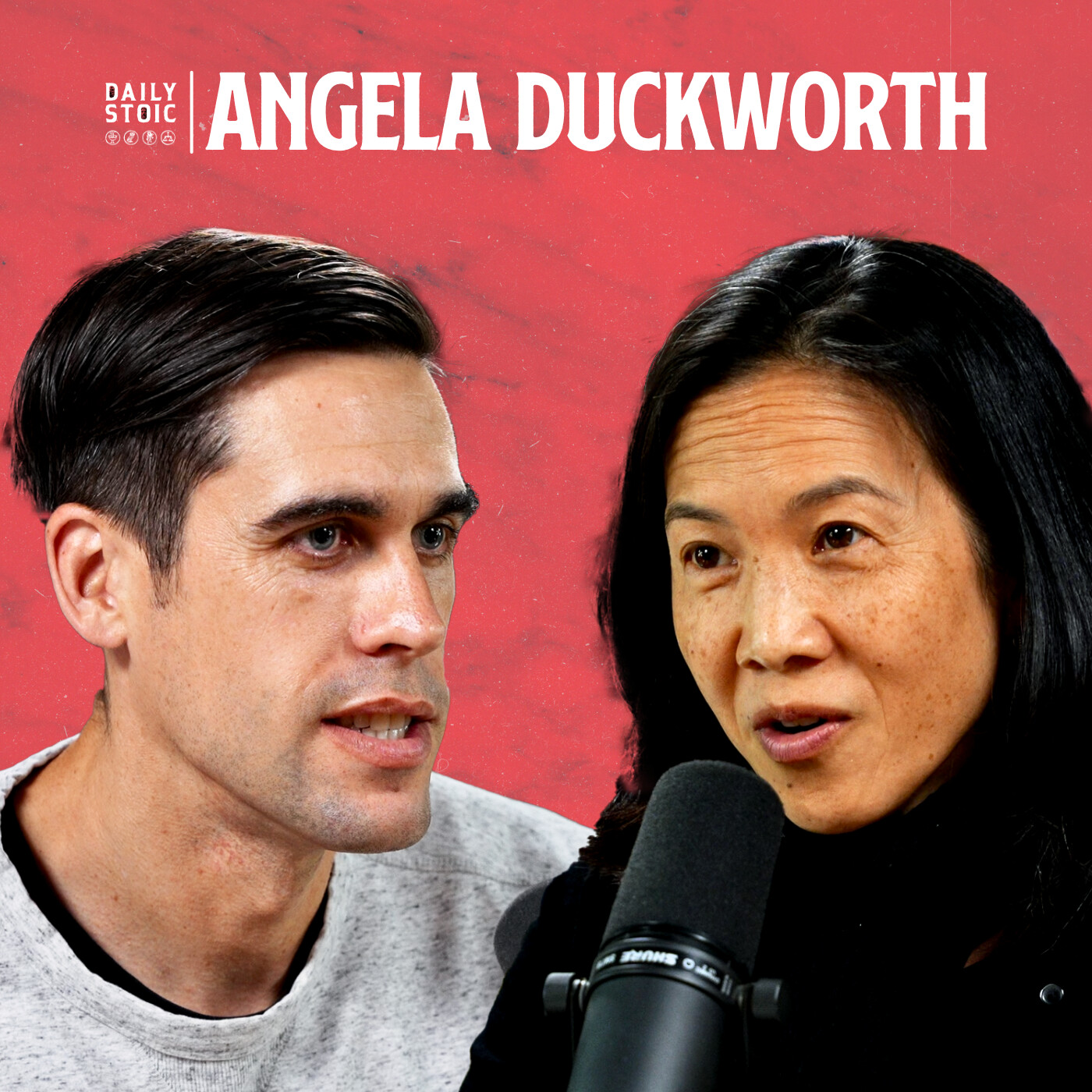
In this episode of The Daily Stoic, Ryan Holiday engages in a thought-provoking dialogue with Angela Duckworth, a noted psychologist and author of the bestselling book Grit: The Power of Passion and Perseverance. The conversation centers around the Stoic principle that "you cannot change your situation, but you can change your response to the situation." Duckworth challenges this notion, sharing her perspectives on self-control, grit, and the historical context of Stoicism.
Written by AI. May contain mistakes.

Get the gist, explore an idea or ask about something said.
 Claude
On The Daily Stoic, what are the key points of this episode?
Searching your listeningAutomatic transcript. May contain errors.
0:00It's time for Cyber Monday, Dell Technologies biggest sale of the year. That's right, you'll find the lowest prices of the year on select Dell PCs like the Dell 16 Plus with Intel Core Ultra processors. And with built-in advanced AI features, it's the PC that helps you do more faster. From smarter multitasking to extended battery life, these PCs get the busy work done so you can focus on what matters most to you. Plus, you can earn Dell rewards and join many other benefits like free shipping, expert support, price match guarantee, and flexible financing options. They also have the biggest deals on accessories that pair perfectly with your Dell PC, improving the way you work, play, and connect.
0:38Whether you just got started holiday shopping or you're finishing up, these PCs and accessories make perfect gifts for everyone on your list. Shop now at dell.com slash deals and don't miss out on the best prices of the year. That's dell.com slash deals.
0:54Look, if you're listening to this podcast, you've probably heard of HelloFresh, right? They're the number one meal kit in America. They make home cooking easier with chef-crafted recipes and fresh ingredients delivered straight to your door. This fall, they're serving up even more to love. It's not the HelloFresh you remember. It's even better. HelloFresh is bigger. They've doubled their menu. You can choose up to 100 options each week. It's healthier. You can choose from 15-plus high-protein recipes. And they now help you eat greener with veggie-packed recipes that have two or more veggies per week.
1:28And it's tastier. You can get steak and seafood recipes delivered every week for no extra cost. They have three times the seafood options. They also have hearty fall recipes like classic beef chili or honey glazed pork tenderloin. We just got home from a week away. We're trying to think about what we're going to eat this week. It was such a relief to see that HelloFresh box sitting on our doorstep when we got home. They've got everything you need for the recipe that they pick out. There's no last minute trips to the store. Plus, the meals are delicious and easy to make. The best way to cook just got better.
2:00Go to HelloFresh.com slash Stoic10FM to get 10 free meals plus free breakfast for life. One box with active subscription. Free meals applied as a discount on the first box. New subscribers only varies by plan. That's HelloFresh.com Stoic10FM to get 10 free meals plus free breakfast for life.
2:25Welcome to the Daily Stoic Podcast, where each weekday we bring you a meditation inspired by the ancient Stoics, a short passage of ancient wisdom designed to help you find strength and insight here in everyday life. And on Wednesdays, we talk to some of our fellow students of ancient philosophy, well-known and obscure, fascinating and powerful. With them, we discuss the strategies and habits that have helped them become who they are and also to find peace and wisdom in their actual lives. But first, we've got a quick message from one of our sponsors.
3:16Hey, it's Ryan. Welcome to another episode of the Daily Stoic Podcast. You know, usually when you have a guest on the show, they'll send you a note, or one of their people will send you a note, hey, I'm excited. Is there anything I need to know? Maybe every once in a while they'll be like, here's a couple of things I'd like to talk about, or I hope you have time to read my book. When Jonathan Haidt was on. He sent me like a syllabus from one of her classes. I don't know if I've ever been challenged at the outset by a guest, but I think that gives an insight into Angela Duckworth and why she's so amazing.
3:45She sent me this note. We recorded this back, I think, the first week of May. So on April 29th at 1141 AM, she said, Hey, Ryan, I'm looking forward to seeing you on Saturday. What's on my mind? The stoic dictum that you cannot change your situation, but you can change your response to the situation. I have a different view. I know you've thought a lot more about this, and we've both thought a lot about self-control, so I'm looking forward to learning from and with you. I just like that she sort of laid it out as a challenge from the beginning, and we had a really great conversation. It was awesome.
4:16I think, as I kept trying to point out to her, I think we agreed much more than she thought we did, and I think she was sometimes pointing out to what you might call lowercase stoicism versus uppercase stoicism, but I think this was an awesome conversation and I'm really looking forward to you hearing it. It's been a bit crazy over here, I will say. It's been a bit nuts. I put books out in the summer before. Actually, Trust Me, I'm Lying came out in June of 2012. That seems insane to say. I think Obstacle came out in May of 2014. Actually, for a while, this was the slot that I was in when I I would do a book.
4:54They would give me the summer slots because they didn't think my books would sell. This is kind of like the big books tend to get the fall. The reason Right Thing right now is coming out in June is just because I asked for more time with the book. The first two came out in the fall of 21 and 22, and probably the fourth book in the series will come out in the fall of 25 or 26. But anyways, this is the first time I've put out a book in the summer and had two kids who were in school who are now not in school. So this is the first time my writing life has intersected with my family life in this way.
5:32So there's a lot going on. Plus, it's gotten insanely hot here in Texas. We're trying to handle some business, tighten things up, rearranging the Daily Stoic offices. So a bunch is going on here. Plus, I'm trying to write. I'm trying to get as much done on this new book as possible. And so it's been a bit crazy, but I was very excited to have Angela Duckworth come out in person because I've been a fan of her work forever. Our paths have crossed virtually a million times. She was nice enough to blurb stillness is the key. We met through, I guess it would be Les Snead, who's the GM of the Los Angeles Rams.
6:11Although, of course, I was familiar with her work for a long time. You know your book has crossed over if the word becomes part of the zeitgeist or the consciousness. And I think Angela Deltworth has done that with a word that I think people thought was popular, thought they knew, but they didn't understand. Like the power of her work has just been the cultural resonance now, that word grit, right? Her New York Times bestselling book, Grit, The Power of Passion and Perseverance, which actually started with some work she was doing for West Point. You know, what makes people make it through and what prevents people from making it through all the training that you would have to go through?
6:46Why did some people stick and some people quit. So thanks to Angela for coming out. If you haven't read Grit, The Power of Passion and Perseverance, it's an amazing book. We carry it in the bookstore. You can follow her on Instagram and Twitter at Angela Duck W. And without further ado, here is my interview with Angela Duckworth.
7:15So you had a talk to go good? Yes, I had a talk. for autism therapy, but like, it's like a for-profit company, but yeah. Apparently they're based here. You probably end up talking to some groups that you wouldn't expect you would end up talking about with your work. Oh, with my work? Yeah. But I do it very rarely. Oh, really? Yeah. Yeah. Super rarely. I feel like you and I are similar in that neither of us would have possibly imagined that we would talk to sports teams or it'd be in any way relevant in that world. Or even watch one game, like one single game. But yeah, no, there are a lot of unexpected turns, probably for both of us.
7:51Yeah. Have you talked to many sports teams? I bet you have, right? I do occasionally. I talk to sometimes the players, but it's most often the coaches. They just call me. Yeah. I got some really good advice when my book started to first go in sports. They were like, the players could not be less interested in another person being trotted out. Because it's like a whole like, oh, it's this week coach, right? Yeah. You don't think of sports as being like being a professional athlete as like an endless series of meetings, but their life is like all of our lives. You might talk to athletes more. I went to the Seahawks and I have to say like the week before I had given a colloquium at Harvard and I thought the questions were at least and possibly more sophisticated from the players.
8:37I mean, they were really like, it's not just smart, but just there was like a depth of what they were asking me about. and I was like, okay, whoa. All right. Let's talk about that. So yeah, no, I don't, I don't like, um, I'm not, you know, also I'm not a sports psychologist. I think it's like a, well, yeah, it's like, if you're a theoretical physicist and someone's like, oh, Hey, like I have a applied physics problem. Right. So, so I don't, I try not to like, you know, like prance around and like try to help athletes, like improve their performance specifically. Cause I'm like, but they're kind of just like everyone else, which is like, you're just trying to get a little bit better at what you're already really good at.
9:12And you know a lot about. And so I can tell them about it in principle. It's just that when somebody asks me to work with a particular athlete, I'm like, oh, I think it's a different toolbox. Well, yeah. And also, I didn't become a writer to do one-on-one instruction. That's the whole point is like, no, no, no. I'm just going to write this down. And then you do it, right? It's like, did I pass the baton to you? Yes. Do you identify most as a writer? I would say so, yeah. That's interesting. Yeah. What were you before you were a writer? I was the director of marketing at a fashion company. Which one?
9:45American Apparel. I know American Apparel. Do they still exist? No. Oh, okay. I did this book on ego. It sort of charts the collapse of that company. Another part of the roller coaster? Yes. Okay. I had these black leggings from American Apparel, and then I was like, oh no, I can't get these anymore. No, I'm down to my last few things. It's a really sad story. Well, one of the interesting things about the company, he said he wanted to design clothes that you could buy in a vintage clothing store like 20 years from now, which is like a great way to, right? Yeah, yeah. So often fashion, especially then - It's like the opposite of fast fashion.
10:15Yeah, it was all about like, how do you make stuff that goes out of style and then you have to keep replacing it? Yeah, it's like having a new edition of your textbook that everybody has to now get like the eighth edition. Because yeah. Yeah, planned obsolescence. Ah, okay, yeah. And then what happened? Well, many things. I mean, there's a Me Too part of it. There was - Oh, what? I did not know that. Yeah, I mean, that's probably the thing it's most well known for. This is sort of slightly before Me Too, but I actually did a talk in Austin like two days ago, and I was saying that one of the lessons for me at the company is like, okay, the idea is crazy.
10:48American Apparel is a crazy idea. Like we're going to make our own clothes. In the United States. In the United States, we're going to pay like$20 an hour. There's a medical clinic on site. You had free health care. Whoa, I didn't know about that part. Yeah. Yeah, it was like a worker's paradise, right? So that's crazy. We're not going to use celebrities in the ads. That's crazy. We're going to run our own stores. That's crazy. We're not going to chase fashion trends. We're just going to make like T-shirts and socks. Like basics. Yeah. That's great. So at every step of the way, it's totally insane.
11:16But it worked. Right. And so what happens oftentimes to entrepreneurs or brilliant people or artists, you do something that everyone tells you is crazy. Yeah. And then it works. And then you learn not to listen to people. Oh, and then when you stop listening to people. You really can't have relationships with your employees. Or you really shouldn't open this many stores in the middle of a financial crisis. Or like... You're like, I know better. Yeah, exactly. Oh, that's so interesting. Yeah. I mean, think like you're Elon Musk, right? Everything you did, everyone told you was crazy. Right. And then they were like...
11:51I'm going to do it my way. Don't buy Twitter. Right. And you're like, well, if I did what you said, I... I wouldn't be here right now. I wouldn't be here. Yeah. Oh, this is so deep. Yeah. Okay. The other lesson I take from him is he had this open door policy. Like he tried to be a really accessible CEO. He's like, any employee, anytime, call me. And this is how he found a lot of employees. Like he'd find someone working at a store in Seattle or working at a store. And he'd be like, text me. Yeah, text me, call me. That's also where the boundaries issues with relationships. Oh, yes. But the point is he had this open door policy as a CEO, which I think a lot of leadership experts talk about as being important, right?
12:25Accessible. But if you had 250 stores in 20 countries, there's always somebody awake with a problem. And I agree that part of it is he just like slowly went insane from lack of sleep. Like you just can't. I talk about this in the book that I just did. Jimmy Carter was the first of the modern presidents, first and last of the modern presidents to not have a chief of staff. He didn't have a chief of staff. Yeah, he thought like the Nixon administration and the Eisenhower administration had been sort of what they call the imperial presidents, where like it's like, I'm the guy. Yeah, right. Hierarchy.
12:57And he's like, I want to be the hub. The people's president. Yeah, I want to be the hub. Everyone's a spoke. Yeah. Yeah, every cabinet secretary could walk into the Oval Office at any time. So anyways, famously, you had to ask Jimmy Carter for access to the White House tennis courts. And so he slowly sort of drowns under just the sheer logistical nightmare of the job. He's like, I think we need more handy wipes like in the kitchen. Yeah. Wow. That's so interesting. Okay. This is very rich. I know we're digressing. Okay. I will be disciplined, but my kids are going to be so excited that I'm so excited to let marketing for American Apparel.
13:30Anyway. Cool. So, yeah. Well, so you did email me before we started and you basically said that you disagree with the fundamental premise of stoicism. Did I say that? I mean, I don't really know. I will say this. I don't think I took any philosophy where we covered stoicism, but I will say that like, you know, you read these like epithetis quotes or whatever, and it's like, you know, one cannot change one situation, but one can change one's resolve, you know, in the face of it. Like, you know, this is what you can't change is what you can. And what you can't change is the outside. And what you can't change is the inside.
14:00And I think that is, well, just, you know, if it were a true false question, I would say false. Yes. And obviously there's some truth to it, but I think it's a mistake. It's not unrelated to what we were just talking about, which is that sometimes, as Ben Franklin would say, half a lie, you know, half a truth can be a great lie. I think it can be misleading to think about your situation as that which you cannot change. Well, one of the things that Epictetus says is that, you know, there's things that are up to us and there's things that are not up to us. And obviously there's also things that are partially up to us, right?
14:32There's just a gray area in the middle. Like books are a good example, right? You control writing the book. You don't control whether people buy it. But then marketing sits somewhere in the middle. So there's obviously, it's not quite as black and white as that. I don't disagree with that, by the way. What? I don't disagree with your last statement, which is there are things that you can control, there are things that you can't control, and those are partially under control. I don't have any problem with that statement. But I think, and I'm not just reacting to Stoicism. So if you look at the whole notion of self-control, and in any actually Western tradition, I will say, you know, the Bible, the Stoics, and then, you know, Adam Smith, and then more recently, modern psychology, there has always been this emphasis on how are you going to manage a situation, what are you going to do with your attitude, with your thoughts, with your feelings and your actions in response to the situation?
15:29That's almost the definition. That's what, you know, I think Adam Smith may have used the phrase like self-command, right? And I think there is something to being like the master of your fate and the captain of your soul and all of that. And I don't disagree that there are things you can change, there are things you can't change, there are some things in the middle. But I think the neglect, you know, I do think that the most influential thing a person can do, the most highly leveraged thing they can do is to take a step back and ask, how do I change the situation I'm in before I have to go and respond to it?
16:00That has actually been a turn in psychological science on self-control probably in the last 10 years that we have as a discipline started to ask the question, what do highly effective people doing? And it turns out they are not using willpower. They're not relying on executive function. They're not even saying like, okay, in the moment, I'm going to frame this as an opportunity and not as a threat. What they're doing mostly is actually strategically changing and choosing their situations. Sure. But that's something that's in your control. Absolutely. And so it's not that I'm saying that it's not in your control.
16:38I'm just saying that we should not assume that situations are that which we cannot control and internal things are that which we can. I think our locus of control actually extends beyond, you know, the internal to the external. So in a way, it's an expansion of what you have agency over and what you can control. Like, it's not just here. It's all of this. And at the same time, I think there's some humility because I think once you're in a particular situation, I think sometimes we overestimate how much willpower, how much control we're going to have once we're already there and being tempted or being distracted.
17:11So when you look at the quotes from the Stokes, So you don't control what happens, you control how you respond to what happens, right? Or, you know, only focus on what's up to you. The world is out of your control, blah, blah, blah. Then you look at the lives of the Stoics and they write books. They run for public office. They fight in wars. Actually, I know nothing about the Stoics, like these people who were... So they were not only philosophers then, right? Is that what you're saying? Yeah. So Stoicism descends from the Cynic tradition, the Cynic tradition being sort of a spurning of the hypocrisies and contradictions and lack of control we have in the world around us, right?
17:48Oh, interesting. So they're like taking it back. They're like, wait, no, there's an agentic way of living your life. This begins in Greece, but as Greece is eventually conquered by Rome and the philosophy goes into what is like a functioning country and empire, like the people who are interested in this philosophy find themselves in positions of leadership or find themselves frustrated or refuse to accept the world around them. And then they have to go do something about it, right? Yeah, yeah, yeah. And so I think there's an interesting tension slash like another layer of context of what these things mean.
18:23Yeah. When, you know, if you just read it, you think this is like a monk who has left the world and they're just talking about how things should be from a distance. And then you're like, but wait, this person is married. This person has children. This person is the second most powerful person in the most powerful empire in the world. Obviously, they don't believe it as literally as it can be taken 2000 years later, or they wouldn't have woken up every day and done their job because they're they would it would have meant that their job was impotent and meaningless and had had no impact, which obviously they didn't believe.
18:54Right, right, right. Okay, well, I have a idea. So you tell me because I again, I don't know the tableau. Like, I'm like, oh, like, I saw this quote on Goodreads from like the Stoics. Like, so I'm not like you. And I'd love to know more. But recently, I was talking to James Gross. So James Gross is like one of my academic BFFs. He's at Stanford. And he actually is a philosopher by training. So I think you and he could have a really fun conversation. And I asked him, why do you think there are so many of these quotes about like, well, this is what you can't change, but you can change your mind, etc.
19:25Because it's so plain to us as psychologists who study self-control and study emotion and goals and so forth, that can be misleading. And he said, well, as you know, Angela, right, when we think about anything that somebody is doing, you always ask the question, and we're not condoning everything everyone does, but you're always asking the question, what purpose is this serving? Like, how is this functional? So then we went back and forth. This is only days ago, right? We're like, what purpose does it serve to focus somebody on this internal locus of control, but the internal part of the internal locus of control, you know, your mind, your actions, yourself?
20:01And he said, it's got to serve some focus. Maybe it's that if you didn't do that, that people would like never scrape themselves off the couch and like get out the door and like brush their teeth and try to do anything. So that conversation ended. And then I'll tell you what I thought about in the days afterwards. And I can't wait to talk to James about it next. But I'm talking to you first. But one of the last – the last thing that Danny Kahneman and I were working on before Danny died, Danny and I were working on something that he called the focusing illusion. And that was far preceding me. So Danny is, of course, well-known for like thinking fast and slow and cognitive biases.
20:39But I think it was in 1979, a younger Danny Kahneman wrote a book called Attention and Effort. And Danny worked on attention for a lot of his life. And I think the most important thing to understand about human intention is its very function is selection. Because you cannot – you're not God. You cannot keep in mind everything. You cannot have in mind, in working memory, all memories, like all goals, all priorities, and all thoughts. So it's selection. It's like I'm going to think about this and I'm going to neglect everything else. That's also how the human eye works, right? In the fovea, you can see things with great acuity.
21:15But in the periphery, you're like whatever. It's a blur. Yeah. So attention is a selection tool so that your mind can focus on one thing to the exclusion of others. I think if you put that together with what we've just been talking about, you're like, why do we draw people's attention to their attitude and their will? I think it's because human beings can't really pay attention to everything. And one thing we do want to do is make sure that people understand that they do have agency, that in a given situation, they can choose to not tell the other person exactly what they think in the middle of traffic when that person cut you off.
21:51You do have control over that. And if you can only pick one thing, right? If the human mind can only think of one thing, then maybe being like, you are the captain of your fate, you are the master of your soul is not a bad message. But if there could be two things, like if our mind can toggle between, you know, two truths, then I think I would like to say you are the captain of your fate and the master of your soul. Right. You know, you sail your own ship. Yeah. And you should be careful where you're sailing. Right. Like the seas that you decide to sail are part of agency, too. Yeah. I'm not actually seeing where the contradiction is here.
22:27So I don't think it's a logical contradiction, but I think the assumption. I mean, I talk to a lot of like, you know, performers as you do. And I think the very successful ones see no contradiction. They see no contradiction between like, I got to work hard and practice today and push my limits. You know, it's my autonomous choice. And I need the best coach possible. I'm very careful about the people that I hang out with. Like, I'm going to set up my physical space so that like, you know, I talk to people who are like, I need more sunlight. I Like, I need to live in a sunny place. So I don't think there is a logical contradiction.
23:02I just think that when you don't have that very sophisticated view and you toggle, etc., you can make a mistake by thinking that, like, my job is just to work harder and to, you know, make things work within this little capsule.
23:24I got an amazing night's sleep last night. One, because my six-year-old fell asleep in the car at like six o 'clock and he transferred him from the car seat to the bed and it stuck, which is just magic. So he's in bed way earlier than normal. But I sleep really well every night because I have a 8 Sleep Pod 5 Ultra, which is 8 Sleep's best product. I've used 8 Sleep for many years now. And it's just totally transformed how I sleep, made me sleep better, made my wife sleep better. It's amazing. So basically, Eight Sleep is this topper that goes over your mattress. It can heat and cool both sides separately.
24:03It can raise and lower each side separately. So it helps you fall asleep faster, stay asleep, and then wake up better. Eight Sleep buzzes me to wake gently every morning as opposed to some loud blaring alarm. and then I can check the app and it tells me my sleep score. It even helps me optimize my day based on how I slept. If you want to survive the holidays like a pro and just generally sleep better, head over to 8sleep.com slash Daily Stoic and use code Daily Stoic to get$350 off your very own Pod 5 Ultra. The best part is you still get 30 days to try it at home and return it if you don't like it, but I know you will.
24:45Trust me, your body will thank you for this investment in better sleep, shipping to many countries worldwide. See details at 8sleep.com slash Daily Stoic. I'm picking my kids up from school today and then doing our weekly routine, which is I take them over to Whole Foods. We get all our groceries for the week. Then we have dinner. It's one of their favorite things to do. It's one of my favorite things to do. And then my wife loves it because she doesn't have to take care of it. This holiday season, whether you're a guest or hosting the big dinner, Whole Foods Market has what you need to delight everyone at your table.
25:15They even have heat and eat sides from the prepared foods department. You can make Whole Foods your one-stop shop. Everything follows Whole Foods Market's strict ingredients standards so you know it'll be delicious and good for you. You can also order online for pickup and even delivery in select zip codes to skip the crowds. Shop everything you need at Whole Foods Market, your holiday headquarters.
25:40I think we ought to think about where people are coming to these ideas, right? So if you think about like the serenity prayer, right? Yeah. The basic. Right home neighbor. Yes. Which what I love about the serenity prayer is like, it feels like it's like thousands of years old. He invents this like on a train in the 1950s. I think it was in the back of a taxi cab. Yeah. Like in New York. Yeah. Because he was going to his sermon. Somebody needed something and he was like, here, let me give you a little. Because he was writing a sermon like practically every day. Yeah. So it feels like this ancient idea and it's certainly not.
26:06Although it is rooted ultimately in what the Stokes were talking about two years ago. As so many traditions we know we rediscover, right? Yeah. Yeah. Right. But if you think about why that lands in Alcoholics Anonymous is like you've blown apart your life, you have this problem, and you're trying to rebuild. What is a first principle that someone should build their life around? The idea that there's some stuff that's up to us, some stuff that there's not up to us. And we need to make a joke. And we have a finite amount of energy. Are we going to focus on how crappy our childhood was, the things that we didn't get, the regret we have about the mistakes we made, blah, blah, blah?
26:41Or are we going to focus on like what's in front of me right now and what I control, which is ultimately like who I am in the present moment, right? Well, no, no, no. But here's the thing, right? And I know that prayer well because I looked into it's, you know, I'm not like you. I'm not an expert on the Stoics. I'm also not an expert on Reinhold Niebuhr. But, you know, his daughters actually wrote about what it meant for their father to write that prayer, right? And so, you know, for example, when Alcoholics Anonymous, I don't want to say paraphrase, but like, you know, took that prayer into their tradition, right?
27:10You know, the serenity to accept the things that I cannot change. Right. That's the first line. The second line originally, I believe, was phrased something more like the courage to change the things that need to be changed. Because, you know, Reinhold Niebuhr was an activist. Yeah. And it wasn't actually. He's a pacifist. And this was not a prayer about like me and my life. This was like when there's poverty, I need to go and change poverty. And when there's injustice, I need to fight injustice. And of course, the wisdom to know the difference. And then, of course, in Alcoholics Anonymous, it's most commonly phrased, that second line is like to change the, you know, the courage to change the things I can.
27:46Right. So the daughters of Reinhold Niebuhr, like, you know, wanted to emphasize that like the original meaning was really more about changing society rather than changing your own life. But I don't have any problem with either the original or the adapted form. But when you say like, yeah, but what you can change is you and your feelings and your thoughts. All I want to say is that I think we should also say that the things that you can change include your situation itself in some circumstances. Right. Like you have a terrible like boss. Yeah. Right. You can quit. Like literally you can quit. Right.
28:21That's that's all I want to say. No, look, this is a mistake I think people make about the Stoics and why I point to the lives of them. So the four virtues of Stoicism, I think, add a layer here, right? So the four virtues of Stoicism are actually the same cardinal virtues as Christianity. So it's courage, self-discipline, or temperance. That would be, I think, the sort of self-command. Yeah, self-command. And then there's wisdom, which you know. But I think the most critical of the virtue, which all of them are ultimately pointing to, is justice. Yeah. Are these the four on your bookstore window?
28:53Yes. I have a list here, too. Oh, there you go. Okay, good. And so I've been doing this series now on the cardinal virtues. So the one that comes out in June is on justice. Okay. So what is the courage pointed to? What is the self-command about? What is the wisdom trying to teach you how to do? It's ultimately how to change the world in whatever— Yes, it's very outward focused. Yeah, whatever limited way that we are capable of doing. There's this other exercise. It's funny that we say like circles of control because there's this other image or metaphor of circles in Stoicism. And this comes about in that transition I was telling you about from the sort of ancient Greek Stoics to the more modern Roman Stoics.
29:30There's this Stoic named Hierocles. And he says, we have these circles of concern. So the first circle is yourself. He says, everyone's born inherently self-interested. We have this desire for self-preservation. If I am not for myself, who will be for me? Right. Yeah. And then you have this larger circle that's like your family. Yeah. And you have this larger circle, like the people that live near you. Then you have the circle of like the people of your country or race. And then it gets bigger and bigger and bigger to eventually include like all living, being. Yeah. And everything. Yeah. And he says the work of your life, and he says it's a beautiful madness, is to try to care about the external rings as much as you care about the country.
30:08Like to expand, right? Well, he's saying to pull them the outward rings inward. Oh, that's an outward, yeah. And so this idea of caring about and trying to make the world better is, I think, an essential part of Stoicism. Yeah. But it's also like if you just wake up every day just weeping over what's happening in Africa, that's not doing anything about it. So it's this where can I make a difference? And then also, and I don't think the Stokes talk about it enough, but in practice did follow. how do individuals who only control themselves managed to come together and solve collective action problems?
30:44That is the tricky part. But to me, that's where wisdom comes in. That's where courage comes in. It's this balance of like, how do we do something about this while also having some awareness of, you know, the inalterable parts of human nature? Yeah. Inalterable parts of the world. Yeah. Intractable problems. Also just political pragmatism. Like you're not going to magically transform everything tomorrow because it's the right thing to do. Right. And so that tension is, I think, solved in the lives of the Stoics. Maybe a little bit more than as easily as, well, certainly like a one-liner from Goodreads on the Stoics does not - Or an Instagram quote.
31:21Yeah, of course. Or an Instagram quote with a picture. Yeah. But no, that's why I think the nuances are important and why conversation is important, right? Because conversation is not a one-liner. Yeah. Well, look, so there's this great book called The Pursuit of Happiness that Jeffrey Rosen wrote, and it's about what is the major philosophical influence on the founders of America? Oh, yeah. The Constitution Center is a friend, and I have that book on my nightstand. I have not yet read it. So it's really interesting. Obviously, for many, many centuries, we've focused on, OK, it's John Locke. No, it's Milton.
31:57Right. Tutileitarianism. No, it's not. It's deontological. Right. Fundamentally, though, they're most influenced by like the Stoics, the idea of sort of virtue being a thing that you try to act with, but also bring into the world. So like Jefferson dies with Seneca on his nightstand. Washington is introduced to the Stoics by a neighbor at like 16. John Adams is. So they're all reading and talking about the Stoics. And then they're steeped in also like the writings of Plutarch. and like... Was Plutarch a Stoic? Plutarch's lives, which I read. Incredible. Plutarch's nephew is Marcus Aurelius's philosophy teacher.
32:34Oh, so there's like a lineage. Right. Okay. He writes a number of things that are actually critical about the Stoics, but he's taking and borrowing what he likes from the Stoics. But there is fundamentally, and this idea is I think less popular today, but I do believe the Stoics and most of the ancients believed in what we today call the great man of history theory, which is like that an individual can make a difference and can bend the arc of where it's going. As opposed to not, right? Because that's the kind of factual. It's like, it doesn't really matter. Ryan Holiday, whatever. Like somebody else would have been saying it.
33:06Yeah. Like I talk about this in the Justice Book I'm just doing. Thomas Clarkson. Who's that? He's an Oxford student where I know you went, right? He enters this essay competition. Adam Hochschild writes What year are we talking about? Are we talking about - 1780s, which is right around the time - century are we in? So he's asked to enter this Latin essay writing contest. And it's, should a human being be able to own another human being? Should we be able to buy and sell other human beings? So interesting. And the universal answer at this time is yes, right? Like everyone believes that yes, you can.
33:39That's so interesting. And so he takes like thinking it'll help him like get a better grade. He takes the contrarian view. He's like, I'll say no, right? And he wins. And as he's leaving the prize ceremony, he's walking his horse, he's riding his horse back to London or whatever. And it hits him. He was like, what if I'm right? You know, he's like, what if it is wrong? And then he goes, and if it is wrong, what if I did something about it? And did he have sleep? No, he's just a student. Oh, he was a student. Right, right, right. Yeah. But he's a student in what at that time - I'm glad it's such a long, it's pretty long to ride a horse from Oxford to London.
34:14Yeah. I'm glad there was a long ride to think this all through. He gets so excited. You know, when you have a really good idea, he gets so excited. He has to get off the horse and just like, you got to figure this out. Yeah, exactly. He pulls over and he has this. He's like, I'm going to do something about it. And then he realizes he really doesn't know anything about the institution at all. Yeah. The institution of slavery. Yeah. He starts this because slavery is illegal in England, but the empire is built upon it. Right. I know nothing about history, like deeply ignorant. I know nothing about current events.
34:41OK, so there was no slavery in England at the time. Slavery is illegal in the country of England, but the empire is built upon slavery. Right. They bring it to America. And so he decides to do something about it. So he starts studying and he convenes this meeting at this print shop in London with 12 people. And they go like, hey, is slavery bad? Should we do something about it? And they decide to. I love that it was at a print shop. Yeah. How appropriate. It's mostly Quakers, but it's rich people. It's just 12 sort of random people. And they start a campaign, probably the first modern political campaign.
35:14Like abolitionist kind of. This is where abolitionists, they start. First off, their only focus is on ending the slave trade. I just now realized why abolitionism is called abolishing slavery. Yes. Hello. Okay, sorry. The neurons had not fired until just then. This is fun. But so anyways, this campaign, they invent like basically the consumer boycott as a result of this. They invent like the modern political petition as a result of this sort of political imagery. One of the guys in the campaign is like the queen's pottery maker. And so - Like her royal majesty's pottery maker. Have you seen the famous - There's an image of a slave and it has a banner over it.
35:50It says, am I not a man and a brother? It's like one of the most famous pieces of political propaganda ever, which he invents as this campaign. They're trying to go like, these are people. Right. You don't see them, but they're people. Right, right. Like, let me show you in an image, like how we are like brothers. Yeah, he designs this model of like what a slave ship is, and then they do an image of it, and that image becomes widely reprinted. This is like a young man, right? Yeah. The campaign takes like 40 years, but eventually the slave trade is abolished in England, and then the slavery itself is abolished in the empire.
36:23It takes like 100 years, basically, for this all to happen. But but and then the fascinating thing to me is that almost all the abolitionists in England go on next to become and obviously transplants to America where it starts. But they all become the next big campaign is women's rights because they realize, oh, wait, like women are maybe women are also people. Yes, exactly. But so these all start. It's a very interesting thing because the moral circle that you were saying, and I love the idea of like bringing it in as opposed to just I was thinking like, oh, right, you want to expand your moral circle.
36:55But no, you want to bring humanity in to the intimate. Right. So it's like, oh, black people, humans, women, humans. Like, yeah. OK, did not do that. I'm getting goosebumps thinking about it. But then so Gandhi studies the law in England. Right. And he meets the suffragettes. Did he go to Oxford? No, I don't think so. But he meets the British suffragettes. And this is where partly where it doesn't give it to him because he gets it more from from Thoreau. and Tolstoy, but it confirms the idea of nonviolence as a political strategy. Oh. And was Tolstoy also influenced by the Stoics? I mean, he was obviously deeply Christian.
37:36I have a book in the bookstore, which I'll give you, called A Calendar of Wisdom. Guess what I have in my home? Do you have a calendar of wisdom? I do. And guess who I mailed it to? Who? A second copy, obviously, James Gross. Really? Yeah. Oh, it's a lovely book. I am reading The Calendar of Days, which, by the way, needs a little editing. And I think some of the days are a little more - It's a little religious, more religious than I want to be. And some of the things I'm like, I don't know if I agree with that. But the whole project is beautiful. So interesting. And by the way, like in two ways, I think this is all interesting.
38:05One is to me having like the calendar days on my, you know, it's on the back of the toilet. Why is that? Right. Because I was, you know, the most trivial application of you can change your situation is you can choose what's on the, you know, what's the book that you want to have around in the bathroom. Right. Like, do I want to have Tolstoy's calendar days so that on April 18th I can flip open and be like, well, that's something good to think about? Or do I want to have People magazine? I mean, it's the most trivial thing. Like, what am I going to put in my refrigerator? Right. Like, what am I going to put my cell phone settings on?
38:34Right. My husband recently turned his whole cell phone grayscale. Yes. It's a real downer. It's like people send photos. Why is this red? Have you seen like there's like a red version that's better for the whole? I don't know. Oh, interesting. OK, he was doing it just to kind of, you know, take the joy out of it because he's finding it hard to resist a cell phone. Right. So so that's a trivial instantiation of I have agency over my situation. Right. Like what's in my refrigerator? What's on? You know, what's on my toilet bowl? Like, you know, I think then the but the story you're telling me about the, you know, the abolition of slavery in the British Empire is, as you rightly point out, it's a collective agency.
39:13But that's also like agency isn't just like, I'm going to deal with this situation and change my thoughts and feelings. I think that to me is just the kind of obvious, but also sometimes not so obvious insight that I think if we focus on what we can do to change the situation, we are in most cases better off than waiting to respond to the situation in the best way that we can. You're not just accommodating and adjusting. We're not just reacting. profound injustices in the world or or accepting yourself as fixed right like uh you have to believe you have a capacity to do things that you don't currently not accepting the situation is fixed i mean a lot of this is very personal so my mother grew up in china and she grew up in the 30s and again i told you and i'm not lying and this is not hyperbolic i know nothing about history i was just like so my husband is like oh by the way you know about communism correct and i'm like give me the wiki you know so so my mom grows up in the 30s and obviously um to you uh and learned people you know there was the communist revolution was happening as a backdrop and one thing i do know because it's family history is that my grandfather was a general in the nationalist yeah so he worked with and for shang kai-shek and then my on my father's side also they didn't know each other when they were growing up in china but they were also like contra the the communist party Did they end up in Taiwan or what did they?
40:37So they ended up, so given that they lost the war, like my mom ended up in right Formosa with the family. My father's family, who are these, I think my father's family was like one of the reasons why they had a revolution. They were just these like incredibly wealthy, you know, they were industrialists. My grandfather on my father's side was one of the first industrialists and merchants to automate the production of silk using machines. So they were hecka wealthy. You know, the children played with gemstones as marbles, right? Like, you know, and you step over the dead body when you're leaving the home to get into your chauffeur car.
41:12The first people killed in the revolution. Well, the really, really, really, really wealthy were actually protected. I mean, the irony of all this is that the super privileged, you know, were not killed. Right, because they're not accessible. They were not accessible and deals were made and all that. So both my mother and my father's family did end up like sort of ending up in parts in Taiwan. But really, my parents immigrated to here, to the United States. And so one of the reasons I'm just very interested in, you know, agency over the situation and not just on the internal world is that my mother, I think, was raised.
41:45Now, my mother's still alive. She's 89, going on 90. And she was raised as a woman and as a Chinese woman in the 30s that the only thing you can control is what's inside your mind. And if you have a shit marriage, which she did, and you have a not great, you know, situation in A, B and C ways, your job is to do your best. Like, try harder, like be kind, be happy, be loyal, be beautiful, be dutiful and make your husband happy. And then you die. And then you die. Right. So so I feel like, you know, there was this one time her parents came very infrequently because of the cost and the distance. They only came a handful of times, maybe even fewer than five, to visit her in the United States.
42:32And one of those trips was before I was born. It was just after she got married. And they realized on that trip how, I mean, my dad was a great man, but he was extremely immature and extremely self-absorbed and a bit of a tyrant, you know, sort of the stereotypical Asian male. King of the household. And also a little depressed. I mean, it was not a great combination. So so then when my my mother's parents came and they saw the marriage that she had made for herself, they knew that she would be unhappy for the rest of her life. My mother was an artist, actually, and really wanted to paint. But when she married my father, it was like, put down the paintbrush, pick up the spatula and and just make this slightly depressed, slightly tyrannical, extremely self-absorbed person happy.
43:19So they're getting like on the plane to go back and my mother's crying. And, you know, she said she like basically cried every day, you know, like when she realized the marriage that she had. She was like, and then and she asked them, you know, what do I do? And they were like, try your best, you know, like make your bed. And they got on the plane. They went back to China. And so I think a lot of my interest, my my obsession with like, well, when do we need to change the situation itself and not just change our response to the situation comes from my mother's story? Well, yeah, I think we can make a distinction between lowercase stoicism and uppercase stoicism.
43:54Lowercase stoicism is that. Suck it up. Life is pain. Rise above it. And then the uppercase stoicism, which is, I think, more this idea of courage and justice and wisdom and discipline. Each one of those would give you a way to potentially change that situation. And so, yeah, I think they're—well, grit is an example of this, right? Grit down a dead end is not great or grit in pursuit of something that isn't working or isn't good for you is not is not wisdom. Yeah, absolutely. And, you know, like I, you know, don't want to like spend my whole life being like, oh, I'm right. Let me just tell you how I'm right.
44:32And like any criticism, I will parry it. Right. Like a blow. So I do think gritty people have flexibility in what they're doing and actually great agility. Right. Like this coach is super not working for me. I'm going to get a different one. Like I'm going to change my training regimen. I'm going to like fix the way that I'm getting to this top level goal. Or reinvent my swing. Exactly. Right. Like I need to move. Like I need to be in Arizona and not in Florida in order for me to like get to this top level goal. So that would be both true, but also I think, you know, sort of a defensive way to think about like, well, what are criticisms of the work on grit and this message of grit?
45:09I think a more humble, honest, and useful way to think about, you know, I had this Olympic coach email me. It was a while ago. Maybe it was at least a year or two ago. And she had said to me in that email, you know, so many athletes have taken the gospel of grit as just like mental fortitude. You know, like, you know, you're tired, work harder. Like, you know, you feel the pain, great. You know, no pain, no gain. She was like, I don't think that's true. She's like, just as a coach who's worked with elite athletes my whole life, like, I think it's a mistake to equate, you know, mental fortitude with grit.
45:43And I wrote her back and I was like, girl, I could not agree more. And I think I need to do more myself as a scientist and a writer to explore that. And I think if you if you want to, you know, put it in its simplest terms, I think it's, you know, grit is not enough. Like it is not enough, at least to like hold on white knuckled, you know, to some goal, especially when the goal itself is perhaps like not the highest level goal, but it's just, you know, it's some mid-level goal is trying to get you somewhere.
46:17Well, it's almost here. Christmas is just a couple of days away and maybe you're scrambling. You're like, what should I get my dad? What should I get my mom? I got to get something to my sister. people love showing off pictures of their kids and that's where today's sponsor comes in i've gotten one as a gift i've given it as a gift the aura digital picture frame it's easy to use it never gets old you're constantly updating it with new pictures aura digital picture frames are so much better than any digital picture frame i've ever seen it's got a high resolution it's got a color calibrated display you can add video you have two pictures come up at the same time picture and a video.
46:53It'll pair photos together for you, like two pictures of the same person or from the same day. It's really easy to set up. You just download the app, connect the frame, and then you can pick photos and videos right from your phone from anywhere in the world. And there's a reason Oprah added it to her favorite things three different times. For a limited time, save on the perfect gift by visiting AuraFrames.com to get $35 off Aura's best-selling Carver Matte Frames, named number one by Wirecutter by using promo code STOIC at checkout. That's A-U-R-A frames dot com promo code stoic. This deal is exclusive to listeners and frames sell out fast.
47:29So order yours now to get it in time for the holidays. Support the show by mentioning us at checkout. Terms and conditions apply. You probably heard the headlines about all the different cuts to foreign aid and food benefits. This is having a profound impact on the world's poorest people and the world's poorest communities. But, you know, just hearing about that, that's not what stoicism is about. But stoicism is, to me, what you're going to do about it. And that's where GiveWell comes in. GiveWell is trusted by tens of thousands of donors each year because they provide free and independent research that helps you understand how to have a big impact.
48:07GiveWell has spent the last 18 years researching global health and poverty alleviation, and they direct funding to the highest impact opportunities. Over 150 ,000 donors have already trusted GiveWell to give more than$2.5 billion over the last several years. And research suggests that these donations will save over 300 ,000 lives. I myself am one of those donors. I donate to GiveWell every year. It means a lot to me. And you can find all their research and recommendations on their site for free. And thanks to the donors that sponsor this research, GiveWell doesn't take a cut from your tax-deductible donation to their recommended funds.
48:41And if this is your first gift through GiveWell, you can have your donation matched up to$100 before the end of the year or as long as matching funds last. To claim your match, go to GiveWell.org and pick Daily Stoic from the drop-down menu under podcast. That's how they know that you heard about GiveWell from the Daily Stoic and you'll get your donation matched. That's GiveWell.org. Code the Daily Stoic to donate or find out more.
49:09Different people have different problems, right? So a lot of people have a problem. They don't have enough discipline or they don't have enough grit. They haven't even started trying. And you're like, oh, you should probably start trying. And then people who are already on their way or are elite performers, it may well be that you have an excess of that quantity. And it's a problem. Like my friend Ramit Sethi is like a financial sort of guru, expert guy. And he talks about this. He's like, look, most people, like they need a budget. They need to get better at saving, get better at earning. A little bit of discipline.
49:40But he's like, but I also talked to lots of really rich people who like no one has taught them how to spend money and the things that got them in the place. Not always, but a lot of times the traits that they either inherited or developed on the way to accumulating this fortune make it really hard for them to enjoy and update their assumptions about where they are now. And so, yeah, if you're going around going like buy whatever you want, do whatever you want. That's going to be really bad advice for all these people over here. but like it's actually exactly what these people overhear. It's like going to your doctor, your physical therapist, it's not going to be like, oh, you should absolutely exercise this muscle.
50:17It's like, well, it depends. Like where's the imbalance? Like what needs to be? Can I ask you a question? So, you know, this of course like triggers for me, you know, like Aristotle's golden mean, I'm like is virtues, you know, apex somewhere in between extremes, maybe not at the midpoint, but like, you know, somewhere between, you know, cowardice and, you know, complete folly is like the best. But can you relate to me again, because I'm not only deeply ignorant about things historical, but also philosophical. Like, how does Aristotle, like where in the timeline and conceptually, could you relate the Stoics to Aristotle and Aristotle's notion of the golden mean?
50:56We have Socrates. Okay. And we have Plato. Yeah. We have Aristotle. Okay. Aristotle's famous pupil is Alexander the Great. Right? Oh, who's also a ruler. Yes. Alexander the Great dies. xeno the founder of stoicism is roughly around then oh okay so then aristotle was the grandfather like in a way like one generation socrates is the hero of the stoics because he's not just this thinker he is socrates brings philosophy down from the heavens is the is the idea oh but but socrates is really interesting because unlike plato and alexander and aristotle to a degree Socrates is like a guy that they admire right because of his life he's tough he's a soldier he was a soldier yes did not know that I mean everyone in this time would be right but he fights in the wars against the Persians and there's this amazing the the famous story actually isn't what he does like heroically in battle uh there's a story of Socrates in retreat right the The lines break and it's all chaos.
51:59And there's the discipline and the courage of Socrates in retreat, not throwing down his arms and running away, but sort of fighting a rearguard action to get out of a dangerous situation. Which is the wisest thing to do. Yeah. And probably the bravest thing to do in that circumstance. Yeah. And then obviously he famously drinks the hemlock. How he can... Yeah. Why was he, I guess, executed? Would that be the term? Well, there's a... Because he was forced to drink the hemlock, right? Yeah. except also chooses he could have uh he could have complied at any time he could have there's a joke the more you study socrates the more you understand why they poisoned him like socrates so socrates is tried basically for corrupting the youth or for impiety like a that's handful of charges and like the the interesting thing which is with his thoughts yeah i mean athens at this time is sort of seesawing between like a tyranny and a democracy and there's all these recriminations nations it's this weird sort of dysfunctional time but with the interesting thing so so they they find him guilty but it's a large jury it's not like 12 people it's like 200 people vote in court cases and let's say like a hundred of them 101 find him guilty and 99 find him so it's like a close verdict right and then he at sentencing he gets up and he's to argue the sentence could be like a slap on the wrist or it could be death yeah and he gives socrates gives this speech about how like actually not only shouldn't they punish him they should like reward him and he gives such a such a i'm trying to think of the word his speech so uh like irritates irritates and alienate and confirms everything that everyone thought about socrates that like 150 people vote for his death and like more people that didn't find him guilty to be like more against him so so socrates is is like if you think about i remember i was talking to a friend of mine who I won't say, but we were doing this thing where we were supposed to all give each other like honest feedback at this thing, right?
53:59And I was like, look, you always ask these really probing, interesting questions, right? And it's great that you're very Socratic in that regard. But I was like, it's worth remembering that they killed Socrates. People find questions to be very annoying. Was he like a smart ass? Was he like arrogant and annoying? A little contrarian and a little like not understanding how these questions would land with people. So Socrates is the same way. He just goes around and asks people questions. The end to all the questions is basically to reveal that they know nothing. Right. So that was the thing about the Socratic method.
54:31I know we're on a digression of a digression. So apologies, because it's totally my fault. But like, is the Socratic method a tool for genuine inquiry and connection and curiosity? Or is it just like a bludgeoning tool to be like, you know, cornering the person to be like, see, you know what I mean? No, I think you could argue it both. I think done well, it's a way to get to the truth. Like, you know, that Toyota thing of like, why, why, why, why, why? Yeah, the seven whys. But like, if it's done because you think you know better, you're trying to show that you're a fool. It doesn't tend to land well.
55:07There's also like in Internet speak, like there's a term to refer to like what conspiracy theorists do. And it's jacking off, like just asking questions. Oh, interesting. You know, like you're asking questions, but you're not really interested in the answer. Weaponizing questions. And you'll never accept the answer that settles the matter because you believe you know more than whatever the settled science is. And so, yeah, these things can be weaponized. Another question for Ryan Holiday. So what century was Socrates and Plato and Aristotle? I mean, I could do the math and be like, OK, plus 50, plus 50 or whatever, but like roughly.
55:45This is like 500 to 300 BC. So then like halfway around the world would be Sun Tzu then, right? The military strategist? Because I was looking for some philosophical like backup on what modern, so every person - There's a little, Peloponnesian War is like 430s. So it's around then. It's like mid, is that the 5th century or 4th century BC? I think that's around, though. I think that's almost exactly contemporaneous with the military genius Sun Tzu and what's modern day China. And I would tell you, Ryan, like, you know, with very few exceptions, like there's a special issue coming out, whereas like self-control researchers are like, what do we think, you know, circa now, like exactly now.
56:29And every article will be because that's the theme. It's like beyond willpower. Right. It's like right because of all the research, you know, the correlation between your executive function scores on these tasks that have been very carefully constructed and they light up the parts of the brain that they should, right? Prefrontal cortex. Like the correlation between how well you do on a go, no go task, et cetera, is like very small with like real life, actual, you know, goal attainment and functioning. And so I was looking for philosophical backup on this, you know, very modern, you know, the psychology and the neuroscience of self-control.
57:06And I couldn't find, like, I couldn't find great quotes from, you know, Epictetus or from Plutarch, et cetera. And then I was looking, you know, I couldn't find great ones from Frankl, you know, you know, like if you read the whole paragraph from Frankl, yeah, but like not. And then I was looking, I was like, Benjamin Franklin. I'm like, but you know where I found them is in Sun Tzu, right? So, so Sun Tzu's, and I did read Art of War. I didn't realize it was so short. I was like, hey, I would have read this earlier. I thought it was like a whole. Did you read the Book of Five Rings? No. Oh, what's that?
57:34Who's that? He's like one of the great samurai warriors of all time. Japanese then? Yes. Like, yeah. Was he a contemporary of Sun Tzu then? No, he would have been later. But yes, I do. I think you're onto something because in the Eastern tradition, although I think when you really parse the Stokes, you get that they're in agreement. But the Eastern tradition is more explicitly about kind of like some formlessness and flexibility and the jujitsu of like using the energy against it. Sometimes when your enemy is coming at you, you know, instead of just like pushing forward and look, I'm not a historian.
58:07I'm not a philosopher and also no military strategist. But when I read, yeah, in The Art of War, people should come to your bookstore and buy The Art of War. And to me, you know, these phrases where it's like, you know, the way to win is to, you know, not brute force, you know, bludgeon your enemy. Right. But to outsmart them, to like lay the foundations. And to me, that is like what modern psychology is discovering about self-control. Yeah, the great Western military strategist, his name is B.H. Liddell Hart. He was between World War I and World War II. He's a contemporary of Churchill and T.E.
58:40Lawrence. And he does this study of like basically all the great battles of history, like the ones that sort of history pivots around. Right. He looks at, I don't know, like 250 of the great battles, East and West, modern and ancient. And I talk about this in The Obstacles Way. And his name is Hardy? B.H. Liddell Hart. Oh, Hart. I should have a copy of it in there. But he says, ultimately, when you look at all of them, it was something like 2%. 2 % of the great pivotal battles of history were a big army, another big army clashing together. Right. It's almost always a surprise march catches them off guard.
59:16Yes. It's an out positioning. It's almost always strength going against weakness. Yes. Or strength finding strength not prepared. This is, of course, the story of David and Goliath also, right? David beats Goliath by understanding that Goliath is very big. Has a certain weakness, right? And strong. Slingshot. And a slingshot. Yes, exactly. To the eye, right? Yeah. He's like, I'm going to like, this is the weakness. Here's my one tool. Yes. Right? Right? Because you could misread David and Goliath and just be like, you can go against, you know, a 10 and be a two and you can win. But right, Sun Tzu has these great quotes.
59:52I will bludgeon them. So I don't want to try to like paraphrase them. But there's something kind of akin – well, I'm going to do it. But it's like if you have 10 and they have 10, don't go into battle. If they have 15 and you have 10, definitely go into battle. It's like you only go into battle when you can get things to be. So you have 10 and they have two. And that to me is what self-controlled people are doing. And there are these experience sampling studies where you basically ask people to – at periodic intervals, like what are you doing right now? Like how are you feeling? What's going on around you kind of studies?
1:00:23And you sample, right? That's why they're called experience sampling studies. And when you look at that data and all other kinds of data, what you find is that really successful people are not going to battle when it's 10 versus 10, you know, and they're not going to David and Goliath situations where they're David. They're like tactics. So if somebody is trying to like, you know, work out more, they are making it as easy as possible to work out. And then they're going to work out hard. But I think that to me is like the, you know, and I think there is at least as much misunderstanding about the Stoics as there is about grit.
1:00:51But it's not about being a stupid, incredible Hulk kind of – it's much more being like 007, right? It's like how do I elegantly or Bruce Lee and pick your favorite character? But I think that to me is the misunderstanding. When I talk to coaches and I talk to teachers and parents, I feel like there is that misunderstanding, at least about grit. I assume also about stoicism. Well, I talk a lot about Gandhi in the book that I'm writing now. I talked about him in The Obstacle of the Way too. So I think when you look at nonviolence, when you look at anti-colonialism, the independence movement, you can very quickly go like, well, of course he's right.
1:01:28He's morally correct and violence is wrong. And so to pursue nonviolence is the right course. What we don't give him credit for is the strategic brilliance. So you're saying strong doesn't go against weak, except if you understand that, say, media or public opinion is a variable in all of this. So like the salt march is, I'm going to be as defenseless as possible. Wait, what's the salt march? Gandhi marches from the interior of India to the coast of India to collect salt, which the British control. So it's a symbolic and also real. Yeah, and it's simple and it's pure and it seems like something you couldn't possibly be opposed to.
1:02:09Yeah. And so he does this march and it's being covered by all the newspapers. There's not news cameras at this time. But so he does this march and he knows that he's forcing the British ultimately into a violent clash. But only they will be violent. Right. He wants to be he wants their fingers to be stomped by their shoulders. Like Martin Luther King takes this from Gandhi. Also, he's like these aren't like secret surprise marches. Right. These are like they're marching because marching is illegal. Yeah. And they are picking pitched battles with the police. Yeah. Knowing that there's video and newspaper cameras right there to photograph the brutality.
1:02:50He's forcing them into a situation where they only have one response. And that response, although wins the day, literally loses the larger war against public opinion. And he knew it. He knew it from like, you know, it's like well before it happened. There's a huge debate inside the civil rights movement in some of the later marches where Martin Luther King suggests they start having schoolchildren march with them. And the moral qualms about knowing what they're sending these kids to do, but knowing the statement it will make. Right. And and so. So, yeah, of course, it's not just strength has to go against strength.
1:03:29strength has to find weakness. And sometimes the thing that a weak person does is go up against strength to send a message. But even that, there's a sort of flipping on its head and the savviness of that. The savviness. I love that word, by the way, right? Like savviness is, we could sell that, right? And I'm like, how do we make people understand that when you actually study the science of self-control, like I run the Behavior Change for Good Network, we have multiple Nobel laureates. We have a gajillion MacArthur fellows, like all of the people who actually study human behavior know that it's mostly it's not that you don't need any strength.
1:04:04Like if you didn't have executive function of any kind, if you didn't have any kind of prefrontal cortex to speak of, like, okay, we have problems. But if you have a modicum of that, then you can use your prefrontal cortex. And instead of using your willpower, like in a brute force way, you're like, okay, this is a slingshot. What can I do with it? Right. So I think that to me is the, you know, I told you I'm writing my second book. I'm not like you. I don't actually first and foremost identify as an author. I find it incredibly hard. I do things that I'm like, wow, how did I do that for a year?
1:04:34That was so stupid. But I'm so motivated to deliver this message. And I'm wondering, because I was just like reading my notes for this conversation. Have you gone down the Thomas Schelling rabbit hole? That's the Game Theory nuclear deterrent guy. Game Theory, Nobel laureate. I didn't know him. I wish I had. But he was a smoker for three decades, right? And he tried and failed and tried and failed and, you know, tried, fell off the wagon again to stop smoking. Though he also knew a lot about human behavior and behavior change, right? You know, he wasn't a psychologist, but yeah, a game theorist, I guess.
1:05:10Although he invented game theory, so I think it wasn't called game theory at the time. And then he had this epiphany. He was like, oh, this is a war. He's like, there are two selves at war. There's the Thomas Schelling who wants to smoke. And there's the Thomas Schelling who, as you put it, he was like, wants clean lungs and a long life. Yeah. Right. So he's like, I have the Thomas at one end who's like keeps winning. And that is the Thomas who always prevails to like smoke the cigarette. And then he applied game theory to himself. And he said, I got to be strategic. Right. Nobody wins a war with like just this to, you know.
1:05:43And by the way, there is one Thomas that's stronger and it's the one who wants to smoke. So he was like, I learned to play little tricks on myself. I learned to, for example, flush the cigarettes down the toilet. He gave money to a friend and said, if I smoke and you see me doing it, I want you to give my money to this political candidate that I most despise. Right. He was like, God, this applies to everything. You put your alarm clock across the room. So I think to me, when I think about like what self-controlled people do, they do what Thomas Schelling eventually figured out, which is that you outwit yourself.
1:06:15You don't outpower yourself. And it's not about executive function. It's about planning and it's about savvy. And I do think almost always it is something to do with changing your situation in a strategic way. Yes. No, I totally agree. I think, and to me, that is kind of the highest form of grit because it allows you to not just win this one singular battle with brute force, but allows you to maybe win something larger or bigger, some bigger, longer journey. Can I ask you a question? Why do you have the virtues tattooed on your wrist? Just a reminder. So it's funny, like when I wrote this book, The Obstacle is the Way.
1:06:52Yeah, that was what made you famous. Sure. Right? But so people think that means, and maybe that's even what I thought it meant when I wrote it, which is like, there's always some good in a situation. You just have to be like forceful enough. You just have to fight for it. You can put, you know, some of your quotes are on, many of your quotes are on Goodreads from The Obstacles Away, probably more from that book than any other. First off, the irony is what Marcus is talking about in that passage, the larger passage where he says The Obstacles Away. He's talking about difficult people. He's talking about annoying people.
1:07:18Oh, he's talking about people. Yeah. And I think what he's saying is that, so someone gets in your way, someone screws you over, someone steals your spouse, you know, the things that people can do, right? What he's saying is that every person, every situation is an opportunity to practice virtue or so it's called erite, it's excellence. Right. Hence all the obstacles, the way, right? So somebody dies, all your money is stolen, you know, your business shuts down. All these things happen. There's not like this magical way that that is just good for you. Right. But you, in choosing to learn from it, you choosing to help someone else avoid the same thing happening to them down the road, you becoming a better, nicer, kinder person.
1:07:59Learning, like, don't do that again. Yeah, this is what it means. And so the idea, when they say the obstacle is the way, is that every situation, big, small, good, bad, is an opportunity to practice courage or discipline or justice or wisdom. Yeah. No, I think the nuances are always very difficult to communicate in one-liners. But I mean, that's why there shouldn't just be quotes on Goodreads. There should be books in bookstores. That's why you write the whole book. Exactly. Yes. And then hopefully. Do you think people read your whole book? I hope so. I think actually it used to be possible to see in Kindle how much books had been read.
1:08:33I have a friend named Jordan Ellenberg, whose books I'm sure you have. He's a mathematician. And he analyzed it. I think he told me that the book that was read the least was like Stephen Hawking's Brief History of Time. It's just like people buy it. They read the first paragraph. They're like, amazing. I'm going to learn physics. And then they stop. Also chaos. So these like, you know, really cool. But wow. And then it gets hard. He's like physics and math. And then I think the book that was read the most, meaning like when you buy it, you start it and you finish it. It was Harry Potter. Interesting.
1:09:05Well, I did this book, The Daily Stoic. And one of the things I sort of chanced into in that, like, it's not one of the best selling. I mean, it sells well, but it's like Amazon has a list of like top 20 bestselling books, like nonfiction and fiction. And sometimes it'll be in top 20, but it's usually not. It's more like 40 or 50 or something like that. But it's almost always one of the top 20 most read books. Interesting. Because they have the data on Kindle. Because they know, they just don't publish it anymore. Yeah. And what it means is somebody bought it eight years ago and they're reading it still because you read it once and then start over like a calendar of wisdom.
1:09:38Yeah, like a calendar of wisdom, which I think was the only thing that Tolstoy... So I went down a little bit of a Tolstoy rabbit hole. Again, not as literate as you, but I was like, what? He makes this thing with like every day, April 18th, April 19th, his favorite quotes. And then I was like, wait, I need to learn more. Yeah. And then also, did you know in the last five years of his life, he didn't read anything else other than the calendar of wisdom? He just kept reading it. And then he also wrote stories to go with them, but not 365 of them. So there's also like, I can't remember, has a name, but like he wrote short stories.
1:10:10I mean, you know, in a way he was doing the same thing that you were doing. It's like, what wisdom can there be? You know, if you don't like sup from the ancients, then you are eating a meager gruel, right? Like, and then, and then of course he was a writer. So then, yeah, anyway, so, so it's very interesting. He has this one translator who I think has translated the copy that you're selling, I'm sure. And then also translate the short stories. Oh, I got to read that. Yeah, you got to like look that up. Yeah, the Stoics pop up in there. He's got Epictetus there from time to time. He does. And he has some Asian Eastern, I should say, or whatever.
1:10:38It's a very diverse book. It's kind of amazing. I agree with like 95 % of them. Just sometimes you come across something and you're like, oh, Tolstoy. That's good too. Maybe that was there for a reason. Maybe he's like, I don't know if I believe. Like, you know, I think it's good. Yeah, the obstacle is the way.
1:10:57Thanks so much for listening. If you could rate this podcast and leave a review on iTunes, that would mean so much to us, and it would really help the show. We appreciate it, and I'll see you next episode.
1:11:35The End alerts, no distractions, and no telling what you'll find next. You know, like a detour. So why would you ever take a tour when you could take a detour? Toyota Trucks. My family owns a 2023 Toyota 4Runner, and honestly, it's my favorite vehicle that I've ever owned. Around town, it's smooth and reliable, but where it really shines is on our trips into the backcountry. We've taken it on backpacking adventures to Colorado and New Mexico, loaded up with gear, and never had to think twice about whether it could handle the terrain. That's what Toyota trucks are built for. Off-road confidence, rugged durability, and the freedom to explore.
1:12:19Toyota has a long history with the outdoor community, and they're committed to helping more people get out there and experience what nature has to offer. From remote trails to scenic byways, Toyota Trucks empowers you to take the detour, roam freely, and discover places that still feel wild and untouched. And they're not just making great trucks. They're working to expand access to adventure so more people can connect with the outdoors and pass that passion on to the next generation. Discover your uncharted territory. Learn more at toyota.com slash trucks slash adventure dash detours. That's toyota.com slash trucks slash adventure dash detours.
In today’s episode, Angela Duckworth challenges Ryan on the Stoic dictum that “you cannot change your situation, but you can change your response to the situation”. Together, they talk about self-control, grit, Stoicism throughout history, and lowercase stoicism versus uppercase Stoicism.
Angela Duckworth is a professor at the University of Pennsylvania, psychologist, and author of the New York Times bestselling book Grit: The Power of Passion and Perseverance.
Pick up a signed copy of Grit: The Power of Passion and Perseverance at The Painted Porch: https://www.thepaintedporch.com/
📕 Pre-order Right Thing, Right Now and get exclusive bonuses! To learn more and pre-order your own copy, visit dailystoic.com/justice
✉️ Want Stoic wisdom delivered to your inbox daily? Sign up for the FREE Daily Stoic email at https://dailystoic.com/dailyemail
🏛 Get Stoic inspired books, medallions, and prints to remember these lessons at the Daily Stoic Store: https://store.dailystoic.com/
📱 Follow us: Instagram, Twitter, YouTube, TikTok, and Facebook
See Privacy Policy at https://art19.com/privacy and California Privacy Notice at https://art19.com/privacy#do-not-sell-my-info.
