
 Ask ChatGPT



Jim Collins discusses his new book What to Make of a Life, using stoicism and “cliff events” to explain how people reconstruct meaning after major life disruptions. He centers the Stockdale Paradox: unwavering faith in eventual outcome paired with disciplined confrontation of brutal present facts.
Jim Collins, bestselling business writer and researcher (Good to Great; How the Mighty Fall). Host: Ryan (Daily Stoic).
Collins has worked with major CEOs/companies and is known for turning leadership lessons into frameworks; he also studies “encodings” (innate capacities) and how people find “frame” for them.
Legacy-obsession is dangerous; focus on what you love and do well now, detached from recognition/results. “In frame” life ignites inner fire and flips money’s purpose to serve meaning. Stockdale Paradox applies beyond business, including illness and uncertainty.
Admiral James Stockdale (Hanoi Hilton; “I never wavered in my faith” and “optimists died of a broken heart”); Philip Rhinelander introducing Stockdale to Epictetus; Jimmy Carter and Gerald Ford becoming friends and Ford’s request for Carter’s eulogy; Wes Brown at the Naval Academy; John Glenn’s “in frame” shift to aviation.
Written by AI. May contain mistakes.
Ryan shares his unique encounter with a producer from Oprah's team.
“Okay, so I had a surreal experience a couple of weeks ago.”
A deep dive into Jim Collins' meeting with Admiral Stockdale and his insights.
“Here's me talking with the great Jim Collins.”
Exploring Stockdale's struggles and the life-changing lessons he embodied.
“Well, I have goosebumps and I want to tell you a little bit of a story.”
Learn how Admiral Stockdale's experiences shaped his response to adversity through Stoic philosophy.
“You know, one of his classmates wins the Medal of Honor in Korea, and he doesn't get a chance to serve in Korea.”
Explore how different metrics define success and a meaningful life beyond fame and fortune.
“I mean, he had no question for the rest of his life because he did it.”
Discover how the lives of lesser-known figures can illuminate profound life lessons.
“It's not the questions of how they became successful and famous.”
Examine the impact of cliff events on life trajectories and the choices they force.
“You know, actually, let me just pick up on that for a moment, because I thought about this when I was actually writing the book about the sequencing of which pairs of people would come at different points in the book.”
Explore how the greatness of presidents Ford and Carter emerged post-office.
“And he actually was a great president and did a lot of great things and held the office well.”
Discuss the challenges faced by Carter after losing the presidency.
“The cliff I picked for them was they each got fired by the American people.”
Learn how Carter found purpose by establishing the Carter Center.
“He had put his assets into a blind trust and some other people had kind of taken care of the family business.”
Discover the deep friendship and mutual respect between Ford and Carter.
“And both of them had this incredible sense of dedication to the country, to service, to the responsibilities that they held dear.”
Reflect on moments of humanity and decency in Carter's life.
“And yet when I came across it in the research, I was just so struck by the sheer beauty of what is actually a small act, which is in many ways a very big.”
Examine how perspectives on legacy evolve over time.
“that, again, when you think about what you want to make of your life, do you want to look back and go, hey, you know, this person was a billionaire, this person started this, this person did this?”
Analyze the Stoic belief that legacy is ultimately meaningless.
“And one of the ways that my thinking changed, my perspective changed, was on this question of legacy.”
Learn the importance of enjoying the process over worrying about legacy.
“I remember people who started asking me, So, Jim, what do you want your legacy to be?”
Explore how individuals often have no clue about the far-reaching effects of their actions.
“One of the things that was fascinating to me and in the as I just kind of looked at the different different lives is often how what they were doing, they had no idea what impact it would have.”
Understand how authors like Barbara Tuchman shape world events through their works.
“I think about my two writers, Toni Morrison and Barbara Tuchman.”
Discuss the importance of genuine passion in writing and its unpredictable outcomes.
“He becomes fascinated with the Spanish flu.”
Analyze the pitfalls of becoming skilled in areas that don't align with true passions.
“You talk about the curse of competence doom loop.”
Learn about the cyclical nature of being in and out of frame in life experiences.
“And what's so powerful about looking across entire lives through these lenses is you can see times when they're even lost and they're really out of frame and they're really confused and they're absolutely in the fog.”

Get the gist, explore an idea or ask about something said.
 Claude
On The Daily Stoic, what are the key points of this episode?
Searching your listeningAutomatic transcript. May contain errors.
0:00Ryan Holiday: This month at Wayfair, they're putting on their biggest annual sale of the year. From April 25th through the 27th, it's Wayday. And you can score the best deals in home, like 80 % off with free shipping on everything. And Wayfair makes it easy to find exactly what fits your style and needs. Furniture, decor, home improvement, outdoor essentials. It's all on sale on Wayday. Upgrade your space with quality pieces that work within your budget. And as I said, everything ships fast and free during Wayday. if you shop Wayfair verified you get their team of product specialists who vet everything by hand using a 10 point quality inspection so you know you're getting a quality piece no matter your budget Wayfair's got a ton of options even bigger furniture that would normally be a pain to ship it's conveniently delivered right to your door Wayday is the sale to shop the best deals in home get up to 80 % off with fast and free shipping on everything head over to Wayfair.com from April 25th through the 27th to shop wayday w-a-y-f-a-i-r.com wayfair every style every home we are coming up on the 10 year anniversary of the daily stoke book daily stoke website which also means we're coming up on the 10 year anniversary of the daily stoke shopify store we've been using shopify since the very beginning with daily stoke we sold a print i think first and then shortly thereafter we came out with the Memento Mori coin.
1:26Ryan Holiday: And we've used Shopify because we love it. We even expanded it out to the bookstore. When we opened the bookstore, I guess this would have been in 2020, 2021. So we've been using Shopify forever because Shopify is the best and the biggest commerce platform there is. It's behind millions of businesses all around the world. 10 % of all e-commerce in the U.S. is with Shopify. It helps you tackle inventory, payments, analytics, and more. You don't have to have multiple websites. You don't have to figure out who hosts or, you know, all this stuff. Shopify is everything all in one place, making your life easier and your business operate smoother.
2:06Ryan Holiday: They've also got great customer service. Start your business today with the industry's best business partner, Shopify, and start hearing with Shopify today. Sign up for your$1 a month trial at shopify.com slash stoic. Go to shopify.com slash stoic. Welcome to the Daily Stoic podcast, designed to help bring those four key stoic virtues, courage, discipline, justice, and wisdom into the real world.
2:39Ryan Holiday: Hey, it's Ryan. Welcome to another episode of the Daily Stoke podcast. Okay, so I had a surreal experience a couple of weeks ago. I get this Instagram DM, a text over the weekend that says, hey, I'm a producer for Harpo. That's Oprah's company. Would you have a minute? I want to ask you a question. I said, okay, this is a thing I'll do on the weekend. So I did. I reached out and it was a producer for Oprah Winfrey's show and podcast. And they wanted to know, she had just read my book, The Obstacles Away, if I would fly out to Maui to talk about it for this episode she was doing. And I said, of course.
3:10Ryan Holiday: I dragged the family along because any excuse to go to Hawaii is one I'm going to take. You take this long road up to her house there in Maui. I'm very nervous talking to the producer beforehand. And I said, you know, are you guys recording a bunch of these? She said, yes, we batch these episodes. And actually, we just recorded it a few minutes ago with Jim Collins. Do you know who that is? And I I said, of course I know who Jim Collins is. I love his books, Good to Great, of course, How the Mighty Fall. And I actually, I said, I have a copy of the galley of his new book on my desk, which I didn't bring on this trip because I didn't have room in my suitcase, but I need to read it because I'm about to interview him.
3:46Ryan Holiday: So we had just missed each other. The way they staggered the guests is they never had us overlap. It's like he was in the green room, went to the episode, and then as soon as he went to the episode, I went to the green room. We never got to see each other. But when I got home, I reached behind my desk there in the office and pulled down the manuscript. And it turned out there was a lovely note in it. This is from January 23rd, 2026. He said, Ryan, I'm so looking forward to engaging with you in spirited conversation about what you read in these pages. His new book is called What to Make of a Life, Cliff, Fog, Fire, and the Self-Knowledge Imperative.
4:16Ryan Holiday: He says, a spirited conversation about what you read in these pages. This is the best work of my life to date, and it transformed me in the process of 12 years, 10 years of research and two years of writing. I will be super curious how reading it might also change how you look at life. Enjoy, Jim. And it did. It did change how I look at life. It is a lovely book. I've always been a huge fan of his and was very excited to get to sit down to talk with him. So I am bringing you part one of my conversation now with the great Jim Collins, one of the bestselling business writers of all time. He's worked with every CEO and company you can imagine.
4:54Ryan Holiday: And most importantly, and this is where we start the episode, he is famous for coining something known as the Stockdale paradox about the stoic philosopher slash fighter pilot, Admiral James Stockdale on page 83 in Good to Great. In a way, a little bit of a tangent interruption. It doesn't seem like it would be in this book about why some companies make the leap and others don't, but it's become this really famous thing and it introduced Stockdale. It's a huge audience, and it's a fascinating look at sort of Stoic philosophy and the Hanoi Hilton. So that's where we kick off this conversation, and then we get into a bunch of other stuff after that.
5:29Ryan Holiday: But I'll just get into it. Here's me talking with the great Jim Collins.
5:36Ryan Holiday: I was fascinated with this book, and particularly the list of people at the beginning, because a bunch of these people are heroes of mine, people I've read about, people I've studied, people I've tried to base my life on. But there was one missing that I wanted to ask you about first. I know he's not a character in this book, but he is a character in this book. I wanted to ask you first and foremost, because it's where our work overlaps, about your time with Admiral Stockdale. Oh, yes. Yeah.
6:08Jim Collins: What would you like to know?
6:09Ryan Holiday: Well, take us back to that afternoon you spent together on the Stanford campus.
6:14Jim Collins: Yeah, so it was actually really an amazing experience for me and one of those moments in life that you can just kind of see your whole lens on life shift in a matter of minutes. And what happened was kind of the real sort of background of the story is that I was teaching my course on entrepreneurship and small business across the street from the Hoover Institute. I was over at the Stanford Business School. and one of my students wrote his paper for my class on Admiral Stockdale and had gotten to know him through that. And then that led to the opportunity to have a wonderful meeting and conversation and lunch and a walk with Admiral Stockdale.
7:00Jim Collins: And a couple of interesting things, even before I had that afternoon, I first of all sat down and read. And I read his book, which he wrote in alternating chapters with his wife called In Love and War. And for those who don't fully know the story of Admiral Stockdale, he was shot down in, I believe, 1967. He was the highest-ranking naval officer in the Hanoi Hilton Prisoner of War camp. He spent about seven years in the camp. And then one of the things that came out of it was this book. And what I loved about the book was it was alternating chapters of her experience and his experience going through those difficult years.
7:43Jim Collins: Because they're both on a journey. Both on a journey, right? And not knowing the end of the story. And I think what really – I remember very vividly sitting there in – I had this wonderful little office. It was kind of up on the third floor of the business school. and I could actually see the kind of Palo Alto foothills and the fog coming in over them on a wonderful day. And I was reading this book and as I was in this marvelous setting and I found myself starting to get depressed as I read it. And I was trying to figure out like why am I feeling depressed? Why is this feeling overwhelming to me?
8:18Jim Collins: And I realized that what really struck me as the hardest thing is that I'm reading it knowing that in a few days, he and I are going to meet. We're going to be on the beautiful Stanford campus. We're going to have lunch together. I know he gets out of the prison camp. I know the sort of the end of that portion of the story of his life. And as I was reading about him in the camp and enduring, you know, periodic torture and isolation and all the things that they went through, all of a sudden it was this thought of when he was there, he didn't know. He didn't know if this would be the end of his life, right?
8:55Jim Collins: I mean, he didn't know for certain if he would get out. It's not like when you come into the Hanoi Hilton, they give you, well, your release date is December 31, 1972 or something. You have no idea, right? And how long this will last, what form it will take. And it was the unknown of it, the uncertainty of it, the not knowing the end of it that struck me as really hard. So I met up with Admiral Stockdale and I remember actually there was a kind of a funny moment that happened early. He asked me, so what do you teach over the business school? And I started to describe my approach to building a class and wanting to challenge my students to think much more about kind of the role of building a company in their life and things like this.
9:35Jim Collins: And he looks at me for a moment and he goes, well, you're not teaching business. You're teaching philosophy. It was a classic Jim Stockdale moment. Yes. So anyways, we're walking and I said, Admiral Stockton, I have to ask you, how did you not capitulate to despair? I know the end of the story, but you didn't know. And he said, well, I never capitulated to despair because I never wavered in my faith that I would not only get out eventually, but I would turn it into a defining event of my life that in retrospect, I would not trade. And there was a moment, I don't even know if I put this part in good to great.
10:19Jim Collins: There's also this point where he said, you realize, Jim, I'm kind of the lucky one in this between the two of us because I know how I would do and you probably never will. And so I took that in and we walked for a long, long time. There was a long silence. One of the things that really struck me about Admiral Stockdale that day was his incredible comfort with really long silence. We walked for probably, you know, across a big chunk of the Stanford campus. And I was just processing what he said. And he was just comfortable in quiet, in silence. And then as we got close to the faculty club where we were going to have lunch, I said, Admiral Stockdale, I'm curious, who didn't make it out as strong as you?
11:09Jim Collins: And he said, well, it's easy. It was the optimists. And I was like, well, I'm confused given what you said before. And he said, well, let me help you understand what I mean by that. It's those who said we're going to be out by Christmas. And Christmas would come and it would go. And we're going to be out by Easter. We're going to be out by Thanksgiving. We're going to be out by Christmas again. And it would come and go. And they died of a broken heart. And this was when this kind of fusing of these two views came together that later I ended up calling the Stockdale Paradox in good to great. and the reasons why it's in good to great, even though it's studying companies, because a lot of the leaders I studied embodied some version of what I call the Stockdale paradox, which is this ability on the one hand to have kind of an unwavering faith in the end result, but at the same time having this really disciplined ability to confront the brutal facts of your current reality, of your existence as they actually are.
12:11Jim Collins: We're not out of here by Christmas. We don't know how long this will be. And that just came together for me as a frame. And interestingly, I have found the Stockdale Paradox incredibly powerful in multiple times, particularly, for example, if somebody is confronting, say, a disease situation, you know, that's touched my life, my wife's life, where you're wrestling with the uncertainties of what disease might mean and kind of, again, embracing the Stockdale paradox of some sense of unwavering faith we can get to the other side. But the brutal facts are, we've got a lot to go through. And it might be a long time before I'm out of this.
12:53Jim Collins: I'm not going to be out by April or December or whatever. And other aspects of life, when you're going through something that's just out of your control, that Stockdale paradox has for me been an enormously powerful frame. So it's like, you have one of those great teachers you meet for a moment. And in the course of a relatively short period of time, the way you come at life is like permanently altered. And that was my Adamal Stockdale day.
13:24Ryan Holiday: Well, I have goosebumps and I want to tell you a little bit of a story. I'll tell you why I thought of him so much as I was reading your book. So Stockdale goes to the Naval Academy in 1943. And as his father drops him off there, his father says, I want you to be the best man in the hall. Like, I want you to be the best graduate out of the Naval Academy there is. So you might take that to mean number one in your class, the first to make admiral, the first to do X, Y, and Z. And it's really interesting because he struggles for the next 20 years. And I don't mean struggle in terms of failure, but he's not number one in his class.
14:01Ryan Holiday: He doesn't make the football team. You know, one of his classmates wins the Medal of Honor in Korea, and he doesn't get a chance to serve in Korea. He misses out on all these plum assignments. One of the characters in your book is John Glenn. You know, John Glenn and him and Stockdale are both at test fighter pilot school together. and John Glenn becomes the famous one and Stockdale doesn't. I was just reading a newspaper article when Stockdale is promoted to commander in his hometown newspaper. And it says, Stockdale is famously a classmate of John Glenn. So he's in the shadow of all these other famous people.
14:42Ryan Holiday: He keeps missing his moment, right? And he thinks that it's not going to happen for him. And it's not until the Navy sends him to Stanford where he gets he's getting his his his degree in international relations or economics or something like this, that he bumps into a teacher like you're talking about, one of those teachers that changes your life. And a professor there named Philip Rhinelander takes him under his wing. I know you in your book, you talk about the the mentor professor that you had at Stanford and how these these teachers can change our life. But on their last meeting, Rhinelander famously introduces him to Epictetus, the Stoic philosopher.
15:21Ryan Holiday: And it's Epictetus who he thinks about in the Hanoi Hilton. And Epictetus's main teaching is this idea that, you know, we don't control what happens. We control how we respond to what happens. Like we don't control whether we get out, but we control who we are while we're in the prison. And ultimately, we control whether we make a good showing of ourselves. And so I think, you know, you wrote this lovely book about, you know, how do you create a meaningful, purposeful life that matters? Not necessarily a life filled with plaudits and success, although that can be part of it, but a good life. and Stockdale strikes me as such a compelling example of someone who destiny actually does have this incredible opportunity in store for him if you want to call it an opportunity but this this destiny tapping him on the shoulder moment but for for many years decades even he doesn't he doesn't know that and and and he's struggling and resenting and fighting and frustrating and And yet all the while he is being prepared for the moment that you ended up profiling in the book where he is tested and he is asked whether he's got the stuff or not.
16:35Ryan Holiday: And he manages to answer well. Yeah.
16:38Jim Collins: And he comes out with that wonderful thing of his, I know how I would do. Right. Yes. And he liked what he saw. I mean, he had no question for the rest of his life because he did it.
16:50Ryan Holiday: What's best? like being the best man in the hall. When we're young, we so often think is the most money, the best job, the highest rank. We think of these sort of material or these objective performance metrics. But I think as you go, and some of the most fascinating people in the book, particularly that football player who goes on to become a judge, you realize that actually there's a whole other set of metrics that you're not even thinking about measuring yourself, that in the end, those are the important ones.
17:23Jim Collins: Yeah. I think, you know, so it's actually worth noting just here as we get into the conversation, the people that are in this book are largely folks who we would, you know, look at as icons and luminaries, John Glenn or Toni Morrison or Robert Plant and Jimmy Page or, you know, Gerald R. Ford and Jimmy Carter, you know, these people, the Benjamin Franklin and Roger Sherman and Barbara McClintock and Grace Hopper and these people who in their worlds had such a huge impact. But I only have people of that stature in the book because that's where the data is. And I really wanted to study really how they wrestle with the question of constructing and reconstructing a life and answering the question multiple times of what to make of a life.
18:09Jim Collins: But if you're going to study people, you have to have people where you have lots of information, including some contemporaneous information. I want to go back and I want to find articles on what Alice Paul was saying about what she was doing even before she was fully in the fight for suffrage. And so you can find these articles when she comes back from England in the early 1910s. And there's these, you can see how she's talking about it when she actually disembarks. But you can only do that with people whose lives allow you to do that. So I, to me, this is about, it's about life. It's not about their success.
18:49Jim Collins: It's not about their fame. And one of the most interesting things to me is how a number of the people in our study went from very visible walks of life to at another time of life, they chose a much more private side of their lives as well. And that some of the most impressive parts of their lives were the things that they weren't necessarily the most known for. And so just as we get into this, I really want to set the frame for our conversation for anybody who's listening, which is you and I are interested in the questions of how people wrestle with the questions of living and of life. And that's what I was looking at.
19:27Jim Collins: It's not the questions of how they became successful and famous. and it is their life choices and what we learn from the patterns of those that really were of real interest to me. And then I go back to Stockdale, which is that not that many people knew about Stockdale. I think more did after writing about him in Good to Great. But I have had the great joy and privilege of meeting a whole lot of amazing people over the course of my journey so far. There are very few that stand in my mind as when you talk about those that would be kind of in the category of the best, right? That would be in a higher quadrant than Admiral Stockdale.
20:14Jim Collins: And it has nothing to do with the success or fame or stature of anybody. It has to do with when you see the just intimidating level of character that someone like Admiral Stockdale had, that it just kind of puts all that other stuff off into a bucket of, not irrelevance, but it just like, this is so pristine. And I use the word intimidating because it's such a rarefied standard, and yet it's not easily seen. Yeah.
20:51Ryan Holiday: And it's hard to measure. As you're saying, I thought that was one of the interesting things in the beginning of the book where you're talking about how, you know, on good to great or how the mighty fall, you know, you're able to measure pretty objectively, you know, whether it's shareholder value or the destruction of shareholder value or longevity or, you know, earnings, how you're measuring a life is difficult. Right. And some of these sort of deeper values, the things that that we immediately recognize as being worth more than these other things are harder to track. And I think that is what's so fascinating about Stockdale is that towards the end, he ends up achieving both a measure of fame and then, unfortunately, I think to our shame, a level of infamy because of how he handled the vice presidential run and then how we as a society reacted to it.
21:43Ryan Holiday: But his was a quieter form of greatness that is always a struggle as a writer because, you know, you want to, as you said, you have to have the documentation. But also as you're picking stories, who you're going to write about and who you're not going to write about, there's an extra level of resonance when the people have heard of those people, right? Like the reader has a natural inclination to want to read about famous men and women. And so I guess it's always worth stipulating that many of the greatest individuals, the people who have lived truly impressive lives, we've just never heard of.
22:15Ryan Holiday: And just because when we're analyzing what that looks like, there's a certain publication bias to it. These are just representatives who are in some ways not representative of most people.
22:34Ryan Holiday: if you're running a business you know the deal with most crms they are packed with a bunch of features you're never going to use clunky interfaces and you spend a bunch of time just trying to find the basic info and then you stop using them well that's where today's sponsor pipe drive comes in it's a simple sales crm tool for small and medium sized businesses pipe drive brings your entire sales processes into one dashboard, giving you a crystal clear, complete view of the sales process, as well as customer information. So you stay in control and you can close more deals faster. And it all centers around the visual sales pipeline where you can see every deal, what stage it's in and what needs to happen next.
23:14Ryan Holiday: Pipedrive is powerful enough to scale with your business, but simple enough that your team can actually use it right now on day one. Switch to a CRM built by salespeople for salespeople and join over 100 ,000 companies already using Pipedrive. Right now, if you use the link, you'll get a 30-day free trial, no credit card or payment needed. Just head over to pipedrive.com slash stoic to get started. That's pipedrive.com slash stoic and you can be up and running in minutes. Usually when people are thinking about like supplements or training, they're thinking about recovery, they're thinking about protein, they're thinking about creatine but one of the most overlooked pieces is gut health if your gut is not dialed in everything else struggles to work the way it should and that's where momentous fiber plus comes in momentous fiber plus addresses one of the most overlooked foundations of long-term performance that is gut health because fiber is not just about digestion it's the key driver of gut health which directly impacts a bunch of things nutrient absorption energy stability recovery, focus, mood, and overall performance.
24:17Ryan Holiday: Momentus Fiber Plus is a complete three-in-one formula with soluble fiber, insoluble fiber, and prebiotic-resistant starch. Like everything Momentus makes, Fiber Plus is built with a science-first formulation, clean and minimal ingredients, and no artificial additives or artificial flavors. And right now, Momentus is offering our listeners up to 35 % off your first order with promo code DAILYSTOIC. Head over to livemomentous.com and use promo code dailystoic for up to 35 % off your first order. That's livemomentous.com, promo code dailystoic.
24:53Jim Collins: You know, actually, let me just pick up on that for a moment, because I thought about this when I was actually writing the book about the sequencing of which pairs of people would come at different points in the book. And it really ties to what you're describing. And, And, you know, as you know, the basic method was looking at pairs of lives of people on a similar trajectory. And then they share a similar cliff event, which is a place where your life is really hit with an event that forces choices, big choices often about what comes next. And maybe your life as you knew it before is over and you have to reconstruct a life after that.
25:30Jim Collins: And I look at, you know, whether it be famous people like Robert Plant and Jimmy Page with the end of Led Zeppelin or Alice Paul and Lucy Burns with having achieved suffrage and facing the question of, you know, what's the rest of their lives? But, you know, as I was as I was picking, I could have picked any pair of people for any chapter. So each concept in the book, all the pairs, all the people in them reflected the concept of that. But I had to pick which pair I would highlight for any given chapter. And I made a choice early, which is that in the opening chapter, my first pair of people, I thought really hard who should be the opening pair for people.
26:09Jim Collins: And I picked Barbara McClintock and Grace Hopper. And the reason I did that, one of the reasons I did that, there were multiple reasons, including they were amazingly good illustrations of what the first key chapter after the intro chapter lays out. But also, not a lot of people know Barbara McClintock. And so when you meet her, so if you met, say, Jimmy Carter and Gerald Ford in Chapter 1, or somebody in much more visible roles, you'd have a preconception as to who and what they are. But because you've likely never really encountered Barbara McClintock and not that many people, even Grace Hopper in computer science before, you can engage with them as people because you're meeting them as people for the first time.
26:58Jim Collins: You're not meeting their persona because Barbara McClintock doesn't really have a larger than life persona for most of us. And Grace Hopper, unfortunately, hopefully she'll have more of one because I think in the world of computer science, she's one of the figures that is the most seminal in all of history. But you could then engage with them as human beings, right? Not their persona as human beings. And you'll notice that a number of the more well-known people, I sort of stacked towards the end of the book because I wanted people to meet them as people rather than personas.
27:34Ryan Holiday: Yeah, people wrestling with the same stuff that people have always had to wrestle with, which is, you know, what do you do next? What actually matters? How do you bounce back from adversity? How do you get through the fog? Totally. I mean, one of the other characters I loved in the book and happened to be a classmate of Stockdale's at the Naval Academy was Jimmy Carter. And the idea that his cliff was not being president is such a fascinating thing. And he actually was a great president and did a lot of great things and held the office well. But the idea that actually his greatness came after he was no longer president strikes me as a pretty sort of powerful call to all of us that you think your best years are behind you or you think your best shot is behind you.
28:29Ryan Holiday: But actually, that's a choice you get to make.
28:33Jim Collins: I think it's a wonderful pair to bring up, Gerald Ford and Jimmy Carter, Gerald R. Ford. And Carter, of course, they were matched. The cliff I picked for them was they each got fired by the American people. I mean, it's one thing to get fired. It's another to get fired by millions of your fellow citizens. Yeah, big thumbs down. Yeah, big thumbs down. At the end of your first term, you're, you know, sorry, here's your pink slip. You've been fired by the American people. And, of course, Carter had, they had been political adversaries because in the 76th election, it was Ford versus Carter. And, you know, Carter, he was stunned and shocked that he was not going to have a second term.
29:18Jim Collins: I think he was 56, if I recall the year correctly. He all of a sudden was in this flummoxed mode of, well, this is too early to retire, but I have no idea what to do. He didn't have a plan. He didn't really know what was going to come next. In fact, it's fascinating. Kind of the first thing that happened when they returned to Plains is he's like, let's go up. And they began like remodeling the upstairs attic of the house. It was just like, I kind of lose myself in doing this. And I think he was even in debt, right? Like, I think the business was in turmoil.
29:51Ryan Holiday: Like he actually left the presidency in worse shape than he entered it.
29:55Jim Collins: Absolutely. He had put his assets into a blind trust and some other people had kind of taken care of the family business. And when he got, you know, and then he focused on being president and then all of a sudden they discover not only were they out of the White House, they had a massive debt that they had to work through. And so they had a financial cliff as well to work through coming out of it. And he wasn't at all sure what he wanted to do. And then he had this marvelous moment of kind of coming up with the idea that, well, as president, in many ways, the best ways he was most really encoded to really, really operate was in brokering these things like bringing together people for Middle East negotiations and so forth, Camp David Accords.
30:43Jim Collins: And what he did was he said, I want to continue doing that. But there isn't a place for that. And it's the idea of the Carter Center becoming a place, rather than just being a state library, a place that could keep that activity alive, which then, so if you think about it, he was 56. If my memory is right, he lived to be 100. Yes. And think about everything that happened after that period of being 56. It could have just been the end, but it was actually, in many ways, really just the beginning of what really added up to the long arc of Carter's role in the world. One of my favorite, though, things in the book is I think that the acts of, I don't know if I'd call them heroism, but just acts of wonderful standards is actually something that was a kind of a more personal and private act that he and Gerald Ford shared.
31:43Jim Collins: and one of the things I most loved writing was at the end of the chapter where I write about the two of them you probably remember this story one of the things I loved is how these two adversaries became friends yeah really close friends and they worked together on initiatives and issues and they did joint things at the Carter Center and so forth and they they really grew to love each other as friends. And both of them had this incredible sense of dedication to the country, to service, to the responsibilities that they held dear. And late in life, Gerald R. Ford calls his friend, Jimmy Carter, and says, I think we should render one small additional service to our nation, essentially, that we should agree to do.
32:33Jim Collins: And if whichever one of us passes first, the other one agrees to give the eulogy. And Ford passed first and Carter gave this eulogy. And what I love about that is that it was this kind of very personal act of still accepting a responsibility, choosing a responsibility, not making a big deal out of it. It was just an act. And yet when I came across it in the research, I was just so struck by the sheer beauty of what is actually a small act, which is in many ways a very big.
33:15Ryan Holiday: Yeah, I think it comes down to decency. My favorite Carter story happens at the Naval Academy. Both Stockdale and Carter overlap with this young midshipman named Wes Brown, who was basically the Jackie Robinson of the U.S. Naval Academy, the first black graduate of the Naval Academy. And there'd been other black men who'd been accepted, but then they'd been driven out of the academy by the racism and this sort of campaign to keep them out of the Navy. And as you know, there was an sort of intense hazing at the Naval Academy or plebe year. And so as this young man is going through the hazing process that is designed to drive him out, you know, Carter hears it from his room.
33:56Ryan Holiday: And the two of them had been running on the cross-country team together. And Carter from the deep south sort of walks out of his room and walks up to West Brown and throws his arm over his shoulder and says, you know, hang in there. Don't don't let him get to you. And this act of sort of crossing this racial barrier and the decision to sort of root for someone else who, you know, he could have easily turned his eyes away or closed his heart off to was this sort of moment of grace and decency. that, again, when you think about what you want to make of your life, do you want to look back and go, hey, you know, this person was a billionaire, this person started this, this person did this?
34:36Ryan Holiday: Or do you want them to point to stories like that, that your political rival could reach across the aisle and ask you to deliver their eulogy? Or, you know, that you supported someone who's being discriminated against? Or do you want them to, you know, sort of be bragging about your net worth at the end.
34:54Jim Collins: And, you know, actually that brings me to a question that I'd like to ask you if you don't mind. Yeah. Through your lens of having really made yourself a student in the great Stoics and the way that they thought and how their timeless ways of thinking and living are very relevant in any era and certainly our own. And congratulations on that. I think it's a marvelous vein to make a real contribution. So one of the things that happened for me in writing the book is there are ways in which I ended up sort of changing my views on things a lot. I have a whole table in Chapter 13, whereas on one side, as I used to believe, and then after 12 years of research, now I believe.
35:46Jim Collins: And I could see my lens on the world changing. It's about 15 layers deep of these ways in which I ended up looking at things very different. And one of the ways that my thinking changed, my perspective changed, was on this question of legacy. Because people think a lot about, like, what's my legacy? How will I be remembered after I'm gone and so forth? And what I was really struck by as I studied the lives in this work, and most of them have passed away, So I've been able to was able to look at them all the way up to the end is how absent the concern about legacy was and the way they spoke and wrote and kind of went about their lives.
36:29Jim Collins: And it's not that they didn't create a legacy. I mean, there's a legacy in Toni Morrison's books. There will be a legacy in the music of the great musicians that are in there. There's the legacy of whatever impact a president might have had or of Franklin and Sherman and their legacy and founding of the nation. Or Alice Paul and Lucy Burns with the legacy of what happened with women's suffrage. It's not that there weren't legacies, but their focus on it seemed to be pretty absent. And what they were focused on was that they had their encodings, their gifts of what they could do in the world to be themselves.
37:08Jim Collins: and one day those would expire when they die. And so job one was to keep choosing things that would express those. And many of them kept choosing things they felt responsible for today, right? Right in front of them and executing on that. And then one day the clock ran out, right? And they were done. And so I found myself, I used to think about this question a little bit. I remember people who started asking me, So, Jim, what do you want your legacy to be? And I shared it with Joanne and Joanne was like, well, yeah, that's a self-centric question, number one. And number two, you won't be here to enjoy it anyway.
37:47Jim Collins: And number three, why would you spend any time on that when you have so much left to do? And then as I studied the people in the research, that's exactly how they went about things. They really, and I shifted. And so I no longer think, I think that this concern about legacy is like a danger almost because it takes you off of what's right in front of you that you have left to do. And whatever happens after you're here is like kind of not really relevant in terms of how people think about you and so forth. And I'm curious through a Stoics lens, how you would think about it? Because I used to think it was important.
38:22Jim Collins: Now, I don't think it's very important at all. What do you think?
38:25Ryan Holiday: It's something the Stoics talk a lot about. One of the fundamental ironies of Marcus Aurelius' meditations is you're reading a book that is still a bestseller 2 ,000 years after it was written by one of the most famous people and powerful and beloved and admired people of all time. And what he's talking about over and over again is how worthless legacy is. You know, he says, he says, people who long for posthumous fame forget that they won't be around to enjoy it. You know, he says, you know, this Alexander the Great and his mule driver, you know, the same thing happened to both of them in the end.
39:00Ryan Holiday: And then one of my favorite passages is he lists all these famous people from the recent and not recent past in his time. So, you know, he lists Vespasian, who was an emperor, like three or four emperors before him. and a handful of others, you know, their, their main advisors and their powerful generals. And he goes like, how unfamiliar these names are already. Right. And how quickly even the biggest, most powerful people are, are, are forgotten. And I think that's, you know, I came, I came to, to good to great a little late. It had probably already been out several years by the time I read it.
39:36Ryan Holiday: And so I thought I had an interesting experience going, wait, wait, is, is, is circuit city in here? I forget which companies are in the book, but when you read a classic business book, you realize that even these classic companies don't stay classic that long, that there's this parade of irrelevance that we're all a part of. And so when you meditate on that, does it make your life's work empty and meaningless? Does it mean you shouldn't try? Should it mean you just You just have as much pleasure and fun and experiences as you can. No, I think it goes actually to something you talk about in this book, which is that the best thing to do is focus on what you like doing and are good at doing and is meaningful to do for as long as you're able to do it.
40:29Ryan Holiday: And you detach from results and you detach from recognition and you detach from that idea of legacy. And you just, you get all the benefits you can from it now as a person who loves what they do and believes what they do is having a positive impact. To me, that's the legacy that you get to enjoy. And then any other legacy is for the people who come after you.
40:57Jim Collins: You know, it's interesting. I was really struck by how most of the people in the study, And I think there are some things that they did that were just brutally difficult that they did. It's hard to say, well, how did they love some of the really hard things that they did? But for the most part, a lot of what was happening is the intrinsic satisfaction, the intrinsic joy of the actual doing, right? It wasn't the romantic idea of I want to be a writer. It was the love of the daily process of writing or the idea of like, I want to be a surgeon. No, it's the enjoyment of actually preparing for and executing a care for the patient surgery with great surgical conscience, right?
41:44Jim Collins: It's not so much the idea of I want to be a rock star is I love singing. Yes. I just want to sing, right?
41:51Ryan Holiday: And Bruce Springsteen has talked about how it's called playing for a reason. and he loves to play music, you know, that that's the joy of it.
42:00Jim Collins: Yeah. And you never know. That's the other thing. One of the things that was fascinating to me and in the as I just kind of looked at the different different lives is often how what they were doing, they had no idea what impact it would have.
42:21Ryan Holiday: today's sponsor is chime a fee-free banking app changing the way people bank chime unlocks smarter banking for everyday people with products like my pay which can give you access to up to five hundred dollars of your paycheck anytime and you can even get paid two days early with direct deposit. No more overdraft fees, minimum balance fees, or monthly fees. Plus, Chime makes your everyday spending work harder by delivering real rewards and financial progress. You can even earn up to 3.5 % APY on savings. That's eight times higher than a traditional bank. And they also just launched their Chime card, which is a cashback card that helps you build credit with your own money.
43:03Ryan Holiday: I wish stuff like this had been around when I was younger. I wish they'd had services like this. But whatever age you are, it's not too late to build credit, which we all know is very important. Chime is not just smarter banking. It's the most rewarding way to bank. Join the millions who are already banking fee-free today. Takes just a few minutes to sign up. Head over to Chime.com slash stoic. Chime.com slash stoic.
43:27Jim Collins: Chime is a financial technology company, not a bank. Banking services, a secured Chime Visa credit card, and MyPay line of credit provided by the Bancor Bank N.A. or Stride Bank N.A. MyPay eligibility requirements apply, and credit limit ranges$20 to$500. Optional services and products may have fees or charges. See chime.com slash fees info. Advertised annual percentage yield with chime plus status only. Otherwise, 1.00 % APY applies. No min balance required. Chime card on time payment history may have a positive impact on your credit score. Results may vary. See chime.com for details and applicable terms.
43:47Ryan Holiday: If you're selling online or out of a storefront, it's a full-time gig for you or a side hustle. You know the challenge. It's not easy. It's a lot of work. You're hoping that people find your listing, you're waiting for them to walk in. Well, WhatNot flips that. On WhatNot, you go live and sell directly to people in real time. They see what you got, they ask questions, and they buy, and they keep coming back. WhatNot is the largest dedicated live shopping platform. Beauty, collectibles, electronics, luxury, fashion, even cookies. Sellers can build real thriving businesses. WhatNot buyers spend more than an hour a day in the app, and they're not just browsing.
44:25Ryan Holiday: They're bidding, they're buying, they're coming back, and you can go live and show off your products to those people and turn what you love into real income. People selling on whatnot sell 10 times more than other major marketplaces because you're not just listing products, you're building real connections with your buyers. And for a limited time, whatnot will match your first$150 in the first month. Visit whatnot.com slash sell to start selling. W-H-A-T-N-O-T dot com slash sell. Whatnot.com slash sell.
44:57Jim Collins: I think about my two writers, Toni Morrison and Barbara Tuchman. And Barbara Tuchman was off studying, you know, she was just fascinated with whatever subject of history she picked up and decided to learn about, right? And then she ends up writing this book, The Guns of August. And one of my favorite little stories in there is about how there are a series of sort of chances. President Kennedy reads The Guns of August, which is about the start of World War I and how basically a bunch of forces, when they finally got locked into place, even the most powerful people in the world couldn't untie the knot.
45:32Jim Collins: And we had the great calamity of World War I. He happens to be reading Tuchman's Guns of August before the Cuban Missile Crisis and then ends up applying the lessons of those opening days of World War I through her book to say, I don't want to ever this thing to be the missiles of October. We have to leave enough slack in the rope so that Khrushchev and I can find a way to a peaceful outcome here. And eventually they work through the Cuban Missile Crisis. And I find myself thinking of Barbara Tuchman sitting in her writing space, whatever that was, with her bits and pieces of paper, et cetera, and making sense of the things she saw when she drove around France and putting together the whole kind of arc of the history of what happened in those opening days of World War I.
46:21Jim Collins: I'm 100 percent certain she wasn't thinking, and then the president will read it and we'll avert a nuclear war and we'll all be alive. I mean, that's not on her mind at all. She's just writing her book. And multiple times I could see where people were just, they were in whatever they were doing. Sometimes there were these wild outcomes that came from them. But it wasn't, they didn't even know that those outcomes would come from them. And the focus was right here, what they were doing. and the outcomes were often enormously unpredictable.
47:02Ryan Holiday: Yeah, you don't influence a president and change the course of world events by sitting down to write a book to influence the president. You influence the president because you love history so much that you put something down that is of value. Another great example of this is the book, The Great Influenza by John M. Barry. He becomes fascinated with the Spanish flu. And he writes this book about it that George W. Bush reads and creates a pandemic preparedness division inside the White House because of this book. Like you have to love the thing so much. And I think you maybe it's it's Tony Morrison, you quote in the book, like the only reason to write something is because you can't not write it.
47:50Ryan Holiday: And so you have to you have to find what that thing is. And then that passion and that commitment and that fascination creates something that is infectious and compelling to others sometimes, not always. But but also, at the very least, even if nobody had read Guns of August, Barbara Tuchman succeeded because she enjoyed writing The Guns of August. Right. Yeah.
48:16Jim Collins: And it's interesting. There's a wonderful line I think I put in there from Toni Morrison where she says, if all the publishers disappeared overnight, I'd still write my books.
48:26Ryan Holiday: Yes. Which means the fact that it was published was extra. Like she did it because she enjoyed it. And then all the success was extra, which I think ties back to stoicism. Like this is the idea of like, hey, the part you controlled, you did well. And then you got lucky, right? You got lucky in the sense that it lined up. This idea of loving what you do and doing it for that reason, you have the converse in the book, too. You talk about the curse of competence doom loop. Walk me through that.
49:00Jim Collins: Yeah. So first of all, kind of zooming way out, kind of to put that in perspective, as you know, one of the kind of ways I came to understand the way life works at its best is this idea that there are times when people are kind of in frame and out of frame. And what, for those who might be listening, what that means is the idea that, you know, we all have kind of a set of encodings, right? And you have different encodings than I have. And they're like a constellation. It's just these capacities we have within. And then they're awaiting discovery through the experiences of life. So we were talking earlier about Admiral Stockdale, who I think is, you know, when he ended up in the Hanoi Hilton, it was like the frame of his life.
49:50Jim Collins: He was incredibly well encoded for that, for leadership in that situation. He'd been training for it without knowing it his entire life. Exactly. And then boom, he's in frame and he was the perfect leader for that setting. And what I saw is that as the frame of life would shift at different points in your life, the frame of your life would only maybe capture a small set of your encodings. And then another shift in your life, a big, bright set of those encodings would come through the window. So we were talking earlier about John Glenn. And there are times of his life where he was kind of out of frame, right?
50:28Jim Collins: He was studying chemistry and thinking he might try to become a doctor. That wasn't working very well. Sports didn't work very well. His parents hoped he might come into the family business. That didn't really. And then he, through a series of kind of almost accidental steps, ended up being able to get his pilot sights and learn to fly. And all of a sudden, these encodings came flooding through the window. He's in frame. That comes to an end. And then there's a time when he's out of frame, goes to work at Royal Crown Cola. One of my favorite little details is that Royal Calencola, where he's an executive, is almost 10 % of his life, but it's 0.2 % of his memoir.
51:09Jim Collins: And so it kind of shows that it's just kind of like a time that it was sure it was fine, but it wasn't like what he was when he was piloting. It's the dog that didn't bark. It's revealing. It really is, exactly. And then back in frame as a senator and so forth. And being in frame means three things. One, a big set of your encodings are coming through the window. Not all of them because you never find them all. Two, what matters to you is not the money you make from it, but you flip the arrow of money so that the purpose of money is to be able to do what you're encoded for.
51:44Ryan Holiday: Yes.
51:44Jim Collins: Rather than the purpose of doing what you're encoded for is to make money, right? The arrow flips. And the third is that it's something that really ignites and feeds the fire within. It just, boom, the fire just goes, just big, bright ignition of fire. And when you have all three of those, you're willing to flip the arrow of money. You're encoded for it, and it really feeds the inner fire. You were really in frame. Okay, so now let's go to the curse of competence doom loop. So the curse of competence doom loop is when you start down a path where, through hard work and discipline and where you happen to be working or doing whatever, you're doing something at which you're kind of out of frame.
52:24Jim Collins: You're good enough at it, right? You're not necessarily, it's like being at Royal Crown Cola for John Glenn, right? Or taking chemistry classes like John Glenn, he would have become a doctor. And through hard work and discipline and good personal habits and so forth, you can become competent and maybe even successful at it. And what happens then is because you're doing that, you get better at it. You get more opportunities to do more of what you don't really love to do and what you're not really encoded for because you're reasonably competent at it. And then you get better paid doing it. And what happens is that you spend more time becoming better paid at doing something at which you are not really in frame.
53:11Jim Collins: The years go by. And then one day you wake up, you're 10, 20 years down the road, and you realize that You're in an activity at which you're reasonably well compensated, but you're not really in frame. It doesn't really capture some of the best of your encodings. It doesn't really feed the fire. And the reality is you never really flip the arrow of money because the reason you're doing it is because it makes you the money. And then, boom, you are in the curse of competence doom loop. And anybody can end up in it. I have great compassion for people who have this because there can be very noble reasons for why you ended up going down that path.
53:47Jim Collins: You're caring for your family. You're supporting your parents. You're, you know, whatever the reasons might be. But the more time you spend there can be harder and harder to escape it to eventually end up really in frame the way the people in our study did for phases of their life. And there were times that they were out of frame. I think that's one of the really big things about all this is that the die is never fully cast until the entire life is written. Right. Right. And what's so powerful about looking across entire lives through these lenses is you can see times when they're even lost and they're really out of frame and they're really confused and they're absolutely in the fog.
54:32Jim Collins: And then they can end up in a time when they really are in frame and everything clicks. And in the same life, you can have multiple cycles of that phase, of that phasing in and out. And that is actually something that when you go into a time, when you feel like I'm out of frame, this just isn't, you know, it's okay or it's terrible or it's whatever. It's not the end of the story. It's never the end of the story until it's really the end.
55:28Ryan Holiday: We'll see you next time. and get personalized expert support every step of the way.
55:33Jim Collins: Bring your vision to Ferguson Home, where it all comes together. Shop top brands like Kohler or find your local showroom at fergusonhome.com.
55:43Ryan Holiday: Roll the window down. Do you hear that? It's the sound of spring. So bring on the spring at the Honda Spring Event. Honda's family of hybrids and EVs are ready for wherever spring takes you. Check out the all-electric Honda Prologue, CR-V Hybrid, Accord Hybrid, and Civic Hybrid, all from the 2025 Kelley Blue Book Best Value brand. For great deals, visit your local Chicagoland and Northwest Indiana Honda dealer today. Based on 2025 Consumer Choice Awards from Kelley Blue Book, visit kbb.com for more information.
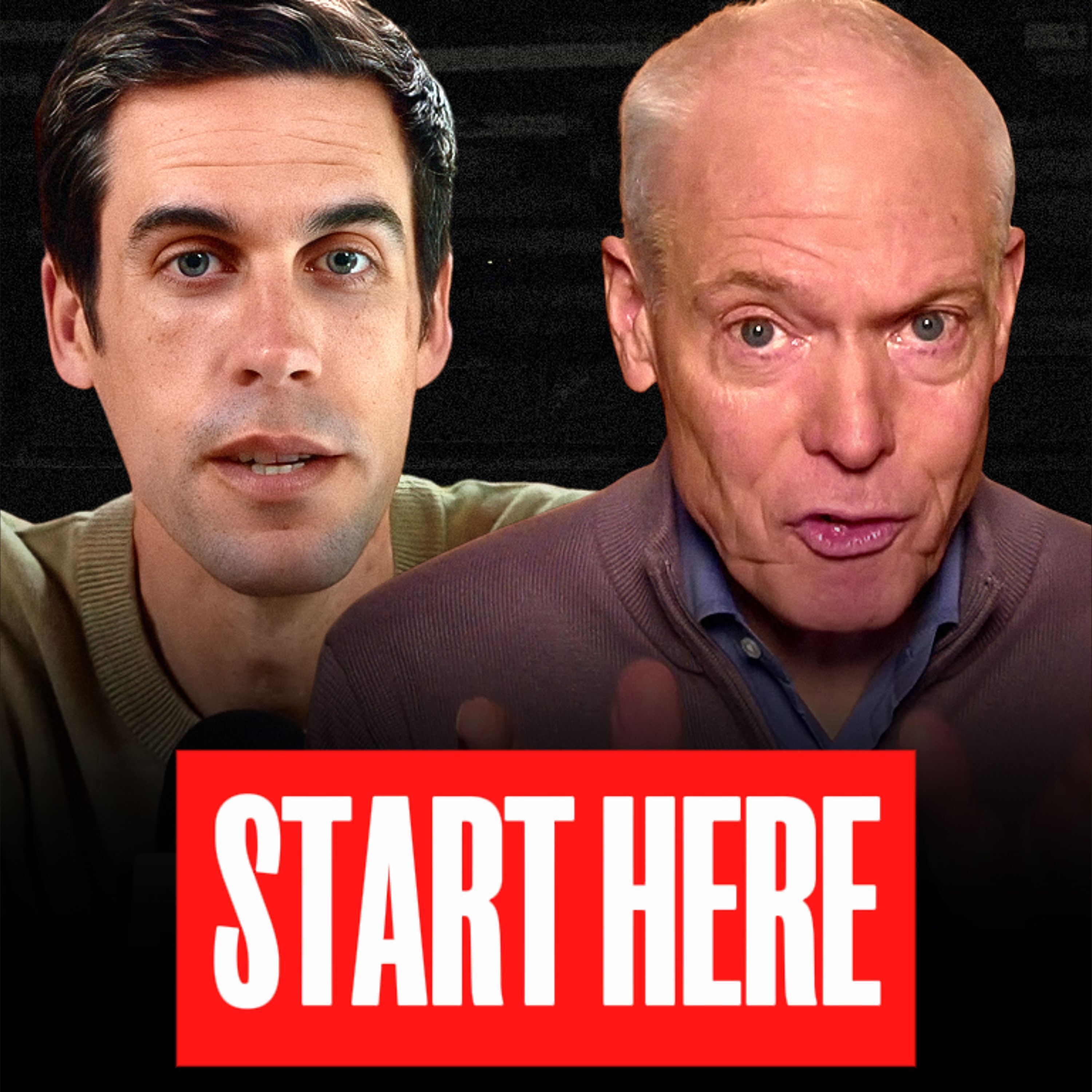
What if the reason you feel lost has nothing to do with direction and everything to do with the question you’re asking? Ryan sits down with bestselling author Jim Collins to explore the mindset that defines strong people, why success can mislead you, and what actually makes a life meaningful.
Jim Collins is a bestselling author and one of the leading voices on leadership and human performance, known for books like Good to Great, which has sold millions of copies worldwide. His research-driven work explores what separates the truly exceptional from the average, with a focus on how people confront the biggest questions of leadership, purpose, and life.
Jim Collins’ new book 👉 What to Make of a Life: Cliffs, Fog, Fire and the Self-Knowledge Imperative is out now! Grab a copy here
📚 Pick up a copy of Good to Great by Jim Collins at The Painted Porch | https://www.thepaintedporch.com/
🎙️ AD-FREE | Support the podcast and go deeper into Stoicism by subscribing to The Daily Stoic Premium - unlock ad-free listening, early access, and bonus content: https://dailystoic.supercast.com/
🎥 VIDEO EPISODES | Watch the video episodes on The Daily Stoic YouTube channel: https://www.youtube.com/@DailyStoic/videos
✉️ FREE STOIC WISDOM | Want Stoic wisdom delivered to your inbox daily? Sign up for the FREE Daily Stoic email at https://dailystoic.com/dailyemail
See Privacy Policy at https://art19.com/privacy and California Privacy Notice at https://art19.com/privacy#do-not-sell-my-info.
