
 Ask ChatGPT



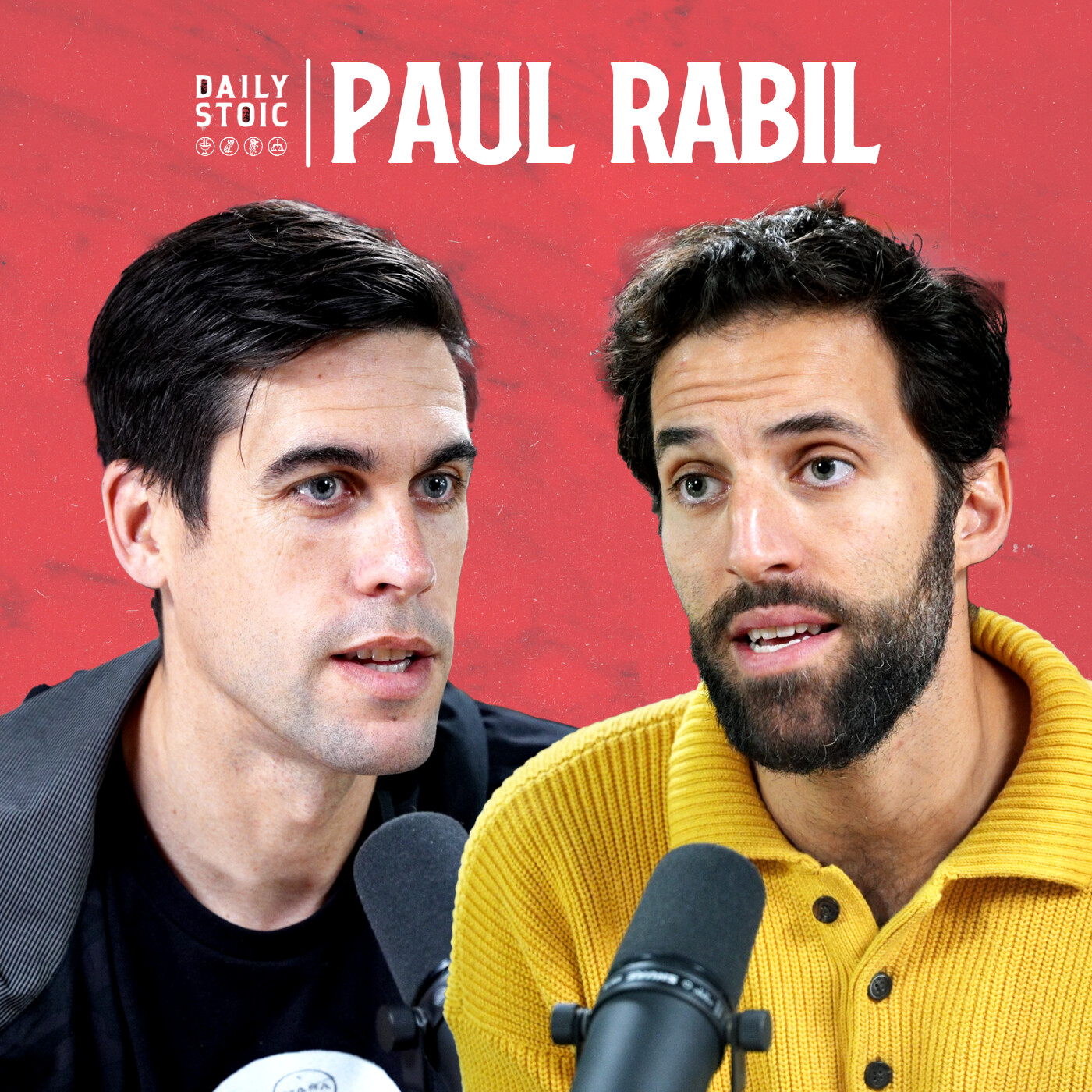
The Daily Stoic podcast, hosted by Ryan Holiday, explores Stoicism and its application in modern life. Each episode draws from ancient Stoic philosophers while featuring interviews and discussions with notable figures across various fields. This episode features Paul Rabil, a leading figure in professional lacrosse, discussing his journey, philosophy, and the intersection of sports and Stoicism.
Written by AI. May contain mistakes.

Get the gist, explore an idea or ask about something said.
 Claude
On The Daily Stoic, what are the key points of this episode?
Searching your listeningAutomatic transcript. May contain errors.
0:00You know, you don't have to let big wireless and your overpriced phone bill suck the joy out of the holidays this year. because right now all of Mint Mobile's unlimited plans are 50 % off. You can get three, six, and 12 months of unlimited premium wireless for$15 a month. It's their best deal of the year, and it makes it really easy for you to give your expensive wireless bill the Scrooge treatment. All Mint plans come with high-speed data and unlimited talk and text at the nation's largest 5G network. Plus, you can bring your current phone and number over to Mint. Actually, we just signed up for a Mint Mobile plan to use the social media phone here at the office and we didn't notice any kind of change in the quality of service or network or any of that just a whole bunch of savings turn your expensive wireless present into a huge wireless savings feature by switching to mint shop mint unlimited plans at mint mobile.com slash six that's mint mobile.com slash six limited time offer upfront payment of 45 for three months 90 for six months or 180 for 12 months plans required 12 per month equivalent taxes and fees extra initial plan term only greater than 35 gigabytes may slow when network is busy capable device required.
1:02Availability, speed, and coverage very easy meant mobile.com. You've probably heard the headlines about all the different cuts to foreign aid and food benefits. This is having a profound impact on the world's poorest people and the world's poorest communities. But, you know, just hearing about that, that's not what stoicism is about. Stoicism is, to me, what you're going to do about it. And that's where GiveWell comes in. GiveWell is trusted by tens of thousands of donors each year because they provide free and independent research that helps you understand how to have a big impact. GiveWell has spent the last 18 years researching global health and poverty alleviation, and they direct funding to the highest impact opportunities.
1:44Over 150 ,000 donors have already trusted GiveWell to give more than$2.5 billion over the last several years, and research suggests that these donations will save over 300 ,000 lives. I myself am one of those donors. I donate to GiveWell every year. It means a lot to me. And you can find all their research and recommendations on their site for free. And thanks to the donors that sponsor this research, GiveWell doesn't take a cut from your tax-deductible donation to their recommended funds. And if this is your first gift through GiveWell, you can have your donation matched up to$100 before the end of the year, or as long as matching funds last.
2:19To claim your match, go to GiveWell.org and pick Daily Stoic from the drop-down menu under Podcast. That's how they know that you heard about GiveWell from the Daily Stoic and you'll get your donation matched. That's givewell.org, code the Daily Stoic to donate or find out more.
2:37Welcome to the weekend edition of the Daily Stoic. Each weekday, we bring you a meditation inspired by the ancient Stoics, something to help you live up to those four Stoic virtues of courage, justice, temperance, and wisdom. And then here on the weekend, we take a deeper dive into those same topics. We interview Stoic philosophers. We explore at length how these Stoic ideas can be applied to our actual lives and the challenging issues of our time. Here on the weekend, when you have a little bit more space, when things have slowed down, be sure to take some time to think, to go for a walk, to sit with your journal, and most importantly, to prepare for what the week ahead may bring.
3:32Hey, it's Ryan Holiday. Welcome to another episode of the Daily Stoic Podcast. One of the weirdest, most surreal experiences of my life was, I think this would have been 2019, I got asked to do a talk to the NFL. Not just the NFL, but at the NFL owners' meetings. So twice a year, all the owners of the NFL teams and all the coaches and all the head coaches and all the GMs and their families get together. It alternates between Florida and Arizona. And this was the off season one. And I get invited to go to Arizona to give a talk about stoicism. So straight off the bat, it's an audience of like, you know, 30 plus billionaires.
4:16People I've grown up watching on TV, the coaches, the GMs who make this all happen. And it's the NFL. So like they've partnered with Ted. So they have like the Ted stage in this hotel, the Biltmore in Arizona. And they were like, you've got 15 minutes to talk about stoicism to these people and how it can apply to their actual lives. So I do the talk about, the funny thing is they were like, they made us run through it a couple of times. They made me take out a reference I made to the Saints having their season unfairly ended by a bad pass interference call. Anyways, they run us through the talks a bunch of times, and then we are supposed to sit in the audience and do the talk.
5:01And I go, guys, there's zero chance. I think I was going last or second to last. There's zero way I'm sitting here on my hands for over an hour while the other people go and perform, and I'm just sitting there. I was like, I'm going to go to the bathroom like 10 times. I'm going to pace nervously for the entirety of that time. And I'm going to need to be listening to music on repeat to get in the right headspace to be able to do this. So I'm pacing out in the hallway. And I see Bill Belichick walk by. And he did not seem super happy to be there. And after I gave the talk, I think it went pretty good.
5:36If you've ever seen the intro we do on the YouTube videos, I think there's like a flash of me walking on the stage to do it. And I do the talk. I think it goes well. And then afterwards, there's like sort of a conversation, like there's sort of like a cocktail party mixing event afterwards. And I walk out and everyone's talking. They're all friends with each other. They've all known each other. Even though they compete with each other, they're all friends. And I just see Belichick, he's sort of standing alone. It's like, maybe I made this up. But the vibe I took was his girlfriend or then girlfriend said, you have to stay for at least 15 minutes.
6:08And he's just sitting there, you know, just putting in his time. So I go up to him and I go, hey, obviously I'm a huge fan. I think you're familiar with some of my books. You know, Mike Lombardi passed them to you many years ago. You guys brought me out to a game. Thank you for all the support. And he's like, yeah, yeah, sure. And he showed me some notes that he'd taken from the talk. That was so cool. And then I go, hey, by the way, I'm friends with Paul Rabel. And his entire demeanor changed. He just lit up and we talked for the next several minutes. and it was a total game changer. And it's a game changer because as it happens, Bill Belichick, the greatest football coach of all time, maybe one of the greatest coaches period of all time, is a huge fan of lacrosse.
6:52And he's a huge fan of today's guest. He actually wrote the forward to Paul's new book, The Way of the Champion, Pain, Persistence, and the Path Forward, which I was lucky enough to help bring into existence. Paul is the LeBron James, the Steph Curry, the Michael Jordan, the Tom Brady, the Caitlin Clark of men's lacrosse. Dominant, beyond dominant in college, beyond dominant on the national team, and then beyond dominant in major league lacrosse. And then if that wasn't enough, you know, tired of, you know, barely making a living as a lacrosse player, he founds his own league, the premier lacrosse league, which would go into acquire the league that he used to play with and has brought lacrosse to this huge new audience.
7:39And I mentioned all those people, you know, like Sue Bird or Tom Brady or Steph Curry or whomever, they're fans of Paul as Belichick is fans of Paul because game recognizes game. And there's just, there's an elite club of people who are the greatest ever at what they do. And even if one of those people is making a hundred million dollars a year and the other one is making $10 ,000 a year. You know, one is throwing darts in a tiny professional dart league and the other is, you know, playing in front of stadiums. There's still something across boundaries and games and rules and eras where, again, that game recognizes the game.
8:17Champions know what a champion is. They know what it takes to be a champion, however much you're paid. They know that that's all secondary to like the thirst and the hunger and the drive for that greatness. So anyways, that's who Paul is. and I told him he should write a book about it. I said, look, like Tom Brady's not gonna write a book that's sort of the war of art, but for how to be a great champion at what you do. You are in a position to do it and you would get more out of doing it. So he did. Actually, I passed him to my publisher portfolio at Penguin Random House and they did. It's an awesome book.
8:49And Paul came out, he was in town for a friend's wedding a couple of weeks ago and he stopped by the studio and we talked for two hours. So I think you're really gonna like this interview. it's me and Paul Rabel talking stoicism, greatness, lacrosse, and many other things. And you got to check out the book. It's out in a couple of weeks, I think, but grab it now, follow him on social media at Paul Rabel. He was sort of early to social media and built, you know, big followings that allowed him, I think, to transform the sport and to get out of the smallness that was lacrosse at the time. I think he's just a fascinating case.
9:27And to bring this all full circle. Bill Belichick wasn't just nice to me at a party about this guy. He wrote the forward to this book because he tried to recruit Paul to play for him at the Patriots. And a player would go on and do this after. But Paul, you know, had this choice. Am I going to be the greatest of all time at what I do? Maybe not make much money doing it. Maybe not be well known by doing it. Or am I going to try to go make a bunch of money at something I don't care that much about that I'm not that good at and just be one of many who's done that thing? And he chose the harder choice at that crossroads.
10:00And I think it makes for a great book. Check out The Way of Champion, Pain, Persistence, and the Path Forward. Follow at Paul Rabel everywhere you can. And if you haven't checked out a PLL game, you absolutely should. It's just a new way of thinking about lacrosse and thinking about major league sports. And I think it's going to be huge. And I've been eagerly watching it as it's grown. And I think hopefully if this is your introduction to it, you will be doing the same. And I actually forgot that we ended up having such a long conversation. I'm going to split this interview up into part one and part two.
10:33So you're about to listen to part one of my interview with Paul Rabel.
10:46How are you doing? I'm good. Do you know Samir Chaudhry is my best friend? Wait. From Colin and Samir. Yeah, yeah, yeah. yeah yeah i know them yeah yeah i did the show yeah and then we bought their company right or something yeah we bought the lacrosse network but but you know you and i we deal with a lot of people different walks of life he's my actual best friend like i was in his wedding and i didn't know that yeah so we were just talking i was like i'm gonna see ryan he was like ryan just messaged me said you were coming in and we were like i don't think he knows how close we actually no no it came up somehow because i did their show like a couple years ago i think yeah i listened to it i was thinking i was thinking in a way i have you to thank for all of all this whole setup because when did i do your show this would have been like 2019 or 18 yeah 2018 or even 17 man but i remember you were recording at a comedy club in new york like uh which it was a comedy club downstairs and then there's a podcast studio upstairs and then later my friend james bought that comedy club really um but but i was like oh this is so cool there's a comedy club downstairs and then upstairs there was like offices and a studio and they would film stuff there and i yeah and i did something else there i did another podcast there a different time but but um i was like oh this is a really good idea so you can have like retail or public facing stuff downstairs but that's subsidized or supporting the stuff upstairs which is basically what this bookstore is because my office is upstairs and then this is the studio yeah this was a barbershop oh perfect you nailed it yeah this is cool right how did you did you have a designer come in with you or is this your idea and then how do you contract someone to bring this to life this was done by a 20 year old kid named brayden who lives near me like basically laid bricks yeah yeah yeah the bricks are books but you didn't go to the bookstore yet did you no all right we'll go to the bookstore in a minute the bookstore is what no i'll take you in the book but the bookstore it's open until 10 I couldn't change that but no no the bookstore has like a 20 foot tower of books that when we did this it was like a natural thing but yeah I saw this in a museum I saw like this cool tower of books and I this kid who came over to my house when he was 16 to do he asked if he could like do odd jobs to make money you know when like you were a kid and he's become this like super talented contractor designer person who can do he did wow he did this whole he did this whole space when you what he nailed it he did all that all those walls were plaster this the ceiling was it was a like a drop ceiling as well or did you get all of it no he did all of it pretty cool right yeah it's really cool and multiple skills because understanding lighting is usually its own yeah i think i think uh i'm used to dustin up with the lighting and we had a consultant come in and do like tell us where stuff should go but it's great he did this whole thing and and do you write back there or no no sorry so next door so these are three buildings built in the 1800s and then uh this one is smaller than the other two the other two are a little bit taller and a little bit longer and so in the other two it's the bookstores in the front and then in the back there's offices that go up so i write over there cool i'll give you a tour yeah i was also thinking when we met the first time, that's where you introduced me to one of my absolute favorite books, which is The Captain's Class, which I had not heard of.
14:16That book's so good. I love Sam Walker. Yeah. He's the best. Yeah, that book's amazing. That's one of my favorites. It's an intellectual exercise that everything I've learned from you and going through this book as well, where the way it finishes wasn't how it was intended when it started. Was that book supposed to be about something else yeah what was it supposed to be he he wrote the book to list the best dynasties of all time in sports right and he built a curriculum to quantify and qualify that knowing that someone was going to be subjective and then when he got to that list he realized they all shared the same thing in common which was a singular captain who had the characteristics of a water bottle carrier yeah yeah yeah and so he changed it and he wrote about the captain's class That's interesting.
15:05So yeah, he was going to just be like, okay, what makes great teams great? And it was supposed to be all these different factors, but really this main thing is that they all have captives. It was going to be a book about Barcelona, the Patriots, the Boston Celtics, women's national team in soccer. Why aren't the Spurs in that book? They are referenced, but they are not for the same reason that Michael Jordan's Chicago Bulls are not listed. but they're referenced. Huh.
15:38And I can't remember why he sort of like ruled out the Spurs, but he had a lot of positive things to say about Tim Duncan. Well, what's interesting about the Spurs is that they've been really good for, it's almost, it's like a dynasty in the true sense in that there's sort of multiple iterations of the dynasties and they don't involve all the same players. Yeah. Do you know what I mean? Whereas usually it's like a team has like a six or seven year run and we call it a dynasty, where the Spurs have like a 20-year run. Yeah. And none of the pieces are the same. Well, it's such a complicated subject, which is why I love the book.
16:11Yeah. Why do you love it? Because you go in so many different ways. We have a team right now that - In the PLL? Yeah, that's head coach just resigned. Yeah. And this is a team that's been in three consecutive championships. They're really good. And he's a fabulous coach. It's the Philadelphia Waterdogs. And I was meeting with them over Zoom two nights ago. and we're involving them heavily in the interview process. We're in a short list. Well, the team gets to participate in choosing their coach. I think that's right. Yeah, sure. Why not? Yeah, of course. I mean, it's probably less formal in the NFL or the NBA, but you'd be halfway smart if you're an owner and you're like, okay, I need my captains to get along with this next person we hire.
16:53So we formalized their role in it, but it led to a debate around what people talk about with say Tom Brady and Bill Belichick, like who's more important? And the truth is like, they're both important and they both do different things and one wouldn't be good without the other and all that type of stuff. And when you're writing a book on it, it is an unbelievably challenging intellectual exercise to try to get something that is worthwhile for a reader to take away. Yeah. Yeah. I was thinking about that because your book starts with actually, so the series I'm doing and then your book both start with a similar sort of story the idea of the choice of Hercules like you you come to this crossroads and you have to choose like the easy way the hard way the way people understand or the way people don't understand and for you that came from meeting Belichick so tell me that story well coach Belichick who's a dear friend he came to our practice my junior year in college.
17:56And he had just met my head coach at the time, Dave Petromala. And one thing that I'll say about Bill Belichick is that his curiosity reigns. I think that is his strongest attribute and an amazing tactician and motivator, but he's curious. And to be curious means you have to be humble. Otherwise, I think it's faux curiosity. so why was Bill Belichick at a Johns Hopkins lacrosse practice? Because Johns Hopkins has the most national championships of any university in the country and had had the number one team for four consecutive years. So he said, there's got to be something I can learn from this guy.
18:39So his relationship was with my head coach and I was the captain on the team. And when I found out he was coming, I asked my coach if I could get 10 minutes in the office with him after practice. And he went, well, let me ask. He came back to me and was like, so coach is going to give you 10 minutes, but I'd like to know what you're going to talk with him about. And I went in there with probably 25 questions and the 10-minute meeting turned into a half hour, maybe hour-long meeting. I was just asking about Tom Brady and their path to not only the dynasty that they were building, but the challenges that they've had to overcome year over year.
19:27They were still a little early in that. What year was this event? Yeah, this was 2007. Okay. Yeah. So it was actually the year before they had that undefeated run and lost in the Super Bowl to the Giants. Everyone, I mentioned this in my book, but when you think of Bill Belichick, you think of his eight Super Bowls, but he has the most losses as well. Yeah. Or going to be in his next job because it's inevitable. But right now, the second most losses of any NFL coach. Period. Period. In history. But probably the most losses in the Super Bowl too, right? Yeah. If you think about it. Totally. the most times which tells you what that the greatest lose you know michael jordan missed 9 000 shots peyton manning still has the record for most interceptions in a season cy young has uh has blown more saves than any pitcher in history martin brodeur has given up more goals than any nhl goalie in history yeah when you talk to like baseball too because there's so many games you realize oh you've lost thousands of games like you've lost an unfathomable about amount of games which is which is nuts football there's not that many games in a season so bill belichick plays a long time he has a lot of losses but like cumulatively it's not that many you look at some sports you're like oh you like basketball you have to get used to losing like a lot to be great totally and you have to be willing to constantly put yourself in that position sure where there's high risk of losing and you're gonna lose and how are you gonna respond so when we're Back to this meeting, we kind of, I feel like we hit it off and we stayed in touch.
21:02We exchanged information. Then he came to a game and kept coming to practices my senior year. And when I graduated, I grew up in, just outside of Washington, DC. So at the time I was a Redskins fan, now commanders. And he sent me a box of Patriots gear. And the note was, I kept the note. What did it say? I should have it right in front of me right now. But he said, it was a little bit in jest. He was like, congratulations on an amazing career. I wanted to outfit you in the right team now. He was like, and then he wrote a note, like, cause it was a big puffy jacket. He was like, I know it's not that cold in Maryland, but when you come up to Boston later this year to watch a game, you'll wear this coat.
21:45So that happened. I went up to Boston. I had finished my first season playing professional lacrosse. And we sat down and talked about sports and life. and what was important to me. And I think what Coach Belichick does so well because he's had world-class players on his team that didn't play college football. Yeah. Is that he is an incredible recruiter of talent that leans towards soft skills in the professional ranks. Okay. Meaning, you know, there's thousands of athletes who run a faster 40 than me and bench press more than I do. But he has an ability to see, okay, this person has something upstairs that I think is the differentiator in the pro game.
22:37Like I can teach them the specifics of a position, but they've got the other things that not enough players have. Yep. Not only I can't teach them, but I don't wanna teach someone to show up at six o 'clock in the morning every day. I don't want to teach that same person to be the last to leave. I don't want to teach that person to have this endless thirst to study film. And when he senses that, I think he goes long on it. So a little bit out of his skis, because I had never played football, not even youth football, is we began to poach the topic on coming out for the Patriots. And he wanted me to be a strong safety.
23:18And I wanted to be a wide receiver. but, but, you know, who am I to argue with? Yeah, yeah, sure. Phil Belichick. So we broke that dinner and was like, well, think about it. I went back to my strength and conditioning coach, Jay Dyer. I remember buying football pads and saying, I think we should give this a shot. Then we had several conversations later and the one for me was more of a heart-to-heart with coach where I had then my second year won MVP. So you've now gone pro in the cross, yeah. Yeah. and I had been selected to the Team USA eventual gold medal team that would play in the world championships in England.
24:00And he just said, look, man, like, I think you can make it on this team. It's going to be a long journey. Little did I know that Chris Hogan, who four-time All-American lacrosse player at Penn State, two years younger than me, ended up taking Coach Belichick's request and winning three Super Bowls. Anyway, I love Chris.
24:26He said, you know, it's so rare in life that any of us get an opportunity to be the greatest at what we do. And he was like, look, you know, the greatest lacrosse player we could debate is Jim Brown or Gary Gate. But in this moment now, you have a chance to do that. Yeah. And by accolades, you have been called that. and if we strip out all this material stuff in life wage differences because they were massive yeah what's a professional lacrosse player making in 2009 or whatever whenever this is the the the league maximum was fourteen thousand dollars for the season and and just the nfl minimum is what like 400 practice roster players get 400 000 and and and chris hogan makes what in his nfl career uh chris hogan's biggest contract i believe was 11 million dollars a year okay and that was that was after the super bowls and was really i mean he's incredibly talented player and then you know as life often reminds us full circle happens and he played a season in the plm with me sure my teammate but this is i guess when i this is an eight nine figure decision that you're making Yes, but he has an incredible ability to strip all that down to what really matters.
25:44And we walked away thinking, this is not only a lot less money and a lot less attention. And I say attention, I'm speaking more as the businessman now of viewership and media marketing. It's the biggest show on earth, like millions of people every weekend. Yeah. Versus the smallest show on earth. Not even in a show. Yeah. You've always been far more eloquent than me and being able to steal down something better. Like it's not even being televised. Yeah. Yeah. Yeah. Not even televised. Yeah. But he really convinced me and I don't think actually I shouldn't say that he never convinces anyone of anything, but he really made it very clear.
26:31if our souls were aligned from an integrity and purpose and calling perspective, that that was my calling. Yeah. And I had no clue what my career would evolve into. Sure. I never had a plan to launch a professional lacrosse league with my brother. Yeah. I never knew that I would have a 14-year professional lacrosse career. and I never knew things like I would go through a divorce and, you know, lose championships and have seven surgeries. And all of that stuff is largely through the lessons of many other athletes, entertainers, and entrepreneurs I write about in the book is part of the journey.
27:21Yeah. And the best thing you can do is take the first step. Right. And make a hard commitment. But there must've been moments where you because i saw it in the documentary you know you're like you're walking to a convenience store to buy your own ice to ice your knees where you're like what the fuck was this decision that yeah yeah for sure uh and and there's i've always had um you're on a southwest flight between games like you know there must have been moments where you're like it would have been way easier to do the other thing yeah you know it's an interesting thing because our ego tells us it would be way easier to do the other thing.
27:59But a lot of the greatest athletes in the world grew up in poverty. Yeah. For me, the element of elements of the way that pro lacrosse players were treated, having to walk to CVS to get my own bag of ice so I could ice my foot that eventually broke, that stuff was motivating and you know as we learn one side of happiness is sadness life and death um winning and losing and i was certainly on one side of the spectrum yeah of you are a professional athlete with the worst circumstances and the highest ambitions yeah uh what are you gonna do right and so it was it was motivating for me and i think even about someone like michael jordan who played in the nba in the 80s when it wasn't the nba of today yeah sure uh but what was always inspiring to me was watching video of him in an empty gym dribbling the basketball against the hardwood and that sense of like you know as athletes we all want to be in the world championship game playing in front of 55 ,000 people in a sold out venue with the ball on our stick and the game on the line.
29:20But to get there, you have to spend tens of thousands of hours in an empty stadium with the ball on your stick in imagination, in repetition, in practice. So that to me was, you know, going through those experiences, I remember feeling like, you know, Mickey Rourke in the wrestling. Yeah.
29:49I'm picking my kids up from school today and then doing our weekly routine, which is I take them over to Whole Foods and we get all our groceries for the week. Then we have dinner. It's one of their favorite things to do. It's one of my favorite things to do. And then my wife loves it because she doesn't have to take care of it. This holiday season, whether you're a guest or hosting the big dinner Whole Foods Market, has what you need to delight everyone at your table. They even have heat and eat sides from the prepared foods department. You can make Whole Foods your one-stop shop. Everything follows Whole Foods Market's strict ingredients standards so you know it'll be delicious and good for you.
30:23You can also order online for pickup and even delivery in select zip codes to skip the crowds. Shop everything you need at Whole Foods Market, your holiday headquarters. I got an amazing night's sleep last night. One, because my six-year-old fell asleep in the car at like six o 'clock and he transferred him from the car seat to the bed and it stuck, which is just magic. So he's in bed way earlier than normal. But I sleep really well every night because I have a Eight Sleep Pod 5 Ultra, which is Eight Sleep's best product. I've used Eight Sleep for many years now and it's just totally transformed how I sleep, made me sleep better, made my wife sleep better.
31:04It's amazing. So basically, Eight Sleep is this topper that goes over your mattress. It can heat and cool both sides separately. It can raise and lower each side separately. So it helps you fall asleep faster, stay asleep, and then wake up better. Eight Sleep buzzes me to wake gently every morning as opposed to some loud blaring alarm. And then I can check the app and it tells me my sleep score. It even helps me optimize my day based on how I slept. If you want to survive the holidays like a pro and just generally sleep better, head over to eightsleep.com slash daily stoic and use code daily stoic to get$350 off your very own pod five ultra.
31:48The best part is you still get 30 days to try it at home and return it if you don't like it. But I know you will trust me your body will thank you for this investment in better sleep shipping to many countries worldwide. See details at eightsleep.com slash dailystoic.
32:05It's like everyone wants like their calling, right? You like, I got to find the thing I was meant to do. And, you know, a lot of people aren't lucky enough to find that or to hear that call or to have the courage to pursue it. But maybe what we don't talk enough about is like, you also don't get to choose what it is, right? So yeah, sometimes you're Mickey Rourke and the wrestler. Sometimes, you know, you happen to choose the thing that's the most popular thing in the world. But like, yeah, you don't get to choose your niche and you don't get to choose how lucrative or well-followed that niche is.
32:37So like you get this calling to be great at something. I'm sorry, you were called to be great at darts or you were like, like I say this is like, like what I ended up falling in love with and wanting to write about was an obscure school of ancient philosophy. And there's a ceiling on that, right? It's been great and it's bigger than I thought it was going to be. But there's naturally a ceiling on the amount of people that are going to be interested in that. And so you love music, you end up being called to classical music. There's going to be a ceiling on that versus if you write pop songs or rock songs, you're probably never going to perform what you do in a sold-out stadium.
33:17And you have to be able to just appreciate and feel grateful that you found the thing you're meant to do and you get to do it at the highest level. You don't get to go, but it would be so much better if 2 ,000 more or 2 ,000 % more people appreciated what I did. Yeah, I write about Scott Galloway in the book. And I think one of the lessons that he shares to his class at NYU Stern is this false notion that our passion is somewhere out there. Like an Easter egg hunt, we have to go find it. So let's try a bunch of things. And he was like, your passion is actually already inside of you. It is tied to what you are most talented at.
34:00That's what your journey is to discover. And when you find whatever that is, whether it's writing or playing sports or playing music or being an accountant, when you find what you're best at, your job is to accelerate in that area such that you can become one of the greatest in the industry. And all of the accoutrements that are associated with that help that become, in hindsight now, your favorite thing in the world. Yeah. And, you know, this book is a collection of lessons from my experiences and the greatest athletes, entertainers, entrepreneurs, writers. And the reason why it's a collection of lessons is that there is no blueprint.
34:48We're all different. We all have different upbringings. We've all won and lost at different occasions. we've all been introduced to things differently and so my hope in writing this was really this book servicing as a guide to where someone can see themselves through the experience of others that preceded them and an example is why a collection uh michael phelps was dragged into a pool by his mother his two sisters swam yeah he didn't want to be a swimmer yeah kobe Hugh Bryan's first basketball season, he scored zero points across the entire season. Flip to the other end of the spectrum. The best footballer ever is Pele.
35:39The best football player ever is Tom Brady. Before games, Pele used the art of visualization. He was calm, thinking about the goals he would score. Tom Brady motivated himself through anger. Yeah. Totally different. Yeah, sure. And two of the greatest footballers. Right. One needed to heighten his senses to perform and the other needed to calm down. Sure. So, you know, for any of us to think, hey, this is the way. Yeah. It's misleading to the infinite amount of experiences that any young athlete or person wants to sort of cultivate today. Yeah, although there is something interesting about your story because it's sort of proof of this idea that like game recognizes game.
36:23You'd think that, you know, football being played in some huge stadium, millions of dollars, that the experience of being great at that would be very different than, I don't know, Tom Brady's experience or LeBron James or Steph Curry's experience. But those guys know you and you guys have a certain, like, you're sort of operating on a wavelength that I think very few of them could understand or that very few people not on that wavelength could understand. So there is this thing where like, yeah, you wouldn't think people in these very different sports would sort of get it, but you guys all do get it.
36:57And I imagine it's kind of a small club. Yeah. It's at the professional level. Yeah. And why as part of this book, it's broken into three sort of paths, call them books, is amateur, professional, and beyond the game. Because it changes through each stage in life. Yeah. So that shared frequency that you reference that I have with a lot of the top athletes, and even people like you, it doesn't really, there's so much crossover between sports and life and other disciplines. That's really only entered stage on sort of on book two as becoming a professional. Because when we're amateurs, we're all like just discovering, working really hard, falling in love, banging against the wall.
37:49Professional is you and I, I know Steven Pressfield's one of your favorite writers. And through this process, I studied the war of art and turning pro. And he does a really good job on the ladder of just explaining how different life is when you become a pro. And I think when I hear you say that, it's like, that's the frequency that I I feel connected. And the turning pro doesn't mean the size of the check because it's like Caitlin Clark is pro. Yeah. You know what I mean? Her check size is going down. Yeah. Yeah. But I'm saying like she's been pro for a while. Like NIL aside, there's a decision you make or a shift that happens in a person when sort of talent meets moment and dedication that whether you're officially amateur status and turning pro, you know, that's not what we're talking about.
38:39It's a mindset shift. It's a transition you make in the pursuit of what you're doing. And since the vast majority of people never make that transition, the people who are on the other side of it, whether they're professional bowlers or rodeo riders or writers, they all sort of can recognize something in each other that they understand is different than the people who have not crossed over. Totally. And just quick note on Caitlin Clark, a temporary shift. There's a lot of headlines right now because she's declared for the WNBA. And the way NIL works is for college athletes, they can get endorsements.
39:22And she's estimated to be getting like$900 ,000 in endorsements. But the way that it is structured is that when you go pro, your contracts end. Yeah. So there will be a temporary change between her wage, but she'll just renew. But anyway, that's a lot of debate back and forth. And you're like, come on, guys. But similar to your world, the market for watching college women's basketball is actually bigger than women's professional basketball. And so there is an argument people are making, and she probably had to consider it. You think about turning pro. If turning pro is how much money you make, then she would be better to continue playing and utterly dominating as a fifth year at Iowa than she would be to turn pro.
40:06But turning pro is I want to play against the best people in the world at the highest level in the world. And so turning pro is in her case, literally turning pro, even though she's probably going to make less money or take a financial hit in doing so. Totally. There is sacrifice. There's a lot of discipline. There is holding yourself to the highest of high standards, all of which, among others, all of which we're not prepared for. yeah there's mostly if we zoom out and think about society there's mostly dialogue and resources and coaching that are dedicated to getting drafted to the pros yeah and very little dedicated to okay once we're here what do we do now sure and it's a reason why the average life expectancy for any pro athlete is two and a half years oh in the league they don't die but yeah yeah yeah in the week.
41:05I should have clarified that. I was like, oh, wow. Okay. Yeah. Yeah. So their, their career life expectancy. Well, because that's the thing about turning pro. So you turn pro, right? And you're on your own. Yeah. Yeah. You're, you're now responsible for yourself. And a lot of people are not prepared financially from a maturation perspective. They're just not ready to do it. And so they burn out or blow up or make mistakes. Plus it's just wicked hard. And so turning pro is cutting, it's burning the boats behind you. It's cutting all the safety nets. And now you're just doing it. And most people can't do it very long.
41:42And coming full circle back to Bill Belichick, that's what he susses out. Yeah. He has an ability and a knack for sensing that emotionality around a Caitlin Clark, around a Tom Brady, you know, and that's, I think the greatest coaches do. Yeah. You know, spent a lot of time studying coaches because of that, you know, sort of interchangeable attribute that is debated quite a bit. Who's more valuable, coach or player? They both are. And if they can work in concert, really, what can you make out of it? It's pretty special. Yeah. I mean, the idea of like actually using your amateur status though is something I think worth pointing out.
42:25Cause I remember when I was in college, you know, I wanted to meet people. So I'd send all these emails and everyone was, I'd be like, I'm a student at this school. And they'd always like, they'd help you, right? And then the second I left school, it was the thing I didn't think about. I dropped out to work for Robert Greene, which is this amazing opportunity. But what I didn't sort of calculate was how suddenly people were less interested in helping me. because I went from being a student, which is like this own protected class that everyone wants to support and help for the most part to suddenly just one of everyone or effectively the competition.
43:04Like when I get a random unsolicited email and someone says, I'm a high school student, I'm more likely to respond and help or a college student more likely to respond and help than just somebody who's like, I'm 26 years old and I'm like, good for you, man. You're on your own. Right. And, and so there is this, that amateur status. You want to, you want to milk it for everything it's worth while you can, because then once you turn pro, yeah, you, you walk into the league guys aren't even, they're not only not trying to help you, they want to kill you because you, there's only so many spots and you are by definition trying to take somebody's spot now.
43:43Totally. I mean, money's a hell of a drug. And so the difference between pro and college, at least formally, is that you're right. Not only is money on the line, it's now your career. And then they also incentivize contracts, which in team sports, it's all about the team, right? But the GMs and the ownership groups and the coaches incentivize a wide receiver to have more catches than his teammate. And he gets paid another million bucks. Yeah, yeah. So why are we going to get aggravated at the athlete versus the system? Yeah. So yeah, it's really complicated for pro, but going back to amateur. Well, that's a good point though, because people go like, oh, why isn't this quarterback mentoring this younger quarterback?
44:28And it's like, if he was a college student, he'd mentor him. But now they're both fighting for the same spot. And so they're not friends. And I think the goal is to have in life, I've found is to have, is to be able to like nurture that competitiveness and that edge that you have and pair it with perspective. Yeah. I, speaking of professional, when I was 28, I lost a world championship that, you know, the team I was a part of was dubbed the greatest ever in on our home soil, Team USA versus Canada. A week later, I was back playing in Major League Lacrosse in a playoff contention game and broke my foot.
45:12So two of the worst things that could have happened to me in my life did in a matter of 10 days. Yeah. And at the time, what got me to that place of high performance was a singular focus around not only being the greatest lacrosse player in the world, but the greatest ever. And it was so singular and everything pointed in that direction that it was my identity. Yeah. And it was through that depression that I went through and the recovery of my foot that I got into sports psychology and then I got into therapy. And my fear was that, oh, I'm learning like what I call now a soft masculine approach to life.
45:59Is that gonna impact my ability to compete at the highest level? And the answer is no. it shouldn't sure and so going back to your point around two quarterbacks competing their jobs are on the line of course they're going to do whatever they can to hold on to their job and their goals as a starting quarterback in the nfl but what they can't what that shouldn't turn into is hatred for the other person yeah or ridicule for the other person because they're doing the same fucking thing you are yeah um and i find that that again that that to me has been the unlock of various ebbs and flows and emotionality in my life look if you're listening to this podcast you've probably heard of hello fresh right they're the number one meal kit in america they make home cooking easier with chef crafted recipes and fresh ingredients delivered straight to your door this fall they're serving up even more to love.
47:04It's not the HelloFresh you remember. It's even better. HelloFresh is bigger. They've doubled their menu. You can choose up to 100 options each week. It's healthier. You can choose from 15 plus high protein recipes, and they now help you eat greener with veggie packed recipes that have two or more veggies per week. And it's tastier. You can get steak and seafood recipes delivered every week for no extra cost. They have three times the seafood options. They also have hearty fall recipes like classic beef chili or honey glazed pork tenderloin. We just got home from a week away. We're trying to think about what we're going to eat this week.
47:40It was such a relief to see that HelloFresh box sitting on our doorstep when we got home. They've got everything you need for the recipe that they pick out. There's no last minute trips to the store. Plus, the meals are delicious and easy to make. The best way to cook just got better. Go to HelloFresh.com slash Stoic10FM to get 10 free meals plus free breakfast for life. One box with active subscription. Free meals applied as a discount on the first box. New subscribers only varies by plan. That's HelloFresh.com Stoic10FM to get 10 free meals plus free breakfast for life. Well, it's almost here.
48:15Christmas is just a couple of days away and maybe you're scrambling. You're like, what should I get my dad? What should I get my mom? I got to get something to my sister. people love showing off pictures of their kids and that's where today's sponsor comes in i've gotten one as a gift i've given it as a gift the aura digital picture frame it's easy to use it never gets old you're constantly updating it with new pictures aura digital picture frames are so much better than any digital picture frame i've ever seen it's got a high resolution it's got a color calibrated display you can add video you have two pictures come up at the same time picture and a video.
48:50It'll pair photos together for you, like two pictures of the same person or from the same day. It's really easy to set up. You just download the app, connect the frame, and then you can pick photos and videos right from your phone from anywhere in the world. And there's a reason Oprah added it to her favorite things three different times. For a limited time, save on the perfect gift by visiting AuraFrames.com to get $35 off Aura's best-selling Carver Matte Frames, named number one by Wirecutter, by using promo code STOIC at checkout. That's A-U-R-A frames dot com promo code stoic. This deal is exclusive to listeners and frames sell out fast.
49:26So order yours now to get it in time for the holidays. Support the show by mentioning us at checkout. Terms and conditions apply.
49:36Yeah, Lance Armstrong told me like he'd always been competitive. But then when he got cancer, it was like sort of the competition of his life. right he's like if if i win i live and if i lose i die yeah right so he's like i have to beat this thing and he was basically saying that he was sort of never the same after that it became like just sort of winning was literally just sort of a switch flipped in his head that winning was life and death yeah and when you look at all the things that came after that was part of it so it wasn't just like hey i like winning i want to win the money is in winning not in losing it was like No, no, winning is everything.
50:13And therefore, one must do everything and anything to be able to do it. And so that can be really hard if you're already naturally driven, you're already competitive, and then there's intense rewards on the line. When your identity, which is another form of life and death, like this is who I am. And if I can't do it, or I don't win, then I'm nothing. The ability to modulate that or to turn it off or have it in perspective is like a really hard thing. Well, you study death and something you and I have talked about quite a bit and I've started studying it more and more. Something that was very resistant to naturally.
50:55But it comes back to this discussion of when we die, we experience an ego death. Yeah. And we have this release of a 5-MeO molecule that we get when we die and when we're born. and when that happens, none of this stuff matters anymore. Sure. And it's actually relieving. Yeah. And it goes to, you know, what I try to talk about in this book, which is making decisions around what is authentically important to you. Yeah. versus, you know, having your name on a building. Yeah, sure. That lasts, you know, the next hundred years and all this other shit that like, when we die, which we all will, doesn't matter.
51:51Well, not just when we die, but when we get vulnerable, like, you know who Scott Pollard is? Yeah. He played at Kansas. He was on the Kings when I was a kid. I think he won a championship with Cleveland. But he, so great basketball player, seemed like a real fun guy. and then the the other side of being really tall and really big is that your heart can't take it yeah and his heart basically gave up like every dude in his family the same thing happens they're all huge and suddenly he needs a heart transplant or he's gonna die you can imagine in a second all that as soon as you get the news like hey you your heart has two years left and if if another very large person doesn't die in an accident and happen to be an organ donor it's it for you yeah the championship goes away the final four games go away the playoff games go away the hundred million dollar contracts go away what all all of a sudden it gets really narrow really quickly and there's no there's no you know front desk you go to and you say i'll give you all these things in exchange for a couple more years of life.
53:01Do you know what I mean? Yeah. It gets equal really quick, really fast too. Yeah, and this is sort of - And he just got his heart. He just got one. Yeah. So it worked out, but - It worked out. And similar to Lance, the experience of going through it is game-changing. And this is part of, I first want to say, I would never have written this book had you not sent me an email, not knowing that I was entering my final season as an athlete, it was in March of 2021. And saying, hey man, why haven't you written a book yet? Can I say that? That's funny. Yeah, yeah, call me. And it was mainly because, you know, we met when I had you on my podcast seven years ago.
53:45And my goal out of curiosity was to interview people who I thought were brilliant and learn from them. And over five years, I had a lot of guests. And so when we got on that call, you were like, I think you can translate a lot of these conversations I've listened to to the book. Went back and forth a little bit more and that's how we began. The challenge that I've learned as a writer is, just looking around this room, there's so much brilliance here. and oh, I remember my call with you. I said, you know why I've never considered writing a book? It's like, no one wants to fucking hear from me. And you were like, that's why you should write a book.
54:29You're like, if you didn't have imposter syndrome, then we would actually find that no one wants to read your book. Like those, I think he said something like, those who think they have a huge audience don't and those who don't think about their audience and don't think that they're capable of delivering something can. But you know what's funny? So all these books, a lot of them have sold many, many thousands of copies. Some of these authors are quite famous. A lot of them are no longer with us. But all these books, which these people sweated over and poured themselves into, were purchased like in bulk in a bin, right?
55:08So you work so hard on this thing and financially it matters if you sell them one by one. These were supplied by a company called Books by the Foot that sells books literally in volume, like the amount of square footage you are trying to cover. And primarily they sell them for like, I don't know, some billionaire wants to have a fancy looking library but doesn't actually read books and that. Or it's like a movie set. They need a scene. It looks like someone has a lot of books in their house. So that's what they say. So these are garbage. These books are garbage. Do you know what I mean? Like, these are all books that people donated or were going to throw away.
55:50And as individual titles, they were meaningless. They were sold by weight and size and square footage. And so that's the other thing. It's like, you think, hey, I'm going to win this championship. I'm going to get this belt. I'm going to get this trophy. And then at some point, eventually down the line, like, if it's really valuable, your family's like selling it at auctions. if it's not valuable maybe they're using you know your great grandchildren are using that cup as like a thing to throw their keys in when they come into the thing or it's just trash you know like that's a grammy that i won yeah and i i uh i put my own little plaque on it and it says this is just gonna go in the garbage when you die because like you think you know these things The things matter so much, and then they don't matter at all.
56:38Yeah. Yeah, that's a, you have my mind running in a million directions right now. I think about these books and sort of the point that I was drawing to, they're laid like bricks. And books that we're fortunate to consume, they layer us with intellectual bricks. And the challenge that I kept coming up against that I quite enjoyed and still have a lot of imposter syndrome around is learning from masterminds, their stories, and then in some cases, interpreting, in other cases, trying to lay the next brick to it. But for example, Tony Robbins, one of the quotes that he shared that I really enjoyed on my podcast is, you've got to trade in your expectations for appreciation.
57:42Sure. And I loved that. And as I was going through the professional chapter, I felt that that needed to evolve versus beyond the game, which I think it's well intact. And that's why the stages of life, we take things differently. So the way it could evolve in professional chapter is you can have high expectations and appreciate. Yeah. Not trade. Yeah. Because the minute you trade, I learned in sports psychology, is the minute you become a shitty player. You have to have an extraordinarily high expectation for yourself. You can't just be having fun out there. And that's gonna cause duress. Yeah.
58:26And that's what he's, He works with such a wide range of people. And just that task alone is impossibly challenging. But a lot of his work is around lowering the duress. He's your sports psychologist. Yeah. In sport, you have to keep friction. Yeah. You have to have nerves. nerves are actually a biochemical response in our body that's warming up our blood and getting our muscle fibers to begin to twitch so we can perform at our best yeah nervousness or sits in your stomach it feels like butterflies yeah and that can be interpreted different ways but when your body is like kind of shaking it as a performance athlete is priming you it's your edge engine priming.
59:20And if you're not feeling that, it doesn't matter to you. And the reason why things don't matter is you're just not holding yourself in a certain regard. So anyway, that was an ongoing challenge writing this.
59:41Thanks so much for listening. If you could rate this podcast and leave a review on iTunes. That would mean so much to us and it would really help the show. We appreciate it and I'll see you next episode.
1:00:15the detours where each adventure pulls you toward the next and wrong turns turn out right so why would you ever take a tour when you could take a detour toyota trucks my family owns a 2023 toyota 4runner and honestly it's my favorite vehicle that i've ever owned around town it's smooth and reliable but where it really shines is on our trips into the back country. We've taken it on backpacking adventures to Colorado and New Mexico, loaded up with gear, and never had to think twice about whether it could handle the terrain. That's what Toyota trucks are built for. Off-road confidence, rugged durability, and the freedom to explore.
1:00:55Toyota has a long history with the outdoor community, and they're committed to helping more people get out there and experience what nature has to offer. From remote trails to scenic byways, Toyota Trucks empowers you to take the detour, roam freely, and discover places that still feel wild and untouched. And they're not just making great trucks. They're working to expand access to adventure so more people can connect with the outdoors and pass that passion on to the next generation. Discover your uncharted territory. Learn more at toyota.com slash trucks slash adventure dash detours. That's toyota.com slash trucks slash adventure dash detours.
Grab a copy of The Way of the Champion: Pain, Persistence, and the Path Forward today!
X, IG, Youtube, TikTok: @PaulRabil
✉️ Sign up for the Daily Stoic email: https://dailystoic.com/dailyemail
🏛 Check out the Daily Stoic Store for Stoic inspired products, signed books, and more.
📱 Follow us: Instagram, Twitter, YouTube, TikTok, Facebook
See Privacy Policy at https://art19.com/privacy and California Privacy Notice at https://art19.com/privacy#do-not-sell-my-info.
