
 Ask ChatGPT


 The Daily Stoic
5 Nov 2025 · 38m
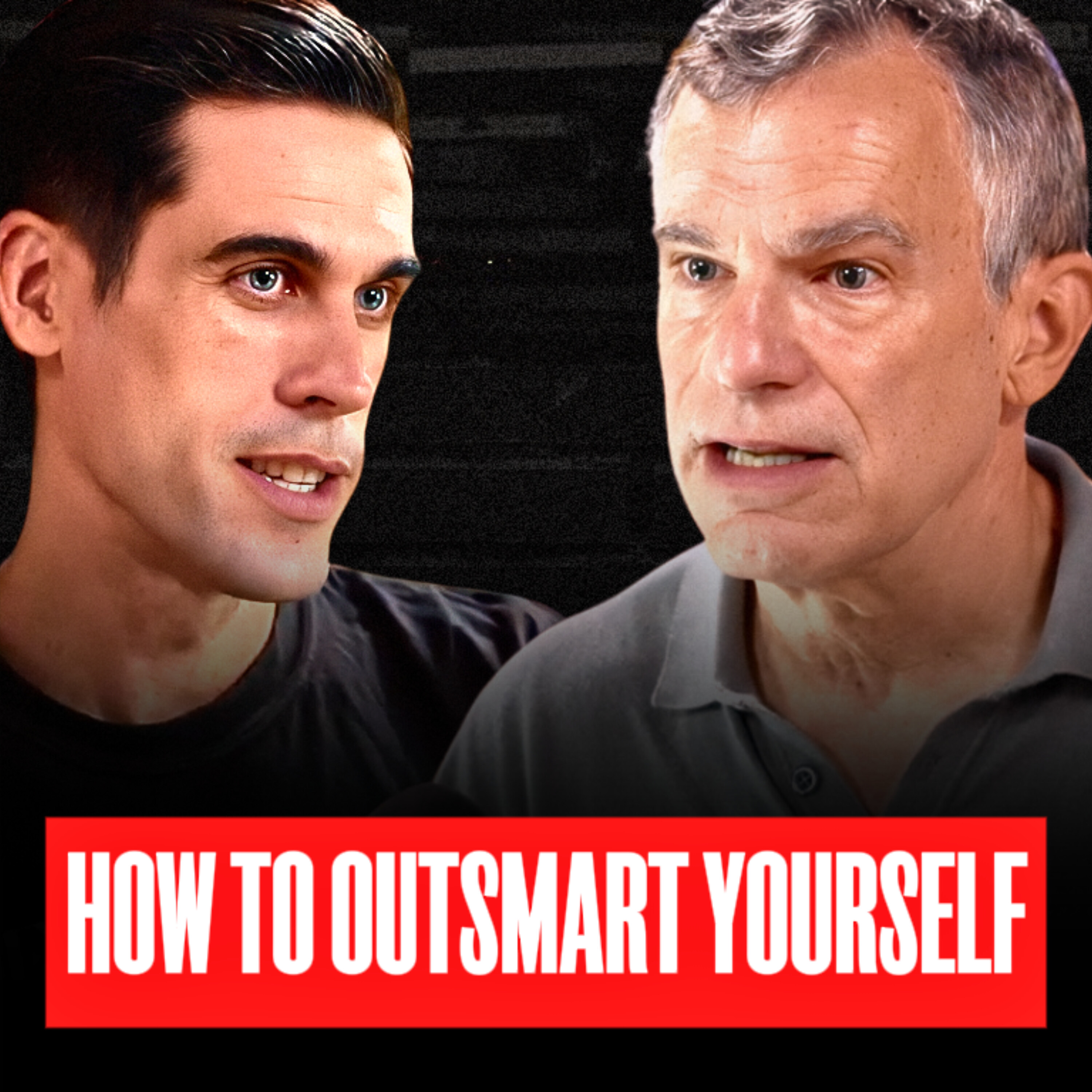
Persuasion Expert: "You Can Manipulate Yourself Into Doing Hard Things" | Jay Heinrichs (PT. 1)
In this episode, Ryan Holiday interviews Jay Heinrichs, a bestselling author and expert on rhetoric and persuasion. Heinrichs discusses self-persuasion and how to apply rhetorical techniques inwardly to influence oneself positively. The conversation touches on the overlaps between Stoicism and rhetoric, the power of self-persuasion compared to willpower, and practical tools to overcome obstacles.
Written by AI. May contain mistakes.

Get the gist, explore an idea or ask about something said.
 Claude
On The Daily Stoic, what are the key points of this episode?
Searching your listeningAutomatic transcript. May contain errors.
0:00I'm recording this on a Monday, and Monday is our grocery store day in our family. I usually pick my kids up from school and we go over to Whole Foods, get all our groceries for the week. Although here very shortly, we're going to go over there to get our Thanksgiving turkey because they've got a bunch of great options. Turkeys start at$149 a pound if you have Prime with organic birds at$299 a pound. And they only carry no antibiotic ever turkeys that will bring quality to your table at a great price. Whole Foods has great everyday prices on all your Thanksgiving essentials, whether you celebrate with a massive family or just a few close friends.
0:37Everything they sell has high standards to help you shop with confidence. Enjoy so many ways to save on your Thanksgiving spread at Whole Foods Market. Why choose a Sleep Number smart bed? Can I make my sight softer? Can I make my sight firmer? Can we sleep cooler? Sleep Number does that. Cools up to eight times faster and lets you choose your ideal comfort on either side. Your Sleep Number setting. Enjoy personalized comfort for better sleep night after night. It's the final days of our Black Friday sale. Recharge this season with a bundle of cozy, soothing comfort. Now only$17.99 for our C2 mattress and bays, plus free premium delivery.
1:11Prices higher in Alaska and Hawaii. Check it out at a Sleep Number store or sleepnumber.com today. Look, ads are annoying. They are to be avoided, if at all possible. I understand as a content creator why they need to exist. That's why I don't begrudge them when they appear on the shows that I listen to. But again, as a person who has to pay a podcast producer and has to pay for equipment and for the studio and the building that the studio is in, it's a lot to keep something like The Daily Stoic going. So if you want to support a show but not listen to ads, well, we have partnered with Supercast to bring you a ad free version of Daily Stoic.
1:56We're calling it Daily Stoic Premium. And with Premium, you can listen to every episode of the Daily Stoic podcast completely ad free, no interruptions, just the ideas, just the messages, just the conversations you came here for. And you can also get early access to episodes before they're available to the public. And we're going to have a bunch of exclusive bonus content and extended interviews in there just for Daily Stoic Premium members as well. If you want to remove distractions, go deeper into stoicism and support the work we do here. Well, it takes less than a minute to sign up for Daily Stoic Premium, and we are offering a limited time discount of 20 % off your first year.
2:34Just go to dailystoic.com slash premium to sign up right now, or click the link in the show descriptions to make those ads go away.
2:47Welcome to the Daily Stoic Podcast, where each weekday we bring you a meditation inspired by the ancient Stoics, a short passage of ancient wisdom designed to help you find strength and insight here in everyday life. And on Wednesdays, we talk to some of our fellow students of ancient philosophy, well-known and obscure, fascinating and powerful. With them, we discuss the strategies and habits that have helped them become who they are and also to find peace and wisdom in their lives.
3:33Hey, it's Ryan. Welcome to another episode of the Daily Stoic Podcast. I am here at the office. It is eight something in the morning on a Saturday. The kids are here. My wife is here. A bunch of the David Stoke employees are here because we are scrambling to get out the last of the signed copies of Wisdom Takes Work. It's been a lot this launch. First off, I appreciate everyone's support. It's meant a lot to me, like an overwhelming amount of it, like way more than we anticipated, budgeted for, supplied for all of that. So I appreciate it. I'm humbled by it. And then basically everything that could go wrong has gone wrong.
4:12Shipping and international postal workers strike. There were some major mistakes with the third party fulfillment company that we use. There was problems with the publisher. There was problems with shipping delays, problems with packaging. Then some people made some mistakes. It's just kind of one thing after another. We've been digging ourselves out of this for some time. But we're trying to just take it one book at a time, which is, you know, basically stoicism as well. I can't control what happened. I can't retroactively prevent it from happening. Obviously, there can be accountability and stuff going forward, and we're going to have to make some changes going forward.
4:55But for now, it's just been this scramble to get them out. And so that's what we've been doing. I appreciate the patience, everyone. I appreciate the support most of all. I'm just really proud for you to get this book in your hands, and I can't wait for you to read it. And if it's been delayed at all for you, I'm really sorry, and I hope it is worth it. I want to read you something real fast. The ancients weren't in agreement about the ways to achieve happiness or even how to frame the idea of the good life. One group of Athenians insisted on defining happiness in terms of behavior. The purpose of life was to live well, they said, and by well they meant virtuously.
5:33Their idea of virtue was not that different from Aristotle's wisdom, courage, moderation, and justice, standing up for what's right, applying reason to every decision. And these philosophers and students gathered in the Stoa pochile, the painted porch, a covered colonnade that fronted one of Athens' largest buildings in the Agora. The group called itself the Stoics, and they taught apatheia or apathy, a state of mind free from passions. These days, there are drugs for that. The Stoics applied heroic doses of rhetoric that would connect them to the universe, which they believed was the overarching rational soul, or logos.
6:09That's from Jay Heinrich's latest book, Aristotle's Guide to Self-Persuasion, how ancient rhetoric, Taylor Swift, and your own soul can help you change your life. I learned about this book over the summer, and I invited Jay out to Bastrop to talk about it on the podcast. We had a great conversation in part one of which Jay and I talk about self-persuasion versus self-discipline. We actually disagree a little bit here, although I'm pretty convinced that we think the same thing. He was making a somewhat semantic difference. But anyways, that's the point of the podcast is to talk about things. We talk about Aristotle and Mark Surreale, why suffering is a skill, and how Jay thinks about stoicism in the modern world.
6:49So let's get into it. You can check out his book, Aristotle's Guide to Self-Persuasion, which I believe we still have some signed copies of in the Painted Porch, and you can listen to this lovely conversation. We'll get into it.
7:03Hey, it's Ryan. I'm doing a bunch of live dates, including one coming up soon. I'm going to be in Seattle, Washington on December 3rd, San Diego, California on February 5th, and Phoenix, Arizona on February 27th. The talk I just did in Austin sold out, so this will almost certainly sell out too. I would love to see you there. Go grab tickets at dailystoiclive.com.
7:27I got to tell you that I deliberately avoided reading The Obstacle is the Way until after the book was published because I didn't want it to influence me. And boy, am I glad I didn't because there's so much in common. I mean, we're covering the same, really the same things. Yeah. I mean, you talk a lot about the Stoics in here. It was funny. I was just at the Stoic cookie lane in Athens earlier this month. I've been there. It's not much. It's just a hole in the ground. Yeah. It's kind of crazy to think that, like, I mean, they also just built like a railroad through the middle of it. Yeah. They did, obviously, like we sometimes lament our destruction of like historical things in America.
8:07And it's like, at least we didn't build a railway through the Agora. Yeah. Of course, we never had an Agora. That's true. That's true. And there is a painted stoa nearby. That's a different one. It is a different one. Yes. Yeah. But you can get a sense of the con aids and strolling through. Yeah. And you go, oh, this would be a good place to hang out and talk philosophy. I get it. Yeah. Absolutely. They didn't have good coffee other than that. Why did you think that the obstacle is the way would be a problem? I think your book is kind of about the mental jujitsu we have to do to make us do things we don't want to do.
8:44or see things that we might first be inclined to see as negative as actually positive. So I guess they're similar in that sense. Yeah. I mean, it's different in the sense that we're not talking philosophy in my book. We're talking rhetoric. Yeah. So it's a matter of persuasion, of reframing, of changing your mood, your attitude toward things, and your willingness to do something or stop doing it. So it's a little bit different from living a life of virtue, of doing the right thing. perseverance isn't really a big part of rhetoric. It's more about timing, kairosis, they call it. So yeah, it's different than that says.
9:19The reason why I didn't read your book is I was careful not to read any modern book because I wanted to go back to this. It's clear you do. Like read the classics, then have conversations, then read the other books and realize how good the other people are and how much you miss. Yeah. And you sort of realize when you're reading the modern books that What you're getting is essentially a rehashing of the ancient stuff, which if you're familiar with, is not as exciting. Like some of the sort of books about philosophy that I read, I'm glad I read them when I was younger before I'd read some of the philosophy.
9:54Because then like you're getting these snippets for the first time. It's very exciting. It's like when you've read a decent chunk of scientific research and then you read the sort of pop science books. You're like, oh, I already know all these studies. The book's not as interesting. Yeah. But this line between philosophy and rhetoric is interesting. And I'm thinking one of the pushes and pulls in Mark Surrealist's life is these two competing teachers. He has Fronto as rhetoric teacher and Ryskis as philosophy teacher. And you can tell they're both kind of vying to be the number one influence in his life.
10:24And then obviously when he goes into politics, probably the rhetoric becomes more important than the philosophy. But where do you feel like the distinction between those two is? That is such a great example. Yeah. That's like, you know, the angel and the devil on his shoulders. Rhetoric being the devil. Well, so Aristotle defined rhetoric better than anybody and pretty much before anybody did it well. And so he defined rhetoric as distinct from philosophy in the sense that deliberative rhetoric, which he hoped was the rhetoric of politics, is the rhetoric of choice and decisions, of talking about the future.
11:01Now, Aristotle realized that everything is contingent. There is no rule book that can apply to everything. You've written about this. So he decided that there needed to be the specific skills that he picked up from the sophists, the wise ones, as they call themselves, who taught the art of manipulation. And so the idea of persuading people who disagree in a way that would lead to better choices or public decisions or consensus, that's distinct from philosophy, which was a pursuit of a truth, preferably a single truth. Both are equally valid. But if you're going into politics, you're going to be a Roman emperor.
11:38You kind of want the manipulative part. Well, it makes me think what's so interesting about philosophy today and why it probably feels inaccessible or irrelevant to most people is a failure of rhetoric, right? The ability to take the truth or the idea and make it compelling or interesting to people or to make it practical to people, this is really where philosophy has fallen short. And it's almost like deliberate, like philosophy is deliberately obscure and inaccessible rather than practical. And the funny thing is when you write books like yours or mine, where you make philosophy or these ideas accessible, the epithet for it is that it's just a self-help book, as if that's not a good thing, right?
12:27Like self-help is something you kind of say with a sneer, like self-help is here and philosophy or art or literature is up here. Yeah, I was troubled by the very idea of writing a self-help book, but guess what? I mean, I was trying to help myself. I was writing about how to apply rhetoric to help myself. I had no choice. It had to be a self-help book, although in the book, I deny that it's a South Pole book. Right. Very rhetorical. Because, yeah, you don't want to be tarred with that pejorative. It's like a book that helps people. I don't want to be doing that. It seems weird that that's what you don't want, but just because of where it sort of sits in the market.
13:07And then obviously there's grifters and stuff out there that sort of give the genre a bad name. Yes. Like the sophists. Yes. Like, if you sort of dismiss what the sophists do, and all you focus on is the truth or the idea, and then you don't find a way to make it accessible for people, it doesn't work. I mean, like, I just think about, like, even Aristotle, if his most important work didn't have an unpronounceable name, might it itself be as popular as, say, meditations? Probably. You know what I mean? Yeah. It's like, oh, are you reading Aristotle? What are you reading? I'm reading Nicomancian Ethics.
13:46It's like, oh, let me rush out and buy that. And plus, it's terrible reading. but and it's supposedly written to his son but it doesn't take any of the form of like you compare this what he's writing to his son with even i don't know seneca's letters yeah which is the same performative medium but one is actually reads like letters and the other reads like a philosophy treatise and so only basically academics read one and lay people read another Yeah. And if you go fast forward a little bit to Lucretius, when he is doing this marvelous poem on Epicureanism, so much fun. I mean, he says it's like putting honey in the dose of wormwood to make a kid drink it.
14:30I mean, he realized that - Shudder with the medicine. Yeah, exactly. And I guess that's what makes meditation such a remarkable work, is here you have someone who's, on the one hand, eschewing rhetoric. He's not trying to convince you. And yet he's so clearly trained in rhetoric that even his self-talk is better than most performative talk from the other philosophers and writers. That's such a great way to put it. But you can even see that Plato doing that, hating rhetoric while applying every rhetorical tool to it. Yeah, I mean, I don't think Franto Marx-Ruiz's rhetoric teacher could read meditations of philosophy work and not go, this is mostly me.
15:11Like, his fingerprints are all over it. There's this perfect fusing of the philosophy and the rhetoric. Again, so remarkable that it's self-directed, as you're talking about the art of self-persuasion. He's trying to convince himself of the ideas over and over and over again. That's a great, there's self-help for you. But, you know, not only that, but some of the rhetorical tools he uses, like figures and tropes, are absolutely what he had been taught. Yes. Rhetorically. Yes. These sort of beautiful metaphors and images, that sort of repetition of stuff. The rhythm. Yes. And then to go like, here you have this guy who's very busy writing in Greek, not Latin, to himself, not expecting it to be published.
15:55the idea that an average person with even a sub-average education could pick up a translation in their language and be like, I get some of this, is pretty remarkable. You do not have to be a trained classicist. You do not have to, you know, you don't have to read the preceding works or the following work. Like, you can just pick it up, know nothing about philosophy, know nothing about stoicism, and go, oh, there's stuff in here for me. You know, it's funny. I actually live in the middle of nowhere. And I write out of a cabin in rural New Hampshire, and I have a literal outhouse outside. And for years, my bathroom reading has been Marcus Aurelius.
16:35He wrote the original bathroom book. It's a book that you pick up and take little chunks of. You don't read it from cover to cover. It's a collection of epigrams and anecdotes and little insights. It's not... Yeah, if you're going through Play-Doh on the toilet, you're like, wait, what did I read? last time or where, you know, it's not designed to be consumed in snippets. No. And, you know, longer term bathroom reading is someone you're a fan of, Montaigne. And you get the sense, and who is a big fan of Marcus Aurelius, and even had quotations of Seneca painted on his silver wall. Yeah. Without Marcus Aurelius, I don't think he would have invented the essay.
17:19Because the essays are sort of long form epigrams. Yeah, they're ruminations on a theme. It's basically a very extended commonplace book, his essays. Yeah, absolutely. And it's the idea that the philosopher's job is to explore the self, right? So often I think philosophy or most philosophy is trying to explain the universe, explain what you should be doing, explain what you need to understand. And I think both Montaigne and Mark Shirellis are like, I don't have time for that. What do I know? What's wrong with me? What am I struggling with? And it's trying to get to some flicker of self-awareness.
18:01Yeah, what's interesting about Montaigne is that he talked about assaying himself. Yes. Like Barbie, he wondered what was he made of. Yeah, yes. And so that's why we call it the assay, because he was assaying himself. So it wasn't a matter of formulation or, you know, a sense of how you should live the good life. He basically said, I represent all of humanity. And that got me back when I was thinking about this to my favorite book of Aristotle, which is On the Soul. It's his weirdest book. I found it the most readable. Yes. Partly because I got a sense he was having fun with it. And that's what Aristotle was doing.
18:38He was looking inside his own body and wondering, where's my soul? Yeah. You know, is it an organ? or is it something above me or what's going on with that? And how do I connect with it? Yes. And you see in him, I mean, he is rhetorically a genius. He's also an incredible writer who knows all the tips and tricks of the trade and he's really good at it. He's just, he's applying it inwardly with humility, as opposed to the way a demagogue or an expert might do it, which is like, let me tell you what I know. He's saying like, I don't know what I know. Let's find out. Yeah. Which is a great start.
19:19Yes. If you're truly into your own self-help. Yeah, I think that's right.
19:31Thanks to Toyota Trucks for sponsoring this episode. When I bought my ranch in 2015 out here in Bastrop County. I drove my car about halfway down the dirt road that we live on, thought this isn't going to work, stopped, parked it, walked the rest of the way home, borrowed my wife's car, drove into Austin and bought a truck. What I bought was a Toyota Tacoma. And this truck wasn't just transportation getting me to and from my house. It unlocked a whole different style of living for us, not just on the ranch, but in our little Texas towns. There were places I could go now that I couldn't go before, especially out here in the piney forests, through the fields, and on the unpaved roads like the one that I lived in.
20:16We got to go deep into the hill country's wild beauty. We've driven all the way out to East Texas. We've driven across the country. And by we, I mean not just my wife, but both my kids who I drove home from the hospital in that truck. Toyota trucks are built for those who understand that the best adventures happen when you're willing to veer off course, because you never know when you'll end up on a Toyota adventure detour. And of course, this is stoicism, too, because every detour, every obstacle is an opportunity. But it's helpful if you can handle the difficulty inherent in that. If you've got the resilience and the right companion to make it wherever the road takes you.
20:55Discover your uncharted territory. Learn more at toyota.com slash trucks slash adventure dash detours. Look, when you're hiring, you don't want just anyone. You need the right person with the right background who can move your business forward. And when I need candidates who match what we're looking for at Daily Stoic for any of my businesses, we trust Indeed Sponsored Jobs. Because when you're hiring, Indeed is all you need. You can give your job the best chance to be seen with Indeed's sponsored jobs. They can help you stand out and hire quality candidates who can drive the results you need.
21:34And according to Indeed data, sponsored jobs posted directly on Indeed are 90 % more likely to report a hire than non-sponsored jobs because you reach a bigger pool of quality candidates. And you should join the 1.6 million companies that sponsor their jobs with Indeed. people are finding quality hires on indeed right now in the minute we've been talking companies like yours made 27 hires on indeed spend more time interviewing candidates who check all your boxes less stress less time more results now with indeed sponsored jobs and listeners of this show will get a 75 sponsored job credit to help you get your job the premium status it deserves at indeed.com daily stoic just go to indeed.com daily stoic right now to support the show by saying you heard about Indeed on this podcast.
22:22Indeed.com slash daily stoic terms and conditions apply. If you're hiring, do it the right way with Indeed.
22:33So I was curious, what do you think the difference between self-persuasion and self-discipline are? Or is one lead to the other or how are they related? I love that question. And I'm going to give you my own personal take on this. Many scholars, and I'm not one, disagree. But I think that if you're applying persuasion to yourself, you're removing discipline altogether. Now, sooner or sooner or later, you impose discipline because it's easy. But so this is where Epicureanism, as it evolved directly from Aristotle, differs from the Stoics, which is the sense that they weren't trying to live a virtuous life.
23:14They were trying to lead a happy one. Yes. And so you needed a series of steps that involve some good behavior along the way. The difference was if you're applying rhetoric to convince your soul that you're worthy of it, you're trying to live up to this higher self, as Aristotle described it, you need to convince this soul that you're doing the right things. Now, in order to do that, you have to apply all the tricks of the manipulative trade to do that, Yeah. Including convincing yourself that whatever goal you're setting is the most amazing thing ever. Yeah. And then ramp yourself up to it very slowly and easily.
23:52The other thing you do in terms of rhetoric is you reframe the very idea of suffering. So you're not trying to time when you're going to suffer or prepare to suffer in any way. You're actually seeing the suffering itself as something very different and even possibly enjoyable. The idea of discipline, in other words, really bothered a lot of the Epicureans. And I have to say it bothers me too. I mean, I've painstakingly put together a bunch of good habits. I turn 70 next month. Yeah. And I'm feeling better than I've ever done ahead of my life, in part because I've manipulated myself into this probably false belief that I'm younger than I am.
24:33That's not discipline. You don't feel like you have discipline? I have habits. Okay. And Aristotle being the inventor of habit philosophy got me there. And you don't think habits are a result of discipline or a form of discipline? I guess I'm failing to see the distinction. I feel like discipline is this is what I think I should do. Maybe I don't want to do it, but I'm doing it anyway. and whether you're doing it out of habit or you're doing it out of the sort of morning discussion with yourself, it seems like we're getting to the same place. Spoken like a true Stoic. Now, the difference, I like to use the analogy of flossing.
25:17I have flossed for many years. Now, in the beginning, it did seem like something that really sucked. I mean, think about it in detail. It's kind of gross, painstaking, and that sort of thing. I did it because I was driven to do it. My dating life was falling apart because my gums were bleeding. It was disgusting. So I did it for a very specific goal, and I managed to convince myself that it really wasn't so bad to floss my teeth. Now, I've done it for so many years. It's attached to my identity. This is what Aristotle believed was really important. Yeah. It's just, I'm a flosser. That's all I am.
25:55I'm a woodworker. I'm a flute player, whatever. Exactly. Now, a lot of people will say when it comes to another wonderful skill that doesn't take discipline, except maybe in the beginning, is napping. I'm a champion napper, as every old guy like me should be. And the thing is, a lot of people say to me, oh, I don't nap. And what they're saying is, I am not one who naps. Right. Now, if you can change that sense of identity and you can do it with these manipulative tools of rhetoric to change how you think about yourself, and the soul is one way to do that. It's a little way to divide your daily self from that soul, that Aristotelian soul.
26:34If you can do that, it's basically having this conversation with somebody who's not quite you. It's sort of a better version of you. And at that point, you can convince it using all these tools that maybe you are the kind of person who naps after all. And you're not doing it saying, I'm going to lie down and make myself nap. It doesn't work. But as someone who flosses every day, you don't see that as a little act of discipline? Or you're saying there's no discipline involved because you've convinced yourself that it's part of your identity and now you just do it? I guess I would just argue that that's discipline.
27:06Anything you do every day, anything you turn into a habit that's, I guess we could say, positive is discipline. But, you know, bad habits can teach you what good habits are. Sure. For example, I have a cocktail every night. I shouldn't. That's bad. And yet, if I don't have the cocktail, that's straying from a habit that I've ingrained in myself. And so the same thing with flossing. I just feel bad if I don't floss. I don't feel as if I should floss. I sort of can't not floss. Right. If we just say anything you do habitually is discipline, then obviously we're saying you have the discipline to do bad things.
27:39I guess I would maybe define discipline as any time you're doing a thing that maybe is painful or difficult or not gratifying in the short term, but has benefits over the long term. That is discipline. It can be from a stoical standpoint. On the other hand, one of the things I read about my book is that I really needed to work out and I needed to do a heck of a lot of PT. I had a hip problem that was very difficult to overcome. It seems like you're breaking down from the book. Your body is falling apart. I was falling apart. Yeah. I mean, I was also suffering from a severe dose of self-pity in every way.
28:22I had had a nice career and people weren't returning my phone calls anymore. I mean, I was in that old guy, you know, privileged white man problem, you know, era of my life. I needed the, first of all, in order to not discipline myself, in order to make myself do the things I wanted to do, I had to do two things. And this is pure Aristotle. One was to set a goal that was a whole lot more interesting than walking again. I was walking with a bad limp and sometimes not at all. I wanted to be able to run again, which was much more difficult, bigger goal. And, you know, the Stoics talk about that too, as you know.
29:01I wanted to be able to run up a mountain in fewer minutes than I was old in years and be the first person over 50 to do it. And this was one of the big challenges. Where is this mountain, by the way? It's in New Hampshire. It sounds amazing. It is amazing. You've got to come and visit. Yeah, yeah. It's one of the most beautiful mountains in the Northeast. But it also happens to be just about the right height and angle for the perfect measure of VO2. And so Olympians test themselves on this. Now, only a dozen people had ever run their age, which is reaching the top in fewer minutes than their olden years, which is a marvelous fallacy that works great.
29:39And so I was told by two physiologists that it was actually physically impossible, never mind the fact that I couldn't even walk right, which turned into a trope for me, a hyperbole, which in the Greek, if you translate it, comes from the words meaning above or beyond, hyper, and boli, which is where we get the word ball from. So to throw beyond, this was - I love that. I needed something stupid and pointless in order to experiment on myself to see if I could convince myself it was possible. All right, none of that involved discipline. That was sheer fun. Sure. Like a word nerd kind of fun. Well, that doesn't involve discipline because you haven't done it yet.
30:17You're just the idea of doing it. Exactly. But that was part of setting myself up. So not doing what I was supposed to be doing was the first step. And Aristotle actually writes about this. I call it the ramp. He doesn't. But the idea that you begin at such a low angle to the point where you're just almost procrastinating. The very first thing I was doing was setting a goal, a very well-defined goal. Okay, now how am I going to do it? That's planning. The biggest problem I had was time, as we all have. So I decided I would create my own time zone. And my name is Jay. So I decided to call it Jay Light Saving.
30:54And again, here's something that's rhetorical, that doesn't involve discipline, which is that if you can make your audience, including your own soul or you, as the case might be, smile or laugh, you're putting yourself into a more persuadable state. You know, behaviorists call it cognitive ease. Aristotle calls it receptivity. So I was making myself receptive just by making myself laugh at this stupid idea of my own time zone. Of course, the problem with that time zone is no one else is in it except my wife who gets up early. So I did it by waiting, which is a great thing to do if you don't want to discipline yourself, procrastinate.
31:32And every good writer, I'm going to ask you, if you do this, is a brilliant procrastinator. You're really good at doing things other than writing. Deciding what day I'm going to start, which is never today. I'm starting this on my birthday. That's what makes you a successful writer. So that's part of the, that's the whole ramping process. So I waited until the daylight saving changed in the fall to give, you know, the government granted me an hour of the day. And then the next year I did the same thing. Now, in the meantime, I was really starting to do the PT and the workouts and stuff until finally I spent a year training.
32:10Now, one of the things I did was to reframe the very idea of suffering. And it started with this doctor giving me hundreds, literally hundreds of dextrose, sugar water shots to kind of flood the zone of my nerves. I won't explain why it's gross. But I decided while I was lying there sweating on this table that this was part of my training. And what's more, I wasn't training to run up a mountain yet. I was training to suffer. And, you know, the sophists believed that suffering was an actual skill, your ability to suffer. Certainly the Stoics would agree with that more than the Epicureans. They would.
32:45Yes, that's true. The Epicureans would do everything they could to avoid suffering. You're absolutely right. But that being said, to me, none of that was discipline at all. There was a desire that came from this wonderful, silly goal. The other thing that I found was I wanted to be prepared for a higher order of failure. And you've written about this, which is this idea that this was literally an impossible goal. I had to convince myself that it was possible while at the same time realizing that failure, which would come from obstacles beyond my control, a very stoical principle, would still put me ahead.
33:23Like, imagine if I could run again. It wouldn't matter if I ran up this Mount Moosalock in New Hampshire. But I would be able to enjoy myself running. I could ski again, all the delights I used to have. But so you did all these rhetorical tricks to persuade yourself and to, you know, make it less intimidating and whatever. But at some point you had to both do the training and then do the run. Isn't that discipline? Well, okay. I'm still procrastinating here. So the very first thing I did was to sit down and read. Okay. So I took my J-Light saving hour of the day, which became 4.30 in the morning.
34:01Yeah. And I began my training by reading physiology books. So, and this is part of changing my identity and getting in touch with my far superior soul, superior to my daily self. So I was looking at what Aristotle calls my phronesis. I translate as craft. It's often called practical wisdom. Like whether you know what to do, whether you can solve a particular problem where you have not just the book learning, but the experience. Well, okay, I'd been running. I'd trained in the past in my youth. But I thought, I wanna know exactly what's going on with my body, especially an aging body. So I started reading journals.
34:41I started, and none of that was training. I was deliberately avoiding doing the actual PT and exercise. But you did train at some point, right? Yes. Weeks later, I started doing really easy things like foam rolling and yoga and stuff. And actually, the physiology reading was so difficult that I found yoga way easier. So in a way, the ramp kind of leveled itself a little bit. All right, then gradually it became like not such a big deal. I was getting bored with yoga, which I hate. So I decided to start, you know, the PT I was supposed to be doing, which is painful. I started doing that more because that sure beats yoga.
35:25Now, so each step of the way, I was trying to keep the angle of that ramp as short as possible. Okay, but still, you're right. There was a degree of discipline, but I wouldn't call it that because at the moment I started doing that, I would start feeling sorry for myself and thinking, I'm not doing that. This is actually kind of fun and interesting. I have my own time zone. I have read all about physiology and I'm learning all kinds of cool stuff, which is super fun. And then on top of that, I'm actually, I'm going to end up at the top of that mountain, even though I was still doing just like basic PT stuff.
36:04What is interesting, because I think we tend to think of discipline as a physical thing, right? So discipline is the running, the lifting weights, the not eating the foods or whatever, doing the flossing. But oftentimes the discipline, I would argue, is in what you're talking about, which is the persuasion and how we think about it and how we frame it. Like there's a writing rule I love, which is like two crappy pages a day. That's the ramp. So if you go, I have to write this book and I have to do it in two months and that's, you know, 5 ,000 perfect words a day, you're just, you're going to despair and not do it.
36:37But if you just say, hey, I just need to make a small contribution today. I just got to show up. And by dramatically lowering the stakes, or as to use your analogy, the angle of the ramp, then you just do it. And oftentimes you end up doing more than you thought, or you've tricked yourself into thinking that you're not doing it when in fact you are doing it. You finish a book by showing up every day and just writing a little bit, and then you edit it and refine it and you get where you want to go. But to me, that is an act of discipline also, because what you're doing is sort of going, well, here's the level I would be thinking about.
37:13Here's what I would be doing. But by sort of out thinking or over or thinking around it, I'm able to come up with it. I'll give you an example. I think also flossing is gross. It sucks. It's a habit that's hard to start, especially when you got to get the little box and pull out the thing and wrap it around your fingers and go like this. And then it's like somebody invents the little sticks or, you know, they invent. And then all of a sudden they've taken a thing that was difficult and they make it 40 % easier. And now the discipline required to do it's like work smarter, not harder. Right. And I think that deciding to work smarter, the work that you did knowing, it's like knowing myself, if this is just sheer physical training, I'm not going to have fun.
37:57I'm not going to do it. I'm going to be miserable. And so you did a considerable amount of mental work to think around that, to then just get yourself to a place where you are doing the training necessary to do the thing that you want to do.
38:18We just took our kids to an outdoor performance at the Nutcracker. They had a snow cone. And then they went insane in the car ride home. And one of the things I try to remind myself when that's happening is that I don't control my kids' behavior, especially when they're too far gone like that. But I do control how I respond, right? That's stoicism, but it's also what Dr. Becky talks about. Dr. Becky is a clinical psychologist and a best-selling author. and she founded Good Inside, which is there to give parents practical, actionable tools for handling those everyday challenges with confidence.
38:53My wife introduced me to Dr. Becky's books. I love them. I've recommended them a million times. I've had her on the podcast. And as it happens, Dr. Becky is hosting two live Q &A events for Good Inside members. I am one of them. She signed me up for it about a year and a half ago. I've loved it ever since. On December 1st, you can join Dr. Becky for her How Not to Raise Assholes event, which is about avoiding entitlement and raising kind, empathetic kids. And on December 15th, she's hosting her How Not to Lose It Over the Holidays event, which I'm sure we could all use. As I said, I'm a big fan of Dr.
39:30Becky. She's been a great influence for me as a parent and just as a human being. And And daily Stoic listeners can join for 15 % off with code STOIC15. You just got to head over to goodinside.com to catch the events.
39:50Let's look at the word discipline. Okay. Because I think you're leading to an area where we probably agree. Probably. I just think this is interesting. Yes. So when you are practicing discipline, you are becoming a disciple of something. You're following something or somebody. Yeah. So in that respect, what I was doing was following my soul. Now, my soul had to have a kind of voice. Yeah. So what I employed there - You changed the voice. Changed the voice, yes. Now, what I changed it to is something very specific. So we're going to flash back again now to ancient soldiers going into battle. Back in ancient Greece, soldiers would begin praying to the god of healing on Olympics, Pian, in order to protect them.
40:36So you imagine these soldiers running into battle saying, please, Pian, don't let me be the one who gets speared. But pretty soon or maybe right away, we don't know, they were shouting these prayers in a highly rhythmic way, which they thought was magical, which is our charms come from this idea of song, of singing something. So Cicero wrote about this, saying the paean actually was a group of short and long syllables. Now, in ancient Greek, it's really difficult to, you know, translate this in anything sensible, but it's pretty clear. He was using terms like a paean would be something like golden-haired farshooter, son of Zeus.
41:19And you imagine someone shouting that, it actually, and there is some neuroscience behind this, not a lot, which shows that that kind of rhythm is not only remembered more, but it actually creates cognitive ease where you believe it more. So I started using peons on myself. In fact, I do it when I write all the time. I do a peon with the same rhythm. I'm a brilliant writer. Like a mantra? Yeah. It's like a mantra only with a very specific reader. I say, I'm a brilliant writer. Everybody loves me. And you know, you're smiling. I did too. The stupider, it makes a great experiment. The dumber the peon and the more you repeat it, it's not just the repetition.
41:59I swear Here is the rhythm. And you can see Madison Avenue has picked up on this. Bet you can't eat just one is a peon. And a lot of... You go back and you look at the slogans, which by the way, peons became. The war chant started out as a prayer to peon and became a slogan where we're going to kill you right away, whatever they were shouting. That became a kind of implanted belief through rhythm and memory that actually changes your ventromedia prefrontal cortex, which is what has to do with interpreting your reality. And so you begin to see yourself differently and the things around you differently.
42:38Now, this is not so much discipline. This is pure manipulation. I think we agree. I mean, at some point you have to do the thing. You do the persuasion, but what are you persuading yourself to do? What is the persuasion towards? It's persuading yourself to do a thing and then you have to do it. And that's where the sort of willpower comes in. But I think what you're getting at, and maybe sometimes the Stoics didn't do enough, or people who people miss is like, we only have so much willpower. And however, you can reduce the amount of willpower required to do a thing. Again, this is the sort of work beforehand, or, You know, it's like the Abraham Lincoln thing about you got to chop down a tree.
43:26You should spend most of the time sharpening the axe. But you go, hey, if this is just raw brute force willpower, you know, you better hope you have a lot of it. I would say like as I've gotten older, I've had to get smarter about these things. Because, you know, it's like on my first book before I had kids, before I was married, I could just go, I sit in my chair and this is what I do all day. And, you know, as kids and life takes up more and more, you got to be, you know, I got one hour to be in the zone. And so what are the strategies that you use to get in that zone? It can't just be that kind of brute force.
44:06That's true. I will say, and push back on this. I'm sure you will. One of the ways I define stoicism, modern stoicism, is looking at stoics. Yeah. And the people who are really into stoicism, who really understand it and seem to practice it, I get a sense they were pretty strong, self-disciplined people to start with. Yeah, I think so. Like, they're awesome people. Sure. And so I like to write for someone like me, a weakling, you know, a nerd who maybe just loves words so much and would rather be doing that than any kind of painful exercise. Thanks so much for listening. If you could rate this podcast and leave a review on iTunes, that would mean so much to us and it would really help the show.
44:47We appreciate it. And I'll see you next episode.
You’re not lazy, you’re just losing the debate in your own head. In today’s episode, Ryan talks with Jay Heinrichs, bestselling author of Thank You for Arguing and one of the world’s leading experts on rhetoric and persuasion. Jay has spent decades studying how we influence others, but in this conversation, he flips that lens inward to show how we can use the same tools to influence ourselves.
Ryan and Jay talk about the fascinating overlap between Stoicism and rhetoric, how Marcus Aurelius used rhetoric to his advantage, and why self-persuasion might actually be more powerful than raw willpower. They discuss the rhetorical tricks Jay used on himself and what the best tools are for getting unstuck.
Jay Heinrichs is a New York Times bestselling author of Thank You For Arguing and is a persuasion and conflict consultant. Middlebury College has named him a Professor of the Practice in Rhetoric and Oratory. Jay has conducted influence strategy and training for clients as varied as Kaiser Permanente, Harvard, the European Speechwriters Association, Southwest Airlines, and NASA. He has overseen the remake and staff recruiting of more than a dozen magazines.
Pick up a copy of Jay’s latest book Aristotle’s Guide to Self-Persuasion: How Ancient Rhetoric, Taylor Swift, and Your Own Soul Can Help You Change Your Life
Follow Jay on Instagram @JayHeinrichs and check out more of his work at www.jayheinrichs.com
🎟️ Come see Ryan Holiday LIVE: https://www.dailystoiclive.com/
🏛 The 2025 LIVE session of Stoicism 101: Ancient Philosophy For Your Actual Life starts November 10th. Don’t miss your chance to join us! Read on for more about the unique opportunities you get from joining the LIVE course.
📖 Wisdom Takes Work by Ryan Holiday is out NOW! Grab a copy here: https://store.dailystoic.com/pages/wisdom-takes-work
🎥 Watch the video episodes on The Daily Stoic YouTube channel: https://www.youtube.com/@DailyStoic/videos
🎙️ Follow The Daily Stoic Podcast on Instagram: https://www.instagram.com/dailystoicpodcast
✉️ Want Stoic wisdom delivered to your inbox daily? Sign up for the FREE Daily Stoic email at https://dailystoic.com/dailyemail
🏛 Get Stoic inspired books, medallions, and prints to remember these lessons at the Daily Stoic Store: https://store.dailystoic.com/
📱 Follow us: Instagram, Twitter, YouTube, TikTok, and Facebook
See Privacy Policy at https://art19.com/privacy and California Privacy Notice at https://art19.com/privacy#do-not-sell-my-info.
