
 Ask ChatGPT



In this episode of The Daily Stoic, host Ryan Holiday interviews Rich Roll, an ultra-endurance athlete and author, discussing themes such as self-awareness, the power of love, and the challenges of publicly sharing goals. Rich shares insights from his recent trip to India, where he spent time with the Dalai Lama, and reflects on the struggles of writing and the nature of ego.
Written by AI. May contain mistakes.

Get the gist, explore an idea or ask about something said.
 Claude
On The Daily Stoic, what are the key points of this episode?
Searching your listeningAutomatic transcript. May contain errors.
0:00The world is full of tours. But you don't choose a Toyota truck to follow the beaten path. You choose it to find the places in between. The detours, where each adventure pulls you toward the next. And wrong turns turn out right. So why would you ever take a tour when you could take a detour? Toyota Trucks. Look, ads are annoying. They are to be avoided, if at all possible. I understand as a content creator why they need to exist. That's why I don't begrudge them when they appear on the shows that I listen to. But again, as a person who has to pay a podcast producer and has to pay for equipment and for the studio and the building that the studio is in, it's a lot to keep something like the Daily Stoic going.
0:58So if you want to support a show but not listen to ads, well, we have partnered with Supercast to bring you an ad-free version of Daily Stoic. We're calling it Daily Stoic Premium. And with Premium, you can listen to every episode of the Daily Stoic podcast completely ad-free. No interruptions, just the ideas, just the messages, just the conversations you came here for. And you can also get early access to episodes before they're available to the public. And we're going to have a bunch of exclusive bonus content and extended interviews in there just for Daily Stoic Premium members as well. If you want to remove distractions, go deeper into Stoicism and support the work we do here.
1:40Well, it takes less than a minute to sign up for Daily Stoic Premium, and we are offering a limited time discount of 20 % off your first year. Just go to dailystoic.com slash premium to sign up right now or click the link in the show descriptions to make those ads go away.
1:59Welcome to the weekend edition of The Daily Stoic. Each weekday, we bring you a meditation inspired by the ancient Stoics, something to help you live up to those four Stoic virtues of courage, justice, temperance, and wisdom. And then here on the weekend, we take a deeper dive into those same topics. We interview Stoic philosophers. We explore at length how these Stoic ideas can be applied to our actual lives and the challenging issues of our time. Here on the weekend, when you have a little bit more space, when things have slowed down, be sure to take some time to think, to go for a walk, to sit with your journal, and most importantly, to prepare for what the week ahead may bring.
2:51I'm in this writers group in Austin, and I was out there a couple months ago and I was talking to a reporter. We were talking about some of the weird voices in this space and all the different people that I've worked with and gotten to know over the years. And she said, OK, but who do you like the most? Like, she's like, who do you think is better than people think? Actually an incredibly nice and decent and good person. And like, who's one of your favorite people? Like, not like biggest, not just like what have they accomplished in their career, but like, who do you really like? And I had to think about it.
3:26And I went home. I was like, I don't have a good answer. And I went home and I said, and then I sent her an email like the next day. I said, you know what? I figured it out. I know exactly who it is. It's Rich Roll. And she hadn't heard of Rich. And so she went and checked him out. And she's like, I get it. which is funny because I was at my in-laws the other day and I was talking to my father-in-law, Rod. And I said, what are you reading these days, Rod? And you know what he said? He said, I'm reading Rich Roll's Finding Ultra, which he had gotten from the bookstore. And I said, oh, that's so funny because Rich Roll was literally just here.
4:00I was like, not only was Rich Roll here like recently, but he was here a month earlier. And his dad, David Roll, was here because I interviewed first David Roll about his wonderful new book about Truman. He also signed some copies of his book, which I love, by George Marshall. And Rich Roll was here to help his dad. And then Rich came back out. He was doing a talk in Austin. And he swung by the painted porch. We had a nice little conversation in the studio. And then we went up the street and we had a nice vegan lunch at Tough Cookie, which is the vegan bakery that was behind the painted porch that moved up the street.
4:37They took over the old sort of soda fountain drugstore building on Main Street. So if you ever come out to the bookstore and you want a good place for lunch, my two favorites are Tough Cookie and Storehouse, which I have had a meal with Ritual at both of now. Anyways, this is probably not what you wanted to know. Ritual is one of my all time favorite people. I've been on his podcast. He's been on my podcast. But this is the first time I've interviewed him in person. I've been lucky enough to do his show at his place out in Malibu a couple times. But this is the first time I got to have him in the studio.
5:10And I think it was a great conversation. Rich Rolls inspired me in a bunch of ways. He's challenged me in a bunch of ways. I remember one time a couple years ago, I had a long swim. I think it might have actually, it's funny. This is my birthday tomorrow. And I think I went on a really long swim on my birthday. like the longest I'd ever, ever done. And I posted on Instagram and I said, beat that ritual. And just like the next day, he just like literally blew me out of the water. Just did like twice that for, for, for just the hell of it. Ritual is an incredible endurance athlete. He once did an Ironman on consecutive days on every Island in the Hawaiian Islands chain.
5:50So anyways, Ritual had just gotten back from a trip from India. So we talked a lot about that. And he was there with a previous podcast guest, Arthur Brooks. I think that's going to be an awesome conversation. We talk about some of the ideas in the new book, Right Thing Right Now, which you can grab still at dailystoke.com slash justice or anywhere books are sold. Thanks to everyone who supported it. I can't wait for you to listen to this. As it happens, I'm going out to LA at the end of the month, and I'm going to do Rich's podcast in person. So you have to listen to that next. You can listen to the Rich Roll podcast anywhere podcasts are found, and you can follow him on Instagram and Twitter at Rich Roll.
6:37Did you see on SNL this weekend, Seinfeld did like a guest panel weekend update as the man who did too much press? No, I didn't see that. It was so good. He's like, is this a podcast? That's pretty funny. Why is Seinfeld everywhere all of a sudden? Because he has his Netflix. movie oh that's what it is yeah yeah i've been tuned out i don't even know what's going on i just noticed based on social media like suddenly there's like clips of seinfeld constantly i know well he's been talking about mark surelius a lot so that's been cool i did see that where he held up your uh fine limited edition version of it yeah uh yeah that was cool but no there is something like when you're promoting you can kind of like you're just like i feel like you're just saying like the same things over and over again and then but then when you do an interview like just in the middle of life?
7:24I tend to find to do a better one because there's not like these beats that you're supposed to. Yeah, those are better conversations because you don't have an agenda. But I've often thought like, should I just say no to guesting on podcasts until I have something and then it's special because someone like Seinfeld, you never hear from him. And then suddenly he's like everywhere. And there's a lot of interest around that versus just kind of trickling out stuff all the time with this sense that it's important in terms of like maintaining some level of public relevance. Yeah. And then is it insecure to be like, well, they're asking me now, I should just do it now?
7:59Like a couple of like the big regrets I have, like things I could have gotten have been like me waiting for a better shot. Like I remember on my first book, they were like, the New York Times has agreed to review it, but they only want to do it in conjunction with another book. And I was like new to it. And I was like, well, what do you think? And they were like, we think you should hold out. And maybe they'll like just review yours. And the moment passed. Yeah. And then it didn't. And then it didn't happen. Maybe once. But yeah, I'm kind of of the mind of like, if they ask you, you should just do it.
8:32Don't like wait. And because how many, especially with podcasts too, like. Unless you're like some sort of like Cormac McCarthy misanthrope where, you know, and you're just refusing constantly, you know. But I do feel like I'll hear from people who are like, oh, I heard you on this thing. And that thing came out five years ago. That's what's cool about podcasts is that they have a longer shelf life. There's a much longer tail. Yeah. Yeah. Yeah. I don't know about you, but our back catalog gets a lot of traction and downloads and listens. Yes. Stuff that happened years and years and years ago. So it doesn't fall prey to the same kind of press cycle that newspapers and magazines have to deal with.
9:16Yeah, I was trying to go back through and like find some TV clips that I'd done because I was just going to post them. And like, I can't find them. Like, even though they happened like in the digital media age. Right. It was like it was over the radio in 1920. Like, I just I don't know where. Lost in some, you know. I'm sure I could go to the archival vault. Yeah, I could go to the Paley Museum in New York City and like track down it. I'm sure I could get it somewhere, but like I couldn't easily Google it. So it might as well not exist. Right. How was India? India was incredible. It was a life changing trip in certain ways.
9:54So Arthur Brooks, who you know well and your audience knows well, invited me and my wife to join a small group of people to travel with him to Dharamsala to spend a couple of days in talks with the Dalai Lama, which was an opportunity that was a hell yes. Like I'm not going to say no to that. Like, I don't think that that ask is going to, you know, come along again anytime soon. So we went and it was really quite something. I mean, the Dalai Lama is 89 years old and, you know, who knows? He may live to 110, but he's getting up there. And, uh, and I don't know how many more years he's going to be able to do this kind of thing.
10:38And Arthur's been visiting with him for over a decade. He's gone many, many times. And this was sort of a Harvard sponsored thing, uh, with his happiness lab. So there was a bunch of people that he works with, uh, associated with Harvard and then some social scientists, uh, Rainn Wilson came as well. Um, which was cool. Yeah, yeah, yeah. Uh, and Lisa Miller, who teaches the science of spirituality at Columbia, who's been on my podcast. She's wonderful. So it was an interesting group of people. And Arthur was quick to say at the outset that no matter how planned out, like this arc of conversation, you know, he could kind of like, you know, imagine that no matter what question you ask the Dalai Lama, he's just going to impart whatever wisdom he feels like this group needs to hear, which was exactly the case.
11:32like, you know, Arthur comes armed with a whole sense of trajectory where he wants to take this. It's about transcendence. It's about love, happiness, things he talks about. But essentially, the answer every time was some version of love, like no matter what eludes you or what aspect of your life feels unfulfilled, the answers that you seek will always be found by exploring the nature of love. And if you're - Kitting or receiving? Both. Just love in its like broadest definition, I suppose. And he kept using the metaphor of looking at a mother's love for a child. Like if you struggle to conceptualize or grasp what I'm talking about when I say love, just look to the mother's love of a child or look at an animal's love for its child, like the animal mother, like the cow or the dog or what have you.
12:27That was sort of the repeated refrain over the course of the two days, which on one level is like very reductive and simplistic, but if you kind of step back is actually perhaps the most profound thing that he could share. So you would just ask a question and then he would just be like, well, you actually need to be asking me about this. And what was great is that he actually spoke in his native tongue and And he had his longtime translator with him. So he didn't have to struggle with any kind of language barrier. And there was more to it. And I'm actually in the process of trying to get a transcript because I really want to be able to revisit it and read it and kind of mine it for the deeper truths.
13:07But I was sitting this far away from him for two days and it was conducted in his monastery in this greeting room that is connected to his residence. And, you know, Dharamsala is a pretty special place. I mean, it's just littered with seekers from all over the world, backpackers. It's sort of a Topanga of India, you know, nestled up against the foothills that lead up to the Himalayas. What's his energy like? You do feel it. You know when you meet someone who has like real charisma or power, you're like, oh, there's something here. For sure. I mean, he is, and Arthur said this, it's like it's a rare opportunity to spend time with a living bodhisattva.
13:49Like on some level, he is the world's most prominent and perhaps greatest spiritual leader. And when you reflect on his life and the level of advocacy and compassion that he's brought to very difficult circumstances with his people, it's quite profound. So in the aftermath of that experience, we got to visit this kind of adjunct museum where you can see all the artifacts that he's collected over the course of his life, all the honorary degrees from all these American universities and and this photo incredible photographs of him with like every world leader, including this remarkable photograph of him engaging with Chairman Mao, you know, who was basically responsible for slaughtering, you know, untold.
14:34Yeah. millions of his people and it's responsible for his exile, et cetera. But I think the real gift also was the opportunity to spend time with so many of his monks, all these Tibetan monks, who are some of the most joyful, fun, and engaging people like I've ever met. Like they're just so happy. And a lot of them have been educated in the United States. Most of them fled from Tibet when they were kids and now kind of reside in monasteries across India, many of them in Southern India who traveled up for this event and getting to kind of probe their minds and their kind of philosophy of life was pretty cool because most of them speak pretty good English as well.
15:18I feel like I know nothing about the dog. It's not that I don't get it, but I know what it's supposed to mean, but I feel like I don't. It's one of those things where I don't know the history of it or why it's important or what he does, how it works. So maybe I don't get it at all. I still have a lot to learn. I would not consider myself a historian, but, you know, essentially was exiled from Tibet, you know, born as, you know, the living Bodhisattva. And then when he dies, it gets replaced by the next one. Yeah, right? Yeah, exactly. He's the incarnation of the Buddha on some level. And you have to like think about what that would do to a young mind.
15:57Yeah. Like from birth to be told you are this person and then to actually level up and embody that so completely and comport yourself on the level of that expectation throughout your entire life. Yeah. I mean, I find this so fascinating about Marcus Aurelius, right? So he's chosen as this young kid. It's not like his dad. He's just chosen because he has some flicker of potential in him. And so he's chosen and sort of groomed for it. And that either makes you—either you feel the weight of it and you live up to it, or it ruins you and breaks you. Like, I don't think there's much, like, middle ground there, you know?
16:40Like, because most of the people given that kind of responsibility or being told you're the incarnation of a god or the spirit, like, it ruins you. I would suspect it ruins you. I mean, imagine a world in which the Dalai Lama at age, you know, 22 decides, fuck this. I'm going to move to Miami and just start partying, you know, and driving a Ferrari. Or even, I mean, even Gandhi, right? Like one of the greatest human beings who ever lived. There is this, particularly later in life, like just, it's almost like all this energy that's spent on sort of spiritual perfection. it gets like twisted up and it has weird outlets for it.
17:25Like he has this weird thing with his followers where he likes to like have the women sleep naked with him and he's like testing himself to see if he could, which we don't need to get into. But my, but my point is even there, that's not like, that's not like coming from some part of animus. It's just the distortive nature of being told that you're this special thing and dedicating all of one's resources to some kind of spiritual transcendence, it's probably just like doing psychedelics all the time. Like it just fucks with your brain. It skews your understanding of reality, your place in reality, normalcy.
18:03People never tell, like a king, they never tell you you can't do something, that something's a bad idea. It's highly unusual that that process would not warp you mind, body, and soul. Yeah. I agree with that completely. I think the ripple to that, though, is that that is the more likely outcome in the context of a capitalist Western culture. And when you're in India, it's very clear that that sensibility, although it is, you know, capitalist in many ways, is secondary to the primary kind of defining feature of that culture, which is spirituality and the, you know, aspiration for a higher state of consciousness.
18:49Like that is sort of the shared sensibility of that part of the world. And it was my first visit to India. And it is like going to a different planet in many ways. Like it is, you know, I've traveled to a lot of places, but there's something really particular and unique about that country that emphasizes spiritual connection, spiritual growth, spiritual evolution in a way that I haven't seen anywhere else that I've ever traveled. But I mean, even amongst people of that bent, right? Like most spiritual gurus seem to lose their minds, right? Like there's all some kind of malfunction with these guys.
19:26And it generally shows up in sexual dysfunction, greed, all these things that end up corrupting the ecosystem around them. I mean, we see that time and time again. So when you see somebody who somehow has avoided that or immunized themselves against that, that is a remarkable feat. Yeah, and it's not like a modern thing. I mean, there's like, so then you're like, well, maybe he. really is the incarnation of the Buddha and this enlightened being and this true living Bodhisattva who has lived up to all of those expectations. Like that in and of itself, set aside anything mystical or spiritual about it, the level of character that you would have to exhibit throughout the entirety of your 89 years to demonstrate that is remarkable in and of itself.
20:18No, it's miraculous, right? Like to have power and be considered the embodiment of some spiritual force to represent some movement, just to have 80 years of people coming and worshiping at your feet, just telling you you're special. For that not to corrupt and break and do something to you is, I mean, how many popes were not shitty popes? The vast majority of them were bad, right? The vast majority of kings have been bad. The vast majority of prophets ended up like, even the good ones just burn out, you know, like burn out and up pretty quickly, right? So just to make it to 80 as a prophet, spiritual guru, embodiment is itself like a pretty rare and momentous.
21:06And perhaps there's something specific or endemic about Buddhism itself that is more conducive to that than another type of religious or spiritual institution. Yeah. There's not like this infrastructure around it. Right. It's sending money upwards. There's no Vatican that has got a vault with like all the world's gold and art in it.
21:39Yeah, it's weird. It is weird. There are these exceptions that prove the rule, basically, and of why that's not good and you don't want it to happen. Well, and what's interesting about Arthur's relationship with the Dalai Lama and his friendship is that Arthur is coming at this from the perspective of a devout Catholic. He's all in on Catholicism, which in many ways from an institutional perspective couldn't be more distinct or different from what you experience when you go to the Dalai Lama's monastery in Darvshala. They're very different things. And that dynamic, Arthur's appetite for spiritual wisdom through the lens of a devout Catholic, But being so enamored by the wisdom and the love that exudes from the Dalai Lama is in and of itself like a fascinating thing.
22:43Human, your body has a performance superhighway. 60 ,000 miles of blood vessels that deliver oxygen and nutrients to every cell. This, of course, is your cardiovascular system. It's the foundational system that powers everything we do. Both elite athletes and longevity experts invest directly in the cardiovascular system because supporting healthy blood flow is critical for energy, recovery, mental clarity, and overall performance. That's where human comes in. That's human with two Ns. They started out of research at the University of Texas, near where I live, and have 15 years of experience making award-winning supplements for nitric oxide production and healthy blood blood flow now used by over 160 pro and college sports teams.
23:31Human cardiovascular health daily is a plant-based and made from clinically studied ingredients like grapeseed and seed kelp extract. It supports nitric oxide production for healthy blood flow and energy while also supporting blood pressure and helping support the delicate interlining of your blood vessels. Just two capsules each morning will power energy and recovery while also playing the long game by supporting long-term vascular health and healthy aging. Human has an exclusive offer for our listeners. You can visit human.com slash stoic for an extra 15 % off your first purchase. That's enter code S-T-O-I-C stoic at checkout.
24:06That's human with two N's.com slash stoic for an extra 15 % off with code stoic at checkout. The world is full of tours, but you don't choose a Toyota truck to follow the beaten path. You choose it to find the places in between. The detours, where each adventure pulls you toward the next. And wrong turns to no right. So why would you ever take a tour when you could take a detour? Toyota Trucks.
24:47I wrote a lot about Gandhi in that book that I just did. And what I thought was so fascinating is like, obviously he comes from the Hindu tradition, but like the seminal text or moment in his life is when he reads the Sermon on the Mount as a law student in England. And he's like, oh, this is it. Not that he's going to convert to Christianity, but he just, it's this sort of moment where he realizes that, what's that quote? Like everything that rises must converge. that sort of all the religious traditions at their peak, goodness or greatness are saying roughly the same things and that there's some sort of this higher truth.
25:23And then obviously he goes off and he studies all these different religions. And I think his ability to see wisdom in the different ones is why he ultimately sort of preaches this idea of tolerance and acceptance because he's like, it doesn't really matter. Like they're all sort of trying to get to, as long as you're earnestly trying to get to some place, the language that you're speaking or the specificity of the text is so much less important. Yeah, that kind of fades away. Yeah. And it becomes about those indelible, timeless truths. Yeah. And then, I mean, the brilliance of Gandhi is his understanding of Christianity, which he then turns against his colonial overlords, right?
26:04He's able to, this is what happens in the civil rights movement too, they understand it and they believe it almost to a degree that shames the opponent. And so by reflecting back nonviolence and mercy and forgiveness and all these like sort of actually living the ideals, it sort of renders the persecution so much, not just ineffective, but so much more horrific. Right. Because the hypocrisy becomes so palpable. Yes. Yes. And then it becomes impossible to sustain over a long period of time, especially in a mass media environment. Right, right, right. He's able to reflect, not just reflect back to the British what they're doing, but seek out moments in which they're forced to display that hypocrisy, which is a quarter of what Martin Luther King Jr.
27:00does so great. Like, he's not like, we're just going to live our lives and then segregation is going to be bad. He's like, we're going to fight. We're going to force confrontations between you and morally bankrupt policies, which you then have to display in front of the media and thus the world. Like the brilliant moments in the in the civil rights movement are one, his decision to use schoolchildren in the marches. And then two, recruiting white students, but also just successful white people from the north to come down and get arrested alongside. So it's this idea of like, oh, you're only able to justify this to yourself because one, you're doing it in secret or two, because it's happening to someone who's not like you.
27:46Right. And as soon as I make that not the case, as soon as I as soon as I force you to take it to its natural, horrific conclusion, it becomes so much less sustainable. And that it's just a house of cards that collapses on itself. Yeah. But there's kind of a savviness and pragmatism to doing that. Yeah. Yeah. I was thinking about the strategic aspect of that, like how much of that was pre-thought out in advance to understand like how each domino would fall and play into, you know, the result that they were driving at. Yeah. People don't really give Martin Luther King enough credit for picking where he waged campaigns.
28:28There's a great book by Tom Ricks I have in the bookstore called Waging a Good War, where he looks at the civil rights movement as a military campaign. And there were a couple of times where just some people in a town would start doing sit-ins or start protesting. And Martin Luther King Jr. would say, my big mistakes were when I just jumped on that instead of picking where I was going and why I was doing it. Like they picked Montgomery. Is it Montgomery? They picked Bull Connor as an opponent and went after him because he was the most egregious and least disciplined and most corrupt of all like the local police chiefs, you know?
29:06And it was when events decided where he would act that they often fizzled out or they would get outmaneuvered by local authorities. Like the towns that realized, hey, if we don't arrest these people, the movement fizzles and they go somewhere else. Right? Whereas he needed the confrontation. Right, right, right. So the savviness of like, oh, I'm gonna go here. I'm not gonna go here. I'm gonna say I'm gonna go here, but then I'm gonna go here. I'm gonna get, you know, the savviness of like how he picked to this stuff was so fascinating to me. We ignore those lessons like to our peril, like the optics of it.
29:42Like I was talking to Nate Boyer, do you know who that is? He's a Green Beret. And then he was a walk-on long snapper at UT. And then he played briefly for the Seahawks, among many other accomplishments. But he sort of intersects with culture in that when Colin Kaepernick decides to sit for the national anthem, like we forget, the first thing he did was he sat. And so the reason that protest was received the way that it was is because he started by sitting. And Nate Boyer writes him this open letter and they end up connecting. He's like, you shouldn't sit, you shouldn't kneel. Like kneeling is a sign of respect, but also you're rendering an objection.
30:21If you see the early pictures of Colin Kaepernick sitting on the bench during the national anthem, the optics of it are not good. It doesn't look like a stand by definition, but it looks somewhat petulant or disrespectful. And so it was able to be portrayed from his opponents and the media a certain way. And then when he knelt, it took on a different resonance. And I think it was more successful. But had he knelt from the beginning, it probably would have been received differently. And so the savviness of like, I'm doing this thing because it's right. Or I need to say this thing because I'm going to say it.
30:58But the difference between saying it offhand to a news reporter and an open, like how one announces the thing. Just really thinking it through, thinking through the optics. That's interesting. So Nate Boyer was the one who actually was the person who said, this is what you should do. And Kaepernick listened because he was a veteran. Like they were able to come together and collaborate, even though they probably disagreed with each other pretty profoundly. But like, I think it's also to Kaepernick's credit that he alters the thing to say what he wanted to say and not have it unintentionally say something he didn't mean to say.
31:35Although I think there were a lot of unintentional perspectives, you know, the way that that landed. It was read in bad faith on purpose. Yes, of course. But I think like you can so easily just go like, here, I'm right. So I'm just going to do and then I should win or not. And the word Machiavellian has a bad context. But Machiavellian was talking about like, how do you actually bring your thing into the world? Like that takes something other than being right. Yeah. How do you do the right thing in all cases when all of your instincts or all of the people around you are telling you you should do something else?
32:15If you think about whether it's Gandhi or Martin Luther King or the Dalai Lama, the Dalai Lama whose people are being executed in exile and the governments around, all these sorts of things would just lead any rational person to think we need to strike back or we need to reclaim what has been taken from us and to sustain decade after decade after decade this message of peace and love and forgiveness. requires an insane level of strength and commitment. Yeah, I feel like discipline is not applied to that often enough. We don't categorize it as a form of discipline when it so profoundly must be.
33:01Obviously, it's rooted in justice and a sense of right and wrong and some spiritual... But yeah, just the sheer strength that it would require. In one of the books, I talked about this. there's this moment where martin luther king is on stage and this neo-nazi like walks on stage and starts just beating him and so like physically physically punching him in the face like like i think rosa parks would go you could hear the flesh on like it's dead silent in this auditorium and they're watching martin luther king get the shit kicked out of him and you know like he goes like this you know to he puts his fist up to the way like a human has evolved to protect themselves and also fight like in the way that chimps fight like this is how we fight right and the one of the observers is talking about how there was this moment where they watched martin luthering do that and then drop his hands and like i was just i was just struck by the training teaches you to do the things that you don't normally or naturally do and in his case he trained himself to do like the least human of all things which was like drop your guard yeah drop your guard and then so the guy keeps hitting him.
34:10Eventually people separate them and they both are taken backstage as they wait for the authorities. And then Martin Luther King just like talks to this guy for like 10 minutes. And he, the first words out of his mouth are don't hurt him, don't hurt him. And so like beyond whatever spiritual plane a person has to get to do that, I was struck by the, I don't know, because it's fighting, it struck me as like a boxer. That's like the training of a boxer, but the opposite. You're trained to do the thing. And then in this moment when you would have every understandable reason to abandon the training for your own basic preservation and dislike of being punched in the face, he passes the test.
34:57What a statement against nonviolence it would have been had a fight broken out on this stage purely just to detangle. Well, on the one hand, dropping your guard and just being completely open and vulnerable to whatever attack this person is going to perpetrate on you is strategically the right decision to be this incredibly powerful moment no matter what happens. Yes. And then second to that, it's just an alignment of your values with your actions. Like in that moment to say, if I am truly this nonviolent person, what would that person do? too. And there's no way he's thinking any of that, though.
35:38So the training has to be at some marrow deep level. If it's like, hey, do you think we should fight back? And no. It's not strategic on that level. It's at the testing point. It's bred into his DNA. Have you seen the picture of Martin Luther King with a knife sticking out of his chest? He's giving a book signing of this department store in New York City and this deranged woman. I don't think it was even racially base, this deranged woman walks up and asks him to sign a book and then stabs him in the chest with a pen knife. And it goes like right here. It's like narrowly avoids his heart. Like if it had been like a millimeter to the side, like the civil rights movement basically doesn't happen.
36:18Or maybe it does happen, but not with him leading it. And there's this picture. She also like nicked him some other places, I think. And there's this picture. I'll show it to you later. But he's just like sitting there and he's being treated by the paramedics. And there's just a knife sticking out of his chest. And he could not be calmer. Oh, my God. It's incredible. Well, I can tell you when you go in to see the Dalai Lama, the frisking situation is the most intense that I've ever endured. Really? Yeah. I mean, very elaborate. Like, the pat-down situation is, you know, full-on to go in there.
36:51And you're like, oh, wow. Like, no phones in there. They brought a film crew that was sort of the official documentarian situation for the event. But we couldn't like take our phones in and take pictures or anything like that. And literally like every fiber and like every bodily cavity was thoroughly excavated before they would let any single person in. Wow. Yeah. Yeah. I mean, just to think of the pressure of living your life knowing you could be assassinated at any moment. And that like world governments would have an interest in that happening. It's not just like you or I. Like I hope some deranged fan doesn't stab me in the chest at a book signing.
37:29But just the isolation and the existential strain of knowing that you could die and that there are... Like, I was just listening to Salman Rushdie on a podcast and you just think about... I was going to ask you if you were going to have him on. I mean, I would, sure. That would be great. Yeah. Sorry, I interrupted. Yeah, no, but just think... Like, he talks about the strain of that, like what it does to a person. And so you just imagine, I mean, I'm sure at a certain point, the Dalai Lama just chooses not to live that way, security notwithstanding. But like, that would be disorienting and mess with you.
38:10The idea of like preaching a message of love and forgiveness and tolerance, as you know, it's not going to be returned and that there are people trying to kill you. That's you and I can be like, we should all get along. Nobody's trying to kill us. I suspect the Dalai Lama has a different relationship with the human form than you or I do. Yes. No, that's probably part of it. He has a lack of attachment to the kind of physical beings that we are than perhaps we might imagine. The other thing that was really cool about it was the love and tenderness with which the monks would interact with him. Like, because he's old, like they bring him in.
38:55It's so funny. Like he sits and he would sit in this chair and the chair was like out of some kind of seventies office. It was like nothing fancy, you know, it was like this weird leather chair, but, but because he's somewhat, you know, he's, because he's elderly, they would have to kind of lift him into the chair and lift him out. And just to watch them do that. And you could just feel like the love and the reverence that they have for this man. And apparently, I think it was Arthur who told me that I think his knees are like shot. And there was one moment in which everybody was saying like, listen, you should just get knee replacements, like have this surgery, like you won't have this problem anymore.
39:31And he was like, no, I'm not going to do that. Like just declined like Western medicine to help him walk a little bit better. There's a story I tell in the book about Gandhi where he has to have an appendectomy, has to have some like emergency surgery. and he has to be operated on by British doctors because he's like in a jail at the time. And he has the forethought as he's going into surgery, he writes a letter absolving the British doctors of any responsibility for his death if he dies on the operating table. Because he's thinking, nah, I hope I don't die on the operating table. He's thinking, if I die on the operating table, even if these people were not to blame, they will get blamed by my followers.
40:11And I don't want violence to follow. as a consequence of this thing. And then the other funny thing was, well, he doesn't die on the operating table, thankfully. But then he asked the doctor, because Gandhi was sort of this like quack doctor in his own mind. Like he was obsessed with, he was like, can I come back and watch the surgery like later, like for someone else? And he did. He had this sort of facet, he had this like hatred of Western medicine, but also this like fascination with Western medicine. It is funny to also think of these people as human beings. Like, you're like the Dalai Lama doesn't want knee surgery.
40:48You know, he's detached from the physical form. But I bet if you talk to any 88-year-old or 90-year-old, and they're making these same very personal medical decisions, which is like, you know, sure, what are the benefits, but what are the costs? And the, I'm just tired. You know, like when you told me that, what I was thinking is like conversations I've had with my grandparents, the very human debate about like, when do you not throw in the towel, but when do you stop trying to optimize and just get comfortable accepting? It's hard to imagine the, you know, kind of everyday human lived experience of a person like that.
41:29Like, does he ever sit down and like watch a movie or like, does he do any of the things that like were so used to that are just kind of part and parcel of being human beings? Who knows, man? You know, maybe he does, maybe he doesn't. Well, so when Seinfeld was talking about meditations, he asked this question that I hadn't thought of. He was like, he was like, think about what it'd be like to be the most powerful man in the world. He's like, think about what this guy's bedroom looked like. And I was like, I've never thought about that. But yeah, like I'm just trying to imagine this like person I admire and I talk about being like, you know what, I think I'm going to move my bed over here, you know, like or like like.
42:06But that's your whole lens with this guy, which is that he was very much human and so much about, you know, everything that he was thinking about and the obstacles that he was continually facing, despite the heightened circumstances of his position are as relatable today as they were back then. So for me, looking at you, I would think like, yeah, of course he's thinking about like, is it better if my bed is over here? Do I need two pillows or three or one or like, how come whatever, like whatever mundane shit that we think about probably occurred to him as well. Yeah, yeah. I'm just I'm just thinking like the Dalai Lama being like, I told you, like, I like a glass of water before this thing.
42:45You know what I mean? Just like the mild frustrations of life, which I'm sure even eight decades into it, he's still like feeling, but also curbing. You know what I mean? Or what about like, do I really have to go out here and talk to Arthur and these people? Like, how many more of these do I have to do? Exactly. Yes. And how many times do I have to repeat the same thing, you know, and then they come back again? Yes. Yeah. It's like Harvard, you know, like, what does he think of Harvard? And, you know, just his, his, I was thinking like, okay, he's thinking like, oh, all these Harvard scientists, they're all up in their fucking head.
43:23They're over intellectualizing everything. They want to know about happiness and, you know, he could deliver a lecture on, on, you know, kind of the deepest, most spiritual, mystical way of thinking about these things. But my instinct was that, okay, these people can only... They're surfing life on just the very surface of these ideas. And I don't think that they can really handle or understand if I go there. So I just have to keep it here. And so I'm going to talk about love and the mother's love for a child and call it a day. You know, like that's enough for them. Well, I don't know if you've experienced this, but like when you do a lot of talks or when I used to be a consultant, so I have experiences in two different ways, one in a business context and then one more in this personal development context.
44:15Everyone thinks their problems are like incredibly unique. Like every group you talk to thinks that they're very special and they want to do a call beforehand where they tell you why this investment fund is so different and their problems are so unique and they just really want to download you on all the things that are going on with them. And then you end up doing basically your exact same talk. And they're like, how did you know that was exactly what I needed? As a consultant, I would find I would just be giving roughly the same spiel every single time, even though the context of the businesses, the people, the genders, the race are so different.
44:55But the same things are basically true for everyone. So I imagine part of it, if you could be a fly on the wall for six months of Dalai Lama meetings, I wonder if, not that he's saying the same thing, because he's probably saying it differently. but fundamentally it's not like there's radically different truths that people need to hear. It all boils down to that. Immutable truths don't change. They can be contextualized and delivered in a way that a certain group is going to be more receptive to them, but fundamentally it's always going to be the same message. Yeah. Yeah. And people think, like there's this James Baldwin quote where he goes, you think your pain is like so special and unprecedented in the history of the world, and then you read books and you realize like everyone's going through the exact same thing.
45:46To be someone like the Dalai Lama or Gandhi or the Pope or whatever is just has an interesting view on that truth because people are, imagine a priest in confession, people are pouring out these radically different, weird experiences, things they feel guilty about, things they've done. And you're probably saying like the same five things back to that because that's what the religion is based on. And then also that's what people need. Sure. There's a parallel with Alcoholics Anonymous in there as well, and a trope, which is this idea of terminal uniqueness. Like every kind of imperiled alcoholic or addict who stumbles into one of these rooms is convinced that nobody could possibly understand their problem and that their life is so unique and complex and their trauma is so deep.
46:35And there's so much shame that kind of surrounds it, that encapsulates all of it and keeps people from ever sharing anything that's going on because it is so shameful. And the idea is like, no, there's no way I'm going to be able to solve this problem because nobody could imagine how bad it is and how unique it is to me. And you go to these rooms and you know, the dynamics, somebody gets up and they, they share what it was like, what happened and what it's like now. And every single speaker, it's basically the same thing. Every time you go to thousands and thousands of these things and the facts of each person's experience is obviously different, but fundamentally it's like the same story.
47:16And that's exactly what that new person who's convinced they're unique needs to hear. Yes. And they can identify not necessarily with the facts of that story, but with the kind of emotional arc of what that experience is. And it's that connection with that that allows them to feel like perhaps there's some hope. And that's very similar to everything that you just shared, like immutable truths don't change. but you need different messengers to deliver that same message in different packages because you know certain people need to hear it from certain people in the same way that maybe people in your family uh you know can't hear what you're saying yeah and then five years from now they'll call you and they'll say i came across this book or i listened to a podcast where this other person was talking about the thing you've been talking about your entire life yeah and and like the lights go on for them, right?
48:11Yeah. I think I've always thought that that's what the higher power step was actually about is sort of disabusing you of the terminal uniqueness in the sense that it's forcing you to accept that you're not the center of the universe and that you're sort of, we're all equal beneath this one larger thing, whatever we want to, whatever name we want to put on it. It's really the admission first and foremost that you are not God. We have to break that delusion of self-obsession and realize that you are a worker among workers. And the humbling nature of that, the humility injection that you get ultimately is the kind of salve.
48:53It's the connective tissue that allows you to feel more connected to other people. and ultimately with some health and some work on yourself to connect that to something bigger than yourself, which is always the path to greater purpose, fulfillment, and happiness.
49:21if terminal uniqueness was real the idea that these sort of 12 steps operated decentralized all over the world simultaneously like it wouldn't work the fact that we're all basically the same have roughly the same problems. This is why these sort of principles or these rhythms of the process work for people. It's because we're much more similar than we are different. Our problems are much more common than we would like to believe or lead ourselves to think. The other piece with addicts and alcoholics is the incredible talent for simultaneously entertaining two diametrically opposing ideas, which is on the one hand, what we just talked about, this idea that I am so special.
50:07My problems would blow your mind. I'm so unique. It's just amazing, you know? And then on the other hand, like, I'm such a piece of shit. I am the worst person ever, you know, like this outsized ego on the one hand, and then this, you know, complete devastating lack of regard for one's own value on the other hand. I've come to believe that that's the same ego. In what way? Well, it's all rooted in the same perpetual self-obsession. Because that's a sense of specialness also. Like I'm so bad, you can't imagine. Like that's an egoistic ideation as well. And also just thinking about yourself all the time.
50:46Like people hate me, people - It's all self-obsession. People, they won't forgive me. You shared the other day, like people are not thinking about you. You know, like the idea that like everyone isn't walking around just obsessing on what you're doing or not doing that day, you know. Well, there's something very high school about that, right? Like a high school kid rips their pants and they're mortified. I can never go back to school. Well, social media feeds that because the feedback loop in that world, you know, kind of reifies this idea that people are thinking about you when they're not. Yeah, it's the, I think the psychological term for it is the imaginary audience.
51:21and like like so when you're a kid you have this imaginary you're you're first beginning to understand social dynamics and tribalism and all these really powerful forces that human beings have to have a an aptitude for you end up getting you know expelled from society that that hits you really strong like in high school and then obviously the dynamics of high school exacerbate it too but like yeah this embarrassing thing happens and you feel like you can never show your face again. Of course, everyone is worried about showing their face because they also have acne or whatever it is. And so that's like a very sort of teenage narcissism.
51:56And some of us never shed that. And then social media is fundamentally attractive to people who are stuck in that place and then also encourages it in people. And you not only have an imaginary audience, but now you do, you have 10 ,000 followers who are your audience and they're, what are my followers going to think? Like I think about this, even when you're promoting a book or whatever, right? You're like, are they going to get tired of me talking about this? And it's like, they're not even seeing it. Like algorithmically, they're not even seeing it. And so the lowliness has a self-obsession too, because you're just assuming people care and are paying attention and are measuring you and evaluating you and all this stuff.
52:35And they're not. And then over here, yeah, there is this weirdly, what we see as like a surplus of confidence is actually rooted in the same, I'm also a piece of shit, insecurity, and I have to, it's like, I have to dominate, I have to win, I have to achieve, I have to do these things, or what I feel about myself is not true. And so it's both ends are the same narcissistic ego wound place that it's not good to live in. No matter how old we get or how much growth we welcome into our lives on some level, Ryan, I'm not sure that we ever graduate from middle school. No, probably not. You know. Probably not.
53:16Probably, well. The kind of petty things that flare up in social dynamics and conflict and all the like are, you know, although they may be more nuanced and complex as we get older, on some level, they're really just a different flavor of the same things we were dealing with in seventh grade. Right. Well, because many of us are still that same scared seventh grader, right? Like that idea that, you know, you have this wound or this thing happens to you and then you become. It threatens your membership in the in-group or whatever, and your sense of identity and belonging and connection with, and that's very threatening to, you know, on a very human level, like the idea that you could be exiled or ousted from something that, you know, you identify is so crucial to your survival.
54:03Well, this thing you make up or become to give that younger version of yourself what it needed that it didn't get is where I think a lot of us get stuck, myself included. Do you know what I mean? Like what you needed at 15 that your parents weren't giving you. And so the coping mechanisms that you made up to help that 15-year-old, that's what stays with you. So that's who you are. You're a 15-year-old trying to be a - Sure, sure. And I will tell you in all candor and honesty, as I was sitting down to journal this morning and doing an inventory on my behavior and my motivations, I had the reflection that maybe I haven't grown all that much since I was 15.
54:46When I think about my relationship to extrinsic reward or the validation or opinions of strangers and things like that. I wish I could tell you I was healthier than I actually am because I know that I still fall prey to those influences in a way that I'm not proud of. And I know that I still have work to do, but the reflection being like, what was it that happened to me at a young age that kind of lodged that as a motivator? And what can I do to confront that and overcome it or transcend it so I can have a healthier relationship with the work that I do and the person that I am? Because fundamentally, I think those things are still barriers in my life and they prevent me from a richer, more full experience of life.
55:39They get in the way of intimacy and my ability, like reflecting on the Dalai Lama and his message, like to what extent do those malfunctions impede me from my full capacity to experience love, to give love and to feel love? And I think there's something very real there that I need to look at. Like every day I've been like reflecting on this. Okay. Okay. It sounded so simple, but like, let's go beneath it. Like, what can I learn here and what can I practice and how can I be better? Do you give yourself credit though, for even that realization? Because I would argue most people are going through the world, that same kind of adapted, stunted child, but they're just like, no, I'm doing this because it's the right thing to do.
56:22I'm doing this because they're not even aware. There's another trope in Alcoholics Anonymous, which is self-awareness will avail you nothing. So I would say that I have a rather full level of self-awareness around this, but that doesn't mean that I'm doing anything about it. So you can take that and say, well, I know why I'm doing this and just continue to do it. But at some point, how do you take that self-awareness and then change your behavior around it? Because behavior is truly the only engine that's going to create a different result, as you know. Yeah, I heard someone say once, an explanation is not an excuse.
56:57And so it's like, you can explain why you do a certain thing or why this happened, you know, but that doesn't mean it's okay. And then just to keep doing it, right? Well, it's because I'm this way. Well, and intellectualizing is, I think, one of those coping mechanisms, right? You're like, well, I can't, like, I'm having trouble feeling or I'm having trouble changing. So I'll just spend that energy talking to myself about it or like exploring it, but not actually - Right. And then you get some kind of dopaminergic, you know, kind of result from that. In other words, a feeling of having done something about it when in fact you haven't done anything about it.
57:38And I think the same applies, you can read all the self-help books and feel like, oh, I'm improving myself. But all you're doing is kind of arming yourself with a bunch of arguments and perhaps enriching your level of self-awareness. But if you don't take any, all you need is like one self-help book. If you actually did everything in whatever, choose your book. It doesn't even matter. Like your life would probably be better. But I often think like, is anybody actually doing any of the things that are suggested in any of these books, you know? And why do we need a new one every month? Yeah. Otherwise, you know?
58:12Yeah. It's, you're sort of talking about it and explaining it and then enough time passes that like real life resumes again. You know what I mean? You're like, why did I do this? Why did I, you know? And then it's a way to just sort of dissipate the energy and to not have to make a behavioral shift. You get the rush of the self-exploration, the explanation, the whipping yourself a little bit. And then you're like, what do you want for dinner? I think similarly, it's not distinct from that idea of like sharing a goal publicly. And then that like sort of giving you the same feeling as if you had achieved the goal.
58:56Yes. This is why I don't talk about books while I'm writing. Which gets in the way of actually achieving the goal, right? Like that becomes an impediment to that. No, you tell people you're training for a marathon and they go, good for you. You're training for a marathon. You don't have to do it. Then you don't get up the next day and train because you feel like you've already succeeded. Yeah. And that's what social media exploits because they're like, hey, it's like a credit card. It's like, do you want it before you have to pay for it? And then the interest is attached. Why do you want to take this?
59:26metaphor, but yeah, it's this way of just getting it in advance. And if you get it in advance enough times or often enough, why would you go do the hard thing? Right. You don't need to do the hard thing. Because the hard thing, because what you're doing the hard thing, if you're doing the hard thing for that external validation or reward, there's a much easier way to get it. Yes. So you have to be internally driven on some level. Yeah. There has to be something deeper and more to drive that. And, you know, you know, as well as anybody that there is something important about protecting those goals and keeping them to yourself.
1:00:07Like it's a, it's a, if you think of it as energy, like you don't want any seepage, right? And if you allow any kind of seepage, then it loses that potential energy on some level. Like, I don't know how to put words to that, but, but protecting it then feels like when you finally are ready to share it, that it is more, there's a, it's more pure than it would be otherwise. Yeah. Although one of the things I'm struggling with or thinking about is like, okay, so you're like, no, I'm just intrinsically motivated. I'm not thinking about whatever, but that in and of itself is kind of a weird self-deception you're undergoing, which is like, you're telling yourself, well, if you do it for this way, you just keep doing it long enough.
1:00:48There's still some other goal, maybe you're not being honest with yourself about or some oblivion you're seeking as a result of it. And I'm trying to get better at just being like, good, if that makes sense. Like, I'm like, okay, are you working on this project because you need it to be successful because you want to make a bunch of money and then you want to make dad proud? You know, that's a chain of events that's never going to give you what you want. But there's another version of that, which seems healthier, which is like, Like, I'm just doing it for me. I have my routine. I have my rhythms.
1:01:16I do it. But that in and of itself is this kind of comfort you come up with where you're just like, you can just get addicted to the work of it or the compulsiveness of the, this is what time I do this. This is how many I do each day. And it's a similar kind of like, well, if I get it, then I'm good. And if I don't get it, then I'm not good. I think within that also, you can hide from other areas of your life. It's like, well, this is what I do. And I go and I disappear into this world every single day because it's who I am. And that's all fine and well, but also a convenient way of not having to look at that other part of your life.
1:01:55That's a disaster. For sure. Right. And I think that's true. You know, that could be true of artists and writers. It could be true of endurance athletes. Like you hear about like the Ironman widow or whatever. Well, I have my training. You know, it's like, it's like, all right, well, are you running towards something? or are you running away from something? Running, biking and swimming away from it. Yeah. And on some level, probably some synthesis of both of those things. But when I reflect on like your daily life and I asked you this, I talked to you about this last time when I was here last month, as somebody myself who is now faced with the prospect of writing a book for the first time in a long time, trying to solve the time equation of like how you do everything.
1:02:40Cause now you, you're, you're still writing a book every year, basically. And you're doing this podcast. You have a lot going on. You have young kids. And I'm really struggling to try to figure out how to create the bandwidth that this book project demands in the context of also doing this podcast thing, which if I'm not careful, just spills into my life. And I can't say that I figured out the scheduling piece of it to make it work in it. And so I've been walking around with like this low grade anxiety all the time because the book is hanging over me and every day. And so I'm like, okay, well, I've scheduled it this way.
1:03:20And then I'll have these couple of days where then I can work on the book unencumbered, but then I'm exhausted on those days because I put so much into the prep and the other things that I'm doing in my life that when I get that time, I'm not in the mindset or I don't have the energy that I would like to have for those experiences. And I'm starting to like. Will you never let yourself go, I'm not going to work out today. I'll just do a double workout tomorrow. You know, that's not how it works. I know that, but I also know, like, I see how you can like chip away every single day, you know, it's like, and I love that you're able to do that because in the endurance athlete, like analogy or context, you know, far is always better than fast.
1:04:02And pace is much more important than acceleration. Like you're playing the long game, you're showing up every single day. It's not about the epic workout. It's like basically making sure that you're super consistent all the time. And I suppose once I get into a certain rhythm that I could work on it in small chunks every day, but now I'm, I'm just, I'm still very much at the starting line where I'm trying to understand what it is that I'm even going to be doing. And I find it all very overwhelming. So that creates a paralysis and short of having a big block of time where I can just lose myself for like 10 days and then go, okay, now I know what this is and I know how to make sense of this.
1:04:41And I have, I have, I can see, you know, the steps that I need to take along the way. That's kind of like the place that I'm in right now. So the hour a day thing or the two hour a day thing has proved ineffectual, at least so far. I'm a huge believer in momentum. And I think we don't talk about that enough, like as a way of habits and productivity and success and good work. Like we're just sort of like, we see it much more as a sort of brute, uh, act of will or genius or inspiration or whatever. And I'm a big believer in, in finding ways to create momentum. You talked about rhythm. When you're in the rhythm of a project, it's easy.
1:05:21And the hard thing is like, how do you get momentum or rhythm in a thing that doesn't exist? Once I have that momentum, then it becomes a self-perpetuating thing. And I can't, it's all I want to do. And I just can't wait to sit down and anything that is in the way of that is just an obstacle to be pushed aside. But I can't wait to get to that place, but I'm not, I have to, you know, I'm like revving the engine, but I haven't put it into gear yet. And I think this translates to a lot of different parts of life where we want to be a thing, but then we're not good at that thing. And so it's like I found this like with kids where because of how I grew up and then because of a bunch of different things, I felt like it took me it took me longer than I would like to admit to get into the rhythm of being really involved as a parent.
1:06:07And part of the problem is when you're not involved, then when you get involved, it doesn't go well. Right. Because you don't have the familiarity. You don't have the competence. you don't have the confidence and so it takes this comfort of being okay being bad at it and it going terribly and then realizing that's not a big thing and so like the the writing rule of like just two crappy pages a day or something like that how do you come up with ways to acquire that momentum at the beginning it's like when you get on a bike and there's like first couple pedals where the bike's like wobbly or whatever especially if you know you get on a bike and it's like in a high gear when you get on or a low gear whatever you know like where that's what to me like starting a really hard project is.
1:06:45It's like, you're trying to get momentum, but like one, two, three days, getting the momentum on a thing that you haven't even figured out. So my favorite part on a book is like when I'm two thirds of the way done, because like, I not only know like what I'm trying to say, I know all the things I'm going to say. And now I'm on this sort of downhill part of it. And now it's just wrapping up. But the first two thirds, it's like every day it's hard, right? Because I'm like, is this going anywhere? Is this at like that, that ambiguity of like, I don't know if this is anything, but once you get to the place where you're like, no, no, this is something and it's going to be good.
1:07:25If I just follow the process, that's the place you want to get, but getting there is so hard. And I'm sure that's that way with sobriety, you know, like 20 years in is probably much different than 20 weeks in And how you develop momentum is, to me, the big determining factor as to whether something succeeds. Yeah. I mean, that's super helpful. I mean, I certainly am on board with this idea of momentum. I think, you know, talking about energy and not to get too woo-woo about it, but like there is something really magical about it. If you struggle to believe that, just reflect on how easy it is to go to the gym when you've been going to the gym every day versus your pattern gets interrupted, you go out of town or whatever, and then you get back and then suddenly it's hard to go to the gym.
1:08:12Yeah. You've interrupted, you've, you've, you've, you've disrupted the sacred moment, the sacred thing, which is momentum. And if you can just perpetuate the momentum, it does take on an energy of its own that like feels like you're being carried and the effort aspect of it like fades into the background. Yeah. So like, I think for me, I've started to think about it. It's like, I'm always working on the book as opposed to I'm always writing the book. So like, if I had... And you're, you're working on the book after the book also, because you, with this note card system, like you come across stuff and you're like, oh, well, that'll be better for the one on the two books later or whatever.
1:08:52So by the time you finish your book and you're faced with the prospect of writing the next one, there's already all this material there. You're not starting with an absolute blank page and wondering whether this is even a good idea. Yeah. And look, like a musician, you're supposed to be writing an album and you're not. You can just go play somebody else's songs, right? And that can get you momentum. You can just get into the music that way and that sort of loosens up the creativity, right? You can just, or you can practice scales. But that's a version of just lowering the stakes. Yeah. Like how low can you make the stakes so that that first word on the page or whatever doesn't feel like a lift?
1:09:29And so that's how you create momentum. Like Hemingway's rule was like, stop in the middle of a sentence because like, you know, you're waking up tomorrow and you're finishing that sentence. So you're sort of, you're priming that pump. Right. And so it's like, if you write until you're drained every day, then the next morning you're starting with nothing potentially. But if you're like, one of the things I do is I'm always splitting the project up into many, many smaller pieces. And so I'm not really working on a book. I'm writing an article essentially about this thing. And maybe I've got two or three that I'm doing at one time, but, but I I'm, it's lowering the stakes and also shrinking the, the horizon that you're staring at.
1:10:14So you're like, yeah, I'm not circumnavigating the world. I'm just getting across the Atlantic. And actually I'm not getting across the Atlantic. I just got to get to this town tonight or whatever, you know, Like you're just a little, so I think that that rule of just a couple of crappy pages a day, it doesn't have to be literally that, but it's like, Hey, did I, I, I came up with one thing I'm going to say, like I wrote one sentence today. That's good. So I, that's, that's how I think. And do you have certain people that you allow to, you know, look at what you're doing to make sure that you're on track, like a select few people that you trust to review your.
1:10:50Not really. I have like my research people who are looking at it as I'm doing it to help fill. So like the other way I keep momentum to really nerd out is like, like I'm writing about something right now and it's about someone doing something. And so I'm like, when he, you know, did whatever it is in, and then I just write insert or I'll put like 19 X. I don't do. You can keep moving. I don't do any details, any, I don't get bogged down with fact checking necessarily. Like I'm just, it's all about momentum, even in the midst of this 1000 word chunk that I'm doing. Or if I'm like, he was worried about this and this and this, like, I know I want the sentence to be like a three-part thing, but I only two of them come up.
1:11:30X, Y, and Z. Come back later. And so it's about moving forward. And then oftentimes when I'm starting with the next day is just like plugging in those things. and so it's all about forward movement. That's why they say like, don't edit while you write because those are two different skills and one is forward looking and one is backward looking. One creates momentum and editing usually is like cleaning your house where it gets way worse before it gets better and you don't wanna do those things simultaneously. I'm pretty good about that but that was a hard lesson to learn also. Yeah, I mean, look, you've also only done this like one time, right?
1:12:05I know, it's been a while, it's been a minute, yeah. The more you do the thing, the less, the more familiar you are with it and the more familiar and trusting you are of the rhythms day to day. So you're like, yeah, most of the day, like I have a really good sense that most days suck now. Like I'm not judging myself on whether it's going well because like I did well or not well today. I have a longer time span of months or several months and then I can sense whether I'm making progress or not because I've just been in it so many times. And I think we often do hard things like one time, like we'll run one marathon.
1:12:43But the real thing you learned there was the rhythms of the 26 miles. And you're just throwing that out. Like you didn't learn it really for any purpose because since you're not doing it again, you're not ever going to draw on that knowledge of like, yeah, 20 miles, you hit this wall, but you just push through it and then you end up on the other side. So don't just write this one book, write more. Yeah. You're overwhelmed by the idea of writing a book? Forget about that. Just think about all the books you're going to write. You know, okay. Actually doing this series has been nice in that it's frustrating in that like there's things in the garbage.
1:13:17Well, all your eggs aren't in the basket of one book. There's things in the courage book that in retrospect, I would have had in the discipline book or in the justice book or in the wisdom book. But the other side of that coin is... I'm moving forward. I've got two more shots at this. You know, I don't have to be so precious about it. I'm excited to read it. If I can help, just let me know. Yeah, I think I will definitely hit you up on that.
1:13:48Thank you.
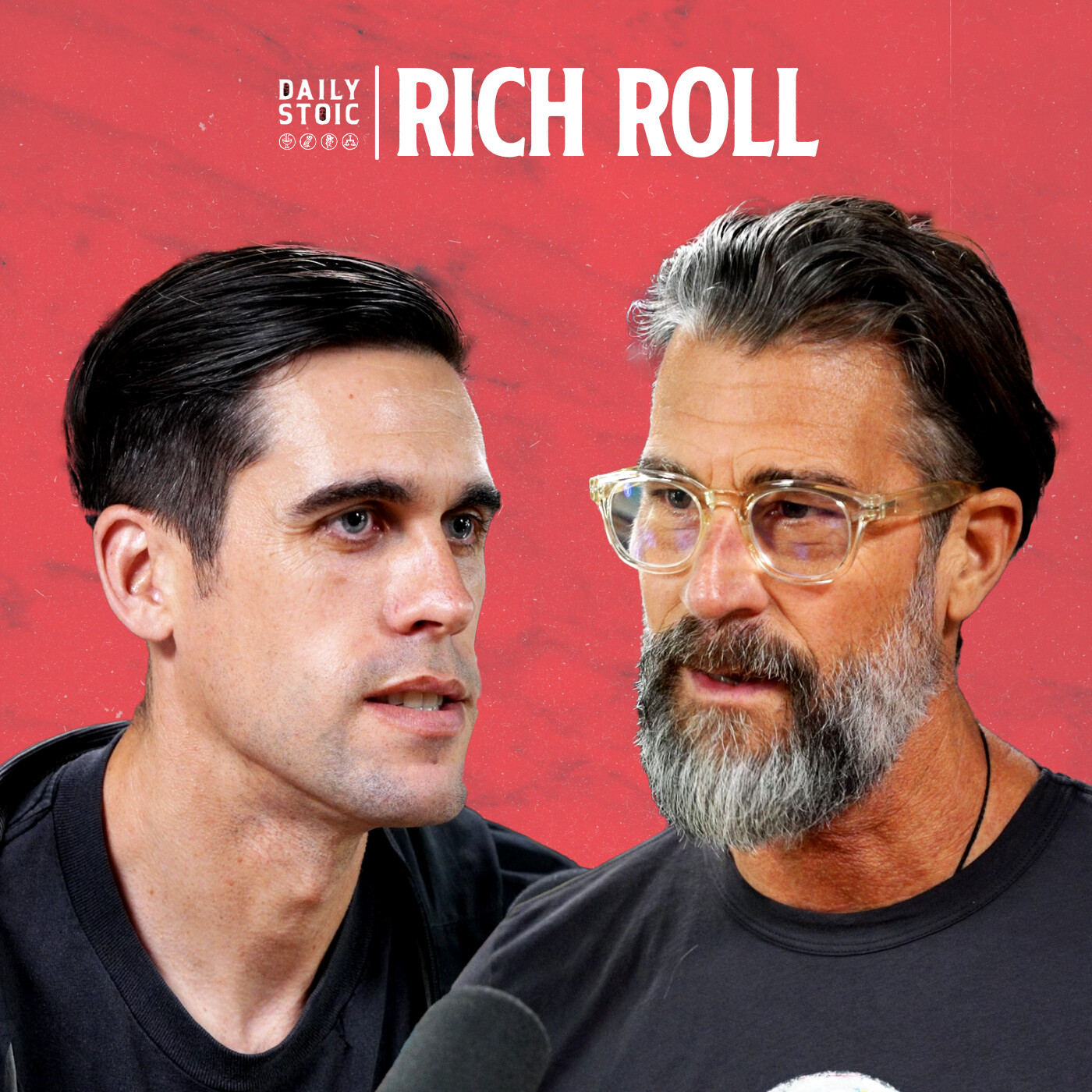
Rich Roll joins Ryan for a conversation about spiritual gurus, self-awareness, and the problems that come with sharing goals publicly. Rich talks about his recent trip to India where he spent time with the Dalai Lama, the struggles he is having writing his next book, and asks Ryan - does our ego ever actually graduate from middle school?
Rich Roll is an accomplished ultra-endurance athlete, author of Finding Ultra and host of The Rich Roll podcast.
You can connect with Rich on X and IG: @richroll
📚 Grab a copy of Finding Ultra by Rich Roll at The Painted Porch: https://www.thepaintedporch.com/
📕 Right Thing, Right Now is out now! To purchase your own copy, head here: https://store.dailystoic.com/
✉️ Want Stoic wisdom delivered to your inbox daily? Sign up for the FREE Daily Stoic email at https://dailystoic.com/dailyemail
🏛 Get Stoic inspired books, medallions, and prints to remember these lessons at the Daily Stoic Store: https://store.dailystoic.com/
📱 Follow us: Instagram, Twitter, YouTube, TikTok, and Facebook
See Privacy Policy at https://art19.com/privacy and California Privacy Notice at https://art19.com/privacy#do-not-sell-my-info.
