
 Ask ChatGPT



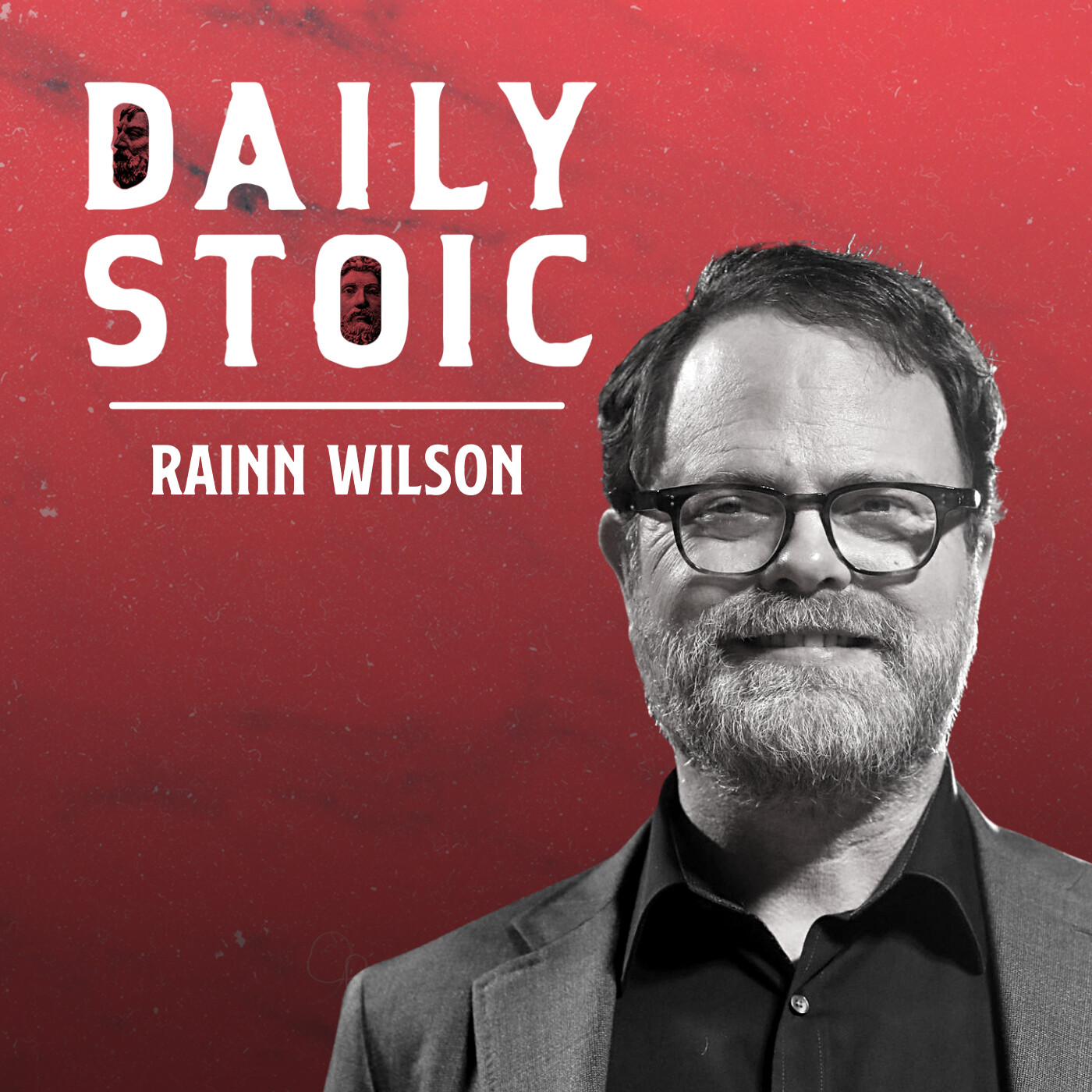
In this episode, host Ryan Holiday interviews actor and author Rainn Wilson about his new book, Soul Boom: Why We Need a Spiritual Revolution. They discuss the intersection of spirituality and Stoicism, the current crisis among young men, and how Stoic principles could address societal challenges such as climate change.
Written by AI. May contain mistakes.

Get the gist, explore an idea or ask about something said.
 Claude
On The Daily Stoic, what are the key points of this episode?
Searching your listeningAutomatic transcript. May contain errors.
0:00It's time for Cyber Monday, Dell Technologies biggest sale of the year. That's right, you'll find the lowest prices of the year on select Dell PCs like the Dell 16 Plus with Intel Core Ultra processors. And with built-in advanced AI features, it's the PC that helps you do more faster. From smarter multitasking to extended battery life, these PCs get the busy work done so you can focus on what matters most to you. Plus, you can earn Dell rewards and join many other benefits like free shipping, expert support, price match guarantee, and flexible financing options. They also have the biggest deals on accessories that pair perfectly with your Dell PC, improving the way you work, play, and connect.
0:38Whether you just got started holiday shopping or you're finishing up, these PCs and accessories make perfect gifts for everyone on your list. Shop now at Dell.com slash deals and don't miss out on the best prices of the year. That's Dell.com slash deals.
0:54Look, if you're listening to this podcast, you've probably heard of HelloFresh, right? They're the number one meal kit in America. They make home cooking easier with chef-crafted recipes and fresh ingredients delivered straight to your door. This fall, they're serving up even more to love. It's not the HelloFresh you remember. It's even better. HelloFresh is bigger. They've doubled their menu. You can choose up to 100 options each week. It's healthier. You can choose from 15-plus high-protein recipes. And they now help you eat greener with veggie-packed recipes that have two or more veggies per week.
1:28And it's tastier. You can get steak and seafood recipes delivered every week for no extra cost. They have three times the seafood options. They also have hearty fall recipes like classic beef chili or honey glazed pork tenderloin. We just got home from a week away. We're trying to think about what we're going to eat this week. It was such a relief to see that HelloFresh box sitting on our doorstep when we got home. They've got everything you need for the recipe that they pick out. There's no last minute trips to the store. Plus, the meals are delicious and easy to make. The best way to cook just got better.
2:00Go to HelloFresh.com slash Stoic10FM to get 10 free meals plus free breakfast for life. One box with active subscription. Free meals applied as a discount on the first box. New subscribers only varies by plan. That's HelloFresh.com Stoic10FM to get 10 free meals plus free breakfast for life.
2:25Welcome to the Daily Stoic Podcast, where each weekday we bring you a meditation inspired by the ancient Stoics, a short passage of ancient wisdom designed to help you find strength and insight here in everyday life. And on Wednesdays, we talk to some of our fellow students of ancient philosophy, well-known and obscure, fascinating and powerful. With them, we discuss the strategies and habits that have helped them become who they are and also to find peace and wisdom in their actual lives. But first, we've got a quick message from one of our sponsors.
3:16Hey, it's Ryan Holiday. Welcome to another episode of the Daily Stoic Podcast. As I finished this interview, I stepped outside and my wife was there and she was like, how did it go? How did it go? Because I'd recorded it remote, but it was sort of a big moment for both of us because it was sort of unbelievable to think that I would ever interview this person. I'm not going to talk much about his prior work because we're in the middle of an actor and writer's strike, which I very much want to respect. But I also was very excited to have him on because I understand that he is more than just an actor.
3:57You would know him from one of the greatest television roles of all time, one of the greatest television shows of all time, The Office. He plays Dwight Schrute, plays it perfectly, classic, always funny. And actually right around the time my wife and I met, I remember hanging out with friends, watching The Office as it came out on television, like that night, because this is a time when there was still something called appointment television. I knew today's guest then as this iconic actor on this iconic TV show. And it was only later that I came to understand just what a fascinating, complex, and multifaceted individual this guy was.
4:46I think I first, obviously he came out with a memoir many years ago, right around the time the office was blowing up called The Bassoon King, My Life and Art, Faith and Idiocy. But then he came up with this thing called Soul Pancake, which is, is or was, which is this really interesting YouTube channel that makes these sort of philosophy videos and spirituality videos. And all of a sudden you're like, wait, this isn't what I expected from this guy, but it's all really smart and really interesting. And in a large part, Rain's work with SoulPancake helped inspire Daily Stoic, as I talk about in the interview today, you know, that he was doing this really cool stuff that you could be more than one thing, and that there was a space on a platform like YouTube for smart, interesting, philosophical, in-depth stuff.
5:36And that's what I'm trying to do over at the Daily Stoic YouTube channel. So I was really excited. I've listened to Rain on many podcasts. He was great on Rich Roll's podcast. That's pretty much everyone who goes on Rich Roll's podcast is. But anyways, I saw that he had this new book out called Soul Boom, Why We Need a Spiritual Revolution. And I was excited to have him on and I wanted to have a lot of time with him. So we did. We did a two hour interview. This is going to be part one. I read the book. I really liked it. We went very in depth in this interview about the ideas in the book. Actually, I did, I not only read the book, I read a big chunk of it while I was at the dentist the other day, just waiting for my spot.
6:15And then I was getting my teeth cleaned. And I really got into it. It's a great book. It's got some legit blurbs. It has a blurb from David Bentley Hart, who's this great theologian and translator, whose work on the Bible I read, whose translation of the New Testament I really enjoyed. And anyways, I'm very excited to bring you this interview with the one and only Rainn Wilson. Rainn Wilson, actor, activist, writer, philosopher, thinker, spiritual person. And I think you're really going to like this interview. It's great.
7:02I love the book. I thought it was fascinating. And I had a spiritual experience this morning. I got up early. I watched the sun go up. Then I dropped my kids off at outdoor camp. And then I went running and sort of running in this sort of forest. It was so dense. I had to take my sunglasses off because it was so shaded and I didn't see a person for like an hour. and then I came, I got to do a little writing. There's a great Seneca quote that I thought might resonate with you. He said, the whole world is a temple of all the gods. And I think about that every time I sort of get to do something like that.
7:40A whole world is a temple of all the gods. I love that. Where is this paradise in which you are jogging for an hour without seeing a soul in the depths of the verdant forest? Where the hell is this? I want to go there. Rural Texas. It was actually, actually, I undersold it. At one part of the run, I'm going and I sort of come across this, like, it's this little sort of limestone overhang, this ledge. There's a little sign next to it and I read it. And it's a cave that they date sort of indigenous activity to as long ago as 8 ,000 years ago. So I'm on this sort of trail that hunters have been using for basically longer than we have recorded history.
8:30And you're just sort of one with something much older and bigger and more powerful than yourself. See, it was a sacred space for over 8 ,000 years, maybe 10 ,000 years. Yes. And you connected with that same sacredness. But I love this because on so many levels, because look, you had your family, you dropped your kids off, you were in your body exercising, you were connecting with nature, you were doing some writing. now you're doing some deep conversationalist-ishness with me but when I think about you know sacred spaces like that like that cave or the people that live there one of the things I love to think about about this idea of sacredness is which is one of the central themes of my book is um that uh it's all connected it's all sacred yeah that uh we don't think of sacredness as a as a shrine, but the gods, like you say, are, are inhabit all things.
9:36So, you know, I talk about the poet Basho, uh, the haiku poet who in medieval Japan would go from temple to temple, writing haiku, leaving them behind and haiku, of course, being a reflection on nature and he would leave them as a holy offering. So here's this intersection of spirituality, nature, art, travel, being in your body, contemplative prayer, where there isn't, it's not compartmentalized the way it is today. It's like, oh, I'm spiritual when I'm in church on Sunday between 10 and 12. Yes. And then I'm working all this time. And then when I'm in nature, I appreciate that and I make art and that's a hobby on the side, but it's a kind of a clarion call for humanity to come back together and kind of merge all of these different modalities into one kind of spiritual practice.
10:36And it's totally free and available. There's no intermediary between you and it. There's nothing you have to pay for to access it. There's nothing you have to build. It's just there the second that you want it. There's sort of this, it's that kind of transcendental form of sort of church, which is the natural world. Yes. Amen. Amen. And it's there. Even if you can't go outside, there can be a corner where you are contemplative and where you meditate. There can be, anyone can at any point in time find some kind of experience that is a thread to the transcendent. Do you feel weird talking about this stuff?
11:22There is something, I don't know, shameful is not the right word, but there is this sense of sort of awkwardness or weirdness, or you don't want to be judged when we go, I don't want to be too woo-woo about it. But there is some part of us that I think is reluctant to talk about these things. Yeah. I know one of the things in my book that I bring up right away is like, why the hell is the guy who played Dwight talking about spirituality? So that might be a little weird. I imagine for you, you look like the guy, you look like someone who grew up watching The Office. Of course. Maybe you didn't at all.
12:01I've seen every single episode multiple times, of course. Yeah, you just, there's something about you that's kind of like I can spot an Office fan. There's something, you know, it's a little bit nerdy and a little bit wild. And so that must be especially weird. Yeah, it is weird, Ryan. It's something that I struggled with for a long, long time. And for me, I guess maybe it's just age because I'm 57 now and I just don't give a fuck anymore. And so many people just think I'm a left-wing radical. People think I'm like a right-wing weirdo, a spiritual woo-woo weirdo. It's like, okay, everybody, you think whatever you want.
12:53But I'm living a now, I wasn't always, now I'm living a very, a life that brings me great meaning and satisfaction. I've learned a few things along the way, especially when it comes to spiritual tools and applying them. And I just fearlessly talk about it. But yeah, culturally, these conversations, we don't talk about. we don't talk about death. We don't talk about the meaning of life, like, and our, and our finding our purpose. And, you know, part of it is kind of being a male man in this day's world where, uh, we're not allowed to be vulnerable or share our hearts and anything that is, you know, at all touchy feeling is an anathema, uh, to today's male.
13:48Um, and you're, you're a cuck and a pussy and a failure and a loser if you do. But I just stopped caring. But I'm in a fortunate position too because I made some money from some TV and SoulPancake and some other things. And so I'm doing fine and I want to just share some ideas with folk. That's what I love doing. You are in a fortunate position, but also that fortunate position makes it slightly more awkward, right? Because if you have any sense of self-awareness, which you do, you joke about in the book, but you're like, who am I to talk about these things? There's this sense like, well, am I qualified?
14:30Do I have a certain degree? Do I have letters after my name? You know, when you talk about this stuff that's worked for you and you want to share it with people, there's always this suspicion like, am I the crazy person that everyone's laughing at? You know, am I, or am I, am I like in a cult? Have I gone off the deep end? Should I just keep my mouth shut? There is, there's all the things you mentioned. And then there's just the general, like, who am I? Should I leave this to other people? How do you deal with that? Because you're the guy who like, is the face of the popularization of this really powerful philosophy.
15:11And you're a kid. It's weird. It's very weird. It's weird, especially, I imagine you've gone through this a little bit too, where it's like, you have the thing that you're most comfortable in, the medium you're most comfortable in. Like for me, that's writing. I would love to live in a world where, which wasn't that long ago, where books were the primary medium where these discussions were had. That's where I feel comfortable. No one would know what I look like. I could spend lots and lots of time getting every word right. But that's not where the conversation is happening. That's where the conversation happens with people like you and me in the sense that we read books.
15:55You have a great list actually in the back of this of all the books that have influenced you that you are recommending right now. But most people are getting most of their information for better or for worse from much easier mediums, but also much more telegenic, charismatic mediums. And so I've had to sort of get out of my comfort zone in the sense of like, if I want to reach those people and I ultimately want them to come back to the books, I have to figure out how to communicate in that language also. That's fascinating because for me, Soul Boom was such a labor of love. It took me the entirety of COVID three, three and a half years of working on it.
16:39It's a pretty, some people are like, Oh, it's such a light, easy read. And some people are like, Oh, it's such a heavy read. And you know, I don't know what it is. It's about 300 pages. I tried to make it as accessible as possible, funny with some jokes and, and levity and kind of really accessible metaphors and examples of what I'm talking about. But I really did like, this was like, for me, like, if I get hit by a bus tomorrow. And in case anyone ever, and that's probably like three dozen people want to know what the guy who played Dwight thought about life and God and the soul and the, and the meaning and, um, in service and love, it's all, you know, it's all here in the book.
17:26But now it's funny you mentioned this because, and you know what this is like too. Like I did this book tour and a lot of TV shows and podcasts and readings and stuff, and I'm still doing some. And you work so hard to sell a relatively small amount of books. Yes. You know? Yes. Considering, like, if I go do a TV show, you know, anywhere from 3 to 10 million people are going to be just watching it like that. Yeah. Even if I put up a video on my social media, I'm going to get hundreds of thousands of views just like that. Yeah. Um, so I am, I agree with you. I love books. I wish books were the main way that ideas were traded.
18:12And in some ways they are, there are people, you know, Malcolm Gladwell, Adam Grant, you know, uh, Arthur Brooks, David Brooks. There are some people that are influencing and yourself that are influencing the, the, the public dialogue about things, in some really interesting way. I mean, it's really amazing. The Creative Circle book by Rick Rubin has been this runaway bestseller. And it's a really out there kind of book in a lot of ways, you know? And that's really exciting. But I'm rambling, but I do want to come back to what you started with, which is I'm in this conversation right now of like we've built out a little Soul Boom Instagram page.
18:55And it's, you know, it's only got like 30 ,000 followers right now, but we could build it out. And I want to reach people with the ideas of this book. And I want to reach people that aren't necessarily going to go buy a book, but that are interested in spiritual tools to make themselves better and to make the world better. So how? I don't know. It's funny you bring up Rick Rubin. That's a good example, right? Here's a guy who through his music, you know, probably a hundred million albums, billions and billions of streams and radio listens. And that book is a hit. But when we're talking about what a hit book is, if that book sells a million copies over the next several years, it would be an enormous hit.
19:37You're talking about, even if you get into the 0.001 % of book sales, you're talking hundreds of thousands of people. And how many of them are actually reading it? Whereas, yeah, you post a video and you can do that many views in an hour. And so there is this tension between really spending the time and doing the work that makes a great book, but also understanding if the ideas are just trapped between these two covers, you're probably reaching only a fraction of the people that you want to reach with your ideas. Right. And like you say, when you sell the books too, like what percentage of people are reading the book and finishing the book and then really engaging with the ideas in the book.
20:18So that's going to be a kind of, you know, what, 10, 20%, 30 % of the buyers. Yeah. These are small numbers. And then it's funny when you like history or philosophy, you read about, you know, these ancient philosophers and they were like rock stars. They were like huge deals in their own time. And you're like, where did that go? You know, nobody's got that kind of reach anymore, even your Malcolm Gladwells. Right. Indeed. But, um, you've been very successful at it. There are people that, uh, do a great job. I'm just learning. I mean, I had this company soul pancake that did a lot of inspiring and uplifting content.
21:03And I really tried to stay out of it in a way like I founded it and the idea was mine and I was a catalyst behind and the funder behind a lot of it. but at the same time, I didn't want it to be the Rainn Wilson show. So it was really about a channel that had inspiring, uplifting content for young people that would bring people together and get them talking about humanity's biggest questions. So that chapter came and went. Now it's the soul boom chapter, not the soul pancake chapter. And I'm trying to figure that out. What was the reaction like? I remember when I went to my publisher, I'd written these sort of marketing books and I was like, hey, for my next book, I want to write about an obscure school of ancient philosophy.
21:49They were not super excited, to say the least. They did not see the dollar signs necessarily. My agent went to Harvard Divinity School and ultimately actually did some of the translations or all the translations in the Daily Stoic. So he was very supportive. He was able to sort of put his agent hat aside. But I have to imagine, given where you were when you sort of started talking about some of these stuff, that maybe not everyone on your team was hoping that's the direction you would go in. Well, it's funny. I have this book agent, Richard Abate, who's kind of legendary in Hollywood. And he did, you know, I don't know, Tina Fey and Mindy Kaling, BJ Novak, but also a bazillion other, you know, celebrities.
22:36He does all the comedians. Comedians and celebrities and whatnot. And I was calling him and like, you know, I want to do a book just on these spiritual ideas. And I don't know how. And, you know, are people going to read this? Are we going to be able to sell it? And believe it or not, he was the guy from the get-go who was like, you should absolutely do this. A hundred percent you should do it. It's important. you have things to share, you have something to say. A lot of people know you from doing Oprah and doing Soul Pancake and talking about mental health. And so he was actually really encouraging, but it was a funny journey because I wrote the introductory chapter.
23:24I wrote an outline. I wrote an impassioned letter about why I wanted to write this book. And we sent it out and it was just promptly rejected by, by basically every single publisher except one, which was Hachette, which is the one I ended up going with. And, and they, they got it, you know, it's, it's one of these really beautiful things where like, I, I get what you're trying to do, you know, and, you know, we're, we're behind this. They really believed in it from the get-go and have been very encouraging and want to do more. And it's been great. And I've at least made their money back. So I feel, you know, okay.
24:12My editor told me many years later that they were hoping I would just get it out of my system and then I would go back. They were saying yes. It was sort of a, which I'm sure you know more in the Hollywood sense is more common. It was a one for me, one for you kind of a deal. And they were hoping that it would, you know, not that it would crash and burn, but that it just would force me to go back to the other stuff. And then the exact opposite happened, which they're obviously quite pleased with as am I. Yes. Well, it's great. You really launched a movement and I, you know, I'll be really blunt.
24:48Like I don't know much about stoicism at all. I mean, I've heard some of your podcasts. I've heard some of your short videos. I've read a little bit of, you know, Aurelius and, you know, Seneca. But, and, you know, mostly through some like quotes and articles about them. I haven't gone to the source and whatnot. But, you know, what I do know is like, wow, this is like, it's kind of reminds me of like cognitive behavioral therapy. It's kind of like, this is a, this is a philosophy that you can, it's where the rubber meets the road. You can put this into effect today and you can see improvements if you just have the kind of like discipline and follow through.
25:35and you know I think there's a crisis in young men today and you know there's a mental health crisis in young people and you can talk about that in really broad terms but you can also talk about this crisis in young men in terms of finding their way in this really chaotic world we see more and more a lot of young men really embracing kind of authoritarianism and sort of right-wing grifters. Yeah. Yeah. Some right-wing grifters that are really good at under the auspices of kind of philosophy are, are, um, and, and purpose are, are, you know, misleading a lot of young people in some really dangerous directions.
26:23They're not taking them toward love. They're not taking them toward connection.
26:35You probably heard the headlines about all the different cuts to foreign aid and food benefits. This is having a profound impact on the world's poorest people and the world's poorest communities. But, you know, just hearing about that, that's not what stoicism is about. Stoicism is, to me, what you're going to do about it. And that's where GiveWell comes in. GiveWell is trusted by tens of thousands of donors each year because they provide free and independent research that helps you understand how to have a big impact. GiveWell has spent the last 18 years researching global health and poverty alleviation, and they direct funding to the highest impact opportunities.
27:14Over 150 ,000 donors have already trusted GiveWell to give more than two and a half billion dollars over the last several years. And research suggests that these donations will save over 300 ,000 lives. I myself am one of those donors. I donate to GiveWell every year. It means a lot to me. And you can find all their research and recommendations on their site for free. And thanks to the donors that sponsor this research, GiveWell doesn't take a cut from your tax-deductible donation to their recommended funds. And if this is your first gift through GiveWell, you can have your donation matched up to$100 before the end of the year, or as long as matching funds last.
27:49To claim your match, go to givewell.org and pick Daily Stoic from the drop-down menu under podcast. That's how they know that you heard about GiveWell from the Daily Stoic and you'll get your donation matched. That's givewell.org, code the Daily Stoic to donate or find out more. This episode is sponsored by BetterHelp. This time of year is wonderful. It's quiet, it's peaceful, it's beautiful. It's also stressful and bleak and dark. And then there's the whole family stuff. You got to make sure you're taking care of yourself and you got to make sure you're taking care of your mental health. This time of year can be not just stressful, it can also be lonely.
28:27And therapy can help you make space and time to focus on getting well and feeling good. Consider trying BetterHelp online therapy in December as a way to close the year with clarity rather than chaos. With over 30 ,000 therapists, BetterHelp is one of the world's largest online therapy platforms. having served over 5 million people globally. And it works. It's got an average rating of 4.9 out of 5 for a live session based on over 1.7 million client reviews. This December, start a new tradition by taking care of yourself. And our listeners get 10 % off at BetterHelp.com slash Daily Stoic Pod. That's BetterHelp.com slash Daily Stoic Pod.
29:12Yeah. Don't you think what they're kind of doing is looking at the same sort of, Viktor Frankl calls it the existential vacuum, or you could call it the sort of spiritual emptiness that you're talking about in your book that I think the Stokes are also speaking to. They're sort of seeing that. And yeah, instead of leading people towards a place that the Stokes would call virtue or enlightenment or whatever you want to call it, they're sort of taking that emptiness, taking some of the mystique or the weight of the Western texts or the philosophical traditions, the sort of mystical ideas also. And then, yeah, I can't exactly describe what the philosophy they're selling is, but it does seem to be totally devoid of compassion or empathy or love or obligation to anyone other than yourself and your own self-development.
30:09Yeah, and I think it's also a lot of what's going on in the political discourse is kind of a reactivity to the other side. So what's happening on those conversations that veer a little more towards the political right tend to be a little more conspiratorial. And they're very emotionally reactive to the extremes of the left. Yeah. And that is catalyzing community that is catalyzed only around its distaste for some stuff coming from the political left that is egregious. And, but there aren't any solutions there. You know, I have a section in my book called Don't Just Protest, Build Something. And protest, by the way, comes from both sides, right and left, right?
31:07So it's really easy on the political left to just be like, oh, there's injustice. Oh, no, that's terrible injustice. Oh, look, there's another injustice. Oh, my God, there's terrible injustice. And then on the right, it's like, oh, can you believe what this lefty said? Oh, that's terrible. Can you believe what that person said? Oh, that's terrible. Can you believe what AOC said? Oh, that's terrible. So there's all this reactive protest, but how do you build a life proactively? And how do you build a life in community with others? Because that's the other thing that's really missing is that we are in, like it or not, we are in community.
31:46We're in consultation. We're in connection. we're in cooperation and we need to live even more as we're headed towards you know 9 10 11 billion people on the planet towards even more connectivity connection community and cooperation what does that take it takes humility it takes empathy like you say compassion and but you have to have a proactive stance. You have to, like I say, don't just protest, build something. You have to be a part of building something good and noble and true and connective and enlightened and seeking transcendence and in service to others as all of the great spiritual leaders and the great thinkers and philosophers and teachers have taught us, you know, eon after eon.
32:42And that's what I love about what you are doing with the philosophy is like, how can, how can I apply this to my life to make my life better? And this is what I'm doing in Soul Boom. And let me just say, I'm, I'm, I'm throwing out a lot of different topics here, but let me just say that spirituality sounds woo woo. So that's the word woo, woo, right? And it can be woo, woo. If it's woo, woo, jettison it spiritual tools and thinking about spirituality and using spiritual faith-based wisdom from throughout the centuries of all the world's faith traditions has to make your life better. And it has to make the world better.
33:25Otherwise discard it. And there might be a lot of listeners right now. It's like, well, it doesn't work. So I am discarding it. F you. It's stupid, you know, and I get that. And religion and faith has certainly been the cause of some of the worst crimes against humanity done in the name of love and done in the name of God. But okay, great. Let's put that aside. like i say in the book have we jettisoned the spiritual baby for the with the religious bath water we threw out the religious bath water did we get rid of some spiritual truth in there and in hinduism and in buddhism i'm a member of the baha 'i faith um in christianity and islam in zoroastrianism sikhism all the world's great faith traditions what can we find that when the rubber meets the road makes our lives better.
34:18And part two makes our world better, makes our communities better, makes our nation better, makes the way we come together better. Because I passionately and firmly believe that there are spiritual solutions to the world's problems. It's interesting talking about stoicism. I can tell the stuff that is going to be the most popular is going to be your sort of most straight down the middle, sort of the stuff about discipline, the stuff about courage, the stuff about wisdom, your sort of standard self-improvement message from the ancients, right? Which the Stoics talk a ton about, right? Marx really writes this book, Meditations, which are notes to himself to be better at his job and his life.
35:09And there's a ton of great stuff in there from this productive, strong, powerful, brilliant individual. But I can also tell, I also know that stoicism is more than just the sort of life hacks, right? Like it wasn't this recipe for making you a better sociopath, like for being less caring, less interested in other people, more selfish, more successful. It was more than that. And so one of the key stoic virtues of the four, it's courage, self-discipline, justice, and wisdom. And justice to me is the bucket in which a lot of the stuff you were just mentioning there falls into. The idea of community, the idea of connection, the idea of doing the right thing, the idea of trying to make the world better.
35:59And I can just tell, the second I head into that territory, it's not just that I'm losing some people, but I'm making some people very, very angry. And that is an interesting part of the sort of community that's out there right now. The people who are, like you said, it's not just that they're, hey, they're a little skeptical, but they're almost reactive against because maybe with the left, these ideas of compassion and empathy and fairness and equality, because the left is associated with some of those things, even politeness, it's almost as if a good percentage of society has embraced being the opposite of those things as if that's a meaningful way to live or be.
36:50It's very strange. Yeah, I was thinking about that in terms of climate change. And it's so sad that that has become politicized as well. because it's just science, you know, and it's just common sense. I mean, it's just like the political right views itself as being like common sense. Like, we're the common sense. You're the woo-woo, crazy, pie-in-the-sky, utopian. Oh, you triggered my feelings, people. We're the like - You don't care about your feelings. Yeah, facts. And okay, well, here's a fact. Humanity has been for 200 years pouring CO2 into the atmosphere. CO2 is a heat trap in gas. And there's a lot more of it in the atmosphere now than there was 200 or 300 years ago.
37:37And we're also talking about, you know, a couple thousand years of deforestation, filling in peat bogs, you know, wetlands, converting those to farming. Like there's damning rivers, killing animals. Yeah. Yeah. So we've, and eating more and more meat and having more and more livestock, et cetera. So you just look at, you know, thousands of years away, we have terraformed planet earth and it's a very, very different place. And it was a thousand or two. So this is common sense. Just, you just drive by some smokestacks and look at all that and, and just be in a traffic jam and like, oh, there's 12 ,000 cars I can see from my window and all of them are.
38:18So it's just this common sense thing like, yeah, and it's getting warmer and there's more extreme weather events. And even that has become politicized in a way that is really unfortunate. What would the Stoics say about climate change? Ooh, that's interesting. Well, I think the Stoics would first say that nature is wonderful, like we said earlier, that this world is a temple, and to destroy it is to destroy something that's consecrated and very, very special. So I think, first off, they would agree that preserving the environment is something worthwhile. I think they would say that we have an obligation to the common good.
39:05Marcus Reuss references the common good something like 80 times in meditations. So not like a couple times, but it's a central theme that we sort of owe something to other people, even people that we don't meet. There's this beautiful image from one of the Stokes. His name is Hierocles. And he says that every person is born selfish. You come out of the womb, you know, sort of fighting for your own survival. And then you have your parents, you have your siblings, you know, and that these are sort of concentric circles that surround the individual. Then you have people that live near you. You have people that live in the same country as you, people that live in the same continent.
39:43There's these series of circles that get bigger and bigger as you go that ultimately encompass all animals and nature itself, people who have never even been born. And he says that sort of the work of one's life, the work of philosophy is about pulling these outer rings inward, right? So I do think there is an argument in stoicism that says, yes, at first, as the individual, you have to go, what's in my control? What's not in my control? I'm going to focus on getting my shit together as a human being. But once you get your shit together as a human being, it behooves you to then think about how you fit in this larger picture.
40:23And are you making positive contributions or negative contributions? And how do you bring other people together? So individually, we're all making the contribution that's possible for us to make that collectively adds up in a big way. I don't know if Stoicism has a great answer for the collective action problem that is something as large as climate change. But then again, most of the Stoics in the ancient world ran for public office. And I think they would be trying to tackle the pressing issues of their time. In their time, they were worried about being invaded by the barbarians. Thankfully, that's not the concern that we have here in modern day America.
41:10But we should be asking ourselves, if we don't do something about this, what kind of world are we leaving our children and grandchildren? I don't think it's a great one. But isn't there an aspect of wisdom and reasonableness that would conform to kind of scientific, current scientific thinking? I think so. And they were fascinated with natural questions. You know, there were Stoics who measured the circumference of the earth and, you know, charted the stars. Seneca wrote a multi-volume series on nature, like his sort of natural observations. observation. So, you know, these weren't like, when we think of philosophers in the ancient world, we tend to think of them as being like philosophers in the modern world, like these big-brained specialists that would, you know, have a job at Harvard.
41:59Living in academia, you know, publishing dissertations and, yeah. About, you know, impossible questions, like one of which you talk about in the book, how do we know we're not living in a computer simulation or whatever, right? But in fact, they were regular people who had real jobs. And philosophy was designed to sort of help them live the good life and also to help them to do good in a world where there was a lot of bad. So yeah, I think first and foremost, there's something fundamentally unphilosophical about looking at reality, looking at the overwhelming evidence and logic of a situation like the climate and going, I'm just going to deny that that exists.
42:45Like, so I heard a powerful metaphor earlier. They're like, look, if you park your car in the garage and sit in it, you'll be dead in like 30 minutes, right? And then they're like, we've been, like the earth is also a closed atmosphere. We've been running the car for a hundred plus years. That like the earth is very big and the atmosphere is very big, but it's not unlimited. it. There's nowhere that it goes, right? It's trapped here. And it doesn't take a genius to deduce there's going to be some consequences from the decisions that we've made. But the important thing here, and I talk about in my book why we need a spiritual revolution, and I think we're, I don't know anything about your beliefs.
43:35I don't know if you're a theist or atheist or, you know, I have no idea personally. I think there's a great deal of parallel between Stoic philosophy, certainly the idea of God and gods and reverence for nature and justice and a lot of spiritual ideas. And the Stoics considered themselves spiritual people at the time. They weren't kind of like, oh, we're these kind of atheists with this kind of like self-help little philosophy on the side where we do cold plunges at 6 a.m. That's not, you know. But why we need a spiritual revolution, Ryan, and one of the points I bring up, and I think we're kind of referencing it here, is that partisanship, and I don't want to point fingers at either the political left or the political right.
44:27I guess I want to point fingers at both of them. Partisanship in itself is toxic. Yes. And it is unsustainable because you have two sides that their entire goal is not public service. Their entire goal is the seeking of power. So we set this into motion hundreds of years ago. Even our founding fathers, and I put quotes in the book. I don't have them on the tip of my tongue right now. our founding fathers were very, very afraid of the idea of like a two-party system. And we're seeing now, you know, bloodshed done in the name of partisanship. And one can say, well, that's politics and that's how politics have been for 2000 years.
45:12But really, as long as we're not having a conversation that takes the stance of rising above the planet by 20 ,000 feet and looking down. You know, if aliens are looking down at the United States specifically right now, they're like, oh my God, this is nuts. Half the country will do whatever the Republicans say is right and, and just give their allegiance almost like crazy to like a sports team, like their Philadelphia Eagles fans or something like that. And the other half of the country is diehard Democrats and they'll do whatever crazy cockamamie things the Democrats are up to. And this party brand loyalty, and they're screaming in each other's faces.
46:03They're backstabbing each other. They're seeking power in the halls of power. Their policies are not for the good of the common, like you said, the common good, the common wheel. Their policies are simply to try and get a few more votes. Everything is tested and polled. And in the meantime, they're raising tens of millions, hundreds of millions of dollars. There's ad spending on campaign ads, millions and millions of dollars. And this is the system we're in. And yet young people think, oh, if I can just, if our party can just get into even more power, then things will change and they'll get better.
46:48Well, guess what? They're not. This is, it is a toxic, unsustainable system. And that's what we need to be talking about. We need to be talking about a significant change of the system from the inside out. And that's that, again, one of the theses of my book, I hate the word theses. It sounds so dirty. One of the theses of my book is about this idea of a spiritual evolution. Like we need to re-examine how our systems work from a spiritual lens, through a spiritual lens and from a spiritual perspective, meaning with greater cooperation, compassion, you know, pursuit for higher goals like justice.
47:32And we're not having that conversation. The conversation is just about Anthony Fauci and it's about Trump and it's about, you know, fundraising and it's about gerrymandering. And it's about we're putting Band-Aids on a patient with cancer.
47:59I'm picking my kids up from school today and then doing our weekly routine, which is I take them over to Whole Foods and we get all our groceries for the week. Then we have dinner. It's one of their favorite things to do. It's one of my favorite things to do. And then my wife loves it because she doesn't have to take care of it. This holiday season, whether you're a guest or hosting the big dinner Whole Foods Market, has what you need to delight everyone at your table. They even have heat and eat sides from the prepared foods department. You can make Whole Foods your one-stop shop. Everything follows Whole Foods Market's strict ingredients standards, so you know it'll be delicious and good for you.
48:33You can also order online for pickup and even delivery in select zip codes to skip the crowds. Shop everything you need at Whole Foods Market, your holiday headquarters. Thanks to Toyota Trucks for sponsoring this episode. When I bought my ranch in 2015 out here in Bastro County, I drove my car about halfway down the dirt road that we live on, thought this isn't going to work, stopped, parked it, walked the rest of the way home, borrowed my wife's car, drove into Austin and bought a truck. What I bought was a Toyota Tacoma. And this truck wasn't just transportation getting me to and from my house.
49:08It unlocked a whole different style of living for us, not just on the ranch, but in our little Texas towns. There were places I could go now that I couldn't go before, especially out here in the piney forests, through the fields, and on the unpaved roads like the one that I lived in. We got to go deep into the hill country's wild beauty. We've driven all the way out to East Texas. We've driven across the country. And by we, I mean not just my wife, but both my kids who I drove home from the hospital in that truck. Toyota trucks are built for those who understand that the best adventures happen when you're willing to veer off course, because you never know when you'll end up on a Toyota adventure detour.
49:53And of course, this is stoicism, too, because every detour, every obstacle is an opportunity. But it's helpful if you can handle the difficulty inherent in that. If you've got the resilience and the right companion to make it wherever the road takes you. Discover your uncharted territory. Learn more at toyota.com slash trucks slash adventure dash detours.
50:19It is interesting. The Stoics talk about, you know, sort of zooming out and they're like, look at these sort of ants fighting over this piece of food. Or, you know, how instantly the sort of the boundaries or the borders of nations, continents sort of fall away. It all kind of comes together. You talk about the blue marble a little bit in your book too. Like when you see the world from space, it's very obvious that everyone's in the same boat, right? That there really aren't such things as separate people, separate identities, you know. You don't see borders. Yeah, exactly. It all goes away. And then you zoom back in and everyone's sort of very concerned about, you know, what's happening here or there.
51:04It's better, different. and the smallness of the view that we take on things, even to go to your point about partisanship, I think that the real problem with partisanship is it's a way to turn off your brain, right? You go, what does my party think? I'll do that. Or the worst part is, what does the other party think? I need to find out why I think the opposite of that, right? We saw this, of course, during the pandemic. Some people are taking the pandemic seriously. so I'm going to find a way or a line of thinking at every step of the way that makes me not have to give a shit or that makes me not have to do an uncomfortable or costly thing.
51:47I find it so interesting when you just go, oh, what's the conventional view here? What are the people that I don't like? What do they think about it? Now I'm going to find a way to not do that. And I think that's really the reaction of so many of the clearly big issues of our time, whether it's we're talking about fairness or income inequality. We're talking about the climate. We're talking about any of these issues. There's this sense that, oh, the other side is holier than thou. The other side thinks they're better than me. The other side is soft. So I'm going to think the opposite of those things, which really puts you in quite a bad position because you're now thinking the opposite of caring about other people, caring about the environment.
52:36You're thinking the opposite of facts because you just don't want to give somebody else the satisfaction of being right or of telling you what to do. Yeah. Amen. Amen. But we're just not having that conversation. No one's having that conversation. They're just either talking about how messed up the political left is or how messed up the political right is. And no one's saying, hey, wait a minute. What about the system that has created the political left and political right? Sure. How do we change that system? So, you know, the one example I gave in the book is from my religion, the Baha 'i faith, which I think has a really, you know, I believe in it.
53:24So I'm a person of faith and this is what I believe in. And I'm an adherent. I'm a follower. I'm a devotee. I love the word devotee because this comes from devotion. but putting that aside there's a really interesting thing about the Baha 'i faith which is that there is no clergy in it and I'm not proselytizing I promise I'm just I just want to make a point about politics there's no clergy in the Baha 'i faith so it's a democratically elected religion so every town if you're in Austin Texas every year the Baha 'is of Austin Texas get together and they elect nine people to be in charge of the Baha 'is of Austin, Texas.
54:08There's no campaigning. There's no yard signs. There's no money spent. It's quiet contemplation of who are the nine wisest people that can best serve the needs of the community. This happens on a national level and it happens on a global level as well. And when you go to a Baha 'i election night, it's a holy act, right? It's a democratic and sacred activity. There's prayer and meditation. No one's talking. People are silently putting their silent ballots in the box. They're counted. And that's that. And when someone is elected to the Austin, Texas, Baha 'i Spiritual Assembly, they don't have any power over anyone else.
55:02They don't have any say or this is how we should interpret this or they're just collectively making decisions that are best for the community. So I was thinking about this in terms of, you know, could you have a small town? I use Pancake Flats, Colorado, you know, that gets so tired of partisanship, the bickering, the backstabbing, the yelling, the red faces, the veins bulging in the necks, the angry tweets. It's, you know, they're so angry at the millions and millions of dollars being raised to spend on those ads that are like, you think Mark McCampbell is a good guy? He's a piece of shit. Look what he did.
55:47Kong, kong, kong. And those, and guess what? Those ads have been found to work. You know, they're preposterous. People like, oh, he must be a piece of shit. I'm not voting for him. um so could the people of good people of pancake flats come together and meet at the local football stadium and say enough of this let's just get a group of people that really want to make the town better and let's do a silent ballot and have an election and uh uh and those people that are on the town council they don't have any power over anyone else they only have power when they meet as a town council, like you can kind of picture that happening.
56:26It's still democracy, right? And you've taken, now, could it be flawed? Could someone be, you know, backstabbing others and seeking power and blah, blah, of course there, you know, it's not, it's not water tight necessarily, but when you take money out of the equation and you take toxicity out of the equation, And, you know, maybe there's a better system to be found, but we're not talking about systems. It is interesting how sort of timeless this debate is, too. Like in ancient Greece and then in Rome, the sort of two big rival philosophical schools are the Epicureans and the Stoics. And the Epicureans, although they're not the sort of hedonists that that word comes to mean to us today, their sort of idea is like the world is corrupt and broken things are messed up people are way too caught up in things that don't matter they say you know sort of retreat to the garden and kind of tarry here right stranger you would do well to tarry here and and it's in this sort of garden that they pursue their sort of individual or their small group you know pursuit of philosophy of enlightenment.
57:42And the Stoics are saying sort of, that's all well and good, but actually also you have to be politically engaged, right? The joke from the Stoics was, you know, the Epicureans say, don't get involved in politics unless you have to. And the Stoics say, get involved in politics unless something prevents you, right? They're not talking about partisanship, but they are talking about like playing an active role in the world. And I do think one of the problems with our society is, you know, the good people go, that game is dirty. The system is messed up. It's unfair. It's hopeless. And so they kind of retreat inwards and they see the field, they see the political levers of power, the political narrative, the discussion to like the worst people, right?
58:29So the problem is, yeah, most people don't want to be elected to town council. They're busy. Most people don't even vote in their local elections, right? The little town that I live in here right outside Austin is called Bastrop. One of our city council elections was recently decided by two fucking votes, two votes. I think there was maybe five or 6 ,000 eligible voters in the city election. There's more in the county, but it's like 600 people voted, you know? And so there is this kind of, I think a problem, both philosophically and spiritually, which is like the people that you would want, the people with the best hearts that you would want to be most involved in the conversation and in the decisions have sort of disengaged from the process the most.
59:22And I wonder how much that contributes to the problems that we have today? Sure. Who could blame them? I mean, you can make a lot more money, you know, being an entrepreneur than you can working in politics. Politics don't kind of draw the best and the brightest. And we've lost as a nation, you know, we could say we've lost as a species, but I'll just I'll just stick with a nation. We've lost as a nation, this idea of the common good, right? And service toward the common good and sacrifice toward the common good. And so many young people are so disgusted with politics, don't want anything to do with it.
1:00:13They don't vote. And who could blame them? So if you're 20 years old and you look at what's happened in the last 20 years. You're like, of course you don't believe in capitalism. You don't believe in the democratic system. You don't believe in anything. You have watched your, your parents and your grandparents betray you and the values that they purport to believe at pretty much every turn, at every opportunity. Absolutely. Yeah. So, you know, I'm, I'm hoping to, you know, start a conversation. It's a conversation that you've had ongoing. Um, but like you said, you, you, going back to something that you said earlier on, you're like, I know what people will respond to.
1:01:02Right. So anything about like making yourself self-determination through courage, you know, is going to get a lot of clicks, a lot of reads, a lot of, you know, and the parallel I have in my book is two TV shows from the 1970s. So I talk about Kung Fu and Star Trek, and I talk about how Kung Fu, for those who don't know, is about Kwai Chang Kane. He's a former Shaolin monk. He comes to the United States. This all takes place in the 19th century. So he's in the United States in the cowboy days. And he's taking all of his martial arts skills, but all his wisdom skills as well, and what he's learned from his Taoist, Confucianist wisdom, Buddhist wisdom in the monastery, and trying to kind of put that, apply that in his daily life, even though he's coming up against aggressive, racist, mean cowboys at every turn and occasionally has to kick their asses, which is very satisfying.
1:02:11And that was the whole show. I loved that show when I was a kid. I loved it. I watched it over and over again. And the other show that I watched was Star Trek. And I draw the parallel of Star Trek as being also a different kind of spiritual journey. So if the Kung Fu is your personal spiritual journey. Um, I want to make myself better. I want to find peace and tranquility and vision and mission in my life and stand up for my, my morals and my integrity. Uh, so I'm going to go do that, you know, as I navigate my life and you don't have to be a Shaolin monk, you can be a housewife or a school teacher or a truck driver or whoever you are.
1:02:52Um, and then Star Trek is humanity's journey forward. So humanity is, uh, in the, in the world of Star Trek, humanity has figured out all of its big issues, income inequality. It has, it has conquered injustice. It is at peace with nature has found, you know, clean burning fuel sources. and technology has carried humanity forward and we're at peace. There's no more war. We're a federation. Like you said, that big blue marble photograph, when you look down on planet earth, it's humans. It's with a rich diversity. You go to the deck of Star Trek and there's, you know, there's, you know, Asian guy and the Russian guy and a black woman.
1:03:43And, you know, the first interracial kiss in television history took place on Star Trek. and that's humanity rising to its greatest mission, which is to join the other aliens of the galaxy and seek out new life and new strange civilizations and boldly go, no one has gone before. And that's humanity's journey. So there are these twin spiritual journeys that we're all on. I would call them spiritual. You might call them philosophical. I believe that we have souls, that we are souls, that we are a short time on the planet in our fleshy meat suits. And after 80 or 90 years, our journey continues. So that's why I kind of talk about it in terms of spiritual terms.
1:04:38But these are the twin paths that we're on. And I think where our conversation keeps nudging toward is more of the Star Trek journey. I know for myself when I speak about mental health and like, oh, here's a meditation practice you can put in, or here's a way you can use gratitude to kind of make your life better on a daily basis. People really go for that. They love that. They're excited about that. And I get it, you know, because there are tools, practical tools that can make your life better. And people want to make their lives better. They want to feel happier. They don't want to feel bummed out all the time.
1:05:17I get it. Not even bummed out all the time, overwhelmed by anxiety and depression and self-hatred. And, you know, they don't want to feel lost. So I get that, but I also hope that we can talk about, I guess, spiritual and philosophical tools to help us transform society because you can't do one without the other. Do you know what I mean? We're in this really toxic, we're a bunch of frogs in a really toxic pond and you can kind of like work on yourself in your little corner of your little lily pad on your pond. But as long as like there's, there's war and dissension and disunity and, you know, across the pond, I don't know why I went to this analogy.
1:06:07Why did I go to this metaphor? It's not sustainable. It's a terrible metaphor. But if we live, we have to also clean up the toxic pond at the same time and, and address it. So they, they feed each other. The more, the more that we work on our own personal, spiritual and philosophical, uh, selves, you know, finding meaning and hope and, and, um, and, and vision, then we can bring that to the world. And we, more, we are a service in the world toward the quote unquote common good, then that feeds our soul even more and it makes us even more kind of wise and arrived. What do you think?
1:06:56Thanks so much for listening. If you could rate this podcast and leave a review on iTunes that would mean so much to us and it would really help the show. We appreciate it and I'll see you next episode.
1:07:17My family owns a 2023 Toyota 4Runner, and honestly, it's my favorite vehicle that I've ever owned. Around town, it's smooth and reliable, but where it really shines is on our trips into the backcountry. We've taken it on backpacking adventures to Colorado and New Mexico, loaded it up with gear, and never had to think twice about whether it could handle the terrain. That's what Toyota trucks are built for. Off-road confidence, rugged durability, and the freedom to explore. Toyota has a long history with the outdoor community, and they're committed to helping more people get out there and experience what nature has to offer.
1:07:46From remote trails to scenic byways, Toyota Trucks empowers you to take the detour, roam freely, and discover places that still feel wild and untouched. And they're not just making great trucks, they're working to expand access to adventure so more people can connect with the outdoors and pass that passion on to the next generation. Discover your uncharted territory. Learn more at toyota.com slash trucks slash adventure dash detours. That's toyota.com slash trucks slash adventure dash detours. Look, ads are annoying. They are to be avoided if at all possible. I understand as a content creator why they need to exist.
1:08:23That's why I don't begrudge them when they appear on the shows that I listen to. But again, as a person who has to pay a podcast producer and has to pay for equipment and for the studio and the building that the studio is in. It's a lot to keep something like the Daily Stoic going. So if you want to support a show but not listen to ads, well, we have partnered with Supercast to bring you a ad-free version of Daily Stoic. We're calling it Daily Stoic Premium. And with Premium, you can listen to every episode of the Daily Stoic podcast completely ad-free, no interruptions, just the ideas, just the messages, just the conversations you came here for.
1:09:07And you can also get early access to episodes before they're available to the public. And we're going to have a bunch of exclusive bonus content and extended interviews in there just for Daily Stoic Premium members as well. If you want to remove distractions, go deeper into Stoicism and support the work we do here. Well, it takes less than a minute to sign up for Daily Stoic Premium, and we are offering a limited time discount of 20 % off your first year. Just go to dailystoic.com slash premium to sign up right now or click the link in the show descriptions to make those ads go away.
Ryan speaks with Rainn Wilson about his new book Soul Boom: Why We Need a Spiritual Revolution, why the guy who played Dwight Schrute wrote a book on spirituality, how anyone can find a thread to the transcendent anywhere any time, how Stoicism is helping cure the crisis that young men are in today, what the Stoics would have said about climate change, and more.
Rainn Wilson is an actor, comedian, author, podcaster, writer, and director. He is most known for his role as Dwight Schrute on the NBC sitcom The Office (2005-2013), for which he earned three consecutive Emmy Award nominations for Outstanding Supporting Actor in a Comedy Series. Highlights of Rainn’s extensive film and television credits include Galaxy Quest (1999), Almost Famous (2000), Full Frontal (2003), Six Feet Under (2003-2005) and Mom (2018-2021). Outside of acting, Wilson published his autobiography, The Bassoon King, in 2015, and co-founded the digital media company SoulPancake in 2008, and as an author and podcaster he spreads a message of building togetherness and community by way of spiritual and philosophical awakening within the global culture. You can follow Rainn on Instagram @rainnwilson and Twitter @rainnwilson, and on soulboom.com.
✉️ Sign up for the Daily Stoic email: https://dailystoic.com/dailyemail
🏛 Check out the Daily Stoic Store for Stoic inspired products, signed books, and more.
📱 Follow us: Instagram, Twitter, YouTube, TikTok, Facebook
See Privacy Policy at https://art19.com/privacy and California Privacy Notice at https://art19.com/privacy#do-not-sell-my-info.
