
 Ask ChatGPT


- Podcasts
- The Daily Stoic
- Robert Greene & Ryan Holiday: The Secret To A Great Apprenticeship
The Daily Stoic24 Oct 2026 · 21m · 12 chapters
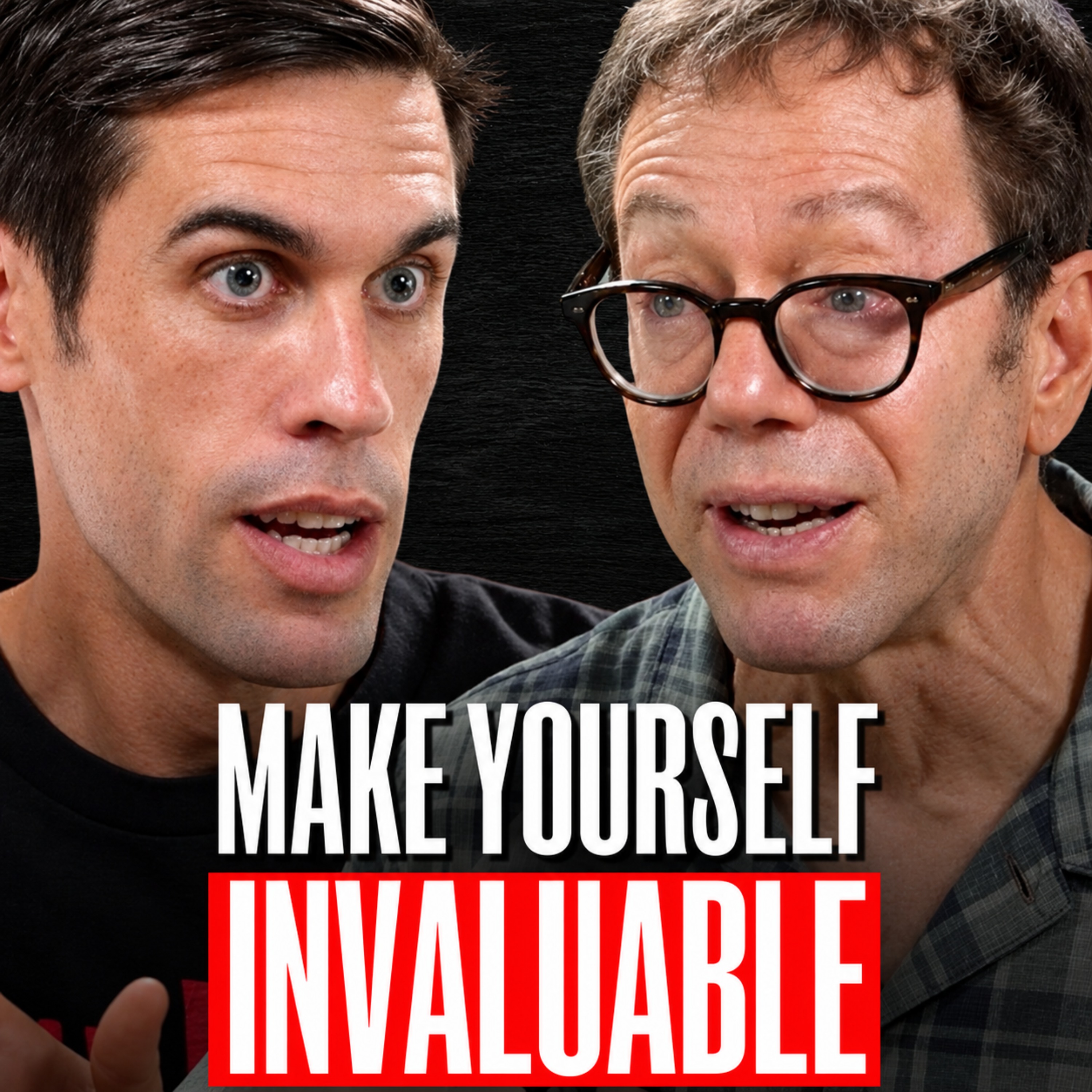
Robert Greene & Ryan Holiday: The Secret To A Great Apprenticeship
In short
How a “great apprenticeship” works—especially in an AI era where entry-level tasks and learning-by-doing are disappearing. The episode argues apprentices should help the mentor look good, save time, build dependency, and avoid ego, drama, and embarrassing mistakes; apprenticeships teach writing, thinking, grammar, and social etiquette across generations.
Guests
Robert Greene (author; discusses his new book The Law of the Sublime; known for The 48 Laws of Power) and Ryan Holiday (author; former research assistant to Greene; co-develops Daily Stoic; travels for Daily Stoic Live Tour).
Key claims
AI can do mediocre drafting but lacks “soul”; apprentices must learn to write and think; “never outshine the master”; appeal to self-interest (not mercy/gratitude); observe how others perceive you.
Notable examples
Ryan’s early transcription/research role; Ryan’s Wikipedia/online skills leading to later opportunities; Hollywood meeting etiquette mistakes; Ryan nearly fired after a talent-agency owner saw 48 Laws on his desk and accused him of eavesdropping; suit vs wrong “uniform” at a record label interview.
Written by AI. May contain mistakes.
Chapters
1:07
The Impact of Mentorship
Ryan shares how Robert Greene changed his life through mentorship.
“I started just transcribing little interviews for him for a book that he was working on.”
1:49
Lessons from Apprenticeship
Discussion on the significance of apprenticeships and learning from mentors.
“Now, 20 years removed from our first encounter, I wanted to know what he saw in me, what I did well, what I could have done better.”
2:19
Navigating the Changing Job Landscape
The conversation shifts to the impact of AI on entry-level positions.
“But I try people, and I give them a short leash.”
3:41
Strategies for Effective Apprenticeship
Robert shares essential tips for not failing an apprenticeship.
“And so people who do get those jobs, like a trial or an internship or a assistant job, it becomes imperative not to fuck it up in the 2026 because they're not like buses.”
6:42
The Importance of Writing Skills
Discussion on how writing skills relate to thinking and career success.
“So now social media, we can see all your embarrassing photographs, all your neo-Nazi rants and comments, right?”
9:22
Social Skills in the Modern Workplace
Robert emphasizes the importance of social skills across generations.
“to write, you have to know how to think.”
11:22
Learning from Mistakes in Professional Settings
Ryan and Robert share personal stories of missteps in their careers.
“I had to learn back when I was in my 20s, what will please somebody in their 50s and their 60s.”
14:03
Unexpected Confrontation at Work
Hear about a tense encounter in the workplace involving paranoia and misunderstanding.
“like this, but we do live in a world like this where the owner of the talent agency, who was kind of an Ari Golds type figure would walk by my desk every day.”
18:06
Self-Interest vs. Gratitude
Understand the importance of appealing to self-interest in professional relationships.
“In fact, you go, look, I feel bad for this person, but it sounds like a lot of drama over here.”
19:29
Learning Through Observation
Explore how mentorship and observation are key to personal and professional growth.
“that people are looking at you and judging you, that humans live on appearances.”
Show all 12 chapters
22:36
Creating Your Own Mentorship
Learn how to create your own mentorship experiences even without a direct mentor.
“you know, it was totally my, out of nowhere, using history, creating note cards, putting things on the sides of the margin.”
23:31
Discussing Gun Safety
Gain insights on how to approach sensitive topics like gun safety with neighbors.
“Talking about guns with others might not always feel comfortable, but it could save a life.”

Ask about this episode
Get the gist, explore an idea or ask about something said.
 Claude
On The Daily Stoic, what are the key points of this episode?
Searching your listeningTranscript
Automatic transcript. May contain errors.
0:00Ryan Holiday: So I have a bunch of traveling I'm doing through the end of the year on Daily Stoic Live Tour. I just got back from San Diego. I like to stay in the places that I'm staying. I like to book places on Airbnb so I can be like a local. I not only do some of my best writing, but I learn about things that I wouldn't have known otherwise. When I was just in San Diego, I took a walk along the water. I bumped into someone who recognized me and they told me about their favorite local bookstore, which was like two blocks from where I was staying. And I never would have known about it if it wasn't for that encounter.
0:30Ryan Holiday: It was cool to me to think that I have helped facilitate that experience for many, many people coming to Austin over the years. The first house that I bought in Austin when my wife and I first moved here, we would list it on Airbnb. And it helped me make the transition from my corporate life to being a full-time writer. So if you're going to be away, you should maybe think about listing your place on Airbnb. It can be a great way to earn extra cash while you travel. It can offset the cost of your trip or maybe even go towards whatever you're doing next. If you've got travel coming up, check out Airbnb.
1:01Ryan Holiday: Your home might be worth more than you think. And you can find out how much at Airbnb.com slash host. When I first met Robert Crean, I was soon to be college dropout. I had not done anything. I was nobody. I had no idea what lay ahead. But he saw something in me. He gave me a shot. He hired me as a research assistant. I started just transcribing little interviews for him for a book that he was working on. And that changed the course of my life. You would not be listening to this podcast. I would not have written these books. I don't know where I would have ended up, but it wouldn't have been here without Robert Greene.
1:36Ryan Holiday: That's the power of an apprenticeship. That's the power of a great mentor. That's the power of somebody who opens doors. And so in this episode, Robert and I are going to tell that story. And I had a bunch of questions for him. Now, 20 years removed from our first encounter, I wanted to know what he saw in me, what I did well, what I could have done better. I want to show you how an apprenticeship works, what you learn from it. Robert was here at the bookstore because he has a new book coming out, The Law of the Sublime. It's an incredible book. Let's get into it.
2:12Ryan Holiday: I have been curious, why did you give me a chance? What did you see? Well, you were very eager. You were very young. And you were very excited. it. And I'm pretty bad with hiring people. I make a lot of mistakes. But I try people, and I give them a short leash. Like I hired these researchers for the war book. They were terrible, and I fired them very quickly. So you were on a short leash, and I needed somebody, I guess, for the 50th law. But you seemed, I don't know, probably something, I'm a little bit intuitive about people's non-verbals. Maybe I just sensed somebody who was serious because a lot of people kind of pretend to be serious.
2:59They're just after the glory or the fame or their ego. You seem something a little, I don't know what it was. I can't remember. But for some reason, I trusted you more than some of these other flakes that try and -
3:12Ryan Holiday: Well, I'm interested in that because it's becoming a much more precious commodity. Like, so one of the things they're talking about with AI is that it's going to get rid of a lot of entry-level positions. But entry-level positions are how you learn how to do things. It's how you build relationships and you build experience and you just spend hundreds, thousands of hours observing how people work. You're inside organizations, you learn the skills. And so there's just going to be less of that. If interns do pretty mediocre work, AI is good at being mediocre. And so people who do get those jobs, like a trial or an internship or a assistant job, it becomes imperative not to fuck it up in the 2026 because they're not like buses.
3:59Ryan Holiday: There's not another one coming around. Yeah. I mean, like what would have happened if AI existed in 2006, but I have just hired, not hired, would I just use that for my research? Well, the first thing you had me do was transcribe interviews. And so, I mean, I don't know about you, but I don't transcribe my interviews anymore. I have them transcribed by AI. So that's an entry-level thing that's gone. And I remember, because during the mastery one, you asked me if there was a, you were like, I don't want you to transcribe these interviews anymore. You're like, you were very nice. You're like, your time's too valuable now.
4:33Ryan Holiday: But you're like, is there a way this can be done digitally? And I remember there was either you could like outsource it to like a foreign country or there was a tech. But I remember that that was when I started to see that transition. So I remember even thinking then, oh, this entry-level work, which was so formative to me because I got to listen to hundreds of hours of you interviewing these people who they would never talk to me. So I not only learned what they had to say, but I got to watch how you interviewed people. So that's going away. So people have to find other ways to get their foot in the door.
5:06Ryan Holiday: But when you think about somebody who, because obviously such a central part of mastery is that like apprenticeship. What's the advice you give people to not fuck up an apprenticeship? First of all, you have to, it has to be the right apprenticeship, right? You have to be emotionally engaged, but your job is not about your ego. It's not about getting attention. It's not about making yourself look great. It's about making that person you're working for look great and making their life easier, right? Right. So people who need an apprentice are often way too busy. They're way too consumed with things to deal with the minutia.
5:46You're there to save them time. Yeah. So if you're like wasting their time by talking to them, asking things, then you're having drama or being difficult. Yeah. So your job is to save them time. And if you save them time, they're going to become dependent on you. Also, the person that you're working for tends to lack certain skills. They lack time, which I certainly did, but they also lack skills. You need to find out what they're missing and you need to be the one that's supplying it. So for me with you, it was, I had no internet skills. I grew up in an era with nothing like that. And you fixed Wikipedia pages, which led to you getting hired by Dov Charney, which seemed like magic to me at the time.
6:32So what are these skills that you have that this person doesn't that you can lean on that you can impress them with and save them time and don't fuck things up and observe yourself? So now social media, we can see all your embarrassing photographs, all your neo-Nazi rants and comments, right? You got to be very careful. You've got to be more careful than I had to be when I was younger. You can't do things that are going to embarrass you. You've got to be careful what you say. You have to be careful how you dress. You have to be able to observe yourself and see how other people are going to see you and get outside of your narrow Gen Z world and look at how the older generation, I know it sounds patronizing, but it's actually true.
7:19so there's so many ways nowadays to screw things up by like bullshitting and using ai to write something instead of doing it yourself yeah you know it's interesting the apprentice thing because
7:31Ryan Holiday: it connects to two laws and the laws of power i think tell me what you think number one never outshine the master so don't bring drama conflict news whatever to the person but also it's an inverse of one of my favorite laws that i would say you are the opposite of as far as having a boss, which is let others do all the work and take all the credit. That's what a good apprentice, apprentice relationship is, is that you're helping the writers on a TV show or making the host look good. You've always been incredibly generous to me, but a good apprentice has to have no ego in that they're willing to do all the work and let other people take the credit.
8:08Ryan Holiday: And in fact, that's the whole job. And you also have to appeal to their self-interest, which is saving them time. You also have to create dependency so that they become dependent on you for things they can't do themselves. And you have to, with AI doing everything, you have to be able to present things that they can't get from AI. Sure. Right. If you're a young person going into university, the main thing you need to learn is to learn how to write. Because AI can write, but it's crap. It's like a bot. And it doesn't have soul. It doesn't have spirit. It doesn't have the human touch. AI can't write a sentence that seems on the surface a little bit illogical, but that's kind of poetic and interesting, surprising.
8:53Maybe in 30 years it can, but it doesn't have a soul. It doesn't have a spirit. learn how to write in college delve into it don't be like those other people who are cheating learn how to write it'll be a skill that i don't care what field you're in unless you're going into plumbing that being able to write won't be won't be a critical isn't isn't not just the ability to
9:16Ryan Holiday: write because i do think that remains a precious resource but it's people who can write have also learned how to think there's nobody who is a good writer who is not also a good thinker because to write, you have to know how to think. And I talk about this in the wisdom book, like who you are on the other side of having done the writing is what it's all about. Not having the slop kicked out by a computer. Right. Right. Also, I mean, I'm going to sound really persnickety, but no, learn grammar, learn basics of grammar and spelling. I mean, we have spellcheck now, So it's not that difficult. But when I get an email or somebody asking to work for me and they don't know how to spell, it sends up all sorts of red flags.
10:01Ryan Holiday: Maybe it'll countersignal at this point because you'll know a human wrote it. But that's probably what the AI will probably be starting to do that to fake it. Writing and thinking are two important ones. And then I think, obviously, interpersonal skills. Like, part of it is being invisible. Like, can you contribute positively to a person's life without taking up a bunch of space? The other part of it is like, can you be a good hang? Like, are you pleasant to be in the room with? Or are you weird and off-putting and uncomfortable? Do they trust you in their house or, you know, with their communications?
10:37Ryan Holiday: Like, part of it is that. Well, you know, in mastery, I take you through the process, discovering your life's tasks, apprenticeship, finding a mentor, and then social skills, chapter four. Because if you don't have social skills, it's a skill. It's a skill like writing. It's a skill like being able to build something. You have to take that very, very seriously. And problem is if you're living in this virtual world and you're not interacting with people, you become very awkward socially. And the thing is, older people who you're going to be working for, and they're not going to be as old as me, they'll be like in their 30s and 40s, like more like your age.
11:14They come from a different world. You have to be able to mix with people from different generations. That's a social skill. Sure. You know, and I had to develop that in my career working for I had so many bosses, so many bad bosses, but people of many different generations. I had to learn back when I was in my 20s, what will please somebody in their 50s and their 60s. It's a different way of thinking than if you just totally, totally wrapped up in yourself.
11:41Ryan Holiday: Yeah, like, can you be the youngest person in the room and it not be a big deal? I had two experiences that sat with me when I was working in Hollywood. And I clearly violated different laws of power with both of them. I remember in one of them, we were driving somewhere. I was taking some of the partners of this talent agency to YouTube because we'd signed this person on YouTube. And YouTube was going to be the future. And I was taking them. And, you know, one of the partners is the owner of this company. He's talking about one of the other partners who wasn't there. and um you know he was like well what you know so and so doesn't think that this is worth our time why why should we be here and i was like well he doesn't he just doesn't know what he's talking about that's what i said uh-oh and this guy was like he blew up he's like who the fuck are you to fucking say this this person's done all this stuff you know like i was talking as though i would talk to my friends like i didn't mean like this person's an idiot i just was saying like He just doesn't know about this thing, but I offended this guy's ego on this other guy's behalf.
12:42Ryan Holiday: And I could have gotten fired in the room right then. And so you have to learn the etiquette and the conversations. And the other one that happened to me was we were in some meeting and they were talking about this thing. And then I sort of spoke up and I said something. I don't even remember what I said, which is kind of the point. And my boss took me aside after and he was like, why did you say that? And I go, what do you mean? He's like, did you say that because it needed to be said or because you just wanted to have something to say? And it was like, this is the definition of always say less than necessary.
13:14Ryan Holiday: Like I could have quietly sat there and just been content to be invited in the room. But instead I had to let everyone know I was in the room. And he was just saying the chances of you fucking that up are higher if you talk than if you don't talk. And also when you're in a meeting like that though, if you're just quiet and you're just like in a shell, that doesn't read well. Sure. You have to look like you're interested, you're serious, you're watching, but you keep your mouth shut. Yes. But you're engaged, you're taking notes. There's a way to be quiet, but also look like you're conscientious.
13:44And, you know, didn't you also almost get fired because you had a copy of the 48 Laws of Power? I did.
13:49Ryan Holiday: That is why I got fired. Oh. Because I was working for you. And so I would, you know, you were having me transcribe and do things. So I had a copy of the book because I was needing to get stuff out of it for you or for me. And it wasn't, and the, again, people don't, people like to think we don't live in a world like this, but we do live in a world like this where the owner of the talent agency, who was kind of an Ari Golds type figure would walk by my desk every day. And instead of me being a faceless assistant that he could not have to think about, he saw the 48 laws of power on my desk. So his only impression of me was somehow negative and weird.
14:31Ryan Holiday: Like I was up to something. And then he was in conflict with one of the partners of the company, who was my boss. I knew the guy, right? Yeah, Aaron. Aaron, yeah. And at some point, this guy's paranoia kicked in, and he started to project onto me what he was also thinking about this person. There ended up being this big blow up where he thought I was eavesdropping on a phone call. And really, I was on the phone call because my boss asked me to be on it to take notes because he didn't want to do it. and you know we had this like physical confrontation like he he burst into my boss's office where i was on the phone yeah and he's like what the fuck are you doing you know like screaming me and then i remember because i've never seen a person act like this was a very hollywood thing he he's a door like that and he grabs it he grabs it and he slams it shut and opens it and slams it shut and opens it and he's just trying to show that like like he could hurt Not like that he would hurt me, but like that he was like an unhinged individual and I was at his mercy.
15:35Ryan Holiday: That was like, and I just was like, whoa, this is crazy. And I remember I got up and I just walked out and then I called you later and you were like, well, I have this other thing for you at American Apparel anyway. Oh, right. Well, the Wikipedia page, the famous Wikipedia page. The famous Wikipedia page, yes. Yeah. But anyways, that was, yeah, that was a weird, that was a weird experience. We were looking to spruce up our front porch. The weather's finally getting better. We wanted to spend some time hanging out outside with the kids. So we got these awesome hammocks and we actually got them from today's sponsor, Wayfair.
16:08Ryan Holiday: If you drove by our house, you'd see us out there with our kids reading. We've got this new kitten all hanging out in the hammocks. It's been awesome. And that's because on Wayfair, you'll find quality materials that stand up to real life. They sell furniture and decor that's built to last. And when you shop with Wayfair Verified, it's your shortcut to durable pieces that are hand vetted by product specialists using their 10 point quality inspection. They've got thousands of products at every style and budget, whether you're simply replacing an appliance or transforming your home from top to bottom this holiday season.
16:39Ryan Holiday: Wayfair's got great reviews as well, so you can find more than 20 million verified five-star reviews from real shoppers. Find pieces made for real life and get even more value with Wayfair Rewards. Join Wayfair Rewards today and get 5 % back on every purchase. Head over to Wayfair.com to shop all things home. W-A-Y-F-A-I-R dot com. Wayfair, every style, every home. This is the busy season, right? more calls, more customers, more chances that something can slip through the cracks. Staying ahead means having the right system, not just working harder. And that's why today's episode is brought to you by Quo, Q-U-O, the business phone system built so that you never miss a call.
17:21Ryan Holiday: It is the number one rated business phone system on G2, trusted by over 90 ,000 businesses who rely on it to stay reachable and look professional every day. All your calls, texts, and voicemails live in one place, so anyone on your team can pick up the conversation, see the full history, and respond fast. And Quo integrates with the tools your team already uses, HubSpot, Zapier, Claude, whatever. And it helps you save time, stay organized, and spend less effort chasing down information between systems. Money is on the line. Always say hello with Quo. Try Quo for free. Plus, get 20 % off your first six months when you go to Quo.com slash daily stoic q uo.com slash daily stoic so you violated some of the laws yeah i mean you probably violate most of them on on at various points in your yeah you did mention another one though which i think people fuck up in the early stage of their career which is the yeah appeal to to self-interest never mercy or gratitude yeah i'm sure you get emails where people are like i just need a shot or like they'll tell you a whole sob story about their whole life yeah and they they think that this would be persuasive.
18:30Ryan Holiday: In fact, you go, look, I feel bad for this person, but it sounds like a lot of drama over here. I want to hire this other person who seems low stress, high competence. And so to get a shot, you have to make it clear that the shot is good for the person giving you the shot. Yeah. Yeah. Yeah. And to do that, you have to be able to get outside yourself, that's a skill that's like the number one social quality. So I am wrapped up in myself. I've got all these problems. If I tell them I'll look like I'm somebody who's very sincere and I've had a rough time, but that doesn't read like that to the other person.
19:14So you have to be able to get outside yourself and observe how other people are seeing you. And that's a skill that you have to develop. You can't just say whatever you say. You can't just dress the way you want to. You just can't act the way you feel like it. You have to be aware that people are looking at you and judging you, that humans live on appearances. I don't know who you are. I didn't know deep inside of you whether you really are conscientious, whether you are really smart. I had to base it on appearances because that's all I have, right? Yeah. So you have to be aware that people are judging you on that level.
19:51And it's not, oh, you could say it's superficial. Oh, I just want to be myself. Get out of that adolescent mindset and realize that people are looking at you. You want to see how they're looking, be able to look at yourself through their eyes.
20:04Ryan Holiday: Yeah. I remember another mistake I made related to that. I got a job interview at a record label before I worked at this agency. I remember I went in a suit because I thought that's what you do at a job interview. I've never ever seen you in a suit. Yeah. The only time I wear suits now is if you ever have to do anything in Washington, D.C. Even at your wedding, you weren't wearing a suit. I was in a suit. Yeah. Okay. Okay. Yeah. But anyways, I went and I wore, I was wearing the wrong uniform. I sent the wrong signal. Oh, yeah. Right? Like, I think people want to live in a world where these things don't matter.
20:35Ryan Holiday: But you have to dress the part. You have to know, sometimes dressing the part is dressing up. Sometimes dressing the part is counter signaling the opposite of dressing up. American apparel, what were you supposed to look like? I would never have worn a suit there. You'd have a nose ring to get hired at American Apparel. Yes. That thing about appealing to self-interest, not mercy or gratitude. The other place that was influential for me is you talk about that. I believe the story in the 48 Laws of Power about this is the story about the two allies in the Peloponnesian War. It's Corsica. I'm forgetting the name.
21:12Ryan Holiday: It's two countries that are appealing to Athens. And one says, hey, we've been a loyal ally for a long time. You should do us this solid. And the other says, hey, if you don't work with us, it'll be bad for you for the following reasons. And it'll be good for you for the following reasons. And so it's an interesting story. The first time I'd heard it was in your book. And then, you know, a year or so later, I was reading Thucydides. Yeah. And then the story's there. You go, oh, this is where that story comes from. And that was a glimpse for me in how you did what you do. Which is what I think the apprenticeship is really about, is seeing.
21:49Ryan Holiday: I see. That wasn't a specific lesson that you told me. Yeah. But you're in the room and you're able to observe them and you see how the person you want to be like is doing what they do. Well, that's the thing about a mentorship because you're not just learning facts and little lessons. You're learning about their spirit and how their mind works. and it's not easy to do that. It takes a high level of intelligence to be able to observe not just what they're doing or saying, but the spirit behind it. What's the kind of magic they're creating? You know, I never had a mentor. So when I had to write these books, like 48 Laws, I had to create it all myself.
22:36I didn't have anybody, you know, it was totally my, out of nowhere, using history, creating note cards, putting things on the sides of the margin. I didn't have anybody to teach that to me. I don't know where it came. I'm not like trying to trumpet myself, but I think the only mentors that I had, I guess where I'm going at is I read a lot of books and I was around writing my whole life and my career. And so I was able to create something myself. So maybe you're not going to be able to find a mentor in your life. Maybe you're not going to be able to get an official apprenticeship like you had, but you can create your own by being serious.
23:22You can read the chapter that I wrote on mentors and how you can create your own kind of mentorship relationship with a dead person or somebody that you're not even communicating with, learning their lessons and putting them into practice.
23:46Talking about guns with others might not always feel comfortable, but it could save a life. Here's a way to start a conversation. Your family is going over to your neighbor's home for dinner for the first time. How would you ask if there are any unlocked guns in the home?
23:59Ryan Holiday: Hey! Hey, we're so excited for tonight. Before we come over, though, may I ask if there are any unlocked guns in your home? Our guns are stored securely, locked in a safe that the kids can't access. Awesome. Learn how to have the conversation at AgreeToAgree.org. Brought to you by the Ad Council.
From the publisher
Twenty years ago, Robert Greene took a chance on a young college dropout named Ryan Holiday. In this episode, Ryan sits down with Robert, bestselling author of The 48 Laws of Power, Mastery, The Laws of Human Nature, and his new book The Law of the Sublime , to reflect on the power of apprenticeship, the lessons that shaped his career, the mistakes that nearly derailed it, and what it takes to learn from someone great.
Preorder The Law of the Sublime by Robert Greene | https://www.thepaintedporch.com/products/the-law-of-the-sublime?_pos=13&_sid=e0d7a8c03&_ss=r
Grab signed copies of Robert Greene’s books at The Painted Porch:
The 48 Laws of Power | https://www.thepaintedporch.com/products/48-laws-of-power-signed?_pos=4&_sid=e0d7a8c03&_ss=r
The Laws of Human Nature | https://www.thepaintedporch.com/products/laws-of-human-nature-copy?_pos=2&_sid=e0d7a8c03&_ss=r
Mastery | https://www.thepaintedporch.com/products/mastery-signed-by-robert-greene?_pos=3&_sid=e0d7a8c03&_ss=r
The 33 Strategies of War | https://www.thepaintedporch.com/products/33-strategies-of-war-signed-by-robert-greene?_pos=5&_sid=e0d7a8c03&_ss=r
The Art of Seduction | https://www.thepaintedporch.com/products/art-of-seduction-signed-by-robert-greene?_pos=6&_sid=e0d7a8c03&_ss=r
The Daily Laws: 366 Meditations on Power, Seduction, Mastery, Strategy, and Human Nature | https://www.thepaintedporch.com/products/the-daily-laws-366-meditations-on-power-seduction-mastery-strategy-and-human-nature-copy?_pos=7&_sid=e0d7a8c03&_ss=r
The 50th Law | https://www.thepaintedporch.com/products/50th-law-signed-by-robert-greene?_pos=10&_sid=e0d7a8c03&_ss=r
Follow Robert Greene
Instagram | https://www.instagram.com/robertgreeneofficial/?hl=en
X | https://x.com/RobertGreene
YouTube | https://www.youtube.com/@RobertGreeneOfficial
🎟️ DAILY STOIC LIVE | Ryan Holiday is coming to a city near you! Grab tickets here | https://www.dailystoiclive.com/
🎙️ AD-FREE | Support the podcast and go deeper into Stoicism by subscribing to The Daily Stoic Premium - unlock ad-free listening, early access, and bonus content: https://dailystoic.supercast.com/
✉️ FREE STOIC WISDOM | Want Stoic wisdom delivered to your inbox daily? Sign up for the FREE Daily Stoic email at https://dailystoic.com/dailyemail
--
Stop online threats before they become real-world attacks. Visit ironwall.com/DAILYSTOIC and request a free Risk Assessment to see exactly how exposed your executives are.
Hosted on Acast. See acast.com/privacy for more information.
More from The Daily Stoic
All episodes
We use cookies.They keep VO running smoothly and help us improve it. Privacy policy