
 Ask ChatGPT


- Podcasts
- The Daily Stoic
- Sarah Bakewell on Humanism and The Power of Connection
In short
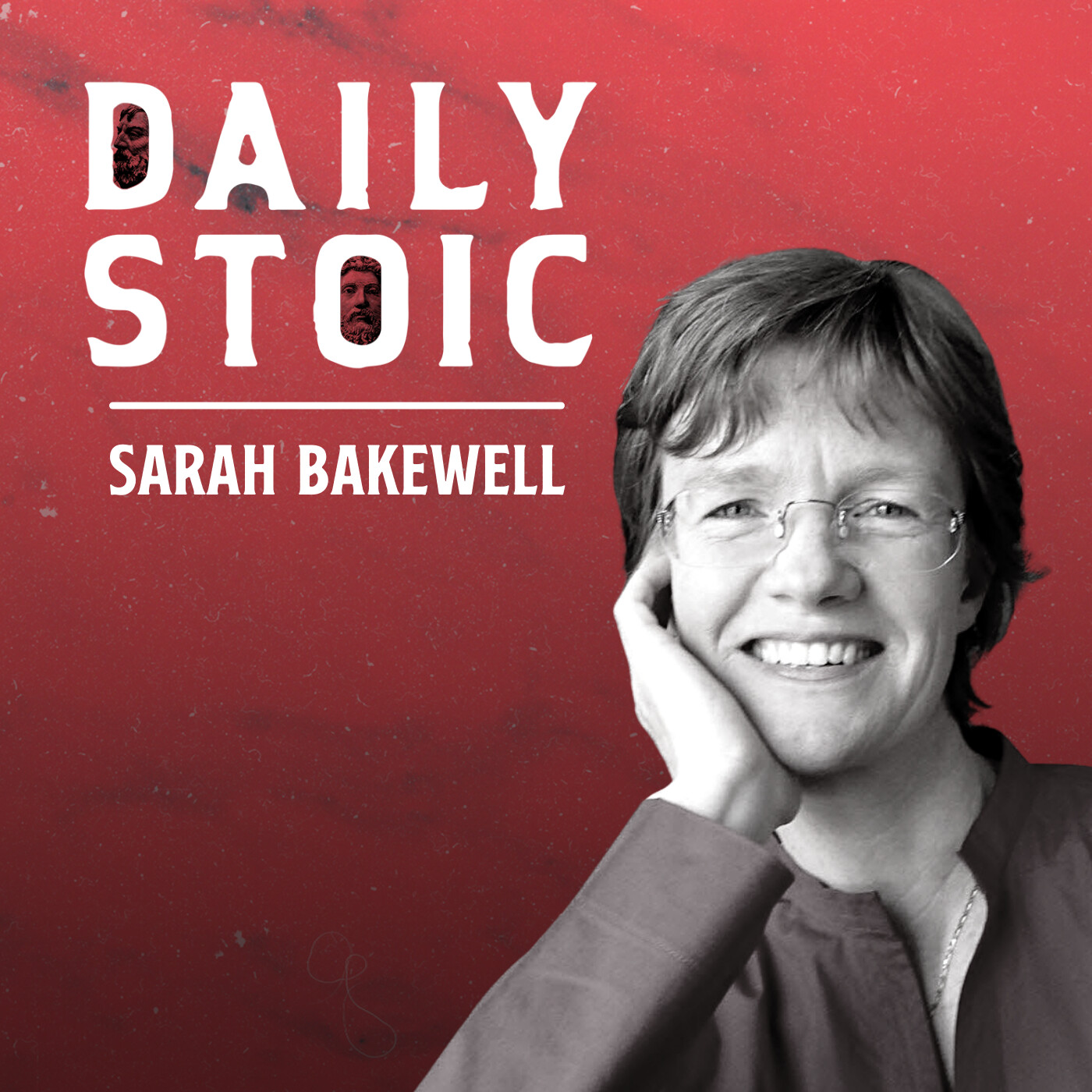
In this episode of The Daily Stoic, Ryan Holiday interviews author Sarah Bakewell about her latest book, Humanly Possible: Seven Hundred Years of Humanist Freethinking, Inquiry, and Hope. The conversation delves into Bakewell’s background, her philosophical insights, and the impacts of humanism on contemporary life.
Written by AI. May contain mistakes.

Ask about this episode
Get the gist, explore an idea or ask about something said.
 Claude
On The Daily Stoic, what are the key points of this episode?
Searching your listeningTranscript
Automatic transcript. May contain errors.
0:00My family owns a 2023 Toyota 4Runner and honestly it's my favorite vehicle I've ever owned. Around town, it's smooth and reliable, but where it really shines is on our trips into the backcountry. We've taken it on backpacking adventures to Colorado and New Mexico, loaded it up with gear, and never had to think twice about whether it could handle the terrain. That's what Toyota trucks are built for. Off-road confidence, rugged durability, and the freedom to explore. Toyota has a long history with the outdoor community, and they're committed to helping more people get out there and experience what nature has to offer.
0:29From remote trails to scenic byways, Toyota Trucks empowers you to take the detour, roam freely, and discover places that still feel wild and untouched. And they're not just making great trucks, they're working to expand access to adventure so more people can connect with the outdoors and pass that passion on to the next generation. Discover your uncharted territory. Learn more at toyota.com slash trucks slash adventure dash detours. That's toyota.com slash trucks slash adventure dash detours. You hear that? That's not just a Toyota truck. That's the sound of no crowds. No alerts. No distractions.
1:11And no telling what you'll find next. You know, like a detour. So why would you ever take a tour when you could take a detour? Toyota trucks.
1:30Welcome to the weekend edition of The Daily Stoic. Each weekday, we bring you a meditation inspired by the ancient Stoics, something to help you live up to those four Stoic virtues of courage, justice, temperance, and wisdom. And then here on the weekend, we take a deeper dive into those same topics. We interview Stoic philosophers. we explore at length how these stoic ideas can be applied to our actual lives and the challenging issues of our time. Here on the weekend, when you have a little bit more space, when things have slowed down, be sure to take some time to think, to go for a walk, to sit with your journal, and most importantly, to prepare for what the week ahead may bring.
2:24Hey, it's Ryan Holiday. Welcome to another episode of the Daily Stoic Podcast. You know, there's that Steve Jobs quote about you realize sort of the world and its rules were made up by people who are not that much smarter than you. I had this breakthrough in that regard, like, I guess it was over 10 years ago now. I wanted to be a writer. and I knew there were people who were writing about books as they came out and I did not know who those people were, how they got to do that. And I heard about this new book that was coming out about Montaigne, the French essayist who I was vaguely familiar with through some of his writings on the Stoics, but certainly didn't feel qualified to write about it.
3:16Anyways, this author, her name was Sarah Bakewell, was coming out with a book on Montaigne. And I had written a post for Tim Ferriss's website about the Stoics not that long before, and it had done well. And anyways, I just, I emailed her and her publisher and said, hey, I would like to write an article about your book. Can I get an early copy? And they were like, sure, are you kidding? And they sent it to me. And I don't know, it was this breakthrough. It was like, oh, that's how it works. Like anyone can do this. Now, part of this was the internet allowing this to be possible, that sort of online, everyone's a quote unquote journalist or a writer or an influencer or whatever you want to have it.
3:53But it's also like, no, it's the people who take the time to put themselves out there, who write the email, who make the ask that sometimes get lucky. It's crazy to me all these years later, like I'm one of those people. I have books. and yet also my life is still defined by the same bit, by the same logic that when I put myself out there, when I take some initiative, when I ask, sometimes I get lucky. So anyways, that book that I got from Sarah Bakewell, How to Live, is one of my favorite philosophy books of all time. We sell it at the Painted Porch. It's an incredible book. It's a great introduction to Montaigne.
4:32I've recommended it to so many people over the years. Flash forward all these years later, Sarah is the guest on today's podcast. She has a new book out called Humanly Possible, 700 Years of Humanist Free Thinking, Inquiry, and Hope. It's a lovely book, and I really enjoyed reading it. And we had a conversation about that book, her growing up, the daughter of a bookseller. Her mother was a librarian. She worked in bookstores. She went to the University of Essex in England. She has a postgraduate degree in artificial intelligence. She wrote a great book on the existentialists. How to Live won a National Book Critics Circle Award and the Duff Cooper Prize.
5:18Just an absolutely wonderful writer and someone I'm very excited to bring to you. If you haven't read How to Live, grab it. I'll link to it at the Painted Porch or grab it wherever you can. It's a wonderful book. And we talk a lot about Montaigne. We talk about the Stoics. We talk about philosophy and some other lovely topics. So here is my interview with Sarah Bakewell. Her new book, Humanly Possible, 700 Years of Humanist, Free Thinking, Inquiry and Hope, is also out now.
5:49You know, you don't have to let big wireless and your overpriced phone bill suck the joy out of the holidays this year. Because right now, all of Mint Mobile's unlimited plans are 50 % off. You can get three, six and 12 months of unlimited premium wireless for 15 bucks a month. It's their best deal of the year, and it makes it really easy for you to give your expensive wireless bill the Scrooge treatment. All Mint plans come with high speed data and unlimited talk and text at the nation's largest 5G network. Plus, you can bring your current phone and number over to Mint. Actually, we just signed up for a Mint mobile plan to use the social media phone here at the office.
6:25and we didn't notice any kind of change in the quality of service or network or any of that, just a whole bunch of savings. Turn your expensive wireless present into a huge wireless savings feature by switching to Mint. Shop Mint Unlimited plans at mintmobile.com slash six. That's mintmobile.com slash six. Limited time offer, upfront payment of$45 for three months,$90 for six months, or$180 for 12 months. Plans required,$12 per month equivalent. Taxes and fees extra, initial plan term only, greater than 35 gigabytes may slow when network is busy, capable device required availability speed and coverage very cement mobile.com i got an amazing night's sleep last night one because my six-year-old fell asleep in the car at like six o 'clock and he transferred him from the car seat to the bed and it stuck which is just magic so he's in bed way earlier than normal but i sleep really well every night because i have a eight sleep pod five ultra which is eight sleep's best product i've used eight sleep for many years now and it's just totally transformed how I sleep, made me sleep better, made my wife sleep better.
7:26It's amazing. So basically Eight Sleep is this topper that goes over your mattress. It can heat and cool both sides separately. It can raise and lower each side separately. So it helps you fall asleep faster, stay asleep, and then wake up better. Eight Sleep buzzes me to wake gently every morning as opposed to some loud blaring alarm. And then I can check the app and it tells me my sleep score. It even helps me optimize my day based on how I slept. If you want to survive the holidays like a pro and just generally sleep better, head over to eightsleep.com slash daily stoic and use code daily stoic to get$350 off your very own pod five ultra.
8:10The best part is you still get 30 days to try it at home and return it if you don't like it, but I know you will. Trust me, your body will thank you for this investment in better sleep, shipping to many countries worldwide. See details at 8sleep.com slash dailystoic.
8:27How are you? I'm good. I'm good, thanks. Yeah, thanks for having me on. Well, I'm very excited to do this. You and I go way back. This is a galley of how to live. Wow, that's quite, yeah, that goes back quite a way. Yes, yes, I remember that. Yes, Yes, I remember that we went back to talking about Montaigne. I remember that. Well, it's one of my absolute favorite books, and I think about it all the time. And I also got referred by you to Zweig's little biography of Montaigne, which I loved, although I reread it in 2016, and then I reread it at the beginning of the pandemic, and it was both very reassuring and very terrifying and depressing at the same time.
9:18I'll have to reread that too, because yeah, I mean, I haven't read it since I was working on the Montaigne book. And yeah, I wonder, I think I'm sure it would reread a bit differently now, like a lot of things. Well, I think that's kind of the theme of a lot of the characters in all of your books, which is as the world tears itself to pieces and seems more and more chaotic or dysfunctional or violent, a certain breed of people turn inward and produce beautiful, wonderful, lasting things as a result of those explorations. Yeah, yeah, that is a thing. Well, I wanted to talk a little bit about Montaigne, if you have the time, which is...
10:08So my favorite thing, or one of my favorite things in the book is you talk about the quotes or the mottos that he has on the ceiling beams in his library, his philosophical principles or the things he builds his life around. What are some of yours? If you had such a room and you were carving the philosophical principles that have affected you the most, what would you put on yours? I you know I don't think I could ever settle on any anything because as soon as I did as soon as I like started you know actually immortalizing it on on the roof beam I'd start thinking oh but maybe I don't know do I really agree with that and what happens if I change my mind I'm gonna have to change all the roof beams in my house so no I mean there are some that I like that he liked too.
11:05I mean, this famous one from Terence, I am human and find nothing human alien to me. That was a favorite one of Montaigne's and was on his roof beams. You know, I think I could live with that. It might be a good reminder as well, if I do start thinking that people are doing things that I just can't understand and can't cope with. that's probably quite a kind of useful reminder when you look at some of the things that are going on in the world. Well, isn't one of them, isn't one of Montaigne's undecided from sexist empiricus? That's, it sounds like you might agree with that one also. Yeah. Yeah.
11:50Yes. I suspend judgment. I think that's, you know, that was his part of his, his motto. Of course, I suppose you could take that too far. I mean, you can't, Maybe there's a place for saying, no, no, I am going to make up my mind. I do think this interesting question. I mean, you mentioned Stefan Zweig. One of the things that he identified as being a bit of a problem with the humanistic, a lot of humanist writers, including Montaigne and Erasmus was particularly who he was talking about, was that there's a kind of weakness that comes from always seeing the other. side or we're seeing another point of view and not being prepared to just come right out and say, right, I think this and that's the end of it.
12:40So he was particularly talking about that context of the rise of Nazism and humanists being a little bit as Erasmus had been during the terrible wars of the 16th century, being just not knowing how do you respond to that? What do you do? How can you stop it? How can you oppose it effectively? And I mean, you know, that's a problem that arises for many generations, including our own, I think. You know, it's, I don't think humanists are necessarily any worse than anybody else or most people at deciding what to do about it. But. Well, that's sort of the paradox is that you can retreat from the chaos and the unpleasantness of the world into the world of ideas.
13:27But you can't entirely retreat or in a way you are complicit in or endorsing the things that are happening in the outside world by refusing to take a stand or get involved. This is one of the things I find most interesting in Seneca's writings. He's sort of saying that, you know, the difference between the Epicureans and the Stoics is that the Epicureans sort of retreat into the garden and the Stoics sort of don't believe that they fully have that luxury, that they have to participate in public affairs. And there's sort of a tension between, I guess, living in the world of ideas and living in the world of man.
14:12Yeah. I mean, it is the classical distinction, isn't it, between the kind of the life of leisure and the life of business, but given a political application. And, you know, there are famous lines like, who was it who said, all that it takes for evil to triumph is for good people to do nothing. So, yeah, I mean, there's definitely, I don't know if there's a very neat and clear answer to that. I think we all kind of, also, even in one lifespan, it's not that you come to one definitive statement or conclusion about how you're going to respond to the world and how far you're going to be involved or not.
14:56I think you have different mixes of that at different stages of your life or different situations call forth a different response. You can get people who sort of live a very private life, but finally they draw the line somewhere and say right thus far and no further i'm going to go out and engage with the world in humanism for example yeah there's a well i was just going to say there's a there's a long tradition of which comes again from writers like cicero and seneca the idea of uh civic humanism was the phrase that was used um by by some historians to that to be a good humanist means to be engaged with the world and engaged with the life of the polis.
15:48You can't withdraw and just call it a day and say, right, that's it. So yeah, there are different traditions there. And I'm sure we both know people that are so wrapped up in current events or news as it is breaking in real time that they actually don't have that sort of philosophical perspective. They haven't immersed themselves in the big ideas. It's almost foreign to them that Montaigne 500 years ago could have been thinking about this exact thing or Cicero 2000 years ago has an essay about this exact topic. And so I do think it's a tension between being informed about what's happening in the world around you and also understanding the ancient world and the wisdom that comes to us through those ancient and timeless ideas.
16:44Well, they were struggling with the same things, but there are some things I think in the modern world that do slightly change the balance or raise new problems. And one of them is the technology. So there's a very modern problem, I think, that a lot of people, I know I've had it, of becoming addicted to the news or addicted to scrolling through the social media feeds because of political events and a kind of state of perma crisis in which you always feel like you have to know the next thing. But how much of that is turning itself into meaningful action is a good question. And how much of it is just totally destabilizing our mental health and causing immense anxiety without ever translating into action.
17:34So I think it's more important than ever to think, as you say, with looking back to authors of the past, but to think about how we manage that balance and to be even a little more deliberate about how we engage with that constant stream of news from the world and often bad news from the world. I know I certainly have struggled with that at various times in the last few years. And I think Montaigne is a good example, too, of questioning one's assumptions about things. So not hearing something that happens in the news and immediately forming an opinion about it or believing this about human nature or believing this about people and just sort of taking it for granted.
18:20But he also by giving himself that space by his retreat a little bit and his sort of withdrawal from public life, which is ultimately resumed later when he takes political office. But he really questions what it means to know something. And he questions his own assumptions. And he really thinks about the issues and who people are and what's important and how things work. You know, so often I think today we're firing off opinions the second we get the information. And this leads to a lot of what they call hot takes, but they're not very valuable takes. Yeah. And also, I mean, something else that comes to mind here is the among the existentialists in the 20th century, which was the title of my the subject of my last book between Montaigne and this present one.
19:14the quarrel between Camus and Sartre which was over all sorts of things to do with politics but one of the oh no it wasn't Camus actually the quarrel between Melo-Ponty the philosopher Maurice Melo-Ponty and Sartre which concerned politics just like the more famous quarrel between Camus and Sartre. One of the things where they had a kind of encounter that was quite bad-tempered and sort of marked a total division between them was when Melo Ponti once said to Sartre, you know, you don't have to keep firing off instant opinions about everything that happens. As soon as it happens, there's a place for taking longer reflecting and, you know, not having to say something immediately about every event that occurs in the news.
20:11And when I read, I mean, now thinking back to that encounter, it immediately makes you think of Twitter and Twitter spats and all these things that we now live with. And the thought of Jean-Paul Sartre with a Twitter account is mind-blowing because he would have done just that. I mean, you know, I have a lot of respect for him in all sorts of ways, but I shudder at the thought of him having a Twitter account and immediately putting forth a political or philosophical opinion about absolutely everything that happens. So, I mean, that little debate between them, I think, is very telling from our point of view.
20:52How long do you need to reflect before firing off? I agree. I think we do way too much instant hot takery. I suspect we might think differently of some of these philosophers if they had access to the tools that we had today. The difficulty of publishing, the difficulty even of writing things down, the time span and the runway that they had on some of these ideas, it gives us the sense that these were fundamentally deliberate, patient, self-controlled individuals. And I do wonder if they had access to social media, if it might take some of the shine off of who they were and we might go, oh, Aristotle was a little bit more like us than we think.
21:43Yeah. I mean, I think we can assume that Socrates would have refused to tweet because if he refused to write anything down, he would have probably refused to tweet as well, but he might have, you know, he might've had a YouTube channel or, or a podcast, who knows? Yes. Well, he was, I think his, his way of thinking actually is quite conducive to the medium of podcasting and that what he's doing is asking questions and he's presenting these dialogues. Yes. Yeah. Yeah, for sure. All right. So, so going back to your roof beams and this new book, I suspect one, one thing you might carve there that I thought was quite beautiful in the book is that that line, only connect.
22:26Tell me what that means. Only connect. Yeah, that comes from a novel by E.M. Forster, Howard's End. And one of the characters says it, in fact, refers to that idea repeatedly. And Forster made it a kind of epigraph to the title. So it was very important to him. What he meant by it, well, what the character means by it is because she explains it this is margaret schlegel in the in the book that it means she's talking about another character who doesn't see for example the consequences of his actions he doesn't see any relationship between how he feels about things and the fact that other people might feel bad about things that he's done or you know might feel similar things and he also doesn't connect ideas within himself so he's a he's a hypocrite he's divided within himself because he doesn't recognize his own motives and doing things so that's what she you know means by it i think for forster it meant all of that and also um a more general connection in personal relationships he described himself as a humanist he was a member of humanist organizations.
23:38But he said that for him being a humanist mainly meant people that he'd loved, friends, things that he'd been interested in. I mean, connections with all sorts of things in the human world. And for me, it means all of that as well. And also, I kind of took it as a bit of a motto for myself in the book, because what I wanted to do was to make connections between different forms of humanism as well. It's a word that can mean all sorts of things, humanism or humanist. I mean, I can come on to the sort of various meanings of it, but I wanted to explore the connections between them. So only connect for me meant find the points of dialogue, the points of interaction between these different kinds of humanism and see where it leads us rather than, as sometimes is done, well, you know, there's this kind of humanism, that and this, and they're all, they just happen to share a word.
24:38It doesn't mean anything beyond that. And I thought it did mean more than that. And I think there were interesting things to explore in those connections. So it's doing a lot of work for two words. I might just, if I was going to write a motto on ceiling beams, I might just have only connect because if nothing else, it would be quite short. It would be quite easy if I change my mind to rub it all. Is it also the idea that all human beings are fundamentally connected in some way, that our actions impact each other, that our ideas influence each other, that we should go through the world thinking about someone and some things other than ourselves?
25:19Yeah, it touches on that other quote from Terence that we've been mentioning. I am human and find nothing human alien to me, because that also is saying that we're all connected. And, you know, I think, I mean, it's just undeniable. We're very, very social creatures. We, right from birth, you know, I mean, well, before birth, I mean, you know, we absolutely are born into close relationships with those around us. I think that is so fundamental to who we are. Most of us, you know, I mean, it can go, there can be damage to those relationships. Things can become damaged in that part of our lives. But yeah, I think that we are such social creatures.
26:17And also it grows in a larger dimension because we have things like writing, for example, and reading, which means that we can also connect with people who are long dead or people that have said things in other languages, but then they can be translated. And so we can read them and we can listen to them. And that enormously expands the circle of our connectivity and very much to the good, I think. I mean, I think this is all wonderful and should be encouraged and developed and explored as much as possible. because it is who we are, but I think we've worked on that side of ourselves over time and expanded our range, if you like.
27:10I'm having Peter Singer on the podcast in a few months. I've had him on before. I'm having him on again. But it's like the 30th or 40th anniversary of his first book, which is called The Expanding Circle, which I thought is actually a kind of – It's a great actually encapsulation of, I think, one of the core ideas of Stoic philosophy. Also seems like a core idea of humanism itself is our ability to expand that circle of what we think about, what we care about, what we're connected to. It's expanding a circle of concern, isn't it, for him? Yes. Yeah. And yeah, at one point, actually, I was going to steal or borrow that for the title of one of my chapters, but it ended up changing to something different.
27:56But yeah, very much so. And you have Vonnegut at the beginning of the book. He sort of defines humanism as basically doing things and caring for other people with no hope of reward after death. Yeah. He says, I've tried to behave decently, you know, despite not for a reward after death, but just for its own sake and for others. Isn't that fundamentally the journey of humanism? Religion makes it clear why you should do certain things, right? Do them because God said so. Do them because God will punish you. Do them because society will crumble. Do them or don't do them because you will go to heaven or you will go to hell.
28:49Do them because we said so, basically, right? And humanism, as I take it, is the intellectual journey over thousands of years of really smart people who found that to be insufficient or unsatisfying. and they're struggling to come up with, in the end, similar codes of conduct and advice, similar definitions of decency in many cases, but without the because I said so or because you will burn in hell for all of eternity if you don't. I should say in answer to that, one of the things that is central with my book is not only talking about the definition of humanism which is centered on discussion of religion so there's the best known meaning of the word humanism in in the english language english-speaking countries is um is is choosing to live um finding one's meaning as well sense of meaning as well as one's moral um motivation if you like from uh from factors other than uh scriptures that are of divine origin you know the institutional religion or really anything that is has a um extra human or superhuman source in other words we find it in ourselves we find it in our relationships that's usually what takes the place of of a religious commandment but there's a whole humanist strand, several humanist strands, which don't really center around the question of religion at all.
30:31They don't really center around the question of supernatural belief. But what they do have in common is finding the center of concern is this human connection, human relationships, and that includes the moral dimension. So there's a focus on our moral connection to each other and cultural connection to each other, whether it's arts, literature, science, science also being very much a human activity. But that is where the centre of a humanist concern is in all sorts of different kinds of humanism. The one that's most different, if you like, from the secular humanist view is the long tradition of literary humanists.
31:18I use that term kind of loosely to talk about all the people who study the humanities, because the meaning of humanist that was dominant through the Renaissance and remained so for a long time and still is, one of the meanings of humanist is a specialist in the humanities, somebody who reads, writes, teaches, passes on the cultural study of the humanities in all its variety. and there's no that doesn't necessarily mean anything in connection with religious views or views about the afterlife or expectations of the afterlife but what it does have is whether or not they believed in god whether or not they believed in the afterlife those humanists did have a tendency to be writing about the human world and about culture relationships with each other the moral life that is centered on the present world, the world that we have around us and the human world, rather than matters of theology, which were considered quite properly to be dealt with separately.
32:24So Montaigne is a good example of someone who says, look, I'm sorry, there's not very much about theology in my book, but this is a human book, meaning this is a book about the human world, not a book about the world of theology. And he says, and he's fine with that. That's what he wants to do because we can, and he compares it to the way that royalty, which is the realm of the gods and theology or God in his case, is set apart and quite rightly. And then the world of the commoners is the world that, or the minor nobility is the world that he counts himself part of. And it's right that royals should keep separate, So what he's saying is it's right that theology should keep separate.
33:10And for him, it's the world of literature and people and behavior and what it is to be human is what he's interested in. So, yeah, I think that's more fundamental in a way than the actual question of whether people believed in God or not and whether they believed in an afterlife or not. It's a matter of what they focus on.
33:34Thanks to Toyota Trucks for sponsoring this episode. When I bought my ranch in 2015 out here in Basko County, I drove my car about halfway down the dirt road that we live on, thought this isn't going to work, stopped, parked it, walked the rest of the way home, borrowed my wife's car, drove into Austin and bought a truck. What I bought was a Toyota Tacoma. And this truck wasn't just transportation getting me to and from my house. It unlocked a whole different style of living for us, not just on the ranch, but in our little Texas towns. There were places I could go now that I couldn't go before, especially out here in the piney forests, through the fields and on the unpaved roads like the one that I lived in.
34:19We got to go deep into the hill country's wild beauty. We've driven all the way out to East Texas. We've driven across the country. and by we, I mean not just my wife, but both my kids who I drove home from the hospital in that truck. Toyota trucks are built for those who understand that the best adventures happen when you're willing to veer off course because you never know when you'll end up on a Toyota adventure detour. And of course, this is stoicism too because every detour, every obstacle is an opportunity. But it's helpful if you can handle the difficulty inherent in that. If you've got the resilience and the right companion to make it wherever the road takes you.
34:58Discover your uncharted territory. Learn more at toyota.com slash trucks slash adventure dash detours. You hear that? That's not just a Toyota truck. That's the sound of no crowds, no alerts no distractions and no telling what you'll find next you know, like a detour so why would you ever take a tour when you could take a detour Toyota Trucks
35:40well that is what was so sort of radically transgressive about Montaigne is he said, I'm not going to think about these enormous existential questions or religious questions necessarily, but I'm going to explore what it means to be a person in the world. And some of the questions are mundane. Some of them end up, I think, transcending to a sort of higher plane, but he goes so deep into them and he's so fascinated by them that it actually does become sort of an elevated work, but instead of looking up here at the heavens, he's looking down here or directly in the mirror at the person across from him.
36:24And it's kind of remarkable how unexplored that territory was, at least accepting the Greeks and Romans. Yes. And he wrote about it in that tradition. He was a great admirer of Plutarch especially, and his interest in human life and behavior. But he wrote about himself, his own experience in a way that seems much more modern and it's much more connected with, I mean, there was no such concept as psychology at that point, but in a way that's what it feels like when you're reading it. You feel like he's looking at his own behavior and that of others and being a kind of in-depth psychologist about it.
37:06But then just when he seems to be at his most profound, he'll go and say something about his digestive system and how that's working a bit strangely or something. But of course, that's important to him too, because he's one of the people that – one of the first really to write so much about the body and about bodily experience, because we're not disembodied minds. We don't mostly experience ourselves as disembodied spirits or souls. where we're embodied creatures. And Montaigne certainly gives you that. I mean, he gives you more of it than you want sometimes. Too much information. But yeah, he writes wonderfully about that.
37:45Well, he's fully in touch with himself. So these things aren't off limits because they're human or sinful or gross. And yeah, maybe some of them we might say today, this is an oversharer or a person with poor boundaries. But he is interested in all the facets of human life in almost a Whitman-esque, like a Walt Whitman kind of approach where he's just in love with and fascinated by and celebrating the human form literally and figuratively. And like Whitman, he says, in effect, I mean, he doesn't say these words. He says, I contain multitudes. I'm complicated. I mean, that's Montaigne in a nutshell, that line.
38:31So important philosophical question for Montaigne then. Is he playing with the cat or is the cat playing with him? If we had an answer to that, it would spoil the fun, wouldn't it, really? Because he just asked that question. He just wonders about it. I think the question that we have come to learn about cats, that he didn't really have as much sort of biological or anthropological information about to me is, do we own the cat or does the cat own us, right? Like, did we domesticate the cat or did the cat and the dog domesticate us? Yeah, well, and I think, and this is not an area I'm expert in at all, but I gather that there's been quite a bit of research into how dogs and humans, especially cats too probably, but especially dogs and humans, how they co-evolved.
39:27And you could almost say that they domesticated each other because it's a symbiotic relationship really, isn't it? But because of that, we've actually changed our path of evolution. We've developed in a certain way because of that relationship being so important. That's as I understand it. I mean, this is not, yeah, I don't know anything about the details of that scientific research, but that's been my impression. Well, no, it's funny because it seems like such a silly question. And then it actually brings up, it actually fundamentally changes your relationship with nature because you realize man is just an animal and animals have relations with each other and co-evolve and have interdependencies.
40:13You know, there's the bird that, you know, sits on the back of the rhinoceros eating the bugs or whatever, and we understand that they're related to each other. One is not necessarily higher or lower than the other, but a human can so easily think that we're the center of the universe, that we're the special animal in the universe. And then you understand, oh, hey, the cat selected us and sees us as a tool to get what it wants. Yeah. Well, actually, that comes as no surprise to any cat owner, or I use the word owner quite wrongly there any any line that cats cats don't have owners they have staff and it's like you're there to serve the cat that's very clear with cats but yeah I mean I think actually Montaigne's line about who knows if I'm playing with the cat or the cat's playing with me is a very good example of that only connect idea it's exactly what Forster was talking about is look at things from and as best you can from another point of view think about how the world looks to another consciousness And the extraordinary thing for Montaigne writing in the 16th century was this leap into wondering how the world looked from a cat's point of view and being prepared to kind of shift that center of consciousness between himself and the other creature looking back at him.
41:32And that is certainly, that's certainly what, you know, Forster was talking about in those lines that he gives to his character there. And couldn't you say this is also what he's doing in his essay on cannibals and his writings about the native peoples that were just being discovered in America at the time that he's writing. He's one of the first and one of the few, unfortunately, Europeans who bothers to think, who are these people? How do they think about the world? How are they operating? And how does France look to them? So he reported on these Tupinamba people when, you know, what did the questions that they were asking about how things were done in France, like they were astonished that, you know, rich people would sit gorging themselves on food while the poor were begging and starving outside.
42:29and they just couldn't – that was – I mean, exotic doesn't even begin to capture how they felt according to what we know from Montaigne about that conversation. That was so completely alien to them. And there was another question that they asked about having a boy king because the king of France at the time was a young boy and that seemed very strange to them. So ridiculous. Yeah, yeah, yeah. Yeah, no, he was always fascinated by diversity, the diversity of opinions, the diversity of cultural assumptions of ways of doing things, and everything right down to hairstyles and, you know, what people in different cultures did.
43:16Yeah. Well, yeah, only connect. It's sort of seeing those people as human beings, as opposed to, say, obstacles or targets for conversion or lower forms of human beings. There is, is that perfect, but there is at least an interest or an empathy, a sense of human connectedness that not only hopefully would make one less guilty in, say, committing atrocities, but also by thinking about what someone else thinks about you, you come to perhaps understand yourself better. for instance, hey, yeah, it is kind of ridiculous that there is a boy king in charge of all of us. And is he really, you know, the vessel of God, et cetera.
44:04You know, by thinking about other people's questions about ourselves or the cat's perspective of us, we also get a better perspective of ourselves. Yeah, it's that, it's the gaze of another consciousness or the gaze of another being that uh yeah yeah and i mean it's interesting to be talking about montaigne you know so much in in this conversation because he features a lot in in well not a lot it's it's kind of a half a chapter but then it's it's a book that covers masses of stuff so nobody gets much more than that it's um he features as a humanist in the role of a humanist in the new book because i wanted to although i'd written so much about montaigne before in the book that's about him.
44:48I wanted to think about him specifically as a humanist, what parts of him are humanistic. And really, he was a figure who took the humanist tradition as it had been up until that point, where it had been, on the whole, quite reverential of the Latin and Greek classics, and quite, you know, certainly very much interested in morality and education and forming a human character and all of these things. But he takes all of that and also continues to write about such things. But he changes it into a much more questioning and open-ended and sometimes critical style of thought about it. And he asks difficult questions and he turns things around all the time.
45:39That's the thing that he's so good at, whether it's shifting between the cat's perspective in ours or looking at some of the classical authors that the humanists had long been so almost revering, almost like gods, like Cicero, which was a particular sort of idol. And him saying, well, actually, some of Cicero is quite boring. You know, it's like he's nothing but wind. But then he was such a good classicist himself. He used these quotations. The book is full of quotations. But he's often turning it around and saying, or he'll quote something and then he'll say, but wait a minute, there's another way of looking at it.
46:23There's another perspective on that. So he's quite a pivotal figure in the history of humanism, I think, because it's partly with Montaigne that we see the more classical focused humanist tradition starting to become a more personal thing. He's not the first to do this, but asking a lot of questions and asking difficult questions and not taking things at face value. And, of course, just also making it much more about what it's actually like to be a human being, what it feels like to be a human being, rather than it being more of a purely kind of literary, cultural, moral matter. But it becomes much more, yeah, it becomes much more human in a way with him.
47:11So he's kind of a turning point. Well, one of the things I think that's interesting in the book is you start with Terrence, who we've been talking about, this sort of slave in Rome who struggles, gets his freedom, becomes this beautiful writer, talks about what it means to be human. And then basically 2 ,000 years later, you're talking about Frederick Douglass, who's on the same journey, whose humanity is not fully recognized, but then his ability to articulate, explain, convey his humanity, not just through the written word, but as you note, he's a master of the medium of photography, understanding how to show himself as a person.
48:00Just how much the struggle of humanism has also been defined by people trying to get others to recognize their humanity, to be included in the definition of humanity. Yeah, yeah. That's very much the case with, and it's so powerful in Frederick Douglass reading his autobiography and also his speeches and other writings. And he was a great speaker. he was using you know a lot that was many sources but the classical tradition was was very much he was a master at it um yeah and you know it is the the people who sort of start to speak up there's also of course women who were um not regarded as fully human in effect i mean it's you know you could certainly say that there's uh in the in the classical world there's the great the famous speech by Pericles in Athens near the beginning of the war with Sparta, where he gives a speech at the funeral of some of the people killed in Athens.
49:10And he says, he speaks about how wonderful it is to be an Athenian because, you know, everyone is free and there's this great freedom and there's a harmony both within individuals and in society and everybody's engaged in public life. And he completely fails to mention the enslaved people who make all this possible. And he does mention women at the very end of it to say, of course, none of what I'm saying applies to you because a woman's only virtue is to be the least spoken about possible, whether in praise or in blame. And that's it. That's kind of all I get because, you know, Whereas your fame, your name was so important to the sort of free born Athenian citizens who were male, a woman should never be spoken about.
50:03So there was this, the great virtues of women were to be silent and modest and chaste. And, you know, I mean, it's all negative, negative virtues. And so you get these voices a little bit, you know, a few voices in the 14th, 15th, 16th centuries start to sort of women start to question this. And by the time you get to the Enlightenment era, you've got Mary Wollstonecraft saying actually all virtues are human virtues. And that includes whether it's particular virtues which are developed by mothers in looking after children. There might be differences in duties. So that's a sort of interesting comparison that she's making between duties and virtues.
50:54But even if there are, it's all part of the whole picture of human virtues. And it's not a big positive set of virtues for men and then this little negative set of virtues for women. So it's very much a story of kind of expanding. That was actually the chapter where I particularly focus on that was the one that was going to be called Expanding the Circle. And I ended up calling it The Human Sphere, which is this great line from, not from Mary Wollstonecraft, But from Harriet Taylor Mill, who lived later in the mid-19th century, wrote this article in which she talked about – people talk about a proper sphere for women, meaning a sphere that's appropriate to them.
51:45But she says, no, it's the proper sphere for all human beings is the largest and highest of which they're capable. So it's the full sphere for all. And I thought that was such a great way of putting it, this sort of the full sphere. So yeah, that became the human sphere. So yeah, yeah, very much so.
52:11This episode is sponsored by BetterHelp. This time of year is wonderful. It's quiet. It's peaceful. It's beautiful. It's also stressful and bleak and dark. and then there's the whole family stuff. You got to make sure you're taking care of yourself and you got to make sure you're taking care of your mental health. This time of year can be not just stressful, it can also be lonely and therapy can help you make space and time to focus on getting well and feeling good. Consider trying BetterHelp online therapy in December as a way to close the year with clarity rather than chaos. With over 30 ,000 therapists, BetterHelp is one of the world's largest online therapy platforms.
52:51having served over 5 million people globally. And it works. It's got an average rating of 4.9 out of 5 for a live session based on over 1.7 million client reviews. This December, start a new tradition by taking care of yourself. And our listeners get 10 % off at BetterHelp.com slash Daily Stoic Pod. That's BetterHelp.com slash Daily Stoic Pod. Human. Your body has a performance superhighway. 60 ,000 miles of blood vessels that deliver oxygen and nutrients to every cell. This, of course, is your cardiovascular system. It's the foundational system that powers everything we do. Both elite athletes and longevity experts invest directly in the cardiovascular system because supporting healthy blood flow is critical for energy, recovery, mental clarity, and overall performance.
53:45That's where human comes in. That's human with two Ns. They started out of research at the University of Texas, near where I live, and have 15 years of experience making award-winning supplements for nitric oxide production and healthy blood flow, now used by over 160 pro and college sports teams. Human Cardiovascular Health Daily is a plant-based and made from clinically studied ingredients like grapeseed and seed kelp extract. It supports nitric oxide production for healthy blood flow and energy while also supporting blood pressure and helping support the delicate interlining of your blood vessels.
54:19Just two capsules each morning will power energy and recovery while also playing the long game by supporting long-term vascular health and healthy aging. Human has an exclusive offer for our listeners. You can visit human.com slash stoic for an extra 15 % off your first purchase. That's enter code S-T-O-I-C. Stoic at checkout. That's human with two N's, dot com slash stoic for an extra 15 % off with code stoic at checkout.
54:48I always found it interesting that Musonius Rufus, he's the teacher of Epictetus, he has this interesting essay or speech where he's talking about whether daughter should be taught philosophy and whether the virtues are the same for men and women. and he's sort of remarkably progressive on it. But speaking of what we've been talking about, about thinking about animals, he makes this analogy and he goes, look, you don't care whether your hunting dog is male or female. You care whether it catches what it's trying to catch. And he says, it doesn't matter if a horse is male or female. What matters is if it's fast.
55:28And his argument actually was that virtue was relatively genderless. I think he would have liked this distinction that you mentioned earlier, which I want to read more about, this distinction between duties and virtues, right? Because the role we might play in society might be different because of a culture, because of our choice, because of the circumstances we're born in. But courage is courage. Justice is justice. Wisdom is wisdom. And temperance is temperance. Yeah, yeah, absolutely. That's a very strong argument. And it links to the idea, I mean, we're going to be going back to Montaigne again, because he talked about each, well, he said, it's translated as each man bears the entire form of the human condition.
56:18But of course, the meaning is, I think, each individual bears the entire form of the human condition. At the same time, as we're tremendously diverse, so those two ideas go together. Montaigne is fascinated by diversity, but he also said there's something, the essential humanity within us is the same for all. So each of us can represent, to some extent, the essentially human, which I think is a really interesting idea. And again, when it comes to men and women, Montaigne, sometimes he can say things about women which certainly wouldn't pass muster these days and do seem rather, you know, he had his failings.
57:09But then some of the time he says about women, you know, really, if they didn't have such different education, different upbringing and much more limited upbringing, as it generally was, they wouldn't be any different from men in essentials. I mean, it's, you know, so that's a kind of, you know, critical way of thinking about how we become what we are, because that also is part of the story which various humanist writers started to look at. And Frederick Douglass talked about this as well, is, you know, how our experiences and our upbringing and the things that we suffer change us and affect us.
57:49And we develop through what happens to us. So it's important to look at that and to think about how things could be different. So it's important, say, for the enslavers to think about how they assume that they have a perfect right to do it and to live in that way. But they themselves would be very different if they hadn't had the privileges that they had. Why do you think we struggle with that so much? So first off, you know, recognizing that there's not humans who deserve to own other human beings and then, you know, that commoners and the aristocrats are not different than each other, than that, you know, black and white, let's say, or male and female.
58:35And then even today, I mean, it's not like this struggle is over. We clearly have major problems as a society, recognizing the fundamental humanity of people who have different sexual orientations, people who perhaps don't identify. We were just talking about male or female. That whole dichotomy is unfamiliar or insufficient for people all over the world. There's obviously people who are trans. Why is it so hard for humans to accept or see or celebrate the humanity of other human beings? I can imagine you know various explanations that would be you know kind of looking at our origins in small social groups that were sometimes competing with other social groups and therefore that it's it's you know there's a tendency to look after the in group and um not to recognize the humanity of the out group I mean I think there's you know there's historical reasons for that um i mean i'm talking about going back into as we were evolving to be the creatures that we are um but on a on a more sort of immediate level i mean it i think there's a kind of imagination that is needed to to transcend to ask questions of the received ideas that you grew up with to think about how the world would look to someone else to different eyes is none of this, we're not born with any of that.
1:00:15There's a lot that we're not born with that we develop through our early lives and our communities and our education. And so those things are important. It's one of the many reasons why those things are important to us, I think. Yeah, you can so easily take your own worldview for granted and assume you are the default, right? I was writing about this the other day. My entire life, the color nude, the color N-U-D-E, nude, was just assumed to be the color of roughly my skin. We think of the color nude in America as skin like yours and mine. But that's obviously not the color of millions, if not billions of people who are alive in the world.
1:01:09And you just assume that's the way that it is. And then the power structures reinforce your simple or unexamined assumption. And so it continues. And then when someone suggests otherwise, people feel threatened. Yeah. I mean, I guess there's always a painful part of a learning process when you're what is exactly that, expanding the circle. You know, it takes an effort of imagination, of thought, of challenging your own, especially if the situation, of course, is advantageous to oneself and you're part of the privileged group rather than the non-privileged group. Yeah, all of that is a challenging process, but that's all the more a sign, I think, of how important it is.
1:02:03By the way, that color nude, I've never heard of that. That must be an American thing. Yeah, yeah, that's a new one to me. Yeah. I would imagine that that's been challenged recently because, yeah, it's obvious what the problem with that is. Yeah, like nude would be a color for garments. It would be a color for crayons. It would be a color for makeup, for instance. So, like, you know, they would say this is the nude color. This is the base color. and it's assuming that everyone is white, which of course they are not. Right, well, yeah, I assume that the days of that phrase are numbered, I should hope, because there's a very big problem with it.
1:02:44Yeah, interesting. I mean, another one that is quite common, right? You walk into a room and you say, hey, you guys, right? And that assumes that everyone in the room is a guy and it's probably been a safe assumption for most of human history that in any work conversation, you know, you guys was not just an appropriate, but an accurate phrase. Yeah. I mean, that's, yeah, I think I read something just recently about that phrase and trying, you know, people who are trying to get rid of it from the language. Yeah. I'd never thought about it. It's funny. I mean, that phrase, I do, of course, we use it too, although I suppose it's an American one, really, but we've picked it up.
1:03:31But, yeah, and the movement is to try and get y 'all or – I grew up in Australia, and in Australia they say yous quite often for the plural you instead of you guys. So there's lots of alternatives. I quite like yous, I think. Makes sense. Y 'all might be the new thing. It's such a great word, though. Yeah, y 'all. I like that a lot. So as we wrap up, one of the things I wanted to talk to you about. So I love How to Live. I love this new book. I carry How to Live in my bookstore here in Texas. I have a little bookstore. And you grew up in a bookstore and you've worked in one, right? Yeah, yeah.
1:04:17My dad was a – well, he's retired. He's still alive. He's retired for many, many years. But he is a bookseller. He worked in university bookshops in several different parts of the world. My mother's a librarian. So, you know, you could see that I didn't have much hope of escaping the world of books. It was everywhere. And they always had books around everywhere. I mean, they were, you know, they're great readers. They're great library users, book buyers. I mean, the house was always full of books. And even when we spent quite a lot of time traveling, Even when we did, there were always heaps of books coming with us.
1:05:00How did growing up around books shape you? Deeply, because I was lucky to have so many books around. I didn't know that it – like a lot of things, I didn't know that that's not how everybody lived. I mean, I didn't think about it. But I started reading at an early age. I don't remember learning how to read. I mean, I just seem to have picked it up at some early point. And even before I could read, I had picture books. And in fact, my earliest memory, I think this is pretty much my earliest memory in life, was we were doing a trip around America on Greyhound buses, which was a great thing to do.
1:05:41In the 60s, you could get 99 days of unlimited travel for$99. So this was my, I was about three years old, even younger. And my earliest memory is of being on one of those buses and having a book, a picture book, which was about these animals, you know, a different badger and a hedgehog or something who stole a big red fire engine and then drove it away, a toy one. And it got out of control. And they ended up in a thorn bush at the bottom of a sloping road. And that was the drama. I just remember that book and sitting reading it on a Greyhound bus. So I think that says a lot about the role of books in my life and also travel.
1:06:29Where did you go in America on this trip? Almost everywhere, really, because my parents wanted to make the most of this, 99 days for$99. So we'd sometimes go on long rides just so that we'd have a night's sleep and then see somewhere. and then go on to somewhere else or stay. I mean, we stayed in places in between. So I covered a lot of territory starting in that trip, which of course I don't remember because I was very small, but starting in Montreal, I think we started, and then traveled down through the East Coast and round through Texas. Your bookshop wasn't there yet at that point. and California, and then sort of weaving around a little bit through the Midwest and then back to New York and from there back to the UK.
1:07:25Wow. Yeah. My favorite story from the Stoics is Zeno as a young man. He goes and he visits the Oracle at Delphi and the Delphi says, you will become wise when you begin to have conversations with the dead, which he doesn't fully understand until many years later he's in a bookstore and he realizes that this is the conversation we can have with the dead. We can talk to the dead through the books we read. Exactly. Another figure that is in my new book is, in fact, he's in the first proper chapter after the introduction, is Petrarch, 14th century, absolute book maniac. Maybe the greatest book lover of all time.
1:08:15Yeah, arguably. I mean, really, you know, all manuscripts, of course, in those days, but he acquired them, copied them, transcribed them, edited them, and wrote a lot himself as well, and he was just sort of mad about books. But he also wrote a lot of letters, and he wrote a lot of letters to his friends, huge network of friends, often urging them to go out collecting books for him. But he also wrote letters addressed to his favorite authors of ancient Rome and of the past, Cicero being prime among them. and he addressed you know in where normally you would put your address the place you were writing from he put uh from the land of the living so it was these were his letters addressed from the land of the living back to the land of the dead from which he had had the the words of these authors you know from the land of the dead to the land of the living so it was yeah a wonderful idea i think That's really important because I think too often people see reading as a one-way conversation.
1:09:23And in fact, the great conversation, as they call it, is the interplay or the exchange between the author and the reader and then the reader and other readers. It should be a debate. And if you note this a handful of times in the book, writing in the margins, underlining, disagreeing. If you're not disagreeing with the people that you're reading, you're either reading the wrong books or you're not reading aggressively enough. Yeah, exactly. I think Montaigne compared it to a tennis match. So it's like writer and reader are in a conversation, in an exchange. That's beautifully said. Although tennis wasn't the kindest game to the Montaigne family.
1:10:16No, it wasn't, no. And the tennis at the time involved a very hard ball, I think. And his brother was hit in the head by a tennis ball while playing the jeu de pomme, you know, sort of tennis and felt fine at the time. But in fact, it gave him a brain hemorrhage and he just died suddenly a day or so later. So it killed him. So, yeah, it's amazing that Montaigne would use a tennis metaphor to describe something then. nice as reading and writing. Yeah, I think that's the perfect place to close, the fatal tennis accident of the Montaigne family. Yes, yes. I wasn't expecting to land up there, but that's the nature of a conversation, isn't it?
1:11:09I don't know where it's going to take you. Well, Sarah, I love your books so much. And this has been a long time coming. And you can see I've put some miles on this galley of how to live over the years. And I think this new one is wonderful also. And thank you so much for writing them. Thank you very much. And thanks for talking to me. I really enjoyed that.
1:11:35Thanks so much for listening. If you could rate this podcast and leave a review on iTunes, that would mean so much to us and it would really help the show. We appreciate it. And I'll see you next episode.
1:12:03Look, ads are annoying. They are to be avoided, if at all possible. I understand as a content creator why they need to exist. That's why I don't begrudge them when they appear on the shows that I listen to. But again, as a person who has to pay a podcast producer and has to pay for equipment and for the studio and the building that the studio is in, it's a lot to keep something like the Daily Stoic going. So if you want to support a show but not listen to ads, well, we have partnered with Supercast to bring you an ad-free version of Daily Stoic. We're calling it Daily Stoic Premium. And with Premium, you can listen to every episode of the Daily Stoic podcast completely ad-free.
1:12:51No interruptions, just the ideas, just the messages, just the conversations you came here for. And you can also get early access to episodes before they're available to the public. And we're going to have a bunch of exclusive bonus content and extended interviews in there just for Daily Stoic Premium members as well. If you want to remove distractions, go deeper into Stoicism and support the work we do here. Well, it takes less than a minute to sign up for Daily Stoic Premium, and we are offering a limited time discount of 20 % off your first year. Just go to dailystoic.com slash premium to sign up right now or click the link in the show descriptions to make those ads go away.
From the publisher
Ryan speaks with Sarah Bakewell about her new book Humanly Possible: seven hundred years of humanist freethinking, inquiry, and hope, how growing up surrounded by books shaped her philosophical mindset, the philosophical principles that she applies to her life, and more.
Sarah Bakewell is an author and professor whose work focuses on existentialist philosophy and biographies of adventurers and philosophers. After growing up surrounded by books as the daughter of a bookseller father and a librarian mother, Sarah studied philosophy at the University of Essex, and she later completed a postgraduate degree on Artificial Intelligence. Her work in the 1990s as a curator of early printed books at the Wellcome Library led her to taking on writing seriously, and she has since published five books, including the lauded At the Existentialist Cafe: Freedom, Being, and Apricot Cocktails, and How to Live: Or A Life of Montaigne in One Question and Twenty Attempts at an Answer. Her work can be found on her website: sarahbakewell.com.
✉️ Sign up for the Daily Stoic email: https://dailystoic.com/dailyemail
🏛 Check out the Daily Stoic Store for Stoic inspired products, signed books, and more.
📱 Follow us: Instagram, Twitter, YouTube, TikTok, Facebook
See Privacy Policy at https://art19.com/privacy and California Privacy Notice at https://art19.com/privacy#do-not-sell-my-info.
More from The Daily Stoic
All episodes
We use cookies.They keep VO running smoothly and help us improve it. Privacy policy