
 Ask ChatGPT


 The Daily Stoic
30 May 2026 · 1h 6m · 24 chapters
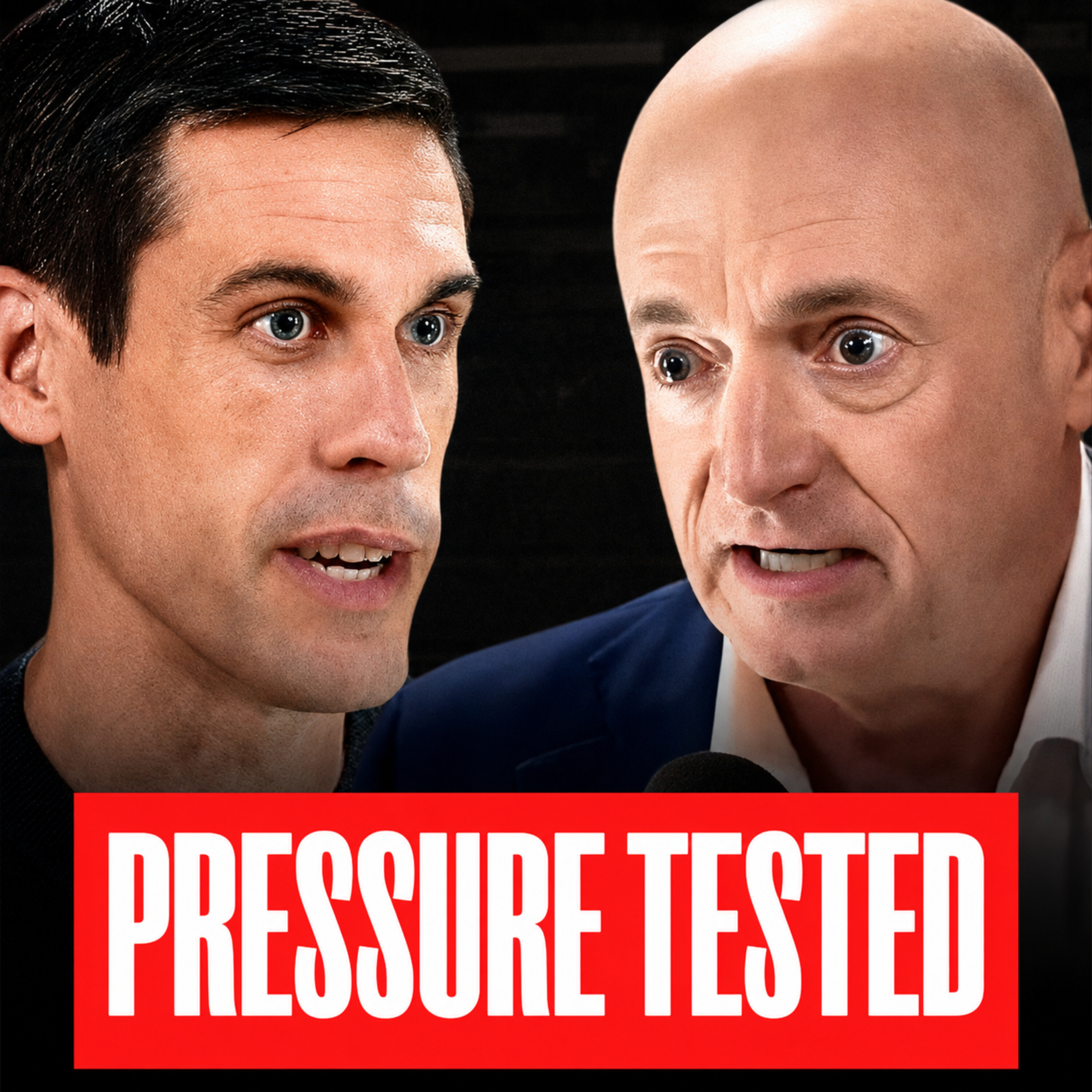
Stoicism under real pressure, using examples from Navy carrier landings, NASA/spaceflight, and public service; key claims include “pressure reveals,” “when you don’t know what to do, don’t do anything—take a beat, think,” and that humility plus a healthy anxiety improves performance.
Senator Mark Kelly—retired Navy captain and combat/test pilot, NASA astronaut (4 space missions; commanded 2), flew 39 Gulf War combat missions, logged thousands of hours in 50+ aircraft, completed 375+ carrier landings; now U.S. Senator. His wife is former Congressman Gabby Giffords (shot in 2011), and they became activists after her recovery. He co-wrote books with her and authored a children’s “Mousetronaut” series.
Training creates “meta-skill” to avoid overreacting; ego and overconfidence degrade performance; uncertainty (unknown unknowns) makes calm decision-making crucial; public institutions must respond to communities, not just profits.
night “trap” carrier landings graded in ready rooms; shuttle launch anomalies (master alarm; solid rocket booster timing causing roll/yaw); Marcus Aurelius/“overview effect” passages; data centers and environmental waivers affecting local communities.
Written by AI. May contain mistakes.
Discussion on how pressure reveals character and the role of Stoicism.
“What about when you're stuck in traffic?”
Overview of Senator Mark Kelly's background and achievements.
“We talk quite a bit about Mark Surreale.”
Discussion on Mark Kelly's personal life and his wife's impact.
“And I think that's worth calling out as well.”
Personal anecdote shared by the host about meeting Mark Kelly.
“I don't, you would have no memory of this, but it had an impact on me.”
Discussion on astronaut experiences and lessons learned.
“And I was like, oh, okay, now it's real.”
Insights into the difficult task of landing on an aircraft carrier.
“No, but I knew Neil Armstrong pretty well.”
Learn about the complexities and fears associated with landing on aircraft carriers at night.
“Which is, now that I think about it, is a weird way to say it because a trap is usually like you're going to, you know, capture an animal.”
Discover how every landing is graded in naval aviation and the culture of excellence it creates.
“And I'm sure before that, I mean, aren't the LSOs called paddles?”
Understand the evolution and risks involved in flying the Space Shuttle over the years.
“That's going to mean that they're going to continuously try to improve.”
Explore the complexities of assessing risks in space missions and the importance of experience.
“yeah, I mean, that's one of the reasons I hired test pilots for this job.”
Senator Kelly shares experiences from space missions and discusses mental preparation for emergencies.
“You talked about some of the things that have gone wrong on your flights, space and otherwise.”
Exploring stoic philosophy through the lens of space travel, focusing on decision-making under pressure.
“Instead of perhaps you could have made it worse by immediately asserting manual control.”
Discussing the importance of understanding our place in the universe and the lessons from history.
“He says, to watch the courses of the stars as if you revolved with them, to keep constantly in mind how the elements alter into one another, Thoughts like this wash off the mud of life below.”
A look at how rapid changes in society affect our view of the future and historical context.
“And yeah, there's another line of meditation.”
Explore how societal changes over the last century impact our future.
“150 years ago, wouldn't have been the case.”
Discuss the frustrations with political systems and corporate power over communities.
“last decade or so, is you're like, you know, they wanted to build some, I forget what it was, like a trash facility or something.”
Understand the serious consequences of political decisions and leadership failures.
“You know, right now, I said something he didn't like.”
Learn how personal experiences with health insurance motivated Senator Kelly's political career.
“And I'm terrified he's going to lose his health insurance.”
Explore the real-world consequences of political decisions on healthcare and war.
“The consequences for going to war with Iran with no strategic goal, with no plan, with no way to get it.”
Gain insights into Admiral Stockdale's experiences during the Vietnam War and his ethical dilemmas.
“Actually, I wanted to ask you about this because I feel like you're the perfect person to give me some insight on this.”
Understand the challenges military personnel face regarding lawful orders and ethical responsibilities.
“I, you know, bombed buildings and tanks.”
Discuss the implications of illegal orders and the concept of war crimes in military conduct.
“You've got a responsibility when you swear an oath to defend the Constitution.”
Discover the importance of education and technical expertise in aviation and military training.
“question that what he must have wrestled with because, you know, he was there is incredibly complicated.”
A short exchange about visiting next door and sharing books.

Get the gist, explore an idea or ask about something said.
 Claude
On The Daily Stoic, what are the key points of this episode?
Searching your listeningAutomatic transcript. May contain errors.
0:00Ryan Holiday: Welcome to the Daily Stoic Podcast, designed to help bring those four key Stoic virtues, courage, discipline, justice, and wisdom into the real world.
0:14Ryan Holiday: Hey, it's Ryan. Welcome to another episode of the Daily Stoic Podcast. One of the things I think that the Stoics understood was that pressure reveals. Like who you are when things are awesome, when things are calm, it doesn't say that much. But what about when you're under strain? What about when the world is falling apart? What about when you're under attack, literally and figuratively? What about when you're being accused of something untrue or unjust, when you are the victim of an injustice? What about when you're stuck in traffic? What about when you're isolated and lonely? What about when tragedy strikes, right?
0:52Ryan Holiday: Right. That's where stoicism comes in. That's where discipline comes in. That's where all the virtues come in. Right. Courage, discipline, justice, wisdom. And there are some people who are tested more than others. Right. When you're trying to land an aircraft carrier at night in the middle of the ocean, knowing that everyone is watching and every landing is going to be graded. And by the way, the real failing grade isn't an F. It's dying in a fiery crash. What about being shot into space? What about being attacked by the most powerful person in the world? What about a deranged maniac trying to murder the woman that you love?
1:29Ryan Holiday: How do you come back from that? How do you get through that? That's why I was really excited to talk to today's guest, Senator Mark Kelly. Might be how you know him. I first met him many, many years ago when he was Captain Mark Kelly or Astronaut Mark Kelly. He's been all those things. Retired Navy captain, combat pilot, test pilot, NASA astronaut, husband, father, and now United States Senator. He flew 39 combat missions during the Gulf War. He logged thousands of hours in more than 50 aircraft. He completed more than 375 carrier landings. He flew four space missions, commanding two of them. And he has stood up in this unique moment in American history and taken some heat, taken some pressure for it.
2:19Ryan Holiday: He's currently the enemy of the president of the United States, secretary of defense. So in today's episode, I wanted to ask him about that. I asked him what it means to operate under real pressure. talked about anxiety, talked about ego, talked about pausing. One of the things he says in today's episode, a lesson from NASA, when you don't know what to do, don't do anything. Take a beat, think, don't make the problem worse. We talk quite a bit about Mark Surreale. We talk about the overview effect, the fragility of our planet, the responsibilities of public service, and of course, Admiral James Stockdale.
2:51Ryan Holiday: Because whether you're flying a jet, commanding a space shuttle, serving in the Senate, or just trying to get through personal tragedy, the question is the same. Can you stay steady? Can you stay humble? Can you do the right thing when the pressure is real? And that's what this conversation is about. I think it's worth mentioning his incredible wife, former Congressman Gabby Giffords, who was shot in an assassination attempt in 2011. Kelly retired from the Navy and NASA that year to nurse his wife back to health, and they have both become incredible activists and both continued public service in their own ways.
3:23Ryan Holiday: And she is just an incredible woman. And I think that's worth calling out as well. It's also worth saying Mark Kelly is the author of a children's book series called Mousetronaut. He also co-wrote two books with his wife, Gabby, A Story of Courage and Hope and Enough, Our Fight to Keep America Safe from Gun Violence. You can follow Senator Kelly on Instagram at SenMarkKelly. That's Mark with a K. Anyways, you're going to like this episode.
3:56Ryan Holiday: In Texas, a lot of the bugs are just not cool. The ants bite. Spiders are poisonous. There's all these kinds of wasps that I didn't even know existed before. Scorpions? Oh, man. It's crazy. and pest control is just a part of living here, owning a home or a store or anything. It's your problem, honestly. And the easiest way to keep bugs away is with Pesty. And when you sign up, Pesty will send you everything you need to do your own pest control. The Pesty kit comes with everything you need to do your own pest control. Pro-grade pesticide. That's the same stuff that the pros use. Sprayer, mixing bag, gloves, instructions.
4:35Ryan Holiday: You can even get a kit customized to the season, location, and weather. And with Pesty, it starts at just$35 a treatment. With their DIY kit, there's no strangers in your house or appointments to make. Pesty gets rid of over 100 types of bugs from spiders to ants to roaches and scorpions. It's also kid and pet friendly. Get bugs out of your house with Pesty. Just go to Pesty.com slash Doik for an extra 10 % off your order. That's Pesty.com slash Doik for an extra 10 % off. I just heard this stat that shocked me, given that I hear from the sales staff at my publisher quite a bit. The stat is sales teams spend about 50 % of their time on admin work instead of selling, relationship building, closing deals, which means they're not selling, right?
5:19Ryan Holiday: And that's where today's sponsor comes in, PipeDrive. It's a simple, intelligent CRM tool for small and medium businesses. PipeDrive was built from the ground up to strip away that manual work, that stuff that's wasting your time, taking your sales team away from doing the thing you pay them to do, which is sell stuff. They've got smart automations to handle repetitive tasks, and you can even customize these automations to fit your unique sales process. Plus, they've got AI features that will analyze your pipeline, flag stall deals, surface what needs attention, and tell your team what to do next without them having to go look for it.
5:52Ryan Holiday: Switch to a CRM built by salespeople for salespeople and join over the 100 ,000 companies already using Pipedrive. And right now, when you use our link, you'll get a 30-day free trial. No credit card or payment needed. Just head over to Pipedrive.com slash Doek to get started. That's Pipedrive.com slash Doek to be up and running in minutes.
6:15Ryan Holiday: We've met once before. I don't, you would have no memory of this, but it had an impact on me. So I was going to tell you about it. It was a, do you remember Renaissance Weekends? It was one of those. So New Year's in Charleston, I think this would have been like 2011 or 2012. Okay. So was it before Gabby got shot or after? I think so. I think before. Because it was days before in 2011 we were there. The last one we went to was in 2012, a year after she got shot. It was, I think before. I think it was before. Because what I remember, my wife and I, we weren't married yet, but we were starting to think about having a family.
6:51Ryan Holiday: And I remember you had very, like maybe preteen or teen daughters. And I remember you had your hands full. Yes. And I was like, he's an astronaut and he has his hands full. Yeah, with these kids. What are we signing up for? And I have thought about that every once in a while in the years since. That was my memory of meeting you. I was just with my daughter, Claudia, at a thing. It was at the McCain-Sedona Forum. And a woman came up to us who used to go. She says, same thing. You wouldn't remember, but at the Renaissance weekend thing. And her son was my daughter's age. Got it. and we basically had the same conversation about how, because my kids in 2011, you know, was 15 years.
7:36So she was 15. Yeah. So I had a 15-year-old and a 13-year-old there. Yeah. And they loved going to that thing.
7:42Ryan Holiday: Yeah, it was probably 1130 at night. They're getting to stay out. It was craziness, you know, and there's kids and they're in a hotel. It was probably incredibly fun for them. Okay, this is what that's like. That is what it's like. And kids are great. and it's so much fun. And for me, even as when they were teenagers, it's all great until like one of them takes the car, doesn't come back for 24 hours. You're like, why did I do this? But then you have grandkids, which is the best. My nine-year-old, he's about to turn 10. He told me he's a preteen. And I was like, oh, okay, now it's real. I mean, it's technically, I guess, technically true, but I was like, oh man, okay, so it's about to get real.
8:25Does he think he gets like more privileges or something when he's a preteen? I think it just occurred to him, the math of it just became real. Just tell him that gets you nothing.
8:35Ryan Holiday: Yeah. It actually gets you less. I'm going to watch you more like a hawk now because you're going to start doing things that actually consequences. Yes, totally. Yeah. The other person I met at that one that was one of the cool encounters in my life was Jim Lovell. I don't know if he was at that one or another one, but I found myself sitting at a dinner table with him. I'm like, is this real life? This is crazy. Yeah. I mean, Apollo 13, commander. Yeah. Went around the moon, I think on Apollo 10 as well. A guy I, you know, got to know a little bit. Yeah. I got to NASA, to the astronaut office long after he was gone.
9:11Sure. But I did get to meet him a number of times. And he's one of those guys I looked up to when I was a kid.
9:16Ryan Holiday: Yeah. Yeah. I think probably your lay person probably thinks, oh, they all know each other. And you probably all don't. We don't. Yeah. No, but I knew Neil Armstrong pretty well. I knew Buzz Aldrin pretty well. John Glenn. I got to sit next between John Glenn and Neil Armstrong at a dinner once after I was an astronaut. Yeah. But other than my four space flights, that was probably the next biggest cool thing for me is that dinner. And it was on the 50th, I think the 50th anniversary of John Glenn's first flight. Wow. Yeah. Yeah, I remember. And I didn't get a picture. Didn't happen then. Well, I thought it would be too weird.
9:55Yeah. To like ask for a selfie with John Glenn and Neil Armstrong sitting at the dinner table. But I do kind of regret it.
10:04Ryan Holiday: When in the right stuff, the line that I was always struck by is Tom Wolf points out that like John Glenn's heart rate never goes above 100 during the thing. And I asked Jim Lovell, I was like, could that possibly be true? Like, how could his how could it not be pounding out of his chest? And he's like, I mean, you've just done it so many times that unless something's going wrong, this is normal. You mean when he was strapped into the rocket ship before launch? Well, just in the course of the mission that he never gets the spike of adrenaline. Yeah, I think it's different for different people.
10:38You know, we've done EKGs on even shuttle crew members, I think. I never wore one. Yeah. But I think they did for some, you know, some data. and I've heard of folks that feel like, you know, their heart is rapidly beating. I thought about that on my four missions and I think my heart rate was up a little bit. Yeah. More about like, don't, don't screw this up. Yeah. Because as a pilot and the commander, you're turning a lot of stuff on, you got to make sure things go well and you could mess it up where the launch is going to stop.
11:14Ryan Holiday: Yeah. And then it's like you wasted, you know, millions of dollars worth of fuel and all your guests have to come back the next day and it's going to be kind of embarrassing. So you're worried about that. Yeah. You're also worried about getting blown up a little bit. Did you have techniques for calming yourself down? No. No, I probably should have. I don't think they would work on me. Yeah. I generally don't get worked up about things all that much. So I used to fly airplanes off of an aircraft carrier. I've almost gotten shot down a number of times. I had a missile blow up next to my airplane.
11:51Almost flew into the ground, you know, two or three times because of me.
11:56Ryan Holiday: Yeah. Like screwing it up. Pilot error. Yeah. Pilot error. Yeah. You know, once in Korea, I got really close. So other things lately just don't get, I don't get too worth that. I would imagine landing on a carrier at night sort of level sets what's scary. Yeah, that's scary, by the way. And, you know, if somebody would, you know, have the, you know, EKG on me measuring my heart rate for that, that's really high because it's a hard thing to do. It's hard to do well. It feels like they've done studies of what it means to actually hit a pitcher's fastball. You have 400 milliseconds to decide. It seems impossible that a human can do it.
12:37Ryan Holiday: A carrier landing strikes me as almost... If I hadn't seen videos of people doing it and you described it to me, I would say that's not possible. Yeah. Yeah, I would have thought so myself until I had to do it. Yeah. Eventually, it gets to the point where in the daytime, you get comfortable. doing it. And you can, you know, you feel like, hey, I can be successful at this. At night, it's a controlled crash and you're just like, you're just holding on. You know, I don't know, you know, what, what frequency you're, you know, our brains are operating on in that moment, but the stick movement and the throttle movement can be just kind of, kind of nuts.
13:17Yeah.
13:17Ryan Holiday: I mean, you're in an enormous thing hitting a minuscule target in the middle of the ocean. Yeah. And if you land short, the ramp strike is a high probability. Yeah. And then you're dead. And almost, well, I thought it was, I was reading about this. It's like that they don't even refer to it as landing. They call it like recovering the aircraft. Yes. It strikes me as illustrative of like, no, no, we're snatching victory from the jaws of defeat every time. Yeah. It's the recovery, the launch, the recovery. Yeah. And you got to get all these airplanes aboard in a short period of time. You just, you know, then you got to move them, you know, you're moving them around on the deck.
13:55And what we call it physically, the event is we call it a trap. Yeah. Which is, now that I think about it, is a weird way to say it because a trap is usually like you're going to, you know, capture an animal. Yeah. But the event of landing on the aircraft carrier, that's a trap.
14:15Ryan Holiday: Is that because you're being snagged by the wire and that's the trap? Yeah. Yeah. Yeah. You have a hook. There's a wire. I've done that 375 times, something like that. Does it get any easier? Not at night. Yeah. Daytime it does. Just because you can at least see what's happening? It's just scary at night. I mean, it's just, you know, especially if there's no horizon. Yeah. You know, you're flying initially on instruments, so you're flying an ILS approach, and then you get to three quarters of a mile, and then you transition to the light system, the meatball, the Fresnel lens on the deck. And it's a very high gain task, a lot of inputs.
14:57Yeah. You get waved off. Maybe if it's not looking good. I used to be a landing signals officer as well, standing on the side of the ship when other airplanes are coming aboard and you're talking to them. Yeah. Right. And you're giving them suggestions. You know, you might say like, you know, you're a little high, you know, don't fly through it. Power, power, wave off or right for lineup or don't settle. You know, so you've got this cadence of talking somebody through this landing. you get waved off or you bolter, which means the wire or the cook doesn't catch the wire. You go airborne again, you come around again, you might bolter again.
15:44Now you need the gas. Now you got to go to the tanker. It's embarrassing. And that's called, especially if you have to go to the tanker multiple times, a night in the barrel is what we call it. You had your night in the barrel. And sometimes you're doing this in what we call blue water ops, which means there's no divert. You can't go land on a runway somewhere
16:08Ryan Holiday: Yeah Because they're like You don't have the stuff tonight It's too far Get out of here You're not And there are only certain people That can fly during Blue Water Ops Yeah And then you're If it's Blue Water Ops There's the extra anxiety at night That you have to get aboard the ship Right You know If things start to go really south on somebody They'll rig the barricade So then there's no boltering That's to catch you Yeah Like if it got really bad I never I don't remember anybody ever being having their night in the barrel where they rigged the barricade on our ship. So it's a, it's an uncommon thing, but it does happen.
16:41Ryan Holiday: Yeah. And you know, everyone is watching as after you've missed a couple of times, everyone's starting to watch. Every one of the ready rooms, everybody's, you know, watching them, your guy go around and around, they know who it is. Yeah. And, you know, I guess some people are cheering you on and then there's, you know, probably a little, depending on who the person is, a little bit of that schadenfreude there. Maybe they're betting on it? Maybe. Yeah. Yeah. And I was fascinated to learn that every landing, so you did 300 plus, every one you get a grade. Yes. Graded on all of them. Yeah. Now this has gotten, become a lot different.
17:22Ryan Holiday: Okay. Now lately, over the last decade or so, because of advances in the systems, even on like an F-18, this thing called magic carpet, which helps you fly the airplane in a way that keeps you on glide slope much more easily. I went out to the ship a couple of years ago in the backseat of an F-18 and the guy in the front was a Navy lieutenant and he was just talking through this. And he would say, even when he's on the ball, which is behind the ship at a half a mile. He says he can look around and see where people are walking around on the flight deck. Not a thing. And when I was back in the day, when I was doing this.
18:04And I'm sure before that, I mean,
18:06Ryan Holiday: aren't the LSOs called paddles? Because they used to just do it with like ping pong paddles. Yeah. But yeah, we didn't do it with paddles. We did it over the radio and we have a thing called a pickle where we can wave them off. You know, red lights come on, on the Fresnel lens and people have to go around, but they've improved these systems. So the boarding rate now is really high. It's very rare that somebody bolters or they get waved off. And what that's allowed us to do in the Navy is we've just transitioned to where people don't even go to the ship before they get their wings anymore. They're going to go to their fleet airplane and we have to do a lot less practice.
18:45It used to be so much time and energy and effort to train the crews up to be able to operate off the ship. It's gotten a lot easier. And what that means, they can focus on the mission more, which is often the strike mission of dropping bombs or the fighter mission of countering enemy air threat. So we're now much more effective naval air force because of it becoming easier to land on the ship.
19:14Ryan Holiday: Right, right. Yeah, Dave Burke, who was in LSO, I was reading about him and he was saying that it says something about the culture of the Navy that every landing is graded and the best grade you can get is okay. That's right. No, you can get an okay underline. But there's no such thing as perfection. There's no such thing as really good job. The okay underline, which are very rare, that's perfection. Right. And then an okay. and then fair and then a no grade. Yeah. And was there anything, this is, I'm dating my, this is a long time ago, I was in LSO, below a, there was something below a no grade, but it was, no grade's bad.
19:56Ryan Holiday: Yeah. But it's a brutal scale. And then it's displayed in the ready room. Yes. So everybody sees the grades. Yeah. Required under naval rules for aviation that the grades be displayed. So everybody knows who's doing the best and who's doing the worst. And that worst guy doesn't want to be the worst guy next week. And that's creating a culture of excellence and competition and... And hard work. Yeah. And just, you know, you're just going to grind through it and always try to get better. Yeah. Because everybody's going to see your grade. And the okay was green. Fair was yellow. And no grade was white.
20:33I can't remember what okay underline was. That was a really good pass.
20:38Ryan Holiday: Did you ever get one of those? I don't think so. Right. Yeah. It's probably one of those. It was usually F-18s got them. I flew the A-6 intruder. Yeah. It's a little harder to land on the ship. Interesting. Yeah. It must be hard to do something so difficult that even as you get really good at it, it's still so, like, you're never going to feel like I've got this. And yet, if you don't feel like you've got it, it probably makes it hard to do. The confidence ego line and then imposter syndrome, the balancing of those three things must be interesting. I think it's also good to always have a little bit of anxiety about it.
21:16I think when you plot performance and anxiety, sometimes your performance goes up if you're more anxious about it. Yeah. Yeah. And and, you know, you're not and it's always good. You know, you don't want somebody who has such an ego that they think they're good at something.
21:36Ryan Holiday: Yeah. I think we see this at very high levels in our government right now. Yes. You know, somebody who thinks that they're they've got this. Yes. They're not intimidated by the task or they're not humbled before the task as they they probably should be. Yeah, that's right. I think it's always good to have people knowing that they're never going to reach the place that they want to get to. That's going to mean that they're going to continuously try to improve. It makes them better. But if they ever think they actually got there, if they have that kind of ego and they think, man, I got this. Yeah.
22:19Then they're going to get worse.
22:20Ryan Holiday: Floyd Patterson, the boxer, he went into one fight that he lost and he said he knew he was going to lose as soon as he stepped in the ring because he didn't have any nerves. Wow. Which meant he hadn't taken it seriously and he just, it was this sort of stomach churning moment of realizing that he had taken some things for granted and that the other person hadn't. Yep. I used to feel that way, you know, around the ship. Like during the day, if I'm flying at night, I'd have that knot in my stomach the entire day. Yeah. A little bit with the space shuttle. You know, when you're going out there, you're driving out to the launch pad, you get that like little bit of a knot in your stomach.
22:57Yeah. Because, you know, this is like game time. I got to get this right. I can't screw it up.
23:02Ryan Holiday: It's a sign of respect to the thing. Yeah. You know, and if you don't have it, it's probably ego and a kind of finger to the gods and they're going to make you pay for it. That's right. the big hammer is coming down on you. Yeah. Yeah. Pride goeth before the fall. As soon as you think you've got it, you're about to learn the part of it that you don't have. Yeah. Yeah. And I'll tell you what, with the space shuttle, especially, there was something hiding around the corner that was about to kill you all the time. Well, I can imagine at least with fighter jets, a lot of people have done a lot of flights, right so there's a lot more data about what can go wrong you have millions of cumulative human hours doing this thing yeah and even though we've been going to space a surprisingly long time we haven't done it that much and not that many people have done it yeah i mean i flew the 108th 121st 124th and the 134th flight of the space shuttle that in a test program yeah for an airplane think of about like a Boeing, you know, the Boeing 777.
24:11That is in the beginning, the infancy of a test program. And the last space shuttle flight was the one after my last one, the 135 times. So, yeah, I mean, that's one of the reasons I hired test pilots for this job. By the time we ended the space shuttle program, there was still a lot we did not understand about it. Yeah.
24:35Ryan Holiday: I mean, you went to test pilot school. I mean, those pilots have thousands of hours in these jets. And you had to be the 108th flight, period. Period. Is like, obviously every plane has a 108th flight, but that was like so long ago. Yeah. And it took us in the space shuttle. The first flight was in 1981. That 108th flight was in 2001, 20 years later. Yeah. Yeah. And to go to fly the next 30 flights took another decade. Yeah, we didn't fly a lot. Yeah. It's expensive. It also took a lot to get the space shuttle orbiter ready for a mission. Yeah. You basically take it all apart and put it back together every time, which might not have been the smartest thing to do.
25:24Ryan Holiday: Yeah. If there's something that goes wrong every 10 ,000 times, like no one knows what that thing is because it's never happened because they haven't done it 10 ,000 times yet. Well, that's the thing about probabilistic risk assessment is when you're not doing a lot of them, you don't really know what the risk is, especially not until you start having some problems. Yeah. But without the repetition, you don't have the problems. Yeah. So the risk is still very uncertain. Right. It's an unknown unknown because you don't even know. Yeah. You have the sum and then you have the things that we've never even conceived of happening.
26:01We were okay with the known unknowns. Yes. The unknown unknowns. Those are the ones that scared us. Yes. And so you're always like mapping this stuff out, like, you know, the probability of it happening and the risk, like, is it, you know, is it catastrophic? You know, so you try to then, you always got to focus in the very likely and catastrophic, you know, quarter of the box. Yeah. You know, the unlikely, uneventful stuff, you can, you know, sort of let that go. But even the unlikely catastrophic, you had to focus there because of the consequences.
26:47Ryan Holiday: Being an effective leader is difficult, right? You got to keep your ego in check. You got to know how your business works, how the team operates for peak effectiveness. But most leaders are making decisions about their teams based on assumptions and not reality. And that's exactly the problem that today's sponsor, Scribe, was built to fix. Scribe Optimize passively captures how your team works across approved business apps, and it uses AI to automatically surface workflows, inefficiencies, and improvement opportunities. No interviews, no manual discovery, no extra work for your team. Scribe is trusted by 80 ,000 plus enterprises, including nearly half of the Fortune 500.
27:28Ryan Holiday: Scribe Optimize follows work across every tool involved. If someone starts something at Salesforce and finishes it in a completely different tool, it tracks it the whole way. And Optimize shows you where your biggest inefficiencies are with AI-powered recommendations on how to fix them. So you're not just identifying problems, you're getting clear directions on how to improve. The kind of visibility that used to take months now is always on. And Optimize only works on applications your admin improves, so no personal activity is captured and no one's privacy is at risk. If you want to see what Optimize could look like for your organization, visit scribe.how.stoic, S-C-R-I-B-E,.how.stoic.
28:05Ryan Holiday: When you're a productive person, when you've got a lot on your plate, you don't have time to be groggy or unfocused just because you had a couple of drinks the night before. Cheers Restore After Alcohol Aid helps you have better mornings after drinking. You take it after your last drink or before bed, and then it works while you sleep. Their claim to fame is that you will feel 50 % better or your money back. A lot of people think that dehydration is why you feel bad in the morning, but the real reason is what happens in your brain and liver while you sleep. When alcohol leaves your system, your brain goes into rebound mode, and that's what makes you feel bad.
28:42Ryan Holiday: And the DHM in Cheers works while you sleep to smooth out that rebound. And at the same time, the alcohol converts into a toxic byproduct that your liver has to clear out. And the cysteine in Cheers helps speed that up. Cheers is backed by doctors, PhDs, and over 1 ,000 verified clinicians. Take Cheers Restore after your last drink or before you go to bed and wake up feeling at least 50 % better or your money back. For a limited time, our listeners are getting 20 % off their entire order at cheershealth.com slash stoic.
29:20Ryan Holiday: You talked about some of the things that have gone wrong on your flights, space and otherwise. Those are things that you prepared mentally for, like you roughly knew what to do? Or what do you do when everything is falling apart? In the space shuttle, we train a lot, thousands of hours. I have about 6 ,000 hours of flight time, I think. I stopped counting at some point. I probably have as much time in the space shuttle simulator. You know, we just spend a ton of time over, you know, for me, over 15 years practicing almost every possible scenario of multiple malfunctions in different systems and in the space shuttle because of the required redundancy to make sure you don't, you know, system failure doesn't kill you.
30:07This stuff gets really complex. And then you go to fly the vehicle and the accidents we've had with Challenger and Columbia, you know, those were, you know, Challenger accident, nothing you can do about it. Columbia accident, nothing you could have really done about it. I mean, something falls off on liftoff, puts a hole in the wing, the vehicle disintegrates on entry. But we've had other problems in space. On my first launch, we got a master alarm on liftoff. If I remember correctly, I think it had to do with an RCS jet, one of the reaction control system jets. On my third flight where I was a commander, this is something we never trained for, was one of the solid rocket boosters.
30:47They're designed to burn. So they're solid propellant. You can't turn them off. They're designed to burn out exactly the same time. They're poured to very high tolerances in Ogden, Utah at a company called Thiokol. And they're supposed to flame out two minutes and five seconds into the liftoff, flame out at the same time. well in our case one one got to chamber pressure of zero before the other one and the space shuttle started rolling and yawing not even yeah not even not even thrust started rolling and yawing and i was about to hit the button to take over manually to then try to correct this and then i gave it another second and then we got back in to me it seemed like we were about to kind to go out of control.
31:36And then it corrected itself and we were fine. Never practice that simulator in those thousands of hours.
31:43Ryan Holiday: So that was one of the unknown unknowns. But practicing all that stuff in the simulator is giving you the meta skill of not freaking out, not overreacting. Like really what you'd practiced for is the wait and see that you did there. Yeah. Instead of perhaps you could have made it worse by immediately asserting manual control. Could have, but I'm pretty good at flying things, so it would have been fine. Yeah. There's a quote I heard from the Canadian astronaut Chris Hadfield where he says, there's no problem in space so bad that you can't make it worse. That is true. Yeah. Yeah. Chris Kraft was the first flight director and then was the head of flight crew operations.
32:21You see him in a lot of like movies, Apollo 13 and, you know, he had this saying, I think it was him. When you don't know what to do, don't do anything. And I've used that, you know, through my career, even sometimes my political career, is that take a beat. Let's think about this. Just don't jump to some conclusion. Yeah.
32:46Ryan Holiday: Yeah. Not too long. Try to figure it out. Yeah. You know, and there's some things that require like an immediate, you know, response, like, you know, space shuttle's about to go out of control. And there's others, you know, that you can wait on, you can think about, you can reflect on. Every decision should not require the same amount of contemplation and reflection. Some do. Some you can, let's think about this for a week. Yeah. Knowing the difference of what requires that sort of immediate concrete action and then what it requires a little bit of restraint. Yeah. You know, you're over a rack and the missile's coming at you.
33:27You don't have much time to think about it.
33:29Ryan Holiday: Yeah. You know, so, yeah, so I've, you know, I think about that a little bit in my new job here. Well, okay. So as far as I know, Mark Srelis never goes to space. Maybe, maybe. Is that meditations? This is meditations. I'm curious what you thought. I'm going to read you these quick passages because it sounds like he has. I wonder if it jives with your experience. I don't think he went to space. Yeah, probably not. Unless there's some buried spaceship somewhere under Rome. Yeah. Now we're going to get into conspiracy theory territory. Okay. These are all in book seven, three in a row. So I wonder what he's doing as he's deciding this thought.
34:05Ryan Holiday: He says, to watch the courses of the stars as if you revolved with them, to keep constantly in mind how the elements alter into one another, Thoughts like this wash off the mud of life below. And then the next one, he says, Plato has it right. If you want to talk about people, you need to look down on earth from above. Herds, armies, farms, weddings, divorces, births, deaths, noisy courtrooms, desert places, all the foreign peoples, holidays, days of mourning, market days, all mixed together, a harmony of opposites. And then the last one, he says, look at the past, empire succeeding empire. and from that extrapolate the future.
34:43Ryan Holiday: The same thing. No escape from the rhythm of events, which is why observing life for 40 years is as good as a thousand. Would you really see anything new? Then actually there's some more here, but it strikes me as very similar to what I've heard astronauts talk about with what they call the overview effect. Yeah. Well, I think, I mean, imagine if Marcus Aurelius knew that we were one galaxy in a universe of two trillion galaxies. Right. Probably wouldn't have changed his view on this, but he certainly realized that to some extent, we're kind of insignificant in the big picture. He's referencing the stars and how things are going to happen that are, whether it's over a thousand years or 40 years, things are going to happen that are, you know, just the way it is outside of our control.
35:40And, you know, in there, I haven't read all of meditations, but I've read pieces of it. You know, then there are things that we can, you know, have an effect on. But, you know, we're seeing history repeat itself. We've seen that through a couple thousand years of history.
35:58Ryan Holiday: One morning I went for a run, we were in Greece and I got up sort of to the top of the Acropolis and I'm looking down and you go, this is probably what he's talking about. Like this, he's seeing so much of the civilized world. Is there any evidence of Marcus Aurelius actually going to Greece? Yeah, yeah, yeah. Oh, there is, okay. And also traveled. Yeah, he traveled a lot. He dies in Vienna, writes in Budapest. Spent a lot of time in Germany. It's crazy. Like when you realize how big the Roman Empire was, it sort of blows your mind that one human being was responsible for all this, given the communication.
36:33Ryan Holiday: And then he spent a lot of time outside of Rome. Yes. Like on the road. Yes. And camps and fighting wars. Almost all of it. Yes. And yeah, there's another line of meditation. He says, life is warfare and a journey far from home. And I think he means that literally and figuratively. Yes. But yeah, you get the sense like that bird's eye view that he's taking. I mean, how high up could he have really ever gotten? Like not that high. I mean, Probably some mountain near Vienna, right? Yeah. What's now northern Italy, maybe in the Alps. Yeah. What the ancients would have, how much it would have blown their mind to see the blue marble photograph.
37:15Ryan Holiday: Or to know that a human was on the, like taking that view out of space. He probably thought the earth was flat. Maybe. Marcus Aurelius was almost certainly a flat earther.
37:31Ryan Holiday: certainly his son was yes uh he had some other problems yeah he had a lot of problems yeah so when you know i remember the first time i saw the earth as a big round ball yeah just floating there in this blackness and the you know the your initial reaction i think for most of us is like holy shit yes i mean we we live on an island in our solar system and there's like there's no place to go. Yeah. You know, we're all not like, you know, moving to Mars someday. That's not like the reality for any of us. Yeah. Any of us that matters. And yeah, I know like Elon wants to put this like thinks, you know, civilization is going to human civilization is going to one day colonize Mars.
38:13You know, he said it was going to happen by 2022. That didn't happen. I think he believed,
38:19Ryan Holiday: he said it was no question it would happen by then. Yes. Yeah. No question. We're going to have people living on Mars and they're going to stay and we're going to eventually have an atmosphere and a blow up nuclear weapons in the Martian atmosphere. And by the way, we need this because a single planet species doesn't survive because that's the history of species on earth. Well, also nobody else, no other species, dinosaurs were not engineering themselves out of a problem. Yeah. What if we just didn't screw it up here? Yeah. Just don't screw it up here. It's always going to be easier to survive on earth, regardless of what happens, including the big rock or the worst pandemic.
38:53It's always going to be easier to survive on Earth. Mars is a shit planet. It is not a place that we want to move to. We want to go and explore. We want to come back. But you really do get this sense that kind of almost the insignificance of, you know, the universe is 13.9 billion years old, we think, by the way. We don't know for sure. May have been around a lot longer. We're figuring out more all the time about astrophysics, about the nature of existence. But my, you know, my four trips to space, I really, you know, kind of a deep-seated view that we have to do a better job taking care of this place.
39:42There's no other option.
39:43Ryan Holiday: Yeah. And it's interesting because he talks about this as the emperor of Rome, this idea that we're all sort of citizens of this larger thing. We're all citizens of this world and we have these obligations and responsibilities to each other. Now, of course, as the head of state of this thing, he has certain obligations and responsibilities and priorities. But you do get the sense that he's trying to, by zooming out, going like, these borders are made up. And again, you have a legal obligation to enforce them, but It doesn't mean that the person on the other side of that border doesn't exist or doesn't matter and isn't.
40:17Well, they might not have the same legal obligation either. Yeah. And by the way, you can't see any of those borders in space. Yes. With one exception. Great Wall? No. That's a whole... The Chinese like to say it's the only thing you can see from space. What is it then? That's bullshit. The only border you actually see that's not a river is the southern part of Israel because on one side it's desert. The other side, you know, it's cultivated land. Right. So there's a straight line. And that's the only place I can think of that you physically can see a border during the day. Yeah. And why I say during the day is because at night you sort of see - North and South Korea.
41:06Ryan Holiday: Yes. And the United States and Canada. Sometimes when you're looking at the United States, you're like, the Canadians need more electricity. But the reason it looks like that is because most of the Canadian population live within 100 miles of the U.S. border. Right. Like all 20 million of them basically live on the U.S. border. Yeah, yeah. Canada goes way up. It does. And nobody's there. Nobody's there. Yeah. Canada and Australia are kind of like that. It's wild to look at at night. I mean, Pyongyang looks like an island in an ocean because there's nobody else has lights in North Korea. And then you fly over places like Times Square, fly over New York City, the brightest spot on earth.
41:48And I think second would probably be the Strip in Vegas. and then in the middle of Tokyo would probably be my top three bright spots on Earth.
41:59Ryan Holiday: Well, and then to go to Marcus's point about history, I mean, what is interesting is that 100 years ago, that wouldn't have been the case. Nope. 150 years ago, wouldn't have been the case. Like, I mean, there are parts of Texas here that less than 100 years ago didn't have electricity. Yeah. And so to think about how, you know, in the big clock of all of human history, what a tiny sliver a lot of these things we take for granted actually are. 120 years ago, Arizona wasn't a state. Very few people live there. A lot of native tribes. Things change and they're changing fast right now. And it's going to be an amazing thing to watch what happens in the next couple decades.
42:43Ryan Holiday: You could look at everything that's happening in the world and be really excited. You could look at everything that's happening in the world and be absolutely horrified. It's kind of somewhere in the middle probably is the right view. I think there are a lot of people out there that are very anxious, apprehensive about the future, about whether they're going to have a job, whether if you're a young person, whether you're going to be able to afford a place to live, whether you can afford a family. These are issues that weigh on me a lot in my job because I'm supposed to be trying to figure out ways to fix this.
43:17Ryan Holiday: If you're 21 right now, what have you seen work really well in your lifetime? You've kind of seen people screw it up over and over and over again, largely at your expense. Not so much at their expense, but at your expense. Yeah. Often the same people. Yeah. Crash the car, get back in, crash again. Yeah. Same guy. Yeah. Put it on the tab. Put it on the grandkids tab. Yep. $39 trillion. People don't seem to care that it could be$50 trillion. Yeah. In what, decade? Actually less than that. We got to address some of these problems in our country in a serious way. Yeah. You know, we have an election coming up.
43:58You know, my hope is people see that. And, you know, you got to some point you got to take the keys away from grandpa.
44:05Ryan Holiday: Yes. It's not fair. It's a lot to put on a generation. And yet there's no alternative. Do you know what I mean? like ignoring it's not going to make it go away? No, we can't. It is not going to go away. And then at the same time, we have with innovation and technology, we have things that are going to change rapidly. Yeah. You know, AI is going to replace people in certain jobs. We'll have a demand for other jobs that people have an option. We got to, how do you figure out a way to make sure these folks that lost their job have the training and know about these other things that they could do.
44:46Yeah. And what do we do for people that are just displaced and don't have an option? How are they going to afford their lives? We have to think about that. And then the energy demand is just skyrocketing right now.
44:59Ryan Holiday: What do you do when the political institutions have proven themselves to not be up to these tasks over and over and over again and to not work and to not necessarily show themselves as reflecting the will of the people? Like, I just thought about this this week because it was just announced. I live out here in rural Texas and like Amazon just bought 1300 acres and they want to build a data center. Right. And that's not why people moved out to the country. Close to where you live. Yeah, right where I live. Like how close? 10 minutes. Yeah. Like, I mean, well, 10 minutes, you're probably OK. If you're like two minutes, are you going to walk outside and there's going to be like 60 decibels of noise?
45:36Ryan Holiday: Noise, light pollution, traffic. Also just how long. rates is is your electric bill going to double because of this data center well and then illustration of the other problem we have it's like hey we're going to build a housing development and amazon came in bought out the housing development and said no no we're going to put a data set so it could have been 2 000 houses which desperately need instead it's going to be this and and i remember going like my first thought was like well i obviously i don't want this i want to get involved and not make it happen and then going like even if everyone around here doesn't want it, can the political system, can the representatives who are supposed to listen to the will of the people, will that system actually work?
46:16Ryan Holiday: And I think a lot of the frustration people have is that, like, I see so much of our problem is that, like, the political system, which our founders designed to be responsive to the people, it isn't doing that. And then that energy has to find other places to go. Well, in some cases, like in Arizona, we had the same issue happen. One case, I think it was in Chandler and the other was in Tucson where Gabby and I live, where the data center came in, they wanted to build there and it didn't get approved because the people didn't want it. Right. And if the people don't want it, it shouldn't go there.
46:51They should find another place. Now I'm trying to address that issue in my job in the Senate with legislation to try to set the conditions where the community can benefit, the data center company can benefit, because we're not going to, this technology is not going to go away. And we want to be the leaders. We don't want the Chinese to be the leaders. There's an advantage to us as a nation, as a country, and all of us should be able to benefit. We don't want like the top 1 % to be the people that benefit from this. That has gone sideways on us too long. But so we've got to make smarter decisions here.
47:28But your community shouldn't get stuck with this data center if people don't want it. There is some place in the country that will be happy to have that data center. They need to go there.
47:38Ryan Holiday: Yeah. And I mean, just watching some of these things play out as I've lived here over the last decade or so, is you're like, you know, they wanted to build some, I forget what it was, like a trash facility or something. And then all of a sudden the people were like, well, why won't the Texas Environmental Commission do something about it? And it's like the one that you neutered and gutted because you thought that's big government? It's like, look, I get being somewhat suspicious of big government. I don't want government messing with my life. But at the same time, if you don't have institutions that can do things, then you basically only have corporations who can do things.
48:13Ryan Holiday: And they don't care that much about regular people. Their job isn't to care about people. Their jobs care about shareholder value. We're seeing that a lot at the federal level too, not just here. I mean, I just got into it with the EPA administrator over a smelter in Arizona that emits, I think it was 12 tons of lead into the atmosphere every year. And it has a elementary school that's a couple of miles away. You could see the smelter from the elementary school. And there's technology available to clean the lead and arsenic out of the exhaust. And it was rather expensive and they didn't do it.
48:57They asked for a waiver because this administration set up a process that didn't exist before where they could send a letter to the EPA that then just went right to the White House. Straight line, just pass through, EPA doesn't get a say. And then Donald Trump could decide whether or not to approve the waiver, The White House decides and the waiver was approved. The thing that cleans out the lead and arsenic didn't get put in. And then these kids have to, you know, breathe, breathe this in. Now I've, I've had conversations now with the company that owns the mine and the smelter, and they're going to try to work with us to come up with a solution because we can't have these kids breathing this.
49:42But this is the process that this administration set up. So even though we have an EPA that's trying to protect people's health, not right now in this administration. What comes first is profits and donations. How many people have made donations to, they've joined Mar-a-Lago, or they bought into the meme coin, or the stable coin, or they made donations to MAGA Inc., the super PAC. And when people make big donations like that, they generally expect something for it. And we're seeing that over and over and over again.
50:18Ryan Holiday: Yeah, it feels like the opportunities for and then the examples of corruption are almost too staggering for people to wrap their heads around. Like, it's interesting that that isn't a bigger story. I think folks are just like overwhelmed. I mean, the president is suing the federal government for $50 billion. $50 billion, not million,$50 billion. And he says the federal government is probably going to settle with him. He is the guy who decides whether or not the federal government settles his$50 billion lawsuit. So he's on both sides of the lawsuit. I think we call that self-dealing. There's a word for that?
50:57Ryan Holiday: I think there's a word for that. There's a couple of words for that. Yeah. So he'll make the decision whether or not to settle. And he'll probably settle for, maybe he settles for, I don't know, 30 billion because he's a reasonable man. Doesn't want to steal too much. Yeah. I mean, that's$30 billion from the taxpayer into his bank account. That's what he's looking to do. Can we stop him? I mean, we're going to try. Right now, we don't have the levers to do that. And certainly this Department of Justice is just like, they just do what he wants Yeah. At this point. Yeah. I do think that was clearly the big miss of the founders is that they assumed that there would always be the check of personal honor and virtue in the highest levels of leadership.
51:43Ryan Holiday: They could not conceive of it. Virtue, a little bit of wisdom. Shame. A little bit of shame, a little bit of temperance. They assumed those things. Yeah. They assumed most leaders would be like Marcus Aurelius. Yeah. Or George Washington. But they did also in the Federalist Papers, but they also wrote about the fear that at some point somebody would come along and could just flip this whole thing upside down. We have checks and balances. And I don't know if you saw King Charles's speech to the joint session at Congress a couple of weeks ago. So he gave this speech and it was a good speech. 25 minutes, touched on a lot of points, made some jokes.
52:32At one point, he talks about the importance of checks and balances. And I was shocked because everybody in the chamber was clapping. Yeah. And I'm thinking to myself, you guys are the checks and balances. Some of you guys over there are not doing the checks and balance part of the job. Yeah. I mean, we're trying, but we're in the minority. Right. I mean, it's really the majority, you know, has to step up and really speak truth to power and tell a leader, whether it's a president or the CEO of the company. You got to tell somebody when, you know, what they're doing doesn't make any sense or they're off track or, you know, you just can't do this.
53:15Ryan Holiday: Yeah. Even if I agree with you on everything, that is illegal. That one thing, do not do that. Yeah, right. They're not doing a lot of that. Yeah. And it's really disturbing. What is it? Is it a belief that someone else will do it? I was talking to Adam Kinzinger one time and he said, it's like Congress believes there's a super Congress. Some people think we have like a giant button we can like press and stop things. There's no button. I think it is that this president, he's got full control over the base of the Republican Party in a way that no president in my lifetime has ever had, Democrat or Republican.
53:48Yeah. Nobody has commanded that type of control over the base. And he is very willing and able to use that against anybody that he perceives as a political foe or enemy. I mean, he's doing it to me. Yeah, sure. You know, right now, I said something he didn't like. He said I should be hanged, executed, prosecuted, tried to throw me in jail. The indictment didn't work. Who knows if he's going to try again. Then they tried to reduce me in rank and take away my pension. So I sued Pete Hegseth. So this, you know, I have no problem fighting back. Yeah. And I'm not going to give up because there's a lot at stake here.
54:33Sure. You know, First Amendment rights of two million retired service members. But what I think is there's a lot of members of Congress in his party that just know that he can end their careers. Right. And they think their career is pretty valuable to them. Yeah.
54:51Ryan Holiday: Unfortunately. Yeah. You know, none of us should think we matter so much that the world comes to an end if we lose our job in the United States Congress. Yeah. The problem is there are a lot of people that think they are so important that our country would collapse if they were not there. And that is not true. Country will have the same problems it has right now. It'll recover if, you know, rando, you know, senator from whatever state, you know, is no longer in his seat. There's only a one-term senator instead of a two-term senator or whatever. Yeah. I mean, it's not going to matter. So they shouldn't.
55:32Ryan Holiday: And isn't that the point of the six-year term is that you have some job security? That's right. Yeah. You can make decisions based on, always make the decision based on what's right. Right. Which is what I always try to do. And I never wanted this job anyway. I had a great job. And then my wife gets shot in the head. And then she resigns. And then I find myself in a position where before the election in 2018, a woman comes up to me. It was like at a get out the vote rally. And she says, hey, my son has Down syndrome. And I'm terrified he's going to lose his health insurance. Would you please consider running for the U.S.
56:08Senate? Without that conversation, I would not be in the Senate right now. Wow. And that was that was November of 2018. So this was not something I ever wanted to do. And then I ran in 2020, ran again in 2022. And, you know, here I am, you know, just trying to solve some of these problems that we have.
56:30Ryan Holiday: Well, it's a reminder that this isn't a game. I think that's the other problem, is that everyone is like, yeah, it's bad. Yeah, I disagree. But there's consequences for gutting USAID. There's consequences for cutting off healthcare. There's consequences for these decisions. The consequences for going to war with Iran with no strategic goal, with no plan, with no way to get it. Now the president finds himself in a really tough spot trying to figure out how you get out of this. We have 13 dead Americans. We've got other people who are injured. We've got thousands of innocent Iranians that have been killed, including at least 150 kids in a school.
57:08And the president's trying to figure out, like, what do I do? He didn't think the Strait of Hormuz is going to be closed. So gas prices are really, really high. There was a woman that we helped her daughter get her health care back after she got kicked off of Medicaid. Kid gets kicked off of Medicaid and shouldn't have been. And it was all at the beginning during all that Doge stuff and got her back on what we call Medicaid in Arizona is called Access. Got her back on it. She sent me a text a couple of weeks ago and just really sort of felt like it was she was in a panic because she says now she can't afford to drive her kid to get the cancer treatments because the round trip is 300 miles and she can't afford to put gas in the car.
57:56Right. So we're trying to figure out, you know, get her get her some help here. But how many people across our country are experiencing the same thing?
58:04Ryan Holiday: Yeah, I think to the average person you hear, okay, now they're moving ships here. And that just feels like these set pieces. But there are sailors on those ships. And they have family. Like the tragedy of war ultimately is that these are human beings being moved around to get a little negotiation leverage or to send a point or make a signal. I'm writing about Vietnam right now. Actually, I wanted to ask you about this because I feel like you're the perfect person to give me some insight on this. So I'm writing about doing a book on Admiral Stockdale. Oh, who I knew. Oh, well, now I have a million questions.
58:34I went on a trip with him to Switzerland once when I was a test pilot. Okay. You know, he was part of the SETP, Society of Experimental Test Pilots.
58:43Ryan Holiday: Yes, right, because he went and taught at test pilot school. Yeah, as I did. Yeah. Yeah, I was an instructor there before I was an astronaut. Well, I'll tell you a funny story about him at test pilot school. Maybe you know, maybe you don't. But so, you know, August 2nd, he's up on a Crusader flight and gets flown over in the South China Sea. Hey, one of our ships is being attacked. So he flies over there and he sees the PT boats. People don't think that the incident in the Gulf of Tonkin happened. The first day it did. There was a real, it wasn't a big attack, but there's an attack. And then he flies back.
59:13Ryan Holiday: There's two days between. And then on the fourth. And he's the air wing commander at this point. Yes. And so then the second incident in the Gulf of Tonkin, they fly out there. There's nothing there. He says we were shooting at ghosts or something like that. Right. There's nothing there. And then so he lands back later that night. And when he wakes up the next day, they go, hey, we're leading the strikes tomorrow, the reprisal strikes. And he famously says, reprisal for what? Right. So it's this complicated incident. I'm trying to wrap my head around both the mindset and the responsibility, the obligation.
59:47Ryan Holiday: So he gets ordered to lead a strike, basically the beginning of the Vietnam War, over—they're not illegal orders because the president can give these orders, but the pretext for them is he has some insight that they're fundamentally flawed. How do you think about a dilemma like that for someone in his position? Well, I mean, for him, I mean, it becomes a bigger question that often a guy even in his role as an air wing commander, not up to him to decide what country we go to war against and what country we don't. Yes. Right. The decision to use combat power to achieve some larger geopolitical outcome or purpose relies with the president.
1:00:36Ryan Holiday: It's a civilian decision. Civilian. Lies with the president. And, you know, that is, you know, struggle that I think, you know, people in Admiral Stockdale's at this time, Captain Stockdale. Commander. Yeah, I think. Yeah, maybe Captain. Could have been a commander, probably a captain, you know, has to deal with. It's something we all have to deal with. Right. Everybody who, you know, puts on the uniform and, you know, like me, I dropped bombs 30, you know, something times. I flew 39 combat missions. You know, I, you know, sunk ships. I, you know, bombed buildings and tanks. And there's always like the, you know, the ethical struggle.
1:01:16Right. Like, is this the, you know, right thing to do? That's different than the situation that myself and five of my colleagues were outlining. Right. You know, troops about illegal orders or unlawful orders. Members of the military have a responsibility to follow all lawful orders. And, you know, written down in the law of war manual and in the UCMJ, you do not follow illegal orders. Those are the things that are obvious to troops, sailors, soldiers, Marines that are obviously against the law. They're not the big geopolitical questions about whether we take our country to war against another country.
1:02:06Ryan Holiday: Right. But, you know, any commander is, you know, often going to be, you know, wondering because he's the guy who has to lead the troops. Yeah. And as an air wing commander, you know, he's out front in the first airplane and he's got to motivate these guys. And often he's going to have to explain this stuff and they're going to ask him questions. And it's his responsibility to motivate and inspire and get, you know, get behind, you know, the decisions that are made by our political leaders. Yeah. You know, that's that's a different thing than the thing we were talking about. No, no, I know it's because I think people your average civilian is probably thinking, well, if you don't agree, just don't.
1:02:47Ryan Holiday: No. But that's not if you don't agree would not work. It doesn't work. Yes. Yeah. If you don't agreeing or not agreeing, that's not an option. Yeah. You've got a responsibility when you swear an oath to defend the Constitution. And when you get sworn into the military, you know, as an officer or a listed person, you know, your responsibility is to follow the orders of your senior officers and the president of the United States. Now, you know, what happened later in the Vietnam War, the Miley Massacre. Yes. You know, when a company commander, you know, tells his troops, we're going to kill everybody.
1:03:24No mercy, no quarter. Or no quarter. Yeah. What Pete Hegseth said, which I questioned him about this on the Senate Armed Services Committee a couple of weeks ago, like, what did you mean? And I'm going to give you another chance because it was asked of him the day before. When you say no quarter, what that means, and it's defined by the U.S. military, that means you, there are no prisoners. You kill prisoners. Um, I gave him the opportunity to clarify what he meant. He refused to do that. Um, so he stuck with what he said originally, which was no quarter. That's not who we are as a nation. We've never been that way.
1:04:05We can't be the Russians, you know, uh, who are brutal and commit war crimes. but, you know, he decided to, you know, stick with that. So that's a whole different problem. But no quarter would be an example of an illegal order. We're going to destroy your entire civilization. Yeah. Things like that. That is one too. And by the way, even saying a threat of a war crime Yes. is not allowed. Right. Even the threat. Yeah. First of all, doing it is a war crime. You know, destroying an entire civilization, Generalization would be a war crime genocide. Threatening genocide is also against the law.
1:04:49Ryan Holiday: If you have a large arsenal of nuclear weapons, you say, give me all your stuff or I'm going to drop nuclear weapons on you. You haven't committed the war crime yet, but you are using the threat of the war crime and the uncertainty of whether you'll do it or not to do something illegal. Yeah, that's also against the law. Yeah. I'm fascinated with this question that what he must have wrestled with because, you know, he was there is incredibly complicated. And I'm sure that takes time to work through this, but to then spend all these years as a prisoner of war, as you staying loyal to a country that had, you know, done something imperfect or outright wrong, it makes it makes what he did and what he went through almost more inconceivable and superhuman.
1:05:35Ryan Holiday: Like the dark nights of the soul that he must have had, knowing that he is a sort of a pawn in this war that was, you know. And then as a senior officer, though, at the Hanoi Hill. You can't let any of that on. Yeah. I mean, he did like a, I mean, from what I understand about, you know, him as a POW. I did a fantastic job of leading, you know, all these men from different services and took on that role, you know, as a senior captive there at the Hanoi Hilton, including the guy who I serve in a Senate seat, John McCain, who probably was shot down, I don't know, a year and a half, year and a half later.
1:06:18Yeah. But it was an interesting experience to spend. I spent a couple of days with Admiral Stockdale and his wife in Switzerland. Just two incredible people. Yeah, he really was a great American.
1:06:31Ryan Holiday: You're writing a book about him? I'm doing a biography of Stockdale. Oh, wow. Yeah. Including his time as the VP candidate for Ross Burrow. I'm probably going to fast forward at the end of that. But did you know at test pilot school, he taught John Glenn? Oh, I did not know that. Yeah, John. Or maybe I did. John Glenn was a much more experienced pilot because he'd flown in Korea in World War II. So he took Stockdale on his first cross-country night flight, and then Stockdale taught him physics because he had a better engineering and math background. Stockdale did. Yeah, Glenn was more of just your sort of natural pilot that to go to the next level had to kind of learn a bunch of stuff that he didn't know.
1:07:13I don't think John Glenn had a degree in engineering.
1:07:17Ryan Holiday: No, didn't go to a service academy or anything like that. Not everybody, but most of the students at the U.S. Navy Test Pilot School have at least a bachelor's degree in engineering or maybe physics, sometimes math. That's about how deep we go, at least when I was there. You know, and I, you know, I, it was, it was a great tour for me because I did get to be like a teacher. Yeah. Not only a flight instructor, in my case, three different kinds of airplanes teaching all different kinds of things, but actually in a classroom with a piece of chalk. Yeah. And I taught classes on like transonic flying qualities and aerodynamics and how airplanes, you know, flight control and performance in that region between about 0.9 and 1.1 Mach.
1:08:11It's that little band where things change rapidly as you accelerate or decelerate through Mach 1 through the speed of sound. It was a good experience to, so I understand, I mean, certainly I don't understand what a middle school teacher goes through, but I have a little bit of a sense of what it's like to be in a classroom with a piece of chalk and the chalkboard.
1:08:33Ryan Holiday: Yeah, I think people maybe from Top Gun and stuff think that the fighter pilots are kind of like these cowboys, just like sort of really good at doing this thing. And like it sort of skips over the incredible technical expertise and mathematical and physics background required to do it at that level. Yeah. A lot of academics behind, especially being a test pilot. Yeah. Fighter weapons school, little bit different. They're actually teaching people how to teach at the highest level of, you know, aerial combat. Yeah. The air to air portion of it, not what I used to do. I was the air to ground guy.
1:09:09Right. But at the two test pilot schools, the military ones here, it's, you know, a lot of heavy academics, you know, physics, propulsion, engineering, aerodynamics, electronics, electronic warfare, radars, all that stuff. Yeah. All that woke stuff. Yeah. All that woke stuff. All that science, that science-y stuff.
1:09:34Ryan Holiday: We don't need that. Some people don't believe anymore. Yeah. Yeah. Exactly. Yeah. The thing about science is science doesn't care if you don't believe in science. It's still there. By the way, neither does history, right? Like you can, You can make up whatever you want. It doesn't change what happened. It doesn't change some of the sort of iron laws and patterns of history. But some people will try to change history. Yeah. They will try really, really hard. They will go all the way to Fulton County, Georgia and send the director of national intelligence to try to figure how do we change the history?
1:10:10Ryan Holiday: Wild. Yeah. You want to go next door? I've got some books for you. Yeah.
1:10:16Thank you.
There are some situations where panic is not an option. In today’s episode, Ryan talks with Senator Mark Kelly about what his years as a Navy pilot, test pilot, and NASA astronaut taught him about fear, focus, humility, and staying calm under pressure. They discuss the lessons of spaceflight, the danger of ego in high-stakes moments, Marcus Aurelius’ “view from above,” and what real leadership requires in today’s world.
Senator Mark Kelly is the senior United States Senator from Arizona. Before entering public service, he served as a U.S. Navy combat pilot, test pilot, and captain. He was selected as a NASA astronaut in 1996 and flew four space shuttle missions: STS-108, STS-121, STS-124, and STS-134, commanding the final two. Over the course of his NASA career, he spent more than 54 days in space. After his wife, former Congresswoman Gabby Giffords, was shot in an assassination attempt in 2011, Kelly retired from the Navy and NASA later that year. He was elected to the U.S. Senate in 2020 in the special election for the seat once held by Senator John McCain, and was reelected to a full term in 2022.
👉 Follow Senator Mark Kelly on Instagram, TikTok, YouTube, Substack, and learn more on his website
📚 Check out Senator Mark Kelly’s books:
Mousetronaut book series
Gabby: A Story of Courage and Hope
Enough: Our Fight to Keep America Safe From Gun Violence
🎟️ DAILY STOIC LIVE | Ryan Holiday is coming to a city near you! Grab tickets here | https://www.dailystoiclive.com/
🎙️ AD-FREE | Support the podcast and go deeper into Stoicism by subscribing to The Daily Stoic Premium - unlock ad-free listening, early access, and bonus content: https://dailystoic.supercast.com/
🎥 VIDEO EPISODES| Watch the video episodes on The Daily Stoic YouTube channel: https://www.youtube.com/@DailyStoic/videos
✉️ FREE STOIC WISDOM | Want Stoic wisdom delivered to your inbox daily? Sign up for the FREE Daily Stoic email at https://dailystoic.com/dailyemail
See Privacy Policy at https://art19.com/privacy and California Privacy Notice at https://art19.com/privacy#do-not-sell-my-info.
