
 Ask ChatGPT


 The Daily Stoic
13 Sep 2025 · 36m
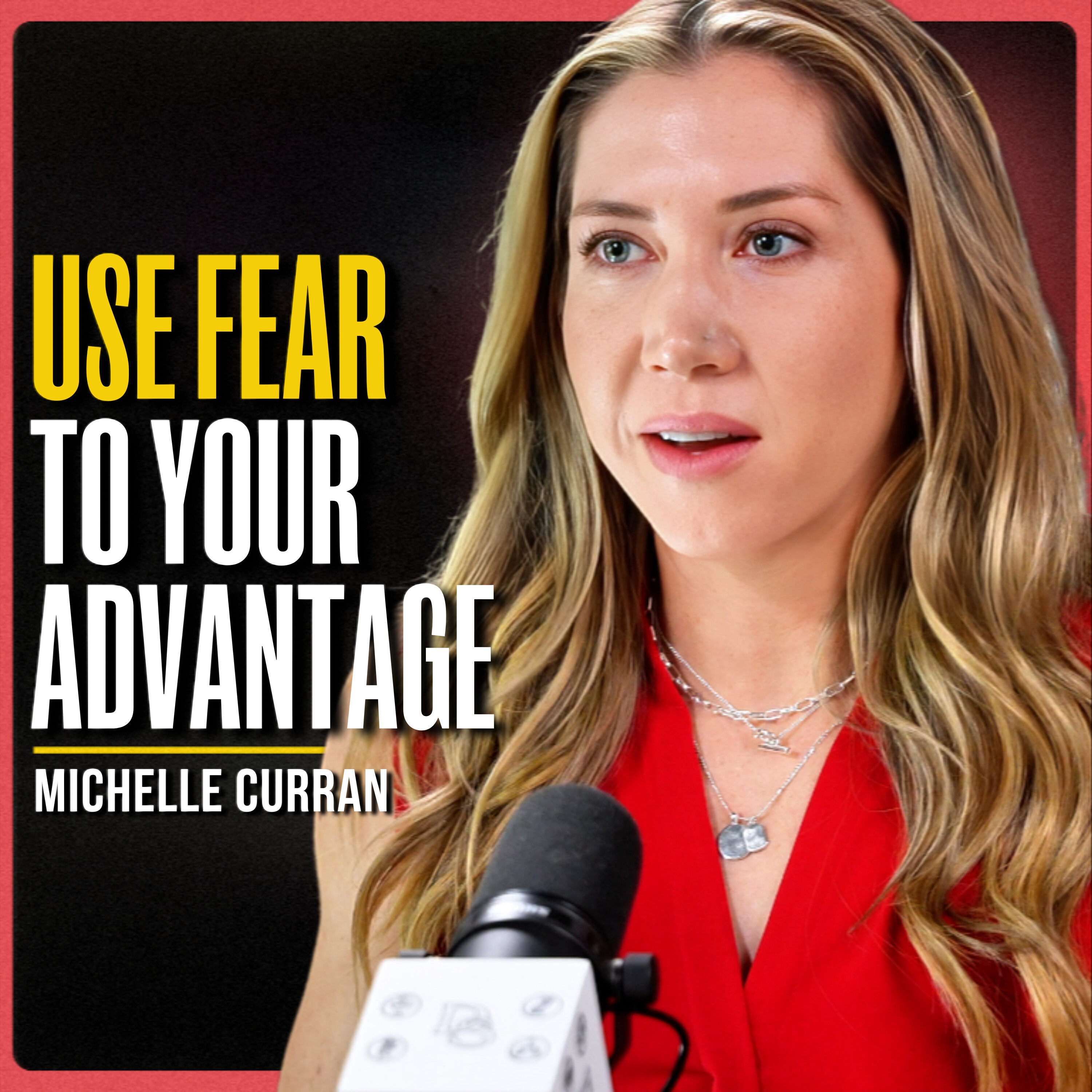
In this episode, host Ryan Holiday continues his conversation with former U.S. Air Force fighter pilot Michelle Curran. They delve into the five inner critics that undermine confidence, discuss common misconceptions about courage, and explore ways to overcome self-doubt and perfectionism.
Written by AI. May contain mistakes.

Get the gist, explore an idea or ask about something said.
 Claude
On The Daily Stoic, what are the key points of this episode?
Searching your listeningAutomatic transcript. May contain errors.
0:28Why choose a Sleep Number smart bed? This message comes from Capital One. The Capital One VentureX Business Card has no preset spending limit, so the card's purchasing power can adapt to meet business needs. Plus, the card earns unlimited double miles on every purchase, so the more a business spends, the more miles earned. And when traveling, the VentureX Business Card grants access to over a thousand airport lounges. The VentureX Business Card. What's in your wallet? Terms and conditions apply. Find out more at CapitalOne.com slash VentureX Business. What can 160 years of experience teach you about the future?
1:05When it comes to protecting what matters, Pacific Life provides life insurance, retirement income, and employee benefits for people and businesses building a more confident tomorrow. Strategies rooted in strength and backed by experience. Ask a financial professional how Pacific Life can help you today. Pacific Life Insurance Company, Omaha, Nebraska, and in New York. Pacific Life and Annuity, Phoenix, Arizona.
1:33Welcome to the weekend edition of The Daily Stoic. Each weekday, we bring you a meditation inspired by the ancient Stoics, something to help you live up to those four Stoic virtues of courage, justice, temperance, and wisdom. And then here on the weekend, we take a deeper dive into those same topics. We interview Stoic philosophers. We explore at length how these Stoic ideas can be applied to our actual lives and the challenging issues of our time. Here on the weekend, when you have a little bit more space, when things have slowed down, be sure to take some time to think, to go for a walk, to sit with your journal, and most importantly, to prepare for what the week ahead may bring.
2:24Hey, it's Ryan. Welcome to another episode of the Daily Stoic Podcast. I treat my back somehow running around Town Lake this morning. I don't know what happened. It's killing me. It's funny though. A couple weeks ago, I was running on the Town Lake Trail. As I do, you either do the 10 mile loop or I had this other one that's sort of like seven and a half. I think I was doing the 10 And I came around the part where there's this boardwalk after you go under the I-35 bridge. You go under it and then you pop out and you're on this sort of boardwalk along the lake slash river there. It's the Colorado River.
3:01It's the same river that's actually right behind the bookstore, although it looks very different. And I saw someone and they looked familiar and they kind of looked at me. And I sort of catch that from time to time when I'm running on the trail. Someone shouted at me this morning when I ran. And I sort of get recognized, but I don't tend to stop because I'm in the middle of my thing. And then I got an email later that day from a woman named Sarah. She said, I saw you on the trail this morning and had a funny moment. She said, do I know you? And you look back like, do I know you? And then it clicked.
3:31She said, I'd just been telling my friend about her membership to Daily Stoic Life, which is our members community for people who want to take their stoicism stuff to the next level. You can join at dailystoiclife.com. She said, hey, another close friend of mine, Michelle Mace Curran, It's going to be on your podcast soon. We always catch up when she's in Austin. She said, I can't wait for that episode to drop. She's an absolute force. And I said, hey, come along when she does the podcast, which she did. So that was a nice small world. I brought you part one of this episode earlier in the week.
4:03Mace is a former U.S. Air Force pilot. She flew us 2 ,000 hours in the F-16. She flew combat missions in Afghanistan. stand. And then she went on to be the lead solo pilot for the Thunderbirds, where she became known for flying upside down, doing all these crazy things that, quite frankly, terrify me. And she's flown over the Super Bowl and Daytona 500 and the Indy 500, a bunch of awesome stuff. And she has this new book called The Flipside, How to Invert Your Perspective and Turn Fear into Your Advantage. I was really excited to have her on the podcast. Part one was great. We're talking about some of the stereotypes of being a fighter pilot, how ego can get in your way.
4:45You know, it's not about being an adrenaline junkie or fearlessness as the subtitle of the book is about. And then in part two, we're talking about that voice of inner criticism. What is the hardest criticism to take? And then how fear is, again, a requirement for bravery. And if there isn't fear, courage isn't much of a virtue is it? You can follow her on Instagram at Mace Curran, and you can check out her book, The Flipside, How to Invert Your Perspective and Turn Fear into Your Superpower, which was just released this week. Thanks to Michelle for her service and for coming on the podcast. I think you're really going to like it.
5:26It's funny too, you talked about asking for help. There's something about that too, where it's like when other people ask us for help, we're like, oh here let me help you we're not what a fucking moron a loser right like we're actually like excited or it doesn't even register and then the next day we're like well if i ask for help it's so great like like the thing we get in our head about it and then even though we have objective evidence that no one cares yeah there's actually a famous marx really school where he says um we're like soldiers storming a wall he says you've fallen and you have to ask a comrade for help.
6:01So what? And I love the so what of it because it really does pierce this kind of insane chain of assumptions we make up in our head where like, if you're all storming a wall and someone falls, you're not like, I told you not to do it. Yeah, that's not occurring to anyone. And in fact, they're like, there's something beautiful about being able to help that person. and yet we're so reluctant to possibly ask for the help that we need to get better. Yeah. Yeah. When my son, he plays baseball and when he first started pitching as like a nine, 10 year old, he would get, he would cry on the mound because he was so nervous.
6:41Everyone's watching the picture. So if he messed up a little bit, he was just devastated. And we would ask him why. And he's like, well, everyone's judging. Everyone's, you know, thinks I'm bad at baseball. And I'm like, when your friend, other friend that pitches has a bad inning, what do you think about him? And he was like, nothing. Well, and then it's like, by the way, bro, you're crying on the mound. If you want, like, that's very much less conspicuous or more conspicuous than whatever you're trying to avoid. I deal with this all the time with people where it's like, hey, I need to see this by like Tuesday.
7:11And then the person doesn't deliver it on Tuesday. And you're like, where is it that you're bothering? And then they're like, well, I wanted it to be perfect or I didn't want to upset you. And it's like, you upset me by delivering it on Thursday. Like, if you had told me on Monday that you were having trouble, there would have been no issue. If you delivered it imperfectly on Tuesday, I would have worked with that. Instead, now I've spent a bunch of resources and time trying to get this thing from you. So I'm already upset with you. And then it's blown the whole schedule. Like, just the way we get in our own head, we take a situation that would be nothing and we turn it into a something that's much worse than whatever it is that we're trying to avoid.
7:52Like how often perfectionism really is just a form of procrastination. Yeah. Perfect. Enemy of good. Yes. So what are the five inner critics? Yeah. So when I was thinking about just my own experiences and that voice in my head that got in my way, I realized it looked different and sounded different at different points. And the most primal one is the fear critic, right? This is the bungee jumping one. It's like, okay, if you step off this platform, you're dead. So we go back to - What might happen? Right. We're avoiding the saber-toothed tiger, all the things, all of that primal brain. So that's the most obvious one.
8:27The second one is the comfort critic. And I think a lot of us struggle with this right now because everything is so comfortable. Sure. Netflix, Uber Eats, like I don't need to leave my house. I can have all, Amazon's going to deliver that in three hours. Yeah. And so it's this resistance to this feels really comfortable. Why would I step outside of that? And we have a hard time having perspective on all the things that we're missing out on by staying on our couch. It's good to do hard things, but hard things are uncomfortable. They're hard. Right. The friend critic. And that is like, you want to be liked.
9:02You want, this is like your best friend in sixth grade is the analogy I always use. You don't want to do anything to rock that boat. You want to fit in, which goes heavily with the reputation critic, which is the next one. And that is just this tribal idea, right? Like, if I do this, people are going to reject me from their tribe. And I feel that now, having left the Air Force and having left being a fighter pilot, but still wanting to be part of the fighter pilot tribe and telling my story. And then when I still find myself being very like hyper aware of how my community, not like an individual person, it's just this faceless entity.
9:42Yeah. Might feel about that. Yeah. Are they going to judge me for standing out too much or for disagreeing with them or yeah, all that. Yeah. And then the last one's the wrong critic. And I feel like right now with just how contentious everything is, I know I am often afraid to speak my mind because if I can't back it up like a thesis, I'm like, I'm going to look dumb because I might be wrong. Like I might have the general idea right. Yes. But if I say, oh, well, this is 70 % of this and it's actually 65%, I'm going to look like an idiot. Sure. Yeah. The getting attacked over details or you make a mistake or whatever.
10:21It's just easier to not stand out. 100%. And so I've done a bunch of workshops on those. And I found that labeling them helps people identify them. Which one am I experiencing right now? It gives them that perspective. And then is it how do you silence that critic or what do you? It's not necessarily silencing it because I think that that can be very difficult to do. I imagine even you at the level you're at, you still have like a new book coming out and you still have those moments of doubt, those voices, the critics, all the things. But it's just gaining that perspective, giving you the ability to take it or leave it and be like, this isn't me, this isn't fact.
10:58Kind of like I mentioned earlier, my thoughts are not 100 % fact. Let's zoom out. Let's look for some objective evidence if that's true or not. It also gives you a chance to bring in someone else to help you, right? to talk about it with a mentor or your spouse or whoever it is, or journal about it. And I think getting it out of your head, whether that's vocally or writing it down, often it's just like flipping this light on and you're like, oh, that's not a monster in the corner. It's a dirty pile of laundry. And it takes the power away. The hard thing about criticism is like, nobody would get where they ended up if they listened to criticism.
11:34And so this goes to the idea of ego is like, you got there ignoring the doubters, ignoring the people who said you were too tall or not the right gender or, you know, all the different things, right? Then you get to a place of success or achievement and suddenly being able to parse criticism is actually like super important. And so this ability to tune it out sometimes and really listen to it other times, Or to know, like, as a writer, like, the difference between, you know, reading what people write about you after the book is out and then being able to take notes. But prior to that, being able to take notes from people you admire or to hear things that, like, the hardest criticism to take is when someone is criticizing something you really like in a book.
12:25Like, something, oh, but that's the best part, you know? And or or when you're hearing something and you go, I think you're right. But if you're right, it means I have to do all of these things. So that's like the comfort when you're talking about where you're like, do I can I have two options here. I can go do this unpleasant work or I can just tell myself that you're wrong, you know. And so being able to know which criticism to listen to, especially when I would say on the whole, most criticism is not correct. Yes. That's the whole ballgame right there. And that has been, I've been doing what I'm doing now is writing and speaking and stuff and very visible on social media for the last three years.
13:09And I would say I get asked about how I manage that a lot. And I don't have the best answer for people because I don't do it perfectly. I don't think anyone has a good answer. Right. Like objectively, I know this random person, whether they're a fake account that's like got five followers or they're a lot of them are veterans, like an older generation of veterans. So I inherently have some respect for them and they have some credibility that Joe Schmo, who has never done what I've done, doesn't have. And it will stick with me. It will live like rent free in my head for the whole day. And then I get mad at myself that I'm letting them impact me like that.
13:41And I'm like, you should just block that person and move on with your life. I know that objectively. Right. I should be stoic. I should choose to not be annoyed by this or I should choose. But it is difficult to execute.
13:59Thanks to Toyota Trucks for sponsoring this episode. When I bought my ranch in 2015 out here in Bastro County, I drove my car about halfway down the dirt road that we live on, thought this isn't going to work, stopped, parked it, walked the rest of the way home, borrowed my wife's car, drove into Austin and bought a truck. What I bought was a Toyota Tacoma. And this truck wasn't just transportation getting me to and from my house. It unlocked a whole different style of living for us, not just on the ranch, but in our little Texas towns. There were places I could go now that I couldn't go before, especially out here in the piney forests, through the fields, and on the unpaved roads like the one that I lived in.
14:44We got to go deep into the hill country's wild beauty. We've driven all the way out to East Texas. We've driven across the country. And by we, I mean not just my wife, but both my kids who I drove home from the hospital in that truck. Toyota trucks are built for those who understand that the best adventures happen when you're willing to veer off course. Because you never know when you'll end up on a Toyota adventure detour. And of course, this is stoicism too, because every detour, every obstacle is an opportunity. But it's helpful if you can handle the difficulty inherent in that. If you've got the resilience and the right companion to make it wherever the road takes you, discover your uncharted territory.
15:26Learn more at toyota.com slash trucks slash adventure dash detours. We just took our kids to an outdoor performance of the Nutcracker. They had a snow cone and then they went insane in the car ride home. And one of the things I try to remind myself when that's happening is that I don't control my kids' behavior, especially when they're too far gone like that. but I do control how I respond, right? That's stoicism, but it's also what Dr. Becky talks about. Dr. Becky is a clinical psychologist and a best-selling author, and she founded Good Inside, which is there to give parents practical, actionable tools for handling those everyday challenges with confidence.
16:07My wife introduced me to Dr. Becky's books. I love them. I've recommended them a million times. I've had her on the podcast. And as it happens, Dr. Becky is hosting two live Q &A events for good inside members. I am one of them. She signed me up for it about a year and a half ago. I've loved it ever since. On December 1st, you can join Dr. Becky for her How Not to Raise Assholes event, which is about avoiding entitlement and raising kind, empathetic kids. And on December 15th, she's hosting her How Not to Lose It over the holidays event, which I'm sure we could all use. As I said, I'm a big fan of Dr.
16:44Becky. She's been a great influence for me as a parent and just as a human being. And Daily Stoic listeners can join for 15 % off with code STOIC15. You just got to head over to goodinside.com to catch the events.
17:05yeah marcus realis's line is we all love ourselves more than other people but we care about their opinions more than our own yeah and it's like i know about this because it's my thing and yet i'm letting some other person tell me whether i did it or not what's true or not yeah and then it's like i wouldn't listen to this person about literally anything else but because are talking about me, I think we're in some cases so desperate for feedback that we'd rather just mainline shit from people we don't respect than just sort of sit with the unknowingness of just like, hey, I'm pretty sure I did this right, but I'll never know.
17:45I've gotten a little bit more acceptance that I will not please everyone. And I've come to be like, okay, you can have that opinion, you're not my target audience. Yes. That's extreme. Like there's no one. Okay. So there's no one who's ever bad at a hundred percent, right? Like even the most successful people have not just like a percentage of the audience that doesn't like them, but the bigger that you are, the larger, not just the larger the percent might be, but the sheer amount of people that like you think about if something sells a million copies and 10 % of people who read it don't like it or listen to it don't like it, that's 100 ,000 people who hate something.
18:28That's a lot of people. That's like how many people are in one of those stadiums you fly over. Sometimes you visualize that and you're like, fuck, there's 100 ,000 people who think I suck. And to sit with that is really uncomfortable and unpleasant. But to be able to put it in statistics is also helpful. The Stokes talk about like, look, is it possible to go through life and never meet shitty people? No, right? Certain percentage of the population sucks. And so you're like, oh, I just met one of those people. 20 % of the population is X. Okay, so one in five people is going to be one. Why am I going around surprised that I'm encountering people who suck?
19:09It's a statistical certainty. And the same is true for the work you're doing. It's like, hey, like I took a stand on this. What are the chances that 100 % of the people agree with this stand? No, it's like just the country is divided this percentage and this percentage. So before, you know, people even really think about it, this percentage of people just on their face disagree with it. And then you go, okay, that's a lot of people. And then you have to go, do I have the fortitude to sit with the fact that this percentage of people or this sheer number of people hate my guts now or, you know, dislike me now or disagree with me now.
19:46Like, that's just how it goes. Yeah. Yeah. And I think focusing on the fact that every time that I say something or do something that that happens, I get that feedback a little bit. I'm like, this is like when I lift weights and my body fat goes down, but my number on the scale stays the same. I'm like re-comping my audience. I'm like, these are the people that need the message because it brings in some people too. And even if that's less people than I lose, I would rather have 50 ,000 people who are very on board and like dive deep than 200 ,000 people that are just kind of like, oh, cool jets.
20:22Well, do you have an audience or does the audience have you? And it is interesting to me when you watch people who they were fighter pilots or they did this thing that was so scary and dangerous. and then they get into another line of work, whether it's politics or writing or commentary or just anything that's like just more public facing. And then they're just like terrified of being disliked. Yeah. You know, you're like, what? You were okay being shot at, but you don't want to get angry calls from your constituents. Like in a way, the sort of physical courage can be easier than the moral courage or the, you know, just by the same token, to people who might have an immense amount of moral courage or don't like jumping in cold water because it's uncomfortable.
21:08We're not logical in our abilities to handle one form of discomfort or scariness and not another. But there is something kind of crazy about that. Yeah. And I think people, when I was flying for the Thunderbirds, people would be like, you're so brave. I could never do that. And I'd be like, what a weird thing to say to me. I'm not brave. I've had so much self-doubt. I've had so many moments of fear. I just forge ahead anyway. And it was never about what they thought I was being brave for. The physical danger of the maneuvers was not the problem. But it's interesting you said that because that is the definition of bravery, though.
21:42Like if you're not afraid. That it's not brave. Yeah. Like if there was some pill you could give someone and it just suppresses all fear and doubt. First off, you wouldn't do that. They'd become extremely dangerous, right? And that's why recklessness is the sort of vice that Aristotle holds up as the extreme end in that golden mean. But it's also like it would make the thing less impressive in a way, just in the sense that in the same way that steroids make the accomplishment less impressive. Because you're like, oh, it's not really you. I mean, there's part of you in there, but it changes how we understand what you really did.
22:20For sure. And that's what makes it impressive, right? Yes. If we were just fearless and not in danger and not afraid of that at all. Yes. Anyone would do it. Yeah, if you're not getting over something, it could still be impressive. It's just we're just not talking about courage as the virtue that's there. Maybe it's discipline or some other thing. You're doing something that's hard, that's no question, but it's just you're not being brave. It's only because it's scary to you and you don't know. Like if someone could say, hey, the outcome is a foregone conclusion, you are definitely going to succeed.
22:58Well, like obviously a lot more people would do it. But then also doing it wouldn't be impressive in the same way. And it wouldn't require courage as we understand it. Yeah. Yeah, for sure. If it was easy, everyone would do it. Yeah. And that's a hard thing to remember while you're doing it. Like when it's really fucking hard to go like, oh, this is keeping people out. But it is. Again, if there wasn't this sort of trough of despair in the middle, if there wasn't this valley that you had to go through, then everyone would do it because the rewards are obvious. Why people would want to be on the other side of it, very clear.
23:39It's just when you get in the shit of it that you can lose your bearings there. And so what those difficulties do is separate the people who really want it from the people who just kind of think it would be nice to have. For sure. And I think it's one of those careers that people think is sexy. Again, not to reference Top Gun for the third time, but that is such a pop culture phenom that has informed a lot of people's reality of the fighter pilot culture. So much of the job is so unsexy, right? It is stuck in a tiny cockpit for eight hours and going to the bathroom in there and sometimes messing that up.
24:19And like, where do I put my snacks to not have those two things overlap? And like, it's just that kind of stuff. And it's like sleep deprivation and sun's in your eye and trying to air refuel. And it's hard in the skill set, but it's also a grind just in like the work that has to happen. It's behind the scenes. The bureaucratic shit and the fact that not everyone's nice and that you're not paid that much. If it was all green lights, everyone would do it. The point is there's a bunch of red lights and detours and obstacles. And that's why not that many people make it all the way there. Yeah. I always laugh when people are like, what's like the behind the scenes of being a Thunderbird pilot?
25:01Because they see very tight flight suit, aviators, you know, locked in precision. and I'm like the number of interviews I did for local media where you fly cross country. So you fly four or five hour flight, you land from Las Vegas to Florida, you get out and there's like local ABC station there or whatever. It's like, tell us about the air show. And I'm standing there talking on camera and I'm not going to turn around because I've had a piddle pack mishap halfway there. And I'm a 35 year old expert in my field on this pedestal that has pee pants. I always think like adam sandler like all the cool kids be there it's like if they only knew if it was glamour if if the practice was fun more people would do it right like like game day you get the rush for sure why people want to be a professional athlete or whatever but it's it's it's all the parts that are not fun that you have to in a way learn to love and enjoy otherwise you just won't do it The amount of shit you have to go through to be in the position to do the fun part.
26:05That's, I think, the ratio of it that people don't really understand. Publishing a book is pretty fun, but writing is not that fun. Having written is great, but it actually is fun to me. I've had to get to a place where I understand that's the part of it that I control. That's the part of it that's not going away. that's the part of it that uh you know separates the amateurs from the i have to go like no no i like writing books not having books i like writing books i don't like like being an author is actually now like my least favorite part i like doing the thing the more you like doing the thing the more you're gonna fucking do the thing yeah i feel like that's why most authors don't have i mean 14 50 how many books do you have this a lot i don't know because you enjoy it yeah i just i i spend a lot of him doing the thing.
26:57And then like when people ask you, they're like, when people ask for shortcuts, like there's this famous story, a samurai wants to attach himself to this sort of young master or to this famous master. And he says, you know, how long does it take? And he says, it takes 10 years. And he goes, no, no, no, I'm going to like work really hard. I want to do it. Like, I'm really excited about this. And he was like, okay, 20 years. And he's like, what? You know, no, no, no, you don't understand. He's like, I got to get this done now. And he's like, okay, 30 years. And the point is like, if you're trying to rush through it, you're missing the whole point.
27:32Like whenever people are like, do you have any tips for speed reading? And it's like, no, the point is that it takes a long time and you do a lot of it. That you're trying, that you're looking for the shortcut is what is going to make it take a long time for you. Yeah. No, some of it is just lived experience too. It's the reps. Yeah. Like, I remember on my first book, I had this like list of media that I wanted to do and the publicist got zero of it, you know? And, you know, 15 years later, I've checked, I've done all of those things, but most of them happened like somewhat recently. And it occurred to me that if I'd gotten it when I wanted it, I would have not just, I would have gotten the first one, fucked it up and then gotten none of the others, right?
28:15Like, it's actually much better that I didn't get the things that I wanted until I was actually ready for them. But that's so hard. Like we, we think, we think we're this like once in a lifetime generational talent that should be able to skip these steps. Like just put me in coach. And it's like, the coach is like, no, no, you'll be ready in eight years. That's soul crushing, but they've seen you before. They, they know this. And like, that's a very hard thing to say to a 22 year old is like, talk to me in eight years. You're like eight years. I was a child eight years previous. Like, you just can't conceive of the amount of time because you've never done anything that took that amount of time before.
28:57Well, even now as a 38-year-old who's launching their first big book and I'm very goal-driven and so I want to make the New York Times bestseller list. Yeah. Because who doesn't? Sure. It's a measurable thing. So it makes sense you would go there. Right. And I think it does have an impact on speaking, on just access to things. It's a little bit of a boost for getting your message out in general. But I keep trying to tell myself that the book will have – like I am doing everything I can to get, you know, pre-sales and all the things you have to do, the marketing of the book. But if I don't hit the New York Times bestseller list, I still have – because of all the work I've done, thousands of people have gotten their eyes on the book that wouldn't have otherwise.
29:39Sure. And I have to know I did everything I could. And the impact is not contingent on that title. No, it's definitely not. Like that accolade. Yes.
29:57Human, your body has a performance superhighway. 60 ,000 miles of blood vessels that deliver oxygen and nutrients to every cell. This, of course, is your cardiovascular system. It's the foundational system that powers everything we do. Both elite athletes and longevity experts invest directly in the cardiovascular system because supporting healthy blood flow is critical for energy, recovery, mental clarity, and overall performance. That's where Schumann comes in. That's Schumann with two Ns. They started out of research at the University of Texas, near where I live, and have 15 years of experience making award-winning supplements for nitric oxide production and healthy blood flow, now used by over 160 pro and college sports teams.
30:45Human Cardiovascular Health Daily is a plant-based and made from clinically studied ingredients like grapeseed and seed kelp extract. It supports nitric oxide production for healthy blood flow and energy while also supporting blood pressure and helping support the delicate interlining of your blood vessels. Just two capsules each morning will power energy and recovery while also playing the long game by supporting long-term vascular health and healthy aging. Human has an exclusive offer for our listeners. You can visit human.com slash stoic for an extra 15 % off your first purchase. That's enter code S-T-O-I-C, stoic at checkout.
31:19That's human with two N's, dot com slash stoic for an extra 15 % off with code stoic at checkout.
31:30It was interesting for me. So my, it took, I think it was, so stillness is a key would have been my fifth book or sixth book. I didn't hit the New York Times bestseller list for a book that I wrote under my own name. I did some ghostwriting that I had, but I didn't hit the bestseller list under my own name five years in, six years in. But I hit like the Wall Street Journalist, which is a similar list. But it was fascinating to me as I would go up on stage, people would introduce me as a New York Times bestselling author anyway. And I would go, oh, people don't even fucking know. Like in my head, this distinction matters.
32:01And in my head, getting this thing would be a huge benefit to me. And then you go, actually, people don't even understand. They don't even know. Like you think these things matter. And then that's just because you've never actually taken the time, not you, but all of us. We don't take our time to put ourselves actually in the shoes of the people who we think are gatekeeping in this way and what they're thinking about. And it's like, no, they don't know. They're not thinking they don't know the difference. They don't know how this works. They're not thinking about you at all. They're thinking we have to get someone for this conference.
32:33and like, they're not like, well, this F-15 pilot is a New York Times bestselling author and this one is not. And so which one are we going to go with? That has never happened ever in our head because it's a thing that seems great. And then there's a part of our ego that wants us. And then we just end up, the problem is we end up spending a lot of time and energy trying to get something that if it was only upside, it'd be fine. But often we end up taking our eye off the ball to get a thing that doesn't really matter. That's really the problem. It's not that approval doesn't matter. It's that like, as you were seeking this person's approval, you were actually alienating these other people or you were neglecting this other thing.
33:12That's the cost of it that we don't think enough about. Yeah. Yeah. And I've thought about that as, you know, I hit the ground as a keynote speaker and my message really resonated well and I got such good feedback and that grew very quickly. But my focus has shifted for the last six months. Sure. And I'm like, am I hamstring myself for like this fall for next spring? And that's how I actually make my money for my business, right? Like just trying to earn on my advance at this point. There are way more New York Times bestselling authors than there are Thunderbird pilots. Like you already did. You already threaded the narrowest of needles.
33:47And then you go, but I also need this other needle that I heard other people were in. Do you know what I mean? Totally, 100%. And it's crazy how we do that to ourselves. And then, yeah, people will spend. And it was the first time I hit number one, which was with what book was it? I guess it was Stillness. So Stillness hits number one. Sort of a surprise. Very excited. Actually, that was the first time I hit the list at all was number one, like nine years into my career or something. And then like the next week, Donald Trump Jr. hit it. And then it was revealed that he had bought all of his copies, like that the campaign had just cheated.
34:21And you go, oh, this thing that I thought was so valuable. Yeah. is a totally meaningless rigged contest that I don't respect the person who bumped me off the list the next week. So why am I patting myself on the back for doing it? And why did I spend so much time trying to do it in the first place? Yeah. Like it's not one of those things that just happens, right? It's a lot of time and money and concentrated effort to try to make it happen. 100%. So TBD, but I get that and I'm very much preparing myself where it's going to be okay if I... I will be disappointed because I'm a human. It's also very easy.
34:59There are some things that it's only easy to say it doesn't matter after you've done it. You know what I mean? It would be wonderful if someone could tell you when you were 20, hey, these things that you think are important are not important. And these things that you don't think are important are actually really important. And it's really not until you spend years of your life chasing the things that are unimportant, then you achieve them and you realize, oh, it didn't do anything for me. And then meanwhile, you're neglecting these other things and then you get them or you work on them and you go, oh, this is what's actually moving.
35:33You just can't. It falls on deaf ears. It's just like how humans are. I think it's an evolutionary thing. If humans could really learn that lesson from other people's experience, we wouldn't have explored these, you know, unknown continents or invented these things or built these business. Like our ability to deceive ourself as a form of motivation is like obviously what keeps humanity progressing. Yeah. Some positives to it for sure. Yes. Yes. Or just like whatever drives Elon Musk is at some primal evolutionary delusional level. You know, like if you could communicate that away, you would never have done the things, but you can't.
36:19It has to hit you. Everyone has to figure it out for themselves. So what's next for you? I get asked this all the time. And it's one of those things after coming from my whole adult life, 13 plus years, being very clear on like, this is the structure. This is when you promote. This is the path to success. I'm kind of enjoying the - Just being a person? The unexpected. Like, I opened my email and I'm like, oh, this cool new opportunity happened. Ryan Holiday replied to my email. Hell yeah. And I want to get this message to the right people. And I think my audience tends to bias towards guys who like airplanes, naturally.
36:57But I think I write for other women who struggle with self-doubt and are high performers and get in their own way and do all the things we just talked about. and whatever that looks like, whether that's this book that helps me do it, whether it's getting on bigger stages, whether it's a podcast or just getting that message out there to have a bigger impact. I don't know what that looks like yet. Would you run for office? I asked that, no, not right now. Like everything I see right now in that, it feels so toxic. I know, isn't that the problem? Like good people, not to say I'm good. I mean, I hope I'm a good person, but like - At least you're not, well, yes, yes.
37:32That it's gross to you. is the problem. Even people I agree with, I'm like, I don't want to do that. Yeah. Like the game you have to play, I think like the showmanship and the facade you have to put on, that feels very inauthentic to me. And what I love about what I'm doing now is the freedom and the authenticity and the ability to speak my mind and my stories and everything just very truthfully and openly. Yeah. I feel like you can't do that as a politician. Well, what's interesting, like the service members are like sort of elite performers. You're a professional athlete, effectively, right?
38:06You're like a professional lacrosse player or something. Like you're leading a thing, but you're not, you don't actually control your destiny in the way that like, yeah, someone who's making a hundred million dollars, like you don't control where you go. You don't control where you fly. You have just this tiny little window of how you interpret the orders or execute the order. And so I imagine it would be nice for the first time in your life to be like, I want to go here now. I don't want to do that. I want to do this. And to just be like, I'm going to decide where I live and what time I wake up.
38:42And yeah. Yeah. The freedom is the best part. And people are like, why don't you go fly for the airlines? Like the bonus is really good. Or my friend's a captain. He flies two trips a month and he makes $400 ,000 a year. And I'm like, it's not worth any monetary amount. Like I make enough to be happy and do the things we want to do and travel. And like, I don't need to have a house that's a thousand square feet bigger. Yeah, sure. To be a cog in a wheel. And I think people love that job and not to hate on them because all of my friends fly for the airlines. No. But it just didn't feel fulfilling to me.
39:15No, it's funny when I talk to professional athletes, like there's this line between the ones who after they retire, like enjoy their life and then the ones who become coaches. Oh yeah. And there was like the ones who just enjoy their life cannot understand. Like, why would you do? You travel 42 games a year. Like you subject yourself to the grind of it. Why? You know? And that period of like, I'm going to do my own thing for a while would probably be nice. That's what putting in your years should allow you to do. Yeah. It's an exciting time. I realize I don't ever have like the Sunday scaries.
39:51Oh, which is what the fuck do I have to do this week? Yeah. Like Sunday night, you're like, oh man, even if I like my job And I love the people I work with. I still would have that like low level anxiety on Sunday night, just being like, tomorrow we have this flight and am I as prepared as I should be? And like, who is my student or vice versa? And now it's just like, oh, I get to go speak to this audience and I get to connect with them. And every time I get to hear some really cool stories back from them. And even if it's hard and I had to change time zones and wake up at 4 a.m. for my body, there's some really like tangible reward every time.
40:22And it's just a lot of fun. Yeah, autonomy is a wonderful thing. Yeah, 100%. And there's a lot of very powerful, successful, important people who have zero autonomy because their schedule is down to the minute. Yep. And like the Stoics talked a lot about this even in ancient Rome. It's like there's this Roman general named Marius and Seneca says, you know, Marius commanded armies, but ambition commanded Marius. Like, because they can't not be, what is the next thing? What am I going to accomplish? Who am I going to be? How do I be the best of this? Or make, you know, that endlessness is its own sort of form of powerlessness.
41:07And I tend to fall into that trap. And I'm like, with the book, like, and we'll see what's next. And I think doing it and being like, this is something I want to do. And then actually making it happen. Yeah. Maybe this is the only book I ever write. Maybe it's the first of many. I honestly don't know. Taking where it goes. Yeah. And I'm just enjoying the ride and the freedom. Good for you. You want to check out some books? I have some fighter pilot books. Oh, yes. Yes, I do.
41:36Thanks so much for listening. If you could rate this podcast and leave a review on iTunes, that would mean so much to us and it would really help the show. We appreciate it. And I'll see you next episode.
42:03Look, ads are annoying. They are to be avoided, if at all possible. I understand as a content creator why they need to exist. That's why I don't begrudge them when they appear on the shows that I listen to. But again, as a person who has to pay a podcast producer and has to pay for equipment and for the studio and the building that the studio is in, it's a lot to keep something like the Daily Stoic going. So if you want to support a show but not listen to ads, well, we have partnered with Supercast to bring you a ad-free version of Daily Stoic. We're calling it Daily Stoic Premium. And with Premium, you can listen to every episode of the Daily Stoic podcast completely ad-free.
42:51No interruptions, just the ideas, just the messages, just the conversations you came here for. And you can also get early access to episodes before they're available to the public. And we're going to have a bunch of exclusive bonus content and extended interviews in there just for Daily Stoic Premium members as well. If you want to remove distractions, go deeper into Stoicism and support the work we do here. Well, it takes less than a minute to sign up for Daily Stoic Premium, and we are offering a limited time discount of 20 % off your first year. Just go to dailystoic.com slash premium to sign up right now or click the link in the show descriptions to make those ads go away.
Self-doubt is just one of the 5 voices you can’t afford to keep listening to. Former U.S. Air Force fighter pilot Michelle Curran and Ryan continue their conversation, breaking down the five inner critics that fuel fear, doubt, and perfectionism and show you how to rise above them. They talk about what people get wrong about courage, the myth of shortcuts, the illusion of importance, and how to push past the voices telling you you’re not enough.
Michelle “MACE” Curran is a former United States Air Force fighter pilot with nearly 2,000 hours of F-16 flying time. She flew combat missions in Afghanistan and honed her skills across the globe, becoming the second woman in history to serve as the Lead Solo Pilot for the Thunderbirds, the Air Force’s elite demonstration team. Known for her signature upside-down maneuvers, Mace performed for millions, inspiring audiences at airshows and flyovers like the Super Bowl, Daytona 500, and Indy 500.
You can follow her on Instagram @Mace_Curran and learn more about her work at https://macecurran.com/
📚 Check out her book The Flipside: How to Invert Your Perspective and Turn Fear into Your Superpower, which just released this week!
👉 Support the podcast and go deeper into Stoicism by subscribing to The Daily Stoic Premium - unlock ad-free listening, early access, and bonus content: https://dailystoic.supercast.com/
📖 Preorder the final book in Ryan Holiday's The Stoic Virtues Series: "Wisdom Takes Work": https://store.dailystoic.com/pages/wisdom-takes-work
🎙️ Follow The Daily Stoic Podcast on Instagram: https://www.instagram.com/dailystoicpodcast
🎥 Watch top moments from The Daily Stoic Podcast on YouTube: https://www.youtube.com/@dailystoicpodcast
✉️ Want Stoic wisdom delivered to your inbox daily? Sign up for the FREE Daily Stoic email at https://dailystoic.com/dailyemail
🏛 Get Stoic inspired books, medallions, and prints to remember these lessons at the Daily Stoic Store: https://store.dailystoic.com/
📱 Follow us: Instagram, Twitter, YouTube, TikTok, and Facebook
See Privacy Policy at https://art19.com/privacy and California Privacy Notice at https://art19.com/privacy#do-not-sell-my-info.
