
 Ask ChatGPT


- Podcasts
- The Daily Stoic
- Stoicism, Democracy, and Personal Responsibility
The Daily Stoic1 Nov 2026 · 46m · 10 chapters
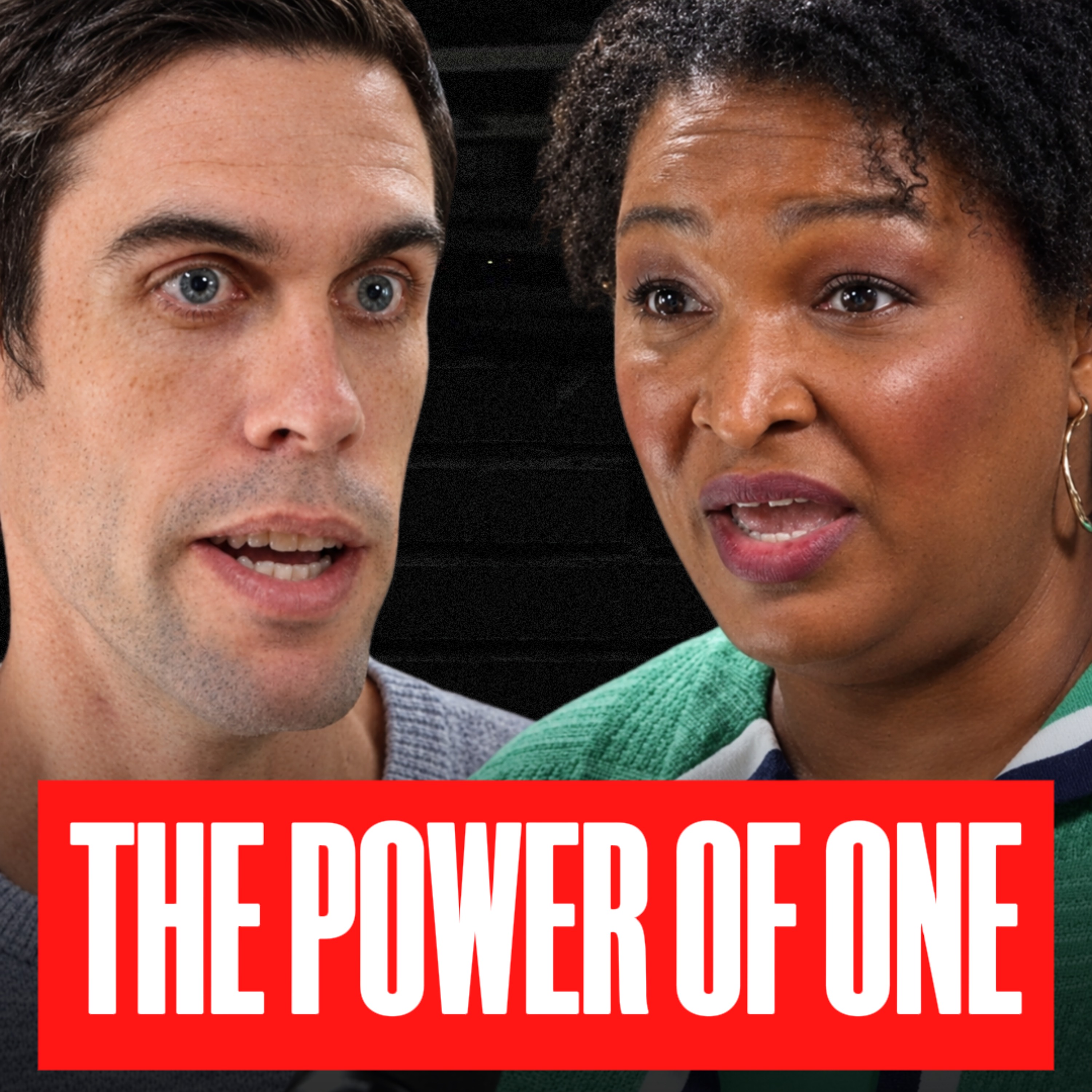
Stoicism, Democracy, and Personal Responsibility | Stacey Abrams
In short
How Stoicism and personal accountability can strengthen democracy amid “competitive authoritarianism,” media distraction, and declining willingness to accept consequences; also how political organizing should focus on long-term progress and communicating “why it matters,” not just outrage.
Guest
Stacey Abrams. Democratic political leader and author. Former Georgia House member (11 years); Democratic nominee for Georgia governor in 2018 (first Black woman major-party gubernatorial nominee; won more votes than any Democrat in Georgia history); delivered the Democratic response to the U.S. State of the Union; launched voting-rights organizing after losing; built an electoral mobilization network; also writes bestselling legal thrillers and children’s books.
Key claims
Shame should be reserved for worthy conduct, not used to avoid accountability; leaders must model accountability in small decisions; democracy shares power and holds leaders responsible, unlike authoritarians who hoard power; citizens must introduce “costs” for wrongdoing; politics is about batting averages (long-term outcomes), not horse-race wins; communicators must explain the problem, why it matters, and the solution.
Notable examples
Abrams’ post-loss speech alleging conflict-of-interest issues; her apology to staff after a poorly communicated team decision; “no-bid contracts” and pandemic communication failures; Project 2025 as strategic, calm authoritarian planning; boycotts as distractions that can enable cover-ups; FISA surveillance court explained via “nexus” and data-file risk; Texas energy crisis blamed on the “Green New Deal” despite it being untrue.
Written by AI. May contain mistakes.
Chapters
3:23
The Balance of Public Life and Accountability
Exploring the balance between public criticism and personal accountability in leadership.
“There's a tension, I think, for anyone in any form of public life, which is on the one hand, you have to have a thick skin.”
5:17
Shame, Accountability, and Democracy
Discussing how shame and accountability shape our political landscape and democratic values.
“that thin skin often reveals itself in other places because it's not just what they say about you on X or on Instagram or in my case on everything.”
16:13
The Role of Critique in Democracy
Explore the importance of critique in democracy and personal responsibility.
“but I think anyone listening is going to wonder.”
19:07
Consequences and Personal Accountability
Discuss the consequences of speaking uncomfortable truths and owning one's actions.
“The people who were harmed were the ones who needed a voice.”
22:43
Political Activism and Long-Term Goals
Understand the need for a long-term vision in political activism and democracy.
“The people who we actually need a little bit more determination and a little bit more thick skinness are bowing out.”
28:00
The Importance of Consistency in Political Engagement
Explore the significance of consistent engagement in politics and personal responsibility.
“But if I can get back to consistency, because my mission is not to, it's not the number, it's I need to build this muscle.”
40:08
Navigating Democracy and Communication Challenges
Discuss the challenges faced by politicians in effectively communicating key issues to the public.
“If you're hiring now, then this is a job for Indeed-sponsored jobs.”
42:01
Communicating Complexity: Why Context Matters
Learn how to effectively communicate complex issues and why context is key.
“And when we lose this, here's where it causes problems for you down the line.”
44:48
The Role of Storytelling in Political Discourse
Understand the power of storytelling in explaining political and social issues.
“And if you can't, then, you know, there's the Feynman thing about like, if you can't explain it to a to a whatever, you don't really understand.”
48:26
Re-explaining American Values in Today's Context
Explore the importance of re-communicating American values and principles.
“So there's not really anyone to tell that story.”

Ask about this episode
Get the gist, explore an idea or ask about something said.
 Claude
On The Daily Stoic, what are the key points of this episode?
Searching your listeningTranscript
Automatic transcript. May contain errors.
0:00Ryan Holiday: Look, hiring is make or break for a business, especially if you're a small business. You can't just hope that you find the right people. Hope is never a strategy, but when it comes to recruitment, it's not going to work. So when the pressure's on and you need the right hire, this is a job for sponsored jobs. Indeed, sponsored jobs gets you the quality candidates when you need them the most. It's how you get your job seen. And with Indeed Sponsored Jobs, you'll get matched with and hire quality candidates who can drive the results you'll need. And plus, with Indeed Sponsored Jobs, you only pay for results.
0:35Ryan Holiday: People are finding quality hires on Indeed right now. In the minute or so we've been talking here, companies have made dozens of hires on Indeed, according to Indeed data worldwide. So join the 3.3 million employers worldwide that use Indeed to connect with quality talent that fits their needs. And listeners of this show will get a$75 sponsored job credit to help your job get the premium status it deserves at Indeed.com slash podcast. Just go to Indeed.com slash podcast right now and support the show by saying you heard about Indeed on this podcast. Indeed.com slash podcast. Terms and conditions apply.
1:10Ryan Holiday: If you're hiring now, then this is a job for Indeed sponsored jobs. I first intersected with today's guest when she mentioned stoicism in a very famous speech. Let me play that for you real fast. And this struck me because it's different than my interpretation of stoicism. And in fact, as I told her later, I found that how she responded, the political organizing and democratic work she did after was to me the definition of stoicism. I mean, she's the person who flipped the Senate in 2020. She and I have become friends. I had her on the podcast before. It was remote. She's someone I very much admire and look up to.
1:46Ryan Holiday: She was in town to do an event at the LBJ Presidential Library, where I believe she is on the board. And I asked her if she would come out and do the podcast. And she did. We had a lovely discussion. I think you're really going to like it. We're not getting into partisan politics here. What we are talking about is sort of bedrock American values, bedrock Western values. We're talking about how you effectuate political change, how you deal with setbacks, how you take accountability when you make mistakes. And I think this is going to be a lovely conversation. We went over to the bookstore after and talked about books for about 30 minutes.
2:19Ryan Holiday: I'll bring that as a bonus episode. If you don't know who Stacey Abrams is, well, you should. She's a number one New York Times bestselling author. She spent 11 years in the Georgia House of Representatives. In 2018, she was the Democratic nominee for governor there. She won more votes than any Democrat in the state's history. She was the first black woman to become a gubernatorial nominee for a major party in the United States. And then she was the first Black woman and the first Georgian to deliver a response to the state of the union. And then in the wake of that election, which she lost, she launched a campaign for voting rights.
2:52Ryan Holiday: And she has built a massive political machine that has activated hundreds of thousands of voters and shaped electoral politics here in the United States. She's also an entrepreneur. She brought a great business book for Portfolio. We had the same editor. And then in addition to her children's books, which I have here, she is also the writer of many New York Times bestselling legal thrillers, which she told me about a little bit at the end of the interview. She signed those and you can get them here at The Painted Porch. This is me talking with Stacey Abrams. You can follow her on Instagram at Stacey Abrams and check out her podcast, Assembly Required, wherever you listen to podcasts.
3:35Ryan Holiday: There's a tension, I think, for anyone in any form of public life, which is on the one hand, you have to have a thick skin. People say mean things about you. You get criticized. Yes, you might know something about this. And at the same time, one of the problems in our culture right now, I think, is this complete shamelessness. Right. So what do you think the balance is? Like if you are a sensitive little snowflake and you don't want to be criticized or attacked, you'll never do anything. And then we've taken it almost too far in another direction where people are like the idea of resigning in shame is like a relic from a bygone era.
4:12Stacey Abrams: I grew up in the South in a religious family. Shame has a place. Yeah. And it is it's a governor. It helps you understand that you've crossed a boundary, that you've made a mistake, that you should be accountable for what you've done.
4:28Ryan Holiday: Yeah.
4:28Stacey Abrams: And that's important. The issues are what are we shamed for? And I think the tension is not whether it's shame or no shame. It's what is worthy of shame, what is not. And leadership is the ability to accept accountability, to accept the need for remediation. and we've gotten to the place where because we don't like the things that we get held accountable for, we just decide there's no accounting to be had. Good leaders understand or good people understand you make mistakes. And when you make those mistakes, you're responsible for the harm that those mistakes cause. You're responsible for how you navigate what you learn.
5:08Stacey Abrams: And the best people internalize and say, okay, let me try not to do that again. If you are too thin-skinned, that thin skin often reveals itself in other places because it's not just what they say about you on X or on Instagram or in my case on everything. It's what they do.
5:29Ryan Holiday: I get it on videos where you, like if you were on the podcast, if we just flash a I have a thumbnail of you as a person who's been on the show, people. I apologize. No, no, no.
5:42Stacey Abrams: I mean, so I was actually, I was having this conversation a couple of days ago. I was on the cover of Governing Magazine in 2014, 2012, 2014, because of my bipartisanness. Now, I've never not stood in my values. I've always been very clear about what I believe. But I recognize that there are sometimes your job is to, you know, cooperate. Yeah, politics is compromise. And sometimes your job is to compete, but your job is always to be held accountable. And in that article, the Republicans who lauded me, who said, you know, really nice things about me, a few years later despised me.
6:23Ryan Holiday: Yeah.
6:24Stacey Abrams: Nothing about me changed except that people could see me and they could see that the competition side was never the values never changed. I just got better at getting some of those things done. And so sometimes I think the tension that's endemic to me, I'm perfectly acceptable in quiet spaces. Like, there's still Republicans who I worked with. In fact, a congressman who said vile things about me in public saw me in the airport recently and spontaneously hugged me. Because he was like, oh, I miss seeing you. Like, then why did you say this thing about me on Fox? Of course. But I think that goes back to shame because he feels very comfortable being permitted to have a public persona and a private belief system.
7:11Stacey Abrams: And I think it's that tension and shame that is really the most pervasive because we've created this media and I think social narrative that doesn't devalue hypocrisy anymore. Yeah.
7:28Ryan Holiday: Well, and the reason I think it matters is because like on the one hand, you have people who they won't take an obvious stand or push through something because like seven people are mad on Twitter and they're afraid of upsetting those people. And then on the other hand, you have someone who is, you know, either committed a crime or totally humiliated their family or, you know, and they can't just go, you know what? The penalty for this is not death or social exile, but it is, you know, I have lost the moral authority of my office, at least for temporarily at the very minimum. And so I'm going to impose a punishment on myself here or whatever.
8:04I mean, part of it's incrementalism, because when you get comfortable with the small violations, you start to forget that those were the warning signs.
8:14Ryan Holiday: Yeah.
8:14Stacey Abrams: Recently, I made a choice in my team and I didn't clearly communicate it. And it led to sort of this temporary firestorm. It was a sort of storm and drawing people thinking things had gone horribly wrong. I'm like, oh, no, that was my fault. So I called each person and they all work for me. And I called each person and said, look, this was my mistake. I should have done it this way. And my failure to do it this way led to this pain.
8:40Ryan Holiday: Yeah.
8:40Stacey Abrams: And that's my job. And one of them, when I called to apologize, she was like, why are you apologizing? Like, you get to make the choice. I said, yeah, but I also have to deal with the consequences. And you can't trust me on the next mistake I made if I didn't acknowledge this one. So, yeah, this is a small one in the scheme of things. But it's important enough that if I want your trust long term, and I think this goes to your point about moral authority, my moral authority is not just on the big decisions. It's how do I make those small interstitial decisions that let you trust that the big decision I get to was grounded in a set of values and principles and philosophies that you can trust.
9:22Ryan Holiday: Yeah, I think we all like to think that in the big moments, we'll make the big, right decisions. And we forget, and this goes all the way back to Aristotle, that it's actually on this muscle that you're building. Like, I remember a year or so ago, I was in a car from JFK, and I was, you know, this is actually one of those papers. did you have to do tip-ins where you sign the pages for your book? So I would just bring them with me. I do these tip-ins. So I'm like signing these pages in the back of the car because it's like the dead time I have. The car hits a bump and the Sharpie goes like, and it like marks on the door of the car.
9:52Ryan Holiday: And it's like, obviously the driver doesn't see this. And obviously I could just get out of the car. And I was like, you know what? It's always a good practice to have to take accountability. Like, what are the consequences going to be for this thing? It's going to be nothing. It's like the cost is really that I just have to point out a thing that I could have got away with. And so I was like, you know, I pulled over like, hey, you know, I think this will come out, but it happened, you know. And I just remember going like to pat myself on the back on it. But it's saying like, hey, it's actually in these little moments that you're building the muscle that hopefully later on, it's not totally unfamiliar to you to to do that accountability thing and to have to deal with the moment of discomfort while you do it.
10:33Stacey Abrams: And I think that that practice is not planning yourself on the back. It's acknowledging choices. And all of these are about the choices we make. It's the choice to decide that shame doesn't matter. Because one of the reasons politicians in particular and leaders writ large are being more and more shameless is that there's no accountability that's imposed upon them by the people. And the work that I'm doing on authoritarianism, the frame I use is, look, this is all a power conversation. Democracy and authoritarianism, it's both sets are conversations about power. But authoritarians want to take power.
11:08Stacey Abrams: They want to seize it. They want to hoard it. And they never want to be held accountable for it. Sure. Democracy is about how do you share that power even with people you don't like?
11:16Ryan Holiday: Yeah.
11:16Stacey Abrams: How do you leverage that power even for people who will benefit that you don't care for? And then how do you hold yourself accountable for that power? And part of what has accelerated competitive authoritarianism in the U.S., I think, is that we've gotten out of the practice of holding our leaders accountable because we get one little thing we want and we decide it's not worth fighting about it. And so, yeah, when you get out of that car, your decision to turn around and say, I made a mistake. I'm going to tell you about it. You might decide to lower my Uber ranking. I'm not sure what happens to you when it falls below a certain threshold, but I'm going to risk it.
11:53Stacey Abrams: That's part of how citizenship works. It's not just your willingness to tell him, it's your willingness to introduce a dynamic into that relationship that says there's a cost. and his decision was, okay, I'm going to get really mad and I'm going to lower his rating or I'm going to say, it's okay. So what did he say?
12:17Ryan Holiday: Oh, he's like, it's totally fine. He's like, I'm sure it'll come out. And I was like, look, if it's not, like if someone had booked the car, I was like, if it's not, you have my info, just tell them what I, you know what I mean? And like, again, never heard about it after this moment because probably it did. You put a chemical on, it probably comes right off. But it's the decision to try to do the adult responsible thing. It's like there's like the kid in us and then the adult in us. And are you going to be the adult or the kid? And I think about it politically, too. You make this point about leadership where it's like also our system is dependent on leaders modeling the behavior over and over again.
12:49Ryan Holiday: Like I think about Washington, like Washington sort of understood that they were setting up this system and a lot of it was going to be voluntary. But if you could create a tradition or a practice around it, people would follow. And like, you know, his decision to resign his commission first in the army and then to resign the presidency. First off, that's rooted in the example of Cincinnati's like it goes all the way back to the Romans. But that's a tradition that lasts all the way until Roosevelt, which is pretty crazy. You think about the habit that we got in the peaceful transfer of power, not interfering in election.
13:22Ryan Holiday: There's all these different things that every single one of our politicians for basically 250 years observed. And then I think it'll be really interesting and challenging when you get out of the habit, as anyone who's relapsed in anything in their life, how do you get back in the habit starting from zero? Look, it's been a while since I've had to fill out an expense report. That's one of the perks of not having a job. But I don't remember enjoying the experience. And certainly, I don't want my employees to waste a bunch of their time doing it. You know, you got to find the receipt. You got to guess what category it goes in.
14:00Ryan Holiday: Then finance is asking you, well, what about this? Or are you sure this was proper? Or, you know, what if you didn't have to do any of that? It's bad use of your time. That's bad use of company time. Expense reports are tedious. It's not what I want my employees doing. Well, Ramp makes collecting and submitting expenses super simple. With Ramp, expenses submit themselves. You just text or email your receipt and Ramp categorizes codes and submits it. And when you book business travel with Ramp, they find the best flights and hotels you're actually allowed to book. You don't find out later that your company is only partially going to cover it.
14:34Ryan Holiday: Ramp is the only finance platform that employees and finance teams both rave about. And companies have saved over$12 billion with Ramp. I think every business owner, every employee is trying to find tools that reduce the amount of admin process that they have to go through. And Ramp helps you do that. Ramp helps your team save time with one of those most tedious admin tasks. Time is money. Save both with Ramp. New customers get$250 off at ramp.com slash daily stoic. Go to ramp.com slash daily stoic. This time of year, something's always going wrong at the worst possible moment. And look, your customers don't care who fixes it.
15:15Ryan Holiday: They just care who answers first. and if they try to get you and they miss you, they'll go to someone else. That's why today's episode is brought to you by Quo, spelled Q-U-O, the business phone built so you never miss a call or a customer. It is the number one rated business phone system on G2, trusted by over 90 ,000 businesses who rely on it to stay reachable and look professional every day. All your calls, texts, and voicemails live in one place so anyone on your team can pick up the conversation, see the full history, and respond fast. And Quo integrates with the tools your team already uses, HubSpot, Zapier, Claude, whatever.
15:51Ryan Holiday: And it helps you save time, stay organized, and spend less effort chasing down information between systems. Money is on the line. Always say hello with Quo. Try Quo for free, plus get 20 % off your first six months when you go to Quo.com slash Daily Stoic. That's Quo.com slash Daily Stoic.
16:12Stacey Abrams: I'm going to talk about something that you didn't ask about, but I think anyone listening is going to wonder. So you and I met because I made a comment about concessions. And for me, that was part of my responsibility because there are those who will say, oh, she violated the tradition and I didn't. But because we've lost nuance, it feels that way. And I think it's an important point because one of the obligations of shame is critique. Yeah. It's the ability to understand that something may be OK in multiple ways, but there are flaws. And when you cannot critique systems, those systems then harden around whatever the fracture is.
17:00Stacey Abrams: And there are only certain people who have the platform for critique. And typically in an election, it's the person whose name is on the ballot as the person who lost and was never unclear about that. I never got to go in the governor's mansion. I promise you they did not invite me after that election. I was never unclear about the fact that I didn't win. But I also think language matters. And one of the things I love about your writing and your compendium, you know, it's just it's how often we get better at being people because we do things that are hard. Like I knew in the moment I gave that speech, there were people who liked me who were not going to like me after it.
17:41Stacey Abrams: because they were going to hear me say something that was not what they expected. I said, this thing that we've all anchored our democracy around has a problem. Yeah. And we should do something about it.
17:55Ryan Holiday: You were saying there was a conflict of interest in your opponent, not that the entire election was improper or that you were challenging the results per se. You were just saying, hey, at least what I understand you'd be saying is, hey, I don't think this is the right way to be doing this and we should fix that. And then, to me, I found what you did to be immensely stoic because you said, and I'm going to go fix it. And which I think to a degree you did.
18:20Stacey Abrams: So part of it was the process was flawed. And the people who were supposed to benefit or have access didn't. And in fact, post my speech, post that election, the opposition, And, you know, the Republicans who won went back and actually fixed a number of the things I pointed out. Now, they've since broken it again because it worked too well, because in the next election, that fixed piece led to an outcome they weren't happy with. So they broke what they'd fixed. But in the moment, yeah, my point was, look, I'm not going to benefit from this. There is no universe in which this is going to change the outcome for me.
18:58Stacey Abrams: But the people who were harmed, and I think this is the part when you and I had that first conversation about stoicism that was really grounding for me. The people who were harmed were the ones who needed a voice. And part of my statement was, look, I'm supposed to be quiet because that's what feels better to everybody. I can't do that because the responsibility is to speak for the people who are never going to get this microphone. But the other thing was, look, I don't want to get rid of democracy. Don't want to get rid of elections. I'm perfect. I love elections. But what I do want to make sure of is that the next time we have one, more people who are entitled to participate actually can show up.
19:40Ryan Holiday: Yeah. There's good faith arguments and bad faith arguments. And there is this idea that stoicism is resignation and apathy. It's not that far from cynicism, like the lowercase cynicism, like the system is rigged. Everyone sucks. So I'm going to focus on myself. And I think if that's what stoicism is, first off, it doesn't interest me, but I think that's a self-fulfilling prophecy. But if stoicism is, hey, there are elements of the system that are rigged, there are real problems, they've been problems for a long time, I'm one, not going to be a party to that. And two, with whatever limited success I'm able to have, I want to try to make it a little bit better.
20:16Ryan Holiday: I can't personally fix all of it, but I'm also not going to absolve myself of my responsibility and duty to try to fix it.
20:25Stacey Abrams: And I'm going to live with the consequences of that decision. Belisarius.
20:30Ryan Holiday: Belisarius?
20:31Stacey Abrams: Yeah. So when you wrote about it. So again, I'm a huge fan. No, I mean, look, you are better than like three philosophy classes I took. So, no, I mean, I and I think I've told you, but what Belisarius would do, like his willingness to not just do the thing that needs to be done, but accept that there are consequences for it. Yeah. And that those consequences are not fair. And I think that goes back to the question of shame. The consequences for being ashamed is that you're going to be uncomfortable, you're going to lose things, something's going to happen, and we've lost the ability, or at least we've weakened the ability to deal with consequences.
21:10Stacey Abrams: Yeah. I have faced consequences. I have donors who will not support me anymore. I have liberal friends who now categorize me with someone who, you know, fomented insurrection. Like, I didn't do that. And I understand. And I understand that I'm not always going to get the fulsome opportunity to explain what happened and people are going to go with the pithy understanding that they have. But part of what Stoicism and Belisarius' life taught us is that, look, you do it anyway because you believe that the greater good matters. And that greater good in Stoicism is what was your effort? You cannot determine the outcome.
21:52Stacey Abrams: You can only determine your input and your effort. And even when it's taking accountability and taking responsibility or speaking an uncomfortable truth, those things have consequences and you've got to be willing to live with it.
22:04Ryan Holiday: Are you willing to take the hit and pay whatever the price is? And it might be, hey, like I could I could have said that better or, hey, I wish I'd not said that at all. Or, hey, you know, in some moment of personal weakness, I did X, Y or Z. Again, that doesn't mean you don't get to contribute at all, but maybe it does mean that you are disqualified from being the governor of New York or something. You make mistakes and you have to be willing to pay the price. And I do think there's something about our society that seems to feel like consequences are for losers and suckers, you know. And I've sort of likened it to it's like if you treat everything with antibiotics, you get superbugs.
22:46Ryan Holiday: Yeah. The people who we actually need a little bit more determination and a little bit more thick skinness are bowing out. And then it's leaving the most shameless, least qualified people. And that's that's an asymmetry that I think we're dealing with.
23:03Stacey Abrams: I think that's the nicest way of saying things are falling apart. Yes.
23:08Ryan Holiday: Which, by the way, would not be unfamiliar to the Stoics. Right. Like I think about like, it's really bad. Would I rather be alive now in America or in Rome under Nero? Probably this. And like there are mechanisms that we have that they didn't have in the past. And by the way, to take them for granted, like to pretend we don't have them is to disregard the immense sacrifice and struggle that went in to getting them. Yeah. Like you think the legal system is rigged now. Like, let's go to 1964. And, you know, you've got a you've got a case before a Southern judge and tell me you wouldn't prefer this legal system.
23:46Stacey Abrams: I mean, look, I as as angry as I am about recent decisions from the court, Plessy v. Ferguson was deeply, deeply problematic. Yeah, to put it mildly. And the conservative court that disavowed my humanity is not the court we have today. This court is willing to diminish and limit my personal freedoms and my civil rights, but they at least acknowledge I'm human. So there's progress there. Yeah. I think part of our responsibility, though, is for us to not get comfortable with, you know, we don't have Nero, but we deserve better. Of course. And yes, let's mark our passage by what could be, but let's also be aspirational about what we should get to.
24:27Stacey Abrams: And I think that's the other thing. Shame stalls from us because you have no ambition when everything's acceptable. Yeah. How do you reach for more when the dregs are enough? Yeah.
24:39Ryan Holiday: Was it maybe John Doerr, the civil rights attorney? He was like, you just got to keep going back. And that was my other question for you as an organizer. I think there's something just like in the stock market, we're focused on short term gains. There's something about our sort of political activism these days that like gets very discouraged when you don't get the result right now instead of thinking about it in terms of batting averages or in terms of a long term movement where you're chipping away at it.
25:05Stacey Abrams: I think it's two pieces. So we've reduced people's lived experience to politics. And we don't connect the dots for them as much. Democracy is not about the esoteric nature of how do we allocate power. It is about what does that power do to or for people? And in organizing, if you don't have both conversations at the same time, then yeah, people are looking at who wins the horse race and not the batting average. Because the horse race is about, did I win today? The batting average is, am I making progress? Am I actually batting well enough that they don't cut me? Am I getting things? And are things okay?
25:45Stacey Abrams: And right now, people are watching their lives devolve and deteriorate. And instead of saying, oh, why is the batting average below 200? We're saying, well, we're at bat. And if I get a home run, great. And so part of our responsibility is to help people calibrate the political consequence is about what happens to your daily life. Democracy needs to deliver things for you. And the extent to which it stopped delivering or worse, it starts taking, that's a problem. And that's a batting average conversation. The extent to which the guy you liked won an election and the person you didn't like lost, that's inconsequential until you see what they do with the power you've given them.
26:25Stacey Abrams: But it's a lot easier to be distracted by the highs and lows of an election than it is to be consistently paying attention to the consequences of who holds your power.
26:33Ryan Holiday: And also, what is the movement aiming at? What are the tangible policy goals that you want? Better is not, you know, like I think anyone who's tried any physical fitness things or whatever, Like if you're not if you're not concrete and specific with what you're trying to do, you know, just getting better, like getting in better shape is not a thing. You know, eating better is not a thing or being smarter is not a thing. What are you specifically trying to accomplish? There's this kind of vague sense of like what people want. But when the other side is like, hey, no, no, we want to end this. We want to make this illegal.
27:06Ryan Holiday: We want to own this. It might not be morally right, but it's concrete.
27:11Stacey Abrams: And so it's politically more effective. Exactly. Like my best friend and I, back in June, I had this plan and I worked out every single day. And I had this big calendar and I marked off every box. I would have to send her a note every day. I then hurt myself because that was stupid. And so like two months later, I'm like, I want to start again. But I allowed things to kind of interfere. And so I would have these peaks and valleys of I can do it this weekend. Which doesn't do anything. It kind of goes to your point about the political horse race. And so today, this morning, I actually sent her a note.
27:46Stacey Abrams: I'm like, OK, so for the next four weeks, I have to do these things three days a week and these things two days a week. And so she wrote back, well, you know, how much are you going to do? I'm like, oh, it's only six minutes. Yeah. Because I'm on a plane like every five minutes. But if I can get back to consistency, because my mission is not to, it's not the number, it's I need to build this muscle. And therefore, I'm going to consistently do this. And then I'm going to measure after four weeks what comes next. And she said, well, I'm going to just go on the weekends. And I said, you can. But the problem is going to be that when you only go on the weekends, everything you do during the week erases whatever you did on the weekends.
28:29Stacey Abrams: Yes. In politics and in democracy, if we only pay attention to what we do on the weekends, if we don't, to your point, have this long-term plan. I mean, Project 2025 is antithetical to my core values and beliefs. It is incredibly thoughtful. Yes. They have written down, and I mean thoughtful as in they have thought about it, not thoughtful as in it's nice. It's strategic. strategic, well-resourced, well-referenced, well-researched plan for dominion.
29:00Ryan Holiday: Yeah, yeah.
29:01Stacey Abrams: And it is doable because they know where they're starting. They know what the peaks and valleys look like, but it is consistent. I'm never going to get to where I want in my physical fitness if my only ambition is once a week to have this great outcome. We are never going to get to the society we want if our only ambition is to think it's going to show up on the weekends. And right now, on my side of the aisle, there's a set of dynamics and debates about who gets to write the plan. And I think to your point and what a stoic would tell us is that part of it is we've got to determine what our outcome is.
29:38Stacey Abrams: And we've got to know what our ambition is towards, not the thing we're going to do, but what do we want it to accomplish? Yeah.
29:45Ryan Holiday: And, you know, it's funny because we connected over your idea of like stoicism being a luxury, like I'm not going to be silent in my outrage. The way I think about it, though, is like I think something like Project 25 is truly outrageous, right? And truly offensive. And it makes me angry. And then I go, but wait, they didn't write this in anger. This was done calmly and coldly. It's possible because of its lack of emotion, right? It's seeing human beings not as human beings and as these sort of pieces you can move around. And so if anything, it's when you're up against something like that, that you need to have this sort of calm.
30:19Ryan Holiday: You can be outraged morally, but then strategically, you have to be equally cold and calculating and you have to be able to know, okay, so we got to take Congress, we got to take the Senate, we got to, this is what we're going to have to stop it in the state legislature. I think there is something, too, about where the outrage feels cathartic and the anger feels good. But again, it's connected to that sort of vague idea of opposition, not here's how we're stopping it and here's what we're replacing it with.
30:45Stacey Abrams: There's a line that I have half in my head that is from Washington in the calm light.
30:51Ryan Holiday: What's the in the calm light of mild philosophy? There you go.
30:54Stacey Abrams: Part of what we haven't done is that calm. We are spending so much of our time reacting to basically we're taking the bait over and over again because the bait is distracting.
31:08Ryan Holiday: Yeah.
31:08Stacey Abrams: And the debate is inconsequential if there's no action to follow it.
31:13Ryan Holiday: Yes.
31:14Stacey Abrams: And instead, we're focusing on peaks and valleys. Who holds the Congress? Who holds the courts?
31:18Ryan Holiday: Or what dumb thing the president said or did today. Exactly. I was thinking about this. It's like the Iran war is spiraling out. All this stuff's happening. I saw the decision to kick those reporters out of the White House as him going, how can I disrupt and distract the news cycle? How can I make the news cover itself as opposed to covering me? And everyone fell for it exactly as planned.
31:40Stacey Abrams: My podcast, I do these A blocks where I kind of talk about something that's bothering me. And I saw my mom the weekend of the decision to throw them out. And my mom said, should they boycott? And I said, absolutely not. Hmm. She said she had the look that you have. She's like, why not? I said, because boycotts give him what he wants. Yeah. A boycott turns it into a longer story. Just don't cover him.
32:04Ryan Holiday: Yeah.
32:05Stacey Abrams: But don't make a show of not showing up. But also don't let him hide what he's doing. The reason he doesn't want them there, there's the showmanship, which he's exceptional at. Yeah. Which is refocus on me and not on what I'm doing. But there's also the strategy of if you're not there, I can do more things that you have to later figure out. And it's what they did with the Pentagon. When they kicked out the reporters from the Pentagon, what they did was close off our knowledge of what is now a seven-month war that has raised prices and taken lives and killed schoolchildren. And we have no proof of anything because our truth tellers aren't permitted in the room.
32:45Stacey Abrams: Yes. And so part of our responsibility to your point is we've got to pay attention not only to what they want us to look at. It's the art of prestidigitation, not just what their hands are doing, but why are they doing it and what's happening where we can't see it.
32:59Ryan Holiday: Yes.
33:00Stacey Abrams: And when a boycott happens, a boycott is an event. It's a decision that is a distraction. But it's also a cover for bad actors because when you're not there to look at what they're doing, that means they can run amok.
33:13Ryan Holiday: Yes. And the ability to sort of stay on message and laser in on what's important, that to me is one of the main things that stoicism offers us is the ability to sort of not get inside somebody else's loop, but to focus on what we're supposed to be doing. And like crazy people really test us in that regard. Children test us in that regard. You know, like in a way, we're just not equipped for people who are just kind of chaos.
33:42Stacey Abrams: Yeah. I have a niece who is very used to me talking about her. So she moved in with me when she was 14. My parents who were raising her, they all came to live with me. And there was a moment where I'm like, either she's crazy or I'm crazy. And I read a bunch of books on raising teenagers and realized that chemically they have a profile that is chaotic, to put it nicely. That their entire modus operandi is to destroy and destruct anything you have as logic. And it was so revealing for me, but it was also calming.
34:16Ryan Holiday: Yeah.
34:16Stacey Abrams: Because I'm like, okay, now that I know what I'm dealing with, I don't have to react when, you know, she's halfway down the stairs and her personality completely changes. And I don't have to push her down the stairs because that would be wrong and CPS will show up. Yeah. But it was this very grounding moment for me that made me better at helping raise her because I didn't let myself get distracted by the chaos that was part of how she had to test herself and how she had to become who she was going to become. I didn't have to feed into it. And in that decision, it made me a better aunt. It made me a better guardian to the extent I was her guardian because I could meet her where she needed me to be and not where she was trying to shove me into being.
34:58Stacey Abrams: Yes. And I think I wish we learned that more in our politics.
35:01Ryan Holiday: Yeah, no, you know, you I think it is not good for people to be on social media as much as they are following the information in real time as they are. Like, ideally, the leader is seeing big picture because if the leader is not seeing big picture, what what are they seeing and who is seeing it? We do expect our politicians to be way too plugged in to the sort of the discourse, as they call it, when really they should be setting the discourse long term and thinking long term. And that's kind of our problem is I think we don't like we have some big problems, like looming problems. Do you think your job is to deal with sort of piddly things day to day?
35:42Ryan Holiday: Like who is taking care of the long term problems?
35:45Stacey Abrams: When you think about the philosophers you've studied, but also the business world that you've been in, who has done it better? Like with comparison to this moment, knowing that, of course, each moment has its own challenges, who has done it better?
36:02Ryan Holiday: There's a famous line from Eisenhower. Eisenhower says, I don't deal in personalities. Being like he would refuse to address any person specifically. Like if so-and-so said X, Y, or Z, he would refuse to respond to that thing or criticize that thing. He's like, my job as the president is dealing with big picture stuff. And I do think we have forgotten that that's the president's job, right? I the other one, I think I told the story and he goes, the enemy where like somebody brings him an envelope and he says never like he's like all the things that could be dealt with before they get to me have to be dealt with before they get to me.
36:40Ryan Holiday: And then I have to deal with the big picture, hard decisions that I was uniquely trained for and then elected to take care of. And so I do think that the leaders that are able to think like, yeah, my job is to set the five-year plan and the 10-year plan or the 50-year plan, not to have hot takes over every single thing that's happening. I tend to admire that. And that isn't to say that they don't deal with it. One of my favorite books, it's very underwritten. It's called The Hidden Hand Presidency. And it's all about how Eisenhower dealt with McCarthy without ever specifically talking about McCarthy.
37:12Ryan Holiday: He's like, McCarthy has to be stopped. But if the president condemns McCarthy, then we're in first off, it lowers the presidency and it elevates McCarthy. And he kind of just does. It's an interesting look at the sort of behind the scenes machinations of Eisenhower, who we don't think of as a sort of savvy political operator. But you don't become president if you're not. And I think that kind of like, how do I work behind the scenes? How do I, I don't want my fingerprints on it, which means I don't want credit or blame for it. Like, I think that is an element of leadership that maybe we have not been selecting for so much these days.
37:48Ryan Holiday: One of the things that keeps a lot of us from going to the gym is it's overwhelming, it takes time, it's expensive, you don't know if you're doing it right. Well, meet Tonal, the ultimate strength training system that tracks your progress to take the guesswork out of working out so you can have the confidence to keep pushing forward. forward. Tonal provides the convenience of a full gym and the guidance of a personal trainer anytime at home with one sleek system. The whole thing is designed to reduce your mental load. Tonal is the ultimate strength training system, helping you focus less on workout planning and more on getting results.
38:28Ryan Holiday: Tonal does a quick assessment, sets the optimal weight for every move, and then it adjusts it in these little increments to help you get stronger so you're always challenged. And you can choose from a variety of expert-led workouts to keep you coming back for more. And right now, Tonal is offering our listeners$200 off their Tonal purchase with promo code TDS. That's tonal.com. Use promo code TDS for$200 off your purchase. Tonal.com promo code TDS for$200 off. Look, hiring is make or break for a business, especially if you're a small business. you can't just hope that you find the right people.
39:08Ryan Holiday: Hope is never a strategy, but when it comes to recruitment, it's not going to work. So when the pressure's on and you need the right hire, this is a job for sponsored jobs. Indeed Sponsored Jobs gets you the quality candidates when you need them the most. It's how you get your job seen. And with Indeed Sponsored Jobs, you'll get matched with and hire quality candidates who can drive the results you'll need. And plus, with Indeed sponsored jobs, you only pay for results. People are finding quality hires on Indeed right now. In the minute or so we've been talking here, companies have made dozens of hires on Indeed, according to Indeed data worldwide.
39:43Ryan Holiday: So join the 3.3 million employers worldwide that use Indeed to connect with quality talent that fits their needs. And listeners of this show will get a$75 sponsored job credit to help your job get the premium status it deserves at Indeed.com slash podcast. Just go to Indeed.com slash podcast right now and support the show by saying you heard about Indeed on this podcast. Indeed.com slash podcast. Terms and conditions apply. If you're hiring now, then this is a job for Indeed-sponsored jobs.
40:13Stacey Abrams: Sorry, I know this is your show, but I'm asking another question. So let's say, oh, I don't know, you're someone who's in politics, who's trying to navigate the fall of democracy and the rise of competitive authoritarianism. What would you be doing with these moments? What do you wish more people in my posture were doing right now to help us navigate where we are and get us to the next bank of opportunity?
40:37Ryan Holiday: That's a good question. I mean, I do. I think your point about communication, there's this quote from this journalist in the early 1900s. So America is a company ruled by public opinion. So whatever rules public opinion rules the country. And I do think one of the problems of having a group of politicians who are not good at communication and don't really understand how it's formed, you know, we're really struggling. Right. Either they're bad at it or they're old and they don't understand it. But I think we've lost the ability to explain to people why certain things matter. And so it's not just like explaining what happened, but the next step of like, and this matters because it means this.
41:15Ryan Holiday: Like, I think they're struggling to explain, say, corruption or struggling to explain, you know, the stakes of this or that, but not why it matters to you, the voter, and why if you elect me or if you vote for this policy or that policy, it will address that in a positive way. And so I think, I mean, you definitely saw during the pandemic, to me, the pandemic was such a great example of people who had the knowledge being totally incapable of communicating it. Like, I remember they put up like this graph at one point where it was like, if this, then, and it's like, these are people who have like two kids at home that are not at school, and they're not sure if their business is going to close, and then they don't want to get this.
42:01Ryan Holiday: they have no time to think about this so you better communicate it as quickly and as cleanly as possible and if if in that situation which was like kind of a life or death health thing they couldn't do it i think they're really struggling to explain why certain norms matter or certain ethical boundaries matter and and so i think just communicating the outrage is not sufficient we have to communicate why it matters it's this kind of civics education of like we set it up this way for a reason. And when we lose this, here's where it causes problems for you down the line. Like they're like, Trump is awarding no bid contracts.
42:38Ryan Holiday: Well, okay. First off, does the average person know what a no bid contract is? And then what was a time in the past where the government did allow no bid contracts? What were the consequences of that? And when and why did we develop this system where you're supposed to have? Because you might be thinking if you're a person, well, that sounds like it's just slowing things down and maybe this is good. You have to explain all of it quickly and cleanly. I think that's one of the areas we're really struggling.
43:07Stacey Abrams: I love that. I was a research assistant in law school for a book and the professor I worked for, Ann Allstott, she gave me this framework that has become the way I try to talk about everything. She said, what's the problem? Why is it a problem? and how do you solve it? And the example I use, especially when I'm doing trainings for young people, I'm like, okay, so your car stopped. And a nice person comes by and sees that your car stopped and they're like, oh, I'm going to help you. And before you can explain what happened, they rush off and they come back with a can of gas. And you say, well, somebody stole my engine.
43:40Stacey Abrams: Like they saw the problem and they solved the problem, but it wasn't your problem because they never asked and you never explained why is it a problem? And I think what you're describing is that we are, We're in this moment where because of the surfeit of harm and bad information and bad news, we spend so much time talking about here's the problem. And then we jump to a solution set. But if we don't talk about why it matters, there's no one who's going to defend that solution at the end. No one's going to show up and say, oh, you have a little more time because you've explained the problem to me enough and why this is the problem that I'm going to give you more than two years to solve what is a 50-year conundrum.
44:18Stacey Abrams: And because and this goes back to your point about the batting average, if we aren't seeing how we're making progress or at least where we're moving and we're not looking at averages, we start to judge every decision based on, well, I'm just going to go get some gas.
44:36Ryan Holiday: I'm like, yeah, guys, yes, yes, it's not the problem. Totally. What is the problem and what is the what is the solution? And can you do that in a way that makes sense to normal, regular people? And if you can't, then, you know, there's the Feynman thing about like, if you can't explain it to a to a whatever, you don't really understand. And I think there is some level that people are bad at explaining it because they don't really understand it either. They just have been told, like, well, our party's against this and they don't they haven't. Well, why are we against this? And what is the problem with it?
45:07Ryan Holiday: What are we going to do about it?
45:08Stacey Abrams: And one of the reasons I was excited to come to your bookstore is that, you know, I write these legal thrillers, political thrillers, and they're all about how do you take very weighty, heady concepts that people are never going to read a white paper about and convert it into something they understand. So usually I kill somebody. So the last one, Coded Justice, was about AI. AI is an incredibly complicated topic. And I wanted to talk about DEI. And I wanted to talk about veterans and how we treat, you know, those who have served us. And so I spent months reading about and teaching myself just enough.
45:45Stacey Abrams: But my job was to be able to write a book that made people who read it think I know AI and made people who actually know AI know I respect them enough to know I don't know AI. But it's part of my training for myself. I wrote about, so my book before that was called Rogue Justice. After Texas had their energy grid collapse, I was like, hmm, this could happen in other places. What could lead to that? And I was also thinking about the fact that we have the secret court called FISA that people aren't paying attention to. And so I spent a lot of time doing deep dives into these things because my mission is to take these concepts, like we need to understand that we have a surveillance court that can actually tap your phone.
46:26Stacey Abrams: and I guess at this point, hire Palantir to like go into your computer and you don't have to get noticed. Like there's no one to tell them no because we don't get to pick the judges. And yet this controls so much of our lives. And when I was trying to explain the FISA court to someone, they kind of looked at me with this sort of blank look and I said, okay, think about it this way. Let's say your daughter is doing a study abroad and falls in love with a guy. Because of that, that could be enough of a nexus that the United States government starts eavesdropping on you and surveilling you and everything you and your family do.
47:00Stacey Abrams: And even if you're not doing anything bad, they've now amassed an entire data file on you. And so when you do make a mistake, even if it's not nefarious, they get to tell the story about who you are. Is that something you want to have happen? And she was like, oh my God. I was like, yeah, because all you need is that one connective piece of tissue. But that's what the FISA court can do. And it's a court that operates in your name. And in my book, what happens if that court can be blackmailed because none of us know who they are?
47:29Ryan Holiday: What you just did was you told that person a story that explained it. And I think the best political communicators are good storytellers, right? And that art of telling an effective and clear story is really what it's all about. And when people don't understand what's happening or they're confused by what's happening or they don't like what's happening, they're going to go to whatever story is the clearest and most resonant. I mean, I lived through that energy crisis here in Texas. I had to go in my son's room. It was like 15 degrees in our house or something like the power had failed. I had to sleep in my son's bed so he did not freeze to death.
48:05Ryan Holiday: That was the reality of that situation. And then because the governor of Texas goes, oh, it's because of the Green New Deal. That's a story that makes sense. That is an explanation it happens to be completely untrue. Completely untrue. But because the Green New Deal does not exist. And because we didn't tell the right story. But because nobody's one statewide in Texas for a very long time. So there's not really anyone to tell that story. But because the opposition party is not able to tell a story that says, hey, we're the only state in the country that has this. And by the way, we only have it as some sort of, you know, reaction from the oil interest like 50 years ago.
48:43Ryan Holiday: And so, you know, We're uniquely vulnerable to a thing that hits the state really hard that, by the way, Florida is not vulnerable and California is not vulnerable and Maine is not vulnerable because they can draw power from other places. And this is a crazy system. Like a better system is an integrated system because it's more resilient. And I still don't really even think that story has been told.
49:06Stacey Abrams: It hasn't because most people don't understand how the power grid works. Yes. And the fact is, you know, California is not on the same power grid as Florida, but Florida is friends with a couple of other states. And so it has a grid. And so my new book that's going to come out next year, I kind of talk about how we need to understand that the interconnectedness, not just of our power system, but our water systems. Like, we just kind of turn things on. Yeah, yeah. And we think the fact that we turn it on means that it's going to work. And Texas proved, and to your point, because we don't understand the grid, when Texas had this calamity, Texas didn't have anyone they could turn to.
49:43Stacey Abrams: But we also have to recognize that we haven't fixed the problem. Sure. And that the next time something happens, it's going to happen again. And what could happen in California and Oregon and Washington state, part of their grid is connected to Canada. Yeah. Well, now that we've ticked off Canada. Yes. What does that mean for the power grid? Because part of our country is reliant on another country for its power. In the north, we're relying on Canada. And in the southwest, outside of Texas, there is there's an interconnectedness of our grid with Mexico. When we fight with those countries, we risk losing power, not just theoretically, but having the lights go off.
50:17Ryan Holiday: No, and that's Donald Trump is pissing off our allies. Donald Trump, it might pull out of NATO. You can't just say, hey, that's bad. You have to explain, you have to make the positive case for why allies matter and why this was set up because no one was around when that was set up. So they missed the case. So you just had this kind of zombie case and you're not re-explaining over and over. Hey, these are our values. These are why we do this. It's like in sports, the coach goes over the team's philosophy over and over and over and over and over again. Right. And I think America's 250 is a great time to be re-explaining what America is, what the project has been, what the values are.
50:56Ryan Holiday: And yeah, you can absolutely talk about all the times we fell short of the value provided or I think especially to make the case of what the value was. Right. Like it only it matters because, hey, that's in contradiction to this thing that we share as how it should have gone. And if you're not effectively communicating that case, then you're just in this kind of Robert Greene calls this tactical hell. We're just like, that's bad. That's bad. That's bad. That's bad. Instead of like, well, this is my argument for how it should be. And doesn't that make a lot more sense? And don't you see how this is causing problems for that?
51:30Ryan Holiday: And I think that's why communication matters. Yeah. Well, I think we solved it.
51:35Stacey Abrams: Okay, good.
51:36Ryan Holiday: You want to go check out some books? I'd love to check out some books. Let's do it.
52:03Stacey Abrams: latest iPhone every year with Simplicity Plan. Plus, choose Apple Watch Series 12 or iPad on us. Simplicity Plan with Simplicity Pro required. Plan and device payment purchase are separate agreements with separate terms. Service plan for watch or iPad required. Additional terms apply for all offers.
From the publisher
You can't control everything that happens in politics, but you can control what you do with the power you have. In today’s episode, political leader, voting rights activist, and bestselling author Stacey Abrams joins Ryan to talk about the importance of accountability, the difference between outrage and action, why good leadership requires more than good intentions, and what Stoicism teaches us about our responsibility to make things better.
Stacey Abrams is a New York Times bestselling author, entrepreneur, voting rights advocate, and political leader. She served 11 years in the Georgia House of Representatives, including seven as Democratic Leader, and made history in 2018 as the first Black woman to become a major-party nominee for governor in the United States. Following the election, she founded Fair Fight Action to protect voting rights and expand access to the ballot box.
—
Grab signed copies of Stacey’s books:
Stacey’s Extraordinary Words | https://www.thepaintedporch.com/products/staceys-extraordinary-words?_pos=1&_sid=56a0eb53a&_ss=r
While Justice Sleeps: A Thriller | https://www.thepaintedporch.com/products/while-justice-sleeps-a-thriller-avery-keene?_pos=2&_sid=56a0eb53a&_ss=r
Coded Justice: A Thriller | https://www.thepaintedporch.com/products/coded-justice-a-thriller-avery-keene?_pos=3&_sid=56a0eb53a&_ss=r
Follow Stacey on Instagram | https://www.instagram.com/staceyabrams/?hl=en
Stacey’s podcast Assembly Required | https://www.youtube.com/@AssemblyRequiredPodcast
Get Involved at 10StepsCampaign.Org | https://10stepscampaign.org/
🎟️ DAILY STOIC LIVE | Ryan Holiday is coming to a city near you! Grab tickets here | https://www.dailystoiclive.com/
Boston, Massachusetts - November 16
Nashville, Tennessee - November 20
Philadelphia, Pennsylvania - December 8
🎙️ AD-FREE | Support the podcast and go deeper into Stoicism by subscribing to The Daily Stoic Premium - unlock ad-free listening, early access, and bonus content: https://dailystoic.supercast.com/
✉️ FREE STOIC WISDOM | Want Stoic wisdom delivered to your inbox daily? Sign up for the FREE Daily Stoic email at https://dailystoic.com/dailyemail
Hosted on Acast. See acast.com/privacy for more information.
More from The Daily Stoic
All episodes
We use cookies.They keep VO running smoothly and help us improve it. Privacy policy