
 Ask ChatGPT


 The Daily Stoic
6 Aug 2025 · 35m
Written by AI. May contain mistakes.

Get the gist, explore an idea or ask about something said.
 Claude
On The Daily Stoic, what are the key points of this episode?
Searching your listeningAutomatic transcript. May contain errors.
0:28Why choose a Sleep Number smart bed? today. This message comes from Capital One. The Capital One Venture X Business Card has no preset spending limit, so the card's purchasing power can adapt to meet business needs. Plus, the card earns unlimited double miles on every purchase, so the more a business spends, the more miles earned. And when traveling, the Venture X Business Card grants access to over 1 ,000 airport lounges. The Venture X Business Card, what's in your wallet? Terms and conditions apply. Find out more at CapitalOne.com slash VentureXBusiness. What can 160 years of experience teach you about the future?
1:05When it comes to protecting what matters, Pacific Life provides life insurance, retirement income, and employee benefits for people and businesses building a more confident tomorrow. Strategies rooted in strength and backed by experience. Ask a financial professional how Pacific Life can help you today. Pacific Life Insurance Company, Omaha, Nebraska, and in New York. Pacific Life and Annuity, Phoenix, Arizona.
1:36Welcome to the Daily Stoic Podcast, where each weekday we bring you a meditation inspired by the ancient Stoics, a short passage of ancient wisdom designed to help you find strength and insight here in everyday life. And on Wednesdays, we talk to some of our fellow students of ancient philosophy, well-known and obscure, fascinating and powerful. With them, we discuss the strategies and habits that have helped them become who they are and also to find peace and wisdom in their lives.
2:21Hey, it's Ryan. Welcome to another episode of the Daily Stoic Podcast. I am squeezing this in. I'm taking up one last little trip with the family before school starts and the year gets rolling. Went for a nice run this morning, took the dog for a walk, you know, just doing my thing, sitting down working on some Daily Stoic emails while my kids are playing over with their grandparents. I'm very excited about this episode. I've actually had today's guest on a couple different times, but always remote. And I said, hey, I think you might have the record for the most times you've been on the podcast, but next time you're in Austin, let's do it in person.
3:04I've known of his work for a really long time. I believe I read his debut novel when I heard it on NPR at least 10 years ago. And then I've read a bunch of his stuff since. As I said, we've had a bunch of different conversations. And I'm just sort of in awe of this person. He's a war hero. He's a CIA special operations officer. He did five tours of duty in Iraq and Afghanistan, where you've got the Silver Star, the Bronze Star, and a Purple Heart. And he's a great writer. I'm talking about Elliot Ackerman. He wrote Green on Blue. That's the first novel that I read. He wrote Waiting for Eden, Dark at the Crossing, Halcyon, Red Dress in black.
3:46And he wrote two really interesting sort of futuristic novels with my friend, someone I look up to, Admiral Stavridis. And then he has this new book called Sheepdogs, which Apple Studios bought the rights to before it even came out. Tom Hanks is going to be producing it. In addition to all that, he's also been nominated for a National Book Award, nominated for the Andrew Carnegie Medal in both fiction and nonfiction. And he is a contributing writer for The Atlantic and a special fellow at Yale. It's a pretty nuts resume across the board. An all-around fascinating guy. I'm going to split this one up into two because we really went into it.
4:28But we were talking about this idea of discipline. As I've said before, discipline is this sort of gift you give to yourself. You're going to want the results of this thing later. And I think this is true in training, whether you're going to become a military officer, It's true whether you're just going for a run. As I said, I did this morning. It's true as a writer. It's true if you're a musician. It's true whatever it is that you do. You're going to want to be better at this thing later. And so what matters is that you do the reps now. That's what it's about. And I'm fascinated by someone who's really undergone some intense training, you know, to be an Navy SEAL or to be a Marine officer or to be an athlete.
5:06How does that apply to something? Obviously, I know a little bit more about with just being a writer. So this is a great conversation, and I think you're really going to like it. And I'm keeping this intro short because I'm going to go pick up the kids and take them to get some Legos from the store. So that's how my day is going. I hope your day is going well. And I hope you enjoyed this episode with the one and only Elliot Ackerman. Do grab any of his books. Sheepdogs is really good. It's really funny also. But you can't go wrong. If you want nonfiction, try his book, The Fifth Act, America's End in Afghanistan.
5:41And there's another one called Places and Names on War, Revolution and Returning. Just a really impressive dude.
5:50You look like you just went for a run. No. Oh, OK. That's how I dress. Nice. Well, you're ready to run. I ran this morning and man, it is hot. In Austin? Yeah. Did you run on Town Lake? Yeah, I went on this running app, you know, you just like, you know, I want to run this many miles. I like to give you a cool route. I ran there yesterday. I usually run there most mornings. I want to see you. It's great. It was like totally great. Yeah, it's one of the, I think it's one of the best in the country. But hot. Yes, a surprising amount of shade. No, it was just reminding me. I'm like, you know, like I'm in my blazer.
6:20I'm like, this is the time of the year where it just like, it shifts on you. And it's like, and usually for me, it's like, will be one like sweaty walk through a city. I know. Or like brutal run where I come back. It's just like dead. Well, I walked the dog earlier. And then I was like, oh yeah, this is why I dress this way. I know. It's because it's like you're switching between roles. And it's like, if I'm dressed for like, it's like, why am I dressed for the made up thing that I'm not doing? What I'm actually doing is chasing children around or walking dogs or. How old are your kids? Eight and six.
6:52Boy, girl? Two boys. Oh, wow. Cool. How far did you run? Like an hour or so. I don't know. You measure in time or do you measure in distance? Yeah. It's funny. I've been having my, so I have four kids to do stuff. I get two of my own and my son is 13. And he and I have been having a lot of conversations about this, whether or not it is better to measure in distance or in time. Okay. So I measure in time. I've always measured in time. Really? Yeah. Because I feel like it pushes me if I'm doing the same run, the same run starts to get longer over time. Whereas if I'm just like, oh, I'm going to go six miles, it's easy for me to be like, you know, whatever, like six miles.
7:27And, you know, in 40 minutes versus 43, who cares? I'm doing my six miles. So it like allows me to slack off. But you don't do like a loop where like. I do out and back. So when measuring it by time... Well, here's the thing. I'll go out and back. So I hit, that's what I'm going to do 30 minutes out, 30 minutes back. Okay. So I go 30 minutes out and if I'm doing a consistent run, I'll get to like, I'll know, I'll want to hit the turnaround point from the last 30 minutes. So I'll be like trucking to try to like, because if I don't hit it's 30 minutes. I'm like, man, I totally, you know, like it's just psychological.
7:55So like I'll hit my halfway and then I'll be coming back. Yeah. And I'm like, you better not come back short. You better like, Like you better make the 30 back. You know, you better not be like one hour and you've got like an eighth of a mile to go. You say it for me, like it's just like logical. It kind of keeps me on. So that trail around Austin is exactly 10 miles. It's like 10.02 or something. So you can start like, and there's lots of different lots. So it's like, depending on where I am, I pull in here and then if I get back to the car and I do the full lap, it's 10, but then you can cross it.
8:26There's like, if you cross it this, I've been doing it for 15 years. If you cross it, this bridge, it's five. If you cross it, this bridge, it's four. You know, like different bridges, you can cut it off or double it or whatever. So I'm so like OCD about my out and back thing that I actually went on my running app. And I'm like, all right. Because I don't know Austin. I'm like, so like, okay, we're going to go out here. And it gave me like a very elegant loop to do. And I was like, well, I'll just do the loop. And I was like, loop might be a little short. And I'll just like, I'll just like kind of go a little further out and back.
8:54And I got to like five minutes from the halfway mark, you know, where I should like start living back and there was like a bunch of construction. I'm like, no way. I'm just going out and back. So I'm like running through the construction, like over the, anyway. So yeah, I like, I like out and back and I like time. Interesting. Yeah. I guess I do miles, but I'm trying to do it in less time. I don't know. The question I get all the time is people go, are you training for a marathon? Yeah. And then I'm like, well, you look like a marathoner. This is the marathoner. No, well, they don't just look at me and ask.
9:21They find out you run. They say, are you training for a marathon? And my thing is like - But you look like the guy who would train for a marathon. So I guess that's nice. But I'm like, no, this is the marathon. Doing it for no reason is the marathon. Well, yeah. Have you run marathons? I've done, well, I did. So one time on my birthday, I was like, I'm going to do a marathon. And so I did that loop in Austin two and a half times. So I just did that. So that's the only time I've done it. But actually this, so I'm going to do the marathon to Athens run. Oh, cool. When? 13th of July. Again, just by myself.
9:59Oh, okay. So it's not like a... We're going on vacation. This is like the thing I'm asking that like, I'm like, hey, I'm going to skip one day and I'm going to go do this. When was the battle fought? It wasn't 13th of July. No, I'm like, like the date. Oh, I should find out when it was. Yeah, yeah. They defeat them in Marathon. And the idea is the show of force by making it back to Athens in time. But I thought it was the, no, it was the messenger had to run back to Athens. I thought the whole group did it. no, I think it was one guy and he passes out dead. Like that they need to get the news of the battle back to, I don't know, somebody can Wikipedia.
10:32Yeah, yeah. Where I remember the story is they defeat them and then they make it to Athens. I thought it was the whole group, but maybe, whatever. That's where it's from. I'll have to do some reading. If you read what I talk about when I talk about running, the Marikami book. I haven't read it. We go walk through the bookstore after this. I'll give you that because it's one of my favorites, but he does it in that thing. And so I've always wanted to do it. So that's like, that's the one I'm going to do. And they do have that as a marathon, like every year.
11:08Human, your body has a performance superhighway. 60 ,000 miles of blood vessels that deliver oxygen and nutrients to every cell. This, of course, is your cardiovascular system. It's the foundational system that powers everything we do. Both elite athletes and longevity experts invest directly in the cardiovascular system because supporting healthy blood flow is critical for energy, recovery, mental clarity, and overall performance. That's where human comes in. That's human with two Ns. They started out of research at the University of Texas, near where I live, and have 15 years of experience making award-winning supplements for nitric oxide production and healthy blood flow, now used by over 160 pro and college sports teams.
11:56Human Cardiovascular Health Daily is a plant-based and made from clinically studied ingredients like grapeseed and seed kelp extract. It supports nitric oxide production for healthy blood flow and energy while also supporting blood pressure and helping support the delicate interlining of your blood vessels. Just two capsules each morning will power energy and recovery while also playing the long game by supporting long-term vascular health and healthy aging. Human has an exclusive offer for our listeners. You can visit human.com slash stoic for an extra 15 % off your first purchase. That's enter code S-T-O-I-C stoic at checkout.
12:31That's human with two N's.com slash stoic for an extra 15 % off with code stoic at checkout. Thanks to Toyota trucks for sponsoring this episode. When I bought my ranch in 2015 out here in Baskerville County, I drove my car about halfway way down the dirt road that we live on, thought this isn't going to work, stopped, parked it, walked the rest of the way home, borrowed my wife's car, drove into Austin and bought a truck. What I bought was a Toyota Tacoma. And this truck wasn't just transportation getting me to and from my house. It unlocked a whole different style of living for us, not just on the ranch, but in our little Texas towns.
13:10There were places I could go now that I couldn't go before, especially out here in the piney forests, through the fields, and on the unpaved roads like the one that I lived in. We got to go deep into the hill country's wild beauty. We've driven all the way out to East Texas. We've driven across the country. And by we, I mean not just my wife, but both my kids who I drove home from the hospital in that truck. Toyota trucks are built for those who understand that the best adventures happen when you're willing to veer off course, because you never know when you'll end up on a Toyota adventure detour.
13:47And of course, this is stoicism too, because every detour, every obstacle is an opportunity. But it's helpful if you can handle the difficulty inherent in that. If you've got the resilience and the right companion to make it wherever the road takes you, discover your uncharted territory. Learn more at toyota.com slash trucks slash adventure dash detours.
14:14I had a good buddy of mine who we'll talk about, who's sort of the uncle. I mean, he's not, but he's the Uncle Tony character in the book. And we were kind of younger and the Marines together. And I came back off of deployment and he was turning, I think he was turning 34. And we had to catch up. He said, hey man, turning 34, 34 miles from my 34th birthday. You're going to come with me. And we woke up at like four in the morning or whatever it was. And we just ran around DC. We hadn't seen each other in like, you know, better part of a year. And we just caught up and ran 34 miles together. That's what I was trying to do on my birthday.
14:49I was probably turning, I think I was turning 30. And then what happened is like, I, this is, I think is a good sign slash bad sign. I was like, okay, we'll do it on Thursday. Right. I said this to my friend who lived here. and uh like my birthday was actually like on wednesday so like anyways we got the date wrong so we both had to do it ourselves like differently separately yes i've always found it like one of my rules is like if you don't regularly completely lose track of time your job sucks like if you don't love what you do to the point where you're like what day is it yeah you probably have a shitty i'm gonna say that's a good rule yeah but anyways i run there and then barton springs is right there on that trail too so i i usually swim there do you know what barton springs is no barton springs is like this i think it's the best pool in the united states it's like natural it's a natural spring like millions of gallons of water every day just come up from the ground in like the the depression that works progress administration turned it into a swimming pool so they just put like so it looks like a swimming pool sort of yeah but when you get in it's 20 feet deep and it's rocks and turtles and fishing and but it's always the same it's always 71 degrees and it's an it's an eighth of a mile long that's amazing when i used to live in istanbul there was a floating barge in galatasaray which was their big university that would churn water from the bosphorus and so it was a swimming pool basically like made out of bosphorus water whoa which was awesome and you could swim i used to go run i mean this is my favorite ones i'd ever do i would when i lived there i would go down i'd like run on the bosphorus you know do my out and back thing to my apartment, finish, take off my shirt, my shoes, my socks, put them on the side.
16:30And I go swim in the Bosphorus. Yeah. The Bosphorus is, you know, it's not like a stinky river. It's like, it's the ocean. So, um, and that was like amazing. Yeah. And in Berlin, they have a floating swimming pool you can swim in too. Yeah. I think the ones in Sydney are the greatest, probably the greatest pools in the world though. Yeah. The ones like on Bondi beach that are. I've only been in Sydney once when I was a little kid. I want to go. It's the best. Anyways, I haven't run today yet. I'll probably do it this afternoon. That's a good time in summer to run. Yeah. Well, so I grew up in Sacramento and I went to school in Riverside.
16:57Yeah. And so I can basically run on the surface of the sun. And then I've lived here for almost 15 years. So yeah, I just don't think about it and I don't let that determine whether. To bother you. Yes. Although I was talking to my wife once about, we were talking about like destructive habits and she was like, that's a destructive habit. She was like, that's cutting yourself. You know, like you deciding that you're going to, you want to go for a run. it's 110 outside you can't judge someone who has another destructive habit and i was like i guess that's true it seems the worst part is it seems like a healthy habit i can do it in the cold yeah in that way yeah but i think in the in like the really brutal i mean if i need to but in the really brutal heat it's just so bad well the cold you can make you can take precautions again and then you're warm and you warm up and you're fine yeah i mean when it's really hot and you're like i mean i've been in situations where i've like been doing you know like physical exertion to the point where like, I'm going to have like a heat stroke.
17:54Like I've been on the margins of pieces. Like that is not fun. And you get like, yeah, that is just not. This is going to sound patronizing, but I feel like you are unusually productive for a novelist. There's something about novel where they tend to take a very long time and do a very few amount of books. What are you at? Like 10 now? Eight? Yeah, that's my time. That's a lot. Yeah. I mean, you know. Do you identify that way or no? I don't identify that way, but I think I've recognized that I guess it is comparatively. But like, I have always just sort of worked at the pace that I work, right?
18:31And I'm like, okay, like, I mean, so I don't, you know, like, oh, I have an idea for like a book I want to do. Oh, this would be cool. Yeah, I think this could work. Like, okay, I'm going to like, you know, sit down today and like take a crack at the opening, you know, and like take a crack and like, all right. And then, you know, and then when I'm working on something, kind of like my out and back running, you know, I sort of have like my, you know, my whatever you want to call them, my pathologies of, you know, this is how I set myself up. Yeah. So I have like, you know, the work count I do every day, the times of days that I work, you know, like the, you know, what I do on weekdays versus a weekend and how I kind of like my process.
19:05Yeah. And so that's like my pace. And I guess the pace is wound up being about a book a year for the last 10 years. Yeah. I mean, obviously you're not doing like huge, thick, like sort of novels. It's not like, you know, I'm not like writing like Ron Chernow's Twain biography. He was just here. Oh, as he goes. Yeah. Cool. Very cool. We should talk about that. But you're not doing short books. You're not doing like a series of novellas. No. But like - That would take a really long time. It's interesting though. You like, you'll talk to someone and they're like a novelist and then they've been working for seven years and then it's this.
19:36Yeah. I'm like, where is the seven years? I don't want to, I'm not being judgmental. So I'm just saying I'm not seeing the seven years. Like it's not, it's not Gatsby. They're doing other stuff. I mean, that's what I think they're doing. Yeah, they're doing other stuff, you know, and they're, everyone's different. You know, like my wife's a writer. Yeah. I mean, she writes, she does a lot more stuff in Hollywood than I do. So that's a significant chunk of her kind of creative time. But when she, when I'm working on something, it's like, I'm like a coal miner. I'm like going down into salt pits every day.
20:08I mean, I think most mornings I wake up, I'm like, you know, I always say something like, you know, got to go make the donuts. You know, like I kind of – that's sort of my mindset. And usually if I'm working at something, I'm like staring at my computer screen until I figure it out. Yeah. And I've noticed my wife, who's a beautiful writer and wrote great books, like she will kind of be going about her business, doing whatever she's doing in a day, you know, that doesn't seem like it's necessarily writing. Yeah. And I'll know she's working on something because she'll allude to it. She won't necessarily tell me everything that's going on.
20:40And then at a certain point, she'll just sort of announce that within the last two weeks, she's written 100 pages of something. And what I've realized and recognized now about being looked with her or so on, it's like she works it all out like in her head. She rolls it over. And then it's finally ready. And for her, it's just this matter of like dictation of everything she's already figured out. Yeah, sometimes you're like, oh, that's what it would be like to not have the compulsions that I have. Yeah, exactly. For you, maybe it's not like this sort of relief thing. Right. You're enjoying it and it's more balanced and healthy.
21:16Whereas like for me, if I don't do it, there's guilt or frustration or like some sort of distress. Yeah. Or, you know, I said I was like, I said, I read a story with Sorkin. Someone asked him, like, how long does it take you to write a play or a TV show or whatever? I was like, it takes me like 18 months to two years. But, you know, about a year to 15 months of that looks like me sitting on the couch watching ESPN. Well, sometimes you're like, oh, yeah, I run sometimes. And I go, what? Yeah, that I don't get. That I don't get. Yeah, exactly. Like, what do you mean? You don't do it every single day?
21:48Yeah, and I'm happy. Like, my work brings me joy. So if I'm not working, like, I'm not happy. And so I'm always, like, noodling on something, working on something. and one of the things I love about writing or just being a creative person is that like it's, you know, it's on you. So it's just, you know, I've got an idea. I want to go do it. I've got to kind of like set a pathway of how I'm going to create this thing that I have a notion that I want to execute and bring it to the world.
22:21We just took our kids to an outdoor performance at The Nutcracker. They had a snow cone and then they went insane in the car ride home. And one of the things I try to remind myself when that's happening is that I don't control my kids' behavior, especially when they're too far gone like that, but I do control how I respond, right? That's stoicism, but it's also what Dr. Becky talks about. Dr. Becky is a clinical psychologist and a best-selling author, and she founded Good Inside, which is there to give parents practical, actionable tools for handling those everyday challenges with confidence. My wife introduced me to Dr.
22:58Becky's books. I love them. I've recommended them a million times. I've had her on the podcast. And as it happens, Dr. Becky is hosting two live Q &A events for good inside members. I am one of them. She signed me up for it about a year and a half ago. I've loved it ever since. On December 1st, you can join Dr. Becky for her How Not to Raise Assholes event, which is about avoiding entitlement and raising kind, empathetic kids. And on December 15th, she's hosting her How Not to Lose It over the holidays event, which I'm sure we could all use. As I said, I'm a big fan of Dr. Becky. She's been a great influence for me as a parent and just as a human being.
23:39And daily Stoic listeners can join for 15 % off with code STOIC15. You just got to head over to goodinside.com to catch the events. Shopify's point of sale system helps you sell at every stage of your business. Need a fast and secure way to take payments in person? We've got you covered. How about card readers you can rely on anywhere you sell? Thanks. Have a good one. Yep, that too. Want one place to manage all your online and in-person sales? That's kind of our thing. Wherever you sell, businesses that grow, grow with Shopify. Sign up for your$1 a month trial at shopify.com slash listen. Shopify.com slash listen.
24:23So you measure in time, but you measure your writing in word count. In words, yeah. That's interesting. Yeah, they're kind of opposite. They're very opposite. Yeah. Yeah. I would never measure my writing in time. See, I would think time, you're like, hey, I put in the work, sometimes it's good. Like sometimes the inspiration struck, sometimes I pulled it off. But what mattered is that like I made the space to do it. whereas word count to me feels i don't like word count because it feels arbitrary in a way that like time on a run doesn't or a pace on a run doesn't feel arbitrary which is like you could have a thousand shitty words yeah and often you do yeah for me it's all about like holding your self-accountability yeah right yeah so if i'm running my hour out i guess you could say uh and And it's also like self-knowledge because I know myself.
25:14I would never tell anyone else that they should do it the way that I do it. I'm like, okay, but given my psychology, I know myself well enough to know that. I am running out and back. And like my turn away point today is like a half mile shorter than my turn. I'm going to be so filled with self-loathing that like I'm going to run faster. I just, well, I'm not going to let that happen. Yeah. And actually one of the reasons I like, you know, running in cities where I've never been or running places I've never been is because I'm like, well, I'm not going to have this like moment of like, you didn't get to as far as you did last time, Elliot.
25:49Like, you know, like I can enjoy the run a little more because I like don't, you know, I mean. Yeah. And I think with writing for whatever reason, for me being like, listen, my work today is these thousand words. Or, you know, even if I'm revising something, I'm going to revise these 20 pages or whatever it is. It's like whether the thousand words are good or bad doesn't matter. Like you got them down. And then what I always do the next morning is I reread or actually I do it in the afternoon. I read what I've done. Yes. And then I'm merciless and I read it like someone else did and I'll chop up and delete half those words.
26:21But it doesn't matter because I did write them in the first place. Yeah. So I feel like to get the good words, you got to write the bad words. If you're only trying to write good words, you're probably not going to write that much. Yeah, I just tend to see like sitting in the chair as an equally valid proxy. Because I mean, like sometimes you're thinking and that still counts as sitting in the chair and doing the thing. I don't know. I don't do word count as much because, I don't know, I just never like even like in the contract, you know, you sign a book contract and 70 ,000 words. It doesn't matter.
26:55It doesn't matter. The book is the book. So I have a sort of an aversion to word count. And maybe it's also because I think that's one of the things you hear from like either amateurs or people who suck is a lot of focus on word count. Right? Where they're like, I wrote like how many words a day do you – like as if it's an impressive number. Right, right, right. Right? It's so ultimately not tied to the main thing. You're also – you strike me as someone who's less distractible than me. Oh, no. I don't know about that. Yeah. The thing with me is like I got to do it because otherwise I'll get distracted or I'll not.
27:29Like I got to – I don't know. I just feel like I want to – you know, I know every day where like the story is going. And I know what the next day's work is going to be. And then I just sort of like, all right, I'm going to keep going. And, you know, and oh, by the way, it always winds up being almost the exact same amount of time. Yeah, sure. Each day. You know what I mean? So is fiction different than nonfiction for you? Like is it the same approach? Yeah. I mean, in terms of like word count and how I think about things and just, you know, I mean, and it's, and, and, oh, by the way, it's also like, I will write my, you know, it's not like I get to a thousand words and it's done.
28:02I'll get to like roughly there. And then I write words that I give myself for the next day. If that makes sense. Like you leave some, oh. So like I'll hit, I'll hit like a thousand and then I'll be like, all right, I'm going to get, you know, but I'll be like, oh, I got to finish this idea, you know, and I got to kind of, but then I'll like, this is actually, if you really want to know, it's, it might be boring, but like, I'll write in all caps, the words that over that are like my starting for the next day. So you're like priming the pump for tomorrow. I'm priming the pump for tomorrow so that when I show up, I'm not cold.
28:27Like, well, these ones count for today. And then I just keep going. You're already 10 % done? Exactly. I'm like 10 % done. Like, oh, this feels great. I didn't even have to do anything. It's like the gift I give myself from yesterday. Well, Hemingway talked about how, you know, if you stop in the middle of a sentence. Yep. I think there's something to that. There is actually, I mean, I stole it. I stole it, but like I've heard Hemingway say, I was like, that makes sense. Like it gives you, so you don't have a totally cold start. Or you can, you know, you have like two or three sentences that are yours to, you know, so you sort of fire.
28:57So you're a little bit of kindling and then you're like, all right, those two or three and then I'm going to keep going. So. The idea that discipline is a gift that you're giving yourself tomorrow is an interesting way to think about it, right? So like by doing extra work or by doing, not eating the thing you shouldn't eat or eating the thing you should eat or pushing yourself a little bit further, you're like, this is, this is something future me. Can you, I think about that as, as with research, right? Because everything I'm doing now is a result of work that I did a while ago. And then so I'm sort of haunted by the question of like, what am I going to be withdrawing from a year from now?
29:35I absolutely think that. I think discipline is like, yeah, it is gifts you're giving to your future self. Yes. It's time travel. It's a category. Yeah, it is. It's like a form of time travel. And I don't know. And I find I'm the happiest when I'm, I mean, it sounds very unromantic to say, I found like being a Marine and having this background, it was like fantastic preparation for being a writer. Sure. Because you learn the discipline. Yes. You know, and you learn that like things just suck a lot of the time. And you're just like going to have to be comfortable with things sucking. And like, you know, the world not always like shining in your face and just sort of being miserable.
30:11Yeah. So it's like it's actually it's pretty great. And then, yeah. But then that idea of, yeah, just this sort of like the grind, you know, there's a real value in just kind of grinding work that I feel like we don't talk about as much because it's not very romantic. What people want to hear about is that like, you know, you like go into the desert like Jim Morrison and have like a little, you know, dance party and you come out and there's like total genius. You sit at a timewriter and read. Yeah, exactly. Or whatever it is, you know. So I'm like, no, I think it's more like just kind of a lot of times just grinding.
30:45No, it's a job like any other job. And you have to put in the hours and the work. And I do think people that were attracted to it first and foremost as a sort of an art or a symbol or something have trouble developing the discipline. But if you come to it from the discipline first or you have some analogous discipline in your life, like this is what Marikami is talking about when he's talking about running, is that like by having this thing that sucks most, like I've never, I have not enjoyed many runs, but I'm almost always glad after, right? And like the same goes for sitting down and writing.
31:22The same goes for like the decision to sit down and go through a book I've read to break it down, like to do the research stuff that like, I'm not gonna get the benefits of what I'm doing for many years from now or pushing through reading a book that sucks, but you know you need it for something. And like, so if you have something in your life where you're like, I do hard things, even though I don't want to, and even though they're not fun while I'm doing them, but afterwards I get benefits. I think cold plunge is a perfect metaphor for this. I've said that. I think that given the people that talk a lot about cold plunges and the utter pseudoscience that they also believe in.
31:59Have you done it? I have one. Oh, you have? Right at my house. Yeah. Like I am more and more convinced that there are zero health benefits to it. Like that it's total nonsense. But I do it anyway because I think its primary benefit is that it is unpleasant and you don't want to do it. And you are developing the skill of doing an unpleasant thing for an amount of time you've committed to doing it. And then feeling the invigoration and the pride and self-command after you have done it. Totally. One thing I've tried to always cultivate in my life, which can at times feel sort of antithetical to the kind of, you know, the rigor of discipline and routine is like, and I'm going to respect a cold plunge, is like being very open.
32:46Being like, when something lands in your lap and it's like unexpected, you know, I mean, and if there isn't a really good reason to say no, you are obligated to say yes. Like the universe has brought this to you. Like an editor says, hey, do you want to write a thousand or something? Yeah, you want to do something on this. And your reaction should be yes, unless there's a compelling reason to say no. So an incident that happened with me was a very good friend of my wife's. He had just weird health problems, and he was sort of trying to figure out what was going on. And someone would be like, well, you should go do a Wim Hof thing.
33:20And he was into it. And I knew he was doing this. He was telling me he was going to do it with an old friend of his. And that friend had a conflict that came up. And the guy who was the certified Wim Hof instructor was like, well, if we lose him, There aren't enough people in this thing to even do it. And so they're like, do you think you'd ever want to go do this? And I looked on my calendar and I had this like chunk of like six days of white space. And I was like, I really think I should, you know? And so I knew nothing about this. And anyways, wound up like going up and it was like the tippy tip of Scotland.
33:49And like, it was, it's been like a week, like, you know, sitting in frozen, you know, in frozen streams. I don't, not because I'm like against it, mainly because like I just don't, I'll do like the cold shower in the morning or I'll like fill my bath up cold in the winter, you know, and the, like the tap, you know, is chilly and I'll do it. And I totally buy that there are, here are the health benefits I think probably, you know, exist, right? Like I think, okay, we did like, it was really effing cold. Yeah. Like, I mean, like brutally. Yeah. Like the first time I did it with this guy and our instructor was like a total character, but he was like, I'm not going to tell you what we're doing.
34:27We're just going to do it. You're never going to know. It was like, you know, it was like maybe still Hell Week, but like, you know, Wim Hof, at least for how he organized things. But like, I went like 30 seconds the first time. I'm like, this is brutally cold. Like, this just seems totally miserable. And then, you know, like you go up. I think by the time we were at the end, we were like, you know, like approaching like five minutes sitting there in the cold and shivering. Yeah. But so what? You get a lot of adrenaline out of it. You jump, the water's brutally cold. Yeah. And you get out and you get this huge rush of endorphins.
34:51I think the combination of like the adrenaline and the endorphins, like it clearly boosts your metabolism a little bit. I don't know. That's probably good for you. I mean, I don't think it's going to like save your life necessarily, but I think it's not bad for you. No, it's definitely not bad for you. I just think - And inflammation and stuff like that. I think about it with running too. Like if you told me actually that running was at this point bad for my health, I would still do it. I would do. Because it's good for my mental health. I worry about this when I get older, actually. I worry I'm going to like kill myself on the treadmill or something.
35:19Or like, I won't be able to, or I'm going to have to go through a process of convincing myself that it like, you know, like having, you know, like letting go and being like, you've got to now, what was once your hour run is going to be a 30 minute doddering walk. And that's okay. I think to me, this is why I tried to, I do some biking and then I try to swim. I cross-trenched like that. Yeah. Just let's swap one day on the knees for something very low impact. But you will be 87 someday probably. And then you're probably - But when you're swimming, you see a lot more old people in the pool than you do like on a trail.
35:57Yeah, on a trail for sure. No, I do a lot. I do not run the way I ran when I was like 22. Yeah. I like switch it up with other things. Well, and that's my wife's point about like, okay, so what is it? You think you're keeping the discipline up by running when it's 110. in 10, but like, what is the actual effect on you and the body that, you know, I, I, the trade-off of like having the discipline now at the expense of yourself later, I think that's, that's something that kind of keeps me up at night a little bit. It's like, how do you, if, if there's a part of you that's always going and will always push, how do you keep that within sustainable balance?
36:34Even with writing, right? Like you could, you know, like the market can only support, like I could probably write more than the market would be interested in the short amount of time. So spacing them out is a decision, giving them room to breathe is a decision, and then also just like burnout, like the decision to go like, hey, I'm going to actually exert the discipline here to not do than to do more. That is sometimes harder. Yeah, I think that can be harder. I think you've got to, you know, I think it's important to sort of get into the paradigms that work for you and support your goals. Like, you know, like when I was in the military for a long time, I mean, I thought about my fitness in like very specific terms, like the tests I needed to pass, the courses I was going to.
37:23And, you know, it wasn't, there weren't like wild shifts in how I was training, but I was very cognizant of like, you know, I got to hit these metrics. And then I got out and I was like, okay, well, what are my metrics I'm going to hit? Yeah. And I sort of landed on a very basic metric, which was, all right, when I am 90 years old, Yeah. I don't want to be fat. Yeah. I don't want to be broken. Yeah. And I was like, all right. So everything, all my fitness goal, I know, by the way, this two are like connected. Yeah. So, you know. But maybe even an intention. Right, right, right. But so I was like, all of my fitness goals should be leading to this like long-term goal of like being that, you know, like I have a friend who's a family friend who's, I mean, he's about to turn 90 and he still skis.
38:05Yeah. And not like, you know, he really goes out and he skis every winter. I'm like, man, I want to be that guy. And of course, you know, jeans and other things factor into that. But, you know, some of it is just like good life choices. Like, you know, so I stopped like, you know, I don't clean press above my head much anymore. You know, I'm not going to like tell someone, oh, you can't ever do that safely. But like, you know, my random sampling of people I know who've done a lot of clean presses over their heads, like for years and years and years, like it doesn't get you to being 90 years old and not broken.
38:32Right. So. Yeah, no, I need to start stretching. I don't do yoga. I do yoga. I hate it. I do yoga once a week for an hour. Okay. See, that might actually be more an investment in being what you want to be when you're 80 than the running is. So I started doing it. I had always been a runner in the military. And then my same good buddy who I ran with on his birthday, he got into it. Where I worked at the agency, like, you know, there's different corporate cultures where you go, like some places they golf, some people, places they surf. Here it was like, it was ultra marathoning. yeah and so it's like oh you want to come run this ultra i'm like actually i kind of don't like well all the big wigs are going to be there i'm like all right i guess you should probably go run this ultra marathon so he invited me to come run this ultra and i'm like well i had done a couple marathons that i you know i've been a really good trip you know i could probably just cold run this marathon and it won't be a total disaster and i got in a way it's like so if this one ultra like you know i do need to like that's a bit further yeah like i need to train for this properly and someone gave me advice it's like you know for injury prevention like make sure you're doing really good yoga, like one day a week and you won't get injured.
39:34And so I started doing that like, guys, I mean, 15 years ago now, once a week. And it is like, I swear by it. And I do the same video and it is, it's on YouTube. It's Brian Kess Power Yoga 3. Okay. You can Google it. And it's like from 1989. Wow. He does the entire hour long session wearing like cut off jeans, no shirt, like a dream catcher thing around like his face that around his sort of upper arm and long hair. It's like, but yeah, it works. I did this book for Chris Bosh a couple of years ago and he was telling me this story about when they all went to the heat, they get on the plane and they're flying after a game and LeBron James starts doing like yoga in the aisle of the plane and they're all laughing at him.
40:21You know, this is like quite some time ago. They're all laughing. Like, it's lame. It's weird. What are you doing? and then he's like, he's the only one of us that's still playing. It's still playing, I know. I can tell if I have to miss it or I haven't done it. I can totally tell the difference. Yeah, I swear by it. Thanks so much for listening. If you could rate this podcast and leave a review on iTunes, that would mean so much to us and it would really help the show. We appreciate it and I'll see you next episode.
41:09Since 2011, American Giant has been making everyday clothing with extraordinary effort. Not in far-off factories, but right here in the USA. We obsess over fabrics, fit, and details. because if you're going to wear it every day, it should feel great and last for years. From the cut of a hoodie to the finishing of a seam, nothing is overlooked. Our supply chain is tight-knit and local, which means less crisscrossing the country and more care in every step. The result is durable clothing, t-shirts, hoodies, sweatpants, and denim that become part of your life season after season. This isn't fast fashion.
41:49It's clothing made with purpose by people who care as much about how it's made as how it fits. Get 20 % off your first order with code STAPLE20 at American-Giant.com. That's 20 % off your first order at American-Giant.com with code STAPLE20. Look, ads are annoying. They are to be avoided if at all possible. I understand as a content creator why they need to exist. That's why I don't begrudge them when they appear on the shows that I listen to. But again, as a person who has to pay a podcast producer and has to pay for equipment and for the studio and the building that the studio is in, it's a lot to keep something like the Daily Stoic going.
42:37So if you want to support a show but not listen to ads, well, we have partnered with Super Overcast to bring you a ad-free version of Daily Stoic. We're calling it Daily Stoic Premium. And with Premium, you can listen to every episode of the Daily Stoic podcast completely ad-free. No interruptions, just the ideas, just the messages, just the conversations you came here for. And you can also get early access to episodes before they're available to the public. And we're going to have a bunch of exclusive bonus content and extended interviews in there just for Daily Stoic Premium members as well.
43:14If you want to remove distractions, go deeper into stoicism and support the work we do here. Well, it takes less than a minute to sign up for Daily Stoic Premium, and we are offering a limited time discount of 20 % off your first year. Just go to dailystoic.com slash premium to sign up right now or click the link in the show descriptions to make those ads go away.
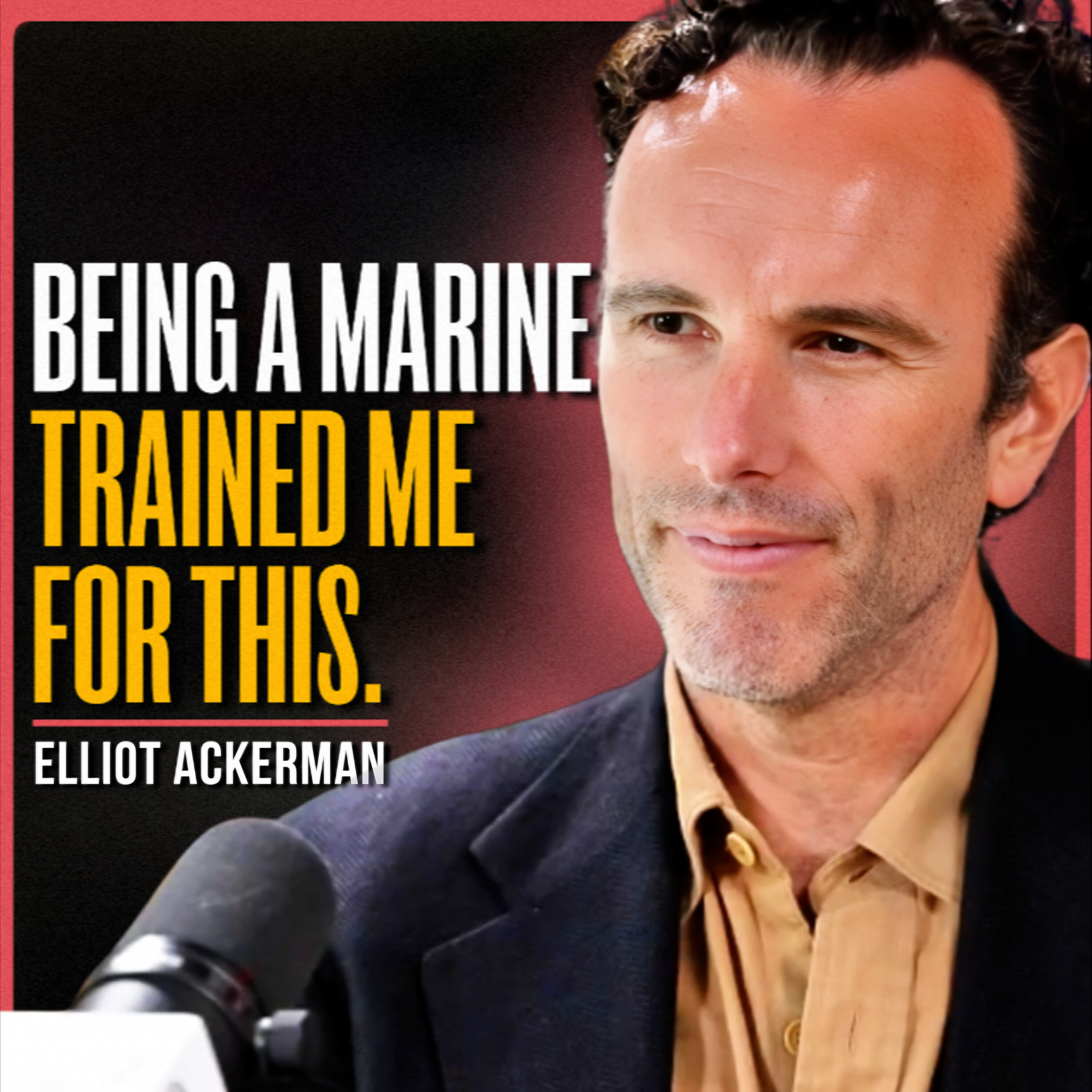
Former Marine turned novelist Elliot Ackerman sits down with Ryan to talk about what discipline really looks like in everyday life. From 100-degree runs to cold plunges and daily writing routines, they discuss what helps them stay steady, focused, and consistent even when it’s hard.
Elliot Ackerman is the New York Times bestselling author of the novels 2054, 2034, Halcyon, Red Dress in Black and White, Waiting for Eden, Dark at the Crossing, and Green on Blue, as well as the memoirs The Fifth Act: America’s End in Afghanistan and Places and Names: On War, Revolution, and Returning.
Elliot’s books have been nominated for the National Book Award, the Andrew Carnegie Medal in both fiction and nonfiction, and the Dayton Literary Peace Prize, among others. He is a contributing writer at The Atlantic, a Senior Fellow at Yale’s Jackson School of Global Affairs, and a veteran of the Marine Corps and CIA special operations, having served five tours of duty in Iraq and Afghanistan, where he received the Silver Star, the Bronze Star for Valor, and the Purple Heart.
Be sure to check out Elliot’s latest book, SHEEPDOGS. Apple Studios has actually bought the rights to develop the book as a series with Tom Hanks production company.
Grab signed copies of Elliot’s books 2054 and 2034 at The Painted Porch | https://www.thepaintedporch.com/
Follow Elliot Ackerman on Instagram and X @elliot.ackerman
📖 Preorder the final book in Ryan Holiday's The Stoic Virtues Series: "Wisdom Takes Work": https://store.dailystoic.com/pages/wisdom-takes-work
🎙️ Follow The Daily Stoic Podcast on Instagram: https://www.instagram.com/dailystoicpodcast
🎥 Watch top moments from The Daily Stoic Podcast on YouTube: https://www.youtube.com/@dailystoicpodcast
✉️ Want Stoic wisdom delivered to your inbox daily? Sign up for the FREE Daily Stoic email at https://dailystoic.com/dailyemail
🏛 Get Stoic inspired books, medallions, and prints to remember these lessons at the Daily Stoic Store: https://store.dailystoic.com/
📱 Follow us: Instagram, Twitter, YouTube, TikTok, and Facebook
See Privacy Policy at https://art19.com/privacy and California Privacy Notice at https://art19.com/privacy#do-not-sell-my-info.
