
 Ask ChatGPT


- Podcasts
- The Daily Stoic
- The 3 Signs Something Will Bring You Joy
The Daily Stoic23 Sep 2026 · 29m · 13 chapters
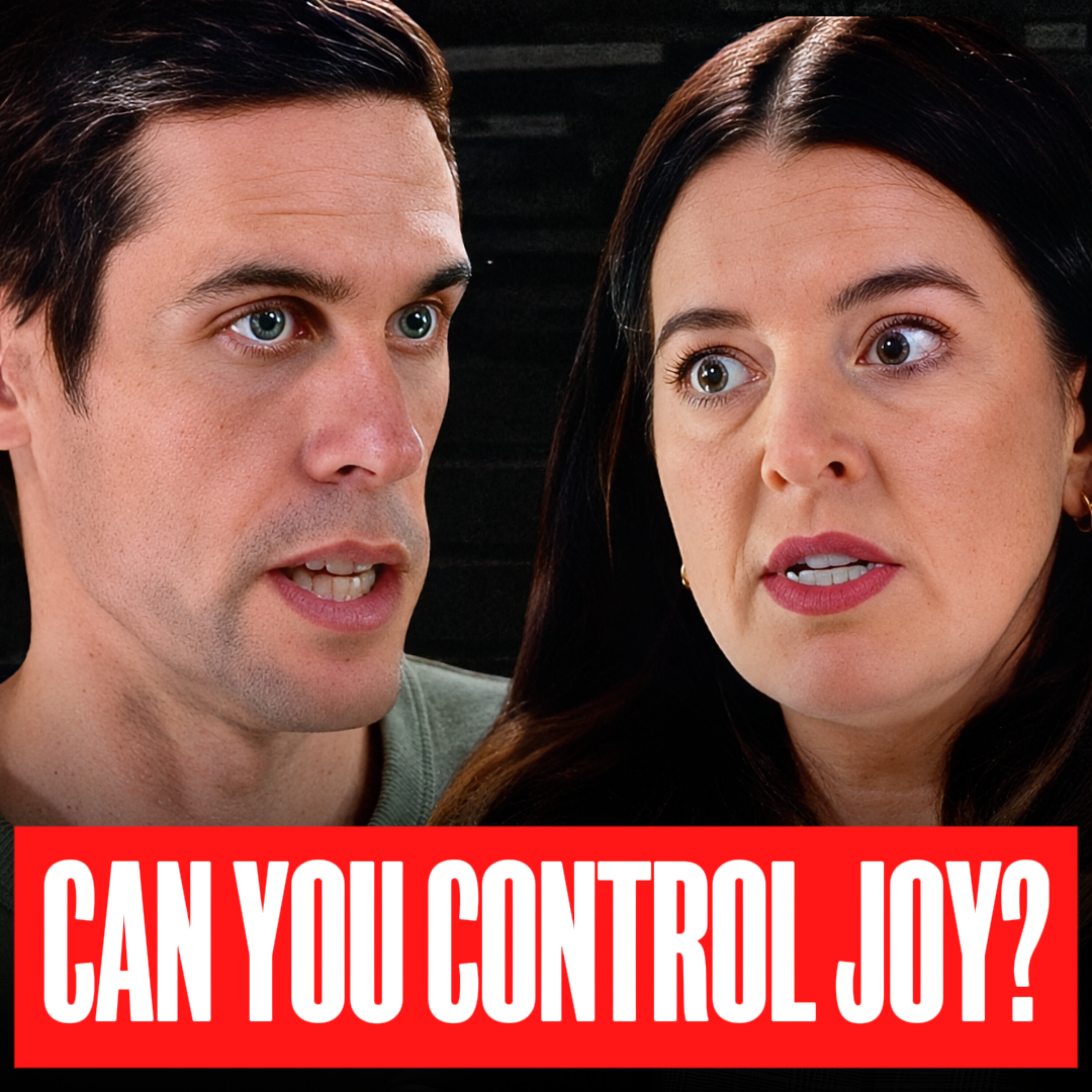
The 3 Signs Something Will Bring You Joy | Kate Bowler
In short
Joy vs happiness through Stoic and Christian lenses; how to experience “meaningful joy” amid suffering by cultivating acceptance, attention, and gratitude-like awareness.
Guest
Kate Bowler, four-time New York Times bestselling author; professor of religious history at Duke; runs the podcast Everything Happens with Kate Bowler; diagnosed at 35 with stage four terminal cancer; wrote Joyful Anyway and Everything Happens for a Reason.
Key claims
Joy isn’t “aggressive positivity” or luck; it’s not relaxing like happiness/contentment. Joy can coexist with stress and sadness, enlarging capacity to hold real life. It’s a gift that can’t be willed, yet people can cultivate conditions that make it more likely.
Notable examples
funeral pastor mispronouncing her dad’s name; kids’ ordinary wonder (learning sign language in traffic); joy in absurdity (world’s weirdness, historical “discoveries” like pineapples).
Written by AI. May contain mistakes.
Chapters
0:45
Defining Joy Through Stoicism
Exploring the Stoic perspective on joy beyond happiness and pleasure.
“And there's nothing wrong with any of this, but I don't think that's exactly how the Stoics would define joy.”
2:14
Introduction to Kate Bowler
Introduction of Kate Bowler and her experiences with joy amidst suffering.
“She's a four-time New York Times bestselling author.”
3:08
The Complexity of Joy
Discussion on the nature of joy, its contradictions, and its surprise elements.
“But it turns out that happiness and contentedness will experience it psychologically as a sense of ease.”
6:41
Cultivating Joy
Insights on how to cultivate a capacity for joy through acceptance and mindfulness.
“And the reason why it's so strange is it's because it's not just a positive emotion.”
7:51
Finding Joy in Ordinary Moments
Recognizing joy in everyday experiences and the importance of perception.
“I think it will also be for reasons you will like.”
9:43
Critique of Happiness Culture
A critique of societal views on happiness and the pressure of optimization.
“And often it's the opposite of that, that you feel it.”
14:00
The Happiness Tangle
Explores the complexities of modern happiness and perfectionism.
“What you've now convinced people is, oh, my gosh, all this happiness homework is going to take eight hours a day alongside my regular workday.”
15:00
Stoic Contentment vs. Happiness
Discusses the Stoic philosophy on contentment and the dangers of external dependencies.
“So that kind of happiness, I think, is sold especially to women as a form of perfectionism.”
16:20
Embracing Uncertainty
Highlights the importance of embracing uncertainty in life decisions.
“And that's like not not that the whole point is to be in the driver's seat.”
18:20
The Importance of Delight
Considers how modern expectations can dull our ability to experience joy.
“They've got 24 hours and a morning routine and like largely a framework for control.”
Show all 13 chapters
21:40
Absurdity and Joy
Reflects on how absurdity can lead to joy and delight in life.
“I think it just feels very like it's not even page seven.”
24:50
Historical Wonders and Childlike Joy
Discusses historical discoveries and the childlike wonder they inspire.
“And then and then we get this extra experience now of like imagining their childlike wonder at something like like even Shakespeare repeats it.”
28:00
Finding Joy in Surprise
Explore how surprise can lead to joy in an overly familiar world.
“So-and-so had a really cool shade of orange and people went like apeshit about it.”

Ask about this episode
Get the gist, explore an idea or ask about something said.
 Claude
On The Daily Stoic, what are the key points of this episode?
Searching your listeningTranscript
Automatic transcript. May contain errors.
0:00Ryan Holiday: Welcome to the Daily Stoic Podcast, designed to help bring those four key Stoic virtues, courage, discipline, justice, and wisdom into the real world.
0:14Ryan Holiday: Hey, it's Ryan. Welcome to another episode of the Daily Stoic Podcast. I don't know if joy is a super definable concept, sort of one of those things like we know it when we see it. I think the problem is a lot of people see it as when everything's going amazing, when every problem is solved, when you're doing fun stuff, the relationship's going great, your health is great, the kids are behaving. When everything is calm and simple and wonderful. And there's nothing wrong with any of this, but I don't think that's exactly how the Stoics would define joy. joy because what we're talking about there is we're talking about pleasure we're talking about happiness we're talking about i don't know simplicity maybe just pleasure and they kind of depend on circumstances for the stoics it was like could you experience joy even when things weren't going your way even when you weren't hitting green lights for the the stoics joy was what we got from working with other human beings, from realizing our telos, our purpose in life.
1:31Ryan Holiday: And I want to say they believed we could experience joy anywhere at any time. Remarks to realize, remember, joy, happiness, it depends on the quality of our thoughts. That's why I think Kate Bowler is so interesting. She's had a rough go of it the last couple of years. She had this terminal cancer diagnosis where she's somehow still here. And she wrote this book called Joyful Anyway, which I think is actually getting to the essence of the Stoic take on it in a really interesting way. It's like, no, no, can you be joyful even when it doesn't make sense to other people, even when it's really hard?
2:10Ryan Holiday: And that's what we're going to talk about in today's episode. not joy as forced positivity not joy as pretending that everything's fine but but still somehow joy that's deeper and stranger and more durable we're talking about the difference between happiness and joy whether you could be happy and joyful even while suffering and some of the overlaps between stoicism and christianity and um you're really gonna like it kate is amazing uh her other book everything happens for a reason is great so is no care for human and then this new one joyful anyway is fantastic. She's a four-time New York Times bestselling author.
2:46Ryan Holiday: She's won a bunch of awards for her podcast. She's a professor of religious history at Duke. And as I said, at 35, she was diagnosed with stage four cancer. And that experience shaped some of what we're going to talk about today. You can follow her on all platforms at Kate C. Bowler. Check out her sub stack, Everything Happens with Kate Bowler. Check out her podcast. Let's get into it. when we talk about joy i think those are the kinds of things that people associate with yeah right like smiling chin up enthusiasm energy excitement choose joy exclamation mark yes yes but maybe that's not your definition of joy well i didn't think joy and and that kind of like aggressive positivity were the same thing yeah and i kind of thought you probably just climb a ladder of good feelings and then you get to the top and there's like a super abundance you're like oh my gosh, joy, here we are.
3:37But it turns out that happiness and contentedness will experience it psychologically as a sense of ease. It will feel relaxing. It will feel like things are going our way. Happiness is what luck feels like.
3:52Ryan Holiday: So is there a difference between joy and happiness in your view? Joy is not at all relaxing. It will feel big and bright. It's less like a feeling of contentedness. And it's in part because while it engages our reward system, it also engages our stress systems, which is so strange that you can be both then joyful and stressed or sad or worried or despairing at the same time. So joy ends up being this much more like enlargening, like capacity holding emotion because it lets us hold in view things that are actually happening in our real life and hit those big high notes and say, yes, it is so good to be alive.
4:38Yeah.
4:39Ryan Holiday: I thought the title of the book is interesting, like joyful anyway. It made me think of the Viktor Frankl essay collection that they did a couple of years ago, which is called Yes to Life. And then the subtitle is In Spite of Everything. Like that if you just think of joy, as its own thing, maybe you're missing something. Like the idea that you're feeling joyful despite, or you're saying yes to life despite all the reasons not to, maybe is illustrative of what joy actually is, which is like work. I don't know if you agree, but like, it's not just that it's a choice, but that it is, it doesn't just happen because all the conditions are right.
5:21Ryan Holiday: Like it is not, or meaningful joy Joy is not a result of luck. Like everything came up your way. That's right. Meaningful joy is you deciding, like the ancients would talk about, could you be happy even as you're being tortured on the rack? I knew you were going to say tortured. And like, obviously that's an extreme example, though they lived in extreme times. But their point was like, if joy was only contingent on the wind being at your back, it wasn't worth that much because it didn't have anything to do with you. Yeah. Well, joy is not good math in that way. Like it doesn't it's not good things adding up and then congratulations, you get joy.
5:58It is. However, it's two things at one time which seem contradictory. The first is that it is a gift, like it's a surprise and you can't will it. So you can't actually choose joy. it will surprise you and it will happen to you often at a really weird time i mean i think people underestimate just how weird joy is like it's in the shouldn't make sense category it's not just like i love chocolate and thank god there's a lot of chocolate here it's like i was at a funeral and the fourth time the pastor mispronounced my dad's name i felt this weird hysterical and you're like oh my gosh, I could hate myself.
6:40That's joy. And the reason why it's so strange is it's because it's not just a positive emotion. It gets us in this existential story place. It's a story. It reminds us that it's good for us to be, period. Like it tells us about our own goodness in a situation that doesn't remind us of our own goodness. So sometimes people can have it like watching a rainbow and good for them. But normally it will, it will be in a time in which there's multiple kinds of feelings going on. And the reason why we'll then get really like teary or surprise is it's contradicting some other fact like, well, this shouldn't have been.
7:21Ryan Holiday: Yeah. I mean, what? And like, it could be sometimes when you look at your kid and you just didn't think that they would ever be in your life. Yeah. And you can watch them light up a part of you. That's It's like, how did a stranger move into my house? And I gave him a name and now he lives here. I mean, I think the reason why it's a surprise is it comes into a place that we can't engineer. However, and this is the only part that you'll like, Ryan, is that you can also cultivate a capacity for joy. You can be someone that it's more and more likely to happen to. How do we do that? I think it will also be for reasons you will like.
7:55And a lot of it is, I mean, I think you have to start with a place of pretty radical acceptance of what is. And this is where the huge bummerness of stoicism and Christianity come together in a sad, do you like your life? No, too bad. I think a reflection on like our own resentment, our own bitterness, the things that we wish weren't. I think clearing out space in that to say, well, but this is the life we have. So I think like a meditative, reflective place is an amazing place to start if you want to be a more joyful person. And it sounds weird to start in the negative part for, I think, a lot of people.
8:37But I think beginning there makes you realize how calcified some of our pain has become.
8:43Ryan Holiday: I was driving my kids home from school. We have like a long commute and we were stuck in traffic. And my six-year-old was sitting in the backseat. And I just hear him go, this is wonderful. And I was like, oh, you know, I was looking around. I was like, it is wonderful. We're hanging out. We're listening to music. And then I kind of go, what do you mean? And he goes, no, no, no, no. This is wonderful. And I go, what are you, I'm like looking in the, what are you talking about? And he's like, we're learning sign language in school. This is wonderful. Like he was just trying to tell me how a certain sign works.
9:14Ryan Holiday: And he had no, he had no thoughts whatsoever about whether this experience we were having was wonderful. But in fact it was. And now I can't stop laughing every time I think of it. You're like, I agree existentially. But I think that's sort of your point, which is like, it is kind of, it sneaks up on you. And it's not, it's not always the moments that you think are wonderful. Like you think winning a gold medal or, you know, your retirement ceremony or, or this long planned vacation, that's going to be the joy. Yeah. And often it's the opposite of that, that you feel it. And at the same time, the ability to understand and perceive that these seemingly ordinary moments are actually wonderful and worthy of joy and then accepting them and feeling it, maybe that's where the tension gets resolved.
10:04Yeah. And there's like a weird playfulness to being somebody who can recognize that you don't always get the experience that you want in the moment. Like I've seen a million old men retire.
10:16Ryan Holiday: Yeah. Because I'm in academia and I've been in the same university for 20 years. So I've seen the same disappointed look on 20 years worth of old men's faces. And I can tell you that, like, people think there's going to be this, like, summation of their life. And the ability to then, like, break your life down into smaller pieces of wonder and surprise. I think it's probably better than imagining you've got this, like, hero's journey to this one mountaintop called joy. Yeah. Well, they're probably also respect, not just that the ceremony is anticlimactic, but the retirement itself is probably anticlimactic.
10:53A free buddy you wanted there is probably dead. It's a horrible way of being like, congratulations on your career. All the people you enjoyed it with are no longer with you.
11:02Ryan Holiday: And the people who are happy are, and there's a funny scene in Mark Strauss's meditations where he's talking about like, you're going to be on your deathbed and there are going to be people happy because they want to take your place. Like the people that are feeling good at this ceremony are like, thank God, now the spot is finally opening up. A junior faculty member. You were supposed to leave per the actuary tables like a decade and a half ago and you clung on. I think that's right. I think that not waiting for joyful moments to be joyful is probably smart. I do think, though, there's three little like tells for whether something is likely to make you more joyful.
11:37And one of them is, does it make you say thank you? And there's just like a lot of emphasis, I think, overemphasis on gratitude journals. if you look at the studies, they will say that there's a limited benefit to gratitude, meaning you can write down a couple things every day that will say, thank you so much for my life. If you start to write down too many things, all you've done is make yourself back into the robot homework optimized self that is much more likely than to make yourself miserable with too much gratitude homework. But if you look at moments that just unexpectedly reminded you that it might not have been that way.
12:20Those are usually a place to pause and then wonder, is there something in my past that actually bubbled up into joy like this? And it will remind you to be hopeful then that something like that is probably going to come visit your doorstep sometime soon. Because joy is like wonderfully, not cyclical, because you don't get to exactly predict it, but like you really have to you have to believe in joy like yeah you have to imagine that you're the kind of person it's not just for somebody else you're the kind of person yeah but you deserve
12:56Ryan Holiday: it and it's gonna happen too yeah that that is the challenge i think when we talk about happiness though we're also i think people think it's like everything going right like you were talking about happiness and contentment and i think those are very different emotions for most people if your happiness is because everything's going well and amazing and firing on all cylinders like a lot of things have to go your way to get it. And if your happiness is contentment, it's much more in your grasp if you have the ability to be content here in this moment with what you have. Agreed. And if you look at the definition of happiness inside of the health and wellness industry, you're going to get a very intense view of what it takes for, especially like a middle-aged lady to have a good life.
13:43I'm going to have to have breathing practices. I'm going to have to have rhinoceros sized water bottles. I'm going to have to have my gratitude.
13:51Ryan Holiday: It's not good business to sell people contentment because they already have it. Like they already have what they need. That's right. It's fully a story of optimization with very poorly repackaged social science with small incremental benefits. Yeah. But I think what's really disturbing about it, and this is what Miroslav Volf calls like the happiness tangle, is if they offer you a million small correlations between studies that say, you know, stare into your partner's eyes for an extra five minutes and your marriage will last five years longer, you add a million of those. What you've now convinced people is, oh, my gosh, all this happiness homework is going to take eight hours a day alongside my regular workday.
14:37And if I do all these things, then I'll hit like ding, ding, ding. And I think what people find is now we're so overburdened with this frantic sense of this mythical optimal version.
14:48Ryan Holiday: And the things, the guilt about the things we're not doing and the mental load of the things we know we need to be doing. That's right. And it'd be wildly expensive and then inconvenient. for us to be that optimized. So that kind of happiness, I think, is sold especially to women as a form of perfectionism. Yeah. And I think everyone's just hoping they'll magically get younger, better, faster, somehow kinder. Yeah. Or just less angry and traffic. Yeah. Ideally, your happiness and joy is, again, this comes back to the source, It should not be dependent on any additional things. Yeah. Tell me more about contentment in the Stoic framework, because I do think that that's very different than the optimal happiness monster.
15:39Ryan Holiday: Yeah. You know, it's funny. There's a line in Meditations from Mark Sturiscus. Remember, very little is needed for a happy life. And it's like, well, it's easy to say when you're the emperor. Yeah. But I think his point is that it's not, and all the Stoics are saying this, like, it's not... When this happens or if this happens or after this happens, then you can have like if if your happiness is dependent on what they would call an external of some kind, whether that's somebody else's approval or some achievement or some external condition, like, you know, when the plague goes away or when the economy gets back to normal or when the war ends, you know, now you're not in the driver's seat.
16:22Ryan Holiday: And that's like not not that the whole point is to be in the driver's seat. But then again, if what good is it if God fortune or random luck decides whether the math adds up for you to have this thing right now? And so I think for the Stoics, the idea was it's not that you never accepted anything new or even wanted anything new. It was that if you thought you needed these things, not only were you wrong, but in the needing, you have now created a vulnerability and a weakness in the sense that someone can take it away. Someone is dependent on you getting it or not. And that's what we're trying to avoid.
17:11Ryan Holiday: Like, I think about it with books. Like, do I need, would I like it to be a bestseller? Sure. Would I like it to earn back its advance? I mean, definitely, that would be good. But if that's what I need for it to happen, for me to feel good about it, I've now decided that you, the audience, or you, the publisher, or you, the book critic, you get to decide how this works or not. And that's not a great place to be. Yeah, I agree. But again, easier said than done. I like thinking about the contingency as kind of comforting, though. Things being so unpredictable as a starting place is kind of a, I think it's a quieter place to start a decision tree.
17:54Ryan Holiday: Starting by understanding that it's unpredictable? Yeah. Totally. Like uncertainty as a framework is not a modern framework. You and I are both swimming against the current when we say that, like, people should begin with a healthy appreciation for uncertainty. Because I think particularly since the 70s, we have imagined the self as a pretty self-making project that doesn't just have a day. They've got 24 hours and a morning routine and like largely a framework for control. Well, that you control your own destiny. Almost entirely. Yes. And that if you do all these things, you will get what you want, you know, not even more often than not, but the vast majority of the time.
18:48Ryan Holiday: That's right. And yeah, I think in the ancient world, it was like you could do everything right and get exiled and get murdered or die of a cut on your finger or whatever. And so there is a humility to that that I think is missing. And it also, by not having the humility, first off, it deprives you of being able to be pleasantly surprised. But also, I got to imagine it's quite painful when things don't go your way because you think you're responsible for that, too. Like in baseball, they talk about like if you if you think the hitting streak is on you, then the slump is really hard, too. because it's both of them are because of what you're doing.
19:31Yeah.
19:31Ryan Holiday: As opposed to a statistical reality. Yeah. I do think it puts delight in a different light because then the things that do come our way, I think we should let them light up the room more than they do. Like I think in this sort of like blasé, scroll to the next thing, really hope it's a comfortable jumpsuit kind of world. Yeah. I think it's getting harder and harder for us to be delighted. One of the joy killers is not like if it's not sadness. The truth is it's very likely to be this flat routine set of expectations in which you're just going to earn your life and you're going to like hyper plan.
20:17And then you'll probably use AI agents for the rest. But it's really all the stuff in between that like is supposed to teach us more and more about just how like unusual our particular human alchemy is. Like what lights us up isn't just like what's good for you. Like we are bizarre. And like what makes a life is what makes poetry and art and friendship. And so like what delights me is world's largest objects. Texas has so many and I'm really excited about it. Like weird foreign junk food.
20:51Ryan Holiday: Mm-hmm. And listening to my dad and my son talk about what Winston Churchill is feeling, which is like almost every night I can hear them in the other room. And it like, just like my heart is somehow goes from zero to full. Yeah, being able to enjoy the absurdity of existence is a sort of a shortcut to joy. And it is absurd. I mean, it makes no sense that we're here. No. That that any of that, like, it's all it's all ridiculous. Yeah, I think if like modernity wants us to be predictable and certain and efficient, I think the opposite is stuff that is surprising, stuff that is absurd, stuff that is random and delightful.
21:36But all of it is supposed to like bring us back to that like beating desire that we all have to like live beautiful, meaningful, soul filling lives and not just be satisfied with the. I think it just feels very like it's not even page seven. It's like it's just like I mean, I am really worried that the modern concept of joy is going to be so diluted with all of our approximations of being entertained.
22:09Ryan Holiday: You mean just like we expect it to be so much that we miss? I'm just thinking you and I probably both have a lot of worries about what an endless scroll of social media and like the attention economy is doing to our capacity to like to think and enjoy. way. Yes. Yeah. Probably not unlike, you know, watching endless amounts of pornography duels you to sort of regular normal experiences. And yeah, if you step back and you sort of detox, you do, you are able to sort of be delighted by the absurdity of existence. I was thinking the other day, like what it must've been like for Europeans to see a kangaroo for the first time.
22:48Ryan Holiday: Just like they just get off this ship and then there's just this thing hopping around and like, what that was. And then I was like, and then what did the Aboriginal Australians think of this person in armor? I mean, I think it was a little later, so they probably weren't wearing a full suit of armor. But yeah, just like when Columbus gets off the ship, let's say, in the New World, and they're just like, what is this nonsense? They thought their beards were so gross. Yeah. I mean, obviously it's scary and it meant, you know, this horrendous, you know, sort of plague of different diseases were about to come down on everyone.
23:27Ryan Holiday: But just like if you the first time you saw a knight, like, are you scared or are you like, what is this doofus? Like, it's so dumb. I do always love it in history when you can see a moment in which they discovered something weird and they're like, oh, my gosh, is this our thing? Yeah. Like there's an entire period of Portuguese architecture where they discovered pineapples. Yeah, I was just going to say pineapples is blue. Like they were like, what is this madness? This cathedral needs a thousand more pineapples. And they called it Manuelian art. And they're like, if you look carefully, it's not it's not like ivy.
24:00It's not anything else. It's just thousands of pineapples. They're like, this cannot be this cannot be overdone.
24:07Ryan Holiday: Or in sort of the Middle Ages and then even into the Renaissance, you had these painters painting animals that they only heard descriptions of from like Blimey or whatever. So or or it's like they had one taxidermied rhinoceros, you know, that the Pope owned or something. And and like the way they would do taxidermy then would like now they build a frame of the animal and they put the skin over it. But they they would just like stuff it with stuff. So they'd just be all like poofed out. And you just think like, you know, like Michelangelo just didn't know what this thing looked like because he was looking at like a bad copy of a copy of a copy.
24:43Ryan Holiday: And so like some of the paintings are just like preposterously bad. But but like they were clearly lit up by it. Like they thought it was cool. And then and then we get this extra experience now of like imagining their childlike wonder at something like like even Shakespeare repeats it. you know, the Romans at one point catch some chameleons. I don't know where chameleons are from, but like because they couldn't slow down and watch, they didn't understand how the chameleon was eating. Yeah. And so like Shakespeare repeats it, but Pliny guesses that they it's just sucking in nutrients from the air.
25:19Ryan Holiday: It doesn't understand the tongue is going out and catching the fly so fast that you can't see it. And so, you know, like they they're just making stuff up the way A six-year-old would make stuff up about how all this stuff works. And, you know, obviously they were also just sort of plundering and raping the earth at the same time. But there is a childlike joyfulness to the, like, just trying to figure out this absurdity of existence. I think maybe if we feel then that the world is already discovered or if anything worth knowing is now already in our phone. Like, I do think it sounds like these are these will like prohibit that feeling of of like a weakness.
25:58Ryan Holiday: Yeah. To the world. Know it all ism or like that's not really how it works. Like there's this interview with Ridley Scott where they're talking about the second Gladiator movie, which I'm sure you didn't see. But I did see. But but they were like, you know, they didn't really have sharks in the Coliseum. And he was like, you don't fucking know this. He was like, he gets really mad. He was like, they filled the Coliseum with water and they had naval battles. You think it would have been so hard for them to catch sharks? But what I loved about it is he's like 80 and he's like, he's still like part of what makes him a great filmmaker is that he clearly still lives in a fantasy world.
26:38Ryan Holiday: Like this is like an argument that a 10 year old would have. I block this argument. That's really funny. I like sudden umbrage. Yeah, exactly. It's just like zero to 60 rage. But also the contrast of like, why does this journalist think their job is to, like the whole thing is made up. None of these people are real. This is a fantasy. This is historical fantasy. And you're like, it couldn't have gone like that. He also couldn't have been stabbed all these times and not died. It's all made up. And so, yeah, there is this kind of tendency to want to puncture every myth and legend and story as if that's the point of wisdom.
27:21Exactly. I was reading a history of the color blue the other day and I didn't realize. I mean, I just I don't I didn't think enough about how paint works. OK. You know that they couldn't make every color of paint until synthetic paints were invented. And now it just which is really wild. Like, so in all kinds of places, they just couldn't have blue because there was only a couple things that could make the blue color. And I liked thinking about it. And I liked thinking about how now we imagine we can paint our worlds in every single invented color that we might forget. Yeah. That each one at some point was like a miracle and had to be named, well, this is Egyptian blue and this is lapis blue.
28:04And this is like.
28:04Ryan Holiday: So-and-so had a really cool shade of orange and people went like apeshit about it. Exactly. I think that's partly why in a world of, I'd like that, of know-it-all-ism and everything's already been done and like the flatness of expecting everything and yet still feeling hungry. Yeah. I think the more and more surprised we can be by the world again, I think we're going to find it to be a pretty hilarious place.
28:35Thank you.
From the publisher
We often wait for the perfect conditions to feel joyful, but joy rarely arrives as expected. In today’s episode, Kate Bowler and Ryan discuss three surprising signs that something might bring you real joy and how to become more open to recognizing it. They also talk about the difference between joy and happiness, what the Stoics thought about contentment, and our obsession with optimizing everything.
Kate Bowler is a four-time New York Times bestselling author, award-winning podcast host, and professor of religious history at Duke University. She is the host of the podcast Everything Happens, where she has honest conversations about grief, joy, faith, love, and the realities of being human.
Grab signed copies of Kate’s books Everything Happens for a Reason: And Other Lies I’ve Loved, No Cure For Being Human (And Other Truths I Needed To Hear), and her latest book Joyful, Anyway at The Painted Porch | https://www.thepaintedporch.com/
Follow Kate Bowler: Instagram, YouTube
🎟️ DAILY STOIC LIVE | Ryan Holiday is coming to a city near you! Grab tickets here | https://www.dailystoiclive.com/
🎙️ AD-FREE | Support the podcast and go deeper into Stoicism by subscribing to The Daily Stoic Premium - unlock ad-free listening, early access, and bonus content: https://dailystoic.supercast.com/
✉️ FREE STOIC WISDOM | Want Stoic wisdom delivered to your inbox daily? Sign up for the FREE Daily Stoic email at https://dailystoic.com/dailyemail
--
Stop online threats before they become real-world attacks. Visit ironwall.com/DAILYSTOIC and request a free Risk Assessment to see exactly how exposed your executives are.
--
Wealthfront’s high-yield cash account: https://www.wealthfront.com/stoic
This experience may not be representative of other Wealthfront clients, and there is no guarantee of future performance or success. Experiences will vary. Ryan Holiday, who’s a client of Wealthfront, receives cash compensation from Wealthfront Brokerage for paid testimonials in his podcast, creating a conflict of interest. More details available via the referral link. The Direct Deposit Plus Investing Program from Wealthfront Advisers LLC and Wealthfront Brokerage LLC provides eligible clients a 0.25% APY increase above the base APY on eligible Cash Account balances (up to an overall boosted rate of 4.30% for a limited time when including the three month 0.75% APY boost for new clients) when you direct deposit $1,000 a month, plus open, fund, and maintain an investing account. Wealthfront may change or end the program at any time and determine eligibility at its discretion. Terms apply. Full details at wealthfront.com/promo-terms.
The Cash Account, which is not a deposit account, is offered by Wealthfront Brokerage LLC ("Wealthfront Brokerage"), Member FINRA/SIPC. Wealthfront Brokerage is not a bank. The Annual Percentage Yield ("APY") on cash deposits as of January 30, 2026, is representative, requires no minimum, and may change at any time. References to the APY for the Wealthfront Cash Account, including any APY increase, are to the APY paid by insured depository institutions that participate in our cash sweep program (the "Program Banks”). Wealthfront Brokerage does not pay interest. Wealthfront Brokerage sweeps cash balances to Program Banks, where they earn the variable APY.
Instant and same-day withdrawals use the Real-Time Payments (RTP) network or FedNow service. Transfers may be limited by your receiving institution, daily caps, or participating entities. New Cash Account deposits have a 2–4 day hold before transfer. Wealthfront does not charge fees for these services, but receiving institutions may impose an RTP or FedNow Fee. Processing times may vary.. Fees & Eligibility requirements may apply to certain checking features.
Investment advisory services are provided by Wealthfront Advisers LLC, an SEC-registered investment adviser. Investing involves risk, including the possible loss of principal. Securities investments are not bank deposits, bank-guaranteed or FDIC-insured, and may lose value.
Hosted on Acast. See acast.com/privacy for more information.
More from The Daily Stoic
All episodes
We use cookies.They keep VO running smoothly and help us improve it. Privacy policy