
 Ask ChatGPT



The Art of Asking Questions for Deeper Connection | Topaz Adizes
Ryan Holiday
Topaz Adizes
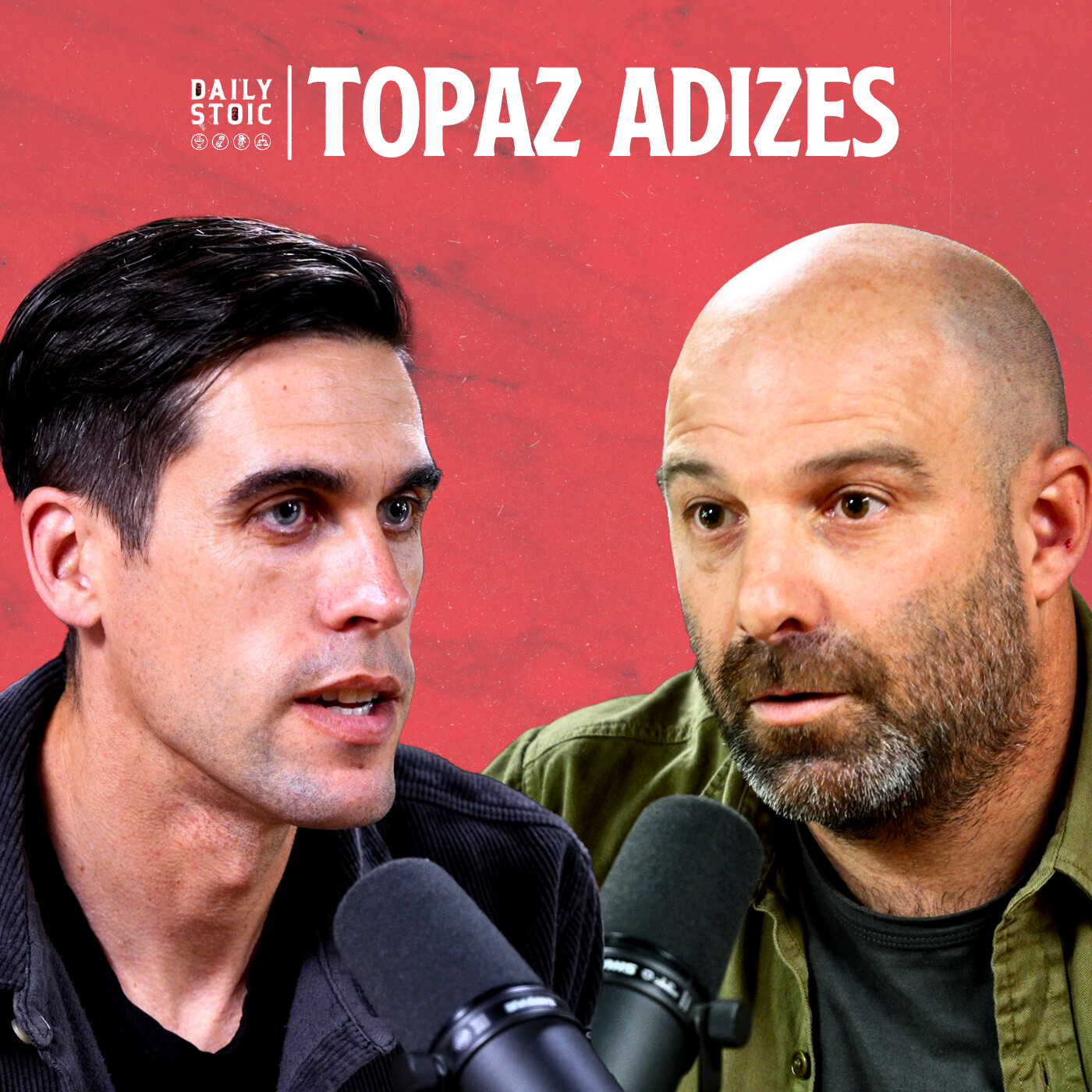
In this episode, Ryan Holiday speaks with Emmy Award-winning writer and director Topaz Adizes about the importance of asking deeper questions to foster meaningful connections in relationships. They explore how effective questioning can lead to more intimate conversations and a deeper understanding of ourselves and others.
Written by AI. May contain mistakes.

Get the gist, explore an idea or ask about something said.
 Claude
On The Daily Stoic, what are the key points of this episode?
Searching your listeningAutomatic transcript. May contain errors.
0:00It's time for Cyber Monday, Dell Technologies biggest sale of the year. That's right, you'll find the lowest prices of the year on select Dell PCs like the Dell 16 Plus with Intel Core Ultra processors. And with built-in advanced AI features, it's the PC that helps you do more faster. From smarter multitasking to extended battery life, these PCs get the busy work done so you can focus on what matters most to you. Plus, you can earn Dell rewards and join many other benefits like free shipping, expert support, price match guarantee, and flexible financing options. They also have the biggest deals on accessories that pair perfectly with your Dell PC, improving the way you work, play, and connect.
0:38Whether you just got started holiday shopping or you're finishing up, these PCs and accessories make perfect gifts for everyone on your list. Shop now at dell.com slash deals and don't miss out on the best prices of the year. That's dell.com slash deals.
0:54You've probably heard the headlines about all the different cuts to foreign aid and food benefits. This is having a profound impact on the world's poorest people and the world's poorest communities. But, you know, just hearing about that, that's not what stoicism is about. Stoicism is, to me, what you're going to do about it. And that's where GiveWell comes in. GiveWell is trusted by tens of thousands of donors each year because they provide free and independent research that helps you understand how to have a big impact. GiveWell has spent the last 18 years researching global health and poverty alleviation, and they direct funding to the highest impact opportunities.
1:33Over 150 ,000 donors have already trusted GiveWell to give more than$2.5 billion over the last several years, and research suggests that these donations will save over 300 ,000 lives. I myself am one of those donors. I donate to GiveWell every year. It means a lot to me. And you can find all their research and recommendations on their site for free. And thanks to the donors that sponsor this research, GiveWell doesn't take a cut from your tax-deductible donation to their recommended funds. And if this is your first gift through GiveWell, you can have your donation matched up to$100 before the end of the year or as long as matching funds last.
2:08To claim your match, go to GiveWell.org and pick Daily Stoic from the drop-down menu under podcast. That's how they know that you heard about GiveWell from the Daily Stoic and you'll get your donation matched. That's GiveWell.org, code the Daily Stoic to donate or find out more.
2:26Welcome to the weekend edition of The Daily Stoic. Each weekday, we bring you a meditation inspired by the ancient Stoics, something to help you live up to those four Stoic virtues of courage, justice, temperance, and wisdom. And then here on the weekend, we take a deeper dive into those same topics. We interview Stoic philosophers. we explore at length how these stoic ideas can be applied to our actual lives and the challenging issues of our time. Here on the weekend, when you have a little bit more space, when things have slowed down, be sure to take some time to think, to go for a walk, to sit with your journal, and most importantly, to prepare for what the week ahead may bring.
3:19Hey, it's Ryan Holiday. Welcome to another episode of the Daily Stoic Podcast. One of the things I don't think the Stoics talk enough about is relationships. In the afterword of Right Thing Right Now, which you can pre-order, that's the new book on the virtue of justice. I tried to talk about love and relationships in the book because I think it's something that was obviously important to the Stoics, although they didn't talk about it enough. It's hard to talk about it. There's so many things we need help with. I think it can sometimes be hard to tackle these things. So I talk a lot about it in the afterward of Right Thing Right Now, because it's something I'm working on in my life.
3:59I think it's not easy to be successful in life. It's not easy to acquire mastery in one's chosen line, but it can be easier than the difficulty of relationships. I mean, the quote, the obstacle is the way, the Marcus Serious line, it comes from him talking about the difficulty and the frustrations of human relationships. So the Stoics talk about how it's hard, but they also don't talk enough about how it's wonderful. And you can't read the debts and lessons section of meditations, though, and not see that Marcus Serious did have many loving relationships and that they were deeply important, not just to his happiness, but his development as a human being.
4:39So when I had a chance to have Topaz Andesis on the podcast, I was really excited. He's an Emmy award-winning writer and director. He's done all sorts of awesome exhibitions at Cannes and Sundance and South by Southwest. He's been featured in The New Yorker and Vanity Fair and The New York Times. His documentaries have won numerous awards. And he wrote this book. It's called 12 Questions for Love, A Guide to Intimate Conversations and Deeper Relationships. but layered on top of that, we have a guy who studied philosophy at Berkeley and at Oxford. And one of the things I really wanted to talk to him about, because I'm thinking about it for the book I'm writing now, is the art of asking questions, the art of really downloading and understanding the person sitting across from you, as it matters to me, obviously, doing the podcast, but just like how stoicism doesn't have to mean you're sort of emotionally blocked, that you're sort of inwardly focused, exclusively inwardly focused, and that you can have flourishing and loving relationships in your life.
5:42And Topaz was nice enough at the end, he gave me this cool card game. He has that supposed to prompt families to ask better questions. And I ended up having to jump in the car. We drove as a family to New Orleans. We were meeting my parents and my sister there. So we passed the eight hour or so drive from Austin to New Orleans, playing the card game in the car together. And my kids didn't quite understand, but it was funny to watch them just sort of be ridiculous and answer these questions, which I think is the idea. Like the idea of being present, the idea of having a starting point, asking a good question, you never know where it's going to go.
6:17You never know what it's going to reveal or invoke. And it's a good microcosm of the conversation that he and I had. I wasn't sure where it was ago. I didn't know if he'd be a great fit, but he was. And then it turned out we have a bunch of mutual friends in common, and I'm a big fan of his work now. So here is my conversation with Topaz. You can follow him on Instagram and Twitter at T-O-P-A-Z-A-D-I-Z-E-S. And then he has an awesome YouTube channel, which has done like a bazillion views that you should definitely check out. And thanks to him for coming on the podcast.
6:59I'm always looking for people that are going to be different than the people that I've had on before. And I think what I'm interested in lately is people who are curious and people who are sort of getting inside the worlds of other people, which is obviously sort of what you do. Yeah. Like, I'm fascinated right now. That's one of the things I wanted to ask you. Like, what do you think makes a good question? Oh, man, I can break that down. Writing about this in the book that I'm doing now, I feel like we tend to think of smart people as people who have answers. But smart people are actually really good at asking questions.
7:32The powers in the question. Yeah. Discipline is destiny. Yeah. Queen Elizabeth. Yeah. She framed everything through the questions. Yeah. Because she's not allowed to have an opinion. Exactly. Yeah. But she brought people and she shaped it by the questions she asked. Yes. One thought that's come up to me like about two weeks ago in a conversation on another podcast was the understanding that I say that we're not really taught to have good conversations, right? But we're also not taught to ask good questions. And I think there's a reason for that. Well, questions are inconvenient. They're inconvenient, but they focus the power.
8:02What are we focusing on? You shape the answer by the question you ask. And so therefore, there's a lot of power in the shaping the question. We're taught critical thinking, but critical thinking focused on a certain question. Who's offering that question? Yeah. It's just a thought that came up that I'm playing with in the last two weeks. So I think there's a lot of power in the questions you ask, both personally, but also on a wider scale, like in a community. Well, I think about, like, here's how you know questions are powerful. Socrates, right? Famous for asking questions is what the Socratic method is.
8:29They fucking killed Socrates. They were like, stop asking questions, bro. This is problematic, right? We accept questions within a framework. And then too many questions, you know, it's like you can ask someone why, but if you ask why more than a couple times in a row, it starts to feel aggressive. Like, what do you, you know what I mean? Well, it depends if you're, I see if you're asking them. Yeah. Like if you ask someone a question, they give you an answer and then you go, why? Then they give you a little explanation and then you go, but why? Unless you have the space that's been created through your, by articulating your attention.
8:58Yes. Okay. So in my experience, there's five things that I've seen really work well in shaping a question in the context of a relationship. Okay. All right. Yeah. One, don't ask a binary question. Yes or no questions? Yeah. So if your question starts with is, do, or are, if those are the first three words of the question, it's already ending binary. Okay. Are you happy? Is this successful? Do we love each other? Is, are, do, ends with a binary. So you're artificially constraining where it can go. And is life binary? No, of course. Everything's complicated. And then it's like, it depends on what kind of conversation we'll have.
9:35Sometimes we need to get to a solution. We got to da-da. Okay, maybe binary is good. But I'm talking about in the scope of a relationship that when you explore, why are we going with is, or, or do? It ends with a yes or no. Yeah. So why, how, what? Yeah. Start with those. You're already going to be, there's no, you can't answer with a yes or no. Yeah. So that's one. Okay. Two is, I'm just going to be interested in how this riffs with you because it's stoicism. Ask a constructive question. Okay. What does that mean? That means, why do we fight so much? Okay. Well, then you get a litany of answers why you fight so much.
10:07Yeah. What about what's our biggest conflict and what is it teaching us? Right? Because our mind is built to protect and our hearts are built to connect. So you ask the question, why do we fight so much? Your brain is going to serve that answer and find a solution. Yeah. Well, why don't we send that brain to fetch a good answer? What's our biggest conflict and what is it teaching us? Why don't we shape, you know, how does conflict make us better? in terms of how does conflict tear us apart. Yeah. Right? Shape the question that the answer is going to be more empowering. Yeah. Right. I sometimes see this with writing.
10:42If you message someone and you're like, give me feedback, you're asking them to find stuff that's wrong. And sometimes that's what you want to do, but sometimes the way you're asking the question is giving you bad data. Right. You have to think about how this is going to land and what it's framing or prompting from that person And I think constructive is a good word there. Is it constructive? Yeah. Because, yeah, if you're saying in a relationship, you know, why do we fight so much? You're stipulating that you fight a lot and that it's a problem. It's unlikely their answer is going to question any of those assumptions.
11:17So you're already starting from a pretty dark place. Now you're touching on the fact that by shaping the question, you have the power. So if I ask you a question, this is separate than the five things. But if I ask you a question and goes, what is our biggest conflict? Yeah. By shaping that question, what is our biggest conflict? I've given you to be the Arbiter of Truth. Sure. This is empowering. Versus, now if I just add these two words, it's going to change the whole thing. What do you feel is our biggest conflict? Now, you're not the Arbiter of Truth, you're speaking about the truth that you're subjective having.
11:47Sure, sure. How can we fight over that? That's your opinion. Now we create this space like, that's your opinion, okay, I'm going to take it in. Versus, what's our biggest conflict? Right. No, it's not. so because we're asking the objective truth and i'm saying if i do what do you feel what do you think it's subjective and then it's like we can't argue about that and that also creates a space for sharing yeah so there's a lot of power in the shaping the question why would i give you the total power it's like setting you up yeah right for us to have an art instead of saying what do you feel what do you think yeah in what ways do you see or do you experience we have to be aware of that yeah you know what are the other ones so three is which is really interesting that a lot lot of people miss is make sure the question is connective.
12:29What I mean by that is that it reflects the people who are in conversation. If I say, Ryan, what scares you the most? And you go home and he asks Sam, she asks you what scares you the most? And Dawson goes, Hey, Ryan, what scares you the most? You can give the same answer. I hate snakes. I'm scared. Shitless of snakes. Yeah. But if I say, Hey, Ryan, what do you think scares both of us the most? Okay. You're not going to answer that the same if I ask it in Sam and Dawson. Sure. The question acknowledges the connection. Yeah. So ask a question that acknowledges the conversation. Yeah. The relationship.
13:02Yeah. That's really helpful. Interesting. Right. Because if I say, what does love mean to you, you know, in relationship, and this could be intimate brothers, you know, parents, children, what does love mean to you? Yeah. You can talk for three hours. It has nothing to do with me. Yeah. It's also acknowledging this moment that we're sharing. What do you think we think about love differently in the same. I'm more invested in that conversation because it's acknowledging my presence and our relationship. That's really helpful. Asking questions that acknowledge the people in the conversation. That could only happen with these two people.
13:35That's beautiful because it's a synergy, right? And it's unique and it acknowledges our thread that connect us. And that's oftentimes what we're not spending enough time in. Well, and that goes to the second one also, right? It's like, what do you think our biggest issue is or whatever, right? Because it's a combination of the two. Well, the second one is make it, the mention was just making it constructive. So what do you think is our biggest issue and what do you think is teaching us? So it's constructive, but it's also, it's not like, what do you dislike most about our relationship and what does it teach you?
14:04That's not constructive and it's individualistic. But if you're saying, what do you think our biggest issue is? What issue do you think we have? What is it teaching us? It's a combination of the two of us. Exactly. Okay. Four is like, it's really nice to connect two disparate thoughts. Okay. So in a personal thing, I say, hey, Ryan, what does earning money cost you? Ooh. Yeah. And like in a relationship, what's our favorite lie we love telling ourselves? What's the truth we hate telling ourselves? Right. You know, in a personal level, this is always a sweet one that we have is like, what's your favorite memory from your worst relationship?
14:39Ah. See, bring in two disparate, that you don't know how to connect. How does conflict make us better? Well, I always see conflict as something bad. Well, let me pivot that. How does it make us better? Well, and I'm going, it's funny how these are all very unrelated, or at least they are very related as it seems to me. When you ask a binary question, this or that, either or, well, you're embracing this paradox or tension between two disparate, seemingly disconnected or oppositional things. What's your favorite thing about your least favorite thing or whatever, right? You're forced to see that there's good inside a bad thing.
15:14there's bad inside a good thing and you're having to sit i think it was uh fitzgerald said that um the mark of a genius is the ability to have two contradictory ideas in your head at the same time a lot of people it's got to be a hundred percent this or a hundred percent this not this or not that but the idea is like shit's complicated you know life is paradox life are we present to it yes that's what i've been witnessing because everything i'm telling you comes from basically me holding the space for two people face each other, pose questions, and I watch them. Yeah. And I've done that for 1 ,200 different conversations.
15:49Crazy. That's amazing. It's an amazing experiment. So that's everything I'm saying is watching and learning from that. I'm just a student of human experience. So what's fine? Don't ask the question with an agenda. Okay. Right? How many times does someone ask you a question where you know this is not a question, this is a chess match? They're setting me up to have a response. And so already your mind is coming out to wait, what's going on here? Yeah. Come with it without an agenda. Yeah. Right? Which is different than intention. I was on a conversation two weeks ago and someone said, wait, wait, intention, you create the space with intention, but isn't that an agenda?
16:23No. Intention is where you begin. Yeah. Agenda is that you want to get to a certain end. Huh. Right? If I say, hey, Ryan, I want to have a conversation about our relationship because we've kind of had some rough spots. Can we just talk about it? That's my intention. Yeah. The agenda would be like, and I want to get to the end where you apologize to me. Yeah. I'm going to get to the bottom of this. I'm going to fix this. And I want to get to my solution. So when you're in a conversation with someone that you feel the agenda, you're not open. You're not leaning forward. You're standing back. And the first thing, step in to engage.
16:55It's not your heart. It's your mind. You're not actually having a real conversation that pulls at the threads of your connection. So then the question is, people say, all right, well, how do I come without, like, I want to talk to my partner about my brother. we had this con like i want to have a conversation how do i come at it without an agenda yeah curiosity tap into your curiosity is just something that pissed you off why okay then i want them to apologize hold on a sec this is my brother this is my best friend this is my partner this is someone i work with why okay let me deep into that curiosity and let me come to them with the question with the intention of curiosity the stoics have this idea that every situation has more than one handle, right?
17:35So you could pick up the handle like, they did this, it was bad, you know, they suck, they're a bad person, they're trying to hurt me, right? Or you can come at it, I think most situations, if you come at them and you pick them up by the curiosity handle, the why, what were they thinking? What was their motivation? How did they think it would go? What's going on in there? You know, that's a much more open and less accusatory way and an ultimately constructive, you know, sort of approach to dealing with situations like just just going like, you know, most people are not wrong on purpose. Most people are not hurting other people on purpose.
18:12Most people did not want things to blow up in their face. So what did they want to happen? What happened is less interesting in some ways than how they thought it would happen. And whatever, in some cases, convoluted, strange, you know, wishful thinking that was going on in there, but it's still interesting to get to the bottom of it. One thing I did like 20 years of filmmaking, fiction and doc, one thing I learned when I did all these interviews in documentary setting is that the interviewee is a reflection of the interviewer. So if I want them to calm down, I don't say, hey, relax. I have to relax.
18:49If I want them to be informal, I curse. Then they know if I make a grammatically incorrect question, Yeah. Then they know I can make a mistake in answering it. Right? So if you come to someone in curiosity, you're priming them to answer in a more kind of open way because they can feel your curiosity. Yeah. If you come with them an agenda, they can feel that and their response is going to be one in like, okay, we're playing chess. Yeah. Yeah. That playing chess is really what you try to disarm as a journalist or an interviewer or anyone, right? Any sense that like, hey, this can and will be used against me, you got to get rid of.
19:22But like one thing that I've seen from doing this project and for something is that how often do we create those kind of spaces in our relationships? Right. We usually kind of keep it comfortable until shit hits the fan. Until someone says, we got to have a talk. And we all know when we're here, we got to have a talk. Oh my God. Yeah. He's sweating. Your mind comes out. You got to, you know, you got to protect yourself. Yeah. How do we create the spaces for us to actually have these heartfelt conversations that what do they do? They give us a meaning of life. You know, you have a chapter in a relationship.
19:51it's like 12 minutes long on the audio book. Yeah. Stillness. Stillness is, uh, is the key. Yeah. I almost feel like this book is like that whole chapter. Yeah. Right. Like, I mean, it's an extension because you talk about it's like, what, what else is there in life? What else is there if it's not in relationship with a reflection of someone else? Yeah. How do we foster that? Yeah. How do we grow that? How do we amplify that? How do we really experience that? That's kind of been my work. That's the questions I asked myself. Yeah. You have this person who lives in your house or you have this person who shares your DNA or whatever, like a spouse or kids, or you have these people you see at the office every day or you buy something from every day.
20:28And it's like, how well do you really know them? And how much effort have you actually expended to get to know them? And the thing is, the irony is that the people closest to us are the ones we almost put them into a box. Yeah. Because, oh, I know how my dad's going to respond. I know how my sister's going to respond. I know how my wife is going to respond. Well, maybe you haven't asked them a different question. Yeah. Ask them a different question. All of a sudden there's a pause, there's a space. Right. There's a space for a new response and there's a new discovery for you to have with the people closest to you.
20:56Yeah. And then how much energy do you get about the experience of living life when you amplify the connections with the people most intimate with you? Yeah. You discover something about like your spouse or whatever, and then you realize, oh, I was interpreting this whole pattern of behavior you have from the completely wrong lens because I was missing this piece. like i've been finding so over the last year or so my wife i think the word for it is like time blindness you know what that is like some people don't know like i have no idea like are we pointing north right now or south you give me directions i can hear like two or three and then i stop listening and then i go i'll figure it out if you're like okay like tell me how to get i'd be like so you go down this way and go this way and then i'm like no actually wait no i have no idea okay but then some people are like that with time they have no idea of time they have no idea what time it is.
21:44They're not good at like seven minutes have elapsed or 30 minutes have elapsed. My wife is like really bad with time. Oh, my wife too. I'm very punctual and very like, if I say I'm going to do something at six, like at 5.30, first off, I've been thinking about it all day. My whole day is pivoting around the fact that there's this thing at six. And then, you know, at 5.30, I'm starting to, in my mind, transition. You know, I definitely can get lost in what I'm doing. And that's how I feel like I know I love my work because that's the only time I lose that. Right. But so when my wife is like late, I'm like, are you going to like start getting ready like for this thing?
22:19You know? Oh, shit. You know? Yeah. For, I mean, we've been together a long time. I always took that as not caring about the thing or not caring about me, right? Because it's important to me. And then I think as I've gotten older and, you know, whatever, you go, wait, this is a bad handle to grab this situation on, right? I'm grabbing a situation that makes me feel the worst. When you say handle, you mean like the narrative, like the meaning that I'm giving that moment or that action. The stomach idea is like, I can take the situation and interpret it as she doesn't care. Yeah, whatever. I can carry it around instead by like, oh, this person is just not good at telling time.
22:57And by the way, they want to do the opposite of all those things to me. So if they had better information or they had someone helping them, they would not do those things, right? And so, yeah, you just realize like, oh, wait. So like we've been fighting about this for 10 years or 15 years. And like, I just had interpreted it wrong. And if I'd been more curious about like, how does this happen for you? Because it doesn't happen for me. And it's the opposite of how I go through the world. I would have not only understood her better, but I would have understood like it helped me understand myself better because now I realize we often assume that however we think about things is like how other people do it and is the right way to do it.
23:35Right. And then you go, oh, wait, no, actually, maybe I'm doing it wrong. Maybe this actually sucks for me. And I would be better to be more time blind. But is it wrong or just better? There's another just better way to do it. Yeah. That's what's beautiful about this AM project we have, 1200 combos. Think about it. You're in an intimate relationship with Samantha. Yeah. You guys behave a certain way. Or you're dating. And you say, hey, I go, Ryan, man, relationships are full of jealousy. Like, Topaz, that's because you're 50 % of our relationships. Maybe you bring the jealousy. Yeah. Check out this library of conversations and you can see the intimate space of all these other relationships.
24:09And maybe there isn't always about jealousy. Yeah. And the intimate space. And you go, oh, so maybe I could bring more of that into my life. Yeah. Or I can like, am I responding to my partner that way? Maybe I can listen in a different way. And it's opened up people's ability to have different kinds of relationships. And I just know that because after doing it for 10 years, people are showing up to our productions and saying, my relationship now is dictated by a video I saw seven, eight years ago by playing the card games. And that's a huge honor, right? Well, not knowing what's going on behind closed doors, you can be too hard on your relationship.
24:41You're like, oh, shit, it's way better. My wife and I were talking about someone the other day. You're so hard on yourself as a parent. We were talking about someone who is struggling with alcoholism. And we were like, it's not too late. They can still fix it. And they fucked it up really bad. And we're like, it's not too late. Meanwhile, you're like, I yelled at my kid yesterday. I'm the worst. You know, like with other people, you can be so much more forgiving and you see that it's always salvageable. There's always change. And then with yourself, you're like, ah, I'm a piece of shit. And so sometimes seeing what's going on with other people, it either inspires you to be better or it relieves you of some of the pressure you've been putting on yourself.
25:19Oftentimes we think there's only a certain way to handle it. And then you see another way. Oh, wait, there's that way. And there's this way. And then this way. Yeah. A, I'm not the only one. So that gives me hope. and B, look, there's five ways to handle it. Which way do I want to handle it?
25:38I'm picking my kids up from school today and then doing our weekly routine, which is I take them over to Whole Foods and we get all our groceries for the week. Then we have dinner. It's one of their favorite things to do. It's one of my favorite things to do. And then my wife loves it because she doesn't have to take care of it. This holiday season, whether you're a guest or hosting the big dinner Whole Foods Market has what you need to delight everyone at your table. They even have heat and eat sides from the prepared foods department. You can make Whole Foods your one-stop shop. Everything follows Whole Foods Market's strict ingredients standards so you know it'll be delicious and good for you.
26:11You can also order online for pickup and even delivery in select zip codes to skip the crowds. Shop everything you need at Whole Foods Market, your holiday headquarters. Look, if you're listening in this podcast, you've probably heard of HelloFresh, right? They're the number one meal kit in America. They make home cooking easier with chef crafted recipes and fresh ingredients delivered straight to your door. This fall, they're serving up even more to love. It's not the HelloFresh you remember. It's even better. HelloFresh is bigger. They've doubled their menu. You can choose up to 100 options each week.
26:45It's healthier. You can choose from 15 plus high protein recipes, and they now help you eat greener with veggie-packed recipes that have two or more veggies per week, and it's tastier. You can get steak and seafood recipes delivered every week for no extra cost. They have three times the seafood options. They also have hearty fall recipes like classic beef chili or honey-glazed pork tenderloin. We just got home from a week away. We're trying to think about what we're going to eat this week. It was such a relief to see that HelloFresh box sitting on our doorstep when we got home. They've got everything you need for the recipe that they pick out.
27:21There's no last minute trips to the store. Plus, the meals are delicious and easy to make. The best way to cook just got better. Go to HelloFresh.com slash stoic10fm to get 10 free meals plus free breakfast for life. One box with active subscription. Free meals applied as a discount on the first box. New subscribers only varies by plan. That's HelloFresh.com stoic 10 fm to get 10 free meals plus free breakfast for life when we were concerned like my son can't ride a bike and we're like what are we doing wrong how old is he seven oh my okay so like normally kids would tend to ride bikes that we're so we're talking to someone and we're like you know he can't ride a bike what are we doing and then the same parents like we saw videos of their kid he's been like riding a bike since he was like four it's like crazy and uh you know so good and we're like what are we doing wrong and then they're like but he can't swim you know he just he cannot swim and our kid can swim like a fish so sometimes you're like you're comparing like this one-to-one then you get a little more info you see you zoom out and you go oh kind of evens out you know but what's the what's the race we're like isn't it beautiful that we're all different first which is interesting because now with the onslaught of ai where all the nodes are connected and one thing learns and they all learn yeah which means they're all the same we're all learning at different paces, which means difference of opinions, which means beautiful opportunities for synergy that don't exist because we don't learn at the same rate.
28:42The bike thing is so... I was just like... They didn't even have bikes like 110 years ago. What are the... You know, like, who cares? I just took my kid... My son is four now, but half a year ago, I'm like, I'm going to go biking, take off the wheels. We go to the park, we're playing on the gym. Then he decides to get on the bike. And I don't even notice. And I turn around and he's already biking away. Like, and I was hoping I'm going to have this father-son moment. I'm going to teach him. And he was like, see ya. And he just went. And I was like, oh my God. I was so proud. But I was like, I missed the challenge.
29:13Yeah, sure. The thing with kids too is it's like, you're like, I can't, like, why don't they ride a bike? Why don't they ride a bike? And now you worry that they can ride away. You know, it's like every, I've come to think about it. It's like everything you're wishing they'll start doing, not only is stressful, and then you realize you rushed through enjoying the intermediate phase. of whatever it is. You know, I can't wait till they're crawling. Then you're like, I miss when I could just lay them down and they couldn't go anywhere. And you know, it's like, blah, blah, blah, blah. I'm in that right now.
29:43I'm in that in a big way. And I got good advice from my godfather. Uzo, I was telling him, I gotta check my son. I'm not sure if he's got an OCD or something. You know, he's really demanding this. And he says, Topaz, he doesn't have OCD. Everyone around him has this, the world around him. You're rushing to get him to do things. Yeah. He's got his pace. He's not living in that world. Don't rush them into the world of your world of things have to happen. Yes. Right. And that's a big lesson of just, wow, what teachers the kids are. I had that experience of I'm a horrible dad last Wednesday. What happened?
30:15Oh, bottom line, my wife, who's just really incredible. She said, Topaz, she's like, how can we teach him emotional regulation? Yeah. If we ourselves are not emotionally regulated. By the way, I think that's probably like, we think I got to teach you to read, to do math. I got to learn all these skills. If you could only teach your kid emotional regulation, that would be probably the most important and most universal of all skills. Which, by the way, makes learning things easier, if you have it. Like, there's no more important, and to me, that's the essence of what stoicism is. Do you have the ability to regulate your emotions?
30:49And yes, it's very hard to teach it if you yourself do not have it. And that's the practice. And that's why my wife and I were like, that's why the kids are great teachers, right? Yeah. They're reflecting it. And it's also in a vulnerable way because this is your responsibility. Yeah. And that mirror is coming up. It's like, well, I have to do the work. I can't tell him to be, I have to do the work myself. And that'll be as an example for him. And he'll grow into it because he has an example for me. So the focus is not on him. It's the focus on me and my presence and being with him. So on Wednesday, was there a problem with you regulating your emotions?
31:19Oh my gosh. That would kick it off? Yeah. I was like, and he's, I'm not into astrology much, but when I tell people who are, say my son's a triple Aries, which means everything is Aries. Their reaction is like, good luck. So that kind of makes me believe in astrology. But yeah. The other day we were rushing. I was rushing them out of the house. I was like, we're going to be late. We're going to be late. And my son goes, it's okay to be late. And of course he's totally right. I don't enjoy my punctuality perfectionism. And so here he is with a healthier, more reasonable, natural approach. And so am I going to swap that out for mine or am I going to try to adapt a little bit?
32:07And the reality is we weren't going to be late. What we were going to be is early. When I find myself rushing, which is a lot, this voice comes up and goes, Topaz, where are you rushing to? Because I'm always rushing. And really the answer is I'm rushing to my death. Of course. So why are you rushing there? Yeah. Why are you rushing there? At some moment, you're going to go like, I wish my kids were little again, right? Just think that you're rushing through, right? Yeah. Yeah. It's like this program. But the one place where I haven't reconciled in my mind is if you're in a leadership position and you kind of set the tone for your team, your organization, part of that is being on time.
32:43Of course. You can't be two minutes late. Yeah. Because so then you set the tone. And so that's almost, I feel, I keep telling my son, son, I... I have to be on time. I got to set the tone. And I'm sorry I'm rushing you, but I have a responsibility. Yeah. So I don't know how to reconcile that with - It's a difference between being punctual and then being a wreck in order to be punctual. You know what I'm saying? Like we have some signs in the office that I put up recently. The guy who ran the restaurant per se, he put them up in the kitchen. It just says a sense of urgency. And I think there's a difference between being a frantic, anxious mess.
33:19He doesn't want people running around the kitchen with their head cut off, but he also doesn't want them taking their sweet-ass time. Again, there's always a balance, but it's a sense of urgency, which is let's do this at the right pace, in the right way, but let's also not have it take needlessly longer than it should. I put the word when I talk to my son. I was like, son, we have intention. We're going there. Our intention is let's not wobble about. I mean, sometimes if we're on the beach, you're walking. But if we have an intention, you know, sometimes you're driving and you have Sunday drivers and they're not driving with intention.
33:57They actually are driving with intention, which is they are driving slow and they don't care about other people, which is, I would say, a negative intention. Right. In Texas, you can get pulled over for not going with the flow of traffic. Right. So like if you're driving in the left lane below what the speed limit is supposed to or what what the other cars are traveling, you're you're being intentional in a self-absorbed, potentially dangerous way. Right. So I think about that. But like, for instance, with me, with punctuality, the way I've been thinking about it is like, OK, so this morning they were working on the road on the way into town and school.
34:34So it took longer. So like, instead of getting there when we normally do, we're, you know, 10, 12 minutes later than we wanted to be. So I said to my son, Hey, look, we're going to have to do this drop off a little bit quicker than we normally did. I didn't toss it all out the window and go get out of the car. I said, look, we'll do our normal things, but we're, we're just, as you said, we're going to be a little intentional about it. But I also tried to remind myself that, okay, let's say I get to my desk at nine and start writing, which is when I like to do it versus nine, 10. Okay. It's better to be there on time, but this is a project I've been working on since 2019 and will not come out until 2025 at the earliest.
35:1410 minutes, one way or another is not the unit of time that this is to be measured in. You know what I mean? Like you got to zoom out. And so I'm going to have a miserable morning with my four-year-old who I will only get so many mornings with so I can save inconsequential, immeasurable amount of time inside a five - or six-year project. That's not how to do it. So I had to zoom out and go, I got the 10 minutes is fine, whatever. I'm just going to be present for this. And then I'm going to go and I'm going to work with a sense of urgency instead of rushing to get there with urgency. is in your stillness is the key.
35:52There's bits where we're always working in the head. Yeah. And then something might happen that sparks that thought, right? It's like, go on walks. You have to go on walks, right? You have to check a chapter. In that 10 minutes that you're delayed, you might see something that might be a golden nugget. Sure. So having the faith to say, okay, I'm running like, but wait, what's the? Yes. The flip side of that is sometimes when I have to meet people I don't want to meet. Yeah. Or do something I don't want to do, and I really don't want to do it. I know that I'm actually going to do that because I know the flip side of that is growth and learning.
36:25Like there is a reason why I don't want to see that guy. Yeah. Something in them, something in you. There's something on it, but I'm intentionally going to go and have that experience. Yeah. Cause maybe on the flip side of that is going to be something incredibly beautiful. Yeah. So I'm always, you know, or if you're late, then I try to see it positively, but I'm not a pro at that. I'm like, usually like. You know what question I hate? I'd be curious. It's always felt very cheap and lazy to me, but I hate the question, what's a question you've never been asked before? Do you ever have a good answer to that question?
36:55It feels like a phony icebreaker. I feel like I ask tons of questions people have never been asked before. Questions you've never been asked are great. I hate the question, what is a question you have never been asked? You know what I mean? It seems profound. It's fucking nonsense. I'm not just going around. I get that sometimes when I pose a question, what is your blind spot? And the answer usually is like, well, if I knew what my blind spot was, I wouldn't be my blind spot. So I got to feel that's the similar thing is like, I don't know the question I haven't been asked. Yes. But I think what's great when you listen to books and you have tons in yours, when you talk about the Stoics and what they're asking themselves is, what are the questions we're asking ourselves and how do we tweak that?
37:36Yes. And that is great practice. You know, and it says there's a line, it's like, the amateurs look for answers and the masters look for questions. Yes. I think that's a good one. Of course. I was interviewing Charles Duhigg, who wrote this book, Super Communicators, and he was saying, like, he knows when he asks a question and the person has a quick answer or an answer that is prepared, that he's not asked a new question. He knows he's on to something, like as a journalist, when he asks a question and they go, hmm, or ah. When they have to think about it, because it's, they're not able to immediately go like, well, I have my list of answers in my head, and then which does this line up with?
38:18You know? Something's been scrambled, and they're having to think of a new thing because they've never touched this before. That's why I almost see it, that's why I said the second thing was like, connecting or disparate things. Yeah. It's really powerful because they take a pause because they have to connect two different ideas, two different neural nodes. Yeah. There's actually one thing I forgot in that a flip side of that was ask a question that puts you in the other shoe or them in your shoe an example of that'd be like hey ryan what do you think is the hardest thing being your friend and in order for you to answer that you have to put yourself in the shoes of your friends yeah you have to see yourself from them their perspective and how much more powerful are conversations if you know when was the last time i disappointed you and why do you think i did huh so you can tell me by the time i disappoint you but then you have to put yourself in my shoes and say, why did he do it?
39:06Right. And that is also a nice bungee core kind of effect because A, you can really attack me, but then you can reel it back by, well, but that's because your trauma or you felt distrust. Yeah. So it actually gives you almost permission to go deeper. Yeah. So this is a real... Because if it's just the first one, like how did I hurt you or whatever, then it's just the negative part as opposed to what were you thinking about why you're doing it and how you're letting them off the hook. And it creates empathy because you have to see it for my POV. Yeah. And then that creates a space of connection and bridging.
39:40Yeah. And bridging. And I just think, yeah, there's so much power in the questions. Of course. Which is interesting because you don't ask a lot of questions. What do you mean? You stir the pot, you cook it, and you create a space that's not on a question mark, but it's an ellipsis. And then people come in. You mean on this podcast I do? In general, yeah. When I play podcasts, sorry, I don't mean obviously in the books. and your podcast. Sorry. I guess that's right. I haven't thought about that. Which is amazing, which I think is like another art, right? It's another art. Yeah. Which I don't really know that art, but that's an interesting art.
40:16Well, it's weird. I think it depends on someone's background, right? So some people are very much in the sort of interview model and then sometimes it's more of a conversation. I guess I haven't thought about whether I ask questions or not. Yeah, I don't usually have, like when I prep, I usually don't have like a list of questions. I have a list of like topics I'm interested in or things. I want to get them riffing about that thing. And then you see where it goes. Yeah. I hate when you do an interview and then it's clear. Sometimes like if they're really bad at it, they'll go, okay, next question.
40:50Or the interviewer says, okay, next question. Because it's clear, like they're not having a conversation. Right. They have bullet points they're trying to. So they're not present with you. they are running you through a checklist and it's not what I'm saying is what I hear with that is analogies when you're simmering a dish it's a concoction of a number of things and you see what smells come out when and at what point do you put the different dishes it's a nice way to have a convo have you seen Marina Abramovich's the artist is present? yes, I was there, I saw it oh you did, you saw it in person?
41:24what was it like? powerful, you can feel it in the space What's also powerful is not just her presence with the person, but everyone else watching it. On its face, it shouldn't be that powerful. It's just, I mean, she's sitting at a table like this. Have you seen the ends? The video series in the end? Yeah. It's the same. It's very similar. But I'm saying why, like in the documentary about it, right? Like people are like having like emotional, spiritual breakdowns from the experience of sitting across from someone for like 30 seconds, not saying anything. So stipulating that that is their experience, it's kind of bad.
41:58Like, why do you think it's so powerful to just sit across from someone? Because how often do we do it? Yeah. And especially now with quick dopamine, it's... How often do we actually have conversations instead of monologue via voice notes? Yeah. And actually do this. That's why one of the reasons that podcasts is popping, at least in person, because we're here, we're present, we're not thinking about anything else. Yeah. How often do we do that in our normal life? Yeah. You know, if you're doing it over Zoom, you could be doing two things at the same time. Right. Or, you know, in your family life.
42:30But there's a certain energy that is, I think, primal for us that we are getting away from. And we're moving more into this digital thing, which is more siloed connection, but disconnection. Yeah. And there's a beauty in just being present and actually looking in the eyeballs. Yeah. And what trips me out all the time is if you look at the center of the eye of any animal. Okay. Okay. A shark, a cricket, a snake, a bull, a human, a dog. The center, it's the same color. Black? Black onyx. What's that about? Yeah, I don't know what that is. Me neither, but I think it's a window to the soul. Huh. It's a suggestion.
43:09It's a square. It's weird. But it's black. Yeah. Like in the center is black. It's always the same. And what does that mean? What's that onyx about? I think that Onyx is the universe looking through these eyes of us. And when we connect Onyx to Onyx, there's something that happens in our bodies. I wonder if she did it again. Because if I'm remembering, I didn't see it in person, but I saw the documentary. People are kind of on there, like flip phones. I wonder if she did it now. I forget which year she did it in, but it was 15 years ago. Yeah. So not quite pre-smartphones, but close to, right?
43:41And I wonder if it would actually be even more powerful now because we are even more disconnected than we were then. Man, I just saw something on Instagram of these young men, 22 year old, analyzing text messages from women. Yeah. And talking about how they should be interacting over text messages. Yeah. The whole game of like how to get good at dating apps or whatever. Emoji or not or what. Yeah. And I'm thinking, wow, you're not hearing the tone of voice. Yeah. You're not seeing the facial reaction. You're not smelling ephemerones. We are removing so many pieces of connection. So what happens when we bring that back?
44:16Yeah. It's going to be like an incredible drug. Yeah.
44:25Well, it's almost here. Christmas is just a couple of days away. And maybe you're scrambling. You're like, what should I get my dad? What should I get my mom? I got to get something to my sister. People love showing off pictures of their kids. And that's where today's sponsor comes in. I've gotten one as a gift. I've given it as a gift. The Aura Digital Picture Frame. It's easy to use. It never gets old. You're constantly updating it with new pictures. Aura Digital Picture Frames are so much better than any digital picture frame I've ever seen. It's got a high resolution. It's got a color calibrated display.
44:57You can add video. You can have two pictures come up at the same time, picture and a video. It'll pair photos together for you, like two pictures of the same person or from the same day. It's really easy to set up. You just download the app, connect the frame, and then you can pick photos and videos right from your phone from anywhere in the world. And there's a reason Oprah added it to her favorite things three different times. For a limited time, save on the perfect gift by visiting AuraFrames.com to get$35 off Aura's best-selling Carver Matte frames, named number one by Wirecutter, by using promo code STOIC at checkout.
45:30That's A-U-R-A frames dot com, promo code STOIC. This deal is exclusive to listeners and frames sell out fast, so order yours now to get it in time for the holidays. Support the show by mentioning us at checkout. Terms and conditions apply. I got an amazing night's sleep last night. One, because my six-year-old fell asleep in the car at like six o 'clock and he transferred him from the car seat to the bed and it stuck, which is just magic, so he's in bed way earlier than normal. But I sleep really well every night because I have a 8 Sleep Pod 5 Ultra, which is 8 Sleep's best product. I've used 8 Sleep for many years now.
46:10And it's just totally transformed how I sleep, made me sleep better, made my wife sleep better. It's amazing. So basically, 8 Sleep is this topper that goes over your mattress. It can heat and cool both sides separately. It can raise and lower each side separately. So it helps you fall asleep faster, stay asleep, and then wake up better. Eight Sleep buzzes me to wake gently every morning as opposed to some loud blaring alarm. And then I can check the app and it tells me my sleep score. It even helps me optimize my day based on how I slept. If you want to survive the holidays like a pro and just generally sleep better, Head over to 8sleep.com slash Daily Stoic and use code Daily Stoic to get$350 off your very own Pod 5 Ultra.
46:59The best part is you still get 30 days to try it at home and return it if you don't like it. But I know you will. Trust me, your body will thank you for this investment in better sleep, shipping to many countries worldwide. See details at 8sleep.com slash Daily Stoic. When we go back to indigenous cultures and their social technologies of connection, there's some really powerful incredible things that can elevate conversations and spaces yeah because they're so ancient and they work sure just being in the same room together is the exception not the rule these days oh i mean there's a power there too in the zoom room there's a you know like asking is it good or bad is not such a good question the question is what are we doing about it yeah how are we taking responsibility for it and how are we shaping the future through our actions now is a better question you know because in the zoom room if we had 30 people here you, me and these people are seeing each other close.
47:48Everyone else would be further progressively. But in the Zoom room, I can see 30 people like here. And we can have a communal experience, all of us close up, which is a physical impossibility. That's pretty cool. It's weird if you've ever been like on a talk show with a live audience, that's a weird vibe because you're having the conversation, it's face to face, but then there's this other thing over here, which is distracting, but there's also the energy of a hundred people, right? So it's kind of the stakes are high and then almost invariably it's there's cameras so there's also the this is live fucking television people you know uh who do you play to when you're in that situation uh who do you find yourself playing to the camera the host or the i think you're trying you're kind of trying to do a little bit of all of them you want to be locked in but when you walk out on stage you first acknowledge the audience so that's there and then you know there's another audience on the other side and then and then you have to do this conversation yeah and then the weird part too is like i mean this one so right like you didn't quite know when we started or not and we could adjust that we can settle into it we have an hour or however long there's something about like walking on and going you've got four minutes to have a real conversation and that's like that's there's a high wire act to it oh it's like saying you got a tweet yeah put it in the tweet 280 Native characters.
49:09What's lost from that? I remember sitting with my grandfather in the park and spending all this time together. And I remember him harassing me saying, Topaz, I'm 47. Yeah. So this is like 1995 for Topaz, what are you doing? Turn on the phone. Yeah. Well, I'm talking to my friend. No, Topaz. You use the phone to set a time to meet your friend in the park. Right? Yeah. That's what you use the phone for. Yeah. And this is back in the day when the phone was da-da-da-da-da. You know, you had to hit the thing and wait. And then you're rushing too because you want, you know, if you go to any 20-year-old, they have no idea what this means.
49:41But you remember that. My grandfather was like, you don't talk on the phone. You talk in the park. You make arrangements on the phone. And now we don't even talk on the phone. It's just a lost art. And the thing of that is that we're losing an emotional experience. Well, I was reading about someone, they were talking about this the other day, and it made me think of my childhood. They were talking about how rare it is to just go be bored with someone. because now you would only get you. You don't schedule like, hey, I'm just going to come over to your house and we're going to figure it out. Right.
50:10You're like you and I are setting a Google calendar alert. We're going to meet at this place and we're going to do this preselected exciting activity. Right. It's not I'm going to go over to your house and we'll just wing it. And by that, I mean, we'll be bored together. you know like I haven't been bored with a person maybe outside of a plane or like in the back you know in the green room before I'm about to go on stage in a while right because you have the phone 10 years ago I had a one of the most informed experience of my life which was on the western slope of Colorado spent a lot of time with cowboys and ranchers pushing cattle super happy time did that for a period of three years on and off it was incredible and I was working on making a film and I found that there were these moments where you're standing there and you're in conversation talking about whatever and then it would just stop.
51:04Yeah. And there would be a pause for maybe a minute, two minutes and at first the New Yorker because I spent a lot of time in New York I was just uncomfortable like oh shit, does this mean I got to leave now? Like are they telling me to leave? Like what's happening? And I realized no, just there's a law. Let's be here. Yeah. And I remember when I brought the actor in to spend some time he was so uncomfortable with the pause I said no, no, no. We're being. Yeah. And we're seeing what emerges. We don't have to fall. And that was a reminder of something that I forgot about. I heard someone say that to someone once.
51:33They were like, you know, you don't have to fill the silence. Yeah. You know, like this isn't like an unpleasant, awkward thing that you had to alleviate us of. It's actually more enjoyable than you talking, to be perfectly honest. But just the idea that like, hey, let it have its peaks and valleys and its lulls. you don't have to carry this. It comes back to the Marina of Bromwich where we're just being, not doing. We're not speaking, we're being. And there is a vulnerability in that because we so quickly are doing to avoid being. Yes, that's right. So there's a richness there. But what's the flip side of the richness is it's vulnerable.
52:13It's a little scary. It's a little uncomfortable. But what you put in, you get out. So that's why if you feel like, oh, great, let me sit in that. Well, I think that's what happens, right? There's a couple of scenes in that thing where people like a woman sits there and then she just like bursts into tears. There's obviously it's not like some new emotion. It's that that emotion was there. And she the busyness of life and the noise of life and the lack of human connection was keeping that just at bay enough that, you know, 20 seconds. But just barely, 20 seconds of silence was all it needed to break through the surface and go, this is what you're actually feeling.
52:56This is what's actually going on with you. Here, deal with it. Like what's better gift than your presence and your attention? Yeah. Right there to drop in. And that's something that we're not bathing ourselves in as much as we could. Yeah. And it's like, I'm not a big believer. You're talking about horoscopes earlier. I'm not a big believer in most of that stuff. But like, I do feel like energy is real. You know, like people have energy. I carry these magnets with me everywhere. Okay. Except when TSA takes them. I'll be getting another one. I carry these two magnets with me and I bring them with me all the time.
53:23It reminds me. It's because if I bring them together and there's pulling, I can feel it, right? Yeah, sure. It's a repulsive. It repulse. I can feel it. But do you see anything? No. You see nothing. Right. But you feel it. Yeah. That energy you're talking about, it's around all of us. It's around us in nature. Yeah. How do we illuminate it? How do we bask in it? How do we sit in it? Yeah, you see it with dogs and animals. Clearly, you're like, why are they doing this? and there's nothing in the actual environment or world that's doing it. It's you. Like, I'm in a shitty mood and they're picking it up.
53:54You know, like, or whatever, right? Like, they're misbehaving because you're anxious or you're feeling, like, your presence is destabilizing, right? And then you sometimes feel it when you're around someone who has good energy. You're like, whoa. Yeah. You know, you're like, whoa, I'm feeling something like that. And then when you meet someone, every part of you is like, Nope. Got to get away from that person. That's the repulsive side of it. Sometimes I listen more to the voice than I hit the words, the tone. And sometimes if I'm sitting next to a spiritual master, I was in India in 2001 for the Hela Kumbh Mela in Allahabad or Vaganasi.
54:33Can't remember. I always get confused because it rotates between. Okay. And I was sitting in the presence of a Swami or guru and he was speaking in Punjab or some foreign language. I had no idea. And I was trying to understand, you know, so it was just for my ear. And then I realized, Topaz, you don't need to understand from here. Yeah. Just meditate on the tone, taking the tone. The tone is the mantra. Can be, you know, that vibration. Yeah. And that can lay the seeds in me of which then can later sprout. Well, it's like, unfortunately, because America is a very English focused country. And then the world is sort of reflexive of our popular culture.
55:11But this is how songs get popular in other countries, even though... they can't understand it. Or even if they can understand the language, the cultural references to like say country music, why is this landing in India or Norway, which is like totally different. Like the cultural background there shouldn't translate, but somehow the energy, the vibe, I think it's great that the word vibe has become, because vibe and like vibe is almost a better way to say energy, you know, but like art communicates obviously at the literal level, but then there's this deeper sort of vibe level that it's communicating at.
55:51And you can see how it can cross all these, why should gangster rap music land in any other country? But it does, you know, even, even if they're not understanding it the same way that someone who is also from this city or that city where it originates would understand, they're understanding at some vibe, emotional level. And the presence and the energy of the thing is the main thing. I heard like Trump watches cable news, like with the sound off. Really? He's just watching for vibes. And you can see how that's persuasive to some people. They're just watching the dentist. You know what I mean?
56:25Like, so, so there is that, there's the level that it's happening at, then there's a deeper level that's either repulsing you or connecting you. And you got to figure out how you're connecting. Yeah. Probably back to Marina. It's like, she's not saying anything. So that level's off the table, but there's some deeper level that's communicating. And that happens a lot. So in the end, you're always seeing both faces at the same time. Yeah. So it's what I'm sharing is that the listener, it's about the connection. Yeah. And you get more from watching the faces respond to each other than about what they say.
56:57In the end, you can always pass on any question. Yeah. But that's really valuable because you're seeing both faces and they say, Ooh, all right, let's talk about that at home. But they're responding and they're instant. that you can see the conversation happen about what could be, but the exchange is still happening, even without the articulation. I'm sure at this point in your conversations, you can watch one with the sound off and know what's being said and how it's going. Or it's not even said, it's what's being exchanged. Yeah. You tell yourself, I love you, I trust you, but the tone and the facial is actually the opposite.
57:25Right? Sure. And actually when I started doing the end, my team, whoever's editing myself, because I watch so many, I mean, I became so good at the micro gestures, just picking up everything, right? Become hyper tuned to the interactions. Yeah. And unfortunately, I can't control my own, but I can pick up on everyone else's. I can watch the couples go, ooh. That's fascinating. Yeah, it's fascinating. Yeah, you get your hours in. Yeah. You want to go check out some books? Sure.
57:54Hey, it's Ryan. Thank you for listening to The Daily Stoic Podcast. I just wanted to say we so appreciate it. We love serving you. It's amazing to us that over 30 million people have downloaded these episodes in the couple years we've been doing it. It's an honor. Please spread the word, tell people about it. And this isn't to sell anything. I just wanted to say thank you.
58:34you choose it to find the places in between the detours where each adventure pulls you toward the next and wrong turns turn out right so why would you ever take a tour when you could take a detour Toyota Trucks my family owns a 2023 Toyota 4Runner and honestly it's my favorite vehicle that I've ever owned. Around town, it's smooth and reliable, but where it really shines is on our trips into the backcountry. We've taken it on backpacking adventures to Colorado and New Mexico, loaded it up with gear, and never had to think twice about whether it could handle the terrain. That's what Toyota trucks are built for.
59:15Off-road confidence, rugged durability, and the freedom to explore. Toyota has a long history with the outdoor community, and they're committed to helping more people get out there and experience what nature has to offer. From remote trails to scenic byways, Toyota Trucks empowers you to take the detour, roam freely and discover places that still feel wild and untouched. And they're not just making great trucks. They're working to expand access to adventure so more people can connect with the outdoors and pass that passion on to the next generation. Discover your uncharted territory. Learn more at toyota.com slash trucks slash adventure dash detours.
59:47That's toyota.com slash trucks slash adventure dash detours.
📚Grab a copy of 12 Questions for Love by Topaz Adizes at The Painted Porch: https://www.thepaintedporch.com/
🎥 Check out Topaz’s YouTube Series: The Skin Deep https://www.youtube.com/@TheSkinDeep
X and IG: @the_skindeep
📕 Want a signed and numbered page from the original manuscript of Right Thing, Right Now? To learn more and pre-order your own copy, visit dailystoic.com/justice
✉️ Want Stoic wisdom delivered to your inbox daily? Sign up for the FREE Daily Stoic email at https://dailystoic.com/dailyemail
🏛 Get Stoic inspired books, medallions, and prints to remember these lessons at the Daily Stoic Store: https://store.dailystoic.com/
📱 Follow us: Instagram, Twitter, YouTube, TikTok, and Facebook
See Privacy Policy at https://art19.com/privacy and California Privacy Notice at https://art19.com/privacy#do-not-sell-my-info.
