
 Ask ChatGPT


 The Daily Stoic
27 Sep 2025 · 49m
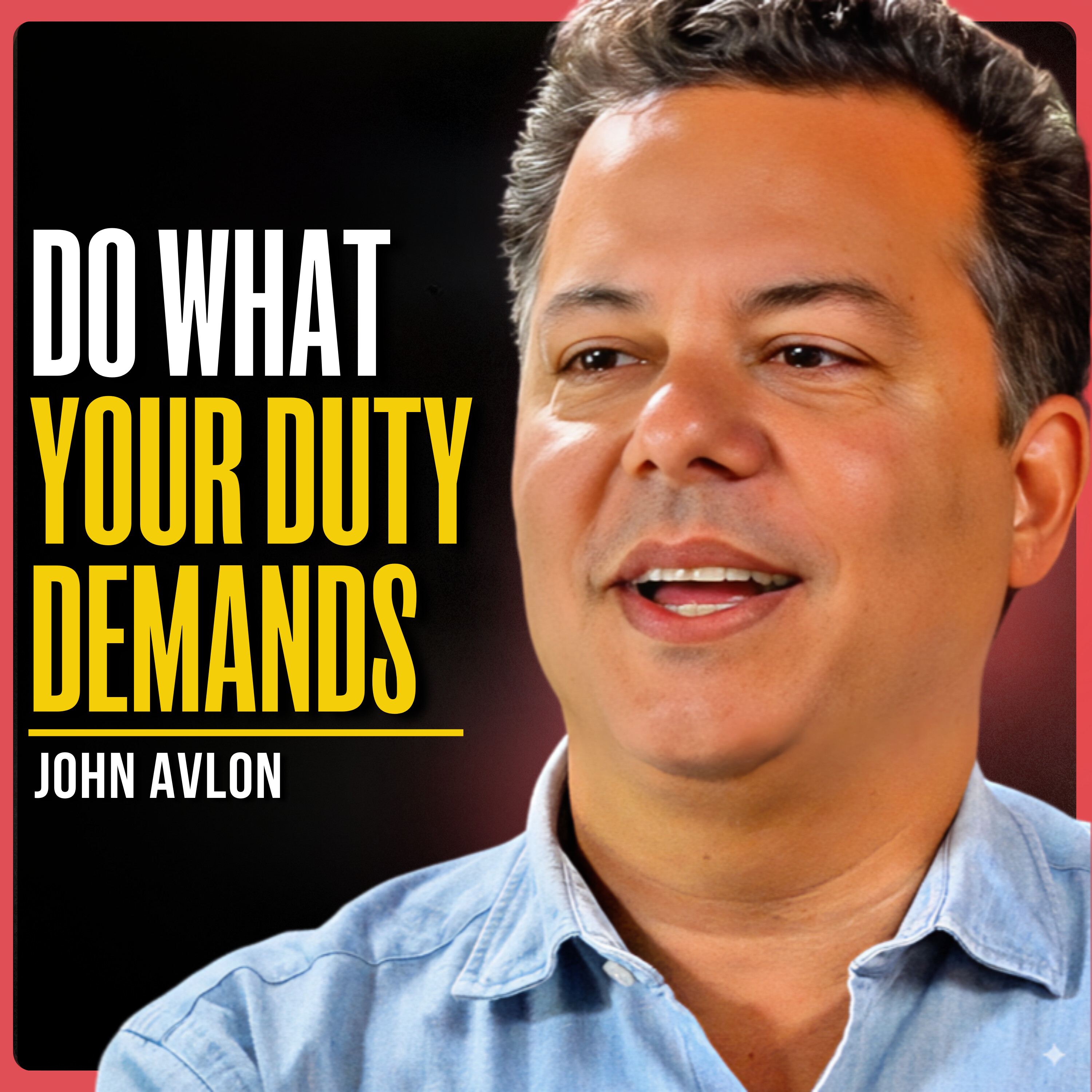
In this episode, Ryan Holiday resumes his conversation with journalist and historian John Avlon, focusing on the theme of courage in challenging times. The discussion highlights the historical context of American democracy, the dangers of misinformation, and the importance of civic engagement. Avlon reflects on his experience running for office and emphasizes the need for citizens to embody courage and responsibility in today's political climate.
Written by AI. May contain mistakes.

Get the gist, explore an idea or ask about something said.
 Claude
On The Daily Stoic, what are the key points of this episode?
Searching your listeningAutomatic transcript. May contain errors.
0:28Why choose a Sleep Number smart bed? This message comes from Capital One. With the Spark Cash Plus card from Capital One, you earn unlimited 2 % cash back on every purchase and get big purchasing power so your business can spend more and earn more. Steven, Brandon, and Bruno, the business owners of SandCloud, reinvested their 2 % cash back to help build the company's retail presence. Capital One, what's in your wallet? Find out more at CapitalOne.com slash Spark Cash Plus Terms Apply. What can 160 years of experience teach you about the future? When it comes to protecting what matters, Pacific Life provides life insurance, retirement income, and employee benefits for people and businesses building a more confident tomorrow.
1:16Strategies rooted in strength and backed by experience. Ask a financial professional how Pacific Life can help you today. Pacific Life Insurance Company, Omaha, Nebraska, and in New York. Pacific Life and Annuity, Phoenix, Arizona.
1:33Welcome to the weekend edition of The Daily Stoic. Each weekday, we bring you a meditation inspired by the ancient Stoics, something to help you live up to those four Stoic virtues of courage, justice, temperance, and wisdom. And then here on the weekend, we take a deeper dive into those same topics. We interview Stoic philosophers. We explore at length how these Stoic ideas can be applied to our actual lives and the challenging issues of our time. Here on the weekend, when you have a little bit more space, when things have slowed down, be sure to take some time to think, to go for a walk, to sit with your journal, and most importantly, to prepare for what the week ahead may bring.
2:25Hey, it's Ryan. Welcome to another episode of the Daily Stoic Podcast. What I've loved about the Stoics is that the Stoics didn't sit on the sidelines. They got involved. They got engaged. It was said that Marcus Aurelius and Hadrian drag Arian and Rusticus out of their studies and into the forum, into the arena, did not allow them to be pen and ink philosophers. And, you know, it's really easy to despair about what's happening in the world. It's really easy to complain about the quality of leadership or elected officials, whatever country you live in, whatever level you are complaining about, whether it's your town mayor or, you know, your representative to the EU.
3:17do, it's harder to do something about it. And not that running for office is the only way to do it, but my guest today, John Avalon, ran for Congress in 2024. He didn't win, but I think he learned a lot in the process. He put himself out there, and that must have been scary. It must have been hard. It must have been uncomfortable for someone who was a journalist. For many years, he was the managing director of The Daily Beast. He's been a senior political analyst and anchor at CNN. His wife, Margaret Hoover, is a journalist. He's previously a columnist at the New York Sun. But he put himself out there.
3:53And that's how we connected. He had me on his podcast during that election cycle. And we chatted about stoicism and contributing to public life. And this is all secondary to what John is really, really great at, which is writing interesting books. He has two books, Washington's Farewell and Lincoln and the Fight for Peace, that I think are very relevant to today's world. He came out, we talked about him, we talked about Lincoln, we talked about Washington, and then many other things. I think you're really going to like these episodes. You can follow him on social media, at John Avalon. And then we ended up doing a nice walk through The Painted Porch where we talked about some of our favorite books.
4:36So let's just get into it. Here is me talking to John Avalon in Bastard, Texas.
4:45Have you read the new Eric Larson book on Sumter? I've started the Eric Larson book. It's weird to read another. Like, Meacham's book's great. I like Larson a lot. I just thought he did a good job, which is what I want to talk about. He did a good job capturing something I don't think we talk about with the Civil War enough, which is basically a minority of a minority hijacks a party and then plunges the whole country into war. And there's an analogy here, like in Texas, there's no Democrat in any statewide office. And even though the state is actually pretty purple, only 3 % of people vote in the Republican primary.
5:20And so that's who decides. So you have this minority of a minority picking these extreme candidates. And basically, I think he makes the point that a generation of Southerners who'd been raised not just with slavery and the corrosive effects of like, you know, subjugating a group of people. But at some point, the sort of powers that be decide that they can't even brook an argument about the rightness or wrongness of this. And so they raise kind of this generation of like these aggressive snowflakes who can't like, no criticism of slavery is allowed. No contradictory information is allowed. Basically, no free speech is allowed.
5:55And it creates this kind of this incredibly insular, almost deranged, wacko culture that honestly thinks it can win the Civil War. You know, it plunges the nation in. Lincoln does essentially nothing to make them think that slavery itself is threatened. This is all in their head. You know, now that famous essay about the Flight 93 election. They basically believe that premise then and then crash the plane into a fucking mountain for no reason. And create the very thing they were trying to avoid. And I know the author of that essay. And I do think as someone who lived through 9-11 up close, like that essay, the premise of it is offensive, to say the least.
6:37Yes. But also really, really bad if your goal is to try to redeem American democracy. And that's where I think our challenge is today. But let's just talk about what you just laid out. First of all, blood and soil vision of patriotism, which is nationalism, not patriotism, right? A sense of persecution that you cultivate so people are on a hair trigger. You use polarization. And then when violence is instigated, you convince people that the aggressor is the victim. So the psychology is termed aggressive defensiveness. It was also used to reclaim the South for segregationists after the Civil War and after the Constitutional Amendment.
7:12This is Japan and World War II. This is Germany and World War II. Exactly. Germany, by the way, that's a form of lost cause mythology too. Very explicitly. Blood and soil nationalism plus a victimhood, aggressive, defensive, lost cause mythology. These are dangerous forces. And I think America in particular, and this is something I believe like marrow deep, you know, we're the first nation in the world founded on idea, not a tribal identity. And therefore, we're really uniquely dependent on unifying stories and tribal politics uniquely short-circuits our nation. Yes. Or short-circuits, right? What do you do when people introduce a fundamentally false story and they repeatedly add to it, filter information, suppress dissenting, contradictory?
7:54The South basically tells itself this story that is a lie over and over and over again that plunges them into the made-up conflict that is Fort Sumter, into the war, that sustains the war well after it's obviously lost, and then sustains the sort of lost cause mythology resistance of segregation for another hundred years. And I think we're kind of in this sort of that energy, that sort of dark energy, I said, I think is still with us. When I look at a DeSantis or an Abbott, I see them just using that playbook of just like, how do we lie? How do we aggressively defend? And there's a line, a spectrum from when it goes from populism to demagoguism into, you know, outright violence and war.
8:38And it's hard to know where you are on that spectrum, but it's a dangerous force that you should not play with. Correct. And we are actively indulging it. And the other thing is an attempt to get democracies to consume themselves. So this goes back to actually what Washington and the farewell address and the founders. I've been giving a talk lately about how the founders warned us. And if you notice, I mean, there's a reason they use the word demagogue even more than democracy in the Federalist Papers. There's a reason that Washington Farewell Address, his number one warning is against what we would call hyper-partisanship and polarization.
9:10That's how democracies die. And also foreign influence underpinning, which is an issue in when the founders are directly drawing on the lessons of ancient Greece and Rome and how those republics fell. You know, they look at King Philip of Macedon pretending to be allies and undermining the integrity of a state, which Russia does to Poland while Washington is president. Or even the number of times they've referenced like Catiline and the Catiline conspiracy. And when you have this sort of false demagogic populist who loses an election and that threatens their ego and sense of self and what a fragile person with unlimited ambition will do in that position.
9:50They were just so scared about that. And then I guess it's somewhat ironic that they would design a system that is still to this day remains vulnerable to that kind of person. But they had explicitly, here's the great thing about applied history. The founders intentionally drew on those lessons to build a system that was as impervious as possible, given human nature. But that's also why they wonder, they warn, if virtue ceases to exist, democracies will collapse. We have a weakness with demagogues who rise to power on the ruins of public liberty, right? With populism that says they're defending liberty while undermining it.
10:23Which is why, you know, when you read that Hamilton letter to Washington that was read during one of Trump's impeachments repeatedly, it's incredibly resonant and incredibly relevant. And I think one of our challenges, like Lincoln and that generation is the second founding, right? And it's easier to rally around them today for some folks than the first founding, which I utterly reject. But we can get into that, which we're now celebrating the 250th anniversary of Lexington and Concord. They did a Paul Revere ride up this street. That's so cool. I love that. And we need to reclaim American history.
10:53You know what I found out at this thing because I took my kids to it? They were exciting. So this town is Bastrop, Texas. There's also Bastrop, Louisiana. It was founded by this guy, Baron de Bastrop, who was in typical American history fashion, a complete charlatan of no actual European ancestry. Comes here, land speculator, gets a bunch of land from the Mexican government, whatever. He runs into financial trouble. He sells his land in Louisiana to Aaron Burr. No kidding. Yes. Oh, and that's where he was going to do the revolution? Yes, our first trader. That's amazing. That's amazing. There's so many places to take that.
11:30But I think that it's worth looking at the way the founders consciously drew on history. And we need to honor our history. I think we need a, I'm a centrist, but a liberal patriotism. We need to make sure that there are a lot of, that this is a patriotic movement to preserve our democracy that's incredibly inclusive. And to the extent that Lincoln is the second founding, I do think that one of our challenges right now we need to take generationally very seriously is the idea that we need to enact a new founding era. Would you say we need a third or would you say it's the fourth? Because I would say you get 100 at the 100th anniversary of Appomattox.
12:04You basically have the March in Washington. You have the civil rights movement. I would include sort of Washington and John Lewis and these other guys as a sort of a third founding. I would say we'd be in fourth. I think the fourth is fair because I think between the Great Depression and the civil rights movement, an enormous amount happens. A new conception of America. But the goal in our focus now, I deeply believe, should be strengthening American democracy for the 21st century. And it needs to be a whole of government effort that involves culture too. Teaching civics again. Really inculcating it.
12:34Really making sure we have a new vision of national service. We have shared experiences. Political reforms that can counteract the polarization. Open primaries, rank choice voting, redistricting reform. The system has to work or people aren't going to participate. And this is where the abundance agenda folks have a great point, too, because if you create a sclerotic system where nothing gets built, people don't believe their government can be responsive to their needs. And that sets up a situation for a demagogue who promises they can, quote, get things done. Yeah. So we do need to think much more holistically and about a fourth founding.
13:03Yeah. And an effort after this to rebuild and strengthen American democracy for the 21st century. That's where I think our energy needs to go. It's not a defense of the stale status quo. It's something that is patriotic, but radically new, drawing on our past. And it's about making the old stories new again, which is what you do, which is what I try to do in my books. We need to take the best of the past and reanimate it. So there's a sense of continuity and hope and building something better squarely on the best foundations of the past. I think Martin Luther King did this so well because he was so steeped in American history and then sort of Western civilization that he could take them seriously and literally.
13:41Right. And like the March of Washington, he's like, I'm here to cash a check. Right. With the Emancipation Proclamation, you made a promise. I'm here to cash that check. And that's, I mean, I think Thomas Jefferson would at some level be horrified that we took him literally. Right. But I think that's part of it. And I've always loved, there's a line in meditations that I think about that I think is a great example of this because it's so funny coming from Marcus Aurelius. So Marcus Aurelius, he lists his debts and lessons. And he lists, he says, through my brother Severus, it was through him that I encountered Thrasia, Helvidius, Cato, Dion, and Brutus, the great sort of stoic opposition, the great stoic philosopher senators.
14:20And he says, and conceived of a society of equal laws governed by a quality of status and speech and of rulers who respect the liberty of their subjects above all else. So it's like, it's funny to hear the emperor of Rome say that. And yet he's taking the tradition of Cato and all these other Stoic philosophers. He's reiterating what they said. He's saying it beautifully. And then at some level, I think probably would be first to admit we're not even close to that. But the idea is that each generation we aspire to get a little bit closer. That's it. That's to form a more perfect union. This is not a utopian vision.
14:56America is not a utopian nation because I think the founders recognized, given the understanding of human nature, that utopian dreams always end in nightmares. Right? You're imposing ideology on the human spirit. That's never a good deal. But what you can do is make constant progress. And each generation has its role and responsibility. And this is ours. We're the adults right now. Yeah. And we got a lot to clean up and reform, but it needs to be done in a patriotic, inclusive way. And you're right about Dr. King. That is such a great example about how he consciously builds a patriotic nationalism.
15:28He's not tearing down. He's saying, hey, no, no, what you believe, I believe. Exactly. But let's make it real. I think Gandhi does this also. It's like Gandhi understands Christianity is the religion of the empire that's oppressing them. And he reflects their fundamental unchristianness back at them. and then they have to go, well, are we going to cling to this or are we going to try to be a little bit better? And that's reconciling leadership. Yes. Gandhi harkens back to Lincoln. MLK harkened back to Lincoln. Mandela harkens back to Lincoln. You take a divided contradictory system and you try to elevate it on the basis of shared humanity.
16:02You have to do that. And that is, Jill Lepore writes beautifully about this in one of her books, but that is the essence of reconciling leadership. And it's something that Lincoln symbolizes and we need to rekindle. It seems to me right now.
16:23We just took our kids to an outdoor performance of the Nutcracker. They had a snow cone and then they went insane in the car ride home. And one of the things I try to remind myself when that's happening is that I don't control my kids' behavior, especially when they're too far gone like that. But I do control how I respond, right? Right. That's stoicism, but it's also what Dr. Becky talks about. Dr. Becky is a clinical psychologist and a bestselling author, and she founded Good Inside, which is there to give parents practical, actionable tools for handling those everyday challenges with confidence.
16:58My wife introduced me to Dr. Becky's books. I love them. I've recommended them a million times. I've had her on the podcast. And as it happens, Dr. Becky is hosting two live Q &A events for Good Inside members. I am one of them. She signed me up for it about a year and a half ago. I've loved it ever since. On December 1st, you can join Dr. Becky for her How Not to Raise Assholes event, which is about avoiding entitlement and raising kind, empathetic kids. And on December 15th, she's hosting her How Not to Lose It over the holidays event, which I'm sure we could all use. As I said, I'm a big fan of Dr.
17:35Becky. She's been a great influence for me as a parent And just as a human being and daily Stoic listeners can join for 15 % off with code STOIC15, you just got to head over to goodinside.com to catch the events. Human, your body has a performance superhighway. 60 ,000 miles of blood vessels that deliver oxygen and nutrients to every cell. This, of course, is your cardiovascular system. It's the foundational system that powers everything we do. Both elite athletes and longevity experts invest directly in the cardiovascular system because supporting healthy blood flow is critical for energy, recovery, mental clarity, and overall performance.
18:20That's where Schumann comes in. That's Schumann with two Ns. They started out of research at the University of Texas, near where I live, and have 15 years of experience making award-winning supplements for nitric oxide production and healthy blood flow, now used by over 160 pro and college sports teams. Human Cardiovascular Health Daily is a plant-based and made from clinically studied ingredients like grapeseed and seed kelp extract. It supports nitric oxide production for healthy blood flow and energy while also supporting blood pressure and helping support the delicate interlining of your blood vessels.
18:55Just two capsules each morning will power energy and recovery while also playing the long game by supporting long-term vascular health and healthy aging. Human has an exclusive offer for our listeners. You can visit human.com slash stoic for an extra 15 % off your first purchase. That's enter code S-T-O-I-C, stoic at checkout. That's human with two N's, dot com slash stoic for an extra 15 % off with code stoic at checkout.
19:25So last time we talked, it was right before your election. You ran for office. What did you learn running for office? Because, I mean, I think you probably identify as a journalist and as a writer and as a historian, and then you found yourself crossing that line, like entering the arena, so to speak. Yeah. Obviously, it didn't go your way. But what did you learn about that process and what advice would you have for people? I'm glad I did it. Yeah? I got energy from it. It felt deeply purposeful. And I think for me, it was a feeling that I did not just want to talk about it. If I had been, you know, I was editor in chief of the Daily Beast in the first Trump election and we were the first news organization or one of the first to get blacklisted by the campaign.
20:05I was a senior analyst and anchor at CNN during the 2020 election. And the idea of enduring a third election and just talking about it felt civically lazy to me. Yeah. And it's a tough decision. It's tough on young families. You know, it's tough to walk away from a job and a career you really love, recognizing that. It's probably not fun to suddenly be subjected to criticism and a grueling schedule. I mean, I imagine also it's not a walk in the park. It's definitely not a walk in the park, and we don't make it easy. But I will say, having been a journalist in the Trump era and written a book called Wingnuts 15 years ago about the rise of all this stuff, I have a very thick skin.
20:45I'm used to being attacked baselessly by people who create characters, which is pretty funny if your general, your whole purpose is about, you know, building a vital center and like combating polarization and extremism. And I don't care if it's on the far left or the far right, but I won't pretend those two things are equivalent in our time. Sure, sure, sure. Because they're not. Yes. You know, I worked for Rudy Giuliani when he was mayor during 9-11. Before that had been a Clinton kid. Yeah. And so, yeah, I ran as a Democrat because I was also the question of where can I do the most good right now?
21:15And my wife and I, Margaret, Margaret Hoover, the host of Firing Line, we had long and anguished conversations around this because of the costs to our family. And ultimately, the decision was that we didn't want to tell our kids that we could have done more when it mattered most. That's what honestly motivated me. And for me, my grandparents were immigrants and I have had a deep belief in America as a civic religion, I feel. And it's not an uncommon experience for immigrant families. And so what has been happening has been torturous to my sense of America as a great force for good. Not perfect, but...
21:56There's a betrayal there, I think it feels like. I didn't think we'd do it to ourselves a second time. Yes. Only because Trump, after the last election, had tried to destroy our democracy on the back of a lie that led to an attack on our Capitol. And I assumed that that would be a deal breaker, if not the 1.1 million people dying during COVID, if not for any number of fewer journalists, you care deeply about combating lies. Or just to go to our point about the founders in virtue, it's like, let's say he was right about everything. There is no level on which he's not a shitty person. He cheats on his wife.
22:28He cheats on his taxes. he's mean, he's vindictive, he's insecure, he's a preposterous cartoon clown. Even if he was right about everything, even if he could make you rich in America beyond its wildest dreams, I think at some level, how do you not just have the self-respect to be like, I don't want to hang out with that person. I don't want them in charge. And by the way, you would never let this person coach your kid's soccer team. You would never give him your life savings, and then the ability for millions of people in some sort of collective psychosis or delusion to go, let's give him the largest nuclear arsenal in the world and the keys to the world economy and this, that, and the other.
23:14Even if you are pretty cynical, even if you are pretty good at understanding the craziness, the crazy things people have done in history, it's hard to wrap your head around. It is. And it sets a terrible example for American democracy and democracy in the world. You know, our autocratic adversaries want to undermine the integrity of democracy, right? And they tried to do this in the 1930s, right? Democracy is divided and decadent and dysfunctional. It can't get big things done. You need a totalitarian system led by a strong man to really deliver for the people. And ultimately, you know, we sort of said that, you know, back to the wall, we've got more strength because free men, liberty, equality, that has greater strength.
23:53than a totalitarian system that rules by fear. The fact that we've done this to ourselves is difficult to reconcile with any vision of American exceptionalism. The people who are surprised at the chaos and cruelty and corruption right now, it's hard for me to reconcile as a former journalist. But that goes back to the Lincoln thing. It's like, if it was easy to be a reconciler, if it was easy to empathize, to understand, to forgive, it wouldn't be impressive, right? And so it is an example of when Mark Surios writes his passage about how the obstacle is the way. He's not talking about like a bankruptcy or, you know, a disaster.
24:30He's talking about assholes. Like assholes really make it hard for you. Like people who do fucked up things make it hard for you. It's hard to be empathetic when someone is in the middle of harming you or something you love. And that's what I think makes this moment so challenging. But it's also what demands from us exactly this set of virtues. Exactly right. My favorite apocryphal Lincoln quote, sadly apocryphal, is I'm an optimist because I don't see the point in being anything else. And so I do think we need to be defiantly optimistic. That is sort of my default anyway, but we need to dig deep to find it.
25:04It's one of the reasons why I wanted to interview you for my podcast right before the election, because the stakes are so high for citizens. But even in a ditch like this, now is precisely the time where you need to dig deep, to find courage, to find discipline, to find decency. And for citizens to step up, this is a time for citizens to show responsibility. And that does not mean this requires the deeper wisdom of Lincoln and King of confronting hate with love. Yes. Right. That's the way you defeat it, because otherwise the people who want to destroy our democracy will throw sand in the gears.
25:35They want more conflict. They want more division. They want more disinformation. They want you to go fuck them. This isn't where they want you to move or they want you to disengage or just go, you know what? I'm just going to focus on my business for the next four years. That's right. And this is like Voslav Havel, one of my heroes, The Power of the Powerless Essay, where he talks about the subtle cues that makes a green grocer to put up the workers of the world unite sign in the window. It's not that they believe it. It's that that's a way just to stay out of trouble and go about their business.
26:00But then you become part of a cog in that larger machine. And so that's where we all, I think, need to rise up with a sense of sort of, you know, straighten their civic backbones and be active citizens and feel a sense of courage and do what we can. It's the Teddy Roosevelt. Do what you can where you are with what you got. Well, that's what I felt with this thing at the Naval Academy. Everyone had their little bit of, hey, this is where I draw the line. This is what I'm okay with. This is what I'm not okay with. This is what I think is right. I actually think this would all get back in the bounds of normalcy pretty quickly.
26:30I think Harvard doing what it did makes a big difference. Columbia doing what it did makes a big difference the other way. What is the point of having hundreds of billions of dollars If you're going to go sit in the still have to sit in the front row and suck up to a guy who would destroy your business in three seconds if he had the power, who has called for you to be arrested. I'm talking about Mark Zuckerberg here. You know, what is the point of being one of the hundred most powerful people in the world that I'm talking about every senator and then just being like, well, the president wants it.
27:05It's like, no, you have been given a set of power and you are refusing to take it. And what is the point? And so I think if everyone said, like at this thing in the Naval Academy, they wanted me to remove stuff from my slides. I don't have the power to force myself on stage and give the talk. They have the power to say whether I can do it or not. But I have the power to not compromise. And then I have the power to not go quiet about that. I can make good trouble, as John Lewis said. And that's what I felt like I could do. Now, I don't know what this is going to mean for me exactly. I'm almost certainly not going to talk there ever again.
27:39Like that invitation is rescinded for the time being. But, you know. In the long run, though, it is additive. In the long run, you will be invited back, you know, because you took a stand of principle. And just let's explain to people a little bit more around the context around this. The Naval Academy had removed over, I think, 300 books from the library. They left mine comp, but they took out Maya Angelou. Yes. Right? Right. Stacey Abrams, who I've had on this podcast, they removed her book. So it's not this abstract thing. It's someone I know. They removed someone I know from the library. And what was the alleged sin?
28:13Not like those books had actually been read. No, just too woke. Just too woke. By reputation, association, right? Probably ChatGPT gave them a list of woke books. Right. This is like where like the Enola Gay was briefly erased from the history of the military because it had the word gay. It had a keyword. Yeah, exactly. Right. Which is really sinister and totalitarian if it weren't also sort of, you know, laugh so you don't cry. But that stand of courage and then talking about it, right? What they do is they say, fine, just be quiet. Yes. Right? Get in line. And the refusal to bow, the refusal to compromise, the contrary example that you just gave is all the CEOs who took the trip down to Mar-a-Lago to kiss the ring.
28:53And, you know, Martin Abus used to say the terrible thing is everyone's got their reasons. Yes. And in that case, you've got the veneer of shareholder responsibility, fiduciary responsibility. I will be not doing my duty as a shareholder, a representative, you know, CEO, if I don't go kiss the ring right now. Yeah. Even though experience should tell you that bullies only respect strength. My favorite quote from one of my favorite quotes from Churchill, you know, appeasement is feeding a crocodile hoping it eats you last. Yeah. And as the law firms found out when they didn't have collective action at the outset, they figured, oh, this is a pretty good deal.
29:25I was going to do pro bono work for, I guess, anti-Semitism and for veterans anyway. Yeah. But it's never going to stop there. No, that's what Stockdale, which I talk about in the New York Times, he calls this extortionary environments. It's due. And so you might go, oh, look, all they're asking you to do is remove the slides because it's going to, yes, but there's a or else. And the or else isn't, hey, you're going to get audited or, hey, you're going to end up in an El Salvadorian gulag. But it was, you're not going to come back. Like there is a consequence if you don't go along. If you make trouble, like things will be removed.
29:57And I think what is tricky, and we saw like, where would we be right now if Mike Pence hadn't been the vice president on January 6th, right? So there is the problem with, you said everyone has their reasons. Some of those reasons are good. You do need good people in positions of power and influence for some critical moment in the future. I think what's delusional and super seductive is we tell ourselves that we're that person, that, of course, we know we could do something now, but we have to hold our fire for later, then we can do the right thing. And most of us are not that person. Our job, most of us, most of the time, need to just do the right fucking thing and not be Machiavellian or pragmatic about it.
30:39Just do what you think is right. Draw the line. Say what you think the truth. Mark Cerullo says, say what you think, right? Like, say what is true. Do what your duty demands. Don't tell yourself, oh, hey, if I do it, then I'll be replaced by someone worse. And then with the moment, no, most of us, most of the time, just do the right thing. It's safer. It's easier. It's clearer. Don't get in your own head about it. I just had to go, you know what? Yes, sure. I could get up there. I could do the talk. Maybe I could sneak it in. I could be subtle about it. I could allude to this. Or, you know, later on, I want to give a better speech.
31:14I'm like, you know what? I've done that enough in my life. You know, there's been moments professionally where I was working with someone or I didn't written about that. You've been open about it. Totally. And I was like, you know what? That time's over. More people just need to do that thing now. This is the key thing, right? And you mentioned John McCain, who obviously served in the Hanoi Hilton, served, quote unquote, with Admiral Stockdale. And he said, you know, doing the right thing politically is usually, doing the right thing is usually the right thing politically ultimately. Yes. Right.
31:38But take that calculation out. The moment you rationalize, we're all responsible with what we say and do when we have the microphone. Yeah. So the backroom conversations, the quiet rationalizations, The delay of saying how many senators I've spoken to who rationalized votes for people they knew were blatantly unqualified. They would never. This is the Lincoln idea of the politics of the golden rule. Treat other people like you'd like to be treated that we've totally lost in our politics for the time being. And we need to reassert. They said, well, I'll vote for these nominees now. But the rally line is going to be when the Senate parliamentarian, if we try to overrule the Senate parliamentarian on reconciliation.
32:11First of all, ain't never going to happen. Yeah. Right. I mean, I.E. And by the way, two votes. Hagseth is not secretary of defense and we're not in this. And Tillis had made a deal to do it. And then he was scared. Look, I understand they get threats and they say, then I got to look out for my family. But this is where you get the larger oath. You know, the mere Pence example, the fact that he went along and did almost everything until the very end and then still was cast out with the trash. That 40 members of Trump's first term, cabinet secretary saying this is not a good man and cannot be trusted.
32:41The rationalization that says this time it will be different is and should be unsupportable. But the example you set, you know, by, but in your way is in the members of the Senate all need to be stepping up. Now, if you say you believe in these virtues and these values, don't hedge, don't prevaricate, don't rationalize. Same thing with CEOs or college presidents. When the halfway, when the halfway is done, it does not work. You be strong, take collective action now because our democracy is on the line. And then as citizens, we need to step up and, and really do take that responsibility to reanimate our democracy.
33:15And they use this idea of a second founding and strengthening American democracy for the 21st century. Let's look forward to build something, not simply destroying. But it begins with courage today. Now is the time to be courageous, not tomorrow. Yeah. And we're not senators, but we all have this in our own individual sphere. That's right. Everyone does it in their own individual sphere. We all have little bits of power. And if we assert that power individually, collectively, it does make a large difference. And yeah, I don't know. We just need more of it. We need more of it, but each of us in our own lives, in our own conversations can set the example.
33:49It's what Robert F. Kennedy Sr. now said. He said, for tiny ripples of possibility. And it does have, it can change the way people think. People need those positive examples. They need to be reminded. It's why your books remind people of the virtues in story form. Yeah, McMaster points this out in his book on Vietnam about how not a single member of the Joint Chiefs of Staff resigned on principle over like 30 years of Vietnam. bum everyone at some level either either they thought they were more hawkish and they felt like we weren't doing enough or they'd come to despair over the war and thought it was a lost cause and yet everyone said and there's a famous quote from one of those generals where he goes look i know you think i should resign on principle but what happens if i resign on principle the next day i'm just a bum who was once on the joint chiefs of staff and that makes sense individually but then you go, okay, 30 years, nobody did anything.
34:41And you're just in this slow moving car crash. And by the way, you're feeding 50, 60, 70, you're hundreds of thousands of people into this grinder. You think about how many Americans died. Think about how many South Vietnamese died. Sure. North Vietnamese died. And to me, that's why I'm so fascinated with Stockdale in this moment, because meanwhile, Stockdale and McCain both, along with about 500 other POWs are there. And each one of them could have just said a couple magic words and gone home or been given a nice sell to themselves and three square meals a day. And they said, no, I'm not gonna fuck over these people next to me.
35:21And all along the way, the people in Washington in much cushier positions, they would have gotten lobbyist jobs or law firm jobs. But they said, yeah, but see, if I say what I think here, I'm not going to be senator anymore. I'm not going to be joint chiefs anymore. The president will be mad at me. Or even worse, they'll say, I'll lose access to the partisan economy after I lead office. Yes. And whereas John McCain, as you say, refused early release when he had it offered. Yes. Because he didn't want to send that morale-busting message to his compatriots. So if you think about the stakes that historical figures, the stakes that they stood their ground and found their courage and the comparatively low stakes to which we are selling out our democracy today, it is despicable.
36:06But it is also about, therefore, reminding and stealing the spine and straightening our civic backbone and realizing that it does still begin and end with us, the citizens. Totally. And we have to engage it. We have to demand more. We cannot defer responsibility for our time. That's right. You want to go check us in books? Hell yeah.
36:28Thanks to Toyota Trucks for sponsoring this episode. When I bought my ranch in 2015 out here in Bastro County, I drove my car about halfway down the dirt road that we live on, thought this isn't going to work, stopped, parked it, walked the rest of the way home, borrowed my wife's car, drove into Austin and bought a truck. What I bought was a Toyota Tacoma. And this truck wasn't just transportation, it getting me to and from my house. It unlocked a whole different style of living for us, not just on the ranch, but in our little Texas towns. There were places I could go now that I couldn't go before, especially out here in the piney forests, through the fields, and on the unpaved roads like the one that I lived in.
37:14We got to go deep into the hill country's wild beauty. We've driven all the way out to East Texas. We've driven across the country. And by we, I mean not just my wife, but both my kids who I drove home from the hospital in that truck. Toyota trucks are built for those who understand that the best adventures happen when you're willing to veer off course. Because you never know when you'll end up on a Toyota adventure detour. And of course, this is stoicism too, because every detour, every obstacle is an opportunity. But it's helpful if you can handle the difficulty inherent in that. If you've got the resilience and the right companion to make it wherever the road takes you.
37:53Discover your uncharted territory. Learn more at toyota.com slash trucks slash adventure dash detours. Shopify's point of sale system helps you sell at every stage of your business. Need a fast and secure way to take payments in person? We've got you covered. How about card readers you can rely on anywhere you sell? Thanks. Have a good one. Yep, that too. Want one place to manage all your online and in-person sales? That's kind of our thing. Wherever you sell, businesses that grow, grow with Shopify. Sign up for your$1 a month trial at shopify.com slash listen. Shopify.com slash listen.
38:37So you know Ford Theater? Yeah. You know the spinny thing? That's where this idea came from. Oh, it's brilliant. Yeah. So, uh... And by the way, this is so... I didn't live in Sag Harbor in New York. I mean, we got a great local bookstore there, but, like, you're kind of living the dream. Yeah, it's been fun. So there's a bunch of Lincolns over there. Yeah, of course. I think this is... I love Lincoln and Gettysburg probably was one of the C's. Oh, it's incredible. I'd like to point out that there's more pages in this book than words in the address. Oh, for sure. By a lot. But this is one... Did you read this one?
39:11Biography of a Writer? No, I never had. So it like, because Lincoln wasn't a great speaker. He wasn't a politician in the sense he could get up and give these like two hour extemporaneous addresses. He wrote them all down. It's a really interesting look and they take a lot of the speeches and he kind of puts them in like poetry form. Did this have a different title? There was a book called Lincoln's Sword about his writing. I have that book also, but no, no, this is just look at him as a writer. If you haven't read that one, you might like that one. And then I think William Lee Miller is probably my favorite Lincoln, I don't know.
39:39Interesting. Have you ever been Benjamin Thomas? No. Mid-20th century kind of authoritative biography. He's a really good writer. The problem I've got is I want the, like the right, like William Manchester, right? So actually when I was writing my Lincoln intro, I was fascinated with how Manchester set up the introduction of the first last line. Yeah. So, you know, this one. Yeah. And so I read it like 10 times and I sort of diagrammed it and I used that and I didn't, you know, copy a structure but I used that as an inspiration because I was trying to figure out why does this work? Because it shouldn't.
40:13It's sort of like Dylan's Chronicles, which I love too. It shouldn't work structurally, but it works really well. And anyway, so the introduction to Lincoln, I think I feel like I hit the ball hard. But I was definitely inspired and structurally studied the introduction to Manchester. And Manchester's writing kind of elevates the game. McCullough elevates the game. I wanted to have that tactile feel. Totally. Yeah. So I'm sure you've read Edmund Morris since are doing. Oh, God, yeah. Have you read his Edison biography? So I've started that one, too. The backward structure... Well, I was going to think of opening lines.
40:48It's like, in the end, as in the beginning, he subsisted only on milk. Yeah, that's great. And you're just like, that's fucking weird and crazy, and it shouldn't work, and somehow it does. But Edmund Morris, like, the Dutch, his biography of Reagan, Dutch, was, like, lambasted because he had this unbelievable access, and then he kind of spurned it. And I understand why the Reagan folks were like, how did you... But it's genius, because this avant-garde biography of this like really un-avant-garde guy and and he had his reasons for doing it um uh i talked to him at the time and and right after uh because i was like a young admirer but but he does the tactile history and the the he's he's a bit transgressive he's fucking with the constraints of the medium exactly almost nobody does which is great and which is something i like you know like my favorite writers are martin amos and jim harrison and uh you know like you know we should we should nerd out on favorite books yeah but but yeah the ones who kind of push to push the form and kind of like just make it a little more tactile that's why I was like to like what is it like to write Thompson great guy incredible he's a buddy of mine but he is the best he is fantastic you know he's one of the best I think best living writers speaking of your sort of project of hopeful patriotism have you read Sharon yes and amazing What's interesting about this book is twofold.
42:06One is I tried to sell a book. My first book was called Independent Nations, a history of centrist leaders in American politics. And it came out when I was like, I wrote it when I was, I guess, 30. And I tried to sell a book to form a more perfect union about sort of the forgotten heroes of American history, which is a theme that I did a lot at the Beast, of like diverse Americans. And I was basically said, like, the episodic histories don't work. Yeah, they're very hard to pull up. Unless you have a huge platform already. And that she did what you've done very effectively, which is use a social media platform to build out.
42:44So I think that's a great example. Have you read The Storm Before the Storm? Yes, because you recommended it to me. And it was one of my favorite podcasts to listen to. It was from July. Oh, yeah, we talked about this. Yes, you're right. That was a really big one. I've sent that podcast too, and then I read the book. I love that. First Principles is great. Tom Ricks is fantastic. He lives in Austin. This one is more, Jack and Rosen's book is more the Stoics than, the Stoics don't really come up in Ricks' book. It does Cicero. A little bit, yeah, but not as explicitly. And that one has a lot more of the Stoics in it.
43:20It's very good. So what are your all-time favorite literary history? Well, the literary, what do you mean literary? I mean, like, you know, history that's written with a sense of, you know, Caro, I think the most recent Caro is amazing. Yeah, I'm obviously very excited for the final one. I know, and nervous because the Manchester example freaks me out. Yes, yes, although the last book is not bad. Like, if you told me someone would do that good of a job finishing Caro, I would take it, I guess. Have you read this book? No. Okay, take this. All right. You would not think there would even be enough stuff to write a book this good, but incredible.
44:00Great. And also very much about, like, she does a really good job placing him in his context, which is he is a politician. And he has a shitty boss. His boss is Tiberius. So it's exactly, that's the timelessness of these dilemmas, right? He's in a far-flung province dealing with problems, unrest, and difficulty. this troublemaker comes up before him and mostly what he's thinking about is how do i handle this so my boss doesn't yell at me not not what is the right thing and you could so when jesus goes you know uh i am the way i'm truth and he goes what is truth he's like he doesn't fucking care because he just doesn't want tiberius to kill him i it's funny because i i gave a speech at a church during the campaign um i was asked to get up and i decided to do something pretty different i talked about Barabbas.
44:53Yeah. And, and, and the, and pilot is trying to like reason with the crap and they're like, come on a little bit. Yes. You know, you really, you know, you really want to think he knows what he's doing is wrong. He knows he's sending an innocent man, but, but then he's like, well, give the people what they want. My, my job is to give them what they want. Exactly. And that's where the responsibility of citizens. That's what the point I was trying to make in that, in that talk was, you know, citizens have a responsibility. Like it's not just about what vibes and what feels good at the moment. You need to think a little bit bigger totally and what i love about it is like so seneca writes seneca's letters or seneca writing to his friend lucilius lucilius is also a governor in the roman empire like they have the same job like do you know like it's not like he's not this it's it's there was a there were hundreds of conscious pilots like you know what i mean who just delegated the roman authority and then how do they use it?
45:45And she does a really good job comparing him to, she bounces around because there's almost no actual life details that we have about Punchbowl. But she's like, imagine you're the viceroy of India, right? And Gandhi is your problem. And you go, okay, this is the timelessness of it. You worked really hard. You got advanced to this job. But at some level, you know there's a moral problem with what you do and you just wish this person would not be pressing repeatedly on the contradiction inherent in your position because you had you sworn oath you have responsibilities and then how do you you manage this right and it's it's one of my all-time favorite books i think it's one of the great is all right i want to i want to read read that and i'm going to get a bunch of stuff from you because uh again like support local bookstores too but That reminds me of something I read the other day.
46:38So I guess, you know, there's a whole trend, particularly Silicon Valley, not just ketamine, but people are sort of going on trips. Psychedelics, yeah. Mid or late-life psychedelic. And there's a problem because these CEOs are taking it, and then they quit within like a month. Yeah, yeah. Because they're like, this is meaningless. Yeah, totally. Which is a fascinating, like, unintended side effect. We have, and then this is like one of my favorite series. So the Princeton University Prestige took little different chunks or essays from the ancients and then... Oh, I read the election one at the start of the campaign.
47:13Oh, How to Stop a Conspiracy? No, I didn't. So this is about the Catiline Conspiracy. Great. And then this is Plutarch, How to Be a Leader. So we think of Plutarch as just a biographer, but he's like the governor of this Greek city. And he's the priest at Delphi. So he's... He's got the 360. Yeah. Yeah, and so you go, okay, all of his political experience is obviously informing how he's writing about these people, and they are informing how he's leading, and the idea of it not being this line is great. And that's the way it should be, right? Totally. The way the founders are drawing on the lessons of history.
47:48My grandparents, or my ancestry is Greek, and it was interesting to talk to me about my grandfather. Plutarch was part of the cultural... Yeah, he's their guy. Yeah, you're like, so, you know, that was a, you know, even though, you know, he was a doctor, like, that was just part of the education. And I love that. There's, by the way, you quoted a Sophocles quote the other day that I put on. It was about, you know, you know, if you go into a tyrant's, you know, house and. Oh, willingly. Yeah. Yeah. But you leave. Yeah. What you leave a slave. You leave a slave. As a free man. Well, OK, so this is.
48:22And then have you read this book? No. OK. So again, Seneca is exactly the contradiction we're talking about. Seneca is brought back from exile by Nero's mother to tutor this kid. And his access is dependent on his association with this kid, who at some point ceases to be a kid and makes it very clear that he's deranged. But he tells himself he's indispensable, and if I leave someone worse. And he's right for a period. The first five years of Nero, they're called like Quinium, Neronium, they're good because he listens. But at some point he stops listening. And I don't know if you have, but I don't know if you have the later bad years without the political capital that people helped him build with the first five good years.
49:12So that's interesting, yeah. And by the way, I should say, after the campaign, and you know, no one likes to come up short. We ran ahead of the top of the ticket, I should say, but it wasn't enough. But one of the books I brought on my son and I took a cross-country train trip from Seattle to Chicago. One of the books I brought and read on that trip was Lives of the Stoics. Oh, amazing. Well, so I think this is one of my favorite books. Yeah, so I know the story. There's a famous statue of Nero and Seneca, and Seneca's like trying to teach him a Nero's like all just not interesting. Like the body language is incredible.
49:45I know that statue. Yeah, so anyway. Emerson, Lessons from American Stoics. Or do you find that, this is one of your favorites. I've never, Montaigne is a big sort of foundational centrist. He's a big character in the Wisdom book that I just finished. He's like, so there's a little biography that we don't have right now because it's out of print and we're bringing it back. Oh, is that the one that the guy reads before he kills himself in the Second World War? Yes, Stefan Zweig. Incredible. Because Zweig understands, like, sometimes because of what he's going through, he's able to, he's the first to really see Montaigne not as this guy who just loves ideas, but as a guy who loved the world, who is forced back into the world of ideas because the world is so dysfunctional.
50:29It's in the middle of the reformation, in the middle of the Protestant civil war, and just everyone's tearing themselves to pieces and are horrible and awful, and he's like, I just can't do this anymore. And so, like, he's also, you know, he's partly Jewish, he's a he realizes like oh it's not safe for me and so if you see him as someone who's criticizing the problems of his time just in the way that we're like what the fuck is happening like the Stefan Zweig decision I guess somewhat inspired by Montaigne is to me like tragic and also unacceptable but that's the arc of Montaigne is that he publishes these essays which has this enormous impact and then he re-emerges and he comes back out how is he like an avatar for centrism as a distinct philosophy, a mediating philosophy.
51:18I'll send you the, so he's the first main character in the book that I did. I'll send you this essay that I wrote. But he is, he's basically like his, I mean, think about it. He's like, what do I know? That's his question. What do I know? So in a time where both sides are killing each other because they know, he's saying, I don't know. And then the fascinating, one of his great essays is they basically discovered the new world in his lifetime. Right. And so all these reports of the cannibals are coming back and he's like, but wait, we do. He's like, I just watched you burn someone at the stake.
51:53Yes, exactly. And so and he's drawing. There's a famous story in Herodotus where Herodotus, you know, is telling these Greeks about this horrible thing that the Indians do that they eat a piece of their ancestor after they die. Right. And then they're like, that's what these barbarians, what's wrong with them? It's a very famous story. And then Herodotus, who's this kind of open-minded traveler, Herodotus goes, well, watch this. And he's like, okay, so to the Indians, he's like, this is actually people in India. Right, right, right. He's like, okay, so what the Greeks do is they put their father on a pile of sticks and they light them on fire.
52:33And they're like, what is wrong with you? And he's like, this is my point, that everything sounds barbaric if it's not what you grew up with or you understand. And Montaigne tells that story also. That's Montaigne. He's like, how can you guys know this? You don't know this. So his centrism is much more rooted in intellectual humility and open-mindedness. But that's fine. That's Benjamin Franklin, right? Like, we must trust a little bit less in our own infallibility. And it's the thing with terrorism or ideology. I'm a big believer that ideology is the enemy. And it's because it comes with crushing certainty.
53:07Yes. And so that is, I think, that's where people, like, Hubble has this great line about ideology, gives you the illusion of dignity and morals while making it easier to part with them. Yes. And I think that's perfect. Yeah. No, no, he's, I'll send you this thing. Fantastic. Yeah, so I'm just finishing the wisdom book. So the main character is Montaigne, and the first part is Montaigne. Second is Elon Musk, because how do you have a brilliant person break their mind and become so not brilliant? Yes. fall for so many things and then the third that's sort of a paragon of of wisdom is ultimately Lincoln so those are like the three main guys in the book that's awesome no it by the way I should tell you that so during the campaign I read the Daily Stoic every day and I ended up bonding with a really really brilliant tough young union leader named Ryan Stanton in part over that oh lovely and he reads your work every day and and there are a number of folks out in Suffolk County who especially I think there's a separate recovery community.
54:10Yeah. People like when they're needing to... There's something about the day, because it's one day at a time. There's something that works with the one page a day. And ultimately what you've been able to build, it's this, I think when you need a book to save your life or ground you, right? It acts as a life preserver. And it's connecting with the broader wisdom so you know you're not alone. I think that's the purpose of art and writing. And so just, you know, you have resonated in people's lives. So I'm not saying that just to blow smoke, but because it has the advantage of being true. Well, lovely.
54:42There you go.
54:48Thanks so much for listening. If you could rate this podcast and leave a review on iTunes, that would mean so much to us and it would really help the show. We appreciate it. And I'll see you next episode.
55:16Look, ads are annoying. They are to be avoided, if at all possible. I understand as a content creator why they need to exist. That's why I don't begrudge them when they appear on the shows that I listen to. But again, as a person who has to pay a podcast producer and has to pay for equipment and for the studio and the building that the studio is in, it's a lot to keep something like the Daily Stoic going. So if you want to support a show but not listen to ads, well, we have partnered with Supercast to bring you a ad-free version of Daily Stoic. We're calling it Daily Stoic Premium. And with Premium, you can listen to every episode of the Daily Stoic podcast completely ad-free.
56:04No interruptions, just the ideas, just the messages, just the conversations you came here for. And you can also get early access to episodes before they're available to the public. And we're going to have a bunch of exclusive bonus content and extended interviews in there just for Daily Stoic Premium members as well. If you want to remove distractions, go deeper into Stoicism and support the work we do here. Well, it takes less than a minute to sign up for Daily Stoic Premium, and we are offering a limited time discount of 20 % off your first year. Just go to dailystoic.com slash premium to sign up right now or click the link in the show descriptions to make those ads go away.
The hardest thing in life is finding the courage to do what’s right when it costs you. In this episode, Ryan continues his conversation with journalist and historian John Avlon, diving into the dangerous myths we cling to, the lessons he learned from running for office, and the warnings history has to offer. John shares why he still chooses a defiant optimism for America’s future and why you should, too.
John Avlon is an American journalist and political commentator. He was a senior political analyst and anchor at CNN, and was the editor-in-chief and managing director of The Daily Beast from 2013 to 2018.
📚 Grab signed copies of John Avlon’s book Lincoln and the Fight For Peace at The Painted Porch | https://www.thepaintedporch.com/
👉 Follow John Avlon on Instagram | https://www.instagram.com/johnavlon/?hl=en
🎥 Go to Ryan Holiday’s YouTube Channel to watch the video of him giving John Avlon book recommendations at The Painted Porch: https://www.youtube.com/watch?v=Xr58MBVBSrA
📚 The Four Stoic Virtues: Justice, Temperance, Wisdom, Courage, are timeless keys to living your best life. The Daily Stoic is releasing a limited collector’s edition set of all four books signed and numbered, with a title page identifying these books as part of the only printing of this series. PLUS we're including one of the notecards Ryan used while writing the series. Pre-order the Limited Edition Stoic Virtues Series Today! | https://store.dailystoic.com/pages/stoic-virtues
📖 Preorder the final book in Ryan Holiday's The Stoic Virtues Series: "Wisdom Takes Work": https://store.dailystoic.com/pages/wisdom-takes-work
🎙️ Support the podcast and go deeper into Stoicism by subscribing to The Daily Stoic Premium - unlock ad-free listening, early access, and bonus content: https://dailystoic.supercast.com/
🎥 Watch top moments from The Daily Stoic Podcast on YouTube: https://www.youtube.com/@dailystoicpodcast
✉️ Want Stoic wisdom delivered to your inbox daily? Sign up for the FREE Daily Stoic email at https://dailystoic.com/dailyemail
🏛 Get Stoic inspired books, medallions, and prints to remember these lessons at the Daily Stoic Store: https://store.dailystoic.com/
📱 Follow us: Instagram, Twitter, YouTube, TikTok, and Facebook
See Privacy Policy at https://art19.com/privacy and California Privacy Notice at https://art19.com/privacy#do-not-sell-my-info.
