
 Ask ChatGPT



Host: Ryan Holiday
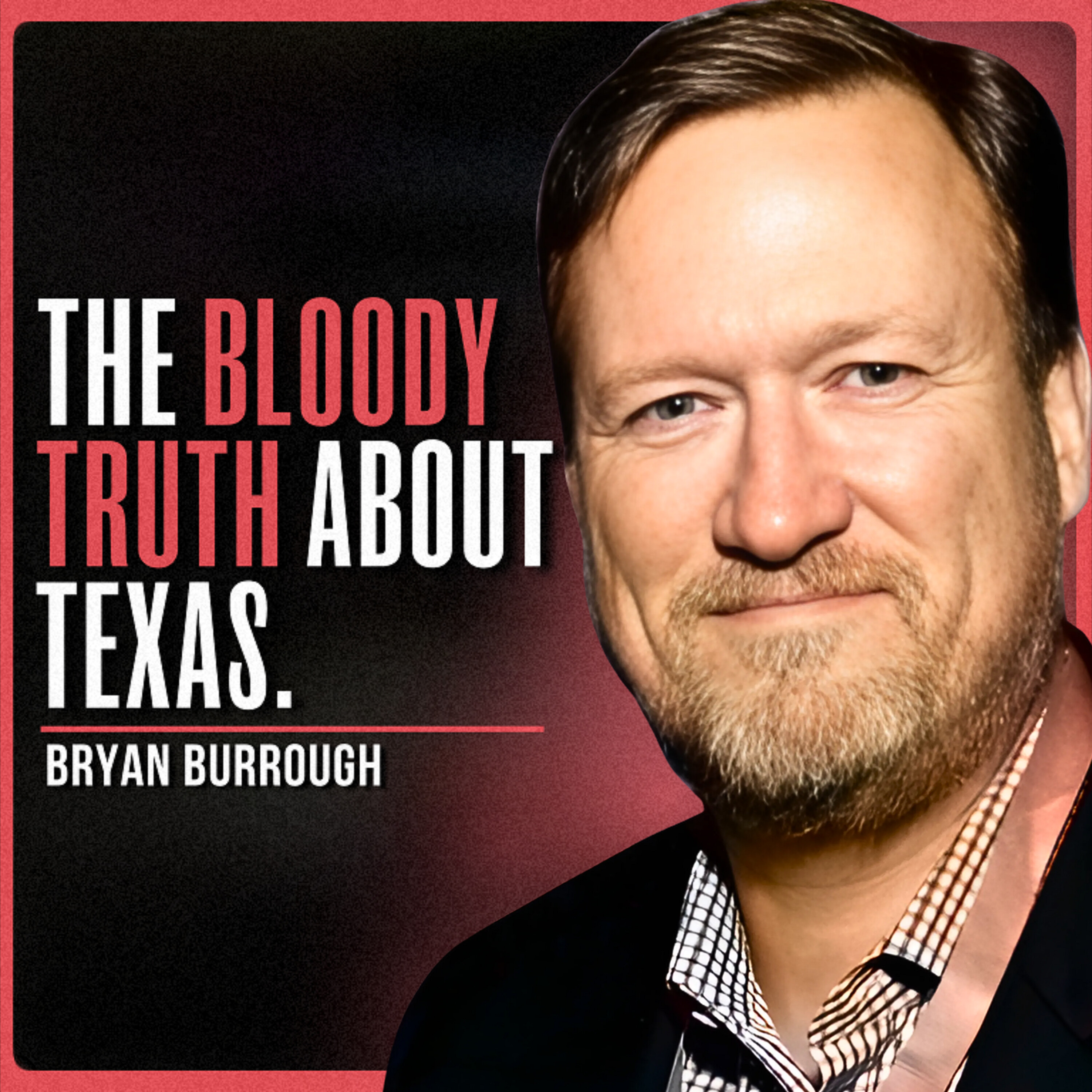
Bryan Burrough
This episode delves into the myth and reality of the Wild West, exploring the culture of honor, the prevalence of violence, and what it reveals about virtue and civilization through the lens of Bryan Burrough’s latest book, The Gunfighters: How Texas Made the West Wild.
Written by AI. May contain mistakes.

Get the gist, explore an idea or ask about something said.
 Claude
On The Daily Stoic, what are the key points of this episode?
Searching your listeningAutomatic transcript. May contain errors.
0:00I'm recording this on a Monday, and Monday is our grocery store day in our family. I usually pick my kids up from school and we go over to Whole Foods, get all our groceries for the week. Although here very shortly, we're going to go over there to get our Thanksgiving turkey because they've got a bunch of great options. Turkeys start at$1.49 a pound if you have Prime with organic birds at$2.99 a pound. And they only carry no antibiotic ever turkeys that will bring quality to your table at a great price. Whole Foods has great everyday prices on all your Thanksgiving essentials, whether you celebrate with a massive family or just a few close friends.
0:37Everything they sell has high standards to help you shop with confidence. Enjoy so many ways to save on your Thanksgiving spread at Whole Foods Market. Why choose a Sleep Number smart bed? Can I make my sight softer? Can I make my sight firmer? Can we sleep cooler? Sleep Number does that. Cools up to eight times faster and lets you choose your ideal comfort on either side. Your Sleep Number setting. Enjoy personalized comfort for better sleep night after night. It's the final days of our Black Friday sale. Recharge this season with a bundle of cozy, soothing comfort. Now only$17.99 for our C2 mattress and bays, plus free premium delivery.
1:11Prices higher in Alaska and Hawaii. Check it out at a Sleep Number store or sleepnumber.com today. Look, ads are annoying. They are to be avoided, if at all possible. I understand as a content creator why they need to exist. That's why I don't begrudge them when they appear on the shows that I listen to. But again, as a person who has to pay a podcast producer and has to pay for equipment and for the studio and the building that the studio is in, it's a lot to keep something like The Daily Stoic going. So if you want to support a show but not listen to ads, well, we have partnered with Supercast to bring you a ad free version of Daily Stoic.
1:56We're calling it Daily Stoic Premium. And with Premium, you can listen to every episode of the Daily Stoic podcast completely ad free, no interruptions, just the ideas, just the messages, just the conversations you came here for. And you can also get early access to episodes before they're available to the public. And we're going to have a bunch of exclusive bonus content and extended interviews in there just for Daily Stoic Premium members as well. If you want to remove distractions, go deeper into stoicism and support the work we do here. Well, it takes less than a minute to sign up for Daily Stoic Premium, and we are offering a limited time discount of 20 % off your first year.
2:34Just go to dailystoic.com slash premium to sign up right now, or click the link in the show descriptions to make those ads go away.
2:47Welcome to the Daily Stoic Podcast, where each weekday we bring you a meditation inspired by the ancient Stoics, a short passage of ancient wisdom designed to help you find strength and insight here in everyday life. And on Wednesdays, we talk to some of our fellow students of ancient philosophy, well-known and obscure, fascinating and powerful. With them, we discuss the strategies and habits that have helped them become who they are and also to find peace and wisdom in their lives.
3:32Hey, it's Ryan. Welcome to another episode of the Daily Stoic Podcast. Let me read you a little passage from Lives of the Stoics that pertains to today's guest. Back in Rome, these men formed a kind of philosophical club known to historians today as the Scipionic Circle that would meet in Scipio's enormous houses and discuss and debate the Stoic philosophy they all pursued. Scipio footed the bill. Panateus provided the intellectual nourishment. Many others joined them in these discussions and were shaped by them. Not unlike the way that the expat scene in France after the First World War nurtured the careers of Hemingway and Stein and Fitzgerald, or how a company like PayPal would give the world Peter Thiel and Reid Hoffman and Elon Musk, the Scipionic Circle became a kind of breeding ground for influential Stoics and a generation of leaders.
4:28Publius Rutilius Rufus, who defied Rome's culture of corruption, who you'll meet in a later chapter. He was often present. The historian Polybius was too. It was a form of influence and access that none of the earlier Stoics could have imagined possible. Scipio, with time and with Rome's growth, became the most powerful man in the Greek world, and the kings of Greece now answered to him and to Rome as vassals, while Panathias served as a kind of translator and influencer and competent. Some historians today debate just how real the Scipionic Circle was and how often it met and how direct its influence was.
5:06But there was little of this doubt about its significance in the ancient world. We're told by one ancient historian that Scipio kept constantly with him and at home and in the field two eminent geniuses, Polybius and Panateus. He described Scipio as being deeply devoted to the art of war and peace, saying that he was constantly engaged in the pursuit of arms or his studies. He was either training his body by exposing it to dangers or his mind by learning. And Cicero, who was fascinated by these stories, sprinkled his dialogues with scenes and anecdotes from it. And later writers like Plutarch not only had no doubts about the circle, but tell us of the kind of quiet influence it managed to exert.
5:44Plutarch writes that it is a fine thing also when we gain advantage from friendship of great men to turn it to the welfare of our community as Polybius and Panateus, through Scipio's goodwill towards them confer great benefits upon their native states. I guess what I'm saying here is that network is really important. Who you're connected to is really important. That's what we do at Daily Stoic Life, which, by the way, you can join us, dailystoiclife.com. You get free access to all our courses and stuff as part of it. That's not why I'm bringing this up. I'm talking about the importance and the power of community because it has been instrumental in my life.
6:16And it's what brings me to today's guest. I'm going to take you way back. I thought it was further back, but I'm going to take you way back to March 3rd, 2018. I got connected by email to a guy named Brian Burrow. We were going back and forth and he said, wait, wait, are you Peter Thiel conspiracy, Ryan Holiday? I had no idea. I'm reading you this email. He says, it's so funny. I just got an unrelated note from your NYT reviewer. A guy named William Cohen had just written a review about conspiracy in the New York Times. He said, it just came in a few minutes after yours. He said, small world. And then he said, but while I have you another thought, he says the last few weeks, I've been forming a writer's group in Austin, all nonfiction authors and a few long form guys from Texas Monthly, et cetera.
7:02He said, we stopped recruiting at 20, but we have 15 or 16 people gathering for our first meeting of sorts this Monday night. Do you want to join us? It should be fun. He said, Sam, that's SC Gwynn is going to be reading something. And we're thinking it might be a monthly thing, mostly social with a reading or two. And we're going to meet at a place called the Clay Pit on Guadalupe at 7pm on Monday. We'd love to have you. And I said, I would love to come. I'll see you guys there. I'm a big Sam Gwynn fan. He wrote Empire of the Summer Moon, among many other books. He's been on the podcast before.
7:34And I was like, are you serious? Is Brian Burrow, the guy who wrote Barbarians at the Gate, Public Enemies, Big Rich, so many of my favorite non-fishing books, did he just invite me to a writers group in Austin. And could I have imagined that I'd ever be included in a group like that? I couldn't even, of course, imagine being reviewed in the New York Times. It was all a lot. And so I went to that first writers group. Sam Gwynn read a little something from a book he was working on that became The Battle Hymn of the Republic, which is a great Civil War book. And I have attended dozens and dozens of the meetings of this writers group in the last seven plus years.
8:11And it has shaped me in so many ways. I wrote a piece about John Fonte and Hitler's Mein Kampf, basically about the publication of Mein Kampf and how it intersected with one of the great American novels. That came from an idea session at this writers group. I watched the book Forget the Alamo, which Brian wrote with Jason Sanford and Chris Tomlinson. I watched that come together at that meeting. I don't know. I've learned so much. I've met so many amazing people there. I didn't go for a while when we had our second kid, because obviously, you know, my time was committed elsewhere. And then there was the pandemic in the middle.
8:46But the group has been an amazing resource for me. And I've just loved it so, so much. Brian was one of the first authors that came out to the painted porch and signed a bunch of copies of his books. So when he told me at the writers group a couple months back that he was working on a book about gunfighters, I was like, are you fucking kidding me? You could not have come up with a topic I would get more excited about. When I was a kid, my grandparents told me that we were related to Doc Holliday. Turns out, I don't think true. My grandfather told me that his father or grandfather had changed the name from two L's to one.
9:18I was so pumped for this book. I was so pumped to have Brian on. I think this is a great episode. We really nerded out. He came by the studio. We're looking not just at gunfighter errors, this idea of honor culture, this process of civilization, the fight of law On Order Against Chaos. Actually, I think some really good stoic themes. And then we walked through the bookstore after and really nerded out about Texas history. I'm so grateful to Brian for inviting me to the group. I'm so excited to have him on the podcast. I'm excited for you to listen. You can follow him on Twitter at Brian Burrow.
9:50You can check out much of his work on his website, Brian Burrow. And then of course, grab the gunfighters, public enemies, the big rich, forget the Alamo. We've got signed copies of The Painted Porch. He is amazing. one of the greatest living narrative nonfiction writers of our time, one of the great journalists of our time. His journalism in Vanity Fair, where he wrote for a decade or two, is also incredible. Just one of my favorite people. And do check this interview out.
10:18So I was thinking about your books, and I thought of my favorite Hunter S. Thompson quote, which actually was in one of the first articles I think I ever wrote. But it strikes me as maybe be a through line through all your works all right i'd love to know okay so he says myths and legends die hard in america we love them for the extra dimension they provide the illusion of near infinite possibility to erase the narrow confines of most men's reality weird heroes and mold breaking champions exist as a living proof to those who need it that the tyranny of the rat race is not yet final. Certainly the last line.
10:54Because why do we like murderers and terrorists and outlaws and bank robbers? There is something about why we decide to make these people who are on some level objectively bad into these cult heroes. It's something like that, I think. That there's another way that somebody made it out. Even if what they're doing is bad, they're sticking it to the man in some way. People who live by the rules of civilization have always been fascinated by those who aren't. Yes. Or who don't. Yes. There is something incredibly captivating and inspiring about someone who shows that the rules of civilization are optional.
11:35Well, and I would take it further. You are fascinated and rooting for somebody who can live that life without the rules that you can't because you're the good girl. You're the good guy, right? And so you're rooting for them and it feels so great because they're sticking it to the man, because they're showing that you can live outside the lines. And then when they inevitably come down, when Bonnie and Clyde get shot by a thousand bullets, you can say, oh, yeah, yeah, I'm doing the right thing after all. Right. You know, it works on so many levels. Yes. You can root for them, but at some level you understand they're not actually going to win.
12:10Because if they did win, then it would challenge the entire foundations of your life and you would live. Of your reality. Yes. That's why someone like an Al Capone challenged the American reality, because that type of person just cannot be allowed to live that big a life. Yeah. They must be brought down at some point. That is interesting. Like, the outlaws that people celebrate and appreciate, they have next to no personal contact with. Like, they weren't robbing their bank. They weren't shooting up their drive-thru movie theater. But like, they weren't actually privy or experiencing firsthand the violence or the mayhem.
12:49There's a distance to it. Right. And it's, I think the reason you root for them is the symbolism of we all feel oppressed. Yeah. Even if it's just by your workday, the fact that you have to be there at nine and leave at five. I hated that beyond, I can't even describe how much I hated it for. And so anybody that can, you know, live beyond that, especially if the oppression or depression is legitimate. During the Depression, that's why we had so many, as they call social outlaws, why people cheered for the likes of John Dillinger, because he was sticking it to the man at a time, I live on a poor farm and can't even pay gas to get to town.
13:29Yeah, it seems exciting. It seems glamorous. But most of all, there's some hope that they're going to escape the tyranny of the life that you are afraid to challenge. Show me the way to a better life. And if you get caught and killed, well, good. That's reassuring, too. It's something to project your hopes and fantasies and insecurities at. And I would say, and you didn't ask, I think that goes double for the American man, because so many American men are raised by parents and imbued with the idea that they can do anything. That's the American dream, right? That you can achieve anything. And I think it makes American men, I sense a lot more depressed or prone to such feelings than Danish men.
14:14Yeah. A lot of these, I mean, a lot of these myths and figures are global figures. I mean, there's something about the American West that's uniquely, obviously, part of the American psyche, but these figures do cross over. I mean, there's mobsters who are famous in other countries in their own Irish mobsters. I'm sure there are oppressed German men as well. In fact, there are, you know, Wild West clubs in Germany, but I don't know that they're not as popular as America's. Yeah, no, no. It's fundamentally, I think, a human thing. But you're right. America being this sort of capitalistic winner-take-all culture, the ceaseless competition of it, if you are not ranking well in said competition, you are going to be, you're going to feel a kinship to someone who opts out of the whole thing, blows apart and wins at their own game.
15:08Absolutely. Yeah. Even though actually they're losers at some level. Most of them are losers. They're robbing banks not because it's a great business decision. Not because they couldn't finish up their PhD at Harvard. Yes, yes, yeah. They didn't choose between this and a bunch of other viable options. No, yes, that's right. Very few of the criminals that I'm aware of, you know, walked out of good paying jobs to go rob a bank. And that's maybe why we like some of the ones, or that's why we project things onto them, you know, whether it's a Johnny Ringo or Doc Hollis, where it's like, oh, they're extremely cultured and extremely smart.
15:40We project certain things onto them probably because we want to not. It's like why we make—the serial killers almost never go by their three names. We put the middle name in there, one for libel purposes, right? So other people aren't, oh, my name's also John Smith, right? That's like the journalistic convention of it. But the other, I think, is it just makes them seem less like losers. Like having three names makes it seem more important. I have never gone there. I thought the three-name phenomena was limited to child actors, but okay. We tend to refer to serial killers as by first, middle, and last name.
16:16John Wayne Gacy. Yeah, right. I never made the connection. And I've come close twice to running a serial killer, bro. Interesting. An overall narrative. Yeah. There's a book for somebody, an academic did it in Canada, about the rise and fall of the serial killer era because it's practically over. Interesting. Yeah, rose in the 60s and 70s. Yeah, I mean, maybe with serial killers, we want them to be Dexter, and most of them are not Dexter. very uniquely unattractive lot. But yeah, it was like, okay, you wrote about, obviously, I'm exempting barbarians at the gate here. But Days of Rage, Public Enemies, and now the gunfighters, they're all different forms of outlaws.
16:57And it's unique that we celebrate them, even though like the sort of 60s outlaws, very different than the gunfighter outlaw, very different than the sort of gangster outlaw. But something about the person who breaks free of society, does something, goes on the run, will they catch them? Won't they catch them? That is just a through line through all your books, it feels like. Every one of them. And you could go back to Barbarians, which was a Wall Street, was about rule breakers and the cost you pay. Pirates, corporate raiders. I'm doing pirates next. I'm saying, oh, yeah, also they were called pirates and corporate raiders.
17:32There is an outlaw mentality to it. Especially as you lived it moment to moment. And it was so new. 50 years later, we don't really think of it as new. Right. No, no. They're the button-down suit guys now, in retrospect. Now we call them private equity. Yeah. Well, so I drove through – I've been to Tombstone a bunch of times. But I drove through Tombstone during the pandemic, like early in the pandemic. And so it was like totally abandoned. So it had an extra level of like, you know, the movie, like the tumbleweeds rolling through the streets being empty. And we're walking up one of the boardwalks or whatever.
18:03there's a sign on the door and it says like it was a very firm sign about how you can't carry a gun inside the saloon the full circle this of it really struck me that like in tombstone in 2021 or late 2020 yeah mid 2020 they were still arguing over whether you can openly carry a gun in the streets or in the establishments of Tombstone. I just thought, again, there's something about us and these issues that remains ever-present. I mean, like you could have picked up an editorial from the Tombstone epitaph in 1880, and it would have been about the exact same issue. I Googled it. I was like, what was...
18:46And there was that people were mad about it. It was they'd repass the law about it, and they're still fighting about it. And it's fascinating because these days, the zeitgeist is in the favor of the open carry. Yes. And back then, in fact, somebody told me Malcolm Gladwell has a piece on this. Back then, the open carry laws were much stricter than they are now. Although I question how rapidly they were enforced. Sure. It seems to be the default in Dodge City and Tombstone and any number of the other towns I wrote about that rarely would the sheriff or the marshal enforce that unless you were acting up.
19:21Is it pretext? Yeah. Yeah. Like we have lots of those now. We do. Yes. But it is interesting to go like, okay, they were desperately trying to get out of a world where people are carrying guns around. And we seem for some reason to be trying to get back into that world. Yeah. The whole reason that you would carry a gun has – the way we view it has changed. I don't write about in this book, nor do I care about gun policy and gun issues these days. But for these days, it seems there's a much more pervasive sense that you are at risk or somehow in danger. Yes. And back then, you were mostly carrying that gun in most cases to kill varmints.
20:04Yeah, I mean, stray dogs. And it was a violent place, not just because you might get in a gun fight, but there was other stuff. There were rattlesnakes and wolves. I'm convinced that one of the reasons Texans were the first ones drawn to revolvers was rattlesnakes. Yes. And I see this with my wife's family. These days, you don't go out on the ranch without some type of firearm because God knows there are things out there that will sting and bite you. No, no. I carry one on my ranch and I don't need a revolver because I have a snake shot in it, which means you don't have to be so good at shooting.
20:35But yeah, like the idea of it being tool of life in those days would have been very real. And then you add in alcohol and these sort of, I think that's one of the things I've really learned living out in the country. And I'm sure it was true a thousand times across the West. The type of person that moves away from other people, We tend to glamorize that as, oh, they're a searcher, they're a doer. We imbue it with a certain significance, and that's part of it. And then oftentimes these people are having trouble functioning in society. There's a reason that they decided to leave. Like someone who's just looking for opportunity.
21:17Is not going to find it in the middle of nowhere. Yeah, you're going to move to New York City or any of the big cities that exist then. And if you're deciding to move to a place with no people, it's because you're trying not to find people. And so then when you end up in a boomtown and it's filled with lots of people and you're all carrying guns and you're not so great at socialization, I think conflict is naturally going to ensue. That as an alternate explanation for gunfighter related violence, that strikes me as probably right. honor culture, poor socialization, all these things. It's all the perfect storm.
22:00We just took our kids to an outdoor performance at the Nutcracker. They had a snow cone, and then they went insane in the car ride home. And one of the things I try to remind myself when that's happening is that I don't control my kids' behavior, especially when they're too far gone like that, but I do control how I respond, right? That's stoicism, but it's also what Dr. Becky talks about. Dr. Becky is a clinical psychologist and a best-selling author, and she founded Good Inside, which is there to give parents practical, actionable tools for handling those everyday challenges with confidence.
22:36My wife introduced me to Dr. Becky's books. I love them. I've recommended them a million times. I've had her on the podcast. And as it happens, Dr. Becky is hosting two live Q &A events for good inside members. I am one of them. She signed me up for it about a year and a half ago. I've loved it ever since. On December 1st, you can join Dr. Becky for her How Not to Raise Assholes event, which is about avoiding entitlement and raising kind, empathetic kids. And on December 15th, she's hosting her How Not to Lose It over the holidays event, which I'm sure we could all use. As I said, I'm a big fan of Dr.
23:13Becky. She's been a great influence for me as a parent and just as a human being. And Daily Stoic listeners can join for 15 % off with code STOIC15. You just got to head over to goodinside.com to catch the events. Thanks to Toyota Trucks for sponsoring this episode. When I bought my ranch in 2015 out here in Bastro County. I drove my car about halfway down the dirt road that we live on, thought this isn't going to work, stopped, parked it, walked the rest of the way home, borrowed my wife's car, drove into Austin and bought a truck. What I bought was a Toyota Tacoma. And this truck wasn't just transportation getting me to and from my house.
23:54It unlocked a whole different style of living for us, not just on the ranch, but in our little Texas towns. There were places I could go now that I couldn't go before, especially out here in the piney forests, through the fields, and on the unpaved roads like the one that I lived in. We got to go deep into the hill country's wild beauty. We've driven all the way out to East Texas. We've driven across the country. And by we, I mean not just my wife, but both my kids who I drove home from the hospital in that truck. Toyota trucks are built for those who understand that the best adventures happen when you're willing to veer off course, because you never know when you'll end up on a Toyota adventure detour.
24:39And of course, this is stoicism, too, because every detour, every obstacle is an opportunity. But it's helpful if you can handle the difficulty inherent in that. If you've got the resilience and the right companion to make it wherever the road takes you. Discover your uncharted territory. Learn more at toyota.com slash trucks slash adventure dash detours.
25:05It's weird to me too, I think, and you talk a lot about this in the book, like, when did this era happen? I think if you had to ask someone, you know, like, you ever see that thing where you ask, like, someone to, like, draw, like, what your state looks like or draw America and you fill in. People are just so, they have a picture of it that doesn't comport with reality at all. I bet if you ask most people, like, when was the gunfighter era, cover a much broader bit of time than you would think. And some people, assuming it's way earlier than it was, people thinking way later than it was. I just think it's crazy.
25:36It's like the gunfight at O.K. Corral is happening after the invention of the light bulb. After the invention of dynamite. Yeah, you think it's like two days after the Civil War or something. Or before. Like, you think the cowboy era is so early, and it's much, much later than people think. You remember Peckinpah's movie, The Wild Bunch, which is the bloodiest Western ever made, was set in 1912. I read that last night and was surprised. Now, what I call the gunfight, you know, revolvers were popularized in the 1840s. They were in wide use and used a human-human first, most notably in the California Gold Rush.
26:12But it was really only after the U.S. governor auctioned off like, what was the number, 1.6 million guns in 1865 and 1866. Surplus from the war? Yeah, that what we call open carry really became common. And it changed the whole nature of what you would call conflict resolution. Before that, and I write a little bit about this, people fought with knives and gouged out each other's eyes and pulled out your teeth and just awful things. And now, I remember one memoirist from 1866 said, now those things are taken care of much more quickly. Yes. Well, you know, it's funny. I was just reading, I think he's at the University of Chicago.
26:53Some professor was doing some look at like why is Chicago so dangerous? And it was partly that like we tend to think of shootings, like we think of them as mass shootings or these sort of deliberate things. He's like, actually, they're just conflicts that happen and people happen to have guns. That's where shootings happen. And that's what the West really was. Yes. Yeah. It's just that the conflicts in the West were so often silly. Yeah. I mean, there's just not a lot of the gunfights that I cite in this book that really, you know, feel Socratic. I mean, there's a lot of drunks. You know, alcohol is a big deal.
27:24And a lot of people just get their feelings hurt. Yeah. Or, you know, one of the themes of the book is obviously this honor culture that I trace to the antebellum South. And there's a lot of just, you treat me bad. I think, you know, we should go out and have a fight. Yeah. And in fact, it got so common in the West that the word for gunfight wasn't gunfight. It was just fight. You want to go have a fight? it's implied that it was with guns. Right, right. Yeah, there's a fascinating little piece of Ulysses S. Grant's memoirs where he's in New Orleans, you know, he's traveling through, it's before the Civil War or something.
27:57And, you know, he wakes up, he hears a gunshot and someone tells him there'd been a duel. And he's like, the thing I never understood about duels is wanting to fight someone and potentially kill them so badly that you could wait till tomorrow. And there was something, sort of delayed gratification about dueling culture. There was an element of discipline to it where it's like, we're going to do this. And then, you know, there's the dance of the seconds and then the pacing. And there was this whole kind of ritual to it that was supposedly about, you know, between men of honor that seems like it goes away by the time the gunfighter culture happens.
28:34And that's why dueling culture endured because those who otherwise would not engaged with it and could say they didn't like it, realized that there was a societal reason for it. It was a release valve. Exactly. It caused people to step back and instead of, you know, having a fight in the middle of the street where maybe, I don't know, a kid could get shot, you know, you would repair to a designated pasture and do this in a structured way. You know, in a world where really, you know, the justice system wasn't quite as evolved as it is 150 years later, that was one of the things that got it started.
29:10Yeah. And there was off-ramps even within the dueling culture that the immediacy of like us at a card table and deciding to fight it out right now, we're not going to have. I wrestled with all this for so long. And I trace obviously much of the gunfighter behavior to the dueling culture of the antebellum cell. It descends into a kind of immediate gratification, reckless. Well, and then, yeah, again, you think about the people that are engaged, right? The type of person who, you know, writes, you know, GTT, gone to Texas, drops everything, heads to Texas, or the person that drops everything because they read a newspaper report that there's gold in the hills of Alaska or California.
29:52This is a person who is by definition impulsive and perhaps doesn't think about the consequences of things before they do them. So you've selected for, like, there's not that many people, but the people who are in these mining camps and towns and whatever, they have pre-selected for a certain type of character that's going to make for a certain type of conflict. I think that's inarguable. And I became fascinated with this whole notion of honor and, you know, how it became so prevalent, why it ebbed in the North after the Burr-Hamilton duel in 1803. Ron Chernow was here two days ago. And why it became such a big deal in the South and then spread to Texas in the West.
30:34I mean, I think it's a fascinating story. Why do you think it is? Well, there's a lot of different reasons I sort. And let's be clear, academics haven't really decided. But the fact is, in the South, there was a lot less education. There were a lot less markers of obvious success, other than the fact if you had a plantation home or you didn't, there wasn't a booming middle class. And so it was very hard to socially rank people. And the way you did it, the way they came up with, the way they kept score was honor. And you can define it any number of ways, but it was a bit like pornography. You know it when you see it.
31:07And so if I insult you, Ryan, and you don't respond, you are less honorable. You're going to knock down. You're no longer a seven. You're a five. And so people would, you know, it was part of that code of the antebellum South and later of the West that you would challenge the person who would challenge you to deadly violence, typically a duel or gunfight or something, so that you could, instead of falling from a seven on the social ranking to five, you might go up to eight and a half. No, that's interesting because it's like if respect is hard to earn or finding your place in the hierarchy is maybe it's too stratified, too difficult, too ossified, making people afraid of you is at least one way to establish yourself, right?
31:51You're like, that guy, don't fuck with that guy. He's got a hair trigger. Especially if you have absolutely nothing else to say for yourself. And look, during the 1800s, it was hard for people to distinguish themselves. Education was not readily available. A lot of people were just a working man, you know, that type of thing. How do you distinguish yourself? Well, being scary as shit is one way to do it. And it's that became part of this honor system. I was just reading something about Lincoln where Lincoln was saying one of the things he understood about slavery was that in the Southern world, having like it was when life is just these series of disconnected villages and towns as big chunks of America was.
32:33he was saying that you know when someone goes from here to here you don't know who they are you don't know anything about them it's hard to judge them he's like but if if they were you know trailed by a slave or two you know they had money like you knew they were successful or they came from a prestigious family he was like that's why he understood at some level that's why slavery was so not just intractable but attractive yeah it was part of that unwritten system of social marking yes where you stand yeah and that's what's fascinating about the honor culture thing is like Like, it was so selective.
33:04It's like, you're a thief. You're a professional poker player. You know, like, honor is not that important to you. But in this one setting, it's life or death, right? Like, there's something about, like, you're not generally an honorable person. No, just because you're a four doesn't mean you want to fall down any more than somebody who's an A is. Yes. Yeah, yeah. The honor of, like, I can't let you insult me. I can't let you do X, Y, or Z to me. By the way, I can do all those things to other people. So it's this kind of weird, it's not a culture of virtue. There's a distinction between a culture of virtue, I would say, and a culture of honor.
33:41Honor is this kind of superficial thing, and virtue is like, how do we all behave and treat each other? It's funny, because that virtue is the word that you come across most often when you look to the antebellum north, that they replaced the worship of honor with the worship of virtue. And the South didn't. The South kept it. I think it, you know, and it persisted on the frontier. Yeah. And we don't often think of the West as being up for grabs, whether it's Southern or Northern, because the split of North and South is so clear and obvious. I mean, there's the Mason Dixon line and whatever. But at the same time, the West is being settled and fought over.
34:20And so it's in this same period, up for grabs, which way is it going to go? The part of the South. And so there's this conflict, too, between Northerners and Southerners, just in these very distant locations. Yeah. I mean, you know, honor, I think it explains a lot of the old west gunfights, but there's so many other things that were on table as well. And north south antagonisms were still, the wounds were fresh. And, you know, in the Kansas cow towns, which I term kind of the Madison Square Garden of the gunfighter era, that was part of the reason that so many Texans got into shooting scrapes, as they say, was because, you know, they weren't going to go home to Bastrop or Victoria or Belton, and let's be clear, most of them are from, you know, the central part of Texas and say that some Yankee sheriff had thrown them in the who scale, you know, that would be, well, that would take you from being a six to a two.
35:14Yes. Yes. Even though no one would actually know. Your buddies would. When you drive up, and I argue in the book, of course, that a lot of these hyperviolent behaviors of Texas spread through the cattle trails. And who went up the cattle trails. Generally, you went up with your buddies. So everybody's going to know what happens to you in Abilene or Wichita or Dodge City. Right. I mean, it was those cattle drives and the cattle towns. That was like a gap year for a lot of people. I thought it was just funny that you opened the book with that epigraph from Eisenhower. Because again, people don't have a good sense of when this stuff happened.
35:51But you go, okay, president, the guy lands at Normandy. You don't think, oh yeah, his childhood would have overlapped, not just with like the last gasp of the gunfighter era, but like the peak of it. I mean, when is Eisenhower born? 1880s? If he was president in 1950s, you figure 1880s, 1890s? So, I mean, he's like a kid or close to when the OK Corrales happened. That's what the old people were telling him. I mean, I'm amazed. My grandparents just died 20 years ago. And they knew, they were born in 1911 and 1914, and they knew of our Uncle Joel, who had gone from Arkansas to the California Gulf Rush.
36:32That's like, I can't even do the math on that. That's 120 years of memory or something right there. Yes. Yeah. Even if you didn't experience it yourself, you would have grown up hearing about, it would have been real. It was not just something in books. Yes. And so that culture is still there. I mean, MacArthur grows up in Indian forts, like on the frontier. I didn't know that. Yeah. I mean, his dad is a Civil War veteran, right? His dad wins the Medal of Honor and then stays in the army and is in these frontier forts across Texas. That explains certain things about MacArthur, doesn't it? Totally.
37:10No, that's my point is that this was the formative stuff. So yeah, it's crazy to go like, okay, this guy, you might think, oh, what do these things matter? But it's like, here you have the president or you have a general like MacArthur who grows up with this honor culture, mano y mano, you know, fighting each other thing. And then they're heads of armies or they're staring down. Well, substitute what you just said for MacArthur, instead of saying MacArthur, if you just said a Texan, you begin to understand the nature and the strength of the martial culture that rose in Texas in the 1860s. You know, you not only had the Southern honor culture, except Texas was every inch of Southern state, but you had, you know, two different violent frontiers, the Mexican frontier and the Native American frontier.
37:57And so Texans became, you know, it's so funny. These days we walk around and we talk about the six shooter Texan. And I'm sure that's just another overblown myth. It's like one thrust of this book is that no, no, no, no, no. We don't fully appreciate how violent Texas was and how violent Texans were in those days and their reputation around the country for that. Well, maybe this is a much clearer example because actually Eisenhower is pretty measured and sort of self-aware. Like when you go, why does Lyndon Johnson, who's a little bit younger, why does he get caught in this escalation trap in Vietnam?
38:35Why is he so afraid of thinking that if I back out, I'll be seen as cowardly? And it's like you think about the myths that he would have grown up hearing. Like he's seeing himself in this face off with the Russians and he can't see what an inferior model or an insufficient model that is for the reality of the situation he's in. I have at least four, maybe five books on my shelves that were written in the late 60s and early 70s to explain exactly that, why Johnson was the way he was. And they go back to this incredible violence that broke out in Texas, especially the central parts of Texas in the 1860s and 1870s and, you know, made Texas into that image.
39:22And Johnson was, you know, Johnson City. This is heart and this is ground zero of the cattle trade. And this, you know, that's a lot of what we're talking about. Yeah, there's a quote from Johnson where someone's asking him, why are you doing this in Vietnam? And he's like, you know, what I learned as a kid is like, if you let someone take this from you, they're going to take this, they're going to take this. And the next thing, you know, they're in your bed raping your wife, you know, and it's like class. It's classic, just sort of cowboy mentality. And again, not in the sort of George Bush SNL stereotype of the cowboy.
39:54Oh, no, this is real. The real cowboy logic of like, if I don't shoot this person, I'm going to be run out of town or worse to me. And that clearly is an echo of the type of 19th century honor culture that we're talking about. Yes. Yeah, exactly. And he would have grown up before the reaction against that, before the reaction against that. It's just there in the core of it. Yeah. Because I mean, you know, Johnson's probably coming to age in the 19-teens, 1920s. Yeah. The other Texan thing I was thinking about, there's that quote from Robert Caro, which I think about in my writing, where he's sort of, he's talking about how we mythologize the cowboys.
40:31And he says, it doesn't, it's not until he comes here. And, you know, he's like, you read a lot about these gunfights in the old west and all the cowboys. And then he says, it's not until he and his wife came to the hill country and they interviewed these Texas women that they go, oh, like, they were the tough ones. He's like, you hear a lot about gunfights, but you don't hear about a woman fetching water from the well like two days after she gives birth. Yeah. You know, it's interesting the toughness and the characters that we mythologize and then the actual sort of toughness and grit that we just gloss over because it's not that interesting.
41:10Yeah, it also speaks to the workaday difficulties, the workaday barbarism, the workaday violence that was so prevalent on the frontier. And we forget, you know, that Texas was very much part of that frontier. We didn't, you know, if you know from Sam Gwynn's book and so many others, you know, the Native American frontier was not cleared in Texas until the 1870s. Yeah, I mean, the Wilbur, Wilbarger, whatever, the famous guy who gets scalped and lives like another 10 years. That's like right here. His house is in town. Well, one of the greatest fights ever between the Rangers and the Comanche was, what, in Lockhart, which is, what, 20 miles from here?
41:46Yeah. It's also, I guess, to go to the point about the rat race. It's like we're celebrating the sort of misfits who, you know, killed in one town and then went to the other town and killed and never sort of – they worked sporadically. We're not thinking about the people that had to – you know, this was a barbershop in the 1800s. Some barbers getting up and coming to work here every day. Like amidst the same depravity and violence, but trying to create some semblance of normalcy and civilization. I don't write about a lot of barbers in here. I'm sorry, Ryan. Right, because there's a famous poem about this too.
42:22I'm forgetting what it is, but the poem is just sort of about like, you know, we think of Julius Caesar, but we don't think of the quartermaster of his army. Or, you know, there's all the people that were making the stuff possible that created a society from which these sort of larger than life figures could exist as rebels against. And but they don't. Yeah, that's not an exciting story. No, but that has been the great movement in academic history over the last 75 years towards social history is toward looking at how normal people, in many cases, the great masses were much more instrumental in the flow of history than a president or a general.
43:00Yeah, it's like the bank robber is fascinating. But nobody writes about the bank president. Yeah, or the bank teller. Think about the bank teller. I started out as one and my dad was a bank president. We were boring. We don't just, I'd much rather be writing about and reading about Wild Bill Hickok and such. Yes. Even if we have to grossly exaggerate what that rebel or figure did, because in Tombstone, Val Kilmer said that playing Doc Holliday, it was like, that the role was like putting clothes on a ghost. Wow. Because there's actually not that much there. No. And so these are all layers and layers of each retelling.
43:38Yeah. to make it more interesting. I mean, we used to, there was a moment in the 90s, you were probably too young to be doing this, where guys would, I can remember debating at a bar, did you prefer Kilmer's holiday or Randy Quaid's, Dennis Quaid's holiday? And I came down, I give it to Kilmer on style points, but Dennis Quaid was probably closer to accurate. Yes. Although I was very glad to hear in your book is you do a lot of myth busting in the book, but you were like, Wyatt Earp's the real deal. Yeah. You liked him. I think you have to. Yeah, of course. Not of course. There are people who...
44:12No, I mean, I agree. I mean, we lose sight given the fact that the press, the films about Earp have been so positive over the last 50 years that in his life and even to this day, he was a controversial figure. I mean, the idea, you know, of going after the bad guys who shot and wounded his brothers, it seems like this great obvious moral thing. Well, it's also illegal. Yes. And there are people, you know, especially of politically conservative that will look at what Wyatt Earp did and call that government overreach. Yeah. I mean, it goes the same thing about myths and legends again, right? It's like one man's vigilante violence is another – the same guy is also government overreach to the other people.
44:55And it's cool to read about. Probably not great if you're the town where a shootout from the Earp Vendetta ride happens. We all liked those Charles Brosnan movies, but nobody really wants to see vigilantes loose in their streets. Right, right. Going back to our original point, it just makes you feel good that there is moral justice to be had, even if you know in the real world that is a recipe for chaos.
45:29yeah Wyatt Earp's an interesting figure because he's both held up as an outlaw gunfighter and the man at the same time so it's you can sort of project onto him whether he's a good guy or a bad guy depending on how you feel in a given moment well I think of all the gunfighters that I write about in here. He's the most important one. He is the only one who, you know, at a time where we are as a society, as a world are forgetting while Bill Hickok and so many other gunfighters whose names you kind of maybe know, he's the only one whose reputation has grown. And I think it's part of it is, is that sense that he was the rare old West figure and certainly old West gunfighter that was not only fighting for something, but stood for something.
46:10You know, You look at his career, you know, during the, what, 18 years that he was actually a law officer, he was a damn good one. Yeah. At a time, so many weren't. At a time, so many were lazy and corrupt and drunk. We're not celebrating him so much as an example of the tyranny of the rat race not being final, but he is the sort of first, yeah, Western figure of law and order and civilization and normalcy. he's fighting for the basic things that we people want now which is like there's a scene in tombstone that i think encapsulates it well where uh it's actually not wider but the cowboys are running through town they're like stampeding horses and some little kid is playing with a ball or something and um who is it sam elliot's character is sam elliot's character grabs the kid so he doesn't get run over and you're just like that's every parent who does who like i think about this when i'm in east austin what's that thing in east austin every once in a while where all those cars race up and down the street.
47:10Oh, yeah. It's right by Beverly's house. Yes. It's a Latino car club. Yeah. And you're like, this is cool, but also - I don't want to live in that neighborhood. Yes, exactly. What you're doing is incredibly dangerous. We as a civilization made this illegal, not because we're busybodies, but because cars are weaving in and out of traffic, someone can get hurt. And that Wyatt Earp and his brothers, the idea was like, hey we want to live people want to live here we want a life here and and your rebelliousness is is at this point at odds with us living a life part of the gunfighter era narrative that i'm telling is and most of this has to by its nature be anecdotal yeah is there is a sense if the west opens you know in 1866 there is a sense of those first 10 or 15 years that law enforcement is almost entirely absent.
48:00Yeah. That the chaos, the post-war chaos, especially that emanating from Texas, most people who were killed were killed without consequence. And Earp coming in in the mid-1870s, especially the reintroduction of the Texas Rangers in 1876, who were surprisingly effective as law enforcement, you begin to see that change away from anarchy. I mean, there were still gunfights. There were still feuds. There was still a lot of bloody violence in Texas for years. But the Rangers eliminated the worst of the anarchy, much as Earp did in places like Dodge City and Tombstone. Yeah. And obviously we would not tolerate their methods for doing so today.
48:39They did it with their own kind of lawlessness. And that's maybe the unfairness of what people project at Wyatt Earp, which is, you know, he's taking the law on his own. Like they are fighting essentially organized crime mixed with sort of anarchy. And so it's a bit heavy handed in how they come down on it. But compared to what they were fighting against, this is within reason. You can certainly understand why people who live near Wyatt Earp would be rooting for him, even though, you know, at those moments, you know, at the worst of it in Tombstone, keep in mind the, quote, bad guys who are, you know, look like slobbering yahoos in Tombstone.
49:21In fact, they were not viewed as criminals. They were viewed as legitimate cattlemen. And it was only after their passing that we came to realize, oh, my God, they were really criminals. So when Wyatt Earp was going after those guys, there were two newspapers in Tombstone. One thought he was great. The other kept saying that he was, you know, the worst thing that has ever happened in Tombstone. He was trying to take over the town, yada, yada, yada. Right, right. I mean, so much of the black and white that we ascribe to that story and others, it only became black and white afterwards. Yeah, because it's in the middle of this sort of blood feud or war, no one's taken the time to really get all the facts.
49:57We've had 100 years, 100 plus years to sort out the facts. And can I tell you, there are one of the things that I talk about as a prelude to all this gunfighter stuff is these feuds that broke out, especially in Texas, some of the bloodiest feuds in American history. And people are still figuring those out now. I mean, what really happened? I mean, they were only reclaimed beginning in the 1950s. I mean, they're kind of lost. And that stuff to me just is fascinating. Yeah. It's funny too. Now we're like at the height of, again, the pandemic when people are talking about sort of abolishing the police.
50:29And it's like, if you read anything about the West, you don't want to live in that world. You know, you don't want to live in a world where on both sides, the people who are like abolish the police and then the sort of libertarian view of like, we don't need all this stuff. It's like, I don't know, it gets pretty lawless pretty fast. You know, I don't view any of this through a political lens, but that almost sounds apolitical and just factual. Yes. Yeah, exactly. Well, the West is just so fascinating because it's like civilization is like reconstituting itself. It is being recreated out of nothing.
51:03Yeah. So I grew up in Central California. And so we would go to these different mining camps and mining towns. And you see it now and they're all quaint little places like this. Oh, yeah. They have wine shops. Yeah. It's like most of the buildings were not brick. They were wood. And they burned down all the time. And the streets were muddy. the... Don't even get me started about Old West hygiene. I mean, there was just nothing really, this is not an area you want to go back to. Yes. It really is not. No, definitely not. And it's difficult to comprehend the scale of the violence and the disorder and the criminality.
51:39Like these towns that have a murder a week or shooting a day, like just when you think of the per capita basis that these things are happening on, it's like... And yet that has really only become apparent in the last 15 years with advanced 21st century data analysis. For a long time, nobody knew anything because we just didn't have the numbers. But then in the 1960s, academics came along who were just saying, oh, this stuff, it's all overblown. It's all myth. And we now have gone back. And that's pretty much that idea has gone around. We can now say with reasonable certainty that no, while there wasn't a gunfight in Dodge City every Saturday at 4, the Wild West was spectacularly homicidal.
52:19Yes. And then so because it's spectacularly homicidal, everyone's carrying guns. And then as we said, they're drinking and bumping into each other and it becomes this cycle. Like we don't sometimes give ourselves credit as a society for having solved downward spirals, right? Just like we, I mean, when I was a kid, everyone's worried about the hole in the ozone layer. We're not worried about that anymore. And we don't think about it because something was going bad very quickly and collectively we solved it. But it didn't just solve itself. It was a lot of hard work and innovation and like this sort of civilization process.
52:51And I don't mean that in the sense of like civilizing the Native Americans, which was a whole other atrocity. Just the process of taking these lawless places and making them inhabitable. You actually, you almost see that, Ryan, almost year by year. I mean, one of the great, one of these Kansas town, Kansas cow towns. I mean, some of the most incredible fights that Texas cowboys brought about the streets were still grass. I mean, you know, the buildings were just going, when the Earps got to, you know, Tombstone, there were, I don't know, eight or 12 buildings. It was mostly tents. I mean, it's just fascinating.
53:24And then, you know, later, if you look at some of the late stage gunfighters, Butch Casting and the Sundance Kid, who were kind of the last ones, the professionalism, you know, actual federal marshals, task forces, you know, in the 1890s, that this type of stuff just did not exist in the 1860s and 1870s. I mean, it's stunning the advance of the frontier. But also the advance of civilization. That strikes me as a through line for your books, right? Like you read the first couple chapters of Public Enemies, and you're looking at a world without basically any federal law enforcement. Yes. And then the federal law enforcement is invented to respond to a problem, and then that gets us to the world that we live in now.
54:03When I read Days of Rage, like I was just talking to someone at the bookstore who loves that book. And I was like, what struck me about it was the naivete of that you could just walk into any skyscraper in America, that you could just visit anyone in jail. There weren't metal detectors, there weren't security guards and check-in desks at the lobbies of buildings. Yeah. You could walk on any flight you wanted. Forget box cutters, you can walk on with a 22. Yeah. Yeah. And sort of we invent technology and societal interactions come about because of that. And then there's problems. There's psychopaths and crazy people and problems that come along with that, the crimes.
54:44And then civilization has to invent a way to deal with that. And that your books are kind of this lawlessness law and the interplay between those things. Even the corporate rating in the 80s, right? It was this anything goes financial sphere. And it worked really well for some people and really bad for other people. And we had it. I love how consistent you make my career sound when I just was looking for good stories. Yeah. But maybe that there's some, at some level, that's the story that lights you up. Well, it's certainly conflict, certainly cops and robbers, you know, which I grew up, I grew up on the untouchables and stuff like that.
55:18I grew up on a lot of, I didn't watch a lot of Westerns, but I read a lot of, a lot of Western nonfiction. And so this was a book that I, I mean, I first proposed 20 years ago and kind of had been thinking about for 30. I grew up on, I grew up on Westerns too. Louis L 'Amour and then. Yikes. That's, that's much more hardcore than I was. Oh, really? What were you into? I mean, I was into like actual biographies of Western guys. I've never been able to read fiction. Really? No, not really. Interesting. It was funny. I really liked Lulamore. I would just buy all of them. And then I got very scarred because I bought this other one at like the grocery store, the library.
55:52I forget where I get it. And it turns out it was like, it was a women's Western. So it was like just a very, it was an erotic fiction novel. I thought I just recognized the cowboy on the cover. The covers look the same. Wait, that's not a pistol. I crack it open at like 11 or 12. I go, oh, this is very different. I don't think mom and dad would like me to read this. And then, of course, I read all of them. But yeah, it's conflict resolution or anarchy civilization. That's kind of the timeless arc of your books, I feel like. Yeah. I mean, look, in the end, what I'm looking for is approachable history, something that's not from 500 years ago, something that's from the last 100, 200 years.
56:35where I think I can change the way it's viewed. Yeah. You know, we did that in the, forget the Alamo, the last book that I contributed to. And this is very much this. I mean, this took me just a hell of a long time to come up with, I know I want to write this, but how do I come up with something new to say? You know, this is a field that really has not been re-imagined for about 60 years. And that's no knock on the many talented writers who work in it, but just in terms of the way we view what happened out West, it took me a long time to get my mind around it. Yeah, it's Wild West civilization.
57:07The Wild West of the 80s sort of private equity boom, the Wild West of terrorist bombings. Well, that's what we call any type of unregulated, chaotic thing like psychedelics right now or Bitcoin. It's always referred to as the Wild West. There's a reason we go back to that metaphor. And there's got to be a type of personality that goes, I want to be in the Wild West. There's a type of personality that says, I want to be as far from the Wild West as possible. And there's a type of personality that goes, that's where the action is. I want to be there. There's one quote in the history of the West that lays that out better than any I ever knew.
57:45And that was when Earp, later in his years, he lived very long, Wyatt Earp was asked why he left Dodge City to go to Tombstone at a time that Dodge City was becoming a little bit more civilized. Settlers were moving into the fields where the cattle had been. And Earp said there was a sense that Dodge was losing some of the snap that men of restless blood need. And Tombstone had it. I think as much as we miss the timing of it, we also miss the geography of it. Like we get it wrong. You think of it as this Western migration only, right? People are coming from the cities in the East and heading West.
58:22And I believe the Earp family gets to California and then makes its way East to Arizona. Yeah, the father, who I call a jack of few trades, moved him out to San Bernardino in the 1860s. and then apparently didn't go well. So they went back to Missouri, which is the first place the White Earp ever became a lawman. Right. Yeah. We don't think of him having, we don't think of him moving east in search of opportunity. People are a lot more sophisticated. There was a lot more movement of people then than we readily remember. I mean, but the things about, I mean, what makes Earp for me fascinating, and they get at this a little bit in the biography movie, that terribly leaden and slow Kevin Costner movie.
59:04But I mean, the people who hate White Earp will tell you, you know, call him, you know, they call him the, uh, the, the, the fighting pimps because they started off as pimps. Yeah. And we now know because of research just in the 21st century that for the entire length of his career, he was an escaped federal prison prisoner. He had been arrested for stealing horses and escaped from a holding pen in Van Buren, Arkansas. Do you know what? Three years later, he was a deputy in Abilene. Yeah. The ability, excuse me, uh, Wichita, the ability to reinvent yourself by going to the next place. Oh my God.
59:35I love that. You see that time and time again. As late as your Public Enemies book. And then there's even a little bit of that in the Days of Rage book, where these underground sort of figures can just be like, oh, then I moved to Vermont and I spent 30 years. The idea of you are who you are and your data follows you is much more recent than that. Oh my God, you could just move across the state line and be a new person back in those days. It's much harder today. The geography thing is interesting to me because I took my son to Sutter's Fort. a couple, like maybe last year, we were in Sacramento.
1:00:07So we would go to Sutter's Fort all the time. And like Sutter's Fort is where they test the gold from the gold rush, for people who don't know. And I'm reading a sign, which this is the important thing of like, you know, people think it's woke, the important thing of understanding these untold parts of history. I didn't realize that a good chunk of Sutter's Fort was built by Hawaiian labor, that Sutter had come from what was then the Sandwich Islands as a missionary and come east to California. No, I had no idea. You think of these people crossing the country in a wagon train, but traveling across the U.S.
1:00:45was a later and actually kind of a small period of that settling experience. So many of the people went all the way down around South America, then later they went through the isthmus, but a good chunk of them went like all the way around the earth. Like you think about the exploration of the British empire, the British empire, the British don't land in the East coast and then slowly make their way across the United States. Like the United States comes from both sides. Yeah. Just the edges. My favorite of those, like people forget factoids is people forget that there were Europeans, Spaniards, living in Santa Fe, New Mexico, 10 years before the British sloshed ashore at Jamestown.
1:01:26And those might as well have been different planets, how far they were. Like certainly different continents, but they were basically different planets. Yeah. They didn't know they existed. And that's where you get the, you know, the Six Flags thing from Texas. Like Texas, Texas is history of the different people that have been here and ruled it. It's fascinating. Yeah. Texans never get tired of talking about it. No, they don't. They really don't. I mean, you know, I lived, I lived and worked in New York for, for years and people are like, really, you're going to move back to Texas and write about Texas?
1:01:56I remember the first time I ever proposed a book on Texas, the publishing executive says, well, I've never been there. The one thing I know is Texans buy a hell of a lot of books about Texans. That's true. And it really is. Yes. And it's weird what Texas signifies to other people, right? Like San Antonio is this huge international city that people all over the world know because it's had a collection of international basketball players, right? Like it's a place that people from China and Brazil and, you know, France, like they, that's the city they know in Texas, right? And just as different generations, like Dallas was popular because of a TV show, you know, why people know about a place can be for seemingly superfluous or silly reasons, but...
1:02:43San Antonio kills me. The lack of respect. San Antonio is the seventh largest city in the country. And you can still read Associated Press datelines that say San Antonio, Texas, as in San Antonio what? Wisconsin? Right. Like, yeah, you don't go New Orleans, Louisiana. Oh, no. Philly and Detroit, they all get first name basis. And I'm still, Austin is 11th largest now. And, you know, it's still Austin, Texas in most datelines. Drives me nuts. Yeah, right. There's a provincialism to people's understanding. People don't understand the enormity of Texas. Yeah, or even, I mean, you go to that museum in Austin, the French Legation Museum, and you're just like, oh, this was like a capital to people.
1:03:24For 10 years. Yeah, to other countries, this was the capital of a different country. And then now it's like this thing you drive by and you're like, what's that? It's over there by the cemetery. Yeah, it's a little underwhelming. Yeah, why people know about a place. San Antonio, also just how old it is. Like we celebrate New Orleans and St. Augustine as these old, continuously occupied American cities. And then San Antonio is kind of like, oh, that's where the Spurs play, right? Yeah. San Antonio does not get a lot of love, except you're right now, probably just mostly for basketball. And places that people go for conventions.
1:03:59Yes. Although I've never been to a convention in San Antonio. I mean, I've done a couple of talks here. But Texas does punch above its... I don't know if you'd say... It's even condescending to say it punches above its weight. It's one of the biggest economies in the world. Yeah, but it has, you could argue that the culture is more noted than a lot of other, many other places in the world that are the same size, and certainly almost any combination of US states. I mean, Texas just, you know, because of the history, because of the pride, if that's a word, because of Texas exceptionalism, it's as, you know, it's as known as any state other than California.
1:04:39Yes. And for so many different sort of eras and contributions culturally, you know, the Earps being in San Bernardino, that was weird to me. It was weird to me too. Yeah. I didn't want them to be there. Right. I wanted them to stay back in Missouri like they should. Yeah. It just doesn't make sense geographically. You're like, you went this way and you did it chronologically. The idea that somebody could go all the way to the West Coast in like a freaking wagon and then decide, oh no, I think I'll go back. Yeah. Yes. Yeah, that had me too. But that is part of the mythology. It's like, it didn't work for like 95 % of the people, what they were looking for and hoping for, because so often it was based on a lie.
1:05:21What made them want to go to that different place? That, oh, you know, you're going to become this baron or this silver magnate, that it's going to work out, and it never did. And because so often it was based on, you know, this newspaper report of a newspaper report of a newspaper report, they get there, and it turns out it's nothing. Like I thought, I just read a book about the Donner Party, which obviously I heard about a lot growing up. And you're just like, so you just like upturned your whole life and risked everything based on this like pamphlet that this guy published who had never actually done the thing that he - Yeah, but that was the level of information back then.
1:05:58And I would counter to you that mostly these weren't lies. There was a grain of truth in all that. Yes, there was gold in California. Yes, there was copper in Montana. The American dream, my statement of it is it could be me. Yes. That's what the American dream is. And so I think, you know, if 98 % of the people didn't quite find it, it doesn't mean it was a lie. It just means they had shitty odds. Yes. It was a bet they shouldn't have made. Yes, but the truth of the gold rush, the truth of the real estate boom, whatever, is different from the specific swindler or grifter who you're hiring as the guide or whose story you, you know, like, so there was somebody who said, go to San Bernardino, that's where it is.
1:06:44That's your, just like you get sold a bad mining claim by someone who knows it's worthless. It's those operators in between. So these people, I just thought it was fascinating that all these people put so much of their, you know, fate in the hands of, you know, seemingly like I would have quadrupled, I wouldn't have done it, right? But also just the idea of like, if I was like, Brian, you got to take every penny you've ever saved and the lives of your spouse and your children in your hands for a one in a hundred chance of hitting it rich, you'd be like, eh, I don't think so. There are so many stories like that, though, in this book.
1:07:23I mean, Sam Bass, who was a nobody in Texas, but he made a bunch of money riding a horse and then just suddenly decides to sell it all with this crooked cattleman, buy a bunch of cattlemen, they go all the way to Deadwood, sell it and then, you know, gamble it all away. We don't really know why they lost it. And so they end up, you know, trying to rob stagecoaches. They can't make like$10 doing that. And, you know, the guy ends up one of the great train robbers. And I never really thought of a lot of what you were saying. That's just, that was nuts. Who sells your horse and everything to say, yeah, let's get some cattle, which I've never driven.
1:08:02And let's go across the Great Plains, which I've never been on to go to someplace called Deadwood that I've never heard of and we'll all be rich. Yeah. And by the way, it's thousands of miles you're traveling by foot. You would have step after step after step to rue this decision. And then they keep going. I wonder if there's something to be said there for the accepted information or the available information. We're so used to being able to look at every single thing from every conceivable angle. for Sam Bass. He's like, Jim says it's a done thing. Who else am I going to ask? It must be a done thing.
1:08:37Yeah. And your life is easier. So maybe you're not thinking about it. You're just, where's water? I need water. You know, you're just like one step and one foot in front of the other. You're not just meditating on this decision. But yeah, like then, you know, today you hear about, it's like, oh, I put all my money in this meme coin and it didn't work out. And you go, is that the kind of person that was, you know, 150 years ago, you're selling everything because they heard there's free land and insert this place or that place? It does make me wonder, back to one of your original thoughts, is that the type of person who is drawn out into the great unsettled unknown, there must be some type of risk-taking DNA there.
1:09:21There must be. Yeah. Because me, I'm never leaving Baltimore. Right. Right. Right. And so Baltimore is largely inhabited by generations of the people who stayed, right? And then maybe it's not a coincidence that California to this day is this kind of risk-taking culture, whether we're talking Silicon Valley or Hollywood or whatever. It certainly draws the unsettled. Yes. Yes. Yeah. The unsettled. There's more than just, hey, is this a good business opportunity? Is that where I want to live? And Florida being another place that has been this constant sort of American dream of you can have what you couldn't have anywhere else.
1:10:01And if you fail, at least you'll always have the beach. Yes, yes, yes. This is a way for you to pull off the dream, the impossible, and then shockingly, most of the time doesn't go that way. Shockingly only to us. Yes. You want to go check out some books? Sure. Thanks so much for listening. If you could rate this podcast and leave a review on iTunes, that would mean so much to us and it would really help the show. We appreciate it, and I'll see you next episode.
1:10:41Ramona Hey sad Thank you.
The Wild West is full of myths, but behind the gunfights and honor codes is a deeper story about virtue and civilization. In today’s episode, bestselling author Bryan Burrough joins Ryan to explore the truth behind America’s gunfighter era. They discuss how honor culture took root in the lawless frontier, where violence was so common that gunfights were simply called “fights”, and what that reveals about the difference between performative strength and real virtue.
Bryan Burrough is the author of Public Enemies, The Big Rich, Forget The Alamo, and most recently The Gunfighters: How Texas Made the West Wild. Bryan was a longtime correspondent at Vanity Fair and is now editor at large at Texas Monthly.
Grab signed copies of The Gunfighters and Bryan’s other books, Public Enemies, The Big Rich, and Forget The Alamo at The Painted Porch | https://www.thepaintedporch.com/
Follow Bryan on X @BryanBurrough and check out more of his work at his website www.bryanburrough.com
🎙️ Follow The Daily Stoic Podcast on Instagram: https://www.instagram.com/dailystoicpodcast
🎥 Watch top moments from The Daily Stoic Podcast on YouTube: https://www.youtube.com/@dailystoicpodcast
✉️ Want Stoic wisdom delivered to your inbox daily? Sign up for the FREE Daily Stoic email at https://dailystoic.com/dailyemail
🏛 Get Stoic inspired books, medallions, and prints to remember these lessons at the Daily Stoic Store: https://store.dailystoic.com/
📱 Follow us: Instagram, Twitter, YouTube, TikTok, and Facebook
See Privacy Policy at https://art19.com/privacy and California Privacy Notice at https://art19.com/privacy#do-not-sell-my-info.
