
 Ask ChatGPT


 The Daily Stoic
10 Dec 2025 · 1h 24m
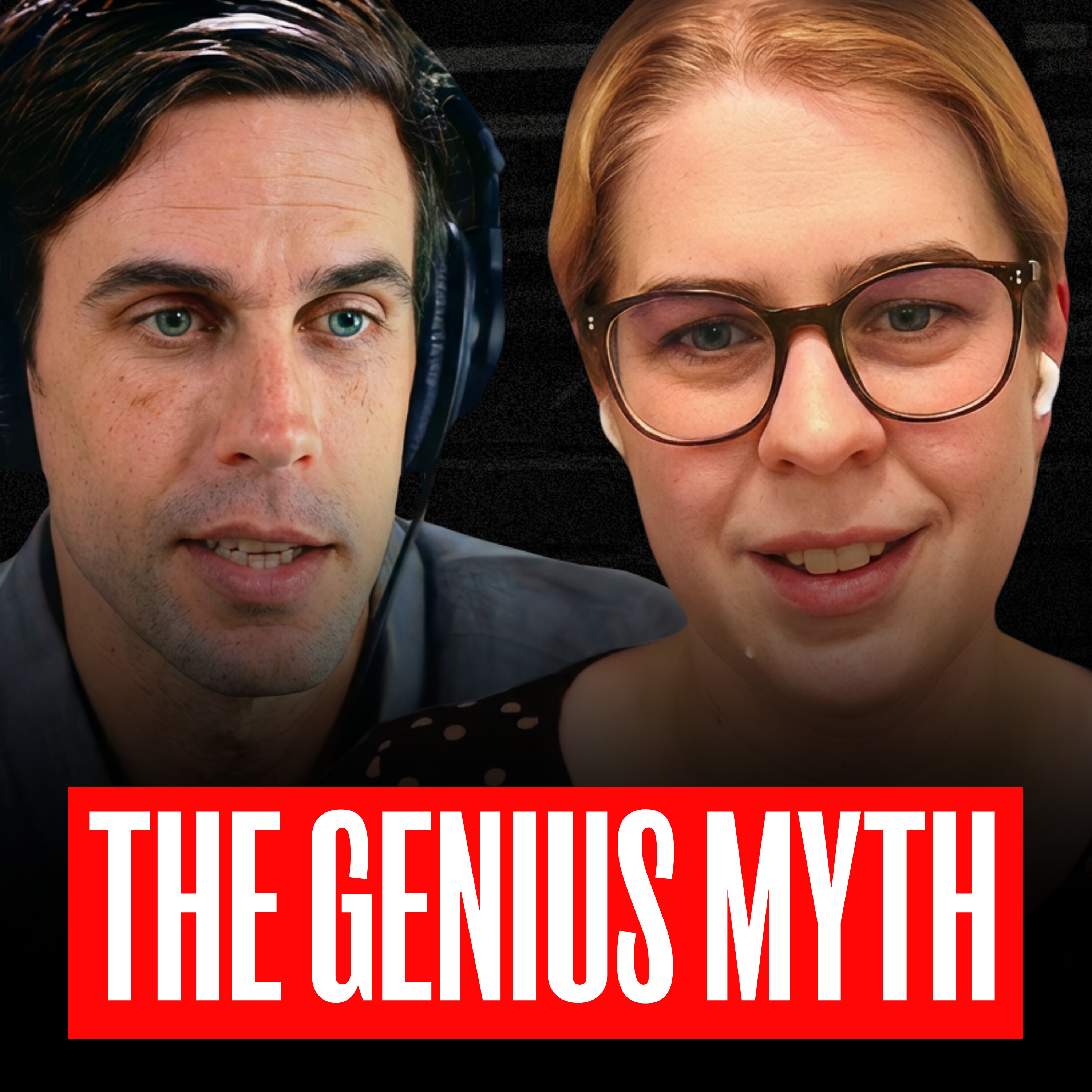
In this episode of The Daily Stoic, host Ryan Holiday engages with journalist and author Helen Lewis to explore the complexities surrounding the concepts of genius and delusion. They discuss the pitfalls that come with being perceived as the smartest person in the room, the myths surrounding lone geniuses, and how ego can derail careers and movements.
Written by AI. May contain mistakes.

Get the gist, explore an idea or ask about something said.
 Claude
On The Daily Stoic, what are the key points of this episode?
Searching your listeningAutomatic transcript. May contain errors.
0:00It's time for Cyber Monday, Dell Technologies biggest sale of the year. That's right, you'll find the lowest prices of the year on select Dell PCs like the Dell 16 Plus with Intel Core Ultra processors. And with built-in advanced AI features, it's the PC that helps you do more faster. From smarter multitasking to extended battery life, these PCs get the busy work done so you can focus on what matters most to you. Plus, you can earn Dell rewards and join many other benefits like free shipping, expert support, price match guarantee, and flexible financing options. They also have the biggest deals on accessories that pair perfectly with your Dell PC, improving the way you work, play, and connect.
0:38Whether you just got started holiday shopping or you're finishing up, these PCs and accessories make perfect gifts for everyone on your list. Shop now at dell.com slash deals and don't miss out on the best prices of the year. That's dell.com slash deals.
0:54I'm picking my kids up from school today and then doing our weekly routine, which is I take them over to Whole Foods. and we get all our groceries for the week. Then we have dinner. It's one of their favorite things to do. It's one of my favorite things to do. And then my wife loves it because she doesn't have to take care of it. This holiday season, whether you're a guest or hosting the big dinner Whole Foods Market has what you need to delight everyone at your table. They even have heat and eat sides from the prepared foods department. You can make Whole Foods your one-stop shop. Everything follows Whole Foods Market's strict ingredients standards so you know it'll be delicious and good for you.
1:28You can also order online for pickup and even delivery in select zip codes to skip the crowds. Shop everything you need at Whole Foods Market to our holiday headquarters. My family owns a 2023 Toyota 4Runner, and honestly, it's my favorite vehicle that I've ever owned. Around town, it's smooth and reliable, but where it really shines is on our trips into the backcountry. We've taken it on backpacking adventures to Colorado and New Mexico, loaded it up with gear, and never had to think twice about whether it could handle the terrain. That's what Toyota trucks are built for. Off-road confidence, rugged durability, and the freedom to explore.
2:01Toyota has a long history with the outdoor community, and they're committed to helping more people get out there and experience what nature has to offer. From remote trails to scenic byways, Toyota Trucks empowers you to take the detour, roam freely, and discover places that still feel wild and untouched. And they're not just making great trucks, they're working to expand access to adventure so more people can connect with the outdoors and pass that passion on to the next generation. Discover your uncharted territory. Learn more at toyota.com slash trucks slash adventure dash detours. That's toyota.com slash trucks slash adventure dash detours.
2:40Welcome to the Daily Stoic Podcast, where each weekday we bring you a meditation inspired by the ancient Stoics, a short passage of ancient wisdom designed to help you find strength and insight here in everyday life. And on Wednesdays, we talk to some of our fellow students of ancient philosophy, well-known and obscure, fascinating and powerful. With them, we discuss the strategies and habits that have helped them become who they are and also to find peace and wisdom in their lives.
3:25Hey, it's Ryan. Welcome to another Wednesday episode of the Daily Stoic Podcast. Had a lovely weekend here in Austin. It was cold for a couple of days and then it got beautiful. And we went out, cut down a Christmas tree and then running some errands. And I'm at the bookstore signing some books. If you want signed copies for the holidays, there's not much time left to do that, you can grab that at store.dailystoic.com or you can go to thepaintyporch.com. Anyways, this is why I love Austin. I went running in a t-shirt this morning, had some delicious breakfast tacos, and then we just had a lovely day at the bookstore.
4:01We're hanging out. The kids are making a lot of noise downstairs. I think they got those like big water jugs from, you know, like the water cooler at the office and they're throwing them off the balcony trying to make a bunch of noise. This is why I love it. It's just a different pace of life here. It's calm. And it was funny. We went and got our Christmas tree in Elgin. It's this Christmas tree farm we've been going to. We were looking at photos on our phone. I think we've been going seven years. And anyways, as I was leaving, someone came up to me and said, oh, hey, I'm a big fan. And actually, I saw you here last year.
4:33So it's just enough of a small town. It's lovely. I'm flying to New York tomorrow, which I like for very different reasons, but I don't live there for a reason. What does this have to do with today's episode? Okay, I want to take you back to September 24. I was reading a piece in the Atlantic, and it was titled How Joe Rogan Remade Austin. This is her description of Austin. It says, the city attracts people with a distinct set of political positions that don't exactly line up with either main party. They may be religious, but equally likely to be spiritual. They shoot guns, but worry about seed oils.
5:09They're relaxed about gay people, but often traditional about gender. They dabble with psychedelic drugs but worry about drinking caffeine first thing in the morning. Their numbers might be relatively small in electoral terms, but they transmit their values to the rest of America through podcasts, YouTube, and other platforms largely outside the view of mainstream media. Go to a cocktail mixer or an ayahuasca party or a Brazilian jiu-jitsu gym here and you might run into Tim Ferriss, the author of The 4-Hour Workweek, or the podcasters Lex Friedman, Chris Williamson, Ryan Holiday, Michael Malice, or Aubrey Marcus.
5:42Now, I don't agree with all of it, namely the part about running into me. This is something I said when I gave my talk here in Austin a couple of months back. Actually, there was an Atlantic article a couple of months ago that was talking about all the people who have moved to Austin for the last couple of years, and it was saying on any given night in Austin, you could have been at a party with Joe Rogan or some tech investor or some writer, Ryan Holiday could be there. I was like, no, no, he wouldn't be. I'm surprised I agreed to be here tonight, actually. I guess maybe the only thing you could bump into me doing would be shopping for Christmas trees because I don't go out.
6:26I don't do stuff. I like to hang out with my family. And, you know, you're not going to see me on 6th Street. You might see me at Whole Foods on 6th Street sometimes. but you're not going to see me hanging out in Austin, which is kind of what I like about it. It's like all these people live here and unless you're directly connected with them, you're not going to see each other. It's not like there's a bubble in a bad way. It's just like you can live your own private life here. It's just big enough and just small enough. Anyways, if you want to know more about my talk in Austin, I think we've run some clips of that in various episodes.
7:04And then I'm going to be doing two new talks. I'm going to be in Phoenix and in San Diego in February. You can grab tickets at dailystoiclife.com. I just got back from doing that talk in Seattle. Anyways, that's not how I first became familiar with Helen Lewis's work, the author of that paragraph. It wasn't my first time reading her stuff. I'd been reading it for a while, but it was certainly the first time I'd appeared in any of the articles. And so I shot her a note because later in the piece, she described me as like a heterodox thinker or something. And I shot her a note. I said, how dare you?
7:35I'm not a heterodox thinker. Wasn't exactly pleased with all the people I was being lumped in with. But she has written some fascinating things about this place that I live and a number of fascinating things about what's happening in the world today. I love her stuff in The Atlantic. And I didn't know she had a book coming out. So I was excited to grab that. It's actually great. It's called The Genius Myth, A Curious History of a Dangerous Idea. And we had a lovely chat. We actually have the same publisher. and in this episode we discuss the nature of genius whether it exists or not whether it's good for a person to be labeled as a genius or not the impact of social media on public perceptions the challenges of navigating a world of political correctness as well as a world of misinformation we talked about being a contrarian is that good for you or not and it was a fascinating piece i really enjoyed having this conversation i really like her writing.
8:31I think she is someone worth reading. We both talk quite a bit about Elon Musk in our two new books. He's a character in The Genius Myth. I talk about him in Wisdom Takes Work. Basically, my point is that there's a big difference between being smart and being wise, and that sometimes, right, being seen as a genius, being seen as smart can be very bad for your brain, make you stupid in many ways. As I said, Helen Lewis is a staff writer for The Atlantic who writes about politics and culture. Her first book, Difficult Women, A History of Feminism in 11 Fights, was a Guardian, Telegraph, and Financial Times book of the year.
9:03She's written for the New York Times, The Guardian, The New Statesman, and Vogue. She's the host of the BBC podcast series, The New Gurus, and Helen Lewis has left the chat. She's the co-host of Radio 4's Kafka vs. Orwell, and strong message here. And she won the 2024 Kukula Award, I don't know how to say that, for excellence in nonfiction book reviewing. I was just actually thinking about having a guest on who she reviewed one of her books. So I was messaging her about that. Great writer, great conversation. Definitely check out her book, The Genius Myth, and follow her on Instagram at Helen Lewis Posts.
9:43I was doing my research. I had no idea that you used to work with Tucker Max. It's very funny to me. Yes, many, many years ago. I had a different life before this life. Oh, no, I only say that because when I went to do my reporting in Austin, I emailed, was it him or was it someone in that genre of person? Does he now live outside Austin somewhere in some survivalist community? Yes. Yes. Then it was him that I emailed. And he sent me back an email that was like, basically, you're not ready to meet me. You're not ready for the truth. And I thought, I think I probably am, actually. I think I probably am.
10:15Austin's a little strange these days. I was at a party last night and there were a lot of cyber trucks. I was like, okay. Yeah, well, I just watched Kevin Roberts of the Heritage Foundation say that it's been taken over by Marxists. And that's why he needs to be de-chartered and reconstituted as part of more Texas-administered municipal districts. Austin has been taken over by Marxists? Yeah. I thought, hasn't it mostly been taken over by heterodox comedians? Yeah, I'm curious, because in your piece, this is how we connected, you lumped me in with some heterodox thinkers. What is that? I know, I didn't realize that was an offensive thing to have done to you.
10:50Sorry about that. I don't know if it's offensive. It's just not the community that I would consider myself. I guess, well, let's start with the word because I think it's an interesting word that maybe to someone like me has a certain coding to it. But I imagine the vast majority of people, they've never even heard that word. Yeah, I don't think it's necessarily a pejorative word. Neither is anti-woke really, which is I think probably where most people see the meaning of it being. But it's people who aren't straightforwardly Democrat or Republican, or maybe even more than that, aren't straightforwardly on board with the version, the 2020 version of the Democrat Party, the 2020 version of the Republican Party, right, which are both very distinct political positions that aren't necessarily just simply right or left wing.
11:37Although I imagine some of them would object to it being a political term at all. And they would say, no, I'm a free thinker. I think for myself. But they've all got the same opinions, right? That's the thing that's really funny is that there was actually a kind of heterodox orthodoxy eventually, which I guess you did in the end to diverge from, right? Yes, I would think so. You're not capital H heterodox, you're just actually heterodox. I would say that I, yeah, it's funny, I sort of get it from both sides. Yeah, welcome to my life. Yeah, which is, I guess, a good sign that you actually are thinking independently or thinking for yourself.
12:16You may just be an asshole, right? Like that's sometimes what I think. I think, am I just, am I sitting here all self-satisfied being like, wow, I do seem to get a lot of grief from both sides. And I think maybe I'm just objectionable. Maybe that's why it is. It could be. Yeah. Like I remember I was talking to Peter Thiel once and he objected to the label of contrarian, which I put out there. And he said, you know, that to me, he's like, that just means you're taking what everyone else thinks and putting a minus sign in front of it, you know, which I thought was interesting. If you're a contrarian because you just think the opposite of what everyone else thinks, you're also not really thinking, right?
12:51If you're happening to come independently to conclusions in each and every case that are quite different than everyone else, I guess that would be truly heterodox or truly contrarian. And I'm just not sure. It's rather coincidental that all your, as you said, that all your opinions seem to line up as either being the opposite of conventional wisdom or happen to magically align with a bunch of people that look and act just like you. But where Peter Thiel, I think, is interesting is that, and I would probably describe him as a contrarian, is that he seems to take relish, I guess would be the thing I would say, in taking minority unpopular positions.
13:32Like I I watched his interview with Ross Duton of the New York Times, in which he said, just apropos of nothing, you know, I'm always anti-baby boomer. And you're like, what? You know, one of the genuinely least popular political positions that you can take because baby boomers vote in enormous numbers and they have enormous, in the housing policy, right? They have an enormously deformed American political life around them. So, yeah, I mean, yeah, I think that's the thing where people mean by contrarian. They mean that he seems to take oppositional attitudes and kind of relish doing so, I guess.
14:05And that can become kind of a trap. Like I spent a lot of time with Peter when I was writing a book about him. And I always thought it was interesting that you could never ask him a question and get a quick answer. He always did genuinely seem to be thinking about whatever you asked, right? Which doesn't stand them in very good stead on the podcast circuit, right? When he went on Rogan the last time, people made super cuts of him going like, uh, uh. But actually, I thought that was kind of deeply unfair. Why do we? It's a bad thing about our culture that we sort of think that eloquence is just a sign of actually that's what deep thinkers are like.
14:38Lots of the most interesting people you could ever meet are very inarticulate. And that's actually the problem, I think, with podcasts and the sort of social media space is that it does incentivize and prioritize people who are really good at just pulling what seem like fully formed opinions out of their ass, which are masquerading as deep thinking. But I would say, though, that the heterodox thing can be a trap in that in that same interview you mentioned with Peter. Towards the end, he goes, Raza goes, you know, now, obviously, you think humanity should survive, right? And then he has to think even about this, right?
15:14And so there is this sort of trap. I think what I've always found interesting about the heterodox people is they're all obviously objectively very smart, right? They've all gone to great schools. They read a lot of things that they're, they're genuinely pretty smart. And then they managed to think themselves into some pretty stupid opinions by nature of this having to overthink it and, and then who they reject and who they dislike. And you end up in this weird sort of horseshoe thing where they end up in this weird, nonsensical opinion that has no basis whatsoever, but they thought a lot to get there.
15:54Right. But this is like a kind of classic university philosophy department, right? Filled with very smart people making the most bonkers arguments you've ever heard and doing thought experiments that are kind of morally repugnant or stupid because they just can't quit. Like, what if we slaughtered all children at birth? Like, let's just stop and think about it for a minute and you go, no, I'm pretty confident that, you know, my snap judgment on that one, it's bad, is going to hold out under closest scrutiny. But like, I like that about philosophers. There should be a role in public life for people who just say mad things.
16:24I mean, even the thing that Peter Thiel got in probably most trouble over the years, the idea about women not voting, is a logical endpoint of his argument, which is that he doesn't believe in the social security welfare net. And he worries that women vote in favour of it, right? And it would be easier to accomplish the policies that he likes if you had a male-only franchise, he believes. And I don't agree with that. I think it's a repugnant thing too. I think everyone should have the right to vote. But he has followed that thought all the way to the end of the road. And that is kind of what a public intellectual should do.
16:54Well, there's something refreshing in the ability to think thoughts and express them without being constrained by political correctness. The problem is sometimes political correctness acts as a guardrail against truly abhorrent ideas, however logical they might be. And so the anti-woke, which is really synonymous with anti-political correctness, I think the reason some of these folks get themselves into trouble is they don't realize that political correctness does serve some socially useful, you know, has some social usefulness and it often protects us from ourselves. Right. Moderation is not, you know, is not wrong.
17:38If you believe something, you shouldn't necessarily believe the strongest and most extreme version of it. It's okay to have a kind of, yeah, a half glass of it. Yeah, I think that's true. The other thing I feel, having had conversations about the book, about genius, is that sometimes the anti-wokeness can become a cover actually for lazy thinking. The idea of that we actually have to take every thought for a walk or whatever, actually manifests as men are smarter than women, white people are smarter than black people. And actually, the only reason that anyone wouldn't say this is that they've been hidebound by political correctness.
18:07And that leads people to say very dumb and empirically wrong things about IQ and genius, like the idea that, you know, if you've got 140 IQ, you're a genius. Hang on a minute. Let's define our terms here. And also, I can find you plenty of people who've got very high IQs who have not got any objective record of achievement in their lives, right? Their personality characteristics, their upbringing, whatever it might be, has impaired them from being able to kind of put those intellectual gifts to use. So that's, yeah, that's the bit where, again, lots of people would, I think, would probably kind of call me a heterodox or anti-woke writer, but even then, those, you know, I don't agree with those people either.
18:44I'm not a joiner in, you know, it's a good quality for a journalist to have, but it does make your life slightly annoying. It sounds like we might've had some similar experiences where we've been invited to sort dinner parties or been the audience of one for some of these very smart thinkers. And one of the theories I've put together, I sort of call it like the dinner party trap or something, which is that I think a lot of these thinkers, they have unlimited money. They sort of like to cultivate sort of salons or dinner parties where they just discuss things, right? And so if you're a billionaire and you're a smart person, they tend to mostly be dudes.
19:23You're a smart dude. Maybe you're a little socially awkward. You start cultivating this kind of dinner party scene. And these dinner parties, you workshop different ideas, different things you've been thinking about. And you say them, and this is a polite company. so and then a lot of these people work for you or want something from you or are in awe of what you have done and so when your theories cross over from interesting or provocative into batshit batshit crazy or really fucking stupid or morally abhorrent no one's going to be like whoa whoa whoa that is what are you talking about you know and and so it is interesting sometimes you'll see them in other contexts, whether it's an actual sort of adversarial journalistic relationship, or they're writing an op-ed or something that's just going to be read by the public.
20:21And all of a sudden, this kind of sloppy thinking or this very indulgent thinking that people in their life have not challenged faces actual market forces or just real human beings. suddenly the sort of simplicity of it or the contradictions of it or the repugnance of it becomes clear. And they just don't realize the way that it's kind of an emperor has no clothes moment for a lot of these ideas. Yeah. And that is one of my ways that I think about what journalism is. Your role is to be the little boy going, has everyone else seen what I'm seeing? which is hard. I was just reading Paul Bloom, the psychologist, just wrote a really interesting piece in Substack about obedience, saying how much he really liked the ash conformity experiments.
21:11Of all the bits of 20th century psychology, most of which turn out to be very wobbly indeed, these ones really do stand up. We are deeply conformist as a species for very good evolutionary reasons. But you have to kind of train yourself out of that as a journalist. And it's one of the reasons I think it's mad. And being an American, this will seem very normal to you. Being British, it seems completely mental to me. But American press corps journalists, the White House press corps, stand up when the president comes into the room. Yeah. You know, why? We're not friends. No. And I just do not think that journalists should be friends with politicians, right?
21:45You are there essentially like a meat inspector. Like you go to the factory, you inspect the meat, you leave again. You are not friends with the guy who runs the factory. And it's one of the reasons, yeah, I've never wanted to have one of those jobs because there's a level of kind of compromise that you have to do in order to get really good stories and deliver scoops to your organization that leads you into quite murky moral territory. And I find it much more relaxing just to be on the outside hurling bricks.
22:17human your body has a performance superhighway 60 000 miles of blood vessels that deliver oxygen and nutrients to every cell this of course is your cardiovascular system it's the foundational system that powers everything we do both elite athletes and longevity experts invest directly in the cardiovascular system because supporting healthy blood flow is critical for energy, recovery, mental clarity, and overall performance. That's where human comes in. That's human with two ends. They started out of research at the University of Texas near where I live and have 15 years of experience making award-winning supplements for nitric oxide production and healthy blood flow now used by over 160 pro and college sports teams.
23:05Human cardiovascular health Health Daily is a plant-based and made from clinically studied ingredients like grapeseed and seed kelp extract. It supports nitric oxide production for healthy blood flow and energy while also supporting blood pressure and helping support the delicate interlining of your blood vessels. Just two capsules each morning will power energy and recovery while also playing the long game by supporting long-term vascular health and healthy aging. Human has an exclusive offer for our listeners. You can visit human.com slash stoic for an extra 15 % off your first purchase. That's enter code S-T-O-I-C, stoic at checkout.
23:40That's human with two N's, dot com slash stoic for an extra 15 % off with code stoic at checkout. So we live on a Halloween street. We knew it was a Halloween street when we moved there. And then it has quickly become a Thanksgiving and then a Christmas street. Everyone's vying to outdo each other with their decorations. And I'll admit it sneaks up on us, especially as the competition gets more and more. The holidays are here. And if you're looking for holiday decor or last minute refreshes around the house, get what you need fast with Wayfair. That's where we got a bunch of our Christmas decorations and a bunch of essentials because we have some of my wife's family visiting us for the holidays.
24:25Blankets, linens, all that kind of stuff. You can get all of it at Wayfair. You can also get big stuff like sofas and dining tables, beds, desks, and more, all shipped for free. They don't have huge delivery fees for furniture. Find all your must-haves from furniture and decor to appliances and cookware all in one convenient place. Get last-minute hosting essentials, gifts for all your loved ones, and decor to celebrate the holidays for way less. Head to Wayfair.com right now to shop all things home. W-A-Y-F-A-I-R dot com. Wayfair, every style, every home.
24:59This is my favorite line from Joan Didion, where she talks about how because she was so small and unassuming, people thought she was nice. And she was like, no, I'm plotting to destroy you, basically, you know. And most of her best pieces, her journalistic pieces, she was sort of crafting this devastating argument that the person was just feeding her unlimited, you know, material for because they saw her as this, you know, cute little thing. And they didn't realize like she was a killer. I've had situations like that where someone has just been patronizing me to my face. And I've just been like, I could fight back against you.
25:38But actually, I will be going home and reflecting on this encounter. Mind you, I do also have a rule, which is that I try and if I'm going to say something very rude about somebody and I'm interviewing them, I try and say it to their face and give them a chance to respond back. because actually weirdly the thing that I've found is that if you say that things to people without if you say the factual content without the aggressive edge people actually usually able to deal with it right in a way that you wouldn't expect and I think people get very hung up on but but most I mean I mostly write about politics most politicians are only too aware of their public image and the way that people think about them so if you say to them you must be aware that people say such and such like how do you you know yeah how do you feel about that actually you often get quite an interesting answer.
26:21You don't actually usually get a kind of complete angry blow up and everybody stares in grim silence at you. Although that has happened too. I think what's interesting about some of the Silicon Valley heterodox folks that we're talking about is there was the snowflakiness of it, of like they have these interactions with journalists or they write things and then they're very, very surprised and personally hurt when there's pushback or disagreement about those things. And this is where I think that sense of security and sense of represent, like having figured it out and that actually any smart person would agree with them, that they've been lulled into that sense by these sort of rooms that they've cultivated, these sort of safe spaces, ironically, that they have cultivated for themselves where they just bullshit either in podcasts or at dinner parties or conferences or whatever.
27:16And there's just, it just doesn't hold up to actual criticism or scrutiny. And then they take that very personally. Yeah, and I can understand that actually, you know, there are, I've been a hatchet man on occasion and I've just written very toughly. Like I wrote a very tough review of Michael Lewis's book about Sandbank when freed. Michael Lewis is a writer I really love. I think he's great prose stylist. I think his subjects are really interesting. But I felt that this book was a real swing and a miss because he had essentially tried to jam Sam Bankman-Fried into the story of the big short, right?
27:51Which is rebel, oddball, genius, boy wonder, see something that other people don't in the sclerotic financial system. And it was like, there's a line from a sitcom, a British sitcom called Peep Show, where someone says the secret ingredient is crime. And that was the case with Sam Bankman-Fried. Wow, these numbers are incredible. Ah, the secret ingredient is crime. And it just felt to me that he was very reluctant to see that very obvious possibility of fraud in the system because he had a template in his mind. And so I wrote quite a tough review. And I always feel a little bit bad about it because I don't hate Michael Lewis and I don't wish him any ill.
28:29But I do think that it's really pernicious to have that kind of idea of the boy wonder in our culture without people interrogating it. But I can imagine that it, you know, it must feel pretty, you must feel like pretty brutalized by that process. Although I read that review, I disagreed. I thought he flayed Sam Bankman-Fried in that book, but in a rather restrained way. I came away thinking that he was a sociopath and that he was engaged in fraud and that he was a miserable, unhappy, shitty person. And I felt like Michael Lewis allowed Sam Bankman-Fried to present himself that way, as opposed to doing it in a more adversarial way.
29:13I think Ezra Klein is pretty good at this on his podcast, too, where he interviews, like, usually right-wing thinkers. And he doesn't exactly challenge them to their face, but he just sort of really asked them to explain their argument. And when they don't do it, and it's very unsatisfying, but there's something unsatisfying about seeing the arguments presented in an unsatisfying way, instead of the sort of hostile back and forth of calling someone out to their face. Yeah, I mean, I watched my old colleague Mehdi Hassan's Jubilee Surrounded debate, which was him as a very left wing pro-Palestine guy surrounded by 20 of the most central casting far right people you've ever seen.
29:54And I'm not going to lie, I did enjoy it because Mehdi is nothing if not, you know, a terrifying debater. But I did think I'm not sure this adds to the sum of human knowledge. I mean, this is this is like watching bear baiting, essentially. I'm not sure anyone has come away from this with their mind change. Certainly not me. I was even more smugly liberal than I was when I started it. You know, I felt like coming up through, I used to be big into new atheism, right? And that was a movement that was afflicted hugely by a sense within it that people were just smarter than Christians and they'd seen through.
30:24And I think that's, I see that tendency everywhere now and I'm sure I'm prone to it as much as anybody. So many social movements now were defined by a feeling of sort of, hmm, hmm, about the kind of the people, the outside people that, you know, They're the kind of benighted heathens outside the golden circle. Well, you said somewhere, and I think you're right, you said that the story of genius is really the story of ego or that every genius story is the story of ego. I think the tension of being smart or being right can be a real problem. Someone told me once that making a successful contrarian bet can be a sort of cognitively devastating experience because you did a thing and everyone told you you were wrong.
31:10Everyone told you you're an idiot. They were incredibly condescending along the way and smug about it. And then you proved them wrong. It is very hard for you to go back to zero on the next thing and the next thing, right? You're starting now with a cynicism and a skepticism and a sense of superiority. And that is very tough. That is an imbalance that affects your future endeavors and political and social opinions. Oh, I completely think that's true. I remember having this conversation with a journalist. There's a British journalist who died a couple of years ago called Christopher Booker. And he became in his later years a climate change denialist.
31:54And I asked someone who'd worked with him, you know, how did that happen? He was so smart. Like, how did he end up just spending the last 10 years of his life talking about the hockey stick graph and all the stuff we used to hear about before, you know, Every summer scorched Texas and wildfires raged across the Midwest and people kind of went, no, I do think this is a bit weird now. And this other journalist said, well, he was one of the, Christopher Booker was one of the original journalists involved in uncovering the thalidomide scandal, which was a huge medical scandal in the 1960s in Britain where women were given a morning sickness drug and it led to limb deformities in their children.
32:25And for a long time, the medical establishment denied this, covered it up. And it took a really big investigation by the Sunday Times and others. like to bust this open and get people compensation. And he said essentially that generation of journalists was ruined by it because they had seen this massive conspiracy where the establishment were lying to them and they were right. And I think that's true. My friend Sarah Dighton once said this about the Iraq war ruining the left. Everybody in the left who was like, the Iraq war was a very bad idea. I think it's a foreign policy disaster, you know.
32:53And then it was, got the idea that actually this is true of everything. And you end up applying the same paradigm because it was right last time. And as you say, the key thing is that humiliation, the humiliation and vindication. And I write about this in the book. There's an idea of the kind of scientist as rebel that comes through. You see it in the Galileo story. You see it in Ignaz Semmelweis and his work on antiseptics and maternal mortality. That's such a compelling story to us. The idea of the one, usually the one man standing up against the crowd and being laughed at and then being vindicated.
33:24It's so unbelievably emotionally satisfying that unfortunately we vastly over-index on it. and we see it, you know, we almost want it to happen every time. Whereas obviously that would be absurd. You'd never be able to get in an airplane if it turned out that every engineering thing was wrong. You'd never go to a hospital if every bit of medicine was actually wrong. And when you watch people not engage in good faith with your ideas and be intellectually dishonest, it's hard, and you watch what you actually really were thoughtful about be sort of caricatured and treated, you know, as a straw man, It's hard for you later when you actually aren't on as sound a footing not to convince yourself the same thing is happening.
34:08Yeah. And so I think you see that a lot. And this is actually, I think, the trap of scientific genius. It's the trap of entrepreneurial genius. Everything that worked, right, it was doubted at the time. I mean, Nikki, our mutual editor, when I came to them and I said I wanted to write a book about an obscure school of ancient philosophy. You know, she told me later that they were like basically just humoring me and that they hoped I would go back to writing marketing books after, right? And so I feel like I've had to do a lot of work with the success of that, of reminding myself that it actually was a bad idea.
34:47Like the conventional wisdom, like she was not like being elitist, that she was not like the amount of money that they offered me and the expectations they had for the book were within the bounds of reason and made sense given their past experience. They were not snubbing me. They were not insulting me. I did not know better. I had a hunch and they had a hunch and my hunch turned out to be not even right, right? Because it succeeded more than I thought it would succeed. So I can't retroactively give myself more prescience than I had because I didn't have any. I was just interested in something and I thought it could work.
35:33And the fact that it did work at a pretty extraordinary level, that is a surprise to both parties. Right. And so what can happen? I saw this when I was at American Apparel. Well, you know, the idea was insane. The way that Dove Charney, what Dove Charney was trying to do and what he was trying to pull off. And he's like, everyone was right to say that it wasn't going to work. It worked despite itself. But if you tell yourself a story afterwards that you're a genius and that you knew better and that all these people are idiots, then you're going to get yourself in trouble later on when you have the other idea or when those people go, okay, hey, you did succeed.
36:14but you should be careful of X, Y, and Z. Yeah, they call it Nobel syndrome, I think, don't they? When people win a Nobel Prize and then they start going, well, nevermind organic chemistry, wouldn't you like to hear a few of my thoughts about astrobiology? Yeah, didn't Newton get into alchemy? Yeah, Newton spent a lot of his life in alchemy and also a lot of his life on something called biblical chronology, which is so wacky that we don't even remember it today, basically trying to work out when, like when events in the Bible would have happened to work out how old the earth would be from that point.
36:44there's loads of examples like that you know Marie Curie one of the greatest scientists she would go to seances she would go and see mediums it was a very popular thing to do at the end of the 19th century and I think there's an interesting bit about that because she was working with radiation which was an invisible force that was real so why not ectoplasm and I think that's the thing if you're working at the edge of the known then you're going to end up with quite a fluid sense of reality but I think isn't what you were talking about a bit narcissism because it's just if you go along with the conventional wisdom and you're right that doesn't distinguish you or say anything about you but if you buck the conventional wisdom and you're right that means you are better and i just i think so much of the troubles we see across our society are essentially narcissism conspiracy theorizing fundamentally to some extent is narcissism right it's like your sheeple your npcs and i've seen the truth um i think it's very important to lots to lots of people now to feel special, to not feel ordinary.
37:43Your point about Curie, and so she's already on the fringes. So she has an affinity for or an openness to something, which that's what enables her scientific discovery. It also makes her susceptible to, you know, less substantive ideas. And then you could also argue, and I would certainly include myself in this, I think Like anyone who is creative has some narcissistic traits in you because you're like, I want to make something and people will like it. Yeah. There's already a selection bias towards these traits. So like when you warn against ego or, you know, the genius, these things maybe don't matter to your ordinary person living a relatively ordinary life in civil service or, you know, middle management.
38:33It's that the people who are drawn to the highest levels or the fringes or these different fields, they're already selecting for certain traits that then tend to be enabled by the success they find there. Yeah, that makes sense to me. But I think it is a real challenge of modern life is working out which experts to trust and which authority to trust and to calibrate that, right? Not to just take everything that you're told by people with letters after their name as gospel, but also not to go so far out that you just, you know, you just don't believe anything at that point. Yeah, Churchill had a line about he rejected convention, but he venerated tradition.
39:19And I think there's something in that sort of balance there, that distinction that I think we have lost. So you go, Aristotle tells us to think from first principles, and this is famously what Elon Musk says, right? Take it down to the physics. except we also have precedent for a reason if you rethought every single thing every single time you're gonna end up kicking out some foundational things that actually do make a lot of sense or or maybe they're just hard for you to imagine like i think it's interesting that we went from like disruptive silicon valley companies to some of those people being like and why shouldn't we all be polyamorous.
40:01And then and then they're like, and why shouldn't we do psychedelics all the time? And why shouldn't we? And it's like, because, man, because you're overthinking it again. And you're kicking out some of the legs of of the stool that not just society sits on, but also that like basic sanity sits on. And it's going to be hard to come back from there. Yeah. I mean, society can tolerate a smallish number of rugged individualist bohemians. But if everybody is a rugged individualist bohemian i mean it's like the story of every commune ever just collapsing and arguments over who's going to do the washing up yeah i think that is unfortunate it's unfortunate that we don't you know venerate that but when you were saying that it made me think about the fact that one of the few people in silicon valley that i do really rate as a thinker and and enjoy reading his essays is paul graham he's one of the founders of y combinator and he has a couple of essays i reference a couple in the book but another one is the one about, you know, do you hold a belief that everybody around you doesn't?
40:57And that's the thing is like, when Elon Musk is saying, I'm going to rethink everything from first principles, I would have more respect for that if Elon Musk just came out and said, you know what, I think affirmative action is good. Or you know what, I think that Israel's actions in Gaza are appalling or like something that actually would be genuinely unlikely for his milieu. And Paul Graham, to his credit, has done that. He has been very strongly pro-Palestine way before, I think there's been a really strong recent turn in public opinion against Israel, but he was way out ahead of that in a way that caused him an enormous amount of difficulties among people who would otherwise be his kind of intellectual set.
41:32So he was really living his principles there. But yeah, I think it's a good test. If you think of yourself as a free thinker, but all the other free thinkers that you hang around with all free think the same thing, maybe you're not a free thinker. There is this myth about genius, just as there's myths about writers and artists that I think is contributive here too. You know, I feel like you can have crazy ideas and a normal life, or you can have a crazy life and normal ideas. The hard part is when you're sort of disruptive and transgressive and you're relatively untethered because you now fly private everywhere and no one can tell you no.
42:13and, you know, your marriage has fallen apart. I think there's a Flaubert line, I think, where he talks about, you know, if your desk is clean. The wild life of the, yeah, the wild life of the, so is it I live the quiet and orderly life of the bourgeoisie so I can be violent in my work, something like that? Yeah, yeah, yeah. And I've always taken that to mean like, you know, you have to have some stability. Like people, you know, you have to have something that's tethering you to normalcy or you can sort of, of spin off the planet. I think that's kind of what you tend to see in geniuses, not just like scientific geniuses, but certainly in artistic geniuses as well.
42:54They just keep crazy hours and do lots of drugs. And, you know, that's hard to sustain. Right. But like somebody like Picasso is a very good example. Whatever his eccentricities in his personal life, they did not prevent him from banging out an enormous volume of work, you know. Yes, but he was also a monster. I mean, I know some people have really pushed back on this because I do say this in the book and I quote his granddaughter Marina, you know, who said he was a vampire, you know, and there are a number of people who killed themselves around Picasso's orbit. Like he just was not an easy person to be around.
43:26He had this sense of his talent entitled him to live in a particular way. I was surprised. I thought everybody kind of accepted that. But people are still quite hostile to it. It's really fascinating to me. Like the thing I hadn't quite clocked when I came into this book is quite how much the idea of genius is kind of tied up with hero worship. Yes. And I should have got that a bit more because the Thomas Carlyle set of essays from the 19th century, which, you know, have this idea of the great man theory, they're titled on heroes. You know, it's about whether or not you can worship people or raise them up above everybody else.
43:59And so there is definitely defensiveness where when people feel that their heroes are being taken away from them. Or you see it like at the other end of it, when their heroes do something that they don't agree with. Like I wrote a piece about when J.K. Rowling came out as gender critical. And, you know, let me tell you, the message boards of Muggle.net were fuming about that because it was like, you've ruined my childhood. You've taken my childhood away from me. And this intense hero worship mutated into an intense loathing. I think anybody who hadn't felt either of those emotions would think, well, they're just some quite good books about wizards.
44:32Don't see there's any need to get this excited about it. But you know what I mean? These are deeply emotional things. I talked to somebody in the wake of the book who'd had a Michael Jackson song at her wedding. She'd walked down the aisle to it, I think, and then suddenly had to face this idea of like, oh, how do I feel about my wedding day now? Yes. That it's got this soundtrack to it of this person that I now think, you know, I feel a bit reluctant to endorse. So I think, you know, I think these are quite deep emotional bonds that we have with people when we call them a genius.
45:06Function is the only health platform that gives you the data that most people never get, and it gives you the insights to start doing something about it too. With Function, you get access to over 160 lab tests annually, from hormones to toxins to markers of heart health, inflammation, and stress. And for an additional fee, you can also access MRI and chest CT scans, all tracked in one secure place over time. It's a near 360 degree view to see what's happening inside your body, which is why so many top health leaders are all behind function. If you want to give someone or yourself something truly meaningful this year, give them the clarity that comes from knowing their health.
45:43Most gifts fade, but this one helps your loved ones stay healthy. And you can own your health for just$365 a year. That's just a dollar a day. You can learn more. Join using the link. Go to functionhealth.com slash dailystoke or use code DailyStoe25 for a$25 credit towards your membership. Well, it's almost here. Christmas is just a couple of days away and maybe you're scrambling. You're like, what should I get my dad? What should I get my mom? I got to get something to my sister. People love showing off pictures of their kids and that's where today's sponsor comes in. I've gotten one as a gift.
46:18I've given it as a gift. The Aura Digital Picture Frame. It's easy to use. It never gets old. You're constantly updating it with new pictures. Or a digital picture frames are so much better than any digital picture frame I've ever seen. It's got a high resolution. It's got a color calibrated display. You can add video. You can have two pictures come up at the same time, picture and a video. It'll pair photos together for you, like two pictures of the same person or from the same day. It's really easy to set up. You just download the app, connect the frame, and then you can pick photos and videos right from your phone from anywhere in the world.
46:49And there's a reason Oprah added it to her favorite things. three different times. For a limited time, save on the perfect gift by visiting AuraFrames.com to get$35 off Aura's best-selling Carver Matt Frames, named number one by Wirecutter, by using promo code STOIC at checkout. That's A-U-R-A-FRAMES.com, promo code STOIC. This deal is exclusive to listeners, and frames sell out fast, so order yours now to get it in time for the holidays. Support the show by mentioning us at checkout. Terms and conditions apply.
47:24We would like people to be able to do incredible, extraordinary things, but still be sort of decent, upstanding people like we see ourselves. and it is somewhat disillusioning to go, oh, no, maybe it's not possible. Or maybe that's actually a much harder target to hit, right? To be very successful or very smart or very elite at what you do and not jettison some of the sort of basic human capacities that we'd otherwise want someone to have. But it's also a little bit immaturity, isn't it? That's what I felt when I was writing that piece about J.K. Rowling. It was people who see themselves in a perpetually childlike or young teenage position.
48:19And these were people who were by now nearly my age, in their late 30s and 40s. And you think it's like when you find out your parents are just normal people who are trying their best and not the kind of gods of your childhood. And I think that's the bit as well that sometimes people feel a reluctance to. And I guess social media has made that worse, right? Because if you say you like something, someone pops up like Clippy, the paperclip, to kind of go, did you know they're actually quite bad? But it's okay. It's okay to really like and revere some people's work and the things that they've done without endorsing every single aspect of their personality.
48:49But I think there's something particularly about the modern media environment that makes people quite uneasy about that, right? They want the relaxation of purity, essentially. Yeah, although I found the J.K. Rowling thing to be interesting because I never read Harry Potter as a kid. and then I started reading it to my kids. So I came to it like only in the last like few years. So I don't have like this, a nostalgia for her. So I'm sort of coming to her new. And she's not totally wrong about everything she said, but I think it's been interesting to watch her evolution where she went from a somewhat heterodox person to sort of coming up with a very sort of dogmatic, orthodox and strident opinion that she expresses over and over and over again with a lack of sort of empathy or humility.
49:38And then I think what's interesting to me about it is that there's no other opinion that she's expressing like this, right? So there's this kind of trap we see in our modern discord where someone goes, this is a totally normal person who just happens to have this one transgressive view and everyone's attacking her or them about it. But what's interesting is you don't see the other opinions that were supposedly the marks of their normalcy seem to recede into the distance. And you go, oh, actually, you've just been kind of radicalized by this one thing, and it's now consumed you as a person. I do understand it a bit, though, having followed this argument for about a decade, because it was a bit like invasion of the body snatchers, right?
50:23The people that you thought had been quite normal. And you would say, well, of course, you know, we should be accepting of everybody. and I'm very happy to call people what they want to be called and be respectful. But I don't think we should have biologically male people competing in women's sports. And you sort of assume that was a pretty mainstream opinion. And then we went through this ludicrous bend for a couple of years. That was like hate speech. Sure. And then that era has now ended and that's now become a kind of normal mainstream liberal opinion, albeit somewhat submerged again. So I think that, again, it comes back to the trouble with people laughing at you almost.
50:57Yeah. I think that's a kind of uniquely deranging experience. Having been through it myself, you do go, no, I'm pretty sure I'm not the one with the radical out there opinion on this. I'm pretty sure actually everyone agrees with me, but they won't say it out loud. I mean, it's a kind of tiny insight into what it must be like living in a totalitarian society, right? Where you're pretty sure that everyone else also thinks the leader's a cretin, but you know also that on pain of death, no one is ever to say this. I mean, that must be so psychologically unhinged. It requires a real strong sense of self to have an opinion that is not radical and then everyone tell you it's radical and not become radicalized in the process.
51:40I think to not being radicalized in a bunch of different domains, whether it's politically or culturally or with your sort of heterodox ideas, it's really hard. It's really hard to just have opinions and not make them your identity or your personality or not sort of feed off the energy that is there. You know, I've seen this with some people I know where like they maybe they were sliding a little bit in relevance or their sort of best days were behind them. Well, yeah. Can I ask you how old were these people? Because I think this is a form of I think for lots of people, this isn't the new form of midlife crisis.
52:22People would have once had an affair or bought a sports car, and now they get really into a particular political thing and start being very strident about it. That's exactly right. And I'll tell you the person I'm thinking about off the air. So they notice a sort of a decline or a slowing, and then they express something maybe that they didn't even think was a big deal. They tweet something or they write something or say something in an interview, and then it gets a lot of attention, like negative attention from, let's say, the mainstream. and then positive attention from maybe some fringe groups who are sort of opposed to the mainstream.
52:58And then you watch as that becomes, like they go to the action, right? Because it's like the old days when they were connected to the zeitgeist. And so it used to be they got that rush from the work and now they get that rush from the political acrimony and energy of the times. And so you sort of watch this person get transformed into something that is almost unrecognizable. But it's really rooted in that narcissism that you mentioned earlier. It's rooted in the narcissism of needing to be relevant, needing to have heat, needing to be in the conversation. And they just they can't get it as an athlete or as a writer or as a filmmaker, but they can get it as, you know, they see themselves as a truth teller.
53:53I think they're more of a bigot or a hack or a wacko, but it's it's the same energy. Right. And I was delighted when I found the story of William Shockley for the book, who won the Nobel Prize. It was one of the names on it in the 50s for the transistor, although really it was much more down to the other two people who were named than him. He was head of the lab, so he kind of wingmaned onto it. But he was, I just remember reading all this stuff that was happening in the 60s and 70s, being like, this is so unbelievably modern. So he wins his Nobel, but he's already gone a bit strange by this point.
54:27People in the lab don't like working for him. There's brilliant men in the lab who leave because they can't bear it. He starts giving the employees psychometric tests and IQ tests because he becomes obsessed with personality and IQ. And, you know, eventually people, he leaves Bell Labs, sets up Shockley Semiconductor. Everyone leaves Shockley Semiconductor. You know, he basically creates Silicon Valley because people can't work with him. So they end up in other places. And then he starts talking about race and IQ. And it's exactly that dynamic that you're talking about, which is that he says one thing about, you know, something about dysgenics, essentially something about a kind of, you know, classic welfare mom story.
55:01He's got 17 kids and like, why are we paying for these people? And everybody kind of reacts. But another group of people are saying, oh, thank God someone said something, you know, finally said it, you know, you can't say these things. And so suddenly he's getting listened to again and he's getting invited to these conferences. You know, what does he know about this? He's not, this is not his scientific. He's like, we're back, baby. Right, this is not his scientific specialism. And there's this incredible 1980 Playboy interview with him, which is pages and pages and pages of it. But he just says a kind of series of wacko things.
55:30Like he thinks his IQ has gone up. That's why he didn't get into the term in genetic studies of genius, because he didn't meet the cutoff as a kid. But now he thinks his IQ has gone up with age. Not really a thing that happens to you at the age of 70, but okay. and you know it's just the sort of psychological chip on his shoulder and the way that for a while when he was on the upswing I guess this is what happens when people on the upswing of their careers maybe their sort of psychological flaws you know people put up with them they think it's because they're young they're more they're not more pronounced and then at some point as you say the kind of road runs out and it turns them into their worst selves I think that's the story of lots of people that I've I've seen follow that trajectory I was trying to work out whether or not, is that a thing that only happens to kind of famous people and therefore we hear about it a lot?
56:14Or is it happening to lots of people and we're only hearing about the famous ones? No, I think you're right that it's a kind of midlife crisis. So look, if you have access to media and people are soliciting your opinion, that's where you're going to go for the rush and the energy. That's your drug. But if you're a school principal, maybe you're going to buy a motorcycle, right? You know, or get a tattoo or, you know, cheat on your spouse, right? Like, so it's what you have available. What destructive, exhilarating behaviors do you have access to? Now, if you're Elon Musk, it's buying a social network and, you know, becoming a bond villain or something.
56:56If you're, again, if you're a regular person, it's going to happen on a much smaller scale, but it is fundamentally the same kind of irrational, biologically motivated, you know, psychological, you know, catharsis. Right. And I'm actually, I'm going to excuse or exempt J.K. Rowling from this criticism because the notable thing about her is that the work has continued to be good. I really like the Cormoran Strike novels and she is clearly still in a productive phase of her career. But the thing I now think about her is that she accidentally became famous as a children's author when really she's one of the great haters of the age.
57:31I just read her review of her nemesis, Nicola Sturgeon, the former first minister of Scotland's memoir. And it's just I've written some mean things in my time. It makes all of them look like a Sunday parade. And I just think that it's taken her until midlife to reach her true calling as a shit poster. Well, actually, there is something at the root of most of these sort of genius gone bad stories is some kind of personal grievance or slight. I just interviewed David Mamet, whose work I'm a big fan of. And it was an interesting interview. And as I was watching it, there's this other interview that he did a couple of weeks ago where he ended up walking out when he got asked some political questions, he stormed out.
58:11But the guy was asking, he's like, as late as 2008, your political opinions were this. And after that, your political opinions became this. What happened? And you'd think he'd be like, well, I read this book and it changed everything. Or I peeked behind the curtain. And Mamet starts to tell this story. And there's something refreshingly honest about it, although I don't think he thinks it reads this way. He's like, OK, so in 2009, I put out this book and I sent the book out to all the media outlets who I've been interviewed by many times and that I thought were my friends. And he's like, Terry Gross blew me off.
58:53And the New York Times blew me off. And he just starts going through all the and, and the guy goes, wait, so you're like, you became a conservative because they didn't like you, you know, and he said, No, no, of course not. But he just unsolicitedly explained that that's kind of exactly what it is. And almost all of them, you see some very real example of... that a i kind of understand it in that it is sort of mad that in the whole of american theater he's basically the only overt Trump supporter, right? There's a lot of people in America who like Trump, like they deserve some, they deserve to be bored at the theater too.
59:32And I'm not that David Mamet, I like, I quite like Oleana. I can't speak to the rest of his work. And actually I've seen Speed the Plow, that was good too. So yeah, let me, yeah, they're fast plays. I'm not, I'm not being rude. Don't come for me, David Mamet. I've seen the mean cartoons you do in the free press. Like I don't need that in my life. But you know, I just, I kind of also, you know, I used to be the deputy editor of a left-wing magazine. Before that, I worked for a right-wing newspaper. So I like to kind of mix things up so that I could get what, like spend a period being annoyed by one side's follies and then switch and become annoyed by the other side's follies for a bit.
1:00:03And the thing that I just found fascinating about the left was that, you know, as I kind of got older and started earning a bit more, paying a bit more tax, I was just like, but you hate me. Yes. You need this money in order to pursue redistribution, but you're going to kind of hate me for having it and giving it like to the state. I don't understand what that is. Like I can, I think there is a thing where people just essentially get like J.D. Vance with Zelensky, right? Where they're like, did you say thank you? Well, look, J.D. Vance, again, to add another piece of advice, he was really personally hurt by the reviews of the god awful movie about his life, you know?
1:00:43Yeah. But then I can also imagine if you're him, that feels like they're reviewing you as a person, right? where they're just like, you don't seem very nice or like approachable. And the vertigo of the book being beloved or popular and then the movie not being popular, again, it takes a certain amount of fortitude and a strong sense of self to understand that sometimes people are going to like you and sometimes people are going to dislike you. And sometimes they're going to be totally indifferent to you. In a way, the indifference is almost the actual most painful thing. Because again, your addiction is to the attention and the validation comes whether it's positive or negative.
1:01:26It's probably the sort of failure and the shrugging to the movie that hurt more than the reception. So it takes a sense. So anyways, I think when you look at a lot of these people, there is some grievance. I mean, you could trace, some people trace the entire Trump presidency to him being humiliated at the White House Correspondents' Dinner. Yeah, roasted by Barack Obama, yeah. Yes, exactly. Actually, I find that a very compelling thesis. You know, there is often a kind of, and it's often a kind of snooty intellectual elite, right? That's one of the things that I find fascinating. I've got, you know, many criticisms about the Democratic Party having a set of values that are at odds with many of its voters, never mind the median opinion in America.
1:02:11But, like, the idea that kind of these sort of billionaires feel still somehow that there's some mythical kind of college professor, right? If they endorse them, then that would be the sort of summit of human achievement and they feel rejected by it. It's kind of fascinating. I mean, you know, you coming from a philosophy interest must be particularly interested about this, right? In that there is no shortage of demonstration in our current society that great wealth and success does not necessarily bring you contentment. And I think it's a really useful... Like if you're going to look at Donald Trump or you're going to look at Elon Musk, you should think, okay, well, whatever, like this money is not filling the hole in your soul.
1:02:49And I just, I'm obsessed with my favorite Donald Trump interview from last election cycle was him with Theo Vaughn, where he talked about his violent, overbearing father and watching his elder brother, who seemed to be quite a kind of sensitive sort, die from alcoholism. Essentially, I think probably having been attacked by his dad all the way through his life for being not tough enough. And I thought, well, actually, you know what, now I understand the bullishness, the bullying. Like this was your protection mechanism throughout your childhood. Like seeing, you know, your beloved hero worshiping older brother, just not make the grade.
1:03:22No, he's a Shakespearean figure. He has the perfect villain origin story. And I would totally agree with that. I mean, you mentioned me in philosophy. What I've experienced that's been interesting is like, I think what I do is good, right? I think I'm taking these ancient ideas and making them accessible to people who wouldn't be interested in them. And then it's like the philosophy people. Am I going to guess that academic philosophers think that actually you're not doing it right? And yeah, no. So they snoot, they sort of snootily look down on me. You're getting it dirty, really, with your grubby hands.
1:03:53Yeah. Yeah. I mean, I remember an article and it said something like, you know, this guy is popularizing, like how this guy made a philosophy popular with Greek slaves, you know, influential in Silicon Valley or something like that, how he took a philosophy of Greek slaves and made it popular in Silicon Valley. And it was just like such a preposterously bad faith misinterpretation. And then the conclusion is silly. It's like, okay, I'm talking about this philosophy of virtue. I'm making it popular with people in Silicon Valley. Isn't that a good thing? Wouldn't you like that? I'm not taking fucking Ayn Rand and making her more popular.
1:04:30I'm taking something good. And yet, No, still here it's being misconstrued. And so, again, I think it requires a certain sense of self to be like, that's unfair and not true, but I'm not going to allow myself to be driven into the arms of an equally, you know, dysfunctional, toxic group because I have to have a home somewhere. And so to me, being heterodox is, if anything, it's the ability to sort of stand alone or stand as yourself and not allow one contrarian opinion or one sort of bit of othering or outside the mainstreamness drive you fully in that direction. yeah the closest I've ever got to writing anything that was self-helpy was I had this idea for a while that you should appoint like if you're going to do any kind of public facing work or you know which I mean as you say might even be being like the principal of the school like anything that you're going to do that's going to get you criticism you should appoint three arbiters of you and these should be people that you know that you know would stand up to you if you did something wrong right like it's not like your mom who like if you're you know will always see the best in you and excuse anything that you do.
1:05:45These are people who would call you on your bullshit. And they're people who you think have a genuine moral compass that you want to follow. And people who've made themselves hard and unpopular decisions. And then one of the things you can do is run any decision you're going to make by maybe not even them in real life if you can't talk to them, but like the versions of them in your mind. And I'm really lucky. My best friend Laura is very much like this. She and I have known each other for 20 years. And there have been times like during the great feminist Twitter was of the 2010s. Well, she once did say I had to go at somebody and then they were horrible to me and then they piled all their friends to me.
1:06:20And I was having a big pity party about how terrible this was. And she was like, yeah, but that was completely over the top and unnecessary what you did. And I was like, but no, we were having the time where we were going to like indulge me in my, you know, my fantasy that only I'm only the victim of meanness and never the perpetrator of it. But I thought it was a really, you know, that's what like a genuinely really good friend should do. And it's why I worry about, you know, you'll have seen the chat GPT update, Lots of people saying, you know, you've taken away my friend. ChatGPT is not going to call you on your bullshit.
1:06:49No, you're paying ChatGPT. Right, exactly. There's a line from Janet Malcolm, one of my other favorite female journalists, apart from Joan Didion, about like, you will never have somebody who's completely on your side as your defense lawyer in a libel trial, right? Yes. They will just tell you that everything you did, of course, everything you did was right. And you need to actually move away from those kinds of people. I mean, maybe it's useful in a libel trial. But like in your friendship, you need to have friction. You need to have a certain sense that there are people who are not, you know, they want you to succeed, but they don't want to tell you that everything that you're doing is fine.
1:07:20I have a chapter about this in the book that I just finished, which is about wisdom. And I have a chapter about so you sort of find a mentor early on. And then after you succeed, you need a kind of a board of directors. Right. And you could argue that one of the tragedies of the Silicon Valley or the sort of self-inflicted blow was with the myth of the founder genius came incredibly favorable terms that allowed, you know, your Zuckerbergs and your Musk's. and your whomevers to have almost complete control of all the voting stock of the company. So they handpick the board of directors. The shareholders can basically never fire them, never pressure them, never reject any of the things that they want to do.
1:08:06And so in the short term, this is good because they can't be fired, that they can invest long term, they can do all their sort of big things. But it also has the corrosive effect that absolute power has on everyone else. And Elon Musk basically has multiple multi-billion dollar companies that he can raid their bank accounts to support his other crazy ideas. He has essentially no fiduciary responsibilities. He's untethered from any consequences of his actions by nature of his enormous wealth, the law is no longer a check. And so it's inevitable that he would spin off the planet, lose his mind, and then do things that are harmful, not just to himself, but to humanity as a whole.
1:08:57I mean, ask the people of Ukraine or, you know, there is real consequences to not having people who can tell you the truth or even that you have to justify what you are doing too. As you said, the process of just running a thing by a friend forces you to be a little more intellectually honest with yourself. Yeah, I don't like that founder myth. You're right. It just becomes that it isn't good if you're running a company, like it's a now mature company. It used to be a startup and it's now it's mature. Without you, it's dead in the water. That multi-billion dollar valuation at that point is extremely fragile.
1:09:41And, you know, I really felt that during the kind of botched AI, open AI coup, whatever that happened there, I thought, well, this is really interesting to watch this play out because essentially what is being said here is that the entire valuation of that company, whatever wild hundreds of billions of dollars it is now, is actually a valuation on Sam Altman, right? Open AI is him and he is open AI. And maybe that is true or that's not, but that's an incredibly fragile sand to build that castle on. In all cases, is it true? I mean, Apple is kind of fascinating on this, right? Everybody said, well, they'll never succeed without Steve Jobs.
1:10:21I think actually it's got bigger cash reserves than it did. Tim Cook running it as a kind of very incredible supply chain has proved to be in a different way, equally successful to the much more creative Jobs era.
1:10:39Thanks to Toyota Trucks for sponsoring this episode. When I bought my ranch in 2015 out here in Bastro County, I drove my car about halfway down the dirt road that we live on, thought this isn't going to work, stopped, parked it, walked the rest of the way home, borrowed my wife's car, drove into Austin and bought a truck. What I bought was a Toyota Tacoma. And this truck wasn't just transportation getting me to and from my house. It unlocked a whole different style of living for us, not just on the ranch, but in our little Texas towns. There were places I could go now that I couldn't go before, especially out here in the piney forests, through the fields, and on the unpaved roads like the one that I lived in.
1:11:24We got to go deep into the hill country's wild beauty. We've driven all the way out to East Texas. We've driven across the country. and by we I mean not just my wife but both my kids who I drove home from the hospital in that truck. Toyota trucks are built for those who understand that the best adventures happen when you're willing to veer off course because you never know when you'll end up on a Toyota adventure detour. And of course this is stoicism too because every detour, every obstacle is an opportunity. But it's helpful if you can handle the difficulty inherent in that. If you've got the resilience and the right companion to make it wherever the road takes you.
1:12:04Discover your uncharted territory. Learn more at toyota.com slash trucks slash adventure dash detours. You probably heard the headlines about all the different cuts to foreign aid and food benefits. This is having a profound impact on the world's poorest people and the world's poorest communities. But, you know, just hearing about that, that's not what stoicism is about. Stoicism is, to me, what you're going to do about it. And that's where GiveWell comes in. GiveWell is trusted by tens of thousands of donors each year because they provide free and independent research that helps you understand how to have a big impact.
1:12:43GiveWell has spent the last 18 years researching global health and poverty alleviation, and they direct funding to the highest impact opportunities. Over 150 ,000 donors have already trusted GiveWell to give more than$2.5 billion over the last several years. And research suggests that these donations will save over 300 ,000 lives. I myself am one of those donors. I donate to GiveWell every year. It means a lot to me. And you can find all their research and recommendations on their site for free. And thanks to the donors that sponsor this research, GiveWell doesn't take a cut from your tax-deductible donation to their recommended funds.
1:13:18And if this is your first gift through GiveWell, you can have your donation matched up to$100 before the end of the year, or as long as matching funds last. To claim your match, go to givewell.org and pick Daily Stoic from the drop-down menu under podcast. That's how they know that you heard about GiveWell from the Daily Stoic, and you'll get your donation matched. That's givewell.org. Code the Daily Stoic to donate or find out more.
1:13:45Well, every genius thinks that they are indispensable and unprecedented and no one can do what they do. And that's the inevitable rot of egotism is set in when they think that. But the other people that are important in that story are the people who go along with it. And I think there's been a lot of talk about the way that Donald Trump is essentially, what's that phrase, talking about reverting to an older style of government. I think it's patrimonialism, right? I remember having this conversation when I was down in Florida a couple of years ago, interviewing voters ahead of Ron DeSantis running for re-election as governor.
1:14:20And I spoke to a who said she was herself Cuban-American. She said, well, lots of Cuban-Americans really like voting for Trump because that's the politics that is recognizable. Like there's a guy, you pay him off. That's dad. Right. But also just like there is, you know, you pay your protection money, right? And the idea about America as a democracy was that, you know, you didn't have to pay protection money to somebody. Actually, there was a sort of legal system that protected your property rights. And definitely, I would say under Trump, we've gone back to that. You know, look at the crypto dinner where everybody kind of pays, you know, puts money into the meme coin or whatever, and they just pay for access, just quite openly corrupt as far as I'm concerned.
1:15:00But, you know, it's a system that actually lots of people, including very smart people, including very tech savvy people, find more comfortable, right? Instead of dealing with this complicated bureaucracy and checks and balances, there's a guy and you pay off the guy and you get what you want. Yeah, no, the enablers or the people that just kind of don't speak up are a big part of it. I gave a talk at a conference back in June, I think, that was this sort of free thinkers libertarian conference. And when I agreed, I was like, hey, it's a normal conference, a normal place. I might not agree with everyone.
1:15:35but in between when I agreed and when I showed up Ross Ulbrich was pardoned and then invited to speak right and do you know who that is a silk road guy yeah and so when I got up and gave my talk I felt like just for my own conscience but also for for my own this you stood up and did the thing that like no one ever does which goes I'm just gonna make everyone very uncomfortable now but yes it And let me tell you, it was extremely uncomfortable. But I was like, this is not a heterodox, independent thinker. This is a guy that ordered six contract killings of people who were getting in his way. And by the way, he was so incompetent at it that he accidentally asked an informant, you know, an FBI informant to do it.
1:16:22So so thankfully, no one was actually murdered. But as far as he was under the impression, he was murdering people. We have to be able to draw a line with people who have dangerous ideas, people who are dangerous. Like, to me, that's been an interesting wrinkle in the sort of podcast world. I was endlessly fascinated by Joe Rogan's interview with Terrence Howard, where you're like, this is a... Where he started talking about his number theories, right? Like, I have this longstanding belief that the number one sign that somebody's gone bonkers is them coming up with a new theory of physics. There's a load of examples of it in the book where it happened to Chris Langen, the guy who said for a long time he had the highest IQ in the world.
1:17:05He's in Malcolm Gladwell's Outliers. He's got this cognitive theoretical model of the universe. It's happened to Travis Kalanick of Uber, who was just talking on the All In podcast about how he does vibe physics. And he's really reached the limits of human understanding by talking to ChatGPT. And you were like, OK, it's possible. It's possible. No, no, no. I think one of the hallmarks of this community has been an extreme credulousness. and an inability to notice or recognize what are signs of mental instability. Sign cases. Yeah. You're like, when I watch that, I go, because I've met people who are not well before, that's a person who's not well.
1:17:45And you're engaging with them as if you're talking to them as if they're serious, not talking to them the way that I talked to my grandfather when he was in his final years. I just said, uh-huh, yeah, sure. You know, like, I'm not saying you have to call this person out to their face, but you probably shouldn't have them on your podcast because they are not well. And not being able to recognize psychosis or to be able to go, hey, there's a line between political incorrectness and Andrew Tate and bigotry and, you know, just cruelty. and we have to be, if we want to engage with dangerous ideas, we do have to be able to draw lines when those dangerous ideas are actually dangerous.
1:18:31Yeah, I think it's really, I've spent a lot of time reporting on that chunk of the podcast sector. I find it really fascinating that there are some people that even they consider to be Delulu. Like Candace Owens would be a very good example, right? She do not see a lot of her doing that circuit in the way that she might once have done. Kanye West. But she was also so recognizably crazy from the beginning. That's what I think is interesting. Yeah, but I think it's really funny that you just think, like finding everybody's individual tipping point, because almost everybody does have one, right? Tucker Carlson interviewing that poor guy who claims to have slept with Barack Obama, you know, the former crack addict.
1:19:06Like, A, who cares? And B, why are you platforming this mentally troubled man with this story, apart from just to prove that you can? But I think it's really interesting. as you say that I'd be interested to know whether or not Terence Hanz comes back again because I think from almost everybody there is a line it's just that some people draw the line a lot more loosely than other people but there's almost nobody who is a complete absolutist that just thinks every you know there's no opinion that doesn't deserve a hearing on the internet but again I have the same experience of you which is I know somebody in my family was committed to a psychiatric hospital when I was young and talking to them when they were in the grip of that is just it's kind of extraordinary like you watch the the post-hoc rationalizations right you try and contradict things that they think that are wrong and they they confabulate and they kind of come up with a reason and you and you see the fixity of the idea and then the backfilling of rationalization and it was a really interesting and instructive lesson to me very early on that again we don't think about things from first principles actually most people have a have a belief and then they work backwards in order to justify it but it was true yeah it was it I think it definitely affected my how I feel like I say I feel this sort of like moral irritation with people who are unwilling to draw those lines because it's kind of inconvenient or or it doesn't make them seem cool right it just oh I'm not edgy you know I want to be edgy and well fine if you think someone's really like got a brilliant idea that is not getting there are lots there are things that you know I've been involved in that people would rather I didn't write about and think that like that and you make those stands.
1:20:36But it's not like you said before, it's not everything. I do think that this is where the grievance or the anger can can really mess you up, because if what you're animating principle is owning the libs or, you know, exposing the hypocrisies or, you know, whatever, you're going to you're going to have a certain frame that's going to blind you to the fact that this person, even though they're saying what you want to hear, is an unreliable narrator or an unstable person or a dangerous person. I think you see this in Tucker Carlson's interviews a lot. It's like he'll interview these people with the most spurious of credentials or the craziest ideas, but because they line up with who he wants to hurt, he'll have them on.
1:21:25But does he believe it or not? This is the thing I just this is my endlessly fascinating question. It's my question about J.D. Vance as well. Like, does he believe it or not? Or is this just... I think sometimes yes and sometimes no. I think sometimes he's genuinely stupid. And then I think other times he is Machiavellian and calculating. And it's hard to know the difference. Right. Because I watch him, you know, with Russell Brand, a guy who's under suspicion of serious sex offenses, praying in an evangelical style. And I think you just know what the audience wants, the repentant sinner. And then I watch him looking at Roseanne as she talks about Democrats drinking blood.
1:22:02And you can see in his eyes that he thinks, oh, you're a crazy person. And so there is still some twinkle there. But then you watch his speech where he's like, you know, daddy's home and he's going to give you a spanking. And you're like, you're also nuts. Very, very peculiar business. And then I watched another speech where he said, it's not fair in America that young people can't buy a home. How are we ever going to have people to vote for us? And I thought, well, I agree with you. I agree with you on this one. Hang on a minute. You've just briefly tuned into Reality FM on the dial's way to somewhere else.
1:22:28So, OK, from somebody who's written a lot about ego and about having a daily philosophy, what do you do if there's someone in your life that is going down that radicalization path? Right. Because I don't know if there is an answer that isn't sort of smugly superior. And I will simply explain to them that I'm right and they're wrong and they should adopt my way of thinking about life. Like what actually does start a conversation with someone in that space? I do think it depends on where they are in your life. My main response is the same response I had during a pandemic, which is quarantine and reduce exposure.
1:23:03Because I tend to think that this stuff is pretty contagious. You know, I think it's, I think it's hard. It's cognitive dissonance does some work on you where you want to like this person and you know, they're right about other things, or maybe they're smarter than you on other things. And so I do try to, to largely sort of keep my distance when I see, when I see people going down that path, I go, this is going to work itself out or it's not. I don't have a savior complex about trying to, you know, deprogram people, I guess. I've seen it happen too many times. So that's, I think, part of it. And I think, you know, there's that Orwell thing about like seeing what's right in front of you is like one of the hardest things.
1:23:45It's hard enough to stay sane in this world, not being surrounded by or exposed to outright craziness and nonsense. When you said quarantine, I thought you would give the advice, which I think probably would be mine, which is the touch grass advice, right? Like if you can find somebody who you think has got unhealthy thought patterns, if you can encourage them to spend time in real life with a range of the kind of people that you meet, like in an office or whatever it might be, like the bowling club or a church or like whatever. That will be a much healthier set of social inputs than spending a lot of time on the internet.
1:24:17I mean, I don't know about you, I still use X because it's very useful for politics, but I can actually feel myself becoming more racist in real time as I'm just pumped full of like more and more like London is falling videos. And I think maybe London is falling. And then I kind of look out the window at London, which has its problems but is not falling. And yeah, but you can just feel like if you just sat there and you were isolated and alone and you were feeling pretty miserable about your life and you're just pumping the stuff into your eyeballs for eight hours a day, you feel very differently about stuff.
1:24:46I mean, look, none of us are probably as smart as Elon Musk. And if it can happen to him, it can happen to us. You know, it's not good for you. I think he is an interesting case of what happens when you go from reading Soviet rocket manuals to watching internet videos and spending a lot of time on social media. It rots your brain. And it doesn't matter how smart you are. And in fact, the smarter you are, perhaps the more susceptible you are to going, hey, if I think this, it's probably true. Or, you know, if I read this and it jived with me, that's a dangerous thing. I feel very much the same about Jordan Peterson, who I interviewed a number of years ago.
1:25:29I wish that there had been a way that he could have stayed as a professor at the University of Toronto because by all accounts, his students really liked him. He cared about them. You know, he really thrived in that position. Like that was a much better outlet for his talents and I think would have made him ultimately much happier than the internet provocateur route that he chose. Fame is a hell of a drug. Yeah, yeah, definitely. Like what I think is fascinating, I don't think this is a conversation that only applies to like the 1%. I think actually in the era of social media, everybody has got the opportunity to have a sort of fame or at least to be thinking about themselves constantly in terms of their personal presentation online and just having themselves reflected back at them all the time.
1:26:09So things that would have once only applied to movie stars now are questions that you have to face at 14 years old and then for the rest of your life. I actually met him very early at a conference before the stuff had sort of blown up. And I remember I messaged someone. They said, hey, I heard you met Jordan Peterson. What did you think? I said, he felt like a prophet to me. Like, I don't mean like what he said was prophetic, but he seemed to think he was a prophet. He had the energy of a person who believed he possessed some timeless truth that he needed you to know. And so that's a dangerous place to start from and then become incredibly famous and controversial and I think engaged with largely in bad faith at the beginning.
1:26:55And I remember saying something like I said, I wish there were more professors like Jordan Peterson, meaning like here's someone who loves the classics, whose passion for them is infectious, who's good at communicating ideas with people, who's clearly very smart. If we had more professors like this across the ideological spectrum, we'd be better off as a society. I think what you watched in him is sort of a slow moving mental breakdown under the under the strain and stress of fame and attention and overwork. And it's a very potent cocktail. But I find it fascinating to watch people engage with him today as if he's the Harvard and Toronto professor of old.
1:27:48And it's like you're not dealing with that person anymore. and you're excusing a lot of the insane things that he's said and done since and acting like you're talking to someone who's fully there. And I don't think they are. Yeah, I think it's really tough. And it's something I've reflected on having interviewed him and written about him previously about, you know, did I dunk on him in a way that was unhelpful? You know, I had lots of people who told me after that interview, you know, I'd done incredibly well. You know, you really showed him and equally just as many people on the other side saying like, you know, he completely stitched me up and he obviously got the better of me.
1:28:29But it's very tricky because I do think he had, like you say, I think he had some ideas that really did need countering. And again, how you engage with people in good faith in the kind of gladiatorial arena of the internet is another question. I mean, I wonder if lots of people, more sensible people are just simply going to opt out of it entirely. And that, you know, That's what I did. Well, right. And I think maybe if you're 17 now, you have your arguments with ChatGPT rather than with people on social network forums. And I don't know, is that better or worse? Hard to call. I know. I would say that not going on Twitter is an important choice in retaining one's sanity these days.
1:29:09Yeah. Well, not reading the news generally would be, but I picked the wrong profession to do that, really. But yeah, I've had exactly... all the things that you're talking about are things that I've wrestled with in my professional career, right? Which is essentially, how do you do work that is not driving you crazy? I think that's a way to do it. And there's lots of different ways. And I don't think that's something that just applies to journalists or podcasters. I think that applies to huge numbers of people, because essentially, it's the kind of serenity prayer, right? It's about how much should you try and accept the things you can't change.
1:29:40And I think that applies to lots of people in lots of different types of jobs. And this is just one instance of a way that it plays out. Well, to not go crazy in crazy times is the challenge of our time, I would say. Yeah. But then I always think about the fact that, you know, people live through civil wars in their own country, you know, the constant threat of nuclear apocalypse. Like, you have to have some kind of defense mechanism. I just think maybe it was just easier to tune those things out previously than it is now. Well, you look at someone like Lincoln, Lincoln's real ability is to maintain a kind of calm and equanimity in this incredibly destabilizing, dysfunctional, violent moment where he's having to, and not that there's a false equivalency between the two, but he has to deal with this sort of rabid, radical, nihilistic Southern contingent.
1:30:35He has to deal with collaborators and enablers sort of in the middle. And then to his, I guess you would say right, but to the other side of him is this sort of incredibly radical part of his political party that even if he agrees with at some level from a moral standpoint, he knows is politically insufficient. And so how, again, in a time of hatred and division and dysfunction and then craziness. How do you sort of maintain that equanimity? And then your own strong sense of right and wrong, that's the analogous sort of struggle that everyone's having to do in this world today. You know, I was in Pennsylvania reporting for the election last year.
1:31:22And so I went around Gettysburg. And I have to say, I would recommend it as a tonic to anybody It's amazing. Because you just think, wow, how did this country stitch itself together after this? This is kind of unbelievably impressive and incredible. And it did leave me more cheered in the sense of that sometimes, as you say, somebody who is sufficiently eloquent and sufficiently charismatic and cares enough about an idea can articulate that idea in a way that can take enough people with them to rebuild something. I'll wrap up with a book recommendation for you then. And you know who Gary Wills is?
1:31:57He's kind of a heterodox historian. He's very old now, but an American historian. He wrote a book called The Gettysburg Address that is long. It has more pages than the Gettysburg Address has words in it. But his argument is that Lincoln effectively, you said, how does the country stitch itself together? Lincoln does that in the Gettysburg Address, which is through his sort of very sharp legal mind, re-argues what the Civil War is about and pulls one over. Like Wills' argument is that most of the soldiers at Gettysburg would not have recognized that what they died for there was anything close to what Lincoln is arguing in the address, right?
1:32:40But he does it so brilliantly and so eloquently and paints this story that it becomes essentially a refounding document. And it's a beautiful book that goes to the power of language and story. And it talks, as a writer, it's fascinating to see, like, there's a couple talks that Lincoln gives where he riffs on the ideas from the Gettysburg. It's a fascinating book that you realize, oh, okay, everyone thought this, like half the country thought this and half the country thought that. And here Lincoln comes up at Gettysburg and argues something totally different than either of them. And that becomes the prevailing view today.
1:33:22And it's the power of language and speech and all that. It's a beautiful book. okay that is i will take that away i'm about to go all right on vacation for a little bit so i i love a chunky history book to take on vacation well i i loved your book i thought it was fascinating and i'm going back and reading uh your book on difficult women so maybe we'll talk again okay brilliant thanks ryan lovely all right thanks so much for listening if you could rate this podcast and leave a review on itunes that would mean so much to us and it would really help the show. We appreciate it. And I'll see you next episode.
1:34:16Look, ads are annoying. They are to be avoided, if at all possible. I understand as as a content creator, why they need to exist. That's why I don't begrudge them when they appear on the shows that I listen to. But again, as a person who has to pay a podcast producer and has to pay for equipment and for the studio and the building that the studio is in, it's a lot to keep something like The Daily Stoic going. So if you want to support a show but not listen to ads, well we have partnered with supercast to bring you a ad free version of daily stoic we're calling it daily stoic premium and with premium you can listen to every episode of the daily stoic podcast completely ad free no interruptions just the ideas just the messages just the conversations you came here for and you can also get early access to episodes before they're available to the public.
1:35:14And we're going to have a bunch of exclusive bonus content and extended interviews in there just for Daily Stoic Premium members as well. If you want to remove distractions, go deeper into stoicism and support the work we do here. Well, it takes less than a minute to sign up for Daily Stoic Premium, and we are offering a limited time discount of 20 % off your first year. Just go to dailystoic.com slash premium to sign up right now or click the link in the show descriptions to make those ads go away.
Being the smartest person in the room is usually where the trouble starts. In today’s episode, Ryan sits down with journalist and author Helen Lewis to talk about genius, ego, and why so many “brilliant” people eventually spin out. They discuss the myth of the lone genius, why smart people overthink themselves into bad ideas, and how ego quietly wrecks careers, reputations, and entire movements.
Helen Lewis is a staff writer at The Atlantic who writes about politics and culture. Her first book, Difficult Women: A History of Feminism in 11 Fights, was a Guardian, Telegraph and Financial Times book of the year. She has written for The New York Times, the Guardian, The New Statesman, and Vogue. She is the host of the BBC podcast series The New Gurus and Helen Lewis Has Left the Chat, and co-host of Radio 4’s Kafka vs Orwell and Strong Message Here. She won the 2024 Kukula Award for excellence in nonfiction book reviewing.
Check out Helen Lewis’ book The Genius Myth: A Curious History of a Dangerous Idea
Follow Helen on Instagram @HelenLewisPosts
Read Helen Lewis’ article: How Joe Rogan Remade Austin
🎟️ Come see Ryan Holiday LIVE: https://www.dailystoiclive.com/
👉 Support the podcast and go deeper into Stoicism by subscribing to The Daily Stoic Premium - unlock ad-free listening, early access, and bonus content: https://dailystoic.supercast.com/
🎥 Watch the video episodes on The Daily Stoic YouTube channel: https://www.youtube.com/@DailyStoic/videos
🎙️ Follow The Daily Stoic Podcast on Instagram: https://www.instagram.com/dailystoicpodcast
✉️ Want Stoic wisdom delivered to your inbox daily? Sign up for the FREE Daily Stoic email at https://dailystoic.com/dailyemail
🏛 Get Stoic inspired books, medallions, and prints to remember these lessons at the Daily Stoic Store: https://store.dailystoic.com/
📱 Follow us: Instagram, Twitter, YouTube, TikTok, and Facebook
See Privacy Policy at https://art19.com/privacy and California Privacy Notice at https://art19.com/privacy#do-not-sell-my-info.
