
 Ask ChatGPT


 The Daily Stoic
27 Aug 2025 · 1h 7m
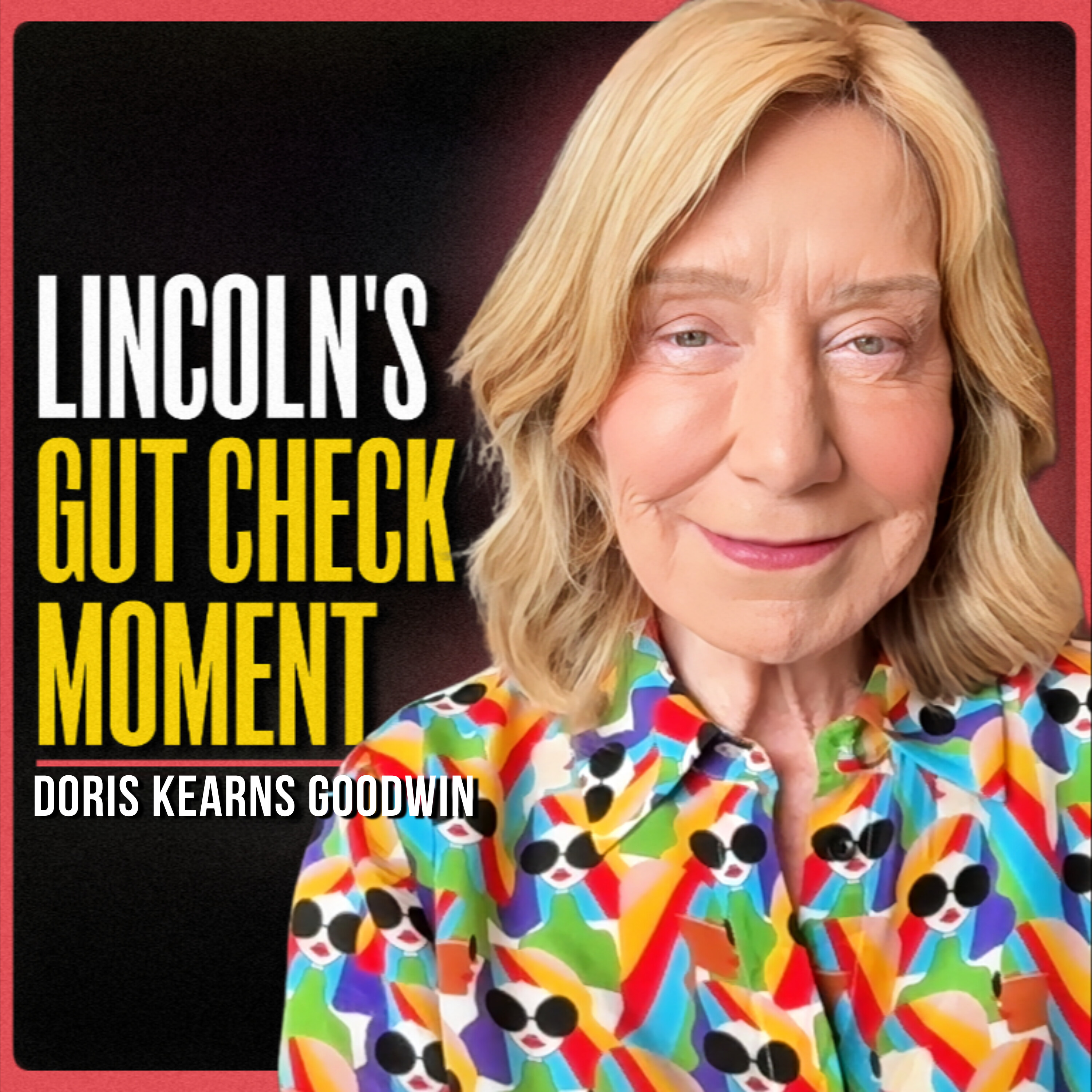
In this episode of The Daily Stoic, host Ryan Holiday speaks with Pulitzer Prize-winning historian Doris Kearns Goodwin about the life and leadership qualities of Abraham Lincoln. They discuss Lincoln's moral fiber, the nature of ambition, and the lessons leaders can draw from historical contexts. Doris also shares insights from her career, including her experiences working for Lyndon B. Johnson and the process of writing about legendary figures.
Written by AI. May contain mistakes.

Get the gist, explore an idea or ask about something said.
 Claude
On The Daily Stoic, what are the key points of this episode?
Searching your listeningAutomatic transcript. May contain errors.
0:28Why choose a Sleep Number smart bed? today. This message comes from Capital One. The Capital One VentureX Business Card has no preset spending limit, so the card's purchasing power can adapt to meet business needs. Plus, the card earns unlimited double miles on every purchase, so the more a business spends, the more miles earned. And when traveling, the VentureX Business Card grants access to over 1 ,000 airport lounges. The VentureX Business Card, what's in your wallet? Terms and conditions apply. Find out more at CapitalOne.com slash VentureXBusiness. The wait is over. Dive into Audible's most anticipated collection, The Best of 2025, featuring top audiobooks, podcasts, and originals across all genres.
1:13Our editors have carefully curated this year's must-listens, from brilliant hidden gems to the buzziest new releases. Every title in this collection has earned its spot. This is your go-to for the absolute best in 2025 audio entertainment. Whether you love thrillers, romance, or nonfiction, your next favorite listen awaits. Discover why there's more to imagine when you listen at audible.com slash best of the year.
1:46Welcome to the Daily Stoic Podcast, where each weekday we bring you a meditation inspired by the ancient Stoics, a short passage of ancient wisdom designed to help you find strength and insight here in everyday life. And on Wednesdays, we talk to some of our fellow students of ancient philosophy, well-known and obscure, fascinating and powerful. With them, we discuss the strategies and habits that have helped them become who they are and also to find peace and wisdom in their lives.
2:32Hey, it's Ryan. Welcome to another episode of the Daily Stoic Podcast. When I went to Australia last summer, I was bringing two kids, my wife, we're going to be on for a month. So I had to think very carefully about what books I was going to bring. I knew obviously there'd be English bookstores there. This is one of the downsides of reading physical books is that I have to spend a lot of time thinking about what books I'm going to bring, how much space I have in my suitcase, how many books am I going to get while I am there, and how I'm going to like lugging them around. And so I was working on the Wisdom book at this time, which, by the way, is out October 21st, and you can pre-order it.
3:17A bunch of awesome bonuses, including something related to what I'm about to say. So I was working on part three of the book. The main character in part three of Wisdom is Lincoln. So I was thinking, okay, what book do I want to read on a very long plane flight, the first few days of the trip, that I can then use as part of this thing? So I'm not carrying books that I'm reading for work. So I said, you know what? I think I'm going to read Team of Rivals on the plane. Now, I bought Team of Rivals in 2006 or 2007, right when I dropped out of college, to work my first job in Hollywood. And my boss told me, you have to read Team of Rivals.
3:56It's amazing. And I read some of it and I stopped for some reason. And then I read a lot of other great books about Lincoln and other presidential biographies. And I read other books from Doris Kearns Goodwin. I loved Leadership, which is her sort of greatest hits on Lincoln and LBJ and Theodore Roosevelt. But for some reason, I never actually made it all the way through this very, very big book on Lincoln. I'd seen the movie Lincoln, which it's based on, but I never actually got around to Team of Rivals. So I started reading it on the plane. And then when I got to the place we were staying in Sydney, we stayed in the rocks for the first half of the trip and then over to Bondi.
4:37I then broke the book down, my note cards, right? I'm not just reading the book and folding the pages, but then the process by which I begin to break down a book and take out all the pieces that I'm going to use. And by the way, if you want one of those note cards, you can preorder the set of the Virtue Series Courage, Discipline, Justice, and Wisdom. And maybe you can even get one from my copy of Doris Kearns Goodwin. I will link to that in today's show notes. We have a few copies of all four, the limited edition set, signed and numbered. Anyways, of course, it's an incredible book. It's one of the great presidential biographies of all time, deserving of the millions of copies it has sold.
5:21And of course it is, because Doris Kearns Goodwin is one of our greatest living biographers. And when you read Wisdom Takes Work, you'll see I borrow a story that I'd heard about from a couple of different sources, but she actually uses it as an epigraph to Team of Rivals. And actually, I just finished reading this section on Lincoln for the audiobook of Wisdom Takes Work, which will come out when it comes out on the 21st, going back through all the things that I learned about wisdom from Doris's books, from all the different biographies of Lincoln I read over the years. Just maybe the greatest man.
5:57That's what the Tolstoy quote that she has is the epigraph to Team of Rivals. One of the only men that nations have a right to be proud of. Just an incredible human being. And you see that in Team of Rivals. How does he manage to not just cultivate people who disagree with him, but learn from the people who disagree with him? This is what it looks like to see a leader in command of himself, a leader who is not afraid to be challenged, to hear differing opinions, to work with imperfect people. It's a lovely, incredible book. I'm grateful to her for the influence she's had on my work over the years.
6:35All of which is to say, I love Doris Kearns Goodwin's work enough that I flew it basically all the way around the world. if you've seen some of the stuff I've recorded while sitting at this desk before we had the studio, you'd often see I have a copy of her book Leadership right behind me because it's one of my all-time favorite books. So I was so excited to have her on the podcast. Thanks to the folks at Masterclass who connected us. By the way, she has a great Masterclass, as do I, I think. I did one on Stoicism last summer as well. I was just so excited to get to have this conversation. And we went much deeper into Stoicism than I would have thought.
7:17Of course, I asked her about the subject of one of her famous books, The President that she knew personally, Lyndon Johnson. And then because I am working on a biography, I asked her a bunch of questions about the art of writing biographies. You're going to love this interview. She was awesome. If you've never heard this name before, I don't know what you're doing with your life, but she is a Pulitzer Prize-winning presidential historian. Her latest book was a number one New York Times bestseller, An Unfinished Love Story, A Personal History of the 1960s. It's being adapted into a film. Her other books include Team of Rivals, The Bully Pulpit, No Ordinary Time, and as I said, Leadership.
7:59She served as a White House fellow to LBJ. She produced an acclaimed series of documentaries for the History Channel. And then she has a new book out called The Leadership Journey, How Four Kids Became Presidents, which is all about the presidential experiences of Lincoln, both Roosevelt and Lyndon Johnson. I took it home and read it to my kids. That was awesome. You can grab Team of Rivals and Leadership at The Painted Porch. You can follow her on Instagram at Doris K. Goodwin or DorisKernsGoodwin.com. I believe I will be interviewing her on stage sometime in February. That might be why I'm in San Diego.
8:39I know I'm doing a talk live on stage in San Diego that's open to the public. I don't think the Doris Curns Goodwin one is, unfortunately. But I'm going to be doing a talk in San Diego in February. And then I'm doing one in Austin on September 17th that you can come to also. That's why I was in Australia. I was doing a speaking tour. I'm now doing two U.S. states. I'm going to be talking more about the ideas in the Wisdom book. You can grab those tickets at dailystoiclive.com. I think you will really like this interview. Thanks.
9:12When I read about you, Lincoln is the Stoic. I've already ordered Aurelius again. I haven't read him since college. I can't wait to read Meditations. Oh, wow. Well, I'm writing a lot about Lincoln now. So I've been doing this series on the cardinal virtues. Oh, he's got them. Yeah, he does. And Lincoln's my main subject for the final virtue of wisdom. I think he is the wisest. Me too. Adversity and resilience and self-reflection. I mean, he's amazing. I'm so glad. I can't believe that I haven't read Meditations in so long. Oh, man. I'm very excited. Actually, let me just get into it right now then, because for that chapter, I fell in love with a thing that you have as an epigraph to Team of Rivals, which you can see here.
9:59I have done my reading on. These are all pages I have marked. But I love the scene. You have it as the third epigraph in Team of Rivals, where Tolstoy, maybe you could tell the story. Tolstoy is about as far east as you can get and still be in the west, about as remote as you could get in the 20th century. And what do these distant tribes people ask him? Yeah, these distant tribe people somewhere in the Caucasus, seemingly very far away from any kind of civilization, are so excited that he's in their midst that they ask him to tell stories of the great men of history. So he says, I loved finding this.
10:42He told a reporter this story. So he told him about Julius Caesar and Alexander the Great and Frederick the Great and Napoleon. and they seemed to love it, he said, but then they stopped him, the chief, and he said, but wait, you haven't told us about the greatest ruler of them all. We want to hear about that man who spoke with the voice of thunder, who laughed like the sunrise, who came from that place called America that is so far from here that if a young man should travel there, he'd be an old man when he arrived. Tell us of that man. Tell us of Abraham Lincoln. And Tolstoy was stunned to know that Lincoln's name had reached this remote corner, but then he told them everything he knew about Lincoln, And then the reporter said, OK, so what made Lincoln so great after all?
11:24And Tolstoy said, well, he wasn't as great a general as Napoleon, not as great a statesman, perhaps, as Frederick the Great. But his greatness consisted altogether in his character and the moral fiber of his being. Is that great? I mean, that's what we need in everybody, in our kids, in what our teachers teach our students, what our leaders should be made of. That story, I was so happy to find it so I didn't have to end with Lincoln dying. I never want them to die. They're my guys. As you know, I saw that you were calling Aurelius your guy. And I was thinking, oh, my God, I'll do the same thing with Teddy and Franklin and Lincoln.
11:57And I don't mean to be undifferential, just that I've lived with him for so long. Like you've lived with meditations. Yeah, you fall in love with these characters and they come to life to you. And I think that's what Tolstoy was capturing about Lincoln, which I love so much, because it is an interesting distinction. Like all those other great conquerors, they did obviously do impressive things. but for what reason and why? And there is something, you know, modern, but then also classical about Lincoln in the sense that he didn't really do any of it for himself. Like there was no, although he had the peculiar ambition, it was distinct from a Napoleon or any of the others.
12:39I really think that's right. In fact, you know, when it was, as you mentioned, the peculiar ambition was when he was 23 years old and running for office the first time. And he talks about every man has his peculiar ambition, but his was to be esteemed of by his fellow man. And that meant somehow by doing something worthy that would be remembered over time. So that I think that that distinguishes. I mean, everybody has ambition. It's a drive for success is important for any leader or anybody to be successful. The question is, when does it become something more than the ambition for your own rise?
13:12And it becomes the ambition for the greater good. And maybe even in school, it could be the ambition for the team rather than your own glory. Maybe the ambition for your state, for your country, for and then for Lincoln, something even larger than that. And I think what it ends up being, too, is that it wasn't just what he did, but who he was in the end. That's so, so impressive. Yeah. He says somewhere that a man of ambition can can realize that ambition by making slaves of men or by freeing slaves. And and again, that distinction to decide to use your powers and your drive for good is sort of this crossroads moment that not all of those sort of, you know, there is something distinct about these people that become these epic historical figures, usually some profound trauma, but there's something about the decision to say, hey, I'm going to have a hero origin story rather than a villain origin story.
14:08And I think he really thought along those lines. I mean, I think the great moment when it becomes so clear as in the summer of 1864, when despite the victory at Gettysburg the year before and the war seemingly going all right, everybody on both the North and the South was just exhausted with hundreds of thousands dead. And the Republican bigwigs come to him and say, nobody is going to support you for the presidency in November unless you at least start peace talks. And the only way you can start peace talks is to agree that you'll put off emancipation until later and you'll just restore the union.
14:41And he just turns them away. And he said, you know, I'd be damned in time and eternity if I returned the black warriors to slavery. And that meant he was really thinking he might lose the race. And then Atlanta falls and the whole mood of the North changes from that, you know, frustration and sadness and just desire to end the war. The mad cry for peace ends and he's able to win the war, but he wins it with emancipation and union, And both goals intact because that moment, that was the key moment when the ambition for his own victory and he wanted to win that second term. He said it's a, you know, it's a reaffirmation of what his first term had been all about.
15:17He wanted to finish the war, but he wouldn't do it on the terms that would be morally wrong. Yeah, the idea of there being a principle beneath the ambition that doesn't get corroded or diminished as the ambition begins to be realized. Because I think we see both ancient and in modern figures, they often did start with a reason. And then that reason falls away and is sort of just replaced with either momentum or self-preservation or some other force. And for Lincoln, you know, that it all kind of harkens back to this singular experience where he watches those slaves being walked onto a riverboat.
16:02just the black and whiteness of that being wrong and that staying with him always. That's what I found. What good is the wisdom if it isn't directed at some fundamentally moral purpose? Absolutely. I mean, you're right. That vision of seeing that just made him know, as he said later, if slavery isn't wrong, nothing is wrong. It had to be wrong. And then he just had to figure out what he could do about it. That's the complication. Even with the powers of the presidency, he couldn't free the slaves until he came up with the idea that he could use his powers as commander in chief because the slaves were giving an undue advantage to the South so that as a commander in chief, he could free them and bring them to our lines rather than the Southern lines and then allow that.
16:48But even then he knew that when the war was coming to an end, that he had to then get the constitutional amendment to end slavery because then he would no longer have the commander in chief powers to do it. So that's why it took him a while to realize that desire to free them. But it was always there from that moment, you rightly point out. Yeah, that's what I love about Lincoln is, okay, there are obviously many, many principled people out there. Very rarely do they find themselves in the presidency, right? Or in really any position of leadership or power. And Lincoln's wisdom wasn't just about sort of getting to the nub of it, as I think he once described, as someone once described his powers.
17:27He could wrap his head around the issue of sort of what was right and wrong. But then he had this very pragmatic sense of how to get things done. I always come back to this quote from JFK, I think, who said, you know, parents want their kids to be president, but not politicians. Like Lincoln had the unique fusing of that sort of moral sense with a real ability to operate in the political sphere. and those traits tend to be mutually exclusive, it seems. I think you're right. I mean, he combined several different qualities. I mean, I think that was one of them. I mean, he was a very practical politician and he knew the importance of educating public sentiment because as he said, in a democracy, there's nothing more important than public sentiment.
18:16It's more important than what Congress does or the Supreme Court does. And he didn't mean just public opinion. He meant you have to really educate the country to an understanding that slavery had to be ended. And once he had done that, once he realized that that spread, he knew that somehow it was going to end, that there was a force then. That was a force that would take it along. So that was a very practical sense of when he said that if he had issued the Emancipation Proclamation six months earlier, his practical politician side said he would have lost the border states and then he would have lost the war.
18:49If he'd waited any longer, he would have lost the morale boost that it provided to give the Emancipation Proclamation and bring the black soldiers into play. So his sense of timing came from that practical politician, but the principle was always there. You're absolutely right. And I love the idea of the president calling for books about war from the Library of Congress, you know, like that he also had this sort of ability to educate himself quickly, but then also he manages to grasp the sort of central strategic issues of the Civil War better than the people actually educated in the science of war at that time.
19:29No, it's incredible. I mean, I think that's the great thing about his self-education. When I think about all the books that he read when he was young, and there's some of the great books he's reading. When he got a copy of Shakespeare or he got Aesop's Fables or the Bible, he couldn't eat, he couldn't sleep, he was so excited. So he educated himself in great books, and then he was able to have the humility enough. I mean, can you imagine what it was like to say at that time I'm the president, could I have some on the art of war? You have to have a lot of confidence in yourself to not know in today's world, somebody would make fun of him.
20:02Oh my God, he's just beginning to educate himself on this. He thinks he knows what the generals, of course, McClellan would think he was educated far better, but he knew better than McClellan what to do. You're not just capturing land, you have to capture the army and decimate that as time went by. Yeah. I mean, I think he has to check out one of Halleck's books. So he's reading books from his subordinates who are, you know, shortly thereafter briefing him. You're right that the confidence to say, on the one hand, I don't know enough about this, and then to do the work to learn about it, and then to not be bullied by this person who is, you know, objectively more educated than you or more schooled than you in the issue.
20:47Lincoln had this both humility and this confidence without it sort of seeping over into egoism. Absolutely. I mean, you see that at the moment when he wins the election and that night he can't sleep and he makes up his mind that he's going to put those three chief rivals into his cabinet because he has the humility to know, I don't know enough. These states are potentially seceding from the union and who knows what's going to happen here. The country is in the worst shape that it's been in. And I've only had one term in Congress. So he has the humility to know he needs people around him who know things more than he does.
21:22But the confidence to think I might be able to still take hold of them. Because his friend said to him, how can you do this? You're going to look like a figurehead. They're more powerful than you. They're more celebrated, more educated. Each one thinks he should be present instead of you. And he famously says, well, the country's in peril. These are the strongest and most able men in the country. I need them by my side.
21:49Human, your body has a performance superhighway, 60 ,000 miles of blood vessels that deliver oxygen and nutrients to every cell. This, of course, is your cardiovascular system. It's the foundational system that powers everything we do. Both elite athletes and longevity experts invest directly in the cardiovascular system because supporting healthy blood flow is critical for energy, recovery, mental clarity, and overall performance. That's where human comes in. That's human with two ends. They started out of research at the University of Texas near where I live and have 15 years of experience making award-winning supplements for nitric oxide production and healthy blood flow.
22:32now used by over 160 pro and college sports teams. Human Cardiovascular Health Daily is a plant-based and made from clinically studied ingredients like grapeseed and seed kelp extract. It supports nitric oxide production for healthy blood flow and energy while also supporting blood pressure and helping support the delicate interlining of your blood vessels. Just two capsules each morning will power energy and recovery while also playing the long game by supporting long-term vascular health and healthy aging. Human has an exclusive offer for our listeners, you can visit human.com slash stoic for an extra 15 % off your first purchase.
23:08That's enter code S-T-O-I-C, stoic at checkout. That's human with two N's, dot com slash stoic for an extra 15 % off with code stoic at checkout. Thanks to Toyota Trucks for sponsoring this episode. When I bought my ranch in 2015 out here in Bastro County, I drove my car about halfway down the dirt road that we live on, thought this isn't going to work, stopped, parked it, walked the rest of the way home, borrowed my wife's car, drove into Austin and bought a truck. What I bought was a Toyota Tacoma. And this truck wasn't just transportation getting me to and from my house. It unlocked a whole different style of living for us, not just on the ranch, but in our little Texas towns.
23:51There were places I could go now that I couldn't go before, especially out here in the piney forests, through the fields. and on the unpaved roads like the one that I lived in. We got to go deep into the hill country's wild beauty. We've driven all the way out to East Texas. We've driven across the country. And by we, I mean not just my wife, but both my kids who I drove home from the hospital in that truck. Toyota trucks are built for those who understand that the best adventures happen when you're willing to veer off course because you never know when you'll end up on a Toyota adventure detour.
24:29And of course, this is stoicism too, because every detour, every obstacle is an opportunity. But it's helpful if you can handle the difficulty inherent in that. If you've got the resilience and the right companion to make it wherever the road takes you. Discover your uncharted territory. Learn more at toyota.com slash trucks slash adventure dash detours.
24:55I think you quote Hay in there saying that they all thought that they were the greatest man in the cabinet, except for Lincoln, which which is what makes him the greatest man. There's something sort of transcendent about that humility that that paradoxically elevates him over the other men. And they recognize that. I mean, I love the idea that Seward thought at first he would be like the premier and and and, you know, he would just be a figurehead that Lincoln would be. But he realized after months, not too long after Lincoln is the best of us, he wrote to his wife. He could see they saw something in him.
25:31And he obviously treated them with respect. He shared credit when things went well. He shouldered blame when things did not. And he and he took time with each one of them, giving them their separate time. And so that when the moment came that they even if they didn't agree with him on the Emancipation Proclamation, they kept their disagreement quiet because he had told them what he was doing. had taken responsibility for it. They respected that. And they then presented a united front to the country, which was essential. If they had disagreed at that point, given that the country was going to have a hard time with it, too, in the North, there were factions, then the whole thing might have fallen apart.
26:06Well, I want to ask you about your process a little bit, somewhat selfishly, because I'm starting my first biography. I've done a number of books, but I've never done a biography before. How does something like this come to get like, Just the sheer size of it overwhelms me. As you set out on a project, when you're going to do the life of someone, where do you begin? Or do you have a conception of where it's going to go? Or do you just kind of get lost in the details? How do you approach an epic life for an epic book? Well, you know, each one of the books that I've written have been a subject on which lots of other people have written as well, which is the scariest thing.
26:46But it's also the reason why you're attracted to these people is because they are the most interesting and they lived in the most challenging times. So after I had done the first book on Lyndon Johnson and then the Kennedys and then FDR, after doing FDR in World War II, you think, well, what could be more interesting than that? And I hadn't really studied the 19th century, but I realized I really wanted to live with Lincoln because it takes me so long. It took me twice as long as World War II to write about FDR and Eleanor. So I knew it was going to be a commitment of years and years. And I wanted to know Lincoln.
27:18But then I thought, well, how can I do anything different about what other people have done on him? So at first I made the mistake of thinking that I could write about Mary and Abe, maybe because I had just had this chance of writing about Franklin and Eleanor. And I spent some time really looking at their relationship. But I realized after that period of time that she could never carry the public side of the story the same way Eleanor could, so that I'd be writing about a marriage. And I really wanted to write about what was happening in the country and I couldn't use it the way I could with Eleanor.
27:48So just luckily, I went up to Auburn, New York for some other reason to give a lecture and Seward's house was there. And so I went to his house and I just became entranced. The house is almost like it was when he was there. You see his chair, you see his snuff box, you see mannequins that are dressed up the way his wife were and his daughter was. And so I started reading about Seward and then I found out there were a thousand letters or so that he'd written because he was in Washington, and his wife was in Auburn. And then I somehow went to Ohio and I saw Chase, where Chase had been, and I saw the Ohio State House.
28:21And then I knew that Bates had carried a diary. And that's where the idea of these three guys, rather than Mary and Abe, became the center of. But that was like two years into it. Wow. So it took a long time. And then it was like a quadruple biography. Then I was thinking, oh my God, what am I going to do? And it was much harder to write than any of the other ones were because I had to figure out how to make structure it so that the people would keep them straight at the beginning. When I look at it now, I almost wish like a playbill I had announced who all the people were. And so people could keep clear when they're beginning to read about it.
28:55Then once I got going and figured out, as I've done with most of the others, I wasn't going to start when they were being born. I started with that race for the 1860 thing and then went backwards to where they came from and how they were set up against each other. And it just, it was a wonderful chance to really immerse myself in the people. And then I got into the larger sense of what the factions were in the North through them. So you sort of look for a unique way into the story that even though many of the details have been told, that specific lens hasn't been tackled. That's right. I mean, with Franklin Roosevelt too, so much had been written about him.
29:32And I also knew I wanted to write about a woman. So I remember I called up Schlesinger, who had studied Arthur Schlesinger, the great historian who I loved as a friend as well. And I said, if I do the home front and not the war front, can I really truly say that Eleanor was a partner? I don't want to be stretching it. And he said, absolutely. She is Mrs. Homefront. so then I had Eleanor and Franklin and the home front rather than the war front so that that gave me my own angle and similarly when I decided I wanted to do Teddy Roosevelt the turn of the 20th century I taught a seminar on the progressive era when I was teaching at Harvard again so many books on him then I got interested in well who did he write letters to and I found out he'd written 400 letters to Taft because I love letters to my famous you probably do too when you're going to the person writing to the person and you're looking over their shoulders.
30:25And then I decided I could do Teddy and Taft. And then I realized that the journalists were so important and the golden age of journalism. So I make it harder for myself by that. That's why these books become so fat, because I'm really doing a lot of people at the same time. So finally, when I did leadership, I had my four guys there and I had to just choose the main object to which they were remembered, whether it was the coal strike for Teddy or emancipation for Lincoln or the first hundred days for FDR and civil rights for LBJ. But then I could write a shorter book. I think partly what happened is somebody was telling me they were reading, a woman wrote me a letter, the bully pulpit on Teddy, and she said she was loving it, but she was reading it at night when she went to bed and she fell asleep and it broke her nose.
31:09So after that, I thought, oh my God, I'm now a hazard to people reading this book as they get so fat. So they've been getting shorter as I've gotten older. Well, is it a painstaking process to do a book like that? I imagine, you know, yeah, if you're writing basically a thousand page book, it must take a while to feel like you've even made a serious dent in the project. Like you, you've got to be like the length of one of my books before you're even a quarter of the way through. So how do you prevent yourself from getting like demoralized or despair when you're going to work on a project that must take years and years and years to even compile a few pages.
31:48Yeah. The only way it worked is that because I'm writing it chronologically, essentially, despite wherever I start and go back. So you feel like you're making progress. And I think chronologically anyway. And I tend to write chapters that when they're done, they're sort of done. You know, I mean, some people write a whole book and it's really a first draft and then they go back and work on it a lot. When I finish a chapter, it's sort of done. And then I turn it into the editors. And so I get the reaction. So I get the sense of confidence that comes from if they think it's going well. And then they accumulate.
32:24And then there's one, two, 10, and then a couple of years have gone by. But at least I feel like they've progressed. I've gone from 1860 to 1862. And wow, I'm now in 1864, 1865. So I look back at sometimes it does seem hard to imagine that you could spend that much time on it. The last book I wrote on the Unfinished Love Story about the 1960s, well, I had all my husband's boxes to go through so that it wasn't an unlimited amount of research, even though it was 300 boxes. But that one turned out to be, you know, less voluminous than these other books were. And maybe that was a good feeling to know that it could be carried as you walked around.
33:04So you kind of create things that give you the markers of progress. Like when I swim, if I'm swimming a mile, I'm like, okay, 10 laps. So I'm swimming 70 laps. So that's, you know, seven sets of 10. And then I go, oh, I'm halfway through the first set of 10. I'm creating this sense that I'm making progress, but I'm really just fooling myself because I've just cut it up into smaller pieces. You're sort of doing that with months and years and eras in the person's life. Absolutely. And I mean, I do believe, I remember Barbara Tuchman was a great heroine when I read her book, Guns of August, when I was in college.
33:38And she said that even when you're a narrative historian, you have to pretend to yourself you do not know how a war ended. So you can carry a reader with you every step along the way, not telling them anything ahead of time. Sometimes academics, you know, make points and they tell people, oh, this is that or that was this. And you lose the momentum of a story which has a beginning, a middle and an end. So as long as I was moving from the beginning to the middle and the near end and then the end, it was OK. I remember when I was in graduate school, there was a man in Texas who everybody knew. He was writing about Sam Rayburn, the speaker of the house, and he had done so much research and he never finished the book before he died.
34:17And that was just a panic, you know, I think on all of us graduate students that. So that's why at least I could feel I was building building as it went along. And I loved learning about all these people. Well, you know what it's like. The research is so much fun when you're writing one of the things. Like you, I mean, I've read about you getting up in the morning. I'm a morning person. So I love the idea. I wake up at 5.30 every morning, try not to stay up too late at night. Sometimes it's a little harder to wake up at 5.30, but no matter what, I wake up at 5.30. And between 5.30 and noon, I don't do anything else.
34:51I try not to look at emails unless something important is coming in that I know has got to come through. And I feel like by seven o 'clock in the morning, I'm already into it. And a lot of people aren't even up. And it's my favorite time of day to do that. And then I can do the rest of the other things that I'm doing besides working on the books in the afternoon, the television stuff that I'm doing or the movies that I'm working on. But I know I've gotten that writing done in the morning. And it's a great feeling then to bring the rest of the day. Well, it's like you've won the day before some people have even gotten up.
35:21In one of my books, in my book on discipline, I tell the story of Toni Morrison when she was a single mom still working as an editor at Penguin, or I think Random House. And she would say that she would try to get all her writing done before she heard the word mom for the first time. Yeah, exactly. Exactly. Because then you need it somewhere else. Yes. Those couple magical hours where you can get lost in it before the world has intruded, whether it's a doctor's appointment or a meeting or a phone call. If you can just have a kind of of a magical morning where you make some small bit of progress and you get to go visit these characters that you're studying.
36:02You get to return to that world. That's the life, right? That's just the dream. Oh, absolutely. Even now, I'm just starting a new book on Teddy Roosevelt and the business titans, the robber baron surrounding him. And I realized I missed it. Once I finished the other book on The Unfinished Love Story and I traveled the country for it these last year. Then I thought, well, really, I'm like, I'm really at 82 years old, going to do another book with this kind of commitment. But I knew that that creative sense in the mornings is what I was missing. I would wake up in the mornings with all these other things I was doing and which one will I do now?
36:38But I didn't have that sense of a central project. So now I've gotten three new bookcases in my bedroom, actually. I've had to spread them out because I moved from my big house in Concord to a condo in Boston. So I have to put bookcases everywhere. And it's so exciting to fill them up again with new books and new things to learn about, you know, Morgan, JP Morgan and Rockefeller and Vanderbilt and Carnegie and armor. And it's really been fun. It's really been fun. It's the most exciting thing of all. Well, that's how you know you're doing the right thing. If you love that part of the process, like if I feel like if you're into it because you like publishing, you've done the wrong thing.
37:18If you're into it because you love the research and then you love the writing. And then the byproduct of that is this, you're doing it right, as opposed to maybe some people who are getting into it for the recognition or the attention or whatever. I couldn't agree with you more. I mean, and that is, I was interesting. I met a woman not long ago who was in an assisted living place and she had been a president of two universities and had an extraordinary career. And I asked her, what was the happiest time of your career. And she said when she was writing in the early days, you know, before all this other stuff, because that was the core of it.
37:53She'd originally been a professor and her writing was part of what who she was. So so I understand all that. Isn't that sad? Sometimes people have this thing, they get the dream, the thing they love doing, and they they promote themselves out of it. You know, like success deprives them of the thing that actually animated them and was most fulfilling. My father was a police detective when I was a kid and he got promoted. He took the sergeant's test. He became a sergeant, which, you know, is a more management thing. And I remember he really didn't like it. And he was telling me, he was like, what have I done?
38:32He's like, they make TV shows about police detectives. Like his point was like, he had the fun, like the job with the doing in it. And then to get more money or to get more status, you know, You end up promoting yourself out of the thing that most people would kill to be able to do. Yeah, I think that's right. I've just been really lucky now, I think, to have this as my morning always. And I really have enjoyed working on these documentaries for the History Channel. And again, they've been about George Washington. I got to learn about him by working on the documentary. I'd always wanted to write a biography of him, but it was too late to have another 10-year project.
39:08and then you work on a team and somehow after two years you can put together a six-hour documentary because there's a lot of other people working with you you know and then be able to do FDR and Teddy Roosevelt now just did a history of the west with Kevin Costner that's coming out at the end of May so I love all of that too but to have this at the core and then have that as well which allows me to be with people more which is great to work with people so that it's not I don't have my husband anymore to read what I'm doing every day. So there was a partnership before. So it's been really wonderful to work on these other projects.
39:42But now that I realize I'm back with Teddy Roosevelt again on something different, I feel that sense of excitement at the core. When you look at history, I'm curious, does history reassure and relax you in the present moment? Or does it actually add a kind of a sense of dread or fear? I've been thinking about this because when you study history, one thing that's always there is a sense of just how bad it can get, right? Like how badly it can be screwed up and also how narrowly maybe we avoided some of those outcomes in the past. And when you watch people in the present fooling around with things or ignoring some of those lessons, it's kind of terrifying.
40:27Maybe you disagree. Well, you're scaring me even as you say that because you're right. I mean, the people that I've written about lived in times when democracy was truly in peril. And you're right, it could have gone different ways. I somehow think about the fact that it went the right way. um well obviously when you're in the 1850s if Buchanan had been the president in 1860 it would have been a lot more difficult but we had Lincoln come along at that time but the fact of all the times that I've written about whether it was the Civil War or the Great Depression or the early days of World War II or the turn of the 20th century were very fraught times and and they turned out all right so I I my optimism is encouraged by looking back at these times.
41:11It probably sounds silly to think, oh, I'm going to live in the civil war. I'm going to make you feel better. Because when I talk to people, they expect that from me. Because I can really believe that history gives you that solace and hope. Because we somehow managed with all manner of difficulty to get through very hard times before. Harder even than this. As hard as this seems, this sometimes seems like maybe it's the hardest. It is in our lifetime, but not for the lifetime of the nation. I mean, it was much more difficult to be in a war with 600 ,000 people being killed and states having broken off from the Union or the early days of World War II when it wasn't sure that Hitler could be contained and America's standing, you know, without any much help to Britain at first, being only 18th in military power and finally is able to mobilize itself and the Allies win that war.
41:58But they didn't know that at the time. So for me, it could be the other way around. You're right. When you think of how if it had been a different person, If the country had been in a different mood, it would have turned out terribly and we would have lost. If we lost World War II, we would have lost Western civilization. I mean, that's the worst thing to imagine what would have happened if Hitler had conquered Europe more. And then we had not been able to stay that. But somehow we did. So that's why I get the positive side of that. And, you know, people will come up to me sometimes because they hear me saying that history is going to give us solace and perspective and lessons.
42:33and they'll come and say, is everything all right? Are we going to be okay? And now I'm going to have to have your thought in my head too, but I'll have to just put it next to my thought too. Yes, it was terrifying. It could have gone in a different direction, but each time it didn't. So hopefully this way will be the same. Yeah. I just, I sometimes I go, what if McClellan had won in 1864? Like what happens when you put someone sort of constitutionally or morally unsuited to the presidency at a moment of great peril. What happens? And yeah, there's something about America where we've always kind of walked through raindrops and maybe it was equally terrifying at the time, but what happens if that luck runs out?
43:17I know that kind of keeps me up at night sometimes. Well, that's fair. I'm going to have to include that in my head, but I will banish it if I'm getting too terrified. So what I loved about the leadership book was, first off, what I loved about that book is it felt like it was the culmination of your career. Very rarely do you get someone getting to do what felt like a greatest hits. Like it felt like you took all of your thinking from all these people and you put it in one place. It was just such a great sort of survey course in all your biographies. I loved it so much. I sort of took the premise of that book as being that leadership is not something you're born with.
43:56It's something that you develop, that it's a it's a skill. And each of the four leaders in the book were very different leaders, but they were they were nevertheless sort of trained slowly over time to be exactly what their moment in time needed. I think that's exactly right. I mean, there's no master key of leadership that I found, but rather there was a family resemblance of leadership traits that they all possessed to some degree greater than others sometimes. And some had some more than others. And humility being the first, that ability to acknowledge errors and learn from mistakes. Empathy, so important and so important now.
44:34You know that. And I think maybe sometimes people can be born with empathy. The Lincoln seemed to be, when you think about when he was a little kid and his friends are throwing hot coals on turtles to make them wriggle, and he says, this is wrong. Why hurt another being? You can watch him really caring about other people's feelings in a good way even then. And then resilience, they all go through adversity and they all get wisdom from it as a result of it. And then accountability and taking responsibility and communicating in a trustworthy way. And then finally, that ambition that becomes something larger than themselves.
45:09Maybe there are certain gifts you're born with, like Lincoln's gift for language or Teddy's enormous photographic memory and energy and FDR's optimism helps. And LBJ, too, had energy. But all of those things, really, mostly you make yourself a leader. I mean, Teddy had that great phrase in which he said there's two kinds of success in the world. One is if you have enormous quality that somebody, no matter how hard they try, can't emulate a talent like a Shakespeare or an Emily Dickinson. But he said most people's success, and he included himself in the second category, come from taking ordinary qualities to an extraordinary degree through hard, sustained work.
45:50And I really believe that. I'm definitely, you watch all of them. They made themselves leaders rather than the fact that they were born with certain gifts. Well, you knew one of the four people in leadership, which I think is so interesting. How did sort of meeting and in the flesh one of the great men inform your understanding of the other four? Because I do think there is something in common that those sort of Shakespearean or epic figures have in common. And, you know, you could you could take any of these figures and drop them in ancient Rome or Greece. Like they all read like there's something out of Plutarch.
46:26Right. And probably always will. The people that sort of keep going where mere mortals would have would have said, hey, this is enough. I'm good. What did your experiences with LBJ help you to understand about Roosevelt or Lincoln? Well, I'd like to think that what happened is because I had originally been judging LBJ when I was a graduate student at Harvard before I got to work for him from the outside in, you know, just so angry with him about the war, marching with people against the war. And then when I got to know him by working on the White House staff with him and more importantly, by accompanying him to his ranch to help him on his memoirs those last years of his life, it wasn't that he changed my mind about how he had conducted the war and the wrong purposes for which that war was probably fought.
47:12But I felt an empathy and an understanding of him. So I think from then on in, it would be that all the people that I was going to write about will disappoint you at some point. FDR's incarceration of the Japanese Americans, not bringing more Jewish refugees into the country before Hitler closed the door forever, or Teddy in some of the ways he dealt with black soldiers with Brownsville or running again in 1912 when he probably should have waited and he could have been the World War I leader. But essentially, I just wanted to understand them from the inside out. And that really helped, I think, by knowing Lyndon Johnson and feeling an enormous connection to him before he died and realizing that I could get to know these larger than life figures.
48:00He was certainly large. I mean, he was so interesting. I mean, I would have not been a presidential historian had I not had that experience within my PhD thesis was in the Supreme Court history, mainly because I had a great professor who taught constitutional law. So that's how you go into a certain area. But I think it was more fun to study presidents. So I'll be always grateful to him for having created that desire to have my first book on him and then make the rest of the presidents. And after 50 years go by, you're suddenly a presidential historian, you've done one after another. And the only thing I worry about, I tease, is that somehow in the afterlife, there'll be a panel of all these guys, and they're all going to tell me everything I missed or didn't quite get right about them.
48:39And the first person to scream out will be Lyndon Johnson. How come that damn book on the Roosevelt's was twice as long as the book he wrote about me? I can well imagine him saying that. Well, no, it's funny. I just took my kids to Disney World and we went to see the Hall of Presidents thing. And there was something about seeing them not as photographs, but as all standing next to each other or sitting, some standing, some sitting. And even though they were wearing relatively different clothes, they were all sort of, you just get a sense there's kind of an archetype to it. I mean, obviously they were all men up until this point.
49:12Hopefully that'll change someday. But you just get a sense that even as the centuries bleed into each other, there's something that draws a person to that. Like something that says, hey, there's a most powerful person in the world. I deserve to be that person. I should be in charge of millions of other people. I was just struck in that moment by the similarities. And I bet you could expand that stage until suddenly they're in they're in togas, you know, you could go back far and they'd all effectively feel the same. It's there's something about the archetype, I think. I think you're absolutely right.
49:49And you're right when you see them in three dimensions. I love I love that Disney cared so much about that Hall of Presidents. I actually was able to work with the people putting together some of the script for for one of the most recent stories that they tell along the way. But again, seeing Lincoln again, like I was there not long ago, too, just to see him again. You feel like he's coming alive. I love going to the president's homes for that same reason, even more sometimes than the museums. When you walk around the rooms that they walked around in, then you really feel their presence. I think parents being able to take their kids to the various homes.
50:23I was at Truman's home not long ago. Have you ever been there in Independence to see this home? I haven't, but Truman's one of my favorite presidents. He's great. Oh, my God. He's one of the self-educating ones, right? not having gone to college, but he loved books on history. Plutarch. I love Plutarch too, actually. When I was doing the last book on leadership, Plutarch mattered a lot to just see the contrast between who had come before them, whether it was Buchanan and Lincoln or Hoover and FDR, just to see what it was that made that. But anyway, when you go to the Truman Library and you go to the Truman Home, there's a study where all his history books are, and it's right on the street so that it's not a house that's set back at all.
51:06And there was a great story that the tour guide told to us that when he came there after he was president and he was sitting there one day and a person came to the door that car's broken down and asked if he could use the phone to help. So the guy goes in the kitchen and uses the phone, then comes back and stares at Truman. He said, it's so incredible. You look like that SOB, Harry Truman. And Truman just says, I am that SOB, Harry Truman. I love him. There's just a great sense of his being a natural guy who, you know, never, now he may be one who didn't expect that he'd end up, but yet he saw himself as when he was in the war, he led people.
51:42He saw that he had done a good job doing that. And then surprisingly, even though at the very beginning, he was saying, how can I ever fill his shoes? Pray for me, everybody. He surely did fill the shoes. I mean, he was, I think he was one of the great presidents.
52:01We just took our kids to an outdoor performance at the Nutcracker. They had a snow cone and then they went insane in the car ride home. And one of the things I try to remind myself when that's happening is that I don't control my kids' behavior, especially when they're too far gone like that, but I do control how I respond, right? That's stoicism, but it's also what Dr. Becky talks about. Dr. Becky is a clinical psychologist and a best-selling author, and she founded Good Inside, which is there to give parents practical, actionable tools for handling those everyday challenges with confidence. My wife introduced me to Dr.
52:38Becky's books. I love them. I've recommended them a million times. I've had her on the podcast. And as it happens, Dr. Becky is hosting two live Q &A events for Good Inside members. I am one of them. She signed me up for about a year and a half ago. I've loved it ever since. On December 1st, you can join Dr. Becky for her How Not to Raise Assholes event, which is about avoiding entitlement and raising kind, empathetic kids. And on December 15th, she's hosting her How Not to Lose It over the holidays event, which I'm sure we could all use. As I said, I'm a big fan of Dr. Becky. She's been a great influence for me as a parent and just as a human being.
53:19And Daily Stoic listeners can join for 15 off with code STOIC15. You just got to head over to goodinside.com to catch the events.
53:52Life Insurance Company, Omaha, Nebraska, and in New York. Pacific Life and Annuity, Phoenix, Arizona.
54:02Well, one of my favorite presidential biographies, I'm using that term loosely, is Merle Miller's Plain Speaking. I love it. And one of the things that I love about that is there's a scene in it where he starts talking about Marcus Aurelius, Truman does. And he goes and he gets his copy of Meditations. And he shows Merle Miller the underlinings that he's done in Meditations. And it made me think of that quote about Roosevelt, about Theodore Roosevelt, where that this was a kid who grew up reading about great men and decided to just be like them. In Truman, you have this unprecedented thing of the kid who loved history and loved virtue and all these classical ideas sort of accidentally becoming the president.
54:48and then giving us a giving us a masterclass, if you will, on on putting those ideas into practice. And I mean, I would absolutely kill to get my hands on on Truman's copy of Meditations. I don't know if it'll ever go up for auction or it's not in any collection that I've managed to hear about. But, you know, to have the private thoughts of of one head of state influencing another head of state 2 ,000 years later. There's just something magical about that. Oh, it's fabulous. Yeah, I mean, Truman tells the story just in terms of how history mattered to him that when he was about to fire MacArthur, he went back and looked at Lincoln and how Lincoln was able to finally fire Fremont.
55:31And then when he was thinking about the Marshall Plan, he went back and read about World War I and how wrong it was that we crushed these states in Europe. And similarly then when Teddy Roosevelt is going through the coal strike, he spends the summer worrying about the coal strike, reading the nine volumes of Nicholas and Hay on Lincoln. And it gives him solace to know that somehow there were people on either extremes that thought he wasn't doing the right thing because he was in the middle. So then Teddy could feel maybe I'm right that way. How great it is that these people are reading history to give them a sense of, I mean, you want that.
56:07You can learn from these people. You know, Obama had a series of dinners that I was involved with when he was president, where he'd bring historians in and we would come, you know, with them in our heads, not dressed up as them. But, you know, it could have been Truman or Jackson or or whoever, Lincoln and Washington. And we'd give him advice on whatever he was going through at that time from our guy. Then he even had the China set with different presidents, each one of them. It was really fun. And Biden had a couple of them as well, too. But why would presidents not want to learn about what other presidents have done and give them like we learned from our parents and grandchildren, grandparents?
56:42We can learn from these presidents if you're a president. Well, I can see why they wouldn't like to do that if they had a bunch of stupid things that they wanted to do and that they didn't want to receive the feedback, the obvious feedback of how we have painfully learned lessons about that exact impulse in the past. Oh, that's right. You have to be you have to be a different kind of person. That's exactly right. Well, what you just said makes me think of the sort of founding myth of Stoicism story myth, you know, in the ancient historians, that line wasn't so clear. But but Zeno, the founder of Stoicism, he visits the the Oracle as a young man.
57:20And the priestess tells him that the secret to a good life, the secret to wisdom is to to have conversations with the dead. and he doesn't know what this means. And it's not until he washes up in Athens penniless and he walks by this bookseller in the Athenian Agora and the bookseller is reading one of the stories from Socrates, the story of the choice of Hercules. Now, Socrates is only recently dead at this point, you know, like within a generation. But what Zeno realizes in this moment is that's what the prophecy was saying, that history and literature is a way to have conversations with the dead.
58:00And that hearing the wisdom of Socrates being read aloud, he's talking to a spirit, a ghost. He's communing with history. And to me, that's why we study the past, is it is a way to bring the wisdom of these long dead figures into the present moment. It's a superpower, but not everyone takes advantage of it. Oh, I couldn't agree with you more. I mean, And I think, you know, I was thinking about you having been so interested in knowing that you want part of the philosophy is to assume that this could be the last day of your life. And then how would you do it differently knowing that? And that's communing with the idea that you're going to die, but not being afraid of it, but using it as a positive thing.
58:43When Teddy Roosevelt lost his wife and his mother on the same day in the same house, his wife dying of childbirth, his mother of typhoid fever, she contracted while she went to take care of the young girl. And the Depression sent him off to the North Dakota area. And when he came back from that two-year experience of being out there, he was not only a cowboy as well as an Eastern dude, and therefore able to knit together those two parts of the country. But he decided that fate showed him that it can go away from you at any moment. He thought that was the end of his life, that there'd never be happiness again.
59:16And so he decides, I'm going to take any job that looks to me like the job I want it to be, whether it takes me up the ladder or not. instead of his resume climbing, which he'd been doing before. So he becomes civil service commissioner because he believed in the civil service. And he makes it real, the merit system. It had not been working until that point. We had the spoil system from Jackson. Then he becomes police commissioner. And his friends say, why are you doing this? It seems below you. But he learns about tenements and slums and police and all that from that. And then he leaves the Navy Department where he has power to become a soldier.
59:48But he becomes a rough rider. And that gets him the heroism that allows him to win the presidency eventually. So that, you know, if you choose to just throw everything on the field as if it's your last job, it means you're going to do the right thing and not be too cautious because of your next upward move. Yeah, it gives him a sense of urgency that never quite leaves him. Right. Never. Well, that's a perfect segue to what I want to talk about next, which is how you teach history to kids. I took my eight year old and my five year old to the Manger Hotel in San Antonio a couple of weeks back because they well, I told them that they serve this special ice cream there.
1:00:26They serve like this mango soft serve ice cream, which they did not actually end up enjoying. But the idea that you're just sort of in this hotel bar that Theodore Roosevelt was recruiting the Rough Riders in and that it's just a normal bar and a normal hotel, like the sort of accessibility and the the ordinariness of of history, I just I love. And I think the earlier you can kind of pick up that that bug, one, the smarter you'll be. But two, like the more interesting your life will be. Oh, I mean, one of the reasons why I think I wanted to write a book for young children today is just that there's a sense of history being diminished in schools at all level.
1:01:07And it takes my heart to think about that. Because for me, I had a teacher in high school, Miss Austin, who really made us feel like she knew the people she was telling us about from the past. She loved biography as history. And when she talked to us about Lincoln dying, she actually cried. And I thought, oh, my God, she must have known him. She really must have known him. And, you know, it was very special to have her. She won an award as one of the best teachers in New York State. But I was in a college talking some years ago about FDR and Lincoln, and a college student stood up and said, how can I ever become them?
1:01:41They're icons. They're on Mount Rushmore. They, you know, they're in movies. They're on the currency. And I realized that if I could start writing about them in that book for middle school kids, that when they first ran for office, when they're in their 20s, and they're going to make mistakes and some of it from arrogance, some from the not knowing things, they're going to screw up. They're going to be available. They look like you might feel, you know, when they're younger, then maybe they could imagine that they can learn and grow. Like FDR couldn't speak very well when he started out. He was speaking so slowly that Eleanor figured, oh my God, he's never going to continue.
1:02:15He has these huge pauses between his sentences. Then she teased that once he got more comfortable, they could never get him off the stage, even though they were afraid he'd never keep going on at the beginning. And that's what I wanted to reach out and tell stories to the young kids so that they could imagine themselves in the boys' shoes and then becoming men and learning how to become leaders. Again, not a woman yet at that point, but there will be hopefully before I die. No, my AP US history teachers, Ms. Kars and Mr. Del Ordo, the idea of like there's this process, I think, where you start to study history, where at first they sort of demolish all the myths, you know, hey, these people weren't the people you thought they were.
1:02:58The Civil War was more complicated than you think it was, you know, sort of going that that first process is deeply uncomfortable and painful, especially if you've been given sort of a propaganda version of history, as most kids are. But then that process where it begins to reassemble, right? Like you learn as a kid that the civil war was very simple. It was about slavery. And then you study it more and you realize, oh no, it was much more complicated. It was about these other things. And it certainly wasn't as simple as simply trying to free the slaves, right? And then, then you really begin to study it and you get to the core of Lincoln and what makes him tick and it becomes simple again, but it becomes simple for different reasons and it becomes inspirational for different reasons.
1:03:43And that process of doing the work to really deeply understand and to kind of understand the whole world that they were living in is just, I don't know, it's time travel. It's magic. So have you started working on your biography? Are you already beginning? Do we know what it is? So I'm doing a biography on Stockdale. Oh, wow. Not so much as a political figure, but as at Stanford. Very interesting. Yeah, the Navy sends him to Stanford. He basically gets a PhD in philosophy. And I mean, I didn't quite understand just how old he was in Vietnam. I mean, he was in his mid 40s when he shot down. And but he is he is introduced to Epictetus, the stoic philosopher before he shot down.
1:04:25So I'm going to try to connect stoicism and biography. Fabulous. Yeah. Well, I wish you the best on it. That's great. But you know, Lincoln, you should be writing about him as well. Well, I'll send you my Lincoln chapter that I just did for this book because it was very much influenced by yours. You've got two at almost the same time, right? That's what you're saying. One is out this fall and then I'm about to start working on this next one. What is it like for you? You said you're starting a book. Are you excited when you start a book or is there also some part of you that you know what kind of journey this is going to be?
1:04:59So you're kind of like tired in advance. No, you know, it's both feelings. I mean, some days I'm so excited about it because I can see the whole thing. I think I can see the whole thing. And then the next days you think, oh, yeah, but is this really the whole thing? And how am I going to do this? So it doesn't have the confidence that it does when you start building up the chapters. But it's also the most exciting part because you can imagine it being anything you want it to be. I mean, I think I could tell somebody the whole story of this book. I'm sure it's not going to work out that way. But it feels like it is at the time.
1:05:31Yes. Starting, you know, Amazon's motto for many years was it's still day one. You know, they were always trying to remind themselves that it was still day one. And their point was that it was flexible, that it could be anything, but also they wanted to sort of stay scrappy and hungry. And there is something about starting on on page zero, like starting with nothing that's both exhilarating and then profoundly demoralizing because, you know, how many how many pages you have to write and that they they basically come out of your hide. Right. No, no. It's both things. I can't. This is so much fun to talk to you.
1:06:08This is just incredible. It's a total honor for me. And I love your stuff. And my kids right now are obsessed with Hamilton. So and I keep trying to go, you know, Lincoln's really interesting, too. We got to learn about theater. But they're stuck on Hamilton because of the musical. Oh, of course. It's wonderful what that musical has done for young people. It just shows that their minds are so potentially susceptible to loving this stuff, and then they can love history as a result. Yes. And then who knows where that can go? No, it's a great thing. A movie can do that, a book can do that sometimes, or sometimes something like that magic that Manuel was able to put together.
1:06:46It's incredible. I thought the same thing watching the Spielberg-Lincoln movie, having read all your stuff and read so much about Lincoln. There is something about seeing it in the flesh or getting to hear it that just, I mean, that is the magic of cinema. That's the miracle of it. It is suddenly made real. And he, of course, made it so profoundly real, like one of the greatest performances of all time real. It's really, it's a magical thing. I remember I watched one of the early cuts of it at Steven Spielberg's house with his wife and his partner who had not seen it yet either. And Spielberg was so nervous, which is so great, that he wasn't with us.
1:07:24He was outside pacing, which is what you want in a professional. With all the success he'd had, he still had to wonder, will they like it? And so when he came in after it was over, they said, well, what did you think? And I said, I just saw Lincoln. He was walking. He was talking. He was there. So then we called Daniel in Ireland and told them they liked it. Then we were able to celebrate. But just getting to know Daniel, that process for an entire year, he never emails. He just texted. But I would send him books to read and we'd talk about it through texts. And then when I finally saw him, I didn't get to see him actually doing the show because he wouldn't let anybody talk to him other than people were saying, Mr.
1:08:04President. So I couldn't be there. I had to go watch other scenes that other people were in so that I couldn't see him until the premiere. And then finally, I saw this person that I'd become friends with over the year. And then we went together to the bar at the Carlisle to celebrate the first time we'd been in Springfield together. And he became a friend and he just captured everything about Lincoln's spirit, his melancholy, his political genius, his, you know, his depth of person. He just got it all, you know, and the way he walked and talked. It was just magic to watch him. When he bangs on that table and gives that, you got to see what's before you.
1:08:41It's the only thing that counts. I could watch that scene a thousand times in a row. And you know that it took a while for him to gather up that kind of thing because he wasn't usually a yeller, you know, wasn't somebody who does that often. So you knew that that was a moment when that that emotion was absolutely necessary. Yeah, that's a great point. He was certainly stoic in the sense that he was he was almost unbelievably slow to anger. Right. But then when it came, then people knew they were in the presence of something that they better listen to. But just capturing that ability to tell stories, as Lincoln said, you whistle off sadness with humor that a good story for him was better than a drop of whiskey.
1:09:23and to be able to, when he told my favorite story about Ethan Allen going over to England after the war, you know, and they were going to embarrass him by putting a huge picture of General Washington in the outhouse where he'd be thinking it was so incredibly, you know, bad of them to put him in such an undignified place. And he comes out not upset at all. And they say, and Lincoln loved this story. So, you know, so what, did you see George Washington there? Oh, yes, he said. I think it was the perfectly appropriate place for him, Ethan Allen said. What do you mean, they say? Well, there's nothing to make an Englishman shit faster than the sight of General George Washington.
1:09:57And the way Daniel told the story, it was even better than when Lincoln told it. But he laughed like Lincoln did in the middle of telling these funny stories, just so that he could be part of it made his face come alive. It made his whole body come alive. So to be able to capture that part and the melancholy and the confidence and the humility, I mean, he really got it. He became Abraham Lincoln. One of my fantasies is someone doesn't do it. Maybe I'll do it. But towards the end of the Civil War, when Grant, Sherman, Lincoln and Porter are all on that boat for like three days, there's a Da Vinci, Caesar Borgia and Machiavelli were trapped in a castle for a brief period of time.
1:10:40There's just the moment of like all these figures in the same room at the same time. I just, I want to read a book about that period. That's a great thought. That's a great, that's one of those events that takes place over a short period of time, but you could get so much into it. What's happening at the war at that point, what their relationships are with one. And that's a great idea. So can I ask you, where did you get this love of the past and of the mythologies and the Greeks and the Romans and all of that? Oh, thank you. I don't know. I just always loved reading and I fell in love with history as a kid and my parents would take us to these different places.
1:11:15I remember this memory came back the other day. We were on this road trip when I was a kid and we were supposed to be able to visit the Battle of Fredericksburg and something happened and we couldn't. And all I remember is like crying and yelling in the car at my parents. Like, how could you, you know? So clearly it went way back, but I just didn't know. I didn't know it was a thing you could do. I mean, I loved books, but I didn't, none of my parents' friends were writers, certainly, you know? So it wasn't until college that, you know, you meet these professors and you're like, oh, you're an author?
1:11:49Like, it's just a thing that, like, anyone can do, you know? I fell in love with it. I was a research assistant. I don't know if you know who Robert Greene is. Oh, I do. I remember you said you dropped out in order to do that work with him, right? Yeah. So I started as a research assistant and really sort of learned how the craft of it works. And then, yeah, I started writing. So it's been a surreal journey. To make that leap to go work with him as opposed to staying in school. Yeah. I mean, it was like John Hay getting to work for Lincoln. You get your whole world opened up And you're totally unqualified to be there, but you learn by osmosis.
1:12:30And so, yeah, it was a magical thing. How terrific. I mean, one of my sons, my youngest son, loves all the old stuff that you love. I mean, I can't wait to talk to him about meditations because I know he's read it. So I'm going to say tonight, when I see him tonight, in fact, it's his two-year-old kid's birthday tonight. So we're going to talk about Marcus Aurelius tonight at the two-year-old's kid's birthday. Well, I'll get your address because I wrote a kid's book for my son when he was three about Marcus Aurelius. So I'll send you that. Oh, yes, I would love to get that. That would be true.
1:13:00I can give that to him as a belated birthday present. That would be wonderful. Okay, amazing. And then I'll start reading this one to my kids and we'll report back. Deal. Sounds great. This is amazing. A complete and total honor. And thank you because many of the pages in my books would not have been possible without the pages in your books. you've pointed me to so many things over the years. So thank you very much. Oh, I thank you so much. I could never have imagined how much fun this would be. This was terrific. Absolutely. I could talk to you for a long time. Thanks so much. All right, well, I'll follow up and you have a great week.
1:13:35Thank you. You too. Take care. Thanks so much for listening. If you could rate this podcast and leave a review on iTunes, that would mean so much to us and it would really help the show. We appreciate it. And I'll see you next episode.
1:14:15We'll see you next time.
1:14:20Yep, that too. Want one place to manage all your online and in-person sales? That's kind of our thing. Wherever you sell, businesses that grow, grow with Shopify. Sign up for your$1 a month trial at shopify.com slash listen. Shopify.com slash listen. Look, ads are annoying. They are to be avoided if at all possible. I understand as a content creator why they need to exist. That's why I don't begrudge them when they appear on the shows that I listen to. But again, as a person who has to pay a podcast producer and has to pay for equipment and for the studio and the building that the studio is in, it's a lot to keep something like The Daily Stoic going.
1:15:05So if you want to support a show but not listen to ads, well, we have partnered with Supercast to bring you a ad-free version of Daily Stoic. We're calling it Daily Stoic Premium. And with Premium, you can listen to every episode of the Daily Stoic podcast completely ad-free, no interruptions, just the ideas, just the messages, just the conversations you came here for. And you can also get early access to episodes before they're available to the public. And we're going to have a bunch of exclusive bonus content and extended interviews in there just for Daily Stoic Premium members as well. If you want to remove distractions, go deeper into stoicism and support the work we do here.
1:15:47Well, it takes less than a minute to sign up for Daily Stoic Premium, and we are offering a limited time discount of 20 % off your first year. Just go to dailystoic.com slash premium to sign up right now or click the link in the show descriptions to make those ads go away.
What made Lincoln great wasn’t power or genius, it was his moral fiber. Historian and bestselling author Doris Kearns Goodwin joins Ryan to explore why Lincoln stands above the rest, how ambition can be twisted toward selfishness or greatness, and how moments of pain and principle shape true leaders. Ryan and Doris discuss the pressures of writing about legendary figures, Doris’s years working for LBJ, and what it takes to bring history to life for future generations.
Doris Kearns Goodwin is a Pulitzer Prize–winning presidential historian and bestselling author. Her latest #1 New York Times bestseller, An Unfinished Love Story: A Personal History of the 1960s, is being adapted into a feature film, while her earlier works, Team of Rivals, The Bully Pulpit, and No Ordinary Time, have won some of the nation’s highest literary honors and inspired leaders worldwide. She has served as a White House Fellow to President Lyndon Johnson, produced acclaimed docuseries for the HISTORY Channel, and earned countless awards for her contributions to history and leadership.
She has a new book out called The Leadership Journey: How Four Kids Became Presidents in which she shares the different childhood experiences of Abraham Lincoln. Theodore Roosevelt. Franklin Delano Roosevelt. Lyndon B. Johnson, and how they each found their way to the presidency.
Grab copies of Doris’ books Team of Rivals and Leadership at The Painted Porch | https://www.thepaintedporch.com
Follow Doris on Instagram @DorisKGoodwin and check out more of her work on her website doriskearnsgoodwin.com
📕 Books mentioned:
Team of Rivals by Doris Kearns Goodwin
Leadership: In Turbulent Times by Doris Kearns Goodwin
Meditations by Marcus Aurelius (Gregory Hays Translation)
📚 The Four Stoic Virtues: Justice, Temperance, Wisdom, Courage, are timeless keys to living your best life. The Daily Stoic is releasing a limited collector’s edition set of all four books signed and numbered, with a title page identifying these books as part of the only printing of this series. PLUS we're including one of the notecards Ryan used while writing the series. Pre-order the Limited Edition Stoic Virtues Series Today! | https://store.dailystoic.com/pages/stoic-virtues
👉 Support the podcast and go deeper into Stoicism by subscribing to The Daily Stoic Premium - unlock ad-free listening, early access, and bonus content coming soon: dailystoic.com/premium
🎟️ Come see Ryan Holiday LIVE in Austin, Texas on September 17! | https://www.dailystoiclive.com/
📖 Preorder the final book in Ryan Holiday's The Stoic Virtues Series: "Wisdom Takes Work": https://store.dailystoic.com/pages/wisdom-takes-work
🎙️ Follow The Daily Stoic Podcast on Instagram: https://www.instagram.com/dailystoicpodcast
🎥 Watch top moments from The Daily Stoic Podcast on YouTube: https://www.youtube.com/@dailystoicpodcast
✉️ Want Stoic wisdom delivered to your inbox daily? Sign up for the FREE Daily Stoic email at https://dailystoic.com/dailyemail
🏛 Get Stoic inspired books, medallions, and prints to remember these lessons at the Daily Stoic Store: https://store.dailystoic.com/
📱 Follow us: Instagram, Twitter, YouTube, TikTok, and Facebook
See Privacy Policy at https://art19.com/privacy and California Privacy Notice at https://art19.com/privacy#do-not-sell-my-info.
