
 Ask ChatGPT


- Podcasts
- The Daily Stoic
- The Habit That Changes EVERYTHING
In short
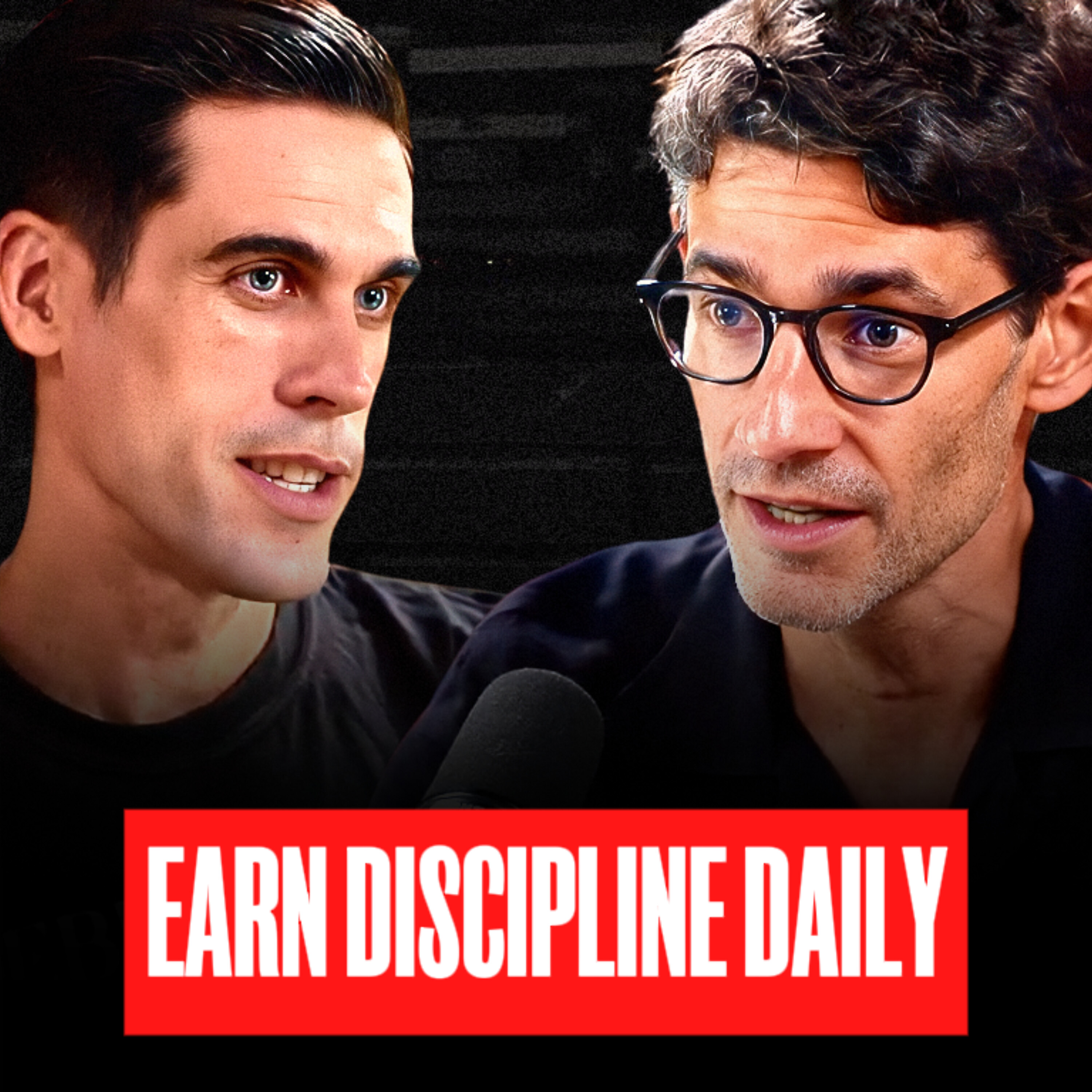
In this episode of The Daily Stoic, Ryan Holiday interviews Nick Thompson, the CEO of The Atlantic and author of "The Running Ground: A Father, a Son, and the Simplest of Sports." They discuss the profound impact of running on focus, resilience, and personal development, particularly how it helped Nick navigate his complex relationship with his father.
Written by AI. May contain mistakes.

Ask about this episode
Get the gist, explore an idea or ask about something said.
 Claude
On The Daily Stoic, what are the key points of this episode?
Searching your listeningTranscript
Automatic transcript. May contain errors.
0:00I'm recording this on a Monday, and Monday is our grocery store day in our family. I usually pick my kids up from school and we go over to Whole Foods, get all our groceries for the week. Although here very shortly, we're going to go over there to get our Thanksgiving turkey because they've got a bunch of great options. Turkeys start at$149 a pound if you have Prime with organic birds at$299 a pound. And they only carry no antibiotic ever turkeys that will bring quality to your table at a great price. Whole Foods has great everyday prices on all your Thanksgiving essentials, whether you celebrate with a massive family or just a few close friends.
0:37Everything they sell has high standards to help you shop with confidence. Enjoy so many ways to save on your Thanksgiving spread at Whole Foods Market. Why choose a Sleep Number smart bed? Can I make my sight softer? Can I make my sight firmer? Can we sleep cooler? Sleep Number does that. Cools up to eight times faster and lets you choose your ideal comfort on either side. Your Sleep Number setting. Enjoy personalized comfort for better sleep night after night. It's the final days of our Black Friday sale. Recharge this season with a bundle of cozy, soothing comfort. Now only$17.99 for our C2 mattress and bays, plus free premium delivery.
1:11Prices higher in Alaska and Hawaii. Check it out at a Sleep Number store or sleepnumber.com today. Look, ads are annoying. They are to be avoided, if at all possible. I understand as a content creator why they need to exist. That's why I don't begrudge them when they appear on the shows that I listen to. But again, as a person who has to pay a podcast producer and has to pay for equipment and for the studio and the building that the studio is in, it's a lot to keep something like The Daily Stoic going. So if you want to support a show but not listen to ads, well, we have partnered with Supercast to bring you a ad free version of Daily Stoic.
1:56We're calling it Daily Stoic Premium. And with Premium, you can listen to every episode of the Daily Stoic podcast completely ad free, no interruptions, just the ideas, just the messages, just the conversations you came here for. And you can also get early access to episodes before they're available to the public. And we're going to have a bunch of exclusive bonus content and extended interviews in there just for Daily Stoic Premium members as well. If you want to remove distractions, go deeper into Stoicism and support the work we do here. Well, it takes less than a minute to sign up for Daily Stoic Premium, and we are offering a limited time discount of 20 % off your first year.
2:34Just go to dailystoic.com slash premium to sign up right now or click the link in the show descriptions to make those ads go away.
2:47Welcome to the Daily Stoic Podcast, where each weekday we bring you a meditation inspired by the ancient Stoics, a short passage of ancient wisdom designed to help you find strength and insight here in everyday life. And on Wednesdays, we talk to some of our fellow students of ancient philosophy, well-known and obscure, fascinating and powerful. With them, we discuss the strategies and habits that have helped them become who they are and also to find peace and wisdom in their lives.
3:33Hey, it's Ryan Holiday. Welcome to another episode of The Daily Zip. Stoke Podcast. I am recording this on a Sunday here in Bastrop, Texas. I'm not sure when you are listening to it, but I just woke up, went on a long walk with the dog, took the kids to Tracy's, the little grocery store we have in town. And then I drove over to Bastrop State Park where I went for a long run. How long did I do? I did 7.26 miles, a little slower than I would have liked, but it's kind of a hilly park. It's one of my favorite parks here in Texas, one of my favorite places here in Texas. It's the Lost Pines Forest, this sort of freak of nature.
4:11The Lowell Bolly Pines are almost nowhere else this far west. You know, you ever look at those Cold War maps of Germany and you think Berlin was like on a border, but no, Berlin was just in the middle of East Germany and was this sort of lost city or this surrounded city. The filmmaker Richard Linklater has joked about the pine curtain and Bastrop is the sort of Berlin in that analogy. It's a surreal, wonderful place. It's very hilly and sandy. It all tragically burned down in 2011 or a good chunk of it burned down in 2011. Then another chunk of it burned down in 2015. Then another chunk burned down because the county was doing a controlled burn that got out of control, even though there was a burn ban at this time.
4:56None of this has anything to do with why I'm bringing this up. I have spent a lot of time in this park running and walking. In fact, I had the idea for the Stoic Virtue series in this park six years ago. Stillness hadn't come out yet. I took the kids and Samantha out for a hike. I guess one would have been in the baby carrier. One was probably in the backpack. And we took a long hike. And by the time we got back from that hike, I had the idea for the series. And Samantha and I talked about it. And that's what I've been working on for the last six years. I guess what I'm saying is I love this park and I love the miles that I've put on in this park.
5:29And that would have been unfathomable to me, not just six years ago that I'd be at the end of this series, which I am. But if you'd asked the high school version of me, whether I would be logging miles voluntarily 20 plus years later, I would have said, what are you talking about? But here I am. I hated running in school and I can't live without it now. It's part of my stillness practice. It's part of my writing practice. It's part of my mental health practice. It's part of all of my practices. And that's why I was really excited to have today's guest on, because I think every runner has a unique relationship with the sport.
6:11You love it and you hate it, kind of like writers. You love it and you hate it. You like having done it probably more than you like doing it. But if you don't do it, you're miserable. Nick Thompson just released this fascinating book called The Running Ground, a father, a son, and the simplest of sports, which is about his complicated relationship with his father and how running played a role in it. And in part one, we sort of nerd out about our running practices, how running and running are both endurance activities, how life is an endurance activity, and you got to figure it out, and how running is the sort of through line that connected him with his grandfather, his father, and now his kids.
6:46I didn't know how this episode was going to go. Nick is the CEO of The Atlantic. He's a great writer also, but he's on the business side of The Atlantic, which is a publication I actually really like. I've had a number of their writers on over the years. I didn't know if this would be interesting from a Stoic perspective or I didn't know, but I was very excited. I thought it went great. We ended up splitting this into two parts because we went way over. The Atlantic, if you've never heard of it, it actually goes way back even with Stoicism. Thomas Wentworth Higginson was one of the original translators of Apatitas, and he wrote for The Atlantic way back in the 1850s.
7:22It has won National Magazine Awards and every other award you can imagine. And while Nick has been the CEO, he has seen record subscriber growth. He was before that at Wired and many other places. And he is a very fast runner. He set the American record for the 50K, it's very far distance, for men 45 and plus. You can check out his new book, The Running Ground of Father, a Son, and the Simplest of Sports. You can follow him on Instagram and Twitter at NXThompson. I think you're really going to like this interview. Let's get into it. I'll bring you part two later in the week.
8:05So I was looking, I have a funny detail about you and me. So I was looking at my email to like get the address or something. And I saw that you had written a story back. You were writing for Buzzfeed like back like 20 years ago. Okay. And you wrote a story about Outbrain or you had wrote a story that included something about Outbrain. Yes. And this is going to, this is going to get interesting. And at the end of the story, Outbrain, you were like Outbrain sucks, right? Yes. And at the end of the story, Outbrain was like, well, we're on the New Yorker. Yeah. And I was the, I ran the New Yorker's website then.
8:35And so that email, I was sent that story and I was like, fuck, we have to get off Outbrain. Yeah. But I couldn't get off them through Condé Nast. And so - For people who don't know, Outbrain was, maybe it still exists, but it was like when you get to the bottom of a story, it was this ad unit, but it didn't look like an ad unit. It looked like referring like related articles. Yeah. But they were all paid trash articles. And they were like the worst, right? Yes. And so I had to get off Outbrain, right? And so - But we're part of Condé Nast and it's a big network deal. And so I then, we arranged a study where we analyzed subscription propensity if we had the Outbrain model on versus not.
9:13And we basically determined that it so alienated our readers that we were losing money by having it. And so I took that study and brought it to Condé Nast and we got rid of Outbrain. Really? And it was actually like, it was kind of like an important moment in my career because it was like, oh, wait, you can actually like use the data to get to the outcome that is, you know, right for high quality journalism. Yeah. And so I found like all the trail of all that in my like memory bank while like getting the address to the studio. I was, I never wrote for BuzzFeed. I was writing for The Observer. Okay.
9:50Which was a weird experience. So I mixed that detail up, but it was definitely you. Because it definitely popped up. No, I remember writing that piece because I hated those. I was like, I'll just write about stuff that interests me. And I hated those things. And yeah, it's this sort of blurring line where it's like everyone knew the premise, the economics only worked because it was tricking people. Yeah. But it's interesting that you were able to verify, you were able to do some analysis of that because it's kind of a thing that's common in our society, right? Where it's like, okay, the short-term profit is there, but it's hard to measure the long-term decay of trust or the opportunity cost of having that kind of exploitative relationship.
10:34And so a lot of that, that's why so much stuff sucks is people who are now that everything is so highly measured, people are making a lot of decisions that are increasing the, you know, the per-profit click, but not the long-term health of the ecosystem. And so, you know, we sort of played the game. You fight fire with fire, right? We came with the data and we proved that it was better for our readers not to have it. Better for economics not to have it. I had a funny Condé Nast story. So I know Jonathan Newhouse a little bit. He's like a fan of stoicism. Oh, he's totally a fan of stoicism. Yeah.
11:06And we had this, he invited me to some conference in Evian, France. Lucky you. Yeah. And it was like a panel. I had to do like 30 minutes of work. But I remember we were having this dinner later and we were talking about running. And he asked me, because he was running, and he asked me if I stretch beforehand. And I was like, I never stretch. I hate stretching. And he was like, me neither. I never stretch. And my wife was like, I'm telling you, you have to start stretching. This is not healthy. And he goes, he's like, I've never seen my dog stretch. And I was like, oh, yeah, that makes sense, right?
11:42And then I got home. we picked up my dog from the dog sitter or whatever. And then I'm watching her for like five seconds. And it's like, dogs stretch all the time. All the time. They stretch before they get up. They stretch before they lay down. It was like, it was one of those perfect things where you hear something and you still want it to be true. Right. That you're like, yes, the logic of that is flawless. And then is actually not only not flawless, it's just the opposite of the truth. And I think about that all the time. Yeah, that's great. That's great. Well, I'm glad you're here. I love the book.
12:12I thought it was really interesting. Oh, awesome. I'm so glad you did. Yeah. If you had hated the book, this would be an awkward conversation. No, no, no. But we still would have gotten through it. Which leads me to my first question. Well, my first question is, why have I never been asked to write for The Atlantic? And then my second question is, did you run today? You can just answer the second one. I'll answer the first question. So I'm the CEO. I don't oversee editorial, but they should certainly talk to you. I did. I ran 13 miles around the lake with a guy in Austin named Brady Homer. We had a great time.
12:37It's lovely. It's an amazing trail, isn't it? Amazing trail, flat, smooth. It's a little hot here, Ryan, I've noticed. but it was not as hot as it was yesterday afternoon when I tried to run around the lake and said, nope, going to turn back home. I was just running in New Orleans a couple weeks ago, and I was thinking like, where are the best places to run day to day in the United States? So not like, oh, there's this beautiful run in, you know, Yellowstone or something, but you couldn't, but like where day to day are some of the best ones. I think the neutral ground in New Orleans is one. I think Town Lake in Austin is one probably up, you know, from like Chelsea Pierce to the Intrepid, like that thing in Manhattan is pretty - It's a little loud.
13:14It is a little loud, but it's, you know, you're not going to get that length with not having to stop in New York City. And then I just did, you know, along like from Venice to Santa Monica, like that one, you know. I think that I did that two days ago. Oh, amazing. It's incredible, right? Yeah, of course. It's incredible. Yeah, because you're like on the beach, but then when you get to Santa Monica, you're like up. You're up a little bit. There's nice little trails, but there's so much going on. It was so beautiful. I was doing it right at sunset. Oh, amazing. I think the one around Austin is low-key one of the best ones in the United States.
13:44And I know you said it's hot, but it's so shaded most of the year that it's, and Austin isn't quite as humid as other places. I find I can do it at any time during the day. Yeah. I did it yesterday. It's one of my favorites. No, it's a beautiful loop. I would add the Washington Mall. It's pretty cool too. Washington's kind of underrated as a running city. The problem with that Washington Mall loop is that you have to stop and cross those streets like every quarter mile or mile or whatever. And it's not like quick, it's not quick. And it's not like a New York City thing where you can, you know, you can just jaywalk.
14:17Yeah. But you also only a couple of miles from the Georgetown canals. There's like a lot to say for that. Yeah. Yeah. No, I love that run too. I would take the lake over it. Definitely. Austin Lake over the Washington Mall. Yeah. It only recently, like the last like maybe six years, they put in this boardwalk for part of it. So now you can do the whole thing. It's 10 miles. And then there's just an infinite number of combinations you can do. It's one of my all-time favorites. Yeah. So I ran this morning. But have you done Barton Springs before? Do you swim also? I've run up to Barton Springs. I've done - Oh, do you swim in Barton Springs?
14:47No. Oh, it's one of the great public works achievements in the United States. I've run by. There are like 12 million people swimming there. It looks very cool. Yes, yes. And in the morning, there's no one there and you can do laps. Okay. And I love that. Are you a morning person or an evening runner? I like both. I can kind of run anytime when there's time available. I tend to run to work and from work. So you're running the beginning of the day, you're running at the end of the day. Yeah, that's interesting. Do you just, then you shower at the office? Shower at the office, shower at the gym nearby.
15:17Yeah, kind of work. Sometimes it doesn't work. Like you forget to bring your belt or something. It's like, you're not always completely. And like when you're kind of a boss, you should really look the part. But sometimes I don't. Yeah. Although, do you find splitting it up? Like it only starts working at a certain distance. not the exercise. Like, I don't know about you, but like, if you told me and people have told me that like the physical benefits of running are actually not that great, you know, like there, there may even be some costs to it. I'm like, I don't give a shit at all. I'm not running for exercise.
15:49Like, so, so for me at a certain point, the distance, you have to do a certain amount of distance for the mental health benefits to start. Like if I just run two miles, I might as well run zero miles. It doesn't, you got to go longer than that. I don't know if that's true. Like, Like if you're in the middle of a really hard process, you can still get a mental benefit from a two mile run. Okay. So it actually depends on like, what is it breaking up? Like if I'm on vacation, right. I probably have to go run 10 miles to get anything. But if I'm in like some hellacious week with like board meetings, stress, like all kinds of stuff going on, like I can go run half a mile.
16:26Interesting. Yeah. I find like there's no, no walking distance so short that there's not some value, but But I find like to get what I need to get to even, to like regulate, it's got to be a certain distance. And I wonder if this, does the splitting give you twice or is it actually like half? You know? Yeah. So I don't know. Like I would imagine that the mental health benefits of a 10 mile run are better than two, five mile runs, right? Because there's like a little bit of a startup cost. On the other hand, the efficiency benefits of running to and from work and having like some running break, it's like a pretty good life hack.
17:01Yes, of course. And then you're also just saving yourself whatever the commute time. Totally. That time was already dead and you turned it into productive time. Right. And you listen to a podcast, you run to work, it's the way to go. Do you listen to podcasts when you run or do you listen to music? I never listen to music. Oh, why? Well, so I believe that listening to music when you run kind of disrupts the training benefits. I mean, listening to podcasts might disrupt it a little bit too. Like when I'm running a workout, I don't listen to anything. And so the physiological logic behind it is you're trying to like understand your body, right?
17:33You're trying to understand your nervous system. You're trying to understand pain. You're trying to like maximize like coordination. If you're listening to music, A, you might go too fast, right? Like you might be hyped up and you might not pace it perfectly. And then you haven't learned what you could learn about pacing. So if I'm running hard, I never listen to music. Interesting. So in the Marikami book on running, he says that you run to acquire the void. Right. I find music gets into the void faster. So I'm running for that. Like I'm running to get to whatever that kind of state is. It's a different void maybe.
18:04But I find that there's something heightened about the music and the physical. I mean, it can definitely increase adrenaline. Right. And it can definitely like make you go when you sort of want to stop. Right. But I feel like part of what you're trying to learn how to do is how to get your own mind to get you to go when you want to stop. And so music is, it's almost like putting on roller skates. And like, if somebody can only run while listening to music, go get them, right? If it's going to help you in a workout, go get them. But I also was like, I'm psychologically scarred from my college coach, who at one point was like, you know, we're here to compete.
18:40We're here to win. We're here to train hard. And if you don't want to do that, then you'll put on some music and run around campus drive, right? And so like, that moment stuck with me. So it's both these like pure physiological, neurological things that I'm talking about. And it's also that like young Nick was scarred at age 18. No, no, I'm sure. I think we all pick up certain habits or values that were like an offhanded comment from someone. Yeah. That if you ask them about it in depth, they'd probably be like, oh, I didn't even mean that. I didn't mean that. Or it's not important. Yeah. But I get your point.
19:08I'm like that when I see people swimming with fins, like when they're doing, I'm like, what are you doing? I don't get it. Like you're cheating the whole thing that you're supposed to be doing. I don't get it. you're still swimming the same distance or you're swimming longer distance. Why not just, what are you trying to be aerodynamic for? I don't, it doesn't make any sense to me. So that's a little bit how I feel about it. So I listen to podcasts, but not when I'm doing, if I'm doing a workout, I'm not listening to anything. Yeah, I think this is all probably totally baffling to some people.
19:35Like I was talking to my wife about this one and I was like trying to explain that like, this is what I have to do to get to even. Like this is like, just like, that there's just a certain amount of physical activity. Like if I don't do this, like I'm just totally dysregulated. And that this is like, like I think she was like resenting or somewhat peeved about how much time it was taking. And, you know, or that this was like a hobby. This was a thing that I was enjoying. And I was like, I am enjoying it, but I don't think you understand. Right. This is like table stakes for me being a functional member of society.
20:13Like without this, it's not working. And then for people who are not that way, who aren't broken in that way or didn't get hooked on this coping mechanism in this way, they're just like, what are you talking about? This doesn't make any sense. You remind me of, I had this conversation before in Ultra Run and I was sitting with this guy and he's like, I don't know, 75 years old. And I was like, what would you run tomorrow? He's like, I'm running the 100 mile. It's one of those races you get out there. And he's like, how long is it going to take you? He's like, well, I want to get it done in like, you know, 30 hours.
20:42and I was like, I don't know how it came up. I was like, what does your wife think about this? And he's like, well, she doesn't like it, but I told her it was either this or a blonde in a Corvette. It's his midlife crisis thing. Yeah. Yeah. You know, in healthy marriages, everybody recognizes that there are things the other person does that are good for their mental health, but take time. And certainly I have that conversation with my wife.
21:09We just took our kids to an outdoor performance to the Nutcracker, they had a snow cone, and then they went insane in the car ride home. And one of the things I try to remind myself when that's happening is that I don't control my kids' behavior, especially when they're too far gone like that, but I do control how I respond, right? That's stoicism, but it's also what Dr. Becky talks about. Dr. Becky is a clinical psychologist and a best-selling author, and she founded Good Inside, which is there to give parents practical, actionable tools for handling those everyday challenges with confidence.
21:44My wife introduced me to Dr. Becky's books. I love them. I've recommended them a million times. I've had her on the podcast. And as it happens, Dr. Becky is hosting two live Q &A events for Good Inside members. I am one of them. She signed me up for it about a year and a half ago. I've loved it ever since. On December 1st, you can join Dr. Becky for her How Not to Raise Assholes event, which is about avoiding entitlement and raising kind, empathetic kids. And on December 15th, she's hosting her How Not to Lose It Over the Holidays event, which I'm sure we could all use. As I said, I'm a big fan of Dr.
22:21Becky. She's been a great influence for me as a parent and just as a human being. And Daily Stoic listeners can join for 15 % off with code STOIC15. You just got to head over to goodinside.com to catch the events. Look, when you're hiring, you don't want just anyone. You need the right person with the right background who can move your business forward. And when I need candidates who match what we're looking for at Daily Stoic for any of my businesses, we trust Indeed sponsored jobs, because when you're hiring, Indeed is all you need. You can give your job the best chance to be seen with Indeed's sponsored jobs.
23:03They can help you stand out and hire quality candidates who can drive the results you need. And according to Indeed, data-sponsored jobs posted directly on Indeed are 90 % more likely to report a higher than non-sponsored jobs because you reach a bigger pool of quality candidates. And you should join the 1.6 million companies that sponsor their jobs with Indeed. People are finding quality hires on Indeed right now. In the minute we've been talking, companies like yours made 27 hires on Indeed. Spend more time interviewing candidates who check all your boxes. Less stress, less time, more results now with Indeed Sponsored Jobs.
23:40And listeners of this show will get a$75 sponsored job credit to help you get your job the premium status it deserves at Indeed.com slash Daily Stoic. Just go to Indeed.com slash Daily Stoic right now to support the show by saying you heard about Indeed on this podcast. Indeed.com slash Daily Stoic. Terms and conditions apply. If you're hiring, do it the right way with Indeed.
24:06I found like if I do other stuff, like let's say I want to do CrossFit or I want to do Jiu-Jitsu or some other fit, there's no overlap. Like I still have to run. So like I can't trade one, like swimming a little bit, but not like if I swam for a week, I'd be like, oh, fucked. You know, like I can substitute it maybe on one day, but like not three days in a row. Yeah. Or the whole thing starts to get a little wobbly. You could be like, hey, it's the same amount of time. You burned the same amount of calories, you know, or whatever. But it doesn't matter. It's just the kind of regulation. The other argument to make to your wife, just to help you out here, is that it's by far the most efficient way to do it.
24:51Because you don't have to go to the pool, right? You don't have to go to the judicial class. You don't have to schedule it, right? You don't have to worry about the time you're living. You just open the door and you go and you come back. Yes. The only time they've appreciated that efficiency is when we travel. Yeah. Then I get up early and I do that. And then the course of the rest of the day, I'm like showing them all. I'm like, I already know my way around here. I've already looked at the boring things that you don't care about. So we can cross those off the list. Yes. And then I'm like - This is good life hack.
25:24This is good stuff. It's like a golfer walks the golf course before they play. And you're sort of getting your sense of the city. You can also like, so the other hacks for helping your marriage, like I'm not, how old are your kids? Nine and six. Okay. So you're like the same, mine are 17, 15, and 11. But like, obviously the running stroller is a huge hack. Yes. And then running to errands, that's super useful, right? Okay. And then dropping your kids running while they're doing their thing and then bringing them back. Then your spouse, A, doesn't know you've run and B, you've got in your workout, right?
25:59Like you drop them at like the camp where they're going to be for an hour and a half. You run for an hour and a half. You drive them home. You're in the plus, right? Because you've done the errand. No, no. I know this hack very well. Yes. This is mostly what I do, where I drop them off at school. I run and then I come to the office. But you're sort of – you're not running – you're not driving to the place that you're going to run or you're piggybacking it with the other thing. I say it kind of as a joke, but like part of – I mean I've run pretty aggressively now for whatever, 30 years. And part of the way I've made it work with a busy job with three kids who I spend a ton of time with and a wife I'm devoted to is by like filling it into these cracks.
26:40Yes. Right? And then also you think about this, they're just now two, like one of them I can kind of convince to get in the bike stroller, even though he's like technically over the weight limit. Yeah. But you just realize like, oh, we spent like hundreds of hours together doing this thing over the years. Yeah. Now it's like, I used to be able to justify the walks because it's like, not justify, they didn't have to consent to the walk because I could just strap them in. Yeah. And then they were just there. Right. And now it's this awkward phase between, well, first off, I have to like bully or bribe them to come.
27:19They want to stop like, you know, 60 seconds in. Like, what are we turning around? It's like, we're not even at the end of the driveway yet. And then they're just, they're a little heavy to carry, you know, and I can't do both of them. We'll wait for a little bit longer. So now I train. I just turned 50 and I wanted to run a sub five minute mile on my 50th birthday. And my 15 year old paced me to it. Right? So I now run with the kids. It's amazing. So I'm thinking about trying to do this before my 40th birthday. So I ran a 502 mile my senior year of high school. And I remember going, oh, that's good enough.
27:52Like my parents forced me to pick a sport. So I picked track and cross country. And I basically never really tried. Like I was in that teenager rebellious thing where it's like you try kind of, but not enough that if you don't succeed, you would have to look in the mirror and feel bad. And I remember even looking at the clock and going, oh, that's close. I wonder if I'm going to regret calling it here. Oh, so you've never gone under five. No, no, no. I did it maybe in my mid-20s once, but it's been a long time. So I was thinking I would try to do it again at some point before I turned. I got two years or a year and a half.
28:33So I was thinking about doing it again. You've done it before, I'm guessing, right? many times oh yeah and i'd run fast in high school and then i'd run some but i hadn't run a sub five minute mile and a little i mean i had run one straight down a mountain but i hadn't run a sub five minute mile on flat course and uh i was training for an ultra and i was like you know what i'm also going to try to do it on my birthday and my 15 year old son who's like he had run a sub five minute mile with his you know track team um he was like yeah let's do it and so uh we trained we did like 400 meter workouts on the track together i'd lead one he'd lead one i'd lead one And he'd lead one.
29:03It was awesome. It was just like great parenting. Sure. And like, what a cool, fun thing to do for 50th birthday. And you did it? I did it. He dropped out at 1200 meters because he wasn't quite sure how much time there was to go. He thought we were only halfway through. You just lost count of the laps? No, we were in the park. We just like, we went into Prospect Park. We're like, we're gonna go run a mile. And like, he didn't quite know. He's like, oh, dad, I thought we were way off pace. I was like, we were like way under. We were like five seconds under and you only had 400 meters to go, dude.
29:28Yeah. He's like, oops. And how did it feel? Is there some part of you that feels like you're beating time or defying something? Running a sub-minute mile at 50 did not make me feel like I was beating time. Running fast marathons and ultras, I feel like I'm countering the aging effects. I mean, I got into the book not because I wanted to write life lessons. I got into the book because I thought there was an interesting story in my father's life. And then there's a very interesting question of why I had been able to run a 229 marathon, on, which is very fast at age 44, when I'd only been able to run like two 40s in my 30s.
30:03So when I was in my physical prime, I was much slower than when I was in my 40s. So why did that happen? And that led me down an interesting psychological explanation that I thought made a good story. And then my father's left a good story and their other story. So that's why I wrote the book. So I do feel a little bit like the point of the book is how to, or one of the points of the book is how to counter the effects of aging. Yes. Well, riding and running are two of the only kind of like elite or difficult things, right? Like you have the arts and then you have athletics where it is, you don't fall off a cliff.
30:36Like a lot of riders do their best riding very late in life or very, very good writing late in life. And then runners, especially it seems like in the very high endurance level running, not sprinters, but tend to do it later and later than you would have guessed. And this is all compared to, you know, like musicians writing their best album at 23 or a Nobel scientist, you know, discovering something in their mid twenties, or you're an old man in the NBA at like 32. Right. Well, like basically, you know, your reflexes decline pretty drastically. Like you can't hit a baseball when you're 40, right?
31:13You're like, that's all reflexes, but you're like lean muscle mass doesn't change that much. Right. So your top end speed changes a whole bunch. You essentially, as you age, certain things get worse and certain things get better, right? Like you get the benefit of age. You get the benefits of wisdom. There are some like internal physiological changes that happen that help you. There's some in general, like the metaphor, like is that you're on a moving sidewalk and it's going slowly backwards. Right. But you can use some of what you're learning to kind of go faster than the moving sidewalk is going backwards.
31:41So you can still go forwards. Yeah. And I feel like when I wrote when I was younger, I could just sort of like rip it out. And now I think I'm better, but it's harder. Do you know what I mean? That's interesting. So, and it's kind of true with running too. Like I could eat anything I wanted. I could get any amount of sleep. I could just get up and leave and now like I'm noticing even like I have to think more about like those first couple miles. Like my body is literally warming up. And then I'm just, there's just a tightness that wasn't there before. I'm sure - And you heal more slowly. Like you get it, like you turn your ankle and it takes forever.
32:24Like my son and I will both turn our ankle the same day, exact same extremeness. And he'll be like, the next day he'll be back and it'll be like a month. And I'm still like, ah, took the ibuprofen. Like if I sit down to write on an airplane, I'm just immediately fall asleep. You know, I might have like an amazing session when I'm 22 on an airplane because you're just physiologically different. And so, but I'm sure that's also true for Tom Brady or LeBron James, but there's only so much they can transcend that. There's still this hard limitation that, you know, right. Like nobody cares what a musician in their 50s is writing as far as their new stuff.
33:07They just want to see them perform the old stuff over and over again. Any musician who's like struggled in their 20s and 30s and like really like crushed it in their 40s? You know, every once in a while, but it's like, and every once in a while, like a legacy act will have a new song that somewhat charts. But like, we basically go like, no, after this age, you have transitioned from, you know, sort of one phase in your career to another. Writing and then also comics. comics. I think we let comics bloom slightly later than like, what's the difference between being a comedian and an actor? Not that much, but we would allow a comedian to hit their stride in their forties or fifties and be at the top of their game in a way that maybe we wouldn't with, you know, a female actress.
33:55And is that cultural allowance or is it just like where creativity comes from? I think it's probably the medium and then culture. And yeah, I think it has a lot to do with what our preconceived notions are. Because arguably the musicians are much better. They're experiencing... Bruce Springsteen as a songwriter now is obviously better than he was when he was 20. I just mean he has all this experience. He has more knowledge. Yeah. And some of the songs, I think are really good. And if he had written them in 1983, might we accept them differently? But culturally we go, no, no, no, we don't want to hear new singles from you.
34:33I think that's partly it. And then there must also be something about the energy that we expect from some forms of art or athletic. Like the vibe is different. Whereas maybe with writing, because writing is much more about perspective and wisdom and less about energy, we're willing to hear, you know, the reflections of an older person on equal footing with. Well, you know, you have like fluid intelligence, you have crystallized intelligence. And I think as you get into your fifties, like you have more wisdom, you know, more things, you're kind of less creative. And so it's a different kind of writing.
35:09Whereas in music, you really need like a huge percentage of the new song has to be creative. So maybe that's what it is. Yeah. And maybe with writing, you're getting better at figuring out how to do this thing. And there's something kind of otherworldly about the music. It is less technique and more something. I don't know. It's more lightning in a bottle than I think writing is. Because, you know, you even read about some of the greatest albums of all time. And they're like, we worked on this in the studio for a year. And then if you told someone that, like, your favorite book, that was only worked on for a year, you'd be like, what?
35:47Yeah. Like, there's something about writing. And maybe this is also true for comedy, where it's like the genesis of the thing that's doing most of the lifting. That's part of it. But then it's the going over it and over and over until it becomes its highest form of what it's supposed to be. So I don't know exactly how this connects to running exactly. Well, I do. I mean, one of the things that I'm really interested in is I had this conversation with my mom where my mom was like, well, my reflexes are just getting worse. I'm 77 years old. I was like, well, mom, they are getting worse, but they don't have to get worse.
36:24And then I kind of convinced her that they didn't have to get worse. And so we went out every day when we were together this summer and I would toss her tennis balls like on the porch and like have her like reach out, like, you know, working on her reflexes. I would have her like stand on one leg and I would like toss her a tennis ball. And she was like, wow, this is amazing. And I said, yeah, your reflexes are, there's definitely pressure making your reflexes worse. But if you're out there with the tennis ball and you're trading your reflexes, you're going to improve them faster than you're declining and your reflexes will get better.
36:52Yes. That is also interesting when you look at the, some of it's probably survivorship bias, but when you look at these like musicians or golfers or athletes that are like still doing it, and you wonder how much of it is that they never, even despite the drugs and drinking and the time on the road, they never like got out of shape. Like they never accepted that they were old. They've just been doing some version of this youthful activity nonstop for this whole period of time. And there's something about that that I think keeps you young and fresh. Totally. So one of the things that I believe, you don't stop running because you get old.
37:27You get old because you stop running, right? Yes. Like if you stop running, you'll put on weight. You'll get imbalanced. Like things will go wrong. If you keep going, actually like you'll be able to hold off a lot of the effects of aging. Yes, we all will get older. We all will die. Yes, like that does happen. We all do slow down. But really, if you keep at it and you have a daily habit of running every day, it really will keep you a bit younger. And this is true inside an individual run also. Like you would think stopping and resting would be helpful. And it's like the worst thing you can do.
37:55Oh, absolutely. Yeah, definitely never stop. Yes. I mean, in a long ultra, you can like stop to digest like for a couple minutes that you're at an aid station. But no, never stop on a run. Yes. Yeah. So running is this thing that kind of runs through your family. It must be cool to see your kids picking it up. Yeah, it's wonderful to see them doing it. Yeah. And they're like, they clearly have wonderful talent at it. It's great. Well, speaking of Bruce Springsteen, I was thinking about this thing I heard him say when I was reading your book. He talked about how we can choose to be an ancestor or a ghost in our kids' lives.
38:27You know, and that sort of - That's interesting. His father was this kind of ghostly or ghastly presence in his life because his dad's haunted by all these demons and he's sort of abusive and it's just there and it's this thing that haunts him. And that's very different than someone who has, you know, like a loving parent or grandparent, or, you know, there's some kind of like guiding force in their life from another generation. This sort of choices is kind of everything. Yeah. And it's very hard to, as a parent, it's very hard to know what you're giving your children. I write about this kind of this funny moment in the book where I run a marathon and it's during COVID.
39:07And so I run with one other person. I run 26 miles on this little loop in Prospect Park, right? And I finish it and I've just completely destroyed myself. I come back to the house and I lie under a blanket and I'm shivering and kind of convulsing for a couple hours. I remember watching a movie with my oldest son who was probably like 11 or 12 then. And afterwards he was like, you know what, dad, that I'm never gonna run again. And then the next day - Because he saw what it did to you? He saw what he did to me. And then the next day I go out in Prospect Park and I'm going for a walk. And what do I see?
39:43But I see my youngest son running around the park. I'm like, what are you doing here? He's like, I wanted to run around the park. I was like, wait a second. So this very same thing that I just did has inspired one of you to sneak out for a run. He's like six years old. And he's like - You ran into a kid in the park. That's hilarious. Literally six years old. He's like running around Prospect Park, not the whole thing, but running this inner loop. And so it's like, oh, the very same act. And then so the book is partly it's about other people, but it's partly about my grandfather, who's a great athlete, Golden Gloves champion, who intimidates my dad.
40:15My dad's not a natural athlete, hides from him behind the curtains, very academic, doesn't want anything to do with him, and feels just this constant pressure to be a different person than he was. my father then takes up running and has the exact opposite effect on me where my father's a cool runner. And I'm like, I want to run with this guy. Right. And so I'm five or six years old and I'm running with my dad. And now like God willing, like my running obsession will pass in a positive way that when my kids write their memoirs or think about things in their thirties, they're like, oh, so cool that like my dad had this wonderful thing that he taught us and brought us into.
40:49Not, oh my God, my stupid father, like would always come home sweaty and smelly. Yeah, it's like that story about the two brothers and one is asked, like, why are you an alcoholic? And he says, because my dad was an alcoholic. And then the other is asked, why don't you drink? And he says, because my dad was an alcoholic. And so the same event can send people down very different paths. Totally. Yeah, absolutely. Yeah, you don't know if you're breaking the cycle or perpetuating the cycle in just some new way. Right. And so, and like one of the other things that people often ask me is like, my father, you know, led a very broken life.
41:26And by the end of his life, he's, I used to say, people are like, what do your parents do? I'd say, well, my mother's an art historian and my dad runs a male brothel in Bali. And he's like bankrupt. I'm supporting him. And he was blackmailing me, saying, basically like begging for money to pay his prostitutes. And like, why did I put up with this? And part of the answer is he always loved me and he always supported me. Right. And like, that's like, that's the baseline. And like, if a father does that, then, you know, you owe them a lot. Yeah, I guess. I mean, like I could easily have broken with him and said, you know, dad, like enough of this, like, we're done.
42:02I'm not going to talk to you anymore. Like you've now you've crossed one too many lines. How long did it take you to understand that he's this way because of this other person? Did you meet your grandfather? I barely knew him. But how long did it take you to understand, oh, this guy is this way because of this other guy? Well, I don't know if he was that way because of the other guy. So my father has this really interesting life where he grows up in Oklahoma and he's got this intimidating father. It's not really happy. They live on – his father is the president of Baycon Indian University. And so they're like living in Baycon.
42:33And my father wants to get out. And he hears about this school called Andover up in New England. He applies. He gets himself a scholarship. He like delivers newspapers by horseback to pay for the rest of it. Then gets himself a scholarship to Stanford, then wins a Rhodes Scholarship and then marries in my mother's family, which is like a prominent East Coast family. I'm like, dad is on track, right? John F. Kennedy meets him. He's like, this kid's gonna be president before I am, right? And I found his like Rhodes Scholarship recommendations and the dean of faculty is like, this is the best student we've had since Herbert Hoover, right?
43:06This guy's like crushing it. But then he comes back and he's got his Rhodes Scholarship. He's got his defil from Oxford and it doesn't really work, right? Like life doesn't work the way he wanted it to. And he like can't really control his drinking. He's not really getting the jobs he wants. He's not really on track to become a senator or whatever he thought he was going to do. And then he realizes he's gay, right? And so obviously after I'm born, right? Which thankfully, you know, that's the one argument that forcing people into the closet in the 1970s was good because otherwise it wouldn't be here.
43:36And so he realizes he's gay. He comes out of the closet. And so this is part of it. Like, why did my dad end up the way he did? It's partly like, you know, he whom the gods wish to destroy, they first make promising. It's partly like not living up to his youthful promise. It's partly like trying to deal with the chaos of coming out. He was the first openly gay presidential appointee working for Ronald Reagan in the 80s. I'm very proud of that. Not being able to manage money and eventually heading towards bankruptcy. And then there's another really important moment in my dad's life, which is, there's another guy who he thought of as his twin, this guy, Roger Hansen, who's in a book called Remembering Denny, which is probably somewhere up here.
44:09It's a classic. And Roger Hansen is also a Rhodes scholar, also destined for greatness, also doesn't achieve it, also gay. And Roger Hansen commits suicide and he commits suicide in my father's garage. And when that happens, my father is like, I am going to be the most flamboyantly open person ever. And so then he just starts like sleeping with everybody and like bringing his like totally inappropriate boyfriends into like Like every conversation and every meeting in places, like just utter madness. It's like his love life, it's not even his love life, his sex life becomes utterly out of control.
44:42And so that is a lot of what leads him into this place he ended up in. The sex life thing is probably connected to the sort of drinking life attic thing. It's the same sort of thing. Like he never figures out how to deal with his addictions. He never gets the like stoicism, right? He never like figures out like, okay, this is how every day I'm gonna do this and not this. And I'm going to like work through and he never figures out how to build positive habits, like how to not drink, how to like get control of himself. He's never able to get control of himself. Yeah. The things are in control of him rather than he is he in control of them.
45:18He never figures out how to manage a day. Yeah. Right. He has lots of dreams. He's amazing to talk to. He has all these big plans, but he never like, he never has like an hour where he's like in control. I remember, you know, I wrote a book with him when I was in my early 20s. Not a very good book. And, you know, we'd be writing it and I'd be like, Dad, how's it coming? He'd be like, it's going well. And I'd look and he'd be like surfing porn, right? Like he just couldn't do it. Wow.
45:51Thanks to Toyota Trucks for sponsoring this episode. When I bought my ranch in 2015 out here in Bastro County, I drove my car about halfway down the dirt road that we live on, thought this isn't going to work, stopped, parked it, walked the rest of the way home, borrowed my wife's car, drove into Austin and bought a truck. What I bought was a Toyota Tacoma. And this truck wasn't just transportation getting me to and from my house. It unlocked a whole different style of living for us, not just on the ranch, but in our little Texas towns. There were places I could go now that I couldn't go before, especially out here in the piney forests, through the fields, and on the unpaved roads like the one that I lived in.
46:36We got to go deep into the hill country's wild beauty. We've driven all the way out to East Texas. We've driven across the country. And by we, I mean not just my wife, but both my kids who I drove home from the hospital in that truck. Toyota trucks are built for those who understand that the best adventures happen when you're willing to veer off course, because you never know when you'll end up on a Toyota adventure detour. And of course, this is stoicism, too, because every detour, every obstacle is an opportunity. But it's helpful if you can handle the difficulty inherent in that. If you've got the resilience and the right companion to make it wherever the road takes you.
47:16Discover your uncharted territory. Learn more at toyota.com slash trucks slash adventure dash detours.
47:28Yeah. And so running was the one sort of positive habit that he had. He was able to like at the moment, his worst moments, which is when he's like turning 40, you know, it's time of the divorce. He's coming out of the closet and it's not easy to come out of the closet in 1982. And he's like, and he's, he's in DuPont circle. It's the AIDS crisis. running like helps him keep it together, right? And so he runs marathons, he runs with me, he does really well, I watch him, it's wonderful. And running is a great force for good. And then as he got older, we would still run and he would still run. And it was a way that he like kept his demons partly at bay.
48:04Yeah, it's not as simple as going, oh, he had this sort of abusive, intimidating father and that's why he was, it's that. And then a series of kind of shattering events and a certain amount of pressure that ultimately he just can't handle. Right. And like why he was never, why he couldn't end up handling pressure, why he couldn't, you know, why he couldn't focus that much. On the other hand, the guy is like, he's an amazing guy. Like if you were talking with him, he'd be loads of fun. If you're on this podcast, it'd be super interesting. Like the guy was so smart and like caring and interesting.
48:34And, you know, people loved him. He's just a maniac. And what's your reaction to all this? Do you kind of go in the opposite? Because again, you could go in one direction or the other. Do you see this and you sort of understand this as a cautionary tale and you want to button it up and go in a very different direction? Or does that reaction evolve over time? No, it's very much. It's I watch it. I'm like, I'm not going to let this happen. And that's part of the, my running is a recognition. Like I'm going to stay focused. Like, I don't know exactly what the key is to not become him. Right. But it's clear that I've spent like a lot of my life trying to be like him.
49:09I go to the same schools. I do lots of the the same things. I was at lunch in San Francisco not long ago with one of his friends. So one of my father's contemporaries, who's now in his eighties. And another one of their Stanford classmates walks in and sits at a different table. And the guy I'm having lunch with is like, yeah, I'm gonna try something. And so he brings me over to the table and he's like, Paul, this kid here, he's the son of one of our classmates. You know, you've never met him. Who is he? And he looks at me and he goes, that's Scotty's son. I was like, oh my God. Right? So I'm quite similar in lots of ways, right?
49:41You know, not in all ways. And so I know that I don't want to be like that. So it's unquestionably a force for focus in my life. Yeah. There's a famous quote about Tiger Boy is another Stanford person and says, one of the, after all this stuff had happened, someone who knew him and his father, he said, mirror, mirror on the wall, we become like daddy after all. Yeah, it's true. Yeah. And I try it like, so I try very hard not to let my discipline drop in part because I don't want to be that. Yeah. I think about this with my oldest, who's very similar to me. And I try to remind myself, like, I've had 30 more years than him to figure out how to deal with this stuff.
50:27Yeah. He's just starting to feel and understand these kind of like forces and like he's, he has all the same ingredients, but none of the coping strategies, none of the experiences. He hasn't touched this stove and been burned in this way. He's on this path of kind of figuring it out. And that like part of what's driving me nuts about it is like, he's doing stuff that I don't let myself do. Right. You know? Right. And you have to let him do it. And like, he's going to touch the stove and he'll learn from touching the stove. Yes, hopefully. Yeah, yeah. And don't touch a stove that's too hot, right?
51:05Keep them away from that stove. Yes. That's the trick of parenting, right? Like you've got to let them like take risks and be on their own. And you have to also protect them without like them knowing that you're like, you know, you have to create boundaries and safety that they're not quite aware of. So they feel they have total freedom, but they're not really at risk. Yeah, and then you go, okay, it took me relatively recently to understand, And then, hey, if I don't do X, Y, and Z, I'm not regulated and these things are harder for me. Yeah. And it's like, again, I was like a grown ass person when I figured this out.
51:38Like if you had tried to explain this to me when I was eight, I'd be like, what? Yeah, right. You're like, what are you talking about? Yeah, what are you talking about? That doesn't make any sense. And then even if I was like, okay, I get it. I not only couldn't actually do it, but I wouldn't have literally had the freedom to do it. Like you don't control your environment or your life. If you're an eight-year-old and you're overstimulated in a school classroom, you can't like get up and leave and be like, I'm going to go to a different. You can't design. You have no ability to design your environment or make choices that are better for you or do things in the order that you would like to do them.
52:12And so much of being a kid is like the system, the world is designed for how most people are, you know. And if you're one of those people, you fit really nicely into this thing. And if you're not, you're going to have a rough go of it. You think about, this is true for adults too, you know, if your dad was maybe straight and maybe had slightly less demons, maybe he does become a senator or like he's going to, he had all the ingredients and had all the access to thrive in that sort of late 20th century political, intellectual, academic circles. But because just a couple switches aren't the way that everyone else's were, he probably probably feels totally alienated, like an imposter or, you know, he's having these feelings that ultimately kind of make him blow it all up.
53:02And if he had been able to deal with disappointment and like not living up to expectations. And there's still some things like I found all of his diaries, you know, crazily. He had like gone to his house, which he had sort of was going to be, you know, torn down while he was still alive. And there was like a filing cabinet out front. And I like open up one door and there's a snake in it. And like, A live snake? Live snake. He moved to Asia. Like everything was just madness in his life. And I'm like, I'll take these filing cabinets. And I like put them in the back of my car and I drive them back.
53:30And then after he dies, I'm like, I wonder what's in these filing cabinets. And it's like bank statements and crap. And then it's like his diaries. Yeah. So I had a lot of insight into his life, but there's still things I don't understand. Like I don't really understand like when it, when he kind of started to lose control. Yeah, it's unusual. It usually goes in the other direction, right? The story is like, my parent didn't have it together and then they got it together. And when we were both older, we reconnected and figured it out. You had kind of like a Benjamin Button situation. He's like, as you're getting older and responsible and mature and thriving and functioning in the world, it's like you have a teenage son.
54:10Well, we would joke about that. He'd be like, we have a reverse father-son relationship. Because I was like, dad, you've got to like, you cannot go out tonight. Right. Like enough of this. Right. Like you have a husband, like no more carousing, right? Like, and you have stuff to do. You have to get your column for the Jakarta Post and you have to file it tomorrow. Like get that done, dad. And he's like, no, I'm going out. And you're like, oh God. Have you had to deal with some kind of codependency stuff from that? Like, like, cause these are conversations you shouldn't have to have. It's not just you.
54:35Yes, you had this reverse relationship, but it's probably not good for you to have this relationship with your dad. You should be able to go to your dad and ask for advice about stuff, right? He should be giving you a hard one wisdom about how to be the age you are now. He did do that, right? And he would help me through any hard dilemma. And if I had, he would read my essays, give me smart commentary on them, right? So he was still very useful in that way. But he can't give you the experience of being a well-adjusted, functioning 80-year-old because he's not a well-adjusted, functioning 80-year-old.
55:08He can't give you that perspective. He could not do that. Yeah. Yeah. There's a eulogy that James Baldwin gives to his father, who was like this not a guy that he super loved. And he said something about, it's like, it's kind of a ballsy thing to say at someone's funeral, I guess. But he said, you know, like, we knew his sins, but we didn't know his wrestling. That's interesting. You tend to just think like, especially when you're a kid, because you're entitled, I think, to like get what you need from your parents. Yeah. And when you don't, all that you feel is that you didn't get it. Yeah. But you don't know how hard they were working to give it to you or how hard they were trying to be different or the shame they felt about.
55:48All you see is the binary like yes or no, not what went into falling short. All you feel is that it wasn't enough. Right. And I was blessed where I had this crazy dad and I had an infinitely loving mother, like infinitely patient, raising these three kids on her own. Yeah. you know, who did an amazing job, like, you know, just creating shelter with the chaos of my father's life around us. Yeah. Do you feel like running was maybe for you an outlet? Like, like running is a place where you're in control. It's simple. I always say like, I've never left for a run and not, you know, like, like I've walked back, but like every time I've left my house, I've come back.
56:28So it's like, it's this win baked into your life, into your day. It's definitely that. So I get, you know, I run a little bit when I was like five or six years old with my dad. And then I get back into the high school where I, you know, get cut from the basketball team, join the track team. And then like, suddenly I'm very good. Right. And that creates this like self-confidence cycle that then helps me do better work, help makes me cool at school as opposed to kind of a loser. So it plays that role in life. I then, you know, go to college. I'm not quite good enough. I leave the team after my first year.
57:01I take it back up in my 20s. And I definitely think that what you're talking about, kind of the daily practice, like I've run. I believe discipline is cumulative. I think if you do a hard thing first thing in the morning, it's easy to do the next hard thing, right? I also believe that the focus required for running helps you with everything else. Like if you can go run two hours at a focused pace, you're gonna have a better time at your hard meeting at work, right? Like I absolutely believe that it creates these habits. And so part of why I do it is this like daily practice of, I'm gonna do this hard thing.
57:30I'm gonna do it again tomorrow. And I think it's gonna make everything else in my life work a little better. Yeah, like when you're two thirds of the way into a manuscript and you're like, is this a fucking book? Like this is taking longer than I thought. It's not coming together. I don't wanna do it. I hate this. You know, you're like, oh, I know this feeling. You just keep going. You just keep going. And then at some point you finish and you're like, oh, that was better than I thought. Right. And the thing you learn about running, like it's one of the best lessons is that if you run every day and if you run hard from time to time, you get faster.
58:04Like it just happens and it always happens. But imperceptibly so. Like, you know, there's not some magic day where you're like, oh, it's just this cumulative gain that you're getting. Block by block. I had that feeling this morning, right? So I ran this race two and a half weeks ago, 100K. I haven't really run much since. I went out and ran 13 miles this morning. I was just like, God, I am so slow. I'm like, look at my heart rate. Look at my pace. Like, what is going on? I'm like, every single time, right? Like, it's gonna take, it takes a little time to recover. Like, it's hard to recover from a race.
58:33It takes a while. But I guarantee you, like, I'm just gonna run every day for the next six weeks. I'm gonna run a bunch of workouts and six weeks from now, I'm gonna be back in great shape, right? And it just happens. And so that was a lesson, like, when I was writing this book, which took me, like, I have a hard day job, right? So you're at the Atlantic. I gotta work all the time at the Atlantic, right? So I'm working on the book like 20 minutes this morning or like, you know, like 30 minutes that night. But part of it was the self-confidence from running that you just do it a little bit here.
58:55You do it a little bit there. And like it gets done, right? Eventually it's done, right? Well, at some point you have the capacity to do a thing that seems unimaginably difficult. So like you run 10 miles and you run 20 miles and then you run eight miles and you just do this day in and day out. And then when you go do a heart, whether it's a marathon or an ultra marathon, and you go, where did my ability to do that thing came from? It came from these little things. And writing is similar in the sense of like, you worked on it for 20 minutes. You worked on it for, you thought about it. You read these books.
59:30It's just all this stuff is going in. And then at some point you have like an editable manuscript. Where did all this come from? How did this happen? I was just sitting in here yesterday and I finished the audio book for the book that I just did. This thing was almost unrecognizable to me because I didn't ever do it as a thing. Right. I did it as each of its component parts. Yep. Like one day I showed up and I wrote this paragraph. Yep. And then another day I wrote these seven paragraphs. And then at some point I stuck them together and moved them around and edited them. But like, I never, there was never at any point, and maybe there are some writers this way, where I had the whole thing in my head and then I'm starting here and I'm ending here.
1:00:11It was, it's this cumulative project, this chipping away and eventually, cumulatively you have a thing. Right. And then when you have the thing, the other hard question is, okay, when do you stop, right? Because like, if I made it better yesterday, that means I might be able to make it better tomorrow. So when do you call it off? Yeah. When is it done? And shipping, that is very difficult. There's a really big moment in my career that gets to this lesson. It was one of the most important moments of my career. And I was a young editor at the New Yorker and I was, I guess it was, but it would have been 2013.
1:00:44And I was just running the New Yorker's website. And I didn't have any confidence in my writing. And I hadn't written at the level of, I could, I was a great editor, but I wasn't a great writer. And the Boston Marathon bombs happened, right and i'm following it and um david remnick one of the greatest journalists in the world one of my idols boss the new yorker comes into my office and he's like nick um you're gonna write about the boston marathon bombing i was like no i've got it i gotta manage this i've got like three other freelancers we're working with already i'm trying to call this guy and and i and i was like i really i don't think i should do it and david's like no you're gonna write about it i was like well and then he's like stop he's like this is what's gonna happen you're gonna put your phone down right now.
1:01:23And then you're going to close the door. And in one hour, I'm going to open the door and you're going to hand me your story. And that's what we're going to do. And so he closes the door and goes away. And so I'm like, okay. And so I wrote the story and it was done in an hour. It's pretty good, you know, but it was like a really good lesson. It was like, just, he would just do that, right? He would be like, I'm going to write this piece. I'm going to close my door and I'm going to open it in a few hours and I won't have done anything else in those few hours. And I'll have the story for you. Why do you think he thought you were ready at that moment?
1:01:58It was like, it was so clearly, I knew so much about marathoning. Like I had grown up in Boston. Like if there was ever a story that was like the right story for Nick Thompson to do, like it was this story. And, you know, I don't think he knew my insecurities about writing. He maybe knew it a little bit, maybe intuited a little bit, but he was just like, do it. Well, what an incredible gift to give someone. Absolutely. To sort of like override their self-consciousness, imposter syndrome, whatever, and just force them to do a thing. And then you come out of the other side having done it and you go, oh, I can do that.
1:02:31I can do that. And I like, you know, I ended up writing like lots of good things that I'm proud about for The New Yorker, right? Well, yeah. Like there's actually this really great passage. It's from B.H. Liddell Hart, the British historian. He's talking about William Tecumseh Sherman. And he's saying, look, there's a sort of pantheon of military heroes, right? And he's like, some of them, your Napoleons are born just like thinking that they're Napoleon and they deserve to be Napoleon and they can conquer the world. And then there's other ones. And it's interesting because both Grant and Sherman are very similar in this way.
1:03:03Have this kind of unglamorous, slow, plodding rise that in many ways is a surprise to themselves. Yeah. But every step of the way, they're accumulating a certain amount of confidence. They're doing the thing. And he says that, you know, like success is much sweeter for them because they earned it. And in some ways, you almost imagine, like you think about Julius Caesar famously stands in front of this statue of Alexander the Great in his 30s. And he starts weeping because he hasn't accomplished everything that Alexander had by that age. And so you go, okay, this guy thinks he was entitled to do it and is disappointed that he hasn't done it.
1:03:44Then when he does do it, there's probably a certain amount of letdown even then because like you believed you deserved it. And the external accomplishments never give you what they think they're going to give you. But if your expectations are lower, that letdown is probably less a little bit. Because when you exceed even your own expectations, you're like, oh, this is nice. Thanks so much for listening. If you could rate this podcast and leave a review on iTunes, that would mean so much to us and it would really help the show. We appreciate it, and I'll see you next episode.
From the publisher
Nick Thompson couldn’t change his father’s story, but he found a habit that helped him make sense of his own. In today’s episode, Ryan sits down with Nick, CEO of The Atlantic and author of The Running Ground. Ryan and Nick talk about why running is the ultimate teacher of focus and resilience, how to build discipline, and how running helped Nick process his complicated relationship with his father.
Nick Thompson is the CEO of The Atlantic, an American magazine founded in 1857, which earned the top honor for magazines, General Excellence, at the National Magazine Awards in both 2022 and 2023. In his time as CEO, the company has seen record subscriber growth. Before joining The Atlantic, he was the editor-in-chief of Wired magazine. He is also a former contributor for CBS News and has previously served as editor. He has long been a competitive runner; in 2021, he set the American record for men 45+ in the 50K race.
Check out Nick’s new book The Running Ground: A Father, a Son, and the Simplest of Sports
Follow Nick on Instagram and X @NXThompson
📖 Wisdom Takes Work by Ryan Holiday is out NOW! Grab a copy here: https://store.dailystoic.com/pages/wisdom-takes-work
👉 Support the podcast and go deeper into Stoicism by subscribing to The Daily Stoic Premium - unlock ad-free listening, early access, and bonus content: https://dailystoic.supercast.com/
🎥 Watch the video episodes on The Daily Stoic YouTube channel: https://www.youtube.com/@DailyStoic/videos
🎙️ Follow The Daily Stoic Podcast on Instagram: https://www.instagram.com/dailystoicpodcast
✉️ Want Stoic wisdom delivered to your inbox daily? Sign up for the FREE Daily Stoic email at https://dailystoic.com/dailyemail
🏛 Get Stoic inspired books, medallions, and prints to remember these lessons at the Daily Stoic Store: https://store.dailystoic.com/
📱 Follow us: Instagram, Twitter, YouTube, TikTok, and Facebook
See Privacy Policy at https://art19.com/privacy and California Privacy Notice at https://art19.com/privacy#do-not-sell-my-info.
More from The Daily Stoic
All episodes
We use cookies.They keep VO running smoothly and help us improve it. Privacy policy