
 Ask ChatGPT



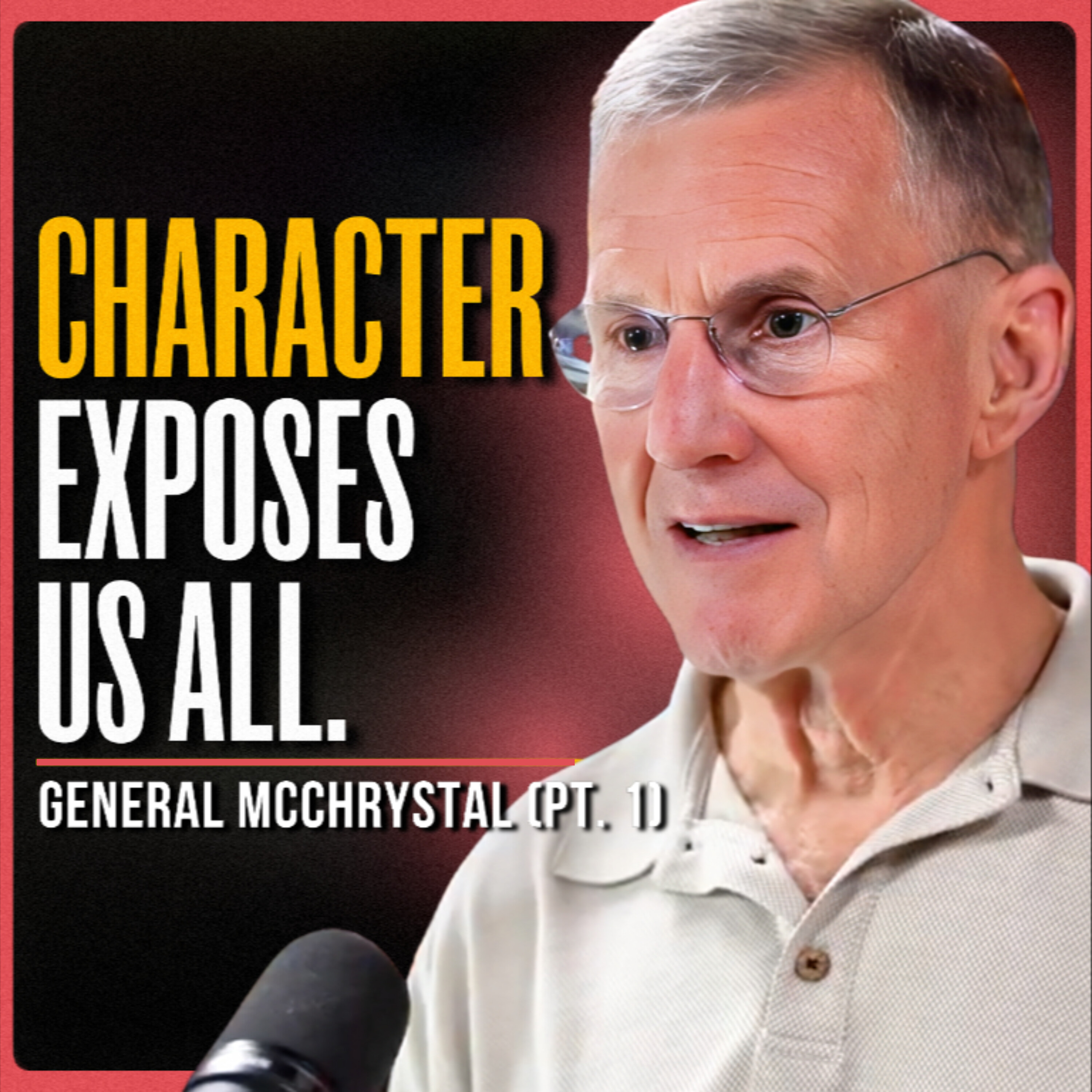
In this episode, host Ryan Holiday engages in a deep conversation with retired General Stanley McChrystal about the essence of character, its importance in leadership, and how discipline often outweighs talent. They explore the complexities of character development and provide historical examples that underscore the significance of making principled choices.
Written by AI. May contain mistakes.

Get the gist, explore an idea or ask about something said.
 Claude
On The Daily Stoic, what are the key points of this episode?
Searching your listeningAutomatic transcript. May contain errors.
0:28Why choose a Sleep Number smart bed? today. This message comes from Capital One. The Capital One Venture X Business Card has no preset spending limit, so the card's purchasing power can adapt to meet business needs. Plus, the card earns unlimited double miles on every purchase, so the more a business spends, the more miles earned. And when traveling, the Venture X Business Card grants access to over 1 ,000 airport lounges. The Venture X Business Card, what's in your wallet? Terms and conditions apply. Find out more at CapitalOne.com slash VentureXBusiness. What can 160 years of experience teach you about the future?
1:05When it comes to protecting what matters, Pacific Life provides life insurance, retirement income, and employee benefits for people and businesses building a more confident tomorrow. Strategies rooted in strength and backed by experience. Ask a financial professional how Pacific Life can help you today. Pacific Life Insurance Company, Omaha, Nebraska, and in New York. Pacific Life and Annuity, Phoenix, Arizona.
1:36Welcome to the Daily Stoic Podcast, where each weekday we bring you a meditation inspired by the ancient Stoics, a short passage of ancient wisdom designed to help you find strength and insight here in everyday life. And on Wednesdays, we talk to some of our fellow students, of ancient philosophy, well-known and obscure, fascinating and powerful. With them, we discuss the strategies and habits that have helped them become who they are and also to find peace and wisdom in their lives.
2:21We don't control what's happening in the world. We don't control, by and large, who our leaders are. We don't control, by and large, what our leaders do. We don't control the ethics or the standards that other people hold themselves to. I wish it were otherwise, but it isn't. But the one thing we do control, one thing I've been thinking a lot about now, as it feels like the world is falling apart, is we control who we are. We control what we do, we control the standards we hold ourselves to. It comes down to character. Character, or a lack thereof, is kind of why we're in the mess that we're in, and it's going to be our way out of this mess.
3:03I read this book on character by General Stanley McChrystal back in December, which feels like a lifetime ago. That's what living in a world of characterless leaders will do to you. There's been disasters since. There's been corruption since. There's been needless division. There's been hateful things that have happened. There have been terrorist attacks. There's been a lot, right? And I've been thinking about this book almost every day since. The subtitle is Choices That Define a Life. That's what character is. It's not anything anyone makes you do. It's not necessarily something that's even incentivized or rewarded.
3:44You either have character or you don't. You either make character-driven choices or you don't. And so I was really excited to have General Stanley McChrystal on the podcast to talk about what felt like a throwback kind of a book. It's really a series of essays, some short, some long, all about the idea of character, what it means, how we develop it, how it challenges us, how we are challenged to live up to it. I think everyone should read this book. And I am really excited to have you listen in on this conversation that I had with General McChrystal. He is best known for his Joint Special Operations Command, which he held in the mid 2000s.
4:27After his time in Afghanistan and Iraq, he built a consultancy firm called the McChrystal Group, works with executives and Fortune 500 companies and multinational corporations, trying to help them deal with change. deal with building teams. And for all that work, this book is much more individual. This is much more about what we do as human beings, what we do with the problems, dilemmas, crises, and opportunities in front of us. And I really enjoyed this conversation, and I think you will enjoy listening to it. I'm going to split it up into two parts. Part one, we're going to be talking about the evolution of character, talking about virtue and leadership and decision-making, and some historical examples that he and I nerd out about a little bit.
5:14And I think you're really going to like this conversation. Thanks to General McChrystal for coming out. If you haven't read his other books like Team of Teams or Risk, I think you are missing out as well. But this is my favorite of all the books he's written. And we talked before a couple of years ago about his Risk book. I really enjoyed that conversation. And I think you will like it too.
5:37Two of your books are probably on the wall in here. Did you see it? One of them is up there. yeah okay so there's a company called books by the foot and they do it for like film sets and stuff and so that's who we used to to send them in but then i asked portfolio to send me a copy of every book in there that's cool anything so i think you should be in here at least i don't know if risk could come out yet it's so easy to get old books now because people don't keep them like they i know yes and you can tell you can kind of see like different eras like oh this person was super popular then and so it's probably like they died and then their kids took them to goodwill or whatever what am i supposed to do with dad's books you know i my house is full of books and nobody's gonna want them yes i know i know it's sort of a metaphor you like collect all this stuff and then it's it's worth something to you and then it's not just worthless to someone it's like less than worthless because they gotta get rid of it i know although i just saw there was an auction i'm into like weird antiques it's very clear that sherman's great-grandchildren are finally getting rid of all his shit because like there were all these like it's like a signed copy of grant's memoirs stamped with sherman and it clearly went from him to his son to his grandson and his great-grandson's like what am i gonna do with this i've got stuff like that i've got my grandfather's old swords and stuff like that and nobody is gonna want him hopefully one of my granddaughters will take come out of, you know, something, but.
7:01Yeah, that was what I would have liked to have that. It's worth more to someone who's not related to you than your own family. Exactly. Did you work out this morning at the, at the last spot? Did you run or what'd you do? Today was a lifting day. So I do, I'm 70 now, so I do a whole bunch of, I do an hour and a half, whole bunch of abs and then some lifting, not impressive. Really? And then the other day I do, I do an hour and a half each day. The other day I do 70 minutes on an elliptical, then 20 minutes on an indoor bike. Wow. Which, you know, you have to watch YouTube. You have to be watching something.
7:35You have to occupy the mind. Otherwise, you're not. Yeah. Yeah. I do that every day, seven days a week. My wife gives me a hard time because I never take days off. Yeah. Even if we travel at like five in the morning, I get up at two. Yes. Because my mind will be better if I work out. I know. I didn't get through this morning because I was staying in the same hotel as you. Yeah. And I had my kids. And it's actually an interesting question. Maybe it goes to your risk book. what age can you leave children unoccupied in a hotel room? Yeah, that's a good question. Our oldest granddaughter's now just turned 11 and her sisters are eight and five, but I wouldn't leave them.
8:06Yeah, I know. Unless I was like next door. Yes, I know. I took my six-year-old to Las Vegas with me a couple of weeks ago. I had a talk. He was out of school and I can't perform unless I have worked out first. Right. And so I was like, okay, you're going to sit here. Here's your iPad. I'm gonna do a very fast run on this treadmill. And I was like, it seemed normal to me. And then there was, of course, no other children in the gym doing this. But I was trying to think. I was like, I think I might be able to sit with it. But if my wife found out that I went for a run while I left them in the room, she would murder me.
8:43Yeah, same way. We've got the three granddaughters and we told the oldest we'll take her wherever she wants when she's turned 10. Yeah. You know, we're thinking she's gonna wanna go to Paris, you know, and she goes, Ohio. Really? Why Ohio? I have no idea. Did you go? No, not yet. We're going to take her as soon as she wants to go. It's a real fun trip to Cleveland, I guess. I was going to say, what are you talking about? Well, I loved the book and I thought maybe we start with character. You know, obviously we talk a lot about character, but you have a pretty good definition of it, which I don't know if I'd seen, like character is one of those things, you know, when you see it, but it is a hard thing to define.
9:24Yeah, it is. What's your definition? Well, my definition is that it is a combinational equation, a product of two things. There is your deeply held convictions. And I always got to explain that because it's not just little things you believe. Yeah. It's things you've pressure tested. Yes. Things you've thought about. Things you're willing to live to or die for. Yes. Times your personal discipline, which means if you have no discipline, the output is zero. Because we can all have these great convictions, but if we don't follow them, we don't have character. Your ability or your willpower to bring them into existence that has to be layered on top of what you actually think.
10:07If you don't stand for anything, obviously you have no character. But you could be a very sort of philosophical and thoughtful person, but you need a certain fortitude to will them into existence. And that discipline, I widened that a bit because sometimes it's courage. Yeah. If you're under great pressure. Sometimes it's just the force of habit. You've got to force yourself to do those things that you believe. And most of us don't do that perfectly. Yes. Yes. Yes. Well, it is interesting because we tend to think of virtue or character as a thing that you have or a thing that you are. And I do think when you go back to the ancients, they were very clear that it was a thing that you did.
10:47Like Aristotle is saying that virtue is basically a habit. It's a practice. It's like any other skill. It seems weird to reduce something so moral down to a skill, but again, yeah, just thinking it doesn't mean anything. It's actually your ability and your track record of doing it that makes you the thing. And we can be both at the same time or both at different periods. I tell the story of Byron de la Beckwith in the book, who is a young Marine in 1942, goes to Guadalcanal. Then he is badly wounded at Terua, is mustered out as an American hero. Yeah. And part of the Tom Brokaw's greatest generation.
11:3120 years later, he murders Medgar Evers in his front yard. Yeah. And so was he an American hero? Was he a psychopathic racist murderer? Yeah. And the answer is yes. Yes. Yes. That actually is fascinating. I don't think it's something we talk about. just how, like the bravery of the people who went overseas to fight fascism and then came home and were the fascists is a part of American history that we just kind of skip over. And do we have good days and bad days? And it gets to the, as the Greek said, your virtue is what you do. And I think that's what your character is. So we do have days when my character is better than other days.
12:12And we have moments when I'm embarrassed by my character. And we have other times, which I feel very good about it. And I think it's true of all of us. And I think it's true of our society too. We kind of rise sometimes and then other times we scrape the bottom. Or maybe with someone like that or some other people that we could point to now where, so if the equation is your deeply held beliefs with your willpower and fortitude and commitment and all your actions. So what happens when you have someone who they have the fortitude, they have the courage they have the strength, and then their compass gets spun around, or in a less eloquent way to put it, what happens when their brain gets fucked up?
12:54Which happens, right? You know, people get sucked down rabbit holes. Like, this is why I think when we look at the four virtues, courage is important, discipline is important, justice is important, but then wisdom, the ability to separate a good cause from a bad cause, truth from fiction. I think you sometimes see people who actually are high character, but they got spun around and now they think that this thing is a cause worth killing for, giving everything for, but they're just not on this planet anymore. That's right. Or sometimes they get on the bus and they kind of don't realize what they've done.
13:31Yes. Suddenly they find themselves, oh my God, I am in a group or with people who are doing things that I fundamentally don't agree with. Yes. But it's hard to back off once you're committed. Yes.
13:49Thanks to Toyota Trucks for sponsoring this episode. When I bought my ranch in 2015 out here in Basko County, I drove my car about halfway down the dirt road that we live on, thought this isn't going to work, stopped, parked it, walked the rest of the way home, borrowed my wife's car, drove into Austin and bought a truck. What I bought was a Toyota Tacoma. And this truck wasn't just transportation getting me to and from my house. It unlocked a whole different style of living for us, not just on the ranch, but in our little Texas towns. There were places I could go now that I couldn't go before, especially out here in the piney forests, through the fields, and on the unpaved roads like the one that I lived in.
14:34We got to go deep into the hill country's wild beauty. We've driven all the way out to East Texas. We've driven across the country. And by we, I mean not just my wife, but both my kids who I drove home from the hospital in that truck. Toyota trucks are built for those who understand that the best adventures happen when you're willing to veer off course. Because you never know when you'll end up on a Toyota adventure detour. And of course, this is stoicism too, because every detour, every obstacle is an opportunity. But it's helpful if you can handle the difficulty inherent in that. If you've got the resilience and the right companion to make it wherever the road takes you.
15:13Discover your uncharted territory. Learn more at toyota.com slash trucks slash adventure dash detours. Human, your body has a performance superhighway. 60 ,000 miles of blood vessels that deliver oxygen and nutrients to every cell. This, of course, is your cardiovascular system. It's the foundational system that powers everything we do. Both elite athletes and longevity experts invest directly in the cardiovascular system because supporting healthy blood flow is critical for energy, recovery, mental clarity, and overall performance. That's where human comes in. That's human with two Ns. They started out of research at the University of Texas, near where I live, and have 15 years of experience making award-winning supplements for nitric oxide production and healthy blood flow, now used by over 160 pro and college sports teams.
16:09Human Cardiovascular Health Daily is a plant-based and made from clinically studied ingredients like grapeseed and seed kelp extract. It supports nitric oxide production for healthy blood flow and energy while also supporting blood pressure and helping support the delicate interlining of your blood vessels. Just two capsules each morning will power energy and recovery while also playing the long game by supporting long-term vascular health and healthy aging. Human has an exclusive offer for our listeners. You can visit human.com slash stoic for an extra 15 % off your first purchase. That's enter code S-T-O-I-C.
16:43Stoic at checkout. That's human with two N's dot com slash stoic for an extra 15 % off with code stoic at checkout.
16:55Well, you talked in the book of this, something I related to, like, I think when you look back on your life, however old you are, whatever you've gone through, you're going to wish you were more contemplative and sort of principle driven. Like you look back and there's all these situations where you had your reasons, but I've found that the reasons don't age well. And it is kind of a shame that we leave the sort of reflective part to the end of life. We should be doing it as we go. I think about different decisions I made or people I worked for, things where I was in where I was just, as you said, just kind of going along with it or just too busy.
17:30And I wasn't going, does this align with who I want to be? Am I making the world better or worse? Is this right or wrong? I was just doing, and I wasn't thinking about it the way that I think I'm better at thinking about it now. Yeah, I feel the same way. I think of the story of Robert E. Lee. Of course, you preceded me at the military academy my many years. More years than people want to say. Not that long. Yeah, he was known as the Marble Man as a cadet. And it wasn't a compliment. Right. People meant that he was too stiff and he was too interested in his future. And I go back to my time at West Point.
18:07I didn't think that way. I was there trying to wrench every bit of good time that I could out of a place that didn't want you to do that. And I almost lost it all because of my lack of personal discipline. And I could have been thrown out. It wouldn't be funny now if I was telling you I almost graduated from West Point. But you want life. You want to have a long-term view of life, but you don't want to be old before your time. That's true. And there's that constant tension. Yeah. How much of a very mature adult should you be when you're still young, but at the same time, don't make life-tarnishing mistakes?
18:43My experience with the service academies, I am blown away when you meet these 18, 19, 20-year-old kids and you're just like, I wasn't like that at all. Like there's a seriousness and a gravity and a dignity. And also, I would say like an earnestness that I think I was too insecure or fundamentally unserious to one if you qualified for one of the academies. But just to be thinking about some of the weighty things that they're already thinking about at that age is very impressive. Which I agree. And I know your time at the Naval Academy is really valuable. And I think all the academies reflect that.
19:21And the challenge is always, I never wanted to see cadets who want to be admirals or generals or think about that. Yeah, that's true. There are always a few in every class who are already thinking about it. Most of them want to be lieutenants or captains. They want to be good lieutenants or good captains. Yeah. I think that's about the right focus. They want to be good sailors or good soldiers. If you're starting to think, I am going to be a great person someday, then I think you lose focus. focus. Well, that's probably the John Boyd thing about the to be or to do. Are you trying to go somewhere to accomplish and do a certain thing or are you after a certain title or rank and you're forgetting that those things are extra?
20:03They should be rewards for doing the same. It's the same for a young person today that wants to be famous. No, you want to be so good at something that fame is perhaps a byproduct of what you're doing. But if the aim is fame or money, you've got it backwards. Yeah. And I think if you are trying to be so careful, you never make any mistakes that you are unlikely to accomplish much either. Yeah. You know, this idea that character is destiny, I come back to because character is fate, because it's true, you know, you can sort of see in someone and either their fundamental greatness or their flaw. And then I don't know if I like the idea that we're fixed, that we can't change.
20:49You seem to think that character is something that can evolve and grow and change, right? That's something you can work on like any other skill? I think it has to. I don't think my view of my character when I was young was static. I had a sort of general heroic view of what my father was or what other heroes were. But as I went through life, a couple of things happened. One, life gets more complicated. And those things you think, in this situation, I will do this or I will do that. And the reality is it gets gray, new pressures, new challenges. And so you think differently. And if we don't grow, then I think shame on us.
21:28Yes. If you're the same as you've always been, then you're saying that, you know, like, have you ever heard that people go, if a 17-year-old me could see me now, they'd kick my ass. And it's like, who cares what a 17-year-old thinks? You know, like the idea that the smallness of your world then, that you're trying to get back to the purity of that is silly. Obviously, there's, I think, an idealism that you want to protect, but you shouldn't necessarily get more jaded and cynical as you get older. But yeah, your view and your understanding of things should certainly evolve. I remember an old quote by a Frenchman.
22:01He was told his son had become a communist. And he said, if my son had not become a communist by age 20, I'd have disowned him. If he's still a communist at 30, I will disown him. Yes. Well, you know, there's that quote, like, if you're not liberal when you're young, you have no heart. If you're not conservative when you're older, you have no brain. I've always hated that quote, which, by the way, is a very old quote. But what I hate about that quote is, sure, as you get older, you should get wiser. But the idea that you should become more risk averse, more closed off, that your heart should harden as you go.
22:33And here we're talking about lower C conservatism, not any one specific political policy. But the idea that you must become more conservative as you get older seems profoundly sad to me. Yeah. As you see more of society, I would like to believe that your empathy for people. Yes. As you experience some of the difficulties other people do. Yes. We had a fascinating ride in an Uber driver here today. And he had served in the Army starting back in 1988. And then he'd gone after four years, he'd gone into the Texas justice system. He'd worked in a couple of different prisons and jails. and he had a view of the world that's not exactly mine, but he had a view of the world that was pretty thoughtful for his journey.
23:16Yeah. And so you have to respect that. You have to say he grew with it, and now he's got grandkids, and he's thinking like I think it was very interesting. Yeah, there is something about – it's like exactly reverse, I think, that like the older generation should be all about sort of keeping things as they are because they're not going to be around. Now, you know, if anything, you should become more empathetic, more concerned with the problems off in the distant future because they're going to affect, you know, the people that you claim to care about the most. It's like, I love my grandchildren more than anything.
23:52By the way, I'm willing to bankrupt the country to make sure my benefits stay the same. You know what I mean? There's something backwards about how we're doing it. Like I gave this talk at this biohacking conference a couple weeks ago, and there's this technology now where old people can get blood transfusions from young people. The idea is like the blood transfusion from a younger person in an older body reinvigorates the older body. But I said, to me, this is the perfect embodiment of our ass backwards system where the old are sucking the blood from the young instead of planting trees in whose shade they'll never sit, you know.
24:26But yeah, I think if you get more cynical as you get older, that's very sad. Well, it is. I mean, there was a movie that I watched a few years ago about raising orphan children and then harvesting different organs from them. Again, a metaphor. I go, oh my word. I mean, what are we thinking about here? But yes, we do a version of that. So character can't be fixed. I think we have to believe that because otherwise, what are we doing? And then I think we have to understand that philosophy wasn't supposed to be riddles and abstractions, but the medium through which society developed its character.
25:06And by the way, this is also what the study of history was. And this is what literature was. It was all focused on what the ancients thought was the most important thing, which was the development of character in the next generation. And now, you know, who knows what the philosophy professors are doing at Insert University, and you read most literature and you're like, what is this? You know, like, I don't really—it's all the antiheroes, and there's something interesting. Even history seems to be so bogged down in facts and figures and not what can we learn from this about the good life and a good world.
25:45I think we've made knowledge of history and philosophy as something pretentious. Yes. And I remember I went to the Navy War College when I was a mid-grade officer, and the lecturer got up. We were reading the Iliad as part of the course. And he says, well, if you haven't read it in the ancient Greek, it's just not the same. And most of us just kind of rolled our eyes and said, we're lucky you're getting us to read this at all, cut-down version. But I think when we make philosophy not approachable for the average person, and when somebody throws around the terms in a way that highlights their erudition and not yours, we push people away from it, when in reality, it should be eminently practical.
26:29Yes. That's what they were actually trying to do. This is the world you live in, and here's a way to think about it. Yeah, and these weren't like these sort of tenured academics. I mean, Socrates fights in the Peloponnesian War, like a great power conflict. And, you know, they ran for office. They played sports. They were not like eggheads. They were of the world. And they were trying to figure out how to have a good life in a bad world. I've been thinking about this recently, how we tend to romanticize the past. And again, you know, Athens looks cool in the ruins and it looks cool in the pictures.
27:05But Socrates is living through Sparta and Athens and existential conflict. And then he lives through the 30 tyrants. And then he lives through, you know, a death sentence. He doesn't live through it, but it concludes with a death sentence. You know, the Stoics lived through Nero, the fall of the Republic. Marks Aurelius is emperor during a plague and a famine and a flood. It was just as scary as now. And they weren't just walking around in their togas eating olives and figs and stuff. It was stressful. And they thought, just like we do, that things were falling apart or things were moving too fast.
27:40And philosophy was supposed to help them deal with the practical problems of that existence. And I think of the founding fathers. We tend to say now, they were 10 feet tall. What would they do? They were deeply flawed. And they realized that their fellow citizens were deeply flawed as well. Yes. And so they set up a system to account for that. Yes. And I think sometimes we shouldn't be intimidated by that. We should say we are not founding fathers now. Yeah. But there has to be a term because we now own where the nation is and we're responsible. Well, they were—I was just working on this for a talk I'm going to give next week.
28:19They were—the average age is like 40. Some were 20. But they were older than their years in the sense that they were steeped in these classical ideas. Washington is the only one who doesn't read the classical texts in Greek or Latin, but he did read them in English. And like, I've been joking about this because Ron Chernow was here a couple weeks ago. The Hamilton of its day was this play called Cato that was all about classical virtue and discipline and courage and principle and country. And they all knew it by heart. They were sort of steeped in these ideas. I think, again, yeah, we tend, like, when I learned about the founders, they talked about Locke and, like, these other, they talked about their sort of legal philosophical influences, which to me is secondary to the philosophical, the classical philosophy that influenced them as human beings.
29:15Like Adams' line about how a country without virtue and the people will break through the Constitution like a whale through a net. They understood that they were setting up this legal system, but it was still incumbent on the individual to be a man or woman of character, that you have to cultivate this. And that's the primary purpose of education was to cultivate character in people. I think that's an extraordinarily important point that I happen to feel that we don't do very well right now. because we don't have a body. Now they were elites, let's be honest, not every person, but we don't have a body of knowledge that is sort of entry-level requirement for being in the conversation.
29:57And because of that, we don't have a foundation where we can talk about things and refer to things through those ideas. And I think that's a mistake. Yeah, when they were signing the Federalist Papers with these pseudonyms, Everyone understood which ancient figure they were alluding to when they called someone a Catilene or a Cato. Were they a Republican or a usurper? There was just this sort of shared understanding of the good guys and bad guys, cautionary tales, exemplary examples. When Washington leaves after two terms and when he resigned his commission before that, everyone understood this was a nod to Cincinnatus.
30:37And today, I mean, how many people could even know that Cincinnati is from Cincinnatus, right? But this is a myth that probably isn't true. Like there probably was no Cincinnatus, or maybe it didn't happen that way. But that's secondary to the fact that for thousands of years, people were taught about the story of Cincinnati as a model of someone who temporarily held power on behalf of the people and then was willing and disciplined enough to lay it down. You know, you've just ruined my day. If Cincinnati wasn't real. Yeah, I don't think you—I mean, there's no verifiable proof he existed. Yeah.
31:17But I feel like history nerds out about like, did Washington actually cut down a cherry tree or not? It doesn't matter. That's not the point of the story. That's true. You know, there was a book when I was a younger army officer, it's still around, written in 1968 by Anton Myhrer called Once an Eagle. And it was read by most of the army officers of my generation. Yeah. And as because of that, it became something that you could refer to. Yes. Nowadays, we use lines from the Godfather. But from this book, there were these two characters, Sam Damon and Courtney Massengill. One was really a good guy and one was not a good guy.
31:53But I read the book about seven times through my career. And when I was very young, it was binary. Sam Damon, Nebraska farm boy, enters the military as an enlisted man, wins the Medal of Honor. And he's thrifty, brave, clean, reverent. And Courtney Massengill is an Ivy League conniver. but as you read it, as you get older and you are in a more complicated part of your career, you start to view the characters differently. You don't like Courtney Massengill, but you start to get it. And you don't, you still love Sam Damon, but you see his limitations. But the most important thing is in the military, someone could refer to someone else and they say, he's a Courtney Massengill and you immediately go, I got it.
32:37And the same for Sam Damon. So I think having those common things we can analogize to are really important.
32:51We just took our kids to an outdoor performance at the Nutcracker. They had a snow cone, and then they went insane in the car ride home. And one of the things I try to remind myself when that's happening is that I don't control my kids' behavior, especially when they're too far gone like that, but I do control how I respond, right? That's stoicism, but it's also what Dr. Becky talks about. Dr. Becky is a clinical psychologist and a best-selling author, and she founded Good Inside, which is there to give parents practical, actionable tools for handling those everyday challenges with confidence.
33:27My wife introduced me to Dr. Becky's books. I love them. I've recommended them a million times. I've had her on the podcast. And as it happens, Dr. Becky is hosting two live Q &A events for good inside members. I am one of them. She signed me up for it about a year and a half ago. I've loved it ever since. On December 1st, you can join Dr. Becky for her How Not to Raise Assholes event, which is about avoiding entitlement and raising kind, empathetic kids. And on December 15th, she's hosting her How Not to Lose It Over the Holidays event, which I'm sure we could all use. As I said, I'm a big fan of Dr.
34:04Becky. She's been a great influence for me as a parent and just as a human being. And Daily Stoic listeners can join for 15 % off with code STOIC15. You just got to head over to goodinside.com to catch the events.
34:24well just to have a text and evolve with it is is a very powerful thing i was going to write something about gatsby it's the hundred year anniversary of gatsby this year and that's a book you know i read in high school and you realize oh they're teaching it so you know what the jazz age was not as what it's supposed to be this sort of these different personalities this the effect of money on people one of the one of the scenes that i just reread it and one of the scenes that strikes me the most is there's this part where, you know, Gatsby wants to get to Nick Carraway's cousin, who he's obviously in love with.
34:57And he says, hey, you know, I had this like little business thing. Would you want to be involved in it? And he goes, no, I'm okay. Nick Carraway does. And he says, you know, later, I reflected that on that as potentially being one of the great crises of my life, that he realized that Gatsby was trying to draw him into the criminal underworld. And he had just sort of shrugged it off. And he didn't realize just how narrowly the whole course of his life might have turned out very differently. And you're going to miss that at 16. I missed it, ironically, in my 20s when I desperately needed to see that when I was in my own potentially going down a road like that.
35:35And then here in my late 30s, I go, oh, that's what this is. And there's something about coming to a book over and over and over again And that you're able to, once you get the basic facts, then you notice all these other layers that you didn't know were there. Absolutely. It's like looking at the Spartans in the military. Particularly after 9-11, we fell into another phase where we just were in love with the Spartans. Yes. But they were an awful lot like the pre-Civil War South. Yes. And they did things to the Helots or the slave population that were unthinkable. Yes. And they did it routinely.
36:11Yeah. Yeah, we're fetishizing a military death cult. Well, that's right. And, you know, they did some heroic things, but you look just two-dimensionally at anything or anyone. Yes. And you draw away a certain view, and I think that's dangerous. Yeah, the Stoics talk about how we never step in the same river twice. And so when you come back to these books, there's the experience of rereading a book you've already read, and you see what you noted. And then just reading Gatsby again, there's this annotated 100-year anniversary edition. So I'm reading it a fresh copy, and I'm noticing different things because I'm not even able to see what I remembered before.
36:51It was actually funny. I wrote this book a couple years ago about Peter Thiel and this crazy thing he did. And I had been reading one of Eisenhower's memoirs at the same time. And then I remembered that Mayor Wolfsheim, the character in Great Gatsby, is the stand-in for the gangster Arnold Rothstein, who fixes the 1919 World Series. Did you know this? No. Okay, so did you know the 1919 World Series was fixed? I probably know more about that than I knew about Gatsby. So there's a character in Gatsby that's supposed to be that. And I was reading in Eisenhower's memoirs, he was listening to the radio when the news broke that it had been fixed.
37:30And he's talking about how that always stayed with him, that events, he'd remembered watching it on the, I guess, probably listening to it or whatever. And then later it breaks that it had been fixed. He goes, things are not always what they seem. There's always things beneath the table. And this shaped his understanding of power and news, et cetera. So I go back and I'm going to, as I'm writing a book about a conspiracy, I'm like, I'm going to go read that section in Gatsby. And in that section in Gatsby, Nick Carraway is introduced by Gatsby to Mayor Wolfram, who is Arnold Rothstein. And Gatsby goes, this is, you know, Mayor Wolfram, he fixed the 1919 World Series.
38:06And Carraway goes, you know, I knew that it was fixed, but the idea that it had been a person who had done it, that one person had affected the lives of millions of people. He's like, I just thought, I thought it happened as, he says, like the result of an inevitable chain, not that an individual could change the course of history. And so anyways, of course I missed that the first five times I read the book, but it's not until I'm writing about something and then reading something else, and then you suddenly make these connections. And so it's not enough to just read some of these texts, the Odyssey, whatever, once.
38:42You have to have this kind of lifelong engagement with it, which I'm sure was easier in the ancient world when there are a lot fewer books. But I wish we had a culture where we talked about books more, because I can read a book and I probably get 40 % of the real message. But if I'm in a group with somebody who then describes like Gatsby, I read Gatsby back in school, but you just told me some things I had no idea. Yeah. But if I've been in a group where somebody said, oh, yeah, this. Yes. I wouldn't have probably admitted it to the group. Sure. But I would have said, oh, for sure. But trying to get as much as you can out of something as complicated as a good book.
39:18Yes. Is important. Yes. And sometimes you just can't know what you didn't know until you know it. I mean, obviously, I've had this 20-year relationship. I guess it would have been 15-year relationship with Mark Shulis' meditation since I read it in college. And then it's not until we're in the middle of the pandemic that I go, oh, wait, he wrote this during a plague. This is a plague book. And he's not being metaphorical here. He's being literal. He's literally talking about the way that this screws with our minds when there's this thing out in the air killing people and the stress and strain it puts on society and relationships and how exhausted we get.
39:56And you go, oh, unless I'd been alive in 1919 and experienced that pandemic, I couldn't have ever gotten this until we're here. And so I think that's the, it's critical that you not just read, but then you go out and experience because that informs the reading. And it's this sort of endless feedback loop of reading, experiencing, reading, experiencing. Yeah, absolutely. You talked about something, you said like, what is it, like the tale of the dinosaur? The dinosaur's tale, right? Yes. What is that? Yeah. And I used a story, a real one, where I was commanding a battalion of rangers and we were told that the chief of staff of the army was visiting, which is the head of the army, really important person coming out.
40:37Yeah. And because we do a preparation for a big demonstration and we're going to really wow him, we didn't want to do it. But once you're prepared, you want to go on and show him what you got. But it's a Friday afternoon, and about noon, we get this call that says, well, the chief's schedule got too busy. We canceled the afternoon, so we canceled this. And so I had to go to the troops and tell them, all right, you've done all this stuff. You've rehearsed. We were all ready. It's canceled. It's something more important. And everybody was disappointed. Yeah. Now, if you canceled it on Monday, they'd have said, great, we avoided it.
41:11Yeah. But after you've done all the work. And what it really came down to is you get very senior, very important. You've got handlers around you. And if you're the senior person and the schedule starts to get full, I go, we got a problem here, Ryan. We got to cut some stuff. And you go, is that any problem? It's not a problem for you. I go, no, sir, no problem. Yeah. And you are like a dinosaur where you've gotten huge, your tail's big, your brain didn't get any bigger. and you turned and your tail knocked stuff over. And it happens all the time. And unintentionally, the decisions or non-decisions of very important people affect incredible numbers of people.
41:57And it's still your fault. If you're the senior person, even if the schedule got full and there wasn't another option, it is your fault. Now, that means that whenever possible, you should be informed of it. you should ask probing questions. Now, wait a minute, what do we cancel them? What's the effect on people? And that sort of thing. And understand that you're doing damage that you probably need to repair. And no one's ever going to come to your face and go, sir, that was rude. Or sir, so-and-so missed his daughter's recital for no reason as a result of what you did. So you're first off not aware of the impact you're having on people.
42:36You're also not aware of the emotions or the resentments that it's generating. And there's going to be consequences for that at some point too, I'm sure. Some are huge. It's like being late to a meeting. Yes. It's a sign of power on the part of some people. They automatically show up late. So everybody is convened and waiting. And then they breeze in and they go, sorry, I'm late. Yeah. They didn't have to be late. I mean, occasionally things are going to happen. But the reality is it's a sign of arrogance. Yeah. And it builds up this scar tissue. It builds up resentment over time. and leaders need to understand they're doing that.
43:09Yeah. There's a story about Antoninus, who's Marcus Rullus's successor. And obviously the Roman empire is enormous and they would have to tour the different provinces. They'd go see this people. They'd inspect the troops over here. And it's also, I'm sure, a very pleasurable endeavor for the emperor. He's fed it at parties and they're bringing him the best this and the best that. But Antoninus does almost none of this. And we're told that he doesn't do it because he understands how expensive and how exhausting it is to host the emperor. And I just think of the empathy to go like, hey, I would like to do this, but I wouldn't like to do it for the outlay that it has on other people.
43:52It's not worth it. And I think sometimes as a leader or as a person who's used to getting what you want, you just think about whether it's good for you and you're not thinking about what it means for it to be good for you, what it takes out of other people for you to get what you so willingly accept or appreciate. When I was still on active duty, there was a brigadier general in the Army who was in recruiting command. And so he would go around the United States to visit recruiting locations. And his aide-de-camp wrote a letter that was sent out to all the different subordinate units so they could always be prepared for his visits.
44:28And, of course, it ended up going viral because I remember something that says that the general is a big man, so you need to get a minivan and take out the rocket seats so he's got room. And then it said he wants a Diet Coke or Diet Pepsi in there in a bottle, not a can. And then it goes, can, tastes funny. And then it says, I remember this line, if there are chocolate chip cookies, they will be consumed. And I remember seeing this thing and I meant, oh, my God. One, who's going to provide the chocolate chip cookies? Who's paying for that? It's not the army. Sure. And if the general knew about it, hopefully he went ballistic.
45:09Right. He might have one time said, I like chocolate chip cookies. And he doesn't know that down the line, this has come down as the word of God. But this happens. Yes. And whose reputation was really impacted was not this aid, this over-eager aid. It's the person themselves. When it's not even them. It's also just this is now the frustration with leadership generally or the public and what you're a representative of. Exactly. There's a story about Cato. So Cato is a Roman senator, well-known, later a general. He's traveling, I think maybe for personal reasons, he's traveling through the empire, and he would often travel ahead of his baggage train.
45:50And, you know, he gets to the city one day, and usually, you know, they know he's coming. And so there's this—the whole rigmarole. and he gets there and no one's there to greet him. And he just sits down and waits for the people to arrive. And then when they get there, oh my gosh, we're so sorry. It's the whole thing. And he says, you know, I don't care. He's like, you should just be aware that not all your guests will be Kato's. And the point is you want to be chill. And on the other hand, you want to understand that everyone's not always going to be so understanding. The reason Kobe Bryant played for the Lakers and not the Nets is that as he was touring the different teams before he gets drafted, the Nets had to send him back to LA or something.
46:33He visited the Nets. They booked his travel. They put him on a middle seat in economy on the way home. And he was like, no, never these. So you never know. Like you want to assume everyone's chill and humble about these things. And they're not going to be. I think about the contrast of those two stories. You know, that's fascinating. And you hope you're not the kind of person who needs or demands that. I kind of think we have gone too far in our country towards a regal treatment of the president. I actually think we ought to get rid of hail to the chief. I think that was not the idea when we formed the country that we were going to, I don't think we need over the top accommodations or airplanes and things like that.
47:18And because I think it actually sends a bad message internally and externally when we go too far with that. And that's true of some corporate CEOs and other leaders as well. There's something about the British system where there's a separation between the embodiment of the state and then the actual person running. I don't think they did it on purpose, but that's probably healthier, right? Because the person doing the job is wearing the suit and is much more a government employee, and the other person is the symbol. And in the US, uniquely, those things are merged. Actually, that's a problem. It's like, no, the pomp and circumstance should be in the legislative body, which is the representative of the people.
48:04And then the executive is the executor of that thing. We have a misperception of what the president's job is and who they are, what they are supposed to represent. I think that's the problem. I've never thought of it that way, but I really like that. You know, I got to go into number 10 Downing Street. Yeah. And it's very modest in there. It's not very nice. And where the prime minister works and lives is pretty limited. But it does. It keeps a real realism. Yeah. What am I doing here? Yes. Yeah, yeah. Yeah, it's also weird, like the vice president travels or goes around to do this is sort of the president's emissary in the ceremonies or whatever.
48:43But there is something about, yeah, you're puffing this person up in a way that is probably not healthy. But you do need that. Who greets the team when they win the Super Bowl? Who pins the medals on people? That is part of the role of a state, but it's hard for... You don't make the CEO of a company do a lot of those things. Why don't we create a separate thing? Not royalty, but elect somebody with those skills and that interest. Yes. And they could be that, and we could give them a 10-year term so that they don't have to change too much. But that goes to your point about the founding fathers, which is I think we have, as smart as they are and as impressive as the system they created is, we have...
49:27we have lost the ability to tweak or improve the system. You know, I mean, the idea of amending the Constitution is effectively inconceivable, you know, and if not impossible. It's probably impossible because it's inconceivable. But they were tweaking it, I mean, not that long ago. The last constitutional amendment is not some lofty thing. It's like that Congress can't give themselves a pay raise. Yeah, and if you think about it, it was designed to be updated. Yes. That was the whole idea. They updated it right after they wrote it the first time. Exactly. Immediately after. They were like, we missed all the important stuff.
50:03And we also think that the founding fathers, what their intent was, is sacrosanct. Yes. Well, it is what their intent was back 250 years ago. Sure. Their intent might be different now. Yeah. They didn't know some stuff. I mean, people do that with the Stoics too. It's like, it was 2000 years ago. They didn't know about a lot of things. Like, I would be disappointed if they were not on the same page as us about a lot of stuff that we have subsequently discovered and learned. That would be the whole point. So as you just become closed off to new ideas once you get to a certain age, that's a shame.
50:38I'm 70. Yeah, that's what you do. No, no. You can't do that because just too much comes. And it's too interesting. Thanks so much for listening. If you could rate this podcast and leave a review on iTunes, that would mean so much to us and it would really help the show. We appreciate it. And I'll see you next episode.
51:26We'll see you next time. Thanks. Have a good one. Yep, that too. Want one place to manage all your online and in-person sales? That's kind of our thing. Wherever you sell, businesses that grow, grow with Shopify. Sign up for your$1 a month trial at Shopify.com slash listen. Shopify.com slash listen. Look, ads are annoying. They are to be avoided, if at all possible. I understand as a content creator why they need to exist. That's why I don't begrudge them when they appear on the shows that I listen to. But again, as a person who has to pay a podcast producer and has to pay for equipment and for the studio and the building that the studio is in, it's a lot to keep something like The Daily Stoic going.
52:14So if you want to support a show but not listen to ads, well, we have partnered with Supercast to bring you a ad-free version of Daily Stoic. We're calling it Daily Stoic Premium. And with Premium, you can listen to every episode of The Daily Stoic Podcast completely ad-free. No interruptions, just the ideas, just the messages, just the conversations you came here for. And you can also get early access to episodes before they're available to the public. And we're going to have a bunch of exclusive bonus content and extended interviews in there just for Daily Stoic Premium members as well. If you want to remove distractions, go deeper into Stoicism and support the work we do here.
52:56Well, it takes less than a minute to sign up for Daily Stoic Premium, and we are offering a limited time discount of 20 % off your first year. Just go to dailystoic.com slash premium to sign up right now or click the link in the show descriptions to make those ads go away.
We control who we are. We control what we do. We control the standards we hold ourselves to. Ryan sits down with retired four-star General Stanley McChrystal to talk about the thing that makes or breaks every person: character. They explain what character actually is, why discipline matters more than raw talent, and how great leaders can lose their way.
General McChrystal is a retired United States Army general best known for his command of Joint Special Operations Command in the mid-2000s. He established a consultancy firm, McChrystal Group, in 2011 and advises senior executives at multinational corporations on navigating complex change and building stronger teams.
📚 You can grab signed copies of On Character: Choices That Define A Life by General McChrystal at The Painted Porch | https://www.thepaintedporch.com/
🎙️ Listen to General Stanley McChrystal’s first interview on The Daily Stoic Podcast | Apple Podcasts, Spotify, & YouTube
📖 Preorder the final book in Ryan Holiday's The Stoic Virtues Series: "Wisdom Takes Work": https://store.dailystoic.com/pages/wisdom-takes-work
🎙️ Follow The Daily Stoic Podcast on Instagram: https://www.instagram.com/dailystoicpodcast
🎥 Watch top moments from The Daily Stoic Podcast on YouTube: https://www.youtube.com/@dailystoicpodcast
✉️ Want Stoic wisdom delivered to your inbox daily? Sign up for the FREE Daily Stoic email at https://dailystoic.com/dailyemail
🏛 Get Stoic inspired books, medallions, and prints to remember these lessons at the Daily Stoic Store: https://store.dailystoic.com/
📱 Follow us: Instagram, Twitter, YouTube, TikTok, and Facebook
See Privacy Policy at https://art19.com/privacy and California Privacy Notice at https://art19.com/privacy#do-not-sell-my-info.
