
 Ask ChatGPT


 The Daily Stoic
12 Jun 2024 · 53m
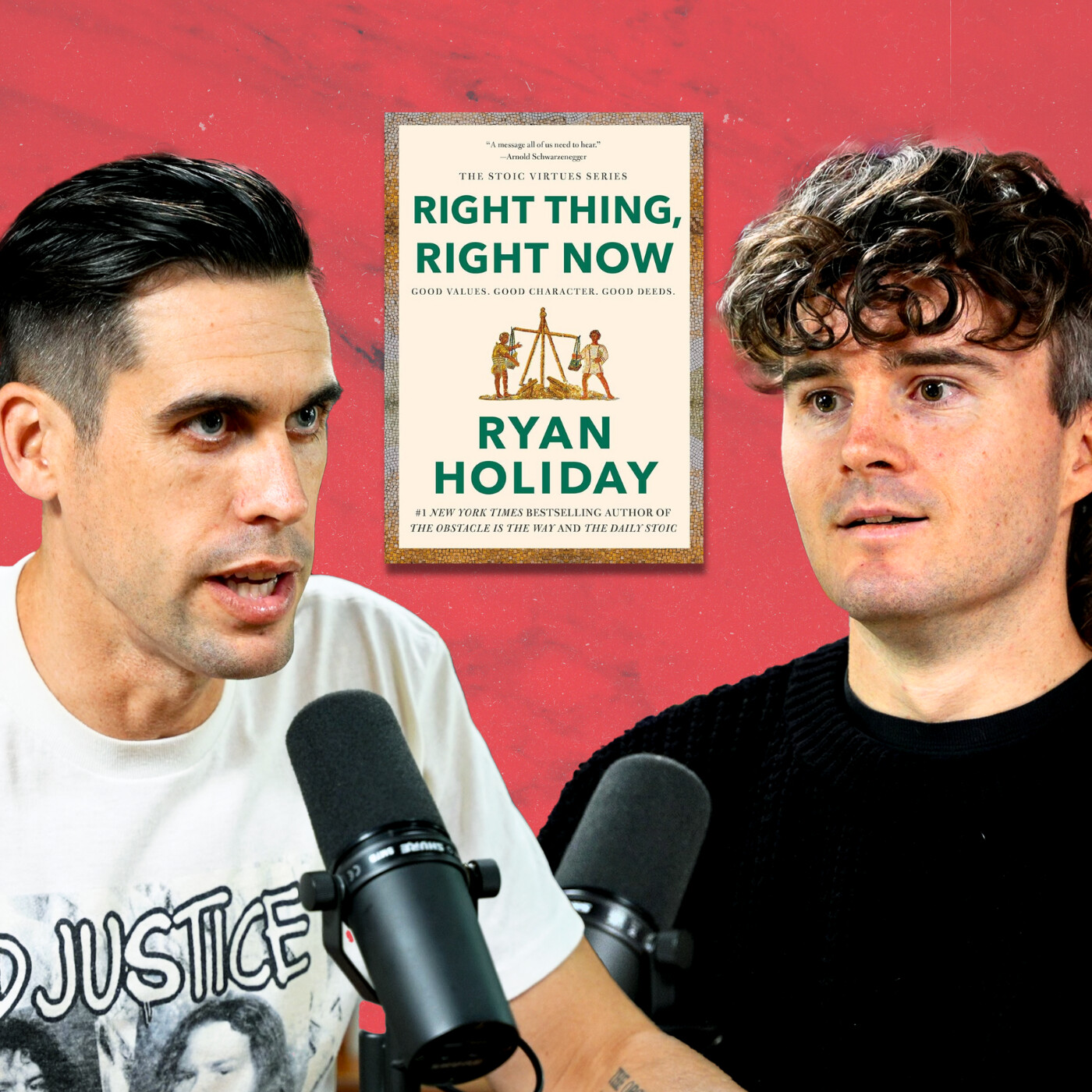
Host: Ryan Holiday
Billy Oppenheimer, Ryan's research assistant
Discussion around the Stoic virtue of justice, its common misinterpretations, and its relevance today.
Written by AI. May contain mistakes.

Get the gist, explore an idea or ask about something said.
 Claude
On The Daily Stoic, what are the key points of this episode?
Searching your listeningAutomatic transcript. May contain errors.
0:00It's time for Cyber Monday, Dell Technologies biggest sale of the year. That's right, you'll find the lowest prices of the year on select Dell PCs like the Dell 16 Plus with Intel Core Ultra processors. And with built-in advanced AI features, it's the PC that helps you do more faster. From smarter multitasking to extended battery life, these PCs get the busy work done so you can focus on what matters most to you. Plus, you can earn Dell rewards and join many other benefits like free shipping, expert support, price match guarantee, and flexible financing options. They also have the biggest deals on accessories that pair perfectly with your Dell PC, improving the way you work, play, and connect.
0:38Whether you just got started holiday shopping or you're finishing up, these PCs and accessories make perfect gifts for everyone on your list. Shop now at dell.com slash deals and don't miss out on the best prices of the year. That's dell.com slash deals.
0:54You've probably heard the headlines about all the different cuts to foreign aid and food benefits. This is having a profound impact on the world's poorest people and the world's poorest communities. But, you know, just hearing about that, that's not what stoicism is about. Stoicism is, to me, what you're going to do about it. And that's where GiveWell comes in. GiveWell is trusted by tens of thousands of donors each year because they provide free and independent research that helps you understand how to have a big impact. GiveWell has spent the last 18 years researching global health and poverty alleviation, and they direct funding to the highest impact opportunities.
1:33Over 150 ,000 donors have already trusted GiveWell to give more than$2.5 billion over the last several years, and research suggests that these donations will save over 300 ,000 lives. I myself am one of those donors. I donate to GiveWell every year. It means a lot to me. And you can find all their research and recommendations on their site for free. And thanks to the donors that sponsor this research, GiveWell doesn't take a cut from your tax-deductible donation to their recommended funds. And if this is your first gift through GiveWell, you can have your donation matched up to$100 before the end of the year or as long as matching funds last.
2:08To claim your match, go to GiveWell.org and pick Daily Stoic from the drop-down menu under podcast. That's how they know that you heard about GiveWell from the Daily Stoic and you'll get your donation matched. That's GiveWell.org, code the Daily Stoic to donate or find out more.
2:29Welcome to the Daily Stoic Podcast, where each weekday we bring you a meditation inspired by the ancient Stoics, a short passage of ancient wisdom designed to help you find strength and insight here in everyday life. And on Wednesdays, we talk to some of our fellow students of ancient philosophy, well-known and obscure, fascinating, and powerful. With them, we discuss the strategies and habits that have helped them become who they are, and also to find peace and wisdom in their actual lives. But first, we've got a quick message from one of our sponsors.
3:19Hey, it's Ryan. Welcome to another episode of the Daily Stoic Podcast. I don't remember exactly when it was. This would have been several years ago. I went for a run in Vail. I think, yeah, Yeah, I think it was in Vail. I was speaking at a conference. I went for this long run. And I logged it in on Strava, which I used to do. I don't do it anymore. And then I got an email from a kid. I think we'd gone back and forth a couple of times. I got an email from this kid. He said, hey, I'm a big fan. What are you doing in town? And I said, you know, I'm about to give a talk. You should come out. And that kid, Billy Oppenheimer, would go on to be my research assistant.
3:58And he's worked on stuff for the Daily Stoke. He's helped me prepare for podcasts. It's been awesome to watch him grow. And I talked about him recently. He just sold his first book to my publisher, which will be coming out, I think, in 2025. He's got a great newsletter, The Six on Sunday. I'll link to that. I think you can find it at billyoppenheimer.com. Anyways, why am I telling you all this? Because Billy has been there from the beginning on actually all the books in the Stoic Virtue series, and I think a little bit before that. I said, hey, Billy, you know, I'm working on these books. Why don't you come move out to Austin?
4:35You know, I know you want to be a writer. Why don't you move out here? I'll move you out here. Anyways, he moved out here in February of 2020, right before COVID-19 sent everyone back working remote. So we've been through quite a bit. And I thought to kick off the launch of Right Thing Right Now, he and I would talk about some of the ideas in the book. So this is kind of a turn the tables interview where he's interviewing me. But really, it's two people who are fascinated by these Stoic ideas, who have been tracing them through the historical record over the last four or five years. And I think you're really going to like this interview.
5:12It's a bit unusual. It's not normally what we do here at The Daily Stoic. But with the book coming out yesterday, everywhere books are sold. So now if you were thinking about getting an audiobook, an e-book, that's all available. We're still honoring the pre-order bonuses, so you can grab those at dailystoic.com slash justice. I think we have a couple of the signed numbered first editions left. I know I'm running very, very low on the manuscript pages. Anyways, all that's at dailystoic.com slash justice. But I wanted to have a conversation about stoicism, about this very, very important virtue.
5:43And also, I wanted to give Billy a little moment to shine, which I think he did great at. So check out Billy's newsletter. check out the new book and enjoy this conversation. This is part one. I'll bring you part two on Saturday and be well.
6:10I found that thing I emailed you about yesterday, the story about the two cups. Yeah. The master's fills up the cup and he says, you can't fill it up because your cup is full, whatever it's the idea that the cup has to be empty to be a student you have to have an empty cup so i i emailed fristo who is for people don't know my research assistant before billy and um he was like no no it's definitely in the book and i was like i don't think it is it's like i searched all the phrases in the book and i looked where it was anyways he was like no it's right here and he sent me a manuscript i do everything in google docs and then when i move it to the manuscript i save a new draft every day for precisely this reason.
6:49So you can see like the differences. And it was in there on June 12th, 2015. Yeah. June 12th, 2015. And then by September, it wasn't in there anymore. The exact story was in the intro of Ego is the Enemy. Yeah. And I cut it at some point. So some, sometime between June and September, but it's blowing my mind that I knew that story. I knew I'd written my own version of that story before and I thought it was in one of my books and but since I cut it literally that is the intro of a chapter now because I just copied and pasted it and redid it updated or whatever that will come out in 2025 yeah that so 10 years right that it sat on the cutting room before you always tell yourself like when you cut stuff like I'll use it for something else yeah and you never ever ever ever do and you probably found that you read it first however long before then so that's that story has been brewing for.
7:44Yeah, that's true. I don't know when I, I don't know when I heard it for the first time. You, you, the source you had is obviously this, cause I asked you, I was like, maybe I didn't. So like, but I know the story, can you find me the source? And that's obviously the source that I used when I wrote, I'll send, I'll send you the thing I did, but there's a phrase in the one you sent me from, I guess the story is from the 1800s, but it was written in the early 1900s. But, uh, that's what I used when I wrote. So I would have read that book or somebody talking about that book at some point. Yeah, probably in 2014 or sometime earlier than that.
8:18Right. Which is crazy. But it was in the intro. Like the book was built around it. Of ego. Yeah. That's where I went first. I was like, because I thought I'd read it from you somewhere. Yeah. And then now I'm worried. Now I'm like, what other things are like that, that I forgot about that would be good? Right. Oh, that you've cut that you might want to use. Yeah, yeah. Is there like other, is there stuff that I don't even remember that I don't remember that would be awesome? That's like the exact thing that I'm needing or would just be like the perfect tag for like a sentence or something. Like if Fristo hadn't sent you it, you wouldn't have found.
8:51Well, it's also weird that he had, like, I just pulled up a random manuscript of it and I had like a copy edited manuscript that I searched and it wasn't in there. And so he had like a working, like I had working drafts and then copy edit drafts. So we were only four months apart or five months apart in the drafts we were looking at. And when I looked at it, wasn't in there. And in the one he looked at, it was. So what if he had, if he had, if I'd said, Hey, have I ever written this story? And he was like, I may be. And he grabbed something from late September. or if he was searching the published, like I was searching mostly things that have been published, not like earlier drafts.
9:28Yes. I think there's a story in Right Thing Right Now that was supposed to be encouraged. And then I moved to discipline. Yeah. And then I moved from discipline to justice. Yeah. So like I've rewritten it three times. Yeah. And I don't know what the story is, but there's probably an argument that it could be in wisdom too. Cause there's it. Yeah, maybe. It was also weird going through, like, we're doing some bonus chapters for the book, and I had to, like, go find... Yeah. I was like, how do you find what you cut? Like, I didn't remember. I remember one chapter that I obviously cut, and then I remember combining some...
10:03But, like, I had to do the same thing where I went through and I was like, okay, what... I'll pick a random date and then go, like, what is in here that isn't in the final draft? Right. Well, I've been doing it with the bibliography and on this one had to just like go through my emails with you and find when I was sending you stuff. Oh, right, right. Now with wisdom, I've like started a dedicated document where as you're having me hunt down things, I'm like labeling it and keeping it there for like when the time comes. So the story getting cut from Ego, do you remember like the decision to like cut that?
10:39Yes. As soon as I saw it, I was like, I remember why I cut it because, okay, so the story is about, yeah, a student goes to learn Zen from a master and he puts out his cup and the master fills and the student says, whoa, whoa, whoa, it's full, it's overfilling, you can't pour any more in. And then the master says, yes, this cup is like your mind. You must, you know, sort of empty the cup of your speculations and opinions for it to be able to take. And I said something like, when I wrote it for Ego is the Enemy, I said, we're so full of it. We're so full of shit. It stinks. Which I remember thinking was a very clever line when I did it.
11:19And the editor, I think they told me I needed to cut it because there was too much cursing in the book or something like that. It was just some minor thing. Like it was too long and they didn't, there's this line in writing, you're supposed to kill your darlings. And I really liked that line. And so when they suggested killing it, I was like, because I liked it so much, I agreed to cut it. If that makes sense. And so the intro is already pretty long if I'm remembering correctly. So I think it just didn't need to be there. And then, yeah, it gets cut. And then you don't even remember that it gets cut.
11:49And 10 years later, you're, you have this vague recollection that there's something to this story. Yeah. One of the things I want to specifically with this book, and it's always like the challenge of any piece of writing or any piece of art is like the overlap between your tastes, what you want, what you like, and like what you think will resonate with an audience. Sure. And this, the topic of this book seems like one of the harder ones to find that overlap or like the title, you didn't go with justices insert. If someone could tell me now a really good one that involves justice in the title. I would go for it.
12:27I mean, I'm wearing an injustice for all shirt, but that was the working title was injustice for all. But it just, there's just something about it that I felt like wouldn't work. I mean, this is the same thing, ironically, that I went through with Ego's Enemy is like humility is not what gets people excited. And so you have to come at an idea in a way that entices people to care about what you're saying. In the same way that, you know, the first line of a book matters. So does the cover matter. So does the theme matter, right? You're like, what is the way into the thing? Funny enough, part of the reason I sold it as a package and like the better way to do it financially as an author potentially is you sell the first book and then it does well.
13:12And then you sell the second book for more. And then on the strength of the second book, you sell the third. And in this one, And I always knew justice would be the third because you definitely don't open a series on the cardinal virtues of justice. I don't think you follow courage and justice because they're similar. And wisdom seems like the culmination of all of them. So that meant it had to be third. One argument is that discipline is going to sell best. So that's actually exactly how you do it. You sell one, then you sell the other. And then riding on the success of that, you sell the third.
13:41And then knowing that the third will do the worst. This probably is like the worst thing I could say to people who are thinking about getting the book. But I was very aware going in that this would almost certainly be the least of the four books in the series. And maybe that people would have the hardest time jumping into or be the most, I'll get around to it. Because just having talked about stoic philosophy now for 15 plus years, you can get people really excited about all the things that stoicism does for them very simply. And then when you have to say what stoicism asks of you, people are like, you know?
14:18Yeah. So there's a tension there. And so still going into it, I tried to think about what is the way into this, I think, essential stoic concept in a way that most overlaps with what people think that they want or know that they want. Appeal to self-interest. Yeah. Like nobody wants to buy a lecture. Think about it. It's like when people think justice, they think politics or the law. when people think social justice, they think social justice warrior, you know, it's got some headwinds, but stoic philosophy has headwinds. I was going to say, yeah, like it's not dissimilar to the work you've done to like redefine how we think about stoicism.
14:56So I think when you go, you know, one of the key stoic concepts is not only people go like not super excited about that, but they're like, what does that even mean? But when you're like, no, no, no, it's essential to the Stoics that one does the right thing, right? Or one is a person of integrity or decency or kindness or honesty. You know, once you sort of break that term down, all of a sudden, we're kind of talking the same language. Yeah. And so I tried to go there. The system that we do today. Yeah. I mean, like most of what I feel like the Stoics talk about, Let's take meditations. Most of where, like Marcus Reulis talks about justice, like literally dozens of times in meditations.
15:40He also talks about doing the right thing dozens of times in meditations. The common good. The common good. And so when he's talking, he means something closer to integrity, a moral compass, a sense of right and wrong, as opposed to this list of policies or these 10 commandments. It's something closer to the golden rule, something closer to, you know, this sort of universal values that cross-culturally we associate with being a good person, a person of rectitude, a person of integrity. Of course, the Stoics are also interested in social justice and engage in the political battles and arguments and fights of their time.
16:25And at different points are on different sides of the argument. But being a person like Cato is considered the great Stoic because of his high personal standards, that in a time of corruption and decay and decadence, he's a person who keeps his word, who is transparent, who, you know, fights for the little guy where not always, but But for the most part, you know, sort of is a stickler for the law, duty, responsibility, that those sort of just like old fashioned values. Yeah, right. Marcus is like in the book, you say he uses the phrase common good like 80 times. Yes. And other variations a lot of times.
17:08Yeah, Marcus Aurelius has this quote in Meditations where he says, the fruit of this life is good character and acts for the common good. And I think that that to me is both sides of the stoic virtue of justice. So on the one hand, who are you as a person, right? Do you keep your word? Do you do the right thing? Assume responsibility? You know, do you treat people well? Your sort of personal code that the law, like what other people are doing, what society says is OK, what you can legally get away with is secondary to what the standards you hold yourself to character. And then on the other hand, acts for the common good, you know, what are my obligations to humanity, to other people, to my family, to the future?
17:53How am I trying to leave this place better than I found it? That to me is the encapsulation of what the Stoics mean by justice. Yeah. He's not like saying like, tomorrow we're going to go get justice and put that guy in prison. Like it's always in like reference to himself. Whereas like when we think about justice today, it's usually like externally, like, are we going to get that person? Yeah. We think of justice as a thing you get because you have been wronged, right? Like I'm going to get justice against the government, against the person who stole from me, you know, against this societal problem, right?
18:30Like justice is something you go to a law court and a verdict is rendered in your favor, as opposed to justice as something that you do as a person in how you treat other people, in how you run your business, in how you treat the environment, in who you vote for. Again, the core of stoicism is like what is in your control. And so justice as solving intensely difficult, timeless collective action problems, of course, that's an important thing to do. If everyone just accepted the status quo as the status quo, we'd never have progress. We'd never get better. But there's something far more accessible and attainable that most of us ignore in favor of these big theoretical debates about what is right and wrong.
19:21Should we have done this? What should we do about this thing that's happening in this distant land or in Washington or Brussels or wherever, right? Like we're thinking about it as like, how should the world be as opposed to justice is a thing that I live and act by in the domain that I have power over, which can be considerable. I'm not just saying like, hey, do you hold the door open for strangers? But like you're a police officer, you're a CEO of a company, you know, you are on this board of this nonprofit in your small town. How do you act with these ideas and ideals? There was this suffragette, I think, and she said, it's not small the sphere in which we move.
20:06And she was talking about the way that women at that time who did not legally have the right to vote could influence things like the abolition of slavery and all these sort of major sort of progressive causes at that time, because they They could boycott, they could protest, they could write, they could speak, they could do all these things. And so the idea, like, we all have a considerable amount of impact in the world that we exist in if we choose to act with it instead of distracting ourselves with these theoretical abstract moral discussions. Yeah, it's a theme or a thread in all three books so far in the series, which is like how these things are habits that start really small.
20:48Yeah. In small like tests and small acts. And then those things build and build on top of each other. So it's like if you see somebody that's doing something kind of unethical or slimy, it's like what the steps they took up that staircase to like get away with that. Well, Aristotle says, you know, virtue isn't this thing that you're born with, and it's not this thing that you attain. It's a thing that you do. He's saying it's like a verb and not a noun. He's like, nobody goes like, how do I attain the virtue of home building? You just start building. You become a contractor by doing the act of building.
21:26And so we should see courage as this thing that you do. Like, that's why that expression of like, do one thing that every day that scares you, right? Courage is this thing that you build. And, you know, I think soldiers and astronauts and like truly courageous people would tell you they're not like, they weren't born that way. This is a result of the training and the culture that they exist in, which inculcated those values or skills. And I think this is true for discipline too. Like I don't meet that many people who are like, I'm just naturally super disciplined. Discipline is something that you cultivate by like doing the hard things over and over and over again until it becomes easy, you know, or it becomes habit.
22:05And I think we can say the same about justice too. Like generosity is something you develop. You're not just naturally generous. Maybe some people are, but let's say most of us aren't. If we want to be more of these things, we acquire that by actively thinking about it, setting rules for ourselves, engaging in the thing over and over and over again. And that's what the Stoics are trying to talk to themselves about in their writings. It's like, hey, why did you do this? Why not do that? You know, and how do you do it better and do it more often and make it kind of a second nature? Yeah. It's what I love about the Regulus or Regulus story.
22:45Yeah. I didn't know how to pronounce the name either. And I probably botched it in the audiobook. Yeah. That he keeps his word and goes back to the captivity. But to think of like how that person gets to a point where they don't break their word, even in that scenario. Yeah. So there's this Roman named Regulus and he is fighting against Carthage and he's winning. Then there's a sudden reversal and he's defeated and taken prisoner. And he spends like many years in a prison camp in Carthage. And then ultimately the Romans get the upper hand in the war and Carthage sends Regulus to Rome as a diplomatic envoy to hopefully negotiate return of hostages and a peaceful end to the war.
23:32So they send him and he gets to Rome and he delivers the message. And then he asks to speak to, I guess, would have been the consul at that time. And he goes, look, I know I just described, you know, exactly what they want. I don't think you should take it. I think they're weaker than you think. I think you're on the verge of winning. Reject it. And so the Romans do. And the next day or a few days later, Regulus is seen like packing up his stuff. And the Romans like, what are you doing? And he said, you know, for them to release me, I had to promise that if I was not successful in the negotiations that I would return.
24:13And I gave them my word as a man of honor, and he returned. And the reward for returning was not, oh my God, what an incredible person of character. It was death. The nicest story of Regulus's end is that he was crucified. The worst is that they had him stomped to death by elephants. And he knew this. He knew that's how it would go. And so we can imagine, you know, his wife begging him to stay and imagine the tearful goodbyes to his children and his friends. And they said, you don't have to do this. Like you're home. Why would you possibly go back? What do you care that you gave your word to these people?
24:52Especially you gave your word under duress, you know, like, of course you would say whatever you could say to the enemy to get home. And then once you're free and clear, like all bets are off, right? And he says, I totally get it. I gave them my word on behalf of Rome. And if I break that word, now some later general or citizen or diplomat will give their word to someone who's taken them prisoner or in a negotiation, and no one will believe them, right? He says, if I return, return I alone will suffer the consequences but if I stay here future generations will suffer so for him it wasn't just like hey I gave my word and I'm suicidal about it right the moral of the story is that when we break our word when we don't do a thing that we said we're not just hurting like the other person but we're fraying the bonds that society depends on right it's like there is a collective action problem.
25:53Why would anyone ever do what they say if it's not in your self-interest? And the answer is society depends on it, right? And so he has this sense that like, okay, I gave my word and it's good for me to break my word, but it's bad for some other future person down the line. It's bad for future. Like think about all the times in modern politics where there's been something bad we know happening in an embassy or with a diplomat. But we have these laws about these rules, these standards about how we treat diplomatic people and then how we treat sort of the sacred ground of embassies, because without that institution, all of humanity is worse off, right?
26:36I do think you make an interesting point, which is like, how do you get to a point where your word is literally your bond. Like you will return to prison because you gave your word. I mean, in Gandhi's life, he's given seven days free from prison by the British authorities to mourn and bury his wife. I mean, he could have gotten on the first car, plane, train out of there or just retreated into the interior of India in some way and waged his campaign on the run. It probably would have been a PR coup in many ways, right? But he had given his word. And I think you do that enough times, you become someone who says, I do what I say.
27:25And again, this is all very lofty, right? It's like, I'm gonna return upon penalty of death. But I think about, I think people have had the experience of like a contractor gives you a price and then it turns out to be more expensive and they're like, this is your problem. And then you've dealt with a contractor or a vendor or whatever. And they're like, I know I told you it would be X. It's cost a lot more, but I gave you the quote. So end of story, right? And like that person doesn't see themselves as being like some hero, but it's the same fucking thing, right? The idea of like, I honor what I said.
28:01I told you I'd give it to you by this time. I told you I would be there. You know, I told you there was a job waiting for you. Whatever it is, the idea of your word as your bond is a really, really powerful thing. And again, I don't think Regulus is some supernatural person. I think it is a muscle that he built. And when you look at really strong people, you're like, how the fuck do they do that? And I don't think it's that different when you look at someone do something that demands so much character. it's from the work that they did yeah like like a marathon runner at one point made the decision to first just like run around the block yes and and then like build on top of that yes and that's where with like regulus it's like work backwards to all the little things that build up
28:57well it's almost here christmas is just a couple of days away and maybe you're scrambling you're like, what should I get my dad? What should I get my mom? I got to get something to my sister. People love showing off pictures of their kids. And that's where today's sponsor comes in. I've gotten one as a gift. I've given it as a gift. The Aura digital picture frame. It's easy to use. It never gets old. You're constantly updating it with new pictures. Aura digital picture frames are so much better than any digital picture frame I've ever seen. It's got a high resolution. It's got a color calibrated display.
29:29You can add video. You can have two pictures come up at the same time, picture and a video. It'll pair photos together for you, like two pictures of the same person or from the same day. It's really easy to set up. You just download the app, connect the frame, and then you can pick photos and videos right from your phone from anywhere in the world. And there's a reason Oprah added it to her favorite things three different times. For a limited time, save on the perfect gift by visiting AuraFrames.com to get$35 off Aura's best-selling Carver Matt Frames, named number one by Wirecutter by using promo code STOIC at checkout.
30:02That's A-U-R-A frames dot com promo code STOIC. This deal is exclusive to listeners and frames sell out fast, so order yours now to get it in time for the holidays. Support the show by mentioning us at checkout. Terms and conditions apply. I got an amazing night's sleep last night. One, because my six-year-old fell asleep in the car at like six o 'clock and he transferred him from the car seat to the bed and it's stuck, which is just magic. So he's in bed way earlier than normal. But I sleep really well every night because I have a 8 Sleep Pod 5 Ultra, which is 8 Sleep's best product. I've used 8 Sleep for many years now, and it's just totally transformed how I sleep, made me sleep better, made my wife sleep better.
30:47It's amazing. So basically, 8 Sleep is this topper that goes over your mattress. It can heat and cool both sides separately. It can raise and lower each side separately. So it helps you fall asleep faster, stay asleep, and then wake up better. 8sleep buzzes me to wake gently every morning as opposed to some loud blaring alarm. And then I can check the app and it tells me my sleep score. It even helps me optimize my day based on how I slept. If you want to survive the holidays like a pro and just generally sleep better? Head over to 8sleep.com slash Daily Stoic and use code Daily Stoic to get$350 off your very own Pod 5 Ultra.
31:31The best part is you still get 30 days to try it at home and return it if you don't like it, but I know you will. Trust me, your body will thank you for this investment in better sleep shipping to many countries worldwide. See details at 8sleep.com slash Daily Stoic.
31:48I tell the story in the book that I love about this poet named Danielle DePrima, who's at this party with Jack Kerouac and Alan Ginsburg. And they're like this sort of literary lions. And she's this aspiring poet. And it's this great party. It goes, you know, it looks like it's going to go on for hours. It's probably great for fun and networking. And she gets up to leave. And they're like, where are you going? And she says, I got to go relieve my babysitter. I told her I'd be home by 10. And Jack Kerouac says, if you don't forget about that babysitter, you're finished as a writer. He's saying like, to be a writer demands selfishness and it demands you put the scene and the art and the inspiration above any other concern.
32:33And DePrima says something like, no, no, no, no. If I forget about the babysitter, I'm lost as a writer. And she was saying that like the act of keeping one's word to the babysitter and to her family was the same process and required the same discipline as keeping her word to herself when she says like, I'm going to get up tomorrow at eight and write for three hours, or I'm going to finish this manuscript by the end of summer. I'm going to do this thing. And because I said to myself, I'm going to do it. It is the same as if I said to the babysitter or my boss or my probation officer, whatever it is, like I said, I would be here at a time.
33:16I said, I would do a thing. That's all you need to know. And it's true. Like if you get comfortable lying to other people, you're probably also going to get comfortable lying to yourself. And the converse is also true, right? So developing this muscle or this habit or this standard where if you commit to a thing, you can take that to the bank. And the truth is people do take that to the bank. Like if you tell someone, hey, I'm going to deliver this thing by this time, or it'll be ready by this date, or here's my quote, this is what it's going to cost. And then you knew all along that that was wishful thinking at best, and you're going to stick them with all these other fees as you go.
33:57Or you knew historically it never goes that quickly. And inevitably there's going to be all these other things. like they took that to the bank that's how much they budgeted right that's when they built a plan around right and and now you're breaking your word and that costs somebody i mean it costs i think all of us are jaded a little bit because we've been lied to so many times in our life so that's a cost that's a societal cost but then there's also just the cost of like fuck now what am i supposed to do like my third quarter was dependent on this thing happening this way And you assured me it would go this way.
34:38You know, you told me you would have a decision by the end of next week. And now it's clear you didn't think about it at all. Like, that's not free. There's a cost to that. And so I think, again, this is the intersection of like, I'm a person of good character, but I also understand that my actions have consequences for other people. Yeah. And so they are connected in that way. Or if the Prima does break her word to the babysitter and she and she learns the lesson that like, oh, there weren't severe consequences when I did that. So, yeah, next time she's thinking about breaking that promise to herself that she's going to wake up and write, it's easier to go.
35:18Well, last time I got away with it. So that's how you end up as Jack Kerouac dies like prematurely, pathetically as an art monster. Right. There is something fundamentally selfish about being a writer, for sure, or any kind of artist. No one is truly great at anything by putting everyone and everything else in front of that thing. But if you don't have some sort of code that you live by and some kind of sense of empathy to balance that out, you can spin off the planet extremely quickly. And to me, that's what that story is about. She's realizing like, hey, I want to be more than just a writer or a poet.
35:59I want to be a well-rounded person. I want to be good at this thing and a good person. And so in that sense, the discipline is not just what you bring to the creative act. It's also how you behave as a person. That story seems to be kind of an illustration of the way that sort of small things are indicative of like larger character traits. You have the story of Hadrian seeing Antoninus in this kind of trivial setting, and to him, he's the right guy for the job. So Plutarch is like the greatest biographer of all time. And he says that you learn more from a small utterance or an affect or an anecdote than you do from all these facts and figures, where they were from, where they were born, exactly how many troops were at this battle or every option they considered in this decision.
36:55that there's these little sort of moments that reveal the essence of the person. And that's why Plutarch's biographies are so incredible, and everyone should read them, and why they've endured for thousands of years. And funny little side note, Plutarch's grandson or nephew is Sextus, the philosopher who Marcus thanks in the beginning of Meditations. So Plutarch lives in Hadrian's time. So a generation later in Marcus's time, that's the connection. It's a fascinating question. How does Hadrian, the most powerful man in the world, who is probably not a great person, and in fact is monstrous in many ways, he sets in motion this succession plan that sets up Marcus Aurelius to be the most powerful person in the world, but he knows Marcus isn't ready.
37:37And he knows someone, Hadrian knows he's not going to live long enough to shepherd this boy and teach him all the things that he needs to know. So there has to be a placeholder. Later, this would become known as a regent. But how does somebody set up this person for the toughest job in the world? In many ways, that's the tougher job, right? Like how do you hire someone as a transitionary figure? How do you set someone up to put themselves in service of someone? I mean, we see this in football all the time. No quarterback wants their team to draft high up in the draft another quarterback. Nobody wants to be a mentor to the next.
38:18And this is, I mean, you can relate to it, and it's also kind of a sad commentary, right? But this is what Hadrian does. And he doesn't do it with like a multimillion dollar contract. He does it with absolute power. He says, I'm going to give you absolute power over your successor and indeed every other person in Rome. And I hope that it doesn't corrupt you. And please don't kill this person and set up your own dynasty, you know, that rules for all time, right? So how does he know? And we don't know. He doesn't leave a detailed record of what it was. But Antoninus had been in politics his whole life.
38:55He had served in every capacity you could imagine. He could do the job, right? He was more than qualified for the job. So Hadrian didn't have any question about that. the only reservation would have been like, does the person have the character and the decency that such inherently selfless set of responsibilities would demand of you? And yeah, we hear that Hadrian walking in the forum one day sees Antoninus helping his elderly stepfather up a flight of stairs. And he doesn't know that anyone's watching. It's not a performance. It's just a real moment of character. Here you have the Speaker of the House or Senate Majority Leader or the Secretary of State.
39:41You have some incredibly powerful person used to having people do things for them just in a private moment being fundamentally decent and kind and helpful. and this is, you know, may well be what seals the deal for Hadrian. And those are, I think those are the kind of things you can't fake. It's less impressive if he knew Hadrian was watching. It's not impressive at all if he knows he's watching. You know what I mean? It's not like a, and I'd like to bring my family up on stage. It's just, oh, okay, this is who you are. I mean, the governor of South Dakota just admitted in her memoir that she shot a puppy in the face because it wasn't behaving well, right?
40:29These are moments where you get a glimpse of, oh, I can relate to this scenario because I got two livestock guarding dogs that killed all my chickens. And then they bit, I had a smaller dog at this time, I had this dachshund my wife and I had since we first met. and the dogs would bark all the time. They weren't as purebred as we'd been led to believe we bought them from a neighbor. So, you know, they chased people, they bit my dog, I had young kids. It was untenable that we would have these dogs, right? It's my property, I could do whatever I want. It's unthinkable to me that I would shoot them in the head to get rid of them, right?
41:07Like we found a neighbor who was willing to take them and then they found someone else who was desperate for dogs like this. And then we rehomed them with this person. And first off, we sent the dog to these classes and that didn't work. Like we tried a bunch of different options. And then when it became, okay, not safe for here, we're like, well, what is a thing that works for the dogs? And then that's what we did. And I'm not saying this is like an insight into me being a wonderful person. I'm just saying like you have something that you have an unpleasant, difficult scenario. This is where if you don't have character, you do the expedient thing.
41:48And I think what was so telling to me about that thing was not just that she did it, right? Because when she did it is like, again, insane. Like her kids came home and they're like, where's the dog? But she did it. Then she tried to put it in her first book. And the editor was like, This cannot be in your book. You come off horribly in this story. So it gets cut from her first book. And then now she's in, again, this is weirdly more of a parallel than you would think. She's in the running to be the vice president, to be a heartbeat away from the presidency. Trump is thinking of making her big.
42:24No comments on who's going to win the election. But she's being vetted for a job, like Antoninus is being vetted for a job. she writes a second book to like get attention and yeah the book is her resume right and she's with a smaller imprint now she's more famous now she has more leverage she puts the story in like she had said she doesn't even get that this is like it's not just the absence of character that goes so we should just shoot this 14 month old dog again a 14 we should shoot this 14 month the old dog in the head in a gravel pit in the backyard because it keeps eating chickens instead of fetching pheasants and quail.
43:08Like, they're very similar. Like, I could see why the dog... So not only does she do it, but she can't even conceive of a world where this is not only not the right choice, but it's a horrendous choice, you know? Like, a horrendous choice. And then, you know, the condemnation is swift and almost unanimous. Right. But this is the problem. If you don't have that thing, no one is saying this person's been a monster from the day she was born. But you can imagine, and I think this is something we're seeing on both sides of politics, but certainly in the right, where if you have a scene or an environment, and then you have a media culture that is celebrating brutality, violence, surprise, shock.
43:53You know, like how do we own the libs? How do we provoke controversy? You could see a person developing as such that not only do they do such a thing, but they're proud of it. Right. It's funny. When I spoke to the Los Angeles Rams a couple of years ago at training camp, I'm like sitting at this table and her husband was there for some reason. And so we had lunch together. He seemed like a perfectly nice person. But I mean, he would have known about this. Yeah. He didn't say like maybe cut that out of the manuscript. Well, no, no. Yeah, I don't know about that. But I'm just saying you just you meet a person and you like you're not like, oh, yeah, you sleep in the same bed as someone who shot your children's dog in the head.
44:33Like I'm now off on a tangent.
44:43Human. Your body has a performance superhighway. 60 ,000 miles of blood vessels that deliver oxygen and nutrients to every cell. This, of course, is your cardiovascular system. It's the foundational system that powers everything we do. Both elite athletes and longevity experts invest directly in the cardiovascular system because supporting healthy blood flow is critical for energy, recovery, mental clarity, and overall performance. That's where human comes in. That's human with two Ns. They started out of research at the University of Texas, near where I live, and have 15 years of experience making award-winning supplements for nitric oxide production and healthy blood flow, now used by over 160 pro and college sports teams.
45:30Human Cardiovascular Health Daily is a plant-based and made from clinically studied ingredients like grapeseed and seed kelp extract. It supports nitric oxide production for healthy blood flow and energy while also supporting blood pressure and helping support the delicate interlining of your blood vessels. Just two capsules each morning will power energy and recovery while also playing the long game by supporting long-term vascular health and healthy aging. Human has an exclusive offer for our listeners. You can visit human.com slash stoic for an extra 15 % off your first purchase. That's enter code S-T-O-I-C.
46:04Stoic at checkout. That's human with two N's dot com slash stoic for an extra 15 % off with code stoic at checkout. You hear that? That's not just a Toyota truck. That's the sound of no crowds, no alerts, no distractions and no telling what you'll find next. You know, like a detour. So why would you ever take a tour when you could take a detour? Toyota Trucks.
46:45The other thing about the Marcus Antoninus succession plan, and back to the analogy of the quarterback mentoring a younger guy, but on the flip side is the rookie doesn't want to sit behind that guy. Like the Falcons just took that guy from Washington. Yeah. And the GM said something like, ideally, he'll sit behind Kirk or whoever it is for four years. Yeah. For four years. And then I was like, he's not going to want to sit behind him for four years. Yeah. That doesn't happen anymore. Yeah. Yeah. He's like, that's what college was. Right. Yes. And back to like the Marcus stories, that took 20 years where he's sitting, waiting in the wings.
47:22It's totally remarkable. I mean, it's unprecedented in the history of the world. And we have, these are the most famous, like, we know the most about kings and power and succession than any other thing. Like, we don't know about that much about merchants in the year 1500, right? We know some, but like, these are the most studied, written about, portrayed, documented people in the history of the world, kings and queens and princes and princesses. And for most of human history, this was the only system of government that there was. And so it's totally unprecedented in the history of the world. Like, first off, you have three Tehadrian emperors who don't have a son.
48:02Then Hadrian doesn't have a son. So he chooses Antoninus, but breaks the chain in saying that, and I'm picking your successor also. So here you have five, the five good emperors, and they weren't amazing, but they were better. We grade emperors on a curve, right? We have five good emperors who each choose a successor who is not biologically their child and gives them power. And each one in turn does the same thing. Leading to Antoninus. Yeah, not, you know, Hadrian's an old man, very near death when he chooses Antoninus. So he has to live with this decision for not very long. And Antoninus has to live with the decision for not very long.
48:46He probably expected a few years, five years, that Marcus would have to rule under or live under Antoninus's rule. But yeah, it's 20 years. And it seems like not only did both of them not have a problem with it, but it was the greatest, most meaningful, transformative experience of either of their lives. Like Antoninus seems to have loved it, and Marcus seems to have loved it. And both of them were like, it's over too soon. And Marcus, I think, repays this, makes the ultimate sort of embodiment of what he just saw Antoninus do. There's this sort of third figure, Lucius Verus, who is the son of a previous person that Hadrian had attempted to set up as his successor, but had died.
49:37So Lucius Verus has some pretensions towards the throne. But Antoninus, as soon as Hadrian is out of the picture, goes like, no, no, it's Marcus. Marcus is the one. He's the most qualified. We get along the best. He's who I want to set up for this. And what does Marcus do, though, like the second that Antoninus is out of the picture is he says, no, no, no, no, no. I'm going to make Lucius Ferris my co-emperor. The first thing he does with absolute power is give half of it away. And it's sort of not remarked on enough, but that's what Antoninus also did. Antoninus didn't just, I'm the emperor for 20 years, and then on the last day of my life, I'm giving it over to Marcus.
50:19Marcus and he effectively, towards the end of that reign, are ruling together as co-emperors. So you have this rule, absolute power corrupts absolutely. Nobody goes before it's their time. Kings and queens don't abdicate. And yet you have these two kind of exceptions that prove the rule, Antoninus and Marcus Aurelius. And it's incredible. And again, I think, was Marcus Aurelius a good ruler? You know, that's a question of justice. That's the virtue of justice. Did Marcus Aurelius as a human being act with this kind of profound moral compass that's incredibly impressive? That decision to not be corrupted by power and to share power is also a matter, is under this bucket, I think.
51:06Yeah, it's interesting because both of those two are kind of brought into the royal lineage. And then Marcus's son is, now he's in it. And then he is like, goes back to the precedent of like deranged. Yeah. But what is it about like distinction between Marcus not expecting to be like that? That was not on his radar for much of his life. It's a terrible system. Do you know what I mean? Like they had less history of it than we do. You know, we have 2000 years and a thousand examples of why it's a bad system and why it works on the people who inside it. Do you know what I mean? Like we, we have more evidence than they do.
51:52I mean, political science is like just being invented. You know, we don't, we don't have the same, they did not have the same understanding that we did. I mean, should they have known better that like, what are the chances that the kid of a good ruler is going to be a good ruler. It seems silly in retrospect. It was also probably pretty silly at the time. This is why Rome was a republic and why Rome historically had a hatred of kings, but it is the system that they live in. And so they're not able to question it. But yeah, it doesn't go well for Commodus. It doesn't go well for Nero either, right?
52:25It's not a good system. It doesn't bring out the best in people. And we're told Marcus cries when he's told he's going to be king because his understanding of history has made it clear to him how many bad kings there are. And he's not sure he can be the exception to that rule. And we could imagine a bunch of alternative universes where it doesn't. It's not that the people who are made worse by extreme power and wealth are simply of weak or low character. it's that it's an impossible amount of temptation and stress and isolation. I was just listening to this podcast about Elon Musk and it was like, what happened to Elon Musk?
53:12Like, how did he go from where he was to who is now? And the person was like, it's not, we don't have a lot of examples of people suddenly worth$200 billion and a lot of data on what that does to a person, but it probably doesn't do good things. You imagine how many employees he has. You imagine how much stress he has. He hasn't been in a regular airport in 20 years. He flies private everywhere. He has to be worried about security. There's not a single person that he talks to that doesn't tell him what he wants to hear or doesn't want something from him. and you also had this thing acting on a person where if he had listened to what people said to him along the way like when apparently when he started spacex his friends literally had an alcoholic style intervention with him like you cannot do this you are going to ruin your life this is the stupidest thing in the entire world that you could possibly do and that company is now worth tens of billions of dollars and it's changed, like literally put a dent in the universe.
54:22Like, so it's not good for a person to constantly prove conventional wisdom wrong, because how could you have any trust in conventional wisdom or rules or basic human standards or restraints? So it's just not good for you. Right. And, um, I don't think many people make it out of that alive. Yeah. In that Tennessee Williams. Oh, the catastrophe of success. He talks about like the part of the catastrophe was like the removal of struggle is what he talks about. And how like in the relationship between a person being served, it's not good for either party, but it's probably worse for the person that is being served because they're just like without that.
55:07Well, there's this story. What's is it the Model X? What's the one with the cool doors? I don't know. The Tesla with the Batwing doors. Yeah. that's there because when Elon Musk was designing that car, when they were designing that car, he had five young children and he was constantly loading them in and out of the car seats. And it's a pain in the fucking ass to load kids in and out of car seats. The reason minivans are nice is because the door goes all the way back and you have easy things, but nobody likes driving minivans. So we all get SUVs and it sucks. And so he had this fundamental insight about what it is to be a human trying to do this thing and he invented this better way of doing it.
55:46He has many more kids since. I do not imagine he's loading the kids in the car seat that much anymore. Yeah. Do you know what I mean? First off, because he's gone all the time. And second, because he's one of the richest people in the world and he lives in a fantasy world where everything is taken care of. Even if that's not true, the idea is like, it's not just struggle, but it's like just the shittiness of being a person. Right. Like being part of the experience of living. Yeah. You are stripped of the things that connect you to what it is to be a human. And then so, of course, you have trouble empathizing.
56:18It's like in Arrested Development. How much could a banana cost, Michael? You know, she has no idea. And so this happens to comedians. It happens to writers. It happens to entrepreneurs. It happens to powerful people. You just lose any understanding of reality. So then it becomes hard for you to give a shit about other people's problems, let alone feel compelled or obligated to do anything about them. And yeah, you just get weird. It's just disorienting. Like the air is thinner up there. I have a line in Discipline's Destiny because I was very impressed with Queen Elizabeth II. How did she manage to remain so disciplined and self-contained amidst all the craziness, right?
56:59Like when, as they say, the royal family thinks the world smells like fresh paint because everywhere they go, everything is fresh and new. They're like, holy shit, the queen is coming. Let's make this the nicest it could possibly be. Right. She's not, oh, sorry, ma 'am. Like, it's a little dirty. We'll clean up after you leave. Like everything is nice for her. And so that becomes this disorienting, unreal picture of reality that you then live in. Right. And it makes it hard for you to know what is up and what is down, what is good, what is bad. And you could imagine in some ways, Mark's really being forced to be away from Rome in a tent like everyone else is probably part of what keeps him from being Caesarified.
57:49Yeah. Nero is not only in the palace, he's like, hey, let's get everyone together in the arena and make them listen to my poetry. You know, like he's surrounded by sick. He's he's losing his bead on. And has no one to say, let's not make people do that. Yeah, right. Who can tell that person that's a really, really bad idea? Right. Or that sucks. And even if there's someone who can tell you, have you lost your ability to listen, right? So I actually think the Cybertruck looks pretty cool. But you can imagine, let's say it's the dumbest car idea of all time. Well, every idea before this, a lot of people thought was the dumbest idea of all time.
58:31And it became the most valuable car company in the world. so like how do you how do you know how to calibrate that yeah it becomes disoriented and you there's probably some part of you that almost wants to take it like a child wants to take it as far as it can go just to understand what the limits are and i bet there's part of like so it seems like self-destructiveness is is maybe even a little bit like just trying to figure shit out yeah yeah Yeah, that's really interesting thing about like, he couldn't have had the idea for the doors now because he's not doing those things. Yeah.
59:11Thanks so much for listening. If you could rate this podcast and leave a review on iTunes, that would mean so much to us and it would really help the show. We appreciate it. And I'll see you next episode.
59:42You hear that? That's not just a Toyota truck. That's the sound of no crowds. No alerts. No distractions. And no telling what you'll find next. You know? Like a detour. So why would you ever take a tour when you could take a detour? Toyota trucks. Look, ads are annoying. They are to be avoided, if at all possible. I understand as a content creator why they need to exist. That's why I don't begrudge them when they appear on the shows that I listen to. But again, as a person who has to pay a podcast producer and has to pay for equipment and for the studio and the building that the studio is in, it's a lot to keep something like The Daily Stoic going.
1:00:38So if you want to support a show but not listen to ads, well, we have partnered with Supercast to bring you an ad-free version of Daily Stoic. We're calling it Daily Stoic Premium. And with Premium, you can listen to every episode of the Daily Stoic Podcast completely ad-free, no interruptions, just the ideas, just the messages, just the conversations you came here for. And you can also get early access to episodes before they're available to the public. And we're going to have a bunch of exclusive bonus content and extended interviews in there just for Daily Stoic Premium members as well. If you want to remove distractions, go deeper into Stoicism and support the work we do here?
1:01:20Well, it takes less than a minute to sign up for Daily Stoic Premium, and we are offering a limited time discount of 20 % off your first year. Just go to dailystoic.com slash premium to sign up right now or click the link in the show descriptions to make those ads go away.
The tables have turned for today’s interview, as Ryan is joined by his research assistant, Billy Oppenheimer. Together they talk about the Stoic virtue of justice, ways it is commonly misinterpreted, and how the Stoics thought about justice while weaving in examples from life today.
Billy Oppenheimer is Ryan Holiday’s research assistant and the writer behind the newsletter, Six at 6 on Sunday. To read more of his work, check out his website billyoppenheimer.com.
📕 Right Thing, Right Now is out now! To purchase your own copy, head here
✉️ Want Stoic wisdom delivered to your inbox daily? Sign up for the FREE Daily Stoic email at https://dailystoic.com/dailyemail
🏛 Get Stoic inspired books, medallions, and prints to remember these lessons at the Daily Stoic Store: https://store.dailystoic.com/
📱 Follow us: Instagram, Twitter, YouTube, TikTok, and Facebook
See Privacy Policy at https://art19.com/privacy and California Privacy Notice at https://art19.com/privacy#do-not-sell-my-info.
