
 Ask ChatGPT


 The Daily Stoic
17 Sep 2025 · 34m
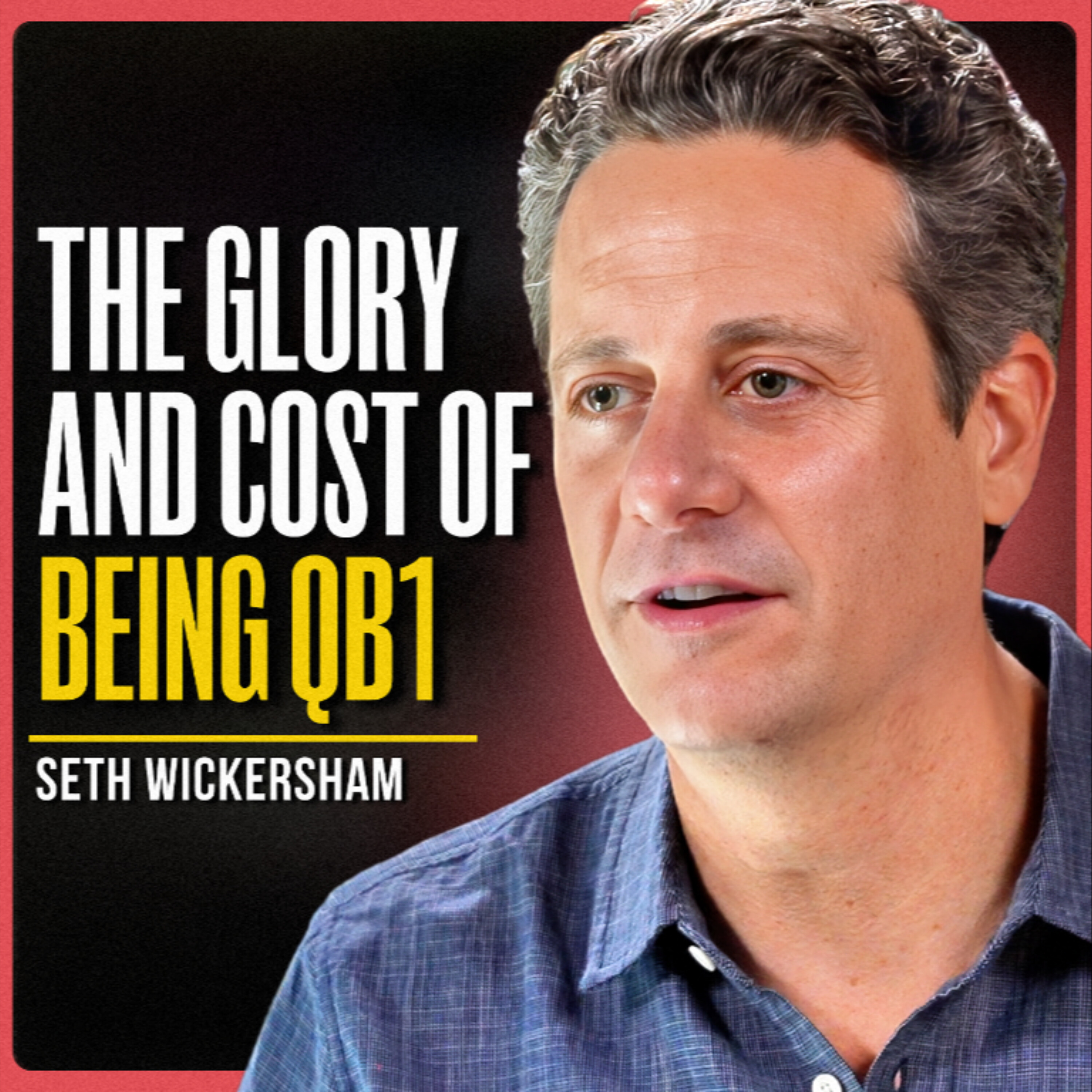
In this episode of The Daily Stoic, host Ryan Holiday speaks with Seth Wickersham, a senior writer at ESPN and author of It’s Better to Be Feared: The New England Patriots Dynasty and the Pursuit of Greatness. The discussion focuses on the unique pressures and challenges faced by NFL quarterbacks, exploring the societal implications of this revered and scrutinized position in American sports.
Written by AI. May contain mistakes.

Get the gist, explore an idea or ask about something said.
 Claude
On The Daily Stoic, what are the key points of this episode?
Searching your listeningAutomatic transcript. May contain errors.
0:28Why choose a Sleep Number smart bed? today. This message comes from Capital One. The Capital One VentureX Business Card has no preset spending limit, so the card's purchasing power can adapt to meet business needs. Plus, the card earns unlimited double miles on every purchase, so the more a business spends, the more miles earned. And when traveling, the VentureX Business Card grants access to over 1 ,000 airport lounges. The VentureX Business Card, what's in your wallet? Terms and conditions apply. Find out more at CapitalOne.com slash VentureXBusiness. What can 160 years of experience teach you about the future?
1:05When it comes to protecting what matters, Pacific Life provides life insurance, retirement income, and employee benefits for people and businesses building a more confident tomorrow. Strategies rooted in strength and backed by experience. Ask a financial professional how Pacific Life can help you today. Pacific Life Insurance Company, Omaha, Nebraska, and in New York. Pacific Life and Annuity, Phoenix, Arizona.
1:36Welcome to the Daily Stoic Podcast, where each weekday we bring you a meditation inspired by the ancient Stoics, a short passage of ancient wisdom designed to help you find strength and insight here in everyday life. And on Wednesdays, we talk to some of our fellow students, of ancient philosophy, well-known and obscure, fascinating and powerful. With them, we discuss the strategies and habits that have helped them become who they are and also to find peace and wisdom in their lives.
2:20Hey, it's Ryan. Welcome to another episode of the Daily Stoic Podcast. This is more an American phenomenon than any other country, but if you have a kid picture themselves as a professional athlete, how many of them imagine themselves like in an instant, they're a quarterback in the fourth quarter leading their team down the field and they throw that pass, right? That's the dream. Most of them are not imagining themselves as the center. They're not imagining themselves as a small forward on an NBA team. They're not imagining themselves as a catcher on a baseball team. You know, a quarterback, it's the dream.
3:12I think it's interesting that among all the sports, right, it's one of the only ones where the head and face of the person is covered. And yet the names, they are cultural touchstones. Steve Young, Warren Moon, Peyton Manning, John Elway, Tom Brady, Unitas. quarterback is where it's at. What that says about our culture, nonwithstanding, it is the thing that people aspire to. Probably more than they aspire to be an astronaut these days or a senator or some other thing. I've been a fan of today's guest for a very long time. I had him on the podcast back in November of 21 to talk about his book, It's Better to Be Feared, the New England Patriots Dynasty and the Pursuit of Greatness.
4:04I'll link to that in the show notes if you want to check it out. The book and the conversation is obviously about sports a little bit, but I think ultimately a conversation about greatness. How can you achieve and aspire to greatness without being Caesar-ified, to borrow Marcus Rios' turn, and the danger and the allure of wanting to do something of which the odds are so stacked against you. I was really excited that Seth came out to the studio to do this one in person. And I think you are really going to like it. And I think Seth can relate, and this certainly informs the book, to the idea of greatness and aspiration, as I pointed out to him, and he sort of shrugged it off.
4:49There aren't many sports writers whose names are known these days. I mean, sports used to be so popular in writing about sports that sports writers themselves were famous, but there's a handful of them who have broken through. I had another one on the podcast not too long ago, Wright Thompson, who is friends with Seth. But Seth Wickersham is one of the greats at what he does. And that's why I think ultimately this discussion of quarterbacks, this discussion of sports is ultimately discussion about life, about mastery, about drive, about ambition, about greatness in all different forms. And we start this episode by talking about why someone would walk away from all that.
5:33One of the only times that anyone ever has done that. The Cincinnatus of football, if you will, Andrew Luck. Like I said, I think it makes ultimately for a much deeper conversation. You don't have to like sports to do this. You don't have to like football to like this episode. but I think you're going to get a lot out of it. He's a senior writer at ESPN, the New York Times bestselling author of It's Better to Be Feared. He mostly works in the long-form medium, you know, not little tiny, you know, guess who won this weekend kind of things, but primarily does long-form investigative and narrative pieces.
6:09He's been a finalist for the National Magazine Award and his stories have been anthologized in the Best American Magazine Writing, Best American Sports Writing, and many other places. It's Better to Be Feared was a nonfiction book of the year by Sports Illustrated. And you can follow him on Instagram and on Twitter, Seth.Wickersham. You can grab signed copies of It's Better to Be Feared at The Painted Porch. They didn't have American Kings yet for us to have him signed. But it's a great book. You should definitely read it. I think you will really like this episode. And enjoy.
6:49I remember I saw, you know, your books in Sean Payton's office. I know. I know. Yeah, that's been cool. I met him once. So I spoke at the NFL owners meeting like five, no, seven, six, seven years ago. Okay. That was like the weirdest room that I've ever talked to. You're like, okay, it's 32 billionaires. Yeah. Plus their families, plus every GM. Yeah. Plus every coach. Yeah. And like, it's still like a work conference. It was a strange, it was a strange room. I mean, that's my beat, you know? Yeah, yeah, yeah. It was interesting. The boardroom. Yeah. And I guess they do it, what, like twice a year or something like that?
7:26They do more, but they only do the big one like once a year. Yeah. And then it was like, on the other hand, like every other conference. There's something equalizing about it. It's like they're there. They had badges. Yep. You know, they're sitting there. They're like some of the speakers, not some of the other speakers. And then there was like a get-together after, you know? And then like, I remember I went up to Belichick after and like, because you probably knew him from. Well, he knew my work. Yeah. We'd never met, but like, it was like clear that his then girlfriend, not the infamous one, but was like, no, you have to go for a little bit.
8:01I want to talk to, you know, like, like he probably wanted to be in his room, like watching a film. He was like, can we do something? You know, it was like, so it's just very weird to see the kind of like human element. And it's like, some of them are friends. Some of them hate each other. They're all in an arranged marriage that none of them want to get divorced from. Yes. But they all kind of secretly hate each other. Yeah. And even the inequality amongst them, it's like you have Stan Kroenke, who I've gotten to know a little bit. And he owns like five sports teams. Yeah. And then you have someone who their great-grandparents bought the team for$100.
8:34Totally. And that's the entirety of the family wealth. And so like, just like that there's social dynamics, like to the outside, they're all the same. They're all the 1%. And you're like, actually, no, there's like cliques and groups and totally different approaches. Well, and the ones who bought their team remind the ones subtly all the time that they inherited theirs. Oh, right. Which is a really interesting like class dynamic. Yeah. And you have situations where like the Bears, you know, they have like 40 some McCaskies who own the team. They limited how many of them could be on the field before a game because there's so many.
9:13There's not enough tickets. Yeah. It's like it became a problem. Like there's too many people. So when do you write? In the mornings. What's your schedule? Like I dropped my kids off. You're prolific. I dropped my kids off at camp this morning, came here. I wrote for an hour. Then we had a staff meeting. Then I have this. I might do a little bit of writing in the afternoon and then we have like a book club for the bookstore this afternoon. That's my day. I don't have to do any like reporting though. So I don't have to like spend a lot of time like on the phone. You know, like my writing is like if I'm sitting there, I'm writing, you know, like.
9:43But that's a whole different mental exercise and mental gymnastics because it may not require the travel. But like one thing I've realized about books and write, Thompson and I kind of realized it at the same time is that they're all essays. All the good ones are essays, whether they're reported essays or not. Sure. They have to be, you know. And so you have to be constantly on that thinking level. And that's a hard place to get to. Yeah, I've likened it. It's like, you know, sometimes like you close your laptop and then you come back to a couple hours later and it's like burning hot because it somehow didn't shut down.
10:13That's what your brain is like when you're mid, like when you're in the middle of it. There's a part on a book where you like, you've gotten it. You're like, oh, I'm actually going to finish this. Like it's going to come together. That part's fun. but it's the it's the whole like the first maybe like two-thirds maybe a little bit more than the first two-thirds where you're just like it could fall apart at any moment and you could come up short at any moment you know maybe it's like in sports where it's like oh shit i think we're at basically an insurmountable lead if we just don't fuck this up yeah we're gonna walk away with this and that kind of pre-celebration energy falcons could not you know not that i'm talking like in the fourth or like in an NBA game it's the fourth quarter it's like two minutes left and you're up by like 15 yeah oh okay as long as we we'd have to do a lot wrong in a row so as long as we just don't fuck it up yeah we got this that's a good feeling but most of it it's nail biter the whole way I grew up in Alaska and I do a lot of extreme skiing with some of my buddies and it reminds me a little bit what you're saying of that where it's like the first 20 percent you're like yes this is hit or miss.
11:18Like we might be, you know, sledding down, you know, who knows. And then once you get to a point and you're like, okay. You can look up, you're like, I've made it a good chunk of the hard part of it's behind me. Again, it's not that it's easy from here, but like, I, I'm pretty sure I have this. That's a good, that's a good feeling. Yeah. There's a thing in that entrepreneurs talk about. So you get like the first bump of your media attention. That's really exciting. And then it's like the, you immediately go into what's called the trough of despair. and that like you spend most of a book in the trough of despair just like what did i sign up for am i literally capable of doing this is this the worst idea ever uh you know all that that's the shitty part yeah there's another shitty part after you finish but before it's out where you're like there is a conceivable chance that this could sell zero copies like yeah you know they're like we're talking to these media outlets i'm there like none of them have committed yet where you're And then did you do the audio book?
12:14I did. Yeah. Then you have to go read it. Like I'm about to do my next book in here. I do them in here. And like, I just want to kill myself after. I'm like, this is the worst. Thank God it's not just me. No, because there's so many points. You're like a hundred more pages. Seriously. What more do you have to say? You hate the book just because it's taking a lot out of you. And then you're only spending more time with it and getting no external validation whatsoever. Right. So it's just you and your inner monologue. Unless you're a delusional narcissist, that monologue is mostly about all the things that are wrong with it.
12:51Yeah. Yeah, it's absolutely true. And then there's the other part. Did you ever see Swingers? No. Okay. So it's a funny movie. You have to be careful Googling it because some other shit comes up. But it's about young actors in Hollywood in the 1990s. It was like Jon Favreau's and Vince Bonds. I know the movie. So there's this part in it, you know, Jon Favreau is heartbroken the entire time. And he's like having like this heart to heart with Ron Livingston. And Ron Livingston is talking about heartbreak. And he's like, you know, it hurts all the time. And then it hurts a little less. And then you kind of miss the pain, you know?
13:26And Favreau is like, you missed the pain? What the, like, what? And he goes, yeah, because you lived with it for so long. And then that, I feel like that's a part two. Totally. No, I mean, I'm just finishing a four book series. So I've been with this series for seven years, six years. And so, and I've had these different periods. The weird part about it is it's like each book is a microcosm of the whole series, but it's been this weird thing where it's like you work on one, is it good? And then it comes out, it does well. So then you have the elation, but then you go right in the shit of starting the next one.
13:55So this is like, this is the last part of it. And then I'm done. And there's a quote I have, it's from Gibbon, where he's talking about finishing the decline and fall of the Roman Empire. and he says it's like taking leave of an old friend or something like that. And there's something to that where you're like, you miss it because you spent so much time with these people and these ideas and this thing. And then you're going to go off and do what next? That's a weird feeling.
14:31Thanks to Toyota Trucks for sponsoring this episode. When I bought my ranch in 2015 out here in Bastro County, I drove my car about halfway down the dirt road that we live on, thought this isn't going to work, stopped, parked it, walked the rest of the way home, borrowed my wife's car, drove in Austin and bought a truck. What I bought was a Toyota Tacoma. And this truck wasn't just transportation getting me to and from my house. It unlocked a whole different style of living for us, not just on the ranch, but in our little Texas towns. There were places I could go now that I couldn't go before, especially out here in the piney forests, through the fields, and on the unpaved roads like the one that I lived in.
15:17We got to go deep into the hill country's wild beauty. We've driven all the way out to East Texas. We've driven across the country. And by we, I mean not just my wife, but both my kids who I drove home from the hospital in that truck. Toyota trucks are built for those who understand that the best adventures happen when you're willing to veer off course, because you never know when you'll end up on a Toyota adventure detour. And of course, this is stoicism, too, because every detour, every obstacle is an opportunity. But it's helpful if you can handle the difficulty inherent in that. If you've got the resilience and the right companion to make it wherever the road takes you, discover your uncharted territory.
15:58Learn more at toyota.com slash trucks slash adventure dash detours. We just took our kids to an outdoor performance at the Nutcracker. They had a snow cone and then they went insane in the car ride home. And one of the things I try to remind myself when that's happening is that I don't control my kids' behavior, especially when they're too far gone like that. But I do control how I respond, right? That's stoicism, but it's also what Dr. Becky talks about. Dr. Becky is a clinical psychologist and a best-selling author, and she founded Good Inside, which is there to give parents practical, actionable tools for handling those everyday challenges with confidence.
16:39My wife introduced me to Dr. Becky's books. I love them. I've recommended them a million times. I've had her on the podcast. And as it happens, Dr. Becky is hosting two live Q &A events for Good Inside members. I am one of them. She signed me up for it about a year and a half ago. I've loved it ever since. On December 1st, you can join Dr. Becky for her How Not to Raise Assholes event, which is about avoiding entitlement and raising kind, empathetic kids. And on December 15th, she's hosting her How Not to Lose It Over the Holidays event, which I'm sure we could all use. As I said, I'm a big fan of Dr.
17:17Becky. She's been a great influence for me as a parent and just as a human being. And Daily Stoic listeners can join for 15 % off with code STOIC15. You just got to head over to goodinside.com to catch the events.
17:36I wanted to start with Andrew Luck. Sounds good. Because as you say, it's like they're basically American gods. It's like the penultimate of American sports. You make ungodly amounts of money, famous, everyone wants you, all this stuff. and here you have a guy who walks away from it. Is he the sane one or is he the insane one? Andrew Luck is fascinating because he doesn't know - You're not supposed to do that. Yeah. Well, he doesn't know the answer to that question. Right. Is he the one who got out at the right time or is he the one who turned away something that he'll never have again and he knows that?
18:17Yeah. I spent a lot of time with him in 2022 for an ESPN story and it was the first time he'd spent anyone with a writer since he retired. And we first started meeting, I want to say February. Story came out that December. So we met a lot. And part of hanging out with him was watching him replay this decision in his head, knowing that in his heart, he made the right decision, but he was still uneasy with it. I think what led me to writing the book is Like being a high school quarterback in Anchorage, Alaska, you know, in the 90s and losing out on the starting job on varsity, you know, my entire identity was geared towards this thing.
19:01And you don't play quarterback. You are one. Yeah. And he was one. And his entire identity was wrapped up in this thing, but he knew he had to get away from it. Why? I think that he didn't like who he was as a quarterback. Huh. On the field or off the field? Oh, 100 % off. On the field. I think he was very happy with who he was, but there's no roadmap. And that's one of the most interesting things I found about this, like spending time with current high school guys, you know, from Arch Manning to others. But like, there is no way to do this. Yeah. Even though they've kind of tried to make there be a way to do this.
19:41And so there's no way to tell if what you're doing is the path to greatness. And he came to the Colts. Peyton Manning had been there. Peyton Manning ran the entire building. Andrew Luck was 22 years old. And he thought, well, that's how you do this. And he basically tried to do his version of that with very little guidance. And when he realized that to get to game time, you cannot have any doubt. Yeah. It's almost like you have to create like a fragile ecosystem around you where, you know, you're at the center of it. It's Andrew's world and everything kind of revolves around you. And that's the way he did it for a long time.
20:26And when he got hurt, he started to realize the fatal flaws in that mindset in having like almost kind of like reverse engineered his entire life to win football games. once he was away from the game, he started to realize that there was limits to it and he didn't know elements of himself at all. Do you think that's a failure of like the system or culture, or is it just inherently any elite performance is going to be inherently isolating because by definition of being the greatest or in this small minority, no one knows what it's like. And you're distant from everyone else. I don't have a great answer for that.
21:06You know, For ESPN, I spent a ton of time with Alex Honnold, who obviously did Free Solo. And he reminded me a lot of a quarterback in the sense that people thought that he was this daredevil who was indifferent to death and didn't mind if he died. And when really it was the opposite. What was interesting about him was that he was so scared of dying that he memorized every single dimple and pebble and shift on El Capitan. And so that when he finally climbed it without any support system, he knew every single move that he was going to do. It took him years to do that. And that reminds me a lot of quarterbacking where you have to be obsessive on that level to be successful.
21:53And you have to tap into a part of your personality that either you need to get up to speed or pre-existed. Well, I just mean like there's probably what, 10 sports right named sports writers. You know what I mean? Like there's in any given field, there's only so many people doing it. So you must have some sense of what it's like. Like you have to turn yourself kind of, there's something fundamentally unbalanced about being one of the top people at the thing that you do. It's probably you have to become unbalanced to get there. And then there's something unbalancing once you're there. You're like, there's no one who's like, let me show you how it goes.
22:33Because they want your spot or they know you want their spot or they're dead. Yeah, like being like number one on the call sheet, as they say in Hollywood, the conductor stands alone. That's just how it goes. It is. And you have to be broken in the right places and healed in the right places. You know, otherwise you end up like kind of flaming out. And I think that like when it comes to Andrew, especially, you know, he not only began when he was hurt and his shoulder was bothering him and, you know, he didn't know if he was going to return to be able to play. his wife was on the verge of leaving him.
23:10She was his girlfriend, but she was on the verge of leaving him because they had dated since Stanford and he simply wasn't communicating anything with her. And here he was facing all this fear, identity crisis, pain, and he had to learn how to tap into that part of his personality. To be a person. To be a person, to be a husband. And I think that like once he did, he made it a point to see if he could make it, you know, he played that final season, the 2019 season, 18 season. And he won player, you know, comeback player of the year. And he had proved to himself that he could be someone that he liked being around.
23:49And be good. And be good. And he wished he'd retired right then. But it's hard. It's a hard thing to walk away from. Well, there's that line in Hamilton where King George, when he hears that George Washington is going to walk away, he goes, I didn't know that was a thing a person could do. Yeah, exactly. Which is, it's a great line. And it is, I mean, the real line is crazy too, right? King George does hear that George Washington is going to return to his farm. He goes, what's George Washington going to do after the revolution? And, you know, one of his men says, I think he's going to return to his farm in Mount Vernon.
24:22And he goes, if he does that, he'll be the greatest man in the world. Like you're not supposed to do it. You're not supposed to do it. You can't walk away from the thing that everyone wants. And so there's something truly majestic about it when people do it. And then there's the other part of us that's like, wait, you walked away from being a professional football player to preserve your marriage? You know, there's like some other part of us that finds it deeply shameful also. There's something beautiful about it. And then like, we're mad that Obama is not more politically engaged. Well, you know, like you're not supposed to walk away.
25:00Yeah. And that has to do with our like American obsession and American ambition. You know, the first question I asked Andrew Luck when we started talking was I asked, you know, why did you become a quarterback? And his answer was he laughed that Andrew Luck laugh of his. But he said, well, I don't think I had a choice. And it was because, you know, once you've shown promise at being able to do this uniquely American thing that has this obsession around it, like you're on a track. Yes. And you're going from high school, you know, and he's a Texas quarterback. People forget that. Like all the phenomenal Texas quarterbacks over the years, he's one of them.
25:38And, you know, you're in that culture and it's like a tractor beam that takes you in. And I don't think he really stopped to think about what it had done to him and who it had kind of turned him into until he was injured. Right. Yeah, you become a machine. You turn off some part of yourself to get that level. Or that's what we tell ourselves. Or refuse to acknowledge that it even exists. Yeah. And, you know, I think that, like, quarterback has become so big that I think that to do it now, you know that the celebrity and the fame piece of it come with it. And so I think to do it now, you have to have that whole - You have to want that from the beginning.
26:19It's not like, I just want to be a quarterback and I don't like the fame part. You knew that was the bargain from the beginning. Like Steve Young and I at one point talked about all the hats you have to wear as a quarterback. And I think we stopped at like 24. Wow. From matinee idol to field general to astonishing asshole to amateur psychologist to spokesperson person of a multi-billion dollar organization, all these things. And oh, by the way, you also have to be able to throw the ball through windows that nobody else can see, much less take advantage of. But I think that like to do it now, you not only have to be able to have the ability to throw, but you have to have that hole in your personality that requires constant adulation and reassurance and love that's very similar to a politician or a lead singer, something like that, where it's like That just kind of has to be part of the equation at this point.
27:13And what is that doing to people? What does that do to teenagers when we're so obsessed with spotting genius early without really understanding what makes the genius in the first place? That is going to be really interesting to see. When it's not like you're given time to develop a fully rounded out personality with diverse interests and connections because you have been specialized since you were 10. or earlier. And like... So you don't have the things that would actually help you manage that thing. Like in music, they call it LSD, like lead singer disease. Yeah. Like you're catching this quarterback disease at like 10.
27:59Human. Your body has a performance superhighway. 60 ,000 miles of blood vessels that deliver oxygen and nutrients to every cell. This, of course, is your cardiovascular system. It's the foundational system that powers everything we do. Both elite athletes and longevity experts invest directly in the cardiovascular system because supporting healthy blood flow is critical for energy, recovery, mental clarity, and overall performance. That's where Schumann comes in. That's Schumann with two Ns. They started out of research at the University of Texas, near where I live, and have 15 years of experience making award-winning supplements for nitric oxide production and healthy blood flow, now used by over 160 pro and college sports teams.
28:47Human Cardiovascular Health Daily is a plant-based and made from clinically studied ingredients like grapeseed and seed kelp extract. It supports nitric oxide production for healthy blood flow and energy while also supporting blood pressure and helping support the delicate interlining of your blood vessels. Just two capsules each morning will power energy and recovery while also playing the long game by supporting long-term vascular health and healthy aging. Human has an exclusive offer for our listeners. You can visit human.com slash stoic for an extra 15 % off your first purchase. That's enter code S-T-O-I-C.
29:20Please stoic at checkout. That's human with two N's dot com slash stoic for an extra 15 % off with code stoic at checkout. Shopify's point of sale system helps you sell at every stage of your business. Need a fast and secure way to take payments in person? We've got you covered. How about card readers you can rely on anywhere you sell? Thanks. Have a good one. Yep, that too. Want one place to manage all your online and in-person sales? That's kind of our thing. Wherever you sell, businesses that grow, grow with Shopify. Sign up for your$1 a month trial at shopify.com slash listen. Shopify.com slash listen.
30:02One of the characters in my book is a kid who's at LSU now named Colin Hurley. And he was on the fast track. And he wanted to be the youngest person really to do just about everything in the space of quarterbacks. Like he didn't play middle school football. He went straight from like sixth grade to starting on varsity. And he graduated high school and started at Louisiana State when he was 16 years old. When he started – not started, but he started attending. And when he got to campus, until he turned 17 years old, there had to be a football staffer on him at parties because legal age of consent is 17 in Louisiana.
30:45And I mean, this is – you're talking about like a college freshman who barely has his driver's license. And you think about even the parents that would subject their kid to said situation. And his dad is an interesting guy. He's a loving hard ass. His name is Charlie. And he was a former cop. and homicide detective in Miami. And so he's seen everything. And he was, he had a premonition for so long that this might not end well, just because of how young his son was in this dangerous world that he was entering. And, you know, last Christmas, Colin returned to campus with a car and his dad didn't want him to have a car, but he's getting NIL money.
31:30Yeah, you're going to LSU. You know, if you want to get a car, are you, what are you supposed to do? And he wrote a note to his son, or he wrote a note in the, and he put it in the glove box. And it was like, in case of emergency, please call me. And it was Charlie Hurley. And he gave his phone number because he knew from life that that's where cops look. And two weeks later, Colin was in a near fatal accident at three o 'clock in the morning when he ran his car into a tree right on the edge of the LSU campus. Jesus Christ. The inability to turn stuff down when everyone is throwing it at you. I think that's what you think about the Washington thing.
32:10It's like, what do you mean you're resigning your commission and going home? What do you mean you don't want to stay president for life? We're just not good at walking away. I think about this. Do you listen to Mark Maron's podcast? Oh, he's like, basically, he started the podcast. He's like the biggest one, was the biggest one. And he's walking away after like 16 years. And people are like, what are you doing? You're not supposed to stop. And part of what he's talking about is like, nobody ever quits. And you're not supposed to turn down millions of dollars on your kid's behalf because they might get in a car accident.
32:46You know, like even though at some level we know it's not healthy or good. But you just don't. Everybody gets swept up in it. And even being around, you know, it, I got swept up in it a little bit. You know what I mean? Because like, I'm trying to learn in this book, I'm trying to give readers like the clearest eye possible of, you know, what it means to be a quarterback and what it has meant and in all the great ways and all the cruel ones. And, you know, even when, you know, red carpets and VIP treatment and all of those things, you know, witnessing it up close, it's easy to get. There's an energy to it.
33:24There's an energy to it and there's a seductiveness to it. And then when you're not a quarterback, even if you retire on your own terms, you still live with that. And the hard wiring that you had to create within yourself to survive, I think is uniquely ill suited with a being content away from the game and be a lot of everyday interactions like John Elway. one of my main characters. He was my guy growing up. He was the first quarterback who was number one out of high school, first pick in the draft, first ballot Hall of Famer. And so I knew that he had to create something within himself to withstand that.
34:06Yeah. To say, I deserve this. And to survive it. And we were talking at one point and he was just talking about how warped you get and how, because of the things you go through, you're almost like incapable of feeling empathy. Like his son, Jack was a quarterback in high school. And you think about the pressure of being a quarterback in Denver with your last name Elway. And his dad was the offensive coordinator. His dad was retired. And Jack was feeling the pressure very understandably. He was a good quarterback. He got a scholarship to Arizona state and he walked away after a year. He was just kind of burned out.
34:45But when he was in high school, he was feeling that stress. And his dad, of all people, you'd think would be the one who would know what it's like to go through that and could empathize. And he couldn't do it. And he told me - Because he had to turn off that part of himself to be able to do it. So the idea that someone else would struggle with it, it's like, wait, I had that option? I think about this, there's a strained analogy to be sure. But like there's an argument that people who think that being gay is a choice think that in part because it's a choice for them. You know what I mean? Totally.
35:24Like you've turned – like what do you mean? I'm turning off weird things that I feel inside. Why aren't you doing it? So to see someone who's just like themselves or struggling with themselves, it's like what do you mean? So there's this kind of – for people who have gone through some form of adversity or harrowing experience or struggle with something, you'd think it would turn on empathy. But it turns off empathy because they had to turn it off to be whatever weird thing they are themselves. Yeah, I mean to survive that winnowing where you go from one of 16 ,000 starting quarterbacks in high school across the country to one of the top 10 in the NFL to one of the three who make it to the Hall of Fame.
36:00And, you know, those are some vaguely sociopathic tendencies that you have to turn on and nurture. And like, there's not a lot of outlets and support system to help you regulate that. And so it was interesting because he, you know, he told me flat out, I didn't care what my son was going through. He was like, I figure just compete on the field and let the chips fall where they may. His son goes off to Arizona State, decides it's not for him after a year. And at Elway's 50th birthday party, his son comes up to him and he says, you know, I feel like I've let you, I let you down. And, you know, John said, no, you didn't.
36:36And then Jack said something really interesting, which was, you know, that he missed it, that he missed being a quarterback. Cause like, you can't, you can't not. Once you, once you kind of get a, it's just unlike any other job in sports. And it's like that for a, for a lot of different reasons. But like, again, it's something that like, once you've done it, that piece of you is always alive. Yeah. I was thinking about when I was thinking about like, what, how do you prepare someone to be a quarterback? Not how do you make them be able to do it on the field? But I think your point is that that in some way, that's the one thing they all can do.
37:10You get to a level and then that's actually not that important anymore. It's this other stuff that you can either do or not do. Well, yeah. I mean, when I was playing, you know, I was just fascinated. How do they fit the ball into that window? And then at the end of the book, that's what made me want to be a quarterback and made me want to study that. And then at the end of this process, I kind of realized that's the thing they have to be able to not think about. But also it's like you go to the comment, they can all put the ball through the window. Yeah. So like there's something else that makes you – it's like – yeah, I was actually thinking of Tom Wolfe's The Right Stuff when I was reading your book.
37:45Like you either have the other right stuff or you don't. Yeah. But I was thinking about like, how do you prepare someone for something so inherently alienating and strange and isolating? And the precedent in what I write about is there's this, so Hadrian is the emperor of Rome and he doesn't have a son. So he has to pick, there's this period in Roman history where the emperor picks his heir. Yeah. And so he sees something in this kid that he thinks, he thinks the kid has it, but the kid's too young. So he adopts an older Roman senator named Antoninus on the condition that Antoninus in turn adopt this boy, Marcus Aurelius.
38:21So he sets in motion this succession plan that, you know, he probably thinks it's going to be like a couple year, you know, process. Instead, Antoninus lives for 20 years. But it's so Marcus Aurelius has 20 years of on the job training. You know, you think about the jockeying back and forth between, you know, the first and the second string quarterback and how much they hate each other. Now imagine like you're the future emperor and there's this other dude in front of you who's emperor who's not your dad. You have no like you should you're both going to hate each other. But how does this sort of partnership?
38:53It's remarkable historically in that it's totally unprecedented before and since. Like they not only don't kill each other, but they work together and then they both do a good job. But there's this interesting passage in Meditations where Marcus really is. He's writing to himself. obviously he's now the emperor and he says you have to take care not to become caesarified he says you be careful that you are not stained purple because the emperor wears a purple cape and so he's talking about this thing that we know the way that power corrupts and he seems to do a pretty good job but but it is it's just fascinating to me that there doesn't seem to be any process by which you can prepare someone to have a job like in the case i think there'd been like 15 emperors before him.
39:40How many, you know, like multi-season NFL quarterbacks have there even been? Probably, what, a hundred maybe? Two hundred? Like not that many. Not that many. And so you're like, you're being groomed at eight or 10 for the potentiality of doing a thing that as a rule, almost everyone fails at. And it ends, although it could end financially lucratively, it ends badly for everyone involved. It's just, it's crazy. Thanks so much for listening. If you could rate this podcast and leave a review on iTunes, that would mean so much to us and it would really help the show. We appreciate it and I'll see you next episode.
40:37look ads are annoying they are to be avoided if at all possible i understand as a content creator why they need to exist. That's why I don't begrudge them when they appear on the shows that I listen to. But again, as a person who has to pay a podcast producer and has to pay for equipment and for the studio and the building that the studio is in, it's a lot to keep something like The Daily Stoic going. So if you want to support a show but not listen to ads, well we have partnered with supercast to bring you a ad free version of daily stoic we're calling it daily stoic premium and with premium you can listen to every episode of the daily stoic podcast completely ad free no interruptions just the ideas just the messages just the conversations you came here for and you can also get early access to episodes before they're available to the public.
41:36And we're going to have a bunch of exclusive bonus content and extended interviews in there just for Daily Stoic Premium members as well. If you want to remove distractions, go deeper into stoicism and support the work we do here. Well, it takes less than a minute to sign up for Daily Stoic Premium, and we are offering a limited time discount of 20 % off your first year. Just go to dailystoic.com slash premium to sign up right now or click the link in the show descriptions to make those ads go away.
In America, kings don’t wear crowns, they wear helmets. Being an NFL quarterback is the ultimate crown and it never comes free. Today, award-winning journalist Seth Wickersham joins Ryan to pull back the curtain on football’s most scrutinized position. They dive into why players can’t walk away, the intense loneliness at the top, and how the pressure can consume a player’s life.
Seth Wickersham is a senior writer at ESPN and the New York Times bestselling author of It’s Better to Be Feared: The New England Patriots Dynasty and the Pursuit of Greatness. Focusing primarily on longform enterprise and investigative work on the National Football League, Wickersham has been a finalist for the National Magazine Award for Reporting, and his stories have been anthologized in the Best American Magazine Writing, the Best American Sports Writing, and Next Wave: America’s New Generation of Great Literary Journalists, among others. Released in 2021, It’s Better to Be Feared was named Nonfiction Book of the Year by Sports Illustrated and Best Sports Book by the National Sports Media Association.
Follow Seth Wickersham: X & Instagram: @Seth.Wickersham
📚 Grab signed copies of It’s Better to Be Feared and American Kings: A Biography of a Quarterback at The Painted Porch | https://www.thepaintedporch.com
🎙️ Listen to Seth Wickersham's first interview on The Daily Stoic Podcast: https://dailystoic.com/seth-wickersham/
👉 Support the podcast and go deeper into Stoicism by subscribing to The Daily Stoic Premium - unlock ad-free listening, early access, and bonus content: https://dailystoic.supercast.com/
📖 Preorder the final book in Ryan Holiday's The Stoic Virtues Series: "Wisdom Takes Work": https://store.dailystoic.com/pages/wisdom-takes-work
🎙️ Follow The Daily Stoic Podcast on Instagram: https://www.instagram.com/dailystoicpodcast
🎥 Watch top moments from The Daily Stoic Podcast on YouTube: https://www.youtube.com/@dailystoicpodcast
✉️ Want Stoic wisdom delivered to your inbox daily? Sign up for the FREE Daily Stoic email at https://dailystoic.com/dailyemail
🏛 Get Stoic inspired books, medallions, and prints to remember these lessons at the Daily Stoic Store: https://store.dailystoic.com/
📱 Follow us: Instagram, Twitter, YouTube, TikTok, and Facebook
See Privacy Policy at https://art19.com/privacy and California Privacy Notice at https://art19.com/privacy#do-not-sell-my-info.
