
 Ask ChatGPT


- Podcasts
- The Daily Stoic
- The Marcus Aurelius Quote Steven Pressfield Couldn’t Ignore
The Daily Stoic22 Aug 2026 · 26m · 10 chapters
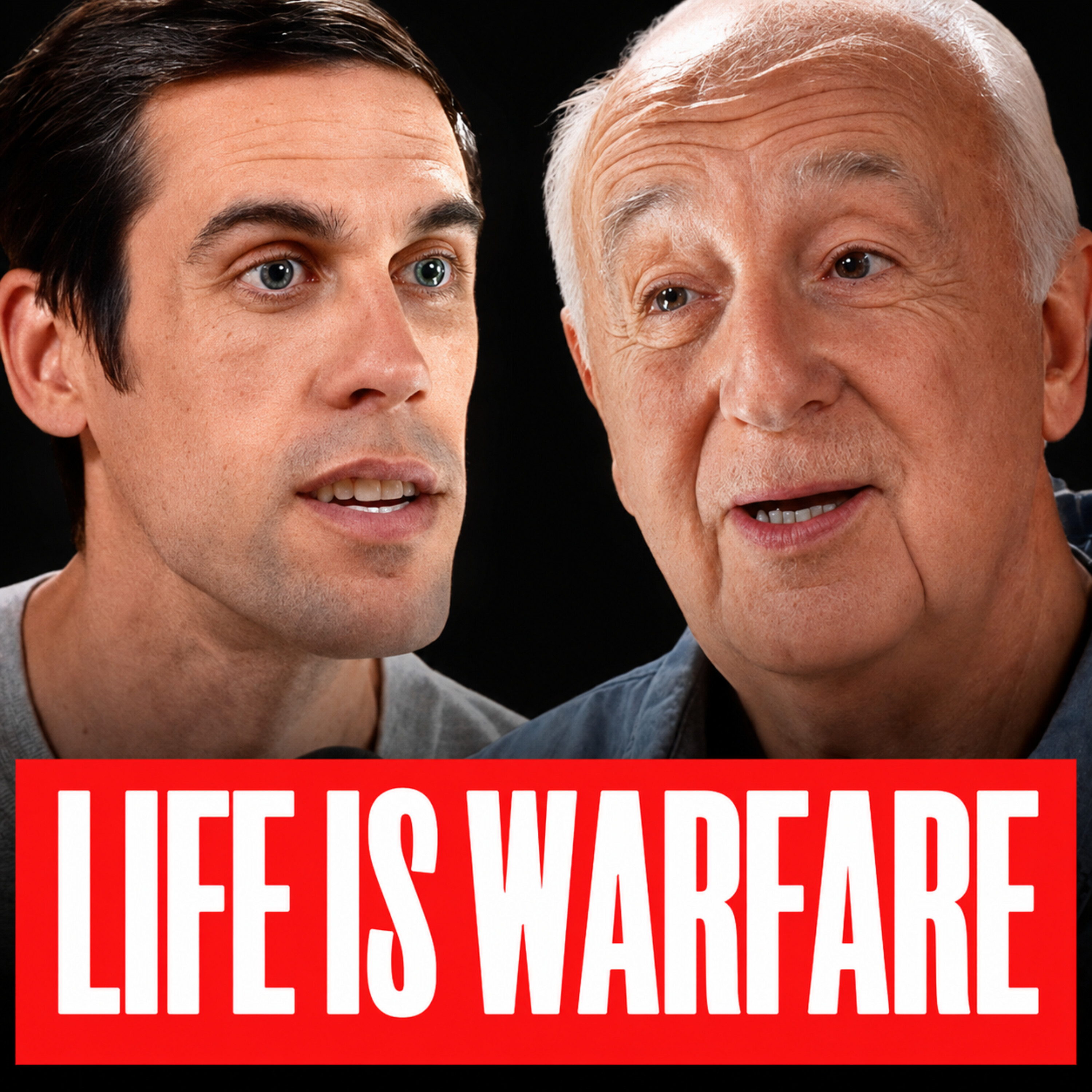
The Marcus Aurelius Quote Steven Pressfield Couldn’t Ignore
In short
The Daily Stoic episode discusses epigraphs—quotes placed at the start of a book to signal theme—then uses Steven Pressfield’s novel The Arcadian as the springboard. Topic: Marcus Aurelius’ epigraph “Life is warfare and a journey far from home,” read both metaphorically and literally via Marcus’ real-world travels (including the host’s realization that Marcus reached far beyond Rome, even to Budapest).
Key claims
epigraphs can “co-sign” ideas, set a writer’s tone, and trigger long-delayed creative use; Telemann’s reincarnation framework in Pressfield’s series connects justice/karma-like punishment to repeated soldier lives; creativity feels “otherworldly,” possibly channeling muses or other forces.
Notable examples
Empedocles’ volcano death story; Patton’s “reincarnated warrior” anecdotes; a past-life regression involving burying a brother on an ancient battlefield.
Guests
Steven Pressfield (historical novelist; author of Gates of Fire, The War of Art, Turning Pro, etc.) and Ryan Holiday (host; Stoic author).
Written by AI. May contain mistakes.
Chapters
2:30
Understanding Epigraphs
A detailed explanation of what epigraphs are and their significance in literature.
“and then there's one for part one, part two, part three, but I didn't do one at the top of every chapter, trying to practice a little discipline.”
6:10
Exploring Marcus Aurelius' Quote
Discussing the quote by Marcus Aurelius found in Steven Pressfield's work.
“Turning pro, the war of art, the warrior ethos, gates of fire, Thaylee Pressfield, and then the new one, the Arcadian.”
9:30
Interpretations of Life as Warfare
Delving into different interpretations of life as warfare and journey themes.
“And so he died throwing himself into a volcano to prove that he was a god.”
11:40
The Role of Quotes in Writing
Exploring the impact of quotes and epigraphs on writing and creativity.
“How did I know that this was exactly what I needed?”
14:59
Exploring Character Evolution in Literature
Learn about the character Telemann and his journey through different stories.
“I don't know if I wasn't paying attention.”
17:44
The Concept of Reincarnation
Hear a discussion on beliefs in reincarnation and its implications.
“And the civilizations are gone now, totally under the land, whatever.”
21:06
Past Life Regression Experience
Discover the experience of past life regression and its emotional impact.
“And then we can add their experience into our own lives.”
24:22
The Role of the Muse in Creativity
Examine the connection between creativity, the muse, and spiritual dimensions.
“Like I was just reading an early copy of Robert Greene's new book, which is all about sublime experiences.”
27:24
The Nature of the Creative Process
Discuss the mysterious origins of creativity and the artistic process.
“But I just mean like like just where did those words come?”
28:00
Exploring the Bicameral Mind and Creativity
Discusses the bicameral mind theory and the complexities of creativity and subconscious thoughts.
“Even if even if you want to just tell me it's this emergent thing happening in our brains, it's crazy.”

Ask about this episode
Get the gist, explore an idea or ask about something said.
 Claude
On The Daily Stoic, what are the key points of this episode?
Searching your listeningTranscript
Automatic transcript. May contain errors.
0:00Ryan Holiday: We just got back from an amazing vacation in Italy. I'll bring you some clips from it over the next couple weeks. I recorded a bunch of stuff while we were there. Although it was as hot as it has literally ever been. It's one of the best family trips we've ever had. And we stayed in this amazing palazzo that we booked on Airbnb. It was like 500 years old. It had all these Roman funerary headstones in it, which is this crazy memento mori thing. It was like staying in a museum. The hosts were incredible. They lovingly restored this place. They took amazing care of it. And by listing their place on Airbnb, they get to share this amazing experience with people from all over the world and get funds to put towards upkeeping and restoring their place.
0:43Ryan Holiday: If you're planning a trip this summer, it's worth considering listing your place on Airbnb. It can be a great way to help offset the cost of your vacation and earn a little extra money to put towards your next adventure. Your place might be worth more than you think. And all you got to do is go to airbnb.com slash host to find out more. Welcome to the Daily Stoic Podcast, designed to help bring those four key stoic virtues, courage, discipline, justice, and wisdom into the real world.
1:14Ryan Holiday: Hey, it's Ryan. Welcome to another episode of the Daily Stoic Podcast. Do you know what an epigraph is? Not an epitaph. An epitaph is what goes on your tombstone. Also the name of maybe the greatest newspaper in the history of the United States, the tombstone epitaph. No, an epigraph is the quote that goes like in the front of a book or maybe at the top of a new chapter or a part one, part two, part three of a book. I love epigraphs. If you've read any of my books, you you know, I'm a sucker for epigraphs. You know, part of how I research with no kids, I'm just always collecting these little things and I don't always know how or want to integrate them into the text.
2:01Ryan Holiday: I want to sort of sit it there. It's like, it's, it's kind of capturing the theme. It's a meditation. It is the inspiration for the chapter I'm writing. I did epigraphs quite a bit in, I mean, my first book has an epigraph. One of the ones I'm proudest of is The Epigraph to Conspiracy, which has a quote from Walker Percy's Lancelot, one of my favorite books. I didn't do epigraphs as much in the Virtue series. I did one at the beginning of the book, and then there's one for part one, part two, part three, but I didn't do one at the top of every chapter, trying to practice a little discipline. Apparently, it comes from the Greek word epigraphe, which is the act of inscribing or inscription.
2:47Ryan Holiday: It's funny, I pulled up the Merriam-Webster definition of this, just so I made sure I had it exactly right. It says a quotation set at the beginning of a literary work or one of its divisions to suggest a theme. And then it has like recent examples from the web and it's quoting a Vulture article from November, uh, 2025. And it says, that's the bitter epigraph that opens this invigorating first episode of Death by Lightning. and one important aspect of the book on which the miniseries is based, Candace Millard's Destiny of the Republic. Oof. I just love that because, like, that is one of my favorite books.
3:26Ryan Holiday: Destiny of the Republic is an incredible book by Candace Millard. It's not as good as River of Doubt, but it's pretty damn good. I want to say two things on Epigraphs real quick. Number one, I have found so many things that I love through Epigraphs. To me, one of the things in Epigraph is a chance to do, it gives an author or writer a chance to kind of co-sign or endorse or go like, hey, this is cool. You've heard of this. Maybe also to go like, hey, I'm cool. I've heard of this. But the point is I'm always marking books, circling the thing that's mentioned in the epigraph going, oh, I want to hear more about that.
4:01Ryan Holiday: I never heard. It's just a great way to discover stuff. It sends you down a rabbit hole. But also I feel like epigraphs have set the tone for what i'm reading and then also set the tone for what i'm writing okay so for what we are going to talk about today i was struck reading stephen pressfield one of my favorite writers his new novel the arcadian which is incredible it's part of this series he's working on you maybe read the first book in this series which i raved about a man at arms there are just very few people who do historical fiction better than Steven Pressfield. I am the acknowledgement, not the epigraph of one of his books, The Daily Pressfield.
4:43Ryan Holiday: So I pop open The Arcadian and I notice, boom, Marcus Aurelius quote as the epigraph. Life is warfare and a journey far from home. So the difference, to be clear, pertaining to Steven Pressfield, the difference between an epitaph and an epigraph Magraph would be, Magraph is, Mark's really saying, life is warfare and a journey far from home, as the front page to the Arcadian. An epitaph is something Stephen quotes. I have it on my wall on the other side of this wall here. He quotes the famous epitaph to the Spartans at Thermopylae in Gates of Fire on the last page. Go tell them stranger passing by here obedient to their laws we lie.
5:32Ryan Holiday: which I went and saw last summer in Greece. So I knew I was going to love this book because, first off, the Marx realist done, but that's one of the most fascinating and revealing passages and meditations because you can read it both philosophically and literally. It is one of the few biographical notes from Marcus, although it's easy to miss, which is what we're going to talk about in today's episode. So Steve and I are nerding out a little bit about a Marx realist passage, which is not something I necessarily expected we would do when he came out. But as I said, Stephen Pressfield, if you don't know his stuff, I don't know what you're doing with your life.
6:11Turning pro, the war of art, the warrior ethos, gates of fire,
6:17Ryan Holiday: Thaylee Pressfield, and then the new one, the Arcadian. Oh, he signed a bunch of them while he was here. He's amazing. Had an incredible life. Let's just get into it. Here we go. So your book starts with a Mark Stavilius epigraph, which is one of my favorite quotes in meditations. He says, life is warfare and a journey far from home. And I, the first time I read this, took it as being metaphorical. And then I was, 10 years ago or so, I gave a talk in Budapest and I was flying into Budapest. And so I was like, I know nothing about Budapest. And I was like, I should read about it. And so I'm reading about it on the airplane.
6:55Ryan Holiday: This is embarrassing, but I'd already written two books about Stoic philosophy at this point. And it hit me that Marks Rullis had been to Budapest. As I'm reading the Wikipedia page, I go, wait, we're so far from Rome. This is insane. How could the emperor of Rome been in Budapest? And then I go down this rabbit hole, I'm looking at this map of the known travels of Marks Rullis. I mean, he dies in Vienna. And I go, oh, that quote, that life is warfare in a journey far from home. Like it hit me in a new way because I had the physical manifestation of how far he had traveled. And then I realized I think he was being a lot more literal than I took that quote to mean.
7:39Steven Pressfield: Oh, I took it the opposite way. I thought I know the guy traveled long ways, you know, journey far from home. And to me, talk about reincarnation. I mean, I'm sure I think the same metaphor you thought. I thought far from home is our place among the stars, you know? And life here, we're down in this purgatory where that's warfare.
8:00Ryan Holiday: Oh, I see.
8:00Steven Pressfield: And we're a long way from our real home beyond the stars, you know?
8:05Ryan Holiday: That's a very interesting interpretation.
8:07Steven Pressfield: That was how I saw it. Now, maybe he probably didn't mean it that way.
8:09Ryan Holiday: No, I mean, I think it's probably working on a bunch of different levels. And he probably also means, like, life is fighting and arguing and struggle. and, you know, it's lonely and takes you away from home. But, I mean, he spends the majority of his reign or large chunks of his reign, you know, fighting with the Roman army in these frontier provinces. I think it works on both levels, but you go, oh, this guy wasn't dealt the hand that he wanted to be dealt. He had a nice palace. He always had a great way of, yeah. But he didn't get to live in it.
8:41Steven Pressfield: Yeah, yeah, that's so true. Yeah, wow. But he sure made the most of it, you know?
8:47Ryan Holiday: But I mean, what I took it to mean as an epigraph, which is like some version of the hero's journey, that it's you got to fight for things. It takes you far away from where you want to be. And it's also, in a way, a battle to get back home.
9:00Steven Pressfield: Yeah. And the other epigraph, just for anybody that's a writer here, this is a quote from Empedocles. I'm not even sure who Empedocles was, just that he was a Greek philosopher.
9:11Ryan Holiday: A pre-Socratic philosopher who I was just reading about went for because of this discovery. Do you know how he died? No. So Empedocles believed—this is one of the dangers of the Muse stuff we've been talking about. So he believed that all his works were a gift from the gods and that he himself had become immortal through his gifts and creativity. And so he died throwing himself into a volcano to prove that he was a god. Oh, wow. So you ought to be careful. The line between... Note to self, stay away from volcanoes. The line between mysticism and insanity is thin.
9:51Steven Pressfield: But in any event, the quote that is at the start of this book is something I carried with me for like 40 years. I don't know if I ever told you this, Ryan. No, no, tell me. I don't even know where I discovered it, but I read it and I thought, this is fantastic. And I thought, there's a story in here, but I had no idea what it is. and I just kept it with me forever. And what the heart of the quote is, he emphatically says in this really high-flown, archaic way, anyone who commits murder, who takes another life, and including soldiers who kill in war, in an honorable cause, three times 10 ,000 years, that soul shall wander, an outcast from felicity.
10:35And so I thought, this is justice, this is karma.
10:39Steven Pressfield: and I thought, this is my character, Telamon. So when I finally put those two together, I thought, oh, he's going to lead these many lives and this is why. He's serving out his sentence. He's serving out his sentence. Not that he was an evil guy. He was just a soldier that fought in war. And so anyway, if you're a writer and you've got a quote floating around in your head, hang on to it because it may come to fruition at some point when you can't predict it.
11:04Ryan Holiday: I mean, the obstacle is the way it came because I wrote down this passage in meditations and I thought, oh, there's something here. And then, you know, many years later, that became that book. And there's something magical about that too, where you save something and then it pops in your head. Oh, this is exactly where I can use that thing that I've been keeping.
11:23Steven Pressfield: Something in us recognizes something, even if we can't put our finger on it, you know, this is a value, hang on to it, you know?
11:30Ryan Holiday: I think that's time travel. The mystical example is it's some form of time travel, right? Certainly your past self is flashing forward and giving you something in the future, right? Like for me, it's note cards when I'm like, how did I know? How did I know that this was exactly what I needed? When I was writing Courage is Calling, I decided the third part, I would talk about the 300 Spartans. I would tell that story. And so, you know, in 2020, when I'm working on the book, I go, okay, so obviously I have to go back and read Herodotus and his story. And, you know, I opened up a book that was at that point 20 years old for me, or no, not 15 years old.
12:06Ryan Holiday: and how did my college self highlight and underline the exact passages that I would need to write a book that I had not even conceived. That gets me very excited when that happens. That's time travel to me. This episode is sponsored by BetterHelp. You've probably heard of today's sponsor. You've almost certainly heard me talk about going to therapy and you've probably heard about it on this podcast because I've been going to therapy longer than I've been doing Daily Stoic. And BetterHelp has been a sponsor of the Daily Stoic podcast basically since we started. More than 6 million people have used BetterHelp globally.
12:49Ryan Holiday: And you can check out the reviews for yourself at BetterHelp.com slash reviews to see how amazing their customer reviews are. People are getting better with BetterHelp. BetterHelp has an average live therapy session rating of 4.9 out of 5 on over 1.7 million client session reviews. This is feedback from people who have actually used the service. And if you're ready to give therapy a try for yourself, BetterHelp makes it easy to get started. You ask a couple questions, they match you with a therapist based on your needs, and you can switch at any time if it's not the right fit. Just visit betterhelp.com slash daily stoic pod, betterhelp.com slash daily stoic pod.
13:32Ryan Holiday: Recording this on a Sunday, just spent a nice lovely day at home, kind of redecorating the house. Just, you know, school is going to start soon. We want to get the space like less stressful, just set up better. And so the first place we checked was Wayfair because on Wayfair, you'll find the stuff you need stuff that stands up to real life they've got furniture and decor all of it built to last and when you shop with wayfair verified you get pieces that are hand vetted by product specialists using a 10 point quality inspection they test the materials the functionality the features even how long it takes to build one of the good things about wayfair is the reviews they've got more than 20 million verified five-star reviews from real shoppers You get to see real customer photos and feedback before you buy, right?
14:22Ryan Holiday: Sometimes it looks good in the photo, but you've experienced this. The hotel lobby looks good, but you want to see the actual room from an actual human being. Well, Wayfair lets you see that with the stuff you're buying for your house. And Wayfair Rewards members get 5 % back every day, helping you get more value from your Wayfair purchases. Join Wayfair Rewards today to get 5 % back on every purchase and start saving on your next home upgrade. Head over to Wayfair.com to shop all things home. That's Wayfair, W-A-Y-F-A-I-R.com. Wayfair, every style, every home.
14:55Steven Pressfield: Wayfair, every style, every home.
14:58Ryan Holiday: Let's talk about Telemann a little bit. I don't know if I wasn't paying attention. It was very obvious to me that he's the same, that he's a reincarnation of the character from A Man at Arms. Yeah. But I didn't know he appeared in the other books. Ah. Have you been doing this a long time?
15:15Steven Pressfield: Yeah, but the first, he was in Tides of War and he was in The Virtues of War. Yeah. So that's probably 15 years ago, but as a minor character.
15:24Ryan Holiday: Yeah.
15:24Steven Pressfield: And then I sort of, for like 10 years, I thought, I got to do something with this character, but I couldn't figure out what it was. So he was sort of, you know, asleep for about 10 years. And then with a man in arms, I said, okay, give him his full book. For a couple hundred years, thousands of years, he's been asleep. That's his thing.
15:42Ryan Holiday: But wait, isn't there a similarly named character in Gates of Fire or that's a coincidence? No, there's no one. No one. Okay. Yeah. There's some similar name, right? Not that I can think of. I see. It certainly wasn't intentional if there was. Oh, Telemonius. Hmm. There's a Telemonius in Gates of Fire. There is? So maybe, maybe it's.
16:00Steven Pressfield: Are you sure? Why don't you look that up?
16:02Ryan Holiday: I have it in my phone.
16:04Steven Pressfield: Oh, wow. Well, Telemon is a real name. Yes. You know, it's a real ancient Greek name. Yeah. Yeah.
16:10Ryan Holiday: So maybe it was artistically in there longer than you knew.
16:15Steven Pressfield: Yeah. So anyway, he evolved out of the two characters in those two books and then got his own book. And now he's got two more.
16:22Ryan Holiday: It made me think there's a—have you—did you watch the second Gladiator movie? No, I didn't. I thought it was pretty good, the new Gladiator sequel. But there was famously a script floating around for many years written by Nick Cave, a musician, that had Maximus because he dies at the end. So what are you supposed to do with the character, right? Yeah. And the device was that he is this reincarnated warrior spirit for like every generation. It shows him as a modern marine. Oh, I'm glad I didn't see that. Oh, really? No, but it's a fascinating device when you have the character and the ethos of the character.
16:58Ryan Holiday: can they transcend their singular space and time?
17:01Steven Pressfield: Well, for me, the concept of the thing, as you know, is that he has committed a crime in the deep past
17:09Ryan Holiday: and is being punished by heaven for this.
17:11Steven Pressfield: And his punishment is to live lifetime after lifetime, always as a soldier, always killing and being killed. So that gives you the sort of the license to track his evolution. Right. Like the new one that I've just finished is a prequel, like way back in time.
17:32Ryan Holiday: Before A Man at Arms or between A Man of Arms?
17:34Steven Pressfield: Way before A Man at Arms. Wow. Like set in the era where the continents drifted apart that far back in history. Like a prehistoric character. Well, not prehistoric, but in my concept of what that time was like, there were great civilizations that had tremendous access to the occult powers. that we've lost. Yeah. And the civilizations are gone now, totally under the land, whatever. And the same character, Telemann, is sort of, it's like the young Telemann. So this is his origin story. Sort of, yeah. Maybe I'll go back and I have even more of an origin story. But a lot of the kind of points of view that he has about fighting only for money, you can sort of see in this book where that all came from.
18:19Ryan Holiday: Right.
18:20Steven Pressfield: Yeah. Which is fun, you know? Do you believe in reincarnation? I do, absolutely. Tell me about that. I hope it's true because I don't want it just to end. Yeah. But, you know, I mean, you have kids, right? And when they were born, they came into this world with their own personality, right? And even with their own calling, right? Their own destiny in a way. Same thing with kittens and puppies and I'm sure horses and everything like that. So it does make you wonder, where does that come from? You know, what is that Tennyson's? I think it's Tennyson. Wordsworth, Intimations of Immortality. Do you know that poem where he says, we come into this life, not naked or something like that, but trailing clouds of glory do we come from God who is our home.
19:10Steven Pressfield: So if it's good enough for Wordsworth, it's good enough for me.
19:13Ryan Holiday: Well, when I was reading the book, I was thinking of that famous Patton poem that he wrote, where he believes he's the reincarnated spirit of all these different warriors.
19:22Steven Pressfield: Yeah. And that was such a great scene in the movie, Pat. Yes. Yeah.
19:26Ryan Holiday: You know, some version of that happened in real life. Really? Yeah. So in the movie, they're in North Africa or Europe. He's like, this is where Rome and Carthage fell. Yes. Yeah. Yeah. Yeah. Yeah. North Africa. Yeah. Between the wars, he was touring a battle from the Battle of the Wilderness in the Civil War. Oh. And he's being told how the battle went by the tour guide. And he says, no, no, no, that's not how it happened. And he starts to, he was like, I know, I was here as a boy. And he was born well after the Civil War. And the docents kind of like, what's happening? It's being corrected by Patton.
20:01Ryan Holiday: They're interrupted by this old man who says, no, no, no, he's right. I was here. That's how it went. This Civil War veteran intervenes and sides with Patton. Wow, what a great story that is. And for Patton, I think obviously there's some element of the movie device in here, too. For Patton, that's proof that, you know, he was this reincarnated spirit. I would argue he just really loved history. Patton's dyslexic. And so growing up, his parents take him out of school and they just read to him orally until he's like 12. And I think he imbibes these stories and his imagination. Could be. And it becomes a part of him.
20:42Ryan Holiday: So whether it's literally you believe in reincarnation? I mean, I don't I'm not so mystical as that, but I do think there's some some way at the very least through story. He's able to live multiple lives. I certainly believe that literature is a form of reincarnation because we're able to take these lessons and these ideas and make them live again. And then we can add their experience into our own lives. That's something Seneca said, that through the study of philosophy, we annex all of the wisdom of the past into our own sphere. So I believe in that. Do I believe in literal reincarnation? I don't know.
21:21Ryan Holiday: Not any more out of the possibility to me of the other sort of religious ideas.
21:28Steven Pressfield: And also in the movie Patton, there was a thing about the German officer that was supposed to get into Patton's head and says he's going to invade Sicily because Alcibiades. He's invaded Sicily. That's what the next thing is going to be. Yeah. I don't know whether there was any truth to that at all. It's interesting.
21:44Ryan Holiday: It's funny Jet Li was here yesterday, you know, the kind of Fu master. Oh, really? You get some interesting people in here. He believes in reincarnation. And he was saying the proof of that for him was as a young kid, he gets sort of selected to be in this sort of Chinese school of martial arts. All the kids are selected for their physical attributes. But why did he pick it up faster than the other kids? And he believed it was past knowledge that he was drawing on.
22:11Steven Pressfield: Uh-huh. Interesting. I mean, I've done past life regressions, you know. What is that? Have you ever done that? No. It's, you know, they sort of, actually, this was a friend of mine who did it for me, who was a hands-on healer. Yeah. And they put you on like a table, like a massage table, and kind of work on you to get you deep, deep, deep, deep, deep into that state, you know. Yeah. And then they say, okay, now you're going to come out into a place, tell me what you see.
22:35Ryan Holiday: Yeah.
22:35Steven Pressfield: And you start to see stuff, you know? Yeah. And you talk. And I've actually, in the new Telemann book, I started off with something that really happened to me in a past life regression. So, you know, and a feeling in it. I'll give you sort of the short version of this. I was on an ancient battlefield. And I was like a kid. And I was looking for the fight was over. There were bodies everywhere on the battlefield. And I was looking for my brother, and I couldn't find him. And I knew he was dead because he would have found me if he was alive. So the short version of it was I buried him on this battlefield.
23:19Steven Pressfield: And as we're doing this past life regression, I felt, although he was dead, waves of love coming from him. Like I never felt in my life, not even close from any, you know, overwhelming. And so I just thought, I don't know what that means, but there's something to that. And I remember my friend who was doing that when we kind of came out of it, he said, you can always go back to that. You can always access that. That love. That love. Yeah. But I have not been able to. Huh. Many times I've tried, but it sure made a tremendous impression on me because never in my life, in real life, have I felt anything like that.
24:02Steven Pressfield: Do you have a brother? I do have a brother. Oh. But this brother in the thing was actually my friend that was doing the hands-on healing with me, which he's always has felt like a brother. Anyway, who knows what it's all about. But in any event, that really made a deep impression on me, like there's got to be something to this.
24:21Ryan Holiday: Well, at the very least, I think there's something to the kind of mystical, supernatural thing you're talking about. Like I was just reading an early copy of Robert Greene's new book, which is all about sublime experiences.
24:32Steven Pressfield: Oh, I'm really looking forward to that one.
24:34Ryan Holiday: Me too. It's so good.
24:34Steven Pressfield: We've been waiting for like seven years for this. I know.
24:37Ryan Holiday: I know. And when you read it, the amazing thing is when you read it, you're like, I see where this is what I told him. I was like, oh, this comes off as a compliment. I see the seven years. like like i see why it took seven years because it's just at another level like the the writing is better not that he's not an amazing writer but it's just so like in one of the scenes he tells the the story of the temple of demeter and the the the mysteries that they would go and and it really feels like you're there um which is funny because in another scene and one of the other law sections is about historical sublime like how you can connect with history that you haven't experienced.
25:17Ryan Holiday: So it's all very similar to what we're talking about here. But just the ancient relationship with those sort of things you can't explain and the sort of what you're talking about. We live in a hyper-rational, objective, sort of distilled world that kind of tries to keep all that stuff out and remove.
25:36Steven Pressfield: Yeah. You know, God bless him for even thinking of writing a book about the sublime. Who else would think about that? I mean, nobody, right? Yeah. And, you know, so it's such a great contribution, you know, to have a mind like his, you know, that's going to really commit. Yeah. God bless him.
25:51Ryan Holiday: Because, I mean, you believe, like you say a prayer to the muses, you believe in reincarnation, you believe in the daemon, like the voice that talks to you. What does all that mean to you? Like, that's clearly an important part of your both your sort of practice as a person, but also your creative practice.
26:10Steven Pressfield: I ask myself, we all ask ourselves, how does the world work?
26:15Ryan Holiday: Yeah.
26:16Steven Pressfield: You know, and like you say, our dumbed down world says, oh, we're only this body, da-da-da-da. But I absolutely believe that there is at least another dimension directly above us where the muse lives, you know, angels, whatever. and that we as writers, and I'm really interested to hear what you say about that, that's what we kind of access. That's what we channel. That's where the books come from, or movies or everything like that. But a part of me, of course, is really skeptical. I'm born here. I have a material body. So I really try to reinforce within myself the reality that there are other forces and other entities out there that are on our side and are aiding us.
27:02Steven Pressfield: And And it's our job to connect to them, to open ourselves up to them. And so if that's the sublime, I don't know what you call it. It's the divine anyway.
27:14Ryan Holiday: There's something beyond us that we don't control and can't fully conceive and certainly can't comprehend. I'll concede to all that. But, you know, there's there's something I mean, just what you one of the one of the ways you're in touch with that as an artist or a creative or anyone that makes something is that sense of like, where did that come from?
27:35Steven Pressfield: Yeah. You know what I mean? Look at what you've created here. You know, a kid from Riverside, right? Yeah.
27:39Ryan Holiday: Sacramento. How did this or Sacramento?
27:42Steven Pressfield: You went to school in Riverside. No, that's true.
27:44Ryan Holiday: But I just mean like like just where did those words come? Like you're sitting there and you're almost like you're typing the end of a sentence that you're in the middle of. Like how like this goes back to Plato. Like, how do you know how do you know this? Yeah, there's there is something fundamentally otherworldly about the the creative act because it it's coming from somewhere or something. Even if even if you want to just tell me it's this emergent thing happening in our brains, it's crazy.
28:17Steven Pressfield: I mean, you've heard so many stories about like musicians that are driving down the freeway and it's suddenly a song.
28:24Ryan Holiday: Yeah. Complete. And they're rushing to get it down. Yeah. Yes.
28:27Steven Pressfield: How does anybody, I mean, it could be the subconscious, you know, I suppose. But I don't know.
28:33Ryan Holiday: I mean, but even the subconscious, it's pretty like, so it's like your brain and then you have another part of your brain and it's just like. Yeah. There was this old, there was this theory that at one point our brains, you know, we have two hemispheres of the brain. Have you heard the bicameral mind theory? No. It was sort of popular and then discredited, but it's kind of this out there theory that like at one point we had two brains and, you know, now our brains, they communicate with each other, right? But like, what if they didn't? Like, what if they were separate and like the ancients would hear the voice of God, like, go do this or you need wooden walls or, you know, all the different things?
29:11Ryan Holiday: What if that was just one side of the brain talking to the other side of the brain, but they didn't recognize it as such? But even that's insane. The idea that you can know something and not know it, even your idea of the resistance, it's like, I want to do this. And then there's some part of me that doesn't want me to do it. And then I can make myself do it. That's crazy. How does any of that work? There's something just unfathomable about that.
29:41you
From the publisher
In today's episode, Ryan and Steven Pressfield discuss one of Marcus Aurelius’ most striking lines: “Life is warfare and a journey far from home.” What begins with the epigraph to Steven’s new novel The Arcadian turns into a conversation about the hero’s journey, the ideas we carry with us for decades, and reincarnation.
📚 Grab signed copies of Steven’s books at The Painted Porch:
Put Your Ass Where Your Heart Wants To Be
Steven Pressfield is an American author of historical fiction, non-fiction, and screenplays. Steven wrote for 27 years before he got his first novel published. During that time he worked 21 different jobs in eleven states. Steven taught school, drove tractor-trailers, worked in advertising and as a screenwriter in Hollywood. He worked on offshore oil rigs, and picked fruit as a migrant worker.
Follow Steven on Instagram | @steven_pressfield
Check out more of his work on his website: https://stevenpressfield.com/
🎟️ DAILY STOIC LIVE | Ryan Holiday is coming to a city near you! Grab tickets here | https://www.dailystoiclive.com/
🎙️ AD-FREE | Support the podcast and go deeper into Stoicism by subscribing to The Daily Stoic Premium - unlock ad-free listening, early access, and bonus content: https://dailystoic.supercast.com/
🎥 VIDEO EPISODES| Watch the video episodes on The Daily Stoic YouTube channel: https://www.youtube.com/@DailyStoic/videos
✉️ FREE STOIC WISDOM | Want Stoic wisdom delivered to your inbox daily? Sign up for the FREE Daily Stoic email at https://dailystoic.com/dailyemail
--
Stop online threats before they become real-world attacks. Visit ironwall.com/DAILYSTOIC and request a free Risk Assessment to see exactly how exposed your executives are.
See Privacy Policy at https://art19.com/privacy and California Privacy Notice at https://art19.com/privacy#do-not-sell-my-info.
More from The Daily Stoic
All episodes
We use cookies.They keep VO running smoothly and help us improve it. Privacy policy