
 Ask ChatGPT


- Podcasts
- The Daily Stoic
- The Marcus Aurelius Quote Tom Junod Can’t Forget
In short
Tom Junod discusses what Marcus Aurelius’s Meditations means to him as a writer, focusing on death, self-talk, and the book’s unusually immediate, personal style.
Guests
Tom Junod, senior writer for ESPN; acclaimed magazine writer; won an Emmy, Dan Jenkins medal for sports writing, two National Magazine Awards, and a James Beard award.
Key claims
Meditations feels like “a glimpse into humanity” and speaks directly to the reader because it’s essentially notes to himself; accepting death as a natural fact changes everything; compared with Christianity’s “wages of sin/death” and hell, Stoicism argues “don’t sin or you will live in hell.”
Notable examples
Junod’s circled sentence “best revenge is to not be like that”; his own work including The Falling Man and a Mr. Rogers piece; Junod’s memoir In the Days of My Youth, I Was Told What It Means to Be a Man.
Written by AI. May contain mistakes.
Chapters
0:45
Exploring Tom Junod's Writing
Discussion about writer Tom Junod and his impact as a writer's writer.
“And Marcus Aurelius and Meditations are that.”
5:14
Reflections on Meditations
In-depth discussion about Marcus Aurelius's Meditations and its relevance.
“If you're hiring now, then this is a job for Indeed Sponsored Jobs.”
14:01
Exploring the Writing of a Remarkable Author
Discussion on the quality of a writer's notes and their philosophical implications.
“She could have written some of those notes like at this table.”

Ask about this episode
Get the gist, explore an idea or ask about something said.
 Claude
On The Daily Stoic, what are the key points of this episode?
Searching your listeningTranscript
Automatic transcript. May contain errors.
0:00Ryan Holiday: Welcome to the Daily Stoic Podcast, designed to help bring those four key Stoic virtues, courage, discipline, justice, and wisdom into the real world.
0:14Ryan Holiday: Hey, it's Ryan. Welcome to another episode of the Daily Stoic Podcast. There's that expression, a writer's writer, like somebody whose writing is appreciated by people who appreciate the craft, like people who do it. They know that, look, anyone can enjoy this, but if you really know how stuff works, you appreciate it at a different level. There's certain comedians that are comedians, comedians, writers who are writers, writers, musicians who are musicians, musicians, right? We joke about how Epictetus is your favorite philosopher's favorite philosopher. That's kind of the vibe, right? And Marcus Aurelius and Meditations are that.
0:51Ryan Holiday: I mean, Meditations is a very popular philosophy book, but among people who are writers, you can appreciate it on a very different level. Tom Junot is a writer's writer. One of the great magazine writers of his generation. Millions of people have read his articles. Not everyone knows who he is, but the people who do know writing know he is one of the best all the time. always manages to get to like the real story beneath the story, not just as an investigative reporter, which he's really good at, but like on a human level. And then his sentences managed to express that. That's why his The Falling Man, which is about that unidentified victim plunging from the World Trade Center, is so deeply moving.
1:34Ryan Holiday: That's why his piece on Mr. Rogers was so incredible. He has this new memoir called In the Days of My Youth, I Was Told What It Means to Be a man, which is this sort of reckoning with his father. Tom is a senior writer for ESPN. He's won an Emmy. He's won a Dan Jenkins medal for excellence in sports writing. He's won two national magazine awards. He's won a James Beard award. I mean, he's just as good as they come. So when he came on the podcast, I really wanted to dive into meditation because he told me he'd been reading it. And I wanted to learn from a writer's writer about the sentences that stayed with him, why they stayed with him, what Marcus meant to him as a writer.
2:15Ryan Holiday: So that's what we're going to dive into in today's episode. He's just an incredible writer. Like when writers read his stuff, they're like, oof, I wish I could do that. Which is actually one of the feelings I had when I read Meditations for the first time. Like, how is he doing that? And the idea that he's writing it to himself 2 ,000 years ago. It's just unbelievable. Anyways, I think you'll like this conversation. Do check out Tom's new book. He signed copies of In the Days of My Youth. I Was Told What It Means to Be a Man. And if you haven't read meditations yet, well, I don't know what you're doing.
2:46Ryan Holiday: What are you listening to this podcast for? Go read meditations as well. We have the Leatherbound Edition and the Daily Stoic Store. Grab the Hayes Edition, which I wrote the forward to, or really any edition. I think the Hayes Edition is the translator's translation of meditations. I think that's the most beautiful one. Let's get into it. I know I got a bunch of talks coming up. I got a bunch of travel coming up. I got a bunch of videos I'm going to do. So I was, I was starting to think about what I'm going to wear. And so I was shopping for some basics from Quince. I've been wearing a bunch.
3:14Ryan Holiday: You've almost certainly seen me in their stuff. Their clothes are built to last, made with premium materials, and they're the kind of stuff you reach for every day. Quince specializes in everyday staples that work harder. Ultra soft organic cotton tees, Mongolian cashmere sweaters, everything in between. Everything that Quince has is priced 50 to 80 percent less than what you'd find from similar brands. Quince works directly with ethical factories, cuts out the middlemen, so you're getting premium materials without the markup. If you're still hanging on to the same worn out basics, Quince makes it easy to upgrade.
3:49Ryan Holiday: And if you want to upgrade your everyday, Download the Quince app for app-exclusive offers or go to quince.com slash stoic to get free shipping on your order and 365-day returns now available in Canada and the UK. That's quince.com slash stoic. Look, hiring is make or break for a business, especially if you're a small business. You can't just hope that you find the right people. Hope is never a strategy, but when it comes to recruitment, it's not going to work. So when the pressure's on and you need the right hire, this is a job for sponsored jobs. Indeed Sponsored Jobs gets you the quality candidates when you need them the most.
4:30Ryan Holiday: It's how you get your job seen. And with Indeed Sponsored Jobs, you'll get matched with and hire quality candidates who can drive the results you'll need. And plus, with Indeed Sponsored Jobs, you only pay for results. People are finding quality hires on Indeed right now. In the minute or so we've been talking here, companies have made dozens of hires on Indeed, according to Indeed data worldwide. So join the 3.3 million employers worldwide that use Indeed to connect with quality talent that fits their needs. And listeners of this show will get a$75 sponsored job credit to help your job get the premium status it deserves at Indeed.com slash podcast.
5:07Ryan Holiday: Just go to Indeed.com slash podcast right now and support the show by saying you heard about Indeed on this podcast. Indeed.com slash podcast. Terms and conditions apply. If you're hiring now, then this is a job for Indeed Sponsored Jobs. I'm ready. You got me totally ready because I went and I read this past week. I read The Meditations. Oh, really? What'd you think? I was really knocked out by it. Yeah. And I'm knocked out by it on a couple of different levels. Do you want to get into those? Tell me. Do you want to get into those levels? I have questions I want to ask you, but I want to hear this more.
5:38Well, so, you know, number one, you go, I had the same feeling reading Mark Cerelius that I did like when I first read when I first read Samuel Pepys, which is like, oh my God, he's a dude. I mean -
5:51Ryan Holiday: Yeah, a glimpse into humanity through the century. And so he lived a long, long time ago, but his concerns are not very different from our concerns. Yes. Okay, so that's one thing. There is that thing. A time travel element to it. A time travel element to it. You see yourself in there in a way that you don't see yourself, let's say, in the New Testament. Or certainly, or even in Aristotle. Right. You're just like, this is smart and I get it. But you seem like a person wearing a toga that I don't understand. Yeah, and he's talking to you. Yes, yes. I mean, he's talking to himself. The book is, I think, probably addressed to himself.
6:26Yes. But he's talking to you. Yes. And he's talking to you and he's making sense. And so here's the other thing that I went towards. So he is talking about death and he's talking about how to live as a human in the face of death in the years where Christianity is being developed and coming up with a very, very different answer. So Aurelius is basically saying, okay, so death is simply a fact of life. And to accept that changes everything. It's natural. And it's part of the natural world. It's no less natural than birth. And it's part of you. Yeah. Whereas you have Christianity on the other side saying, to me, what is the greatest philosophical mistake in the history of humanity, which is the wages of sin or death.
7:25I think that is a mistake. And I think it's actually a deadly mistake. And upon that deadly mistake is premised to me, mankind's worst invention, its worst idea, which is hell.
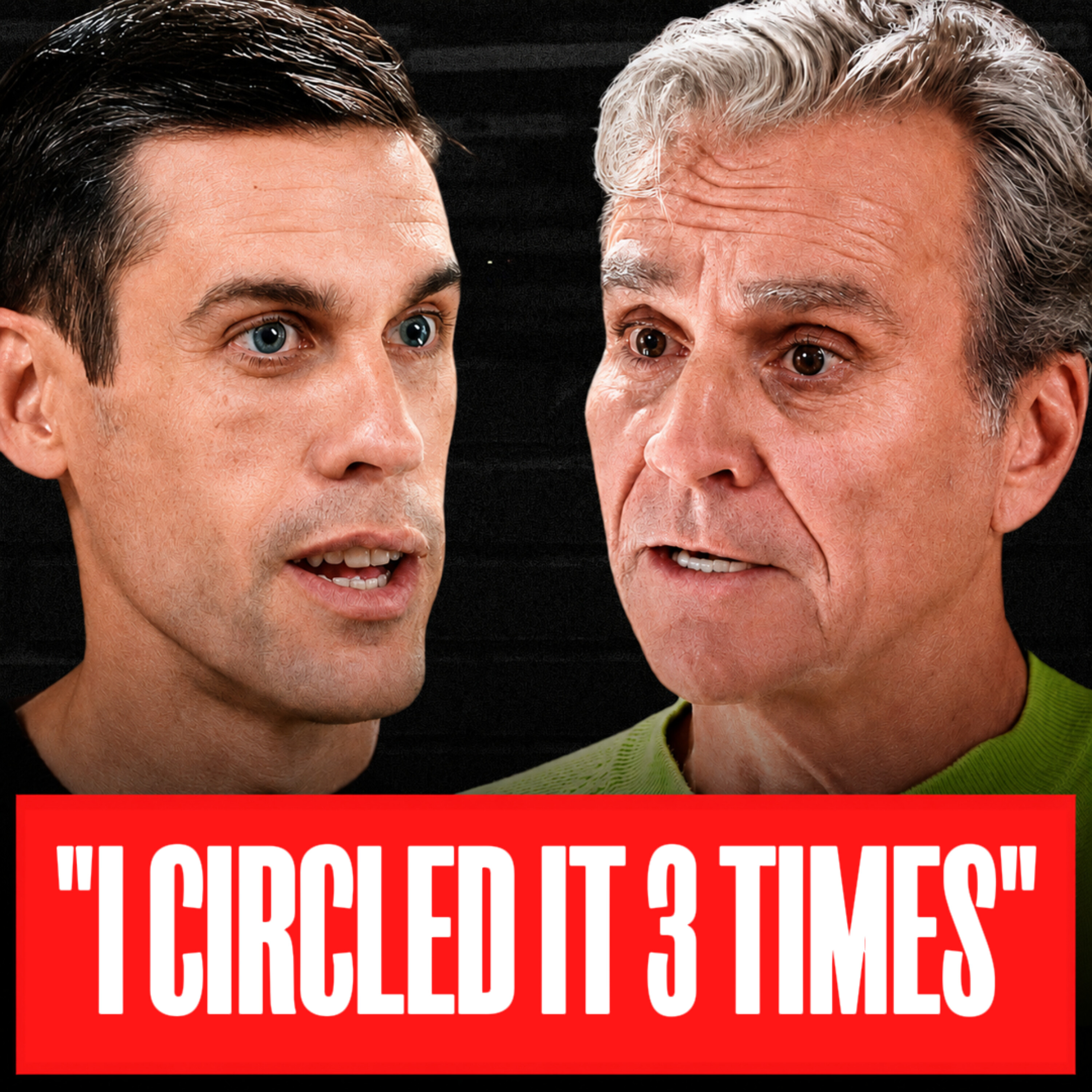
7:39Ryan Holiday: Well, so I've said this before, because yeah, Mark Sturulus and Christianity, it's the same time. Jesus, Seneca, born the same year, both in provinces of the same empire. both die at the hands of the state. I've said the Christian argument is like, don't sin or you will go to hell. And I think the Stoic argument is, don't sin or you will live in hell. It's a somewhat logical argument against excess and cruel. When he says the best revenge is to not be like that, that's the argument about faith. So that sentence, of all the sentences in the book, I've circled it three times. I have stars. I have the page dog ear to it.
8:22I mean, that is the sentence in the book that has stood out to me. I keep like a chap book and stuff and that goes there. And so I think that the book really gave me some hope. I don't read philosophy that much. I read poetry a lot more than I read philosophy, but both poetry and philosophy give me difficulty in that they don't tell a story usually. I mean, some poetry does, obviously, like epic poetry and stuff, but philosophy doesn't tell a story. And so I have trouble with it. But Aurelius spoke to me in a way that was really powerful. And now I want to learn more about Seneca, for sure.
9:08Ryan Holiday: I think Aristotle said both the philosopher and the poet are concerned with wonder. Yeah. And I think when you don't get that when you read, ironically, Aristotle or most of the other philosophers. Yeah. But when you read Marcus Aurelius, it doesn't feel like he's doing philosophy. Yeah. But he is. Yeah. Right? By talking about himself. It's similar to Montaigne where he's like, who am I? Why am I here? What's going on? What does this mean? How could I do it differently? That has philosophy. It definitely does not feel like he's doing philosophy. It feels like he's talking to you. And he feels in certain ways like a modern day advice writer, you know, a so-called self-help writer.
9:47Ryan Holiday: Well, there's a French philosopher named Pierre Hadeau who wrote this book about Marx and Meditations, and his argument is that that is doing philosophy. Writing notes to yourself about your temper, about your fear of death, about your anxiety, about obnoxious people, reminding yourself of what you believe, oftentimes right after you've just acted in contrary to that belief. Right. That's philosophy, not philosophical discourses where you attempt to explain the universe or to teach. Or to get at something right or wrong. Yes. Yes. Meditations is philosophy for Marcus Aurelius, and its accidental byproduct is that you and I can read it 2 ,000 years later.
10:28Right. And so I was really happy to read it because I'm trying to figure out, like, what's my next book to write? I mean, I'm not saying that I'm going to like do my own meditations. I'm not saying that, but I'm saying that it basically broadened possibilities for me. And that was a really great gift. So I appreciate that to you.
10:49Ryan Holiday: As a great writer, I would be curious what you thought of it as a text. Like put the philosophical contents aside. How did you take it stylistically? I thought it was really, really well done. and astoundingly modern. Yeah. Especially given that it wasn't for an audience. Right. Astoundingly. And I think perhaps it's because it wasn't for an audience that it still stands up all these years. He's not on a stage. And I got to say that, you know, reading Marcus Aurelius over the last week has given me sort of like a new kind of self-talk. Interesting. It's given me a language in which to address these things.
11:39And I'm not bullshitting you on that.
11:41Ryan Holiday: In Marcus's life, he loses his father very young. And then he comes under the sway of a monster, Hadrian, who's like, although a very capable emperor, a killer, like not exactly a sadist, but a person who you would expect would be attracted to absolute power. And so he kind of has this, well, I don't want to be like him. And if you notice, he almost never appears in meditations. He's not in the list of acknowledgments. That start the book, right? Yeah. But the dominant entity in the acknowledgments is not his mother, who he clearly loved. It's this stepfather, Antoninus, who you might have predicted they'd be at odds with each other because they're not related and they're jockeying for power and they're in this forced, arranged kind of marriage.
12:32Ryan Holiday: I mean, in the days of my youth, I was told what it means to be a man. That could come from that passage of Mark Sorrell's talking about Antoninus. And you just see like, oh, if you get lucky enough to come in the orbit of an incredible person and you decide to listen, it can really heal a lot of wounds and get your compass dialed in. So it's a pretty remarkable relationship they have. And I think that Fred Rogers was definitely that for me. interesting that you know you say the title because you know a lot of people you know know that it comes from the first line of the first song of the first let's happen album however the people who don't know that tend to think it's from from antiquity yeah they think oh my god is that is that homer yeah it seems like it could be yeah yeah and you know you feel that a lot of times when you read the ancients like they are they are on a stage and um the fact that he's sitting either in his bedroom or in a camp tent or whatever doing this is, I think, what lends it its immediacy.
13:33And so that's the thing that I liked about it stylistically was that there is a certain immediacy to it.
13:39Ryan Holiday: Yeah. I mean, you get that advice about like, you know, just be really raw and vulnerable and specific. And that creates the general and you don't really believe it. And then this guy writes something for nobody. And it somehow reaches millions of people for for 20 centuries. It's kind of like the proof. I thought about that. Did you read the Joan Didion book that came out, the notes to John? I have not read the whole thing. I read the excerpts that came out. I have the book, but I haven't read. By the way, this was her table. Didn't I tell you this? No. Yeah, this is the table. She could have written some of those notes like at this table.
14:11Ryan Holiday: Wow. But the chairs too. Dang. When I read that, I was like, oh, she can't write a bad sentence. Like she was writing for her husband, like she was writing notes from therapy for her husband. And if that text had gotten discovered 200 years from now and someone wrongly interpreted it as an epistolary novel, they would have been like, this is great. You know what I mean? Like it's somehow, it's like, she's so good at what she does that even when she's jotting notes down from a therapy session to her husband, it's good. And I felt like here's Mark's realist writing reminders to himself. His to-do list is an enduring work of philosophy.
14:50Ryan Holiday: It was pretty incredible.
15:16In fact, 99 % of their auto customers earn at least one discount. Visit Progressive.com and see if you can enjoy a little cash back. Progressive Casualty Insurance Company & Affiliates. National average 12-month savings of$946 by new customers surveyed who saved with Progressive between June 2024 and May 2025. Potential savings will vary. As a small business owner, sometimes it feels like no matter how much planning you do, there's always surprises. Like an urgent, expensive repair. But here's a surprise you will like. With Progressive, small business owners save 13 % on their commercial auto insurance when they pay in full.
15:55So enjoy a surprise for once. Get a quote in as little as 8 minutes at ProgressiveCommercial.com. Progressive Casualty Insurance Company and Affiliates. Discounts not available in all states or situations.
From the publisher
One sentence from Marcus Aurelius made Tom Junod circle it three times, star it, and dog-ear the page. In this episode, Ryan talks with the acclaimed writer about reading Meditations for the first time, why Marcus still feels so modern, and the line he can’t stop thinking about.
Tom Junod is senior writer for ESPN, where his work has won an Emmy and the Dan Jenkins Medal for Excellence in Sportswriting. He is a two-time winner of the National Magazine Award for Feature Writing, and a winner of the James Beard Award for essay writing. Previously he was a staff writer at GQ and Esquire. The film A Beautiful Day in the Neighborhood was based on his article in Esquire.
Grab signed copies of In the Days of My Youth I Was Told What It Means to Be a Man by Tom Junod at The Painted Porch | https://www.thepaintedporch.com/
Follow Tom on Instagram | @tom_junod
📚 Grab your own copy of Meditations translated by Gregory Hayes | https://store.dailystoic.com/pages/meditations
🎟️ DAILY STOIC LIVE | Ryan Holiday is coming to a city near you! Grab tickets here | https://www.dailystoiclive.com/
🎙️ AD-FREE | Support the podcast and go deeper into Stoicism by subscribing to The Daily Stoic Premium - unlock ad-free listening, early access, and bonus content: https://dailystoic.supercast.com/
🎥 VIDEO EPISODES| Watch the video episodes on The Daily Stoic YouTube channel: https://www.youtube.com/@DailyStoic/videos
✉️ FREE STOIC WISDOM | Want Stoic wisdom delivered to your inbox daily? Sign up for the FREE Daily Stoic email at https://dailystoic.com/dailyemail
See Privacy Policy at https://art19.com/privacy and California Privacy Notice at https://art19.com/privacy#do-not-sell-my-info.
More from The Daily Stoic
All episodes
We use cookies.They keep VO running smoothly and help us improve it. Privacy policy