
 Ask ChatGPT



Ryan Holiday discusses Stoic philosophy through daily meditations and lessons from notable Stoic philosophers, alongside interviews and listener Q&A sessions.
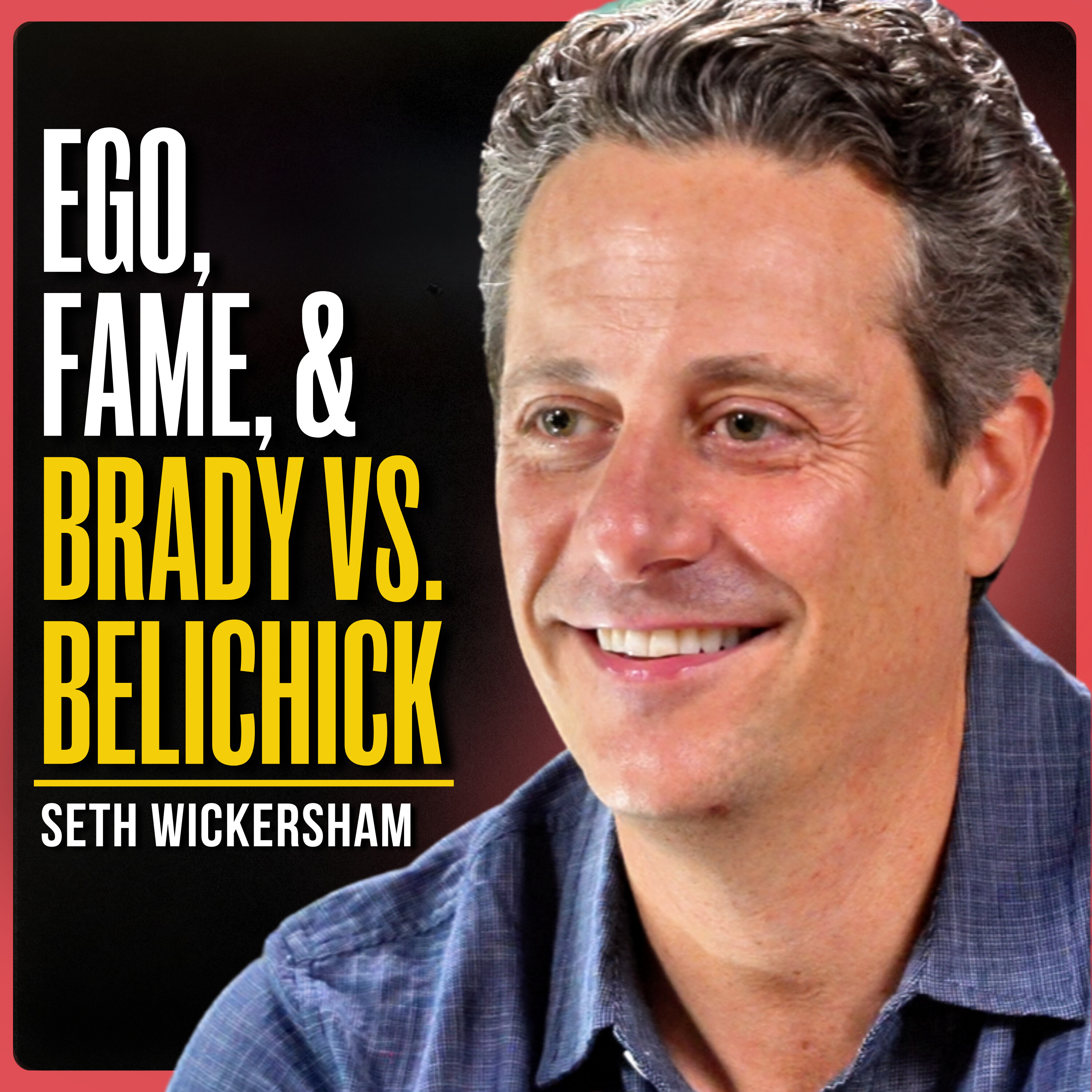
In this episode, Ryan Holiday interviews Seth Wickersham, an award-winning sports journalist, focusing on the psychological and emotional complexities involved in being an NFL quarterback. They explore themes such as ego, pressure, identity, and the relationship dynamics within the NFL.
Written by AI. May contain mistakes.

Get the gist, explore an idea or ask about something said.
 Claude
On The Daily Stoic, what are the key points of this episode?
Searching your listeningAutomatic transcript. May contain errors.
0:28Why choose a Sleep Number smart bed? today. This message comes from Capital One. The Capital One VentureX Business Card has no preset spending limit, so the card's purchasing power can adapt to meet business needs. Plus, the card earns unlimited double miles on every purchase, so the more a business spends, the more miles earned. And when traveling, the VentureX Business Card grants access to over 1 ,000 airport lounges. The VentureX Business Card, what's in your wallet? Terms and conditions apply. Find out more at CapitalOne.com slash VentureXBusiness. Look, ads are annoying. They are to be avoided, if at all possible.
1:06I understand as a content creator why they need to exist. That's why I don't begrudge them when they appear on the shows that I listen to. But again, as a person who has to pay a podcast producer and has to pay for equipment and for the studio and the building that the studio is in, it's a lot to keep something like The Daily Stoic going. So if you want to support a show but not listen to ads, well, we have partnered with Supercast to bring you an ad-free version of Daily Stoic. We're calling it Daily Stoic Premium. And with Premium, you can listen to every episode of The Daily Stoic podcast completely ad-free.
1:48No interruptions, just the ideas, just the messages, just the conversations you came here for. And you can also get early access to episodes before they're available to the public. And we're going to have a bunch of exclusive bonus content and extended interviews in there just for Daily Stoic Premium members as well. If you want to remove distractions, go deeper into Stoicism and support the work we do here. Well, it takes less than a minute to sign up for Daily Stoic Premium, and we are offering a limited time discount of 20 % off your first year. Just go to dailystoic.com slash premium to sign up right now or click the link in the show descriptions to make those ads go away.
2:30Welcome to the weekend edition of The Daily Stoic. Each weekday, we bring you a meditation inspired by the ancient Stoics, something to help you live up to those four Stoic virtues of courage, justice, temperance, and wisdom. And then here on the weekend, we take a deeper dive into those same topics. We interview Stoic philosophers. We explore at length how these Stoic ideas can be applied to our actual lives and the challenging issues of our time. Here on the weekend, when you have a little bit more space, when things have slowed down, be sure to take some time to think, to go for a walk, to sit with your journal, and most importantly, to prepare for what the week ahead may bring.
3:21Hey, it's Ryan. Welcome to another episode of the Daily Stoic Podcast. I posted a reel the other day of me signing some of the tip-ins for Wisdom Takes Work, which is coming out in October. We've got these signed, numbered first editions. And my guest today, Seth Wickersham, sent me a little note and he said, hey, that's awesome. You're really burning through those. And I said, yeah, well, the video is old, but I'm going to have to be doing it again because I just found out my publisher lost 3 ,500 of the tip-ins. So I have to go do a whole other round. They should be coming here shortly. It won't change the experience for you guys because they're numbered.
4:02So we know, well, we know because I made them get to the bottom of it, but we lost a big chunk. There's like six boxes of the pages. We stacked them all up. It was taller than me, but they lost basically a full box. So we know exactly, you know, which of the numbered pages they lost. So I'm going to have to sign them. The team here is going to have to number them again. Those will get out. It shouldn't delay anything. But, you know, we're just commiserating about publishers a little bit. Publishers are amazing in the sense that they help you do what you want to do. But like anything, any big industry or association, whatever, there's bureaucracy and problems and sometimes a lack of accountability.
4:40And all you can do is just throw up your hands and go, this is what I got to do. And he was telling me that he has a copy of our mutual friend, Wright Thompson's book, Pappyland, with his name misspelled on it. So that's that. And then he said, hey, when's our episode going to air? And I said, it's going to run really soon. Here it is. So, Seth, here is your episode. I always hate watching the Jets-Steelers game as we were texting, which I guess segues into what the episode is about. Seth has this amazing book called American Kings, which is about quarterbacks. The most powerful position in American sports, the hardest position in American sports, and the one that has in its way kind of echoes of what it must have been like to be a Marcus Aurelius or a sort of king, prince in any field, literal or otherwise.
5:35What does that do to a person? How does it change a person? Does it demand ego? Does it deform the ego? Is it good for you? We talked in part one about one of the only people to ever walk away from that position, Andrew Luck, and why other people hang on way too long. I thought this was a fascinating conversation. I think you're really going to like it. And I was really excited to have Seth on in person. As I said in part one, we had him on back in November of 2021 to talk about his award-winning book, It's Better to Be Feared, which is about the Patriots dynasty. This book is about the position itself of quarterback.
6:12I think you're really going to like it. You don't have to like sports. You don't have to like American football to know or recognize the deeper themes in this book and in this conversation. In part two, we're talking about ego. We're talking about some of the religious elements, the faith elements that seem to inspire some of these athletes. And then what's the difference between being gifted and blessed and much more? As I said, Seth is a senior writer at ESPN. He's a New York Times bestselling author. He's been a finalist for the National Magazine Award. His stories have been anthologized in the greatest American sports writing publications and books over the years.
6:49You can follow him on Instagram and on Twitter at Seth.Wickersham. Newman grabs signed copies of It's Better to Be Feared at the Painted Porch. They didn't have American Kings in yet when he was here, but the book is great, and you can buy that from the Painted Porch as well. Enjoy.
7:08How do you raise a quarterback? I mean, that's like, first of all— Probably not by trying to. I think that there's a lot of virtue in that. But one of the things that's interesting is that there's this entire multimillion-dollar circuit that has to do with youth quarterbacking. Right. All these camps and quarterback coaches and physical trainers and media specialists, all these things that you think you need. Yeah. And they all know, I think that most of them are pretty good guys. There are some of them that I think are a little full of it. But like, if you tell a dad, hey, your son's got some of this, you know, he's got something special here.
7:47I mean, Rick Neuheisel says, you know, they are nomads in the desert and you're giving them water. I mean, they will write checks and write checks and write checks. And like, these are kids who are becoming fully formed. And like Steve Young and I talked about it where he talked about how you're celebrating the hope. Yeah. And that's really a dangerous space to be in. That's a dangerous space. It's a lot of adults for a young child to have to please. Are there any quarterback moms or is it almost always dads? It's a lot of dads, but it's a lot of moms too. I've seen moms that I think in some ways are more competitive than the dads in some cases.
8:30But, you know, it ends up just by gravitational pull, I think being a lot of dads. And I was at Elite 11, which is this national showcase that takes place in Southern California every year. And they have regional ones. And, you know, you make it through regionals and you make it to nationals. And really, it's a fun honor to have, but there's no predictive value in it whatsoever. It's a beauty contest for quarterbacks. And yet they're imprecise even at that because Patrick Mahomes didn't make it as a high school kid, which is astounding and bewildering. But we were walking off the field and there was one particular quarterback.
9:11I'm not going to name him, but he had had a rough day. And this is like seven on seven stuff. Like nobody cares. Yeah. You know, it's, you're throwing to people you've never even thrown to before. And his dad lit into him in front of everybody. And, you know, he just said, you know, what the fuck are you doing out there? And I mean, it was embarrassing for that kid. And Colin Hurley, who I was there kind of shadowing, saw it all happen. And he waited until the dad had had left that scene and he went over and, you know, that kid's a peer of his. He's a blood brother. And to a certain extent, like they're two of the only people who know what it's like to be teenagers try in 2024 or 2023 trying to be great at this thing.
10:01And he went over and just gave him a hug because even though I don't think Charlie Hurley was ever like that to Colin. And he could empathize and he felt a kinship with it. He had other adults do that to him, for sure. Yeah. Like they all have, and I actually do wonder if that partly explains some of the political stuff with the quarterbacks where it's like, yeah, they all have daddy issues. They all know what it's like to have an abusive, erratic, crazy dad, or most of them do. Oh, I know almost every quarterback story can be divided into too much daddy or not enough. Yeah. Is ego just a prerequisite?
10:36it. It's not only ego. Ego is something that's like much smaller than a prerequisite. I think that somewhere in there, you have to believe that you're kind of a superior human to everyone around you. Like you have to believe that you're, you know, better than everyone else, including the head coach. Yeah. Right. And I have this moment in the book. So Steve Young is trying to, you know, learn the West Coast offense. He's behind Joe Montana. This is the early 90s. Joe is his body starting to break down, but he's still obviously a genius. Steve is running the West Coast offense the way they tell him to do it, which is you go from options, you know, reads one to five.
11:18And if nothing else is there, you scramble. And Steve is getting sacked a lot and getting hit a lot because he's going through options one through five. Whereas like Joe Montana had figured out that the playbook can be either an open highway or a prison. Yeah. But whatever it is, it's a suggestion. Yes, yes, yes, yes. And he would skip options one to two, go straight to three, then to four. And if that wasn't there, he'd just get rid of the ball. Right. And he'd live to fight again. And he was avoiding hits that way. And even though his body was starting to break down, that was his genius, was that he understood the offense better than the coaches could draw it up.
11:57And Steve, meanwhile, was doing what he thought was right, which was doing it exactly as Bill Walsh, a supposed genius, had drawn it up. But that's the – there's the – is it quite ego? But you experience it in anything you do where you go, hey, I'm a cog in this machine unless I insist on not being it, right? So like it'll use me up, right? Like the system is good for the system often at the expense of the quarterback. and I have to think about how do I have a playing career more than two seasons, right? Like I can only take so many sacks. And so it's like the ego of like, when, when, I don't know, your publisher sends you something and you go, I'm not going to do that.
12:40Like, like, you know, like you think without the ego, you're the team player all the time. You do what they ask, you follow the process and you get fucking worn down and chewed up and you have to go like, no, our interests are aligned only up to a point, right? And that you have to have, that's a lot to ask a 22-year-old to figure out when they only have one body to go like, hey, you got to figure out where the coach wants you to do X because it's good for the coach and it's good for this. But if you push back even just slightly, it can go a way that's much more favorable to you. And it has to exist within this very fragile ecosystem where doubt cannot penetrate.
13:22So there's like a natural tension there. And I think one of the most interesting things that I spent a little bit of time on is how some quarterbacks, you think one of the basic requirements of the job is when you're answering questions from the press, you take all the blame, no matter what really happened. That's just part of it. You recite your lines, right? And there's people who just cannot do that. Pro quarterbacks who just cannot do that. And that to me was fascinating. Like, what is it that when you get in that particular position where you're just doing what everyone expects of you, there's some sort of internal wall that that rubs against where you just cannot do it?
14:03You figure these things out. Like, I was just listening to this or watching this. No, reading. I was reading. I was reading in the Times. But it's also a podcast. Miley Cyrus was being interviewed in the Times. The guy said, you know, you seem much less, like, much calmer, much more at ease, more open than previous times I've interviewed you. And she goes, yeah, I've learned that if I don't like a question, I can just say, hey, I'll be right back. Can you excuse me? And then just not come back. And someone else will come in and fix this for me. Right. Right. And you just, there's just these like tips of the trade that you only realize, like this is kind of the level and then the level above.
14:40Right. And like you figure those things out as you go. Yeah. And then some people don't figure them out. And it just makes it so much harder for them. And like as a member of the public who's just like, well, you got to get that. Maybe that feels unfair. But as someone who's like, you know, one of a handful of big pop stars, like she probably Lady Gaga was like, hey, you just do this. Like somebody else figured that out and passed it along. And plus it only becomes a thing if you don't answer it. Right. If you do answer it and you just utter whatever cliche you want to get you through it, no one cares and no one will notice.
15:14and it's one of the things that I think you know my first book was on the New England Patriots and it was basically about Brady and Belichick yep it's a good worn copy there and yeah I think that you know so you write a book about quarterbacks like how do you write about Brady when I literally just wrote a book about him and so I try to you know touch base with him in particular parts where I think it really illuminates aspects of him or his personality and one of the things that I think is really, I think, underappreciated is how much shit he could eat. Because Belichick, unlike most coaches, would not let him off the hook.
15:51And there was a game that they played. It was in 2014. So I think it was the year you might've spoke to them. They won the Super Bowl that year. And that was a pivotal year in the New England Patriots dynasty. Because if they don't win the Super Bowl that year, I think Tom Brady is probably a San Francisco 49er and Jimmy Garoppolo is still the Patriots quarterback right now. But they lost to the Chiefs early in the season, and it was a pivotal loss. They got blown out on national television. And Belichick is doing his Monday morning squad meeting, and he just rips into Brady. And, you know, people are saying this is the best quarterback in the league.
16:27You know, look at this shit. And Brady, who's, you know, at that point in his late 30s, has put up with this his entire adult life, looks to his left, looks to his right, and just gets up and walks out of the meeting. And I think the other Patriots were kind of like, oh no, is this it? Like, is he gonna, he walked straight to his locker. He banged out some sort of text message and he sat back and like exhaled. And one of the Patriots saw him do all this and was like, hey 12, you straight? You know, and he was like, I'm fine, I'm good. And he was like, oh, thank God. You know, cause they were wondering.
16:59He just figured out another wrinkle in the system. Yes. He did have to take it, but he also didn't have to take it. Exactly. I mean, you know, even Tom Brady has his limits, but, you know, like that to me, I think is one of the most fascinating aspects of him that he just had the capacity to eat shit like that. Yes.
17:23Thanks to Toyota Trucks for sponsoring this episode. When I bought my ranch in 2015 out here in Bastro County, I drove my car about halfway down the dirt road that we live on, thought this isn't going to work, stopped, parked it, walked the rest of the way home, borrowed my wife's car, drove into Austin and bought a truck. What I bought was a Toyota Tacoma. And this truck wasn't just transportation getting me to and from my house. It unlocked a whole different style of living for us, not just on the ranch, but in our little Texas towns. There were places I could go now that I couldn't go before, especially out here in the piney forests, through the fields, and on the unpaved roads like the one that I lived in.
18:08We got to go deep into the hill country's wild beauty. We've driven all the way out to East Texas. We've driven across the country. And by we, I mean not just my wife, but both my kids who I drove home from the hospital in that truck. Toyota trucks are built for those who understand that the best adventures happen when you're willing to veer off course, because you never know when you'll end up on a Toyota adventure detour. And of course, this is stoicism, too, because every detour, every obstacle is an opportunity. But it's helpful if you can handle the difficulty inherent in that. If you've got the resilience and the right companion to make it wherever the road takes you, discover your uncharted territory.
18:50Learn more at toyota.com slash trucks slash adventure dash detours. We just took our kids to an outdoor performance at the Nutcracker. They had a snow cone and then they went insane in the car ride home. And one of the things I try to remind myself when that's happening is that I don't control my kids' behavior, especially when they're too far gone like that. But I do control how I respond, right? That's stoicism, but it's also what Dr. Becky talks about. Dr. Becky is a clinical psychologist and a best-selling author, and she founded Good Inside, which is there to give parents practical, actionable tools for handling those everyday challenges with confidence.
19:31My wife introduced me to Dr. Becky's books. I love them. I've recommended them a million times. I've had her on the podcast. And as it happens, Dr. Becky is hosting two live Q &A events for Good Inside members. I am one of them. She signed me up for about a year and a half ago. I've loved it ever since. On December 1st, you can join Dr. Becky for her How Not to Raise Assholes event, which is about avoiding entitlement and raising kind, empathetic kids. And on December 15th, she's hosting her How Not to Lose It over the holidays event, which I'm sure we could all use. As I said, I'm a big fan of Dr.
20:08Becky. She's been a great influence for me as a parent and just as a human being. And Daily Stoic listeners can join for 15 % off with code STOIC15. You just got to head over to goodinside.com to catch the events.
20:29My favorite scene in the Patriots book is the one where he's throwing the ball around with some receivers and they're just dropping. He's being, he's like just being so hard on them. And somebody pulls Tom Brady aside and go, Hey, like these kids aren't going as far as you are. Yeah. When he was in high school. That realization that you're, this is, that's when the alienation starts. Yeah. I think, right. It's like the sense that, oh, hey, there's different tracks to this and you're not the same and you're not held to the same standard. And by the way, you can't hold everyone to the same standard.
21:06That's a lot to put on a 18 year old or a 16 year old or whatever. Yeah. Yeah. And Brady's have been always been one of those guys who like growing up, everybody was always like, what's the matter with you? Because he would break his Nintendo remote when he lose on Super Mario Brothers, you know? And, you know, he, that piece of his personality never left. Like in a lot of ways, we evolve a lot as, you know, people. And in some ways, you know, you grow out of certain things. But when he was a kid, his dad and he, his dad loved golfing with him and they would golf and Tom would miss shots and he'd get so angry.
21:42And at one point, you know, he'd throw clubs and Tom senior would pull him off the course. And it's like, you know, we're not doing that. And, you know, fast forward to him as the, as a new England Patriot throwing tablets on the sideline and stuff, you know, he's a grownup, but you know, that, that rage inside him. There's a scene in the book where he sees his son do that, I think right and he's like man this isn't gonna go well you know it's like it's kind of like that it's like the Forrest Gump thing like me and he's like he realizes that he is you know like there's something kind of haunting it was that he's just so hard on himself yeah and he was like oh bro yeah I was hoping this might skip you you know yes yes exactly there's a lot of torment and you know you know as a writer there's a lot of things that go into writing there's you know this base of knowledge.
22:30There's finding the right time to catch the wave. But at the end of the day, it's you and your computer. It is alone. And you've got to figure out a way to get something on there that you can live with for a day, whatever it might be. And that torture exists all the way up the line. And especially in this profession, I think. Well, even if you love it, there's some part of you that's a miserable fuck that makes you do it. Yeah. And people who are not miserable fucks don't understand it. And there's just an unbridgeable gap, you know, like people ask if my, they'll ask my wife, like, are you a writer?
23:05And I go like, thank God, no. Like, I don't, I don't know how two could exist to expect it seems like, but like, I'm more, it's more like you're lucky, you know, like, I think there is something about as great as it is, as much as you love it, there's this work you have to do constantly to keep it on a leash, I think. Unless you want to turn yourself over to it completely, and maybe there's some slight plane, you get like some higher transcendent level, but it appears to come at the cost of essentially everything else. When I became a parent, I struggled a lot with regulating that mood. Yeah. You know, because when you're married, it's okay.
23:44You know what I mean? Everyone kind of, your wife gets it. You're too adult, too consenting adults that know what they signed up for. Exactly. And, you know, your wife can help you to an extent, but she can also just go in the other room and watch TV or whatever it is. Oh, that's it. Do you have a good day? Yeah. Yeah. But when you're a parent, you realize like how those storm clouds gather and what form they take. And, you know, I remember, you know, going to a therapist when I had just become a parent because I needed to figure out a way to not let stress from the day job just cast a shadow over the entire house.
24:18Totally. And even now - That's why I have an office. I realized I could do it from home, but I don't want this shit at home. And even now, my eight-year-old son, he gives me a hard time because I walk around the house muttering and I don't even realize it, but he notices it. Yeah. Yeah, yeah, yeah. And if they could do something else, I would be... If you could do something else, do something else. It's one of the things... I write about Warren Moon a lot in the book and he's such an interesting... He has such a kind of a star-crossed career, but he was the first black quarterback for whom greatness was expected.
24:53Yeah. And, you know, that's a hell of a burden. And people, you know, got hurt in his career. Like, he got hurt. Other people got hurt over the course of his career because of who he thought he had to be. And, you know, he talked a lot about – he had an incident with his wife in the 90s where he was arrested for domestic violence. he was later acquitted but you know he knew that the path he was on was unsustainable and it was going to end very poorly so he went to counseling and he would sneak into a building through the back door you know it was a complete utmost secrecy utmost discretion eli manning when he was with the giants saw a therapist and the giants all the coaches and the exacts were like no one can know about this because the quarterback can't be weak the quarterback can't be like think about what the media might do with it.
25:43Yeah. You know, and it's like, Moon was one of the first, I think, to try to use that as an outlet to help him just manage and learn how to talk, you know, learn how to like communicate about his feelings, learn that it's okay to communicate. Because as a quarterback, of course, you're thinking I have to amass everything. Right. And as we all know, there's limits to that. Is it possible to be a quarterback and a reasonable, regular person? Like, I mean, in a way, does that make what Andrew Luck did all the more impressive? Or like, are there peers, you would say, like they're similar? Who do I think?
26:22Yeah. Who do I think is the most, the best at regulating all those different people you have to be? There was like the, Bob Dylan did this movie in the late 80s. And, you know, the director, he asked the director, like, you know, who, what do you want me to do? Who do you want me to be? And he goes, well, just be yourself, you know, in the scene. And he was like, well, which one? So I think that of all the quarterbacks that I've met, gotten to know, studied, even ones who I never met, you know, people who died before I got into this. I honestly think Eli Manning is the best at regulating all that stuff.
26:58Really? Because he came in. Think about the pressures, being a Manning, being Peyton's little brother at every stage, then going to the biggest media market, being a disappointment. Yeah. You know, for first couple of years, people not knowing if you were going to pan out. And he did a bunch of things that I think are really admirable and also just really genuine. And he's one of the most genuine superstars I think I've ever met. And people are kind of surprised when I when I mentioned him, but he just did a bunch of things that I think seeing a counselor. So figuring out a way to balance every part of his life.
27:34He's had, you know, the same marriage for a long time and they're a thriving marriage. And, you know, he's been an excellent father. And, you know, even with the quarterbacks, you know, there's a balance that they have to have between knowing that they're apart from everyone else and also being one of the guys. And when it comes to meeting the press, quarterbacks usually, the starting quarterback usually meets with the local media twice a week after the game and once during the week. and those once a week things, you know, were supposed to be 20 minutes and they end up being like seven or something.
28:06And, um, the NFL has rules that everybody has to be in the locker room for 40 minutes for four days a week while the press is there, I think four days a week. And the starting quarterback is never there. And if he is, he's not talking to the press, Eli Manning. Again, this is a small example, but like Eli Manning would sit at his locker every day and he was available. It didn't matter if you were from ESPN Magazine or the Asbury Park Press, you could get a one-on-one interview with Eli Manning. Now, he may not say anything interesting because he's too smart and savvy. And you fast forward again to the Manning that's 40 minutes away from here, Arch.
28:45When Arch got his first start last year, he called Eli. And it wasn't to ask about how to dissect certain defenses or whatever. It was like, how do you deal with fame? How do you deal with these certain things? And of course, there is no perfect answer to these things, but Eli had a lot of wisdom for him. It would be interesting coming from that tradition, you know, we're talking about no one can tell you how to do it, but if you do, you're actually a third generation quarterback, that's starting to get pretty nuts. There's a story, if you read that book, My First Coach, it's about like quarterbacks and their dad.
29:18Yeah. There's a story in that one where Archie Manning talks about deciding to retire early because he could feel Eli Manning was drifting and he didn't have the same relationship that he had with his other sons. Yeah. And just go, what a fucking powerful message that sends when dad gives up millions of dollars. Again, gives up the thing you're not supposed to want to give up to spend more time with you. It makes sense that you would do a pretty good job yourself when you saw someone at least trying to do it better than, you know, it had been done. And that's something that I think has stayed with those guys.
29:54I mean, I think that like, again, when you're a quarterback, like during the season, at least there's no work life balance. You know, you're, you're devoted to one master and that's the team. But, you know, the Manning cast is a, is a terrific way to watch Monday night football. what makes it so cool is that I think both Eli and Peyton can see the game through the quarterback's eyes, no matter who the quarterback is, whether it's a rookie, a journeyman, a franchise guy, they could always, they kind of understand. And so you can really learn a lot, but the reason why they do it is so that they don't have to travel.
30:28Like they both do it out of the house. And that gave them a chance to stay current, be with the game, share some knowledge, have fun, but not have to be part of a crew that spends three or four days a week on site. Yeah. Maybe it was from your reporting, but one of the things that I took that's been helpful for me is like, so people look at Tom Brady and they go, this is what it costs to be great at what you do. It tears apart your marriage. This is what it takes. And it sounded like from what I've read that it wasn't the commitment to football that ultimately is what's taxing. It's that he would finish the football season, in which he was a maniac.
31:09Like to be great at something, you have to be a maniac at that thing. And then instead of going, hey, I've got three months off, it was, now I've got to shoot all the TV commercials. I've got to do, like, it was actually the off season that was the unbalance, the imbalance on top of the imbalance. One of my friends gave me this, he said, you know, as a writer, he said, work, family, scene, pick two. So it's like, you can be a maniac about your work and then you can be dedicated to your family. But if you want to go to parties, you want to do all the other shit, you're going to, one of those two is going to suffer.
31:44And I think, so people often take the wrong lesson because they don't actually see what the schedules of these people look like. Like you can be maniacal about a craft or a trade or a sport or whatever. And then as long as you just go right home after, you can be decently, it's gonna be hard on your family to be traded or moved or whatever the hours but as long as you're not also trying to squeeze in a bunch of other selfish selfish shit or ego feeding shit you can probably keep it together the problem is we can't say no to the other stuff on top of the big thing the life-consuming thing that we've already committed to yeah anytime there's a spectacular success or a spectacular self-destruction there's a lot of things that happen that led up to that that are all invisible.
32:34And Brady is fascinating because, I mean, remember, he won his seventh Super Bowl with the Bucs and, you know, Gisele Bündchen right after the game on the field says to him, what more do you have to prove? And he kind of avoids answering. You watch him, he kind of moves out of the way and goes to hugging his kids. You know, he didn't want to be pinned down right there. But you look at you on Instagram and there's all these Instagram quarterbacks, you know, quote unquote, the next Tom Brady. He's only 13. And, you know, they show this guy running around and doing all this stuff. And that shows such a fundamental lack of sophistication to say nothing of maybe it's so unfair to put that on a kid or whatever.
33:16But like it just shows that you had no idea what made Tom Brady Tom Brady. And that's, you know, he goes to Michigan. He's seventh on the depth chart. He finally gets a chance to start and he has to condition himself to not take a single snap in practice for granted. And he conditioned himself in college that he can't have a bad play in practice because he may not play in the game. Then you go to the Patriots where that is the working ethos of the entire Bill Belichick philosophy on steroids. Yeah. Yeah. And then you have a over him over, you know, 20 some years playing, you know, you play against Peyton Manning.
33:58He knows that during those games against Peyton Manning, if he has one bad play, that could cost them the game, which could cost them home field advantage in the playoffs, which would cost them the Super Bowl. One play. Yeah. So you think about what that does to somebody over the course of their life. And, you know, what it did was it produced the greatest quarterbacking career that anyone's ever seen and the most accomplished football player. And, you know, it's also someone starting over in their late 40s. Yeah, yeah. And I remember I was talking to Lance Armstrong one time and he told me that basically the reason – what he took out of the cancer battle was like winning is living and losing is death.
34:37and he's like I just look at it I just looked at literally every argument every option every choice every one-on-one everything was like if I don't beat this person I'm dead you go okay I could see why that would be a thing that would help you in fucking chemotherapy and I could see why that would help you win the Tour de France and I would see why it would also take you past any point of of reasonability on what you're doing and not doing. And to bring it full circle. Like that's why Tom feels that way when he sees his son. Yes. Holding himself to a high standard and being hard on himself. Yes.
35:16Because he knows how this ends. Yeah. And also, because I sent you this message about it because I saw he launched this email list. And I'm like, why? Like why? Like you're making$430 million just doing announcing. You need to have another meet. But like when they're like, hey, we'll pay you X to do X. the part of you that can't waste a single snap. I mean, I get it because I'm like the idea of like, I don't actually need this. I can say no to this and be fine. Or I get this all the time. Like people will be like, hey, do you want to write this thing for this thing? And I'm like, why am I even considering this?
35:48Do you know what? Like I have three books I have to write and then an unsolicited request to do something. Now, because it's there, I'm considering it, right? And so So you can see how the part of you that goes, no, I fucking seize every opportunity that's in front of me. That's what actually makes you a great quarterback. But then it makes it hard for you to be a good quarterback and then regular person because you're just that all the time. Even when you're applying the quarterback mentality to do you want to do this other thing or not? And this other thing is superfluous. Yeah. I mean that entire – in my own way, I can relate to that, what you were saying.
36:28And like, it's that entire thing. It's that jockeying between insecurity and needing to be praised or the rush you get from a byline, the rush you get from standing in front of people and giving, you know, a speech and having people give you a standing ovation. It's all of those things wrapped up in that. And I think that, you know, when you're out of the quarterback space, there are things in place maybe to check you here or there, even though it's ultimately up to you. And when you're in that tunnel of the quarterback space, there's very, very few. And that's where I think it becomes difficult.
37:05And that's where I think that for all these guys, you know, Steve Young loved Roger Staubach. And he asked Roger Staubach when he retired, because Staubach obviously has probably become the most successful great quarterback ever in retirement. I mean, he's a real estate, has a real estate empire. And, you know, Steve asked him, like, you seem like you've done pretty good. Like, how do you walk away from football? And Staubach was like, run. You have to run away from the game. You can never look back. Interesting. And Steve kind of ran. He kept one foot in the pool, but it's the exact thing because Joe Montana says, I wish that everyone could experience being an NFL quarterback for just one Sunday.
37:50Yeah. Because then they'd get it. Yeah, yeah. Right. But it is – yeah, it's weird. It's like, why was Kobe Bryant producing movies? Or why did Kobe Bryant need a venture capital fund? And some part of it's probably like, yeah, you got to put that energy somewhere. But also, like, if you don't wrestle with why you have that energy, there's just never enoughness. And so you're just doing, doing. And at the end of the day, we all fucking die and nothing happens, you know. I think that he and Brady did this, too. But I think that he knew that it was going to be devastating. Yeah. It was going to be a death of sorts when he walked away.
38:28And so he was looking for exit ramps to so that when he was exiting, he was exiting into things. And, you know, when you had Brady here, Brady, you know, has this like career that spans two decades, accomplishes everything you could accomplish. Years before he retired, he had set up his Fox deal. He had these other businesses. You know, he had a production outfit. He had his TB12, quote unquote, lifestyle brand. You know, he had all these things he was planning to do. And yet still, you know, he he's talked about it where, you know, he said he felt like he was like, you know, in a washing machine where you're just bouncing everywhere.
39:04And even it got Brady, like even with all of that, it got Brady. And Elway was talking about how you exit Super Bowl champion, all these things, perfect ending. And then you go into these other spaces and you're behind everyone else. Yeah. And your name only gets you so far. Yeah. And Elway went and became the GM of the Arena League Colorado Crush. Like, what is the great John Elway doing becoming the GM of an Arena League team and doing these goofy commercials with Jon Bon Jovi? Yeah. It's because that was his graduate school. He knew that he wanted to get back into football and he wanted to learn how to run a team.
39:44And he looked at that like his graduate school for it. Yeah.
39:52Human, your body has a performance superhighway, 60 ,000 miles of blood vessels that deliver oxygen and nutrients to every cell. This, of course, is your cardiovascular system. It's the foundational system that powers everything we do. Both elite athletes and longevity experts invest directly in the cardiovascular system because supporting healthy blood flow is critical for energy, recovery, mental clarity, and overall performance. That's where human comes in. That's human with two N's. They started out of research at the University of Texas, near where I live, and have 15 years of experience making award-winning supplements for nitric oxide production and healthy blood flow, now used by over 160 pro and college sports teams.
40:40Human Cardiovascular Health Daily is a plant-based and made from clinically studied ingredients like grapeseed and seed kelp extract. It supports nitric oxide production for healthy blood flow and energy while also supporting blood pressure and helping support the delicate interlining of your blood vessels. Just two capsules each morning will power energy and recovery while also playing the long game by supporting long-term vascular health and healthy aging. Human has an exclusive offer for our listeners. You can visit human.com slash stoic for an extra 15 % off your first purchase. That's enter code S-T-O-I-C.
41:14Stoic at checkout. That's human with two N's dot com slash stoic for an extra 15 % off with code stoic at checkout. Shopify's point of sale system helps you sell at every stage of your business. Need a fast and secure way to take payments in person? We've got you covered. How about card readers you can rely on anywhere you sell? Thanks. Have a good one. Yep, that too. Want one place to manage all your online and in-person sales? That's kind of our thing. Wherever you sell, businesses that grow grow with shopify sign up for your one dollar a month trial at shopify.com slash listen shopify.com slash listen
41:57yeah it's funny you'll be like why is the ex-president on the view or what you don't like because you need your not your fix but you're just you're used to being able to tell people what you're thinking and like you know and then all of a sudden you're just a guy you know Like they asked Truman what he did the first day he was out of the White House and he goes, I had to take the suitcases up to the attic. And you're just like, what a cum, like that's not, there's no transition there. And you go from being a not regular to a regular person and you spent your whole life trying not to be regular, right?
42:37And then it catches up with you. And that's a brutal thing. Because if you were content to be a regular person, you would have walked away the second you got, like, the fuck you money. Absolutely. You know, Springsteen talks about how he, you know, goes off a cliff into depression when he comes back from a tour. And you go from being king to being a highly paid chauffeur, you know, basically. And, you know, even in his 60s and into his 70s, when he spent his entire life doing this and he knows the ebbs and flows of it, it would still get him. Like, that's how powerful that is. Yeah, you build kind of a life on the road and then all of a sudden you're just like, you're not doing that thing.
43:22It's – you've got the bends or something. One of the things I try to write about in the book and get into is that like – and it becomes too much. you know even that yeah that all of that stuff just becomes too much and like what ways do people they have nowhere to put all of this anxiety and insecurity and doubt and whatever it might be and so where do they put it like yeah you you know there's guys who i write about who put it to the bar and you know that's where they go and then you have guys who you have tom brady who puts it to avocado ice cream yeah and other people who put it to instagram but you know i wanted to get into the people who, when we talk about Christianity in sports, it's often the question goes, well, you know, does God really care about a football game and who wins or loses given the state of the world?
44:10And I wanted to write about people and take them at their word. And I wanted to literally understand how religion helps them navigate this very complicated and odd job. I mean, Patrick Mahomes, like people don't think about him as a fundamentalist Christian, And yet he is, you know, he has tattoos with scriptures on it. And he's one of the rare guys whose performance has always outpaced his notoriety. And I think he thinks that his relationship with Christ has helped him do that. And, you know, again, that's like a fascinating thing for me to explore. Right. There's this humility to Christianity, but also there can be kind of an ego to it.
44:53Or it's like, I'm the chosen one. He's speaking to me. And so it's probably the duality of it. It sort of grounds you, but then it also, you know, the kind of prosperity gospel of like, I deserve this because, like, it both explains it and helps you navigate it. Yeah, there's a big difference between being gifted and blessed. Yeah. And even though they sound the same. And, you know, Kirk Cousins has obviously never been shy about his religion. And I went, he won this award from a Christian athletes group, and he got it at the Super Bowl. And so I went to see him and it was this huge ballroom and there's a lot of people there in Arizona.
45:31And, you know, it was a, it was a, an event for jocks. And so you got to see that cockiness right there alongside their faith. And that to me was really, really interesting. That year, Cousins had led the biggest regular season comeback in history. It was they beat the Colts. And it had eclipsed the Bills against the Oilers for the biggest comeback in NFL history. And that comeback, of course, was led by Frank Reich, who was so devout that he went to seminary school after he retired. And when Cousins had completed that comeback, he got a text from a number he didn't recognize. And it was from Frank Reich.
46:12And it was him passing along the torch, but also letting it known that, you know, there was, he would find another level of his spirituality within the context of this comeback going forward. And I thought that was, it was a fascinating idea and thought to dive into, especially from the outside. Totally. And I mean, Aaron Rodgers comes from a super Christian background and then obviously has stepped away from it, but that's all kind of swirling around in there. He is endlessly fascinating to me. Rodgers, yeah. Yeah. Do you think it'll work? Him with the Steelers? I don't know. I think he can still play.
46:46I think the tension that'll be interesting, I think, is not him versus age. I think he's smart enough that he'll figure that out or it'll be exposed and we'll all see it. No, I think it's him versus culture. Exactly. And so he's used to being kind of the face of this thing. And the Steelers have a culture that's in place before him and it will outlast him. And I think that will be the interesting thing. Just bet it all on this person. To me, it's a character's fate kind of thing. There's an ego in thinking like, hey, because if you're making a culture pick, you would never pick him. He's the opposite of a character.
47:23So there's this ego in, oh, yeah, our culture can work with anyone. I suspect it will end exactly the way it's ended in everywhere else because that's what the past is. But the past is prologue, right? And so I suspect it will be an experiment that will go down in flames. We'll see. Just like it hasn't really worked with Kyrie Irving because Kyrie Irving is Kyrie Irving. Yeah. One of the – and I think that like – I think that Aaron can probably do it for a year. You'll see little glimpses of him trying to like kind of rebel. But I think that – I think he could do it. I think that like it couldn't have gone much worse than it went with the Jets in every way.
48:06It can't go worse. It could go the same. Yes. It could go the same. 50 % is bad would still be a – that's just a car crash instead of a car crash on top of a train wreck. Exactly, exactly. But I think that everyone knows this is probably his last year. And I think he could – I think he's savvy enough he could probably hold it together. Yeah. Or something has been unleashed in a person and once it's out, it doesn't – you know. Well, we all know it's there. So even if he's holding – even if he's throttling it, we'll all know. Yes. Yeah. We'll all know what he probably wants to say right there. But it is interesting to think like, so if being a quarterback is inherently alienating, strange and true, like there's a reason we have term limits, right, in politics, right?
48:47It was never possible until very recently to be an NFL quarterback for 20 years, right? So you're getting the poison in much smaller doses before. And now it's there and it's working on you and into your bones. And not just because it's bigger, but because you're doing it longer. And I think that's the interesting kind of new territory. Like, so you're talking about something. Now the clock isn't just starting when the day you're drafted, But it actually started when you became a millionaire in high school in Texas. And so it's like we say absolute power corrupts absolutely. But it's also how long you have it.
49:33If you had it for six weeks, does it break you? Probably not. But if you're president for 25 years, you're probably not emerging from that experience whole. Absolutely not. It's weird to think about playing the long game in professional football. Yeah. You're allowed to do that now basically because quarterback, I think, has become easier. Yes. You're not getting hit as much. You know, all the rules have kind of made it harder on the defense. And, you know, especially in high school and the college levels, like coaches have figured out ways to create space that leads quarterbacks who may not be very good to put up huge numbers.
50:11Yeah. To the point where you can't even trust statistics. Like the Milwaukee Brewers before the Colorado Rockies came along had a minor league team in Denver, the Denver Zephyrs. And they could never trust any statistics coming out of Denver because of the altitude. Like Bob Waterfield is one of my characters, and he was kind of the first quarterback to be ushered into the culture as a sex symbol. And he was married to Jane Russell, who was the sex symbol. He was the first ballot Hall of Fame quarterback who retired after, I think, seven years. Like that was his window. In a way, that might be the long game, right?
50:43Is like preparing for the long game in the media world that we exist in. Part of it might be like actually not trying to play for 20 years. Exactly. And now, you know, now it's like the first seven years, that's like the first chunk of your career, you know, if you play it right. And no, you're not, you're definitely not exiting hole, even if like Tom Brady, you know, your body's intact and, you know, you don't look like you've played football for 24 years. like I said it warps you and Elway was talking about it at one point because he was talking about his inability to feel empathy for other people and how he's had to learn how to do that he just said you know he was searching for the word and he was like you know warped like that was what it was it was like it just warps you and like there's fun there's parts of that that are really fun too you don't want to give it all up yeah there's parts of being warped that are great Yeah.
51:33Well, it's like basically no boxer has ever retired too early. You know, it's almost all—and like, so how do you—yeah, how do you know when to walk away? And just because you can keep playing and doing it doesn't mean it's good for you. And that goes back to the Washington thing, is he was like, two years, two terms, that's the right number. There's no mathematical equation, but he had some instinct. And then he had this kind of, like, we think about these people as disciplined, right? You don't become president, you don't become a quarterback, you don't become a billionaire without discipline.
52:07But can you be disciplined about that discipline? Yeah. And know, okay, I'm good. I'm walking away. Most of us don't have that discipline, which is like arguably the hardest and highest form of it. I mean, I've been my 25th year at ESPN. I was hired there when I graduated from school. and you know in some ways i feel like i'm just getting started right you know the hard part yes yes yes you're getting you're hitting your stride and that's when you're supposed to have the restraint it seems crazy or like you'd be well out of an nfl career at my age and you're doing this stuff so yeah it's that mind fuck of it all i think is like again you know i spend a lot of time on it in the book is just as i think it hits everybody differently yeah and but it hits everybody.
52:52And there's no doubt about it. And even Steve Young, who I think is like this great philosopher, he's a great quarterback philosopher. And he... He's probably lucky he took so many hits because like, they weren't like hits to the head, you know, but like his body broke down and he had to kind of leave earlier than he would have wanted to. Right. Because he, you know, he was a phenomenal athlete who had to learn how to be a quarterback in the NFL and then had to learn how to be an artist, which are two different things. And by the time he had figured that out, it ended fast after that. And, but he went back to BYU a year ago.
53:28It was like an alumni weekend. And someone said to him, Hey, you know, they got the alumni football game. You you're playing. Right. And he had never done anything like that. And he was like, are you kidding me? Like, I'm not going out there. I'm 62 years old. Yeah. You know, he decided to do it. He's like, Oh, what the hell? And, you know, it was a Friday night. It was at the stadium. There's people in the stands it was under the lights it's just precious and um sure enough he goes right out and throws an interception but you know they let some other you know other guys play and he comes back at the end and he leads them down the field and they're in the red area and he calls a play called shake and it was a play that he he had coached his girls in flag football and it was named after the taylor swift song shake it off and he calls this play and he throws a touchdown pass and everybody lifts him up and it was like he'd won the super bowl and he's laying in bed that night just you know on adrenaline yeah and someone texts him a picture of the play from behind yeah so right behind him they were videotaping it and he watched it like 20 times and as he said it was like you know it was like a reminder of what's in him yeah yeah man we're all fucking that's a hard I know.
54:37It's like we're all Uncle Rico's, you know, deep down, right? You want to check out some books? I'd love to. All right, let's do it.
54:50Thanks so much for listening. If you could rate this podcast and leave a review on iTunes, that would mean so much to us and it would really help the show. We appreciate it and I'll see you next episode.
55:08Thank you.
Is ego a prerequisite for greatness as an NFL quarterback? In this episode, Ryan is joined by award-winning sports journalist, Seth Wickersham, to dig into the brutal realities of the position, from overbearing parents and sideline meltdowns to Tom Brady’s relationship with Bill Belichick. They talk about the psychology, pressure, and identity struggles that come with the glory of America’s most powerful position in sports.
Seth Wickersham is a senior writer at ESPN and the New York Times bestselling author of It’s Better to Be Feared: The New England Patriots Dynasty and the Pursuit of Greatness. Focusing primarily on longform enterprise and investigative work on the National Football League, Wickersham has been a finalist for the National Magazine Award for Reporting, and his stories have been anthologized in the Best American Magazine Writing, the Best American Sports Writing, and Next Wave: America’s New Generation of Great Literary Journalists, among others. Released in 2021, It’s Better to Be Feared was named Nonfiction Book of the Year by Sports Illustrated and Best Sports Book by the National Sports Media Association.
Follow Seth Wickersham: X & Instagram: @Seth.Wickersham
📚 Grab signed copies of It’s Better to Be Feared and American Kings: A Biography of a Quarterback at The Painted Porch | https://www.thepaintedporch.com
🎙️ Listen to Seth Wickersham's first interview on The Daily Stoic Podcast: https://dailystoic.com/seth-wickersham/
👉 Support the podcast and go deeper into Stoicism by subscribing to The Daily Stoic Premium - unlock ad-free listening, early access, and bonus content: https://dailystoic.supercast.com/
📖 Preorder the final book in Ryan Holiday's The Stoic Virtues Series: "Wisdom Takes Work": https://store.dailystoic.com/pages/wisdom-takes-work
🎙️ Follow The Daily Stoic Podcast on Instagram: https://www.instagram.com/dailystoicpodcast
🎥 Watch top moments from The Daily Stoic Podcast on YouTube: https://www.youtube.com/@dailystoicpodcast
✉️ Want Stoic wisdom delivered to your inbox daily? Sign up for the FREE Daily Stoic email at https://dailystoic.com/dailyemail
🏛 Get Stoic inspired books, medallions, and prints to remember these lessons at the Daily Stoic Store: https://store.dailystoic.com/
📱 Follow us: Instagram, Twitter, YouTube, TikTok, and Facebook
See Privacy Policy at https://art19.com/privacy and California Privacy Notice at https://art19.com/privacy#do-not-sell-my-info.
