
 Ask ChatGPT



Written by AI. May contain mistakes.

Get the gist, explore an idea or ask about something said.
 Claude
On The Daily Stoic, what are the key points of this episode?
Searching your listeningAutomatic transcript. May contain errors.
0:00I got an amazing night's sleep last night. One, because my six-year-old fell asleep in the car at like six o 'clock and he transferred him from the car seat to the bed and it stuck, which is just magic. So he's in bed way earlier than normal. But I sleep really well every night because I have a Eight Sleep Pod 5 Ultra, which is Eight Sleep's best product. I've used Eight Sleep for many years now and it's just totally transformed how I sleep, made me sleep better, made my wife sleep better. It's amazing. So basically, Eight Sleep is this topper that goes over your mattress. It can heat and cool both sides separately.
0:38It can raise and lower each side separately. So it helps you fall asleep faster, stay asleep, and then wake up better. Eight Sleep buzzes me to wake gently every morning as opposed to some loud blaring alarm. and then I can check the app and it tells me my sleep score. It even helps me optimize my day based on how I slept. If you want to survive the holidays like a pro and just generally sleep better, head over to eightsleep.com slash Daily Stoic and use code Daily Stoic to get$350 off your very own Pod 5 Ultra. The best part is you still get 30 days to try it at home and return it if you don't like it, but I know you will.
1:20trust me your body will thank you for this investment in better sleep shipping to many countries worldwide see details at eightsleep.com slash daily stoic you know you don't have to let big wireless and your overpriced phone bill suck the joy out of the holidays this year because right now all of mint mobile's unlimited plans are 50 off you can get three six and 12 months of unlimited premium wireless for 15 bucks a month it's their best deal of the year and it makes it really easy for you to give your expensive wireless bill the scrooge treatment All Mint plans come with high-speed data and unlimited talk and text at the nation's largest 5G network.
1:55Plus, you can bring your current phone and number over to Mint. Actually, we just signed up for a Mint Mobile plan to use the social media phone here at the office, and we didn't notice any kind of change in the quality of service or network or any of that, just a whole bunch of savings. Turn your expensive wireless present into a huge wireless savings feature by switching to Mint. Shop Mint Unlimited plans at mintmobile.com slash six. That's mintmobile.com slash six. Limited time offer, upfront payment of$45 for three months,$90 for six months, or$180 for 12 months. Plans required,$12 per month equivalent.
2:27Taxes and fees extra. Initial plan term only. Greater than 35 gigabytes may slow when network is busy. Capable device required. Availability, speed, and coverage very easy. Mintmobile.com.
2:39Welcome to the Daily Stoic Podcast, where each weekday we bring you a meditation inspired by the ancient Stoics, a short passage of ancient wisdom designed to help you find strength and insight here in everyday life. And on Wednesdays, we talk to some of our fellow students of ancient philosophy, well-known and obscure, fascinating and powerful. With them, we discuss the strategies and habits that have helped them become who they are and also to find peace and wisdom in their actual lives. But first, we've got a quick message from one of our sponsors.
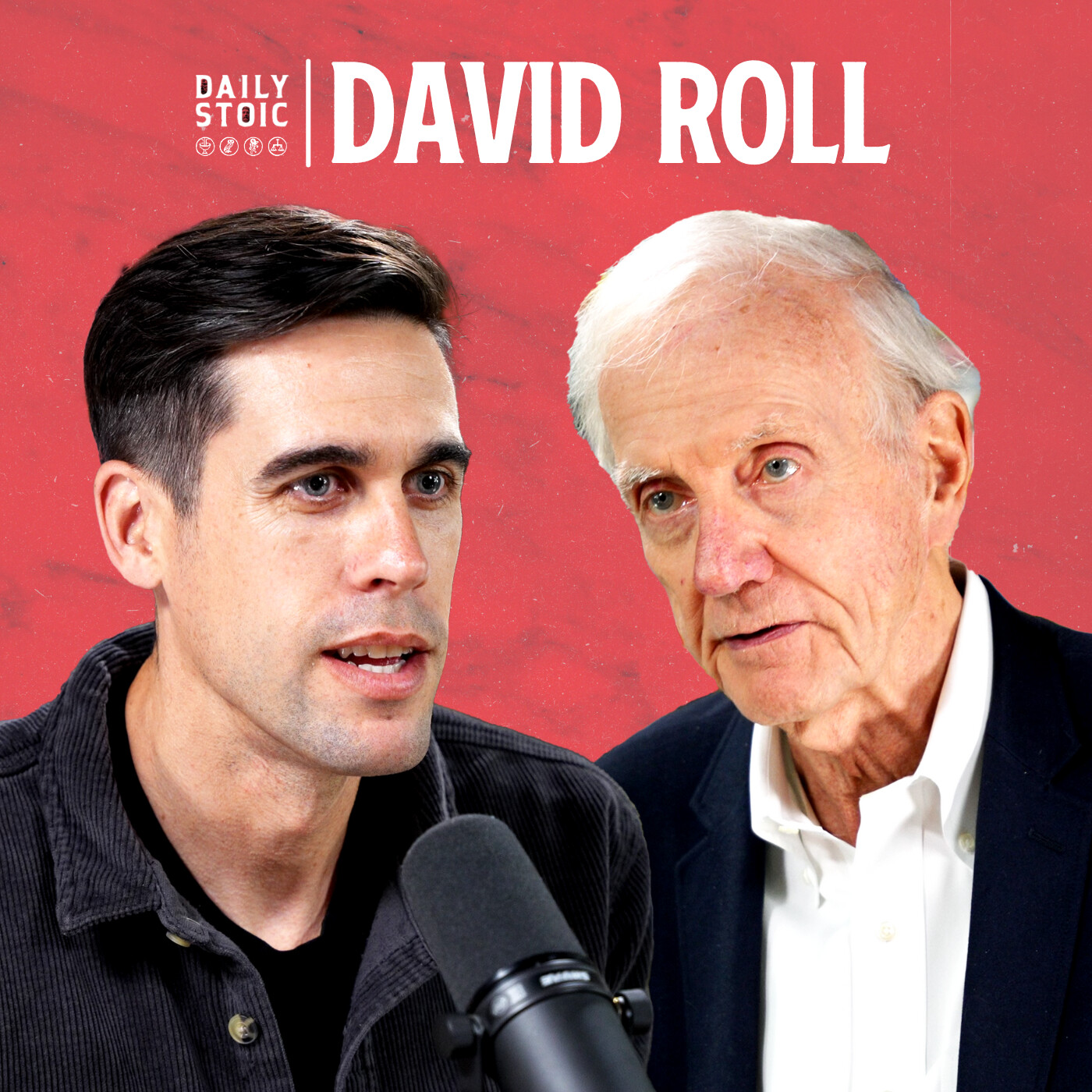
3:30Hey, it's Ryan Holiday, and welcome to another episode of the Daily Stoic Podcast. I fall in love with these sort of historic characters. That's what gets me really excited when I discover someone I didn't know anything about and then going down the rabbit hole of discovering their lives, what made them tick, the big moments, the little moments. I mean, obviously that's the, Mark Surrealis was a big guy like that in my life, but a couple that you've probably seen as through lines in my books were George Marshall. And then you'll see this in the new book. I guess he's in the discipline book too, but you'll see this in Right Thing Right Now, which you can pre-order at dailystoic.com slash justice, the new book.
4:17Anyways, a big one is Harry Truman. And these are two historical figures who I just cannot find enough about. And then I've had this mirrored process, which is there's someone else who's been falling in love with similar figures at roughly the same time. Now, I met today's guest at a book signing I did at Politics in Prose in DC, I believe. I just finished Ego is the Enemy, where George Marshall was a big character. But when I was writing about George Marshall, I was so disappointed there wasn't a great biography. And he came up to me and he said, as it happens, I'm working on a biography about George Marshall right now.
5:00And I was so excited. I couldn't wait to read it. And this was extra serendipitous and wonderful because that man, today's guest, is also the father of one of my favorite people and one of my favorite writers and favorite podcasters, Rich Roll. and he not only did this awesome book on George Marshall, which I interviewed him about remotely a couple of years back. And then he sent me an email and said he was working on a book about Truman as I was reading literally everything I could about Truman for this new book. And he sent me a copy of the book, Ascent to Power, How Truman Emerged from Roosevelt's Shadow and Remade the World.
5:38I loved this biography. I loved his book, George Marshall, Defender of the Republic, Both those epic, enormous biographies that I love that I don't think enough people read, but become the basis of the books that I write. And so I was really excited to have this conversation. He actually came out to another thing I was doing in D.C. a couple of months back. I was doing a talk to a group there, I believe in Georgetown or somewhere in D.C., and David came out and we had a great little conversation. I said, you know what, you think you might want to come out to Austin and do the podcast? And he did.
6:16And I got a little bonus appearance because his son, Rich, came with him. So we had a wonderful conversation. And I'm looking forward to you all reading this book, Ascent to Power, How Truman Emerged from Roosevelt's Shadow and Remade the World. If you haven't read anything about Truman, I mean, anything you can get your hands on about this guy. He's fascinating, one of my favorite presidents. And I think as I talk about in my chapter on him in the Justice book, he reads Marcus Aurelius as a young man, and it orients his whole life around these cardinal virtues. And we talk about that in this interview.
6:52It was so fun to nerd out about this fascinating man. And Rich was watching in the other room, and he just said he didn't think any two people could have this conversation. So I'm really excited to share this with you. You can follow David on X at Mr. Roll. And do check out Defender of the Republic and Ascent to Power, two epic, awesome biographies. Mine is coming soon, so I'll share that with you. You can grab that at dailystoic.com slash justice. But in the meantime, here's a conversation I was very much looking forward to, and I think you're very much going to enjoy.
7:32was Tennyson a lord or does his name have lord in it i always got that lord Tennyson yeah sure but it's out but but now there are so many Alfred Lord Tennyson oh i don't you're right right i don't so is that in his name i don't i don't know i don't yeah i never it's very confusing no yeah and so there are there are so many lords now that you know kind of like out of it yeah in uh in uh my discipline book i wrote a lot about queen elizabeth the second and um all right she gave out a hundred thousand awards in her life because that's like the queen's main job is like obe she Yeah, 100 ,000 of them.
8:17Prince Charles, I don't know. He might not have that long. I know, I know. But yeah, 100 ,000 words. Also, she met four million people personally. She shook hands with four million people as part of the job. Not like waving to crowds. How do you know that? Whose book? Well, so I emailed. I know him a little bit. I interviewed him on the podcast, but I asked Andrew Roberts. I was like, who is the best biographer of the Queen? And he gave me a bunch of recommendations. You asked Andrew Ross? Yeah, yeah. How did you do that? I just emailed him. Yeah. I interviewed him on the podcast. I read his...
8:53Oh, you did interview him? Yeah, yeah. I read his King George book, which I really liked. I have it. I didn't read it. I thought it was really interesting to read American history. Written by a Brit. Yeah, written by a Brit in the sense that... His best book was Masters and Commanders. I haven't read that one. He was very young. What's it about? It was the British masters and commanders. It was Churchill and his war cabinet. And it was all about, it was that guy that, the chief of staff of the army, Marshall's counterpart, I forget his name now, Lord somebody, and he just did a magnificent job.
9:34That was one of the first books I read about, you know, about World War II. Yeah. It's really good. Yeah, his Napoleon book is incredible also. I didn't read that. You should read that. I didn't read that. But so, actually, that's maybe a good place to start. Because, like, when I read these biographies or these, like, you know, you read Robert Caro or you read Andrew Roberts, you read Doris Kearns Goodwin. You read these. What? I feel like it's, when I read those, I don't think. Eye on right now? Yeah, yeah. Is this casual? When I read those, I think perhaps why I like them so much is it's inconceivable to me how a person could do that.
10:15Like the person's life is incredible to me. But how a biographer can get into that level of detail and get the whole sweep of a person. What made you think you could do it? I don't know. It was challenging. particularly this last one with presidents because there's been so much written about them. And so, you know, where do you inject your own interpretation of what makes this person click? Yeah. And that's what you do when you're a biographer. You take risks about characterizing people. But it's not like you've been doing this your whole life, right? You came to be a biographer much later. No, I just started doing it, you know.
11:00And, you know, I think early on, you're very timid. And then later you just say, yeah, I'm going to just say what I think about. Let's take, you know, Truman's relationship with his wife. Yeah. And, you know, I made a lot of statements about that and how I felt. You know, having been married for 60 years, you kind of have, you know, a perspective on what marital relations are like. and I found his to be, you know, very unusual because I think she had such a hold on him. Yeah, I'm going to bounce around, by the way. But to speak to that specifically, he's got to be maybe the only, at least probably the only five or 10 presidents who doesn't cheat on his spouse, right?
11:47That's right. I can't imagine Truman cheating on his spouse. You know, he was such a Boy Scout. Yeah. In that regard, and he got married late, but she had this grip on him. But, you know, when it came down to choosing the possibility of being president versus pissing off Bess, his ambition got the better of him, I believe. She struck me as similar to Grant's wife, that they both sort of had a power over the person. Codependency sounds judgmental, but they could not live without this person, functionally or otherwise. I agree with that. I agree with that. And, you know, when he made his famous dangerous trip back to independence, you know, when there was this huge storm and he risked his life and the New York Times got after him for that.
12:57And then he arrives and she criticizes him for, you know, making up this story to come back to her, you know, like. And he writes this letter and fortunately never sent it. But he said, you treated me like I was a cat being brought in from the door. I need some help. I want some help. He desperately wanted the approval and the affection of this person, even though he's the most powerful man in the world. That's right. That's right. And he had a lot of confidence when he was dealing with Churchill and Stalin and all these people. but nobody had a hold on him like Bess. And she had some, you know, skeletons in the closet.
13:53How so? You know, that he had to deal with. And one of them was that she didn't want to be president because they'd find out about how her father committed suicide. his uh his his mother-in-law was no uh no fun person doesn't she have this is why are you running against that nice man mr dewey she was she was a piece of work um yeah she's you know She never thought Truman measured up to her family. Truman never had a house of his own. Right. Never had his own house. It's just amazing. And he, so he had to live under the roof of Mrs. Wallace until she passed away. Right. Yeah, there's something very ordinary about Truman.
14:58And there's that famous Dean Ackeson quote where he says, you know, everyone tells me how ordinary Truman was. But to me, he was the most extraordinary man in the world. and there is something fundamentally extraordinary about how ordinary he was, if that makes sense, you know? Like, basically, this, and this is what the earliest pages of your book are about, this small-town Missouri farmer suddenly and unexpectedly finds himself the most powerful man in the world at perhaps the most precarious moment in the history of the world. Look at what he was faced with. The global war when he was, the minute he was sworn in.
15:40Global war. Global war. Soviet Union. Nuclear weapons about to be unleashed. Europe in ruins. The onset of the nuclear age. The organization of the UN. All those things. Plus a raging inflation at home. And on the cusp of what would become the civil rights movement because of what World War II had sort of unleashed by transforming society. Women are going to be entering the world. Like, essentially everything's changing. And it's almost like if you were to design a person who would be utterly ill-equipped to handle any of that, you would think a small town, uneducated, you know, ordinary Southerner would not be able to do it.
16:34And somehow Truman not only does it, but does it better than perhaps anyone could have possibly done it. Like, I'm not sure there's anyone you would go to, you know, who would have been better at that job at that time. It's so-and-so. You know, I love that there was one, Harry Vaughn was one of his pals that lived in the White House, said, you know, we had 12 years of caviar. It's great to have somebody like ham and eggs. Yeah, he was a ham and eggs kind of guy. Yeah. Yeah. I mean, he says to the, he has that sort of private meeting, that private session with a bunch of White House reporters after he gets the news.
17:21And he says, basically, yeah. And he says something like, I don't know if you've ever had a load of hay fall on you, but the whole world just fell on me. Like, can you help me out? But it kind of turns out that he doesn't need the help. Like he's much more able and stronger than perhaps he should know. I was thinking about this because there's this famous dream that Marcus Aurelius has. So Marcus Aurelius is chosen unexpectedly to be the emperor. He's just this kid. And Hadrian chooses a man named Antoninus Pius to adopt Marcus Aurelius, to set in motion this succession plan. and Marcus sort of is terrified at the notion of becoming the most powerful man in the world.
18:06And the night before he's supposed to ascend to the purple, he has this dream and in the dream, he has shoulders made of ivory. The idea being that he's strong enough to bear the weight of this thing. And there's something about that with Truman where you wouldn't think that he'd be able to do it and you wouldn't think anyone would be able to do it. It's just an unimaginable load. and somehow he has within him this sort of inner strength and capacity that I don't think ordinary circumstances could have revealed. And then he does remarkably well. You know, I remember when he was on his way to Potsdam to meet with Stalin and Churchill.
18:47I mean, here he is meeting with Stalin and Churchill and he was complaining all the time, writing letters saying, oh, I hate this, I can't stand it, I'm not going to. But, as I say, he had confidence in himself. Yeah. You know, he used to always complain about himself, I'm too weak and all that stuff. But there was a steel in him, and he, you know, he got along with them both. He said harsh things to Stalin, things that needed to be said. And he certainly got along with Churchill. Yeah, I mean, Churchill was very impressed, right? Churchill's like, this guy knows what he's doing. Yeah. Marshall said, you know, great wise Marshall, when they were, just after he first met with Truman when he was president, we will not know what he's like until the pressure is asserted.
19:51And the pressure was immediately on him. Unimaginable pressure. He had the stuff. Yeah. He had the stuff. Well, I showed you because Truman's one of the main characters in the book that I'm doing on Justice. You were nice enough to give notes on that. I think that's twice now that we have overlapped. Because when you were writing your Marshall book, I was doing my ego book where Marshall's in and then Truman. But, you know, people were worried. They, you know, they'd had basically 12 years of FDR. That was all they knew. And that was their model for the presidency. So some people were quite worried that this totally unknown man was stepping into the Oval Office.
20:34And I found this quote from this, like Missouri railroad foreman that had worked with Truman. And he said, oh, I wasn't worried that, he said, that boy's all right from his asshole out in every direction. That's what he said about Truman. Who said that? Some guy that worked with Truman on a railroad when he was a young man. Weirdly, the press and the public was pretty worried about Truman. But the people who had met Truman and understood his character, there's just something in him that made them sense that this guy does have that stuff. Yeah, he did. It's remarkable. You know, he made mistakes.
21:19Sure. You know, he made some blunders, some mistakes. And he had his faults, you know. He used the N-word until he died, you know, playing cards with his buddies and stuff. Racial jokes, anti-Semitism, when he confided in his diary were just shocking. Yeah. And at the same time, you know, he's recognizing Israel. Because he has, it was, yeah, he couldn't, it was like he had this individual character and decency that guided him mostly. But he sometimes lacked an overall worldview that you might want from a president. But he, you know, both his sets of his grandparents were slaveholders. his uh his his mother he also called mama yeah uh would not sleep in the lincoln bedroom uh you basically have a a guy raised by racists to be racist who joins the clan like it's kiwanis or knights of columbus like it's just any other you know a social club and yet when he becomes president he does more for civil rights than any president up until that point and he does it again yeah not from well he does it from a sense of the constitution and the idea that you know all men are created equal but then he also i think does it what i took from my study of truman is that he was horrified by the grotesque violence and cruelty of racist of racism at that time particularly directed at veterans.
23:06That's right. And so he's coming at it from a - Isaac Woodward was the main guy that he - Yeah. That's what turned him around, I think. Although he did, he gave a speech when he was senator called The Brotherhood of Man. Yes. Which was the beginning of his transformation on race. You know, Roosevelt would never have gone that far. Yeah. And he, you know, they said, Truman really means it. Roosevelt, okay, we can deal with Roosevelt. Truman really means it. Yeah. Except he had a sort of a different kind of view of discrimination and so forth. It was, he's okay with, you know, trying to deal with discrimination, but social equality was different.
24:01Clubs. He was okay with social discrimination, not legal discrimination, you could say, or segregation, I guess. I was actually talking to George Raveling the other day who was there at the march on Washington. He owned the I Have a Dream speech. He was doing security for Martin Luther King that day. Martin Luther King gave him the speech as he walked down the steps of Lincoln Memorial. and funny enough he gave him a speech yeah he said mr king can i have a copy of that and he just king just thought it was you know just materials from the it hadn't become it didn't become the i have a dream speech until history got to work on it right so funny enough um uh and and rich has has interviewed uh co-traveling before um but uh he put him he put it he took this speech and he put it inside his other most prized possession, which when he got home, which was a signed copy of Harry Truman's memoirs.
25:01Oh, no kidding. Because they had won a basketball tournament in Missouri and been invited in, you know, 1950, whatever, to meet the president at his presidential library. He had it. And I asked, I said, what was Truman like? You know, did he, did you sense? And he said it was totally fine and it was normal but so he puts it in this copy of truman's memories but i i said i said coach did you know that more than a decade before the i have a dream speech truman addressed the naacp on the steps of the lincoln memorial and and how trans how how radical that must have read to the country at that time.
25:42You know, I have a copy, a signed copy of the two volume. Truman memoirs? Volume memoirs. Wow. And I got it because of my law firm in Washington. Lewis Johnson was the guy that raised the money for Truman in the 48 election. And he was the founder, co-founder of our law firm. So law firm, Steppton Johnson. I took it out of the library when I was a new partner there. And that's how I started. My first book was about Lewis Johnson. Yeah. I still have it. I still have it. I'm taking this home with me. I gotta give it back. No, no, I think it's yours now. Once you biographize the person, you get to keep the same time.
26:28It's like, and I've used it a lot because he overemphasized a lot of his accomplishments. Yes. And he wrote about the bomb in the way that he wanted his legacy to be remembered, but it was not quite like that. I was blown away by the Merle Miller biography of Truman. Yeah. I think that's one of the most unique presidential books. Some of it is not, you know. Of course, of course. It's Truman as Truman would want to be seen, but it's also, it's so folksy and accessible. The crazy thing about that book where Truman intersects with my world is there's a scene in the Merle Miller book where Merle is asking him some question and Truman goes back to his room or his office or whatever and he comes back with his copy of Marcus Aurelius' Meditations and he gives it to Miller who goes through it and he sees - Truman had a copy?
27:25Yes, he goes through and he sees the passages that Truman has underlined. And it's stuff about how, first off that the cardinal virtues, it's stuff about how when people judge you, they don't understand your character. You have to ignore those people and just stick with what's right. And yeah, I just imagine like a Senator Truman who everyone thinks is corrupt. Everyone thinks is bought. Everyone doesn't, no one understands why he's there. just sort of turning to this book and relying on it. I don't know. I'm trying to find that copy. When do you think he got the Marcus release? I don't know. Let's try to figure it out.
28:06I emailed the Truman Library to see if it was in the archives, and they said it wasn't. So I don't know if it's in somebody's private collection or it was lost at some point. I'm going to go there this summer. Okay, you've got to help me find it. You know, he had, they say he was a great reader of history. Yeah. Obviously, he was. But he made some strange judgments. He loved Andrew Jackson, for one thing. And he gave a speech that nobody ever talks about in North Carolina about Andrew Johnson and what a great president he was. Really? Yes. Johnson, not Jackson. Andrew Johnson. I'm saying Andrew Johnson.
28:49Yeah, like the worst president. Yeah, because Andrew Johnson was born in this city that he happened to be talking. So we get this long screed about how he was a great constitutional president. That's like the opposite of what he was. And, you know, he was responsible for the destruction of the Reconstruction. Well, Truman was, like, it's not fair to say he wasn't educated. He was self-educated. Self-educated. But probably one of the most well-read of any of the presidents. Yes, he was well-read. Sometimes took the wrong lessons from certain people. Well, yeah, he's very emblematic of certainly the sort of the lost cause framework of understanding history.
29:27And then, yeah, obviously his views on Andrew Jackson also. He has— Andrew Jackson and Andrew Jackson. Well, no, he has that view of American history. That's why I was surprised to hear him reading Marcus Aurelius or Plutarch. Yes. You know, he did, most of his history was secondhand as opposed, like he was reading not primary texts. No. But like sort of like the readers that they would give school children then or essays about, like he didn't always have access to the best stuff, but he did love to read. And he has that famous quote about how all leaders have to be readers. Yeah. He was, you know, he had the bad eyesight, and he was a kid who wasn't out there playing baseball or anything like that with the other boys.
30:21Yeah. He was inside reading books at a pretty young age. And, you know, yeah, self-educated, self-educated. There's a story in the Merle Miller book where he makes some obscure reference to something, and a journalist goes, that can't be right. He makes some comment about Alexander the Great, like in a speech Truman does. And the reporter goes, what's the president talking about? He's obviously wrong. And so he goes to, you know, prove that the president was wrong. So he goes down this long rabbit hole. All the experts don't know what he's talking about. Finally, he ends up at the Library of Congress and he talks to the librarian who spends several days tracking down this anecdote and finds it in a book in the Library of Congress.
31:09And they open up, you know, the front of the book. And in the library card, the only person to check out the book in the last 50 years had been Senator Harry Truman. I've been in that room. That's so great. Yeah. One thing about stoicism, I don't know anything about stoicism, but one aspect or one characteristic of it, as I understand it, is selflessness. Yes. And I would regard Harry Truman as being selfless. That he did not, he used to say about the Marshall Plan, Clifford wanted to call it the Truman Plan. And Truman had a great say, he said, if I send that plan up to the hill, it will quiver a couple of times and go belly up and die.
32:09Even the worst Republican would vote for the plan if it had Marshall's name on it. That's a great selflessness. But I think he was. I don't think he tried to take credit for stuff that he couldn't justify.
32:32I'm picking my kids up from school today and then doing our weekly routine, which is I take them over to Whole Foods. and we get all our groceries for the week. Then we have dinner. It's one of their favorite things to do. It's one of my favorite things to do. And then my wife loves it because she doesn't have to take care of it. This holiday season, whether you're a guest or hosting the big dinner Whole Foods Market has what you need to delight everyone at your table. They even have heat and eat sides from the prepared foods department. You can make Whole Foods your one-stop shop. Everything follows Whole Foods Market's strict ingredients standards so you know it'll be delicious and good for you.
33:06You can also order online for pickup and even delivery in select zip codes to skip the crowds. Shop everything you need at Whole Foods Market, your holiday headquarters. You probably heard the headlines about all the different cuts to foreign aid and food benefits. This is having a profound impact on the world's poorest people and the world's poorest communities. But, you know, just hearing about that, that's not what stoicism is about. Stoicism is, to me, what you're going to do about it. And that's where GiveWell comes in. GiveWell is trusted by tens of thousands of donors each year because they provide free and independent research that helps you understand how to have a big impact.
33:47GiveWell has spent the last 18 years researching global health and poverty alleviation, and they direct funding to the highest impact opportunities. Over 150 ,000 donors have already trusted GiveWell to give more than$2.5 billion over the last several years. And research suggests that these donations will save over 300 ,000 lives. I myself am one of those donors. I donate to GiveWell every year. It means a lot to me. And you can find all their research and recommendations on their site for free. And thanks to the donors that sponsor this research, GiveWell doesn't take a cut from your tax-deductible donation to their recommended funds.
34:21And if this is your first gift through GiveWell, you can have your donation matched up to$100 before the end of the year or as long as matching funds last. To claim your match, go to GiveWell.org and pick Daily Stoic from the drop-down menu under podcast. That's how they know that you heard about GiveWell from the Daily Stoic and you'll get your donation matched. That's GiveWell.org. Code the Daily Stoic to donate or find out more. well I thought that's what your two books have in common where they compare is that they're both the greatest moment of both men's life is defined by its magnanimity so the scene that you tell beautifully in uh Defender of the Republic is uh FDR asks Marshall does he want the command at Normandy and Marshall could have asked for it.
35:15He could have demanded it. Could have had it. Yes. And he lets it go to Eisenhower, even though as you quote him saying, like he wanted it more than anything in the world. I don't know if that's for sure, but anyway, nobody does. No, but you had a really good quote. Someone was saying that in private moments, Marshall would let on that. He did want it. It wasn't that he didn't want it. He wanted it in some way, but he wanted the country to succeed more than he wanted his own personal advancement. And then famously, he writes the little order, like he signs the orders to Eisenhower. And he says, you know, I think you want to keep this as a memento.
35:49And then flash forward, you know, years later, the Marshall plan is up. And Truman, as you said, understands he has a Republican Congress. It's dead on arrival if it has his name on it. So he gives it to Marshall. But I was thinking that those two things are connected in that part of the reason that they accepted it with Marshall's name on it was because of things, because Marshall had a reputation for selflessness like that. Because Truman said that never did Marshall think of himself. And so when Marshall says, hey, I need 15, 16 billion dollars, Congress knew there wasn't an ulterior motive to it, or they knew that it was about, it truly was something selfless and great.
36:39That he was nonpartisan. Yes. Yeah. He told the president during that conversation about the command of Overlord that he did not want the president to make a decision based upon how he, Marshall, might feel. Yeah. You know, he would always say, you know, the only thing I have feelings for is my wife or something like that, you know. It was a little bit too much, but, you know, that's the way he was. And doesn't Truman do something similar to that towards the end of his life? I think he had said once that he'd rather win the Medal of Honor than be the president of the United States. And Congress starts to make noise about potentially awarding the Medal of Honor to Truman.
37:31And Truman says, I don't want anyone to give me anything that I don't deserve. Right, right. Right. His wartime experience, though, was transformational. Yes. That was a very, very important part of his life. And I used to say, Roosevelt had a desk job during World War I. Truman was in heavy combat. And had every reason not to be. I mean, he's 30 or 33. He has poor eyesight. He's the sole provider for his family. He'd already served in the National Guard. He did not need to go to France. As an older man, right. And he, yeah, sorry. And yeah, and that's where he became a leader. Yes. A real leader.
38:21It's the first time he leaves the country. Basically the only time he leaves the country other than when he's president. You know what I still, I have not yet teled into, and I don't see much evidence of it, is religious or faith. Yeah. Christianity. I mean, yes, as a young man, and I didn't write about that, but into his presidency. Did he ever go to church? I'm not sure. Yeah. I'm going to delve into that in this coming month because I'm going to give a talk at a church and I want to find out. What did he, where was his religion? He would use swear words. Jesus Christ, he would say. Jesus Christ and General Jackson.
39:08That's what he said when he found out that Roosevelt had died. First word, Jesus Christ. Maybe he was a stoic. I mean, he said all you need to have a good life is those cardinal virtues. That's what he was saying. So he kind of, he was, he came, maybe he came to some of those principles via other means. Now, Bess was going to church. Yeah. You know, you heard the story when some of the Jewish leaders were in town well after the recognition. And they were in Kansas City and they called Truman when he was retired. Said, can we, can we, I'd like to, this was Eddie Jacobson calling. His Jewish friend from Boyd.
39:55His Jewish friend calling and said, I got these guys. They want to come and just say hello to you. And it was a Sunday. And Truman said, no, I don't know. I don't think so. And he called him back and he said, Bess has just gone to church. Have him come over.
40:14Yeah. So that was the way it was with Bess. Yes. And with, he wanted to see those guys. And, you know, they called him Cyrus. Yeah. Yeah, it is. I mean, obviously he knows Eddie Jacobson from his boyhood, but that's another thing you can sort of tie to his wartime experience. It was that he goes out and sees the world. He meets people who are different from him from different places than him. And I think that's the first sort of bit of the expansion of the worldview. He had books. Obviously, books had exposed him to the world. Eddie Jacobson came to him because of the war. Yeah. Actually, you know, Margaret Truman wrote a nice biography of her father.
41:00And in it, she wrote that Truman is really not good friends with Eddie Jacobson. I don't know why she wrote that. It's not true. Yeah. I mean, they went into business together. And they were together when he was retired. There's this great photograph in my book of the two of them together. laughing about something. I mean, Israel would not exist if they were not close friends. No, he was the one who brought Truman to Haim Weissman. Yeah, he, I mean, he, I was fascinated by that scene too. He drops in at the White House without an appointment on a Saturday. He's a friend. Yeah, yeah. That's about as close as you can get.
41:45Yes. And says, and then I think he, you know, Truman's making all these excuses. He thinks it's bad for the oil interests, he's been offended. And he goes, this doesn't sound like you, Harry. And it's really a personal appeal from one friend to another that changes the face of the Middle East. You know, I wrote this to you this morning. Today is the 75th anniversary of the signing of the NATO agreement in Washington. and Truman gave an address. He didn't sign it. It had to be signed by Acheson. Yeah. But the treaty was being celebrated then and was today. I looked at Truman's speech this morning.
42:37Yeah. Just to see what he said during that event in 1949. and he kind of trolled Roosevelt. He said, this alliance is kind of like it is in a neighborhood, in one's own neighborhood where we have a community and we want to protect each other. It was kind of like Roosevelt and the lend-lease thing when he said, it's when you lend your neighbor a hose and the house is on fire. Yeah. That was lend-lease. And here it was with NATO, you know, a community kind of thing. Yeah. A little community like Bastrop or something. You know. Yes. I was just struck by the sort of the folksy way he characterized the NATO agreement.
43:39We're neighbors. This transformative, unprecedented. Unbelievable. Thing he sees in these kind of down-home. But then also, I think that's what is so fascinating about Truman and why he's so fun to read about is that you have this down-home folksy, it's like on the farm, a bale of hay fell on me. And then he's also coming at it from a person who has read probably every book on the history of warfare and geopolitics and Europe that you could imagine. So he's also thinking of the Peloponnesian League. And he'd be thinking of the Greeks fighting the Persians. He would have this also much larger sense of these things amidst this sort of down-home folksiness.
44:28His speech on the Truman Doctrine, I think, was the greatest speech he's ever given. And, you know, you see it crumbling today. But, you know, he was then, the speech was about giving assistance to Greece and Turkey. But he broadened it to just say that the United States policy is to assist free peoples from being subjugated by tyrannical governments. And that was the foreign policy, the nonpartisan foreign policy for decades, decades. Yeah. And we're still trying to deal with it. And it's now in danger. So we have this idea that, you know, absolute power corrupts absolutely, right? Right. And in both biographies, in Marshall and in Truman, Truman obviously being more powerful than Marshall in some ways, although Marshall, you know, commanding, you know, an enormous army at various points, both of them have extreme amounts of power, but it doesn't seem to make them worse.
45:43They don't seem to have gone the way of MacArthur or Eisenhower or even FDR. You know, FDR is close to basically being, I am the state. You know, like he, but we don't see that in Truman and then Marshall, there's a selflessness and a sort of a soldier's sort of submission in him. What do you think it was that allowed them not to be exceptions to that rule, I guess? To? That absolute power corrupts? Absolutely. Like, they don't become these sort of imperial, egotistical, you know. Back to selflessness, it's a sense that, you know, it's selflessness as far as I can tell. You know, one thing, one quote I found from Anna Roosevelt, FDR's oldest offspring.
46:50offspring she said of her father that he my father is cold calculating cunning
47:12and does it and you don't know what he is thinking you don't know what he's going to do it i just thought to say that and she loved him she he was you know she lived with him she she she made his life longer than a year uh but to say that about her father yes and i think it's true yeah but no one would say that about truman no yeah it's just yeah the contrast or or Marshall, for God's sake. Yeah. And shrewd was the other word she used. Yeah. Shrewd. And he was, and that was part of his success. Yeah. But did he have a lot of real good friends? Yeah. Sure. No. Yeah, and maybe that's, maybe Truman couldn't have been president except accidentally.
48:06Do you know what I mean? Do you think he could have, like, perhaps what made— I'll take you on on that. I think, yeah, they say he was an accidental president. But Roosevelt's death was by no means accidental. It was expected. Sure. So I would argue that, in a sense, you know, Truman knew long before Roosevelt died that he was going to pieces. He told people that. And he told everyone who would listen that he didn't want to go through the back door of the White House to get to the presidency. So, in a way, it wasn't accidental. It was expected. Everybody in Washington knew that he was going to die soon.
48:53But do you think FDR knew? Do you think FDR chose Truman or choosing Truman was a way not to have to face his mortality? No, I think he chose Truman because the big city bosses wanted him to. Yeah. And he didn't want Wallace and he didn't want Jimmy Burns. I guess what I mean, though, is there's something, I mean, Eisenhower is a great president for this reason, too. But there's something about wanting the presidency that is almost self-selecting people who should not be president. Right? And Truman was great because he'd studied history and he wanted to be great, but I don't think he necessarily saw himself as needing to be the most powerful person to have an impact.
49:42And maybe was even afraid of or intimidated by the prospect a little bit, which is fundamentally healthy. When he was offered, he grabbed it. Yes. Yes. Yes, like Marshall would have made a great president because he didn't want to be president. I now - Marshall sincerely didn't want to be president. Sherman probably would have made a great president. Like there's something about wanting to be the thing that we should be scared of. Is that ego? I think so. I mean, if there could be one most powerful person in the world and you're like, that should be me, there's something wrong with you. I agree with that.
50:23that's right you know and you know you see it uh you see it right now yeah like truman wanted to truman was a truman was a good uh i mean he obviously ran for office and he wanted but yeah he didn't from the beginning have this aspiration of getting to this point nor did he think he was bred by birth and heritage to deserve the thing. He had a healthy... No. He had a healthy... Sense of himself. Yes. Of where he fit. Yeah. But he handled it. Yeah. Yeah. So... MacArthur, I contrast to Marshall in so many ways, right? You know, of course MacArthur thought he would be a great president. He thought he was smarter than every president he ever met.
51:14And that was, you know, ultimately his downfall. And ultimately, Truman triumphs over MacArthur because he understood how things actually worked. Jimmy Burns wanted the presidency desperately. You know, so I love the title of the book, a biography of Jimmy Burns, which was Sly and Abel. What a great title. Yeah, that is great. I read a great biography of FDR as a politician, and it's called The Lion and the Fox. Oh, I know. Based on the Machiavelli line, which is a great, that sort of confirms, or the quote from his daughter confirms that exact idea. So he makes himself kind of a machine, or the position and his personality merged together.
52:08Truman held the office, and when he left the office, he went right back to being Truman. That's why I like writing about the contrast between Roosevelt and Truman. They're so different in every way. And, you know, one of Roosevelt's gifts was to be shrewd and calculating. Truman didn't have that. Yes. Yeah, there's a line, one of his advisors says, because there's some scandals in the Truman presidency. And he says, you know, Mr. President, you've been loyal to people who have not been loyal to you. And Grant had a similar problem. they were almost unprepared for... Schemers. Schemers, yes. You know, people after him for various things.
53:04Do you think that kind of explains Truman's relationship with Pendergrass? Yes. Because he kind of acted like, oh, he was, like for people who don't know, basically Truman gets his first job in politics, gets the senator, his job as a senator from one of the most corrupt political bosses in the country. How does that happen? He goes, well, just one thing about it. He goes along with Pendergast. He takes all of Pendergast's guys that he wants jobs. Yeah. Truman hires them, all these deadheads. Yeah. But he said, the bigger thing was that I saved millions and millions of dollars. He didn't let them steal.
53:46Yeah, right. Yeah. And so he felt that was a higher calling than hiring these deadheads. Yeah, we have this sense that like American politics today is corrupt and, you know, the system is— And we look back at Truman and FDR and Johnson as this sort of golden age, and it's like it was laughably corrupt and rigged. Like we talk about stealing elections today. They used to actually be stolen. Chicago and New Jersey and Brooklyn and, you know, all those places with the big city bosses. Yeah. Basically the mob. Yeah, right. And controlling politics. Yes. So how does Truman—so do you think Truman just kind of compartmentalized it, or was he actually savvier and shrewder than maybe we give him credit for?
54:45i think uh a little of both frankly yeah you know you know he thought he was he was doing the greater good by saving money uh and doing great he did the road system yeah you know in missouri and you know he was very proud of that um and he that he became an administrator of the road and yeah he he He put the guys that he had to hire on the side. He paid them their salaries. Yeah.
55:18But he felt he had gone beyond that, that it was more important to do what he was doing. But he cut a lot of corners with Pendergast. And then he was loyal to him. Yes. when Pendergast died, he went to the funeral. Yeah, we talked about all the things that are happening the days that Truman is becoming president. And one of those things is that his political boss dies and he goes to his funeral. He goes to the funeral. And I got a lot of criticism for that. They got Pendergast on tax fraud, obviously. Just like every other kind of scandal gets out. And he was in jail. A great photo of Pendergast is in the book at the height of his power in 1936 with a big bros in his lapel with Truman.
56:19With Truman. And he kind of wants to, I sort of made up that Truman becoming the senator was a way of Pendergast getting him out of his hair. Like in Washington, then Truman, if you're appointing someone to, if you're rigging the political system and you want to control local patronage and jobs and money, Truman's a perennial pain in your ass. You want him as far away from you as possible. I had never thought of that, but that may be exactly right. And after his first term as senator, but his second term as senator, Pendergast was in jail. He couldn't help him at that point. He has to win on his own.
57:08And he had to win on his own. He had to deal with Roosevelt who wanted another guy to be senator. One other thing that just is amazing about Truman's 48 election, it just made me think about it, is he had to deal with the entire Roosevelt family who did not want him to run as the Democratic candidate in 1948 because they thought he would lose. Who did they want? They wanted Eisenhower. And three of FDR's sons were outwardly trying to dump Truman and get Eisenhower. Yeah. And Eisenhower didn't do the Sherman-esque thing until the very end. Yeah. And so Jimmy Roosevelt had a real confrontation with Truman over it.
58:05And Truman said, you know, if your father knew what you were doing to me, you know, he asked me to be president. I took the job. I didn't want the job. And he would roll over in your grave if he knew what you were doing to me. Yeah. It was a famous—but even Eleanor did not want him to run. And she kind of hit it. The whole Roosevelt family was against him in 48. And then they, you know, they had eventually changed their mind.
58:36Well, it's almost here. Christmas is just a couple of days away. And maybe you're scrambling. You're like, what should I get my dad? What should I get my mom? I got to get something to my sister. People love showing off pictures of their kids. And that's where today's sponsor comes in. I've gotten one as a gift. I've given it as a gift, the Aura Digital Picture Frame. It's easy to use. It never gets old. You're constantly updating it with new pictures. Aura Digital Picture Frames are so much better than any digital picture frame I've ever seen. It's got a high resolution. It's got a color calibrated display.
59:08You can add video. You can have two pictures come up at the same time, picture and a video. It'll pair photos together for you, like two pictures of the same person or from the same day. It's really easy to set up. You just download the app, connect the frame, and then you can pick photos and videos right from your phone from anywhere in the world. And there's a reason Oprah added it to her favorite things three different times. For a limited time, save on the perfect gift by visiting AuraFrames.com to get$35 off Aura's best-selling Carver Matte frames, named number one by Wirecutter, by using promo code STOIC at checkout.
59:41That's A-U-R-A-Frames.com, promo code STOIC. This deal is exclusive to listeners and frames sell out fast, so order yours now to get it in time for the holidays. Support the show by mentioning us at checkout. Terms and conditions apply. Look, if you're listening to this podcast, you've probably heard of HelloFresh, right? They're the number one meal kit in America. They make home cooking easier with chef-crafted recipes and fresh ingredients delivered straight to your door. This fall, they're serving up even more to love. It's not the HelloFresh you remember. It's even better. HelloFresh is bigger.
1:00:15They've doubled their menu. You can choose up to 100 options each week. It's healthier. You can choose from 15 plus high protein recipes. And they now help you eat greener with veggie packed recipes that have two or more veggies per week. And it's tastier. You can get steak and seafood recipes delivered every week for no extra cost. They have three times the seafood options. They also have hearty fall recipes like classic beef chili or honey glazed pork tenderloin. we just got home from a week away we're trying to think about what we're going to eat this week it was such a relief to see that hello fresh box sitting on our doorstep when we got home they've got everything you need for the recipe that they pick out there's no last minute trips to the store plus the meals are delicious and easy to make the best way to cook just got better go to hellofresh.com slash stoic 10 fm to get 10 free meals plus free breakfast for life one box with active subscription.
1:01:09Free meals applied as a discount on the first box. New subscribers only varies by plan. That's hellofresh.com, stoic10fm to get 10 free meals plus free breakfast for life.
1:01:24Both Marshall and Truman are such great men. There is a fear I have when I read about them. That there's no one. That there's going to be something, you know? Like, I just hope there's not this secret that's going to come out, that's going to change everything. You know what I mean? Oh, about them? About them, yes. You know, that myth will meet the man and the man will be revealed. Was there ever a secret about Marcus Aurelius? Well, there's a few good examples. I mean, well, the big one for Marcus Aurelius is that his son Commodus is about as bad of an emperor as there possibly could be. And Marcus Aurelius allows him to succeed him.
1:02:07I see. I don't know what he could have done about it, but it's pretty bad, right? So I think if somehow, like at Pompeii right now, they're unveiling all these secret manuscripts that were trapped in the ash, right? They're being able to read these century-old papyrus fragments. I didn't know that. It's incredible. Let's say we were to find out that Marcus Aurelius was actually a terrible father. That might change it for me. or, you know, Marcus Rullus' philosophy teacher, Junius Rusticus, is the adjudicator of the case of Justin Martyr, who's, you know, the word Martyr comes from Justin Martyr.
1:02:49Oh, okay.
1:02:53But he sentences all these Christians to death somewhat unjustly, I mean, very unjustly. There's a few things here or there, but I guess 2 ,000 years ago, I'm much more lenient about personal flaws than I am someone that lived when my grandfather was alive, right? Right. So there is something. But I mean, reading your books and what I've read, I think that is kind of the remarkable thing about Marshall and Truman. The more you read about them, the more you admire them. Or did you find anything that changed fundamentally your respect or admiration for them? You know, if there were to be somebody, some kind of scandal that would come out, Marshall versus Truman, it would be Truman.
1:03:36I can't imagine Marshall ever, ever, from the time he was seven years old or whatever, would have done anything that would be scandalous. yeah there's just this sort of in some in in many respects they were greater than their times and then there's a few instances where they very much were men of their times which you talk about in both books and now we're we're looking for men like them yes men or women like them um and it's you know no one can come up with anything uh it comes close to it today well another way that they both come together, which I talk about in the Justice book, which I think is a scandal or a secret that made me think very differently of Eisenhower, is the decision, so for people who don't know, so Joseph McCarthy wasn't just like framing random innocent people and accusing them of communists.
1:04:36He was this deranged maniac who was accusing preposterously high-level people of being communist sympathizers or agents. And at one point, he accuses Marshall, the person who does more than anything to save Western civilization of being this communist agent. And there's a moment where Eisenhower is supposed to defend Marshall. In a speech. In a speech. With McCarthy on stage behind him. Yeah, and the governor. And the governor. And his courage or loyalty or I don't know what you want to call it. They convince him to take it out, take it out of the speech. Yes. And Truman never forgives. Truman doesn't forgive Eisenhower for betraying Marshall.
1:05:28And Mrs. Marshall. Yes. Won't forgive Eisenhower either. Right. But Marshall forgives Eisenhower. Really? Oh yeah. Yeah, he said it's politics, you know. But Truman did have a breach with Eisenhower. Largely over that, right? I mean, there's many things that happened in the campaign. Yeah, and Eisenhower had good reason to dislike Truman because during the campaign in 52, Truman called Eisenhower morally corrupt. He called him a traitor, you know, and mentioning the Marshall thing. So he said some bad things. So they had a real rift, but they ended up bearing the hatchet. So we talked at the beginning, we were saying that Truman's probably one of the only presidents to actually be a good husband and loyal to his wife.
1:06:31What do you make of the anecdote, which Truman claims that he personally deletes or tears up the evidence that Eisenhower had an affair during the war. I never know. That he tore that up? Yeah, it's in one of his files. And Truman says, you know, I went in there and I got rid of it because he was protecting Eisenhower. Truman also claims, right, that he offered the presidency to Eisenhower. I mean, people knew that Eisenhower was having an affair with Kay Summersbee. Yeah. Marshall knew it. and it was all around Washington. So tearing up what? Tearing up what? Summersbee wrote a book about it.
1:07:19She wrote a book about her affair with Eisenhower. So I question whether Truman tore up the only document that, you know, if that's what you're saying. I mean, that's what he said. Do you think he offered to step aside for Eisenhower like he claimed? Well, there's two different ones. When he was at Potsdam, he went over to the headquarters. And this was 1945, well before the next election and so forth. And he did say, if I can do anything for you, Eisenhower, meaning help you become president if you want to be, I will do it. It's a pretty remarkable thing. Meaning you could be, I'll step aside and not run in 48.
1:08:13And Eisenhower kind of laughed it off because who knew whether he was a Republican or a Democrat. But later, he allegedly, Truman made the same offer to him later. And again, Eisenhower brushed it off. Yes, he did. Talk about, you know. Yeah, to me, there's no better qualification for being president than a willingness to step aside for the good of the country or what have you. Because his approval ratings were way down because of all the strikes and everything he was having at home, the inflation and so forth. Inflation was a big deal at that time. I wonder, and I wonder how much of this for Truman is like a grand gesture, nodding back to Cincinnati.
1:09:07Like, you know, he had that love of history. There's probably something in him that felt the power in giving power away, that gesture. I mean, obviously Washington does this. He did have a, he had a sense for the theatric in that sense, the sort of great moments of history. I think he did want to be that. And Eisenhower was the national hero. Yes. He was George Washington of his time, you know. Well, you know, so in Marcus Aurelius. Marshall Knot. So Hadrian selects Antoninus to adopt Marcus Aurelius. The problem was that a previous potential successor for Hadrian had had a son. So the man had died and the son was there.
1:09:53So there's kind of these two potential heirs to the throne. And they're sort of both groomed. Again, life expectancy at that time. It's nice to have a spare, right? And so when Marcus Aurelius is named emperor, there is this pesky thing, this man named Lucius Verus, who's younger than Marcus, but actually has a more legitimate claim to the throne than he does. So Marcus is now faced with this dilemma, like out of Game of Thrones or something. And you know what he does? He names Lucius Verus co-emperor. In a nod to how in the Republican realm, there had been two consuls who ruled jointly. And so, yeah, the first thing Marcus Aurelius does with power and with absolute power is give half of it away.
1:10:49And what happened? They rule equally as co-emperors for many years until ultimately Lucius Verus dies first. Of natural causes? Of natural causes, yes. Probably of the plague. But it is kind of interesting to think, you know, Truman finds himself suddenly the president and almost immediately is thinking, is there someone more qualified than me? I'll give it to them. You know, like he's thinking about giving. It is pretty, so not only it doesn't corrupt, but it doesn't, but the opposite is true. It doesn't, he's willing to give it up, which is probably what made him great. And I think of that moment, he's asked what he does his first day out of office.
1:11:34And he says, I took the suitcases up to the attic. I just have quickly - The grips to the attic. Yeah, the grips, which means, that's what he would call a suitcase, right? Yeah, right. That's what they used to call it. Because they didn't have wheels. In Missouri. They didn't have wheels back then. Right. But the effortlessness with which he returned to civilian life is pretty fascinating to me. Yeah, yeah, walking. walking through the streets of independence, writing his memoirs. That was a real problem. Yeah. You know, he had lots of trouble with that. But the museum and the library was his pet thing.
1:12:16I loved it when, later in life, when Nixon was president, Nixon wanted to come to the library and he wanted to present Truman with the piano that he had used when he was in the White House. And Truman said, I don't want that son of a bitch. Yeah, he hated Nixon. He said, he saw through Nixon like nobody else at that time. And Bess, however, said, no, we gotta, he's the president, we gotta invite him. So they have this great photo where Truman has a cane. He's looking over the shoulder, and Nixon is playing the piano that he brought, and he's playing the Missouri Waltz. And Truman says, I hate that song.
1:13:12Another thing he did with Kennedy, he wouldn't go to the convention in 1960. and you know he's the former democratic president uh he said because kennedy's father had it rigged yeah it's the first time i heard that rigged you know uh now that we're hearing true and he yeah he had this remarkable sense um who's the um who who was he's one of the wise men i'm forgetting his name uh uh harriman yeah um you know harriman uh you know wants to be president very badly and truman says yeah truman says something like it's not his fault his dad was a pirate and a robber baron like truman had a had just this sort of like a real sense of who was crooked and who wasn't and who was like you know he he um you know even even in the famous truman commission You know, he, I think it's almost like he, because he came from that political boss era, he did kind of know how the bodies were buried and he knew how the system worked.
1:14:21And he had a real eye for, for people of bad character, people of bad morals. I think that's why he saw through Nixon. It's why he just had a, he had a real folksy, but astute eye for who was on the up and up. And he knew Joe Kennedy, I think. Yeah, he knew he was a bootlegger and an asshole and all these other things. All right, well, last thing about Truman, and then I want to go show you some books. And I have something very special to show you because I have some Truman mementos in my office. Oh, my gosh. But we're talking about flaws. Truman's one flaw, I would say, tell me what you think.
1:14:59Truman has an anger problem. Yeah. Truman has a temper, and his handful of mistakes as president are rooted in losing his cool. Well, yeah. I would say also he made big mistakes because he didn't read documents that were given to him. Lend lease with the Soviets, for one thing. You know, the biggest mistake, I think, that he made was when he tried to do an October surprise. And, of course, in the face of Marshall, you know, right, he was desperate to win the election against Dewey. In October of 1948, he decided to ask a Supreme Court justice, his friend, to go to Moscow to meet with Stalin and try to settle the differences without telling Marshall.
1:16:05Yeah. So anyway, that's a big mistake. Yes, he did have an anger problem, and that caused a lot of problems. But a lot of that stuff was because of what they said about his family, Margaret being the main one. The letter he writes to the New York Times reporter who reviews her as a musician. That's right. And, you know, he is desperately trying to defend Margaret's, you know. Singing ability. Her singing ability. And the fact that she, you know, couldn't carry a tune. Yeah. or allegedly was, you know, always flat. I think I have one of her books here somewhere. But yeah, he, like Lincoln would famously write letters, very angry letters about people he didn't like or things he was upset about, but he never seemed to send them.
1:16:55And I feel like Truman's problem was he put them in the mail. Right, right. And he confronted physically reporters. Of course, he confronted Jimmy Roosevelt too. So he had these angry outbursts. Yeah. And yes, he couldn't control his temper. There's this stoic line, Seneca says, like the greatest empire is command of oneself. Yes. He was talking about how there's emperors or kings or very powerful people who they command enormous territory or armies, but then they're slaves to their passions or their angers. And I think there's something in that of Truman, not in a hugely damaging way. He doesn't start wars over petty grudges or anything, but he had trouble going, I'm the president of the United States.
1:17:45I'm much more powerful than a New York Times music critic. I have to just sit there and endure this negativity. I can't respond with the full weight of my anger and frustration as a parent and president in this moment. And after he told Oppenheimer, Oppenheimer said, I have blood on my hands in this famous conversation in the White House. And then after he left, Truman said, don't let that son of a bitch in this office again. Yeah. I'm not sure that's actually what he said. It's based upon sources. Would have been worse? Well, it could have been worse. Or he might not have said it. I don't know.
1:18:27Sure. Yeah, but he would get angry and it would sometimes blind him to the bigger picture. Right. Right. And stoicism, I assume, is you're not supposed to get angry. Well, I think to me, stoicism, it's not that you shouldn't get angry. It's that you shouldn't do things out of anger. So I make a distinction. You know what I mean? The distinction between, I think if anyone attacks your children, you're going to get upset. but then you have to decide what the proper way to respond here is or what the office demands of you or, you know. Write the email, but don't. Don't send it. Don't send it. Yeah, let it sit in the desk drawer.
1:19:12Well, I loved this new book. I was very excited that you were writing about Truman and I loved the Marshall book. And now I'm curious to see where we both and who the next person that we both lock onto will be. I don't know. I haven't decided yet. Me neither. Yeah, okay.
1:19:36Thanks so much for listening. If you could rate this podcast and leave a review on iTunes, that would mean so much to us and it would really help the show. We appreciate it, and I'll see you next episode.
1:19:58You hear that? That's not just a Toyota truck. That's the sound of no crowds. No alerts. No distractions. And no telling what you'll find next. You know, like a detour. So why would you ever take a tour when you could take a detour? Toyota Trucks. My family owns a 2023 Toyota 4Runner, and honestly, it's my favorite vehicle that I've ever owned. Around town, it's smooth and reliable, but where it really shines is on our trips into the backcountry. We've taken it on backpacking adventures to Colorado and New Mexico, loaded it up with gear, and never had to think twice about whether it could handle the terrain.
1:20:44That's what Toyota Trucks are built for. Off-road confidence, rugged durability, and the freedom to explore. Toyota has a long history with the outdoor community, and they're committed to helping more people get out there and experience what nature has to offer. From remote trails to scenic byways, Toyota Trucks empowers you to take the detour, roam freely, and discover places that still feel wild and untouched. And they're not just making great trucks, they're working to expand access to adventure so more people can connect with the outdoors and pass that passion on to the next generation. Discover your uncharted territory.
1:21:13Learn more at toyota.com slash trucks slash adventure dash detours. That's toyota.com slash trucks slash adventure dash detours.
📚 Grab a copy of David Roll's Ascent to Power: How Truman Emerged from Roosevelt's Shadow and Remade the World and George Marshall: Defender of the Republic.
X: @misterroll
📔 Pre-order Right Thing Right Now: Good Values, Good Character. Good Deeds. at dailystoic.com/justice.
✉️ Sign up for the Daily Stoic email: https://dailystoic.com/dailyemail
🏛 Check out the Daily Stoic Store for Stoic inspired products, signed books, and more.
📱 Follow us: Instagram, Twitter, YouTube, TikTok, Facebook
See Privacy Policy at https://art19.com/privacy and California Privacy Notice at https://art19.com/privacy#do-not-sell-my-info.
