
 Ask ChatGPT


 The Daily Stoic
6 Dec 2025 · 45m
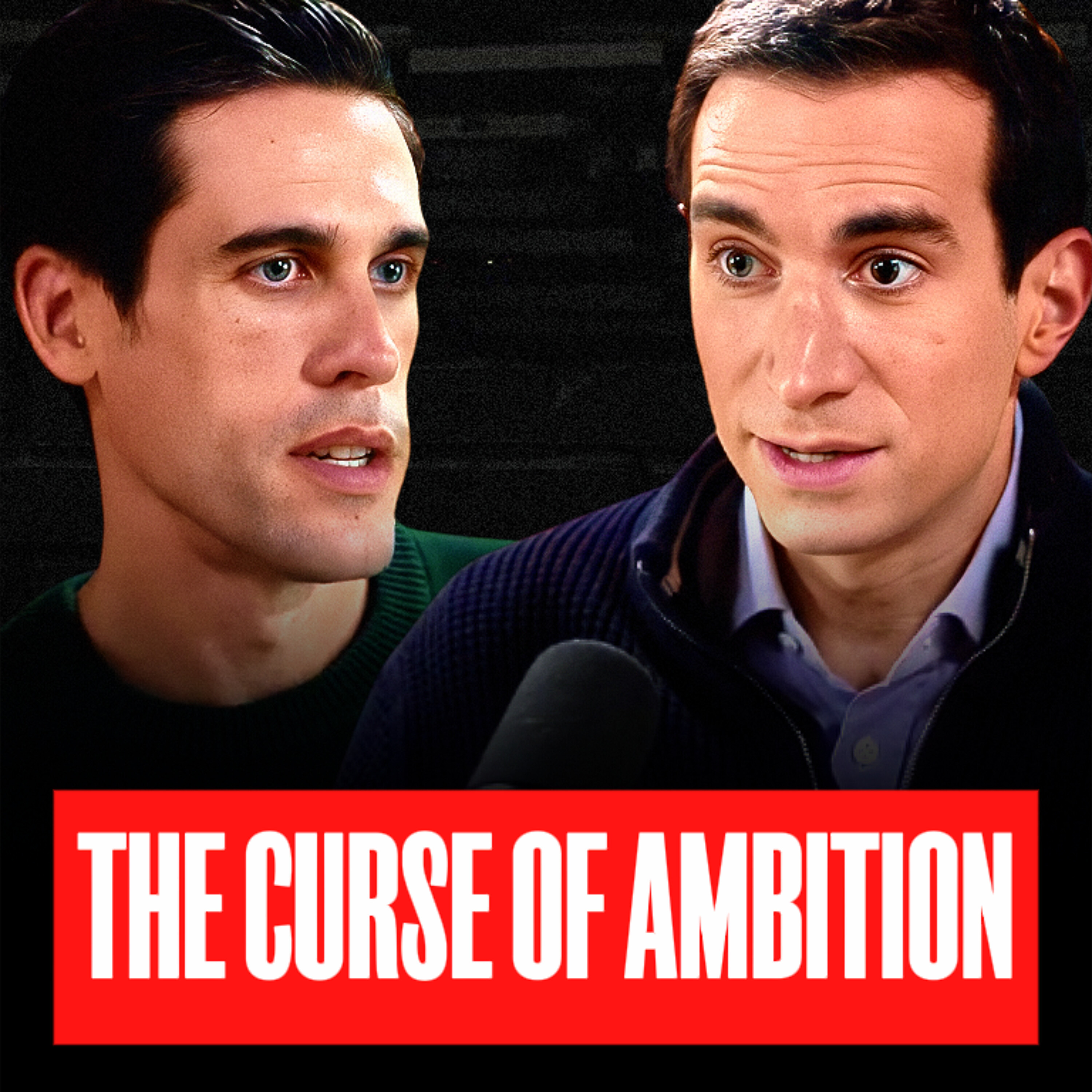
In this episode, host Ryan Holiday continues his conversation with Andrew Ross Sorkin, exploring the themes of success, insecurity, and the unending human pursuit of more, even among the most accomplished individuals. The discussion examines why success often fails to satisfy and how the relentless comparison to others can lead to feelings of inadequacy.
Written by AI. May contain mistakes.

Get the gist, explore an idea or ask about something said.
 Claude
On The Daily Stoic, what are the key points of this episode?
Searching your listeningAutomatic transcript. May contain errors.
0:00I got an amazing night's sleep last night. One, because my six-year-old fell asleep in the car at like six o 'clock and he transferred him from the car seat to the bed and it stuck, which is just magic. So he's in bed way earlier than normal. But I sleep really well every night because I have a 8 Sleep Pod 5 Ultra, which is 8 Sleep's best product. I've used 8 Sleep for many years now and it's just totally transformed how I sleep, made me sleep better, made my wife sleep better. It's amazing. So basically, Eight Sleep is this topper that goes over your mattress. It can heat and cool both sides separately.
0:38It can raise and lower each side separately. So it helps you fall asleep faster, stay asleep, and then wake up better. Eight Sleep buzzes me to wake gently every morning, as opposed to some loud blaring alarm. And then I can check the app and it tells me my sleep score. It even helps me optimize my day based on how I slept. If you want to survive the holidays like a pro and just generally sleep better, head over to 8sleep.com slash Daily Stoic and use code Daily Stoic to get$350 off your very own Pod 5 Ultra. The best part is you still get 30 days to try it at home and return it if you don't like it.
1:19But I know you will. Trust me, your body will thank you for this investment in better sleep, shipping to many countries worldwide. See details at 8sleep.com slash Daily Stoic. Look, if you're listening to this podcast, you've probably heard of HelloFresh, right? They're the number one meal kit in America. They make home cooking easier with chef-crafted recipes and fresh ingredients delivered straight to your door. This fall, they're serving up even more to love. It's not the HelloFresh you remember. It's even better. HelloFresh is bigger. They've doubled their menu. You can choose up to 100 options each week.
1:52It's healthier. You can choose from 15 plus high protein recipes, and they now help you eat greener with veggie packed recipes that have two or more veggies per week. And it's tastier. You can get steak and seafood recipes delivered every week for no extra cost. They have three times the seafood options. They also have hearty fall recipes like classic beef chili or honey glazed pork tenderloin. We just got home from a week away. We're trying to think about what we're going to eat this week. It was such a relief to see that HelloFresh box sitting on our doorstep when we got home. They've got everything you need for the recipe that they pick out.
2:28There's no last minute trips to the store. Plus, the meals are delicious and easy to make. The best way to cook just got better. Go to HelloFresh.com slash stoic10fm to get 10 free meals plus free breakfast for life. One box with active subscription. Free meals applied as a discount on the first box. New subscribers only varies by plan. That's HelloFresh.com Stoic 10 FM to get 10 free meals plus free breakfast for life. You know, you don't have to let big wireless and your overpriced phone bill suck the joy out of the holidays this year. Because right now, all of Mint Mobile's unlimited plans are 50 % off.
3:03You can get 3, 6, and 12 months of unlimited premium wireless for$15 a month. It's their best deal of the year, and it makes it really easy for you to give your expensive wireless bill the Scrooge treatment. All Mint plans come with high-speed data and unlimited talk and text at the nation's largest 5G network. Plus, you can bring your current phone and number over to Mint. Actually, we just signed up for a Mint Mobile plan to use the social media phone here at the office, and we didn't notice any kind of change in the quality of service or network or any of that, just a whole bunch of savings.
3:35Turn your expensive wireless present into a huge wireless savings feature by switching to Mint. Shop Mint Unlimited plans at mintmobile.com slash six. That's mintmobile.com slash six. Limited time offer. Upfront payment of$45 for three months,$90 for six months, or$180 for 12 months. Plans required,$12 per month equivalent. Taxes and fees extra. Initial plan term only. Greater than 35 gigabytes may slow when network is busy. Capable device required. Availability, speed, and coverage very easy. Mintmobile.com.
4:02Welcome to the weekend edition of The Daily Stoic. Each weekday, we bring you a meditation inspired by the ancient Stoics. Something to help you live up to those four Stoic virtues of courage. justice, temperance, and wisdom. And then here on the weekend, we take a deeper dive into those same topics. We interview Stoic philosophers. We explore at length how these Stoic ideas can be applied to our actual lives and the challenging issues of our time. Here on the weekend, when you have a little bit more space, when things have slowed down, be sure to take some time to think, to go for a walk, to sit with your journal, and most importantly, to prepare for what the week ahead may bring.
4:53Hey, it's Ryan. Welcome to another episode of the Daily Stoic Podcast. So back in last summer, I guess, when was it? I don't know exactly. I just go where they tell me when I'm doing press for a project, and they booked me on Squawk Box, which I was surprised and excited about. It's a show I've seen on TV many times. Try not to follow the market day to day, but if you're going to turn on a TV show and watch what's happened in the market, Swapbox is like the morning show that people watch. And I didn't know exactly what to expect, but I showed up. We had a little great interview. Let me run you a little clip there.
5:31Here he is. He's at our table, Ryan Holiday, bestselling author of multiple books on stoicism. His new book, Right Thing, Right Now, is out this week. Here it is. And this is book number 16. Yes. That's a lot of books you've been writing over the years. Are you a Stoic? I try to be. Can we define Stoicism for the audience? My working definition is Stoic doesn't control what happens, but they focus on how they respond to what happens. And the idea that the virtues of Stoicism are courage, discipline, justice, and wisdom. So we try to respond with those things to the best of our abilities. How much are you an author and how much are you like a psychiatrist to all of these people that come on your podcast?
6:11You know, it's it's surreal. When I went to my publisher in 2012 and I said, I want to write a book about an obscure school of ancient philosophy. I'm not sure I envisioned any of this. And certainly they didn't envision any of this. So it's been it's been surreal to hear from military leaders and tech leaders and athletes and actors that this thing from so long ago could have so much relevance, particularly amongst elite performers. Do you feel like you live a stoical life? Yeah, I'm certainly not writing the books from the perspective of having mastered these things and explaining to you how how easy they are.
6:48I'm I'm writing about them first and foremost to myself because I need reminders of them as much as anyone else. I try to be stoic. I think I'm good at it. Good at some of this stuff. Not so good at the other stuff. But I'm good at what you're not good at. You know, the discipline thing comes easier to me than courage or justice. I think I'm reasonably intelligent. I'm always trying to learn. But break those other pieces down. The justice piece and the courage piece, what that even means. Yeah. So the cardinal virtues are courage, discipline, justice, wisdom. So, you know, courage is important.
7:22But in pursuit of what? wisdom is important, but without the discipline, the strength to bring it into reality, what can you do? So these sort of interlocking virtues are what try to shape us as aspiring still. Have you found, I mean, you talk to athletes and you talk to CEOs and all sorts of other people. Do you find that there's one type of winner, if you will, that's better at this? I actually think athletes would be because you have to go through pain. Yeah. Yeah, I think discipline and there's sort of it's sort of it's sort of so physical. Well, what's fascinating is is, yeah, that that what they all share in common is that at the elite level, it comes down to the mental side of things so that, you know, you go into these locker rooms and what they're really thinking about is is not the X's and O's or how to get one percent stronger, but how to bounce back from injuries, how to deal with, you know, things not going your way, how to deal with stress, how to find peace.
8:22and stillness inside the craziness. So to me, that's where the philosophy side of things really comes in. And that's what it was doing 2000 years ago for a general or an emperor.
8:35But anyways, I was surprised after to find out that Andrew Ross Sorkin, who is the co-host of the show, was a fan. And he and I sort of stayed in touch. We have some mutual friends. And I said, hey, if you're ever in Texas, I want to show you the bookstore and come do the podcast. and then it turned out he was going to be in Texas because he has a new book, which I loved, 1929, Inside the Greatest Crash in Wall Street History and How It Shattered a Nation, came out not too long ago, and it is a fantastic book. So he was here for the Texas Book Fest. I was doing something for them the following week, which I'll bring you something about that here shortly.
9:12But anyway, he was in town, so he came out to the studio, and we had a lovely talk, and I think you are really going to like this episode. In part one, Andrew talks about sort of the behind the scenes of the book, and we just sort of nerd out about writing and thinking and research. But in part two, he talked about something that I was fascinated to ask him about, like how he keeps his bearing when he's interviewing powerful people, talking about expertise, talking about putting a book out into the world, and a bunch of other things. I think you're really going to like this episode if you didn't hear my part one intro.
9:46Andrew is a financial columnist for The New York Times. He's the co-anchor of Squawk Box. He's the founder and editor of Dealbook. He wrote Too Big to Fail, which was not just a best-selling book, but a movie for HBO. And then he's the co-creator of Billions, if you haven't seen that show. And his new book, 1929, Inside the Greatest Crash in Wall Street History and How it Shattered a Nation, is really, really good. He signed a bunch of copies at The Painted Porch. I think you should read it. And you can follow him on Instagram at Sorkin Says or on Twitter at Andrew R. Sorkin. I'll just get into it.
10:26You've talked about procrastination on this show before. I tell myself that procrastination is not really procrastination. Okay. Meaning like even when you're tooling around the internet looking at other things. Sure. It may be a way of like creating a little bit of space in your brain to like then figure out the other thing. For me, I'm like, did I make a positive contribution to the project today? I used to have this rule of like, and which I got from someone, which is like, like two crappy pages a day. Like that's what you did. But then I realized that was too focused on out on sort of tangible output, which is not always like when I look back at a book, I go.
11:04So, sure, obviously I wrote all these pages, but some of the best things were when I discovered connections between two things, or I had an idea for something, or I thought I should go read about this person. So it's really like, just did I do something that moved the ball forward today? As long as I check that box, then, you know, enough of those days eventually are done. So, yes, it might be that you had two hours and you wasted an hour and 58 minutes of them. But in the last two minutes, you were like, oh, you know what? This would be a good opening sentence for chapter 16. And then that's moved the ball forward.
11:38Though, because I didn't really have a firm deadline, at least in the beginning, I think I was able to sort of take my time. When I wrote Too Big to Fail, which I literally started on, I think, in November of 2008 and handed in the summer of 2009. Yeah. And it was out by October. In fact, I think I had to have the draft done by June of 2009. I used to have on my, talk about blocking on the calendar. I used to have the number of words that had to be done every single day. I had sort of built a schedule where I think at minimum I had to really have about 800 words a day. And then there were certain days where I would just maybe do the splattering we were talking about that was probably anchoring me to the wrong thing.
12:23But I would, you know, sometimes pound out like 3000 words in a day. And then the problem was I then spend the next two days fixing them. Yes. But you had a lot less going on then. I did have a lot less going on then. I was not involved in any kind of TV shows. I was writing my column for the New York Times and I was working hard on this book. Yeah. And I took some time off too. I mean, from and this I never really took real time off. Yeah, it's like sometimes the forcing function of it's coming out is exactly what you need. And then sometimes the no, no, you should take as much time as you need.
12:56But I used to back then act like I was back in college. I would often write. I used to go to a bodega. I would get Tostitos and a six pack of Diet Coke and oftentimes a six pack of Corona beer for some reason. I'll explain why this is not something that anybody should follow. And I would write from like 10 o 'clock at night till five in the morning. I would drink the Diet Coke to sort of get myself up. Yeah. And then I would start eating the chips and drinking the beer like four in the morning, go to sleep from like five in the morning to like 11 in the morning. And maybe I'd show up at the office at noon.
13:34Maybe I'd stay at the office till like seven. Yeah. Sort of a full day-ish. and then go back home and do it all over again. It was very... Did you just feel disgusting all the time? So disgusting. I felt so disgusting. I gained weight. Everything was bad about it. Yeah. It's funny how you do stuff like that and you're operating at some level of peak performance and then you decide to take health seriously, you do something, and now it's like you have a Diet Coke and you feel disgusting. Yes, completely. Oh, now I can never do that. I used to do unlimited amounts of this. I could never do that.
14:04Yeah. I'm 48 now. I was 30 years old then, 31. one. I like, for instance, I used to write on airplanes and now if I sit on an airplane, I fall asleep. Like I can't, ever since I had kids, I'm like just running a sleep deficit all the time. And so I'm, I'm never like, Oh, this I'm like quiet time. This is, this is sleep time. So I never get any writing sleeper on a plane, but yeah, no with health. I mean, by the way, you have, you have a book that I used to have called abs diet. There's a book right there. It doesn't include six Diet Cokes. Yeah, you can't do it anymore. You can't do it. You couldn't do it then either.
14:41There is something about, like, if I'm getting in the zone, I can eat an unlimited amount while I'm focusing. Oh, for me, I can... Or reading. Yes. The bad news for me is a weekend writing this book meant that I was just, like, living in the kitchen. Yeah. I was trying to be good. I'd be eating, like, Faye yogurts and this and that. But then I was always looking for crunchy things, which is sort of a problem. Yeah. Well, it's because you're not able to chain smoke like 200 cigarettes, which is, you know, like that, that there's probably something about that. It's just kind of there. So you're having to replace it in the like, I think writers were meant to do that and it's not good for you.
15:17So then you got to have something. Can't drink and write. I know people would do that. But what was the Corona? No, that was really just to go to sleep. That was because the Diet Coke was so, I was five Diet Cokes in. I need to stay awake. Now I need to go to sleep. This is before children's melatonin. Before melatonin. Yes. Now I'm a melatonin addict. Because I go to sleep early now. Yeah. And I try to sleep by 9.30, 10, because I got to be up so early. So one of the little things that pop up in the book that goes to one of my favorite books. Have you read this book, No More Champagne, about Churchill and his finances?
15:50Yes, and it's fabulous. And by the way, I use that as I cite it in the end notes there. Oh, I didn't know I didn't read the end notes. But you mentioned Mitchell's like going to a dinner with Churchill. Yes. We tend to think of the depression or the market crash as this American thing. Yes. As opposed to a thing that like had sucked in the entire world. Churchill, like Churchill being a great example of a rube who's like sucked into the market. And doesn't he, he gets like sucked into the market and then he gets like hit by a cab in New York City all at the same time. Great story. No. I mean, the craziest part, Churchill, is he shows up in New York in October of 1929.
16:28Literally, he's on the floor of the stock exchange as this whole thing is going down. He had come to New York, by the way, because he was out of money. And he came to the U.S. to do a lecture tour to try to make some money and then got bitten by this sort of speculative bug like the rest of America and starts trading like crazy, sending these letters back to his wife, asking for more money. He had met a broker for EF Hutton who was advising him. And then, of course, he loses it all like everybody else. But interestingly, unlike I think a lot of people in the U.S. that sort of looked at this crash as a horrific thing, he looked at it completely differently.
17:04His reaction was America's sort of optimism, this sort of speculative nature of America was actually something that should be adopted more in the U.K. and elsewhere. That you could make money, like new fortunes could be made. And the great sort of attribute of America was its resilience. Yeah. I don't think he appreciated that we're going to go through a decade plus long depression as a result of what had just happened. But, yeah, he did not walk away, you know, scarred the way I think a lot of people did. He actually admired us for it. And then, interestingly, comes back to New York just a little bit later.
17:41And he was supposed to have drinks at Bernard Baruch's house up on Fifth Avenue. maybe it was a Park Avenue, and he gets hit by a car. Yeah. It's an amazing, amazing little story. That's a metaphor there, I think. Yes. He gets hit by a New York City cab or something crossing the street. Exactly. Yeah, there's, the way that smart people get sucked into it is fascinating to me. Like, you have Chernow blurbs the book. Yes. That's the most fascinating part. Which, by the way, I almost cried when he decided to do that. I mean, that was beyond. So I did cry. So he was here, and did you, I'll send you a link to it.
18:11I've seen it. I've watched it. Did you see my son talking to him? So my nine-year-old is obsessed with Hamilton. And so we like let him come out of school. He got like late. I just saw him on your show talking about Mark Twain. Yeah. At the end, basically my nine-year-old like kicks his door open and he's like, I have some questions. And he sits here and he asks him a bunch of Hamilton questions. How did I not see this? It's very funny. There's a part in it where he's, they're singing the first song of Hamilton together. And my son can't quite wrap his head around how insane like the experience is.
18:42But I was sitting right there. I was nuts. But the craziest parts of the Mark Twain thing are you're watching this guy who's making an ungodly amount of money as a writer get caught up in the sort of mania of his time. It's never enough. And he can't restrain himself and he makes and loses several fortunes as an investor. But isn't that ultimately the lesson of all of us? Isn't that the problem with I don't know if it's a problem. By the way, it may actually be a good thing with humanity. We all want more. I mean, some people call that greed. I mean, I was curious, like, I think it's because Mark Twain becomes so famous.
19:21His peers are suddenly not writers. So he's not competing like who's getting the most royalties. He knows all these titans of industry and the inherent keeping up with the Joneses. He realizes like, oh, no, no, no, making a lot of money from the sales of Huckleberry Finn, you got to invent a company, you got to go public, you got to, you know, speculate in stocks. It must be interesting for you. I mean, you're around talking to some of the richest, most successful people in the world. How do you keep your bearings? Well, look, how do I keep my bearing? How do you keep your eyes on your own paper?
19:55Like literally and figuratively, you know, like how do you, how do you go? I'm doing my thing. We're running different races. So a combination of things are going on. One is we are running different races and I I acknowledge we're running different races. I tell myself we're running different races. I know that I'm not going to be running a race that lands me on a private plane flying to wherever with a bajillion homes. It's just not, for better or worse, it's not in the cards. I feel like I'm running my own race. My own race is working out, frankly, better than I ever thought it was supposed to.
20:27So I'm pretty pleased with it. But yeah, I'm sure there's an element of me, but I think this was probably the human part of it, which is, this is why I was saying we were all trying to fill a hole. Yeah. Like, yeah, can you ever be enough, have enough, is it enough? You know, there's this great clip of Jim Carrey. Have you ever seen this clip of Jim Carrey? Is this about the wants everyone to be rich? No, he's winning a Golden Globe. Yeah. And he talks about, is it enough? Like, maybe one or two times or something. Is he enough? Yeah. And I think that's a question that everybody asks themselves all the time.
21:02Is it enough? When's it enough? By the way, I'm somebody who's probably always trying to find the next thing. Yeah. Right? I have to think that's probably why I'm part of writing that book was because I was curious about the topic. And part of it was like, can I prove to myself that I can actually do this? Yeah. There are other people. My wife is the opposite of me. She is the most content person. She is not somebody who's like, professionally she wants to do more and more, but she really is like a very grounded person. It's kind of aggravating, isn't it? When you realize you're like, you're just good.
21:35Like it feels almost like unfair or almost feels like, it's like threatening because they're like, I don't, it doesn't matter to me at all. For her, it's like, it's all going to come out of the wash. Yeah. You know, I always say I'm worrying so she doesn't have to. Yeah. The best enough story is, And I think it's in the guy who wrote the Vanguard guy's book. He wrote a book about the idea of having enough. But Joseph Heller and Kurt Vonnegut are at some finance billionaire's house in New York City. And Vonnegut is teasing Heller. And he says, you know, this guy made this week more than all of the sales of Catch-22.
22:13How does that make you feel? And he's like, I don't care at all. And he's like, what do you mean you don't care? And he says, you know, I have something this guy doesn't have. and and vonnegut says what could that possibly be and he says i have enough right which is a pretty powerful but do you think most people feel that way that they feel like they have enough no i think it's an exceedingly rare thing and i imagine heller i mean heller wrote one of the greatest books of all time he didn't go like he didn't pull a harper lee and just stop he clearly he didn't have enough right it's probably not financially but there's something he was trying to do or make or prove.
22:47I think it's just money is a bad one to never have enough of. You ever seen the movie Wall Street 2? No. Okay. Not nearly as good as Wall Street 1. And there's a scene in the movie where I think Shia LaBeouf says to Josh Brolin, what's your number? Yeah. Like, what's your number? Like, where you'd feel like financial independence or like it would be enough, basically, top of the mountain? What's the number that would let you feel like you could ski down the mountain and be done? And he looks back at him and he goes, more. I had a very revealing conversation with someone. I'll tell you who it is off there, but they'd written a couple of books.
23:26They'd done really well and they decided to go into investing instead. And I was like, why? I was like, so you're raising this fund. I was curious about it. And they were walking me through the math. It's like two and 20. So, so I was like, okay, so let's say, you know, this fund goes to X and you walk away with$50 million or a hundred million, which would be the bet. I was like, what are you going to do? And he was like, he was like, do you know who Alain de Baton is? You know, the philosopher. And I was like, yeah. And he's like, well, he has this thing. He was basically like, he wanted to be this philosopher.
23:59And it was like, you could, you're doing that right now. Like he didn't make a hundred million dollars in the hedge fund business before he became a philosopher. He just did it. And so it was it was hilarious. It was literally embodiment of that famous. There's that famous story about like the the fishermen on some island. Right. Which actually, by the way, people don't know that story dates back to like the 15th century. And it's an advisor talking to a king. The king has to conquer Europe so he can live in peace. I didn't know that. And he's like he's in peace. He has to conquer Europe. so he can live in peace.
24:32I watched someone with no awareness tell me that they needed to go make tens of millions, a writer needed to go make tens of millions of dollars so then they could go back to being a writer. And I thought that's like the craziness of it right there.
24:53You probably heard the headlines about all the different cuts to foreign aid and food benefits. This is having a profound impact on the world's poorest people and the world's poorest communities. But, you know, just hearing about that, that's not what stoicism is about. Stoicism is, to me, what you're going to do about it. And that's where GiveWell comes in. GiveWell is trusted by tens of thousands of donors each year because they provide free and independent research that helps you understand how to have a big impact. GiveWell has spent the last 18 years researching global health and poverty alleviation, and they direct funding to the highest impact opportunities.
25:32Over 150 ,000 donors have already trusted GiveWell to give more than$2.5 billion over the last several years, and research suggests that these donations will save over 300 ,000 lives. I myself am one of those donors. I donate to GiveWell every year. It means a lot to me. And you can find all their research and recommendations on their site for free. and thanks to the donors that sponsor this research, GiveWell doesn't take a cut from your tax-deductible donation to their recommended funds. And if this is your first gift through GiveWell, you can have your donation matched up to$100 before the end of the year or as long as matching funds last.
26:07To claim your match, go to GiveWell.org and pick Daily Stoic from the drop-down menu under Podcast. That's how they know that you heard about GiveWell from The Daily Stoic and you'll get your donation matched. That's GiveWell.org, code The Daily Stoic to donate or find out more. I'm picking my kids up from school today and then doing our weekly routine, which is I take them over to Whole Foods. We get all our groceries for the week. Then we have dinner. It's one of their favorite things to do. It's one of my favorite things to do. And then my wife loves it because she doesn't have to take care of it.
26:37This holiday season, whether you're a guest or hosting the big dinner, Whole Foods Market has what you need to delight everyone at your table. They even have heat and eat sides from the prepared foods department. You can make Whole Foods your one-stop shop. Everything follows Whole Foods Market's strict ingredients standards so you know it'll be delicious and good for you. You can also order online for pickup and even delivery in select zip codes to skip the crowds. Shop everything you need at Whole Foods Market, your holiday headquarters.
27:10I have a question for you because you've written a lot of books. Yeah. And I was actually discussing this with my wife just a couple of days ago, talking about enough or whatever that even means these days. When you've finished the book and the book's out in the wild, people get to see the book and read the book. Do you feel enough? Do you feel great satisfaction? Do you feel great euphoria or something else? so two two thoughts there so number one is i have come to realize that my job is to write that's that euphoria is in the yes in the journey yes like i've i i've been saying like i'm i'm no longer i'm very ambitious as a writer but i'm not ambitious as an author like i just don't i don't think about the other things as much anymore which i think has been wonderful and rewarding in that like, I love what I'm doing.
28:06Like I was, I told my wife the other day, like, I was like, I'm loving this thing I'm working on right now. I'm like, why am I, I'm not going to rush through it. I'm just going to let it take as long as it takes. Cause actually the worst part is at the end. And she's like, Oh, that's very interesting. And then I would say the only downside to that is that it makes the launch thing, which there is some part of you that always wants and thinks it's going to be rewarding to be much more anticlimactic. Like the wisdom book came out in, on the 21st of October. And I honestly, I don't know what anyone thinks of it.
28:39Like, because I don't check reviews anymore. People can't send me emails about it. You don't check reviews? No. Well, my books tend not to be reviewed by publications. Okay. So like every once in a while, I think I've had maybe one book reviewed in the Times. But for the most part, I'm not getting critical reviews. I'm getting like random people on Amazon or whatever. I was like, I'm not going to work for six years on something and let, some random ass person. Good for you. So that requires not checking. But that also just means I just, let's say they all got stolen before they came out. I like wouldn't know, you know, and that's a little weird.
29:14Like I got to find some slight middle ground where I would like just a little bit of information that like, right. It's out. It did okay. But I, I try to focus on the part of it that I control, which is everything up until launch day. So I was going to say that I thought I was going to feel a sense of euphoria, actually, when the book came out. And the truth is, I just felt a sense of relief. Yeah. Which is weird. Yeah. But I do think now retroactively, again, I don't know if my family feels the same way, whether I was euphoric the whole time I was working on it. I think I really did enjoy it, even though it probably looked and did feel painful and I complained about it.
29:56Yeah. Yeah. Like the euphoria was the day you discovered that document in the library. That part was yours and yours alone and no one can take it away. And then, yeah, what the list says or what the rewards say or when you get nominated or not nominated, those are all goals that are not up to you and worth maybe not thinking about so much. But you did do it for someone other than yourself. So you do want to make sure, hey, it landed. I am not a Stoic. I wish I was. I wish I was. I am only aspiring to be one. But I remember on my first book, The Week. So, you know, for people who don't know, the books come out on a two, all books, all tradition published books come out on Tuesday.
30:35Should we pause? For people who don't know, they're making a lemonade outside. Is that what that is? Yeah. So, so this shop is weird, right? Because like we're taking it off the real like main street real estate. So I feel kind of bad. Like I don't want to like kill the town. Right. So we let people set up shot. Like when they have these festivals, we let them. But then sometimes we do stuff and it's very loud. And they're going through a cooler, get the ice for the lemonade. But what was I saying? You were saying what you were saying was that books come out on Tuesday. Oh, yeah. Books come out on Tuesday.
31:05And so it's basically all the preorders before Tuesday to Sunday. And then you find out the subsequent Wednesday, whether you hit the list or not. And then there used to be the Wall Street Journalist, which would come out on Friday. And so that period after the book was done, but before the news, that was one of the shittiest weeks of my life. Yes. And when I did find out that my first book had hit the list, not the Times, the Washington Journal one, I wasn't like proud. I was all I felt was relief because I'd so tortured myself leading up to it. And this wasn't an overnight transformation, but I just realized that's a really shitty way to live your life.
31:44and I feel like I've over time flipped. If I was 90 % waiting to hear the news and 10 % like, I can't believe I got to put out my first book. I'm like 90%. I did this. I'm proud. I'm happy I got to do it. Okay, so you have a lot of authors who come through this beautiful bookstore that you've created here. Sometimes first-time authors, sometimes multi-book authors. Do you think most of them feel this way? Probably not. I mean, and I don't feel that way all the time. It takes work. But I remember when Chernow was in here, that was the week of really shitty review in The Times came out. Right. And so should he should Dwight Garner get to decide that Ron Chernow, who wrote a thousand page epically researched, riveting biography of one of the greatest authors of all time, should he get to decide how he feels about that whole process?
32:36That's just like a there's no way that makes sense. I don't disagree with you at all. The Marcus Rebellion line is, we all love ourselves more than other people, but for some reason we care about their opinions more than our own. It's like, they're paying you to do it. You're the one. And then you're like, but tell me if I did it or not. And it's like, it can't work that way. Oh, I love that. Is your wife your book agent? She is not. She is a literary agent, but she is not mine. I always thought that would prove to be too complicated. Yeah, I was curious about that. Conflict-y kind of perspective.
33:07A conflict of interest or a conflict of just cause conflict? No, it's just, you know, sometimes the agents have to call the publisher or the editor and ask them to do things that they don't want to do, whatever that is. And I just thought, you know, better to have somebody else do that. Yeah, it's like, I want to be able to, like, you call your agent and then you don't care what they have to tell the publisher to get what you get. They could be like, Ryan's being a little bitch right now. Yes. But can you just do this to make him happy? You don't want to, you don't want to overhear that your wife did that.
33:35You want the plausible deniability that you are taken seriously. That's what I tell myself. Does she read your work or do you guys exist in different literary worlds? Almost like parallel universes. I did not really even let her read the book until I was pretty much done. I just felt like it was better not to. Yeah. It's weird because you obviously care about this person's opinion more than basically anyone else's opinion. And maybe that's why you're like, let's not even get into it. Yeah. By the way, she had some good suggestions. I made the changes and I was happy that she liked it. My problem is I've written too many books.
34:14It's just too much to ask any one person to have read all of them. Do you know, like if someone came up to me and they said, I've read literally every book you've read, I'd be like, you know, that's a lot. Does your wife read everything? Well, that's what I'm saying. Like early on, I was like, you got to read that. Like you're hurting my feelings. You're not reading this. And then I'm like, 16 books is a lot to ask one person to read about. even if it's over a long period of time, you're just tired of this. I only got her to subscribe to the Dealbook newsletter a couple of years ago. Just to save, like, so she's vaguely aware of what you're working on?
34:44Yeah, I just, I actually thought that she used to get the newsletter and that she was, like, up on, because she'd always be talking to me and she'd know what I was working on. Yeah. And then I discovered that she didn't read it. Did that hurt your feelings? Of course it did. Now she opens it every day to hopefully increase the open rate. Yes. Yes, that's funny. Mark Twain's obviously a good example if someone gets caught up in it. But the most tragic example, I think, in American history is Grant, Ulysses S. Grant. Yeah. Just had no business being in the market and just gets eaten alive by it.
35:16Look, most of us have no business, not being in the market, but being stock pickers. It's just a very, very hard business. And it's why Warren Buffett famously tells his family members, just buy an index. Close your eyes and look up a decade later and you should be in better shape. There's a famous Sherman quote. So for people to know, Grant, after the war and then after the presidency, he not just like gets invested in the market. He like opens a brokerage house. Oh, yeah. No, he is totally engaged. And is basically this guy stealing money and speculating wildly. He loses everything. And Sherman was saying how tragic it was that this dude who he said, like, these Wall Street financiers would have given every penny they had to have won just one of his battles.
36:10And Grant is like trying to compete with them to do what they do. And that's why you get the hubris of being like, hey, I'm good at like for Mark Twain. It's like, hey, I know I'm one of the greatest authors of all time, but I should also be a great financier, investor, inventor. that's where you get yourself in trouble i think that the doing the two things but that's also human nature you people have success in one thing by the way this is true of all of the you know ceos and politicians in the world and other people you get to the top of the mountain and then they think to themselves i can do this this this and this and i can do it as well if not better than everybody else because somehow these skills are you know completely transferable and of course Most of the time they're not.
36:53Yes. I think it's like, who's the investor that desperately wants to be an author? The algorithm hedge fund guy. What's his name? Algorithm hedge fund guy. Ray Dalio. Ray Dalio. Yeah. Yeah. It's like, you have all the money in the world. You run this huge company, but he seems to want to be a thought leader more than anything. Well, I think in retirement now, he's trying to figure out what the next thing is. Yes. Sure. Yeah. He wants to be a writer. Yeah. The idea that domain expertise is transferable is fascinating because sometimes it is and sometimes it's not. Obviously, you see this a lot, like people make a lot of money in one industry and then they think they can crack Hollywood.
37:30Right. That doesn't work. Or they made a lot of money, had a lot of success, and they think, well, I'll do politics now. Right. And that doesn't always work.
37:45Well, it's almost here. Christmas is just a couple of days away and maybe you're scrambling. You're like, what should I get my dad? What should I get my mom? I got to get something to my sister. People love showing off pictures of their kids. And that's where today's sponsor comes in. I've gotten one as a gift. I've given it as a gift. The Aura Digital Picture Frame. It's easy to use. It never gets old. You're constantly updating it with new pictures. Aura Digital Picture Frames are so much better than any digital picture frame I've ever seen. It's got a high resolution. It's got a color calibrated display.
38:17You can add video. You can have two pictures come up at the same time, picture and a video. It'll pair photos together for you, like two pictures of the same person or from the same day. It's really easy to set up. You just download the app, connect the frame, and then you can pick photos and videos right from your phone from anywhere in the world. And there's a reason Oprah added it to her favorite things three different times. For a limited time, save on the perfect gift by visiting AuraFrames.com to get$35 off Aura's best-selling Carver Matt Frames, named number one by Wirecutter, by using promo code STOIC at checkout.
38:50That's A-U-R-A frames dot com promo code STOIC. This deal is exclusive to listeners and frames sell out fast, so order yours now to get it in time for the holidays. Support the show by mentioning us at checkout. Terms and conditions apply. You hear that? That's not just a Toyota truck. That's the sound of no crowds, no alerts, no distractions, and no telling what you'll find next. You know, like a detour. So why would you ever take a tour when you could take a detour? Toyota trucks.
39:39By the way, I was going to say there's a character in this book, John Raskob. Yeah. Sometimes it works and sometimes it doesn't. He was like the Elon Musk of it all. And there are these people, these sort of singular talents that somehow are able to sort of apply their logic over like everything. And he did that. He was running General Motors. He ends up becoming sort of a... Head of the DNC, basically. He runs the DNC, by the way, switches from being a Republican to a Democrat. He then ends up building the Empire State Building. He is to some degree responsible for the fact that we have a five-day work week.
40:14He was also like a philosopher king. Huh. He thought in the fall of 1929, he had this idea not to be nice to everybody. Back then, we worked on Saturdays. He thought that if we had two days off, you could create a much bigger consumer economy. More people would buy cars because they'd have two days to go places. They'd buy gardening equipment. They'd buy different outfits. Yeah. Work on their houses. All of the things. He wrote a paper about it actually in the middle of the crash. So there are some people who do have these sort of like outsized ideas and approaches that can work sometimes, but most don't.
40:52When the tricky thing is being great in one thing and then you go to another thing. And then that, if it does transfer, that's almost like the most dangerous. Because now you believe you're the renaissance man who can do anything and everything. And it's statistically inevitable that you will find the thing that you actually can't do. Okay. So how do you feel about that in the context of writing? And I thought about that a lot. So I had never written anything that was but history. Yeah. Right. I'd always written about sort of modern stuff almost in the moment. And for me, this was like a stretch goal kind of thing because I thought, can I apply these things?
41:34And I have friends who do journalism or write nonfiction books who have ambitions to write novels. Yeah. I usually get nervous when my friends tell me they're working on a novel. It's usually a sign of like something's going on at home and there's some forces swirling about and it usually tends not to go well. But yeah, like how do you know when it is a stretch goal and when it's delusional? That's a fine line. And sometimes I guess the results tell you the answer. Right. But sometimes the result telling you the answer doesn't mean that it wasn't insane. Like you make the huge bet, like some of the characters, I think in the book and then obviously in financial history, it's like they made a totally reckless, insane bet that statistically sometimes pays off.
42:23And when it does, do they learn the lesson that they like they just played Russian roulette and didn't die? Or do they emerge from that going like, no, no, no, I know in my gut when it's crazy or not. So like, let's say you decided to write a novel and then it somehow worked. It doesn't necessarily mean it was a good idea. Right. Because it could have been... Could have been a terrible idea. Yes. But that's the thing about everything, right? But this goes back to what is actually satisfying to you. Meaning, where's the euphoria come from? Sure. If the euphoria comes from writing the novel... Maybe, yeah.
42:57But are you writing the novel because you want to write a novel or are you writing the novel because you want to be a novelist? Right. All good questions and depends... Like it would be very, it would be, I'm sympathetic to it as often as I am critical of him. It would be very difficult to be Elon Musk and know what's a good idea and a bad idea at this point in his life and career. No, and especially when you're told that you're wrong all the time. Yes. And then you seem to be able to shoot the moon and win. Yeah. Yeah. I actually think it would be very hard to actually be able to tell yourself that you're wrong.
43:31Well, Peter Thiel said if you were writing a book about Elon Musk, it would be titled The Man Who Knows Nothing About Risk. Yeah. Because he just takes, he goes all in all the time and then doesn't die. And how do you walk around not feeling like you're invincible when, like, but the Midas touch story is a cautionary tale. Like it doesn't, it sucks to be King Midas. Well, it can be lonely too. Yeah. Yeah. Right. Right. So, yeah, how do you how do you stay in touch with reality when you are when you have what Steve Jobs called the reality distortion field? And that's kind of what makes you do what you do.
44:13That that would be a very tricky balance. I think it's it's a particularly tricky balance if you're if you're Elon Musk. I think it's a tricky balance, by the way, given that I cover a lot of wealthy people back in the 1920s. I think it was difficult. I think it's difficult for them today. It's not that I have great sympathy for them. in this regard. But I do think that when you sort of live in a cloistered world where a lot of things just get done for you, it's hard to, and this is where I have, I guess maybe it's not sympathy, but empathy. Like I understand why sometimes that lack of either curiosity or understanding of some of the other things that are happening in the world are sort of lost on people.
44:54Yeah, I think I find they get used to sitting around at dinners pontificating and there's no longer any intellectual give and take. It's just we're listening to the genius or the guru. And then sometimes they'll say the things that they've been pontificating about in public and people like, what the fuck are you talking about? It's suddenly subjected to market forces in the way that in their personal and private life it no longer is. So sometimes I tell myself when that happens in my approach of like trying to put myself in their shoes, either they're just delusional. Yeah. And that's the answer.
45:31Or I tell myself part of the problem is that professionally they get put in a situation where they're just being asked questions all the time. Oh, yeah. And they just get so used to being asked the question and thinking that they're like a windup toy and they're supposed to now pontificate. Like that's what they're supposed to do. Yeah. And so they do that. Yeah. No, I think podcasting is dangerous in that regard, too. You don't say, I don't know. You never say, I don't know. Whatever. I don't care. I haven't thought that much about it. You have to answer. And so you get used to just pulling stuff out of your ass and you say it enough times and it starts to feel like it has something to it.
46:11And it's just nonsense. Did you have you read? I feel like that's getting clipped, by the way, for the grant. maybe well have you read mark twain's letter to vanderbilt i don't know if i famously writes this letter to vanderbilt and he says you don't understand that some of your ideas have no inherent significance or genius they are just reflecting the glitter of your 70 millions because that was his fortune he's just saying that like you think you're a genius but you're it's the halo effect which obviously wasn't a term then but that it just seems true because everyone around you is saying. It's just like the, you know, the emperor's new clothes.
46:51And you're not, you don't live in reality anymore. And this is the fundamental peril of that level of success and inequality is that it can't help but corrode and change your perception of reality. It's a fascinating letter, which he then falls prey to himself as an inventor. Of course. I mean, he was wealthy, but not even close to what wealth is conceivable now. What year was that? I don't know. When does... 70 million, you said? Yeah. Late 1800s? 70 million was still a lot of money in the late 1800s. No, it's a lot of money, but it's just, you know, it's not a trillion dollar pay package. Our first billionaire was Rockefeller.
47:39Yeah. Our second billionaire... By the way, there was an article in 1929. The headline was Our Second Billionaire. I know. You quote that in the book. It's Ford, right? Henry Ford. Yeah. Non-inflation adjusted. I often think about those characters because I'm often thinking about how much money is, yes, a trillion dollars, a whole other level. Also, what could money buy you then? It's like, okay, it gets you a nicer train car, but you can't control how fast the train is going. But now you could buy a jet to fly over the world, or you could buy the amount of money and what can be purchased with it is different.
48:14You take the emperor of Rome 2 ,000 years ago, and it's like, sure, this is an incredible palace, these other things, but it's still, it's fucking cold during the winter and it's no AC. I don't know if I should share this story with you, though, because now you're making me think about a billionaire who once said to me, Andrew, once you get to about$500 or$600 million, there's nothing that makes me different. than the guy who's got$20 billion or$100 billion. Right. This goes to your, you know, you can only make the train go so fast. Yes. And I said, okay, break it down for me. Why is 500, what's 500 million?
48:52He said, well, once you have the plane and you have two or three homes, he said, maybe if there's some art and the staff, he's like, there's not much else that you can do. Right. He said, you could have a boat. He said, a boat. Oh, a super yacht. A super yacht. So that's that's maybe in a different week. Yeah. I mean, I remember that conversation sort of walking away. Huh? Well, I remember there was some reporting about Jeff Bezos's wedding and they were saying, like, he was going to spend this much. And I remember I saw an article where where Bill Ackman was saying it's not possible to spend that much on a wedding.
49:23Like the reporting was wrong. He knew because you could you can't actually spend five hundred million dollars on a wedding. And you go, oh, yeah, at some level, there's actually just like some ceiling of like what it is possible to spend on. And yet there's some human compulsion to go beyond that money. Well, you probably met you go to your point about the number. Right. How many people get to that number and then the number changes? Oh, I think for almost everybody, the number changes. Yeah. By the way, even for myself, I remember, you know, when I was 20 or 25, thinking, you know, what would it take to feel?
50:00I wanted to write a book. I thought that would be like. That would do it. That's it. That's the goal. Touch the base, I'm done. Yeah. Right. And then you're like, let's do the next one. Exactly. You can't stop. But I do think, and maybe this is Winston Churchill's point, that's what makes our society actually work. Meaning that people do have this drive. Yeah. And maybe it's a drive for more. And I know it can go, it can be too much, but it is the thing that sort of propels everything. Well, from an evolutionary standpoint, it makes sense. And from a societal and economic sense, it's probably the least bad of this.
50:37Like, it's better to harness that force to innovate and create and make a forward-moving society than to try to, you know, like throw those people in gulags and make them not want to succeed anymore. that doesn't mean it's good for the individual who never has enough right so it's like yeah there are these two it's these two contradictory ideas that you have to hold in your head at the same time which is like our ceaseless desire for more and wanting to know what's on the other side of the hill and the grass is greener blah blah blah that's what propels humans from where we were even right 30 years ago 50 years ago 100 years ago and then if you don't figure out some way to turn that off or turn it down, you'll end up in ruin.
51:20But I will also say we've been lucky in that you could argue we're either high performers or good things have happened. There are a lot of people today that think they want more, but they think that they can't get more, meaning that the system unto itself just doesn't work. By the way, there were people, obviously, in the late 20s or 30s when there was 25 % unemployment who thought that it was an oppressive society. I mean, you can even argue politically right now in parts of our country, there's questions about whether the sort of more and more capitalistic world even works at all. I mean, I live in New York City where we have a democratic socialist.
51:54If you're 25, what have you seen the system do well in your lifetime? Right. No, and that's a fundamental question in terms of like what we're talking about in a way. Yeah, yeah, of course. You want to check out some books? I'd love to. Let's do it.
52:13Thanks so much for listening. If you could rate this podcast and leave a review on iTunes, that would mean so much to us and it would really help the show. We appreciate it. And I'll see you next episode.
52:41my family owns a 2023 toyota forerunner and honestly it's my favorite vehicle that i've ever owned around town it's smooth and reliable but where it really shines is on our trips into the backcountry. We've taken it on backpacking adventures to Colorado and New Mexico, loaded up with gear, and never had to think twice about whether it could handle the terrain. That's what Toyota trucks are built for. Off-road confidence, rugged durability, and the freedom to explore. Toyota has a long history with the outdoor community, and they're committed to helping more people get out there and experience what nature has to offer.
53:11From remote trails to scenic byways, Toyota Trucks empowers you to take the detour, roam freely, and discover places that still feel wild and untouched. And they're not just making great trucks. They're working to expand access to adventure so more people can connect with the outdoors and pass that passion on to the next generation. Discover your uncharted territory. Learn more at toyota.com slash trucks slash adventure dash detours. That's toyota.com slash trucks slash adventure dash detours. Look, ads are annoying. They are to be avoided if at all possible. I understand as a content creator, why they need to exist.
53:48That's why I don't begrudge them when they appear on the shows that I listen to. But again, as a person who has to pay a podcast producer and has to pay for equipment and for the studio and the building that the studio is in, it's a lot to keep something like The Daily Stoic going. So if you want to support a show but not listen to ads, well, We have partnered with Supercast to bring you a ad-free version of Daily Stoic. We're calling it Daily Stoic Premium. And with Premium, you can listen to every episode of the Daily Stoic podcast completely ad-free. No interruptions, just the ideas, just the messages, just the conversations you came here for.
54:31And you can also get early access to episodes before they're available to the public. And we're going to have a bunch of exclusive bonus content and extended interviews in there. just for Daily Stoic Premium members as well. If you want to remove distractions, go deeper into Stoicism and support the work we do here. Well, it takes less than a minute to sign up for Daily Stoic Premium, and we are offering a limited time discount of 20 % off your first year. Just go to dailystoic.com slash premium to sign up right now, or click the link in the show descriptions to make those ads go away.
Even the giants of history couldn’t outrun insecurity, comparison, or the feeling of not having enough. In today’s episode, Ryan continues his conversation with Andrew Ross Sorkin to talk about why success rarely feels satisfying in the way you expect, why the goalposts always seem to move, and how Andrew has seen this pattern play out in some of the wealthiest and most accomplished people in the world.
Andrew Ross Sorkin is a financial columnist for The New York Times and a co-anchor of CNBC's Squawk Box. He is also the founder and editor of DealBook, a financial news service published by The New York Times. He wrote the bestselling book Too Big to Fail and co-produced a movie adaptation of the book for HBO Films. He is also a co-creator of the Showtime series Billions. His new book is 1929: Inside the Greatest Crash in Wall Street History--and How It Shattered a Nation.
You can grab signed copies of 1929 by Andrew Ross Sorkin at The Painted Porch: https://www.thepaintedporch.com/
Follow Andrew Ross Sorkin on Instagram @SorkinSays and on X @AndrewRSorkin
👉 Support the podcast and go deeper into Stoicism by subscribing to The Daily Stoic Premium - unlock ad-free listening, early access, and bonus content: https://dailystoic.supercast.com/
🎥 Watch the video episodes on The Daily Stoic YouTube channel: https://www.youtube.com/@DailyStoic/videos
🎙️ Follow The Daily Stoic Podcast on Instagram: https://www.instagram.com/dailystoicpodcast
✉️ Want Stoic wisdom delivered to your inbox daily? Sign up for the FREE Daily Stoic email at https://dailystoic.com/dailyemail
🏛 Get Stoic inspired books, medallions, and prints to remember these lessons at the Daily Stoic Store: https://store.dailystoic.com/
📱 Follow us: Instagram, Twitter, YouTube, TikTok, and Facebook
See Privacy Policy at https://art19.com/privacy and California Privacy Notice at https://art19.com/privacy#do-not-sell-my-info.
