
 Ask ChatGPT



Host: Ryan Holiday
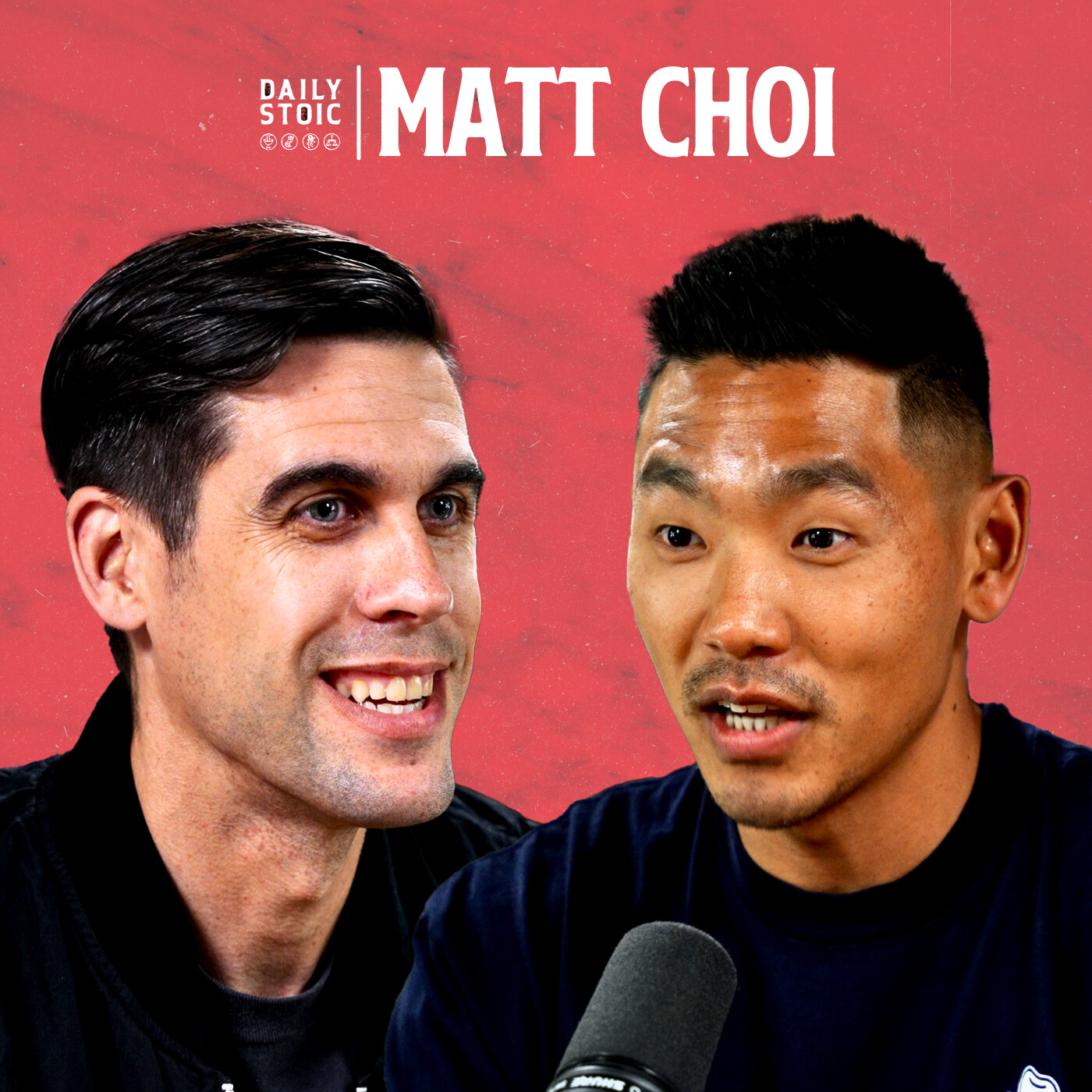
Matt Choi
In this episode, Ryan Holiday interviews Matt Choi, an entrepreneur, fitness enthusiast, and former D1 football player, about the importance of self-discipline in running and life. They discuss the mental and physical aspects of running, the balance between discipline and freedom, and the impact of social media on personal identity and performance.
Written by AI. May contain mistakes.

Get the gist, explore an idea or ask about something said.
 Claude
On The Daily Stoic, what are the key points of this episode?
Searching your listeningAutomatic transcript. May contain errors.
0:00It's time for Cyber Monday, Dell Technologies biggest sale of the year. That's right, you'll find the lowest prices of the year on select Dell PCs like the Dell 16 Plus with Intel Core Ultra processors. And with built-in advanced AI features, it's the PC that helps you do more faster. From smarter multitasking to extended battery life, these PCs get the busy work done so you can focus on what matters most to you. Plus, you can earn Dell rewards and join many other benefits like free shipping, expert support, price match guarantee, and flexible financing options. They also have the biggest deals on accessories that pair perfectly with your Dell PC, improving the way you work, play, and connect.
0:38Whether you just got started holiday shopping or you're finishing up, these PCs and accessories make perfect gifts for everyone on your list. Shop now at dell.com slash deals and don't miss out on the best prices of the year. That's dell.com slash deals.
0:54You've probably heard the headlines about all the different cuts to foreign aid and food benefits. This is having a profound impact on the world's poorest people and the world's poorest communities. But, you know, just hearing about that, that's not what stoicism is about. Stoicism is, to me, what you're going to do about it. And that's where GiveWell comes in. GiveWell is trusted by tens of thousands of donors each year because they provide free and independent research that helps you understand how to have a big impact. GiveWell has spent the last 18 years researching global health and poverty alleviation, and they direct funding to the highest impact opportunities.
1:33Over 150 ,000 donors have already trusted GiveWell to give more than$2.5 billion over the last several years, and research suggests that these donations will save over 300 ,000 lives. I myself am one of those donors. I donate to GiveWell every year. It means a lot to me. And you can find all their research and recommendations on their site for free. And thanks to the donors that sponsor this research, GiveWell doesn't take a cut from your tax-deductible donation to their recommended funds. And if this is your first gift through GiveWell, you can have your donation matched up to$100 before the end of the year or as long as matching funds last.
2:08To claim your match, go to GiveWell.org and pick Daily Stoic from the drop-down menu under podcast. That's how they know that you heard about GiveWell from the Daily Stoic and you'll get your donation matched. That's GiveWell.org, code the Daily Stoic to donate or find out more.
2:29Welcome to the Daily Stoic Podcast, where each weekday we bring you a meditation inspired by the ancient Stoics, a short passage of ancient wisdom designed to help you find strength and insight here in everyday life. And on Wednesdays, we talk to some of our fellow students of ancient philosophy, well-known and obscure, fascinating and powerful. With them, we discuss the strategies and habits that have helped them become who they are and also to find peace and wisdom in their actual lives. But first, we've got a quick message from one of our sponsors.
3:18Hey, it's Ryan. Welcome to another episode of the Daily Stoic Podcast. I was up at 5.30 this morning. I ran about five miles in the dark. I can only do this smaller loop near my house because I got to worry about some not so nice dogs on my street that are not always secured in the morning. But I did about five miles. So I did my miles. And the reason I had to do it super early this morning is because I'm flying. I'm doing a talk in Vancouver tomorrow. So I'll get up probably early then, do that run before I go on stage. It's part of my ritual. It's part of my life. It's an act of daily discipline.
4:03Like if I don't do it, I feel something about myself. If I don't do it, I not just feel physically different, but I feel mentally different, right? Running is where I sort of regulate my emotions. It's where I plan out my day. It's where I sort through the kinds of things that are going on in my life. And it's a habit. It's a routine. I ran in middle school. I ran track and cross country in high school. I really got into running, though, I would say voluntarily in college. And it's been part of my routine in life basically ever since. It's not always running like this weekend. I ran and rode my bike.
4:39Last week, I got a couple good swims in. You know, who knows if I land in Vancouver tonight, I get to the hotel and it's got an amazing pool. I always throw goggles in my bag. Maybe I'll swim instead. But I'm always doing some sort of hard physical thing every single day. And I think that's a big part of Stoke philosophy. I've said this quote many, many times from Seneca, the idea that we treat the body rigorously so that it's not disobedient to the mind. And that's what I talk about in today's episode with Matt Choi. Matt's an entrepreneur, a fitness enthusiast. He was a former D1 football player who was working as a personal trainer, and he got really into running.
5:17And he's been doing all these interesting physical challenges ever since, I think, last year or the year before. He did a marathon every month for 12 months. He ran the length of South Korea. And he's just got an awesome social media presence. He's a fun guy to follow. I got connected to him because he tagged some Daily Stoic stuff. I think he posts or talks about the Daily Stoic entry for the day almost every single day, which I've always been flattered to see. So I had him drive out from Austin to the Painted Porch here in Bastrop, Texas. And we talked about discipline, talked about comparison.
5:51We talked about the joys of running, the hard parts about running. And just trying to make it in the world to do difficult things that challenge us while still remaining, as the Stoics say, in command of oneself. I think that's the flip side of what I'm talking about. The discipline I have about running is great, but am I free to not do it, right? And unfortunately, that's less true sometimes than I would like it to be. And I thought Matt had some interesting things to say about that. It's funny. So I had Matt Choi come to Bastrop, Texas here at the Painted Porch to do the interview. Funny little side note.
6:24We go in and we're interviewing. We have a nice conversation. Then I bring him back out to show him some books in the bookstore. And who walks in? But the one and only Chris Bosch, who was in town and wanted to say hi. So you never know who's going to pop in at the painted porch. I thought that was a really cool experience. Chris and I talked books. Chris and I actually did a book together, which I always recommend to people called Letters to a Young Athlete, because he had been talking about the ideas and the obstacles away, which one of his coaches had given him. So anyways, it's a great conversation.
6:54So here is my interview with Matt Choi. You can follow him on Instagram at Matt Choi underscore six. On TikTok, he's Matt Choi six. And on YouTube, he's at Matt Choi. Also, I'll link to all those in today's show notes. And I hope you enjoy this episode.
7:17So you did what? You did 12 marathons in 12 months? Last year. Are you a street guy? like are you like that's not going anymore no no but you know what i mean like where you have a streak and you're like i gotta keep this thing i like i have trouble breaking streaks when they're positive fair i think part of me actually last year finishing that because the i finished the last one on the last day of the year oh and part of that was i was kind of dealing with some injuries after i had a trip in korea yeah so i was in my head i was like man i'd rather like i don't want to risk injury so i kind of was like do i need to do it but then part of it was like yo you said you were gonna do 12 months 12 months I was like damn I did it so so that is I think that's something I struggle with also like you have to push past pain but you're not supposed to push past injuries right it's a tough balance yes how do you think about that it's funny because I've recently I'm dealing with injury I pulled my hamstring four weeks ago and I pulled out of running at the speed project okay which is the LA to Las Vegas run okay and that was just a tough decision but like i just knew like my body wasn't ready to run like i could i could barely run seven minute miles i'm like i'm there it's just gonna make it worse i think how i think about it is just like showing myself grace and like realizing that like i could try to push through this but it's just gonna make it worse and like now i'm trying to run in boston and london i wouldn't be able to feel good going into these races so i think it's just sacrifice a little bit of like what's like how do you know you said you knew how do you know i could like it was painful to run one mile okay and like the goal of speed project is you're trying to run 300 miles as fast as possible, right?
8:50It's like, I'm like, I'm going to let my team down. It's like, it's like a six person team and you're rotating in every couple of miles and you're running pretty fast. So I just, I knew that I wasn't physically there. Mentally I could like break through and like try to do it, but it was just like a, it was like a gut feeling almost. I don't know. Cause it's like, everyone starts painfully. Do you know what I mean? Like get it doing anything is like, it's easier to not do stuff than to do stuff. Right. So you have to have this kind of willpower that makes you push through the resistance or the hesitation or the aches and pains.
9:25And then I think it's hard to then know, like that's directionally helpful, but then how do you know when you're pushing through into real injury? Yeah. Yeah. It's a hard balance. It is. I think honestly, knowing your body and putting yourself to discomfort can get you to understand a little bit better for anyone, right? It's like, I know what it feels like to run on a bad hamstring through college football. But then to do that through running, it's like, it feels a little different because actually in running, you don't have to sprint. You're just kind of running at a steady pace. Yeah, yeah.
9:56You can kind of compensate for it. A hundred percent. But like, if you try to sprint and you're trying to go get a touchdown, like you're going to be compromised. In running, to your point, like there's ways to kind of mitigate it, change your form, change your gait where you can maybe handle it. Yeah. I honestly thought about it too. It's like, could I have run the speed project? Like probably. Yeah. I probably wouldn't feel like good though going into Boston and then running London six days later so I had to kind of make like a like a business decision on like which one do I want to which one do I want to suffer for I was talking to this uh Olympic uh mountain bike racer named Kate Courtney I think and she was saying her coach said to her once do you want to be fast now or fast later and I kind of think about that a lot you know he's saying it's like because they're like hey today's like a slow workout and you're like fuck that like yeah and he's like do you want to be like fast now or do you want to be fast in the olympics like when it matters yeah yeah i love that no i think it's uh part of that is like having coaches that can kind of like know when to pull you back yeah and i think as athletes at times it's like you always want to be on the go and you think that like every day has to be maximized where sometimes yeah the maximization is actually slowing down and going at an easier effort so your body could recover yeah and i don't know, I think going through injuries, I've learned that also like that's like a, it's a balance that you have to play.
11:12That's the tricky part of discipline because discipline for most people is just like doing the thing. Yes. And, or doing the thing longer or harder, faster, whatever, or doing it. Yeah. At all. Like for writing, it's like, you got to put your ass in the chair and do the thing. Yeah. But then there's this other element of discipline, which is more about balance, more about sustainability more about recovery more about not forcing it like the unsexy thing yeah yeah yeah the discipline of the discipline i think ryan that's like it's funny you say that because so many people were like mad i'm like they were like they were giving me like my flowers of saying like i'm glad that you pulled out of the race because like it was like yeah i feel like online people always like dude how do you do all these things how do you like not get her all this stuff and like at the end of it i'm human as well so it's like in that moment like internally did i want to do it of course yeah externally i kind of knew that it wasn't going to be the best thing so i kind of was like let me just pull out of it and also show up in a positive way for my team because i felt like i brought these people together i'm like it's kind of like my duty to kind of still be like the glue of it even though i wasn't running it and showing up as best that i could in that way yeah i think people don't think about what there's not much empathy from like fans followers etc like i think the culture is changing a little bit but i don't think like i remember when remember when Simone Biles pulled out of the Olympics and all these people were like, she's soft, it's weak, all these like, and you're like, I don't think you understand how fucking hard that must've been.
12:38Like if you're a competitor, if you're like world-class or something, you never want to not do it. I remember Robert Greene, who's my writing mentor, he had this stroke before one of his books came out and I was talking to his publisher. I was like, you guys got to, you got to push this book. Like you got to push it. You can't force this guy to do marketing. And they were like, well, we're going to give him the choice. And I was like, if you give him the choice, of course he's going to choose to do it. You know, like, like this is what competitors like driven, ambitious people do. They always do the thing, you know?
13:09And so when, when I think it's really important when you see people have like treat themselves with grace or kindness or, or like decide to do the actually harder thing to like not do it when you're like, when, when people on the sidelines question that or impugn the motives of that, I don't think they realize what a fucked up signal they are sending. Because it was already so hard to be like, hey, I'm going to sit out a competition and watch other people do a thing that I probably could still win or compete in or might not have other shots at. That's just, it's hard to turn that muscle off. I agree.
13:48And when you're at the highest stage and that's your reputation, that's your identity, that's how you make a living. I can only imagine that's a challenging spot. Yeah, yeah, yeah. It's challenging. Yeah. And so I think good organizations, good cultures, and then, you know, good fan bases, they have to be able to encourage that impulse. If you want the person to be around for a while, you know what I mean? I mean, Goggins has changed my life mentally. I think some of the things I disagree with Goggins' message is that framework around, like, just push through all of that. Totally. And just do it.
14:19Where, like, for most people, like, it's actually not conducive for your own health. Because I mean, if you even look at David, he's gone through so many injuries that have set him back and he still finds ways to be resilient. But like for the regular person, it's not ideal to push through some stress fractures and broken bones. It's just not smart. Yeah. I mean, look, if you had to, you know, like sure, but you don't have to. And ideally, I think about running as something I want to do my whole life. I think about writing as something I want to do my whole life. so if I'm making short-term decisions that come at a long-term cost like that's actually really stupid yeah that's tough it is injuries showcase who you are what do you mean I think injuries show it can show an imbalance in your own internal psyche if you don't know how to handle them well like I had a friend recently that told me that he's like pulling out of the Eugene marathon and he's like beating himself up he's like dude I see all these people online that are doing all these races they run way more than me i don't know why i can't stay healthy and i think that internal dialogue changes a lot of the recovery process in addition to like how you can overcome the next race yeah and i think it showcases it showcases some vulnerability as well of like how someone deals with one adversity but being at a low yeah it's so funny because now i'm like i'm around a lot of running creators and influencers and like it's so easy to get your validation through doing the effort doing something hard sure and i think there's now an imbalance of people when they can't do that hard thing.
15:45It's like, how do you treat yourself then? Yes. Sure. Yeah. It's, you get the rewards for the accomplishments or the doing the thing, but nobody goes, hey, you saved yourself five years of knee pain or something by dialing it back today. The virtue of temperance is a part of the virtue of discipline. Do you know what I mean? the knowing when to push and when not to push is maybe the more elite skill. I was actually thinking about this on my drive here. Is that like a confidence thing internally or is that practicing that as well? Well, I think, yeah, I think it's a huge part of confidence because if your identity is tied up only in achievements or recognition, or frankly, other people seeing you a certain way, you're going to be really vulnerable, right so like if you don't think you're tough and you need other people to think you're tough you're gonna rush back out there to prove to grit your teeth and you know get through it whereas if you go like i know who i am i know what i do i know how disciplined i am so i'm gonna sit on the bench here or i'm gonna stay in today it's like hey i got up every day in a row and did this thing but i'm so insecure and fragile about it that if i don't do it for one day, I'm nothing.
17:05That is an incredibly insecure place to be. I think about this in baseball, right? So you're going to have streaks, hitting streaks in baseball, but you're also going to have hitting slumps in baseball. So if the hitting streak is something you identify with, like I'm the best, I'm amazing, look how great I am, I'm chasing records, whatever, you're going to get devastated by the slump. You want to get to a place where you're focused on how you're swinging, not so much like how you're hitting. Yeah. I love that. I think it's been a major component even the past couple of years as I've been in this content game.
17:40It's like not letting the opinions of negativity or the admiration get to you. The problem with being a content creator is you have a quantifiable number about how it did, right? I'll give you an example of how I've notice this is a creator. Okay. So posting stuff every day. I don't post it. I don't try. I try not to look at it, but like, I see that we post daily. Still have posted some video I shot six months ago and I see, I don't know. It didn't do that well. I go, fuck sucked. What'd I do? You know? And then, then I'll get like a monthly report or an annual report of like how we did. And that video will be in like a top performer.
18:19It just didn't do well at first. It was a slow going thing. But it got put by the, like, I didn't see that. It took time for it to be discovered, right? And so it's just for me, a reminder, like, don't look at the numbers. The numbers are only telling you a snapshot, like image of how something is doing. And by the way, some of the stuff I'm most proud of that I think is my best work hasn't done well, short-term or long-term. And some of the things that's done the best, I'm like, that did well. So the problem with being a content creator is you just, you're getting literal thumbs up and thumbs down.
18:51And then you're getting an exact number of how many people gave it a thumbs up or thumbs down. And so it's very easy to go, what I think about this doesn't matter. What matters is what they think about it. And what the crowd thinks, it's not that it doesn't matter at all, but what you think about it has to matter the most. That's why you're the creator. There's a reason you're the creator and they're in the audience. It's your show. It's your thing. And it's easy to forget that and to let them collectively tell you how to do what you do. It's interesting because I always think about, when I think about content, I think about the end consumer.
19:32How can I provide value that this is going to resonate with someone on the screen? But equally to exactly what you just said, you can think like that, but then as you get the result, knowing that your intent is in a good spot, it's not allowing the opinions of people, whether they're keyboard warriors or not, whether they love it or hate it, to then change how you thought about providing value to the end consumer. Well, providing value to the consumer, like doing something that's good, smart, insightful, helpful, whatever, is an independent variable from how many views it did, right? The views would simply tell you, did a lot of people see it or not, or did it provide value for a lot of people or not.
20:08But what if you made, if I told you, okay, this video you did, it's going to totally flop, but it's going to completely change the life of one person, like utterly transform their life. They're going through cancer, they're going through this, or, you know, you'd be like, huge success, but you don't know that, right? You don't know that. So instead you go, ah, but it did less views than this one. And therefore it was a failure. And so I think I try to just generally not look at things as much as possible. You have to, but also you can't. So back to that tension. I love that. Has that been something that early on that was probably, is it easier said than done now, but early on that was something that maybe you struggle with or no?
20:55I've said this before, but so like on my first book, I was like 10%, like, this is a great book. I did the best I was capable of doing. And then 90%, like, how's it going to do? Bestseller list, how many copies is it going to sell? And then week in and week out, how's it selling? How's it doing? And I'd like to think that over every subsequent book, that's changed. So my last book, I actually found this out recently, is my fastest selling book. It hasn't sold the most because it's been out for the least amount of time, right? But I know the least about those numbers. So for me to culminate in like get caring less and less and checking less and less.
21:37And then when I did check or, you know, my agent sent me like a statement because we were negotiating something to be like, oh, it's doing like the best that they've done that I was like, oh, fuck. When people talk about effort, not the, you know, outcome or in Zen and the Art of archery. They talk about ignoring the target. It feels very like, well, that must be nice, but it's not until you actually do it at an indie level and you go, oh, I'm being less intentional, caring less about outcomes, and I'm actually getting better outcomes. That's a really mind-blowing place to get to. Yeah. It's like when you stop trying to focus on just money and then more money comes.
22:21Yes. Yes. Because there's a thirst to it, I think, but also an inauthenticity to it. And then I would also say there's just a finite amount of resources. So the time, like if I could quantify all the time that I have spent checking stats or sales figures or royalty statements, I'm not saying I could write another book with that time, but I could do some shit with that time. I could write some good articles, I could make some good videos with that time. And what ultimately moves the needle? When you're checking numbers. First off, what you're not doing is work. And then how often are you even actually taking any concrete information?
23:06You're just like, that did well, that's good. Very rarely do I see something crush and then I actually get real insights as to what to do more or less of. I don't know about you. Yeah. No, I think about when I look through old videos that have done well and some that haven't it's easy to be like oh like why did this one get 10x of views but then like tactically what am I going to apply to the next video to make it actually do that yeah so I think it's I mean there's pieces of like frameworks like I noticed that when I do like what I eat in a day videos like these crush for some reason and like maybe I do more of those around big projects and I think those are good tactics but most of the times it's not it's not that beneficial to to look at the past work that you've done yes
23:53look if you're listening to this podcast you've probably heard of hello fresh right they're the number one meal kit in america they make home cooking easier with chef crafted recipes and fresh ingredients delivered straight to your door this fall they're serving up even more to love it's not the hello fresh you remember it's even better hello fresh is bigger they've doubled their menu. You can choose up to 100 options each week. It's healthier. You can choose from 15 plus high protein recipes. And they now help you eat greener with veggie packed recipes that have two or more veggies per week. And it's tastier.
24:28You can get steak and seafood recipes delivered every week for no extra cost. They have three times the seafood options. They also have hearty fall recipes like classic beef chili or honey glazed pork tenderloin. We just got home from a week away. We're trying to think about what we're going to eat this week. It was such a relief to see that HelloFresh box sitting on our doorstep when we got home. They've got everything you need for the recipe that they pick out. There's no last minute trips to the store. Plus, the meals are delicious and easy to make. The best way to cook just got better. Go to HelloFresh.com slash stoic10fm to get 10 free meals plus free breakfast for life.
25:06One box with active subscription. Free meals applied as a discount on the first box. New subscribers only varies by plan. That's HelloFresh.com, Stoic10FM, to get 10 free meals plus free breakfast for life. I'm picking my kids up from school today and then doing our weekly routine, which is I take them over to Whole Foods, and we get all our groceries for the week. Then we have dinner. It's one of their favorite things to do. It's one of my favorite things to do. And then my wife loves it because she doesn't have to take care of it. This holiday season, whether you're a guest or hosting the big dinner Whole Foods Market, has what you need to delight everyone at your table.
25:40They even have heat and eat sides from the prepared foods department. You can make Whole Foods your one-stop shop. Everything follows Whole Foods Market's strict ingredients standards, so you know it'll be delicious and good for you. You can also order online for pickup and even delivery in select zip codes to skip the crowds. Shop everything you need at Whole Foods Market, your holiday headquarters.
26:06Yeah, in the Bible, Jesus talks about how you're not supposed to look backwards to see the field you've plowed. And it's because when you do it, the team drifts, right? So like if you're, you know, the old school plow, right? You're like, yeah, plow. So if you go like this, right? Yeah. To look behind you, it turns the plow. And so, yeah, you're just supposed to stay forward. It's like when you learn this in racing, right? Like the time you spent to see how far the person's behind you is allowing them to catch up. Like you're just supposed to run as fast as you fucking can. I couldn't agree more.
26:45That did happen. You know, that happened recently. I think it was in the Olympics. It might've been mountain bike racing where that woman thought she was in first place, but she was in second place. And she looked back? No, no. She thought she was in first place. Okay. So she's competing. For like second and third, technically. Yes. So she thought she's winning. So she's racing at the, like, if she thought she's in second place, she would go faster. Yes. She was in second place, but she thought she was in first place. So she wasn't pushing herself. Yeah. And she ended up getting beat by more, potentially not catching the person in first place.
27:17because you know what I mean? You should just always act as if you are trying to do your absolute best, not your absolute best in context of how you compare against other people. Like I think about this, people will tell me like, oh, I'm trying to write this book and I want it to sell X copies. That's like a bad, you don't want to do that. You should just try to do the best thing that you can do. Fair. I think it's like Kipchoge. It's like, it's like any of those, like when they make that move at like mile 21, they're setting the precedent. Like, yo, I'm just going to take this race over and run a world record time potentially.
27:53Yes. Versus thinking that you're, it's actually very interesting. Cause I think you're not in the same competitive, like juice, like it's a different fire. Well, what's hard too in competitive running is like, you actually are all running the same race. Right. But like, like if you're just out in the world running, you know, and like somebody passes you, there's that part of you. That's like, I got to keep up. And you're like, dude, they could be running. You could be on mile 20 and they could be on mile 0.5, you know, or like you could be about to finish and they could be just starting or whatever.
28:24Like you do. I think you do learn a kind of a tunnel vision or bubble. Like in Austin, when you're running on the trail, there's people running the opposite direction than you running. They're going to turn on this bridge. Like the town loop trail has all those bridges for people to know. There's basically one long, thin 10-mile loop that's crossed by what, like five bridges, maybe? Yeah. Like five. I think five is right. Yeah. Yeah. They're building a new one, I think. Yeah. But so yeah, you're running and this person's passing you or you're passing this person, but like, you don't know what loop they're doing.
28:57They could be turning on this bridge or then they come back behind you. Like, are they lapping me? And you're like, no, they just, they're doing loops. They're just doing short loops, you know? And so I think I've tried to cultivate just to like, I'm running my thing. I don't really give a shit what you're doing. I think it's like, it's the saying, right? Comparison is a thief of joy. It's like, if you think that, like, if you try to enter yourself into what they're doing, you're already now starting to let doubt creep in where it's like, when you're on a long run, there's already so many variables.
29:23It's like, not allowing that to happen is a better thing than worrying about like, oh my God, did they just pass me three times? Do you think about this also though? Like, as a creator, it's not just like how your individual posts to, but you go like, okay, I have this many followers. And in here, this just mediocre model has 10x the following. Understanding even where you fit in the niche that you've chosen, I think, takes a certain amount of discipline. Yeah, I think it's interesting because obviously with how much the landscape has changed over the years, like models versus creators, I think professional athletes versus creators, yeah it's now kind of like in terms of brands i think they tend to work with creators more than the athlete or the person that just looks good and part of that is obviously how they represent the brand itself um in terms of actually comparison i think it's natural for every most humans to to maybe from like the vanity metrics like see that but i just i think it's like not allowing it to consume you yeah and i think like it's understanding who you are and what value you're trying to bring or or following your own purpose and like leaning into the things that are actually in your control versus like how someone else is doing or how many likes or views or things that they're getting.
30:35I think that's just a bad rabbit hole to go down. And especially if you're playing the long game of this, it's like someone's always doing more than you, better than you at the end of the day. And then there's people that are doing less. So it's like, you have to just find the balance that works for you. Yeah, it's hard because the internet essentially opens you up to every person in the world. So you're like, well, this person has a hundred million followers. I only have a hundred thousand. And it's like, okay, but that person is playing a very different game than you're playing. You know what I mean?
31:05It's hard to go like, I'm a classical musician. There's a ceiling on how, like to go like, hey, I have 200 ,000 followers as a classical musician. That's insane. Instead, you're going, I only have 200 ,000 because this person who does ASMR videos has 2 million or this person who has cars or bikini photos or whatever. I try to remind myself, it's like, you write about an obscure school of ancient philosophy, and more than 10 followers is a lot, you know? I mean, look, Ryan, the fact that running has taken off this much, I was thinking about it on my right hand. I'm like, yeah, I'm super fortunate.
31:42I'm blessed. And I put myself in that mindset. It's like, it'd be easy to be like, oh my God, you don't have as big of a following as Logan Paul or Mr. Beast. But it's kind of ludicrous because they're pandering to a much larger demographic than someone that wants to run marathons. Like that's 1 % of the world. Very few people want to run marathons. Yeah. It's like you chose to play the cello or the cello chose you. It's silly to feel insecure that you're not like selling out Madison Square Garden. You're not like a boy band or a rock group or whatever. Like understanding that you make choices and those choices come with certain things, right?
32:21Like in running, it's like, hey, like you ran this race. Even if you're the most successful in the world, you're probably not going to be faster than this. And you do have to be faster. This is like, this is your scope. You know, you chose the javelin. You know, you're probably not going to be as well known as the sprinter. Fair. But I think it's funny because now as like running has like really taken off. I think the reason that like my brand has become brandable for a lot of other businesses is that that general pop that you're talking about, right? The people that run three hours to five hours is most of the people that run marathons.
32:52Yeah. The Kipchoge's of the world, people that are running even Olympic qualifying times is very minuscule. Yeah. Like maybe a couple hundred at every race, right? That are running 218 or 210. It's almost unrelatable for a lot of people to be like, how are they running 450 miles or 520 miles? It's almost impossible for most. So to your point of like that three to five hour group, which is where most people finish. Yeah. That's speaking to most of the people that I feel like my content talks to. Yeah. And if you're Nike, Adidas, any of these major brands, it's like if you want them to wear your shoe, So it probably makes more sense to work with a creator like myself than someone that's running a 210 marathon.
33:27Yeah. And also it's a lot harder to run a 210 marathon. So it consumes your life. Do you know what I mean? You can't make videos and run that fast. Yes, exactly. Exactly. So I also think about this. It's like people who are just naturally great at something or blessed with supernatural height or whatever. Emerson has this great essay. He talks about compensation. He says there's a compensation for everything. So like, yeah, you're supernaturally gifted or charismatic. You're not so good at explaining how those things work, right? Because like, you're just like, what do you mean? Yeah. And so in some ways we curse ourselves for not being naturally gifted and then also see our strength as being like communicators or relatability or hard work or whatever.
34:16Like these compensations we made up for that, you can't have both. It is extremely unlikely that you're going to be like naturally gifted at something and then be really good at teaching people how to do it. It's like the really good player doesn't always become a great coach. Exactly. I actually resonate with that a lot. But Ryan, I think there's certain skill sets that are like developable. Like someone can develop discipline, even though you're not the most, like discipline doesn't come easy to you. Yeah. So I think it's like finding that fine line where it's like, what are the things that you can actually work on that might not come natural?
34:51Yes. That you can build skill sets on. Yeah, yeah. Yeah. There's definitely, you're not fixed. I'm just thinking that somebody who's enormous is not going to have to develop the same fundamentals in boxing or basketball that somebody who shouldn't be able to compete is going to have to figure out. You know, like someone with great stories doesn't have to be as good of a stylist as someone who's an incredible writer, but doesn't have that much to say. You know, you got to figure out, ideally you want a nice balance of both. Yeah. But we get mad that we don't have certain gifts and we don't understand that those gifts come with costs too.
35:32It's a sacrifice. Did you always love running? No. So, I mean, when playing college football, it's just like you run for punishment. Yeah, yeah. So running came for me during the pandemic, and it was just available. Oh, that recent? Yeah. So it's been fairly new for me. And obviously, it's funny that you say all that, because I think about football a lot. And for me, my North Star was like, I wanted to go see if I could play in the NFL, be the first full Asian American to go do that and inspire other Asian Americans to have someone that they can kind of follow. Obviously, it never happened. But then, Ryan, for me, the games are running, and to your point, much smaller sport compared to the NFL.
36:06Sure. It's the biggest sport. 100%. But having impact in this space now, which is now getting people that aren't just Caucasian to get into the sport as well, is a different level of impact that I feel like at times, like, I feel like God's working my story in different ways to make impact, but maybe not how I thought. But it's been me staying curious and open-minded to something else that now has allowed that to happen. And I think that's the obsession I've got through running is now obviously triggered for other people, but it's still really new for me. And I feel like it's why I stumble sometimes and like, I don't always follow the rules.
36:39And I like, I do things kind of my own way. And it's like, it rubs some runners the wrong way, which I totally understand. Yes. Equally, it's getting a lot of new people into the sport. Yeah. It's funny. You don't realize, like you think you're developing these skills or experiences or learning these lessons to apply them in the domain you're learning in them. And you don't realize that actually it's all this training ground for this thing you haven't even tried to do yet. That's like a weird, humbling, kind of mind-blowing thing. Like, how did you know that all the things you were learning over here were actually going to be applied in a totally different domain?
37:16I think part of it is we learn by doing as humans. Sure. I was a very poor student and I've over the years became a better student, but like through football, it's like we, we, we study film, we study the playbook and they have to go execute it. I think for running for me, it was like, oh, I can read about it. I can watch other guys like Goggins and that are doing it but it's like if I never take the action of putting my shoes on and starting with that one mile yeah I would never have known that this is even possible right so I think for a lot of people it's like how do you then put yourself into the arena right it's like Theodore Roosevelt it's like instead of just being the critique on the sideline and judging what the quarterback is doing when you're watching Sunday night football it's like actually if you understood what they're going through and how difficult it is obviously not everyone can play in the NFL but everyone can run everyone can do these other activities that are pickleball that are golf whatever it might be that might challenge someone.
38:02I think by doing and putting yourself in an environment to fail is the best way to find that. What was it like for you going from effectively a team sport and culture to a solo activity? I mean, learning discipline through a team is much different than self-discipline. Right. Coach is expecting you to be at a certain meeting at a certain time. There's rules on that if you're not 10 minutes early. If you're not 10 minutes there before the meeting then you're already time yeah so it's like it's there's obviously like cause and effect of all that stuff when you're relying on other people as well to do a job like as a receiver if the line doesn't block and the quarterback can't get the throw off like it's irrelevant if I ran a good route right in running obviously it's just it's all internal and there's community and team building around running but when you're towing the line you're there on your own and you're in your own internal thoughts it's a different challenge but I think it's the best way to actually develop self-discipline yes you're in your own head with your own thoughts that's who you're primarily running and competing with correct which i think is actually the best like similarity to life where it's yes i mean you have a awesome space here a great team i'm sure but like ultimately like that game is still an internal battle that you have to win to then allow the everyone around you to do their thing so i think it's taking like it's so funny because like the ultimate team sport to like a very solo sport.
39:21You take tendencies of leadership from being on a team sport that can translate into running. But at the core of it, it is you against yourself. And I think that's something that a lot of people are scared of, actually. I wonder too, though, like the idea to do 12 marathons in 12 months. Football has kind of a schedule and a long grind to it in the way that running, like people are training for a marathon, right? Or like they go for jogs occasionally, but the sort of signing up for the system or the season, that strikes as maybe something you brought from your other world into running. Like you made up kind of a set of games that you have to play.
40:03Yeah. In a way, Ryan, 100%. I think what's the funniest thing about it, though, is that like, you know, last year I got a little slack because I was a bib mule at a race. and that was a bib meal is when someone runs in a race that isn't under your name oh i was running in the houston marathon but like the race had like gotten sold out and four weeks prior three weeks prior i didn't have a bib yeah so i had to kind of ask around friends in the running community i was like dude like does anyone have does anyone is anyone not going to the race end up having a friend that wasn't i used his bib to run in i end up running sub three which qualifies with boston and then there's this whole article of like running influencer is a bib meal and it's in a fraud and all this stuff so I got a lot of shit on for it and I started looking at my race calendar and I was running in Austin because it's just like the hometown race and I was doing Boston all these and like I had like the first three out of the four months I then almost asked myself I was like imagine if I actually could do one every single month and stay in enough shape to do that one was kind of like throw it into the running community's face of like yo a petty rule that I did not follow I got shit on for I'm kind of gonna throw it in your face but then equally to your point of making these games where it's like, I think a lot of people run marathon once and they're like a one timer.
41:12Yeah. I wanted to almost prove to myself that like, you could do this, like that it's not something that you just kind of do once a year, which is how most people treat a marathon. It's like, imagine you stay in enough shape where you can do it year round and every single race, you learn something different. Like, and for me, I'm not racing every single one of them. So whether it's doing things more for content or for the community or spreading positivity just during the race like I feel like every race I do is like it provides different challenges yeah and you have to respect the distance how did you handle people not liking you it was challenging initially which I think everyone it's easy for someone to be like oh I love the haters but until you're actually getting hated on it's it's hard to actually realize like how you treat yourself yeah I think the biggest thing I learned was that and to answer your question the initial couple days were tough I talked to a mentor and he was like Matt this is great he's like this is like your eight mile moment it's like yo own it and like now you own the narrative like someone's reading this article they might have 20 ,000 reads on that article if you actually publicly make a video on it you're going to make it actually more available for people and in that same level of humility of showcasing people that like you're human you made a mistake but then you can actually change the trajectory of how other people treat being a bib mule yeah do you what do you think of the criticism i think there's some valid there's some validity in the criticism in the sense of if i was someone that had a thousand followers i think it would get brushed under the rug i mean ryan honestly this is this happens at many races of course it's just that i was obviously documenting it and yeah i'm as an outsider i'm trying to wrap my head around why anyone gives a shit but well the guy that wrote it is from this thing called marathoninvestigation.com which he basically his goal is to basically find people that are cheating races um and obviously for boston and specific races you have to qualify for.
43:00Oh, so someone might have like a ringer run a race for them so they could qualify for a faster thing. A hundred percent. But that's obviously not what you were doing. Yeah. I mean, from the vanity, it could look like that. But like, if that was a case, like making content around it would be stupid. And also building up all the content I did prior to that six weeks, seven weeks, it would be stupid. But I think to answer your question, I mean, it was tough in the moment, but I think you said it earlier. It's like how I saw myself and the intent that I actually had, I knew that it wasn't getting correlated in that article and it wasn't right from the one person's POV.
43:33So I just, I couldn't beat myself up too much after that. Like it was harder to find, like I had brands that were pissed. Really? Because from a PR standpoint, it's like, it doesn't look good. It's like, oh, you have an athlete that you're working with and it's Nike and Dick's Sporting Goods, which are major corporations. Sure. And they're wondering like, yo, what's happening here? Yeah. And they didn't really want to hear my side of the story. And it kind of became something where the relationship kind of got disgruntled. But by far, Ryan, it was a learning lesson of, am I actually about what I say I am?
44:02In the sense of not valuing the criticism as much as the admiration. And in that moment, I knew my intent wasn't in that place. So it was easy for me to kind of just brush it off after making the content around it. It's also hard. It's like, okay, you know objectively how many fans you have, how many people like what you do, right? You know you're creating value and people view you with affection. That's what all the quantifiable thing over here is. And then there's this part of you that's like, but 10 people over here don't like me. Or I got 99 positive articles and then there's one negative article.
44:37And the inability to accept that that is actually an appropriate, if not generous ratio, you know? 100%. Like it's impossibly vain, conceited and entitled to think that everyone's going to like you and all publicity is going to be positive. But so you can understand that rationally. And then you see, there's this, there's this exercise in Mark's, he goes like, he's speaking of annoying people. He's like, is a world without annoying people possible? And he goes, no, of course not. He's like, so this is one of those people, like, you know, 10 out of a hundred are going to be this way. why are you surprised when you meet one like you know that not every uh person who sees your stuff is going to like it you know some people are really not going to like it you know and then you know a percentage of if you get to a certain level that's going to attract immediate attention and some of that media attention if not a lot of it is going to be negative so when you see the negative one or the person doesn't like you have to go this is one of those people they're not all going to like me?
45:44But that's, like, someone just sent me this, like, there's this big Washington Post piece about stoicism. They were like, check it out or whatever. So I went to Google it. And not only was there that negative one, Google showed me, like, another newspaper had written, like, the same day, another nasty one about me. And I was like, great. But I had to go, like, hey, why would everyone like me? And also, isn't that what happens when you get to a certain level is that people are incentivized to try to take you down? This is how it works. but that requires swallowing some unpleasant things sometimes.
46:16A hundred percent.
46:25Well, it's almost here. Christmas is just a couple of days away and maybe you're scrambling. You're like, what should I get my dad? What should I get my mom? I gotta get something to my sister. People love showing off pictures of their kids and that's where today's sponsor comes in. I've gotten one as a gift. I've given it as a gift, the Aura digital picture frame. It's easy to use. It never gets old. You're constantly updating it with new pictures. Aura digital picture frames are so much better than any digital picture frame I've ever seen. It's got a high resolution. It's got a color calibrated display.
46:57You can add video. You can have two pictures come up at the same time, picture and a video. It'll pair photos together for you, like two pictures of the same person or from the same day. It's really easy to set up. You just download the app, connect the frame, and then you can pick photos and videos right from your phone from anywhere in the world. And there's a reason Oprah added it to her favorite things three different times. For a limited time, save on the perfect gift by visiting AuraFrames.com to get$35 off Aura's best-selling Carver Matte frames, named number one by Wirecutter, by using promo code STOIC at checkout.
47:30That's A-U-R-A frames dot com, promo code STOIC. This deal is exclusive to listeners and frames sell out fast, so order yours now to get it in time for the holidays. Support the show by mentioning us at checkout. Terms and conditions apply. I got an amazing night's sleep last night. One, because my six-year-old fell asleep in the car at like six o 'clock and he transferred him from the car seat to the bed and it stuck, which is just magic, so he's in bed way earlier than normal. But I sleep really well every night because I have a 8 Sleep Pod 5 Ultra, which is 8 Sleep's best product. I've used 8 Sleep for many years now.
48:10And it's just totally transformed how I sleep, made me sleep better, made my wife sleep better. It's amazing. So basically, 8 Sleep is this topper that goes over your mattress. It can heat and cool both sides separately. It can raise and lower each side separately. So it helps you fall asleep faster, stay asleep, and then wake up better. Eight Sleep buzzes me to wake gently every morning as opposed to some loud blaring alarm. And then I can check the app and it tells me my sleep score. It even helps me optimize my day based on how I slept. If you want to survive the holidays like a pro and just generally sleep better, Head over to 8sleep.com slash Daily Stoic and use code Daily Stoic to get$350 off your very own Pod 5 Ultra.
48:59The best part is you still get 30 days to try it at home and return it if you don't like it. But I know you will. Trust me, your body will thank you for this investment in better sleep, shipping to many countries worldwide. See details at 8sleep.com slash Daily Stoic.
49:17I love how you said that. The 10 out of 100. I mean, to your point, the amount of ego that one needs to have to think that they're going to be loved by everyone is ludicrous. Yeah. And I think as a creator, it's like if you're someone out there that's just starting out, like it's easy when you're starting out because you think that. Like internally, you don't really understand what it's like to have quote unquote haters or people that don't like your stuff for whatever reason. But it's kind of accepting it and it's showing them love. I think now, I had a friend recently, my buddy Danny was always in my ear about like, you know, how do you show up to those people?
49:48Yeah. and more and more there's just uh there's a there's a worship song where one of the vocals is lord give me vision to see the world like you do and even in those moments ryan it's hard for me at times when like someone's got the balls to actually come and say to your face i'm like oh i'm a little shocked actually that like i'm like if anything i'm proud that this person wants to say it in person versus over a screen and in those moments you do have to like swallow your pride and just like show up and give these people and show them grace even though they don't want to hear it. They don't want to.
50:18And they're not showing you anything. A hundred percent. And it's tough. You have to swallow that price. I've had that moment happen to me. And every single time I feel like I'm moving a little closer to understanding how to better handle that. Tim Ferriss said to me once, he's like, okay, let's say like you have 10 million fans or 10 million people have heard of you. And let's say 10 % of the people that have heard of you don't like you. That means there's like a million people that don't like you. That in itself would be a top 10 city in the United States. So like an entire city of people. Everyone in Austin doesn't like you.
50:47Yeah. So can you handle that? Like, and if you can't handle that, you should stop trying to get bigger, you know? Like, like, uh, if you can't handle more people not liking you, definitely don't try to get more people to like you because it's just a fucking percentage game and there's only one way this goes, you know? Uh, and so that, yeah, that's a really, that's a really tough thing it's a challenge but to your point it's like you kind of sign yourself up for this well you actually don't initially yes but along the way you have to kind of maneuver and understand like that it's kind of inevitable and the longer you the more you try to fight it and the more you try to change that person's pov it's just a losing battle and like i'm not in the world to change anyone you know like i want to focus on changing things i can control which is internal it's me and if people along the way get impacted in a positive way awesome if people get impacted in a negative way, awesome.
51:40It's just, it's not my job, nor should it be anyone's to try to change everyone in this world. Well, it's also funny, right? So there's this whole controversy you run using someone else's bib. I'm sure that's not the worst thing you've done in your life, right? Like, there's an Epictetus line, he's one of those jokes, and he goes, when someone criticizes you, say to yourself, if only they really knew me, it would be worse. and it's not that we all have like you know uh dead bodies in our freezer but like most of the time the things that you take heat for the things that people don't like you for are not the worst things that you do and and that i i think what he's actually saying again it's not like oh it's okay to be worse i think what he's saying is like count yourself as having gotten off easy you're dodging bullets you're dodging more bullets than you're taking you know um and to just go this is a warning.
52:33It's a warning to like that one of the costs of a platform notoriety success is that you can't be sloppy and you can't take shortcuts and you've got to be above board with all the things that you do. And imagine if you were subjected to real scrutiny, you know, and now try to live your life to be above such, not above such, but immune to such scrutiny in that like, you know, you're not doing shit that if people found out about, they'd be like, whoa, right? So try to merge the public and the private as close together, because if all your dreams come true and you get to the level that you want, the result is going to be more scrutiny and more people looking for things not to like it.
53:20So you better get your shit together. Yeah. You know? You said it. It's like, you have to be more organized. Like you have to dot your I's, cross your T's. And like, honestly, that was my learning from that moment. Yeah. It's like, I've gotten to a point in the running space where it's like, I can't just like fly under the radar. Like you have to do things with a certain protocol. Yeah. And do I believe that there should be a transfer of bibs? A hundred percent. Most races allow it, but certain races don't. Yeah. But it's not my, it's not my job to, to debate the rules of the system. It's, Hey, these are the rules of this game.
53:51And now I have to play the right way. Yeah. It's like, look, you start making a certain amount of money. You better get a good accountant. A hundred percent. You know, because the IRS is not going to be as forgiving of you as they are to some random person making a fraction. You have to level up all aspects of your game, not just the monetization side, not just the performance side, but all the other unfun stuff. Admin. Yeah, the admin, risk management, live bill. You know, you just have to get your shit. So somebody told me you read The Daily Stoke. I do. Yeah, and then you post about it all the time.
54:25I post it every single day. Yeah? Yeah, it's funny because I was going to joke with them. I was going to say, Ryan, I'm sure like I've actually might have impacted some sales because people tell me that they don't buy it because I post it every day and they just watch it off my story. But equally, I've gotten many messages of people like asking about what it is and then they end up purchasing and send me pictures. But I've been reading The Daily Stoic for the past three years. How'd you find it? And a mentor of mine that lived in Maryland, he first told me about the Daily Stoic and just kind of stoicism.
54:51And he's an entrepreneur that I looked up to. And then I was at a friend's house and it was on their coffee table. So I was like these signs. And I just was like, you know what? It was like about to be the new year. And I said, you know what? I looked at it because I'm like, oh, it's dated every single day. So obviously the concept of like learning just a little bit. I never read in college and high school and I was a poor student. So for me, a lot of the challenge was, can I just read a page a day? where most people are like, I don't have time to read. I could never read. It's like the thought of actually - The least you can do.
55:19The least. And then obviously from there, I built my muscle of reading more and consuming more content. But that was the start of it. I was building my social content at the time. And I just like, I wanted that to be part of my routine. And that just became the first thing I posted on my stories in the morning, just because I was like, yo, this is the first thing I do. Before I brush my teeth, I journal and then I read the page. And it's just like, it became a part of it. You know what's funny? So the first editions of the Daily Stoic, like it says every page it so typically the way books work is you have the title on every other page okay like it'll be like title here title of chapter here that's like how books tend to work well so the first edition of the daily stoic is that every other page had the daily stoic and then i would post pictures of the book and people go what book is that so when we read like the second edition of the book like probably within like two months i caught it and now every page says the daily stoic on the top because people post it on social media and it's it's become part of this thing where they're sharing it sure maybe some people don't buy it because you can get it for free on instagram every day yeah but not really like it way more people hear about it for the first time than that but it's funny like i'll post a picture of it like on daily stoic and it'll sit and people what book is that and be like the book's from the account that you're following what are you talking so that's the other thing is like you realize like people aren't paying nearly as close attention to you as you think they are.
56:45So you mess up or you have this kind of imposter syndrome or this doubt that's really almost a form of egotism where you think people care about you way more than they do. And really, they're just living their lives. And it humbles you. You'll do it and you'll be talking about something for months and months and months and then people will be like when's your new book coming out you're like i i i was worried i was talking about it too much and you've not even heard about it you know and so it's funny i think it's um to that point of like realizing that i think this is really what helped me with criticism as well it's like i remember when gary used to say this like years back it was like if you actually realize that most people are living their life and that they have so much shit going on that they don't really care that much about you stuttering or a typo in the video or whatever it might be it'll help you get over the hump of caring about what people think because ultimately it's like if if something happened to me tomorrow on my flight most people would move on with their life as sad as that might be or sound it's like besides my family and my loved ones like most people as much of a diehard metroid fan someone might be they're gonna have to go on they're gonna have to move on it's no different than kobe bryant who at a larger scale is way more public figure.
57:58And I think that helped me realize, I'm like, I don't have to take this so seriously. And I think so many people do. They're like, oh my God, it has to be perfect. It has to be this. I'm just like, if you actually realize that that's actually what's stopping you from actually seeing what you're capable of and your full potential, you can actually start to unmask that. I mean, we found that with Daily Socks. So we'll post something, I'll do super well. And you're like, oh, wow, that did so good. And then we found this on accident. Somebody reposted that same piece of content like a month later and it did more views a second time you thought everyone saw it and you're like not even a fraction of the people who are interested in seeing it saw it you know and it's just this uh gary gary said this to me once he was like i just say like the same seven things and i was like what and he's like yeah i just say these same seven things like over and over and over again i've watched most of stuff i didn't notice i never noticed because i'm not paying that close of attention you know and that's not to say you can be lazy and you don't have to do a good job, but it's realizing, yeah, most people are really busy.
58:56And when you are, you think you're repeating yourself. In fact, like they didn't hear it the first eight times. And the ninth time they were like, oh, I exactly needed that. I get that with Daily Stoic all the time. People go, how did you know? Like, cause it resonates that day. Yeah. I wrote it nine years ago, bud. Like, and also I wrote 366 things and then scrambled them up. That's what order they're in you know what i mean like there's almost zero intentionality about the date yeah whatsoever the same goes for because we daily stoke is also the email right the email goes out every day which is a new thing it's like a new email every day but most of them were written like i don't choose when they go out brendan back there chooses when they go out like he picks the order uh and so people are like oh it's perfectly timed for today is wait are those emails mirrored with this at all or it's completely separate so basically so i wrote the book in 2015 it was coming out in 2016 and I just decided, I bought dailystoic.com and I said, you know what?
59:55I'm just gonna keep it going. Someday someone will get to the end of the book and they'll be like, how do I keep this going? And so the Daily Stoic email is one email every day and I've done that every single day since 2016. So that's like multiple versions of this book totally for free, but I write them, not in bulk, but I just write them all the time and then they get - Sent out separately, yeah. The team decides like, hey, you talked about this yesterday, so the right one for today. But I have no real say over like, hey, on June 3rd, it should be this entry. That's just totally random. But then people ascribe a lot of meaning to it.
1:00:33They go, oh, how'd you know? Yeah. I wrote it in March. I didn't. I love that. I love that. But that's when you know something hits. It's like, it's for whatever reason, how what someone's going through in that season of their life or that day, it just triggers something. Well, we bring things to what we're reading. That's why they say you can never step in the same river twice. Like the river is different, but you're different. Or they go, you know, when the student is ready, the teacher appears. Like nothing changed, but you changed. And so now you heard the thing that you were not hearing all the times that it was in front of you before.
1:01:10Interesting. I love that. So have you become a reader since? Massively. Yeah. It's actually probably one of the things I'm most proud of is that I've now become, I always say it's like, I was such a poor student because like football is my identity. Now, like I'm like a student of life. So I feel like whether it's been the Daily Stoke has been a good start. And then it's been a ton of books from there. And then other entrepreneurs and just people I look up to in the space. But reading and also audio books and like Headway, which is like kind of shortening a lot of these books has become a major component of just like my day-to-day life.
1:01:40Interesting. Yeah, I mean, we were talking earlier, like, there's all these things you can get better at, like you can develop. You think you're not a reader, and it's really you just haven't, you weren't at a place in your life. Or I see this all the time. People thought they hated books, but really they hate reading. Do you know what I mean? Like, they're dyslexic, or they have, like, they're just maybe a bad eyesight, or they can't sit still. And then something like audiobooks just opens up this whole world. Or they loved, they would have loved reading. they just have never read a book that did anything for them.
1:02:12And once you have that experience of like a book that changes your life, that's a dragon that you chase over and over again. It's like the first run or like getting back into the gym. Truly. The book for me was Rich Dad, Poor Dad. Okay. And financially and just like the mindset around an employee, that book just changed a lot of how I thought about work. And like, that was like when I was making my transition after football was done and I was working my first corporate job. and that just sparked so many things where that was the drug that first hit and then from there it was a ton of gary a ton of your stuff a ton of like um jesse itzler and goggins and i just like started re-downloading new software i always like i'm a big matrix guy so i framed the brain as like software and like i just started to find people that were doing things i emulated or i wanted to do and it just became like that was like an obsession and for me running and content and learning like these were things I never really did yeah because I was so caught up in the one thing and I started realizing like oh I could run a marathon like I could probably learn a new skill I could learn a new language I could do all these things it's just it's gonna take time are you do you listen to audiobooks when you run not as much I do headway more when I run and sometimes I just don't listen anything when I run really yeah I'm more of a if most times are not I'm a silent I don't listen to anything so you just spend a couple hours just on my yeah what thinking about or nothing sometimes it's nothing sometimes it's it's thoughts that whether it's content or if i'm going on a pod or something it's like it could just be like how i'm feeling that moment or things i'm working through yeah um other times it's just nothing sometimes during races it's just it's different i typically i i can't remember last time i actually wore headphones during a race they're not really supposed to they don't like it right like you're not supposed to do it during an iron man for instance i don't get it well the iron man culture is like really strict on that stuff.
1:04:00Marathons, they tend to be a little more lenient. But in the Ironman space, you can't because when you're on the bike, there could be risk hazard if you're flying at fast speeds. But yeah, on runs, I like the silence of it. I just feel like I'm able to work through things that are, whether it's a creative space or a business space where it's a time for me to just be away from the world. Even though I bring my phone, it's not like I'm checking emails actively or doing those things, but it's just time for me to just kind of brainstorm. Yeah. So you don't do music? Very rarely. I will sometimes turn music on if I'm in a deep pain cave or if I'm deep into a long run and I'm like, all right, I need something.
1:04:39I mean, when I was in Korea, I turned music on after the six or seven day of running the length of it. So it's just like that kind of just, I needed something to distract my mind. Yeah. I find that distract, like I tend to listen to songs on loop and it creates kind of a silence because it drowns out other sounds. 100 there's a couple artists that when i do listen to music i'm like yo this is like the mode i want to be in yeah but i like going through like like modes of the run where it's like the first 10 miles i won't do anything and then i like maybe we'll listen to music for a couple miles and then turn it back off or to keep it change the artist or whatever it is um but most times it's typically silence wow yeah that's crazy i can't do it i can't i'm content i'm like uh like Like I need the - You have a playlist?
1:05:27No, no. It's usually like, it's usually a song. Like I'll pick a song that I'm into at that moment. And that song will be the song I'm listening to while I'm running that day or biking or whatever. And that's the same song I was listening to while I was writing. So it's kind of like tapping into just a vibe that I want to be on because I'm usually like working through something. I see. I see. So like my, yeah, like my Spotify wrapped at the end of the year is like an artist like it'll be like you were top one percent of this artist top one percent of this artist top one percent of this artist and it's funny my my kids do the same they're like put that song on repeat and they just there's just something about our brains that want to listen to it like on loop i mean it's kind of like the the the rocky like theme music like for god it's like how long can you do that for doing push pull-ups it's like yeah you just keep something on a loop and it kind of it drowns out everything else yeah everyone's got their own quirks.
1:06:23Because what you're doing is fundamentally insane. Your body does not want to be doing it and shouldn't be doing it. So you got to tap into some level that allows you to do the thing that your body's like, I'm sure you want to do this. Yeah. It's like an internal fight, but sometimes music can push people through because it's like a level of comfort. That song makes you feel some type of way, which can get you through miles 20 through 26. Yeah. Or podcasts, you're just like, oh, an hour passed? It's turning off that part of your mind And it's like, how far have I gone? How far have I gone? How far have I gone?
1:06:53And I think pods too, it's like, because it's multiple voices, it makes you feel like these people are running with you almost. Yeah. You know, it's like, it's like, cause I think people do enjoy running as a group. Whereas like solo runs can get kind of very monotonous, but like when you have pods on, it's like, it's nice having that feeling like, oh, like they're just like, someone's running with me right now, you know? Yeah. Although like some people are like, we should go for a run sometime. And I'm like, nope, no, we should not. That one might be happening. You don't, you just like running on your own?
1:07:17Yeah, this is my thing, man. Respect. I don't want to hang out. The social aspect of what running has done, I think some people, right, some people can't run on their own. I know, I know. It's like that, and I'm very in between because most times I do run on my own, but there's some certain people and certain individuals, like if we're doing, this morning I did a track workout with a couple of friends, like those moments when you're grinding through it and you're running similar paces, like it can be a competitive fire. But most times I do enjoy the solitude of like, This is my time. Yes. But now I also put myself in the mode of hosting big shakeout runs, and people are like, yo.
1:07:54So it's balance. That's funny. All right. You want to go check out some books? Please. Let's do it. Please.
1:08:06Thanks so much for listening. If you could rate this podcast and leave a review on iTunes, that would mean so much to us, and it would really help the show. We appreciate it. and I'll see you next episode.
1:08:34My family owns a 2023 Toyota 4Runner and honestly, it's my favorite vehicle that I've ever owned. Around town, it's smooth and reliable, but where it really shines is on our trips into the back country. We've taken it on backpacking adventures to Colorado and New Mexico, loaded it up with gear, and never had to think twice about whether it could handle the terrain. That's what Toyota Trucks are built for. Off-road confidence, rugged durability, and the freedom to explore. Toyota has a long history with the outdoor community, and they're committed to helping more people get out there and experience what nature has to offer.
1:09:04From remote trails to scenic byways, Toyota Trucks empowers you to take the detour, roam freely, and discover places that still feel wild and untouched. And they're not just making great trucks. They're working to expand access to adventure so more people can connect with the outdoors and pass that passion on to the next generation. Discover your uncharted territory. Learn more at toyota.com slash trucks slash adventure dash detours. That's toyota.com slash trucks slash adventure dash detours. You hear that? That's not just a Toyota truck. That's the sound of no crowds. No alerts. No distractions.
1:09:46And no telling what you'll find next. You know, like a detour. So why would you ever take a tour when you could take a detour? Toyota Trucks.
Follow Matt Choi: Instagram, TikTok, and YouTube
✉️ Want Stoic wisdom delivered to your inbox daily? Sign up for the FREE Daily Stoic email at https://dailystoic.com/dailyemail
🏛 Get Stoic inspired books, medallions, and prints to remember these lessons at the Daily Stoic Store: https://store.dailystoic.com/
📱 Follow us: Instagram, Twitter, YouTube, TikTok, and Facebook
See Privacy Policy at https://art19.com/privacy and California Privacy Notice at https://art19.com/privacy#do-not-sell-my-info.
