
 Ask ChatGPT



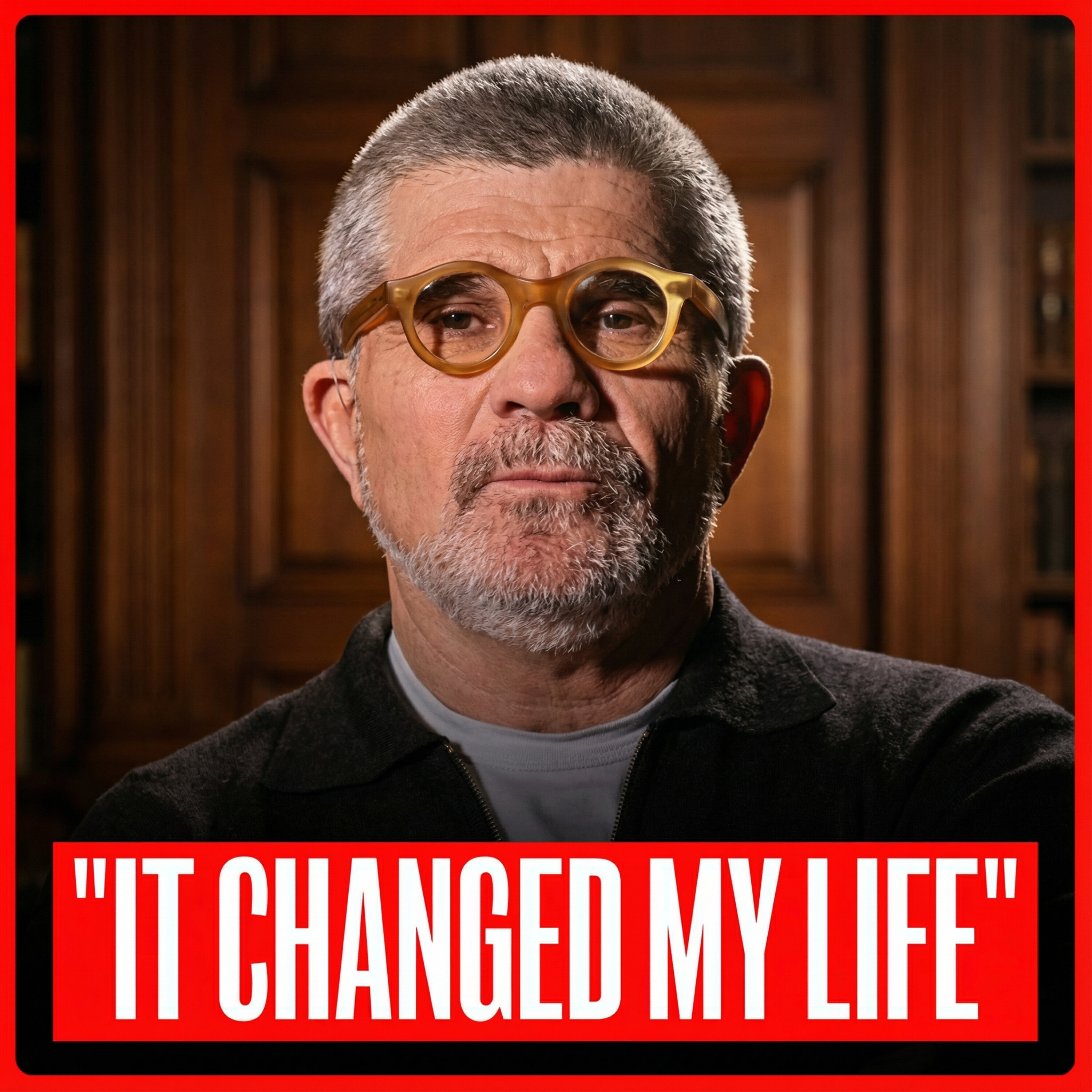
In this episode of The Daily Stoic, host Ryan Holiday engages in a profound dialogue with acclaimed writer and playwright David Mamet. The conversation explores themes of craft, discipline, courage, and the principles of Stoicism, providing insights into the creative process and the complexities of human nature.
Written by AI. May contain mistakes.
Discussion on Epictetus's philosophy about control and life roles.
“And on Wednesdays, we talk to some of our fellow students of ancient philosophy, well-known and obscure, fascinating and powerful.”
Overview of David Mamet's career and his connection to Stoicism.
Mamet discusses the importance of courage and the role of actors.
“and you can check out his new novel, Some Recollections of St.”
Exploration of audience interaction and the actor's role in performance.
“And they say, I have to prepare to say the lines in a certain way, right?”
Explore the dynamics of performing in front of an audience and the lessons learned from their reactions.
“The other thing is that now in this wonderful plague of the computer age, people want to stake their happiness on the display of a little number in the screen.”
Discuss the sensitivity artists have towards public perception and the resultant alienation they may feel.
“And then so the irony or the curse of that is you're then perpetually looking for a kind of validation.”
Examine how prominence influences public perception and leadership, as well as the nature of power.
“And Tolstoy makes this point in the epilogue to War and Peace.”
Understand how first impressions shape perceptions and the challenges in changing ingrained ideas.
“Yes, and the scarcity of it is what creates the value, that very few people are that famous or are that powerful or have done that.”
Reflect on the historical purpose of storytelling in education and its decline in modern narratives.
“Yeah, I've been talking about this because I have young kids and I've just been sort of amazed at just how terrible most children's books are.”
Delve into the significance of the phrase 'What hinders you?' and its application in life and performance.
“That's livemomentous.com, promo code dailystoic.”
Discussing the complexities actors face and how simplicity can enhance performance.
“But so Stanislavski says you can't ask an actor to do anything more complex than please go over there and open the window.”
Using stoic principles to reflect on personal behavior and motivations.
“And the third thing is, why do I always, right?”
Debating the nature of character and how it relates to actions and love.
“And therefore, I'm going to make an assessment of the guy's character.”
Examining the complexities of human behavior and drama through philosophical insights.
“Well, you know, somebody said, what choice did I have?”
Exploring Seneca's insights on playwriting and the nature of storytelling.
“Ives because it's a book about stoicism.”
Discussing the importance of experiential learning versus traditional education methods.
“And then he writes this in one of his things, he's like, but one of the things that I learned being a playwright is that the audience will forgive a bad play if you give it a good ending.”
Critically analyzing the flaws in the education system and its impact on society.
“And so this is where he gets his real education as a painter is in the army, you know, sort of marching under the beating sun in North Africa.”
Explore the impact of teachers and the education system on students.
“The question is, Dave, you and every other motherfucker in the West has been abused by the education system to some extent.”
David Mamet shares his transformative educational experiences in Chicago.
“I went to the Chicago public schools and the teachers had been born in the 19th century and it was all lined up and sit down and shut up and blah, blah, blah.”
Questioning the effectiveness and purpose of current educational practices.
“You know, the question that kids ask is like, why am I learning this?”
Discussing the historical patterns of demagoguery and its relevance today.
“and that you understand that this is not a text you're supposed to read one time, but something that you're supposed to read and reread and evolve with as you evolve and grow yourself.”
An exploration of the founders’ insights into human nature and governance.
“And you see demagogues, whether you're talking about those in Greece or Rome or in the Middle Ages or in the Great Depression, they sort of tend to tap into the same forces and have the same kind of energy.”
Examining the importance of duty and responsibility in modern governance.
“And so, you know, I think the average age is like 35.”
Explore how the Constitution embodies duties and obligations in governance.
“And so that's what the Constitution is a much more Old Testament than a New Testament document.”
Discuss the waning sense of duty and responsibility in contemporary society.
“Well, it's missing in every world, right?”
Examine the Stoic perspective on life’s inherent struggles and disappointments.
“One of the knocks on the Stoics is like, oh, it's a little they're a little depressing, you know, and it's like the life is fucking depressing.”
Analyze the addictive nature of news and its impact on our mental state.
“News is always inciting us to want more news because it gets us mad and it gets us frightened.”
Discover how engaging in enriching activities can alleviate self-obsession.
“And I was going, oh, weep, weep, weep the world.”

Get the gist, explore an idea or ask about something said.
 Claude
On The Daily Stoic, what are the key points of this episode?
Searching your listeningAutomatic transcript. May contain errors.
0:28We always recommend Shopify.
0:36Welcome to the Daily Stoic Podcast, where each weekday we bring you a meditation inspired by the ancient Stoics, a short passage of ancient wisdom designed to help you find strength and insight here in everyday life. And on Wednesdays, we talk to some of our fellow students of ancient philosophy, well-known and obscure, fascinating and powerful. With them, we discuss the strategies and habits that have helped them become who they are and also to find peace and wisdom in their lives.
1:21Hey, it's Ryan. Welcome to another episode of the Daily Stoic Podcast. You can tell my voice is mostly back to how it was. We're all recovered over here for the most part, which is good. The famous line from Epictetus, you've heard me talk about it before. He says that we're actors in a play. We don't control the role. We don't control the timing. We don't control what lines we get, but we control how we play the part, right? We control how we say the lines we control, whether we play our role well. I think this is Epictetus looking at a world where he's a slave and Seneca is Seneca, right? And you could argue that, sure, society has made some progress since we have more agency, we have more freedom, individuals are more empowered, and this is all wonderful.
2:12But the same fundamental reality exists, which is that we're not in charge. things are happening. We're not the playwright of our reality, right? We are not the director of the universe. And so it comes down to how we respond, how we play the role we've been assigned in life. And this quote is actually what I wanted to open my conversation with today's guest with, David Mamet, one of the most influential playwrights and writers of the last half century, You won a Pulitzer Prize for Glenn Gary, Glenn Ross. Actually, I remember when I started in Hollywood, my boss sent me that famous scene from Glenn Gary.
2:51I don't know what that says about my boss or about where I was working, but it was my first interaction with his work. I've read a bunch of his novels. I've seen a bunch of his movies. Actually, the first movie premiere I ever went to in Hollywood was a David Mamet play. I saw this movie he did called Red Belt. Got to walk the red carpet. There's a whole cool other part of my life that I don't talk about too much anymore, but it was fascinating. And as it happens, he is a fan of the Stoics. You see little mentions here or there in his writings, including in the new novel that he did. I saw this great interview where he was talking about the Stoics' porch guys, like guys that sit on their porch and shoot the shit, which is an interesting, very Mammoth-esque read of the Stoics.
3:37And I guess it's literally true. And, you know, again, you always get a different perspective on something you're interested in when you talk to a different person. And that's one of the reasons I wanted to talk to David Mamet today. You have almost certainly seen some of his works over the years. He's written and directed films like House of Games, Spanish Prisoner, Heist, The Verdict, The Untouchables. He did that HBO film about Phil Spector with Al Pacino, created the TV series The Unit. and he's published a bunch of nonfiction books on writing, which I've read. And then he has this great novel called Chicago, which I loved.
4:12And he has a new novel called Some Recollections of St. Ives, which is really good too. In today's episode, we talk about courage and restraint, why just saying the words matters more than overthinking, why he thinks talent is overrated, and what stoicism looks like when it's actually lived instead of admired from a distance. I don't agree with David Mamet on a lot of political stuff He's an interesting, somewhat crotchety fellow Just a couple days before we filmed this interview He stormed off the set of one interview But I like talking with people who are great at what they do People who see the world differently People who are iconoclastic and uniquely themselves And he is certainly that You can follow David on Instagram at David Mamet You can check out his latest film, Henry Johnson On Apple TV, Prime Video, or YouTube and you can check out his new novel, Some Recollections of St.
5:03Ives. I hope you enjoy this episode.
5:07Well, I'm excited to talk. In another life, I was an assistant in Hollywood and my boss, on my first day, he made me read What Makes Sammy Run? And then he made me watch the scene from Glengarry Glen Ross. He may have been missing the actual point of both that book and that scene, but it was supposed to be motivational, I guess. One of you guys was missing the point of the scene, you say? I think he was missing the point of both the scene and what makes Sammy run, which is supposed to be a cautionary tale, not a motivating tale. Yeah, yeah, maybe. So across the desk from me was Eddie Bernard, who is the guy who connected us.
5:45And I remember the first movie premiere I went to was the premiere of Red Belt at the Egyptian theater. Oh, great. Yeah, that's a good movie. Yeah, it was a surreal experience for me because I've been a fan for a long time. But anyways, I'm excited to chat. There's a quote from Epictetus, who I know you like, because many years ago, actually, at that job, I read Bambi vs. Godzilla, and you have an Epictetus quote in there. But whenever I talk to actors or directors, I give them this quote from Epictetus, and I'm curious to hear what you think. He says, keep in mind that you're an actor in a play that is just the way the producer wants it to be.
6:24If it's short, if that is his wish, or long, if he wants it long. If he wants you to be the part of a beggar, see that you play it skillfully and similarly. If the part is to be a cripple, or an official, or a private person, your job is to put on a splendid performance of the role you have been given. Yeah, that's great. How does that strike you as a writer and a director? Because I think most people are taking that quote from the perspective of an actor, which we all are in the sort of role of life. But how do you think about that as a person who is often giving people the lines and the roles they have to play?
6:58Well, there's some wisdom in what he said. It's insufficient because actually what the actor has to do is show up and say the stupid fucking words. So that which they call talent and that which the critics call talent and the award people call talent is generally embellishment, which is unneeded. Because if the script is good, it doesn't need an embellishment. If the script is bad, embellishment is not going to help it. So what the actor actually needs is courage. And it's actually a stoic philosophy to just say the stupid fucking words. what is the one thing that you can't change the words what is the only thing that you need is the words to stand up as cad cadney said hit your mark look the other guy in the eye and tell him the truth will be sufficient what actors don't realize is that the difference between what's coming out of their mouth and what they feel which is always no no this isn't right actually is the play it's been engendered in them by the play.
8:04They say, I can't play Hamlet because I just, I don't know what I'm doing. I can't play Othello because I'm just so fucking jealous of this other guy, you know, whatever. Because the words themselves will awaken whatever may be needed in the actor. The actor doesn't have to do anything about him except say them clearly. And that's why a lot of actors won't speak clearly. So the courage is in sitting with the discomfort or the courage is in ceding the control to the playwright or the author, so to speak? It's both saying, what's your job to stand up there and speak clearly to the other guy? And you don't have to do the play.
8:44You don't have to act the play. You don't have to act the character because there's no such thing as the character. There's a guy standing up just saying some words. If you do that, that's going to awaken something in him, which will be a new thing to deal with. So most actors, they're trained by people who don't know what the fuck they're doing. And they say, I have to prepare to say the lines in a certain way, right? But if you ask them that, they would say, no, that's ridiculous. It's not that I have to say the lines in a certain way. It's that I have to realize what the character might be feeling at that moment so that I can say the lines in a certain way.
9:21Well, then maybe the other virtue here is the restraint to not overthink and to simply be in the moment of what you're doing, which is in some ways a harder thing to do than to feel. Well, of course it is. The perfect proof is the rehearsal process. You don't have to rehearse a play for four months, right? You have to learn the lines and do the blocking, get up on stage, and the play will be clear. And we know this because if you see something done in Summerstock, which we all used to do Summerstock, you got the script on Monday, you put it up on Friday night. You didn't have time to fuck around and say, where do you think this guy went to college?
9:57And it was not only just fine, it was much better than the people who, in effect, prepare the thing in front of a mirror. as, you know, they used to say they did in the old vaudeville days. But instead of preparing it in front of a mirror, they prepared in front of the mirror, if I may, of their own fucked up consciousness, right? In the ancient plays, you're not even you, right? You're wearing a mask. And so there's probably something simpler there where you are just saying the lines because that's the whole thing. There isn't this sort of disintermediation of inserting this person who is pretending to be this person because the mask is wearing a lot of that weight.
10:39Well, one of the wonderful things about performing in masks is that one understands what's happening in the actor without the face, that there's something ineluctable in the performance. That's just where did that come from? We don't know, but there it is. It's kind of great. Yeah, I was just in Greece and I saw like an Aeschylus play and a Euripides play. and with the traditional mess. And it was a very different experience. Even when you're watching a man play a female role, for the first few seconds, there's the suspension of disbelief, but you turn yourself over to the language almost immediately, almost like watching a movie with subtitles where you're not hearing the dialogue and you're just reading.
11:23The mind can do it pretty quickly to get lost in just a different format. Well, that's so true what you said. For example, if you go through television and you kind of scroll through what's on the air on television, you can turn off the sound and you can see what's happening between the two people immediately. But what's happening between them generally is narration. They're explaining either what they feel or explaining something that happened offstage, right? Which was explaining the play to each other because that's what the people who fund and choose the entertainments understand as entertainment.
11:58How will they know? I have to make sure they, the stupid people, understand. Yes, yes, that's right. So what I've always taken the Epictetus quote about, you know, sort of we're all actors in a play. I think it's true in more ways than one, right? So you're the actor in a role. You didn't control the dialogue. You don't control how the director's blocking the shots. The director doesn't control the marketing budget and how the studio puts the film out. You don't control what the audience is going to say about it. You don't control what the weather is going to be or world events are going to be when it comes out.
12:38All of our roles are relatively circumscribed, not just in something like the movie business, but all of us in life. And when we sort of really winnow down our responsibility to what's actually being asked of us here, it creates a different opportunity for not just, I think, a kind of contentment, but also a different form of excellence. because you're not trying to do everything all at once. You're just trying to do your fucking job. Well, yeah. Yeah. The safe piloting an aircraft comes down to what now, what next, what if. Yes. And the restraint even probably of modern piloting of where autopilot is doing a good chunk of it.
13:16And primarily your job is to not crash the plane by intervening when you shouldn't intervene. Yes. That's always a bad idea. So I remember the quote, I folded it when I first read it, but the quote you have in Bambi vs. Godzilla is about, you know, how do we accept the response of the audience? Epictetus, you quote him here, he's saying, who are these people by whom you wish to be admired? Are they not the same with whom you are the habit of saying they are mad? What then do you wish to be admired by the mad? It is crazy. I think the Stoics point this out time and time again, how much we seem to want the approval of people whose approval is meaningless to us.
13:57Like we want the approval of people we don't respect. It's madness. Yeah. The other thing is that now in this wonderful plague of the computer age, people want to stake their happiness on the display of a little number in the screen. There's nobody there. How many people like me? There's nobody there. Listen, there's two things in show business. One is the relationship with the audience. And the audience is pretty smart. In fact, Billy Wilder said they're a genius. The audience is a genius to collectively and individually, they're idiots like you and me. There's the connection with the people in the audience.
14:36And the way you learn to perform is in front of an audience, because if you're not in front of an audience, everything is moot, right? But if you are in front of an audience, you get corrected right now, just like boxing. You know, you can study forever, but you get into the ring with someone who wants something different and you're going to learn something, right? It's no longer moot. And it's the same thing with an audience. You're playing to an audience, you can say, oh, this worked, oh, that didn't work. And if your paycheck depends on figuring out why it didn't work, you'll figure it out or you'll get out of the business.
15:08The other thing is dealing with the audience in a removed situation. For example, right, having a talk back after the play or meeting a fan on the street or et cetera, et cetera. It's always heartbreaking because one realizes, as the artist, that there is no connection. That the great compliment the audience paid you is having a human connection with your performance, right? And so they and I and you feel like we know that person. We'll come up to them at a bar when they're having a screaming fight with their boyfriend and say, you know what? I hate to interrupt the bot, right? So the people who are fantastically successful in show business, for example, they all want to be liked as they all want to be liked.
15:55And their income is to a large extent based on how many people like them. But they spend so much of that income insulating themselves from regular people, not because they're particularly standoffish or egoistical, but because they can't fucking stand it because there is no connection there. Yeah. Well, what draws people primarily to the arts is a certain sensitivity, I think, or a certain attunedness to what's happening in the world, what's happening in people around them. And then so the irony or the curse of that is you're then perpetually looking for a kind of validation. You're going to be sensitive to criticism.
16:34You're going to be wondering what other people are thinking. and then there's also kind of an alienation, I think, that comes from making things that people consume. You're making it for yourself, but then at some point you're kind of flinging it to the public and you've already moved on to the next thing while they're interested in what you've done or who you've been. Yeah, well, you know, as Shakespeare said, we this way, you that way. that's great risk. That's great wisdom. There's really nothing there any more than there would be between coming up to a great thoracic surgeon at dinner and saying, you know what?
17:13Gosh, I'm so thrilled by what you did to my aunt Agnes over there. Where do you get your ideas? Right? Yeah. And like you see it with athletes too, you know, after the game, they go, you know, so where does that come from? Or how did you do that? What were you thinking? And the answer is they weren't thinking anything at all. They were doing their job. They were locked in in the moment. So there's also this kind of alienation that I think you experience in any kind of elite performance where there is a kind of an otherworldliness quality to it. Like when you really get it right, obviously it's you that did it, but there's some part of you that you're not regularly accessing that came from it or it wouldn't be so extraordinary.
17:56I don't know if you agree with that. Well, of course I do. But there's something else about prominence. And Tolstoy makes this point in the epilogue to War and Peace. Everybody should read War and Peace, the best book I've ever written. It's a real page turner. He says, what is power? Right? He says, the savage sees the pups of the railroad train and then hears the woo-woo-woo chugga-chugga and then sees this big locomotive. So the savage thinks, obviously, since I saw the puffs first, the puffs were causing the railroad train. And he says the same is true of Napoleon. He says, why would five million Frenchmen march into Russia?
18:36Right. Because this one guy said so. No. On the other hand, there is such a thing as a personal power of the mass. What is it? And I think that's a question that we're all looking at today when we see some people. and on your viewership is free to determine the side that they loathe, who have nothing other than prominence. I mean, people who you wouldn't hire to take out your trash, who were running for huge public offices because they're prominent. How did they get prominent? Fuck, I don't know. But there they are. And so because they're prominent, those people, and you and I, tend to imbue them with superhuman qualities, Whether your side of the aisle, in which case you're superhuman good, or the other side of the aisle, in which case you say they're monsters, right?
19:25When they're just prominent. We just saw them first. Yes, and the scarcity of it is what creates the value, that very few people are that famous or are that powerful or have done that. And then it becomes sort of its own motivating force. Yes. Also, we tend to believe, all of us, what we heard first, right? And I was talking to a friend of mine who's a retired career cop, and she was talking about that. She said, if you ever get in a position, God forbid, where the cops have to show up at your house, be very careful what you tell them because they're going to believe what they heard first. and to get that idea out of their mind is going to be difficult.
20:08And it occurred to me the same thing is true in jokes. For example, the old joke about these missionaries are caught by the cannibals. The cannibals say, well, you know, you shouldn't be missionizing here, so we're going to give you two choices, death or kiki. Everybody knows this joke, right? They say to the first guy, what do you want, death or kiki? He says, I'll take kiki. So they shaved him. They cut off his ears, they paint him blue, and they sodomize him. Then they turned to the second missionary and said, Okay, I have two choices. What do you want, death or kiki? He says, I'll take death.
20:43They say, Well, you shall have the death you desire, but first kiki. So I told that joke to some guy going, I said, Kiki, but first kiki, and I heard him mumbering, Yes, but first mongo bongo, but first mongo. Because that was the way he heard this joke the first time, right? But whether it's mongo, gongo, or kiki makes no difference whatever to the joke. Nonetheless, he was inspired to remember that I told the joke incorrectly. So that's the primogeniture of the idea. When you put that idea in a kid's head, you know, as a young kid, it's going to be difficult to get that idea out of their head.
21:21And what's even more difficult with kids because they don't realize that they've received an idea. Yeah, I've been talking about this because I have young kids and I've just been sort of amazed at just how terrible most children's books are. You know, they're funny or they're cute or they're absurd, but there actually is no sort of lesson there. Right. And that the sort of purpose of stories in the ancient world up until actually relatively recently was to sort of tell these stories over and over again to sort of inculcate the values that society was supposed to be built around. And so, yeah, you hear these ideas over and over and over again as a kid, and they sort of become true.
22:02The stories that we tell in art and literature and movies and plays was supposed to be around repeating the same values and to watch people wrestle with those values, sometimes living up to them, sometimes falling short of them. But that was always the purpose of stories, I felt. Well, it still is. And that's the purpose of dramatists, right? It's not like, because drama in movies and TV and the stage has really become like the bad children's book. It's the regurgitation of ideas, which someone thinks might be acceptable. but it's not entertaining because when we hear the bedtime story we go to the movies we want to suspend our disbelief as you say and be taken out of ourselves because that's the real benefit we're taken out of ourselves rather than being forced back upon our prejudices so you can get people to stand up and scream about anything right because at the end of a play because they We enjoy the stand-up and scream, yay, yay, yay.
23:02But the real task is to take people, they say, a person rises refreshed from prayers, his prayers have been answered, to give them something that took them just like the kid's bedtime story. Well, you can say you can't tell the kid the bedtime story about it, and then everybody is eaten by a big, that scary wolf. But of course you can, right? Because, okay, so I get it, I get it. Well, I really paid attention to that, rather than telling the kid. And so what education has become in this country is a corrupt and obscene version of the bad bedtime story. I'm going to tell you everything that some educator, whatever they are, figured would make you into a better person.
23:43Right. But it's not the job of education to make people into better people. It's the job of fucking teaching something.
23:55Today's sponsor is Chime, the fee-free banking app changing the way people bank. Chime is not just another banking app. They unlock smarter banking for everyday people with products like MyPay, which gives you access to up to$500 of your paycheck anytime and can get you paid up to two days early with direct deposit. No more overdraft fees, minimum balance fees, or monthly fees. Plus, Chime makes your everyday spending work harder by delivering real rewards and financial progress. I know my younger self would have benefited from this. There was so much to manage, and I was so busy, you know, working on my career and trying to do all the things I was trying to do.
24:39I didn't want to have to think about overdraft fees or my minimum balance or how much is in my checking account. I didn't want to take time from what I was doing to transfer money from this account to that account. It would have been so convenient to have it all in one place accessible on my phone. If you want to bank fee-free plus overdraft coverage, you should switch to Chime. Plus, you can earn up to 3.5 % APY on your savings. That's eight times higher than a traditional bank. Chime is not just smarter banking. It's also the most rewarding way to bank. Join the millions who are already banking fee-free today.
25:14It takes just a few minutes to sign up. Head over to chime.com slash stoic. That is chime.com slash stoic.
25:44Just this morning, as I do every morning, I was taking the supplements that I take. And if you're not taking any supplements, well, January is a good time to think about doing that. Choosing the right supplements can be confusing because there's so many brands and, you know, it's kind of a low trust category. It's not super regulated. The products are easy to make and the companies don't even have to say everything that's on their label. That's why we are happy to work with Momentus and why I take their supplements. they'd become a high trust brand in a low trust category. They don't just meet the industry standard.
26:20They built the Momentus standard, which is their commitment to doing things the right way, not the easy way. Momentus sources only the highest quality ingredients on the planet. Their whey protein comes from grass-fed European dairy cows. Their creatine uses the purest form of creatine monohydrate. And nearly every formula is made with clinically backed, highly bioavailable nutrients with no fillers and no artificial sweeteners. My wife is like allergic to everything. She's very sensitive about what she puts in her body and what she doesn't. And she loves their stuff too. If a product doesn't meet the Momentus's standards, it doesn't hit the shelves.
26:57In a space where trust is rare, Momentus is redefining what trust looks like. And right now, Momentus is offering our listeners up to 35 % off your first order with promo code DailyStoic. Head over to LiveMomentus.com and use promo code DailyStoic for up to 35 % off your first order. That's livemomentous.com, promo code dailystoic.
27:19So do you remember when you were taught the stoics? How did you come to find stoicism? It's a long time ago, and I don't remember, but I've always adopted the principles as simple as possible, right? So I used to put on the engrave on my watch, what hinders you? And I I started using those principles very, very early on when I started forming theater companies and acting schools and say, wait a second, what's actually going on here? What's the scene actually about? And what can the actor actually do in the scene? And Stanislavski would say, you can't tell the actor to remember your childhood, because when you say some remember your childhood or what does this make you think of?
28:00Their first response is, oh, right. They stop. OK. Yes. But so Stanislavski says you can't ask an actor to do anything more complex than please go over there and open the window. So that was a whole phrase that changed my life. Oh, OK. I cannot ask the dog. Being a human being, I realize I can't do anything more complex than open the window. The actors are human beings. They can't either. So what are we left with? What's the scene about? What's the one thing that the actor wants in the scene? Ask the actor to do that and then throw the rest of the stuff out the window. So why did you engrave what hinders you on your watch?
28:39What did that mean to you? It occurred to me, as the Stokes would say, that anything, any sentence that becomes what I wish is a proclamation about something that's never going to happen. Oh, and the other one is, you know, I really should. So this becomes more important to me as I get older. I find myself saying, oh, I really should. And I realized that not as a way to revel in my, oh, weep, weep, weep, how great I am because I'm no fucking good, but rather it's a prompt, right? And the third thing is, why do I always, right? And I realized that from trying to apply the stoical principles. But if you say, why do I always, that's another way to reward yourself for not doing anything.
29:22If you state it as a question, not why do I always, well, there's no answer to that, but you state it as I always, right? Rather, oh, why do I always pick the wrong girl? You state it as I always pick the wrong girl. And then you can ask, why do I do that? Is that what I want to do? What would I rather do? And what are the things that would change my behavior? And the reminder of that what hinders you to apply the stoic idea would be that actually what's getting in your way is the way or is a kind of opportunity. That's what the reminder is for you? No, you have to give it a name, right? What is actually stopping me?
30:00If I can name it, I can address it and I can perhaps defeat it. But if I can't name it, if I say I'm going to go to some fucking therapist an hour, five hours a week for 85 years, right? Obviously, a standpoint of a guy in space. What are you doing? You're enjoying yourself with a therapist, right? What are you calling it? You're calling it, quote, getting better. What does getting better mean? Well, I can't quite describe it, but. I've heard you say that you don't think there is such thing as character, that you sort of believe in the Aristotelian sense that we just are what we do. Well, that's true.
30:36I wrote that about the theater. There's no such thing as a character. It's just lines on a page. Right? You say, where did the guy go to school or what might the guy, there's nobody there. It's just you. But the same thing, as Aristotle says about people, character in general is simply, I saw what the guy did. And therefore, I'm going to make an assessment of the guy's character. Right? I got enough information. I can make a pretty good assessment upon which I can base future decisions. Someone told me once, like, there's no such thing as love. there is only loving actions. Yeah, no. You don't believe that?
31:15No, I know there's such a thing as love. Then wouldn't there be such a thing as the character? If the idea is it's lines on the page or it is what you do, can't we say the same thing about love? Like you can say you love someone, but if your actions run contrary to that, do you really? Does it really matter? If your actions are contrary, it's not love. Like somebody that we have this terrible concept that we came up with 80 years ago called hate crimes, right? But what are love crimes? I guess we're getting far afield, but I would agree there's no such thing as a love crime, but there is a crime motivated by pure financial interest and then a crime rooted by a specific hatred for a specific group, no?
31:53Well, what difference is that to the victim? There's no difference to the victim, but there's a difference to society in how we might treat this person, whether they could be potentially rehabilitated or whether they need to be locked up and kept from other people like that? Well, no, because that's why we have laws, because the idea of the law is what is prohibited? Did the person do it? What is the penalty for having done it? Because you can explain away their motives forever. There never was a young kid brought into court whose mother didn't show up and say, Johnny's a good kid. That's what they do.
32:31So instead of the mother, you've got a lawyer, as you used to say, a liar whose job is to come and explain why what you saw actually didn't happen or what they did actually wasn't. They didn't do it on purpose or it was some other guy. Right. So the problem is everything becomes, as my father would say, purely suppository. Interesting. Yeah. You seem to have a very kind of black and white worldview. I've always seen this in your interviews and in your plays. I mean, even your point about just say the fucking line or, you know, there's no such thing as a hate crime. Do you find that that people make reality too complex and you're you sort of go towards simplicity or how do you think about that?
33:11Well, you know, somebody said, what choice did I have? Nobody ever says, what choice did I have other than in this situation? Well, they did have a choice, but they don't want to face it. Right. So I'm interested in the theater and in drama and how people act. So that being the case, I'm interested in how I act, right? Am I a good person? I don't think particularly so. Am I better than anyone else? I don't know. In some places, yes. And in some places, no. But I would like to, if I were a better man, apply the same strictures to myself that I'd like to apply to others. Well, why did XYZ do that?
33:50Okay, Dave, don't you do it. Have you always just found yourself fascinated by what makes people do what they do? Or are you fascinated more in the rhythms of how they communicate and present themselves to the world? Or is it some combination of the two? That's a very good question. There are two things. I've always been fascinated by what people do because I didn't understand what they did. And I grew up, I guess, with a sense of wonder because people were doing some crazy fucking things around me. And it was called human beings. And the other thing was that they kept telling me I didn't understand because I didn't, right?
34:30But so I was given over to one of the great joys of life and one of the great joys of childhood, which is daydreaming. So we've taken that away because of these devices. And there's a great piece in Anna Karenina where Karenin is trying to correct his son, Stepan. And he's trying to teach him about a verb and an adverb, right? And the kid is looking out the window and he's daydreaming. And Karenin's getting very mad at his son. We have to learn the difference between a verb and an adverb. And the kid is looking out the window and he's looking at a bird. He's thinking, wow, look at that bird on a tree.
35:09the shape of the sitting bird absolutely mimics the shape of a leaf what kind of a world is it the creator of this world has adapted how did that what and the kid is thinking these incredibly deep things which is what daydreaming is right and crayon comes over and he whacks the kid so i i was that kid i don't know if you got a chance to read that book saint ives did you i haven't read saint ives yet but i love chicago that's one of my favorite novels No, thank you. I'm very proud of that. I think you're going to like St. Ives because it's a book about stoicism. It's an imagined memoir of a prep school, and it's my imagined vision of a perfect school.
35:52There's a teacher and a student on a board for them to sit on. I'm proud of it. I don't think I've ever said that about anything before, but I'm really proud of that book. Well, you have a line in there about the Stoa. And I think you've said this before that not everyone knows that Stoa just means porch. And you say the Stoics are porch guys. that they're sort of vision. Zeno is this guy, and I was just there at the Stoopo Kule, that they're just sort of sitting on this porch, this long marble hallway supported by columns, you know, under some paintings, and they're just kind of shooting the shit about life.
36:26You know, we tend to think of philosophy as something, I don't know, much more abstract and theoretical and highfalutin than that. But it's really just people talking about why we do what we do and does it need to be that way? Is there a better way to be a person in the world that's slightly less frustrating and aggravating and miserable? Yeah, because dealing with actors and dealing with, dealing with the audience, it's all, does it work? Does it not work? What are you trying to do? What's the scene about? Am I getting to it? Do I need this line? Is the audience beating me to the punch? Do I need another line?
37:07Does the scene work? What's wrong with the fucking play? And it always comes down to what is the objective of the protagonist. Everything which is not the objective of the protagonist, you got to throw it out. Have you read any of Seneca's plays? No, I don't think I've read the plays, no. It's fascinating that, you know, one of the great Stoic philosophers who's also, you know, sort of trapped in this dysfunctional relationship with Nero, who's losing his mind, is also like a famous playwright. And I sometimes think about what Seneca must have thought about releasing things to an audience, you know, and he says that like, because he sort of does go sideways, you know, he gets caught up in Nero and he gets corrupted and, you know, is complicit.
37:54And then he writes this in one of his things, he's like, but one of the things that I learned being a playwright is that the audience will forgive a bad play if you give it a good ending. And Seneca has this sort of magnificent ending where Nero demands his suicide and he sort of goes out bravely. And so Seneca, for thousands of years, has been admired as this philosopher, but also proves this point that, you know, you can fuck up the middle, but if the beginning and the end are pretty good, the audience will stay with you. Maybe. I mean, here's the thing. When the lights go down, you have their attention, right it's yours if you can keep it for that first moment the question is can you keep it for the second moment and the thing about the second act is an old joke guys are sitting around in new york off broadway at a theater and one says how's your play and he says i'm having second act problems everyone starts to laugh because everybody has second act problems because the whole point of the second act is a problem which the protagonist cannot figure out he spends the first act trying to figure out the problem as he understands it.
38:59And at the end of the first act, he turns away says I was completely wrong. I don't understand the problem at all. So the second act is in the belly of the beast, as Joseph Campbell said. What in the world is going on here? So it's very hard to figure your way out of that as a writer, because what you're going to figure out, if you can stick with it, is your position is the same thing as the protagonist you have misunderstood the play. Yes. And the wrestling with what the motivations are and how they're going to get through it, that's the whole thing. You can set up an interesting premise and you can come to a satisfying conclusion, but the why is really what haunts us.
39:40And I do think that's the interesting thing about Seneca. There's a fascinating book by James Rahm, who's a professor at Bard, about Seneca in his time with Nero. And I find it endlessly fascinating that this guy who writes this beautiful philosophical writing, believes in these principles, would spend so many years working with this deranged brute who's trying to murder his family and whatever. But that is, I guess, ultimately what makes drama interesting, the infinite complexities of people and why they do what they do. Well, yeah. So that's the task of a director. Nobody knows how to direct a play anymore.
40:19I mean, there may be some, but I haven't met them. Because it all comes down to throwing away everything, which is not the task of the protagonist to obtain a specific goal. Because the audience might go along with it, as they do in movies, because they've got two people pretending to have intercourse, or two guys shooting each other with guns. Try to keep people, in effect, reducing all film to pornography, because you got to give them a treat once in a while to keep their attention. And somebody said to Betty Davis, you have to sleep with guys in order to get ahead and show business. And she said, yeah, if you don't have any talent, right?
41:01The story you told about, you know, the student who's being lectured on words when they're looking at it in nature. I have a story in the book that I'm just finishing about Monet, where, you know, he falls in love with painting. He has this talent. He wants to be a painter. And so his parents try to send him to this fancy painting school. And instead, he gets drafted into the French army. And they try to use this as leverage. They go, you know, look, we can buy your way out of the army if you agree to go to school. And he's like, no, no, the army is exactly where I want to be. He wants to be sent into an African regiment because he thinks the light in Africa is going to be incredible.
41:38And he'd been particularly influenced by Delacroix's paintings, a lot of which he'd done in Africa. And so this is where he gets his real education as a painter is in the army, you know, sort of marching under the beating sun in North Africa. It's this weird impulse we have with education that we try to sort of sit at your desk, shut up, do the stuff, when maybe that's not actually where we're going to learn the things we need to learn. And that's what I like about the idea of the Stoics just sort of sitting on the porch shooting the shit. Yeah, I met a couple of great teachers and very fortunate to meet a couple of magnificent teachers in my life that changed my life and changed the way that I, because to a certain extent, my life, I spent 50, 60 years as a teacher.
42:29The question is, Dave, you and every other motherfucker in the West has been abused by the education system to some extent. Yes. Whether that was physically abused, sexually abused, mentally abused, or just bored the fucking Flinders. Why is everybody sitting on their ass listening to some fool read from an electric plan? and so i thought a lot about you know as we see the california over here is that the taxes are obscene and what are they being used for god knows but we got the worst schools in in the country so i thought a lot about teachers lately in fact i wrote a play about this called oleana and so there's this professor who's trying to do good and this young woman was trying to understand what's required of her and they end up killing each other it's a classical tragedy right they're both trying to do good and they both end up destroying each other.
43:23So the question is, what are we doing for children? Did you feel like you had a good education? Well, I had a terrible education. I went to the Chicago public schools and the teachers had been born in the 19th century and it was all lined up and sit down and shut up and blah, blah, blah. And I failed every course because I just couldn't, wouldn't study, wouldn't do it. just spoiled the fuck out of me then by accident when i was 13 14 i went to this great school in chicago a private school called the francis parker school which at that time spectacular because several of the teachers had been holocaust survivors i'm talking about in the 60s who got out under hitler and these were people who had multiple doctorates from the universities of europe and they came to Chicago and they couldn't get work because they didn't have a teaching certificate.
44:18So the Francis Parker School hired them and I worked with some of those teachers and they changed my life. One of the ways they changed my life is they said, you know, you're actually really smart. They didn't say you're really smart, but although I was failing the courses, right? Sure. And one of them said a hole in Latin grammar is like a hole in your shoe. Fix it.
44:49Look, your body has this performance superhighway. That's the 60 ,000 miles of blood vessels that deliver oxygen and nutrients to every cell. This is your cardiovascular system. Maybe you learned about this in school or on an episode of The Magic School Bus. But it's the foundational system that powers everything we do. And elite athletes and longevity experts, they invest directly in their cardiovascular system since healthy blood flow is critical for energy recovery, mental clarity, and performance. And that's where today's sponsor, Human, comes in. That's human with two N's. They actually started out here with some research from the University of Texas, and they have 15 years of experience making award-winning supplements for nitric oxide production and healthy blood flow, which is now used by over 160 pro and college sports teams.
45:41Just two capsules every morning of the Human Cardiovascular Health Daily will power energy and recovery while also helping you play the long game by supporting long-term vascular health and healthy aging. Human has an exclusive offer for our listeners. Visit human.com slash stoic for an extra 15 % off your first purchase. That's enter code stoic at checkout. Human with two N's dot com slash stoic for an extra 15 % off.
46:13You know, the question that kids ask is like, why am I learning this? What's the point of this? and the impulse that we have to dismiss that question because we don't have a good answer is probably, in and of itself, the indictment of most of the educational system in this country. Well, the good answer is somebody who's interested in transmitting what Milton Friedman said. It's a heritage. He said, the way that we do things here is actually a communal heritage, right? We do this, we don't do that. It's a communal heritage. So that's what schools should be doing rather than, quote, good works, right?
46:54Because the question is, how can you take a kid and have him take French for four years and he can't order a cup of coffee, right? So that some people like the Waldorf schools or maybe like the Montessori schools, they say, you don't have to teach them to read, you know, let them come in when they're eight and they can learn everything that they need to know in three months, which of course they can. Yes, when they have a motivating reason for wanting to learn things, that's always going to be a more powerful force than discipline, structure, consequences, etc. It's always been interesting to me because I hear from lots of parents who'd be like, what's a good introduction to the Stoics for my 13-year-old or for my 15-year-old or my 17-year-old?
47:38How do I introduce my kids to these stuff? I'm fascinated by our impulse to find intermediary works and not to give them or encourage them or make them feel that they are capable of reading and understanding the classics. Right. Like 16 year olds in ancient Greece and Rome were were were reading the Odyssey and memorizing it. And we sort of baby our kids when it comes to ideas and books. We we need people to explain the things to them as opposed to giving them these difficult, imperfect, complicated, even violent and, you know, inappropriate texts and having them really wrestle with with those ideas.
48:24and that you understand that this is not a text you're supposed to read one time, but something that you're supposed to read and reread and evolve with as you evolve and grow yourself. Well, yeah. See, the great upheaval which we're experiencing in the West now, as it's basically the second or the third industrial revolution, where everything changed when the industrial revolution, steam came in and mass production came in, the people left the farms. So all of a sudden, everything changed. So then we have the second part of the Industrial Revolution, the end of the 19th century, people have left the farms, and they came to the cities for industrialization.
49:06And so now we see that that industrialization of the cities has died because of the internet. So the people are out of their fucking minds. The question is, to what can they recur? And the answer to most of them is fear and hatred. Yeah, these sort of ancient, timeless, sort of primal forces of humanity, the energy that's always there, sort of right beneath the surface. Yeah, sure. Because the people in Salem Village, right, 1641, that it was, were under constant threat of Indian attack. They were being savaged constantly. They just couldn't stand it, right? Drove them crazy. So they decided to start burning old women at the stake, right?
49:50That went along for a couple of years, and then they kind of forgot about it and said, okay. Well, the energy burns itself out a little bit, or things stabilize, and then you don't need the catharsis the way that you did before. That's right. So the same thing is happening now, except instead of old women, it's the Jews. But that's been happening for a while, so we're kind of used to it. Anti-Semitism being sort of the oldest virus that there is. Yeah, been around a while. And you see demagogues, whether you're talking about those in Greece or Rome or in the Middle Ages or in the Great Depression, they sort of tend to tap into the same forces and have the same kind of energy.
50:33It might change a little bit regarding what medium it's happening in or the person's individual style. But demagogues basically do what demagogues do. Yeah. So somebody says, Dennis Prager, he said, is the Torah about what's happening? He said, no, the Torah is about what's always happening. So the Torah, the Old Testament, is about human nature. The New Testament is about aspiration, but the Old Testament is about human nature. And that's where the Declaration and the Constitution come from, is people got together, and it wasn't an aspirational document. It was a how-to guide to keep human nature in check.
51:18Yes, it was looking at the sort of classical lessons of history and saying, hey, how do we encourage the positive forces in humanity and put up guardrails against the negative forces in humanity and set up an imperfect system in an imperfect world that's a little bit better than how we've done it before? Yeah. So if you see today, demagoguery is I know what to do. I'm better than everybody. You can be better everybody if you vote for me. And we're going to have some golden age if you just hate people I tell you to hate and give me your fucking money. But if you look at the Constitution, it was obviously written by guys who'd been around the block, who'd been involved in business and got cheated or perhaps cheated each other, or guys who got into X, Y, and Z.
52:09It's like hiring a safe quacker, right, to design your security system, right? I've always been struck by how young the founders were, right? And so, you know, I think the average age is like 35. It's not so much that they were incredibly personally experienced, although many of them were, but it's also that they had borrowed from, you know, 2 ,000 years of experience from the ancients and from the greats. I mean, I joke about this all the time, but the most famous play in 18th century America that the founders had seen over and over and over again, in addition to Shakespeare and all the others that they'd watched, was Joseph Addison's Cato, right?
52:48They watch this play about the Stoics so many times that most of the great lines in the revolution are them just cribbing from Addison in the way that somebody might say, you know, coffee is for closers or something today. And if you don't have a familiarity with the canon, you're not going to recognize that that's a riff. Yeah. But if you do, then you know what to recognize. Yeah, indeed. So, I mean, the more I look at the Constitution, the cooler it is. because somebody says, oh, well, this is going to be fine. The other guy says, no, no, no. If this was the law, here's what I'd do to circumvent it.
53:26Oh, dude, they say, okay, well, we got to take care of that. So I said that the Constitution comes down to this. One child cuts the cake. The other child gets the first piece. Well, and I do think, and we probably disagree politically, I do think the problem with where we are now is not any one person, but that the whole system was about a set of interlocking or interconnecting offices that were supposed to be dependent. The fundamental assumption of the founders was that each individual office or branch or representative would zealously assert their prerogatives, right? And that these would check each other.
54:09So look, again, you can think whatever you want about Trump. But we'd be in a very different situation if we had Trump and a strong Senate and a strong Congress. Like if we had a working legislative branch, it would relieve a lot of the pressure on the judicial branch. And it would also reduce the incentives for the president to be such a, you know, unitary executive. I think one of the weird parts about the moment we're in today to me is the willingness with which a lot of people who supposedly strived very hard to get the power they have seem to be willing to hand that power over to a charismatic demagogic figure.
54:49Well, I'm not going to ask you who you're talking about, but the question to me is looking at the current mess, which is called human nature, right? Yes. What the framers said is they said, here's how we're going to run our country. The question of government is not what's right. The question of government, the way you keep it limited, is you say, what's the law? Because our ability to determine what's right changes from person to person and changes over time. What you think is right now, you don't think it was 12, and it's not when you're going to think it was 80. And so this is really the difference between a Christian and a Jewish understanding.
55:32understanding because the christians say yes it was a great idea do unto others as you would have them do unto you right in the plural it's written very very very differently it says what is hateful to you do not do to your neighbor because i i might want to do unto others what i want to do unto me they might not like it right yeah it's not that i think i'm right all day long they know i'm right, just like you do, right? But I can restrain myself from doing what I know hurts me. And so that's what the Constitution is a much more Old Testament than a New Testament document. Yeah, it's a set of duties and obligations that you're supposed to uphold, even when you don't like it, even when it runs counter to your party interests, even when it's short-term.
56:21So I think, We're in a moment where it's like, hey, Congress apportioned this money. It has to be faithfully executed by the executive branch, even if they don't like it. If they don't like it, then they have to go through Congress to fix it. Right. That's how that's supposed to work. And I do think the founders perhaps overestimated or perhaps it says something about the modern world, that this idea of duty and responsibility, you know, that the idea, hey, I swore an oath or hey, this is this is the job of a lawyer. I'm supposed to protect my client, even if I think they're guilty, that there's this kind of, as you said, Old Testament, but also sort of classical sense of duty and obligation that I do feel is missing in the modern world.
57:05Well, it's missing in every world, right? Human nature doesn't change. Tolstoy, my guy again, says it's a mistake to say in these times as if human nature ever changed. Everybody's always looking for an out. And any law is going to have to be executed, if not with precision, perhaps with some restraint of conscience. And if you don't have that, it doesn't matter what the law is. Right. One of the knocks on the Stoics is like, oh, it's a little they're a little depressing, you know, and it's like the life is fucking depressing. What are you talking about? These were people who were exiled and had their families executed and lived through plagues and wars and disasters.
57:46There is something, I think, too, about the modern world where we expect everything to be awesome and wonderful. And that's just not what history is. well the problem with that of course is that as they say what the eye does not see the heart will not lust after so we're constantly seeing these images on these stupid fucking machines which one didn't see in the in the uh in the olden days and they get us all ginned up who's who's strong enough to resist it nobody nobody is so the only way to resist is to do it is to do without it And because it's an addiction to say, because what is news? News doesn't say, stand by, newsflash, everything's great.
58:32News is always inciting us to want more news because it gets us mad and it gets us frightened. And in that, it's no different than a cigarette, right? I want a cigarette because I'm bored. I want a cigarette because I'm happy. I want the cigarette. Something triggers in me a desire for the cigarette. Something triggers in me a desire to turn the stupid fucking machine. And people would always say, why are you on that machine? And what does the other person always say? You know, Ryan, we're out to dinner. Why are you on that machine? What do you say? Oh, I'm getting an email. I, you know, there's always something.
59:08Yeah. And it's usually prefaced by the explanation is I just have to do this. Yes. Yes. So just this one little thing. Yeah. But so if you break it down, well, no, you don't. You're telling me, you're explaining to me that you're an addict. I have to do this. Sure. Right. Because the purpose of the cigarette is to smoke the next cigarette. That's what it's about. And each news story, if the news story was conclusive, then you would not have to watch any more news. The whole point of the news is to leave it just unresolved enough. You will remain tuned in or you will check in tomorrow. Otherwise, you just read a book and be done.
59:48Yeah. So I was having a bad night, hanging out with my wife Sunday night, and it was very, very Sunday nighty, right? And I was going, oh, weep, weep, weep the world. Oh, weep, weep, weep my children. Oh, weep, weep, weep. And she said, you know, this is the grandmother of all Sunday nights tonight. I said, yeah, you're right. It's terrible. What should we do? She said, oh, I know. Let's read the Torah. So we did. We read the Torah. for the Torah portion. So it was great, because we made that choice rather than saying, well, what can I do? I'd give up drinking, but I'm an alcoholic, right? We made a physical choice to get ourselves out of our own mind by doing something that interested us.
1:00:36And at the end of an hour, we were refreshed, right? Because we'd heard the Word of God? Maybe, but certainly because we'd spent the hour doing something which was more interesting than our own sick self-examination. Whenever I pick up my phone, whenever I go on social media, I never put it down and think, I'm so glad I did that. But almost every time I turn to some old, beautiful work of art or literature, I'm proud of myself. I feel better. I put some distance between me and the moment or distance between me and my own thoughts. And I learned something. We'd all be better off if we did more of that, I think.
1:01:16Well, that's a lovely place to wrap up. I'm a big fan and I'm honored we got to chat. Me too. Please do read that book, I think you're really going to appreciate it. It got sent a little late. It's on my list now. Excellent. Well, it's terrific talking to you. Likewise. Thanks so much for listening. If you could rate this podcast and leave a review on iTunes, that would mean so much to us and it would really help the show. We appreciate it. And I'll see you next episode.
1:02:00Thank you.
David Mamet is one of the most influential writers of the last half-century, so when he talks about craft, discipline, and courage, it’s worth listening. In this episode, David joins Ryan to talk about acting, writing, Stoicism, and why most people make things far more complicated than they need to be. David breaks down his blunt philosophy on performance and life, why courage matters more than talent, why “just saying the words” is often the hardest part, and the Stoic question he literally engraved on his watch.
David Mamet won a Pulitzer Prize for Glengarry Glen Ross and first broke through in the 1970s with plays like American Buffalo and Sexual Perversity in Chicago. He’s also written and directed films including House of Games, The Spanish Prisoner, and Heist, and wrote the screenplays for The Verdict and The Untouchables. Most recently, David released the film Henry Johnson and published the novel Some Recollections of St. Ives: A Novel.
👉 Support the podcast and go deeper into Stoicism by subscribing to The Daily Stoic Premium - unlock ad-free listening, early access, and bonus content: https://dailystoic.supercast.com/
🎥 Watch the video episodes on The Daily Stoic YouTube channel: https://www.youtube.com/@DailyStoic/videos
🎙️ Follow The Daily Stoic Podcast on Instagram: https://www.instagram.com/dailystoicpodcast
✉️ Want Stoic wisdom delivered to your inbox daily? Sign up for the FREE Daily Stoic email at https://dailystoic.com/dailyemail
🏛 Get Stoic inspired books, medallions, and prints to remember these lessons at the Daily Stoic Store: https://store.dailystoic.com/
📱 Follow us: Instagram, Twitter, YouTube, TikTok, and Facebook
See Privacy Policy at https://art19.com/privacy and California Privacy Notice at https://art19.com/privacy#do-not-sell-my-info.
