
 Ask ChatGPT


 The Daily Stoic
28 May 2025 · 41m
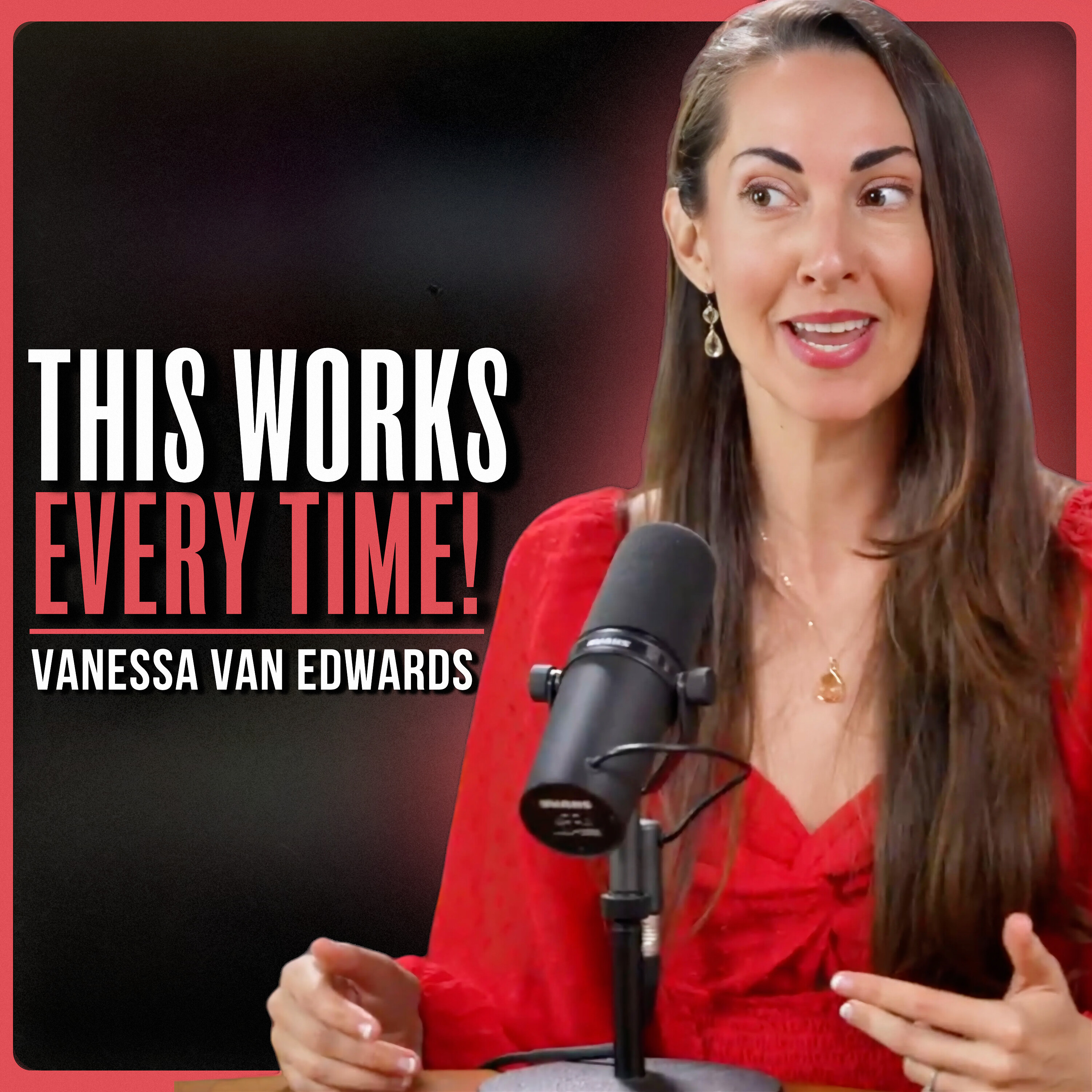
In this episode, Ryan Holiday welcomes body language expert Vanessa Van Edwards to discuss the interplay between charisma, communication, and Stoicism. The conversation revolves around how Stoic principles can be applied to develop charisma and meaningful communication, emphasizing connection through purposeful cues and emotional intelligence.
Written by AI. May contain mistakes.

Get the gist, explore an idea or ask about something said.
 Claude
On The Daily Stoic, what are the key points of this episode?
Searching your listeningAutomatic transcript. May contain errors.
0:00I'm recording this on a Monday, and Monday is our grocery store day in our family. I usually pick my kids up from school and we go over to Whole Foods, get all our groceries for the week. Although here very shortly, we're going to go over there to get our Thanksgiving turkey because they've got a bunch of great options. Turkeys start at$1.49 a pound if you have Prime with organic birds at$2.99 a pound. And they only carry no antibiotic ever turkeys that will bring quality to your table at a great price. Whole Foods has great everyday prices on all your Thanksgiving essentials, whether you celebrate with a massive family or just a few close friends.
0:36Everything they sell has high standards to help you shop with confidence. Enjoy so many ways to save on your Thanksgiving spread at Whole Foods Market. I've never felt like this before. It's like you just get me. I feel like my true self with you. Does that sound crazy? And it doesn't hurt that you're gorgeous. Okay, that's it. I'm taking you home with me. I mean, you can't find shoes this good just anywhere. Find a shoe for every you from brands you love like Birkenstock, Nike, Adidas and more at your DSW store or DSW.com. Why choose a Sleep Number smart bed? Can I make my sight softer? Can I make my sight firmer?
1:21Can we sleep cooler? Sleep Number does that. Cools up to eight times faster and lets you choose your ideal comfort on either side. Your Sleep Number setting. Enjoy personalized comfort for better sleep night after night. It's the final days of our Black Friday sale. Recharge this season with a bundle of cozy, soothing comfort. Now only$17.99 for our C2 mattress and base, plus free premium delivery. Prices higher in Alaska and Hawaii. Check it out at a Sleep Number store or sleepnumber.com today.
1:53Welcome to the Daily Stoic Podcast, where each weekday we bring you a meditation inspired by the ancient Stoics, a short passage of ancient wisdom designed to help you find strength and insight here in everyday life. And on Wednesdays, we talk to some of our fellow students of ancient philosophy, well-known and obscure, fascinating and powerful. With them, we discuss the strategies and habits that have helped them become who they are and also to find peace and wisdom in their lives.
2:38Hey, it's Ryan. Welcome to another episode of The Daily Soap Podcast. I think one of the problems with philosophy is it's boring, right? You ever had one of those amazing teachers that can just make any subject like endlessly fascinating? They just suck you in and you're just wow. Like, you know, those great teachers, like you ever see that TED talk of Sir Ken Robinson where he's talking about education. You're just like, if every one of my teachers was like this, God knows where I would have ended up. I just think, unfortunately, philosophy is boring to a lot of people and it's made more boring by professors who don't seem to think that the job of philosophy is to be accessible and actionable.
3:23Socrates was immensely personable and charismatic. That's why young students flocked to him. Lousonius Rufus, Epictetus, they weren't just good thinkers. They commanded an audience. They were compelling. And so how you do this is tough, right? How you make philosophy interesting is really challenging. And I know this from experience. I've been fighting this sort of uphill battle. Like when I went to my publisher and said, hey, I want to talk about this obscure school of ancient philosophy. Not only were they probably not thinking the book would sell, they certainly weren't thinking there'd be this podcast that has millions of listeners, there'd be this YouTube channel with millions of views.
4:01It was unfathomable to me, but I just knew that it would be a lot of work to make it interesting, but that that was the challenge to reach the people who you were not normally reaching, who were not already interested. And so philosophy wasn't just about putting the words together in the right order. It was about creating a brand, creating a compelling image and spectacle. Robert Greene talks about this, right? You have to create compelling spectacles. And that's been the work that I've done here at Daily Stoic for many years. And someone who's influenced me in that journey, You may have seen her online because she's built a huge platform over the years.
4:34I have known her for a very long time. I actually did some marketing work on her first book, Captivate the Science of Succeeding with People, which has been translated into 17 languages and sold like crazy. Her YouTube channel has itself done tens and tens of millions of views. And she's got a new book called Cues Master the Secret Language of Charismatic Communication. I'm talking about Vanessa Van Edwards. I've gotten to know her over the years since. She is fantastic. And her work on how you create compelling messages, how you reach people, most writers are sort of introverted. And I think certainly philosophy is somewhat insular and introverted.
5:19So how do you make it compelling and captivating? There is a science to this. There is work to this. And it's something I've worked on. And I think whatever it is that you do, whatever you're excited about, the work is not getting you excited. The work is getting other people excited. That's what marketing is. A lot of people look down on marketing. They look down on, you know, sort of charisma or whatever. It's, oh, this is flash, right? There's a line in David Halberstam's book on Bill Belichick where he says that Bill Belichick is in the steak business and not the sizzle business. He says, and in fact, it seems like he has contempt for the sizzle.
5:53Well, that's not a thing most of us can get away with. You have to understand both the sizzle and the steak, especially if you're really proud of the steak. You want people to be interested in the steak. You have to find out the sizzle. You have to find out what draws them in. This is hard work. And I think Vanessa Van Eswurds is one of the best people in the world at this. There's a reason, you know, she's talked everywhere from Harvard to South by Southwest, MIT and Stanford. She has this viral TEDx London talk. There's a reason she's all over the place. and I thought this was a great episode.
6:27It's going to be a two-parter. It was fascinating. I think you're really going to like it. I'll just get right into it.
6:38All right, so I think we have beef. We do? Yes. You're angry. I notice you use the word stoic somewhat pejoratively. Like you use lowercase stoic. Sometimes I do. Yeah. Yeah. As basically sort of the stereotype of what people think stoic is, which is kind of unfeeling, unemotional, shut off. Yes. Yes. Okay. Well, first I apologize to all my capital stoics. I don't mean it in a mean way. I see my book. I distracted you. Let's talk about something else. No, I'm just joking. I do actually see it. I see it. It's funny because I use the word stoic because I actually don't mean it negative. I think that people aspire to be stoic.
7:21And they misinterpret that as I have to be in control of my feelings physically and internally. And so when I say stoic, people often tell me like they say, oh, to be powerful, I need to be stoic. And I say, tell me what that means to you. And they often tell me it means hide my hand, don't show my emotions on my face, be intimidating and imposing. Like they think of it as an aspect of power or leadership. And actually, the best leaders are not unreadable. They are purposeful. So I do believe that showing emotional cues that are not helpful or not aiding your message, I think that is not being a good leader.
8:01But I think it is very powerful to choose your cues purposefully. But that means not going mute. Yes. So many people go mute thinking that that's making them look powerful, but actually it's making them unreadable. Well, and also, whether you're showing the emotions or not, to me is secondary to whether you are a slave to them in your actions. So, you know, like somebody says something to you and it lands and it hurts, is very different. To me, it's not that significant, right? What's significant to me is what you do after. Yes, completely. And I also think that cues are a cycle, right? So like when I'm saying something, you just nodded.
8:40I'm like, great, he agrees. Keep going. Oh, you're doing good. And especially for social overthinkers and recovering awkward people. I'm a recovering awkward person. People who are unreadable, and I'll say stoic in the lowercase, they make me very nervous. I have a problem. I misinterpret neutral cues as negative. People with narcissistic mothers actually tend to have this problem. It's been studied. And so what you have to realize, if you are stoic or unreadable, you don't send enough cues, it's actually punishing. It's very disconcerting because you're like, I'm not sure if you're getting this or not.
9:15And worse, I think you're mad at me. And I do think everyone's mad at me all the time. And I have to tell myself, no matter what dinner or party I leave, I say to my husband, oh, she hates me. And he goes, no, no, no, she didn't say that. And I'm like, okay. And that's why I learned cues. Right. Is because I was misinterpreting neutral or even positive cues as negative. Yeah. And that was causing me to doubt myself, which made me stoic. Yeah, yeah. So what was happening is I would go mute. I would go completely unreadable because I didn't know what cues to send, which then made people awkward, which made me more awkward.
9:49And it was this terrible cycle. Right. Most of my students are very, very smart. Yeah. High achievers. They rely on their book smarts and their ideas. And that's great. You can have the best idea in the world, but if you do not share it with warmth, people will not believe it. And this is actually studied. So Princeton University did research on highly competent people. and they found that when you share something competent without warmth, it leaves people feeling suspicious. Suspicious is the word they use in the research. I was like, yes, this is it. That when someone tells me something and I don't see the warmth with it, I'm suspicious of them or of me.
10:28And so I think that we have to learn to be in control of our cues. And that is also stoic in the way of like being in control, I think. Well, it's kind of hyper-rational, right? It's like, You have to understand how this works too. Yes. And you have to deploy it deliberately and intentionally. And if you can't, there's a deficiency there and a sort of a weakness there, I think. Yes. I also think you can be unreadable and mute when you want to show someone you are not in agreement. Yeah. Like when I negotiate for a car, I let my nonverbal speak for me. Like I will be super warm, smiling, head tilting, nodding, all the good warm cues until they say something I don't like.
11:06And then I go completely mute. Yeah. And usually people will pick up on it and they start negotiating with themselves. Yeah. So you can also use it to your advantage as long as you're in control of it. Yeah. I think that's interesting like in sports too, when you watch like a really good coach know how to use and deploy emotion to bring out emotion or to suppress emotion in other people. Like the coaches oftentimes not as angry as they look because they are trying to send a message to the refs or send a message to the team. that they're having to strategically deploy emotion. And if they are totally mute and dispassionate, that's going to be a problem.
11:45Right. Unless they use it purposefully. Yes. Right? Like if the coach wants the players to focus on the game, going mute is actually quite helpful. Yeah. Because there's nothing to read there. So no mental energy is going to go there. No cognitive low is going to go there. I also think inspiring your players. Remember, warmth and competence is contagious. Our emotions are contagious. So if you want to inspire camaraderie, like on a team, you want the players to be reading each other in sync, totally working together. You want to be infecting warmth. Yeah. But if you want them to be strategic, think very carefully about the plays and play very subtly and purposefully, you'd want to inspire competence.
12:23Yeah. And so I think that that is also a way that leaders, especially in sports, but even in corporate teams, you are so purposeful if you're like, I'm going to dial up what I think the team needs right now. Like, for example, have you heard of the touchy-feely index? No. Okay. So I think this is, by the way, researchers' excuse to watch sports for academics. Okay. So it was a bunch of researchers, and they had a hypothesis that basketball teams that touch more play better. Touch each other? Yes. Okay. The theory being that if you touch, you produce oxytocin. Oxytocin does a lot of things in our body, but for our purposes, it is the feeling of belonging, of connection, of comfort.
13:01It makes us trust more. It makes us read faces better. It makes us better at being human, especially teamwork. So they had a hypothesis. If a team touches a lot, their oxytocin levels are higher. They will be better at reading each other's minds and playing in sync. Yeah. So they watched basketball games and I forget the number exactly, but it was, they found that the team that touched the most were the Mavericks. Okay. Like this is recent? No, no. This was when the Mavericks won. Okay. So they found that the Mavericks touched the most, like by a lot. And this was everything from back pats to high fives, to fist bumps, to butt touches, to, you know, all the things.
13:41Yeah. And they found there was direct correlation. I don't know causation, direct correlation between the number of times that players touched and winning. And I said, this is it. Like, this is something really powerful because it's speaking to that if you initiate the right kinds of cues, you spark something magical that happens internally, but also as a team. Yeah. And also maybe hypothesize that instead of five individuals, it's five people connected in some physical way, right? You know what I mean? It's a sort of reinforcing the literal bonds between the five discrete individuals. The literal chemical bonds.
14:19So like they're reading better, they're interacting more. And then there's a lot that we don't understand. So science doesn't understand about this.
14:32Thanks to Toyota Trucks for sponsoring this episode. When I bought my ranch in 2015 out here in Baskerville County, I drove my car about halfway down the dirt road that we live on, thought this isn't going to work, stopped, parked it, walked the rest of the way home, borrowed my wife's car, drove into Austin and bought a truck. What I bought was a Toyota Tacoma. And this truck wasn't just transportation getting me to and from my house. It unlocked a whole different style of living for us, not just on the ranch, but in our little Texas towns. There were places I could go now that I couldn't go before, especially out here in the piney forests, through the fields, and on the unpaved roads like the one that I lived in.
15:17We got to go deep into the hill country's wild beauty. We've driven all the way out to East Texas. We've driven across the country. and by we I mean not just my wife but both my kids who I drove home from the hospital in that truck. Toyota trucks are built for those who understand that the best adventures happen when you're willing to veer off course because you never know when you'll end up on a Toyota adventure detour. And of course this is stoicism too because every detour, every obstacle is an opportunity. But it's helpful if you can handle the difficulty inherent in that. If you've got the resilience and the right companion to make it wherever the road takes you.
15:57Discover your uncharted territory. Learn more at toyota.com slash trucks slash adventure dash detours. Look, when you're hiring, you don't want just anyone. You need the right person with the right background who can move your business forward. And when I need candidates who match what we're looking for at Daily Stoic for any of my businesses, we trust Indeed Sponsored Jobs, because when you're hiring, Indeed is all you need. You can give your job the best chance to be seen with Indeed's Sponsored Jobs. They can help you stand out and hire quality candidates who can drive the results you need.
16:36And according to Indeed, data-sponsored jobs posted directly on Indeed are 90 % more likely to report a higher than non-sponsored jobs because you reach a bigger pool of quality candidates. And you should join the 1.6 million companies that sponsor their jobs with Indeed. People are finding quality hires on Indeed right now. In the minute we've been talking, companies like yours made 27 hires on Indeed. Spend more time interviewing candidates who check all your boxes, less stress, less time, more results now with Indeed Sponsored Jobs. And listeners of this show will get a$75 sponsored job credit to help you get your job, the premium status it deserves at indeed.com slash daily stoic.
17:18Just go to indeed.com slash daily stoic right now to support the show by saying you heard about Indeed on this podcast. Indeed.com slash daily stoic terms and conditions apply. If you're hiring, do it the right way with Indeed.
17:34One of my favorite studies is about how our fear is contagious. I also think there's something to that. Yeah. I think for a long time, I was awkward because I was accidentally sending fear signals. And I think that we don't like to be - You can sort of smell it. It's just uncomfortable. This is a bad and I don't like the scent. I don't like it. We don't want to be fierce. The gross experiment is that they took students and they put half of them on a treadmill and they collected their sweat. Half of them in a plane, they pushed them out the plane to skydive for the first time, collected their sweat, had unsuspecting people go into an fMRI and smell the sweat.
18:08And people who smelled the fear sweat, even though they had no idea what they were smelling, caught the fear. Their amygdala lit up. And so I was like, that is me. I am going into events and I am smelling like fear. And that makes people nervous. And that's why I was having all these awkward interactions. Okay, I can't just be more confident. I can't just turn off my fear, but I can distract my fear. I can distract it. I can displace it. My entire goal is to displace fear with purpose so that I say, okay, I don't know what to talk about. I'm going to go in with a conversational blueprint so I know exactly what my intentional connection goals are.
18:45I know what to say. That's going to displace that overthinking. I'm going to know what to do with my body, my hands, my shoulders, my feet. I'm going to know how I want to greet, how I want to make eye contact or nod. Those blueprints replace the overthinking so that I'm not afraid. It's my side door to confidence. Yeah. You have a plan. And so your confidence is in the plan rather than in yourself. That's it. Yeah. Yeah. It's tough though. One of the things I think the Stokes talk a lot about that I think connects to the idea of emotion is like, how do you deal with difficult people? Right? Like the famous quote from Mark Surreal is about how the obstacle is the way he's talking about people who get in our way, like difficult people.
19:19And his point was that when he's saying the obstacle is the way, he's saying that difficult people are a chance for us to practice, you know, not just how you deal with difficult people, which is a fact of life, but it's a chance to practice a bunch of forms of sort of emotional control and awareness and creativity. Like, how do you deal with this person who doesn't like you? How do you deal with this person who is awkward or weird? Or how do you deal with this person who's afraid? Like, how do you deal with this person who is not behaving or acting in a way that you like? And I imagine that starts with reading what they're doing and trying to understand why.
19:53Yes, reading what they're doing. And also being, I think that my approach to difficult people is predicting their difficulty. Like, I don't even want to get to the point where you're difficult with me. I want to understand your narrative and your behavior cues so I can know what's going to trigger you and I can know what's going to detonate you. And so I'm very into understanding, you know, there's difficult people. Everyone has difficult people in their life. I like to know their self-narrative. I want to know what is the story you're telling yourself about yourself that makes you so difficult for me?
20:23Yeah. Right? Like that is, I think, the stoic perspective of like, this person is challenging me in some way. Something about their narrative does not jive with mine. And so I have a couple of questions that I often use with my difficult people and it has fundamentally changed my relationships with them. They're much less difficult for me now because I realized, ah, this is why they're like this. So for example, one study is about luck and you try to figure out how lucky someone is because that actually tells you a lot about how they see themselves. So like Richard Wiseman did this famous study with newspapers.
20:53He handed people a newspaper. He asked them how lucky they thought they were. People who think they're very lucky did very well in the following challenge. He asked them to open the newspaper and count the number of images in the newspaper. On the second page of the newspaper, it said, stop counting. There are 43 images in this newspaper. Almost all the lucky people saw the advertisement, stopped counting and handed back the newspaper. The unlucky people missed it and they kept counting and they got more wrong answers and it took them double the amount of time. Meaning if you are lucky, you literally see more opportunities.
21:20You literally are looking for more opportunities. Unlucky people miss more and they are creating their own bad luck. And so I believe self-narratives are self-creating. If you have a story that you tell yourself about yourself and you keep telling that story, it will keep happening to you, which I think is also very stoic. This is difficult people. Difficult people have a story they're telling themselves about themselves and it keeps repeating over and over again. So high conflict people, for example, they really challenge me because I don't like conflict. Yeah. And they're looking for it. They not only look for it, they create it.
21:53And so if I know that someone is a high conflict person, I can then figure out, okay, what is the story they're telling themselves? Usually, and there's one person in my life, I ask them, do you think you're lucky? It's a very casual question, by the way. It's like real easy to sneak in there. Are you lucky? And he's like, oh, no, no. I'm so unlucky. I zig, everyone zags. Okay. That was so helpful for me to know because the difficulty, I realized all the fights we were having had to do with the fact that he felt like he was zigging and everyone was zagging and he was mad. So my approach to him then was when I could see the zagging simmering, I was like, hey, listen, you're with us.
22:29Yeah. You're with us. I know you think you're zigging, but actually you're over here with us zagging over here. And we are on the same page. We are on the same team. You are with us. You are not apart from us. Right. That I could see him literally. Preempting the disagreement or the disconnection before it happens. And reinforcing that it in fact does not exist. And stopping the self-narrative of unluck and doubt or bad luck and doubt so that he didn't hate himself. Because that's what was happening, really. Right. Is he hated that he was constantly zigging and he always felt wrong. And so he would make himself wrong.
23:06Sure. By doing it more. And so I think that that's when I think about difficult people, I actually want to know what is my narrative? What is their narrative? Yeah. I have my own narratives, right? Yeah, sure. And I know the ones that don't go well with me, and I'm allergic to those people. Yeah. So even when I'm hiring or looking at potential friendships, there are certain kinds of people I am allergic to. I do not get along well with them. And so what are other questions you ask about difficult people that understand them? Do you like astrology? What does that say? I'm a hard no on that. I'm a very science-based person.
23:40Okay. So I'll be like, oh, what's your sign? Yeah. And if someone's like, what? I'm like, yeah, we're going to be friends. We're going to get along really well. If someone's like, well, the moon, the third moon of Saturn, Taurus. And I'm like, I don't - Prepare for some nonsense. And like, look, people who love astrology and Enneagram, like good on them. I just know that we're probably not going to go deep. Right. And so I'm then at that point going to keep it a little bit more cash, more funsies. We're probably not going to like go to a ranch for the weekend, you know? Yeah. Yeah. Like, so that's like a really simple, casual one.
24:15The other one I ask right away. So like, what was your biggest goal for 2025? What was your biggest goal this year? I'm very goal oriented. And I've found that when people tell me I don't believe in goals, which there are people who don't. Cool. They're going to be annoyed with me because I'm going to be talking a lot about goals. Yes, sure. So you're looking for sources of sort of worldview conflict early on, and then you can kind of know what to say or not say. Not that you're hiding yourself. You're just, I think, I remember I was going to do like a very difficult interview a couple years ago, and someone gave me some really advice.
24:49They were like, here's what this person perceives as a threat. And so they were like, just don't go over there and it'll be very not contentious. But if you, she was saying that what happens is people sort of accidentally stumble into this and then they can't get out of it because now that person's triggered and then you're triggered. And so it's not that it's like weak or you're somehow like, if there was a serious conflict that, you know, serious disagreement that needed to be had, I would have it. But the purpose of this interview was to go well and for me to say what I needed to say. Was it astrology?
25:23No, but it was like, hey, so just don't get yourself bogged down in this thing that you don't care about because you made a flippant remark three minutes in and now the whole thing is lost. That's it. And also as a low confrontational person, I want to avoid that. I also like, I think there are two kinds of people, dream killers and dream builders. Yeah. Okay. I'm a dream builder. I'm a puppy. Like I have golden retriever energy. Like that is, I like to root people on. And if they're talking about astrology, I don't feel super authentic because I don't want to be like, yeah, Gemini. Oh yeah. Or you're already, you're like, you're bullshitting.
26:03I will do anything to avoid inauthenticity because it makes me feel so uncomfortable. Yeah. And so I want to avoid fake enabling of things I don't like. So one, I'm trying to protect myself, but also them. I don't want them to feel that inauthenticity from me. And then also, there are times where I want a dream killer. I want that energy. Sure, you need truth or reality. Yeah. If I'm working on a book and I'm like, I need you to shoot down this idea and ask me the hardest questions you can possibly ask me, it's super helpful for me to hear, you got beef with me about Stoke. I'm like, you know, you're right.
26:33That is true. That is a true thing. And I'm going to try to reorient how I use that word because that's not how I mean it. So like I would now I should use more, I think, unreadable. Well, actually, it's funny. I had the same conversation with Stacey Abrams one time because when she very narrowly lost that first election in Georgia, she was like, hey, I'm not going to be stoic about this. And what she did was she went out and formed this voting rights voter activation organization that ended up changing the course of the 2020 election and then the 2021-ish election, the Senate, the special Senate election.
27:07And I was trying to say, like, that was the definition of Stoic, which is you took a crushing loss and channeled that energy into something positive. Obstacles away. Yeah, exactly. Obstacles away. You're just using what – it's unfortunate that what Stoic means in English is unfeeling and unemotional and sort of unattached. And that's really not what it is. I think – like, look, we have a bunch of stories about Marx really crying. The Stoics wrote beautiful poetry and wrote plays. Quite feeling. Quite feeling. Clearly, I think the idea is to not be mastered by these emotions, but to in fact master them yourself.
27:45That's it. They have this idea of being in command of yourself first before you have the right to be in command or in leadership of other people. And I think that's the idea. So it's not that you have no emotions. It's that you have to understand those emotions and decide which ones you deploy, which ones you act on, which ones you process, and which one you try to do work on. And in that way, my books are stoic, right? In that way, that is my mission, is you are in control of your emotions and how that comes across to others. In fact, you're more in control than you ever realized. Yes. And if you command yourself first, that then helps you command a room.
28:25And so really, they should be stoic books. That's what I've just decided. Sure. And so like that was a really helpful piece of feedback. And so when I'm researching or writing books, I want the dream killers that I disagree with. Sure. But I know who they are. Yeah. And I know when to go to them. You've invited them in. It's not a random person on social media who's shitting on you. Right. Yes. Or when I'm not ready. Like, for example, there are for me when I'm writing, there are like ideation phases. There is research phase and there is honing and then there is like editing and wrestling with the words.
28:54And I cannot have a dream killer in ideation. and I will not go on walks with them. I do walk and talks. I will not go on walk and talks with them because I know - You're too vulnerable at that point? Yeah, I agree. And their narrative is confrontational. Their self-narrative is, I'm gonna make people better with really tough ideas and questions. Like that is, I'm thinking of as a very specific person and that's their way of showing love. Yeah. So I wait to walk with them until I'm in like the research honing, outlining phase. And then I'm like, hey, like, what do you think about? And then they are the best resource.
29:25I think also one of the things you have to figure out as a creator is like when it's too late to get feedback. So it's like, I don't need your feedback, like from the world, right? Like it's already done. So what you think of it is irrelevant because it's done. You know what I mean? Like, this is why reviews don't matter that much. Like, I want feedback when I can do something about it. And then when it's done, that's either going to puff me up, which isn't helpful, or it's going to make me feel shitty, which isn't helpful. You know, you're telling me, you know, how the weather should have been yesterday.
29:53You know, it doesn't do anything. Do you read your reviews? I try not to. I mean, every time I do, I think, why did I do that? I like cannot read my reviews. Yeah. I really shouldn't. You shouldn't either. We shouldn't. It's not helpful. And it's too late. There is one thing I do that's not really a review, but I was very interested with my first book, the sections that were most highlighted. Oh, sure. That was very illuminating. That's just sort of, that's data versus maybe what you would call feedback. Yeah. You know, like, that's not like, there's a writing rule I like, which is that when people tell you that something's wrong, they're almost always right.
30:26And when people tell you how to fix it, they're almost always wrong. Oh, gosh. So like something highlighting, like either highlighting or not highlighting, this is just objective. It worked for me. It didn't work for me. That kind of information is helpful when someone's like, well, you know what you really should have done is, and it's like, if you knew what I really should have done, you probably wouldn't be a random person in the audience. You know, you would be one of my peers and I would have already talked to you and elicited your feedback. I also think there's something to, do you know you're giving advice or are you just being you?
30:57Yeah. Right? Like I think there's something to, if you ask someone, do you have advice for me? They will almost always make up advice for you. Yes. Sometimes you are soliciting or you are predetermining whether you're getting feedback or what kind of feedback you're getting by the question. Like if you send it to somebody, do you have any notes? They're not going to say no notes because that is a note, which is implying that somehow perfect, which it's not. And, you know, it'd be better if like I've learned you go, Hey, is there anything you think I should cut? Or what do you really like? If it's just general notes, they'll give you a bunch of stuff.
31:31And chances are, they're not actually qualified to just give you a bunch of stuff. I just made that mistake too. I just asked someone for notes and they gave me too many notes. Yeah. I mean, not really, but I should have asked, what is the most intriguing part of this section? What's funny when I did that highlighting exercise is I'm a little verbose. I don't know if you noticed. And every single highlight that had like over 3000 highlights were the shortest sentences. Yes. I was like, what? Yeah. But my long, beautiful sentences with commas are so great. No. And so when I wrote cues, I forced myself to write in really short sentences that were like really direct.
32:05And my mom read, read my second book and she's like, it doesn't sound like you. And I was like, it's because I'm writing in short sentences. But it worked like cues was a much bigger hit. And capital rate was big, but this was like, it hit better. I think it's because it was shorter. Well, I think what happened there is you took data and then you deduced a conclusion from that data as opposed to a singular person who, again, may or may not be qualified, not looking at data and just giving you advice from their very specific opinion. Yes. And I think that you could do the same thing with interpersonal skills, right?
32:38Like, I think it's very helpful to think about what is the first impression you make in one word. So when you meet someone for the first time, what word do you think pops into their head? Are you asking me? Oh, no, no. I mean, it's very personal. You're like, don't, please don't ask. What answer am I making up? Because it's very personal, actually. And so theoretically, if someone meets you, what's the word that pops in their head? And by the way, I've asked people this on questionnaires, and it's often shy, awkward, quiet. It's a lot of those kinds of words. And then I think ask people, what's your ideal first impression word?
33:13Sure. So what do you want people to think of? What are you aspiring to project or be? What's the gap? What is missing from this word to this word? By the way, I've asked thousands of people that question. I think twice someone had the same word. What everyone's aspiring for is different? Like no one felt that their first impression was ideal. That they're nailing it. No one thinks they're nailing it. And that was like, huh. It sort of made me feel better because I think we all sometimes feel like we're making a neutral or negative impression. Although some people did pick very positive first words.
33:45And so I thought that was interesting because we all feel like we're struggling. Yeah. The insecurity is there for everyone. For everyone. And so I also think like if you're a little bit more purposeful with your ideal first impression and you nail it 10 % of the time, that's a major win. Yeah. That's better than most. Better than most. Yeah.
34:06we just took our kids to an outdoor performance the nutcracker they had a snow cone and then uh they went insane in the car ride home and one of the things i try to remind myself when that's happening is that i don't control my kids behavior especially when they're too far gone like that but I do control how I respond, right? That's stoicism, but it's also what Dr. Becky talks about. Dr. Becky is a clinical psychologist and a bestselling author, and she founded Good Inside, which is there to give parents practical, actionable tools for handling those everyday challenges with confidence. My wife introduced me to Dr.
34:43Becky's books. I love them. I've recommended them a million times. I've had her on the podcast. And as it happens, Dr. Becky is hosting two live Q &A events for good inside members. I am one of them. She signed me up for it about a year and a half ago. I've loved it ever since. On December 1st, you can join Dr. Becky for her How Not to Raise Assholes event, which is about avoiding entitlement and raising kind, empathetic kids. And on December 15th, she's hosting her How Not to Lose It Over the Holidays event, which I'm sure we could all use. As I said, I'm a big fan of Dr. Becky. She's been a great influence for me as a parent and just as a human being.
35:24And Daily Stoic listeners can join for 15 % off with code STOIC15. You just got to head over to goodinside.com to catch the events. Shopify's point of sale system helps you sell at every stage of your business. Need a fast and secure way to take payments in person? We've got you covered. How about card readers you can rely on anywhere you sell. Thanks. Have a good one. Yep, that too. Want one place to manage all your online and in-person sales? That's kind of our thing. Wherever you sell, businesses that grow, grow with Shopify. Sign up for your$1 a month trial at shopify.com slash listen. Shopify.com slash listen.
36:08But also I think the idea of the Stoics have this idea of If you don't know what port you're sailing towards, no wind is favorable. If you're just going around going like, I don't think people see me. I don't think people understand me. I don't think I make a good first impression, which again, I think most of us feel, but you don't know the first impression you're trying to make. How can you get from where you are, which you're not happy with, to where you want to be if you haven't actually taken the time to articulate it? And that's something you also learn with writing, where sometimes you'll get feedback and the person thinks it's negative.
36:38But actually, if you know exactly what you're trying to do, they may have just paid you a compliment, which is like, you just described exactly what I'm trying to be. If you're trying to be relatable and someone says they felt very ordinary or something, maybe that's great. That's what you were going for. Or if you're trying not to be relatable and someone says they're not relatable, that's not an insult. You did it. It's funny. In that experiment, the ideal words, no one picked relatable, which is funny because that's a great, that is a great thing to aspire to. You know what a lot of people picked?
37:09And this really put me down like a little research rabbit hole. Impressive. And I was like, impressive. Okay. So the point of this research, the reason I did it is I was looking for what is content I can create that will be helpful for people to change their first impression. That was the goal of this research. I also wanted to see, you know, if people were different. Okay. Majority of people picked impressive. And I thought, what a terrible first impression word, right? Not to say you're mountain. Or that's a hard thing to nail. Yes. And also like, do you really? Like, I think of impressive people that I've met.
37:42I don't really like them, to be honest with you. Yeah. They're very impressive, but I don't want to open up to them. I don't want to be friends with them. I don't want to hang out with them at dinner. And I also don't trust them always. Also, it's an extremely hard target to hit. Like how many impressive people have you met in your life? Like how many? So you just picked the hardest thing to do instead of something much more attainable and realistic that, by the way, once you did, you could build on, you know. And also, I think if you were to be really relatable, you do become impressive. Sure.
38:12I think impressive is a symptom. You cannot be impressive. I think it is a symptom of something else. And I was at a party in Austin with like very important people that people would know. They literally made a sign on NDA before we walked in. And it was like a circle, a share circle where you had to introduce yourself, which is like my least favorite thing in the world. And I was like, great. I'm just sweating. Yeah. They took my shoes or else I would have left. And that's why I also don't like to go out at night. So we're in a circle and I'm not joking you. The first person is like, I'm a billionaire.
38:44The second person was like, I cure cancer. The third person was like, I help children with all the needs. And then it was like me. And I was like, huh? Right. Like so impressive. Those people were so impressive. But I'll tell you what, I did not want to go talk to them afterwards. But super impressive. it got to me. And so I was like, I don't even play in this arena. So I said, my name is Vanessa. I'm a recovering awkward person. And I help recovering awkward people communicate. Everyone laughed. There was like a, ah. And then afterwards, everyone came up and talked to me, except the billionaire.
39:16Sure. Okay. He didn't. But everyone else was like, relatable. And all the impressive people I watched, I watched the room for the two hours afterwards. And people didn't want to connect with them. People didn't want to talk to them. they looked more awkward actually being like, I guess I get another glass of wine. Whereas my awkward people who came up to me, and by the way, afterwards, everyone in the circle was like, I'm also a recovering awkward person. And I started a company. And so I was like, this is it. Like impressive. We have to stop. I'm going to say like, don't try to be impressive.
39:51It will make you the opposite. And I've failed at that for a long time. So I share that with complete humility. Yeah. Well, look, I think a lot of times we try to be the noun instead of the verb, right? So it's like, you want to be an impressive person, like it's mostly about doing impressive things. And then often what is sort of the most impressive about someone like that is that they are relatable. So you have someone who's done incredible things and then they seem normal and unapproachable and it hasn't changed them. Very rarely do I meet a person who comes off as impressive and has done a bunch of impressive things.
40:31There's usually a disconnect, but it's when you meet somebody who go, whoa, I didn't know you were that person or that's incredible. You want to be a little bit underestimated rather than starting with an overestimation. Yes. I would always rather be underestimated than try to blow it out of the water. And so for those of you thinking about your words, I don't want to be too prescriptive, but I would encourage you that with your ideal word, warmth trumps almost everything else. So a lot of the words that were like smart, intelligent, impressive, well-read. Brilliant. Brilliant. Yeah. Confidence.
41:07Changemaker. You know, I had a couple of those. Oh, thought leader, right? I had a couple of those words and I knew some of these people, not all of them, but I, we got their Instagram handles. So I was able to like go sneaky peeking. And I was like, wow, like if they just went for more warmth, they actually would probably be seen as these other things. Yeah. Approachable, accessible, kind, decent. Likeable, like likability is a superpower. And I wish we talked more about it. I think we talk a lot about being smart and being impressive and being funny and like, but actually just being likable is the most powerful thing you can do.
41:43And it's being likable is not about doing anything in particular, except one thing, which is, and they researched this, Dr. Van Sloan researched what makes popular kids popular. He studied thousands of high school students across a variety of high schools. It wasn't attractiveness or GPA or humor or extroversion or athleticism. There were popular kids who were that. The one thing was the most popular kids across all the schools and all the grades had the longest list of people they liked. They were assertively and aggressively liking as many people as they possibly could. Because people like to be liked.
42:19Yes. And the intention was constant warmth. When he observed these students in the hallway, they weren't walking down over their books, looking down. They were going, hey, Ryan. Hey, Sarah. Like micro moments of warmth. And so that was a game changer for me in that all I have to do at these parties, if I have to go, all I have to do at these events is just how can I like this person more? What questions could I ask that will have something in common? What could I do to aggressively like this person? If the benefit is that I'm also likable, cool. But my entire goal at events is how can I like more people?
42:58And that is so much less pressure, right? That like, I'm going to be funny and I'm going to be warm and I'm going to be relatable. Just like more people. Yeah. It changes your questions too. Be interested, be curious, be open. Yes. I think it was a philosopher who, it wasn't actually Dale Carnegie who started that idea. It was a, I'd have to look up the, it was actually, it was a philosopher before him who said that in order to be interesting, you must be interested in others. Yeah. Interested is half, I think. Interested is like, prove it. Sure. And I don't like that, actually. So I'm going to say one up, you know, Dale Carnegie and say, actually, to be likable is to be of extreme liking.
43:41And that your questions are searching for mutual moments of me too. If I'm going and being like, how can I like Ryan? I'm not going to ask you the questions you hate. I'm not going to ask you, how'd you get started as a writer? I'm not right. Because you hate that question, right? Of course. Of course. So do I. I'm not going to ask you, like, what's your favorite book? Like, I'm not going to ask you those questions because that's not going to help me like you. Right. I'm going to ask you questions where I'm searching for moments of likeability that we might have in common. And that totally changes my energy, but also my questions.
44:11Right. These are like, you have kids, you know, where do you live? What do you like about parenting? What do you like about Austin? You know, oh, what do you think of the differences between Bastrop and Austin? Like, those are the questions that I'm thinking about. For the things that make you fundamentally human, as opposed to the things that make you, whatever the specialist you are. Yes. And also a specialist and expert. Yeah. I think everyone is an expert in some domain. Yeah. But there are, I think, like two kinds of VIPs. Like, I don't know if you find this, but there are two kinds of VIPs.
44:42One VIP loves to entertain. They like to tell the stories, share their opinion, be the life of the party, have everyone laugh at their jokes. Yeah. That's one kind of VIP. If I meet that kind of VIP, I'm asking lots of questions. The other kind of VIP wants to be entertained. Oh, okay. They do not want to be asked questions. They do not want to be telling the stories. They want to laugh at your jokes and be intrigued by what you're saying. That is when you're answering your own questions and you're sharing really interesting stories and you're sharing really interesting facts. I think you are the latter.
45:10Sorry, the second one. Yeah, that's probably introverted versus extroverted probably splits that distinction as well. And people who talk about their work for a living. Yeah. So like there are extroverts who talk about their work for a living. So when they get offline, the last thing they want to do is talk about anything. Yeah. They're extroverted, but they're like tired. Yeah. And so I try really quickly to respect what kind of VIP I'm talking to and see, do they want to be entertained? Yeah. Or do they want to be an entertainer? Yeah. I'm just thinking about like when I'm backstage about to give a talk, do I want to be doing more talking or, you know, do I want to just have a few human moments with a person I'll probably never see ever again in my life?
45:48Do you talk backstage? Because I do. Are you like a quiet contemplator? I'd rather be listening to music and just sort of pacing. I realize I need the oxytocin. So I will like go find the AV team. And I'm like, so how was breakfast? Tell me all about it. Like I think I know. And I'm actually not extroverted. Yeah. But I realize I get so in my head that I want the oxytocin. So I will like talk to my Uber driver. I want their life story. Tell me a joke. Tell me about your quinceanera. No, I'm an ambivert. Right. Right? And what's that? So introverts get their energy from being alone. Extroverts get their energy from being with others.
46:28Ambiverts can get energy from the right people at the right times that need lots of recharge time. So I cannot be alone all the time. No, I do crave people, the right kind of people. Like, this is my favorite. Invite me to a happy hour. No, thank you. Like, no, thank you. Cannot do it. It's too loud. I can't have deep conversations. We can't talk about a book. And so I know that if it's an interview situation or a learning situation, I love it. It gives me energy. But anything else I don't love on stage, it's very one sided. I'm giving a keynote and I need the oxytocin to not feel like a robot.
47:04You just need to kind of be juiced. Yeah, but but be amongst the people. So you're not up there, you know, as this sort of figure pedestal thing. You want to feel real and accessible and just sort of get in that sort of loose zone. Thanks so much for listening. If you could rate this podcast and leave a review on iTunes, that would mean so much to us and it would really help the show. We appreciate it. And I'll see you next episode.
47:49Look, ads are annoying. They are to be avoided, if at all possible. I understand as a content creator why they need to exist. That's why I don't begrudge them when they appear on the shows that I listen to. But again, as a person who has to pay a podcast producer and has to pay for equipment and for the studio and the building that the studio is in. It's a lot to keep something like the Daily Stoic going. So if you want to support a show but not listen to ads, well, we have partnered with Supercast to bring you a ad-free version of Daily Stoic. We're calling it Daily Stoic Premium. And with Premium, you can listen to every episode of the Daily Stoic podcast completely ad-free, no interruptions, just the ideas, just the messages, just the conversations you came here for.
48:44And you can also get early access to episodes before they're available to the public. And we're going to have a bunch of exclusive bonus content and extended interviews in there just for Daily Stoic Premium members as well. If you want to remove distractions, go deeper into Stoicism and support the work we do here. Well, it takes less than a minute to sign up for Daily Stoic Premium, and we are offering a limited time discount of 20 % off your first year. Just go to dailystoic.com slash premium to sign up right now or click the link in the show descriptions to make those ads go away.
The Stoics didn’t just preach wisdom, they commanded attention. They knew how to lead with presence, not just ideas. In this episode, body language expert Vanessa Van Edwards joins Ryan to break down the science of real connection through a Stoic lens. She shares powerful, research-backed strategies to communicate with purpose, project warmth without losing authority, and instantly shift how others see and respond to you.
Vanessa Van Edwards is the bestselling author of Captivate: The Science of Succeeding with People, translated into 17 languages, and Cues: Master the Secret Language of Charismatic Communication. More than 70 million people have watched her on YouTube and seen her viral TEDx London Talk.
Vanessa is renowned for teaching science-backed people skills to audiences worldwide, including Harvard, SXSW, MIT, and Stanford. Through her engaging workshops and courses, Vanessa shares tangible skills to improve interpersonal communication and leadership. Her science-backed framework helps anyone communicate with confidence.
Check out Vanessa’ work on her website: scienceofpeople.com
Follow Vanessa on Instagram and X: @VVanEdwards and on YouTube: @ScienceOfPeople
📚 Grab signed copies of her books Cues: Master the Secret Language of Charismatic Communication and Captivate: The Science of Succeeding with People .
🎙️ Follow The Daily Stoic Podcast on Instagram: https://www.instagram.com/dailystoicpodcast
🎥 Watch top moments from The Daily Stoic Podcast on YouTube: https://www.youtube.com/@dailystoicpodcast
✉️ Want Stoic wisdom delivered to your inbox daily? Sign up for the FREE Daily Stoic email at https://dailystoic.com/dailyemail
🏛 Get Stoic inspired books, medallions, and prints to remember these lessons at the Daily Stoic Store: https://store.dailystoic.com/
📱 Follow us: Instagram, Twitter, YouTube, TikTok, and Facebook
See Privacy Policy at https://art19.com/privacy and California Privacy Notice at https://art19.com/privacy#do-not-sell-my-info.
