
 Ask ChatGPT


 The Daily Stoic
18 Jun 2025 · 51m
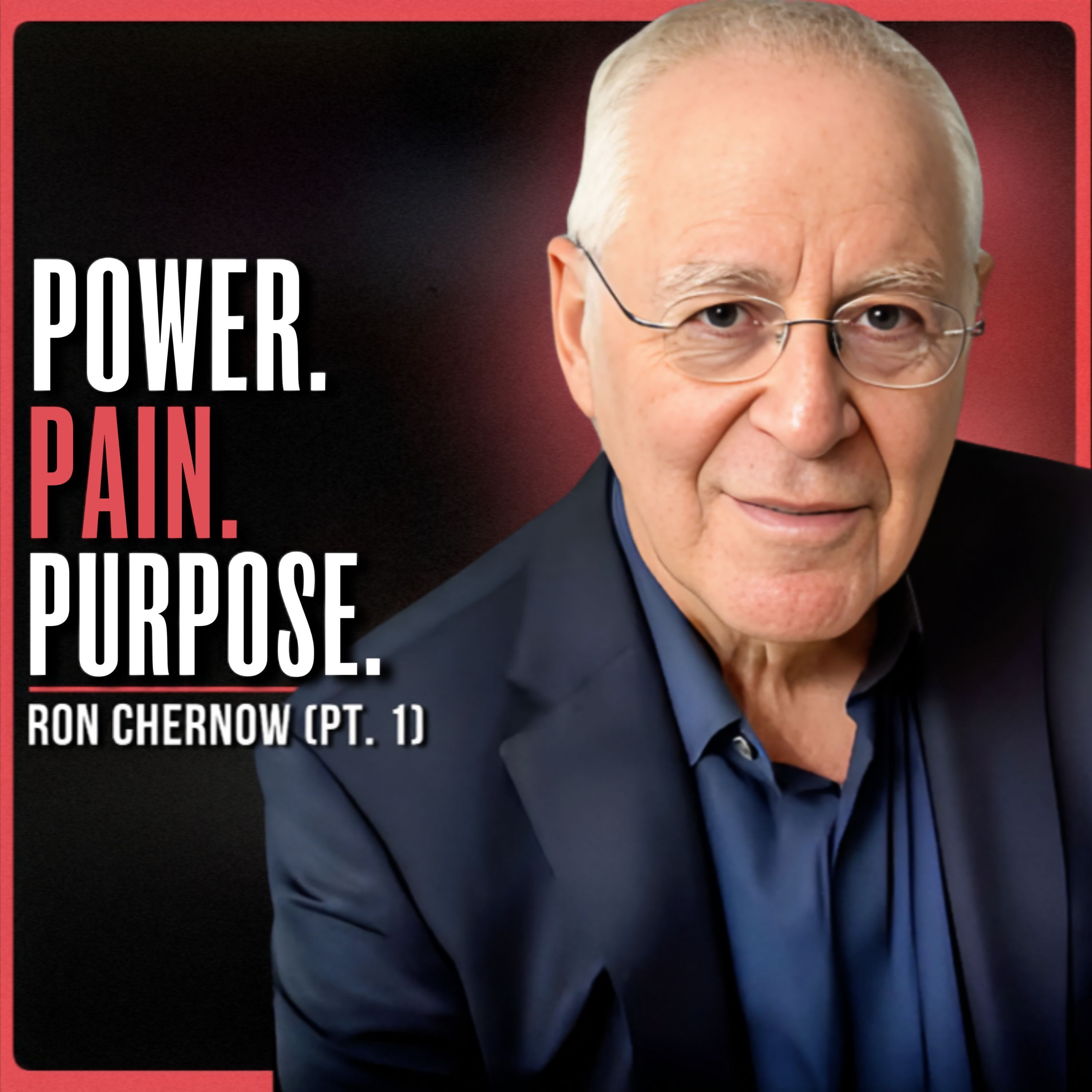
In this episode of The Daily Stoic, host Ryan Holiday engages in an insightful conversation with Pulitzer Prize-winning biographer Ron Chernow. They discuss the complexities of emotional struggles faced by historically significant figures like George Washington, Ulysses S. Grant, and Mark Twain. The episode explores how these men's emotional management—or lack thereof—shaped their legacies and influenced their actions.
Written by AI. May contain mistakes.

Get the gist, explore an idea or ask about something said.
 Claude
On The Daily Stoic, what are the key points of this episode?
Searching your listeningAutomatic transcript. May contain errors.
0:00I'm recording this on a Monday, and Monday is our grocery store day in our family. I usually pick my kids up from school and we go over to Whole Foods, get all our groceries for the week. Although here very shortly, we're going to go over there to get our Thanksgiving turkey because they've got a bunch of great options. Turkeys start at$1.49 a pound if you have Prime with organic birds at$2.99 a pound. And they only carry no antibiotic ever turkeys that will bring quality to your table at a great price. Whole Foods has great everyday prices on all your Thanksgiving essentials, whether you celebrate with a massive family or just a few close friends.
0:37Everything they sell has high standards to help you shop with confidence. Enjoy so many ways to save on your Thanksgiving spread at Whole Foods Market. Why choose a Sleep Number smart bed? Can I make my sight softer? Can I make my sight firmer? Can we sleep cooler? Sleep Number does that. Cools up to eight times faster and lets you choose your ideal comfort on either side. Your Sleep Number setting. Enjoy personalized comfort for better sleep night after night. It's the final days of our Black Friday sale. Recharge this season with a bundle of cozy, soothing comfort. Now only$17.99 for our C2 mattress and bays, plus free premium delivery.
1:11Prices higher in Alaska and Hawaii. Check it out at a Sleep Number store or sleepnumber.com today. Look, ads are annoying. They are to be avoided, if at all possible. I understand as a content creator why they need to exist. That's why I don't begrudge them when they appear on the shows that I listen to. But again, as a person who has to pay a podcast producer and has to pay for equipment and for the studio and the building that the studio is in, it's a lot to keep something like The Daily Stoic going. So if you want to support a show but not listen to ads, well, we have partnered with Supercast to bring you a ad free version of Daily Stoic.
1:56We're calling it Daily Stoic Premium. And with Premium, you can listen to every episode of the Daily Stoic podcast completely ad free, no interruptions, just the ideas, just the messages, just the conversations you came here for. And you can also get early access to episodes before they're available to the public. And we're going to have a bunch of exclusive bonus content and extended interviews in there just for Daily Stoic Premium members as well. If you want to remove distractions, go deeper into Stoicism and support the work we do here. Well, it takes less than a minute to sign up for Daily Stoic Premium, and we are offering a limited time discount of 20 % off your first year.
2:34Just go to dailystoic.com slash premium to sign up right now or click the link in the show descriptions to make those ads go away.
2:47Welcome to the Daily Stoic Podcast, where each weekday we bring you a meditation inspired by the ancient Stoics, a short passage of ancient wisdom designed to help you find strength and insight here in everyday life. And on Wednesdays, we talk to some of our fellow students of ancient philosophy, well-known and obscure, fascinating and powerful. With them, we discuss the strategies and habits that have helped them become who they are and also to find peace and wisdom in their lives.
3:32Hey, it's Ryan. Welcome to another episode of the Daily Stoic Podcast. I've said this before, but my absolute favorite thing in the world, like my love language or my Roman empire, if you will, is a big, thick biography. I have one here on the table. It was not fun to put in my suitcase on my flight to Utah today, but I love nothing more than one of those like seven to 900 page biographies of a person that I'm interested in or a person that I knew nothing about. I mean, it has to be well-written. There's nothing worse than a boring 900-page book. And if it's boring and it's 900 pages, life's too short.
4:15But there are a few masters of this art form. There's Doris Currens Goodwin. There's Robert Caro. There's William Manchester. There's Taylor Branch. I've interviewed some of those people. I've interviewed a few others. Certainly my books would not exist without those epic biographies. In fact, The Obstacle is the Way would not be possible without today's guest. I read Titan by Ron Chernow 15 years ago, and I was fascinated with the character study that is Rockefeller. Reading it then, I was mostly interested in how it powered into success and his self-mastery. I didn't think so much about the consequences of his ambition on other people.
5:10I think if I reread that book now, I might perceive him as more of a tragic or a sad figure. But I remember where I was when it occurred to me that I could use some of the ideas in that book for the opening story in The Obstacle's Way. I was in a Starbucks in Riverside, California. And when that chapter came together, which would not be possible without Chernow's book, obviously I had to do other research after that, but it wouldn't have been possible without it. When it came together, I started thinking, oh, there's a book here. And Ron Chernow's books have shaped many of the ideas in my books.
5:46I hadn't read his Grant biography when I wrote The Obstacle is the Way. That was mostly based on some of Bruce Catton's work. That was based on Gene Edward Smith's biography that was based on Grant's autobiography. But when I went and updated The Obstacle Is the Way for the 10-Year Anniversary Edition, you might notice there's a couple more great Grant stories in there. There's one about Grant's father firing off a revolver near Grant's head to get him acclimated to loud noises and Grant going, fic it again, fic it again, fic it again. There's another one I added in there, which I'm now forgetting, but I just had it on the tip of my The point is, you know where I got those stories?
6:26From Chernow's excellent biography of Grant, which came out between The Obstacles Away coming out and the 10-year anniversary edition. His book on Washington informed things that I've written. Of course, his biography of Hamilton, not only does Hamilton make a brief appearance in Ego is the Enemy, but that was, as I've talked about here, a wonderful connection between me and my son. And I'll bring that up in part two of this amazing interview that I was so lucky to get to do. When I get to talk to someone who is a master of their craft, that is always interesting to me. When I get to talk to someone who has shaped and influenced my work, I mean, I'm just over the moon about it.
7:09And then to meet someone as nice and as kind and as self-effacing, I was just blown away by getting to meet Ron. And I love his new book. He's written an epic biography of Mark Twain, which I was delighted to get to go through. I've been taking in copious amounts of notes, and you'll probably end up seeing those things later in my works. So I'm very excited to bring you today's interview. As I said, Ron Chernow is a prize-winning author of many best-selling books. He's won the 2015 National Humanities Medal. He's won the National Book Award. He's won the Pulitzer Prize for Biography. And then Hamilton is, of course, the inspiration for the musical.
7:54He is just an absolutely incredible writer. You can follow him on Instagram and Twitter at Ron Chernow. You can get signed copies of his books, I think. We sold through quite a few of them. And I'm really excited to bring you this interview. Enjoy. I felt like actually Grant, Washington, and Rockefeller all would be lowercase Stoics in that sort of 18th century, 19th century way of being in command of oneself. Right. And that sort of passion or the passions was something to be wary of. Hamilton's opposite, but they were striving to be masters of themselves. Right. I have to say, I have to say, right.
8:42You know, Hamilton and Twain were gifts for the biographer because they were not in control of themselves. Yes. It's more drama if they're not Stoics. Yes, yes, yes. But you're absolutely right. And that was really kind of by happenstance, not by design, that I happened to write about a series of people with tremendous self-control and self-restraint. And that was a big part of their success. Well, I found that very striking in Washington. I forget which sculptor it was, but the sculptor that spends hours and hours with Washington realizes that the myth of Washington as a person with a great amount of equanimity and poise was somewhat misleading.
9:24Yeah, it was actually Gilbert Stewart, the painter. Gilbert Stewart did 120 portraits of Washington. He used to call them his$100 bills. That's how much he charged. And he made the very interesting statement that if Washington had been in the forest, he would have been the fiercest among the savage tribes. So he says that there was another personality under the surface. Well, and in a way, though, that makes it more impressive, because if you are naturally chill, then we're not talking about self-discipline. We're talking about some inherited trait. It's that there was a temper to tame that makes Washington truly a Stoic.
10:04Right, absolutely. If I may, can I read some of these? Because I think that for people who would aspire to be Stoic, but who would say to themselves, well, you know, my nature is basically emotional and passionate and rational, and I could never do it. that in the case of George Washington, the stoicism was definitely something achieved, something that he wasn't born with. And I have in the introduction to the book a number of quite extraordinary quotes from people who knew Washington very well. And behind that image of the marble man, this is what they saw. Thomas Jefferson said his temper was naturally high toned, in other words, high strung, but reflection and resolution had obtained a firm and habitual ascendancy over it.
10:49If, however, it broke its bonds, he was most tremendous in wrath. John Adams concurred. He had great self-command, but to preserve so much equanimity as he did required a great capacity. Whenever he lost his temper, as he did sometimes, either love or fear in those about him induced them to conceal his weakness from the world. Gouverneur Morris agreed that Washington, quote, had the tumultuous passions which accompany greatness and frequently tarnish its luster. With them was his first contest, and his first victory was over himself. Yet those who've seen him strongly move will bear witness that his wrath was terrible.
11:32And so here was a man whose enormous amount of emotion churning in front of him, and he did not feel that he had, particularly as his life went on, that he had the opportunity to indulge that. People were looking to him for leadership, and he realized that in order to command people, he had to acquire command over himself. But I should say, Ron, that everyone around George Washington felt this tremendous force of personality. They could feel the passion that was under this tight control, and that kind of kept other people off balance a little bit. Well, I think people think that someone who is stoic or lowercase stoic is unfeeling and invulnerable and boring and resigned.
12:16I think the stoicism of all the founders, I think, because they were all sort of steeped in those classical ideas, it totally obliterates the notion that it's this sort of passive resigned philosophy. I mean, they created a new nation. They literally made something new. Someone who's resigned isn't going to do that. That's right. Right. You know, revolutionaries by nature are passionate individuals. Otherwise, they would not have been able to do it. But what I also found very interesting about Washington was that Washington was not a reader the way that a Jefferson or a Hamilton was. He has a lot of books that you can see at Mount Vernon.
12:51They're mostly pretty boring books on agriculture. But he imbibed an enormous amount through the theater. In fact, when he was a delegate in Colonial Williamsburg before the American Revolution, there were two theater companies in town. It said that when one was playing, he might go to the theater five to seven nights a week. And of course, his favorite play was Joseph Addison's Cato. So we're talking, I think, 1712. And there were all of these lines from Cato that he repeated. In fact, he had Cato performed at Valley Forge. So he obviously thought that there was something very, very inspirational about that play.
13:28And there were lines like, you know, he wanted to see things through the calm light of mild philosophy. And it was always an ideal. It was not something that was easy to achieve because Washington was always in the midst of so much controversy. Occasionally his self-command would break down. But it was also amazing how frequently he rose above the fray. You know, he becomes president. He has Jefferson and Hamilton are engaged in this ferocious and sometimes pathological opposition with each other. But he imagined that he embodied the nation and had to live up to a certain, you know, ideal of what you have pointed out in your writings, courage, temperance, wisdom, perseverance by getting the four.
14:21Justice. Justice, right. Yeah. So that was exactly a description of George Washington. But this was something, again, that was earned. It was achieved over many years. And he didn't have, I mean, there wasn't a Ryan Holiday in his life. This was something that he just achieved by himself. Yeah. But I think your point that that play is sort of in the zeitgeist is that, I mean, I've joked that it was the Hamilton of its day. Yes. And everyone knew it. They could quote it. it was just there. Right. No, exactly. And since they couldn't quote from British plays, particularly during the Revolutionary War, they went back to the ancients.
15:06And you have in your book on the Daily Stoic Meditation, my God, you start out with an epigraph that I wish I had known 50 years ago. And it's an epigraph, I think, from Seneca. And he's talking about the fact that we have the opportunity to annex past ages. We don't have to feel trapped just in our own time. You know, we can time travel, and there's a beautiful line, you know, that we can, you know, harvest the store of riches from the past. I guess, Ryan, that's what I do for a living. I mean, I have inhabited multiple centuries, and I've never seen that expressed quite so beautifully. Well, actually the founding of Stoicism, it's founded in the fourth century by this guy named Zeno, who's a merchant.
15:52And he, as a young man, he'd visited the Oracle at Delphi and the Delphi had told him, or the Oracle had told him that the secret to the good life was to begin to have conversations with the dead. And he doesn't know what this means for many years. And it's not until he suffers a shipwreck and he washes up in Athens and he passes this bookseller in the Athenian Agora, who's reading from Xenophon, the story of the choice of Hercules, which we hear from Socrates. And Socrates is at this point dead. And so is Xenophon. And it strikes Zeno that this is what it means to have conversations with the dead, that reading and books are a way to converse with the dead.
16:33And that that's, I think, why we call philosophy the great conversation. And probably what is so magical about living with a Grant or Washington or Hamilton or Twain for what, probably a decade on each one of these books that you - Yeah, they typically take about five or six years. You know, I've often joked about my love affair with the dead, because I started out as a journalist for almost 10 years. Then I started writing about these books, and people would ask me just about my choice of subject. And I would say, I like them dead, nice and dead. They don't sue you. They don't tell their friends not to cooperate.
17:10They don't write nasty letters to you after the book comes out. But for me, my communication with these figures has really been through their words. There are certain people I see in your bookstore, you have old Bob Carrow's books. I remember when Bob Carrow was writing about Lyndon Johnson in the hill country. You know, he slept in a backpack for two years. That's not Ron Chernow's style. I wish it was. I find that there are certain historians that kind of going to the places and dealing with the artifacts brings them closer to the figure. For me, my communication with them is through language.
17:46I find that people, for me, reveal themselves through language more than anything else, not just the content of the language, but the style of the language. That's how I absorb them into my bloodstream. But that quote from Seneca just made me realize how lucky it was that my life has really straddled two or three centuries. Yes. Yeah, mine too. It's like an interesting way to think about it might be like, what's your reading age? Not like what age do you read at, but like how many centuries have you absorbed into your own life? Because the idea of however long you live, that's the full breadth of your experience.
18:29is so insanely limited if you think about the fact that there are 5 ,000 or so years of recorded literate history that you can mainline and that there's an endless amount of it. And I think one of the remarkable things about your books, but also when you go back to the primary text, is that sure, the past is a foreign country, but also the people are exactly the same and how human and relatable much of the things they're dealing with. Yeah, human nature never changes. You know, in fact, someone once asked Mark Twain, you know, how he knew so much about human nature and had he gone out and studied it.
19:07And he made, I thought, a very revealing comment. He said, no, I just have to study myself. He felt that every human being contained every, you know, human emotion. I think it's true. He ended up developing a rather dim view of human nature. In fact, even though he was very much a political activist and crusader in his later years, he really didn't feel that good government was possible because human nature was so flawed. We were all trapped within our skin. But yeah, all of these figures that I've written about, I just feel so damn lucky to have been in the company of figures who are so much greater than myself.
19:52Yes.
19:59Thanks to Toyota Trucks for sponsoring this episode. When I bought my ranch in 2015 out here in Bastro County, I drove my car about halfway down the dirt road that we live on, thought this isn't going to work, stopped, parked it, walked the rest of the way home, borrowed my wife's car, drove into Austin and bought a truck. What I bought was a Toyota Tacoma. And this truck wasn't just transportation, getting me to and from my house. It unlocked a whole different style of living for us, not just on the ranch, but in our little Texas towns. There were places I could go now that I couldn't go before, especially out here in the piney forests, through the fields, and on the unpaved roads like the one that I lived in.
20:45We got to go deep into the hill country's wild beauty. We've driven all the way out to East Texas. We've driven across the country. And by we, I mean not just my wife, but both my kids who I drove home from the hospital in that truck. Toyota trucks are built for those who understand that the best adventures happen when you're willing to veer off course. Because you never know when you'll end up on a Toyota adventure detour. And of course, this is stoicism too, because every detour, every obstacle is an opportunity. But it's helpful if you can handle the difficulty inherent in that. If you've got the resilience and the right companion to make it wherever the road takes you.
21:24Discover your uncharted territory. Learn more at toyota.com slash trucks slash adventure dash detours. Look, when you're hiring, you don't want just anyone. You need the right person with the right background who can move your business forward. And when I need candidates who match what we're looking for at Daily Stoic for any of my businesses, we trust Indeed Sponsored Jobs. Because when you're hiring, Indeed is all you need. You can give your job the best chance to be seen with Indeed's Sponsored Jobs. They can help you stand out and hire quality candidates who can drive the results you need.
22:03And according to Indeed, data-sponsored jobs posted directly on Indeed are 90 % more likely to report a hire than non-sponsored jobs because you reach a bigger pool of quality candidates. And you should join the 1.6 million companies that sponsor their jobs with Indeed. People are finding quality hires on Indeed right now. In the minute we've been talking, companies like yours made 27 hires on Indeed. Spend more time interviewing candidates who check all your boxes, less stress, less time, more results now with Indeed Sponsored Jobs. And listeners of this show will get a$75 sponsored job credit to help you get your job the premium status it deserves at Indeed.com slash Daily Stoic.
22:45Just go to Indeed.com slash Daily Stoic right now to support the show by saying you heard about Indeed on this podcast. Indeed.com slash Daily Stoic. Terms and conditions apply. If you're hiring, do it the right way with Indeed.
23:02That quote from Gouverneur Morris about Washington is such an interesting one, that his first contest was with himself and his first victory was over himself. To me, that's what I think most of us are striving to do. We all have urges and desires. We have flaws. We have kind of a lower self and a higher self. And to get to some level of greatness or to realize our potential, it's that battle. I'm sure with you, it's you don't want to write every day. So, you know, like there's hard things that you know you should do, but you don't want to do or easy or fun or pleasurable things you might like to do that you know are not good for you.
23:41And that battle is if you lose that battle, you're probably not going to win the other battles. Yeah. You know, it was interesting. Someone asked me the other day if there was a common denominator to the people I've written about. And one of the things that I mentioned was that in every single person that I've written about, there has been a difficult or domineering or distant or even absentee parent. Usually in the case of these men I've written about, it's usually father. Although in the case of George Washington, it was not only that his father died when George was young, but he had an extremely difficult mother.
24:16And so all of them, I think, first learned to govern their emotions in dealing with this very kind of difficult and unpredictable parent. Because with a parent, you obviously don't have the option of walking away, you know, and how you resolve that. Some people resolve it very violently by kind of breaking off with their parents. I think there's a danger with it. There was another quote that I loved that you had in your daily Stoic meditations. Was it from Seneca? It was about in planning for the future, that has to descend from the past. And people are always asking me about Hamilton. I'll never escape from Hamilton.
25:00At this point, Hamilton shut the door on his past. There may be writings of a luminous. There may be only one or two sentences that even obliquely refer to his past. And when I was doing the book, I ran into a famous Wall Street analyst, my friend Byron Ween. Byron was the only orphan I knew. And Hamilton was technically an orphan. I mean, his mother died when he was 11, then the father abandons the family, so technically he's an orphan. So I ran into Byron. I said, Byron, you're the only orphan I know. I'm writing about a famous orphan. What do I need to know about orphans? And he said, what you need to know, Ron, is you reinvent yourself and never look back.
25:42So I said, thank you. You just encapsulated my entire book in one sentence. The problem is that people who do that, and Hamilton certainly do it, you pay a price for it. Yes. I think our foundational emotions really stem from childhood. If you slam the door on that and then try to create another personality that has no real connection or relationship to it, it's unstable. And what I felt with Hamilton makes him so interesting to write about, not to mention to dramatize Lin-Manuel Miranda, is like there's this enormous kind of superstructure of thought and accomplishment. It's all resting on a very kind of fragile base.
26:24He doesn't have that emotional foundation. He has decided, you know, he not only never talks about the past, you think, for instance, he would want to take his children back to, you know, Nevis and St. Croix to see where, I mean, there's never a thought of that. He is in some kind of loose communication with his father and his brother. But it does, if you deny the past, if you try to wipe out the past, the past does catch up with you. That is the problem, I think, with the stereotype of stoicism being about the repression of emotion. I think the operative phrase for Washington is actually that line from Cato where it says, look at everything in the calm light of mild philosophy.
27:06He's not saying you don't have the feeling. He's not saying it's this process of processing and getting perspective and working it out as opposed to vomiting it on other people or stuffing it in a closet where it does eventually come. Yeah, because so much of Hamilton's sort of biggest mistakes are, I think, someone who, you know, today would be in therapy or have some, were so obviously reactions. He's so motivated in a reaction against what he went through and trying not to go back into that place. There's this kind of bottomless pit or this wound that makes him immensely vulnerable. So he thinks by stuffing it down, you think you're making yourself invulnerable, but in fact, you're making yourself really vulnerable.
27:48And then what happens with Hamilton, anyone who's read the book or who's watched the musical knows, there does come a moment where it all catches up with him, and it's with this woman, Mariah Reynolds, because Hamilton is very happily married, but this woman, Mariah Reynolds, literally shows up on his doorstep when Eliza's off visiting her father in Albany, and she claims she's been abandoned by her father, and can he help her out financially? And suddenly, you know, the dark undertow of the past starts dragging him back into what was really a very kind of slavish and compulsive relationship with this woman.
28:26He not only can break away from her sexual arts, whatever they were, but then the husband appears. He starts extorting this money from Hamilton, actually in Hamilton's office at the Treasury Department. I mean, this is an amazing story. aside from Washington, not only the most powerful person in the country, but he was clearly the most controversial person. So he knew that his every move was being watched. He knew that there were a lot of people who were ready to take him down, but he can't seem to break away from this. So this is one so desperately to be wanted. I think the idea of turning away someone that wanted him.
29:03Yeah. And she knew exactly how to play and he was very, very vulnerable. But here There is someone, you know, in his political life, my God, you know, I've written about some extraordinary people. But in certain ways, he was in a class by himself. He was, you know, he was so brilliant. When he would write an essay, people would watch him. He would pace in the garden. His lips would be moving. He was kind of working out in his mind. He would then take a nap. He would wake up from the neck. When he'd sit down and he would write the essay, he didn't have to change a word after that. There's a man with a beautifully, beautifully organized mind.
29:33When he was writing the Federalist Papers, there were 85 of them. He wrote 51. He sometimes wrote as many as three or four or five a week, and he had full-time legal practice. And he's able to do it. And there's like a lot of information. There's a lot of research in it. He didn't have time to do the research. This all had to be. So this is a man with really the most beautifully organized, logical mind imaginable. But then underneath it, there is this C. This scared little boy. Who was abandoned, and suddenly this episode happens that drags him back into it. Boy, I wish I could have spoken to him about that, because he must have been aware of the contradiction, aware of the craziness, you know, that this was happening.
30:18He pays a terrible price. He has this loyal, long-suffering wife whom he humiliates. And then he does something very, very interesting, because the Reynolds affair comes to light. Even his closest friends realized he had to make a statement. Even his closest friends thought that a nice short paragraph or two would have done the trick. And he sits down and he writes, I think it was a 90-page pamphlet about it. Again, what that says to me, if I were going to psychoanalyze him, was that as a boy, he felt very insecure. After all, you know, kind of poor family. He was illegitimate, which was a big thing in those days.
30:55and so he is overreacting. Let me explain myself. Let me explain. Let me explain. Let me explain. Yeah, and he can't stop himself. And actually this is true with Mark Twain too. You know, with Mark Twain and Alexander Hamilton, their greatest strength, their greatest weapon is words. And whenever they work, they resort to really sort of voluminous attacks on people without realizing that that is not going to end the feud. That's going to just open the feud further. It's a mistake, again, my Rockefeller grant in Washington would not have made that mistake. They would have felt the emotions. I'll tell you my next thing about George Washington.
31:43You know, when I started doing the book, I went off to Manvern. Manvern has a very interesting file. Okay, Washington comes back from the Revolutionary War in 1783. He doesn't go off to Washington to be present until 1789. So there are these years at Mount Vernon. And they have a file that was kept that everyone, he had every night for dinner, he would have like 10 or 20 people there. And needless to say, everyone who came to dinner with George Washington left in a letter or diary some record of what he was like. Some kind of reading them. I mean, almost every night, in chronological order, one person would say, had dinner with the general last night.
32:23It was the most boring evening I've ever spent. You know, he scarcely spent a word. There were long silences. You know, he was very dull. The next night, you know, had dinner with General Washington. He told one fascinating anecdote after another about the revolution. It was the most amazing evening of my life. It was a great story. You know, and I started reading this and think to myself, what is this? This doesn't sound like the same person. It was a different person. And then I figured out what it was. And this has to do with self-command. He was very good at reading people. He had amazing intuitions.
33:03I guess most politicians do. Are you for me or against me? And people he knew at the dinner table, they would often be strangers at the dinner table. But I realized he would sort of look around the dinner table and he would wonder, how much can I trust this person? If he trusted everyone around the dinner table, he was perfectly happy to open up and tell them all these stories. If he kind of spotted someone whose motives he was suspicious of, he was able to close up. But he had that kind of control over himself as well as quite extraordinary instincts if there was any danger. Well, there's a story from Plutarch.
33:44So maybe Washington would have known it. Certainly Hamilton would have known it. Where it's about a Spartan general who's sitting at a dinner and everyone's talking and he doesn't say anything the whole dinner. And finally someone goes, you haven't said anything. What are you, stupid or something? And he says, a stupid person wouldn't have been able to sit here silently. And there's something about having something to say and being able to not say it. Of knowing the right moment. Knowing, hey, this isn't going to go well. I don't need to say this. Actually, it's better left unsaid that I think Washington mastered that Hamilton certainly didn't.
34:18As much as his words were his weapon or were his rocket ship, they're also always constantly getting him in trouble as for Twain as well. Yeah, it's interesting that Alexander Hamilton was so brilliant, and he was never able to resist an opportunity to show that brilliant. He was always the smartest guy in the room, and that got him into trouble. And there are a lot of people, they feel that they have to fill a silence. They feel they have to fill a conversational void. In fact, I remember Mike Wallace, who was a famous interviewer for CVS, would pick this up in people. He would ask questions.
35:04Then if there was a long silence, instead of filling it, he would wait for the person to do it. Because usually if there's a silence, someone will get nervous and say, I better say something. And that's when they're prone to make a mistake. And then they'll babble. I kind of feel this in myself. Sometimes I like to keep the conversation going. I have to say with Mark Twain having written, because the book's immediately preceding, Ulysses the Taciturn and George the Reticent, and suddenly I have Mark the Talkative. I felt it was a great gift in my life. And I kept thinking as I was reading your daily stoic meditations, you know, I think that my Washington, my Grant, my Rockefeller books are inspirational to the extent that they're guides to succeed in life.
35:57Maybe not in Rockefeller, you could disagree with, you know, his desire to create this very sort of rich and powerful, you know, but whatever. But the fact that he did what he set out to do and he created the largest business enterprise in the world, probably the largest fortune in history, he did it. And so I felt that the people that I had written about, and Hamilton would be part of this too, I felt that most of the people that I had written were built for success, except for Grant. Yes. Except for Grant, because Grant, you know, when people would ask me, why did you write about Ulysses S. Grant?
36:32Well, there was kind of a variety of reasons, but I had written about so many people who were cut out for success. I mean, like anyone, even if you didn't know the story of Alexander Hamilton, by around page 50, you would say, this guy's going to do something. He's going places. This guy's like shot out of a cannon. This guy is so smart. He's so ambitious. He's so energetic. Whereas by page 50 with U.S. Grant, if you didn't know how the story ended, you'd say, this guy is going to best end up a footnote in history. He's going to remain obscure. And he fails at one thing after another. You know, when he's in his 30s, finally, I mean, he had fought.
37:09He had gone to West Point and fought in the Mexican War. He's in his 30s. He's working in a farm. His father's given land outside of St. Louis. He's failed as a father. It's a very sad story. In order to survive, he has to walk beside this wagon every day into St. Louis, where he sells firewood on street corners. He runs into an old army buddy. Grant looks very disheveled and beaten down, and the friend says to him, my God, Grant, what are you doing? And he says, I'm solving the problem of poverty. And, you know, one Christmas, he has to pawn his watch in order to buy presents for the kids. And then finally, in what must have felt like the ultimate humiliation, He goes to work for his father's leather goods store in Glynn, Illinois, where he's junior to his two younger brothers.
38:02Younger brothers must know how that must have felt for him, that he was kind of at the bottom. And then the Civil War breaks out. Grant is almost 40, and suddenly there's a desperate need for officers. There's a desperate need for people who have any kind of military knowledge or experience. and then Grant starts to soar. But he suddenly kind of meshes with his historical moment. Don't you think the through line there is that as dark as it got and as humiliating as it was, like when he says, I'm solving the problem of poverty, I don't get the sense that he was that humiliated. There's something about, like part of what stoicism is, is about seeing things objectively, right?
38:44If you think status is important, if you think what other people think is important, And then, yeah, selling firewood by the side of the road when you were an officer from West Point and a war hero, that's humiliating. If you think your job as a father is to provide for your family and honest labor is honest labor, that's a different way of thinking about it. And so Grant's strength to me is not just his determination, but his kind of objectivity. And that's what serves him ultimately because ultimately the union triumphs. But it doesn't look like it's going to triumph for a good chunk of the war.
39:13But for Grant, both that level and then in his individual battles, never seemed to think things were as bad as everyone else thought them to be. He's just not rattled. He's just doing what he has to do. And he's kind of objective about it. And that's kind of his key strength. Yeah. And there is a determination about Grant, almost kind of a relentlessness about Grant in achieving a goal. One of the things that he had, I'll tell you kind of two stories. When Grant was a boy, he was always very good. He was a famous horseman. When he's a boy, I think he was maybe eight or ten years old, his father takes him to a circus.
39:52And there was this circus act that people in the crowd, the circus ring, were invited to get on this horse. This was a very powerful fast horse, but a wild horse. People were invited to get on the horse and see if they could stay on the horse. And the horse would circle the ring faster and faster and faster. and most people were quickly thrown off the horse. Grant was not. But then what happened? If someone managed to stand the horse, the ringmaster would then release this monkey that would jump up onto the rider's shoulders. So picture this kid with this powerful horse circling the ring under him and this monkey standing on his shoulder.
40:34And how many people in Galena, Illinois, have even seen a monkey? Exactly. But, I mean, that kind of coolness, that kind of command. I mean, another one of my favorite Grant stories in terms of his coolness when he was at the wilderness, which was a terrible, bloody Civil War battle. There's one moment where a shell kind of whizzes like inches from his ear and Grant doesn't flinch. And he says to his aide, get that shell. Let's see what they're firing at. Is there a scene where he goes up to Sherman after the Battle of Shiloh, where they've just gotten destroyed, and he says, well, look at Nomaro.
41:17So there's some part of him, it's determination fused with a kind of even keelness that isn't accepting that things are as bad as they look. Like, the amount of determination you would have to have to think that you're at rock bottom and claw your way up is different than the determination Grant has, which is like, he's always like, it's even odds. Like he just seems, he doesn't seem to, to accept the premise that he's getting his ass kicked or that, that, that it's insurmountable.
41:55We just took our kids to an outdoor performance, the Nutcracker. They had a snow cone and then they went insane in the car ride home. And one of the things I try to remind myself when that's happening is that I don't control my kids' behavior, especially when they're too far gone like that, but I do control how I respond, right? That's stoicism, but it's also what Dr. Becky talks about. Dr. Becky is a clinical psychologist and a best-selling author, and she founded Good Inside, which is there to give parents practical, actionable tools for handling those everyday challenges with confidence. My wife introduced me to Dr.
42:32Becky's books. I love them. I've recommended them a million times. I've had her on the podcast. And as it happens, Dr. Becky is hosting two live Q &A events for good inside members. I am one of them. She signed me up for it about a year and a half ago. I've loved it ever since. On December 1st, you can join Dr. Becky for her How Not to Raise Assholes event, which is about avoiding entitlement and raising kind, empathetic kids. And on December 15th, she's hosting her How Not to Lose It over the holidays event, which I'm sure we could all use. As I said, I'm a big fan of Dr. Becky. She's been a great influence for me as a parent and just as a human being.
43:13And daily Stoic listeners can join for 15 % off with code STOIC15. You just got to head over to goodinside.com to catch the events.
43:27Now, in fact, kind of one of the famous statements that William Combs Sherman made about Grant, Sherman probably knew Grant as a military man better than anyone else. He said that Grant always had a faith in victory that I could only liken to the faith that a Christian has in his savior. You know, he always knew that he was going to win. In fact, that great line, because it was the first night at Shiloh, the Union troops had gotten badly whipped. And Sherman finds, you know, Grant standing under a tree. It's raining. The water's dripping from the brim of Grant's hat. And Sherman says to him, well, Grant, we had the devil's own David today.
44:05And then Sherman says, lick him tomorrow. Interestingly enough, General Davis Petraeus, during the surge in Iraq, packed in his suitcase a book called Grant Takes Command and Pepper's Catton. One of our greatest sisters. Yeah, and he said that one of the lines he used most frequently with his troops was, look him tomorrow. You know, this kind of never say die spirit. And actually Grant, from the time that he was young, he had a superstition that lasted throughout his life of never turning back. Yeah. Never turning back. And this is certainly true in the Civil War. One of my favorite stories in the book is that, you know, under previous generals of the Army of the Potomac.
44:46You know, they'd crossed the rapid and into Virginia. They'd been whipped by Lee, and then licking their wounds had gone back to Washington. Well, at the end of the second night at the wilderness, very bloody battle. The forest was set on fire. It was gruesome. The troops are told to get ready that they're moving out at night. And this is the Army of the Potomac, and they were convinced that, you know, based on previous experiences, they were going to arrive at this crossroads and they would turn left, which means going north and going back to Washington and defeat. They're kind of marching at night and then suddenly they get to this crossroads and they're all wheeling around to the right, which means they're marching south to Richmond.
45:30And you would think that these soldiers maybe would be disappointed because it meant more fighting. But they were tremendously inspirational. Oh, my God, we're going on to Richmond. And one of the soldiers said about Grant Datulus, you don't scare a damn. You know, and that kind of courage really filters down to the people below in leadership. It's very, very interesting. I've seen this particularly now having, you know, written about two generals. And Grant was a much greater general than Washington was. But Grant, I mean, Washington was a great kind of political figure at the head of the army.
46:06You know, Grant was much more of a tactician and strategist. But people can read their leaders, you know, very well. And Grant had a courage and a clarity about what he wanted. And, you know, Lincoln had this funny statement, very true, about Grant. He said that Grant was like a bulldog who will chew and choke, you know, and won't let go. And that was really true, that when Grant decided that he was going to go to Richmond, that was it. Even Robert E. Lee, one of Lee's generals, said to him how poorly Grant was doing. And Lee said, oh, no, I think actually Grant is doing very well. And he said, if he keeps pushing this back to Richmond, it'll be a siege and then it's all over.
46:50Yeah, Grant, I'm going to fight it out on this line if it takes all summer. If it takes all summer, yeah. He sort of distills it down to its essence. We've got more manpower. Like, they have to control the territory. story we can replace you know we've got the material and the sort of economic might behind us if we just don't quit we'll win yeah and and lincoln saw that quality in in grant and he felt that all of the other generals would sort of make excuses and you know i need more men i need more material we have to review the troops the timing is not right and grant was someone who took personal responsibility i think that this is you know true of just about all the people that I have written about responsibility.
47:32It's almost a kind of, you know, fatherly or motherly quality that they had. And I think that, again, something that unites the people I've written about, clarity of purpose, a single-mindedness, and then being able to sort of mobilize all of their emotions to the achievement of that goal. My favorite Grant story in your book is the one where he decides he's always been opposed to slavery, but then he inherits a slave through his wife. And at what we would, I think, have said was his lowest ebb. I mean, he's basically broke. He's pulling out stumps and trying to, by hand, clear this field. when he could have desperately needed the labor or desperately needed the money that the property was worth, at some level, Grant's like, I don't think slavery is right.
48:24I don't want to own a slave. There's no mental process of rationalization, expediency. It boils down to something very simple. What is the right thing to do here? And he does that right thing, even though not only must it have meant an incredible amount of work and struggle for him, but I'm sure everyone else thought, was telling him it was, no one was throwing him a parade for doing this. At the time, it was seen as probably the height of his foolhardiness. Absolutely. And Grant could desperately have used the money. I mean, one of the things I loved writing about Grant, and I think it's so important, you know, today, with Grant, there was never this kind of beating his chest, look at me.
49:05He just did what he was doing, going about his business, doing his duty. That's real patriotism. Not doing it for egotistical reasons, but he really had a sense of service and duty and honor, and he never called attention to himself. There's a famous story that I tell in the book that makes the point. When Lincoln called him to Washington to become the chief of all the armies, he goes to Willard's Hotel and goes up to the desk and asks for a room, and they're about to send him to a little room in the attic. Then he signs his name in the register, and suddenly the clerk says, oh my God, it's General Grant.
49:45And they gave him, I think, the room that Lincoln had occupied at the time of his inauguration. But there's never a moment where Grant says, I'm Ulysses S. Grant. He's never sort of flaunting his power. He would wear pretty much the same uniform as the privates and the army. And I think that that today is really an example of the kind of patriotism that we need. We have a political world where people are so constantly calling attention to how wonderful they are. And here was someone who was just doing it for the good of the country, who was not looking for personal glory. There's a story I tell in one of my books about Grant.
50:29I think Grant tells it in his memoir. He was supposed to go meet some other general and that general was in one of those fussy dressers perry about about the uniform about spit and polish and so grant decides to get dressed up to put that person at ease and then that person hearing that grant is relaxed and uh doesn't care about these things decides to dress down and then they they show up and they're what you know but there is something fundamentally unassuming about Grant that I think is actually the through line. Grant, what are you doing? You're humiliating yourself. And he says, I'm solving the problem of poverty.
51:06Is the same, what do you mean? You're giving the slave your freedom. It's worth thousands of dollars. There's nothing wrong with slavery. And he says, it's the right thing. There's a simplicity and an unaffectedness to it that is pure and very beautiful. You know, I found myself, after reading your Daily Stoic Meditations, thinking about Mark Twain very differently. Yeah. Because I think the other books that I've written, maybe Hamilton would be the exception, had these people who had exceptional self-control. And seeing Mark Twain through the lens of stoicism, he could have used a good class in stoicism because he was somebody who was very impetuous and somebody whom I think was often very much the captive of his emotions.
51:58And I spent a lot of time in the book, for instance, talking about his relationship with his wonderful wife, Livvy. And as Twain himself admitted when he met Livvy, he said, I was a mighty rough course customer. And he said, Livvy edited my manuscripts and then she edited me, which was true. And Livvy really had to train him in what we would call today anger management. Yeah. Because he had a tendency to very kind of quickly lash out at people. So it's like every single one of his relationships or friendships with very few exceptions ended badly. And with him feeling like he was massively aggrieved in some way.
52:38Yeah, he would, you know, he would start out by falling in love with people. He would become very, very disillusioned with them and irritable with them, you know. And Livy trained him when he wrote an angry letter, which he was wont to do, to put it in the drawer or kind of write a cooler one when his head calmed down a bit. There are a lot of letters from Mark Twain in his files the morning after a dinner party. You know, dear madam, my wife tells me I might have been a little sharp and brusque with you at dinner last night. And I'm sorry, I didn't meant it. He often didn't realize the effect that he had on people.
53:15He was so sharp and so, you know, funny. And, you know, to the point where they ended up having this card system at dinner parties. So if, you know, a red card from Livy meant, are you going to keep monopolizing that woman on your right? You know, blue card might be, are you going to sit there saying nothing all night? You know, again, he was from the small backwater town in Missouri. And she really made him presentable in polite society. He did not quite know how to do it. I think that she had a limited effect in terms of, you know, controlling his anger. But even doing that work is, I mean, not everyone does that, right?
53:57Some people are just monsters or maniacs, you know? Like, he certainly was more impulsive and passionate than I think some of the other characters in the book. And a lot of his problems stem from his impulsive decision making, especially financially. But he did seem to be actively working on it. And she made him better than he was. Well, I mean, he chose very well with his wife. And the fact that he was willing to submit to what his three daughters used to call it off, mother dusting or father. Yeah. So he realized that he had these flaws in his nature. And Lily, who had grown up with great wealth, she was a stoic.
54:38She saw things very clearly. she was very, very reasonable. She was amazingly patient and loving with her husband, recognized that he was a genius, but it was a tremendous effort to keep this man on an even keel. Someone whose mind, it's interesting to write about genius like Mark Twain, because his mind is bursting with ideas all the time. He's smoking 40 cigars a day, and that kept him up all night, and then he'd have to drink ale to offset the effect of the cigars. She was a Victorian and he was not. Exactly. Yeah. Yeah. And he really needed her. I just love the whole story of how they met because he blows into her life like a tornado.
55:27And she was very fragile. She was very delicate, very refined, very proper. And the Langdons were a very rich family from Elmira, New York. Jervis Langdon had made a fortune in rail, coal, and timber. And suddenly, here's this tornado who has shown up on their doorstep. And he wrote literally 200 love letters, wooing her. She actually would annotate the letters. So finally, Langdon saw how serious Mark Twain was. And so Jervis Langdon asked him to have 10 people out west where Twain had been to send letters of recommendation. So the 10 letters come in and they will describe him as idle and lecherous and he's lazy and he drinks too much.
56:14And they're all terrible letters. So Jervis Langdon sits down with Mark Twain and says, don't you have a friend in the world? And Mark Twain kind of shrugged his shoulders, abashed and says, I guess not. And Jervis Langdon miraculously says to him, well, I'll be your friend. Take the girl. I know them better than you do. And actually, it was quite an inspired decision because Dwayne had been a pretty loose character out West and that they saw not only his genius, but there was something very genuine. And his love for Livy was total and it was reciprocated. And there is scarcely a letter that Libby writes to Mark Twain that does not end.
57:01I adore you. I idolize you. I worship you. And when he would be out on the road lecturing, she would write to him, life is somehow much more interesting when you're around. You know, I think that he was the kind of difficult husband, but there was never a dull day. Thanks so much for listening. If you could rate this podcast and leave a review on iTunes, That would mean so much to us and it would really help the show. We appreciate it. And I'll see you next episode.
Brilliance without emotional control is often a recipe for destruction. In this episode, Ryan sits down with Pulitzer Prize-winning biographer Ron Chernow, whose acclaimed biographies on Alexander Hamilton, George Washington, Ulysses S. Grant, John D. Rockefeller, and most recently, Mark Twain have reshaped our understanding of American greatness. Ron and Ryan talk about how these men’s deepest personal struggles and their ability to manage emotion became the defining factor in their lives and legacies.
Ron Chernow is the prizewinning author of seven previous books and the recipient of the 2015 National Humanities Medal. His first book, The House of Morgan, won the National Book Award, Washington: A Life won the Pulitzer Prize for Biography, and Alexander Hamilton—the inspiration for the Broadway musical—won the George Washington Book Prize. He has twice been a finalist for the National Book Critics Circle Award and is one of only three living biographers to have won the Gold Medal for Biography of the American Academy of Arts and Letters. Ron’s latest book is on the fascinating and complex life of American writer Mark Twain.
Follow Ron on Instagram: @RonChernow
📚 Grab signed copies of Ron Chernow’s books about Mark Twain, Alexander Hamilton, George Washington, Ulysses S. Grant, and John D. Rockefeller, at The Painted Porch | https://www.thepaintedporch.com/
🎙️ Follow The Daily Stoic Podcast on Instagram: https://www.instagram.com/dailystoicpodcast
🎥 Watch top moments from The Daily Stoic Podcast on YouTube: https://www.youtube.com/@dailystoicpodcast
✉️ Want Stoic wisdom delivered to your inbox daily? Sign up for the FREE Daily Stoic email at https://dailystoic.com/dailyemail
🏛 Get Stoic inspired books, medallions, and prints to remember these lessons at the Daily Stoic Store: https://store.dailystoic.com/
📱 Follow us: Instagram, Twitter, YouTube, TikTok, and Facebook
See Privacy Policy at https://art19.com/privacy and California Privacy Notice at https://art19.com/privacy#do-not-sell-my-info.
