
 Ask ChatGPT


 The Daily Stoic
21 Jun 2025 · 46m
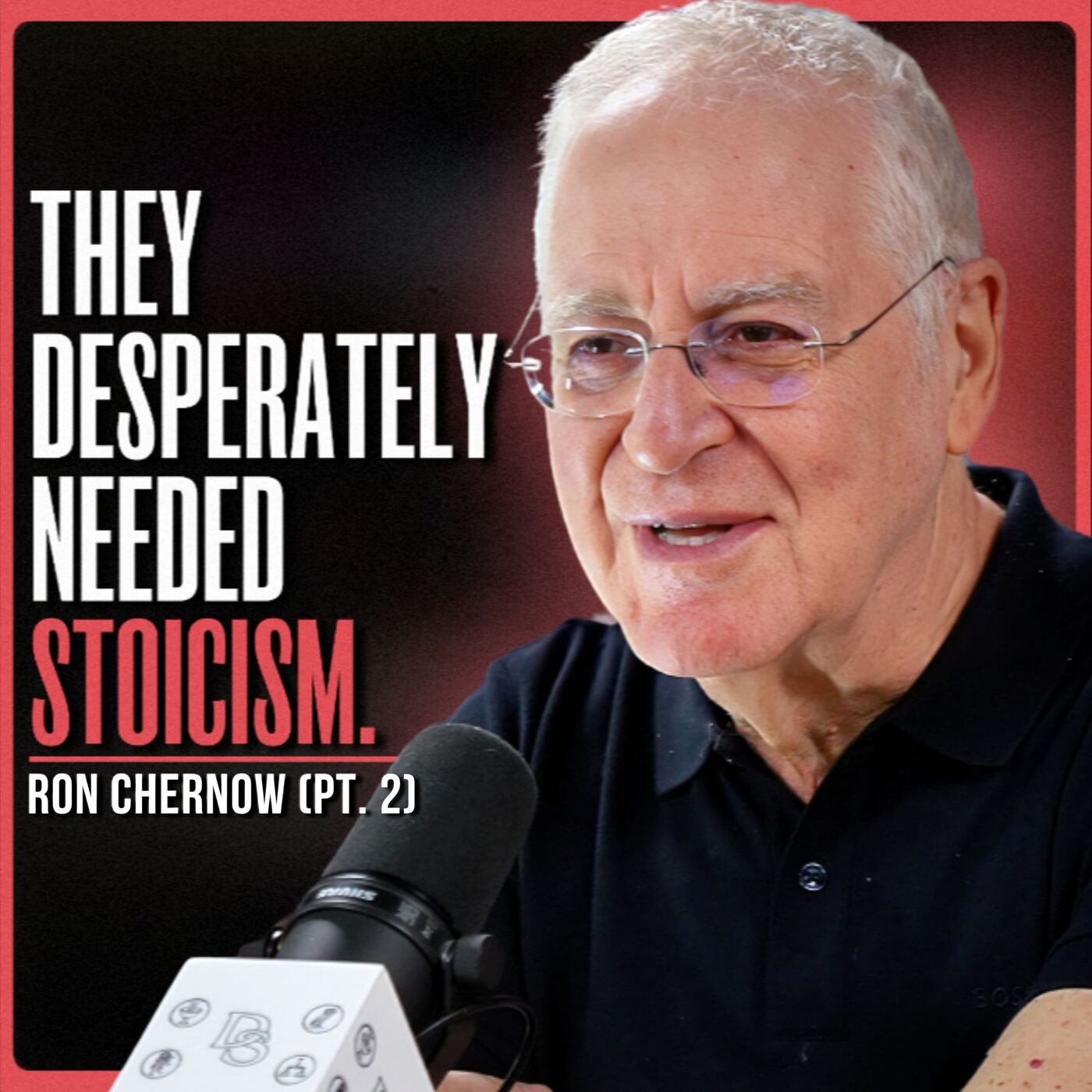
In the second part of a two-part series, Ryan Holiday interviews Pulitzer Prize-winning biographer Ron Chernow, focusing on Mark Twain's moral evolution and the emotional struggles faced by influential historical figures, including Ulysses S. Grant and John D. Rockefeller.
Written by AI. May contain mistakes.

Get the gist, explore an idea or ask about something said.
 Claude
On The Daily Stoic, what are the key points of this episode?
Searching your listeningAutomatic transcript. May contain errors.
0:00I'm recording this on a Monday, and Monday is our grocery store day in our family. I usually pick my kids up from school and we go over to Whole Foods, get all our groceries for the week. Although here very shortly, we're going to go over there to get our Thanksgiving turkey because they've got a bunch of great options. Turkeys start at$1.49 a pound if you have Prime with organic birds at$2.99 a pound. And they only carry no antibiotic ever turkeys that will bring quality to your table at a great price. Whole Foods has great everyday prices on all your Thanksgiving essentials, whether you celebrate with a massive family or just a few close friends.
0:37Everything they sell has high standards to help you shop with confidence. Enjoy so many ways to save on your Thanksgiving spread at Whole Foods Market. Why choose a Sleep Number smart bed? Can I make my sight softer? Can I make my sight firmer? Can we sleep cooler? Sleep Number does that. Cools up to eight times faster and lets you choose your ideal comfort on either side. Your Sleep Number setting. Enjoy personalized comfort for better sleep night after night. It's the final days of our Black Friday sale. Recharge this season with a bundle of cozy, soothing comfort. Now only$17.99 for our C2 mattress and bays, plus free premium delivery.
1:11Prices higher in Alaska and Hawaii. Check it out at a Sleep Number store or sleepnumber.com today. Look, ads are annoying. They are to be avoided, if at all possible. I understand as a content creator why they need to exist. That's why I don't begrudge them when they appear on the shows that I listen to. But again, as a person who has to pay a podcast producer and has to pay for equipment and for the studio and the building that the studio is in, it's a lot to keep something like The Daily Stoic going. So if you want to support a show but not listen to ads, well, we have partnered with Supercast to bring you a ad free version of Daily Stoic.
1:56We're calling it Daily Stoic Premium. And with Premium, you can listen to every episode of the Daily Stoic podcast completely ad free, no interruptions, just the ideas, just the messages, just the conversations you came here for. And you can also get early access to episodes before they're available to the public. And we're going to have a bunch of exclusive bonus content and extended interviews in there just for Daily Stoic Premium members as well. If you want to remove distractions, go deeper into Stoicism and support the work we do here, well, it takes less than a minute to sign up for Daily Stoic Premium, and we are offering a limited time discount of 20 % off your first year.
2:34Just go to dailystoic.com slash premium to sign up right now or click the link in the show descriptions to make those ads go away.
2:45Welcome to the weekend edition of The Daily Stoic. Each weekday, we bring you a meditation inspired by the ancient Stoics, something to help you live up to those four Stoic virtues of courage, justice, temperance, and wisdom. And then here on the weekend, we take a deeper dive into those same topics. We interview Stoic philosophers. We explore at length how these Stoic ideas can be applied to our actual lives and the challenging issues of our time. Here on the weekend, when you have a little bit more space, when things have slowed down, be sure to take some time to think, to go for a walk, to sit with your journal, and most importantly, to prepare for what the week ahead may bring.
3:36Hey, it's Ryan Holiday. Welcome to another episode of The Daily Stoic Podcast. What you're always looking for as a parent is connection between you and your kids. Sometimes they're interested in all your experiences and the things that you know. And sometimes they trust you when you recommend things. But most of the time they don't. They're cynical. They're skeptical. They're like, who is this guy? They don't know about video games. They don't know about this. That's what they think of their parents, right? Even though my kids are young and they're wonderful and they look up to me and they love spending time together, they like to make fun of me as all kids do.
4:11and a couple of years ago my son got really into this thing called epic which is a i don't know would you call it a rock opera a musical this series of albums all about the odyssey and we've gone down this huge rabbit hole about the odyssey i've talked about that and one day getting tired of hearing this album for the thousands time i said you know there's another one you might like do you know who alexander hamilton is and he goes no and i was like well there's a whole musical about this guy named hamilton who's one of the founding fathers i think you might like it and in an instant, our lives were changed because he became utterly obsessed with Hamilton.
4:46He dressed like Hamilton for historical figure day at his school. He was Hamilton for Halloween. He knows almost every song of the album by heart. We went and saw it when it came through Austin and as much as he liked the musical, I go, you know, there's a book about this? And he goes, what? And I go, yeah, the musical is based on a book and we carry the book in the bookstore and I have read it. And I was like, I not only read it, I got excited and I went and saw saw Hamilton's grave in New York right after I read the book. And he's like, what? And I was like, you know what? Let's listen to the audio book.
5:17And so we made our way through the 30 something hour audio book to and from school, piece by piece. And then a couple of months ago, I was giving a talk in New York City at JPMorgan Chase. And I walk out after and there are the pistols in the lobby. My son about lost his mind. So when I told him that Ron Chernow was coming to do the podcast, he was like, can you come pick me up early from school so I can meet him? And he did. So this is part two of the interview. I brought you part one earlier in the week, but towards the end, as you listen to this, my son bursts in and asks Ron some questions.
5:53He has Ron sign a book for him and his playbill. And then Ron asks him what his favorite song is. And they proceed as I'm sitting in a chair in the corner of the room. And I watch Ron Chernow, the author of Hamilton, which inspired like one of the biggest musicals of all time, go through the first song in Hamilton, word for word with my son, both doing it. And then afterwards, my son goes, Dad, I think I knew the words better than him. And it was just a very beautiful thing. And let me tell you a little story afterwards, though. So I follow up with Ron Chernow, and I thank him. I'll pull up this email.
6:29I said, Ron, thank you so much for making the trip out to their bookstore. Most of all, thank you for the incredible consideration you gave my son. He absolutely loved it. I said, I've gotten a lot out of your work over the years. I talked about this in part one. So many of the stories in my books would not be possible without his biography of Washington, his biography of Rockefeller, his biography of Grant, and now his new biography of Twain. I said, but I got the most out of seeing that. Thank you. And he said, it was great to meet you, do the podcast, tour the Painted Porch, but your son stole the show and my heart.
6:59How sweet is that? I'm over the moon about it. My son was over the moon about it. And then, of course, to go back to Greek mythology, I may have flown too close to the sun because I emailed him back and I said, this is so great. Hey, but while I have your attention, and I guess you'd only get this joke if you read his biography of Twain, which is all about Twain falling for schemes and scams and inventions. I said, now that I have your attention, I have an invention I was hoping you'd invest in. It'll be worth millions and millions someday, and you can fulfill your dream of being a tycoon. Smiley face emoji.
7:31Well, he replied, but he didn't say like, ha ha. And now I'm worried he didn't get it. I'm just worried I blew it like my dad joke flopped. And maybe he seriously thought I was proposing an invention. I definitely was not Mr. Chernow. I love your books so much. Thank you so much. You were incredibly kind. Everyone, please enjoy the second part of this episode. And please check out Grant, Washington, Hamilton, and his biography, Titan of John D. Rockefeller. One of the only living biographers to win a Pulitzer, National Book Critics Award, Gold Medal for Biography, National Humanities Medal. I mean, he is one of the greats, a living legend.
8:12And you'll see in this episode an incredibly kind person. In part two, we're talking here about why Mark Twain needed stoicism, Twain's moral arc, the tragedy of Twain's life. And then, as I said, towards the end, my son comes in with some pressing questions. I hope you enjoy this interview. I think we still have some signed copies of Chernow's books in the store. They went fast, as it happens, actually, as he went around signing them. Some guy came in and he was a huge Chernow fan. He had read a biography of every American president. It had been one of his sort of New Year's resolutions over a couple of years.
8:46And so he got signed copies of Grant and Washington. What an experience. You get to listen to it. Enjoy. I'll talk to you all soon.
8:56I grew up in Sacramento and, you know, we learned a lot about the sort of mining towns and camps in Calaveras County. So I grew up hearing a lot about Mark Twain and it wasn't until my parents live near Incline Village now. And I was visiting them, I don't know, eight or nine years ago. I went for a run and I'm running up along this beautiful trail. I'm looking down over the lake and there's this sign just in the middle of nowhere, like a historical sign. And it's like, this is where Mark Twain nearly burnt down all of Lake Tahoe. And I remember thinking, oh, he would have been famous just for this.
9:31Like, he would have been the guy that started the Chicago fire or, you know, was responsible for some natural disaster that we all know about. Right. That actually happened. I mean, Lake Tahoe was called Lake Bigler at the time. And he went out there with a friend that had bought a small stake there. and they spent days just gliding on a canoe. Mark Twain loved nothing more throughout his life than being on the water. And then they're, you know, cooking at this campfire, and they managed to set on fire the forest land that they had just bought. It's kind of very Mark Twain image that wherever, you know, he goes, chaos follows.
10:12Yeah, and it's funny because he then goes out. His first book, The Innocents Abroad, and he does this tourist cruise to Europe and the Holy Land. You know, they see the Sea of Galilee, and he says, you know, Lake Tahoe is much more beautiful. Yes, it is. I mean, it's one of the wonders of the earth. When I was reading your Twain book, I was thinking of a quote from Dean Aikison, I think. He was saying that the remarkable thing about Harry Truman was his capacity to change. And Truman's born to slave-owning parents, racism. He's part of the system. And from where he began to where he ended up is almost inconceivable.
10:52The amount of change and breaking down of prejudice and Twain even more so, because Twain's able to be in a way that I think a president is not more a sort of an activist and a cultural critic. But just I was blown away at the arc of Twain's sort of moral perspective on humanity. Yeah, this is kind of a big theme in my book because Mark Twain has been so misunderstood about this. Okay, he's born into a slave-owning family in a slave-owning state. You read his letters when he's a teenager. It's just full of crude racist jibes, not just about blacks, Chinese. And he just grows and grows and grows.
11:32When he marries Libby Langdon, they're an abolitionist family that helped harbor Frederick Douglas. They knew Wendell Phillips, et cetera. And Twain's views begin to change. He goes sort of from being a southerner to a kind of honorary northerner. He then writes, often, still arguably the greatest anti-slavery knowledge and language, whatever its flaws. And, of course, the N-word is in there many times, but the N-word is used to expose the racism, not to celebrate it, to state the obvious. But then around the same time, something interesting happens that he visits Yale Law School. And when he goes there to speak, he meets a brilliant young black law student named Warnerti McGuinn.
12:18And he writes to the dean because Warnerti McGuinn, even though he was one of the best students in law school, he was living with the black school carpenter and doing odd jobs to survive. Twain writes a letter to the law school dean offering to pay for all of Warner T. McGwin's expenses. And he said, we have ground all the manhood out of the blacks and the shame is ours, not theirs, and we should pay for it. And his friend William Dean Howes, the novelist, said that Twain personally held himself responsible for the harm that the white man had done to the black. And that paying for Juanity McGuinn, it was his form of preparation.
13:03He actually used that term. There was also, I discovered, another black student, Wilson, at Lincoln College in Pennsylvania, you know, whom he paid for. And Mark Twain, you know, keeps going further and further. He actually says American liberty began not in 1776, but in 1865 when slavery was abolished. He mockingly says the Declaration of Independence should have said all white men are born free and equal. And so he just continues to grow. And I think that that capacity for growth is true of all the people that I have written about. They all become someone so much greater than you could possibly have imagined.
13:48Yeah, Rockefeller goes from caring only about personal profit and maximizing things for himself to this philanthropist. Like, you've got to grade them on a curve, right, from when they lived and their peculiar nature of their genius. But there is, if you're not opening up as you get older, then you're closing off. And I think you see this in other powerful great people, that there was something pure and beautiful and wonderful about them when they were young that's long gone by the time they're at the end. But I think the ones we really admire become more open, more empathetic, more caring, more inclusive.
14:26Yeah, I think that Rockefeller, you know, kind of ways a lot like, you know, Buffett and Gates, you know, became a bigger figure as time went out. I can remember when I was writing the Rockefeller figure, I was just so fascinated by him. I mean, talk about kind of reason because he was somebody, you know, in planning any kind of business, we're philanthropic. I think that all of us typically maybe think one or two steps ahead in this situation. He would think like six or seven steps ahead. So he was sort of never, one of his colleagues said, John could somehow not only see far, but he could see around the corner.
15:00And I remember I got so fascinated by him. I called up my editor and got off and I said, I'd like to do two volumes on John DeRocqueville. And she said, pretty much over my dead body. I said, why? and she said well if you do two volumes the first volume is going to john d rockfeld the ruthless monopolist and then the second volume is going to be john d rockfiller the enlightened philanthropist she said the whole fascination of the story is that it was the same man yeah put it between two covers and i think that was very very good advice so i have always avoided that multi-volume approach because I want you to remember, again, like with, you know, Mark Twain, I want you to remember that kind of, you know, mischievous, often racist, you know, kid running around Hannibal.
15:50Do you remember him sort of later on when he suddenly is paying his reparations, you know, to Warren T. McGuinn. And there's a very interesting story with Warren T. McGuinn because he goes on to become a very distinguished lawyer in Baltimore, argues a famous desegregation case. And there's a young lawyer whom he mentors in the next office named Thurgood Marshall. And Thurgood Marshall thought one human woman was one of the greatest lawyers he'd ever met. Thurgood Marshall, of course, then goes on to argue Brown versus Board of Education and become the first black associate justice of the Supreme Court.
16:28So I kind of love that through line. The coaching tree of Mark Twain, you wouldn't think leads to Thurgood Marshall, but it does. Yeah, to Brown, very sort of a bit of education.
17:00drove into Austin and bought a truck. What I bought was a Toyota Tacoma. And this truck wasn't just transportation getting me to and from my house. It unlocked a whole different style of living for us, not just on the ranch, but in our little Texas towns. There were places I could go now that I couldn't go before, especially out here in the piney forests, through the fields, and on the unpaved roads like the one that I lived in. We got to go deep into the hill country's wild beauty. We've driven all the way out to East Texas. We've driven it across the country. And by we, I mean not just my wife, but both my kids who I drove home from the hospital in that truck.
17:44Toyota trucks are built for those who understand that the best adventures happen when you're willing to veer off course. because you never know when you'll end up on a Toyota adventure detour. And of course, this is stoicism, too, because every detour, every obstacle is an opportunity. But it's helpful if you can handle the difficulty inherent in that. If you've got the resilience and the right companion to make it wherever the road takes you. Discover your uncharted territory. Learn more at toyota.com slash trucks slash adventure dash detours. Look, when you're hiring, you don't want just anyone.
18:20You need the right person with the right background who can move your business forward. And when I need candidates who match what we're looking for at Daily Stoic for any of my businesses, we trust Indeed Sponsored Jobs. Because when you're hiring, Indeed is all you need. You can give your job the best chance to be seen with Indeed's sponsored jobs. They can help you stand out and hire quality candidates who can drive the results you need. And according to Indeed, data-sponsored jobs posted directly on Indeed are 90 % more likely to report a hire than non-sponsored jobs because you reach a bigger pool of quality candidates.
18:58And you should join the 1.6 million companies that sponsor their jobs with Indeed. people are finding quality hires on indeed right now in the minute we've been talking companies like yours made 27 hires on indeed spend more time interviewing candidates who check all your boxes less stress less time more results now with indeed sponsored jobs and listeners of this show will get a 75 sponsored job credit to help you get your job the premium status it deserves at indeed.com daily stoic just go to indeed.com daily stoic right now to support the show by saying you heard about Indeed on this podcast.
19:35Indeed.com slash daily stoic terms and conditions apply. If you're hiring, do it the right way with Indeed.
19:46I'd be curious, what do you think that was in Twain? Is it the novelist's ability and empathy to see through and to the core of people and things? Or was it some, you know, for Grant, You know, he has like his mother's influence and that's this sort of decency that is combating against his father's, you know, what is it in Twain that allows him to not just go from this sort of ruffian, mischievous Confederate sympathizer to where he ends up, which is essentially right on all the big political and cultural issues of his time far ahead of his time. I mean, he's anti-colonialist, he's anti-slavery, anti-racism, anti-income inequality, and then eventually even comes around even to, you know, sort of Native American rights, and he gets it all right in the end, but wasn't there originally.
20:42I think that's a good question, Ryan. I think that part of the answer is just curiosity about people, opening yourself up to people, opening yourself up to what you can learn from other people. I tell the story in the book, okay, in 1874. He used to do a lot of his writing during the summer at his in-law's place in Elmira, New York. One warm summer evening, they're all sitting on the porch, and there was an older black woman named Marianne Cord, who was the cook. She was probably in her 60s or 70s. She had a hearty, cheerful manner. Twain was very, very fond of her. And Twain said to her on the summer evening, Auntie Cord, you always have kind of a smile on your face.
21:26You always have a kind of laughter in your lips. Have you ever had any trouble in your life? Doesn't he presume she's never had any trouble in his life? It's actually even more... Thank you. You're telling the story better than I am. And then she turns to him sarcastically and says, are you in earnest, Mr. C., Mr. Glevins? And she proceeds to tell the most hair-raising story that she had been born into slavery. She had, in slavery, a husband and seven children. They were all simultaneously sold on the auction block. So at that instant, her husband and seven children were torn away from her. The youngest one, Henry, was the only one she ever saw again.
22:08He ended up being a barber, probably Twain's own bar in Elmira, New York. And then she says to him, sarcastically, no, Mr. C., I ain't never had no trouble at all in my life. And Mark Twain was the first piece under his own signature that ever appeared in the Atlantic Monthly. It was titled A True Story, as repeated word for word as I heard it. And I think that it was his ability to kind of draw out the humanity of this woman who maybe had never really told anyone, you know, the story of her life before. You know, and this gave him a picture. He had a very powerful identification with the black community.
22:53Strangely enough, even when he was a boy and in his letters and kind of terrible racist things, he spent a lot of time in the slave quarters. Yeah. And kind of enjoyed them personally. He thought they were great storytellers. There was a kind of magic and folklore that he loved. And so I think he really liked people and learned from people. And these encounters made a huge impression on him. Yeah. And the only reason I corrected you is that I was very struck by the story. There seemed to be something in Twain. his anger was directed at things that he felt people had had the wool pulled over their eyes about or that they'd been sold a false narrative or story.
23:39So it wasn't just that slavery was wrong. It's that I think he was partly reacting against this notion that he'd gotten as a kid that it wasn't wrong and that it was a positive good. And that it's only as he gets older that he realizes what's been obscured from him as he comes to see the horror. Yeah, no, he said, you know, that in the Hannibal of his boyhood on the subject of slavery, a universal stillness reigns. Yeah. He described somebody in the streets, you know, white men hitting a black man with stone. Black man dropped dead, you know, no one thought twice about it. And he said that not only did the church not denounce slavery, But he said we were taught that slavery was sacred and a peculiar pet of the deity.
24:27And this creates a lot of cynicism. Yeah. Not about religion, but about organized religion, because he felt that the church had been kind of a major, in the South, major prop of slavery. Yeah, it's a cynicism against narratives that are telling people they don't have to think too much about something or look too far deep into it. It's like when you go, aren't sweatshops bad? And then people go, actually, you know, like, and so it's whatever that kind of convenient narrative that allows something, an injustice or a wrong to continue. It feels like Twain developed a sort of a nose for those things.
25:08So, oh, you know, they like us over there in the Philippines or, you know, the actually we were civilizing and helping the Native American tribes. There was a, when he was younger, you know, he accepted all these narratives. And as he gets older and learns more and starts to understand how these things get handled, he has a particular skepticism and like this focus on bringing those things into the light. Yeah, no, he was able to give up ideas that he'd previously held. You know, when the Spanish-American War breaks out, he's actually, you know, a sort of big jingawistic supporter of it because he felt that really we were supporting these Cuban rebels against these Spanish overlords.
25:52It's like the American Revolution. And then, you know, in the aftermath, we acquire control over the Philippines. And at first, he naively imagines that we were going to help to establish a Philippine republic. I said then he realized that we had gone there to subjugate, you know, not to redeem them. And he was very, very courageous. He gave a speech in New York in which he got up. I think that he was the toastmaster to banquet. You know, he got up and said that our soldiers in the Philippines were marching with disgraced muskets under a polluted flag. This is very, very difficult. takes a lot of courage to criticize your government in the middle of a war.
26:37In fact, even at the time, you know, a sort of gasp in the audience. And one of the other speakers rushed up to say, no, our boys are not fighting with disgraced muskets under a polluted flag. You know, he lost a lot of friends. And what's interesting is that earlier in his career, major preoccupation, because he always had the wrong opinions about things, he was very afraid that if people knew what he actually thought about a lot of different things, that he would alienate his readers. But then you see what happens as time goes on, particularly the last 10 years of his life, he just says, the hell with it.
27:12You know, I'm going to let it rip. In fact, you know, the famous white suit that he dons significantly, he calls the white suit my I don't give a damn suit. You know, it's like you all kind of reach that moment in life where we say, you know, I don't give a damn anymore. I'm just going to say what I felt. It was a long time coming for Mark Twain, but eventually we heard almost everything that he felt come out of his mouth. Yeah, there's the tragedy of Twain is, of course, you know, what what could he have said or done had he had a level of financial security? How do you not? This is the real cost of ill discipline, right, is the I think about this with Thomas Jefferson, right?
27:54Like Washington is able to free his slaves because he had the financial discipline to do so. He was in a position to realize his ideals, where Jefferson's horrendous spending habits and irresponsibility makes it impossible. He's too selfish to do something selfless. And there's probably something about Twain, too, where we lose several good books or stands or whatever that had he been a bit more disciplined and not needed an endless amount of money so he wasn't chasing these scams. He just would have been creatively and morally. Yeah, I think that there are two things. One, he and I would say Libby, too.
28:40They were very, very attached to material things. Livy actually wrote a beautiful letter in which he said, it's kind of terrible how attached we become to material things. Twain had made a fortune from his book, Royalties, from his lecture fees. He married an heiress. They create a 25-room house with six servants in Hartford. So I don't know of any other writer who was living this kind of baronial existence. And so, you know, Mark Twain, there's so much money there that Mark Twain could have had a very easy, placid life just writing things. But he has a speculative itch. He said, I must speculate, such being my nature.
29:22And in a later life, he admits, he said, I was always the easy prey of the cheap adventurer. He invests enormous amount in contemporary dollars, millions of dollars, in a whole series of failed inventions. And finally, he invested millions of dollars and Libby's fortune in something called the Page Compositor that he thought would revolutionize typesetting in the newspaper business. That goes bust. He had started his own publishing company, Charles Webster and Company. That goes bust. And, you know, they're forced to give up the Hartford house. They're forced into exile for nine years in order to try to economize.
30:06Even then, Ryan, they couldn't economize. And, you know, they're living like in this 30-room villa in Florence or this palatial hotel suite in Vienna. They really did not. And, in fact, when they're living in this villa in Florence, Libby writes a letter to her sister and says, where poor as church mice, which is, you know, they have teams of servants. It really is kind of crazy. So they really were never able to live within their means. But the story of Mark Twain is really a tragic story because all of the hardship, the bankruptcy, he has to do this around-the-world tour to pay off his debts.
30:40These are all self-inflicted wounds. And interestingly, here's, I think, he was the funniest man in American history, but he said that, he said, life is not a comedy. He said, life is a tragedy with comedy sprinkled here and there in order to heighten and magnify the pain by contrast. Yeah. In a way, he and Grant are similar. Yeah. There's a line from Sherman where Sherman, reflecting on Grant's fall, he said something like he wanted to vie with fortune with all these Wall Street figures who would have given all of their money to have won one of his battles. This idea of not being happy with what you have and the poverty of needing to also have what someone else has, it just leads to the end of so many people where it comes at an incredibly high cost because it distracts them.
31:33Yeah, and you know, Mark Twain's first novel was entitled The Gilded Age. That's where we get the term, The Gilded Age. And it's full of satires of these money-mad characters. So someone reading that book, not knowing about his life, would figure out Mark Twain would be the last person in the world who would get caught up in that. He was the first person to get caught up in that. In his writing, he was railing against the plutocrats. in his private life. He's doing everything in his power to become one of them. And what I discovered, you know, with all of these inventions that he invested in, all these business ventures, he wasn't just content to make a decent return.
32:12He wanted to make a killing. He wanted to become one of the richest people in the country, if not the world. He kept, since when he was in Vienna, He wanted to invest in a new device that would print on textiles and carpets. He's known nothing about this before. In 24 hours, he thinks he's become a world historical expert on this. There's an ego to it. Yeah. He writes to his friend Henry Rogers, who was one of the moguls of Standard Oil. And he said, we should buy up all the patent rights for it. We can control the entire worldwide business. And he said, people will call it a trust, but let them, you know, if they, you know, insist.
32:53And that he would think in such grandiose terms. I talk in the book, you know, when he and his siblings were children, their father, John Marshall Clemens, left them with 70 ,000 acres of largely worthless land. And the Tennessee land, and his dying words, never give up the Tennessee land. We'll make you rich someday. It's his rosebud. Yeah, it's his rosebud moment, you know, clearly. And while the children, but particularly Mark Twain, it left this kind of fantasy that we're going to kind of make a killing. We're going to strike it rich someday. Yeah, it's, I'm sure you've experienced this, right?
33:35It's like you can do well at what you do. You can have more than you ever dreamed of getting in your life. And then you meet someone and, I mean, this is, what Twain was going through is very timely in that, you know, then you meet someone and they're like, oh, I made$100 million speculating in cryptocurrency. And you go, did I screw up somewhere? Like, here I am slaving over these books. And some idiot I went to high school with, you know, makes two entries in a computer and is a billionaire, you know? And that, I think, if you don't have a strong sense of self and you don't love what you do and see that as the gift, like that's been striking for me, the number of very wealthy people that I've met that what they really love is books.
34:18All they want to do is write books, right? And then you go, oh, okay. You have to remind yourself, like, I hit the lottery. And Twain struggled, I think, to realize he had the ultimate fortune in that he was incredibly rich. And all these rich people admired him and wanted what he has. That's what was the tragedy with Grant, too. You were maybe the greatest general in history. Do you know how many billionaires fantasize about doing what you did for one second and and that the inability to see that and to to want what you have and what someone else has that's the undoing very well put yeah i mean you know mark twain had this comic gift it was once in a generation kind of you know maybe once in a century yeah ability to make people laugh you know to create characters to create stories.
35:12And anyone would have traded anything for that, and yet he was not content with that. He had a kind of contempt for it. Early on when he starts this humor writing, he said, describes as kind of a trade of a low nature. He felt that it wasn't refined writing. There's one story that I tell in the book that after a lecture, and he was, again, the most brilliant lecture of his day, or maybe any day, you know, he was with a friend. And after the particularly brilliant lecture he gives, Twain is in a foul mood. And the friend asks why. And Twain says, I just entertain them. They'll wake up tomorrow morning.
35:55They won't remember a thing. He really felt that he not only wanted to make people laugh, but he wanted to educate them. One strange thing that I found, I think I found it in the, you know, the margin of a book that he owned, he had a self-loathing because he read in a book, it said that Byron detested humanity because he detested himself. And Twain wrote in the margin, I'm like that, you know, that, yeah. So there was something in him that he was very dissatisfied with himself and his own life, which is sad because his gift was so singular. You know, and I have to tell you, I started writing the Twain book, you know, early in the pandemic when a couple of blocks away from me in New York, there was kind of a big refrigerated truck where all the corpses were being kept.
36:50And I was so grateful to Mark Twain. First time I've ever done a book where I was literally sitting there laughing out loud as I was doing it. Nobody is funnier. One of the reasons the book is so long, I kept discovering these comic gems. And I would sit there saying, you know, Ron, if you don't put it in, it's forgotten forever. If you do put it in, it's going to become part of the Mark Twain lore. And I just think that he had such a priceless gift, but sometimes he did not appreciate that and still wanted something else. Well, I think you have a similar gift. I was very upset reading the New York Times review because I think that the beauty of your books is, it's not just their length, but they're these little things that help you understand the person in a new way.
37:41And yeah, I imagine each one you accumulated and it means something to you and you have to go, is it going to mean something to someone else? Is it going to matter? Is it going to resonate? But there are these deeply layered books that help you understand these figures that I think each one of them tells us something about who we all are. But then also, we need more figures like this in history. There's something about biography that's kind of, in our more cynical time, I think, like nobody believes in the great man of history theory anymore, unfortunately. Yeah, yeah. And you need people who think that they can change the world and do, in fact, change the world.
38:19No, in fact, you know, whenever people ask me how I choose the subjects of my book, there's kind of a number of different things that I'm looking for. But one, I have to feel that the world is different for this person having lived. And just on that New York Times review, I think that a critic should review the book he's reading, not the book he would like to have read. Yes, of course. And it's not, this is not, I should say, the book of Mark Twain. it's not a kind of literary critical biography where I'm going to sort of go deeply into analysis of each one of the the books what I try to do with the books and I think actually this is the first biography I touch on all two dozen of the books that he published in his life I'm not aware of any other book who has uh done that but when I come to the books I try to show that what this reveals about Twain at that moment in his life, you know, what gave rise to it.
39:15Also, Twain wrote, you know, a handful of outstanding books, Huck Finn, like from the Mississippi, etc. There are a lot of books that he wrote that are really second rate. But, you know, I read them, and what I tried to do, I said, you know, no one is ever going to read, I don't know, The American Claimant. There were all these forgotten books. But sometimes there would be really just a comic gem in the middle of them. And I said, let me see if I can preserve that. But, you know, sometimes a critic will kind of think along with you, and then another time they will fight you. Mark Twain made a comment on critics.
39:52He said, you know, it's kind of the degraded, most degraded of all trades. And he said, but the Lord has willed that we have critics and missionaries and humorists and other people, and we will have to live, we will have to bear that burden. When you'd have to practice your stoicism, which is not let it get to you and just keep doing what you do. Well, it's actually, you know, it's funny you should mention that because, you know, I was reading a book on the plane down. And when you publish a book, we've now had 31 reviews, of which 28 have been raves. But it's one of those moments where you're especially aware that you cannot control your environment.
40:33You cannot control what people say. Tongues will wag. It's not always funny to have all these people sort of chattering about you. And so you have to learn to have a certain philosophic detachment from the whole thing. Totally.
40:56We just took our kids to an outdoor performance at The Nutcracker. They had a snow cone. And then they went insane in the car ride home. And one of the things I try to remind myself when that's happening is that I don't control my kids' behavior, especially when they're too far gone like that, but I do control how I respond, right? That's stoicism, but it's also what Dr. Becky talks about. Dr. Becky is a clinical psychologist and a best-selling author, and she founded Good Inside, which is there to give parents practical, actionable tools for handling those everyday challenges with confidence.
41:31My wife introduced me to Dr. Becky's books. I love them. I've recommended them a million times. I've had her on the podcast. And as it happens, Dr. Becky is hosting two live Q &A events for good inside members. I am one of them. She signed me up for it about a year and a half ago. I've loved it ever since. On December 1st, you can join Dr. Becky for her How Not to Raise Assholes event, which is about avoiding entitlement and raising kind, empathetic kids. and on December 15th, she's hosting her How Not to Lose It over the holidays event, which I'm sure we could all use. As I said, I'm a big fan of Dr.
42:08Becky. She's been a great influence for me as a parent and just as a human being. And Daily Stoic listeners can join for 15 % off with code STOIC15. You just got to head over to goodinside.com to catch the events.
42:29What stoicism has taught me about being a writer is that my ambition has to be in the book, not in what people say about the book. My ambition is towards the part of it that I control. What I control is, did I do the work? Did I realize what I was trying to do? Did I do my best? It's all in that part. And then you have to be accepting of what other people say and do about it because you don't control that. You don't have to like it necessarily. Yeah, you know, and I've been very lucky, because I have developed a very, very loyal readership of people. I mean, I did the math. I've read 4 ,200 pages of Ron Chernow.
43:09Well, thank you. You're sort of an example of what I'm about to say. You know, my readers don't particularly care what this, that, or the other reviewer says. And actually, I find, and it's sort of nice going out and doing publicity, because I meet a lot of people like you who are loyal readers. I find, and I get letters from them, I find very often just what, you know, ordinary readers say about the books are to me much more insightful than what the professional reviewers say and that they appreciate the book in exactly the spirit in which I wrote it. And so I kind of feel very lucky with that, but reviewers will always be with us.
43:55I read Hamilton close to when it came out and loved it. And my eight-year-old somehow found the musical and is obsessed. So... Oh my goodness, is this your... Yeah, Clark, you want to come in? You want to sit in the chair? He's a big Hamilton fan. It's a pleasure to meet you. What's your name? Clark. Did you have any questions? Yes. Why did you make a book about Hamilton? Well, you'll find this interesting, Clark. I started writing this book in 1998, I suspect, before you were born. And at the time that I started writing about Alexander Hamilton, he was a forgotten figure. No one knew who he was.
44:35Maybe they knew he was the guy on the$10 bill. Maybe they knew he had died in a duel with Aaron Burr, but that was it. But I started reading about his life, and I thought it was the most exciting personal story I'd ever encountered. and his achievements were much greater than that of some of the other founders that we knew very well. And so it has pleased me to no end that because of the success of the musical, so many people Alexander Hamilton is now not only known, but is their favorite founding father. Tell me what you like about the musical. Well, we read this article and when they said history has a size on you.
45:17They said it sounds like God has a size on you, but they used history because they didn't want it to be religious. I also have another question that's, when you were writing the book, did you think there'd be a musical about it and a play about it? That's an excellent question. Hate to say it, Ryan, he should be doing the interview. it's an excellent question when the book appeared in 2004 it was optioned for a feature film in hollywood that is hollywood would buy the right temporarily to consider doing this and we had this happen three times so our expectation was that there would be a feature film of alexander Hamilton.
46:01And then one day in 2008, I found out that someone named Lin-Manuel Miranda, who was starring in his first musical on Broadway, which was called In the Heights, had read my Hamilton book and had become obsessed with it. And I met him. I went backstage. He invited me to his Sunday matinee. I went backstage. And I said, so Lin, I hear my book made an impression on you. And he said, Ron, as I was reading your book on vacation, hip hop songs started rising off the page. This was not a typical reaction to one of my books. And he's told me that he wanted to, at that point, he thought it might be just a concept album rather than a full blown musical.
46:48And he asked me to be the historical advisor. And I laughed and I said, you mean you want me to tell you when something is wrong? And he said, yes. He said, I want the historians to take this seriously. So I became the advisor to this still non-existent show. The reason that I said yes to Lynn about being an advisor to the show was not because I thought it would be a sensation. It seemed like a very unlikely topic for a Broadway musical. I said yes to him because I'd been a lifelong theatergoer. And I thought, wouldn't it be fun to watch the development of a show from the other side of the footlights.
47:29And it was one of the greatest experiences imaginable. And during the seven years that I worked with Lynn on this show, every single person we thought, without exception, thought it was the single silliest idea for a musical they had ever heard. And as Lynn likes to say, they're not laughing now. so basically when you're writing the book were you trying to make it interesting well i yes you know because um i write as you can see long books and i think listening to the audiobook i think that the longer the book uh you better make it uh interesting because no one wants to read a long book but you have to make this so interesting so exciting that people will keep turning the pages.
48:17And so the way that I try to do that is by humanizing Hamilton as a character that he seems like such an extraordinary figure leading these very dramatic events that you want to find out what happened next and what happened next. If I can't make him interesting, I can't make a living doing what I do. You got anything else, Bud? Then we're going to have a walk around the book store. You can come with us. Two. Okay. So when you're writing the book, what was the hardest part? Did you have to look and check a lot of stuff? The hardest part of writing the book was that Alexander Hamilton was a human word machine.
49:01His papers fill 32 very thick volumes, and I had to read all of them. And it was sort of difficult to keep up with just the massive amount of material. It was a little hard on my ego, Clark, to write about a writer who was a much better writer than I was.
49:25And when you were, like, writing the book and doing the history, what was your, like, part of the history that made you laugh, like, the most? That made me laugh the most? I don't know in Hamilton that there were a lot of laughs exactly. I can think of one. Can you think of one, Ryan? Remember the one about where he used it? The parapet. The fat general parapet. Remind me of that. And the hurricane. There was a scene where, I think at the Battle of Yorktown, where Hamilton is hiding behind a rather large general. He demands that he stop using him as a parapet. Oh, okay. Okay. See, this is what happens, Clark.
50:07When you go out on the road, you discover that your readers remember the books better than you do. I think because my books are long, the hard drive of my brain can only hold one book at a time. Each new book kind of drives out the others. So sometimes I meet someone, they've just finished a book that I wrote 30 years ago that I've mostly forgotten. And they have the book at their fingertips. and then they can't quite believe that I'm the guy who wrote the book because I seem so dumb and forgetful. Clark, I brought your playbill if you wanted to sign it. This is from when we saw Hamilton. I thought you wanted to sign it for you, I bet.
50:47Will you sign this? Ryan, I think your successor is right here. He knows what he's doing. What was your favorite part of the play, Clark? Probably seeing Philip for the first time and how bad the hair costume was. Have they got like a grown man to play it? Oh, to play a kid? Yeah. What was your favorite song? Battle of Yorktown and always Alexander Hamilton. He can do it probably from memory. He listens to it every night when you go to bed, right? Yes. That's where he falls asleep. Can you do the first number with me? Had as a bastard orphan, son of a whore, and a Scotsman dropped in the middle of a forgotten spot in the Caribbean by Providence impoverished and squalor, grew up to be a hero and a scholar.
51:33The$10 founding father without a father got a lot farther by working a lot harder, by being a self-starter. By 14, they placed him in charge of a trading charter. And every day while slaves were being slaughtered, he struggled and kept his guard up. Inside, he was longing for something to be a part of. The brother was ready to break, steal, borrow, or butter. Then a hurricane came and devastation rained. A man saw his future dripping down the drain. Put a pencil to his temple, connected to his brain. And he wrote his first refrain, a testament to his pain. Okay, that's his first thing. That's amazing.
52:15That was so cool. You want a show on the bookstore? Yeah. Yeah. No, we'll walk you next story.
52:28Thanks so much for listening. If you could rate this podcast and leave a review on iTunes, that would mean so much to us and it would really help the show. We appreciate it. And I'll see you next episode.
Mark Twain didn’t just write American classics, he lived one of the most powerful personal transformations in history. In Part 2 of this conversation, Pulitzer Prize-winning biographer Ron Chernow returns to join Ryan for a deep dive into Twain’s remarkable moral evolution. They discuss how Twain’s journey mirrors those of Ulysses S. Grant and John D. Rockefeller, reflect on the tragic cost of chasing fortune over purpose, and explore what makes a biography timeless and a life unforgettable.
Plus, a special moment: Ryan’s 8-year-old son jumps in to ask Ron about Hamilton, his favorite musical.
Ron Chernow is the prizewinning author of seven previous books and the recipient of the 2015 National Humanities Medal. His first book, The House of Morgan, won the National Book Award, Washington: A Life won the Pulitzer Prize for Biography, and Alexander Hamilton—the inspiration for the Broadway musical—won the George Washington Book Prize. He has twice been a finalist for the National Book Critics Circle Award and is one of only three living biographers to have won the Gold Medal for Biography of the American Academy of Arts and Letters. Ron’s latest book is on the fascinating and complex life of American writer Mark Twain.
Follow Ron Chernow on Instagram: @RonChernow
📚 Grab signed copies of Ron Chernow’s books about Mark Twain, Alexander Hamilton, George Washington, Ulysses S. Grant, and John D. Rockefeller, at The Painted Porch | https://www.thepaintedporch.com/
🎙️ Follow The Daily Stoic Podcast on Instagram: https://www.instagram.com/dailystoicpodcast
🎥 Watch top moments from The Daily Stoic Podcast on YouTube: https://www.youtube.com/@dailystoicpodcast
✉️ Want Stoic wisdom delivered to your inbox daily? Sign up for the FREE Daily Stoic email at https://dailystoic.com/dailyemail
🏛 Get Stoic inspired books, medallions, and prints to remember these lessons at the Daily Stoic Store: https://store.dailystoic.com/
📱 Follow us: Instagram, Twitter, YouTube, TikTok, and Facebook
See Privacy Policy at https://art19.com/privacy and California Privacy Notice at https://art19.com/privacy#do-not-sell-my-info.
