
 Ask ChatGPT



Host: Ryan Holiday
Daily meditations inspired by Stoic philosophy to provide listeners with insights, courage, and wisdom for everyday life.
Written by AI. May contain mistakes.

Get the gist, explore an idea or ask about something said.
 Claude
On The Daily Stoic, what are the key points of this episode?
Searching your listeningAutomatic transcript. May contain errors.
0:05Welcome to the Daily Stoic Podcast, where each day we bring you a Stoic inspired meditation designed to help you find strength and insight and wisdom into everyday life. Each one of these episodes is based on the 2 ,000-year-old philosophy that has guided some of history's greatest men and women to help you learn from them, to follow in their example, and to start your day off with a little dose of courage and discipline and justice and wisdom. For more, visit dailystoic.com.
0:55There's no one stupider than an angry person. They are brilliant, they're educated, they know better. So what explains why smart people do stupid things? One reason, as Seneca tells us, is anger. because anger makes us stupid. It blinds us, makes us impulsive and rash, consumes us with grievances. It warps our sense of reality and our desire for revenge or catharsis. We do things that make absolutely no sense. Imagine, Seneca writes, returning a kick to a mule or a bite to a dog. Yet isn't this exactly what we do when we are upset or hurt? There's even a famous old saying, whom the gods wish to destroy, they first make angry.
1:40It is here that Stoicism must intervene. We have to pause and reflect. We have to ask ourselves, is this really going to make things better? Is this really a good idea? We need to balance out our emotions with some self-awareness and perspective. We have to check them with discipline. Because life is difficult enough, our problems are vexing enough, that we will need all our wits about us, cannot afford to be stupid. We cannot risk destroying ourselves.
2:18I'm recording this on a Monday, and Monday is our grocery store day in our family. I usually pick my kids up from school, and we go over to Whole Foods, get all our groceries for the week. Although, So here very shortly, we're going to go over there to get our Thanksgiving turkey because they've got a bunch of great options. Turkeys start at$149 a pound if you have prime with organic birds at$299 a pound. And they only carry no antibiotic ever turkeys that will bring quality to your table at a great price. Whole Foods has great everyday prices on all your Thanksgiving essentials, whether you celebrate with a massive family or just a few close friends.
2:55Everything they sell has high standards to help you shop with confidence. Enjoy so many ways to save on your Thanksgiving spread at Whole Foods Market. Look, when you're hiring, you don't want just anyone. You need the right person with the right background who can move your business forward. And when I need candidates who match what we're looking for at Daily Stoic for any of my businesses, we trust Indeed sponsored jobs because when you're hiring, Indeed is all you need. You can give your job the best chance to be seen with Indeed's sponsored jobs. They can help you stand out and hire quality candidates who can drive the results you need.
3:33And according to Indeed, data-sponsored jobs posted directly on Indeed are 90 % more likely to report a hire than non-sponsored jobs because you reach a bigger pool of quality candidates. And you should join the 1.6 million companies that sponsor their jobs with Indeed. people are finding quality hires on indeed right now in the minute we've been talking companies like yours made 27 hires on indeed spend more time interviewing candidates who check all your boxes less stress less time more results now with indeed sponsored jobs and listeners of this show will get a 75 sponsored job credit to help you get your job the premium status it deserves at indeed.com daily stoic just go to indeed.com daily stoic right now to support the show by saying you heard about Indeed on this podcast.
4:21Indeed.com slash Daily Stoic terms and conditions apply. If you're hiring, do it the right way with Indeed.
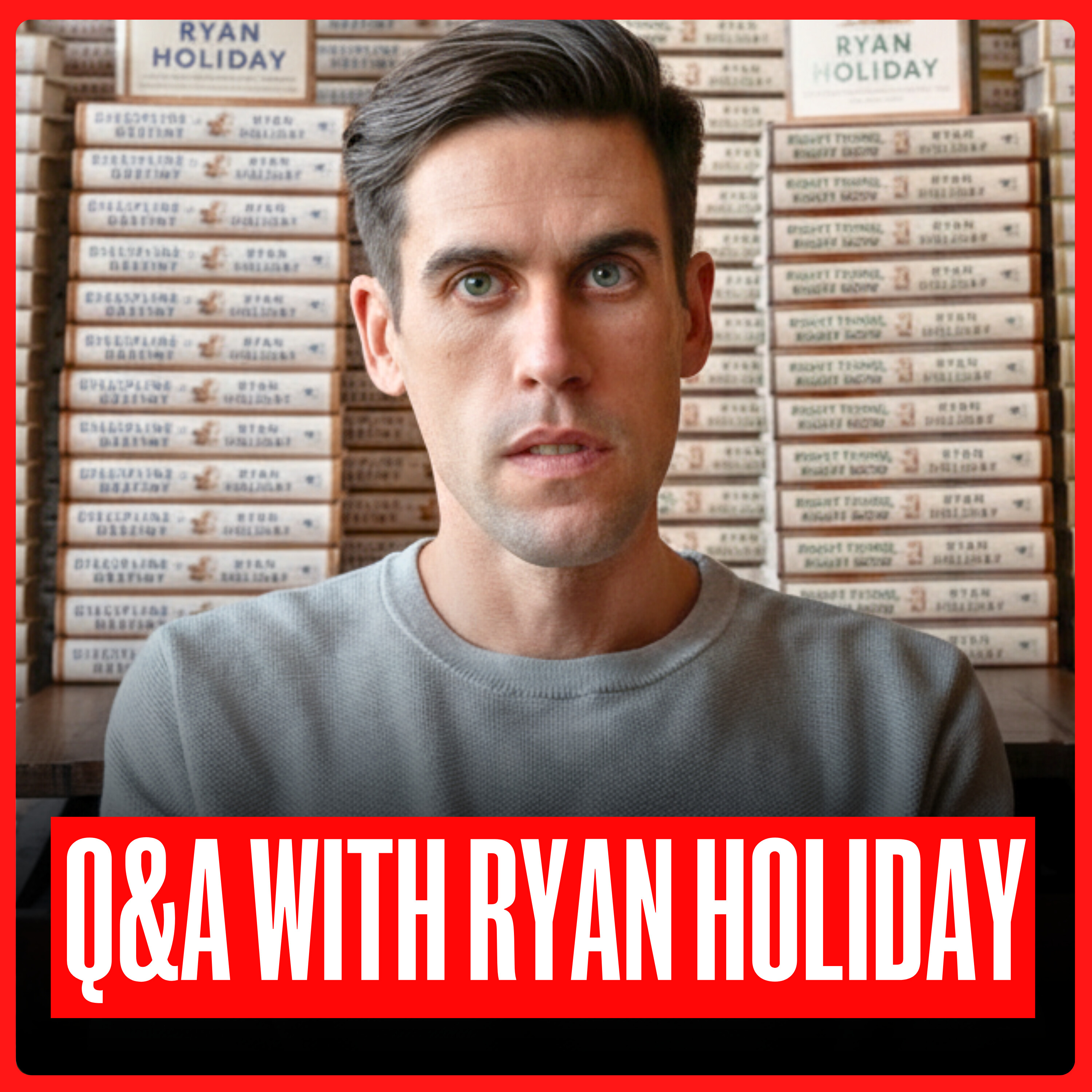
4:32Hey, it's Ryan. Welcome to another episode of the Daily Stoic podcast. One of my favorite things about giving talks is that not just that I get to meet people who are actually trying to apply stoicism in the real world, or many people have never even heard of stoicism, and they're just out there living their lives, and I get to connect with them and learn from them and understand their experiences. I mean, that's why I'm excited to go to Seattle here in December. You can grab tickets for that, by the way, at dailystokelive.com, and then I'll be in Phoenix and San Diego sometime in February. Grab the tickets at the same spot, but I get to travel places that I have never been.
5:14Back in May, I went to Mexico City. I've been to Mexico many times. I've been all over Mexico. I mean, I grew up in California. I live in Texas. So it's always within reach. But for some reason, I never been to Mexico City. I wasn't there for very long. I flew in the night before, got to have dinner in my hotel, take a couple walks, you know, go for a nice run in the morning and then go to this event space and then go home. So I didn't get to see a ton of it, Although I did see this cool park named after Abraham Lincoln, where I spent a good chunk of time. So that was lovely. Actually, it was interesting because I was just finishing the Lincoln chapter from Wisdom Takes Work.
5:50And I go, this is kind of what Tolstoy was talking about. And he's in the North Caucus Mountains. And these people are asking him about Abraham Lincoln. I mean, here I am in Mexico and they've got a park named after him. That's the greatness of the man. I sort of brought it all home. I actually recorded a little video about it. But anyways, I gave this talk at an event called the National Advisory Council. But while I was there, a journalist interviewed me. His name is Juan Pablo DeLeo. And he's a journalist. He's the director at Politico Mexico. And he interviewed me for a TV spot. And then I did my talk on stage.
6:26And then we wrapped it up by him asking me some more questions in front of the audience. So I wanted to bring you a chunk of that sort of Q &A that we did at the end of the talk. He did a great job moderating. And I was fascinated to learn about the political situation in Mexico, which I don't know that much about. It was fascinating for me to get to talk to someone about their world and what they're worried about. And as it happens, everyone's worried about what's happening in their country. This is a sort of shared experience. It turns down the volume on what you think is happening here. So I thought that was a great conversation.
6:59and I hope you enjoy it. And I hope to see you in Seattle and Phoenix and San Diego coming up very shortly. You can grab those tickets at dailystoiclive.com. The Seattle event is almost sold out. So if you want to grab tickets, just go to dailystoiclive.com. That's the one in December. I'm going to be in the other places in February. So that's at dailystoiclive.com.
7:25Ryan, what's your perspective on vulnerability leadership both from the stoic and human standpoint. Yeah, I do think there is something about stoicism. People take it to be invulnerability, you know, remoteness, aloofness. I don't think that that's who the stoics were historically. I mean, we have multiple stories of Marcus Ruiz crying, the stoics made great works of art, the stoics had families, they had hobbies, they loved life. So this idea of repression, stuffing things down, that's not what stoicism is about, and I don't think that's what great leaders do. Are leaders a calming presence when everyone else is freaking out?
8:08Yeah, of course. That's a big part of it. But that doesn't mean we're just pretending that everything is always okay. To me, that's what leads to burnout. That's what leads to psychological issues. I try to work on, I have two young boys. I try to work on, hey, what are we feeling? Why are we feeling it? Let's go through it, let's work on it. Let's not make unconscious decisions in, you know, in reaction to those feelings that we have, but let's make sure we process and understand them so we're not, you know, sort of blindly just in this way of our passions as nations can set. The next question is, for entrepreneurs working in environments marked by violence, corruption, and the lack of justice, as in the case in many parts of Mexico, how can Stoic philosophy provide guidance and a sense of urgency when personal and economic freedoms are under pressure?
9:03Unfortunately, none of this is new. Rome was obviously a powerful empire, but it was filled with corruption and violence and dysfunction. And the Stoics were known as sort of honest brokers inside that, good people inside that. And then they also courageously dealt with and try not to be corrupted by it themselves. There's a story in one of my favorite scopes, there's a man named Titileus Rufus. He's a governor of one of the provinces of the Roman Empire, an Asia Minor. And he, unlike many of the governors sent as part of this empire, he decides not to move the province. He decides not to use it as a personal piggy bank.
9:48Titileus Rufus says, you know, I'm here to govern these people, to provide competent governance, and this is not a way for me to get rich. So you can imagine that's a deviation from the standard way to do business. It creates amenities. That's the problem with being honest in a corrupt system, is that you inherently indict and cause problems for those who are corrupt. So in a painful bit of irony, the ruling elites bring Rutilius Rupus up on corruption charges for not being corrupt. It's their fastest way of getting rid of him. So he was brought up in this sort of show trial, all this false evidence is brought against that he was convicted and sent.
10:35The sentence, mercifully, is not death, it's exile. And they say, we'll give you one bit, small bit of mercy, which is, we'll let you choose where you're going to be sent into exile. And Rufus thinks about it, and he says, okay, I'd like to go back to Asia Minor. So he's sent back to the province that he was supposedly corrupting, but in fact, not then. and there he is met with open arms and lives and serves honorably for the rest of his life. And to me it's this idea that we don't control how other people do things, we don't control the brokenness of the system, but we do decide whether that system breaks us.
11:15We do decide whether we succumb to it. Now, I don't mean to be glib about this, I understand that some cases are issues of life and death, but it was an issue of life and death for Rutilius Rupus. The Stoics are known, a group of them is known as the Stoic Opposition. They are constantly challenging their perpetual form in spite of Emperor's Light Bureau in Domitian. They are constantly exiled and sent away for this. But they tried to say, hey look, I'm not going to think about the consequences. I'm going to think about whether this is the right thing to do or not. And this is what makes them great and eventually it does lead to changes and improvements and of course here we are all these thousands of years talking about their examples.
12:01So to me the challenge of our time is to not be changed by the challenges of our time. To stick to the principles, the values, the conscience that we all have and to not let the, as I say, did not let the assholes turn you into an asshole. Very well said. How can we foster resilience and progress in those who are product of their context and slaves of their history? Well, we're all a product of our circumstances. We're all a slave to our history. So let's say the character is faith. But they did believe that we could shape our character, that philosophy was a way to do that. Our mentors are a way to do that.
12:44That our reading, our learning, our study of history was a way to do that. that we shape our character. And they did believe that character wasn't character values, philosophy, virtue, all these things. Excellence wasn't this thing that you had or didn't have, but it was a thing that you made. It was a thing that you are. And so if we think of virtue, for instance, as a verb and not a noun, then we go, okay, if we want to become better, we have to do better things. If we want someone who works for us to get better, to be more resilient to grow, to change. We do that by helping them do that thing.
13:22Again, it's not a DNA sequence that you got at birth or didn't. Stoicism, resilience, virtue, these are things that we cultivate in the choices that we make, in the things that we study, and then in the actions that we take. Another question. In places like Mexico, where governments limit personal ambition and try to make everyone the same, often at the cost of individual growth and success, because our plan is to help people stay true to themselves and find the courage to push back and rise above that money. The primary virtue of star philosophy, or the world's core, that I have been tattooed on my list here, is courage, discipline, and justice in wisdom.
14:02Courage, I think, being the virtue that the others descend from, or are impossible without. I think, wrongly, we tend to think of courage as, you know, challenging corruption, and charging onto the battlefield, rushing into a burning building. Those are all forms of physical courage, for sure. But the moral courage to be yourself, to go for what you want to go for, to put yourself out there, to try and do your best, is unfortunately one of the rarer forms of courage. One of my favorite Stoics is this guy named Equipidus. He lives in the time of Europe. You can imagine that we have an unstable, vain, and paranoid emperor standing out is a risky proposition.
14:44So this creates quite a bit of conformity and silence in Rome, but Agrippinus has none of it. He refuses to see the emperor, he speaks his mind, he's eccentric and unique, and a friend comes to him and says, why are you doing this? Don't you realize this is going to get you into trouble? And he says, look, I get it. Most people are comfortable conforming, but I'm not. He says, in a tunic or in a garment, there's all the threads that make it the color that it is. And then he says, there's the accent color. So he says, in a white tunic, I am the red thread that stands out and makes the garment beautiful.
15:26And I think we have to understand, as individuals, that we're all totally unique. That we have unique DNA, unique circumstances, unique experiences, unique skills. and strength is one of the craziest things in the world that we sort of mute those colors to be more like everyone else. So the courage to stand out, to be yourself, to live as you want to live, to go for what you want to go for, I think is the most essential form of courage that there is. We have one last question.
16:11Well, stoicism has a lot to teach us about all these things. Anxiety, what is at the root of anxiety? The root of anxiety is focusing on things that you don't control. And so Mark's realist in meditation, one of the famous passages, he said, you know, anxiety isn't this thing that I hope to escape. It has to be a thing that I'm going to discard, because I'm the source of the anxiety. If you notice, all the things that make you anxious, they all have one thing in common, and that's you. You are the source of the anxiety. The airport is not what's making you anxious. The economy is not making you anxious.
16:46Your children are not, and your children's safety is not what's making you anxious. It's your feelings, your projections, your worries that are causing that. And so the decision to focus on what you control, accept a certain powerlessness, and then to say, look, the parts of it I control, I'm going to do well, and that's where my energy is going to go, as opposed to just, like, unloading about the problem. Taking feedback. You can imagine a lot of people had a lot of strong thoughts about the Emperor of Rome. The Meditation of Art Studios talks about how criticism makes you better. that he wanted to hear from people who didn't like what he was doing or who knew better than he did.
17:27Because it saves him from making mistakes. And you can see, as a distinction between good leaders and bad leaders, good leaders solicit feedback, bad leaders run from feedback. There's actually a story I tell in my new book, because I was looking at the Lincoln statue in the park this morning. And across from them is the statue of Martin Luther King Jr. And I tell the story in the book about Martin Luther King Jr. He had one of his most trusted aides sort of had the assigned role of being the devil's advocate in their meetings. And at one meeting, the guy's tired and distracted, and he decides not to do it.
18:06He's just not really paying attention. And afterwards, Martin Luther King pulls him aside, and he says, hey, I need you to speak up at the meetings. because, he says, everyone here is certifiably insane. He says, we're all crazy. We need a voice of reason to prevent ourselves from doing extra crazy things. He says, I'm willing to give my life for this cause, but I'm not going to throw it away over some bit of foolishness. So even in a sort of a radical, courageous, ambitious organization like Martin Luther King's, he has people whose job it is to be a dose of reality. And he's actively seeking out that criticism and he's noticing when he's not getting it.
18:52And the way we have to understand criticism, it feels unfortunate, it feels unpleasant, but when my enemy is making, or my opponent, my competition, when they are making a mistake or when they are incorrect, I don't correct them. That's actually one of the fundamental laws of strategy, which is never interrupt your enemy when you're making a mistake. And so when someone is criticizing you, when someone is giving you feedback, they are by definition not your enemy or friend. They wouldn't be helping you. They wouldn't be giving you this information if they weren't trying to make you better. And so you have to actively seek out criticism and feedback.
19:33It's just a part of getting better. And so stoicism is to me the ability to say, I don't like hearing that, it doesn't feel fun hearing that, but I'm going to integrate it into my understanding here because my goal is to get better. My goal is not to remain the same. And I appreciate you giving me what I need, which is more information. Well, on holiday, thank you very much. Thank you all for having me.
20:09Hey, it's Ryan. Thank you for listening to the Daily Stoic Podcast. I just wanted to say we so appreciate it. We love serving you. It's amazing to us that over 30 million people have downloaded these episodes in the couple of years we've been doing it. It's an honor. Please spread the word, tell people about it. And this isn't to sell anything. I just wanted to say thank you.
21:03Shopify.com
21:09Look, ads are annoying. They are to be avoided, if at all possible. I understand as a content creator why they need to exist. That's why I don't begrudge them when they appear on the shows that I listen to. But again, as a person who has to pay a podcast producer and has to pay for equipment and for the studio and the building that the studio is in, It's a lot to keep something like the Daily Stoic going. So if you want to support a show but not listen to ads, well, we have partnered with Supercast to bring you a ad-free version of Daily Stoic. We're calling it Daily Stoic Premium. And with Premium, you can listen to every episode of the Daily Stoic podcast completely ad-free.
21:57No interruptions, just the ideas, just the messages, just the conversations. you came here for. And you can also get early access to episodes before they're available to the public. And we're going to have a bunch of exclusive bonus content and extended interviews in there just for Daily Stoic Premium members as well. If you want to remove distractions, go deeper into stoicism and support the work we do here. Well, it takes less than a minute to sign up for Daily Stoic Premium, and we are offering a limited time discount of 20 % off your first year. Just go to dailystoic.com slash premium to sign up right now or click the link in the show descriptions to make those ads go away.
There’s even a famous old saying: Whom the gods wish to destroy, they first make angry.
🎟️ Come see Ryan Holiday LIVE: https://www.dailystoiclive.com/
👉 Support the podcast and go deeper into Stoicism by subscribing to The Daily Stoic Premium - unlock ad-free listening, early access, and bonus content: https://dailystoic.supercast.com/
📖 Wisdom Takes Work by Ryan Holiday is out NOW! Grab a copy here: https://store.dailystoic.com/pages/wisdom-takes-work
🎥 Watch the video episodes on The Daily Stoic YouTube channel: https://www.youtube.com/@DailyStoic/videos
🎙️ Follow The Daily Stoic Podcast on Instagram: https://www.instagram.com/dailystoicpodcast
✉️ Want Stoic wisdom delivered to your inbox daily? Sign up for the FREE Daily Stoic email at https://dailystoic.com/dailyemail
🏛 Get Stoic inspired books, medallions, and prints to remember these lessons at the Daily Stoic Store: https://store.dailystoic.com/
📱 Follow us: Instagram, Twitter, YouTube, TikTok, and Facebook
See Privacy Policy at https://art19.com/privacy and California Privacy Notice at https://art19.com/privacy#do-not-sell-my-info.
