
 Ask ChatGPT


 The Daily Stoic
16 Jul 2025 · 43m
```markdown
In this episode, Ryan Holiday hosts James Altucher — a podcaster, writer, and venture capitalist. They explore themes surrounding creativity, the impact of algorithms on content creation, and the differences between enduring and fleeting works in the digital age.
Written by AI. May contain mistakes.

Get the gist, explore an idea or ask about something said.
 Claude
On The Daily Stoic, what are the key points of this episode?
Searching your listeningAutomatic transcript. May contain errors.
0:00I'm recording this on a Monday, and Monday is our grocery store day in our family. I usually pick my kids up from school and we go over to Whole Foods, get all our groceries for the week. Although here very shortly, we're going to go over there to get our Thanksgiving turkey because they've got a bunch of great options. Turkeys start at$149 a pound if you have Prime with organic birds at$299 a pound. And they only carry no antibiotic ever turkeys that will bring quality to your table at a great price. Whole Foods has great everyday prices on all your Thanksgiving essentials, whether you celebrate with a massive family or just a few close friends.
0:37Everything they sell has high standards to help you shop with confidence. Enjoy so many ways to save on your Thanksgiving spread at Whole Foods Market. Why choose a Sleep Number smart bed? Can I make my sight softer? Can I make my sight firmer? Can we sleep cooler? Sleep Number does that. Cools up to eight times faster and lets you choose your ideal comfort on either side. Your Sleep Number setting. Enjoy personalized comfort for better sleep night after night. It's the final days of our Black Friday sale. Recharge this season with a bundle of cozy, soothing comfort. Now only$17.99 for our C2 mattress and bays, plus free premium delivery.
1:11Prices higher in Alaska and Hawaii. Check it out at a Sleep Number store or sleepnumber.com today. What can 160 years of experience teach you about the future? When it comes to protecting what matters, Pacific Life provides life insurance, retirement income, and employee benefits for people and businesses, building a more confident tomorrow. Strategies rooted in strength and backed by experience. Ask a financial professional how Pacific Life can help you today. Pacific Life Insurance Company, Omaha, Nebraska, and in New York. Pacific Life and Annuity, Phoenix, Arizona.
1:51Welcome to the Daily Stoic Podcast, where each weekday we bring you a meditation inspired by the ancient Stoics, a short passage of ancient wisdom designed to help you find strength and insight here in everyday life. And on Wednesdays, we talk to some of our fellow students of ancient philosophy, well-known and obscure, fascinating and powerful. With them, we discuss the strategies and habits that have helped them become who they are and also to find peace and wisdom in their lives.
2:36Hey, it's Ryan. Welcome to another episode of The Daily stoic podcast. I am going to read to you an email that I sent. Wow, this is crazy. April 14th, 2011. So quite some time ago. And this is what it says. It says, Hi, James. I just wanted to thank you for your post on quitting your job. I'm the director of marketing and American apparel, 23 years old. And I made the decision that in six months, I would leave and move to a new city. I've got plenty of money, plenty of prospects to keep me busy without having to work for a while. So I thought the process would be easy with the end in sight. But with a month or two left on my internal commitment, it's been unbearable.
3:21I've been anxious and depressed and impatient all at the same time. And I just wanted to say how settling your post was and how it put into words so much that I've been dealing with but wasn't able to articulate. It made me remember that I'm doing the right thing. Thank you. It helped me enormously. So if you've heard me tell this story about a live time or dead time, that's the alive time versus dead time debate. I decided in six months I was leaving. I was going to move to New Orleans to write my first book, What Would Become Trust Me, I'm Lying. But sometimes the edges can get sort of sanded down on these stories and you forget that it was scary and hard and difficult.
3:59And I forgot that I'd written this email to James. This is James Altucher, who I've known since I sent this email, who's been a good friend, someone who's writing I've enjoyed and who's writing has deeply influenced me over the years. This is what he replied. This is crazy. I sent it at 3.58 p.m. and he responded three minutes later. He said, Ryan, I know how you feel. I remember when I was leaving HBO, it was almost as if I was physically in pain, but I couldn't quite place it. Finally, I told my boss I was quitting. He said, wait a month till I get back from vacation. Says I couldn't. I submitted my resignation that day.
4:37Gave two months notice and was gone. And then he said he was just passing an American apparel store the other day. I like their advertising, but imagine a weird environment to work in off the record. What was your experience like? Anyways, we went back and forth. And anyways, I gave him some behind the scenes stuff. Anyways, the point is, flash forward. Now, what is this? almost 15 years later. And James is on the podcast today. He's one of my favorite people. I always love talking to him. I've been on his podcast many, many times. And he kept saying, why have you never had me on? And I said, because you've never been to Austin.
5:12I want to have it in person. I want to do it in person, which he did. And he came out. And I think this is a really great conversation. James is an investor, a venture capitalist, a writer, an expert in things like crypto and AI. As I said, I've been on the James Altucher show many times. I was an early advisor when they were building out that show. Follow him on Instagram at Altucher and on Twitter, Jay Altucher. And you can grab copies of Choose Yourself at the Painted Porch, which is a book I saw as an early draft. I helped edit. I did the marketing for. It's been one of the best-selling self-help titles of the last 10 years or so for good reason.
5:50And here he is in the pockets. I'm going to split this one into two parts. I think you're going to like it. Enjoy. And thanks to James for coming on. And thanks for responding to that email all those years ago. I get lots of emails like that myself. And you try to respond. You can't respond to all of them, but you sort of never know who you're going to influence or how you're going to influence them. And he influenced me. He helped calm me down in a pivotal moment of my life. And I might not be here if he hadn't done that. And that's why I take it seriously. When you guys email me again. I don't always respond, but I try to give a few notes or words.
6:26And someone emailed me the other day and they were replying to an email chain. They'd asked my advice like eight years ago. And I said, I think you're going to look back on this email and feel a little cringe. Like you can calm down. This isn't as big deal as you're making it out to be. And then he forwarded it back to me eight years later and said, oh, I think you're right. But that's the joy of this. And that's one of the benefits you get is sticking around and staying at it is these sort of check-ins. So anyways, I think you're really going to like this episode. Enjoy.
6:57So what have you been mostly up to? Is it like, I know you have a book coming out in October. Yes, I do. So I'm finishing that. And then, yeah, starting to think about the next one. What do you think is going to be the next one? I know, I'm just not saying. Okay, I respect that. I think talking about it sometimes kills the energy a little. No, totally. That's, I think, well, it's two things. talking about it is a way to kind of get credit in advance. Yeah, it's like that. Oh, it's so amazing. You know, whatever. I try to avoid that. But also I find that it's very discouraging to me because if I had my arms wrapped around it, I'd have probably done it already.
7:34Yeah. I'm still like thinking about it. And so if I like describe it to you, it's going to sound stupid. And then your reaction is going to influence my, you know, like I'll be able to tell you exactly what it is and what it's about when I'm almost done. Yeah, I get it. And if I'm doing it now. I feel like you were able to do that before though, with like, you had such a solid grounding with like Ego is the Enemy and the whole series of Stoicism books. I think you were able to, when there's a concept that is just really solid, I think you don't have that problem. Yeah, but see, Ego is the Enemy started as a book about humility.
8:10So if you're like, what are you working on next? And then I'm like, I'm doing this book about humility. Because I'm the expert. You'd be like, oh, cool. Good for you. I hope that does well. You know, and I'd be like, it wasn't until I was like midway through it that I figured it out that it was about ego. And I nailed that. So I usually like just don't talk about it until it's like well underway and it exists. I think that's good. Like I think I wrote one to two books a year from 2003 to 2021. Yes. So this is like the first time as an adult that I haven't written a book in a couple of years. Do you feel backed up?
8:45Very much so. But I think you have to be true to yourself. You can't write a book for the sake of writing a book. That's how bad books are in. You've always seemed to me as someone who sort of has to, is compulsively creative. Like I thought when you were doing your comedy stuff, I saw that as like, oh, actually social media, writing online and doing books. James is like, no, he's just having to mainline it like directly from the source. Like we were like trying to get to the most unadulterated form of like expression, reaction, expression, reaction. That's sort of what I saw you chasing there.
9:23Yeah. And I never thought of it that way, but you're right. You're in a book. There's a very long waiting time between starting the book and getting the dopamine hit from releasing the book. But in standup comedy, you get that hit or not every day. And if you don't get it one day, you just go back the next day or the next hour and go for it. and that's true and also it's a very high pressure creativity like i need material for tonight yeah and so you have to be writing every day and you see you notice this with comedians like even like take someone like jerry seinbelt who's so successful as the greatest television show creator ever he would say if you say well what do you do for he would say i'm a comedian yeah like comedians are comedians at the core yes and ultimately i was not a comedian so that's not my core but for comedians that's their core no matter what else kevin hart more of a movie guy and a production guy than a comedian but he's a comedian at the core yeah no i so i think you're you're someone who has things to say you have a point of view or a voice and i think you've i've i've watched you i was thinking about this on the way here i would have started reading your stuff in 2010 so it's crazy to me that's been 15 years and i was realizing like one of the first articles i read from you was an article you wrote about not going to college or dropping out of college.
10:40And I realized that that article hit me because I was still relatively close to having done that. Like that's how long ago it was in my life that I was like, oh, this guy's like speaking to this thing that I did that I'm still not sure if it was the right decision or not. Cause like, I don't know the end of the story yet. And, and so like you, you've always struck me as a person who has strong opinions, you've been trying your hand at lots of different outlets with a whole bunch of success. You sort of succeeded in each one of the mediums, but that you're like a point of view guy. That's what you are.
11:15Yeah, point of view. It's an interesting thing, point of view, because, and that means something different now than I think it meant 10 years ago or 15 years ago like now there's only two points of view and you're you're either like what woke and anti-woke or what or just like you know either trump or anti-trump or whatever and like i have actually like no interest in that and so then the question is what's what's ethical like do you need to have an interest in that like i was talking to medi hassan and he was like you need to have an interest in this. But I was more like, you know, I'm more interested in how I can become a better person.
11:54And then as just a side effect of that, if people relate to that, then how other people become better people. And it's like different layers of where you should focus. So if I focus on, let's say this other layer, then it might distract me from how I can become a better person. Like maybe I become a better person by convincing people to have one stance or another, when I don't even know. Like Ukraine's a great example. I have no clue other than what people tell me about what's going on in Ukraine. And so I can have a stance based on what people tell me. But then in terms of me then regurgitating that stance, I'd rather talk about what makes, what adventures I'm going through that make me a better person.
12:33Yeah. I mean, one of the traps of our time is that you have to have an opinion on every issue. Well, and people say silence is violence. Yeah. They make you feel like it's unethical if you're silent. Well, and it's hard because there is some truth to that, right? If they're taking people away to concentration camps and you don't have an opinion because you're really into physics, that you're complicit in that happening, right? And so obviously at some level, silence is violence. At the same time, the idea that everyone should have an opinion on everything all the same time is partly what you could argue there's also a form of violence in that.
13:11Like we used to have this impression, and this is like a very 20th century opinion, that our sort of worldview that authoritarian governments were about depriving people of information and enforcing sort of silence or whatever. And now what authoritarian regimes realize is that it's much easier to allow an ungodly amount of information, contradictory information out in the world, and then people just get confused and tune out or they don't, they're able to tell themselves whatever is comforting, right? And so part of, you could also argue that noise is violence because what it allows for is people to do sneaky shit or to do not sneaky shit, but just to do it in such a way that they get away with it.
13:56And so I think the idea that everyone should have every opinion all the time and be talking about it all the time is also wrong. There's some middle ground that each individual and then certainly each person with a platform or brand or an audience has to figure out the right amount of also. It's true. I guess in all that you just said, all that's true is the has to that you said in the last sentence there is where I wonder, like, what do I have to do? Like, I'm not obligated to my platform. Well, that's true. You don't have to do anything. And that's what makes it an ethical choice. Right. But then that's interesting, though.
14:32Right. So there's a line where, of course, if I'm a physicist and that's all I'm interested in, but my neighbor is going to a concentration, I have to speak about that. That I could see. but I sort of, honestly, I sort of missed like 2011 and 2012 because nobody actually cared whether Barack Obama or Mitt Romney won. I mean, people did, like if you're a Democrat, you wanted Barack to win. If you're a Republican, you wanted Mitt Romney to win, but nobody talked about it. I don't even actually, I don't even remember election. I remember every other election. I don't remember 2012's election day.
15:03Well, look, in normal times, most people don't have to be political because there's an Overton window where, you know, okay, they might disagree this way or this way, but there's a sort of a box that we're all in relative agreement that these are the sort of assumptions. I think the problem is what has happened is what we're now sometimes calling political issues are actually sort of fundamental like social contract issues. Like I think sometimes people think I'm political and I'm actually not really talking about the passage of SB 112 or, you know, like the name of some law. Like I'm actually talking about philosophical issues and our politics have gotten so toxic that we're not talking about politics, but we're talking about bedrock philosophical things.
15:57Do you know what I mean? And - Yeah, I agree with that. Like particularly the toxicity. I feel like the problem now is people can't have conversations. Sure. I'm pro-choice, but I have a business partner who's pro-life and we've been business partners since 1999. Like he's kind of in the background of a lot of my business stuff. And we've never once had an argument, even though we've discussed pro-life, pro-choice stuff, like he adopts kids, like he puts his, you know, his life where his opinion is. Sure. And, and I strongly disagree, but we never, there's no point in arguing because like he's got his view.
16:28I'm not going to change his mind and he's not going to change mine. But people still, I think people have to get along before they can change, you know, have any sway on someone's opinions.
16:47Thanks to Toyota Trucks for sponsoring this episode. When I bought my ranch in 2015 out here in Bastro County, I drove my car about halfway down the dirt road that we live on, thought this isn't going to work, stopped, parked it, walked the rest of the way home, borrowed my wife's car, drove into Austin and bought a truck. What I bought was a Toyota Tacoma. And this truck wasn't just transportation getting me to and from my house. It unlocked a whole different style of living for us, not just on the ranch, but in our little Texas towns. There were places I could go now that I couldn't go before, especially out here in the piney forests, through the fields, and on the unpaved roads like the one that I lived in.
17:32We got to go deep into the hill country's wild beauty. We've driven all the way out to East Texas. We've driven across the country. And by we, I mean not just my wife, but both my kids who I drove home from the hospital in that truck. Toyota trucks are built for those who understand that the best adventures happen when you're willing to veer off course, because you never know when you'll end up on a Toyota adventure detour. And of course, this is stoicism too, because every detour, every obstacle is an opportunity. But it's helpful if you can handle the difficulty inherent in that. If you've got the resilience and the right companion to make it wherever the road takes you, discover your uncharted territory.
18:14Learn more at toyota.com slash trucks slash adventure dash detours. We just took our kids to an outdoor performance at the Nutcracker. They had a snow cone and then they went insane in the car ride home. And one of the things I try to remind myself when that's happening is that I don't control my kids' behavior, especially when they're too far gone like that. But I do control how I respond, right? That's stoicism, but it's also what Dr. Becky talks about. Dr. Becky is a clinical psychologist and a best-selling author, and she founded Good Inside, which is there to give parents practical, actionable tools for handling those everyday challenges with confidence.
18:55My wife introduced me to Dr. Becky's books. I love them. I've recommended them a million times. I've had her on the podcast. And as it happens, Dr. Becky is hosting two live Q &A events for Good Inside members. I am one of them. She signed me up for it about a year and a half ago. I've loved it ever since. On December 1st, you can join Dr. Becky for her How Not to Raise Assholes event, which is about avoiding entitlement and raising kind, empathetic kids. And on December 15th, she's hosting her How Not to Lose It Over the Holidays event, which I'm sure we could all use. As I said, I'm a big fan of Dr.
19:32Becky. She's been a great influence for me as a parent and just as a human being. And daily Stoic listeners can join for 15 % off with code STOIC15. You just got to head over to goodinside.com to catch the events.
19:52I do think a part of it is probably rooted in the fact that what social media is built around is the solicitation of opinion, right? Like it is the fuel of social media is opinion and judgment. I would say now, but like 10 years ago, I don't think that was the case like i could talk about oh here's the 10 things i did when i was broke and depressed to kind of overcome that and that would get attention because people believed me and they trusted me and they would know my story or learn my story and then they would want to repeat or yeah or so the big switch and like jonathan heights talked about this but so like they say like social media is bad for kids or whatever actually when you look at the data it's not like social media has been around a long time.
20:36It's actually not like the level of mental health levels or whatever they track in kids that sort of see the spike. It's actually not like the day Twitter is invented or the day Facebook is invented. It's right when the social networks switched from a chronological feed to an algorithmic feed. Yeah, I agree. And so I think about this even with podcasting, which I'd be curious to have your take. I'll talk about that in a second. But the switch from chronological to algorithmic or even And what TikTok does, which is switch it even from the social graph to purely the viral graph, right, is the switch from, hey, I like that person.
21:14I want to follow them to this is what's being surfaced to me based on what the algorithm thinks will be the most engaging to me and based on what other people are sharing. And so it breaks social media from being this way to follow different people or things that you're interested in to being this thing that surfaces the most extreme, the most invigorating, the most outrageous, whatever, right? That's the fundamental switch. And that's why it goes from, yeah, people talking about their interesting lives to like sort of all politics, all division, all culture war stuff all the time. Yeah. And you're right.
21:53So, and then not only the problem is the algorithm exists as an almost as an entity so it's not like i'm tweeting something controversial so people are going to follow me because the algorithm it's we're both catering to the algorithm like now people tweet because they know it feeds these this giant algorithm monster and that people then are also preying down to like i'm going to go to the algorithm monster to to feel exciting and interesting instead of being a point of view guy Like, here's what I think. What happens, I think I've seen this happen to so many people I know. They were sort of a point of view person.
22:27They had an audience, they were putting stuff out. And then they touch upon an issue or they say something or they connect in some way. And then they become all that all the time. Right, which I think is very limiting. Like, I feel like when I began the podcast, it was about what I cared about and what I was interested in. And I keep it that way. But so many, I mean, I've had some drift in different directions, but in so many people say, oh no, you will get so many more downloads and followers if you pick one side or the other and you just go all in. I can't do it because A, I'm not that interested in that.
23:03And B, I don't think I serve anybody. If you're just preaching to the echo chamber, who's actually benefiting from you? Well, yeah, who has the audience, right? Do you have the audience or does the audience have you? And I think that's what happens. And that's always the challenge with every writer. Like if you're just like, oh, I have to write books about stoicism because that's what my audience wants. Then you just became a slave to your audience. Totally. And the challenge for any creative is to not be a slave to your work. Yes. I mean, that's why you see like. That's why you got into it. It was for the expression not to be sort of corrupted and controlled by some algorithm.
23:44Right. That seems like, what kind of success is it that you actually have less freedom once you've achieved it? Yeah, I mean, you can argue the brain, there's a built-in algorithm in the brain. It's like Joseph Campbell's Ark of the Hero, you know, the hero's journey. And you have to cater to that structure in the brain that appeals to heroic journeys. But that's about it. Well, I was, I'm thinking about writing this article that I was once very bullish on podcasts. and now I'm increasingly beginning to think they're very bad for you. So like, and I think part of it is the switch from a feed-based universe.
24:22Like if you think about podcasts five or 10 years ago, a podcast is something you subscribe to. It's long form. The ads are pre-sold. So whether an episode does a million listens or 500 listens, like you already sold it, right? It's not sort of sold in this real-time marketplace. and it's primarily conversational. And so I thought those are all relatively positive elements of a medium that I think are designed to produce intelligent, good information. Now, what happens is a podcast goes from being just audio to also video. And video, like people, a good chunk, 30 to 40 % of the people who are consuming this episode will be watching it on YouTube.
25:07That's why I have this studio, right? But YouTube is inherently algorithmic. So it becomes how the thumbnail of the episode and the title of the episode and how many comments it generates and the watch time, all these other forces are now operating on you as a content creator. And then I would say the other thing is they now sell real-time ads in your thing. So for people to understand, you plug in this little chunk of code and they sell ads in that code. So if the episode blows up, they serve more ads. If it doesn't, whatever, they serve less. And so there's a greater sort of connection between content and profit.
25:47And then I think the other thing that I'm realizing is that, like when McLuhan said the medium is the message, what he was saying is that, you know, and Postman talked about this too, whatever the medium goes towards or elicits from the creator or is most conducive to, it shapes the kind of content, right? And so like, it's very hard. I think people think that podcasts are good because it has like two people who disagree talking with each other, or it's like maybe, you know, people outside the mainstream or whatever. Actually, what I think a two hour conversation is really good for is bullshit.
26:24Like, I'm not going to have you here and then like hold your feet to the fire for two hours. That's like, that'd be incredibly awkward on a personal level. Do you know what I mean? Also boring. Yeah, sort of that too. But I guess what I'm saying is that the friendliness of the medium actually allows crazy people and bullshit artists and manipulators and whatever who are good to use the medium to introduce shitty ideas or untrue things. But do you think that's true for every medium? Yes, but it's harder to insert outright nonsense and bullshit into a mainstream newspaper than a three-hour conversation where both people are smoking weed.
27:05Do you know what I mean? And also, you have to understand with podcasts, I'm talking about audio podcasts now, you have a captive audience because they're either in their car or they're at their gym. That's where people consume podcasts. And so they're not switching while they're driving. They're not switching while they're on the treadmill. So you have, it's probably more than most media, you have a captive audience. Yes. And so you can kind of do these meandering long form, like I just, when I hear people talk about things that I really know about, I'm like, this is, you're not even close, you know?
27:35And so it's interesting to watch people as, and I think any medium as it develops, it's, there's this kind of innocence and purity in the early days. And then people who need access to an audience get really good at figuring out how to sort of inject themselves into. I think Robert F. Kennedy Jr. is a great example of a person who's just utterly full of shit and probably like literally insane. Who has figured out that, oh, this medium is conducive to spreading my type of thinking because it's fundamentally unrigorous. But there's fundamentally a captive audience. And it doesn't, you don't go to a podcast to get political or medical advice for the most part.
28:16But if your favorite comedian is interviewing that person, now you're, that's being downloaded directly into your brain in a way that I think if he was forced to defend himself on television or in a debate or, you know, in an op-ed, it would fall, it would fall apart. And so - It's true because like, you know, I had him on my podcast and I didn't really know, I knew I am for vaccines, but I don't know anything. I don't know any facts. And he knows a lot. And then we were going to talk about his autobiography, but then he goes for 20 minutes on this stuff. And I just don't know how to, I'm not, I can't respond to him.
28:53I don't know how to respond. And you're not, you're like, we got two hours left in this interview. I'm not going to be like, well, that was bullshit. You're not going to say that. Right. And you're not, you're not 60 minutes or something where your job is to be hostile if they're, you know, like it's not an interrogation. And so what it does is I think it enables stuff to spread. It's an unfair playing field. And so I don't know, when I hear people tell me that they listen to lots of podcasts, I usually go like, I might switch the ratio. I think podcasts are good. If you read a lot, if you talk to lots of smart people, if you have other information inputs and you are also have a strong base of knowledge, I think podcasts can be great.
29:40They can be additive. But if you're just like a long haul truck driver and you just do nothing but listen to podcasts all day, I think it will destroy your brain. It's bad for you. What should a long form truck driver... I think audio... I mean, think about the... Like an audio book and a podcast sound essentially the same. But the amount of effort that goes into one versus the other, it's not even on the same planet. Right. Because an audiobook will take you, let's say, two to three years to make. And it has to be worth paying for. It's designed to last for a long period of time. It's been at least edited.
30:15The person went over it several times. There was an editor and a copy editor and a legal review. There was a process. It's not a perfect process, but there was there's some stress applied to it. And then what a podcast is, for the most part, is a thought literally coming off the top of that person's head. Well, I wonder then if what makes a medium maybe useful or interesting in some way is how much tension there is in the creative process. So your point is, in a podcast, look, we could just sit down and start talking. And yes, it's going to be interesting. We've known each other a lot. Hopefully it'll be interesting.
30:54We've known each other a long time. we've developed a whole industry around podcasting, but a book, there's a lot of tension. It's like what we were talking about earlier. You, oh, what am I gonna write about? Oh, is this good? Is this bad? I'm halfway through writing about it. Should I tell people, should I change this topic completely? Should I throw this away? It's probably awful. My wife hates this book. And it's this huge tension that it's like a battle for years until you give birth. And podcast is not that way. Yes. So even like a TV show, So like you mentioned 60 minutes, okay, they've got a whole meeting of 30 people get together and decide, okay, well, who's going to be a good guest?
31:31And then you five research this, you five research this, get all the notes together and hopefully, please God, it'll be a good show. Yeah, and then they have a 45-minute interview that they're editing down and deciding what shots to go here to set that they're getting it down to a 14-minute piece or whatever, right? The idea of like just sort of unedited, like here it is. Yeah. Again, there's something refreshing about that. And that's why I like listening to them. But there is also, there's a reason people like making them. It's because it's the easiest of all the things to do. But sometimes the conversation's great.
32:07Like I did just watch Joe Rogan had on Magnus Carlsen, who's the greatest chess player in history. And Joe, you can see, doesn't really know anything about chess, but is fascinated by somebody who's the greatest in history at a skill. Yes. And a skill that's so culturally significant. And so their conversation was fascinating because Joe is such a great conversationalist and is a genuinely curious guy. Whether or not you always agree with him, that doesn't have to do with his skills as a podcaster and conversationalist. So there's a reason he's the biggest. Yeah. And Magnus, who's not a conversationalist, almost by definition, he's a chess player.
32:42But Joe was able to get out this stuff that Magnus has really thought deeply about for decades. And that was interesting to me because it is so spontaneous.
32:58Audible's romance collection has something to satisfy every side of you. When it comes to what kind of romance you're into, you don't have to choose just one. Fancy a dalliance with a duke or maybe a steamy billionaire. You could find a book boyfriend in the city and another one tearing it up on the hockey field. And if nothing on this earth satisfies, you can always find love in another realm. Discover modern rom-coms from authors like Lily Chu and Allie Hazelwood. The latest Romanticy series from Sarah J. Maas and Rebecca Yaros. Plus Regency favorites like Bridgerton and Outlander. And of course, all the really steamy stuff.
33:32Your first great love story is free when you sign up for a free 30-day trial at audible.com slash Wondery. That's audible.com slash Wondery. This message comes from Capital One. The Capital One Venture X business card has no preset spending limit, so the card's purchasing power can adapt to meet business needs. Plus, the card earns unlimited double miles on every purchase, so the more a business spends, the more miles earned. And when traveling, the VentureX Business Card grants access to over 1 ,000 airport lounges. The VentureX Business Card. What's in your wallet? Terms and conditions apply.
34:07Find out more at CapitalOne.com slash VentureXBusiness.
34:15Well then, what's the one, who's the actor that he had on? Oh, did you watch any of the Terrence Howard one? No, although it's funny. I had never seen Terrence Howard really in a movie, but then I watched after that, I watched little bits and pieces of it. And then I watched Hustle and Flow with Terrence Howard, John Singleton directed, and great movie. Of course. But you're like, oh, okay, the same medium that's so conducive to getting something interesting out of a great chess player also can allow a person who's clearly bipolar or manic or just like not well. Love him, but mentally ill. Yeah, you're watching it.
34:48You're like, this is not, But the medium, like if you watched a not well person being interviewed on CNN, you would turn it off. Like it wouldn't work. It doesn't work in the format. But the podcast medium is so forgiving that it allows a not well person to act like they're well. And millions of people listen to it and they go, oh, he really said something there. And it's like, no, this person, like this person should have been politely, you know, escorted to a doctor's office. Well, and the problem is the millions of people listening are not like just sitting at their homes and then they move on to the next podcast.
35:22Then they all go on Twitter and talk about it. And you have literally, it's 50-50. These 50 are defending and saying, yeah, he invented Wi-Fi. And then the other 50 is like, no, that guy has a problem, but they're not, you know, no one's ever going to, oh, like, oh, I just read an anonymous person on Twitter and he changed my mind completely. Like that's never been said. Yeah. So, you know, it's interesting in that way. And at the same time, then you get a completely different feeling when you read a good book where there was that years of tension like, oh, my God, how should I sculpt this sentence and this part of the story?
35:57And like you said, it's edited over and over and over again. You know, what's the classic example? Ernest Hemingway, his first book of short stories or his very first book. What's the Farewell to Arms? Was that his first book? Anyway, Sun Also Rises. Sun Also Rises. He edited it like a hundred times. Yes. There's like 50 endings. Yeah. Yes. No, totally. All that's there. And I would say, honestly, most people would be better, myself included, if we listened to more music and fewer podcasts. Because there's something... Music... You know what music is? No opinions. Right? Or if there are opinions, it's mostly about humanity.
36:34It's about life itself. It's not opinions about culture war stuff for the most part. Right. In fact, those songs are probably bad. Yes. So even like Kendrick Lamar, okay, he just did the Super Bowl show and he had this song, Not Like Us. I love the song, but I almost felt when he mentions Drake in the song that, okay, I really love the whole idea of the song, but I don't know what your personal beef is with Drake. And I have no clue at all. I barely know who you are, but I like this song and I really wanted to hear good lyrics. You listen now to, let's say, Led Zeppelin and the lyrics, how do they even write those lyrics is so beautiful to me.
37:13And they're also, you know, they're so personal, but they bring up these, you know, feelings in you that are like, oh my gosh, I forgot I had these feelings listening to these beautiful lyrics. How do they write those? How do they write those songs? I don't even understand how they, how Robert Plant, and I'm just using him as an example. There's millions of great songwriters, not millions, but a lot, but they're so beautiful to me. And I practically cry listening to them and i feel like that's not just it's just not done anymore yeah i think we're too much of the moment and trying to root things in the now as opposed to sort of rooting them in the like kind of fun like um you know that olivia rodrigo song driver's license no she writes a song i mean this came out there in the middle of the pandemic it was this huge song but she's writing a song about getting her like the feeling of getting her driver's license and like it's a sad songs.
38:03It's like a poppy sort of, it's a teenage girl singing about this. But the reason it becomes this huge hit is because that feeling is such a universal sort of modern part of coming of age, right? Like, I think that the great works of art are rooted in some part of the human experience, even though they're very specific. They are somehow, some version of that happened to me as opposed to, you know, I think people think of Bruce Springsteen as this kind of like, not political thing, but that his songs are very like class conscious and political, you know, but they're actually about like human beings struggling.
38:44Yeah. I never feel the class conscious thing with him. I feel like the, you know, you either, you either buy into this emotion that he's, that he's experiencing or you don't. And it's just emotional. Yeah, and the emotions are timeless. So he's right. He's changing characters and eras and different worldviews, but it's rooted in some thing that whether you're very successful, very unsuccessful, big, small, young, old, there's something in it that connects with you. Like you two, they come out of this violence in Ireland and Sunday, Bloody Sunday is about some, you know, this violent historical event in Ireland.
39:23I didn't know that when I first heard the song, but I still was able to enjoy the lyrics because the way they're singing, the lyrics themselves, somehow you can relate, even if you have no historical context there. Yeah. Well, it's also interesting when you think about these acts that are huge in non-English speaking countries, like they're American or British acts, but then they're huge like globally. Yeah. So people might not even know what the song is about. Right. And so at some level, it doesn't actually matter what they're singing about. It matters the emotion that they're evoking in how the random words are coming together.
39:59And I always, again, I always just wonder, like, music writing, good music writing seems to me the most creative thing of all. Because it's literally the one thing where I can't imagine how they came up with these lyrics. And I really think these people are sort of unique. Like, did I ever tell you when I ran into Bono? No. So like, you've met tons of famous people. I have a Bono star. I've met tons of famous people. But when you see someone like Bono, it's like a different experience. So I'm in an elevator in a hotel and he walks in with some friends and they were talking or bickering or something like that.
40:31And Bono's just making, oh, he turns to me and says, you know, look at these weirdos I'm with. And I just said something like, you know, you really got to be careful about who you hang out with. Like you're the average of the five people you spend your time with. And then as the elevator opens and they all leave and then Bono turns to me and hugs me and whispers in my ear, it's going to be okay, man. And then he leaves. That's amazing. Yeah, so it's just like he turned this elevator ride into a work of art, at least for me. So my Bono story was I was having dinner with this guy. He runs a movie studio.
41:03And we were talking and he's like, let's have dinner. And we had dinner at the Beverly Hills Hotel, one of the fancy hotels. Might have been the Beverly Hills Hotel. I think it was, okay, so it's the Beverly Hills Hotel. And we're sitting there and he goes, you know, like, you know, that's Bono over there. and I go, oh, wow, that's so cool. I was like, he's the best. And he goes, here, I'm going to take you. I'm going to introduce you to him. And I was like, okay. And so we walk over. He knows him very well. So he's like, hey, Bono, Ryan, this is Bono, the lead singer of U2. And then he goes, Bono, this is Ryan.
41:33Do you know the Daily Stoic? And he's like, no. And then I was like, why did you do that to me? Like I said to my friend, why did you ask Bono if he knew who I was? Yeah, but you just set him up to obviously say no. and then and then just sort of all the air went out of the room because we didn't and so i shook his hand and left but it was so so my my one bono interaction was someone setting him up to say that he didn't know who i was okay so if you were bono there what is the way to respond where the air doesn't go out of the room bono didn't do anything wrong he got set up he didn't do anything wrong but i'm still thinking like how he could have kept the politician's answer would be uh you look very familiar.
42:13Tell me about it. Or yes, I do. I'm a huge fan. Like I actually did meet this politician the other day and someone did the similar thing. Like, do you know? And he was like, oh yes, I'm a huge fan or whatever. And I felt like a million bucks, you know? And then as I was walking away, I was like, he didn't say anything specific that would prove that he did, but I wanted it to be true. And so obviously I suspended disbelief. And that's what great person personable sort of charismatic people make you can make you in the moment feel like they see you and they recognize you and they connect with you even though they're about to do that to the person next to you and the person next to you and that's a super rare skill it's a rare skill and you probably have had this experience just having a lot of politicians or actors same thing by the like politicians and actors, I've noticed.
43:08You've had a lot of politicians and actors on your podcast, as have I. And I always, when a good actor or politician I'm having a podcast with, I always end up thinking mid-podcast, is this my new best friend? Like, are we best friends? We're gonna keep in touch. Like, we're gonna hang out in LA or DC or whatever. And then you never hear from them again. Or even if you go to LA and say in text, like, hey, I'm here, like you said, why should you get in touch? Like, you never hear from them. And they're so good at that. I have to, at first I was like, oh, he wasn't really my best friend. And, but then it's like, you appreciate that they have this amazing, I wish I had that skill.
43:44Well, no, the ability to do that to someone you're interacting with, that's like one elite level skill. And then the way somebody through their art can make a person they're not even directly interacting with feel that way. Yes. That's the, that's the most elite skill of all. Like that a movie star can make can can make themselves feel like your friend or your hero or that can connect with you through a camera reading, you know, a script is that's an incredible skill to elicit the sort of parasocial relationship is like, you know, magic. And I feel like you could tell when they don't have that skill.
44:25You could tell, particularly now, we don't just watch things. We then read about the things we're watching. So you get this third layer of analysis, whether it's a politician speaking or an actor acting. But you could tell, oh, this person's acting. I feel like this person's acting. I feel like what this politician said was not true, was not something they believe. But the really good ones, you cannot tell whether this is them or this is them reading a script. yeah there's no sort of artifice and it just feels natural and then you the part of it where you willingly suspend disbelief and allow yourself to enter the world or the mood or the story and and by the way it's not just uh i mean this is like what demagogues do right this is what like bad leader like it doesn't just have to be for good you have to do because otherwise everyone's gonna say that's a demagogue like that's an evil person yeah oh hitler's just evil we're not gonna to vote for him.
45:17No, no. He tells a story that you give yourself over to and you turn off the part of your brain that's thinking about the consequences or the risks or the stupidity of it or the contradictions of it. That's, again, a very difficult thing to do. Yeah. But then, like you mentioned earlier, how what they're really doing is just using their art to connect in such a way that you relate so much, you're like friends with them in your mind. And so then it can be said, you know, writing then must be the hardest of all because you're at such a distance. They don't see anything but letters and you somehow, I think the writer does feel it like I'm having this experience that probably it's almost like maybe a survivorship bias, but you write about your experience.
46:02And if, if it's something that's relatable to enough people, you really do make that connect. If you go, if you have the skill of writing, it underlies all these things. You need the actual artistic skill through, through practice, experience, maybe a little bit of talent. And then you come up with a story that's either true or not true, but it's by magic, something that a lot of people have experienced or some people have experienced. So they relate to it or want to relate to it and they connect with you. Like I've met a lot of my friends now because they've read my books. All art is magic, right?
46:33We don't really know where it comes from or why it works, but I think there's different potencies of the magic. Like there's something about music. It's like one note can evoke a mood, right? So there's something just extremely powerful about music. And so it's, I think it can sometimes reach a higher plane, but like, I feel like there are a handful of notes in a song that are more in one song that are more evocative than all the moods that all of my books combined have ever managed to get out of someone. Does that make you upset? Yeah, I'm jealous. I'm genuinely jealous of the power of music.
47:06Like, I wish I could have come up with Hotel California and performed it on stage so I could actually see people responding to it. But it's just never going to happen for me. And like comedy has something where it's like you're on stage and there's the mic and then you can, there's something about laughter specifically that's very powerful. I think writing is like, it's kind of crazy that writing works at all. Like the idea that just through strings of characters, which become words, which become sentences, which become paragraphs, and then a narrative, that you can, that I could convince someone that they should change their life in some way or that they're capable of something or that I can make them cry or that I could make them dedicate their lives to something.
47:53The power of the written word is incredible. It's just, I think it requires so much work to get it to do that.
48:10help the show. We appreciate it. And I'll see you next episode.
48:31Look, ads are annoying. They are to be avoided, if at all possible. I understand as a content creator, why they need to exist. That's why I don't begrudge them when they appear on the shows that I listen to. But again, as a person who has to pay a podcast producer and has to pay for equipment and for the studio and the building that the studio is in, it's a lot to keep something like The Daily Stoic going. So if you want to support a show but not listen to ads, well, We have partnered with Supercast to bring you a ad-free version of Daily Stoic. We're calling it Daily Stoic Premium. And with Premium, you can listen to every episode of the Daily Stoic podcast completely ad-free.
49:19No interruptions, just the ideas, just the messages, just the conversations you came here for. And you can also get early access to episodes before they're available to the public. And we're going to have a bunch of exclusive bonus content and extended interviews in there. just for Daily Stoic Premium members as well. If you want to remove distractions, go deeper into Stoicism and support the work we do here. Well, it takes less than a minute to sign up for Daily Stoic Premium, and we are offering a limited time discount of 20 % off your first year. Just go to dailystoic.com slash premium to sign up right now, or click the link in the show descriptions to make those ads go away.
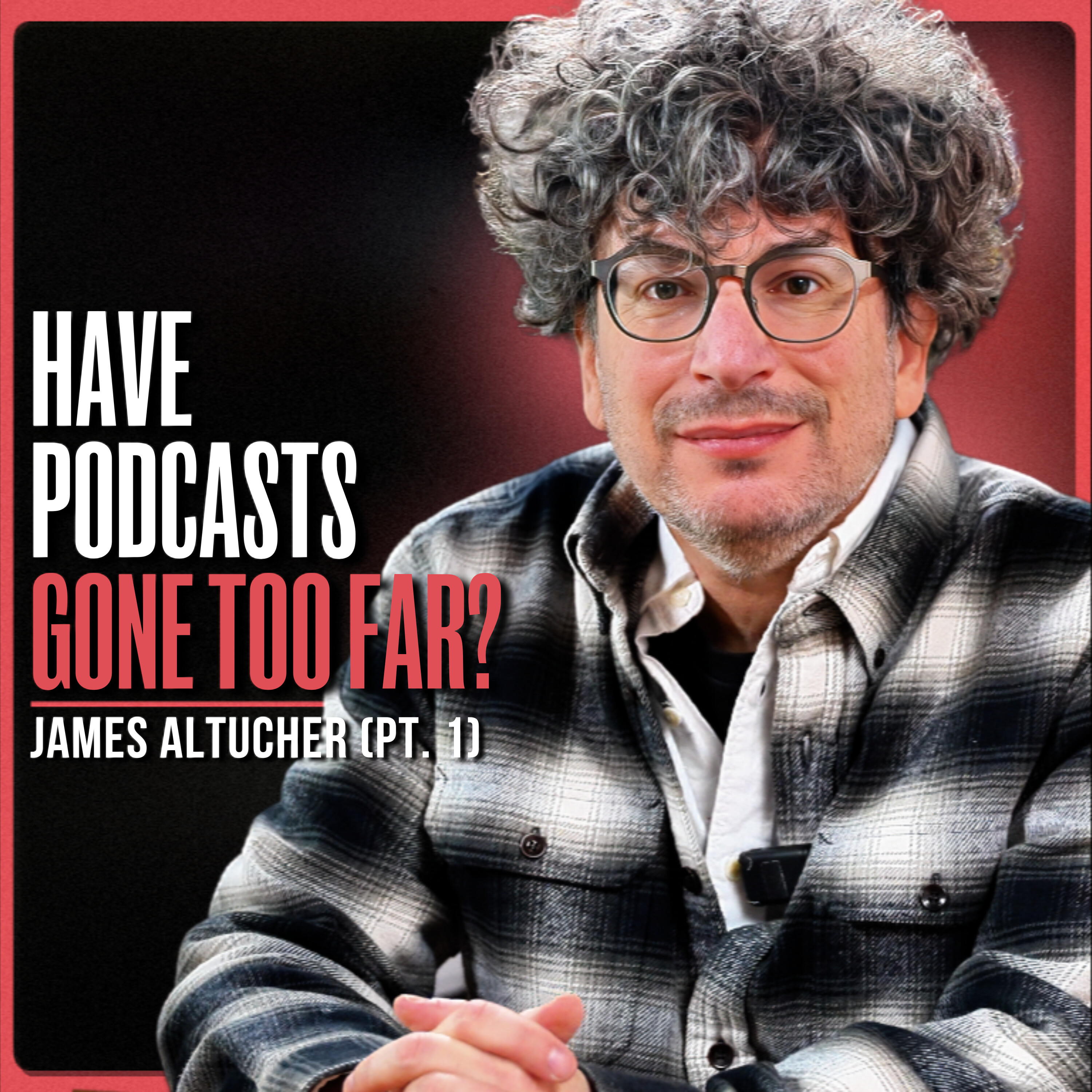
The greatest work isn’t what goes viral, it’s what endures. Podcaster, writer, and venture capitalist James Altucher joins Ryan to talk about why podcasting might be doing more harm than good, what makes a medium “healthy” for creativity, why some stories survive history and others disappear, and how the algorithm subtly rewires creators’ minds.
James Altucher is the podcast host of The James Altucher Show , an investor, venture capitalist, writer, and an expert in emerging technologies like crypto and AI.
Follow James on Instagram @Altucher and X @JAltucher
📚 Grab signed copies of James’ book Choose Yourself! at The Painted Porch | https://www.thepaintedporch.com/
📖 Preorder the final book in Ryan Holiday's The Stoic Virtues Series: "Wisdom Takes Work": https://store.dailystoic.com/pages/wisdom-takes-work
🎙️ Follow The Daily Stoic Podcast on Instagram: https://www.instagram.com/dailystoicpodcast
🎥 Watch top moments from The Daily Stoic Podcast on YouTube: https://www.youtube.com/@dailystoicpodcast
✉️ Want Stoic wisdom delivered to your inbox daily? Sign up for the FREE Daily Stoic email at https://dailystoic.com/dailyemail
🏛 Get Stoic inspired books, medallions, and prints to remember these lessons at the Daily Stoic Store: https://store.dailystoic.com/
📱 Follow us: Instagram, Twitter, YouTube, TikTok, and Facebook
See Privacy Policy at https://art19.com/privacy and California Privacy Notice at https://art19.com/privacy#do-not-sell-my-info.
