
 Ask ChatGPT


 The Daily Stoic
19 Jul 2025 · 43m
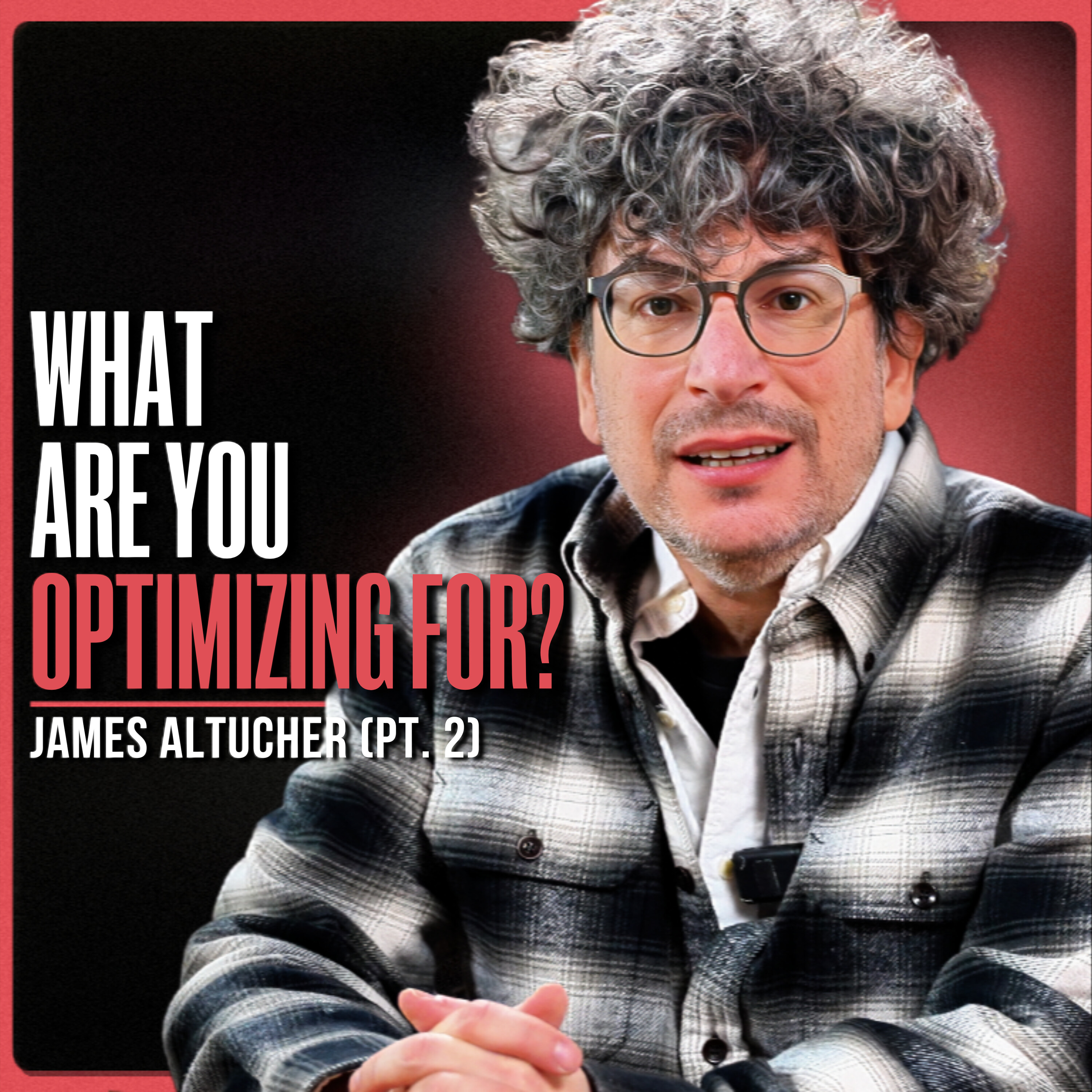
In part two of this insightful conversation, Ryan Holiday and James Altucher delve deeply into themes of creativity, the nature of aging, and the impermanence of ideas. The discussion is rooted in Stoic principles and emphasizes personal growth, mentorship, and the significance of historical context in storytelling.
Written by AI. May contain mistakes.

Get the gist, explore an idea or ask about something said.
 Claude
On The Daily Stoic, what are the key points of this episode?
Searching your listeningAutomatic transcript. May contain errors.
0:00I'm recording this on a Monday, and Monday is our grocery store day in our family. I usually pick my kids up from school and we go over to Whole Foods, get all our groceries for the week. Although here very shortly, we're going to go over there to get our Thanksgiving turkey because they've got a bunch of great options. Turkeys start at$1.49 a pound if you have Prime with organic birds at$2.99 a pound. And they only carry no antibiotic ever turkeys that will bring quality to your table at a great price. Whole Foods has great everyday prices on all your Thanksgiving essentials, whether you celebrate with a massive family or just a few close friends.
0:37Everything they sell has high standards to help you shop with confidence. Enjoy so many ways to save on your Thanksgiving spread at Whole Foods Market. Why choose a Sleep Number smart bed? Can I make my sight softer? Can I make my sight firmer? Can we sleep cooler? Sleep Number does that. Cools up to eight times faster and lets you choose your ideal comfort on either side. Your Sleep Number setting. Enjoy personalized comfort for better sleep night after night. It's the final days of our Black Friday sale. Recharge this season with a bundle of cozy, soothing comfort. Now only$17.99 for our C2 mattress and bays, plus free premium delivery.
1:11Prices higher in Alaska and Hawaii. Check it out at a Sleep Number store or sleepnumber.com today. What can 160 years of experience teach you about the future? When it comes to protecting what matters, Pacific Life provides life insurance, retirement income, and employee benefits for people and businesses, building a more confident tomorrow. Strategies rooted in strength and backed by experience. Ask a financial professional how Pacific Life can help you today. Pacific Life Insurance Company, Omaha, Nebraska, and in New York. Pacific Life and Annuity, Phoenix, Arizona.
1:48Welcome to the weekend edition of The Daily Stoic. Each weekday, we bring you a meditation inspired by the ancient Stoics, something to help you live up to those four Stoic virtues of courage, justice, temperance, and wisdom. And then here on the weekend, we take a deeper dive into those same topics. We interview Stoic philosophers. We explore at length how these Stoic ideas can be applied to our actual lives and the challenging issues of our time. Here on the weekend, when you have a little bit more space, when things have slowed down, be sure to take some time to think, to go for a walk, to sit with your journal, and most importantly, to prepare for what the week ahead may bring.
2:39Hey, it's Ryan. Welcome to another episode of the Daily Stoic Podcast. So back in 2011, I was thinking about leaving my job. I've talked about this before. Robert Green gives me the alive time, dead time advice. And I choose it's going to be alive time. I'm really going to work on it. But then I have to sort of stew in those juices. I have to spend six months sort of knowing I'm not going to do this for the rest of my life. And I'm about to go off this cliff in not that long from now. And it was a scary time. I told you in the last episode, I showed you this email that I sent to James Altucher.
3:14And it's crazy for me to read it back to see that I was saying then that I was anxious and stressed and impatient. It's also weird to me that I sent this to like a total stranger, someone I didn't even know, but I just read an article that they'd wrote and it had struck me. And James's articles are great like that. He has a bunch of articles that I've thought a lot about over the years. And a little lesson as we start today's episode. which is like when you feel that impulse to shoot a note or ask a question, you should do it. I mean, my whole life has been changed by emails like that. It's just a habit I've built.
3:55Like if I have a question, if I like something, I'm concerned about something, if I appreciate something someone's doing and it's helped me, I fire off a note. I'll send a DM or an email. I'll find a way to get in touch. And now look, most of the time you hear nothing. The vast majority of the time you hear nothing. But every once in a while, you're back. And that's what I thought was so striking looking back at this email chain with James Altucher, who's today's guest. We're bringing part two of the episode. I sent it at April 11, 2011, 3.58 p.m. And he responded on April 14, 2011 at 4.01 p.m., like three minutes.
4:30And I told him some stuff about American Apparel. And he said, it seems like you have a lot of great energy and you're an example of why I think most kids should skip the college routine and go straight into getting experience. Good luck on your next endeavor. Let's keep in touch. And now I'm just looking at my email here. I mean, we've got emails, oh man, like 14 years of emails back and forth. And we worked on all these projects together. I sent guests to his podcast. I advised on his podcast. He connected me with people. He sent clients to my marketing business. When I did, trust me, I'm lying.
5:04My first book came out. We had like a dinner. Someone threw me sort of a book party dinner and James was there. That was the first time I met him. And we've been friends. We've fallen in and out of touch. We text sometimes. We've spent a lot of time together. And I've been shaped by his work, but I've been shaped by the advice and the thoughts that he gave me. It's been really great. And you never know where these things go. I guess that's what I'm saying. I think people think mentorship is this official thing. Will you be my mentor? No, that's not how James shaped or improved my life. It's because I sent him an email and he replied.
5:38And then months later, I sent him another email. And then we bumped into each other. And it develops. It ensues. It's not something you pursue. It's something that ensues. Like any good relationships, right? They happen slowly over time. That's what they are. And so you never know. And that's why you got to take the chance. That's why you got to get them started. Anyways, thanks to James for coming out on the podcast. I've been on his podcast many, many times. You can listen to those episodes. He's always been a generous supporter of my work. And I try to support his work where I can. I've sent many people those articles over the years.
6:12And then we carry Choose Yourself, which I think is one of the best self-help books in the genre, certainly over the last 10 years. There's a reason it's sold super well. And he sort of followed his own advice there in that he self-published it and I think made a killing on it. His podcast is big. His email newsletters have been big. He's an investor, a venture capitalist, a writer. He's an expert on crypto and AI. And just a person I really like. I always enjoy watching him sort of develop and do stuff over the years. You can follow him on Instagram, at Altature, on Twitter, J. Altature, and grab signed copies of Choose Yourself at The Painted Porch.
6:51I'll link to that in today's show notes.
6:56i would say writing is really hard to do well and a little bit of the issue right now is everybody thinks they're a writer because you go oh i could write something on and put it on linkedin i could actually have ai write and put it on linkedin and now i'm the writer so but it's actually really hard to like tell that story and we see so many different examples like let me ask you. So you write, obviously you write these great, amazing books, bringing Stoicism into the modern day, and you tell it with modern stories, you know, ideas, I would say ideas piggyback on the stories you're telling. And so you have to be a good storyteller, which you are, but you usually use, almost always, I would say you use great historical examples that are really worth remembering.
7:40And you tell in such a way that I remember them. You don't tell as many personal stories and i'm sure you must have been asked this before but and i'm the opposite i tend when i write i tend to write personal stories some historical but some or most personal why don't you write more i want to know more personal stories i really love the personal stories i know you i want to hear the personal stories say it is deliberate in some ways it's um cheating because i'm saying i'm picking the historical story has a significance and a weight to it that... History has chosen those stories for you. It's survivorship bias and story.
8:15And there's a vague sort of familiarity or myth or significance to it by the fact that it existed, it happened a long time ago, and this person accomplished X, Y, or Z. There's just... I'm starting... I'm standing on the shoulders of giants or something, right? And so I think because I'm trying to, I'm already facing a pretty strong headwind, which is that I'm trying to persuade people to be interested in an obscure school of ancient philosophy. I'm trying to use every advantage that I can. I always find it super lame when I pick up a book and it starts with like, so I was consulting with one of my clients or, you know, I was giving a talk to 300 healthcare professionals in Cleveland.
9:02I just find it super lame. Right. But do you find it lame because they're talking to a bunch of pharmacists in Cleveland, or is it lame because it just might be poor storytelling? I think it's both. Like my last book was about justice, right? Or ethics. Do I want to talk about, you know, me deciding the tip I'm going to leave at this restaurant that I got poor service at, is that really the sort of the raw materials I want to use to have this discussion about how we treat the little guy? Or do I want to pick a story from history where like a great king was - So I think it mostly has to do with the context in which I'm writing or what I'm trying to, the idea I'm trying to be in service of.
9:46If I'm writing a book about marketing, I put myself in there because I have real experience. I think I have interesting stories. Yeah, right. That is where you did personal stories. Yeah. So I think you have to ask yourself, what am I trying to accomplish? And then you think about what's the best means of doing it. And this is why ego, I think, is a problem. Because if what I really want to do is talk about myself, I'm going to shoehorn myself into things I have no business in being in. Or I'm going to act like my stories are much more interesting than they are. I think I just decided, hey, I'm more interested in these other people for the most part than I am in myself.
10:25But I think in your writing, which is much more personal, you don't just tell – your stories aren't, oh, hey, let me tell you about this conversation I had. It's usually like, let me tell you this moment my life was falling apart. So there's a vulnerability and rawness to it that doesn't feel like you're trying to make yourself look good. Right. If you just say, oh, I'm the greatest basketball player in history, that's going to fail as a story. Unless you are the greatest basketball player in history. Yes. Right. Otherwise, it's just like bragging. No one wants to listen to that. But I forgot who said it.
11:02I think Carrie Fisher said no one wants to watch a movie about beautiful people all the time. Yeah. So, but you're right. It's a smart approach where the historical stories, it's like a cheat code. So out of like the six or 7 billion people who have lived in human history, history itself has chosen the 50 or 60 best stories. And you could just tell those even that have been told many times before, but you could tell it in your own angle. And you know, everyone, you know, you know, let's just take the most obvious story of all, Jesus. We know that billions of people think that this is the best story ever.
11:38So if you write about it, you're not gonna, you know that history's already chosen this story for you. Like it's gonna be good depending on your angle. But whereas if you just write about yourself, like you said, it's a very hit or miss. You've gotta be careful and you can have more wider range of reaction. And I think it's about the medium. When I'm sitting down, and this is my point about books versus some of the other ways. If I'm sitting down and writing a book that I'm gonna try to make a very difficult argument that I want you to pay for and then give hours of your life. I'm going to pick the best, most interesting representations of that idea.
12:13If I'm shooting this shit on a podcast, I'll talk about myself. Or if I'm doing a social media video, or if I'm writing an article that I'm going to send out to my emails, those are very different. Do you know what I mean? Yeah. Like I remember when, when maybe this was 2016 or it was right before the 2016 election, you wrote an article about you and your dad having a political disagreement. And we did an entire podcast about just that article because that was important to me. Like, or that was interesting to me because you're someone I read and pay attention to and how you dealt with this disagreement with someone very close to you who you love.
12:50That's something that everybody goes through that. And it's interesting. And so I want, as opposed to you writing about, you know, Dwight Eisenhower had a disagreement with his dad and this is how they resolved it. Like some categories are more interesting to be personal. No, no. And I think I learned from Robert that even when you're picking historical stories, you have to be super selective. And just because you know this one doesn't mean it's the best one. And so I just try to go like, hey, here's the argument that I'm trying to make. What is the best way to illustrate that or persuade people of that?
13:24And you have to sort of do that work. and that's what separates like a okay book from a really good book or a book that lasts and a book that doesn't last. I think that's true and it's particularly interesting now that because books aren't lasting as long now like people don't really read Hemingway anymore for pleasure. I mean I will but I also grew up on classic books so maybe that's why but I feel like the next generation and certainly the generation after that, when it exists, will not read Hemingway as much for pleasure. I don't know. I would be curious what the sales say. Yeah. You know what I mean?
14:00Like, I don't know. I wouldn't be surprised if they're basically stable. Yeah.
14:12Thanks to Toyota Trucks for sponsoring this episode. When I bought my ranch in 2015 out here in Basko County, I drove my car about halfway down the dirt road that we live on, thought this isn't going to work, stopped, parked it, walked the rest of the way home, borrowed my wife's car, drove into Austin and bought a truck. What I bought was a Toyota Tacoma. And this truck wasn't just transportation getting me to and from my house. It unlocked a whole different style of living for us, not just on the ranch, but in our little Texas towns. There were places I could go now that I couldn't go before, especially out here in the piney forests, through the fields, and on the unpaved roads like the one that I lived in.
14:57We got to go deep into the hill country's wild beauty. We've driven all the way out to East Texas. We've driven across the country. And by we, I mean not just my wife, but both my kids who I drove home from the hospital in that truck. Toyota trucks are built for those who understand that the best adventures happen when you're willing to veer off course, because you never know when you'll end up on a Toyota adventure detour. And of course, this is stoicism, too, because every detour, every obstacle is an opportunity. But it's helpful if you can handle the difficulty inherent in that. If you've got the resilience and the right companion to make it wherever the road takes you.
15:36Discover your uncharted territory. Learn more at toyota.com slash trucks slash adventure dash detours. Look, when you're hiring, you don't want just anyone. You need the right person with the right background who can move your business forward. And when I need candidates who match what we're looking for at Daily Stoic for any of my businesses, we trust Indeed sponsored jobs. Because when you're hiring, Indeed is all you need. You can give your job the best chance to be seen with Indeed's sponsored jobs. They can help you stand out and hire quality candidates who can drive the results you need.
16:15And according to Indeed, data-sponsored jobs posted directly on Indeed are 90 % more likely to report a hire than non-sponsored jobs because you reach a bigger pool of quality candidates. And you should join the 1.6 million companies that sponsor their jobs with Indeed. people are finding quality hires on indeed right now in the minute we've been talking companies like yours made 27 hires on indeed spend more time interviewing candidates who check all your boxes less stress less time more results now with indeed sponsored jobs and listeners of this show will get a 75 sponsored job credit to help you get your job the premium status it deserves at indeed.com daily stoic just go to indeed.com daily stoic right now to support the show by saying you heard about Indeed on this podcast.
17:03Indeed.com slash daily stoic terms and conditions apply. If you're hiring, do it the right way with Indeed.
17:14You know, let me ask you a question like sort of related to what we were just talking about. Is Jesus a Stoic? Well, what's interesting is St. Paul, his disciple, studies the Stoics in Tarsus. And then when he gets arrested and he comes before this Roman judge, that judge is Seneca's brother. So like, yeah, so these things are like, there's a, I do every Christmas, I do this, this email and I go like, he was born in a province of the Roman empire. You know, he begins to speak, he speaks and writes about philosophy. It reaches, you know, in millions of people, he talks about like loving your brother.
17:53He talks about treating people with kindness. He talks about you know, controlling your desires. I sort of go through all the sort of philosophy of it. And then I go, obviously, I'm talking about Jesus, right? He's put to death by the Roman state. He goes bravely. He doesn't hold any grace. And I go, no, actually, I'm talking about Seneca, because they're born, they have almost the exact same story. They're born in the same year, in different parts of the Roman Empire. And they come at odds with the sort of sovereign power, and then are forced, you know, in their dying, they're given this sort of ultimate test of their philosophy, which is like, do they disavow it upon pain of death?
18:32And so I think what's interesting to me sort of studying and writing a lot about that period is it sort of changes my opinion on the Bible because, you know, you read the Bible and there's parts of it that make sense. And then parts of it, you're like, what is this, right? This is weird and strange. And why don't they just say what they mean. And then if that's the only book of ancient literature you know, you could go, oh, that's just how they were back then. And then you read Seneca or any of the Stoics or Socrates, and they're just normal people talking about regular life. They're not speaking in riddles.
19:08They don't claim to hear voices. And you go, oh, actually, Jesus was weird. and it's very discordant. It makes it harder for me to appreciate that message in some ways. In other ways, I appreciate it more, but this isn't the only philosopher talking about this stuff. There were other people who are much more accessible, much less mystical, maybe even more helpful to people. And we just went with this other myth instead. I've always found that strange. I wonder if it's because back then, Stoicism to, let's say, what was the Greek religion, but we now call Greek mythology, there was a distance of many centuries from the beginnings of the Greek religion to Stoicism.
19:58So maybe people were kind of like, okay, those are good stories, but what else? And I feel like now in modern society now, of course, there are a lot of literalists who take the Bible literally, but probably most people are secular and they believe in turn the other cheek, but they don't necessarily believe in every miracle and so on. So I wonder if now we're at that point where religion needs to be more philosophical because it's hard to take it literally. And maybe back in 0 AD, people like Seneca were similarly, okay, well, obviously Zeus doesn't create all lightning storms. And I need to understand what the actual philosophy is here.
20:36What's also weird, so Hadrian has this boyfriend lover who drowns in the Nile River or something, right? And he's so bereft and full of grief that he sets up this temple and this cult to his... He anoints him as a god, and they set up this cult that worships his dead boyfriend. And it becomes enormously popular, rivaling Christianity in the early days. Well, who was it? I've never heard of him. I'm forgetting his name. But yeah, the point is you never even heard of it. This was just like a thing that happened, which is like these different cults or different sort of adherence to these different deities or figures would sort of take on popularity.
21:19And then some of them kept going and some of them didn't. And so I always think that's interesting that like we just sort of choose which ones thousands of years later, it seems like it all makes sense. But at some point it was kind of a new thing. thing yeah it'd be interesting to see what why different things survive like why did why did judaism and then juda-christian ism survive yeah like it was just israelites were just one tribe of people in israel and they were all just like fighting it out yeah and i guess around 900 bc for a brief period for several hundred years the israelites won they won all the battles killed all the other people and then they wrote down their about their gods and that's the one, then they were invaded, and only one small group, the Judea, the Jews, lived and survived and organized, and somehow that group became everything.
22:15Yes. And so it's, and like you say, though, every tribe, there's thousands of tribes that we never know about again. Yes. So like, what happened? Or like, the Odyssey is the myth that survived, right? Somebody wrote that one down. It was an oral tradition that somebody wrote down. And then it's not just that they wrote it down and it survived. It maintained its popularity for 2 ,000, 2 ,500 years or whatever, right? Like, we only discovered Gilgamesh, which is a similar epic myth, also really interesting, also a foundational cultural idea for a group of people. But it was basically lost until the 1850s.
22:51So it's only had 150. It's not that it's however old that it is. It's however old it is and has remained in circulation, right? So it's that we've been telling and retelling. Matt Damon's going to star in The Odyssey and Christopher Nolan's making it. It's a bad choice. Christopher Nolan is great, but okay. But do you know what? Then there was Ralph Fiennes is also in a movie about Odysseus that is coming out. We've just been retelling this story for thousands of years in every medium possible, right? And so it's not that it's old. It's that it's perpetually made new that's made it so powerful.
23:29Whereas Gilgamesh for 2 ,000 of the years was obscured and unknown. And then for the last 150 years, some people have been reading it. I mean, I would say Gilgamesh is less a story about survival than Odysseus and Jesus and Buddha. It's still the hero's journey, I'm just saying. But what I'm saying is that because school children weren't taught Gilgamesh from the year one to the year 1850 is why it's not as culturally salient. It's not that it's better or worse. It's just it wasn't told and retold and retold and told and retold and reinterpreted and mean something new to each generation. It missed 18 generations.
24:20But then I see. So then take your books on stoicism. they are using this idea of what you just described which is okay how do i take this beautiful philosophy that you personally believe in and bring it into a modern context so perhaps it is taught and so that it does at least bridge from this generation to the next and you so you tell these modern stories like here's harry truman here's you know john mccain and and you you kind of and by the way which are good choices because you have democrats republicans you're kind of neutral there. And you bring these stories together to tell this, to talk about this philosophy, which really is a modern philosophy.
25:02It just previously has been told in these ancient ways. It's not that obscure, the idea of being a virtuous person and overcoming hardship and doing these. But let's stop saying it in terms of Socrates taking hemlock and let's put it in terms of a prisoner of war in the Korean War and so on. Yeah, yeah. I'm trying to take the ideas and illustrate them and demonstrate them and put them up for discussion, which is what philosophy is supposed to be, but sort of isn't anymore. And so, yeah, you're supposed to agree with some of the stories, disagree about some of the stories, raise different questions, or what about this?
25:40Or, you know, okay, Rockefeller is interesting here, but isn't he also a shitty person? Like, that's part, it's supposed to generate those kinds of questions. It's not supposed to be definitive. Which Robert Greene is like such an expert at, like, because he'll, take all these historical stories some you know some you don't and when you don't know them you're like oh my god shi shu was the empress of china in 400 bc like it was a war and like you know like all these stories that are he so you get this sense that he is such a an amazing historian but then he's bringing into these discussing these laws of power but then there's the opposite side of each story like the opposite of each law of power which also could apply it's just a his books are genius.
26:22Well, the big breakthrough moment for me when I was Robert Greene's research assistant is, so he talks a lot in the 48 Laws of Power about the Peloponnesian War and what predates it, obviously. I was curious, he has this great chapter in the 48 Laws of Power on the Battle of Marathon. And so I messaged him, or I saw him one day, and I said, Robert, what book did you read to write about the Battle of Marathon? And he recommended some book by some academic. And I when and I read it. And so I read his thing. And then I went and I read this, you know, big book about when I finished it, I was I saw what he did.
26:58Like I saw how this book became these pages. And like Brian Koppelman talks about like the moment, like the moment you realize you can do it or how it works. That was like a huge breakthrough moment in my career and my understanding of sort of history and writing where I saw the finished product and then the source material. And I just realized like, oh, that's the magic trick. It's not actually magic. This is how the magician does it. So what was the bridge between the source and the I think there was even, oh, I saw how like these five sentences became one sentence or that Robert read this, like this academic studied this thing for 30 years and Robert Greene read it and realized that the critical, like he distilled it all down to the, he took, he had a take on what this guy's sort of historical explanation and Robert reduced it all down to this very specific lesson.
28:00And then he used the raw materials to tell that story in a way that demonstrates that lesson in a couple paragraphs. And that's basically the same magic trick that I do in my books. I read, you know, I have a story about Lincoln in my new book, and I thought I'd already read a lot about Lincoln. And I went down to write it, and I realized it didn't have the material that I needed. And so I went and I probably cumulatively read 10 ,000 pages on Lincoln. And that is maybe a 7 ,000 word chapter in the book. And so - In this coming book, this next book. Yeah. So 10 ,000 pages to 7 ,000 words, that's - 7 ,000 words is still a lot.
28:44I mean, that's 20 pages or so. It's longer than I normally do. But yeah, the process of going, like I stacked all the books up that's like taller than me, like from the floor to my head, much taller than me. And what I was looking for is the sort of essence of like not Lincoln, every biographical detail and every place and thing that he ever said, but the argument I was making about Lincoln as this sort of man who fused both sort of pragmatism and wisdom and understanding of human nature with also this sort of aspiration, this sort of belief in something better. that's what I was trying to get at.
29:22And I had to go consume all this material to get the pieces that I wanted to make to portray, to take the reader on a journey from here to here. And reading this book that Robert recommended and seeing that that's how it became two paragraphs, I just did some, that's what I do every day is I am reading and finding and developing stuff and then, you know, trying to put it in some form or some story. But that's the magic trick. And it's not that easy because you always have to have a unique take. Yeah. Like, if it's not unique, then no one should read your book. Sure. So, like, and Robert does it very well.
30:04You do that very well. It's even though it's a cheat code to take these historical stories that have survived, it's to turn it into your own story about this person is still very a difficult skill well every writer or every sort of filmmaker or whatever has like their sort of thing like it's very clear to me that what michael lewis does is he finds characters like he wants to write about the financial crisis but he doesn't sit down and tell you about the financial crisis he finds a handful of weirdos yeah who are his way in or he doesn't want to talk about a pandemic he talks about a bunch of different public health officials, or he wants to talk about bureaucrats.
30:43And it's very clear that he must go look. He has an idea for a story he wants to tell, and then he doesn't start until he finds the people, right? So that's his thing. He's a character-driven. His magic trick is he finds a group of people who you and I would probably not think are that interesting or pass right over. His skill, what he's honed over tens of thousands of hours is like he can identify who those characters is. He wants to talk about football. He finds the story of the blindside kid, and how that position in football explains everything. And that's his genius. Malcolm Gladwell is, he finds sort of counterintuitive scientific research, and then he finds stories that illustrates the, but every person kind of has their thing.
31:37And Michael Lewis is interesting because his first book, which arguably might be his best book, it's hard to decide, but I loved his first book, Liar's Poker, is about him. That is the personal story. Yes, it's less character driven, but all the other guys are these weird maniacs. Yeah, yeah. Yes, he's more of a character in that book, but he's kind of the, he's more the Nick Carraway of that book. he's not actually like Nick Carraway is not the main character of the great Gatsby he's looking up at Gatsby and that's what Liar's Poker is yeah that's true I enjoyed Liar's Poker but it inspired a generation of people to like work on Wall Street to do the opposite of what he was trying to say yeah even though he portrays the worst kind of world in Liar's Poker it's like everyone reads that then that's it I'm working on Wall Street I gave a talk at this thing yesterday and this guy came up to me and he was like I read your book trust me I'm lying it's changed my life it's why I got into marketing and I was just like that exact thing, like the opposite of what I was trying to do in that book.
32:35Well, I guess it's because A, it's a fascinating world and subculture. Like all of these books also, their characters exist in cultures, but really more in subcultures, which exist in cultures. And so the Trust Me, I'm Lying describes this magic. And so this is your first book, right? Trust Me, I'm Lying. I mean, it just came out. That's how I met you. you were at we had a dinner for that yeah the dinner for the day it was book was published or the week the book was published and i remember you i was sitting next to you said to me it's and you said to me about my writing you said it's like you came out of nowhere you just started writing and i and i felt it was like you you came out of nowhere because it was your first book that just was getting published so trust me i'm lying also portrays this subculture of marketing where There is this group of guys like what you started out as an 18-year-old who somehow know or are creative enough to figure out these tricks almost to inspire thousands or millions of people to do something.
33:36Oh, I'm going to buy an American apparel shirt. Or I'm going to buy Tucker's book or whatever. So all the fascinating stuff you've worked on.
33:51We just took our kids to an outdoor performance at the Nutcracker. They had a snow cone. And then they went insane in the car ride home. And one of the things I try to remind myself when that's happening is that I don't control my kids' behavior, especially when they're too far gone like that. But I do control how I respond, right? That's stoicism, but it's also what Dr. Becky talks about. Dr. Becky is a clinical psychologist and a best-selling author. and she founded Good Inside, which is there to give parents practical, actionable tools for handling those everyday challenges with confidence.
34:26My wife introduced me to Dr. Becky's books. I love them. I've recommended them a million times. I've had her on the podcast. And as it happens, Dr. Becky is hosting two live Q &A events for Good Inside members. I am one of them. She signed me up for it about a year and a half ago. I've loved it ever since. On December 1st, you can join Dr. Becky for her How Not to Raise Assholes event, which is about avoiding entitlement and raising kind, empathetic kids. And on December 15th, she's hosting her How Not to Lose It Over the Holidays event, which I'm sure we could all use. As I said, I'm a big fan of Dr.
35:03Becky. She's been a great influence for me as a parent and just as a human being. And And daily Stoic listeners can join for 15 % off with code STOIC15. You just got to head over to goodinside.com to catch the events. Audible's romance collection has something to satisfy every side of you. When it comes to what kind of romance you're into, you don't have to choose just one. Fancy a dalliance with a duke or maybe a steamy billionaire. You could find a book boyfriend in the city and another one tearing it up on the hockey field. And if nothing on this earth satisfies, you can always find love in another realm.
35:39Discover modern rom-coms from authors like Lily Chu and Allie Hazelwood, the latest romantic-y series from Sarah J. Maas and Rebecca Yaros, plus Regency favorites like Bridgerton and Outlander, and of course, all the really steamy stuff. Your first great love story is free when you sign up for a free 30-day trial at audible.com slash Wondery. That's audible.com slash Wondery.
36:08so are you going to do one more book you think well okay here's a question this is uh you know i remember i was talking to robert green and i was describing offline something i was doing and he's like oh my gosh this is the best book you've got to write this book and but now i'm having a problem i was gonna ask you your advice so i was good at something as a kid and i stopped doing that thing for 30 years almost and now i'm trying to be good as an adult so it's chess i was a chess master as a kid yes right yeah and i stopped playing for 30 years and during that 30 years i became successful in a lot of other ways and but of course if you're not doing something at all you you lose ability and and it's a very hard game like it requires thousands of hours of discipline to even get as good as i was let alone someone who's a professional player but i'm trying now to get the same kind of ranking that I had back then.
37:00And you would think it doesn't matter your age, but somehow it does. Sure. And the interesting thing is, because I've now had success in other areas and my life has built up, okay, now I could have, I've had dinner with Magnus Carlsen. I've been friends with Garry Kasparov, like all these people who are my heroes, you know, all throughout, I could be part of their culture in ways that I couldn't as a kid. But at the same time, I'm just not, no matter how much I study, discipline myself, work on this, get advice from people like Carlson or Carlson's coach or whoever, it doesn't seem like I'm going to be able to achieve.
37:40That seems like that should be the book. If the book ends with you becoming a great, flawless chess player who – like, I don't even know if people would believe it. I think it should be – there's something about the struggle and then ultimately the falling short and the sort of bittersweetness of you got as close as you could, but some moments are lost forever. I think that's the struggle and the relatability and the essence of the book. Do you know what I mean? If you could just stop what you're doing and become an Olympic swimmer at age 70, like, who's actually going to do that? And who actually could do that?
38:15Like, it doesn't, the coming back to the thing that you used to love and getting really good at it and learning from it, but also the pain of having lost 30 years of it and the new appreciation. that's all what makes it relatable because most people can't just go back and give everything to an old hobby anyway so you know what I mean I think that should be part of it I do have sometimes the very next time I spoke to Robert Green after that he said you gotta write a book I said I have no ending for this book I failed and he's like are you you know you can imagine the way he talks he's like are you kidding me you did it what are you gonna be like back to turn yourself back to an 18 year old again up the horse not you did it but i don't really know what that means no no i think that is the ending the ending is life not a story you know not a disney movie yeah sometimes i feel like when you're working on a project you need like a you need a comp title you need something that's like similar but that's different enough that it doesn't feel like somebody already did it there's this uh historian her name is nell painter and she's a great she's a historian of like sort of african American life.
39:24And anyway, she wrote this book called Old in Art School about her, she's like the peak of her profession. She's done everything you could. She could just sort of live out her life as a, you know, as just a professor emeritus, you know, sort of person. And instead she retires as a historian and she goes back to art school. And the book's called Old in Art School. And it's about her doing something similar to chess, but also different than chess and like what makes a good painter, right? But she's deciding not just to be an old person who paints for fun, but to be rigorous and serious about the thing and to go back and get the education and the basis and the skills that she never seriously pursued before.
40:09And then to also be humbled by the fact that she's this established person starting over as a beginner in a new field. And it's a really interesting book. I think you would like it. I'm definitely going to read it. But what's interesting to me there too is that she put the word old in the title. Yeah. So I never realized I was, I always have thought I was young. I always think of myself. That's why I would go up in a comedy club. I didn't even think twice about starting to do stand-up comedy, even though it's a young person's game. But somehow doing it in the past few years, doing this chest up, I realized, oh, this is the problem.
40:46I'm old. Yes. Like they're young and I'm old. And that's actually the main problem. It's like if I was trying to play basketball again or something, like, oh, I can't do it. I can't jump. So well, like when I met you, I was a kid. Right. And I was like, that was a big my identity was partly rooted in the fact that I was always the youngest person in every room. And now I have some gray hairs and I'm not. And I've been doing this thing a long time. And yeah, you're you just realize you sort of take for granted parts of your identity that are actually not stable, that they're changing and the world is changing around you.
41:21And that's, I think that's a, think about how much, how relatable that is though for the reader. That's a really good point. Because you're, everyone is, most people reading your book are old in the sense that they're not 20. Yeah. Right? They're going to be, they're having some reckoning with that. Like LeBron James is like one of the last athletes that started when I was a kid. Yeah. You know what I mean? And like, so there's this part of life where just all the things from a period in your life, they seem stable, but actually day to day they're dying and falling off. And then you have these sort of wake up call moments and you go, oh, that's like Seneca tells this story about returning to his childhood estate.
42:06and, you know, it's in terrible shape. Like these trees are dying and he's about to, he calls up the overseer and he's, you know, you're not taking care of this place. What is, you know, and the overseer is like, do you not recognize me? Like I was a kid when you were a kid here. We're both old now. And he's like, these trees are dying not because they're not taken care of. They're dying of old age. This is how the lifespan of these trees. And it's in this moment that Seneca realizes he's old and the same process is happening to him. I just had the same experience. I checked into this hotel in Boulder that I realized I gave one of my first ever talks to.
42:47And I didn't realize that till I was walking down the hall. And the first thought I had is this hotel is really going to shit. And then I realized, no, this hotel was nice when I was here last. And it's been 15 years. like and and then i thought oh like i'm beat to shit too you know like that that is the experience like and i had never felt that before it really was a wake-up call like in every way like the way my brain works the way my health works my response to winning or losing like everything has aged yeah and i never had that experience before i never i always felt like oh i've avoided aging yeah somehow.
43:29And now I realized, A, everyone's younger. And B, oh, I just made a move. I remember thinking when I was a kid playing my dad, oh, this is, I would think he just made an old man move. Now I just made that same type of move. And it's just gross. But at the same time, it's like, okay, well, what do I do to stop it? I'm going to stop, completely stop drinking alcohol. That'll help. I'm going to make sure I sleep eight hours a day and follow all the Andrew Huberman advice about sleeping eight hours a day. I'm going to, you know, work out more. I'm going to be more disciplined about studying and, you know, the types of games I play and tournament selection.
44:12And so you do all these things because you're older, but it's still, and you know more, but it still doesn't help. You're still - Yeah, you're just arresting the decline. You can't actually get back. You can just slow the process. And yeah, realizing that you used to be able to get away with not bringing 100 % of yourself to something. And then now, if you're not at your A game, you suck. Yeah, and they all know that, right? Because it's a very competitive game. And so it's a safe way to practice war. So and these younger people, they will kill you in an alley if they could. So it's like they know, oh, just keep this guy going to the fourth hour of play and he's just going to fall apart.
44:55Yeah. Which is what happens. Yeah. So unless I win, I mean, I'm not saying I'm horrible. I'm just saying I can't get back to where I was. No, you have to have a certain amount of self-awareness about this. Or, I mean, obviously, this is what we just went through with the last president. And if you're not aware of your decline as it's happening and you're not able to mitigate it and you're not able to compensate for it and you're not able to ultimately know what your limitations are, you'll find yourself in an impossible situation. And you also have to know what sort of areas of life benefit with age as opposed to decline.
45:26Because I would say most things decline. But for instance, I was talking to Arthur Brooks who's written a lot about this topic. The peak age, of course, for mathematicians in their 20s, like 25 years old. But the peak age for a historian is 69 years old. Right. Because they've - You've lived through history now. Yeah, you've lived through history. And you know how to like, you don't have to come up with original ideas, but you're really good at connecting old ideas. So you can say, oh, this experience in COVID is like this other experience during the Great Depression. So younger people can't synthesize these ideas.
45:57You have a larger cumulative base of not, you have these sort of cumulative advantages in some ways. And then you have cumulative disadvantages in the sense that you're tired, your eyes hurt more, you know, whatever. You have to figure out where that advantage. It's like musicians, you become less cool as you get older, but you actually become probably a better performer because you've done it longer. Well, okay. Why with every band though, like let's just take Led Zeppelin or the Beatles or, I mean, and they're like among the two Judas Priest, let's take them. I just saw them a couple of months ago.
46:30Really? Yeah. But okay, They're playing their songs from the 1970s, right? Because every band, it seems, has their five-year window where they're amazing. They're the best in the world. And then they're never again able to write even one song that good. Well, that's what I mean. I think creatively, being a musician is not just writing songs. It's also performing songs. Yeah. Right? And so it's like maybe their window, which isn't just raw skill. It's also what culturally you're allowed. You only have this sort of cultural window also. though. It's not like if we suddenly decided to value older musicians, they'd have hits.
47:06It's that we don't, right? I wonder if that's true, because again, I just don't like... I mean, if Led Zeppelin tried to make a new song now, I probably wouldn't like it, whereas I love... I think it's both. But I guess my point is they might be less great at writing new songs, but they also now have three decades or four decades of performing the song, and so the show is incredible. Yeah. You know, and so what are you optimizing for? You're optimizing for the thing that you're, you know, a game you're unlikely to win, or are you optimizing for the performance, which is less sort of age sensitive?
47:39Yeah. So I guess, like, the advice to me is how do I optimize, you know, my experience now involving this incredible activity, given my age, given my, you know, that I probably can't achieve the goals I want to get. but what can I optimize in it in terms of telling this story? And I think also the question is, do you love playing? Do you love being a chess player or do you love chess? And, you know, and so like in sports, it's like, do you love the game of basketball or do you love being the star point guard? And those are very different things. And if you, what you actually love is like the sound of sneakers on the floor and the smell of the locker room and the cheer of the crowd and the strategy and the grind.
48:24If you love that, there's lots of ways you can participate. You can participate until the day you die. If you love something else about it, if you love, for more narcissistic reasons, then you only have your very brief playing window. That's the problem. Like, let's put it in a musician sense. Some musicians might like, oh, I like making a platinum album. Sure. And other musicians might like the whole music thing. Like, writing is a really good thing because you can always enjoy writing, reading, putting together new stories. I feel like writers never wear out. And that's, you know, I'm oversimplifying, but like, yeah, with something that's competitive, like take basketball sport, I don't play, but like Michael Jordan, he clearly loved winning.
49:08It's painful to lose. Any competitive sport or game is, it's really painful to lose no matter how much you love it. So Michael Jordan, though, he managed to convert that into owning a team and he did play probably a few more years, more than he would have liked, but it's painful to lose. Here, we need to go in the bookstore because I want to show you a book related to this exact thing. Oh, did we do the podcast? Yeah, this is the podcast. Yeah, yeah.
49:37Thanks so much for listening. If you could rate this podcast and leave a review on iTunes, that would mean so much to us and it would really help the show. We appreciate it and I'll see you next episode.
50:02We'll see you next time.
50:18Yep, that too. Want one place to manage all your online and in-person sales? That's kind of our thing. Wherever you sell, businesses that grow, grow with Shopify. Sign up for your$1 a month trial at shopify.com slash listen. Shopify.com slash listen. Look, ads are annoying. They are to be avoided if at all possible. I understand as a content creator why they need to exist. That's why I don't begrudge them when they appear on the shows that I listen to. But again, as a person who has to pay a podcast producer and has to pay for equipment and for the studio and the building that the studio is in, it's a lot to keep something like The Daily Stoic going.
51:03So if you want to support a show but not listen to ads, well, we have partnered with Supercast to bring you a ad free version of Daily Stoic. We're calling it Daily Stoic Premium. And with Premium, you can listen to every episode of the Daily Stoic podcast completely ad free, no interruptions, just the ideas, just the messages, just the conversations you came here for. And you can also get early access to episodes before they're available to the public. And we're going to have a bunch of exclusive bonus content and extended interviews in there just for Daily Stoic Premium members as well. If you want to remove distractions, go deeper into stoicism and support the work we do here.
51:45Well, it takes less than a minute to sign up for Daily Stoic Premium, and we are offering a limited time discount of 20 % off your first year. Just go to dailystoic.com slash premium to sign up right now or click the link in the show descriptions to make those ads go away.
James Altucher and Ryan return for Part 2 to talk about creativity, aging, and why most ideas don’t last. Ryan explains why he avoids personal stories in his Stoic Virtues series, a research skill he learned while working for Robert Greene, and what most writers get wrong. James opens up about his renewed obsession with an old passion and the painful truth of chasing a past version of yourself.
James Altucher is the podcast host of The James Altucher Show , an investor, venture capitalist, writer, and an expert in emerging technologies like crypto and AI.
Follow James on Instagram @Altucher and X @JAltucher
Watch Ryan's latest interview on The James Altucher Show: https://www.youtube.com/watch?v=cTe49rKcAEA
📚 Grab signed copies of James’ book Choose Yourself! at The Painted Porch | https://www.thepaintedporch.com/
📖 Preorder the final book in Ryan Holiday's The Stoic Virtues Series: "Wisdom Takes Work": https://store.dailystoic.com/pages/wisdom-takes-work
🎙️ Follow The Daily Stoic Podcast on Instagram: https://www.instagram.com/dailystoicpodcast
🎥 Watch top moments from The Daily Stoic Podcast on YouTube: https://www.youtube.com/@dailystoicpodcast
✉️ Want Stoic wisdom delivered to your inbox daily? Sign up for the FREE Daily Stoic email at https://dailystoic.com/dailyemail
🏛 Get Stoic inspired books, medallions, and prints to remember these lessons at the Daily Stoic Store: https://store.dailystoic.com/
📱 Follow us: Instagram, Twitter, YouTube, TikTok, and Facebook
See Privacy Policy at https://art19.com/privacy and California Privacy Notice at https://art19.com/privacy#do-not-sell-my-info.
