
 Ask ChatGPT



Host: Ryan Holiday
The podcast draws on Stoic philosophy to provide daily meditations and insights into life lessons. Each episode features discussions about Stoic principles, interviews, and practical advice for living a good life.
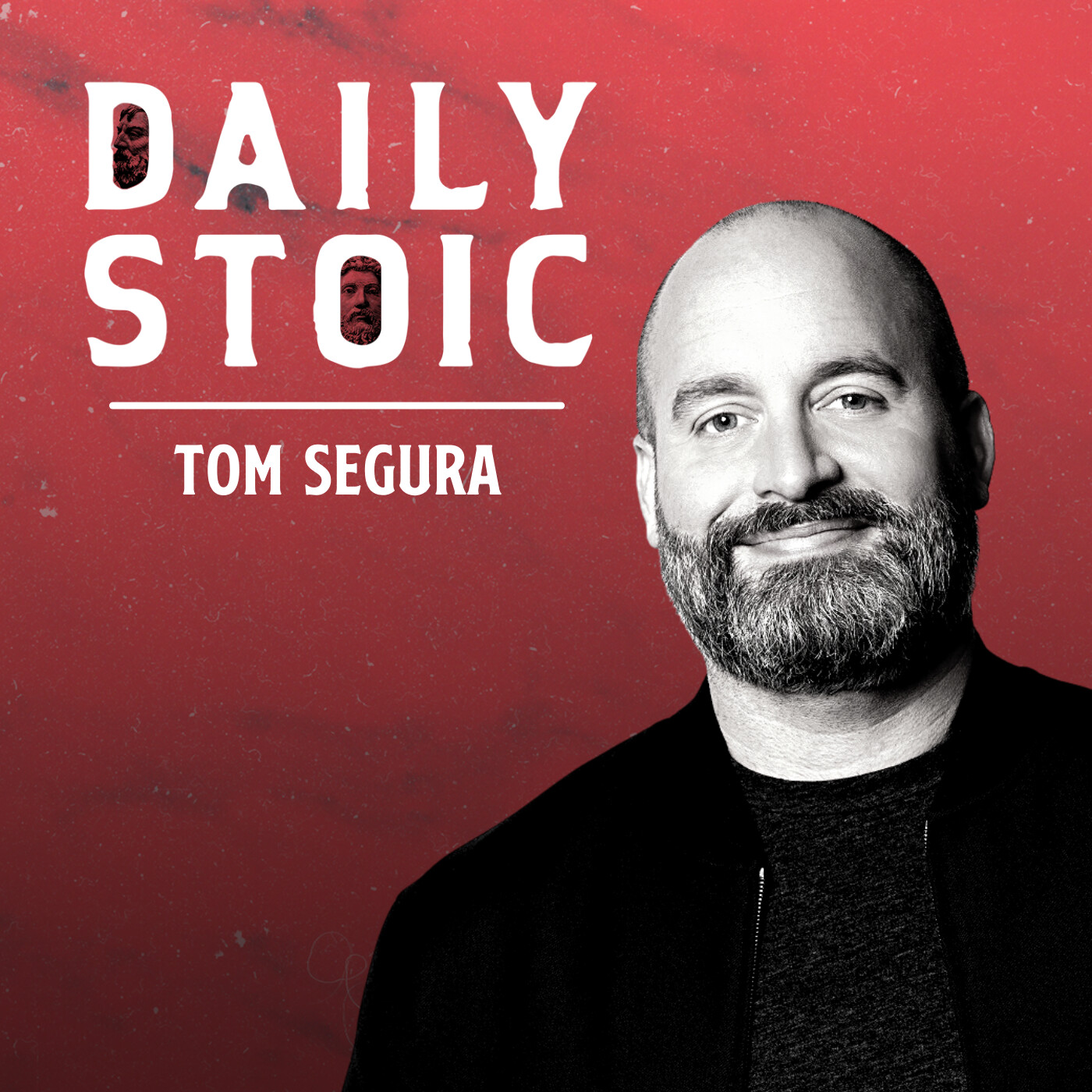
Ryan Holiday engages in a two-part discussion with comedian Tom Segura, exploring the connections between comedy and philosophy, the creative mindset, and Tom's unique journey in the professional comedy landscape.
Written by AI. May contain mistakes.

Get the gist, explore an idea or ask about something said.
 Claude
On The Daily Stoic, what are the key points of this episode?
Searching your listeningAutomatic transcript. May contain errors.
0:00I got an amazing night's sleep last night. One, because my six-year-old fell asleep in the car at like six o 'clock and he transferred him from the car seat to the bed and it stuck, which is just magic. So he's in bed way earlier than normal. But I sleep really well every night because I have a 8 Sleep Pod 5 Ultra, which is 8 Sleep's best product. I've used 8 Sleep for many years now and it's just totally transformed how I sleep, made me sleep better, made my wife sleep better. It's amazing. So basically, Eight Sleep is this topper that goes over your mattress. It can heat and cool both sides separately.
0:38It can raise and lower each side separately. So it helps you fall asleep faster, stay asleep, and then wake up better. Eight Sleep buzzes me to wake gently every morning, as opposed to some loud blaring alarm. And then I can check the app and it tells me my sleep score. It even helps me optimize my day based on how I slept. If you want to survive the holidays like a pro and just generally sleep better, head over to 8sleep.com slash Daily Stoic and use code Daily Stoic to get$350 off your very own Pod 5 Ultra. The best part is you still get 30 days to try it at home and return it if you don't like it.
1:19But I know you will. Trust me, your body will thank you for this investment in better sleep, shipping to many countries worldwide. See details at 8sleep.com slash Daily Stoic. I'm picking my kids up from school today and then doing our weekly routine, which is I take them over to Whole Foods. We get all our groceries for the week. Then we have dinner. It's one of their favorite things to do. It's one of my favorite things to do. And then my wife loves it because she doesn't have to take care of it. This holiday season, whether you're a guest or hosting the big dinner Whole Foods Market, has what you need to delight everyone at your table.
1:50They even have heat and eat sides from the prepared foods department. you can make Whole Foods your one-stop shop. Everything follows Whole Foods Market's strict ingredients standards so you know it'll be delicious and good for you. You can also order online for pickup and even delivery in select zip codes to skip the crowds. Shop everything you need at Whole Foods Market, your holiday headquarters.
2:15Welcome to the weekend edition of the Daily Stoic. Each weekday, we bring you a meditation inspired by the ancient Stoics, something to help you live up to those four Stoic virtues of courage, justice, temperance, and wisdom. And then here on the weekend, we take a deeper dive into those same topics. We interview Stoic philosophers. We explore at length how these Stoic ideas can be applied to our actual lives and the challenging issues of our time. Here on the weekend, when you have a little bit more space, when things have slowed down, be sure to take some time to think, to go for a walk, to sit with your journal, and most importantly, to prepare for what the week ahead may bring.
3:09Hey, it's Ryan Holiday. a welcome to another episode of the Daily Stoic Podcast. You know, I think when people think of stoicism, they don't think of humor. They don't think funny. I get that. In fact, stoicism sort of represents to a lot of people the opposite of funny, the lack of emotion, joy, laughter, et cetera. But every time I talk to a comedian on this podcast, I try to tell them the story of Chrysippus, who literally dies of laughter. And actually, when I had today's guest's wife on the podcast. If you listen to my interview with Christina P, we delved into that story in depth. That wasn't one of the things that I got into in what was a awesome two-hour interview with one of my favorite comedians, Tom Segura.
3:50You've probably seen some of his Netflix specials, the most recent of which is called Sledgehammer, which is absolutely fantastic. Ball Hog is great. Disgraceful is great. He's got a bunch of others. And I've actually taken a bunch out of his specials. If you get the Daily Dad newsletter. I've taken a number of bits that Tom has so expertly put together and, you know, use them as the core of some of the messages about parenting because as Tom's career has gone on, he's had kids. And that's, of course, now figures into his comedy. You've probably seen clips from his incredibly viral and enormous podcast.
4:28He co-hosts one with his wife, Christina P., who was on the podcast recently called Your Mom's House. And then even bigger, is Two Bears, One Cave with Bert Kreicher. And I was on that podcast maybe six, seven months ago. So you can check that out on YouTube. Tom is one of the biggest selling touring acts in the world. He sold hundreds of thousands of tickets and he is a recent Austin transplant. And I'm excited to have him on the podcast. He stopped by the Painted Porch. I gave him a bunch of my favorite books, which I will post later on social if you want to get some of the World War II books that I recommended.
5:05But if you haven't checked out Sledgehammer, you absolutely should. It's great. You can follow him at Segura Tom on Instagram or at Tom Segura on Twitter and YouTube. Check out his new specials. They are fantastic. And you can find him touring, which he does all the time at TomSegura.com slash tour. This is a two-part special, so I will be bringing you part two later in the week. Enjoy.
5:33So yeah, when we talked last time, I was telling you that I was delaying the book almost a year and I turned it in yesterday. Yeah. Day before yesterday, which is about the year delay on the thing, which is a weird experience when you finish. And I know you just finished a special. So when you finish a special, do you have to toss? I do. It's done? Well, you don't toss it the moment that you're done shooting it. There's this thing that's great about it. It's probably the same way you're writing where you go, when you're done, you can't manufacture being done, the reality of being done. In other words, you can't go, I'll work on my next thing as I'm still working on this one.
6:20You go, no, no, once it's done, that's a reality. yes and then you go okay i've that work is done i can move on so your your brain when you do stand up you you want to move on right you want to move on from the material you want to create something else but you're still performing this thing all the time right so when you're done with it it's like your brain goes like like it like relaxes and you start to be able to create new stuff but there's nothing like the day that it comes out because that day and everyone knows you're done then everyone knows you're done and you go i am never doing this again right so then it's a it's like you've released it and you have this room in your head sure that you can't you can't artificially create the room yeah it's it's real that day that's the great thing is you go there's a panic of like i don't have anything yeah but it's also excitement because you go i'm gonna come up with something see i was just thinking about that because so i'm doing this four book series so yeah i just i turned in on tuesday the third one and how long you've been done with it like about a year like more like eight months eight nine months done it was done it was like the it could have gone into production and instead i took eight nine months would ultimately be a year delivery delay to just like fiddle with it and think about just kind of let it sit and rest and go back did your publishers agents know that yeah it was like a whole country with publishing it's like a contractual thing so like we had to like amend a contract okay this is this was going to be delivered january 1st and come out it should be coming out like in two weeks okay that was this schedule was on instead it's going to come out in the mid-summer of 2024 i got you so there's a lot a longer delay process on book publishing.
8:17But so I've been doing these four books. And so the big thing is like, you finish a book, you don't get to go like, I wonder what I'm going to do next. You're like, and you know what you have to do next, but you've been so preoccupied, you haven't been able to conceive of what that would actually be. You can't be planning for at the same time. So I turn it in on Tuesday and then I was riding my bike yesterday afternoon. And literally as I get to the end of the road where I turn around, the structure of the fourth book, it just popped into my head. This book that I didn't know how it would go, what it would look like, just all of a sudden, because it's going to be three parts, what the first part's going to be about, the second part's going to be, and the third part, and who the characters will be.
9:01It just happened. And it was such an illustration of exactly what you're talking about, which is your mind can't move on to the next thing until you have some sort of closure or finish. Like, there shouldn't be a reason that you shouldn't be able to think of new material. Right. But because you have this lane in your mind, it's not until that ends that the engine that generates the new stuff just kicks on immediately. I heard this one writer, a comedy writer, and I wish I could credit the person because I don't remember who said it. But he was like, because you do this thing when you at least write jokes, where you go like, oh, you'll save this one for this.
9:40and hold on to this one. That I'll use for that. And he was like, don't do that. Never do that. He was like, just... I think he was talking also about writing, it might have been for live, maybe SNL or something. So he was like, sometimes you go like, this one I'll save. If it's a joke, it's good, you like it, you put it in and let it get turned down or let it bomb us, but don't save the joke. and I think that's like a good lesson. Like what we end up doing in stand-up with specials is like you end up performing things. You go just perform all of it. Then when you're in the edit, you can cut things out, which is the way to go.
10:28I always tell because I've had friends who are like, I'm going to shoot. I think I'll shoot. I go, dude, shoot all of it. Because it's very easy to go, hey, just cut that out and it'll be like, it'll be seamless. You won't be able to see it, but you don't want to wish you had shot it too. Well, actually, what I think the common thread of all of that is if you're, it's like you want to be intentional, but if you're too intentional, you're just like getting up and you're like too much in your own head about it. Yeah. Which is like the less precious you are if you're just like make all the stuff and then figure it out later.
10:59Like there's definitely been, there was a chapter that was in the first book in the series, in the Courage book, that I moved to the discipline book that while I was writing the discipline book, I moved to the justice book. So like it kept not, and now it's like perfect right there. There's been some chapters where in retrospect, I wish I'd kept them out. Like I wish I had saved it. So it was a different way of thinking about things because usually you're just able to, like you're only working on the one project you are. But if you have sold it, like if you're working on a television series and you know the arc of the show, you don't want to waste stuff in season one that actually makes more sense sure you do have to think about arcs but yeah i think if you're too if you're too like well what are they going to think about this yeah what you're not thinking about is like what is best right now like what's exciting what's interesting and just do that yeah especially if the other thing is like if you're excited about it and then this probably applies more to jokes than like story and arc you know structure of uh of how a story should go but like in a joke if you're excited about it you just got to let it rip you know yeah i had i have a a bit that i was touring with and i recorded in the special disgraceful which came out in 2018 i cut it out of the special and i was like i don't know i just like something about me just and so you always listen to that voice if it's like some type of doubt so i cut it out i did it a little bit on the next tour and then i shot it which when the next special was Ball Hog, and then I cut it out again.
12:31Yeah. And then I tweaked it again. But I didn't really do it much on this last tour. I did it a few times, like, you know, sparingly on certain shows. And then I don't think I shot it. I don't think I shot it. And so I now have a new hour. Yeah. Since Sledgehammer came out, I have a new hour. A full hour of new material. A full hour of new material. Because it's been in the can for how long? Sledgehammer. Sledgehammer came out 4th of July. No, but how long was it in the can from recording to release? It was shot in November. Okay. So that's, yeah, I don't think people fully realize how much space there is.
13:12So as soon as that floodgate opened of you could create new stuff, I mean, even from there until it came out, that was several months. That was several months, although my most creative time is after the special came out. So honestly, the last eight weeks, I've generated more than in the previous six, seven months. Because there's a period of rest and recovery, and then you're excited. And then you get in creative mode. And then now I'm in, I'm still, I would say, in a creative mode. Because it's not like, oh, my hour's great. I hope you check it out and love it. I feel like it's like you know 60 to 70 % there and that it needs a lot of tweaking and it needs new stuff and I need to drop stuff but that one bit that I've told you I've been doing is currently at the moment the closer you know so like I've taken it and I've tweaked it and I've moved it several times and right now I'm closing with it interesting well I bet there's probably so the the scary thing is starting at zero, right?
14:19And so having something that you move from place is, I would imagine, kind of a hack to just not feel like you have nothing. Yeah, it is. And generally, by the way, when you finish a special, you go, all right, well, I'm not including these five things. So you have them for the next thing. Your B-sides start the thing. And I did the thing this time that I've never done before, which is I asked Netflix, I was like, can I just, released those as like online content. Yeah. And they were like, sure. So as bonus material. Yeah. And so we put it on YouTube, Instagram, TikTok. It got millions of views.
14:58And then I was like, oh, that's gone. Like, I don't get to use that anymore. You know what I mean? Oh, yeah. You were burning the boats in a different way. But I did it to myself. And I knew what I was doing. Yeah. But I think I just also was just like, I just want it out, you know? Fresh start. Fresh start. Yeah. Well, we were looking at that Hemingway print in my office. This is the first draft of anything is shit. And actually my writing, one of my old editors is the one who designed that. And he made it so it's imagining Hemingway even workshopping that line. But I think you're like, I have an hour.
15:34That's like, for me, that's like, I know what the book is and I have most of the content there. but that's in some ways not the easy part but it's like it's just this the first mountain is just like getting it all down and then figuring out what it is and refining it and improving it and working and working that that's in some ways the harder but maybe even the more important part yeah and right now i'm at this part which i mean i'm sure there's a um a similarity in in writing a book but i have this problem area yeah where i've had this bit land well and land horribly which tells me something right when i i've done this long enough where like i can analyze it yeah a is that you know that that bit is not bulletproof which you want you want your bits to be pretty bulletproof meaning if you're not performing it perfectly the writing is so strong that it still gets the laughs.
16:35But this is not. This section that I'm talking about is very delicate. And if I'm not perfect performing it, then it falls apart, which lets me know that there is work to do. I'm having to... I've thought about abandoning the bit, which is also a sign where later on you're like, that means I'm scared. and then I think about maybe my approach in so I tried a new way in because the way in kind of sets everything up and right now I'm just like I don't have it figured out but I still want to keep working it that's what I found with this extra year or whatever it allowed me to go back over it so many more times which could be a problem potentially because you can get too self-indulgent in your own head or whatever But like I would read it and then I'd be like, where do I find myself skimming my own book?
17:31And then it's like, okay, that needs to be 10 or 20 % shorter. Or like where am I – I would just – where can I connect things better together? Or just sort of going through and going, yeah, it's working some of the times, not other times. And then I like to show stuff to people and go like, what parts don't you like? Yeah. And then it's not that I cut those parts, but then I fix, what you're telling me is some, there's a writing rule I like, which is if somebody tells you something's wrong, they're almost always right. If they tell you how to fix it, they're almost always wrong. And so like that something is wrong is correct.
18:10But if they knew how to fix it, they would be doing your job. You know how to fix it. Like it's your thing. And so it's like noted like i i heard the problem but like i have to go under the hood and figure out what it is and it may be that it shouldn't be in there at all or it's just it's not doing what i want it to do it's a really good point and i really wish like now i can you know i actually have the ability to critically analyze notes my my own stuff you know like i could i like this last special I was really happy with the fact that I was less precious than in print. It took me all this time to be like, oh, we need to cut things.
18:50Before I'd be like, just print. Just go with it. 76 minutes long, great. And I was like, no, it's too long. When I would look back at those earlier ones, I would go like, I should have cut this, this, and this. But I didn't do that until later on. A few years later, I'd go, oh, this is too long. But that must have been really hard because I think I saw two clips that got cut and they're both really fucking good. They did hit. They hit really strong. Yeah. But for some reason, it was easy. To cut them? It was easy for me. Yeah. Is that because you're less precious or? I just was able to go, like I made very swift decisions about.
19:30So one of them, it was a bit that originated during COVID. Yeah. And like when it came, like even when, by the time I came up to shooting it, I was like, I started to feel that like. That's the one about the going to your kid's school. But you feel like this. I don't wash my hands that much. Yeah. You feel like this funk in you when, when you're, when something starts to feel dated. Yeah. And so like as in the months leading up to taping, I was already like, you know, it's like, cause it was late 2022. Yeah. No one's really doing this. And then Jim Gaffigan's new special, he opens in a mask and it's kind of a funny joke, but it felt very dated.
20:07It was an interesting choice. Yeah, I mean, look, here's the thing. Every comedian has bits about it. We always talk about whatever's going on. The biggest thing that happens. Sure, so we all do it. And then it just is, but for me, when I got to that, so I shot it and I felt a certain way. And in the edit, when I was like, I want this to be 60 minutes. Why 60 minutes? I just felt, I feel like I learned on tour and touring for all these years. the first thing you do is you go you're trying to, you know, when you're starting out as a stand-up, you're trying to build material. I have five minutes.
20:42I have 15 minutes. I have a half hour. I have an hour. And then you get into this thing where you're like somebody's like, I can do 80 minutes. You're like, oh shit, you can do 80 minutes? And then you're like figuring out that the more you tour and do it, the longer you can do. So there's nights I've done 85, 90 minutes you know, on stage. And you realize part of that's kind of like just ego of like, look how long I can be up here. And no one can make me leave. No one can make me leave. And the audience is staying. But what I realized is that, I mean, this is my take on it. No one really wants you to be up there that long.
21:20There's a reason why the clubs start booking you and they go, can you do 45 to 60? That's a headlining time. ultimately what i realized is that if you hammer it like kill it for between 60 and 70 minutes when you say good night people pop out of their seats they pop up right and they and they're also like is this over yeah right essentially saying i wish this were longer yes and then when you do 90 minutes and and you're doing one this is not like kind of like you're you're killing but like 90 is a different ride you know it's like there's there's peaks and valleys you see and i've i've seen these shows too even as like an audience member you see people that you go good night at 90 and they go and they kind of get up like slowly and you're like oh like that's a lot that's 50 more time in their seat it's a long time so when i was watching specials even now when specials come out sometimes i'll see the run time and i'm like fucking 82 minutes or like 77 minutes and i realized that like if you can deliver 60 minutes hard which is like which is like the stand-up time for it for a headliner and you hit it pretty like pretty tight it would kind of convey that same feeling of like that's that's it it's over it's an hour it's like it's the it's the amount of time that I think is perfect to deliver.
22:53So it was my goal. It was my goal to try to like. And even if it's arbitrary, the forcing function of the time limit forced you probably to be harder on yourself and just to make decisions and make them quickly. Yeah. And I like, I mean, I cut that COVID thing. I felt great about it. It was like, they're like, all right, you just lost like four and a half minutes. I was like, great. And then I just started like looking at other bits and just trying to figure out what could go.
23:23Thanks to Toyota Trucks for sponsoring this episode. When I bought my ranch in 2015 out here in Baskerville County, I drove my car about halfway down the dirt road that we live on, thought this isn't going to work, stopped, parked it, walked the rest of the way home, borrowed my wife's car, drove into Austin and bought a truck. What I bought was a Toyota Tacoma. And this truck wasn't just transportation getting me to and from my house. It unlocked a whole different style of living for us, not just on the ranch, but in our little Texas towns. There were places I could go now that I couldn't go before, especially out here in the piney forests, through the fields and on the unpaved roads like the one that I lived in.
24:09We got to go deep into the hill country's wild beauty. We've driven all the way out to East Texas. We've driven across the country. And by we, I mean not just my wife, but both my kids who I drove home from the hospital in that truck. Toyota trucks are built for those who understand that the best adventures happen when you're willing to veer off course. Because you never know when you'll end up on a Toyota adventure detour. And of course, this is stoicism too, because every detour, every obstacle is an opportunity. But it's helpful if you can handle the difficulty inherent in that. If you've got the resilience and the right companion to make it wherever the road takes you, discover your uncharted territory.
24:50Learn more at toyota.com slash trucks slash adventure dash detours. You probably heard the headlines about all the different cuts to foreign aid and food benefits. This is having a profound impact on the world's poorest people and the world's poorest communities. But, you know, just hearing about that, that's not what stoicism is about. But stoicism is, to me, what you're going to do about it. And that's where GiveWell comes in. GiveWell is trusted by tens of thousands of donors each year because they provide free and independent research that helps you understand how to have a big impact. GiveWell has spent the last 18 years researching global health and poverty alleviation, and they direct funding to the highest impact opportunities.
25:35Over 150 ,000 donors have already trusted GiveWell to give more than$2.5 billion, over the last several years. And research suggests that these donations will save over 300 ,000 lives. I myself am one of those donors. I donate to GiveWell every year. It means a lot to me. And you can find all their research and recommendations on their site for free. And thanks to the donors that sponsor this research, GiveWell doesn't take a cut from your tax-deductible donation to their recommended funds. And if this is your first gift through GiveWell, you can have your donation matched up to$100 before the end of the year, or as long as matching funds last.
26:10To claim your match, go to givewell.org and pick Daily Stoic from the drop-down menu under podcast. That's how they know that you heard about GiveWell from The Daily Stoic, and you'll get your donation matched. That's givewell.org, code The Daily Stoic to donate or find out more.
26:29That's what I did with this year. I cut almost 8 ,000 words, which is 10 % of the whole thing. Yeah. Just slowly, you're just cutting. And I was adding stuff in also. So I was cutting more. Like the nice part about editing when you're writing is you can put more. You can put more. Yeah. So you're like, okay, it's 10 % shorter, but it's also better because it's more, there's more sort of bang for your buck in there. But like I reread The Obstacles Away to my son at some point during the pandemic. He wanted to like read something I'd written. And so I read it to him and I was like, this is fast.
27:05Like, I was like, this is so short and tight. It would be like a band listening to their first album or something. You're just like, there's no, there's just no fat in it at all. And I struggled with it in two ways. One, it was like, I was jealous. I was like, this is so short and tight and fast. It's like probably 50 ,000 words. Whereas like this book, 72, 73, something like that. I was like, damn. And then the other part of me though is like, the reason it's long, like I go back and forth. Am I, is it getting longer because I'm being less critical of myself, less lowering my standards, like getting more self-indulgent or is it actually that one, I'm better and I have more to say and two, I won't, I think, right?
27:55One of the things you learn as you get older is that shit's more complicated. Yeah. And it's more nuanced and things you would have said when you were younger, you would never allow yourself to say because you know it's not honest. A thousand percent. So like you're getting long, are you getting longer because you're a windbag or are you getting longer because you're more honest and fair? You are, it's that. And that tension, it could be one, for one joke, it could be one thing, for another joke, it could be other and knowing the difference is really hard. That's totally, and everything you're saying about like, the truth is you are better.
28:29you see the world differently through a different lens, you're wiser and so the way you approach your writing is going to be that way the same way that like I was watching stand-up the other day I was at the club in Austin at the mothership there and we were on the balcony Andrew Santino and I, we were watching one of the younger guys and I was like, do you remember because he was doing this thing where he was getting laughs, but it was so early stand-up way of presenting. I was like, oh, you remember having bits like this? And he was like, oh, yeah. It was so indicative, not just of this guy, but of that time in your life as a stand-up.
29:17It was that type of stand-up. And I was like, he and I were like, we don't do bits like this anymore. But we were both reminiscing. I remember being 24. Yes. And that this was my approach to stand up. Yeah, like a 26-year-old giving you advice, writing about overcoming obstacles. I'm definitely deficient in empathy, understanding, nuance. Like there's a bunch of ways in which what I'm saying is not incorrect, but it's incomplete. It's incomplete, but you also, like as you think about obstacles or just life, you know, at your age now, you realize how difficult life can be for people. and things that when you're young, you're like, I can't believe that person did that.
30:01When you're 40, you're like, oh yeah, people go through this and people make these types of mistakes. Every story that I once was like, seriously? You just go like, yeah, this is just the norm. Yeah, you realize it's like, I experienced that a lot where you're a customer at a grocery store and you're like, why is it this dumb way? and then you learn something about the economics of that business and you're like oh it makes total sense and this is the way it works and I imagine as a comedian a lot of the things that drive you nuts as you get older and you experience more you're like oh I'm making fun of the wrong person here like I'm making fun of the also a victim of this problem the real problem is several layers up above and the other way that you learn to joke is that you if you're making fun of the victim there's a wink where you're acknowledging to the audience that you know you're making fun of the wrong person.
31:02So you're still allowed to do it, but your awareness changes. So you're just kind of like, right? And then all of a sudden everyone's like, well, he knows he's making fun of the wrong person, therefore it's kind of funny and still allowed. You're operating on multiple levels because you realize the world is operating on multiple levels. And so you can't say it in a sentence anymore. By the way, I have to point this out to you. When we sat down here, I'm like, man, I keep rubbing my eyes. Like I'm fucking rubbing it. Is it a test? No, no. So I'm like, what the fuck is going on? And then I realized that just out of almost courtesy or whatever, when we got, you're like, how are you with cats?
31:43I'm like, fine. And I just didn't tell you I'm highly allergic to cats.
31:49And that's definitely why I keep rubbing my eyes. Oh, no, I'm so sorry. I just thought it was funny that I was like, I'm fine. But you did feel comfortable enough to tell me you don't like Bruce Springsteen. Yeah, but here's the thing. Okay, I like to point this out. It's not that I don't like him. What I've found, and this is through living life, is that people, everybody has a feeling and experience with things that they enjoy, especially when it comes to the entertainment. right movies shows musicians and there are people who i've met so many who will as an example be like oh bruce springsteen like it's he's the shit man and you're like okay um and then you check it out and you go like i don't get it you needed to get it when you were like 16 yeah yeah you're like sounds fine yeah and then they're like did you and you're like you know i heard it um and it's I don't dislike him.
32:51It amuses, like it's almost funny to me how I see somebody almost lose their mind to something that I just, it doesn't affect me. Right. So I was in Europe on tour the same time as him and we were hitting some of the same cities. Yeah. And one night, I think we were in Dublin and we actually had a night off and they were like, hey, you can go see Springsteen tonight. Yeah. like come in through the back, stand on the side of the stage, like super VIP. And I was like, oh, no, I'm good. And they were like, excuse me? And I was like. This is like meeting the president. Yeah, I was like, I go, well, I mean, it'd be a wasted thing on me.
33:36And I've had people be like, well, here's what you need to do. You need to check out this 1977 show of the thing. And I look at the thing, and I'm like, it's very nice. I don't hate the guy or dislike what he does or think that he's not talented I'm saying that it just doesn't have the same effect and here's the best part the next day was my show and he came? no but like a bunch of the East Street men came and they were like I didn't even know you guys were here one of my favorite things that Charlemagne does is he pretends that he doesn't know who the Beatles are that's funny and it just drives white people absolutely yeah what oh are they good you know in spring there's a couple acts i'm a fan of spring scene just like as a fan of spring scene not like he changed i think not being an east coast person he doesn't mean anything to me as like a person you know i just think he's a i like his piece but yeah look man that's actually you and about 55 million other people well that book the book i was recommending to you is called deliver me from nowhere and it's about which actually we should talk about this so it's about uh the recording of the album nebraska which so he does um what does he do he does born to run which is his sort of first like big breakthrough albums first number like charting album and then so they think he should do like another huge e street band album and instead he goes into his bathroom and he basically records on a four-track recorder in the 1980s.
35:06So he records these demos of these songs and he thinks they're going to be E Street band songs. Like he's just recording the sort of solo like demo versions and then they're all going to go. So they go into the studio and none of them work. They don't work together. And so he could throw them all out or rewrite them to work. Instead, he's like, let's just put it out as it is. So he puts out Nebraska. Which is the bathroom recordings? Basically the bathroom recordings. So it's actually this, maybe one of the most punk things in the history of music. You have this guy, an ascendant musician, who's about to put out like a follow-up to his huge album.
35:45And he just does the opposite of what everyone's going to think. Yeah. And like they can't even remix the four track because like it becomes this extremely difficult album to master. It comes out and then it blows people away because it's so different. but the sort of twist on all that is the one song that doesn't make the album is Born in the USA which you can hear the Nebraska version and then that's the one that he keeps, Saves for Later to go to what we're saying about how you should never do that saves it for later and then the whole album is built around that as an E Street Band song which becomes one of the biggest songs of all time So that's the one that he cut out He didn't do the sort of acoustic, like low end, sort of sad, depressive, different version of Bruce Springsteen.
36:39That song gets saved and becomes what it was ultimately actually meant to become, which is the big sort of upbeat. Because that's the other thing is, right? Like everyone thought Born in the USA was like Reagan used it as like a campaign song. and Bruce Springsteen's like, this is about the opposite of that. I remember this, yeah. I fucking hate you. Those stories are always great too when the politicians just use a song and you almost always see, seems like the band goes, could you not? Yes. We don't want you to play this. Yeah, yeah. Who's that guy? You just introduced him on stage. Oh, yeah.
37:17Oliver Anthony. Yeah, he was like, no, it's about the Republicans at the debate. It's hilarious. He's such an innocent. it's so crazy I don't know if anybody can quite relate to this kid's experience because he was like unknown eight weeks ago I know and now he's like a political prop basically and he's just like I'm not you know I didn't want to part in any of your guys thing I like to make music yeah the only thing I think about that one though is it's like it's supposed to be this sort of working class song but like the core of it is like about how he doesn't like fat people on welfare There is a meanness to that song.
37:57Yeah. It's about a 300-pound person on welfare, you know, buying fudge rounds with their welfare checks. But isn't he saying in that song that, like, that those men in Washington aren't helping the person who is in that situation? He's saying my money shouldn't pay for your fudge rounds. That's what it says in the song. There's a mean part in it, too. so I think he kind of I think he was like kind of repeating just random stuff like I think he's kind of repeating it's not a right wing talking point but he's repeating something that people say but when you hear it as music you're like that's fucking mean I don't really listen to lyrics that much but anyways the point is it's a good example of like he takes Bruce Springsteen takes this hard left turn which the guy in the book, the book is all about the making of Nebraska, but he talks about, he basically says that Nebraska is the pulling back of the bow and then born in the USA is the release of the bow.
39:04And so he does, it's this crazy kind of jujitsu move because everyone thinks he's going to do one thing. He does the opposite. And then he goes, does the opposite of the opposite. And had he gone born to run, born in the USA, it maybe wouldn't have worked. It's that he has this detour in the middle that makes it so explosive. And then Nebraska becomes this sort of cult favorite underrated. It's like, it's a musician's, musician's, musician's, musician's album. You know what I mean? Yeah, yeah. All the artists say it's his best album. And it's the, you know, when you have the, it's so exciting.
39:41Like one of the more exciting things, even not being familiar with it in art is making decisions that are unexpected into saying, I want to do this when you think I'm going to do this, pivoting. It's like the thing that I love about, one of the things I love about being a comic is that you're an entrepreneur and that you can just make choices to do what you want to do. Yeah. It's like you have the space. It's your thing. No one's really telling you what to do. And so you have to make those decisions. Because like they, like there are other people involved, they're never going to tell you to do something crazy or unpredictable because if it doesn't work, they get fired.
40:24Oh, yeah. Nobody wants to suggest the idea that gets them yelled at. All the suggestions are like how to make it much safer and – Here's what people normally do in your position. Yeah. I can tell you, oh my God, so many times in development, it's just in TV development specifically, it just gets watered the fuck down. when you're like why are all these shows such bullshit so bad? And it's because of those meetings. It is a thousand percent. And here's the thing. They tell you when you start, guess what? We're going to let you do whatever you want to do. Of course. And you're like really? And you get all excited by it and they're like yeah.
41:02This is going to be the Ryan show. And you're like that sounds cool. And then you just start handing in drafts and hearing these notes and you're like, this feels like the same dumb shit that I see all the time. And then the final thing looks nothing like what you wanted. Well, I think the trouble is, so it's a given that most things are not going to work. Right. So they're not judged on success or failure. Yeah. Because they can't be, right? Because they assume a lot of times it's not going to work even if it was good. Yeah. And so how do you evaluate, how does that person in the meeting's boss evaluate them?
41:39it becomes like, did they say dumb things in the meat? Like, do you know what I mean? It becomes just this sort of like safe, safeness and like not wanting to rock the, you just, you just want to, you know, it's not going to work, but you don't want it to work, not work in such a way that retroactively, you're the person that gets fired for it. And also you have to realize that when you're in these, you don't realize this when you start, that the people who are sitting around giving you the notes have to justify the salaries that they get from these huge studios that are often pretty hefty salaries.
42:14And if they're just like, you're funny, you're good, I trust you, they'd be like, what the fuck do we need you for? So that person has to give you all these notes that you go like, this doesn't really feel right. Isn't that a tricky thing with ego too? Because if you're like, I'm a person, I don't take notes, I'm the expert, you can't tell me anything. That person usually ends up crashing and burning. And then if you're the person who takes all the notes, that's how you end up with this sort of dog shit, middle of the road, compromise on everything. And so knowing like what notes to take and when to listen, that's so hard.
42:50That's a skill set, right? Like I feel like it's a skill set that you're constantly evolving and learning to do better. And I feel like, you know, it's what I love about producing things. Whether like, you know, I have TV projects, movie projects. Those are very collaborative. In stand-up, you learn to trust. Obviously, you have a trust with an audience in a way, right? It's an unspoken thing where you're like, well, this is killing. It works. This is bombing. It doesn't. But you also have friends, right? Comedians I do that you're like, they're watching and they kind of go like, you know, that's not great.
43:32And then you go like, oh, I believe them. or this thing's great but you need, like you're saying, you need to figure out something here. You trust their voice, right? The one that was really interesting to me that you've experienced far more was in writing my book because when I wrote the book, my previous writing experience was all television stuff. You know, I'd been a writer on Comedy Central pilots and network stuff. I'd done pilots for both cable and networks. So those were all my writing, and a lot of the notes you're like, oh, it's brutal. So I was writing this thing, and I sent it off to the publisher the first time, and I was like, here we fucking go.
44:21And I could just tell immediately when I got her notes back that I was like, oh, these are great notes. Oh, sure. And so I was very excited. Yeah. Like, she didn't, I don't feel like ever mislead me or like make it corny or like she elevated what I did. And I was like, oh, these are great notes, which I was really thankful for.
44:49Well, it's almost here. Christmas is just a couple of days away and maybe you're scrambling. You're like, what should I get my dad? What should I get my mom? I got to get something to my sister. people love showing off pictures of their kids and that's where today's sponsor comes in i've gotten one as a gift i've given it as a gift the aura digital picture frame it's easy to use it never gets old you're constantly updating it with new pictures or a digital picture frames are so much better than any digital picture frame i've ever seen it's got a high resolution it's got a color calibrated display you can add video you have two pictures come up at the same time picture and a video.
45:25It'll pair photos together for you, like two pictures of the same person or from the same day. It's really easy to set up. You just download the app, connect the frame, and then you can pick photos and videos right from your phone from anywhere in the world. And there's a reason Oprah added it to her favorite things three different times. For a limited time, save on the perfect gift by visiting AuraFrames.com to get$35 off Aura's best-selling Carver Matte Frames, named number one by Wirecutter by using promo code STOIC at checkout. That's A-U-R-A frames dot com promo code STOIC. This deal is exclusive to listeners and frames sell out fast.
46:01So order yours now to get it in time for the holidays. Support the show by mentioning us at checkout. Terms and conditions apply. Look, if you're listening to this podcast, you've probably heard of HelloFresh, right? They're the number one meal kit in America. They make home cooking easier with chef-crafted recipes and fresh ingredients delivered straight to your door. This fall, they're serving up even more to love. It's not the HelloFresh you remember. It's even better. HelloFresh is bigger. They've doubled their menu. You can choose up to 100 options each week. It's healthier. You can choose from 15-plus high-protein recipes.
46:36And they now help you eat greener with veggie-packed recipes that have two or more veggies per week. And it's tastier. You can get steak and seafood recipes delivered every week for no extra cost. They have three times the seafood options. They also have hearty fall recipes like classic beef chili or honey glazed pork tenderloin. We just got home from a week away. We're trying to think about what we're going to eat this week. It was such a relief to see that HelloFresh box sitting on our doorstep when we got home. They've got everything you need for the recipe that they pick out. There's no last minute trips to the store.
47:09Plus, the meals are delicious and easy to make. The best way to cook just got better. Go to HelloFresh.com slash stoic10fm to get 10 free meals plus free breakfast for life. One box with active subscription. Free meals applied as a discount on the first box. New subscribers only varies by plan. That's HelloFresh.com stoic10fm to get 10 free meals plus free breakfast for life.
47:38yeah it's like when i started in publishing you know the editor knows more than you right yeah the person knows more than you and they know and you only know a little bit about yourself right and then as you go you get more experienced you learn more you also have a certain track record and you know your audience because you're the only one talking to the audience and so it's this weird thing that's happened in mine i was actually just talking to because my editor now is the publisher. Oh, sorry. I said public. Well, yeah, she's my editor. But now my editor is also the head of the publisher. And so it's this weird thing where he doesn't give me notes.
48:14At all. Basically none. And I had to go like, I enjoy that. I do know what I'm doing. But at the same time, I don't want to get myself in trouble where, yeah, I want it to still be tight. I want to be challenged. So I'm having to work out this like tension, this new book that I'm starting now will be the first one where I had zero editors involved. Like I had, I used to work with this sort of other editor like outside and we're not working together anymore. And so this is the first one where it's like, oh, there's no guardrails. And so I'm going to have to create some guardrails. And like no one, like nobody will read and go like, good.
48:55or like well it's like like i submitted the manuscript and then like i'll get an email be like oh i like this maybe tighten here and maybe do this that's it it's like an email not like line by line there's copy editing and later stuff for like factual but like no one's like hey dude like i'm not sure this works right you know like no one no one wants to no one in uh on in your life on your side like friends like does a read where they give you a well it's like i have to So now I have to voluntarily submit to that process. Whereas you could see, and you can see how, if you were not interested in that, how you're not going to immediately crash and burn, but you can drift.
49:33And this is how you get indulgent. This is how you say things you shouldn't. This is how you get lazy. And no one tells you that you're falling off, but you're falling off because like, you're not going through the same process anymore. So it's crazy when you learn about the directors who have that. Yes. When they're like, here's the cut. Yes. And the studio has to go like, all right. I mean, there's a few. It's like a handful because everybody else gets a heavy-handed, you need to do this and this is too much and cut this. And there's those eight directors where they're like, I'll give it to you when it's done.
50:06And you think you want that, but maybe you don't. Maybe you don't. I don't know. Yeah, I don't know. I think I can see how you would want that more as you progress, right? Like as you learn and get better at the craft. Yeah. But I still think even, I mean, with movies too, you're not going to be like, no one's seen it. You're going to, even those guys have their trusted producers and inner circle who are watching cuts with them. Yeah. But still like, they're just like, nah, this is, you're printing, this is it. Yeah. Like this is the movie. Yeah. And then, I mean, the internet adds to that too.
50:42Like at least with publishing or special, like there's still this, all these, like, you know, maybe the sound guy's going to be like, hey, I don't know about that. Like you can still just get ancillary feedback, but what's hard about like the internet or video, like you can just push it up. And so you see how people get in trouble because like they're just not thinking about how people are going to receive this in any way. And once it's out, you can't like take it back out. Yeah, you can't. You didn't workshop it. It's just straight up the top of your head. I mean, I definitely like having input, valued input.
51:14Yeah. I don't want meaningless, thoughtless. Yeah. But when somebody's putting critical thought into it, I enjoy. Yeah. And then it's also weird because the audience interacts. Was it weird for you when you cut those pieces from the special and then they blew up? Did you question whether you should have cut them at all? For like, I mean, some of them, I think there was three that I put out. I would say that briefly for a second, I'm like, should I have? but then I felt, I still realized that I was like, no, I felt good about the decision when I did it, and I'm happy with the final product. So I'm like, you know, the main thing was like, I wanted the stuff to live somewhere.
51:57Yes. And I didn't feel like, here's the other thing, is I didn't, I think what made me go put this out, I didn't want to carry it over. Like, you know, I didn't feel good about, hey, I toured, I did 300 shows with this. Now I want to start my next hour. I was like, I want to release it. And I'm not bothered by the fact that it's not in the special. Well, that's another tricky thing though, right? It's like, so you make the decision is you think it's right. And then the audience gives it like the thumbs up, thumbs down. And that doesn't change whether it's good or not. No, that's true. Yeah. And I did get a lot of like, why the hell would you cut this?
52:35You know, this was the best part. And I'm like, I felt like it wasn't. And you're like, it wasn't what I was trying to do in the special. Yeah, exactly. It was good in that it got lots of views. Right. But it wasn't the hour that I was trying to make. Exactly. And I look back at other specials, and the thing that I used to sign off on leaving it in, did it get laughs? Yes. Then you go leave it in. Right. And then a year or two or more later, you look back and you're like, that didn't contribute anything to the special other than it got laughs. But I don't feel like it didn't make the special better.
53:12Yeah. And if I had cut that thing that got laughs, it doesn't make the special worse. So it doesn't belong. I feel like that's one component of mastery or real expertise at something is the ability to actually know what you're doing and what you're trying to do. Yeah. Right? So it's like there's a difference between like I'm trying to put out something that's funny and then this is the special that I am making. So like I found, and this was some of my clashes with an earlier editor that I had, which is like, if I didn't know what the book I was trying to make was, I was just trying to make a book, but I didn't know, no, this is the book I make.
53:49I could make any book and I know I could do this idea this way or this way. But the one that gets me excited that I've decided I want to do with this chunk of life that I'm giving it to is this. So like your notes that help me do that, I'm interested in. And the notes that don't are irrelevant. Yeah. And they're not right or wrong. They're just not here nor there. And so if you can go like, hey, this is what I'm trying to accomplish here, then it makes it easier to make decisions about include it, not include it. And I think people are bad at this with life as a whole. They don't know what they want their life to be, like what success is.
54:23So they just go, well, someone offered me a lot of money to do X or it's unpleasant to do Y. And so that's actually, sometimes you do unpleasant things to get to a place you want to get. And sometimes you turn down lots of money or a cool opportunity because it gets you far away from where you want to go. But if you don't have a sense of where you're trying to end up, you're just making these individual decisions and you don't actually have the perspective to know what the best choice is. Yeah, you're totally right. And it's very hard to be able to see clearly all those things when you're 25. You know what I mean?
55:01Like at this age, I can look back and go, oh, I understand why someone is unaware or not yet there to make those decisions, which makes the people that are 25 and able to see that all the more impressive. In a way, I mean, I do remember having some of that clarity. because when I was 21 and I was doing real estate in Boston, I remember being like, you rent apartments. You show people their apartments and you get a crazy fee. For a kid, I'm six weeks out of college. Some of my weekly checks were$2 ,000,$2 ,500. I'm like, this is fucking wild. yeah yeah i mean and i remember getting to september and being like yeah but i like i was just it was eating me up that i wasn't performing yeah but not performing comedy and so i was like i'm i'm moving to la and they were like you just made like you know i forget how much it was in a few weeks 12 15 000 it was clear i was gonna make i was gonna be 21 and be making $150 ,000.
56:10And now I didn't get that money yet, but it just felt like the writing was on the wall. And I just was like, yeah, but I don't want to be showing apartments. Yeah. Even for the money. Yeah, sometimes it's this kind of vague, almost immature sense. Yeah. But I remember as I, like in a good chunk of my 20s, I was in, I worked at American Apparel. I was this marketing director and I had this cool job. I was like the director of marketing at a publicly traded company, like in my early 20s. It was cool. everyone thought it was American Paral was like cool as shit yeah and I remember I went to this every week I would every year I would go to this conference in in New York called Ad Week and uh I'm I went the first year it was sort of cool I'm the youngest person there probably next year I went the third year I go I'm sort of looking around and everyone's wearing suits and I'm not and I just remember going if I keep coming to this one year I'm going to show up in a suit yeah and I was like I don't want to be a person that wears a suit that is like and so that's very immature like now if something if there's something important i wanted to do and i had to put on a suit or if i had to provide for my kids wearing a suit i would not hesitate i wouldn't hesitate but then i was just like i don't want to be a suit you don't want to be because the thing is you don't want to be that guy i don't want to be that guy and maybe that guy's really happy and awesome and does good work but i had some visceral disdain for what they represented and it was all dudes pretty much uh and i was like i don't want that so i was like i gotta get the fuck out of here.
57:32Like I got to start making decisions. And so, yeah, if you don't have this sense of where you want to end up, you end up just taking things that are cool or exciting or where you're getting some traction or momentum, but that's getting you far away from where you ultimately want to end up. This leads me to this kind of thought for you though. And maybe because you have an answer on this. Cause I, I feel like I really knew that I want to do, I want to perform. I didn't know I wanted to stand up at the time i thought maybe i want to act but i knew i knew that but for what do you say to people because i imagine and i've heard people be like i don't know i don't know what i want to do yeah what do you tell them when they're being like yeah you're right you're right and that i don't know where i want to end up i don't know where i want to end up yeah and in uh robert green's mastery he talks about like your sort of life's task like how do you find what that thing is people go like what's my passion he he's basically saying i think it's true it usually goes back to at some point in your childhood or early teen years you discovered this thing that like lit you up and got you excited and then there was some part of you that said this is impractical this is impossible this is too hard and you turned away from that and it's it's usually not that you don't know what it is it's that you've decided that it can't be something that you've already right you know what i mean so you're almost like your brain is blocking it well it's obviously not photography yes but it's photography right right like I knew I loved books.
58:59I wanted to be a writer. I had done this stuff to fund being a writer. I was like, it's time. I got to go get serious about this thing. And I ended up quitting and moving across the country like maybe six, eight months later. And here's the thing is all those stories, right? Like they sound insane. Like now it doesn't because you're wildly successful. But right, you tell somebody I quit this and I packed up and they're like, it's fucking stupid. right so like you should if you're listening or watching you got to remember that like it might look it probably will look crazy or stupid to a lot of people for you to pursue the thing that you really want to do you know well and i would say one one way to handle that is just don't fucking tell people that i agree like i 100 agree with that i'm i wanted to leave los angeles so i didn't bump into people i knew be like i'm gonna be a writer you know yeah well what happened to that guy?
59:55Right. And, and I didn't want to, I didn't want to be sucked back in. So my wife and I, we moved to New Orleans and I was still like freelancing and consulting on stuff. So like, I just told people I was doing that. Yeah. And so it wasn't until the book was announced, like it had been sold and there was news stories about it that my, my friends were there were like, oh, you're working on a book. Yeah. And I realized like they didn't care. They just thought I, because it was New Orleans, they just thought I was like a bum basically. but that like self-consciousness is the enemy and so like if you're there's two ways right if you're the person like i'm working on a book and it's it's going to be a huge success you're probably an egomaniac and you're you actually suck you know and it's not going to work um like i'm moving to la to be famous like you probably yeah it's not going to work out for you um and then uh or when people say it's not going to work out for you you feel that so deeply that it it affects you right like i didn't i didn't want people to be like you you're gonna do that you know how hard it is so i just was doing it quietly and it wasn't until i was i had done it that i talked about it and so i wasn't like susceptible to either judgment or ego or anything i was just like doing the thing that's such an important thing i mean every time somebody goes i'm doing stand-up for the first time you know what the that literally i go don't invite anybody yes and And they're like, what?
1:01:18I go, don't invite people. Don't tell your friends. If you really want to do this, just go do it. Don't invite people for a while. Just go do stand-up then. Because you don't want it to be a thing where... By the way, I made the mistake completely unaware the first time I did stand-up. I told people. Here's the thing. I didn't tell them I'm going to do stand-up for the first time. I was like, I'm doing stand-up. I do stand-up. Right. And so they were like, oh, I didn't know you do stand-up. And I was like, yeah, me neither. You're borrowing against work you haven't done. Yeah. Yeah. Yeah, so they all came.
1:01:53They're like, I didn't know Tom does stand-up. And it was my first time on stage. Yeah. So dumb. Oh, yeah. And if it works, it's a problem. And if it doesn't work, it's a problem. Yeah, and it basically was right in the middle. Yeah. Where like I got some laughs and I got some, you know, like strange looks. Yeah. It was enough where I wanted to do it again. But everybody was like, all right. didn't know what to think about that. I even think about it like if you are good at something and you're successful and you're just like expanding into something different. Like, so I was successful writing and I was like, video is huge.
1:02:26I'm going to start doing videos. Like I, you don't go, hey, everyone, look at me. I'm starting to do videos. Check it out. Like, no, I start these things independently on the side. And you like, like first, like I remember when we first started doing like TikToks and Instagram reels for Daily Stoic. I was like, here's what we're going to do. Go take interviews that I've already done from the eight, nine years I've been doing this. Cut those into pieces. Let's put those up and let's let it accumulate a little bit of an audience on its own. Because what I don't want, what the hardest thing to do is to do shit for nobody, for an empty room.
1:03:01So it's like, let's build up an audience. So then when I do sit down and record something in the camera, I don't have the extra shame of going like six people are going to watch this. Sure. And so I kind of try to build, I build my way into stuff, but I also kind of build separately. Yeah. Because that like, oh, I'm quitting my job to be a YouTuber now. It's like, then you're going to have to deal with the humiliation of waking up every day and having 400 subscribers. And you're either going to delude yourself about it, which is dangerous, or you're going to feel like garbage. Instead, you should have like kept working your job and just been making stuff on the side under some pseudonym or whatever.
1:03:39and then transition once it's viable. Another thing I screwed up on. Yeah. Yeah, I did that so poorly. And not unaware. Like, you know, you do it unaware. What I did was, well, I was doing it where I was doing stand-up and had a full-time job. Yeah. And I was, that's the way to do it. Yeah, of course. And I'm supporting myself with my job and doing stand-up. And your whole goal at this age, I'm 26, 27, is to get with one of the big management companies. Yeah. Even more so than an agent. because the managers and stand-up. Because they do like bookings and stuff? Well, the managers are like, the big ones hold so much power and they're able to, they just, they can make, they can really make things happen for comics.
1:04:20They're connected to those agents. Yeah. They're connected to the festivals. They know all the executives at the networks. They know the director. So when I got signed by a big time management company, I was like oh man and this was like who everyone was saying you gotta try to get with these people I was like really feeling myself I was supposed to start on a new show I was working in post production and this was gonna be like a pretty big post you work in for set runs like this would be a 12 week or 16 week kind of run and I was gonna I got a promotion and they were gonna give me overtime for the first time and they would work us like dogs and I just walked into my post supervisor and I was like, hey man, this thing happened yesterday.
1:05:11I signed with a manager. I was like, so I'm not going to be able to. I've made it. I've made it because I have a manager. And then I remember I was like, yeah, yeah. He goes, oh, you have an audition for this movie tomorrow? It's the first time I had a big audition. And I was like, yeah, yeah. I quit my job. And he goes, what? And I go, I quit my job. He goes, why? And I go, because I'm working with you now. And he was like, oh, okay. Well, we'll see how that goes. He didn't know what to say. And I was like, oh man, I just cut my life support.
1:05:50Thanks so much for listening. If you could rate this podcast and leave a review on iTunes, that would mean so much to us and it would really help the show. We appreciate it. I'll see you next episode.
1:06:12My family owns a 2023 Toyota 4Runner, and honestly, it's my favorite vehicle that I've ever owned. Around town, it's smooth and reliable, but where it really shines is on our trips into the backcountry. We've taken it on backpacking adventures to Colorado and New Mexico, loaded up with gear, and never had to think twice about whether it could handle the terrain. That's what Toyota trucks are built for. Off-road confidence, rugged durability, and the freedom to explore. Toyota has a long history with the outdoor community, and they're committed to helping more people get out there and experience what nature has to offer.
1:06:42From remote trails to scenic byways, Toyota Trucks empowers you to take the detour, roam freely, and discover places that still feel wild and untouched. And they're not just making great trucks, they're working to expand access to adventure so more people can connect with the outdoors and pass that passion on to the next generation. Discover your uncharted territory. Learn more at toyota.com slash trucks slash adventure dash detours. That's toyota.com slash trucks slash adventure dash detours. Look, ads are annoying. They are to be avoided if at all possible. I understand as a content creator why they need to exist.
1:07:19That's why I don't begrudge them when they appear on the shows that I listen to. But again, as a person who has to pay a podcast producer and has to pay for equipment and for the studio and the building that the studio is in. It's a lot to keep something like the Daily Stoic going. So if you want to support a show but not listen to ads, well, we have partnered with Supercast to bring you a ad-free version of Daily Stoic. We're calling it Daily Stoic Premium. And with Premium, you can listen to every episode of the Daily Stoic podcast completely ad-free, no interruptions, just the ideas, just the messages, just the conversations you came here for.
1:08:02And you can also get early access to episodes before they're available to the public. And we're going to have a bunch of exclusive bonus content and extended interviews in there just for Daily Stoic Premium members as well. If you want to remove distractions, go deeper into Stoicism and support the work we do here. Well, it takes less than a minute to sign up for Daily Stoic Premium, and we are offering a limited time discount of 20 % off your first year. Just go to dailystoic.com slash premium to sign up right now or click the link in the show descriptions to make those ads go away.
Ryan speaks with Tom Segura in the first of a two-part conversation about the links between writing comedy specials and writing philosophy books, the mindset it takes to succeed in a creative field, Tom’s weird and winding journey through professional comedy, and more.
Tom Segura is a stand-up comedian, writer, author, actor, and podcaster. He co-hosts the Your Mom's House podcast with his wife and fellow comedian Christina Pazsitzky, as well as the podcast Two Bears One Cave with best friend and fellow comedian Bert Kreischer. He has made two stand-up comedy albums and five specials on video, including Disgraceful (2018) and Ball Hog (2020), and he has appeared on the comedy shows Comedy Central Presents, Live at Gotham, and This Is Not Happening. You can find Tom’s work at tomsegura.com and on Instagram @seguratom and Twitter @tomsegura, on his YouTube channel.
✉️ Sign up for the Daily Stoic email: https://dailystoic.com/dailyemail
🏛 Check out the Daily Stoic Store for Stoic inspired products, signed books, and more.
📱 Follow us: Instagram, Twitter, YouTube, TikTok, Facebook
See Privacy Policy at https://art19.com/privacy and California Privacy Notice at https://art19.com/privacy#do-not-sell-my-info.
